Characterizing and Comparing COVID-19 Misinformation Across Languages, Countries and Platforms - arXiv
←
→
Page content transcription
If your browser does not render page correctly, please read the page content below
Characterizing and Comparing COVID-19 Misinformation Across
                               Languages, Countries and Platforms
                           Golshan Madraki1, Isabella Grasso, Jacqueline M. Otala, Yu Liu, Jeanna Matthews
                              Abstract                                     consequently interactions have shifted away from face-to-
                                                                           face interactions and even more towards online/social
Misinformation/disinformation about COVID-19 has been                      media interactions. This means that more people are
rampant on social media around the world. In this study,                   exposed to unreliable content circulating on social media
we investigate COVID-19 misinformation/ disinformation                     and many users struggle with distinguishing between facts
on social media in multiple languages/countries: Chinese                   and lies/fictions about COVID-19.
(Mandarin)/China, English/USA, and Farsi (Persian)/Iran;
and on multiple platforms such as Twitter, Facebook,                       Since the beginning of the pandemic, some official efforts
Instagram, WhatsApp, Weibo, WeChat and TikTok.                             have been implemented to debunk these lies and inaccurate
Misinformation, especially about a global pandemic, is a                   information circulating on social media, despite substantial
global problem yet it is common for studies of COVID-19                    disagreement about which corrective measures for fact
misinformation on social media to focus on a single                        checking are practical and appropriate for massive social
language, like English, a single country, like the USA, or a               media platforms. Still, these efforts seem not enough and
single platform, like Twitter. We utilized opportunistic                   there is a widespread consensus that an integrated
sampling to compile 200 specific items of viral and yet                    sustainable global effort is warranted across different
debunked misinformation across these languages,                            languages and through different platforms as are targeted
countries and platforms emerged between January 1 and                      in our study (Dizikes, 2020; Pennycook et al., 2020a).
August 31. We then categorized this collection based both
on the topics of the misinformation and the underlying                     In the literature, the problematic information has been
roots of that misinformation. Our multi-cultural and multi-                categorized into misinformation, disinformation, and mal-
linguistic team observed that the nature of COVID-19                       information, with some debate about definitions (Karduni,
misinformation on social media varied in substantial ways                  2019; Wardle, 2017). In this paper, we consider the
across different languages/countries depending on the                      following definitions:
cultures, beliefs/religions, popularity of social media, types
of platforms, freedom of speech and the power of people                    Misinformation is incorrect information created without
versus governments. We observe that politics is at the root                the intention of causing harm (e.g. encouraging people to
of most of the collected misinformation across all three                   wear a face shield without realizing how ineffective it
languages in this dataset. We further observe the different                could be).
impact of government restrictions on platforms and                         Disinformation is incorrect information and intentionally
platform restrictions on content in China, Iran, and the                   created to hurt an individual, a group, or a country (e.g. a
USA and their impact on a key question of our age: how do                  drug company spreading out a false rumor that its new
we control misinformation without silencing the voices we                  medicine can cure COVID-19 with an intent to increase
need to hold governments accountable?                                      profit.)
                                                                           Mal-information is correct information (based on reality),
Keywords: COVID-19; Misinformation/Disinformation;                         but used to cause harm to an individual, a group, or a
Social Media; Different Languages                                          country (e.g. justifying the high rate of confirmed cases by
                                                                           claiming that it is because of increasing the rate of testing.)
                                                                           (Infodemic Toolkit, 2020; Kujawski, 2019; Wardle, 2019).
1.          Introduction
                                                                           Distinguishing between these three categories, particularly
Along with the COVID-19 pandemic crisis, an infodemic                      misinformation and disinformation, can be difficult or even
(World Health Organization, 2020) crisis has affected all                  impossible in some cases as can require assessing the intent
aspects of human lives from elections to public health                     of the creator. Thus, more broadly, here in this paper, we
response around the world. Social media has played a                       will use the general term ‘misinformation’ to refer to all
critical role in this infodemic crisis. First, social media                three categories. According to a study from Oxford
offers a free and easy-access platform for users to share                  University, misinformation is also often true information
content (both true and false) in the form of posts, videos,                reconfigured or recontextualize and less commonly
pictures, and memes, all with a wide range of audiences                    fabricated (Brennen et al., 2020). This reconfigured
(Weinberger, 2011). Second, the COVID-19 outbreak has                      information can circulate even faster than fully fabricated
forced people around the world to be quarantined and

     1
         Corresponding Authors: Clarkson University. Email: gmadraki@clarkson.edu.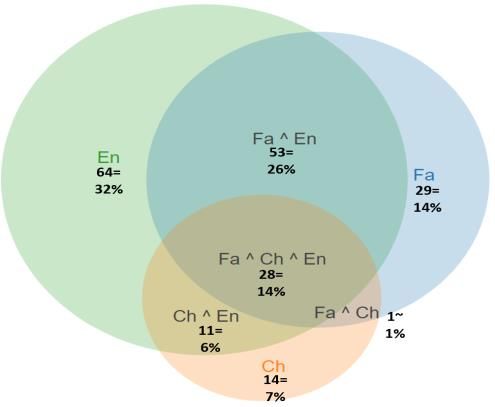
stories, taking in 87% of the interactions in one study          based on self-regulation by the platform and not
(Brennen et al., 2020).                                          government regulation. Throughout our study, we examine
                                                                 the impact of these different approaches on the types of
In this paper, COVID-19 misinformation, broadly defined          misinformation spreading.
to include disinformation and mal-information as well, will
be investigated within multiple languages (Chinese,              2.       Background and Related Work
English, and Farsi) about multiple countries (China, Iran,
and the USA) on different social media platforms. The            Misinformation is not a new phenomenon, it has been
COVID-19 pandemic broke out first in Wuhan, China in             around for centuries in the forms of rumors, gossip
December 2019. Then, Iran became a hotspot in February           conspiracy theories, etc. (Burston et al., 2018). However,
2020. The USA has been a clear hotspot as well with 22%          the emergence of the publishing industry in the 15th
of confirmed world-wide COVID cases despite only 4.25%           century provided an official modern platform for
of the world population (Dong et al., 2020). We chose these      misinformation. The 21st century has been characterized
three countries as a lens through which to consider major        by the explosion of information through the Internet. The
differences between COVID-19 misinformation around the           technology, particularly social media, has amplified the
world. We show how examining social media                        spread of misinformation and its adverse impacts by
misinformation from the perspective of one country, one          providing a fast and free channel to share any information
language, or one platform, misses important and more             whether true or false (Lazer et al., 2017).
holistic aspects of the pandemic. Through this research, we
build a more comprehensive picture of how                        Since the beginning of the pandemic, catastrophic and life-
misinformation has exacerbated the COVID-19 crisis               threatening impacts of tremendous amounts of
around the world.                                                misinformation circulating on social media have appeared
                                                                 (Donovan, 2020). For instance, due to fake news, some
Our research team includes native speakers of Chinese,           individuals used toxic home remedies resulting in injury
English, and Farsi who were born and raised in China, Iran,      and death (Vigdor, 2020a). Misinformation has provoked
and the USA. To the best of our knowledge, we are the first      many people to hoard some vital necessary products (e.g.,
to examine the multilingual social media landscape by            N95 mask, sanitizers, toilet papers, etc.) causing a shortage
using the opportunistic sampling method to collect a             of supplies for essential workers (Vigdor, 2020b).
dataset of verified and viral COVID-19 misinformation            Misinterpretations of facts have caused people to not take
across 3 languages: Chinese, English, and Farsi. Our             quarantine seriously and ignore CDC and WHO’s
multicultural and multilingual team observed that the            recommendations (Centers for Disease Control and
nature of COVID-19 misinformation on social media                Prevention [CDC], 2020a). Within the USA, the Black and
varies     in    substantial    ways      across    different    African American community has had to deal with
languages/countries depending on the cultures, beliefs,          misinformation claiming that darker skin may help protect
religions, popularity of social media, types of platforms,       against COVID-19 (Kertscher, 2020) when in fact, risk
freedom of speech, the power of people versus                    factors are higher (Farmer, 2020). Other minority groups
governments, etc. Based on these observations, we                such as Asian Americans have experienced increased
proposed a novel and comprehensive categorization of the         discrimination since the outbreak of COVID-19 (Ruiz et
COVID-19 misinformation based on their topics and roots          al., 2020). Within India, the Twitter hashtag CoronaJihad
such that these categories are all relevant and extendable in    exacerbated already present islamophobia as it
all three languages.                                             accompanied false claims of Muslim people intentionally
                                                                 infecting Hindu people (Chaudhuri, 2020; Perrigo, 2020).
It is worth noting the difference in government policies for     In some Muslim countries such as Iran and Somalia,
controlling misinformation in Iran, China, and the USA.          religious figures and hardliners believe that true Muslims
China has strict government control over which platforms         are immune to the new virus. The religious community is
can be used and enforces these controls. Approved                biased against less religious or non-believers and blames
platforms aggressively remove misinformation of some             them for the pandemic as a form of God punishments (Al
kinds, but not all. Iran also has laws restricting which         Arabiya English & Judd, 2020; Lubrano, 2020; Malekian,
platforms can be used, but does much less to actually            2020). Within China, in the early of this pandemic, one
enforce these laws. It makes some platforms more                 piece of misinformation, widely forwarded through
inconvenient to use, but does less to actually prevent it. The   Chinese social media, stated that COVID-19 only attacked
USA has some new laws restricting the use of social media        Asian people because it was a biological weapon designed
platforms, specifically Chinese social media platforms.          to target Chinese people (Steinmetz, 2020; The Storm
Whether these laws will stand remains to be seen. There          Media, 2020).
are some attempts to control the flow of some types of
misinformation on platforms like Twitter and Facebook

                                                                                                                            2
Why is this COVID-19 misinformation so impactful? imposed on these platforms in some cases (Rachman,
Desperation and severe stress caused by fear of death, the 2020). Table 1 summarizes the current landscape.
uncertain nature of the pandemic, economic crisis,
unemployment, strict quarantine, and the new routines Platforms China Iran U.S.A. # of Monthly
(e.g., working from home, sanitizing groceries, etc.) has Active Users
(as of 2020)
frustrated and distracted billions of people around the
world making them even more susceptible to the influence Twitter ✖ ✖✓ ✓ 330 million
of misinformation(CDC, 2020b; Palsson et al., 2020).
Many people are willing to grasp any information (true or Facebook ✖ ✖✓ ✓ 2.7 billion
false) that might make them feel safe or comfortable or
offer easy-to-understand explanations for the complicated Instagram ✖ ✓ ✓ 1 billion
pandemic situations (Douglas et al., 2017). On the other
hand, some people may boycott receiving information to WhatsApp ✖ ✓ ✓ 2 billion
circumvent such severe stress. Unfortunately, this practice
is just as dangerous because being uninformed makes Weibo ✓ S S 550 million
individuals more vulnerable to becoming misinformed
(Lazer et al., 2017) and believing false information. WeChat ✓ S ? 1.2 billion
There are a few studies investigating COVID-19 TikTok ✓ ✓ ? 800 million
misinformation on social media and more are in Table 1: Social media Platforms - ✓ for commonly used; ✖ for not
development. Kouzy et al. (2020) focused on quantifying allowed/blocked; ✖✓ for not allowed officially but accessible, S for
the misinformation, but they focused on only English seldom used, and ? for the situation to be determined (CIW Statistics,
misinformation posted on Twitter (Kouzy et al., 2020). 2020; Clement, 2020a; Clement, 2020b; Lin, Y., 2020; McGarvey, 2020;
Also, Brennen et al. (2020) proposed some classification of Richter, 2020).
COVID-19 misinformation although their samples are Twitter has been blocked in both China and Iran for years
limited to only English language. (Jen, the Privacy Freak, 2015). The Chinese government
has very strict technical and legal measures in prohibiting
The closest related work to this research is the 2020 access to Twitter, though a few government officials have
Misinfodemic Report developed by Meedan and written by special permission to use it for foreign affairs (Mamiit,
Alimardini et al (Alimardani & Elswah, 2020). This 2016). Thus, almost all tweets in Chinese are posted by
qualitative report considers a more global response to Chinese speakers outside mainland China and are therefore
misinformation, showcasing seven countries compared to not a good representation of the social media landscape
several United States-only studies. Meedan divides their within China. Restrictions on Twitter in Iran are not as
report into the crumbling of public trust, informal leaders severe as in China despite official filtering of Twitter in
of information, and impact of the infodemic on Iran.
governance. Their coverage of countries is extensive, but
our research adds a balance of qualitative and quantitative Facebook has been banned in both China and Iran.
analysis comparing countries, languages and platforms However, Instagram is not blocked in Iran at this moment
within our sample. and it is actually very popular, especially among youth,
with more than 24 million Iranian active users as of January
Purely quantitative research that involves misinformation
2018 (Financial Tribune, 2018). Instagram has been
globally has been done by Pew Research. They surveyed
banned in China and much like with Twitter and Facebook,
social media users within several countries about how often
this ban is more aggressively enforced.
they encounter obviously fake content (Silver, 2020). This
study tries to point researchers toward countries that seem
to be encountering misinformation more frequently. This Weibo (微博) and WeChat (微信) are the most popular
type of quantitative research does not dive as deeply into social network platforms in China (DeGennaro, 2019).
the content, topics and root of misinformation present They are not only popular inside China but are also used
within each country surveyed. heavily among Chinese speakers outside of China.
WeChat is beyond a social networking and messaging
3. Platforms in Iran, China, and the USA platform and its monthly active users have reached about
1.2 billion in the second quarter of 2020 (CIW Team,
Twitter, Facebook, Instagram, WhatsApp, Weibo, WeChat 2020). In addition to social networking services, WeChat
and TikTok are the most popular social media platforms in offers one of the most popular payment methods in China,
China, Iran, and the USA. However, due to the censorship called “WeChat Pay” (微信支付). WeChat could be
and political reasons, some strict restrictions have been
3considered as the combination of WhatsApp, Facebook, appeared around COVID-19 on Weibo. Figure 1 shows a
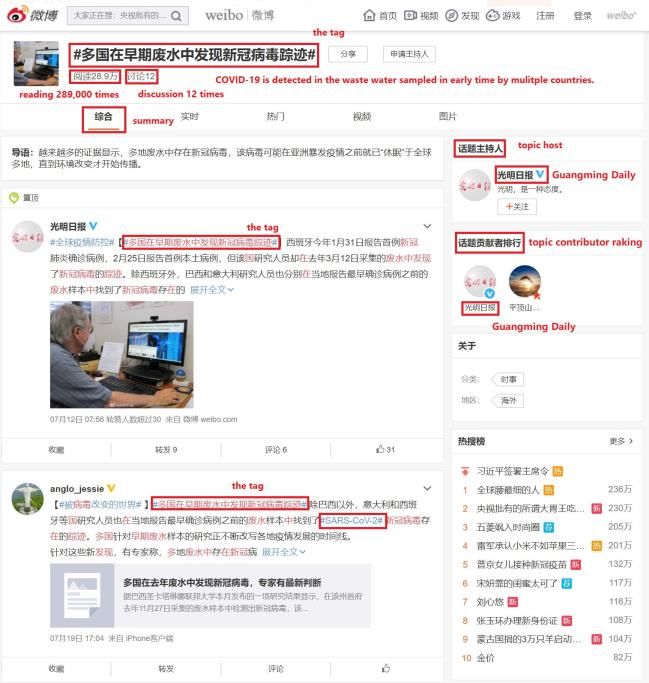
and PayPal. sample of super topic webpage on Weibo. The topic host
and the largest contributor to this topic is a state media.
WhatsApp is a cross-platform encrypted messaging Although English hashtags are allowed on Weibo, almost
application acquired by Facebook, and its monthly active all hashtags are in simplified Chinese. Weibo needs the
users have reached 2 billion as of March 2020 (Clement, symbol “#” before and after a term to function as hashtags,
2020b). It has 68.1 million users just in the USA as of 2020 unlike Twitter which only needs “#” before. WeChat
(Andjelic, 2020). WhatsApp is completely banned in Channels is a popular feature of WeChat and contain public
China. WhatsApp is legally allowed to be used in Iran and feeds of content. Hashtag and keywords search can be used
has become even more popular in Iran after the Iranian in WeChat Channels.
government blocked Telegram in 2018 which used to be
the most popular messaging application in Iran. The
government claimed that Telegram had endangered
national security (Erdbrink, 2018).
WhatsApp has become a makeshift social media platform
in Iran as group chats have begun including thousands of
members forwarding and sharing information. Although
the government has blocked many social media platforms
officially, many Iranians still use VPN and Proxy anti-filter
apps/tools to access blocked social media. However, this
access is more limited and requires some technical tools
and skills. This has helped to drive usage towards
WhatsApp which is a private end-to-end encrypted
messaging platform without tracing capabilities. Partly as
a result, WhatsApp has become a major source of
misinformation in Iran and many other countries
(Alimardani & Elswah, 2020). WhatsApp recently limited
the number of times users can forward a message to only
five times, in an attempt to fight against misinformation
(Kastrenakes, 2019).
TikTok was developed by ByteDance (字节跳动), a Figure 1: A Chinese Weibo super topic #多国在早期废水中发现新冠病
Chinese company in Beijing. TikTok has a version used 毒踪迹#, translation: “COVID-19 is detected in the wastewater sampled
only in China called Douyin (抖音) to separate the in early times by multiple countries”.
domestic users from international users. Due to the concern
of cyber security, TikTok operation in the USA will be
transferred to a new company named TikTok Global and
will cooperate with Oracle and Walmart to ensure the data
safety (Lin, L., 2020). TikTok is allowed to be used in Iran.
A
3.1. Search Methods in Different Languages
Keywords and hashtags are the major methods to search on
social media and we use both to collect our data set. All
platforms named in this study supports both keywords and
hashtag search. Hashtags on WhatsApp might not be as
popular as other platforms however this function makes the B
search process very easy even through a private message Figure 2: A Farsi hashtag #( واکسنVaccine) on Twitter. A) translation: ”I
chain (Patkar, 2013). prefer to get Coronavirus rather than get a Russian Vaccine”. B)
translation: “Russian vaccine announced officially by Putin is a great
news. Putin’s promises are more reliable than Trump’s or Boris
Unlike hashtags on American platforms, a hashtag on
Johnson’s.”
Weibo is owned by a host. Also, each hashtag has its own
unique webpage, which is called 超级话题 (i.e., topic or
Iranians use both English and Farsi hashtags across
super topic). Since January 2020, many super topics have
different platforms. An interesting observation is that the
4same hashtag can be used for two completely opposite biased nature of social media and the fact that all authors
opinions. For instance, # واکسنis a hashtag about the Russian are currently in the USA, so we might be more exposed to
vaccine used to criticize the vaccine (Figure 2-A) and to English misinformation. Furthermore, due to the lack of
express excitement about it (Figure 2-B). copyright laws enforcements in Iran, a single piece of
misinformation might have been repeatedly debunked by
4. Our Methodology too many sources which prolongs and complicates the
search process for new pieces. Figure 3 represents a clearer
Selecting an appropriate sampling methodology is a major breakdown of our collected data and the overlaps in
challenge when it comes to social media studies. Non- misinformation across languages.
biased sampling from social media is often difficult
because the dataset is so highly dynamic, massive in size,
and difficult to filter. The sheer volume of data--Facebook
has over 350 million users and Twitter has a rate of 17,000
tweets per minute--makes the gold standard of data
acquisition, true random sampling, challenging.
This can be even more complicated when sampling for
misinformation since our underlying population is not all
posts, but those posts that contain misinformation that has
been refuted or debunked by recognized fact-checking
organizations. Hashtag and keyword filters do not
necessarily guarantee to find misinformation, and even if a
suspected post is found, we are reliant on the efficiency of Figure 3: Overlaps of collected data across the multiple languages. Ch,
journalists in fact-checking posts and content which is also En, and Fa refers to Chinese, English, and Farsi. Total are 200= 29(Fa)+
biased by the particular needs and intentions of journalists 14(Ch) +64(En) +53(En^Fa)+11(En^Ch)+1(Fa^Ch)+28(Fa^Ch^En).
and respective media outlets (Pingree et al., 2018).
Strict filtering and censorship policies for Chinese social
In this study, we utilized an opportunistic sampling media is a major factor in the notably lower totals. This can
strategy, meaning that our sampling was determined by the be considered as a benefit of the aggressive censoring of
population, or presence of misinformation on social media, some types of misinformation in China. However, this
that was available and officially debunked at the time, and could come at the expense of silencing voices that are
our abilities to find them. We used Chinese, English, and needed to counter other kinds of misinformation. This is a
Farsi hashtag and keyword filters to collect 200 specific key question being explored in this paper.
items of debunked misinformation that spread virally
between January 1 and August 31. When we encountered There are 14, 64, 29 pieces of misinformation found
a particular item in one of our languages, first we used fact exclusively in Chinese, English, and Farsi only,
checking organizations to see if that claim had been respectively. Out of overall 200 pieces of misinformation,
debunked using fact-checking sources such as International 53 occurred in only Farsi and English (26%) which is the
Fact Checking Network (IFCN), platform based fact- largest overlap among possible pairs of languages while
checking tools in Twitter, Facebook and Google, and Farsi and Chinese have the least overlap (less than 1%). Of
organizations using Claim Review (Poynter, n.d.; Schema, the 200 collected pieces of misinformation, 14% have been
2014). The item is logged only if we could find a verified found in all three languages.
debunking source; otherwise, it is discarded. We estimate
that number of logs could be doubled if we did not have the 5. Topics of COVID -19 Misinformation
debunking constraint. Then we watched for posts with the
same claim in our other languages and on other platforms. Given the complicated nature of tracking misinformation
We also sought out independent media reports beyond our across multiple languages' social media landscapes, a
own direct experience that the referenced claim was comprehensive categorization over the topics of COVID-
spreading virally. Thus, each of these 200 items of 19 misinformation was critical to analyze the catastrophic
misinformation in our study represents thousands of posts infodemic occurring during this global pandemic. We
repeating the same debunked claim, often across multiple identified 10 top level categories for the topics of COVID-
languages and platforms. 19 misinformation. We found that these proposed
categories were inclusive enough to cover the Chinese,
Out of these 200 collected pieces of misinformation, 54 are
English, and Farsi misinformation in our collection. These
in Chinese, 156 in English, 111 in Farsi. We admit that our
categories are also extendable to also cover the possible
data set may be unintentionally biased considering the
5future misinformation. The description of these categories claim has been reported in more than one category, e.g.,
are as follows: “drinking bleach” has been circulating on social media as
both a cure and prevention method. In fact, this high
1. Cures: includes traditional, superstitious, fake, or proportion of misinformation within the context of
ineffective treatment methods, products, remedies and individual behavior verifies the vulnerability of users to
claims, etc. misinformation to cope with uncertainty and
2. Origin: includes claims about how the virus uncontrollability of pandemic circumstances.
originated in the first place.
3. Testing: includes topics such as availability of testing,
medical testing kits created by different countries,
unconventional and non-medical methods for testing,
testing cost, etc.
4. Vaccines: includes topics such as safety and
effectiveness of vaccines, competition over the first
vaccine, the length of the immunity that vaccine can
generate, mass production, implementation of
vaccination, etc.
5. Prevention methods (public): includes topics
concerning public and macro policies and strategies to Figure 4: Proportion of sample (n=200) within the proposed topics
prevent virus transmission. categories.
6. Prevention methods (individual): includes
traditional, superstitious, fake, or ineffective methods An interesting observation on the topics of
of prevention identified as individual or personal misinformation in these three languages is that the
actions. percentage of categories in English and Farsi are
7. Number of deaths and confirmed cases (Statistics): comparable. Furthermore, the top two categories for both
includes rumors, actions, and false claims to Farsi and English are “Prevention- Individual” and “Virus
manipulate the official statistics of death and Transmission”. This suggests that the Iranian laws
confirmed cases including exaggerating or coupled with weak enforcement still allows
downplaying the numbers. misinformation of a similar kind to flow in Iran as in the
8. Rumors about other countries (often xenophobic USA with fewer laws and restrictions.
rumors internal and external to a country):
includes conspiracy theories and rumors spread out The greatest difference in English and Farsi belongs to the
about other countries' roles related to the new virus. category of misinformation related to “Other Countries”.
9. Virus transmission: includes topics related to Meanwhile, Chinese and Farsi misinformation within this
misleading, superstitious, or fake, methods by which category have similar records. Since most of the Chinese
the virus can transmit, asymptomatic period, basic and Farsi rumors about other countries have political roots
reproduction number (R0). and considering the controlling governments in Iran and
10. Others: includes topics such as contact tracing (pros China, such similarity is not surprising. It is interesting
and cons of contact tracing, and rumors about the that despite tight control of other kinds of misinformation
amount of personal information needed to be collected in China, this category is still specifically allowed to flow.
for the contact tracing purposes); recovery (the length The top category of the Chinese sample belongs to the
of recovery periods, antibody level after the recovery, topic of “Origin” of the virus which is actually still a
immunity of recovered patients, etc.); prediction of the question mark for the world.
pandemic; compensations, and more topics; etc.
We also observed a larger variety of topics in English
The topics for each of our collected samples were which explains the relatively higher percentage of English
inductively examined to be specific to COVID-19 misinformation categorized as “Others”. For instance,
misinformation and accordingly classified within the misinformation related to contact tracing could only be
proposed 10 categories. Figure 4 represents the proportion found in the USA. One of the reasons could be the fact
of each topic within our overall collection across that some laws and rules vary from one state to another in
languages. the USA (e.g., misinformation about federal and state
compensation and financial support from businesses and
About a quarter of the total collected misinformation in our individuals) and this confusing landscape of varying laws
sample fell under the topic of prevention-individual. Also, opens up space for misinformation to flow.
the top three topics of the collected misinformation mostly
concern the individual behavior. In a few cases, the same
66. The Roots of Misinformation indicating the breadth and diversity of COVID-19
misinformation; these have been categorized as “Others”.
In this section, we delve beyond a classification of
misinformation by topic to the roots of misinformation. For The three countries selected in this paper have their own
example, Jang et al. reported that most misinformation unique characteristics and cultural structures and here we
stems from a false statement quoted by a public figure; or further discuss the roots of misinformation, particularly the
is deliberate misinformation used for a particular purpose religious and political roots, separately in Iran, China, and
(Jang et al, 2018). We found that COVID-19 the USA in the following subsections as well as a
misinformation also followed this same pattern. discussion of commonalities across these countries.
We identified the following six categories for the roots of
the misinformation. It should be noted that we use the term
“root”, but we could have instead used terms such as
“reason” for or “source” of misinformation.
1. Political-related roots: a false statement quoted by a
political figure; or related to governments and the
relationship between countries; or used for political
purposes, e.g., elections. Figure 5: Proportion of the collected data (n=200) across the proposed
2. Medical/Science-related roots: a false statement categories for roots of COVID-19 Misinformation.
quoted by someone claiming to be a medical expert,
e.g., doctors, nurses, etc.; or a false perception related 6.1. Roots in China
to medical research outcomes.
3. Celebrities & Pop Culture-related roots: a false The COVID-19 misinformation circulating on Chinese
statement quoted by a celebrity, influencer, or social media landscape reflects significant differences in
popular/public figure in the media field; or, a political systems between China and the western world.
misleading/false content such as a video, photo or an For such reasons, misinformation from the western world
article gets viral through media, e.g., TV, press, etc. is translated, filtered, and reflected in Chinese social
4. Religious-related roots: a false statement quoted by a media. A primary root of misinformation circulation in
religious figure; related to religious and/or traditional China is the presence of fake science-based claims.
and superstitious beliefs.
5. Criminal-related roots: a false statement which has When considering Chinese social media, it is important to
been claimed by a scammer or hackers for criminal consider the systems of aggressive censorship in China that
purposes such as fraud, access to personal information. results in a strict politically filtered internet. Global
6. Others: any other false statements that cannot be misinformation which has been translated and reflected in
substantiated to be related to the mentioned categories Chinese social media environment can be considered
including hoaxes, jokes and other undesignated politically biased since the vast majority of social media in
misinformation. China is tightly controlled by the state.
An interesting trend observed in Chinese social media is
For each of our 200 pieces of misinformation, we that some already debunked misinformation from the rest
attempted to track the source that led to this content going of the world, especially the USA, has been translated and
viral. The roots of misinformation collected in our sample widely shared in Chinese platforms to criticize the western
are verified by reliable references and categorized in one world’s attempts to fight COVID-19. This pattern of
of these six categories by human annotators. If a false disclosing the debunked misinformation is a politically
statement has been quoted by multiple sources, then the manipulated misinformation per se. Thus, we can only call
source which made the statement goes viral will be this type of message pseudo “misinformation” (e.g. reports
considered as the root of the statement. As Figure 5 of President Trump suggested injecting bleach to treat
represents, more than one third (33.5%) of the COVID-19). In this case, it appears that the reason this
misinformation has been related to political roots which is misinformation is allowed to flow is more of a criticism of
alarming and shows the critical role of governments and the USA and the susceptibility of its citizens to
political figures in the infomedic. For example, researchers misinformation that appears clearly ridiculous to the
analyzing 38-million English-language articles about the average Chinese citizen. Through translating and sharing
pandemic found that USA President Trump was the largest this message, people in China have been shocked to see
driver of the infodemic over that sample (Evanega et al., such clear misinformation from the USA President and will
2020). We could not verify the roots of 24% of our sample, further believe in more similar information regarding the
unsuccessful control of COVID-19 in the USA.
7“the virus should be compared to the flu because at worst
Much of the true misinformation in China are fake-science case scenario it could be the flu”.
misinformation based on some assumption without
sufficient evidence and scientific work to support it. Across the USA, churches have successfully resisted
Though a post may point to scientific sources to back up complying with government-led preventive measures and
the claim, it is difficult for most people to verify the source health orders. A recent study shows that 71% of
due to the language barrier. Specifically, most people do Protestant/Evangelical ministers held in-person worship as
not have the capacity of reading research publications in of July 15, 2020 (Vondracek, 2020). The persistence to stay
English or even of translating the name of the journal. This open and hold in-person worship has led to churches
style of post can be used to give the impression of a becoming hot spots for positive cases (Conger et al., 2020).
scientific evidence that may not exist. In our Chinese Father Joseph Illo, leader of the Star of the Sea Church,
samples, the largest category of roots of misinformation sent out misinformation to churchgoers stating that “the
belongs to politics (41%) which is aligned with our news reports about COVID are largely unreal” (Bisacky,
analysis for English and Farsi samples (Figure 6-A). 2020). However, not all churches within the USA are
rejecting mainstream media or health orders.
Due to tight controls and censoring in China, collecting
samples of COVID-19 misinformation in Chinese has been The current politically polarized atmosphere in the USA is
relatively harder than English and Farsi. Also, identifying also a major driver of misinformation. Misinformation
the roots of the collected COVID-19 misinformation is related to politics is often fabricated to create confirmation
complicated. The roots of 24% of the Chinese bias among readers, subsequently leading to heightened in-
misinformation remain undesignated and categorized as group/party identification and polarization (Douglas,
“Others”. Surprisingly, a large proportion of COVID-19 2018) (e.g. “The political party I identify with fought for
misinformation in Chinese has been started by celebrities the right thing, as opposed to the other party”).
and/or pop culture (20%) which is larger than the English
and Farsi corresponding category. COVID-19 misinformation spread by political figures in
the USA may be a symptom of deflection and scapegoating
Unlike the Iran and USA, most Chinese are irreligious and due to inadequate administrative response. USA
atheist (Huff Post & Briggs, 2011; Noack, 2015). However government sources have suggested a conspiracy theory
traditional Chinese beliefs have been identified among that COVID-19 was created in a Chinese laboratory
COVID-19 misinformation in Chinese (only 2%) and (Aljazeera news, 2020). Deflection is apparent as the USA
categorized as having religious roots. President Donald Trump suggested “quick fixes” and
“cures”, such as hydroxychloroquine, azithromycin, and
We could not identify any misinformation in Chinese convalescent plasma (Caplan, 2020), that have limited
associated with the criminal roots (0%). This is a strong testing and results as potential cures or “game changers in
result and could be considered one benefit of tight the history of medicine”.
government control over social media in China.
Confronted with the impact of misinformation on western It is necessary to acknowledge the severity and seriousness
democracies (e.g. advice to drink bleach), Chinese citizens of the spread of misinformation from the USA public
could be convinced that the aggressive censorship policies officials. In our collection of misinformation samples from
help keep their society safer for criminal elements and viral the USA about one third (31%) have political roots (Figure
misinformation. 6-B). While the spread of information from public officials
to win elections is not new, the role of the mass media as a
6.2. Roots in the USA corrective measure on this behavior has changed. The
media is now competing with social media for
Misinformation in the USA is commonly in the form of advertisements, which has resulted in pressure to cater
content to users, further perpetuating political polarization
counter-expertise, the rejection of mainstream academic
(Scheufele & Krause, 2019). From drastically downplaying
expertise, which dates back to the 19th century (Douglas,
the seriousness of the virus to stating that “one day it’s like
2018). This form of misinformation began with Christian
a miracle, it will disappear” (The White House, 2020), the
fundamentalists rejecting evolution as it contradicted the
Bible (Douglas, 2018). Since then, counter-expertise looks USA Government has contributed heavily to COVID-19
to distrust mainstream scientific media by promoting misinformation on all media platforms.
alternative thoughts through alternative media. This
alternative media happens to be far more susceptible to The role of celebrities in driving American culture
misinformation (Douglas, 2018). Such alternative media (Clemmons, 2018) and the power of American public
has released misinformation throughout the pandemic, figures’ words should not be underestimated. In our
with Fox News (“Fox’s Dr. Marc Siegel”, 2020) stating sample, 13% of the collected misinformation in the USA
8has been directly traced back to a celebrity, influencers or with mixed reactions that included both adherence and
popular figure. For example, on July 31, 2020 Instagram ridicule (The New Arab, 2020).
removed Madonna’s post “for making false claims about
cures and prevention methods for COVID-19" (Solis, As it was expected, in our collected Farsi sample, the top
2020). False statements by self-claimed medical related category of roots of misinformation belongs to politics
crew or wrong and manipulated interpretation from (27%) (Figure 6-C). The next largest proportion of the
medical facts are another major root of misinformation in misinformation has medical/science roots including both
the USA (22% of our sample represented in Figure 7-B). western misinformation and local and traditional Persian
remedies. About 11% of our sampled misinformation has
6.3. Roots in Iran religious roots. Considering the bold role of religion in
Iran, this rate seems relatively low. However, the virality
COVID-19 misinformation has hit Iran harshly. Two major of this misinformation has been substantial, such that some
reasons have been identified for creating and spreading of the misinformation is still circulating on social media,
misinformation: first, discourse about COVID-19 is even after it officially got debunked. Some however have
politically manipulated by the government (Alimardani & been transformed into sarcasm to be used as a form of
Elswah, 2020); second, official religious figures have protest against hard-core religious figures.
interfered with COVID-19 related issues and religion has
been a barrier for ordinary hardliners to be unbiased. In
general, social media reflects that people do not trust the
COVID information released by either government or
religious officials. When the official channels of
communication of information fail, people start clinging to
their own unofficial channels of information gathering
without monitoring the validity of the information which
eventually intensifies the spread of misinformation. A
Iran has a controlling and conservative government which
micro-manages all aspects of people’ lives. This
characteristic of the government politicizes every subject
including the pandemic. Thus, it is not surprising that much
of the COVID-19 misinformation found in Farsi has
political roots. An ironic piece of misinformation with
political roots in Iran is that the government believes the
COVID-19 misinformation present in Iran has been started
mainly by “enemies”, referring to the USA government B
(“BBC News Persian”, 2020).
Another example of political misinformation is that the
Iran government promoted a fake testing technology called
“coronavirus remote detectors” which can detect infected
individuals from a distance of 109 yards. The unveiling
ceremony on April 15th went viral all-over the Iranian
press and social media. C
Figure 6: Proportion of the Chinese (n=54), English (n=156), and Farsi
(n=111) collected data across the proposed categories for roots of
Religion has also played a critical role in spreading COVID-19 Misinformation.
COVID-19 misinformation in Iran. For instance, some
official religious hardliners falsely believe that sacred
6.4. Discussion
protection from religious shrines would prevent infection
(Malekian, 2020). In Iran, some Shiite Muslim religious
A recent study showed that there is an intersection between
figures often use people’s faith to oppose “westernized”
fake news and religion in societies with religious
facts, sometimes including scientific facts. For example, on
background (Douglas, 2018). Our observation on this
February 24, 2020, a religious figure, Ayatollah Abbas
matter in Iran is aligned with this study given the Islamic
Tabrizian, advised people to rub their anuses with violet oil
background of Iran (11%). However, our sample could not
to prevent and cure COVID-19. This post on his official
confirm the same result in the USA and China. Given the
Telegram channel (with more than 200,000 followers) has
impact of the Christian community in the USA (Bailey,
been viral on all Farsi social media. Users reshared this post
92019), 3% religious roots for the English misinformation WhatsApp, Instagram, and TikTok between January 1 and
was surprisingly lower than our initial expectation. August 31. Each of these 200 pieces represented thousands
of posts across platforms and often across languages. Then,
When politics and government play a significant role in the a classification approach was proposed to categorize the
destiny of a society (which is the case in Iran, China, and collected misinformation based on both their topics and
the USA), a political polarization phenomenon will emerge roots. We identified 10 high level topics being inclusive
(Facing History and Ourselves, 2020). Political and relevant in all three languages. We also identified 6
polarization has been known as an important factor to major categories for the roots of misinformation. Our study
spread misinformation in a society and the meaningful yielded the following important results:
relationship between misinformation and political
polarization has been profoundly investigated in the ● Politics was the largest root of misinformation across
literature (Donovan, 2020; Pennycook & Rand, 2019). all three languages in this dataset.
Polarization encourages rigid opinions and bias against ● Overall, the English and Farsi samples have more in
opposite groups (Interian & Ribeiro, 2018); Lelkes, 2016). common in terms of the topic of misinformation than
Consequently, it can cause misinterpretations of facts and Chinese specifically regarding individual prevention
the spread of fake news, misinformation, conspiracy methods.
theories, etc. (Pennycook & Rand, 2019). Our results in ● The absence of misinformation with criminal roots and
Sections 6 also support that politics and political fewer categories of misinformation overall in Chinese
polarization are the roots of the majority of Chinese (41%), social media is notable and points out a critically
English (31%), and Farsi (27%) collected samples of important tradeoff in the control of misinformation.
COVID-19 misinformation.
We note important differences in how government controls
The absence of misinformation with criminal roots in on social media platforms drive usage onto some platforms
Chinese social media is notable. This is an example of a and away from others, with different infrastructure for
key difference in how government strategy directly tracking and controlling misinformation. Understanding
influences the types of misinformation to which the public how different countries utilize social media and their
is exposed. As a result, some societies are more vulnerable restrictions gives better insight as to how to regulate
to criminal misinformation. Given that politics was the disruptive behavior. A key challenge going forward for all
largest root of misinformation across all three languages in societies and countries will be in determining how to
this dataset, all societies are extremely vulnerable to control misinformation without silencing the voices needed
government misinformation. However, some have more to hold governments accountable. Overall, it is clear how
potential to counter government misinformation with focusing beyond English, beyond the USA, and beyond the
information from private sources. In many ways, this is USA-based social media platforms are essential to
perhaps the key question for countries and societies around providing a clear understanding of the effects of
the world going forward in deciding how they want to misinformation and the effectiveness of misinformation
control misinformation and infodemic. For liberal control strategies around the world.
democracies, a key challenge is determining how to control
misinformation without silencing the voices needed to hold 8. Acknowledgment
government misinformation accountable.
The authors would like to kindly acknowledge assistance
7. Conclusions from Gillian Kurtic and Yan Chen for contributions to the
paper including help reviewing, organizing, and
Our major goal is to analyze the COVID-19 formatting. We also thank Dr. Ricardo Baeza-Yates for his
misinformation on different social media platforms across detailed feedback, wise advice and thought-provoking
different languages to gain a more holistic, global questions. We gratefully acknowledge funding from
understanding of the misinformation’s landscape. This Clarkson University Epidemic and Virus-Related Research
effort is an initial step to diminish the current infodemic Innovation fund.
happening along with the pandemic. By increasing public
knowledge of the adverse impacts of misinformation on 9. References
public health during the pandemic, many lives could be
saved. 1. Al Arabiya English & Judd, E. (2020). Muslims
‘immune to coronavirus’ some imams in Somalia say,
To achieve our goal, the opportunistic sampling approach putting public at risk. Al Arabiya English.
was utilized to compile 200 pieces of verified 2. Alimardani, M. & Elswah, M. (2020). Trust, Religion,
misinformation posted virally in Chinese, English, and And Politics: Coronavirus Misinformation In Iran.
Farsi across Twitter, Facebook, Weibo, WeChat, Meedan.
103. Andjelic, J. (2020). WhatsApp Statistics: Revenue, 23. Douglas, C. (2018). Religion And Fake News: Faith-
Usage, and History. Fortunly. Based Alternative Information Ecosystems In The
4. Bailey, S. (2019). Christianity is declining at a rapid U.S. And Europe. Cambridge Institute.
pace, but Americans still hold positive views about 24. Douglas, K. M., Sutton, R. M., & Cichocka, A.
religion’s role in society. Washington Post. (2017). The Psychology of Conspiracy Theories.
5. BBC News Persian (2020). Rouhani: The conspiracy
Current Directions in Psychological Science, 26(6),
of our enemies to shut down the country for fear of the
corona. BBC News Persian. 538–542.
6. Bisacky, T. (2020). Concerns raised after San 25. Evanega, S., Lynas, M., Adams, J., & Smolenyak, K.
Francisco church shares misinformation on COVID- (2020). Coronavirus misinformation: quantifying
19. Kron4. sources and themes in the COVID-19 ‘infodemic’.
7. Brennen, J. S., Simon, F., Howard, P. N., Nielsen, R. The Cornell Alliance for Science.
K., (2020). Types, Sources, And Claims Of COVID-19 26. Erdbrink, T. (2018). Iran, Like Russia Before It, Tries
Misinformation. Reuters Institute for the Study of
to Block Telegram App. NY Times.
Journalism.
8. Burston, A., Barrios, C. J., Gomez, D., Sturm, I., 27. Facing History and Ourselves. (n.d.). Explainer:
Uppal, A., Yang, Y. & Walther, B. J. (2018). A Brief Political Polarization in the United States.
History Of Fake News. UC Santa Barbara. 28. Farmer, B. (2020). The Coronavirus Doesn't
9. Caplan, L. A. (2020). Trump Opened The Floodgates Discriminate, But U.S. Health Care Showing Familiar
For Convalescent Plasma Too Soon. STAT. Biases. NPR.
10. Centers for Disease Control and Prevention. (2020a). 29. Financial Tribune. (2018). Iran Ranked World’s 7th
Stop the Spread of Rumors. CDC. Instagram User. Financial Tribune.
11. Centers for Disease Control and Prevention. (2020b). 30. Fox’s Dr. Marc Siegel says “worse case scenario” for
Coping with Stress. CDC. coronavirus is “it could be the flu.” (2020). Media
12. Chaudhuri, P. (2020). Coronavirus: Video Of An Matters for America.
Undertrial In Mumbai Falsely Viral As Nizamuddin 31. Huff Post, & Briggs, D. (2011). Study: Rising
Markaz Attendee Spitting At Cop. Alt News. Religious Tide in China Overwhelms Atheist Doctrine.
13. CIW Statistics. (2020). Statistics: Weibo monthly Huff Post.
active users (MAU) & DAU. China Internet Watch. 32. Interian, R., & Ribeiro, C. C. (2018). An empirical
14. CIW Team. (2020). WeChat statistical highlights investigation of network polarization. Applied
2020; miniprogram DAU>300m. China Internet Mathematics and Computation, 339, 651–662.
Watch. 33. Infodemic Toolkit. (2020). For fighting
15. Clement, J. (2020a). Number of monthly active disinformation on COVID-19 Introduction.
Facebook users worldwide as of 2nd quarter 2020 (in 34. Jang, S. M., Geng, T., Queenie Li, J.-Y., Xia, R.,
millions). Statista. Huang, C.-T., Kim, H., & Tang, J. (2018). A
16. Clement, J. (2020b). Number of monthly active computational approach for examining the roots and
WhatsApp users worldwide from April 2013 to March spreading patterns of fake news: Evolution tree
2020. Statista.
analysis. Computers in Human Behavior, 84, 103–
17. Clemmons, E. (2018). The Psychology of Secular
Saints: Americans Worship Celebrities For Better Or 113.
Worse. The Wellesley News. 35. Jen, the Privacy Freak. (2015). Which countries block
18. Conger, K., Healy, J., & Tompkins, L. (2020). Twitter & which no longer ban Twitter? HideMyAss.
Churches Were Eager to Reopen. Now They Are 36. Karduni, A. (2019). Human-Misinformation
Confronting Coronavirus Cases. NY Times. interaction: Understanding the interdisciplinary
19. DeGennaro, A. (2019). 10 Most Popular Social Media
approach needed to computationally combat false
Sites in China (2019 Updated). Top Digital Agency.
20. Dizikes, P. (2020). The Catch To Putting Warning information. 1, 1 (March 2019), 21 pages.
Labels On Fake News. MIT News | Massachusetts 37. Kastrenakes, J. (2019). WhatsApp limits message
Institute of Technology. forwarding in fight against misinformation. The
21. Donovan, J. (2020). Social-media companies must Verge.
flatten the curve of misinformation. Nature. 38. Kertscher, T. (2020). Melanin Doesn't Protect Against
22. Dong E, Du H, Gardner L. An interactive web-based Coronavirus. Politifact.
dashboard to track COVID-19 in real time. Lancet Inf 39. Kouzy, R., Abi Jaoude, J., Kraitem, A., El Alam, M.
Dis. 20(5):533-534. B., Karam, B., Adib, E., Zarka, J., Traboulsi, C., Akl,
E., & Baddour, K. (2020). Coronavirus Goes Viral:
11Quantifying the COVID-19 Misinformation Epidemic 58. Richter, F. (2020). 6 in 10 American Teens Use
on Twitter. Cureus, 12(3), 1. TikTok. Statista.
40. Kujawski, M. (2019). Misinformation Vs. 59. Ruiz, G. N., Menasce Horowitz, J. and Tamir, C.
Disinformation Vs. Mal-Information. Medium. (2020). Many Black, Asian Americans Say They Have
41. Lazer, D., Baum, M., Grinberg, N., Friedland, L., Experienced Discrimination Amid Coronavirus. Pew
Joseph, K., Hobbs, W., & Mattsson, C. (2017). Research Center’s Social & Demographic Trends
Combating Fake News: An Agenda for Research and Project.
Action. Shorenstein Center. 60. Schema. (2014). ClaimReview - schema.org Type.
42. Lelkes, Y. (2016). Mass Polarization: Manifestations 61. Scheufele, D. A., & Krause, N. M. (2019). Science
and Measurements. Public Opinion Quarterly, 80(S1), audiences, misinformation, and fake news.
392–410. Proceedings of the National Academy of Sciences,
43. Lin, L. (2020). TikTok Owner Puts Deal With Oracle, 116(16), 7662–7669.
Walmart in Beijing’s Hands. WSJ. 62. Silver, L. (2019). Misinformation and fears about its
44. Lin, Y. (2020). 10 Twitter Statistics Every Marketer impact are pervasive in 11 emerging economies. Pew
Should Know In 2020. Oberlo. Research.
45. Lubrano, A. (2020). Could COVID-19 inspire the 63. Solis, J. (2020). These Celebrities Have Been Flagged
faithful? Scholars predict spirituality surge in our on Social Media for Spreading COVID-19
future. Inquirer. Misinformation. Newsweek.
46. Malekian, S. (2020). Iranian Hardliners Accused Of 64. Steinmetz, J. (2020). Coronavirus risk for Asians,
Breaking Into Shrines Closed To Prevent Coronavirus Africans, Caucasians− revealed Japanese and
Spread. ABC News. Chinese at highest risk for Coronavirus, February 10,
47. Mamiit, A. (2016). Twitter Is Banned In China, So 2020. eTurboNews.
How Does It Have 10 Million Users There? Tech 65. The New Arab. (2020). Applying Essential Oil To
Times. Anus 'Cures Coronavirus': Iranian Cleric.
48. McGarvey, K. (2020). Taking Stock With Teens® − 66. The Storm Media. (2020). Is the new crown virus a
Piper Sandler completes 39th semi-annual Generation laboratory biochemical weapon? Only infect Asians?
Z survey of 5,200 U.S. teens. Piper Sandler. Why are conspiracy theories soaring? Scholar
49. Noack, R. (2015). Map: These are the world’s least analysis: the government deliberately nurturing and
religious countries. Washington Post. condoning.
50. Palsson O. S., Ballou, S. & Gray, S. (2020). The U.S. 67. The White House. (2020). Remarks By President
National Pandemic Emotional Impact Report. Trump In Meeting With African American Leaders.
Pandemic Impact Report. The White House.
51. Patkar, M. (2013). 3 Secret Ways To Use 68. Vigdor, N. (2020a). Man Fatally Poisons Himself
Hashtags You've Never Tried Before. Make Use While Self-Medicating for Coronavirus, Doctor Says.
of. NY Times.
52. Pennycook, G., Bear, A., Collins, E. T., & Rand, D. G. 69. Vigdor, N. (2020b). A Hoarder’s Huge Stockpile of
(2020a). The Implied Truth Effect: Attaching Masks and Gloves Will Now Go to Doctors and
Warnings to a Subset of Fake News Headlines Nurses, F.B.I. Says. NY Times.
Increases Perceived Accuracy of Headlines Without 70. Vondracek, C. (2020). 71% Of Churches Meeting For
Warnings. Management Science, 1. In-Person Worship, Study Finds. Washington Times.
53. Pennycook, G., & Rand, D. G. (2019). Fighting
71. Wardle, C. (2017). INFORMATION DISORDER:
misinformation on social media using crowdsourced
judgments of news source quality. Proceedings of the Toward An Interdisciplinary Framework For
National Academy of Sciences, 116(7), 2521–2526. Research And Policy Making. Council of Europe.
54. Perrigo, B. (2020). It Was Already Dangerous To Be 72. Wardle, C. (2019). Understanding Information
Muslim In India. Then Came The Coronavirus. Time. Disorder. First Draft News.
55. Pingree, R. J., Watson, B., Sui, M., Searles, K., 73. Weinberger, D. (2011). Too Big to Know: Rethinking
Kalmoe, N. P., Darr, J. P., Santia, M., & Bryanov, K. Knowledge Now That the Facts Aren't the Facts,
(2018). Checking facts and fighting back: Why
Experts Are Everywhere, and the Smartest Person in
journalists should defend their profession. PLOS ONE,
13(12), e0208600. the Room Is the Room. Basic Books.
56. Poynter. (n.d.). Verified signatories of the IFCN code 74. World Health Organization. (2020). 1St WHO
of principles. IFCN Code of Principles. Infodemiology Conference. WHO.
57. Rachman, G. (2020). Chinese Censorship Is
Spreading Beyond Its Borders. Financial Times.
12You can also read


