CHARTER 2019-2024 - Mission Heights JUNIOR COLLEGE
←
→
Page content transcription
If your browser does not render page correctly, please read the page content below
Mission Heights
      JUNIOR COLLEGE
      G R O W I N G G R E AT N E S S
           K I A M A N A A K E

CHARTER 2019–2024
VISION STATEMENT:
   “Growing greatness through
 innovative, constantly evolving,
     personalised learning”

Growing greatness - ahurei - we believe that
every student is a unique individual and within
each child is a grain of greatness which must
be encouraged, valued and recognised;

Innovative - we are a dynamic school that
uses contemporary educational theory, well
researched evidence and best practice to
guide our actions;

Constantly Evolving - we are committed to
the concept of whakawhanake or continuous
improvement through a cycle of inquiry,
self-review and reflection;

Personalised Learning - we strive to offer a
curriculum which caters for the current and
future needs of every student, to differentiate
and consider individual abilities, interests,
passions and learning styles and the quality
of our learning is determined by the quality of
our learning relationships/whanaungatanga.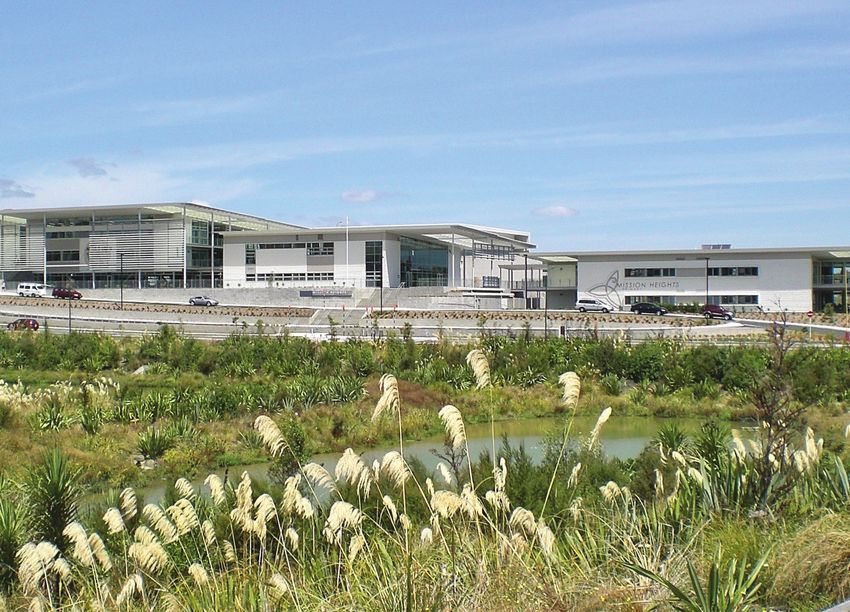
History:
Mission Heights Junior College opened in 2009 as a secondary school catering
for students from Years 7 to 10. The school is situated on land previously owned
by Ngāi Tai Ki Tamaki with whom the school strives to develop a close associa-
tion. The concept of kaitiakitanga or guardianship is taken seriously by the school
community and shown by the excellent care of the grounds and modern facilities
enjoyed by staff and students.

An announcement was made in August 2005 that Mission Heights Primary School
and Mission Heights Junior College would be established as part of a wider Flat
Bush strategy to establish 8 schools serving the new Flat Bush Town Area. The
school serves this fast growing and very diverse multicultural community with a
projected future roll of 1100 students. Mission Heights Junior College has been
built on the same site as Mission Heights Primary School. Each school operates
independently with close collaboration between the boards and management
teams on strategic and operational matters. Both schools have their own Board of
                                                                                        During its first ten years, MHJC established a strong foundation and culture of
Trustees, Charter, Policies and Strategic Goals which are aligned in order to provide
                                                                                        innovation, equity and excellence. The next ten years will build on these and seek
a seamless transition for students. Our other major contributing school, Baverstock
                                                                                        ways to improve the outstanding record of authentic curriculum delivery through
Oaks School, was the first of the 8 schools in the area to be built and opened in
                                                                                        integrated (cross-curricular) specialist classroom teaching within engaging con-
2005. The majority of Year 10 students graduate from Mission Heights Junior Col-
                                                                                        texts.
lege to Ormiston Senior College.
                                                                                        Our vision statement of “growing greatness through innovative, constantly evolving
Mission Heights Junior College has been planned around a model of four whānau
                                                                                        personalised learning” has served us well. It signals that the school works hard to be
“schools within a school” which are central to the teaching and learning and the
                                                                                        forward thinking, reflective and student-centred in its approach.
wellbeing of students. Students are encouraged to live the school’s motto and val-
ues through their actions - to exercise their minds to develop wisdom, their hearts     The Board supports the Principal and Senior Management on its journey to achieve
for compassion and their hands for service. Commitment to the school’s extra-cur-       the school vision. It is open to new ideas which have been well planned and based
ricular programme known as the Four Cornerstones promotes intellectual endeav-          on reliable research and evidence, provides resources for initiatives which will have
our through academic competitions, visual and performing artistic and sporting          a positive impact on student achievement and has a work plan which provides
expression through cultural and sporting activities and leadership through selfless     assurance to the community that the school remains on track to achieve its goals
service.                                                                                and comply with legislative requirements.
We value:
In an increasingly complex, digital world we promote universal and everlasting
values which foster a sense of humanity and community.

MHJC will be a place where everyone will feel connected and valued.

Integrity - pono or how we manage ourselves
We are confident, honest, reliable, resilient, trustworthy, determined individuals.

Compassion - awhinatanga or how we relate to others
We are kind, caring, mindful, supportive, respectful, positive contributors.

Lifelong learning - ako or a love for learning and understanding of how we learn most
effectively
We are collaborative, independent, curious, creative, innovative, reflective, critical
thinkers.

Purpose:                                                                                 Self-efficacy - to articulate and share a common language of learning (Great Ako)
                                                                                         so students will be active participants in the learning process (co-construction), know
We believe that learning is a journey, and that school, as a place of learning
                                                                                         how to learn, how to assess their progress and identify what support they need;
should encourage and inspire students to discover themselves, learn what forc-
es shape the world around them and how they can find their purpose in life. In           Positive world-view - to share a balanced vision of a future filled with challenges
a sense we encourage students to develop their ability to look within (microscope)       and opportunity;
and without (telescope) to make sense of their place in the world.
                                                                                         Global citizens - to understand the challenges the world faces including environ-
Self-discovery - to support and guide our students to discover their authentic           mental sustainability, climate and digital disruption;
selves, passion and purpose;
                                                                                         Cultural inclusion - to embrace and celebrate our multi-cultural community, and
Exploration - to seek beyond self (telescope) on how to become active and positive       be mindful of our obligations in terms of the Treaty of Waitangi and as citizens of
contributors to their local and wider global community;                                  New Zealand/Aotearoa and

Authentic - to provide curriculum set in integrated contexts developed through           Fulfilment - to learn to appreciate and celebrate beauty, nature, justice, truth and
co-construction and collaboration;                                                       life’s possibilities.
Mission:                                             Learning narrative
To build a culture:                                  Learning is like a voyage of discovery: school offers us opportunities to learn about
                                                     ourselves and the world around us.
of inclusion where our differences are celebrated;
                                                     Our whānau represent the four stages on our learning journey.
of collaboration where we support and share;
                                                     Coast Te Takutai whānau
of community where we work together to make a        We have been sailing a long time and at last see a welcoming coastline.The light
difference.                                          blue ripples flowing onto the shore creates a sense of calm, safety and wellbeing
                                                     which uplifts our spirits. We land on the shore and are excited to explore the new
                                                     possibilities this land may offer.

                                                     Forest Te Ngāhere whānau
                                                     We make a base and slowly but confidently explore the interior encountering thick
                                                     forest. It is difficult sometimes to make our way through the dense fauna but we
                                                     are well equipped and have guides to show us safe pathways.

                                                     Water Te Wai whānau
                                                     As we move through the forest we find beautiful rivers. We think creatively to build
                                                     vessels which will bring us safely through calm or turbulent rapids. Intelligent plan-
                                                     ning means we navigate our way smoothly but not without some adventure!

                                                     Mountains Te Māunga whānau
                                                     At last we near the end of our journey as we follow the river’s source to a lofty
                                                     mountain. We learn new skills to scale its peak where we are able to see distant
                                                     lands which encourage us to continue the next stage of our journey.

                                                     Once at the summit we can reflect on our journey - how have we changed, what
                                                     have we learned and what are our next steps?

                                                     We have learnt the essential skills and knowledge to survive and thrive in this new
                                                     land and look forward to guiding the next generation to this wonderful land of
                                                     opportunity.
Strategic goals:
NAG 1 Curriculum To provide a curriculum which challenging, differentiated, future focused, supportive and engaging
Maintain New focus Outcomes
Personalised Supportive learning Investigate digital platforms for other Students gain greater control and
learning relationships/whanaungatanga curriculum areas than Maths and ownership of their individual
English. learning journey.
Quality DEEP programme;
Digital platforms supporting differentiation in Individual learning styles are Teachers have a good
literacy (Reading Plus) and numeracy considered; understanding of how every
(Maths Buddy); student learns and differentiates
Acceleration of priority learners; their teaching to meet the needs
Provision for needs of Gifted and Talented of each student;
Student;
Co-construction of learning contexts and Teachers develop more of a relational Teachers see their role as
outcomes (student voice); than instructional/functional value to guides, facilitators and
Ongoing review of options for Years 9 and the learning experience; motivators;
10; - Students are more engaged in
Supportive learning their learning;
relationships/whanaungatanga
Further refinements to GATE (Gifted All students with special talents
and Talented Education) are identified, provided
opportunities, tracked,
accelerated and enriched.
Closer tracking of priority learners Ensure every student’s needs
are known and considered
Innovative delivery Emphasis on digital technology as a tool to Digital technology Students and staff are
enhance learning outcomes; Address the challenges and innovative, competent and
opportunities of digital disruption responsible users of digital
Continue CYOD policy (Choose Your Own including AI and VR; technology;
Device);
Utilise the benefits of specialist classroom
teaching within broader inquiry based
contexts. Balance 1.Teachers use a flexible blendUse an evidence based approach to of traditional and contemporary
Focus on cross curricular, authentic promote a balance of traditional and learning tools and approaches;
learning outcomes; new pedagogy;
Collaborative context planning within
Professional Learning Communities;
Collaboration 1. Students show greater
Continue focus on Great Ako Develop flexible timetable to facilitate engagement and understanding
greater collaboration and inquiry; of the learning process.
5C’s 1. Curiosity, critical thinking,
Promote critical thinking, communication, creativity and
communication, curiosity, collaboration collaboration are visible in all
and creativity within contexts and learning areas and context
specialist classroom teaching; planning;
Develop these future skills through 2. Student’s skills enhanced in
project based/inquiry approaches. 5C’s and other literacies e.g.
financial
STEAM 1. Students see and are inspired
Seek ways to integrate science, by the connections between
technology, engineering, art and STEAM and other curriculum
mathematics into the curriculum - but areas with authentic outcomes;
maintain balance. 2.The Great Ako model is
reinforced within the STEAM
curriculum;
Consistency 1. Shared marking schedules -
Seek ways to develop consistency WAME;
across whānau and learning areas; 2. Shared successful context
Explore opportunities to integrate ideas and planning;
learning areas within broader contexts 3. Shared literacy models -
or competencies reading and writing;
4. Shared best practice within
learning areas
Global citizenship 1. Students feel closer- Develop programmes which promote connections with international
international connections; communities, trends, events and
- Integrate UN Sustainable movements.
Development Goals into context 2.The idea of think global, act
planning; local is embedded with respect to
-Develop exchange programmes; environmental sustainability etc
- Harness potential of international
students enriching the curriculum
Metacognition 1. Best practice integrated into
Focus on theories and best practice our teaching and learning
related to how to learn and how the
brain learns best.
Embed the MHJC learning model of 1. Students can clearly articulate
Great Ako their learning journey;
school and whānau
narrative will be developed using
the language of Great Ako;
3. Community understands and
can articulate the model;
4. Evidence of use is visible in
practice
Wellbeing/hauora Programmes which provide a safe, Develop reporting practices which 1. Student reflection on learning
welcoming and inclusive learning celebrate a holistic view of students; and self-efficacy evident on
environment; Greater student reflection and voice - students’ reports;
Tracking progress and providing support for self-efficacy 2. All students experience
students; success and gain
Develop quality self-confidence;
relationships/Whanaungatanga t o ensure
all students feel and are valued; Promote mindfulness practices and 1. Students and staff are better
digital detox; able to regulate their
behaviour/emotions/social skills;
2. Fewer students are referred
for behaviour interventions;3. Staff and students feel positive
about being at school;
Establish methods and programmes 1. Students develop and feel
for students to strengthen stronger/richer connections;
connections (with self, others, nature, 2. Students are able to
intergenerational) communicate effectively with
others on a personal level;
Promote social equity 1. Students feel safe expressing
their cultural, gender and sexual
identity;
Four cornerstones Develop programmes which promote Investigate and introduce activities 1. More cultural and leadership
of extra curricular inclusion, participation and excellence. which promote gender and cultural opportunities;
involvement inclusion 2. Monitor the participation of
both boys girls and close gaps
when identified;
3. Provide greater clarity and
transparency over recognition;
4. Integrate into holistic reporting
structures;
Literacy Maintain programmes which promote Align to 5C’s and Great Ako 1. Students are capable of using
reading, comprehension, accuracy and language of Great Ako to
clarity of expression express ideas, concepts and
their learning;
2. Each learning area develops
contextual literacy;
3. Show impact of platforms;
Transition Cater for specific needs of students as they Generate data to show success of 1. Profile successful alumni to
enter and exit the college alumni community;
2. Use NCEA and other
achievement data to assess
student achievement beyond
MHJCNAG 2 Planning and To ensure robust systems and
review processes provide for honest reflection
and inquiry to guide continuous
improvement.
Maintain New focus Outcomes
Reporting to board Mid year and end of year reports; Integrate holistic reporting framework 1. Board is well informed, actively
Focus on whole school data and innovative participates in debate and
rac ice ro whānau discussion of initiatives and
Tracking and monitoring of trends. programmes that add value to
student achievement.
Reporting to Real time reporting of assessments and Holistic reporting including progress, 1. Greater student voice and
community reflections during Student Led Conferences values, qualities, competencies reflection in Student led
Conferences
2. More opportunities for
community to share and
contribute to learning
experiences.
Internal review Examine educational best practice, trends Blended learning methodology using 1. MHJC is at the forefront of
and initiatives for possible implementation; digital and traditional tools; innovative practice
Maintain annual work plan including Greater use of artificial intelligence 2. Teachers are freed to guide as
policies and procedures and digital platforms much as instructNAG 3 Human To provide an environment where
Resources quality staff are attracted, grow and
feel valued.
Maintain New focus Outcomes
Wellbeing/hauora Sensitivity to individual needs through Develop a wellbeing strategy for all 1. An open and transparent culture;
- board as a good mentoring programme; staff and investigate a “long-service 2. Staff feel valued and morale is high;
employer reward” programme. 3. High levels of retention;
4. High quality applicants for
vacancies;
Capacity building Professional development plan and Balance needs of school with 1.Staff feel their professional learning
distributed leadership strategy individual; needs are met and they enjoy
by building collective efficacy; professional growth;
2. The school experiences
organisational growth and
advancement;
3. Data is collected and shared
showing value added of school-wide
initiatives;
Develop leadership programme which 1.Leaders become more effective
provides opportunity, training and mentors and coaches;
support; 2. Staff actively seek and achieve
positions of responsibility - within and
outside the school;
Communication Continue mentoring system Explore new ways of sharing ideas and 1. Staff are well informed, active
best practice. participants in educational research
and debate through a variety of
communication forums;
2. Mentoring and coaching is safe and
provides meaningful professional
growth as well as assurance;
Collaboration Continue PLC planning Explore ways to promote collaborative 1. Utilise research and best practise
curriculum delivery into engaging, inquiry based learning
which provides academic rigour;NAG 4 Finance and To ensure the school is financially
Property stable, well maintained and students
benefit from competent operational
and long term planning
Maintain New focus Outcomes
Budgeting Control, accurate forecasting and Adapt budget to consider an “ageing” 1. Grounds and buildings are safe
allocation of resources site and consider changing needs and well maintained
Property Processes and procedures Develop long term property and 2. The site provides for the current
cyclical maintenance plan in and future curriculum and
conjunction with MHP wellbeing needs of our community
NAG 5 Health and To ensure students, staff and visitors
Safety to the school are safe
Maintain New focus Outcomes
Physical On-going awareness and promotion of Adaptations to consider climate 1. Provision of adequate and safe
culture of safety and collective disruption - extreme weather and shelter - sun and rain
responsibility temperature
Emotional Maintain processes and procedures Wellbeing is promoted for staff and 2. Strategies are implemented
promoting resilience and providing students including on-site wellbeing centre,
support to vulnerable. mindfulness practice (see above)NAG 6 General and To ensure the school meets all its
Legislative legislative obligations
Compliance
Maintain New focus Outcomes
Existing requirement Rigorous controls and checks on Flexibility with use of timetable for 1. Higher levels of engagement
attendance, timetable, behaviour inquiry from staff and students
management, daily times and reporting
Emerging priorities On-going awareness of board’s PD and training for board members as 1. MHJC contributes positively to
obligations needs arise educational debate and
participates in decision making
affecting education.
Connections Continue actions which strengthen Host, present at and attend educational 1. MHJC will have a positive
connections with whanau, local and forums and conferences image in the community which
wider community; Broaden media exposure reflects its vision;
Develop closer ties with Flat Bush 7 2. The community can see strong
cluster of schools. ties with other schools in the Flat
Bush community;
Commitment to Systems to accelerate progress of Further develop community familiarity hānau na es are re erred o
Treaty of Waitangi priority learners; and integration of Tikanga Māori and in English and in Te Reo;
and bicultural ra egic lan or āori and asi i a essential Te Reo Māori; 2. Signs around school provide
partnership Achievement Strengthen connections with Ngāi Tai Ki bi-cultural context;
Tāmaki; 3. All students and staff can
Seek ways to enhance students’ sense of participate in the school haka,
place - understanding of NZ History and powhiri and other cultural events;
that of Flat Bush Area. se āne ores as a resource
for guardianship/kaitiakitangaFactors influencing the charter 3. Human Resources
-while the education sector has experienced some shortages in Auckland we continue
1. Curriculum to attract and retain high quality applicants and should continue to do so if we con-
- with digital disruption set to change the landscape of our world including artificial tinue to resource our PD and staff wellbeing budgets including strategies to promote
intelligence, nanotechnology, renewable energy, and biotechnology, our students staff retention;
need to be prepared to identify and overcome related challenges and exploit possible -the average age of our teachers is well below industry average so we should not be as
opportunities; affected by retirement as other schools but need to have succession plans in place.
- an understanding of digital technology is key to future success as do strong founda-
tions in literacy and numeracy; 4. Finance and Property
- STEAM subjects are being promoted however we believe that creativity, critical think- - our annual operating budget has allowed us to build reserves and we expect a signifi-
ing and problem solving may also be developed in all learning areas; cant capital injection next year to support our first 10 year property plan.
- MOOCs (Mass, Open, Online Courses) and digital platforms which can deliver content - as the site gets older more resourcing will be needed for maintenance;
and skills, assess and provide feedback and forward will challenge traditional teachers - development of a long term ‘master’ plan for property in conjunction and collabora-
but liberate others who will be freed to inspire, guide and provide even more personal- tion with MHP.
ised support to students;
- schools and teachers who can add relational as well as functional/instructional value 5. Health and Safety
to the educational experience will thrive; -the most significant trend recently relates to Health and Safety. The Board of Trustees
- discussion of a more holistic approach to curriculum delivery, assessment and report- is aware of the greater exposure the Principal and staff face when providing authentic
ing is expected with an emphasis on key competencies, dispositions and qualities (see experiences to students - particularly EOTC (Education Outside The Classroom) and
our values below); strategies to promote a culture of safety and minimise risk should be developed to
- an increasing emphasis on student wellbeing will be needed to promote resilience continue to provide these opportunities;
and address the disconnected/connected generation which incorporates rich and var- - the emotional wellbeing of staff and students will be a focus with programmes to
ied EOTC opportunities which promote physical, emotional and environmental ideals; promote resilience and support will be provided.
- as a junior college we see our role to transition students to a senior college and sup-
port the more flexible approach to NCEA adopted by local senior schools; 5. Legal requirements and compliance
- innovative ways to deliver the curriculum are being developed which retain a bal- - significant progress has been made with regards our Treaty of Waitangi obligations
ance between inspiring students through specialist subject knowledge and skills and which we will strengthen further;
understanding links through an inquiry based, integrated context (balance the how - our New Zealand identity should be clearly reflected in our site and our practices.
and why);
- the need for greater teacher collaboration and student agency will be achieved REFERENCES:
through these approaches. NZ Curriculum; NZSTA;
Te Kete Ipurangi - Ministry of Education Publication; The Nature of Learning - Using Research to In-
2. Planning and Self-Review spire Practice - Edited by David Istance and Francisco Benavides; Visible Learning Plus - 250 Influences
- MoE predicts limited growth by 2030 which means we will remain at approximately on Student Learning Reinventing schools from the brain up - Andrew Fuller; Global Citizens Foun-
dation - The Critical 21st Century Skills every Student Needs and Why; United Nations - 17 Sustainable
800 students - ideal to maintain our schools within school model;
Development Goals; The Nature of Learning: adaptive expertise (http://www.oecd.org/education/
- the Tomorrow’s Schools review will have important implications for the governance ceri/50300814.pdf)
and management of MHJC; OECD 20-30: the future of Education and Skills (https://www.oecd.org/education/2030/E2030%20
- we expect the ethnic composition of our student roll to remain constant and we will Position%20Paper%20(05.04.2018).pdf )
continue to celebrate our cultural diversity; NZCER: Life Long Learners http://www.visualcapitalist.com/skills-needed-survive-robot-workplace
- we will expect the number of immigrant families to decline slightly however Flat Bush David Perkins ‘Futurewise’ - clarifying pathways (Big in insight, Big in action, big in ethics, big in
opportunity) Guy Claxton - split screen thinking: book and supporting workbooks (develop compe-
remains a sought after area for new arrivals so resourcing of ESOL, reading and literacy
programmes remain a focus. tencies alongside the discipline knowledgehttps://www.youthwellbeingreport.com/You can also read


