Charter 2021 - Ellesmere College
←
→
Page content transcription
If your browser does not render page correctly, please read the page content below
Charter 2021
Ko Aoraki te maunga                                Aoraki the sacred mountain

Ko Rakaia te awa                                   The waterways of Rakaia

Ko te Hāpua o Waihora                              Ellesmere lagoon

Ko Taumutu te marae                                Taumutu is the marae

Ko te Kāreti o Waihora te kura                     Ellesmere College is the school

Tihei mauri ora!                                   Behold the breath of life!

                                     School Haka
Torona Titaha – Titaha                             Extended outwards

Piwaiwaka                                          The fantail

Piwaiwaka                                          It flies to and fro

Aue ka rere tāku manu ki Nuku Manaia               taking flight to Nuku Manaia

E rere whakarunga e rere whakararo                 Upwards and downwards

Ki te awa Rakaia                                   To the Rakaia

Ki te hapua Waihora                                To Ellesmere Lagoon

Ko te kete ika a Rakaihautu                        The fish basket of Rakaihautu

Tū tangata, tū tangata, tū tangata                 Stand tall

Aue, ko Ruahikihiki                                Ruahikihiki

Te tipuna                                          The ancestor

Ko Ruahikihiki                                     Ruahikihiki

Te Tangata                                         The person

Ko Ruahikihiki                                     Ruahikihiki

Te Hapua                                           The extended family

Ngā Te Ruahikihiki                                 Ngai Te Ruahikihiki

Te mana, te wehi, te ihi e                         The mana, the awe, the prestige

Aue hi                                             It is done
Contents School Haka ............................................................................................................................................................. 2 Introduction ............................................................................................................................................................ 4 Mission Statement .................................................................................................................................................. 6 Vision ....................................................................................................................................................................... 6 Values ...................................................................................................................................................................... 7 Profile of an Effective Ellesmere College – Te Kāreti o Waihora Kaiako ................................................................. 8 Aspriations for our Ākonga ..................................................................................................................................... 9 Strategic Plan Overview: 2019-2023 ..................................................................................................................... 10 2019-2023 Strategic Annual Plan Summary ......................................................................................................... 11 Action/Annual Plan – 2021 ................................................................................................................................... 12 Analysis of Variance – Senior Data........................................................................................................................ 17 NCEA Level 1 ......................................................................................................................................................... 17 Students who did not achieve NCEA Level 1 ........................................................... Error! Bookmark not defined. NCEA Level 2 ......................................................................................................................................................... 20 Students who did not achieve NCEA Level 2 ........................................................... Error! Bookmark not defined. Students who did not achieve NCEA Level 3 ........................................................................................................ 21 Students who did not achieve NCEA Level 3 ........................................................... Error! Bookmark not defined. Board of Trustees Annual Self-Review & Action Plan 2021 .................................................................................. 23
Introduction

Located in the scenic rural landscape of small-town Leeston, Ellesmere College - Te Kāreti o Waihora is an
innovative and inclusive educational community which provides a challenging and caring learning environment
that enables and encourages all ākonga to be resilient and adaptable lifelong learners who enjoy exploring and
positively contributing to an ever-changing world. We aim to empower our ākonga to lead rewarding, culturally
rich, sustainable and fulfilling lives as active, independent and caring members of society in Aotearoa/New
Zealand. The school is located in the takiwā of Te Taumutu Rūnunga and the school has actively worked to
strengthen partnerships with Te Taumutu Rūnunga and with local papatipu marae. At the beginning of 2020,
there were 588 ākonga enrolled. 13.3% of ākonga are Māori, 75.2% Pākeha/NZ European, 5.9% Asian (Mainly
Philipino) and 3.3% Pasifika.

History of Ellesmere College – Te Kāreti o Waihora
Located in the takiwā of Te Taumutu Rūnunga, Southbridge District High School opened in the grounds of
Southbridge School in 1903 and was housed in some of the primary school’s buildings. The primary and district
high school remained merged until 23rd October 1924 when buildings were destroyed by a suspicious fire.
Southbridge District High School was rebuilt on the same site while the Southbridge School was rebuilt on the
opposite side of the street. In 1981, Southbridge District High School was closed and Ellesmere College – Te
Kāreti o Waihora was founded in Leeston.
The buildings which make up 95% of the school were built in Timaru in 1980 and transported to the present site
in Leeston. During transportation one of the buildings came off the back of a truck as it crossed the Rakaia with
the classroom ending up in the river. The school opened in February 1981 with a blessing from prominent Te
Taumutu Rūnunga kaumātua and Ngai Tahu rangatira the late Riki Te Mairaki Ellison. The school gym is named
in his honour and at the time of his death, Matua Riki was a member of the Board of Governors. On opening
day, the school was dedicated as a Marae by Riki Te Mairaki Ellison and for several decades it was believed that
it was the only secondary school in the South Island to be opened and dedicated as a Marae. 23 staff and 380
foundation pupils started that year. Several of these foundation pupils are current staff members and members
of the Board of Trustees. Over the past four decades, additional prefabricated buildings have been added to the
school and the student body has grown to over 560 ākonga.
The school primarily serves the Leeston, Dunsandel, Doyleston and Southbridge communities. However, ākonga
are drawn from a large enrolment zone which stretches between the Rakaia and Selwyn Rivers. A large number
of ākonga live in the rural hinterland and are transported to school each day by school bus.
The school is staffed by committed and highly qualified professionals focused on delivering robust, challenging
programmes that prepare ākonga to be successful adults of the future. There is a strong professional
development focus for all staff, centred on professional inquiry approaches, and an understanding that all
professional development includes evidence-based and culturally responsive and sustaining best practice.
Such an approach ensures that national and local priorities for all ākonga are addressed.

The Board of Trustees recognises the importance of its role in raising student achievement and that school
planning must focus on improving the standard of all learners, especially those who require more support. The
Board supports the Ministry of Education focus on priority learners – Māori, Pasifika and those with special
education needs. Such a focus reflects the school’s commitment to recognising that ‘one size fits all’ is not
appropriate in terms of educating the adults of the future. Our school welcomes diversity and aims to provide
opportunities for all learners to learn and achieve in an inclusive and supportive environment.

In particular, the school recognises the special place of Tikanga Māori and Te Reo Māori in the curriculum and
Te Ao Māori across the school. Ākonga requesting instruction in Tikanga Māori and Te Reo Māori are provided
for, as far as possible, within the school. Ngati Moki is our local marae at Taumutu which the school has strong
connections to through ākonga and the Parent Whānau Committee, who were recognised for their work at the
Selwyn Awards in 2018.
Ellesmere College – Te Kāreti o Waihora is a small school with a student population of approximately 580.
However, Selwyn District is one of the fastest-growing districts in New Zealand and the school population is
expected to grow over the coming years. The school has ample physical space to cope with this growth being
located on generous grounds. The large amount of land which the school occupies also reinforces the rural feel
of the school which is important to both ākonga and the local community.
The school sits at the heart of the vibrant rural Leeston District and is proud of being a local community school
which works with and for its local community. Links are well established with local organisations such as the
Selwyn District Council, the local medical centre, the Leeston Library, commercial interests and the various
social agencies the school has relationships with. There is considerable interaction with the wider community
during the day, and in the evening/weekends with several local clubs and organisations using the school as a
meeting place. Parents, caregivers and volunteers are involved in many facets of school life and there is a
strong Parent-Teacher Association and Whānau Committee.
Over the last 5 years, NCEA results have shown consistent improvement. These improvements have been
supported through:
Academic Tracking and Mentoring
Engagement Reports
Real-Time Assessment Feedback and Reporting
Curriculum Innovation and Design
Links with external providers
Achievement and engagement initiatives
Culture of high expectations
An inclusive learning environment
Positive relationships between staff and ākonga
Culture of professional inquiry.
Being located in a rural area has the disadvantage of a lack of public transport and many of the senior ākonga
drive to school. As a small school, Ellesmere College – Te Kāreti o Waihora offers as broad a range of subjects as
possible. However, some ākonga who wish to study subjects which the school cannot offer do so via video-link
and through dual enrolment with NetNZ. A number of ākonga also take advantage of Secondary-Tertiary
Pathway programmes provided by external providers such as Ara, spending one or two days a week off-site. The
Gateway programme is also a popular choice for senior ākonga.
Kaiako are well supported through targeted professional learning and development that focuses on student
learning and wellbeing, and how each student can be best supported to succeed. Every Monday morning
teaching staff engage in facilitated professional learning and development sessions as a whole, or in
departments/small groups. Targeted data analysis is used to identify specific needs within the school, inform
pedagogical practice, and is used to make informed decisions to ensure a culture of continuous improvement.
The school operates a well-established distributed leadership model which effectively supports the
management of change, succession planning and sustainability. The delivery of effective pedagogy continues to
drive the culture of teaching and learning to ensure that value is added to each student’s holistic learning and
that they leave Ellesmere College – Te Kāreti o Waihora prepared for the next steps on their individual journey.
Ellesmere College – Te Kāreti o Waihora works collaboratively with local Early Childhood Centres and primary
schools through Ngā Mātāpuna o te Waihora Kāhui Ako which was established in 2017.The College has been heavily involved in the Primary ITO Rural Trades Academy and this is a thriving area of the school. The Rural Trades Academy works alongside NCEA and Year 11 or 12 ākonga can combine their NCEA studies with a National Certificate in Agriculture or Horticulture (Level 1 or 2). International students play an important role in adding to the cultural richness to Ellesmere College – Te Kāreti o Waihora. Up to 25 long-term international students study at Ellesmere College – Te Kāreti o Waihora and numerous groups visit the school throughout the year, with the majority being from Japan. The school has long- standing links with sister schools Urawa Minami Kookoo and Tokushima Kita Senior High School in Japan. Biannual trips from Ellesmere College – Te Kāreti o Waihora to Japan take place, while ākonga from Urawa Minami visit yearly. The school is currently growing strong links in Thailand, Korea, Vietnam and China and we expect to see increasing numbers of international students attending the College over the coming years. The school celebrates student achievement in a range of different areas including academia, sports, the arts and culture. We experience varying levels of community engagement and support, with a recent focus on improving communication with the local community and publicly celebrating ākonga success. Recently we have seen increased attendance and participation of parents and whānau at school-related events. At the beginning of 2020 new systems of academic tracking, monitoring and mentoring were implemented along with changes to Parent-Teacher interviews. The model of academic mentoring and Parent-Student-Teacher conference is based on the research and work completed by the Starpath Project at the University of Auckland. It is hoped that these changes will increase parent and whānau engagement while developing and strengthening partnerships between school and home. Mission Statement Ellesmere College will provide a challenging and caring learning environment responsive to the learning needs of all students. Vision Our students will be confident and motivated young people who are good citizens and lifelong learners
Values
Whakaute/Respect Pāhekoheko/Integrity
Being polite to others/Kia atawhai ētahi atu Being honest and trustworthy/Kōrero pono me te
Caring for our surroundings/ Tiaki ōu wāhi tika
Showing self-respect/Whakaatu ōu kiritau Following through on your commitments/Whāi
atu ou herenga
Being responsible/Kia noho haepapa
Momoho/Success Ngākau Aroha/Empathy
Giving your best/Me karawhiu koe Treating others the way you want to be
Persevering/Pūnoke treated/Tiaki ētahi tangata pērā i a koe
Identifying goals and achieving/Tautohu ōu Caring for others/Manaaki ētahi atu
whāinga me ōu haumāuiui Being community-minded/Hapori tautokoProfile of an Effective Ellesmere College – Te Kāreti o Waihora Kaiako
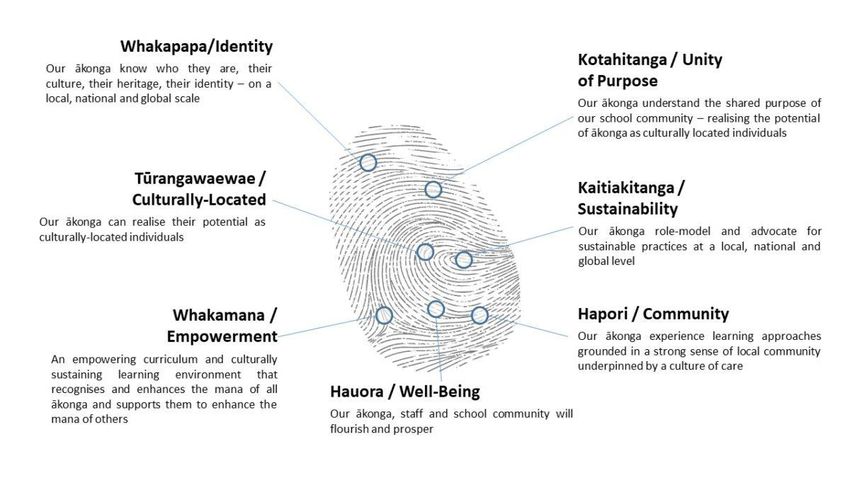
Aspirations for our Ākonga
Strategic Plan Overview: 2019-2023
Our Community – Continued high
Strategic Our Valued Outcomes – Positive student
Our People – strong culture of inquiry community trust and school of choice for
Focus outcomes: quantity & quality
local community
Professional expertise widely Positive well-being indicators across the A community school – inviting, friendly,
acknowledged as ‘best practice’ and school community respected
leading edge All students leaving school with a relevant School is hub of the community
Shared understanding of effective qualification (minimum NCEA Level 2) Relationships between students, school
teaching and learning High levels of excellence in achievement and home are positive and
New pedagogies for deep leaning Positive learning culture & environment educationally powerful
embedded in teaching practice All students have clear learning and Modern, fresh, contemporary buildings
Quality information accessible to achievement goals provide multi-functional, flexible 21st
inform evidence-based inquiry Self-directed learning flourishing century learning environment
What will this Inquiry-based practices fundamental to Clear curriculum and vocational pathways Te Ao Māori and biculturalism evident
look like by professional learning and change evident and culturally sustaining
2023? management Rich learning opportunities within and outside Focus on sustainability
Professional learning conversations the classroom with connection to local Strong learning and business
common place contexts partnerships with community
Common language of learning and Strong programme of Academic Mentoring Continued steady roll growth from
assessment and tracking of achievement with students inside school zone
Priority learners identified and inquiring into their own learning Quality staff seek employment with the
supported to accelerate & achieve school
Quality extra & co-curricular Students sought by universities,
programmes provide rich learning training providers & employers
opportunities and experiences
Key Strategies Education Brief focused on New Pedagogies for Deep Learning Values-based school-wide framework for well-being
Curriculum design, assessment & academic counselling are Vision & resourcing for 21st Century flexible learning environment
strongly aligned through common language of learning Local, bi-cultural and global relationships strengthened and
Model of Inquiry informs decision-making across the school developed
including PLD and Appraisal2019-2023 Strategic Annual Plan Summary
Theme: Future Focus for 21st Century Learning
Our Community – Continued high community
Our Valued Outcomes – Positive student
Strategic Focus Our People – strong culture of inquiry trust and school of choice for local
outcomes: quantity & quality
community
What will teaching and learning look like in What are our valued outcomes for our students? How can we engage with the local
Key Focus
2023? What 21st Century skills and dispositions do community to strengthen relationships with
Questions
they need to be successful? external key stakeholders?
1. Strengthen model of new pedagogies 2. Strengthen range of strategies to track, 3. Strengthen collaboration between the
for deep learning which is monitor and enhance student hauora and school and wider community
individualised, connected, visible, achievement
2021 Goals
future-focused and culturally sustaining
4. Strengthen collaborative and shared decision-making structures across the school to enhance our bicultural partnership obligations and
responsibilities under Te Tiriti o Waitangi/Treaty of Waitangi, and commitment to valued outcomes in our school community.
Development and continuous review of Yr 7- Develop & implement a Well-Being framework Develop and further strengthen links to
9 Ako and Connected Learning Modules across the school – Te Whare Mauri Ora – Kāhui Taumutu Rūnanga
Investigate semeterisation of Year 11 courses Ako Led Provide effective leadership and support for
Data & evidence accessible and used to Strengthen model of academic tracking and Ngā Mātāpuna o te Waihora Kāhui Ako
inform and drive individual professional mentoring through Hapori initiatives
growth cycles Develop & implement a common model of Enhance opportunities to build collaboration
2021 Goal Focus
Shared language of learning and assessment leadership across the school – both staff & between home and school in relation to
Areas students student well-being
– SOLO is embedded across the school
Investigate other rebuilt schools’ successes Finalise Graduate Student Profiles Masterplan for school rebuild finalised
and failures Culture of risk-taking without fear of failure Design phase for school rebuild underway
Implement learning management system Develop and strengthen links with local
across the school – it’s learning businessAction/Annual Plan – 2021
Goal Actions Success Criteria/Targets
1. Strengthen model of new pedagogies for deep learning Whole School Use of SOLO Taxonomy is highly evident in class
which is individualised, connected, visible, future-focused PLD plan implemented with focus on SOLO and in assessments/reporting across the school
and culturally sustaining Taxonomy; culturally sustaining pedagogy, Increased evidence of use of pedagogical
professional growth cycles practices which are culturally appropriate,
Staff actively engaged in refresh of New relevant and responsive to the needs of
Zealand Curriculum students
Increased evidence of a curriculum which is
localised and student-driven
Hauora Common understanding of Te Whare Mauri Ora
Te Whare Mauri Ora framework is across the school and evidence of the
introduced and understood by staff and framework being incorporated into pedagogical
students planning
Middle School Successfully integrated Year 7-9 curriculum
Collaborative planning to integrate areas through Ako and Connected Learning
curriculum areas in Years 7-9 and Modules
development of Year 10 Ako & Connected Readiness to introduce Year 10 Ako & 9-10
Learning Modules to be introduced in 2022 Connected Learning Modules
Reflection, review and refinement of the Review of Year 7-9 Ako and Connected Learning
Year 7-9 Ako and Connected Learning Modules has been completed
Modules
Senior School Redesigned semesterised programmes for Year
Workforce focused on 2022 Year 11 11 in 2022 & planning for Year 12 2023
curriculum/Two year NCEA Level 2 Staff have understanding of, and are planning
programme for, the changes to NCEA
Staff actively engage in redesign of NCEA
2. Strengthen range of strategies to track, monitor and enhance Whole School Accelerate achievement of identified students
student hauora and achievement Development of an Evidential Database to at risk of not achieving towards more equitable
track and monitor student achievement and outcomes with wider school performance
to identify students at risk of not achieving Teachers actively using achievement data to
inform pedagogical decision-making Assessment data made available to staff in Teachers working in collaborative teams and
an easy to use format to inform positively engaging in professional learning
inquiry/pedagogical decision-making conversations based on evidence
Continue to strengthen and develop student Functioning committees, successful leadership
leadership roles across the school development & succession planning, positive
Development and promotion of teams and student-driven/led events
clubs to meet students’ interests Increased participation in student extra-
curricular activities
Hauora Positive increase in well-being indicators
Kāhui Ako Well-Being Team develop and (NZCER Survey)
implement a framework for well-being Positive change in statistics collected through
across the school & Kāhui Ako the KIVA Programme
Strengthen the KIVA Bullying Education Achieve higher PB4L School Evaluation Tool
Programme score and move to Tier 2
Embed RISE processes & PB4L across the
school
Middle School System developed and in use to track progress
Develop system of tracking progress and and curriculum coverage of Year 7-9 students
curriculum coverage across Ako and asTTle testing shows a trend of acceleration of
Connected Learning Modules identified students who are below/at to
Focus on shifting students who are below/at at/above curriculum level
expected curriculum level to at/above
Academic Targets
Literacy
Yr 7 - 65% of students at/above expected curriculum
level (51% at beginning of 2021 at/above - shifting
extra 12 students from below to at/above)
Yr 8 - 80% of students at/above expected curriculum
level (72% at beginning of 2021 at/above - shifting
extra 7 students from below to at/above)
Yr 9 - 75% of students at/above expected curriculum
level (64% at beginning of 2021 at/above - shifting
extra 10 students from below to at/above)Yr 10 - 60% of students at/above expected
curriculum level (42% at beginning of 2021
at/above - shifting extra 13 students from below to
at/above)
Numeracy
Yr 7 - 60% of students at/above expected curriculum
level (47% at beginning of 2021 at/above - shifting
extra 12 students from below to at/above)
Yr 8 - 60% of students at/above expected curriculum
level (42% at beginning of 2021 at/above - shifting
extra 14 students from below to at/above)
Yr 9 - 65% of students at/above expected curriculum
level (51% at beginning of 2021 at/above - shifting
extra 13 students from below to at/above)
Yr 10 - 50% of students at/above expected
curriculum level (24% at beginning of 2021
at/above - shifting extra 20 students from below to
at/above)
Senior School System in place to monitor and track students
Develop system to monitor and track beyond ou Kāhui Ako
students beyond our Kāhui Ako Senior Hapori Teachers actively tracking the
Introduction of Senior Hapori classes – Yr 13 academic achievement and hauora of senior
Hapori being overseen by SLT; Yr 10-12 students
Hapori classes overseen by Hapori
Coordinator
Academic Targets
NCEA Level 1
Literacy – 100%
Numeracy – 100%
NCEA Level 2
Overall – 90% (Above 2020 EC, National & Decile 8-
10 Average)Male – 86% (Above 2020 EC, National & Decile 8-10
Average)
Female – 95% (Above 2020 EC, National & Decile 8-
10 Average)
Endorsements:
Merit – 25% (2020 National Average)
Excellence – 18% (2020 National Average)
NCEA Level 3
Overall – 81% (2020 Decile 8-10 Average)
Male – 68% (2020 National Average)
Female – 90% (Above 2020 EC, National & Decile 8-
10 Average)
Endorsements:
Merit – 32.3% (2020 Decile 8-10 Average)
Excellence – 18% (2020 National Average)
School Leavers
Overall – 86% achieved at NCEA Level 2
Male – 83% achieved at NCEA Level 2
Female – 89% achieved at NCEA Level 2
3. Strengthen collaboration between the school and wider Whole School Increased engagement and strengthened
community Develop and further strengthen links to relationship with Taumutu Rūnanga
Taumutu Rūnanga Increased engagement of school staff with
Provide effective leadership and support for work being carried out by Ngā Mātāpuna o te
Ngā Mātāpuna o te Waihora Kāhui Ako Waihora Kāhui Ako
initiatives Engagement of local community well-being
Enhance opportunities to build collaboration organisations and work effectively with whānau
between home and school in relation to in area of well-being
student well-being Strengthened links with local business through
Develop and strengthen links with local Gateway, Rural Trades Academy, Business
business and local councilStudies and engagement of students in local
business community
4. Strengthen collaborative and shared decision-making Whole School Increased interest and engagement of whānau
structures across the school to enhance our bicultural partnership Increase student (and in particular Māori to revitalise Whānau Committee meetings
obligations and responsibilities under Te Tiriti o Waitangi/Treaty of student) voice in decision-making Impact of decisions on students is central to
Waitangi, and commitment to valued outcomes in our school Refresh Whānau Committee our actions
community. Student-centered approach to decision- Board of Trustee members have an increased
making understanding of their role and are actively
Board of Trustees professional development succession planning for the 2022 elections
& succession planning for the futureAnalysis of Variance – Senior Data
NCEA Level 1
Baseline Data NCEA Level 1:
Overall Achievement Merit Endorsements Excellence Endorsements
Academic Ellesmere Ellesmere Ellesmere
National Decile 8-10 National Decile 8-10 National Decile 8-10
Year College College College
2016 76.8 75.3 83.2 23.8 32.8 39.3 15.9 19.7 28.7
2017 87.5 75.0 81.9 40.0 33.0 39.4 10.0 20.0 28.5
2018 84.5 72.4 81.0 40.0 34.3 40.4 11.7 20.5 29.5
2019 75.6 70.6 78.8 22.6 33.9 40.6 12.9 19.9 28.3
2020 73.8 71.6 75.4 24.2 32.4 37.9 12.9 20.7 30.2
Actions Outcomes Reasons for the variance Evaluation
What did we do? What happened? Why did it happen? Where to next?● Supported learning class ● Overall Year 11 student ● Please see details below for ● Level 1 phased out – students focus on
● Wide range of subjects on achievement was at National individual students who did gaining Numeracy, Literacy and some Level 2
offer levels and just below Decile 8- not achieve NCEA Level 1 and credits in the second half of the year
● Differentiation within 10 levels. their feedback ● Semesterisation of Level 1 courses – provide
subjects so classes available ● Ellesmere College male Year ● Attendance levels flexibility and more choice
at student’s learning level 11 students (76.2%) ● Lack of engagement ● Hapori classes to track and monitor progress
● Differentiation within classes outperformed Year 11 male ● High availability of low-paying
and lessons students both nationally agricultural jobs within the
(69.4%) and in Decile 8-10 community – particularly
● Multi-level classes
schools (71.3%). post-Covid lockdown
● Special assessment conditions
● Ellesmere College male Year ● Covid lockdown and changing
for a large number of
11 students (76.2%) alert levels
students
outperformed their female
● Very small class sizes
counterparts (71.4%)
● Catch-up programmes
● Female Ellesmere College
● Academic tracking and student achievement (71.4%)
mentoring through Learning was below (73.9%) national
Advisory and targeted and well-below Decile 8-10
support in Term 3 (79.6%)
● Implemented Starpath-style ● Ellesmere College merit
Parent-Student-Learning endorsements are below
Advisor Conferences – Goal- national and Decile 8-10
Setting/Tracking Achievement levels
● Online learning journals – ● Ellesmere College excellence
parents can access student endorsements are below
work national and well below
Decile 8-10 levels
● Huge increase in attendance
at PSLA Conferences – over
85% of students and parents
attended the goal-setting
conference at the beginning
of the year. Due to Covid alertlevels no other PSLA conferences took place
NCEA Level 2

Baseline Data NCEA Level 2:

                                                                 Overall Achievement                     Merit Endorsements                       Excellence Endorsements
                                              Academic    Ellesmere                              Ellesmere                                  Ellesmere
                                                                       National Decile 8-10                    National  Decile 8-10                      National   Decile 8-10
                                                Year       College                                College                                    College
                                                2016          89.2        78.4         85.0         15.2           23.7          30.9         21.2          16.0           23.7

                                                2017          80.3        78.5         84.7         17.5           23.5          30.2         10.5          16.4           23.7

                                                2018          88.2        77.6         84.2         19.4           25.2          32.1          7.5          16.5           24.2

                                                2019          86.0        77.5         84.2         28.6           25.1          32.5         16.3          16.7           23.9

                                                2020          87.9         80          85.7         17.2           25.0          31.3         13.8          17.9           25.6

Actions                                      Outcomes                                  Reasons for the variance                    Evaluation
What did we do?                              What happened?                            Why did it happen?                          Where to next?

    ●   Wide range of subjects on offer         ●   Year 12 Ellesmere College              ●   Please see details below for             ●   Increase number of Gateway placements
    ●   Differentiation within subjects so          students outperformed (87.9%)              individual students who did not          ●   Review cycle of courses and curriculum areas –
        classes available at student’s              other students nationally (80%)            achieve NCEA Level 2 and their               particularly in relation to endorsements
        learning level                              and in Decile 8-10 schools                 feedback                                 ●   Intensive tracking
    ●   Differentiation within classes              (85.7%)                                ●   Attendance levels                        ●   Provision of higher quality Careers
        and lessons                             ●   Some disparity between                 ●   Lack of engagement                           Advice/Education
    ●   Multi-level classes                         achievement of Year 12                 ●   High availability of low-paying
                                                    Ellesmere College male students            agricultural jobs within the
    ●   Special assessment conditions
                                                    (83.3%) and female students                community – particularly post-
        for a large number of students
                                                    (93.3%)                                    Covid lockdown
    ●   Very small class sizes
                                                ●   Ellesmere College merit &              ●   Covid lockdown and changing
    ●   Catch-up programmes
                                                    excellence endorsements are                alert levels
    ●   Academic tracking and                       below national and well below
        mentoring through Learning                  Decile 8-10 levels
Advisory and targeted support in ● Huge increase in attendance at ● High availability of low-paying
Term 3 PSLA Conferences – over 85% of jobs within the community,
● Increased expectation with students and parents attended particularly in the agricultural
regard to attendance the goal-setting conference at sector – this has increased post-
● Grew the number of students the beginning of the year. Due to lockdown
who are engaged with Gateway Covid alert levels no other PSLA
and Secondary-Tertiary conferences took place
Pathways
● Implemented Starpath-style
Parent-Student-Learning Advisor
Conferences – Goal-
Setting/Tracking Achievement
● Online learning journals –
parents can access student work
Students who did not achieve NCEA Level 3
Baseline Data NCEA Level 3:
Overall Achievement Merit Endorsements Excellence Endorsements
Academic Ellesmere Ellesmere Ellesmere
National Decile 8-10 National Decile 8-10 National Decile 8-10
Year College College College
2016 82.2 64.2 75.8 13.5 27.2 33.9 16.2 14.5 19.1
2017 69.8 65.5 76.4 18.2 26.7 32.8 13.6 15.5 20.4
2018 54.4 66.1 76.5 19.4 27.0 33.8 16.1 15.0 19.2
2019 69.2 67.3 76.9 16.7 26.2 32.2 13.9 14.8 19.4
2020 71.1 72.3 80.9 31.3 26.4 32.3 12.5 17.5 23.1Actions Outcomes Reasons for the variance Evaluation
What did we do? What happened? Why did it happen? Where to next?
● Supported learning class ● Year 13 students performed ● Please see details below for ● Two senior leaders act as Hapori/Learning
● Wide range of subjects on just below national averages individual students who did Advisors throughout the year
offer but did not perform as well as not achieve NCEA Level 3 ● Intensively track and monitor academic
● Differentiation within other Year 13 students in ● Attendance levels is a very progress and attendance of students
subjects so classes available Decile 8-10 schools common trend and this was ● Review cycle of courses and curriculum
at student’s learning level ● Significant difference in similar to trends in 2018 areas
● Differentiation within classes Ellesmere College Level 3 ● Lack of engagement
and lessons achievement by female ● High availability of low-paying
students (88.9%) when jobs within the community,
● Special assessment conditions
compared to male students particularly in the agricultural
for a large number of
(44.4%) sector – this has increased
students
● Ellesmere College merit post-lockdown
● Very small class sizes
endorsement levels are above
● Catch-up programmes
national and equitable to
● Multi-level classes Decile 8-10 levels
● Academic tracking and ● Ellesmere College excellence
mentoring endorsement levels are below
● Increased expectation with national & Decile 8-10 levels
regard to attendance ● Huge increase in attendance
● Implemented Starpath-style at PSLA Conferences – over
Parent-Student-Learning 85% of students and parents
Advisor Conferences – Goal- attended the goal-setting
Setting/Tracking Achievement conference at the beginning
● Online learning journals – of the year. Due to Covid alert
parents can access student levels no other PSLA
work conferences took placeBoard of Trustees Annual Self-Review & Action Plan 2021
Review Area of Review 23-Feb 30-March 25-May 29-June 27-Jul
Strategic Review Strategic and Annual Charter & Annual Plan Draft Analysis of
Plan approved by BoT Variance for 2020
Regular Review Learner Progress and Preliminary NCEA NCEA results Update on NCEA Update on NCEA
Achievement Results confirmed achievement data achievement data
Report on asTTle
testing for junior
Staff PLD Mid-year report on
students
asTTle testing
Staff PLD
Staff PLD
Attendance data for
Term 1
Attendance data for
Term 2
Feedback on
Department Review
Process
Other Reports Health & Safety Health & Safety Health & Safety Health & Safety Health & Safety
Report Report Report Report Report
HR Principal Performance Principal Performance
Agreement Approved Informal reviewAdministration Property and Finance Property and Finance Property and Finance Property and Finance Property and Finance
Report Report Report Report Report
Budget Review and approval Monitor Monitor Mid-Year Review Monitor
Emergent Review New government
intitiatives
Board Process Appoint chairperson Accounts to Auditor Annual Report
Requirements Approve schedule of approved and sent to
delegations MoE
Policy UpdatesReview Area of Review 31-Aug 28-Sept 26-Oct 30-Nov
Strategic Review Strategic and Annual Develop Strategic Plan Draft Strategic Plan Draft Annual Plan
Plan Completed presented & Ratified
Regular Review Learner Progress and Update on NCEA Update on NCEA Update on NCEA Report on asTTle
Achievement achievement data achievement data achievement data testing – progress and
acceleration made in
Years 7-10
Attendance data for
term 3
Other Reports Health & Safety Health & Safety Health & Safety
Report Report Report
Staff PLD
HR Principal Professional Staff Professional
Growth Cycle review Growth Cycle Report
Principal Professional
Growth Cycle Report
Administration Property and Finance Property and Finance Property and Finance Property and Finance
Report Report Report Report
Budget Budget requests to 2022 Draft Budget 2022 Draft Budget
HELAs Approved
Emergent Review New government
intitiativesBoard Process Requirements
You can also read


