Charter 2021 - Woodford House - School MOE No: 225 Ratified by Board of Trustees - 23 February 2021
←
→
Page content transcription
If your browser does not render page correctly, please read the page content below
Charter 2021

 Woodford House - School MOE No: 225

Ratified by Board of Trustees – 23 February 2021
Charter 2021
Context and Background ....................................................................................................................... 3

Our Philosophy .......................................................................................................................................... 3

Our Identity................................................................................................................................................. 4

Our Guiding Principles ............................................................................................................................ 4

Strategic Priorities..……………………………………………………………………………………………………….4

Specific Strategic Aims for 2021 ......................................................................................................... 4

Academic Achievement .......................................................................................................................... 6

The Arts ........................................................................................................................................................ 8

Sport .............................................................................................................................................................. 9

Digital and Information Technology .............................................................................................. 10

Strategic Plan .......................................................................................................................................... 11

Boarding ................................................................................................................................................... 11

Building Projects .................................................................................................................................... 12

Communication and Marketing Initiatives ................................................................................... 12

Recognising Cultural Diversity .......................................................................................................... 12

Success for All ......................................................................................................................................... 14

National Education Priorities ............................................................................................................. 15

2021 Analysis of Variance for 2020 ………..……. ............................................................................ 23

2021 Targets ............................................................................................................................................ 37

2021 Annual Plan (including Targets) ............................................................................................ 38

Other Key Improvement Strategies ................................................................................................ 53

School Policies and Procedures........................................................................................................ 55

School Profile .......................................................................................................................................... 58

Key for Acronyms .................................................................................................................................. 60

2 | W o o d fo r d H o u s e C h a r t e r 2 0 2 1

Charter 2021

Context and Background
Changes to the Education Act 1989 will have significant implications for the future governance
requirements and functions of the Board of Trustees.

Under the proposed amendments, school Boards will be required to develop a Strategic Plan
rather than a Charter. The primary objective of the Board must remain that of ensuring that every
student at the School is able to attain their highest possible standard in educational achievement.
However, rather than giving effect to the current national education guidelines and national
administration guidelines to that end, these will be replaced by national education and learning
priorities.

We are well underway on delivering our 2020-2023 Strategic Plan. Woodford House has adopted
and committed to the “Home to Excellence” vision representing the School’s commitment to
provide an exceptional education for every girl so she can achieve her personal excellence. A
broad ranging independent review of educational practice, focused on School Improvement, has
also been completed and is in the process of being implemented.

In that context, the Board’s Strategic Priorities for 2021 are very much in the mode of building on
the Philosophy, Identity, Guiding Principles and Strategic Priorities of the 2020-2023 Strategic
Plan along with the four cornerstones underpinning education at Woodford House – cultural,
academic, spiritual and sport. This sets the platform as the Board continues the process of
implementing the Strategic Plan for 2021 and beyond, in consultation with the wider School
community.

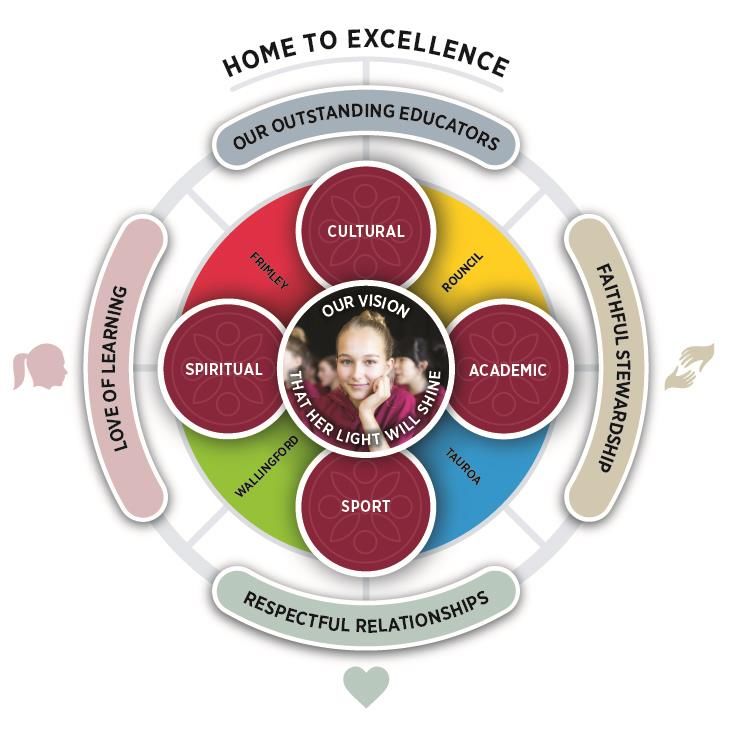
The diagram on our cover encapsulated the dimensions of the Strategic Plan with the Vision and
the Woodford House Girl at the centre of everything we do. The Strategic Priorities are supported
by the School’s four cornerstones and Houses, which are firmly embedded in the culture of
Woodford House. These important priorities and foundational pillars form the School’s Vision
Statement “That her light will shine”.

The Board consulted extensively with the School community in developing the Strategic Plan
2020-2023, as well as throughout the “Home to Excellence” project, both of which underpin the
strategic aims of the 2021 Charter, as set out below.

Our Philosophy                               Tō Mātau Rapunga Whakaaro
Cherish the Past                             Whakamānawatia te wāmua
Embrace the Present                          Awhinatia te wātū
Challenge the Future                         Kia pūmau ki te wāheke

3 | W o o d fo r d H o u s e C h a r t e r 2 0 2 1
Our Special Character Tō Mātau Mana Motuhake
As an Anglican community founded on Christian principles and values, our Special Character
education shapes the head, heart and hands of every member of our learning community.
Our Vision Tō Mātau Anga Whakamua
That her light will shine.
Our Mission Tō Mātau Whāinga
To fulfil the vision of our founding Principal Mabel Annie Hodge to create a real school for girls
where the head, heart and hands are engaged, equipping young women to embrace the
brightest possible future.
Our Identity Tō Mātau Tauoranga
Since 1894 Woodford House has been a leading special character school for boarding and day
girls. Our community is anchored in tradition, enriched by a vibrant Christian faith and a
confidence that we are equipping our girls for the future.
Our Guiding Principles
As a learning community we:
• Commit to ongoing learning and personal excellence
• Nurture an inclusive and collaborative community underpinned by our Christian ethos
• Recognise and value the Treaty of Waitangi /Te Tiriti o Waitangi
• Act with respect, integrity, honesty and empathy serving others
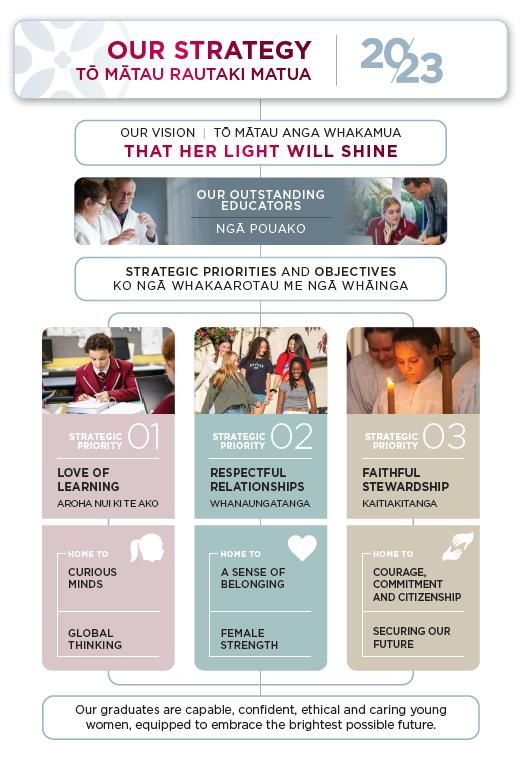
Strategic Priorities
Love of Learning Aroha nui ki te ako
Respectful Relationships Whanaungatanga
Faithful Stewardship Kaitiakitanga
Specific Strategic Aims for 2021
Continue to grow links with all our communities to provide opportunities for professional
and personal growth to enrich the learning for our students and staff.
Growing and supporting outstanding educators.
Further develop the strategic and timely Implementation Strategies to deliver the recommended
targets outlined in the Strategic Evaluation Cycle:
Conduct external evaluation of Global Education (deferring due to Covid-19)
Conduct external evaluation of Intermediate Faculty
Conduct external evaluation of Senior Leadership Team operational structure
Implement key findings from the 2018 External Boarding Review
4 | W o o d fo r d H o u s e C h a r t e r 2 0 2 1Please refer to the attached Strategic Plan 2020-2023 5 | W o o d fo r d H o u s e C h a r t e r 2 0 2 1
Academic Achievement
All results are as at 16 February 2021

NCEA
                                                            Woodford      National      Decile
                                                             House         girls      8-10 girls
Year 11 students gaining NCEA Level 1                         100%          73%         78%

Year 12 students gaining NCEA Level 2                         100%          82%         86%

Year 13 students gaining NCEA Level 3                         100%          75%         84%
Year 13 students gaining University Entrance
                                                              98%           59%         78%
(UE)

NCEA Level 1, 2 and 3 Historical

                                                     2020   2019     2018     2017      2016       2015    2014
Year 11 students gaining NCEA                                                                              97.4%
                                                     100%   100%     *98%     98%       100%       100%
Level 1                                                                                                      *
Year 12 Students gaining NCEA
                                                     100%   100%     100%     100%      97%        100%    100%
Level 2
Year 13 Students gaining NCEA
                                                     100%   100%     94%      97%       100%       100%    100%
Level 3
Year 13 students gaining University
                                                     98%    90%      93%      94%       92%        97.7%   97.7%
Entrance

*Based on participation

2020 In Comparison With Historical Results

                  Year 11 students gaining             Year 13 students gaining      Number of
                  NCEA Level 1                         University Entrance           scholarship passes
     2020                   100%                                  98%                            20
     2019                   100%                                  90%                    11 (1 outstanding)
     2018                    98%                                  93%                    19 (4 outstanding)
     2017                    98%                                  94%                    10 (1 outstanding)
     2016                         100%                             92%                             9
     2015                           100                           97.7%                            7
     2014                         100%                            88.6%                            5
     2013                          98%                            100%                             8

6 | W o o d fo r d H o u s e C h a r t e r 2 0 2 1
2020 Level Endorsements (figures in brackets 2019 results)
Woodford National Decile
House Girls 10 Girls
Year 11 students gaining NCEA Level 1 with merit 35% 37% 40%
(48.2%) (38.8%) (43.1%)
Year 11 students gaining NCEA Level 1 with excellence 50% 27% 45%
(44.6%) (25.7%) (35.4%)
Year 12 students gaining NCEA Level 2 with merit 22% 29% 37%
(26%) (30.5%) (39.7%)
Year 12 Students gaining NCEA Level 2 with excellence 61% 23% 39%
(48%) (20.6%) (29.3%)
Year 13 students gaining NCEA Level 3 with merit 25% 31% 37%
51.5%) (30.6%) (37%)
Year 13 Students gaining NCEA Level 3 with excellence 52% 21% 33%
(24.2%) (17.6%) (23.5%)
Results in Comparison with Targets
Priority One: Learner Centred
2020 Target 100% of each year level gaining the appropriate Level 1 – 3 qualification for
appropriate candidates.
90% of Year 13 students gaining University Entrance.
2020 Result 100% Year 11 students gaining Level 1 - target met
100% Year 12 students gaining Level 2 - target met
100% Year 13 students gaining Level 3 - target met
98% Year 13 students gaining University Entrance – target exceeded
2020 Target 80% achieving NCEA Level 1 endorsement with at least 40% at excellence.
2020 Result 85% endorsement (target exceeded) with 50% at excellence target exceeded
2020 Target 80% achieving NCEA Level 2 endorsement with at least 40% at excellence.
2020 Result 83% endorsement (target exceeded) with 61% at excellence target exceeded
2020 Target 60% achieving NCEA Level 3 endorsement with at least 30% at excellence.
2020 Result 77% endorsement (target exceeded) with 52% at excellence target exceeded
2020 Target Gain 20 scholarship passes.
2020 Result 20 - target met
7 | W o o d fo r d H o u s e C h a r t e r 2 0 2 12020 Scholarship Passes:
Biology 1
Chemistry 2
Chinese 1
Classical Studies 1
Drama 3
English 6
Health & PE 1
History 3
Religious Studies 1
Statistics 1
TOTAL RECEIVED 20
Māori Student Achievement
2020 Target To equip and support our Māori students to set academic goals of personal
excellence.
100% Woodford House Māori students achieving at Woodford House pass rates or
better for NCEA.
2020 Result 100% Year 11 Māori students – target met
100% Year 12 Māori students – target met
100% Year 13 Māori students – target met
Each Faculty will continue to provide detailed information regarding specific achievement, and
targets for 2021, in their Board reports – where further analysis will inform next steps for student
achievement and staff professional development as identified.
Staff professional development within Faculties will continue to be linked to student achievement
data and targeted to improve student outcomes. This data will also form the basis of staff goal
setting and professional growth for 2021.
The Arts
With a philosophy that encourages girls to celebrate imagination and creativity, Woodford House
offers a full and stimulating arts programme. It is a vibrant and popular aspect of school life. A
Director of Performing Arts oversees this important school connection. Our campus is often alive
with the sounds of choirs singing, actors rehearsing and ensembles playing. Likewise, the work of
our designers, photographers and artists of tomorrow enrich our environment.
In 2020, the biennial joint musical production with Lindisfarne College was Westside Story and was
set to be a wonderful performance. This had to be cancelled two weeks prior to opening night,
due to Covid-19 restrictions in place. The School had outstanding success in its prior musical
8 | W o o d fo r d H o u s e C h a r t e r 2 0 2 1production of Evita, which involved over one third of the school students, showcased over four nights at Lindisfarne College. We have attained considerable success in the New Zealand Speech Board examinations and the Trinity College of Music practical instrumental examinations. Our students have become Associates of the New Zealand Speech Board in Public Speaking and Communication. The Board strategically developed and built a flexible new teaching and learning space for music, drama and dance, The Dame Kate Harcourt Performing Arts Centre. This purpose-built facility continues to provide innovative teaching and learning spaces for staff and students. Sport In sport, we offer students opportunities not only to participate but to thrive and specialise if they wish. Our aim is for girls to appreciate physical activity and to reap the rewards of competition. Our commitment to this was highlighted in an external review of the Faculty. This has led to the development of ‘focus’ sports so that the extensive resources and support for sport can be utilised effectively. That was subsequently reviewed and the findings identified that a high performance model was working effectively for focus sports leading to the development of sports coaches and leaders, and the continued progression of the Sports Academy, which was a new initiative in 2013. The Sports Academy has continued to develop strategic and robust systems for leadership and elite athlete development. A rigorous external review by Sport Hawke’s Bay provided strategic analysis of this crucial cornerstone. The Boards are committed to ensuring the provision of best practice in girls’ physical education and the promotion of student and staff wellbeing. In 2017, after close consultation with our student base, the Academy partnered with the EIT Institute of Sport and Health at the Mitre 10 Sports Park. With the Institute in its infancy stage, this future focused decision meant that Woodford House was one of the first schools in the region to develop an Academy programme in this high performance environment. Through this partnership our senior Academy members undertake sport specific strength and conditioning at the Institute and we have developed a tiered pathway for our junior athlete development. This starts with physical literacy and fundamental movement patterns and ultimately leads to graduation into the full strength and conditioning programme when ready. Our offsite workshops for the Academy each term focus on aspects of sport that the girls may not have been exposed to, such as, individual performance planning, nutrition, sport psychology, sport business management and guest speakers. We also focus on leadership and character development. We have had a number of regional, national and international representative’s graduate from this programme and continue to evolve with our diverse and ever-changing athlete base. Woodford House teams have seen unprecedented success over recent seasons and excel in local and regional sporting codes. Woodford House is also represented well at a number of national sporting tournaments across a myriad of sports. Unfortunately, 2020 was a very disrupted year, with the cancellation of a number of sporting events due to COVID-19 restrictions. Parents and teachers, as well as sports professionals, have a valued role to play in coaching and managing our teams. Senior girls also have the opportunity to develop leadership skills as coaches and officiators. 9 | W o o d fo r d H o u s e C h a r t e r 2 0 2 1
Digital and Information Technology

ICT is a fundamental part of the way we work at Woodford House. We develop and maintain state
of the art computer and network systems, connecting us around our School, and to the world.
Our staff are committed to a programme of ensuring that all the students are responsible and
positive digital citizens.

In addition to the hard-wired network, is a campus wide wireless network that ensures students
can learn ‘anywhere, anytime’. All classrooms are wireless and we are replacing our digital
projectors and interactive whiteboards as required with smart screens. Bring your own devices
(BYOD) was trialled in 2013 as we integrated I.T. into the classroom to enhance student
engagement and support academic achievement. This development was very successful and
BYOD was compulsory in 2014. Our system currently supports 24 different types of devices. Our
strategic ICT plan is currently focused on moving to cloud based storage solutions with a shift to
using One Drive and Microsoft Teams rather than relying on site based servers.

The hard-wired network still underpins the ICT infrastructure in the school; most computer suites
have been decommissioned and are now utilised for more flexible learning spaces for junior and
senior classes. There are hard-wired creation PC’s in the Design Room, English and Intermediate
Faculties, the Library and Boarding. Staff at Woodford House have joined the TELA Laptop
scheme and have remote access to the school network. The Board of Trustees has also provided
curriculum areas with iPads to complement ICT development.

The School’s Learning Management System (LMS) is Schoology, a second generation LMS that
allows for interactive and accessible learning and communication. The School continues to
personalise its system as a responsive teaching and learning platform at Woodford House. The
Conferencing function on Schoology proved invaluable during school closure and the
implementation of Distance Learning.

We continue to develop our use of KAMAR as our School Management System (SMS) and have
introduced Assay3 to enable SLT, Deans and Heads of Faculty to more effectively analyse student
achievement and attendance data. A key focus for 2021 will be ensuring the transition to the
updated new look KAMAR is as seamless as possible.

The Boards proactively support innovative professional development initiatives with a large
number of staff completing rigorous post-graduate study through the Mind Lab. A culture of
ongoing professional learning pervades staff professional development and the sharing of action
research is systematically supported and encouraged. We conducted a rigorous external review
and the findings formed the basis of the 2020 ICT implementation focus. The establishment of an
E-Learning Vision group aims to ensure that new and existing staff continue to incorporate
innovative, effective and rigorous digital activities into their teaching. In 2020, in conjunction with
Digital Circus we hosted on behalf of Digital Circus a two day “Inspire Conference” for primary
and secondary educators across the Lower North Island focusing on preparing students to meet
the technology, innovation and creativity required in future workplaces.

Another key priority for this academic year is continuing to implement the Digital Technologies
Curriculum. Over the past two years we have benefitted from receiving 50 hours of external

10 | W o o d fo r d H o u s e C h a r t e r 2 0 2 1
digital professional development which faculties have used in a range of different ways. We have
been in a strong position to offer students a broad range of digital examination opportunities
both for those sitting NCEA standards and also for our junior students sitting in-school
examinations. In 2020, we had 149 digital entries across 14 different examination sessions and 7
subject areas. Student feedback and results continue to be very positive and we would anticipate
that over the next two years most students will use digital devices to complete their examinations.

We also continue to offer strong support for students with diverse learning needs to ensure they
are able to confidently utilise assistive technology tools. During 2020 we delivered age
appropriate sessions to students in Years 7-10 on digital safety and responsibilities. We use a
robust firewall, a range of different year level access arrangements and Linewize to ensure we
meet our duty of care within both the day and boarding schools.

Strategic Plan
In 2019, we rewrote our Strategic Plan. It outlines the visionary goals that will guide us until the
end of 2023. During the Strategic Plan Review process a number of workshops were held with all
stakeholders. The Combined Boards, The Foundation, Parents’ Association, Old Girls’ Association,
teaching staff, students and the wider Woodford House community gave us the mandate to
proceed. This information, along with the analysis of parent and student surveys was critical
when devising our new goals and action plans.
Please see the Strategic Plan 2020-2023.
The development of an overarching business plan is an ongoing process. Ongoing strategic
initiatives will involve systematic alignment of the associated entities: Woodford House Parents’
Association, Woodford House Old Girls’ Association and the Woodford House Foundation.

A Campus Master Plan is currently being written with a school wide scope and vision for the next
fifty years. Please see Building Projects section within Charter document.

Boarding

Through our boarding options, we have a range of students from a variety of geographic
locations who bring diversity to our school population. This adds richness to our learning
community and influences student outcomes.

Each of the boarding houses has an experienced Boarding Supervisor and older girls help
younger students within a pastoral care system. The structure of boarding life promotes effective
study routines and full participation in school activities is encouraged. House staff and Assistant
Managers supervise prep at all year levels and activities are offered for full boarders on weekends.
Day Girls can also experience the companionship and other benefits of boarding for requested
periods of time.

The Boarding model is progressive and proactive reflecting greater flexibility and recognition of
changing family lifestyles.

We have five modern boarding houses:

11 | W o o d fo r d H o u s e C h a r t e r 2 0 2 1
Holland House apartments                    Year 13 students only
Morea House                                 Year 7 and 8 students
Nelson House                                Yr 10 students, half of Year 12 students
Richards House                              Year 11 students, half of Year 12 students
Woodford House                              Year 9 students

Building Projects

There were no major building projects commenced during 2020 as Woodford House was
following several years of major upgrades and rebuilding projects. Instead several projects were
completed, and writing a 10 Year Masterplan to assist future building and infrastructure planning
commenced.

Three major milestones during 2020 were the completion and reopening of the upgraded
swimming pool, replacing the AstroTurf on the upper court and opening the refurbished library.
In addition, the Weights Room in the gymnasium was modified to include a new classroom which
will double as a sports training room, and the Principal’s Office was redecorated. Towards the end
of 2020 a fire in the switchboard located in the storeroom of classroom H117 resulted in that
classroom being gutted and totally refitted and modernised.

The Woodford House Trust Board contracted RTA Studios to complete a Masterplan which will
result in teaching and learning spaces modernised, world leading boarding spaces created, more
efficient spaces for support staff (Administration, Communications, Global Education, Boarding,
Senior Leadership Team) to work in and improved access around the school grounds. Their
recommendations will be considered by the Boards in early 2021 with a staged building process
possibly to commence in the second half of 2021.

In 2021, a purpose built garden area (called the Greenzone) complete with glasshouse, shade
house, raised gardens and irrigation will be open for students and staff to practise growing plants
and vegetables and learning the importance of sustainability.

Communication and Marketing Initiatives

The School has a strategic Communications and Marketing Plan that supports student
recruitment and retention objectives and aligns with the Woodford House Strategic Priorities.

The Communications and Marketing Department has improved both internal and external
communications, increased brand awareness, improved stakeholder relationships, enhanced the
School’s reputation and led development initiatives and activities and supported the celebration
of student achievement.

The focus for the 2021 year is to continue to build on our pre-enrolment initiatives, defining and
strengthening our brand position and continuing to utilise our communication mediums to their
maximum value. In particular, our focus will be on redeveloping a dynamic new website, re-
launching the School App to parents with new features and using our social media channels to
showcase the range of activities and opportunities the girls have at School.

12 | W o o d fo r d H o u s e C h a r t e r 2 0 2 1
Our newly developed extra-curricular ‘Shine Strengths Programme’ will further evolve and
become an integral part of each girl’s learning and development journey at Woodford House.
Recognising Cultural Diversity
Woodford House students come from rural, urban and large city sectors, and the majority on our
roll are New Zealand/European girls. Of the NZ students, 13% identify as either 1st or 2nd ethnicity
Māori. Also enrolled in 2021 are students who identify with the following ethnicities: African (3),
Chinese (10), Fijian (1) Hong Kong Chinese (5), (Indian (6), Japanese (1), Korean (3), South East
Asian (2), Thai (3), and Other European (15).
Recognition of students’ backgrounds is an important aspect of preparing them to cope with life
and study beyond our gates. Woodford House reflects our extensive cultural diversity and the
unique position of Māori within the School in several ways;
Tikanga Māori and te reo Māori integrated into the Year 7- 10 programme and other
curriculum areas as appropriate.
Study of the Treaty of Waitangi is part of the Social Sciences programme in Years 9 and
10. New Zealand History is studied in Senior History.
Te reo Māori is offered and taught up to Year 10. Year 11-13 is available through Te Aho
o Te Kura Pounamu and supervised by the Languages Head of Faculty. Woodford House
currently has one Year 11 doing Level 3 te reo Māori through Te Aho o Te Kura Pounamu.
The School actively seeks out expertise in the community to enhance the delivery of te reo
Māori and Tikanga Māori, specifically seeking to build stronger relationships with the
Matahiwi marae.
Regular annual Hui with whanau to determine community aspirations for Māori student
achievement.
Student cultural group who present in assemblies and organise activities for students.
Growing support of the Kapa Haka group, with current staff member (Boarding
Supervisor) being utilised to lead this area. We do not envisage utilising outside
presenters for 2020/2021.
Annual Powhiri held engaging community support, to welcome new staff and students.
Use of waiata and karakia in Chapel services and assemblies have been further developed
with a broader range of waiata learnt by the school for use on formal occasions.
Waiata inclusion into whole school House Music competition. A new school waiata has
been commissioned for 2021.
Bilingual signage throughout the School.
The Board of Trustees will take all reasonable steps to provide instruction in te reo Māori and
Tikanga Māori using appropriate procedures aligned with our Teaching and Learning, and
Timetable Policies.
Our international students are an integral part of our Woodford House community. They are
supported by the following:
13 | W o o d fo r d H o u s e C h a r t e r 2 0 2 1 Director of Global Education
Global Education Student Coordinator
English Language Learning (ELL) teaching and learning programme
Supportive pastoral care
Integration into the four cornerstones of school life
Twice-yearly reports to the Boards on pastoral issues, academic achievement and
integration.
Clear strategic International plan evidenced underpinned by research and best practice in
education.
Success for All
At Woodford House, we are continually monitoring and adapting our programmes to achieve a
fully inclusive education system that reflects the individual needs of all our learners. The role of
the Diverse Needs Coordinator enhances our programmes and ensures a comprehensive
approach to students’ needs, and informative communication with parents and caregivers. Our
staff focuses on inclusive practices through reflection of professional learning and development
opportunities, discussion on improving our practices, shared evidence and programmes for
learning, and improving special education systems and support. Through these practices the staff
focuses on the individual learning needs of all our students so as to allow them to strive for
personal excellence in all aspects of their learning journey.
We welcome and support students from diverse cultures, ethnicities, social backgrounds and
sexual orientation.
Our progressive and innovative educational initiative known as our “Shine Strengths Programme”
was launched in 2020 and will be further developed this year. The project has led to the creation
of both Shine Staff and Student Advisory Teams.
The Senior Leadership Team structure formed in 2018 consisting of the Principal, two Deputy
Principals and an Assistant Principal reflects a more holistic philosophy, enabling and supporting
girls to achieve the highest possible educational outcomes. Pastoral, academic, spiritual and
cultural dimensions are integrated and influence key decision-making. The Senior Leadership
Team operating structure is due to be reviewed during 2021.
14 | W o o d fo r d H o u s e C h a r t e r 2 0 2 1National Education Priorities
National Educational How these will be met at Woodford House
Priorities Current Situation Future Focus
Success orientated culture continues to be We proudly celebrate and acknowledge success across our four
Success for all promoted and celebrated cornerstones and “Home to Excellence” underpins our philosophy and
Our NZ Curriculum underpins all aspects of the promotion of success
All Year 7 to 13 students will
Strategic Plan and will guides our planning Our NZ Curriculum is aligned with our Strategic Plan
be given opportunities to gain
the knowledge, skills, attitudes Woodford House is a Special Character School Our status as a Special Character School is at the forefront of our thinking
and values as expressed in the and our philosophy underpins the four and can be evidenced in our planning and documents
New Zealand Curriculum cornerstones Clear evidence of the NZ Curriculum in strategic planning documents
(NZC). Further develop and utilise systemic structures Key competencies are embedded in lesson planning - evident, and shared
to support and enable curriculum integration with students as part of their learning process
and interdisciplinary teaching and learning
Systemic structures support e.g. reporting, formative assessment,
Best practice in collaborative teaching and professional development, inquiry, etc. are evident and actively supporting
learning is shared and promoted e.g. greater interdisciplinary teaching and learning
Intermediate Faculty
Collaborative learning is evidenced
Modification of feedback grades to support
Utilise skills of Intermediate Faculty staff to share models of best practice in
monitoring of Key Competencies
interdisciplinary studies
Diverse Needs Co-ordinator (DNC) tracks
Focus and promote formative feedback and formative assessment models
students with special learning needs to ensure
Additional resourcing for the role of the Diverse Needs Coordinator results
IEPs are relevant and appropriate
in improved student achievement outcomes
Appropriately resource all learning areas to
The Head of Faculty structure continues to provide greater efficiencies.
ensure the needs of our diverse learners are met
Meetings are more systemic and strategic.
and exceeded where possible
Further refinement of our awards and recognition systems. Aim to further
Self-directed learning and flipped and blended
refine a best practice model for model for rewarding excellence across all
classroom teaching are supported by further
cornerstones.
Schoology updates
Consideration of software for best practice in classroom to ensure optimum
Ongoing resourcing and upgrade of systems
learning
and processes evidenced e.g. Boarding ware /
Family Zone, KAMAR, Microsoft Teams Further initiatives supporting pastoral care are evidenced e.g. Big Sister
15 | W o o d fo r d H o u s e C h a r t e r 2 0 2 1 Learning Management System (LMS) ‘Schoology’ Programme, Woodford House Orientation Week
continues to enhance self-directed learning and Home to Excellence – we are continuing to promote and incorporate a
supports flipped classroom and blended success oriented culture for all staff and students
classroom practices
Technology is used strategically to promote learning and move students
Hardware in classrooms replaced and upgraded towards deep learning. Technology is activated as a tool to serve learning
to ensure best digital teaching and learning
experiences for students and teachers
Evidence based change management processes
continue across Boarding/Day School to further
integrate new models of pastoral care and These additional teaching and learning experiences are constantly reviewed
academic delivery and refined to ensure they best meet the needs of the current cohorts
Year Level Meetings, SHINE Strengths programme and
other opportunities are utilised to deliver a range of
additional teaching and learning opportunities, focusing
Staff Professional Growth cycle is embedded into our teaching practice which is
on health, careers, transition and other key topics.
data driven, evidence based and focused on outcomes.
Staff Professional Growth cycle is trialed and
Staff Professional Development programme is responsive to identified needs –
implemented into our teaching practice; this may include
a cycle of inquiry that is data driven, evidence based and for staff development and professional growth purposes – closing the gap
focused on outcomes. between intent and implementation by introducing strategy goals and
pedagogical approaches. Strategic focus on quality analysis of learning
Professional Learning Group (PLG) time is allocated for
whole staff learning. achievement data – e.g. formative, summative, diagnostic and evaluative.
New Zealand Curriculum underpins curriculum and professional development
Continue to complete robust and independent Strategic decisions.
External Reviews in alignment with the published
schedule, full reports shared with the Board of Trustees Planned External Reviews are conducted, shared and analysed according to the
and Board of Proprietors as relevant. published schedule.
Successful implementation of new Full Boarder/Weekly
Boarder structure completed. Chapel services extend
and develop students understanding of a learner centred Full Boarder/Weekly Boarder structure is reviewed annually, staff and student
world view. voice formally collected and collated.
16 | W o o d fo r d H o u s e C h a r t e r 2 0 2 1National Educational How these will be met at Woodford House
Priorities Current Situation Future Focus
Better use of student Formative practices will be evident in teaching
Inquiry model may be adopted as part of teaching practice –
achievement information.
linked to assessment and reflective practices of staff, linked to Professional Growth Cycle is implemented
the staff appraisal tool – Professional Growth Cycle Professional Learning Group focus directed to needs identified
Schools will gather sufficiently
comprehensive assessment Comprehensive assessment data is gathered on our students to by our learning community
evidence to evaluate the inform future teaching (next steps) and learning programme Head of Faculties will monitor teacher use of data, eg Board
progress and achievement of priorities Reports
their students, and to inform
Review of student learning programmes, in particular Year 10 New student achievement data is available on KAMAR and
future teaching and learning
programme priorities. programme pedagogies, to support decision making for future Assay3 at the beginning of the academic year to form a
timetable starting point for individual student learning within a class.
Where possible, individualised programmes are created from
Professional Learning Groups continue to focus on innovation
the data available for each student
and curricular integration
Standardised testing data (e.g. PAT, e-asTTle) is used to inform
Assist staff to design appropriate learning programmes for next steps for student achievement and to show value added
students. Faculty reviews including qualitative and quantative
Teachers are encouraged and supported to use formative
student achievement data is tracked and analysed
practices to help make students aware of their own learning
Continued use of KAMAR, tracking, monitoring and analysis of process (e.g. share criteria, encourage different types of
results questioning – see Formative Assessment help sheets). Teachers
to differentiate by task, content and or outcome for individual
Use of pastoral programme analysis to support decision making
students based on data gathered
aligned with learning programme, e.g., time analysis and co-
curricular activities as support to learning programmes Evidence shows that individual pathways and learning
programmes are not solely dictated by the year level that the
Qualitative and quantitative student achievement data continues student is in but, instead, by the achievement level of the
to be collected, shared and evaluated student
New data analysis tool On Your Marks and Assay3 underpins Timely and effective assessment of practices evidenced to
NCEA analysis ensure optimum learning experiences
Further maximise the management of student achievement
and pastoral data through KAMAR and Assay3
17 | W o o d fo r d H o u s e C h a r t e r 2 0 2 1National How these will be met at Woodford House
Educational Current Situation Future Focus
Priorities
Ensure all students are well supported to achieve and exceed their Support staff and girls to continue this excellent model of
Improving learning goals through generous resourcing and staff time e.g. additional supported learning
outcomes for tutorials, scholarship and extension tutoring, holiday and evening Utilise best practice and software tools to better identify and
students at risk programmes offer timely support to students at risk
Regular meetings scheduled for diverse students with Assistant Principal Continue to maintain and strengthen the focus on identifying
Schools will improve
/ Deputy Principals and Diverse Needs Coordinator to identify and adapt students and groups of students who are:
outcomes from
students who are not any learning challenges or needs
- not achieving as expected
achieving, or at risk Closely Monitor subject selection for diverse learners and adjust and - at risk of not achieving
of not achieving, or facilitate programmes as required
- have special needs or abilities (accelerate or remedial).
have special learning
Maintain ongoing development with a focus on identifying students and
needs. Support for this quality Homeroom time is evidenced through
groups of students who are:
the timetable and small homeroom sizes to offer optimum
- not achieving as expected ‘family’ atmosphere
- at risk of not achieving Small home room size prioritised to ensure optimum pastoral
- have special needs or abilities (accelerate or remedial) and academic outcomes for all students
Provide appropriate support and robust programmes to cater for these Year level meetings will be scheduled fortnightly to ensure
students. Courses are adjusted i.e.: Standards removed or replaced, key messages are delivered in an age appropriate manner to
increased capacity and flexibility for personalised learning pathway, all students
timely and appropriate assessment opportunities
Develop a course selection process for our senior students
Classes do not exceed 24 students that provides closer monitoring and ensures better continuity
Ongoing monitoring during the year to track progression and provide during the girls’ senior years
timely and appropriate reports to parents Successful development of Professional Learning Group
Intervention use of Resource Teacher: Learning and Behaviour (RTLB) and programme for all pastoral care staff with a particular focus
RT LIT services on Boarding, Health Centre Staff and Deans
Ensure assessment is integrated into the teaching programme and is Clear evidence of active practice re all policies and procedures
used to identify next steps and appropriate, personalised learning pertaining to the wellbeing, health and safety of all staff and
sequences for each students students
Role of the Homeroom Mentor is continually developed to lead the Strategic focus on promoting and maintaining stronger links
pastoral support and ensure learning is consistent and appropriate. This between boarding and day school evidenced through
18 | W o o d fo r d H o u s e C h a r t e r 2 0 2 1has included planning to find more time in the Homeroom and greater Woodford House Wellbeing Initiative, Peer Support
communication with home and school, linked through Homeroom programme for all juniors, Big Sister programme etc
Mentor
Student and staff wellbeing is a key strategic focus eg
Continued development of Professional Learning Group programme for resourcing is allocated. Specialist providers deliver
boarding staff so they can support students learning goals programmes and achieve optimal wellbeing outcomes eg
Ongoing professional development of boarding staff via the Director of School Clinical Psychologist, School Nurse, Deputy Principal-
Boarding Student Wellbeing, Deputy Principal-Teaching and Learning,
Creative use of support mechanisms, i.e., LIT Class (Literacy support class Assistant Principal – Student Outcomes
in Year 9 and 10), Maths support teaching assistant, teacher aides and
Attend the 2021 Boarding Conference
reader/writer support assistants
Implementation of Assistive Technology Apps for students where
necessary. (Voice to Text, Read Aloud programmes, Grammarly, etc)
The role of the Homeroom Mentor is developed and resourced as a
leader of both student pastoral and academic support to ensure student
learning is consistent and appropriate
Home/ school communication is prioritised for student wellbeing
Attendance at international and national boarding conference when
relevant to strategic priorities
Continue to resource additional key staff e.g. School Nurse, School
Clinical Psychologist, School Chaplain to support girls and staff across
boarding and day school
19 | W o o d fo r d H o u s e C h a r t e r 2 0 2 1National Educational How these will be met at Woodford House
Priorities Current Situation Future Focus
Improving Numeracy Further development of numeracy programmes in Years 7 to 10 Evidence of programmes in use across the school
and Literacy through developed use of e-asTTle and other assessment tools Diverse groups will receive adequate support evidenced
Ongoing support for diverse groups and their identified learning A range of provision for gifted and talented will be evidenced
needs through extension programmes
Fulltime specialist maths teaching assistant to assist support in class Data informed learning and teaching will be evident
Improving Outcomes with numeracy and maths confidence in Years 7 to 13 Goals and targets for learning beyond expected levels based on
for Gifted and The School will provide an appropriate range of opportunities for its knowledge of how we learn
Talented students gifted and talented students and make provision for these students in Opportunities for Scholarship students will be evident throughout
the curriculum programmes. Extension programmes to be delivered the school
Acceleration and extension opportunities will be available
Scholarship programme and the Scholarship Programme reviewed
and developed further. Scholarship remains a priority for 2021
Māori student success and achievement will be celebrated in whole
Improving Māori school context.
Student achievement goals are aspirational
outcomes Māori students identified by the staff - as 1st and 2nd ethnicity
Maintain ongoing monitoring of achievement and celebration of Maintain, monitor and celebrate achievement of Māori students
Schools will work with success for Māori students in each Faculty across all four cornerstones
Māori communities to Whanau hui used as a formal forum for support, discussion and Whanau Hui offered annually for discussion, relationship building
plan, set targets and feedback and feedback
achieve better Ruia partnership commitment made by whanau and school Te reo Māori evident as a curriculum choice in Years 7 to 10
outcomes for Māori Continue to offer te reo Māori as part of languages in Years 9-10 and Curriculum support will be sought for girls needing assistance with
students. continue to build through to NCEA Te reo Māori in years 11-13
Genuine inclusion of te reo Māori, Tikanga and hymns continually Hymns and Tikanga will be evident in assemblies, chapel, prize
added and embedded giving.
Ka Hikitia strategies evident in PD and pastoral team
Ka Hikitia strategies continue to be part of staff PLG and integrated
into pastoral team philosophy Māori students are meeting and/or exceeding all Woodford House
student achievement targets
Continue to build stronger relationships with local iwi to provide rich,
Home and family communication is evident
relevant and real learning experiences.
A strong culture of respect and support of others is evident
Continue to support existing pathways eg Kapa Haka, Big sister
Our Māori students continue to meet and exceed their academic
relationships, new student and staff induction, initiatives eg Korowai,
goals in 2021
Manu Korero Speech Competition, leaving a legacy, Anglican Tri
Our Māori students are strategically supported to meet and exceed
School initiative
their school wide goals in 2021
Acknowledgement that Māori/ Pasifika are of both 1st and 2nd
ethnicity
20 | W o o d fo r d H o u s e C h a r t e r 2 0 2 1National Educational How these will be met at Woodford House
Priorities Current Situation Future Focus
On-going opportunity for staff to train in Restorative Staff are trained in restorative practice and Restorative Practice
A Safe Learning Environment Practices becomes part of a wider Pastoral care ‘toolbox’
Servant leadership model further embedded in Evidence of Servant leadership model within leadership programme
leadership programme in Years 12 and 13 in Years 12 and 13
Providing career guidance
Formal review of programmes and placement Chapel supports and promotes servant leadership opportunities
Schools will provide career Formal review of programmes and placement scheduled and
Development of Homeroom Mentor role as ‘significant’
education guidance in Year 7 completed as appropriate
adult’ who coordinates day and boarding school and
and above. ensures pastoral and academic links are strong and Homeroom Mentor brief supports student achievement and student
wellbeing
consistent
Evidence of positive communication between school and home
Continue to develop positive communication with
parents/caregivers Review of the current model is ongoing
Students have time available for careers interview and presentations
Strengthen the process of subject selection and
consequently timetable process Recommendations from the external review of all Careers Education
informs future direction and resourcing
Continued support for careers department
STAR presentations to staff and school are evident
administration. Software tools explored
Overview of STAR and Pathways programmes and personalised
Secondary Tertiary Alignment Resource (STAR)
yearlong support and mentoring from TIC and Careers leader
programmes further developed and widely
evident.
communicated to give senior girls practical
A full pathways programme will be offered to Year 11 students
opportunities to explore career options
STAR, Gateway and Trades Academy programmes are offered, further
Gateway programme developed within the school
developed, monitored and well-supported
philosophy and criteria communicated effectively to
support student career advice
Opportunities on the Trades Academy programme
continue to be offered
Integration of the Shine Strengths Programme to align
with senior careers goals
21 | W o o d fo r d H o u s e C h a r t e r 2 0 2 1 The New Zealand Curriculum continues to be Reports and communication with parents will reflect language of the
Reporting incorporated into reports and communication with New Zealand curriculum
parents Information on next steps for student learning is indicated in learning
Schools will report to students
Learning Portfolios in Year 7 & 8 are a culmination of portfolios
and their parents on the
the year’s work, including assessments indicating Intermediate Faculty will report against appropriate learning and
achievement of individual
progress and next steps achievement criteria
students and to the School’s
community on the Online digital options available for all pastoral and Data on students in houses is collated by Deans - and communicated
achievement of the students as academic meetings and interviews so that all can access to wider staff where appropriate
a whole. Deans’ roles have been reviewed and refined with Continue to celebrate and promote student success and achievement
additional hours allocated, to help ensure they are able through various communication publications and digital mediums
to continue to provide the best levels of support to
Boarding families and those unable to physically attend events are
students in their domain
able to access information and experiences via livestream
Community is informed of school success through
Facebook, website, Tempus (school newsletter) and
Week Ahead (weekly online communication)
A new parents’ information session, hui and publications
were shared widely
Key school events are livestreamed to ensure all are able
to access
22 | W o o d fo r d H o u s e C h a r t e r 2 0 2 12021 Analysis of Variance for 2020 Targets
Focus: Raising Student Achievement
Strategic Priority: Love of Learning
Annual Aim: To continue to strive for excellence in NCEA results, maintaining top national results:
2020 Target 1: Strategic Priority: Love of Learning
To continue to strive for excellence in NCEA results, maintaining top national results:
100% of each year level gaining the appropriate Level 1 – 3 qualification for appropriate candidates.
90% of Year 13 students gaining University Entrance.
80% achieving NCEA Level 1 endorsement with at least 40% at excellence.
80% achieving NCEA Level 2 endorsement with at least 40% at excellence.
60% achieving NCEA Level 3 endorsement with at least 30% at excellence.
Gain 20 scholarship passes.
Track students transitioning into Woodford House in Year 11-13 to gain NCEA level 1/2/3 in 2020.
Actions (what did we do?) Outcomes (what happened?) Reasons for the variance Evaluation (where to
(why did it happen?) next?)
Staff Responsibility?
Student progress was 2020 Target Students who were identified Deans and the Diverse
continually tracked 100% of each year level gaining the appropriate Level 1 – 3 as being in danger of not Needs Coordinator will
throughout the year through 90% of Year 13 students gaining University Entrance. gaining their expected level continue to work with
Pastoral meetings, Deans 2020 Result of achievement were given class teachers and HOFs
meetings and by the Diverse Target exceeded further opportunities to for individual and small
Needs Coordinator. 100% each Level 1, 2, 3. achieve through STAR group success.
98% University Entrance courses and extra subject
standards. These students With an increased
23 | W o o d fo r d H o u s e C h a r t e r 2 0 2 1The Level 2 and 3 Pathways 2020 Target were also closely monitored school roll, it will be
courses were offered on a 80% achieving NCEA Level 1 endorsement with at least 40% and supported by the Diverse imperative that students
dedicated option line so at excellence. Needs Coordinator and their are checked through
those students got structured 2020 Result subject teachers. both academic and
and formalised teacher Target exceeded pastoral systems to
During lockdown, staff
support. 35% merit, 50% excellence – 85% endorsed identify any outliers.
provided excellent online
Extra support will
A Level 1 Pathways course learning which students
2020 Target continue to be given to
was introduced. This course responded well to. This
80% achieving NCEA Level 2 endorsement with at least 40% students at risk.
helped students gain Level 1 meant there was very little
at excellence.
literacy and numeracy credits lost teaching time and so
2020 Result A new daily structure
and also provided support for there were only a few courses
Target exceeded will be on trial during
their other subjects. that had to reduce the
22% merit, 61% excellence – total 83% endorsed Term 1 where the school
number of standards they
New Year 11 students to day will change from a
offered.
Woodford House were 2020 Target 2-1-2 to a 2-2-1 system.
carefully tracked and offered 60% achieving NCEA Level 3 endorsement with at least 30% The wellbeing of students The rationale behind this
extra credits through the at excellence. was closely monitored during is that it will improve the
STAR program to ensure they 2020 Result lockdown which helped them academic engagement
gained enough credits to get Target exceeded maintain their academic of the students.
Level 1. 25% merit, 52% excellence – total 77% endorsed focus.
The new academic awards Every effort was made to Targeted tutoring will
system was beneficial 2020 Target provide the students the continue to be offered
Gain 20 scholarship passes. courses they wanted so that in Term 4.
A targeted tutoring program 2020 Result it best suited their academic
across many subject areas Target met The pre-scholarship
strengths.
was offered in Term 4 to 20 Scholarship passes program will continue to
prepare students for the Students in the senior school be developed, with
external examinations. continued to be given the outside tutors again
opportunity to take courses being used.
at a higher level of study.
24 | W o o d fo r d H o u s e C h a r t e r 2 0 2 1Teaching staff devoted a lot Students in Years 11 and
Biology 1 of time in Term 4 to 12 will continue to be
Chemistry 2 preparing the students for given the opportunity to
Chinese 1 the external examinations. prepare for and sit
Classical Studies 1 For some courses, outside scholarship
Drama 3 tutors were used. examinations.
English 6 A number of Year 12 students
Health & PE 1 Dedicated scholarship
sat scholarship subjects. Eight
History 3 teaching/tutorials will
of these students were
Religious Studies 1 continue.
successful in gaining
Statistics 1 scholarship passes.
Scholarship Professional
Development for staff
will remain a focus.
2020 Target
Track students transitioning into Woodford House in Year
11-13 to gain NCEA level 1/2/3 in 2020.
2020 Result
Target met
100% of all new Year 11-13 students who started in Feb
2020 gained their respective levels of achievement.
25 | W o o d fo r d H o u s e C h a r t e r 2 0 2 1Focus: Raising Student Achievement
Strategic Priorities: Love of Learning and Respectful Relationships
2020 Target 2:
To equip and support our Māori students to set academic goals of personal excellence.
100% Woodford House Māori students achieving at Woodford House pass rate or better for NCEA.
Actions (what did we do?) Outcomes (what happened?) Reasons for the variance (why Evaluation (where to next?)
did it happen?) Staff Responsibility?
Transparent identification of Māori Student Achievement Cultural responsiveness was a Board of Trustees to continue to
Māori students clearly 2020: 100% at Years 11, 12 and 13 2019 staff Professional Learning support the additional goal
communicated to all staff to best 2019: 100% at Years 11, 12 and 13. Strong M+ Group goal. “To equip and support our Māori
support and celebrate learning. endorsements across each year level. 2020 aim was to implement skills students to set academic goals of
Embed learnings. 2018: 100% at Years 11 and 12. 80% at Year 13 (1 and knowledge to support personal excellence” alongside the
health issue.)
Cultural responsiveness staff closure of learning loops. existing goal of 100% Woodford
2017: 100% at Years 11, 12 and 13.
Professional Learning Group House Māori students achieving at
focus: relationships are key. Scholarships won Woodford House pass rates or
2 in 2020 better for NCEA.
0 in 2019
1 in 2017 Work with Senior Leadership Team
1 in 2018 and staff.
2020 Target
100% Woodford House Māori students
achieving at Woodford House pass rate or
better for NCEA
2020 Results 21 students
Year 11 students – target met
Year 12 students – target met
Year 13 students - target met
26 | W o o d fo r d H o u s e C h a r t e r 2 0 2 1You can also read


