Subject Selection 2021 - Drouin Campus Years 11-12 (vce & vcal) - Chairo Christian School
←
→
Page content transcription
If your browser does not render page correctly, please read the page content below
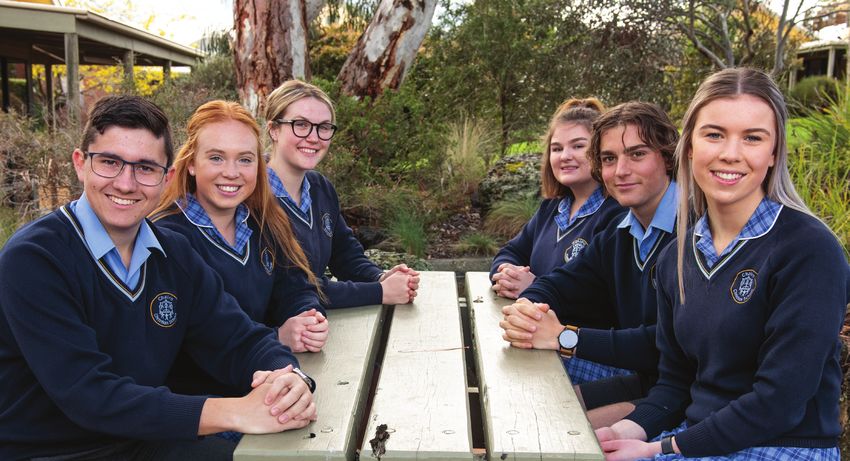
Subject Selection 2021

     Drouin Campus
     Years 11–12 (vce & vcal)

                                1
2

Contents
Introduction................................................................ 4      Legal Studies............................................................. 24
VCE Course Requirements....................................... 5                    Literature................................................................... 25
VET DSS...................................................................... 6     Mathematics Units 1 & 2 (All)................................ 26
VCAL Course Requirements.................................... 7                      Mathematics Units 3 & 4 (All)................................ 27
Career Advice............................................................. 8        Media......................................................................... 29
Distance Education.................................................... 8            Music Performance.................................................. 31
Calculating an ATAR................................................. 9              Outdoor and Environmental Studies.................... 32
Subject Selection Process........................................... 9              Physical Education................................................... 33
                                                                                    Physics....................................................................... 35
Subject Content Outlines                                                            Product Design and Development........................ 36
Biology....................................................................... 10   Psychology................................................................ 38
Business Management............................................. 11                 Studio Arts................................................................ 40
Chemistry.................................................................. 12      Texts and Traditions................................................. 41
Computing................................................................ 13        Theatre Studies......................................................... 42
English....................................................................... 14   Visual Communication and Design...................... 43
Food Studies............................................................. 15        Cleaning Operations (VET).................................... 44
Geography................................................................. 17
Health and Human Development......................... 18                            Change of VCE Unit Request Form....................... 45
History....................................................................... 20   VCAL Application Form......................................... 47
LOTE – French Studies............................................ 21                VET DSS Expression of Interest Form................... 51
LOTE – Indonesian Studies.................................... 22                    VET DSS Parent/Guardian Authorisation............ 53
LOTE – Special Recognition................................... 23

Head of Senior School                                                               VCAL Coordinator
Sharon Gordon                                                                       Kylie Davey
sgordon@chairo.vic.edu.au                                                           kdavey@chairo.vic.edu.au
(03) 5625 4600                                                                      (03) 5625 4600

VCE Coordinator                                                                     Career Practitioner & VET Coordinator
Lacy Biggs                                                                          Wendy Taylor
lbiggs@chairo.vic.edu.au                                                            wtaylor@chairo.vic.edu.au
(03) 5625 4600                                                                      (03) 5625 4600

To our knowledge, the information in this booklet was accurate at the time of publication. However,
the Victorian Curriculum Assessment Authority reserves the right to make modifications to the
VCE Units. Changes may also occur to subject offerings due to patterns of student preferences or
availability of teaching staff.

                                                                                                                                                                   3
Introduction This handbook has been prepared to help may not always be possible due to timetabling students and parents/guardians make informed requirements. Think carefully about the order of decisions regarding the many choices that will be your preferences. available for students in Years 11 and 12 at Chairo Students find that Years 11 and 12 at Chairo Drouin in 2021. to be productive and enjoyable. They develop We are blessed with experienced and lasting friendships with staff members and enthusiastic teaching staff members who want the other students through a wide range of shared best for their students, and who are dedicated to endeavours, including sports, camps and other delivering the finest educational program possible. extra-curricular activities. It is highly recommended that students The role of senior students within our school entering Years 11 and 12 discuss their subject community is strategic, and their leadership and preferences with their teachers before completing loyalty is highly valued. It is expected that all the online subject selection process. students will uphold Chairo’s values and ethos, The teachers will have a good idea of the and will contribute positively to community life. suitability of individual students for particular Extra copies of all forms included in this subjects, and their advice will help reduce the risk booklet will be available from Student Reception. of students needing to change a subject once the We encourage students to determine that their year has commenced. final stage of secondary education at Chairo will Please do not hesitate to contact the Head be one that they can look back on with fondness of Senior School, the VCE Coordinator or the and satisfaction at having ‘finished well’. VCAL Coordinator—or individual subject teachers—if you require more information than Sincerely, has been provided in this handbook regarding specific subject content or requirements. We are here to help! It is important to consider a range of subjects and pathways of potential interest. While every Sharon Gordon effort is made to meet all student preferences, this Head of Senior School (Drouin) 4
VCE Course Requirements
The VCE (Victorian Certificate of Education)           certain circumstances for certain subjects (and
is normally completed by students over a               following consultation with the VCE Coordinator
minimum of two years.                                  and Careers Practitioner), students may be given
    The VCAA (Victorian Curriculum Assessment          permission to undertake a Units 3 & 4 sequence
Authority) is the government authority responsible     in Year 11 without having completed Units 1 & 2.
for the administration of the VCE and each student’s       Students must clearly demonstrate an
program must be approved by this authority.            aptitude for the relevant subject area, and be
    Each subject in the VCE is divided into four       deemed to have a real likelihood of experiencing
semester length units. Units 1 & 2 are normally        success, before admission to the Accelerated
taken at Year 11 level and Units 3 & 4 are normally    Program is granted.
taken at Year 12 level. Units 3 & 4 must be studied        Listed in this handbook are the VCE studies
as a sequence. Each student’s two-year program         on offer to Chairo students. Please note that
of study normally comprises 22 units of work.          some subjects that are able to be selected as a
    To successfully complete the requirements          preference may not run if insufficient number of
for the VCE, students must achieve satisfactory        students select them.
completion of a total of not less than 16 units of         A description of what each unit involves has
work, which must include:                              been included in order to help students make
• three of the four units of English, Literature       appropriate and informed choices. Students will
   or ESL (English as a Second Language); and          need to select the required number of subjects
• three sequences of Units 3 & 4 studies               (i.e. six for Year 11 and five for Year 12).
   other than English, Literature or ESL.                  Students are expected to purchase textbooks
Year 11 students are expected to take 12 units of      as required for their subjects. Any additional
study (i.e. six subjects), of which Units 1 & 2 of     costs for subjects are listed.
English, Literature or ESL are compulsory.                 At Chairo, we require Year 12 students to
   Year 12 students are expected to take 10 units      undertake at least four Units 3 & 4 sequences
of study (i.e. five subjects chosen from the six       other than English, Literature or ESL because we
timetable blocks), of which Units 3 & 4 of English,    believe students should have a ‘safety margin’
Literature or ESL are compulsory.                      in their program. Note: up to six Units 3 & 4
    However, some variations may occur in              sequences can contribute to the ATAR.
exceptional circumstances.                                 The ‘normal’ workload of a student will be 22
    Note: the Accelerated Program provides             units over two years with the possibility of extra
the option for Year 11 students to undertake a         units available through the Accelerated Program.
Units 3 & 4 sequence.                                      We do not advise selecting any more than two
    While successful completion of Units 1 & 2         folio subjects (e.g. Media, Studio Arts, Visual
during Year 10 is generally a prerequisite, under      Communication & Design).

                                                                                                        5
VET DSS (VET Delivery to Secondary Students)
Students who complete all or part of a nationally VET courses are offered in the following areas:
recognised VET (Vocational Education and • Agriculture
Training) qualification can receive credit towards • Allied Health Assistant
satisfactory completion of the VCE and/or VCAL. • Animal Studies
VCAA–approved VCE VET programs have • Automotive
Units 1 to 4 recognition within the VCE. Other • Beauty Services
nationally recognised qualifications may receive • Building and Construction
credit through an arrangement called Block • Business
Credit Recognition. • Christian Ministry & Theology (Vetamorphus)
The involvement of Chairo in the local VET • Civil Construction
cluster (consisting of secondary schools in West • Community Services
Gippsland) means that the offerings of VET • Dance
certificates are expanded. • Early Childhood Education and Care
Chairo is prepared to be an intermediary • Electro-technology
institution, outsourcing students to various • Engineering
providers. As such, students study off-campus • Equine
one day per week (usually a Wednesday). • Horticulture
Students may miss up to six periods of • Hospitality
class each week. They are expected to catch • Information Technology
up on all missed work, without extra time or a • Interior Design
reduced workload. • Photography
Note: some courses that are initially • Plumbing
offered may not run if there are insufficient • Salon Assistant (Hairdressing)
student numbers. This decision is made by the • Screen and Media
individual providers. • Sport and Recreation
Students must complete and submit a copy of Costs: VET certificates incur an additional
the VET DSS Expression of Interest Form and VET fee, which is payable by parents/guardians.
DSS Parent Authorisation 2021 (which can be The fee per certificate is currently capped at
found at the back of this handbook) by no later approximately $1,950 per year, with the balance
than Friday 21 August. of the cost being covered by the school and
related government grants.
VET Courses are offered through a range of Fees are non-refundable unless withdrawal
providers including: occurs very early in the course. Administration
• Apprenticeships Group Aust. fees may be applied by the external provider.
• Chisholm Institute
• Community College Gippsland
• Drouin Secondary College
• TAFE Gippsland
• Hillcrest Christian College
6VCAL Course Requirements
The VCAL (Victorian Certificate of Applied Students can expect an application process to
Learning) is one of the options available to senior study VCAL in 2020, and will therefore need to
secondary students. complete and return a VCAL application form
Giving students practical, hands-on (which can be found at the end of this handbook).
experience related to the workforce, VCAL
also helps students develop their literacy and They will need to be self-motivated and
numeracy skills. Opportunities to develop inter- disciplined as this form of study places
personal and work-related skills also form part of a significant amount of organisational
the VCAL program. responsibility on them.
VCAL is an appropriate pathway for students
who may want to complete apprenticeships Prerequisites: None
after school, or undertake further training in the
workplace or at TAFE. Costs: Students will be advised about the texts
The flexibility of VCAL enables students to that they will need to purchase as part of the
undertake a study program that reflects their annual booklist purchase process.
interests and capabilities. Fully accredited VCAL is a high-cost, staff-intensive course to
modules and units are derived from the following operate, with programs being individualised and
four compulsory strands: significant staff time also required in relation to
• Literacy and Numeracy Skills the offsite components.
• Work Related Skills Accordingly, standard full-time Chairo
• Industry Specific Skills tuition fees apply. An additional VCAL levy of
• Personal Development Skills approximately $945 is also payable to the school
Successful completion of the modules will credit to assist with VET fees. The school must pay
students with a VCAL certificate and a Statement approximately $1,500 to $2,600 in VET fees for
of Results, which details the areas of study that each VCAL student.
have been undertaken.
Chairo offers the Intermediate VCAL Time commitment: VCAL is a full-time course.
Certificate and the Senior VCAL Certificate. Students who take part in VCAL at Chairo will
The VCAL program is offered onsite at the spend three days per week at the Drouin Campus
Drouin Campus, but is open to students from and two days per week off-campus completing
other Chairo campuses who wish to apply. Please their work placements and/or VET certificates.
note that, due to the nature of this program, there
will be capped enrolment numbers.
7Career Advice
After reading this booklet and discussing While the Career Practitioner is available to
subject choices with staff members and parents/ discuss career options, the onus is on students
guardians, students may wish to arrange for an to verify details. The Career Practitioner
interview with the Career Practitioner. has literature and access to online resources
Students are advised to ask the following (e.g. handbooks, course leaflets) for students and
questions and determine appropriate answers parents/guardians to read.
prior to such interviews: The earlier students begin to think about and
• Will VCE or VCAL programs best plan the options available to them after Year 12,
suit me and my future options? the greater chance they will have of making
• What requirements must I meet in realistic and informed decisions.
order to complete my VCE/VCAL? All students are advised to attend open days
• What units are available? conducted by tertiary institutions throughout the
• What prerequisite and recommended year, as these are a valuable source of information
studies do I need to undertake for for students. Details of open days and career
a particular career pathway? expos are regularly brought to the attention of
• What advice have I received from students by the Careers Practitioner and teachers.
parents/guardians, teachers, friends
and the Career Practitioner?
• What units, or combinations of units, are going
to be the most interesting and rewarding?
Distance Education
Study through the DECV (Distance Education The DECV and VSL provide opportunities
Centre Victoria) and the VSL (Victorian School for students to attend seminars pertinent to the
of Languages) is a service available for students area of study. Transportation and supervision
who need to undertake a prerequisite subject that of students attending seminars or other
is not currently available at Chairo. activities organised by these schools are the sole
A fee for each subject studied by distance is responsibility of parents/guardians.
payable at the time of enrolment and is non- Distance Education courses are offered
refundable once a subject has commenced. In where a prerequisite subject is not available.
previous years, the DECV fees were $810 per Any other applications for DECV/VSL courses
subject, while VSL fees were $560 per language. will be considered on a case-by-case basis by an
Students undertaking studies with either approval panel.
the DECV or VSL need to be self-motivated Please direct Chairo Distance
and disciplined, as this form of study places Education questions to Ms Lacy Biggs
a significant amount of organisational at lbiggs@chairo.vic.edu.au.
responsibility on them.
8Calculating an ATAR
The ATAR (Australian Tertiary Admission Rank) The scaling process is designed to avoid
is a percentile rank allocated to students based on students being advantaged by taking a study
VCE study scores achieved. that has attracted a higher proportion of less-
The ATAR (Biology
Unit 1: How do living things stay alive? Unit 3: How do cells maintain life?
Students explain what is needed by an organism Students investigate the workings of the cell
to stay alive. They are introduced to some of from several perspectives in order to gain an
the challenges for organisms in sustaining life. appreciation of both the capabilities and the
Students examine the cell as the structural and limitations of living organisms. They explore the
functional unit of life and requirements for importance of the plasma membrane and consider
sustaining cellular processes in terms of inputs and base pairing specificity, the binding of enzymes and
outputs. Types of adaptations that enhance the substrates, the response of receptors to signalling
organism’s survival in a particular environment molecules and reactions between antigens and
are analysed, and the role that homeostatic antibodies to highlight the importance of molecular
mechanisms play in maintaining the internal interactions based on the complementary nature
environment is studied. Students consider how the of specific molecules. Students study the synthesis,
planet’s biodiversity is classified and investigate structure and function of nucleic acids and
the factors that affect population growth. proteins as key molecules in cellular processes.
Unit 2: How is continuity of Unit 4: How does life change and
life maintained? respond to challenges over time?
Students focus on asexual and sexual cell Students consider the continual change and
reproduction, and the transmission of biological challenges to life on Earth. They investigate the
information from generation to generation. The relatedness between species and the impact of
role of stem cells in the differentiation, growth, various change events on a population’s gene
repair and replacement of cells in humans is pool. The accumulation of changes over time
examined, and their potential use in medical is considered as a mechanism for biological
therapies is considered. Students explain the evolution by natural selection. Students examine
inheritance of characteristics, analyse patterns of change in life forms using evidence from
inheritance, interpret pedigree charts and predict palaeontology, biogeography, developmental
outcomes of genetic crosses. They consider the role biology and structural morphology. They
of genetic knowledge in decision-making about examine the interrelationships between human
the inheritance of various genetic conditions. In biological and cultural evolution. The biological
this context, the uses of genetic screening and its consequences, and social and ethical implications,
social and ethical issues are examined. of manipulating the DNA molecule and applying
biotechnologies is explored.
Areas of Study
Unit 1 Unit 2 Unit 3 Unit 4
• How do organisms • How does • How do cellular • How are species
function? reproduction maintain processes work? related?
• How do living the continuity of life? • How do cells • How do humans
systems sustain life? • How is inheritance communicate? impact on biological
• Practical investigation explained? processes?
• Issue investigation • Practical investigation
Assessment
Units 1 & 2 Satisfactory or Not Satisfactory
Units 3 & 4 School-assessed coursework 40%
End-of-year examination 60%
Additional Information
Prerequisites Biology Unit 1 is strongly recommended before doing Units 3 & 4.
10Business Management
Units 1 & 2 Units 3 & 4
These units focus on the planning and These units focus on the key processes and issues
establishment phases of the life of a business. concerned with managing a business efficiently
Activities related to the factors affecting and effectively, and the constant pressure that
business ideas, and the internal and external businesses face to adapt and change to meet their
environments within which businesses operate objectives. Students consider corporate culture,
and the effect these have on planning a business, management styles, management skills and the
are explored. Specific areas covered include relationship between each of these. They also
complying with legal requirements, setting up study a theoretical model to undertake change,
a system of financial record keeping, staffing and consider a variety of strategies to manage
the business, establishing a customer base and change in the most efficient and effective way to
effective marketing. improve business performance. They investigate
the importance of leadership in change
management. Using contemporary business
case studies from the past four years, students
evaluate business practice against theory.
Areas of Study
Unit 1 Unit 2 Unit 3 Unit 4
• The business idea • Legal requirements • Business foundations • Performance review
• External environment and financial • Managing employees • Implementing change
• Internal environment considerations • Operations
• Marketing a business management
• Staffing a business
Assessment
Units 1 & 2 Satisfactory or Not Satisfactory
Units 3 & 4 School-assessed coursework for Unit 3 25%
School-assessed coursework for Unit 4 25%
End-of-year examination 50%
Additional Information
Prerequisites None
11Chemistry
Unit 1 Unit 3
Students investigate the chemical properties Students compare and evaluate different
of a range of materials from metals and salts chemical energy resources, including fossil fuels,
to polymers and nanomaterials. Using their biofuels, galvanic cells and fuel cells. In this
knowledge of elements and atomic structure, context, they investigate energy transformations,
students explore and explain the relationships develop their understanding of stoichiometry,
between properties, structure and bonding predict and describe redox reactions and apply
forces within and between particles that vary in Faraday’s laws to electrolytic reactions. Students
size from the visible, through nanoparticles, to analyse manufacturing processes with reference
molecules and atoms. Students are introduced to to factors that influence their reaction rates and
quantitative concepts in chemistry, including the extent. They use the principles of equilibrium
mole concept. to predict and explain the conditions that will
improve the efficiency and percentage yield of
Unit 2 chemical processes.
Students examine the polar nature of a water
molecule and the intermolecular forces between Unit 4
water molecules. They explore the relationship Students study the ways in which organic
between these bonding forces and the physical structures are represented and named. They
and chemical properties of water. In this context, interpret data from instrumental analyses of
students investigate solubility, concentration, pH organic compounds and perform volumetric
and reactions in water, including precipitation, analyses. Students predict the products of
acid-base and redox. Students are introduced to reaction pathways and design pathways to
stoichiometry, and to analytical techniques and produce particular compounds. They investigate
instrumental procedures, and apply these to key food molecules through an exploration
determine concentrations of different species in of their chemical structures, the hydrolytic
water samples, including chemical contaminants. reactions in which they are broken down and the
condensation reactions in which they are rebuilt
to form new molecules.
Areas of Study
Unit 1 Unit 2 Unit 3 Unit 4
• Elements and the • Interactions between • Options for energy • The diversity of
properties of matter water and other production carbon compounds
• The versatility of substances • Optimising the yield • The chemistry of food
non-metals • Analysis of of chemical products • Practical investigation
• Research investigation substances in water
• Practical investigation
Assessment
Units 1 & 2 Satisfactory or Not Satisfactory
Units 3 & 4 School-assessed coursework Unit 3 16%
School-assessed coursework Unit 4 24%
End-of-year examination 60%
Additional Information
Prerequisites Solid pass in Year 10 Science and Maths
Sequence Requirements Students entering Unit 3 without Units 1 & 2 will be required to undertake a
course of preparatory reading and exercises as prescribed by their teachers.
12Computing
Unit 1: Computing of the problem-solving methodology. In Area of
Students focus on how data, information and Study 2, students develop a sound understanding
networked digital systems can be used to meet of data and how a range of software tools can
a range of users’ current and future needs. In be used to extract data from large repositories
Area of Study 1, students collect primary data and manipulate it to create visualisations that
when investigating an issue, practice or event are clear, usable and attractive, and reduce
and create a digital solution that graphically the complexity of data. In Area of Study 3,
presents the findings of the investigation. In students apply all stages of the problem-solving
Area of Study 2, students examine the technical methodology to create a solution using database
underpinnings of wireless and mobile networks, management software and explain how they are
and security controls to protect stored and personally affected by their interactions with a
transmitted data, to design a network solution database system.
that meets an identified need or opportunity.
They predict the impact on users if the network Unit 3: Software Development
solution were implemented. In Area of Study 3, In Units 3 and 4, students focus on the
students acquire and apply knowledge of application of a problem-solving methodology
information architecture and user interfaces, and underlying skills to create purpose-designed
together with web-authoring skills, when creating solutions using a programming language. In
a website to present different viewpoints about a Unit 3, students develop a detailed understanding
contemporary issue. of the analysis, design and development stages
of the problem-solving methodology and use
Unit 2: Computing a programming language to create working
Students focus on data and how the application software modules.
of computational, design and systems thinking
skills support the creation of solutions that Unit 4: Software Development
automate the processing of data. In Area of Students focus on how the information needs of
Study 1, students develop their computational individuals and organisations are met through
thinking skills when using a programming or the creation of software solutions used in a
scripting language to create solutions. They networked environment. They continue to study
engage in the design and development stages the programming language used in Unit 3.
Areas of Study
Units 1 & 2 Unit 3 Unit 4
• See Computing above • Analyse an • Design software that takes into account
existing networked a networked information system
information system • Propose and justify strategies for managing,
• Produce a software developing, implementing and evaluating
module suitable for the introduction to an organisation of a
implementation on networked information system that will
a portable device operate in a global environment
Assessment
Units 1 & 2 Satisfactory or Not Satisfactory
Units 3 & 4 School-assessed task 30%
School-assessed coursework 20%
End-of-year examination 50%
Additional Information
Prerequisites Units 3 & 4 Software Development requires Units 1 & 2 Computing.
13English
This study aims to enable students to develop their critical understanding and control of the English
language. Students consider the use of both written and oral language in a range of situations, from
informal interactions to public speaking.
Unit 1 Unit 3
Students produce analytical and creative Students produce an analytical interpretation
responses to texts. They learn to analyse how of a selected text, and a creative response to a
argument and persuasive language can be used different selected text. They analyse and compare
to position audiences, and create their own texts the use of argument and persuasive language in
intended to position audiences. texts that present a point of view about an issue
currently debated in the media.
Unit 2
Students compare the presentation of ideas, Unit 4
issues and themes in two texts. They identify and Students produce a detailed comparison, which
analyse how argument and persuasive language analyses how two selected texts present ideas,
are used in texts that attempt to influence an issues and themes. They construct a sustained
audience, and create a text that presents a and reasoned point of view about an issue
point of view. currently debated in the media.
Areas of Study
Unit 1 Unit 2 Unit 3 Unit 4
• Reading and • Reading and • Reading and • Reading and
creating texts comparing texts creating texts comparing texts
• Analysing and • Analysing and • Analysing argument • Presenting argument
presenting argument presenting argument
Assessment
Units 1 & 2 Satisfactory or Not Satisfactory
Units 3 & 4 School-assessed coursework 50%
End-of-year examination 50%
Additional Information
Prerequisites Year 10 English completed satisfactorily
Sequence Requirements Of the four units, three must be satisfactorily completed (two of which must be
in the Units 3 & 4 sequence).
14Food Studies
Unit 1: Food origins Unit 3: Food in daily life
This unit focuses on food from historical and This unit investigates the many roles and
cultural perspectives. Students investigate the everyday influences of food. Students explore
origins and roles of food through time and the science of food; they consider the physiology
across the world. They explore how humanity of eating, the microbiology of digestion and
has historically sourced its food, examining the appreciating food. They also investigate the
general progression from hunter-gatherer to functional properties of food and the changes that
rural-based agriculture, to today’s urban living occur during food preparation and cooking.
global trade in food. Students analyse the scientific rationale
Students consider the origins and significance behind the Australian Dietary Guidelines and
of food through inquiry into particular food- the Australian Guide to Healthy Eating, and
producing regions of the world. They also develop their understanding of diverse nutrient
investigate Australian indigenous food prior to requirements. They also investigate how
European settlement and how food patterns have communities, families and individuals change
changed over time. their eating patterns over time and how our food
Students investigate cuisines that are part values and behaviours develop within social
of Australia’s culinary identity today and environments.
reflect on the concept of an Australian cuisine. Students inquire into the role of food in shaping
They consider the influence of technology and and expressing identity and connectedness, and
globalisation on food patterns. the ways in which food information can be filtered
and manipulated. They investigate behavioural
Unit 2: Food makers principles that assist in the establishment of
Students investigate food systems in contemporary lifelong, healthy dietary patterns.
Australia, exploring both commercial food The practical component of this unit enables
production industries and food production in students to understand food science terminology
small-scale domestic settings. They gain insight and to apply specific techniques to the production
into the significance of food industries to the of everyday food that facilitates the establishment
Australian economy and investigate the capacity of nutritious and sustainable meal patterns.
of industry to provide safe, high-quality food that
meets the needs of consumers. Unit 4: Food issues, challenges and futures
Students produce foods and consider a range Students examine debates about global and
of evaluation measures to compare their foods to Australian food systems. They focus on issues
commercial products. They consider the effective related to the environment, ecology, ethics,
provision and preparation of food in the home, and farming practices, the development and
analyse the benefits and challenges of developing application of technologies, and the challenges of
and using practical food skills in daily life. food security, food safety, food wastage and the
Students design new food products and adapt use and management of water and land.
recipes to suit particular needs and circumstances. Students also investigate individual responses
to food information and misinformation, and the
development of food knowledge, skills and habits
to empower consumers to make discerning food
choices. They consider how to assess information
and draw evidence-based conclusions, and apply
this methodology to navigate contemporary
food fads, trends and diets. The food production
repertoire of students reflects the Australian
Dietary Guidelines and the Australian Guide to
Healthy Eating.
15Areas of Study
Unit 1 Unit 2 Unit 3 Unit 4
• Food around • Food industries • The science of food • Environment
the world • Food in the home • Food choices, health and ethics
• Food in Australia and wellbeing • Navigating food
information
Assessment
Units 1 & 2 Satisfactory or Not Satisfactory
Unit 3 School-assessed coursework 30%
Unit 4 School-assessed coursework 30%
Units 3 & 4 End-of-year examination 40%
Additional Information
Prerequisites None
Subject costs Some materials costs may be incurred when completing the
school-assessed coursework.
16Geography
Unit 1: Hazards and disasters Unit 3: Changing the land
Students will learn to describe, explain and Students will study the changes in land use at a
analyse the nature of hazards and the impacts of national and local scale, and the impact this has
hazard events at a range of scales. They will study on both the natural and human environments.
two contrasting hazards and undertake fieldwork. This Area of Study includes fieldwork.
Students will explore the nature and Students will undertake an overview in global
effectiveness of a range of responses, such as land cover and the changes that are occurring
warning programs and community preparedness, over time. They will look at deforestation,
to selected hazards and disasters. One disaster desertification, and melting glacier and ice sheets.
will be studied in detail, which involves a field
trip to a venue such as Marysville to study the Unit 4: Human populations –
impact of the 2009 bushfires. trends and issues
Students will explore population dynamics on
Unit 2: Tourism a global scale.
Students will describe, explain and analyse the Students will investigate two significant
nature of tourism at a range of scales, including population trends that have developed
global tourism. in different parts of the world: a growing
Students will investigate and analyse the population of one country and an ageing
impacts of tourism on people, places and population of another country.
environments, and evaluate the effectiveness of
strategies for managing tourism. Students will
participate in a fieldwork camp to study two
tourism ventures such as Werribee Range Zoo
and Melbourne Zoo.
Areas of Study
Unit 1 Unit 2 Unit 3 Unit 4
• Characteristics • Characteristics • Land use change • Population dynamics
of disasters of tourism • Land cover change • Population issues
• Responses to hazards • Impact of tourism and challenges
and disasters
Assessment
Units 1 & 2 Satisfactory or Not Satisfactory
Units 3 & 4 School-assessed coursework for Unit 3 25%
School-assessed coursework for Unit 4 25%
End-of-year examination 50%
Additional Information
Prerequisites None
Excursion/fieldwork cost To be advised (approximately $225)
17Health and Human Development
Unit 1: Understanding health the World Health Organization. They use this
and wellbeing knowledge as background to their analysis and
Students identify personal perspectives and evaluation of variations in the health status
priorities relating to health and wellbeing, and of Australians.
enquire into factors that influence health attitudes, Area of Study 2 focuses on health promotion
beliefs and practices, including among Aboriginal and improvements in population health over time.
and Torres Strait Islanders. Students look at various public health approaches
Students look at multiple dimensions of and the interdependence of different models as
health and wellbeing, the complex interplay they research health improvements and evaluate
of influences on health and wellbeing, and the successful programs. While the emphasis is on
indicators used to measure and evaluate health the Australian health system, the progression of
status. With a focus on youth, students consider change in public health approaches should be
their own health as individuals and as a cohort. seen within a global context.
They build health literacy through interpreting
and using data, through investigating the role Unit 4: Health and human development
of food, and through extended inquiry into one in a global context
youth health focus area. This unit examines health and wellbeing, and
human development, in a global context.
Unit 2: Managing health and development Students use data to investigate health status and
This unit investigates transitions in health and burden of disease in different countries, exploring
wellbeing, and development, from lifespan and factors that contribute to health inequalities
societal perspectives. Students look at changes between and within countries, including the
and expectations that are part of the progression physical, social and economic conditions in
from youth to adulthood. They enquire into the which people live.
Australian healthcare system and extend their Students build their understanding of
capacity to access and analyse health information. health in a global context through examining
Students investigate the challenges and changes in burden of disease over time and
opportunities presented by digital media studying the key concepts of sustainability and
and health technologies, and consider issues human development. They consider the health
surrounding the use of health data and access to implications of increased globalisation and
quality health care. worldwide trends relating to climate change,
digital technologies, world trade and the mass
Unit 3: Australia’s health in a movement of people.
globalised world Area of Study 2 looks at global action
This unit looks at health, wellbeing and illness to improve health, wellbeing and human
as multidimensional, dynamic and subject to development, focusing on the Sustainable
different interpretations and contexts. Students Development Goals of the United Nations and
begin to explore health and wellbeing as a global the work of the World Health Organization.
concept, and to take a broader approach to Students also investigate the role of non-
inquiry. As they consider the benefits of optimal government organisations and Australia’s
health and wellbeing, and its importance as overseas aid program. They evaluate the
an individual and a collective resource, their effectiveness of health initiatives and programs
thinking extends to health as a universal right. in a global context and reflect on their capacity
Students look at the fundamental conditions to take action.
required for health improvement, as stated by
18Areas of Study
Unit 1 Unit 2 Unit 3 Unit 4
• Health perspectives • Developmental • Understanding health • Health and wellbeing
and influences transitions and wellbeing in a global context
• Health and nutrition • Health care in • Promoting health • Health and the
• Youth health Australia and wellbeing sustainable
and wellbeing development goals
Assessment
Units 1 & 2 Satisfactory or Not Satisfactory
Units 3 & 4 School-assessed coursework for Unit 3 25%
School-assessed coursework for Unit 4 25%
End-of-year examination 50%
Additional Information
Prerequisites None
19History
Unit 1: Global Empires – Units 3 & 4: Revolutions
The Making of Empires 1400–1775 Revolutions share the common aim of breaking
‘Gold, God and Glory’ are the usual motives with the past and destroying regimes, then
assigned to early European explorers, but embarking on a program of political and social
were these really the aims of people like transformation. Revolutions often involve civil
Christopher Columbus and Vasco da Gama? war and provoke counter-revolutions, thus
What new inventions were needed as a result further disrupting society.
of increased exploration and what new ideas Over the course of the year, students will
spread? What is the Enlightenment? What study two revolutions, focusing on individuals,
was the Spanish Inquisition and how was movements, events and ideas involved in the
superstition suppressed? development of the revolution, and will evaluate
the nature and success of the new society created
Unit 2: Global Empires – by the revolution.
Empires at Work 1400–1775
How did the slave trade work (or not work) and Note: There are possible minor changes to the
did they ever fight back? Why can’t Americans VCAA study design for the 2020 accreditation
make hats? What was the impact on, and period, to be advised.
response by, first nations peoples such as the
Iroquois? What new ideas came about because of
rebellion and oppression by the empires?
Both Units 1 & 2 History are driven by key
questions about the past that form the basis of
student inquiries.
Areas of Study
Unit 1 Unit 2 Unit 3 Unit 4
• Ideology and conflict • Competing ideologies • Causes of revolution • Causes of revolution
• Social and cultural • Challenge and change • Consequences • Consequences
change of revolution of revolution
Assessment
Unit 1 & 2 Satisfactory or Not Satisfactory
Unit 3 & 4 School-assessed coursework 50%
End-of-year examination 50%
Additional Information
Prerequisites None
20LOTE – French Studies
The Language and Scope of Study Structure
Students develop and extend skills in listening, The VCE French study is made up of four units.
speaking, reading, writing and viewing in Each unit deals with language and specific
the French language in a range of contexts, content contained in the areas of study and is
and they develop cultural understanding in designed to enable students to achieve a set of
interpreting and creating language. Students outcomes for that unit. Each outcome is described
develop their understanding of the relationships in terms of key knowledge and key skills.
between language and culture in new contexts
and consider how these relationships shape Prescribed Themes
communities. Throughout the study, students There are three prescribed themes for study in
are given opportunities to make connections VCE French:
and comparisons based on personal reflections • The individual
about the role of language and culture in • The French-speaking communities
communication and personal identity. • The world around us
Outcomes
Unit 1 Unit 2 Unit 3 Unit 4
• Exchange meaning in • Respond in writing • Express ideas through • Analyse and use
a spoken interaction in French to spoken, the production of information from
in French written or visual texts original texts written texts
• Interpret information presented in French • Analyse and use • Respond critically
from two texts on • Analyse and use information from to spoken and
the same sub-topic information from spoken texts written texts that
presented in French, written, spoken or • Exchange information, reflect aspects of the
and respond in visual texts to produce opinions and language and culture
writing in French an extended written experiences of French-speaking
and English response in French communities
• Present information, • Explain information,
concepts and ideas ideas and concepts
in writing in French orally in French
Assessment
Units 1 & 2 Satisfactory or Not Satisfactory
Units 3 & 4 School-assessed coursework for Unit 3 25.0%
School-assessed coursework for Unit 4 25.0%
Examination – oral component 12.5%
Examination – written component 37.5%
Additional Information
Prerequisites Year 10 French and Units 1 & 2 respectively
21LOTE – Indonesian Studies
The Language and Scope of Study connections and comparisons based on personal
The language to be studied and assessed is the reflections about the role of language and culture
modern standard version of Indonesian. VCE in communication and personal identity.
Indonesian Second Language focuses on student
participation in interpersonal communication, Structure
interpreting the language of other speakers, and The study is made up of four units. Each unit
presenting information and ideas in Indonesian deals with language and specific content
about a range of themes and topics. Students contained in the areas of study and is designed to
develop and extend skills in listening, speaking, enable students to achieve a set of outcomes for
reading, writing and viewing in Indonesian that unit. Each outcome is described in terms of
in a range of contexts, and develop cultural key knowledge and key skills.
understanding in interpreting and creating
language. Students develop their understanding Areas of Study
of the relationships between language and • Interpersonal Communication
culture in new contexts and consider how these • Interpretive Communication
relationships shape communities. Throughout the • Presentational Communication
study, students are given opportunities to make
Outcomes
Unit 1 Unit 2 Unit 3 Unit 4
• Exchange meaning in • Respond in writing • Participate in a • Share information,
a spoken interaction in Indonesian to spoken exchange in ideas and opinions
in Indonesian spoken, written or Indonesian to resolve in a spoken exchange
• Interpret information visual texts presented a personal issue in Indonesian
from two texts on in Indonesian • Interpret information • Analyse information
the same subtopic • Analyse and use from texts and from written,
presented in information from write responses spoken and viewed
Indonesian, and written, spoken in Indonesian texts for use in a
respond in writing or visual texts to • Express ideas in a written response
in Indonesian produce an extended personal, informative in Indonesian
and English written response or imaginative piece of • Present information,
• Present information, in Indonesian writing in Indonesian concepts and ideas
concepts and ideas in • Explain information, in evaluative or
writing in Indonesian ideas and concepts persuasive writing on
orally in Indonesian an issue in Indonesian
Assessment
Units 1 & 2 Satisfactory or Not Satisfactory
Units 3 & 4 School-assessed coursework for Unit 3 25.0%
School-assessed coursework for Unit 4 25.0%
Examination – oral component 12.5%
Examination – written component 37.5%
Additional Information
Prerequisites Year 10 Indonesian and Units 1 & 2 respectively
22LOTE – Special Recognition
The VCE (Baccalaureate) provides an additional To be eligible to receive the VCE
form of recognition for those students who (Baccalaureate), the student must satisfactorily
choose to undertake the demands of studying complete the VCE and receive a study score for
both a higher level mathematics and a language each prescribed study component.
in their VCE program of study. The VCE program of study must include:
The student’s Statement of Results will include • a Units 3 & 4 sequence in a VCE Language;
an additional statement that recognises the award • a Units 3 & 4 sequence in English or Literature
of the VCE (Baccalaureate). Tertiary institutions or English Language with a study score
have also indicated that they strongly support of 30 or above, or a Units 3 & 4 sequence
initiatives that encourage students to study a in EAL with a study score of 33 or above;
higher level mathematics and a language in the • a Units 3 & 4 sequence in either Mathematics
final years of schooling. Methods (CAS) or Specialist Mathematics; and
• at least two other Units 3 & 4 sequences.
23Legal Studies
Unit 1: Guilt and Liability Unit 3: Rights and Justice
This unit explores the key elements of the legal Students explore rights of accused persons before
system. It covers both criminal and civil law as the law and the victims of their crimes. To help
the basis for achieving justice in legal disputes. achieve justice and equality for both the accused
Students investigate both real life crimes and and the victim, institutions such as Legal Aid
hypothetical scenarios to develop reasoned have been established but not all methods of
judgements about Victoria’s justice system. achieving justice have been successful. Students
evaluate the institutions and methods used in the
Unit 2: Sanctions, Remedies and Rights Victorian legal system.
This unit focuses on two real-life criminal
cases and two real-life civil cases to investigate Unit 4: The People and the Law
the effect of sanctions and remedies, and the This unit investigates the relationship between
effectiveness of punishments such as prison and parliaments that make laws and courts that
community corrections orders. enforce them. The focus is on the Australian
Constitution and students follow one High Court
case to evaluate the effectiveness of both the
Constitution and Parliament in upholding rights.
Areas of Study
Unit 1 Unit 2 Unit 3 Unit 4
• Legal foundations • Sanctions • The Victorian criminal • The people and
• The presumption • Remedies justice system the Australian
of innocence • Rights • The Victorian civil Constitution
• Civil liability justice system • The people,
parliament and
the courts
Assessment
Units 1 & 2 Satisfactory or Not Satisfactory
Units 3 & 4 School-assessed coursework 50%
End-of-year examination 50%
Additional Information
Prerequisites None
24Literature
Unit 1: Approaches to literature Unit 3: Form and transformation
Students focus on the ways in which the Students consider how the form of a text affects
interaction between text and reader creates meaning, and how writers construct their texts.
meaning. Student analysis of the features They investigate ways that writers adapt and
and conventions of texts help them develop transform texts, and how meaning is affected
increasingly discriminating responses to a range as texts are adapted and transformed. They
of literary forms and styles. Students respond consider how the perspectives of those adapting
critically, creatively and reflectively to the ideas texts may inform or influence the adaptations.
and concerns of texts and gain insights into Students draw on their study of adaptations
how texts function as representations of human and transformations to develop creative
experience. They develop familiarity with key responses to texts.
terms, concepts and practices that equip them Students develop their skills in communicating
for further studies in literature. They develop ideas in both written and oral forms.
an awareness of how the views and values that
readers hold may influence the reading of a text. Unit 4: Interpreting texts
Students develop critical and analytic responses
Unit 2: Context and connections to texts. They consider the context of their
Students explore the ways that literary texts responses to texts as well as the ideas explored
connect with each other, and with the world. in the texts, the style of the language and points
They deepen their examination of the ways that of view. They investigate literary criticism
their own culture, and the cultures represented in informing both the reading and writing of texts.
texts, can influence their interpretations and shape Students develop an informed and sustained
different meanings. Drawing on a range of literary interpretation supported by close textual analysis.
texts, students consider the relationships between For the purposes of this unit, literary criticism
authors, audiences and contexts. Ideas, language is characterised by extended, informed and
and structures of different texts from past and substantiated views on texts and may include
present eras and/or cultures are compared and reviews, peer-reviewed articles and transcripts of
contrasted. Students analyse the similarities and speeches. Specifically, for Unit 4 Outcome 1, the
differences across texts and establish connections literary criticism selected must reflect different
between them. They engage in close reading of texts perspectives, assumptions and ideas about the
and create analytical responses that are evidence- views and values of the text/s studied.
based. By experimenting with textual structures
and language features, students understand how
imaginative texts are informed by close analysis.
Areas of Study
Unit 1 Unit 2 Unit 3 Unit 4
• Reading practices • The text, the reader • Adaptations and • Literary perspectives
• Ideas and concerns and their contexts transformations • Close analysis
in texts • Exploring connections • Creative responses
between texts to texts
Assessment
Units 1 & 2 Satisfactory or Not Satisfactory
Units 3 & 4 School-assessed coursework 50%
End-of-year examination 50%
Additional Information
Prerequisites None
25Mathematics Units 1 & 2 (All)
Foundation Mathematics Units 1 & 2 Mathematical Methods Units 1 & 2
Units 1 & 2 of Foundation Mathematics provides Units 1 & 2 of Mathematical Methods provides
for the continuing mathematical development of an introductory study of simple elementary
students entering VCE who require mathematical functions, algebra, calculus, probability and
skills in other VCE subjects, but who do not statistics, and their applications in a variety of
intend to study mathematics in Units 3 & 4 the practical and theoretical contexts.
following year. These units are designed as preparation for
In Foundation Mathematics, there is a strong Mathematical Methods Units 3 & 4 and cover
emphasis on using mathematics in practical assumed knowledge and skills for these units.
contexts relating to everyday life, personal
work and study. Specialist Mathematics Units 1 & 2
Units 1 & 2 of Specialist Mathematics provides
General Mathematics Units 1 & 2 courses of study for students interested in
Units 1 & 2 of General Mathematics provides a advanced study of mathematics, with a focus
general course of study involving non-calculus on mathematical structure and reasoning. They
based topics for a wide range of students and is incorporate topics that, in conjunction with
open to all students with a pass in Mathematics at Mathematical Methods Units 1 & 2, provide
the appropriate Year 10 level. preparation for Specialist Mathematics
General Mathematics is a subject for students Units 3 & 4 and cover assumed knowledge
who either do not wish to study mathematics and skills for those units.
beyond Units 1 & 2 or who wish to study Further Specialist Mathematics is to be studied
Mathematics in Units 3 & 4. General Mathematics with Mathematical Methods Units 1 & 2 at the
Units 1 & 2 covers assumed knowledge and skills Year 11 level.
for Further Mathematics Units 3 & 4.
Areas of Study
Foundation General Mathematics Mathematical Methods Specialist Mathematics
Mathematics 1 & 2 1&2 1&2 1&2
• Shapes, shape • Algebra and structure • Functions and graphs • Algebra and structure
and design • Arithmetic and • Algebra • Arithmetic and
• Patterns and number number • Calculus number
• Data • Discrete mathematics • Probability and • Discrete mathematics
• Measurement • Geometry, statistics • Geometry,
measurement and measurement and
trigonometry trigonometry
• Graphs of linear and • Graphs of linear and
non-linear relations non-linear relations
• Statistics • Statistics
Additional Information
Prerequisites • Students attempting Mathematical Methods or Specialist Mathematics
should have a sound background in algebra, functions and
probability. They should have passed Year 10 Maths for Methods.
• Students attempting General Mathematics should have passed
Year 10 Maths for Methods or Year 10 Maths for General.
• Students should discuss their suitability for a particular
mathematics course with their Year 10 Mathematics teacher.
Subject costs Students will be advised about the texts and CAS calculator they
need to purchase.
26You can also read


