NCEA Course Information Year 12 and Year 13 2018 - Takapuna ...
←
→
Page content transcription
If your browser does not render page correctly, please read the page content below

NCEA Course Information
Year 12 and Year 13
2018
Table of Contents
Teaching & Learning ................................................................................................................ 5
The National Certificate of Educational Achievement ............................................................ 6
Course Selection Guide ........................................................................................................... 7
Scholarship ............................................................................................................................ 10
The Academic Preparation Programme…………………………………… .......................................... 12

BUSINESS & ENTERPRISE                                                      HOFs: Ms C Kofoed .......................... 13
                                                                                       Mr L Videler......................... 13
ACCOUNTING......................................................................................................................... 13
LEVEL 2 ACCOUNTING – L2ACC .............................................................................................. 13
LEVEL 3 ACCOUNTING – L3ACC .............................................................................................. 14
LEVEL 2 BUSINESS STUDIES – L2BUS....................................................................................... 15
LEVEL 3 BUSINESS STUDIES – L3BUS....................................................................................... 17
ECONOMICS .......................................................................................................................... 18
LEVEL 2 ECONOMICS – L2ECO ................................................................................................ 18
LEVEL 3 ECONOMICS – L3ECO ................................................................................................ 19

ENGLISH                                                        HOF: Mrs D Walker ............................ 20
LEVEL 2 ENGLISH – L2ENG, L2ENX .......................................................................................... 20
LEVEL 2 ENGLISH LITERACY – L2ENL ....................................................................................... 21
LEVEL 3 ENGLISH - L3ENG, L3ENX ........................................................................................... 21
LEVEL 3 ENGLISH INTERNAL – L3ENI ....................................................................................... 22
LEVEL 2 MEDIA STUDIES – L2MED .......................................................................................... 23
LEVEL 3 MEDIA STUDIES - L3MED........................................................................................... 23

ESOL                                                 HOD: Mrs P Kent ................................. 25
ESL X and Y - ENGLISH LANGUAGE SUPPORT .......................................................................... 25
EAP 1 - ENGLISH FOR ACADEMIC PURPOSES - LEVEL 1 ........................................................... 26
EAP 2 - ENGLISH FOR ACADEMIC PURPOSES - LEVEL 2 ........................................................... 26

LEARNING SERVICES                       HOD: Ms R Kayes……………………………27
LEVEL 2 LEARNING SUPPORT………………………………………………………….........................................27
LEVEL 3 LEARNING SUPPORT ………………………………………………………………………………………………..27

LANGUAGES                                                           HOF: Mr J Lamb ................................. 27
LEVEL 2 FRENCH – L2FRE ........................................................................................................ 28
LEVEL 3 FRENCH - L3FRE ........................................................................................................ 28
LEVEL 3 GERMAN – L3GER ..................................................................................................... 29
LEVEL 2 JAPANESE – L2JPN ..................................................................................................... 30
LEVEL 3 JAPANESE – L3JPN ..................................................................................................... 30
LEVEL 2 SPANISH – L2SPA ...................................................................................................... 31
LEVEL 3 SPANISH - L3SPA……………………………………………………………………………………………………….31
LEVEL 2 CHINESE - L2CHN ……………………………………………………………………………………………………..32
LEVEL 3 CHINESE - L3CHN ……………………………………………………………………………………………………..32

MAORI                                                        HOD: Mrs K Simpkins .......................... 33
LEVEL 2 TE REO MAORI – L2MRI............................................................................................. 33
LEVEL 3 TE REO MAORI – L3MRI............................................................................................. 33
LEVEL 1 MAORI CULTURE - L1MRC ……………………………………………………………….……………………… 33
                                                                           2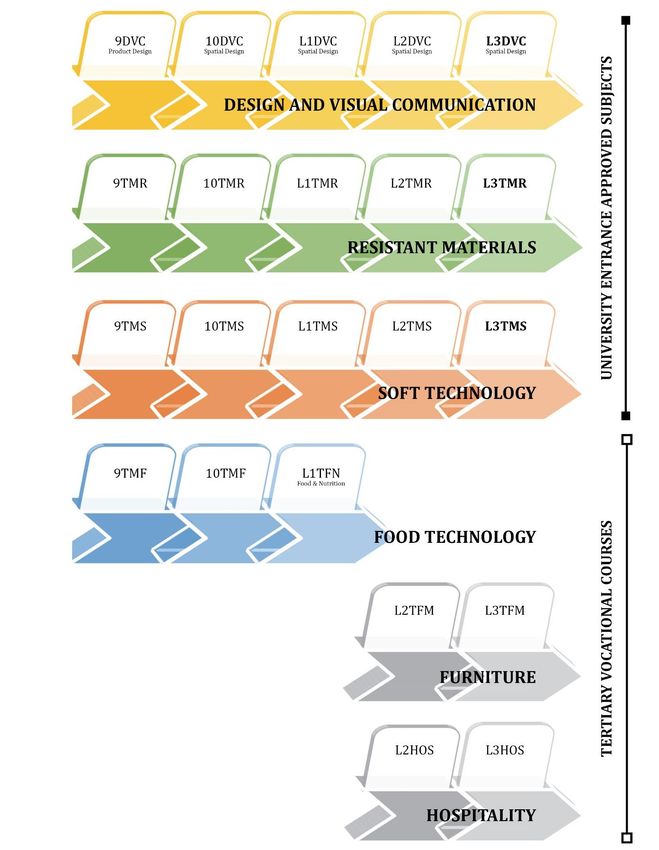
MATHEMATICS                                                HOF: Mrs K Udy-Bothwell ................... 34
LEVEL 2 MATHEMATICS WITH STATISTICS – L2MAS ............................................................... 34
LEVEL 2 MATHEMATICS – L2MAT ........................................................................................... 34
LEVEL 2 MATHEMATICS EXTENSION – L2MAX ........................................................................ 35
LEVEL 3 MATHEMATICS WITH STATISTICS – L3MAS ............................................................... 35
LEVEL 3 MATHEMATICS WITH CALCULUS – L3MAC ................................................................ 35
LEVEL 2 COMPUTER SCIENCE - L2CMP ……………………………………………….…………………………………36
LEVEL 3 COMPUTER SCIENCE - L2CMP ………………………………………………………………………………….36

PERFORMING ARTS                                                               HOF: Mr B De Grut ............................. 36
                                                                              HOD (Music): Mr A Murphy ............... 37
LEVEL 2 DANCE – L2DAN ........................................................................................................ 37
LEVEL 3 DANCE – L3DAN ........................................................................................................ 37
DRAMA .................................................................................................................................. 38
LEVEL 2 DRAMA – L2DRA ....................................................................................................... 38
LEVEL 3 DRAMA – L3DRA ....................................................................................................... 38
MUSIC.................................................................................................................................... 39
LEVEL 2 MUSIC – L2MUS ........................................................................................................ 39
LEVEL 3 MUSIC STUDIES – L3MUS .......................................................................................... 39
LEVEL 2 MUSICAL THEATRE – L2MUT ..................................................................................... 40
LEVEL 3 MUSICAL THEATRE – L3MUT ..................................................................................... 40

PHYSICAL EDUCATION & HEALTH                              HOF: Mrs L Perry ................................ 40
LEVEL 2 PHYSICAL EDUCATION – L2PED ................................................................................. 41
LEVEL 2 PERFORMANCE PHYSICAL EDUCATION - L2PPE ......................................................... 41
LEVEL 3 PHYSICAL EDUCATION – L3PED ................................................................................. 42
LEVEL 2 HEALTH EDUCATION – L2HEA ................................................................................... 43
LEVEL 3 HEALTH EDUCATION – L3HEA ................................................................................... 43

SCIENCES                                                                       HOF: Mr J Heneghan ......................... 44
BIOLOGY ................................................................................................................................ 44
LEVEL 2 BIOLOGY – L2BIO ...................................................................................................... 44
LEVEL 3 BIOLOGY – L3BIO ...................................................................................................... 44
CHEMISTRY ............................................................................................................................ 45
LEVEL 2 CHEMISTRY – L2CHE ................................................................................................. 45
LEVEL 3 CHEMISTRY – L3CHE ................................................................................................. 45
PHYSICS ................................................................................................................................. 46
LEVEL 2 PHYSICS – L2PHY ....................................................................................................... 46
LEVEL 3 PHYSICS – L3PHY ....................................................................................................... 46

SOCIAL SCIENCES                                                                 HOF: Mrs J Evans ........................... 47
LEVEL 2 CLASSICAL STUDIES – L2CLS ...................................................................................... 47
LEVEL 3 CLASSICAL STUDIES – L3CLS ...................................................................................... 47
LEVEL 2 GEOGRAPHY – L2GEO ............................................................................................... 48
LEVEL 3 GEOGRAPHY - L3GEO ................................................................................................ 48
LEVEL 2 HISTORY – L2HIS ....................................................................................................... 49
LEVEL 3 HISTORY- L3HIS ......................................................................................................... 49
TOURISM ............................................................................................................................... 50
LEVEL 2 TOURISM – L2TOU .................................................................................................... 50
LEVEL 3 TOURISM – L3TOU .................................................................................................... 50

                                                                            3
DESIGN TECHNOLOGY                                                   HOF: Mrs J Rouse .......................... 51
LEVEL 2 DESIGN & VISUAL COMMUNICATION – L2DVC ………………………...................................52
LEVEL 3 DESIGN & VISUAL COMMUNICATION– L3DVC ........................................................... 52
LEVEL 2 TECHNOLOGY RESISTANT MATERIALS – L2TMR ........................................................ 53
LEVEL 3 TECHNOLOGY RESISTANT MATERIALS – L3TMR ........................................................ 53
LEVEL 2 TECHNOLOGY SOFT MATERIALS – L2TMS .................................................................. 54
LEVEL 3 TECHNOLOGY SOFT MATERIALS – L3TMS .................................................................. 54
LEVEL 2 TECHNOLOGY FURNITURE AND CONSTRUCTION - L2TFC …………………………………………55
LEVEL 3 TECHNOLOGY FURNITURE AND CONSTRUCTION - L3TFC …………………………………………55
LEVEL 2 HOSPITALITY – L2HOS ............................................................................................... 55
LEVEL 3 HOSPITALITY – L3HOS ............................................................................................... 57

VISUAL ART                                                                    HOF: Mr F Potter ........................... 58
ART HISTORY.......................................................................................................................... 59
LEVEL 2 ART HISTORY – L2AHI ................................................................................................ 59
LEVEL 3 ART HISTORY – L3AHI ................................................................................................ 59
VISUAL ART – PAINTING ......................................................................................................... 60
LEVEL 2 VISUAL ART PAINTING – L2APP ................................................................................ 60
LEVEL 3 VISUAL ART PAINTING – L3APA ................................................................................. 61
VISUAL ART – DESIGN ............................................................................................................ 62
LEVEL 2 VISUAL ART DESIGN – L2ADE .................................................................................... 62
LEVEL 3 VISUAL ART DESIGN – L3ADE .................................................................................... 62
VISUAL ART – PHOTOGRAPHY ................................................................................................ 63
LEVEL 2 VISUAL ART PHOTOGRAPHY – L2APO ........................................................................ 63
LEVEL 3 VISUAL ART PHOTOGRAPHY – L3APO ........................................................................ 63

CAREERS AND TRANSITION             HOD: Mrs G Stainton …………………64
                                   GATEWAY: Mrs V Strong ……………64
                                   STAR: Mrs D Cameron……………….64
GATEWAY …………………………………………………………………………………………………………………………….64
STAR …………………………………………………………………………………………………………………………………….65

CAREER SUBJECT RECOMMENDATION ……………………………………………………………………………..66
FIVE YEAR SUBJECT PLAN ………………………………………………………………………………………………….70

                                                                         4
Teaching & Learning
Aspiring to Personal Excellence through Knowing, Connecting, Relating and
Supporting™
KNOWING
RELATING CONNECTING
SUPPORTING
Takapuna Grammar School’s teaching and learning programme is committed to producing a lifelong
learner.
This lifelong learner will be:
Knowledgeable with deep understanding
A complex thinker and problem solver
Creative and reflective
A responsible contributor
Self-motivated and self-controlled
Independent as well as interdependent
An effective communicator
5
The National Certificate of Educational Achievement (NCEA)

                                      NCEA LEVEL 2 - YEAR 12
The National Certificate of Educational Achievement (Level 2) will be awarded to students who are credited
with 80 credits or more , of which a minimum of 60 credits is at level 2 or above, from anywhere on the
National Qualifications Framework. Credits gained for the NCEA (Level 1) may be used towards meeting the
requirements of the NCEA (Level 2) as well as other qualifications registered on the National Qualifications
Framework.

At Takapuna Grammar School each Year 12 student will be expected to:

  •       Study a course that consists of 6 subjects. Most subjects will consist of between 19 & 24 credits.

  •       Select as part of their course English or English Alternative or English for Academic Purposes.

  •       Multi–level courses are available and are a recommended choice for a number of students.

For accelerate students, there may be the opportunity to study Mathematics at an advanced level.

                                     NCEA LEVEL 3 – YEAR 13
The National Certificate of Educational Achievement (Level 3) will be awarded to people who are credited
with 80 credits or more , of which a minimum of 60 credits is at Level 3 or above, from anywhere on the
National Qualifications Framework. Credits gained for the NCEA (Level 1) and NCEA (Level 2) may be used
towards meeting the requirements of the NCEA (Level 3) as well as other qualifications registered on the
National Qualifications Framework.

At Takapuna Grammar School each Year 13 student will be expected to:

      •    Study a course that consists of 6 subjects. Most subjects will enable 19 - 24 credits to be gained. One
           of these subjects may be a Study option.

      •    Multi–level courses are available and are a recommended choice for a number of students.

Please note
All Standards are correct at the time of printing but are subject to change as a result of reviews.

The availability of all courses is subject to student numbers and staffing.

                                                          6
Course Selection Guide
This Course Selection Guide is designed to assist you in selecting your subjects in the senior school. You are
urged to research your career and subject options thoroughly and to seek advice. This book gives you
important information, advice and references to information provided on the school website and elsewhere.
It is important that students make a planned choice of subjects. To choose your options go through this
booklet carefully:
Read the Careers Department information towards the back of this booklet.
Study the Careers Subject Choice Guide and subject recommendations for tertiary courses.
Track the progress of subjects from Year 11 through to Year 13 in the Five Year Subject Plan at the back
of this booklet. Some subjects are difficult to take up again if dropped early or may not go to Year
13.
Read the subject details noting course descriptions, assessment details and recommended
background.
Check what background you need to be able to progress to the next year level.
Seek advice about the career possibilities that interest you, courses available at universities and
polytechnics, other training providers, apprenticeships and on-the-job training.
Research the entry requirements for jobs, apprenticeships, cadetships and tertiary courses.
Think about your interests, skills and abilities. You are more likely to work hard and do well in a course
that interests you.
Ask for help if you need it.
Consider your short term plans and long term goals after leaving Takapuna Grammar School.
Keep your options open, especially if you are undecided about future course or career plans.
Follow the instructions on the subject selection sheets carefully.
In Years 12 and 13, you study subjects which help prepare you for your career goals. Most students plan to
study for degrees at university. However, it should be noted that while this is the best goal for many, it is
not necessarily the best or most appropriate choice for all students.
7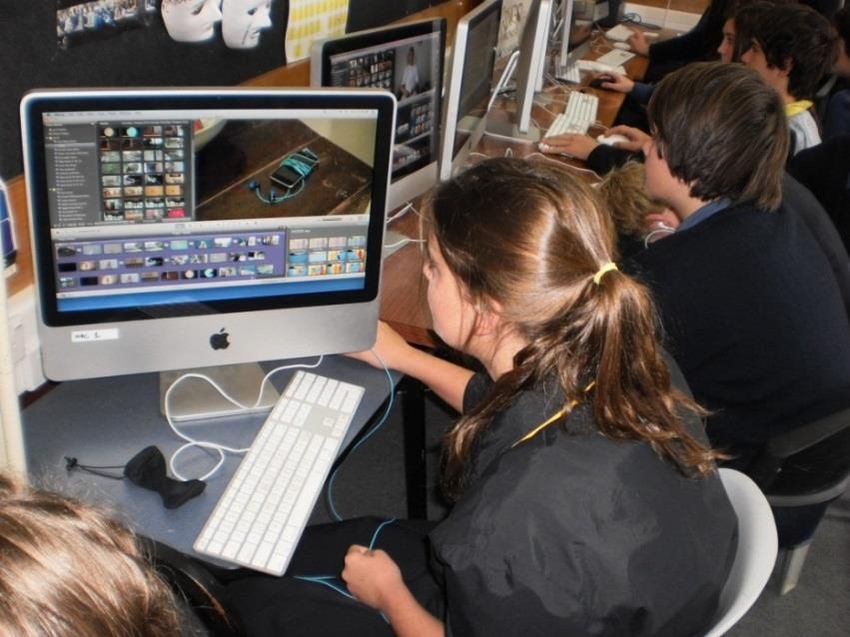
1. To work out a career direction:
Start thinking about your skills, interests, values, learning style and current career ideas.
Read the brochures, prospectuses and publications in the CATS centre.
Use the Career Quest computer questionnaire programme online at Takapuna Grammar School.
Come to talks and seminars in the CATS centre.
Go to tertiary open days and the Auckland Careers Expo.
Make an appointment to discuss your concerns and ideas with a Career Advisor.
Look around you and observe what people work at and what they do at work.
Preparation for worthwhile, interesting and rewarding careers is available through degree courses, diploma
and certificate courses at polytechnics and private tertiary providers, apprenticeships and other work and
training programmes. There are also many opportunities to “staircase” up to degree level after successful
completion of certificates and diplomas.
The Careers and Transition Service (CATS) at Takapuna Grammar School is available to all students and
contains a great deal of information on polytechnic and university courses in New Zealand plus brochures
and leaflets on specific jobs and training including details of subject requirements and recommendations
which will assist students to choose.
The website www.kiwicareers.co.nz is available online in the CATS centre, the school library and at home if
you have internet access. It is recommended as an excellent source of information on careers.
2. Careers Subject Choice Guide
English skills are essential for all careers – some students with high grades in other subjects may
struggle to get jobs due to poor communication skills.
Literacy standards required for all degree courses and many diplomas and certificates are gained in
Year 12 English.
English is not compulsory at Year 13 but many universities and polytechnics require English or
another writing subject, such as History, Geography, Classics or Art History, for entry to courses such
as Health Science, Nursing and Architecture.
Mathematics is not compulsory at Year 13 but should not be discarded lightly. Mathematics or
Statistics is required or recommended for many university and polytechnic courses and many careers.
Year 12 and 13 students wanting to work in a specialised science area such as Health Science or Bio-
medical Science or Veterinary degrees need a strong background in Chemistry, Biology, Physics,
Mathematics and English. Students considering applying for degrees in Medicine at New Zealand or
overseas universities need to be aware that selection for places is highly competitive.
Prospective Engineering degree students must take NCEA Mathematics with Calculus and Physics to
Level 3.
8
Prospective Auckland University Architecture students must take an English ‘writing’ based subject
to Year 13. Art, Physics and Maths Calculus are highly recommended.
Prospective Commerce/Business degree students should have a good background in
Mathematics/Statistics at Year 13 level. Economics and Accounting are recommended.
Most tertiary Art and Design courses require a portfolio of work to be submitted for selection.
Competitive entry degree courses will be unlikely to select a student who has not taken Visual Art
subjects at Year 11, 12 and 13.
Language study (French, German, Japanese) is a sequential course. Once dropped it is difficult to
pick these subjects up in the senior school. Year 13 background is essential for advanced courses.
Introductory courses are available at university and other tertiary levels but it will take longer if you
want to major in these subjects.
For students interested in Performing Arts courses, a strong theoretical and practical background
from studying Drama, Music or Dance, plus involvement in co-curricular performance activities, will
increase your ability to succeed at audition.
Entry for apprenticeships varies depending on the trade but sound results in English, Mathematics,
Science and Technology subjects at Year 11 and 12 are preferred.
Entry level certificate courses at polytechnics or private training providers require at least 3 years of
secondary education i.e. successful completion of Year 11. Evidence of ability to study in English will
also be required.
Diploma and some certificate courses require successful completion of Year 12 with specified
numbers of NCEA Level 2 credits and literacy and numeracy standards. Some courses require or
recommend particular Year 12 subjects.
9
Scholarship
Scholarship is designed for the highest achieving students from Year 13.
Therefore, a student who achieves Scholarship will have demonstrated, within complex situations, higher
level critical thinking, abstraction and generalisation, and the ability to integrate, synthesise and apply
knowledge, skills, understanding and ideas
and
depending on the depth of study, will have displayed a range of comprehensive content knowledge both in
breadth and depth, effective communication, original or sophisticated solutions, performances or
approaches and critical evaluation
Scholarship uses the competencies covered through Takapuna Grammar School’s learning behaviours of
KNOWING, CONNECTING, RELATING, SUPPORTING including:
Deep knowledge
Critical thinking
Problem solving
Connecting and relating
Applying knowledge
Strong literacy and/or numeracy
What awards are there?
1. Single subject awards
For candidates who get Scholarship in up to 2 subjects:
A “one-off” award of $500 per subject
2. Top Scholar subject awards
For candidates who are top in one of the 27 Scholarship subjects:
$2000 each year for 3 years as long as candidates maintain a “B” average in tertiary studies
3. Scholarship award
For candidates who get 3 Scholarship subjects:
$2000 each year for 3 years as long as candidates maintain a “B” average in tertiary studies
4. Outstanding Scholar Award
For the top 40 to 60 candidates who get 3 Scholarship subjects with at least 2 outstanding performances:
$5000 each year for 3 years as long as candidates maintain a “B” average in tertiary studies
5. Premier award
For the very top 5 to 10 candidates who get 3 Scholarships with outstanding performances:
$10,000 each year for 3 years as long as candidates maintain a “B” grade average in tertiary studies
To get an award you must:
• be a New Zealand citizen or Permanent Residency holder
• be enrolled in a tertiary institution
• maintain a “B” average in tertiary studies
• complete the criteria in 1 year
10Some questions you might have:
When are the exams?
• They start in mid-November and run through weekends and alongside NCEA Level 3
• NCEA Level 3 and Scholarship finish early December
• Where there is a clash it may be possible to shift a Level 3 exam the same day, but not a Scholarship
exam
How many people get a Scholarship in a subject?
• The number of Scholarships is based on the number of students studying Level 3 in that subject
• Each subject has about the same percentage of Scholarships, but this has a level of tolerance
• Marking is based on standards-based assessment, then by determining the students who have
reached the standard most “evidently”
What is the support I can expect at school?
• Each department has set up different ways of supporting Scholarship candidates: eg, tutorials,
additional assignment materials
• The expectation is that students will be self-motivated and proactive
• From Term 3 a weekly meeting place will be established for mutual support and requests for
particular help
How do the results of Scholarship affect my entrance to university?
• Not all entrance to University is based on NCEA Level 3 results. Scholarship provides recognition and
reward to top students; it is not an entrance qualification
11The Academic Preparation Programme
Aims and Objectives:
To enable students to be prepared for learning in a New Zealand secondary school environment. This
includes modelling the teaching and learning behaviours from KCRS, developing the competencies and
dispositions from both the NZ Curriculum and the IB learner profile, and supporting orientation to New
Zealand culture, values and lifestyle.
Course Structure:
1. Students are likely to be in Year 11 or Year 12.
2. This is a stand-alone programme and will be based in a “home room”. However students will be in a
mainstream form class and will be encouraged to access all opportunities provided within the co-
curricular area.
3. The programme will be divided into two semesters, allowing students to enter in February and July.
Most students will complete a full year. Semesters will be structured so that skills, competencies and
language development are covered in each semester although the learning context will change.
4. In all subjects there will be a strong focus on literacy, particularly in the acquisition and use of key
vocabulary, close reading and transactional writing.
Subjects:
1. English (dual option)
2. Mathematics
3. Science
4. Social Sciences
5. Economics
For more information please contact
Terry Holding
RELATIONSHIP MANAGER
t.holding@tgs.school.nz
12BUSINESS & ENTERPRISE HOFs: Ms C Kofoed
Mr L Videler
ACCOUNTING
Accounting is the language of business and is needed more than ever before. It is the backbone of all
businesses and therefore is a very broad subject.
Accounting at Level 2 and Level 3 is an important subject for anyone who is contemplating running their own
business and for understanding business related issues. Students who can think logically, have a good work
ethic and want to succeed should enjoy the challenge of this subject. It provides a solid basis for any future
study in the field of business.
Any student thinking of a career in Business and/or enrolling at a University for a Business Degree should
seriously consider this subject.
LEVEL 2 ACCOUNTING – L2ACC
The NCEA Level 2 Accounting course aims to promote knowledge and understanding of accounting as a
financial language for trading and service businesses, apply financial knowledge and skills to practical
situations and provide students with opportunities to use accounting software to process business
transactions.
This course provides the basis for the study of Level 3 Accounting.
The Achievement Standards that are available to study at Level 2 are:
Demonstrate understanding of an accounts receivable subsystem for an entity
Demonstrate understanding of accounting processing using accounting software
Prepare financial statements for an entity that operates accounting subsystems
Interpret accounting information for entities that operate accounting subsystems
Demonstrate understanding of an inventory subsystem for an entity
Potential credits available = 19 (10 Internal, 9 External)
13LEVEL 3 ACCOUNTING – L3ACC
The Level 3 Accounting course assumes that students will have studied Level 2 Accounting or have some
prior knowledge of processing and reporting accounting information. Level 3 Accounting is a University
Entrance approved subject. The NCEA Level 3 Accounting course aims to promote knowledge and
understanding of accounting as a financial language for partnerships and companies which may be service,
trading or manufacturing businesses and apply financial knowledge and skills to practical situations.
To achieve these aims, students will, within the contexts of partnerships and companies:
process financial data into meaningful information
prepare financial reports which meet user needs and professional and legal requirements
analyse and interpret financial reports
make informed decisions based on financial and non-financial information
develop skills in communication, numeracy, information and problem-solving
develop self-management and competitive, social and co-operative, and work and study skills
The Achievement Standards that are available to study at Level 3 are:
Demonstrate understanding of accounting for partnerships
Demonstrate understanding of company financial statement preparation
Prepare a report for an external user that interprets the annual report of a New Zealand reporting
entity
Demonstrate understanding of management accounting to inform decision-making
Demonstrate understanding of a job cost subsystem for an entity
Potential credits available = 22 (13 Internal, 9 External)
14BUSINESS STUDIES
LEVEL 2 BUSINESS STUDIES – L2BUS
The study of business is about how individuals and groups of people organise, plan, and act to create and
develop goods and services to satisfy customers. It is an advantage for students to have studied Level 1
Business Studies but it is not a requirement. Students should be actively interested in the world of business
and have an enquiring mind.
The knowledge and skills gained in Business Studies, and exposure to an enterprise culture, can help shape
'creative, energetic, and enterprising' young people who will contribute to New Zealand’s economic future.
Business Studies contributes to the development of an enterprising culture in New Zealand that supports
the understanding and improvement of economic and community well-being for our students.
In Business Studies, students develop their understanding of business theory and practices in a range of
relevant contexts, through experiential as well as theoretical approaches to learning. Studying business
enables students to appreciate the issues that challenge businesses and stakeholders. In a rapidly changing
world it is important that our young people are able to make informed and rational decisions about business
matters.
Students will be encouraged to experience business at first hand by both setting up and running a community
well-being business project, as well as interacting with real businesses within the community to gather
information on their operations.
At Level 2 students will gain knowledge, skills and experience to explore how and why large businesses in
New Zealand make operational decisions in response to internal and external factors. They will develop their
understanding of the key concepts of Enterprise, Citizenship, Sustainability and Globalisation.
Business Studies as a subject is both a valuable addition to a general course of study, and a desirable
component for any tertiary business oriented course. The emphasis of the course is on deep learning through
a diverse range of activities, inquiry learning and ‘active learning’. There will be many opportunities for
students to take the initiative and show their capabilities, both individually and in group work.
Studying business creates opportunities for our students to:
Understand the integral role of business to our society and the economy.
Explore enterprise culture
Develop their skills in organisation, time management, responsibility, problem-solving, decision
making and communication
15The current Takapuna Grammar School Level 2 Business Partnership is with The Warehouse. They actively
support our students and the classroom teaching through a series of investigative visits to all areas of their
business allowing our students to immerse themselves in the ‘real world’ of a large business.
Takapuna Grammar School students being given an insight into entrepreneurial and business skills by Sir Stephen Tindall,
founder of The Warehouse at The Warehouse Support Office in Takapuna.
The Achievement Standards that are available to study at Level 2 are:
Demonstrate understanding of the internal operations of a large business
Demonstrate understanding of how a large business responds to external factors
Conduct market research for a new or existing product
Carry out, review and refine a business activity within a community context
Potential credits available = 20 (12 Internal, 8 External)
16LEVEL 3 BUSINESS STUDIES – L3BUS
In this course students will study and apply their business knowledge and understanding to the global
business environment. It is an advantage to have studied Level 2 Business for this course but not an essential
requisite if a student demonstrates an aptitude and developed interest in the subject.
The focus for Level 3 Business Studies will be The Lion Foundation Young Enterprise Scheme. This scheme
allows students to set up their own real business and take a product or service to market. Students will work
closely and collaboratively with business leaders, mentors and specialists to run their own businesses. The
scheme will run throughout the duration of the course and is the
vehicle used to deliver the internal practical achievement standards.
The course builds on the foundations of business knowledge from
previous levels of study and allows students to further their
investigations into a ‘real life’ business operation. They will deepen
their understanding of the key concepts of Enterprise, Citizenship,
Sustainability and Globalisation.
Students will gain the knowledge, skills and experience to analyse how and why businesses in New Zealand
operating in the national and global markets make operational and strategic decisions in response to
interacting internal and external factors. They will also have the opportunity to plan, take to market, review
and then refine their own YES innovative sustainable business activity. Students will write a full Marketing
Strategy to enable them to launch their product idea into the market place. They will further gain the skills
to analyse their business activity, its success in the marketplace and evaluate their business performance.
Students will be expected to explore the global marketplace with a focus on Asia and the growing importance
of China to the New Zealand economy. They will have the opportunity to investigate Easiyo as their studied
partnership business. This partnership will allow students the access to develop their understanding of
business theory through real life and a relevant local global business.
Students will be expected to be able to work successfully in a group situation and take responsibility for
managing themselves when taking advantage of the business opportunities presented to them within the
course.
17The Achievement Standards that are available for study at Level 3 are:
Develop a marketing plan for a new or existing product
Carry out, with consultation, an innovative and sustainable business activity
Apply business knowledge to address a complex problem(s) in a given global business context
Potential credits available = 19 (15 Internal, 4 External)
ECONOMICS
LEVEL 2 ECONOMICS – L2ECO
The aim of this course is to enable students to understand how the study of economics will develop an insight
into how basic social forces explain everything from the price of bread to why one country is wealthier than
another. Students will be able to define and measure these economic issues as well as understand their
causes and possible effects while at the same time developing an awareness of policies that a government
may implement to address these issues. This course will help you to recognize the interdependent nature
of the economy by examining the impact of government policies on various groups. It will also allow students
to become “economically literate” and give them an increased awareness of the current economic
environment in New Zealand.
Analyse inflation using economic concepts and models
Analyse international trade using economic concepts and models
Analyse economic growth using economic concepts and models
Analyse unemployment using economic concepts and models
Analyse how government policy and contemporary issues interact
Potential credits available = 20 (10 Internal, 12 External)
18LEVEL 3 ECONOMICS – L3ECO
In this course students will gain an introduction to both micro-economic and macro-economic theory and
find ways of applying this knowledge to the New Zealand economy. The aim is to enable students to obtain
a level of economic literacy and understanding which will allow them to develop a continuing and critical
interest in contemporary economic issues. They will develop the ability to interpret and present economic
data and arguments in a clear, concise and coherent manner.
The course is divided into 3 sections:
SECTION A: Micro-economics
This covers the behaviour of firms and how they operate in different markets, recognises marginal concepts
relating to supply and demand and studies the equilibrium positions of the perfectly competitive firm and
the monopolist. It also investigates the economic problem, the concept of allocative efficiency and how
markets respond to change. Section A is assessed by the external Achievement Standards 3.1 and 3.2 and
the internal standard 3.3.
SECTION B: Market Failure
This covers the concept of market failure and its characteristics and the methods government can use to
compensate for market failure. Section B is assessed by the internal Achievement Standard 3.4.
SECTION C: Macro-economics
This involves describing and illustrating economic activity in terms of the circular flow model and the
aggregate demand–aggregate supply model and influences on the New Zealand economy by markets such
as the financial market, the foreign exchange market, monetary policy and fiscal policy. Section C is assessed
by the external Achievement Standards 3.5
The Achievement Standards that are available to study at Level 3 are:
Demonstrate understanding of the efficiency of market equilibrium
Demonstrate understanding of the efficiency of different market structures using marginal analysis
Demonstrate understanding of micro-economic concepts
Demonstrate understanding of government interventions to correct market failures
Demonstrate understanding of macro-economic influences on the New Zealand economy
Potential credits available = 24 (10 Internal, 14 External)
19ENGLISH HOF: Mrs D Walker
LEVEL 2 ENGLISH – L2ENG, L2ENX
The NCEA Level 2 course builds on skills developed at Level 1. It is structured around two inter-connected
strands – receiving information through Listening, Reading and Viewing and creating information through
Speaking, Writing and Presenting. Modules of work integrate these aspects. The programme is structured to
encourage broad curriculum coverage for all students. All students will develop skills in crafting and
producing formal (transactional) writing and creative writing. They will read and respond to a range of texts
which may include short and extended literary works, a Shakespeare play and a feature film. They will have
the opportunity to extend their close reading skills and to produce either a visual image or a speech. All texts
will be required to be at Level 7 of the NZC and all assessment is through Achievement Standards.
This is a compulsory subject with open entry. Entry to ENX is through the recommendation of the Head of
Department.The course will lead to assessment of some of the following skills over a range of tasks. The
specific combination is not finalized as there will be an element of student choice.
Analyse specified aspect(s) of written text(s) (essay in external exam)
Analyse specified aspect(s) of visual or oral text(s) (ENX essay in external exam)
Analyse significant aspects of unfamiliar written text(s) through close reading (short answers in
external exam. ENX at Level 3)
Produce a selection of crafted and controlled writing (internal assessment)
Construct and deliver a crafted and controlled oral text (internal assessment)
Create a crafted and controlled visual and verbal text (internal assessment)
Analyse significant connections across texts (internal assessment)
Use information literacy to form developed conclusion(s) (internal assessment)
Form developed personal responses to independently read texts (internal assessment)
Analyse aspects of visual and/or oral text(s) through close viewing and/or listening (internal
assessment)
Potential credits available = 21-25 (8-12 External, 10-13 Internal)
20LEVEL 2 ENGLISH LITERACY – L2ENL
This NCEA course is a programme that integrates the three strands of the National English Curriculum (oral,
written and visual) and offers Achievement Standards at Level 2. All assessment is internal. This course is
designed for those who have completed the Level 1 ENL course or those who have been recommended by
their Level 1 English teachers. The programme is structured to encourage broad curriculum coverage and to
enable students to gain the literacy requirements for University Entrance. Students develop writing skills,
study a range of literature - both short and extended texts and read, comment on and understand a range
of written and oral texts. They complete a research standard and may also create their own visual and oral
texts. Entry is through the recommendation of the HOD.
The course will lead to assessment of some of the following skills over a range of tasks. The specific
combination is not finalised as there will be an element of student choice. The standards chosen will be
internally assessed.
Produce a selection of crafted and controlled writing
Construct and deliver a crafted and controlled oral text
Create a crafted and controlled visual and verbal text
Analyse significant connections across texts
Use information literacy to form developed conclusion(s)
Form developed personal responses to independently read texts
Analyse aspects of visual and/or oral text(s) through close viewing and/or listening
Potential credits available = 14-17 Internal
Optional External Achievement Standards
Analyse specified aspect(s) of written text(s) (essay in external assessment)
Analyse specified aspect(s) of visual or oral text(s) (essay in external assessment)
Analyse significant aspects of unfamiliar written text(s) through close reading (short answers in
external assessment)
Potential extra credits available = 4 - 8 External
LEVEL 3 ENGLISH - L3ENG, L3ENX
The NCEA Level 3 course is structured around two inter-connected strands – receiving information through
Listening, Reading and Viewing and creating information through Speaking, Writing and Presenting. The
programme is structured to encourage broad curriculum coverage for all students. At Level 3 students study
a range of short and extended texts which may include the study of Shakespeare and a film. They will also
respond critically to unfamiliar prose and poetry texts (close reading) and learn to use critical texts to develop
their understanding of literature. Students will have the opportunity to craft and produce writing in a
selected style, use the skills of oral and visual presentation in a prepared seminar, investigate connections
across texts and complete a director study. All texts will be required to be at Level 8 of the NZC and all
assessment is through Achievement Standards.
21The Level 3 ENX class is a scholarship English class and students will be expected to complete a wider reading
programme and sit the scholarship exam at the end of the year. Entry to ENX is through the recommendation
of the Head of Department.
Both the L3ENG and L3ENX English courses will lead to assessment of some of the following skills over a
range of tasks. The specific combination is not finalized as there will be an element of student choice. Some
of the standards chosen will be internally assessed, the others will be externally assessed.
Respond critically to written text(s) studied
Respond critically to oral or visual text studied
Respond critically to unfamiliar prose and poetry texts
Produce a selection of fluent and coherent writing
Create and deliver an oral presentation
Create a visual text
Respond critically to connections across texts
Develop an informed understanding of literature and language
Close reading of visual or oral texts
Potential credits available = 19-22 (8-12 External, 11- 14 Internal)
LEVEL 3 ENGLISH INTERNAL – L3ENI
This NCEA course is a programme that integrates the three strands of the National English Curriculum (oral,
written and visual) and offers Level 3 internal Achievement Standards with the opportunity to enter an
external standard at the end of the year. The programme is structured to encourage broad curriculum
coverage and to enable students to gain University Entrance requirements. Students will extend their writing
skills and study a range of written and visual texts as they develop a critical understanding and appreciation
of literature. They will also have the opportunity to create their own visual and oral texts. Entry is through
the recommendation of the HOD.
The course will lead to assessment of some of the following skills over a range of tasks. The specific
combination is not finalised as there will be an element of student choice. The standards chosen will be
internally assessed.
Produce a selection of fluent and coherent writing
Create and deliver an oral presentation
Create a visual text
Respond critically to connections across texts
Develop an informed understanding of literature and language
Close reading of visual or oral texts
Potential credits available = 16 internal credits
Optional External Achievement Standards
Respond critically to written text(s) studied (written essay in external exam)
Potential extra credits available = 4 External
22LEVEL 2 MEDIA STUDIES – L2MED
Level 2 Media Studies is a 20-credit course that builds upon the skills and concepts introduced at Level 1,
while functioning as a stand-alone course accessible to students who have never previously taken Media
Studies. As with Level 1, the course challenges students to think critically about the implications of Media
texts and practices through four internal assessments and one external exam. The topics covered are:
Representation. Students study the way various groups are represented in the media, from 'Teenagers
in the News' to 'The Kiwi Bloke in Advertising' to 'Pasifika in Popular Culture'. Students use critical literacy
to examine the way these representations are constructed, the reasons behind stereotypes, and the
implications for real-world issues that arise from them. Students are assessed on an essay (Internal
Assessment, 3 Credits).
Ethical issues in the Media. Students examine contemporary conflicts and debates about the role of the
media socially, morally and economically. We examine the role and obligations of Public Service
Broadcasters with specific focus on the TVNZ Charter. Students are assessed on an essay (Internal
Assessment, 3 Credits).
Women in Science Fiction. Students study the Sci-Fi genre with specific focus on the changing depictions
of female characters in relation to changes in society. Students use critical literacy to examine the
reasons and implications behind the changing face of sci-fi females. Students are assessed on an external
exam (External Assessment, 4 Credits).
Design and plan a Short Documentary Film. Students study the skills, techniques and conventions
involved in building compelling and impactful narratives around real-world issues and unscripted
discussion. Students focus on combining the conventions of the genre into a coherent and consistent
tonal experience for the viewer. They are assessed on a written portfolio (Internal Assessment, 4 Credits).
Media Production: Documentary Film. Students work in small groups to produce a short documentary
film from a design and plan with an emphasis on visually appealing cut-aways that illustrate the points
of interviewees. An example of student work can be seen below (Internal Assessment, 6 Credits).
Potential credits available = 20 (16 Internal, 4 External)
23LEVEL 3 MEDIA STUDIES - L3MED
Level 3 Media Studies is the closest students can come to tertiary level Communication Studies at high
school. The course challenges them to develop their own fields of expertise and take a closer look at the
connections between mass communication and society. Students intending to take the Media Scholarship
exam can use the Level 3 course as a springboard to build their own specific theses around areas of interest
to them. The areas of study are:
Significant developments in the media. Students carry out research into a media development of their
own choosing that has had a significant impact on industry and/or society. This can focus on a significant
change from any point in the history of mass communication from the printing press to the use of Twitter
as a political tool. Students are assessed on a written report that reflects substantial research (Internal
Assessment, 3 Credits).
Critical readings through multiple lenses. Students develop the skills to analyse media texts through a
variety of perspectives. This unit gives students the tools to 'put on different hats' when decoding
subtext. These lenses might include political readings, genre readings, gender readings, historical
readings, sociological readings or ideological readings. Students are encouraged to follow their own
paths of interest and are assessed on two companion essays (Internal Assessment, 3 Credits).
Film Noir and Society. Students discuss the connection between the movie genre of Film Noir and its
socio-political context. The genre can be seen as a reflection of both values and prevailing feelings in the
turbulent years of the mid-20th century. Students are assessed on an external exam (External
Assessment, 4 Credits).
Design and plan a Neo-Noir short film. Students build upon previous production planning experience to
design a narrative film built around the Noir sensibility of disillusion, betrayal and corruption. They
demonstrate their understanding of genre and narrative to construct a tonally dark and gripping story of
deception and deceit. Students are assessed on a portfolio that reflects their creative, conventional and
technical planning (Internal Assessment, 4 Credits).
Media production: Short Neo-Noir Narrative Film. Students build on their production experience from
Level 1 and 2 to take on the challenge of a cinematic production. Scripting, sound design, lighting and
shadow, character archetypes and narrative arcs must all be combined to engage an audience in an
original story. An example of student work can be seen below (Internal Assessment, 6 Credits).
Potential credits available = 20 (16 Internal, 4 External)
24You can also read


