Course Calendar 2019 2020 - gppsd.ab.ca
←
→
Page content transcription
If your browser does not render page correctly, please read the page content below

Course Calendar
        GRANDE PRAIRIE COMPOSITE HIGH SCHOOL

2019‐2020
Contents
Alberta High School Requirements .............................................................................................................................................. 4
    Why Finish High School ........................................................................................................................................................... 4
    Diplomas and Certificates ....................................................................................................................................................... 4
    Alberta High School Diploma .................................................................................................................................................. 4
    Knowledge and Employability Courses ................................................................................................................................... 6
    Alberta Certificate of High School Achievement (K&E)........................................................................................................... 6
    Alberta Certificate of High School Completion (ISC) ............................................................................................................... 7
Grade 9 Courses ........................................................................................................................................................................... 8
    Grade 9 Required Courses ...................................................................................................................................................... 8
    Grade 9 Elective Courses......................................................................................................................................................... 9
Gr. 9 Course Request Form ........................................................................................................................................................ 12
Grade 10‐12 Core Courses ......................................................................................................................................................... 13
    English ................................................................................................................................................................................... 13
    Mathematics ......................................................................................................................................................................... 15
    Sciences................................................................................................................................................................................. 18
    Social Studies ........................................................................................................................................................................ 20
    Career and Life Management ............................................................................................................................................... 21
    Physical Education ................................................................................................................................................................ 21
International Baccalaureate ...................................................................................................................................................... 22
Grade 10‐12 Elective Course...................................................................................................................................................... 26
    Automotive Studies............................................................................................................................................................... 26
    Automotive Apprenticeship .................................................................................................................................................. 27
    Business Education ............................................................................................................................................................... 28
    Computer Studies ................................................................................................................................................................. 29
    Construction.......................................................................................................................................................................... 30
    Cosmetology ......................................................................................................................................................................... 32
    Cosmetology Apprenticeship ................................................................................................................................................ 33
    Culinary Arts .......................................................................................................................................................................... 34
    Fabrication Studies (Welding) ............................................................................................................................................... 35
    Art ......................................................................................................................................................................................... 36
    Drama.................................................................................................................................................................................... 36
    Film and Media Art ............................................................................................................................................................... 37
    French ................................................................................................................................................................................... 38
    Music ..................................................................................................................................................................................... 39
    Visual Communications......................................................................................................................................................... 40
    Fitness ................................................................................................................................................................................... 41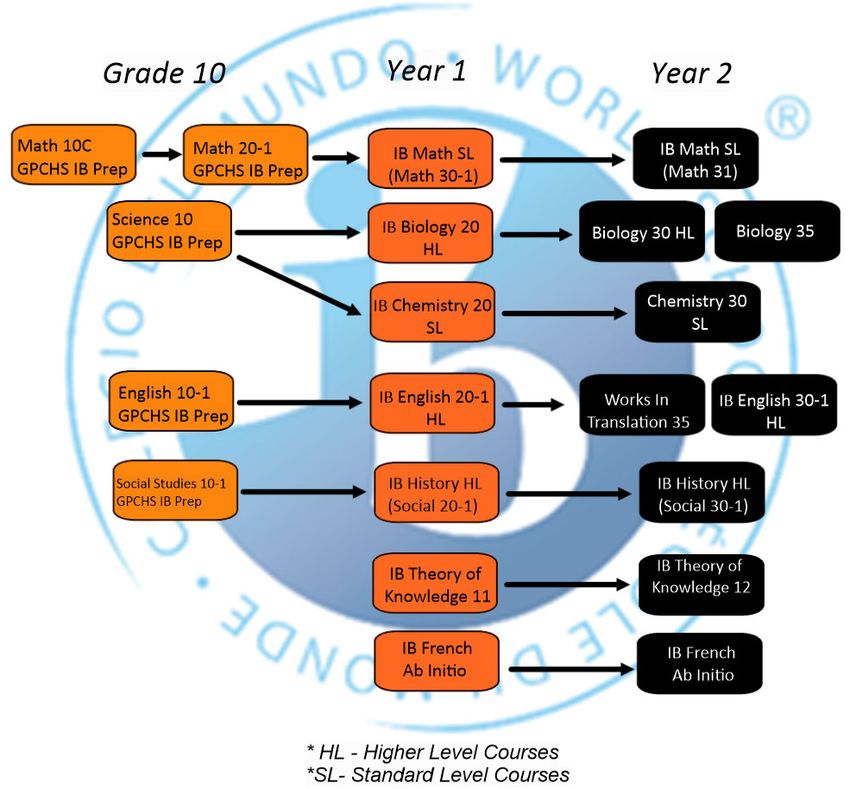
Leadership ............................................................................................................................................................................. 41
    Outdoor Education................................................................................................................................................................ 42
    Science Electives ................................................................................................................................................................... 42
    Social Sciences ...................................................................................................................................................................... 43
Sample 4yr Graduation Plans..................................................................................................................................................... 44
Gr. 10 Course Request Form ...................................................................................................................................................... 53
Gr. 11 Course Request Form ...................................................................................................................................................... 54
Gr. 12 Course Request Form ...................................................................................................................................................... 55
Gr. 10‐12 K&E Course Request Form ......................................................................................................................................... 56
Gr. 9 ISC Registration ................................................................................................................................................................. 57
Gr. 10‐12 ISC Course Request Form ........................................................................................................................................... 58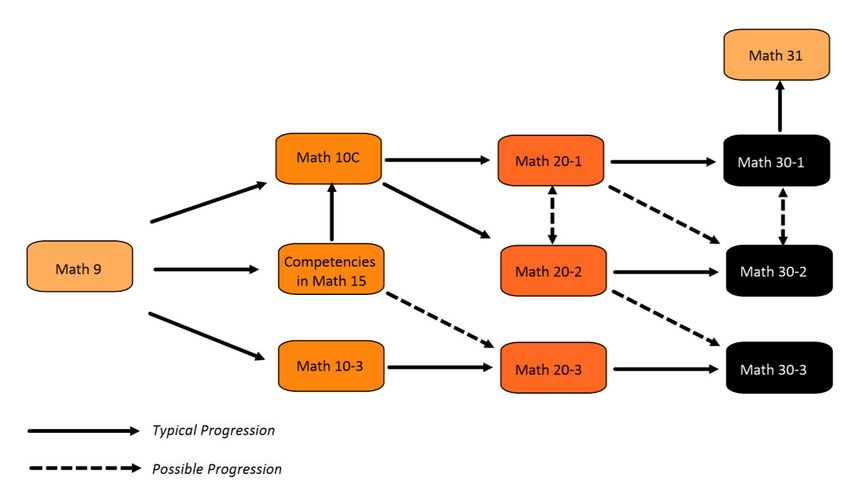
Alberta High School Requirements
Why Finish High School
Finishing high school is the first step to helping you secure a positive future in post‐secondary education or in the
workforce. For most jobs in Alberta, you need a minimum of a high school diploma or a high school equivalency diploma. To
be accepted into many post‐secondary programs, you need specific high school or high school equivalent courses.
Diplomas and Certificates
Alberta Education diplomas and certificates certify that the holder has successfully completed a prescribed program of
instruction.
A student who is awarded a diploma or certificate from this list is a graduate:
Alberta High School Diploma
Certificate of High School Achievement
Certificate of School Completion
Having a diploma or certificate does not necessarily guarantee admission to a post‐secondary institution. Students should
make an appointment for their graduation meeting in Student Services to discuss post‐secondary institution options and
admission requirements.
Alberta High School Diploma
The requirements indicated in this chart are the minimum requirements for a student to attain an Alberta High School Diploma. The
requirements for entry into post‐secondary institutions and workplaces may require additional and/or specific courses.
100 CREDITS including the following:
English 30‐1 or 30‐2; and
Social Studies 30‐1 or 30‐2; and
Mathematics 20‐1 or 20‐2 or 20‐3; and
Science 20 or 24 or Biology 20 or Chemistry 20 or Physics 20*; and
Physical Education 10 or Physical Education 10T; and
Career and Life Management (CALM 20);
AND Earn 10 credits, in any combination from:
Career and Technology Studies (CTS)
Fine Arts
Languages
Physical Education 20 and/or Physical Education 30
Registered Apprenticeship Program (RAP)
Knowledge and Employability courses; and
Earn 10 credits in any 30‐level course (in addition to English and Social Studies), in any combination, from:
30 level Mathematics, Science, Fine Arts, Second Languages, CTS, or Physical Education and/or
30 level locally developed course (learn more about these course options through your High School) and/or
35 level Work Experience and/or
35 level Registered Apprenticeship Program (RAP) and/or
30‐4 level Knowledge & Employability courses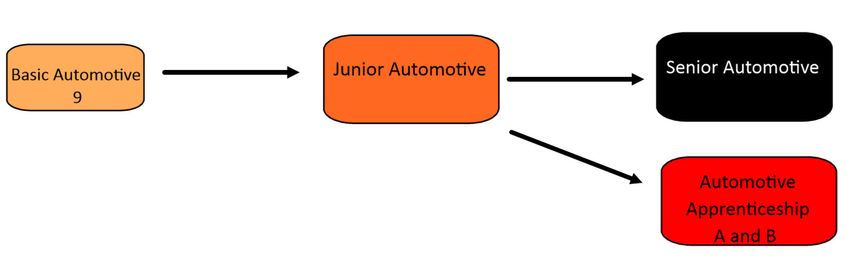
Provincial exams are required in English 30‐1 and 30‐2, Social Studies 30‐1 and 30‐2, Mathematics 30‐1 and 30‐2, Biology 30,
Chemistry 30, Physics 30 and Science 30. Final marks in these courses represent a blend of the school‐awarded mark (70%) and
the diploma examination mark (30%).
The science requirement may also be met with the 10‐credit combination of Science 14 and Science 10.
Students may earn any number of credits in the study of second languages, but only a maximum of 25 language credits may be
used to meet the 100‐credit requirement for the Alberta High School Diploma.
Integrated Occupational Program (IOP) occupational courses may be used in place of Knowledge and Employability
occupational courses to fulfill this requirement.
30‐level English language arts or 30‐level social studies courses from a different course sequence may not be used to meet the
30‐level course requirement.
Students may earn a maximum of 30 credits in Work Experience, but only 15 credits may be used to meet the 100‐credit
requirement for the Alberta High School Diploma.
Information provided and more available at: education.alberta.ca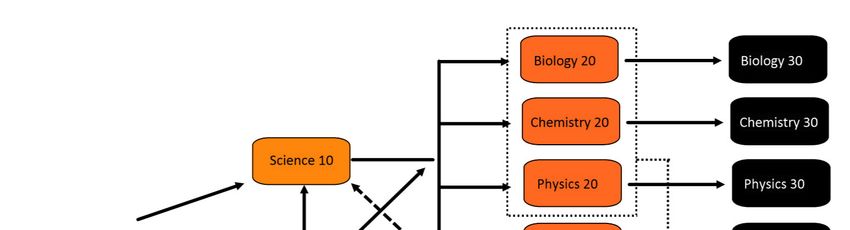
Knowledge and Employability Courses
Students taking K&E courses may qualify for a Certificate of High School Achievement or they may continue their studies to
qualify for an Alberta High School Diploma. To qualify for a Certificate of High School Achievement, students must
successfully complete a minimum of one academic K&E course. Knowledge and Employability (K&E) courses are intended
for students who have experienced difficulty with learning and have been recommended by teachers as well as parents for
these course selections. Students who take any knowledge and employability course will be on a pathway to earn their
Alberta Certificate of High School Achievement.
Alberta Certificate of High School Achievement (K&E)
The requirements indicated in this chart are the minimum requirements for a student to attain a Certificate of High School Achievement. The
requirements for entry into post‐secondary institutions and workplaces may require additional and/or specific courses.
80 Credits including the following:
English Language Arts 20‐2 or 30‐4
Mathematics 10‐3 or 20‐4
Science 14 or 20‐4
Social Studies 10‐2 or 20‐4
Physical Education 10 (3 credits)
Career and Life Management (CALM)
5 Credits in
30‐level Knowledge and Employability occupational course, or
30‐level Career Technology Studies (CTS) course, or
30‐level locally developed/acquired and authorized course with an occupational focus
AND
5 credits in
30‐level Knowledge and Employability Workplace Practicum course, or
30‐level Work Experience course, or
30 level Green Certificate course, or
Special Projects 30
OR
5 Credits in
30‐level Registered Apprenticeship Program (RAP) course
To qualify for a Certificate of High School Achievement, students must successfully complete a minimum of one academic Knowledge and
Employability course. Knowledge and Employability courses are identified by “‐4” in the course name, ex English 10‐4.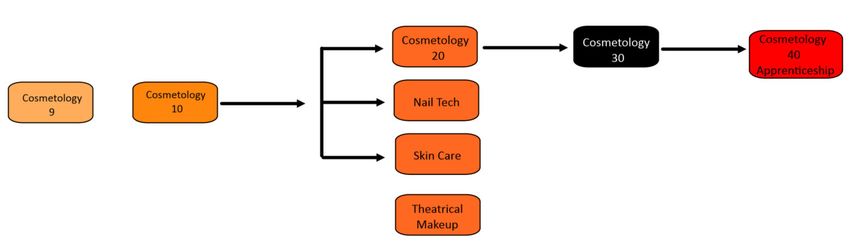
Alberta Certificate of High School Completion (ISC)

Students with a significant cognitive disability can achieve the Certificate of School Completion if they are unable to achieve
an Alberta High School Diploma or a Certificate of High School Achievement (Knowledge and Employability).

ISC (Innovative Support Centre) addresses the individual learning needs of students with various abilities from those
requiring a community based self‐contained program to those requiring a partial or fully modified educational program of
studies. Students in ISC will have the opportunity to participate in Commencement Ceremonies and receive a Certificate of
School Completion at the end of their 12 years. No credits will be awarded.

                                                         7|Pa g e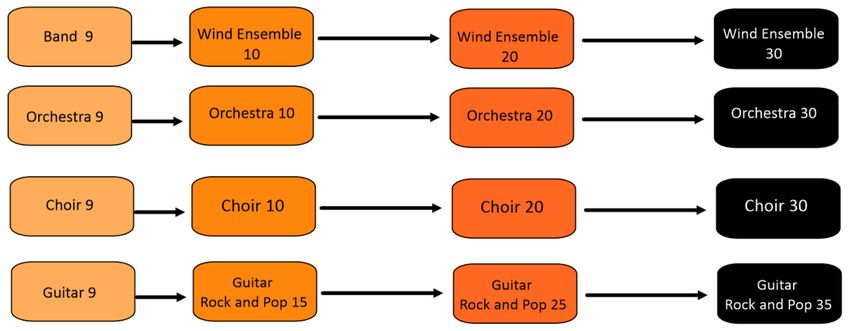
Grade 9 Courses
Grade 9 Required Courses
English 9 Places physical activity within a broader perspective
English Language Arts is required for all Grade 9 students. of total fitness and well‐being that encompasses the
This course runs for the entire school year. English 9 is entire experience of movement – physical, mental,
built around five General Outcomes (Exploration, emotional, and social dimensions.
Responses to Texts, Information Management, Craft and Is enhanced through opportunities to participate in
Communication, and Community) and six strands such activities as intramural and interschool athletics
(Reading, Writing, Listening, Speaking, Viewing, and and community‐based sport and recreation activities.
Representing). Students will work to improve their oral Is centered around learner needs; inclusive,
and written communications, critical thinking, and individual, and varied.
appreciation of literature in its many forms (prose, Is supported when opportunities for making choices
drama, poetry, and media). Student performance in this are provided.
class plays a large role in determining the range of Is supportive of the relevance of physical activity
English courses available in Grade 10. There will be a two within the community.
part Provincial Achievement Test (PAT) in this course,
taking place in May and June. Physical Education is a participation based course that,
therefore, requires daily effort and proper active wear
Math 9 and indoor shoes in order to be successful.
Math 9 is a required course for all grade 9 students and
consists of the following topics: Science 9
• Number – Rational Numbers, Powers, Exponents, Science 9 is a required course for all grade 9 students.
and Square Roots Topics covered are Biological Diversity, Matter and
• Patterns and Relations – Linear Relations, Linear Chemical Change, Environmental Chemistry, Electrical
Equations, Linear Inequalities, Polynomials Principles and Technologies and Space Exploration.
• Shape and Space – Similar Polygons, Measurement,
Symmetry, Circle Geometry Social Studies 9
• Statistics and Probability – Data Collection and Canada: Origins, Histories and movement of Peoples
Analysis, Probability Grade 9 focuses on citizenship, identity and quality of life
Note: Students must successfully complete Math 9 (50% and how they are impacted by political and legislative
or greater) before they can register in Math 10C processes in Canada. The role of economic systems in
Canada and the United States will also be examined.
Physical Education 9 Key course understandings:
The aim of the Physical Education program is to enable Students will demonstrate an understanding and
individuals to develop the knowledge, skills, and appreciation of how Canada’s political processes
attitudes necessary to lead an active, healthy lifestyle. impact citizenship and identity in an attempt to
The Physical Education program emphasizes active living meet the needs of all Canadians.
with a focus on physical activity that is valued and Students will demonstrate an understanding and
integrated into daily life. Active living through Physical appreciation of how economic decision making
Education: in Canada and the United States impacts quality
Creates a desire to participate. of life, citizenship and identity.
Focuses on lifetime activities promoting health‐ For Grade 9 students: If you’ve achieved greater
related fitness for life. than 60% it’s advised to enroll in the 10‐1, 20‐1,
Is about physical activity and the nature, form, and 30‐1 stream. Students achieving less than
frequency, and intensity of the activity are relative to 60% are advised to enroll in the 10‐2, 20‐2, 30‐2
each person’s abilities, needs, aspirations, and stream.
environment.
8|Pa g e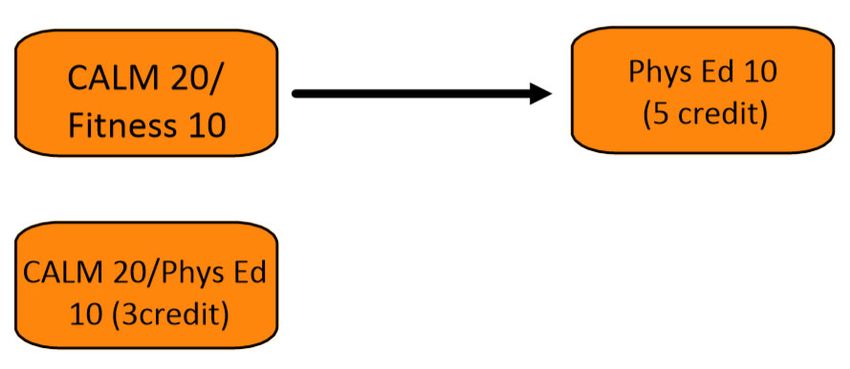
Grade 9 Elective Courses
Art 9                                                            creativity while helping you develop knowledge and skills
Course Fee: $20.00                                               useful across a wide range of career and leisure pursuits.
Art 9 provides a brief survey and introduction to the            The objectives of our Construction Technology program
fundamentals of art. Students will explore and create            are:
projects based on the key fundamentals. They will have             1. Developing safe work practices
the opportunity to use a variety of media including                2. Developing time management skills
various drawing media, paint as well as clay. Assessment           3. Developing hand and power tool operation skills
will focus on technical skills and originality.                    4. Developing effective teamwork skills
                                                                   5. Developing problem solving skills
Basic Automotive 9
Course Fee: $20.00                                               Cosmetology 9
During this course students will learn to have an                Course Fee: $20.00
appreciation and understanding of small engines and their        This course is created to give you an introduction to a
operation. Students will discover mechanics as a possible        variety of different aspects offered in
future career. The course will begin with general shop           cosmetology. Students will be learning long hair design
safety, tool identification, tool use and basic                  and styling, learning about skin types and self‐facials,
measurement. Students will learn to identify the parts to        makeup and eyebrow shaping, as well as manicures. This
a 2 & 4 stroke engine by the dis‐assembly and re‐assembly        is a hands on and partner based class, you will be
process. Students will learn to work individually and co‐        required to be a stylist and a client often. This course is
operatively in small groups. Time providing students may         not a prerequisite for any of the cosmetology courses
have the chance to work on bicycle repair, tire service, and     taken at the high school level, this is strictly used as
drilling and tapping metal. Safety is taught at every level      exploration and interest for students.
of all CTF (Career and Technology Foundations) courses
and is the foundation of our programs.                           Choir ‐ Choral Music 9
                                                                 Course Fee: None
Computers 9                                                      * A background in singing is not needed in order to join
Course Fee: None                                                 this class.
Students will transition through three Computer Science          This is a course that explores choral singing from a wide
Fundamentals course progressions. The aim is to                  variety of cultures and time periods, including both
demystify computer science and show students that it’s           classical and popular. The core
fun, collaborative and creative. The course is designed to       curriculum emphasizes performing and healthy vocal
motivate students to continue learning computer science          technique. It is a fun, high‐energy way to learn about
to improve real world relationships, connections and life.       music. The choral music program seeks to develop
Students will learn about computer science, problem              musical competency and strives for excellence within the
solving, computational thinking, and programming. It will        limits of the student’s capabilities. The concepts of
teach that success does not always come on the first try.        rhythm, melody, harmony, form and expression provide
Challenge is good when it is supported by plans and tools        the intellectual framework of the music program.
that lead to success.                                            Concepts are essentially taught through student
                                                                 participation in the skill areas of singing, playing,
Construction and Design Technology 9                             listening, reading (and writing) and creating.
Course Fee: $20.00
Here you will have the opportunity to learn how to               Digital Design 9
operate both hand tools and power tools, safely. During          Course Fee: $20.00
this course you will work on a wide variety of projects          Digital Design 9 is your opportunity to get experience
ranging from a small tool box to an actual longboard that        working with a variety of different digital media. You will
you can ride. Construction 9 will allow you to investigate       create works of art using Adobe Photoshop, Google Draw
and gain knowledge, skills, and attitudes associated with        and Adobe Animate. Some of the projects you will be
the construction trades. The course will also help to            working on are designing a chocolate bar wrapper,
build self‐reliance and independence and encourage               creating computer game characters, and animating
                                                                 vector based projects.

                                                          9|Pa g e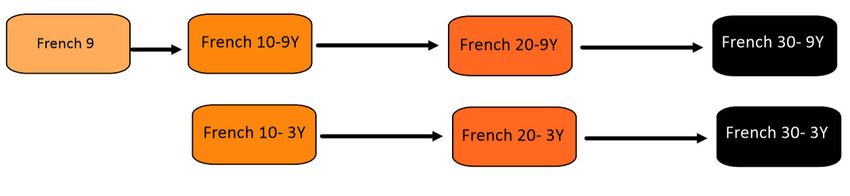
Drama 9                                                                an activity‐based course and requires daily participation
Course Fee: None                                                       and proper active wear in order to be successful.
Drama 9 is an introductory theatre course that aims to
foster a positive self‐concept in students by encouraging              Foods 9
them to explore life through the assumption of roles and               Course Fee: $20.00
the acquisition of dramatic skills.                                    After an orientation to proper kitchen procedure,
Successful drama students will gain self confidence in                 students are led through a series of lessons and
situations where they present themselves publicly (job                 challenges related to baking, cooking, food presentation,
interviews and employment, class presentations,                        and food science. Students finish the course with an
coaching, etc.). They will also grow through developing                opportunity to examine their own food‐related interest
cooperative relationships with their peers.                            by designing their own challenge. Want to see if you can
Students will participate in a variety of activities involving         make soda pop that tastes like chocolate milk? You can
movement, speech, improvisation, acting and collective                 do that! Want to refine your cupcake decorating skills?
creation. Elements of theatre study such as terms, craft               You can do that! Want to investigate the best way to
and history will also be investigated                                  reheat pizza so the crust stays crispy while the cheese
                                                                       gets gooey? You can do that! You also can train and try
Environmental and Outdoor Education 9                                  out for a position in the Skills Alberta Junior Culinary
Course Fee: $20.00                                                     competition that takes place in Edmonton in May.
This activity‐based course provides opportunities for in‐
depth practical studies and experiences. This direct                   French 9 9Y
approach should appeal to all students, particularly those             Prerequisite: French 8 9Y
who learn best from physical involvement. Some of                      Course Fee: None
things that students should expect to learn would                      This French course will build upon concepts learned
                                                                       throughout your previous junior high level courses but
include, how to: use knives, build fires and emergency
                                                                       will aim to prepare you for the high school level French
shelters, cook over a fire as well as learning about some
                                                                       whilst introducing new and exciting learning
current environmental topics. Students who sign up for                 opportunities.
EOE 9 should enjoy being active and be prepared to go
outside in all types of weather. Day trips throughout the              Guitar 9
course provide great learning experiences, as well as                  Course Fee: None
providing an opportunity to showcase many of the skills                This course will allow students to develop their skills and
that students have learned throughout the course.                      knowledge as guitarists, songwriters and music
                                                                       enthusiast. Using different media, this course provides
Film Studies 9                                                         students an understanding of the elements and
Course Fee: None                                                       structures of music as they apply to performance on the
Film Studies 9 can be considered a part of the Language                guitar
Arts curriculum, particularly meshing with visual
language objectives. The course also studies written                   Band 9
language ‐through creative writing in film scripts and                 Course Fee: None
personal reflection and analysis. The verbal component                 The band is made up of woodwind, brass and percussion
of film involves listening for meaning, discussion and                 instruments. The band rehearses a wide range of music
critical expression. Viewing and discussing films will be              styles from classical to modern compositions including
the main activities in the course.                                     pop, marches and transcriptions. Students who enroll in
                                                                       band usually have previous experience playing a band
Total Body Fitness 9                                                   instrument but exceptions can be made by contacting
Course Fee: $20.00                                                     the instructor to find out how they might fit into the
Fitness provides students opportunities to further                     ensemble. The Senior High School Instrumental Music
develop their physical fitness and provides an advantage               Program is designed as a sequential and developmental
to those who want to participate in competitive sports.                approach to music instruction. Each level grows from
Course work includes cardiovascular training, muscle                   those experiences previously presented.
fitness, flexibility training, fitness testing, fitness theory,
and nutrition. A course fee is applied to this class. This is

                                                             10 | P a g e
Orchestra 9 their leadership portfolio by documenting and
Course Fee: None reflecting on their community work, volunteer house,
The String orchestra prepares students for a lifetime of speaking, mentoring, organizational, and conflict
musical appreciation and performance. Technical skills management abilities.
are built through repertoire ranging from early baroque
to current compositions. Opportunity is given for full Robotics 9
orchestra experiences. It is expected that students Course Fee: $20.00
registering in the orchestra will have previous experience Students will use the LEGO® MINDSTORMS® NXT robotics
playing a string instrument (violin, viola, cello, or kits to building multi sensor robots, conduct research in
bass); however, students wishing to register without human‐computer interaction, artificial intelligence, and
previous playing experience should contact the instructor software programming tools. With LEGO®
to find out how they might fit into the ensemble. MINDSTORMS®, students will gain experience with
techniques used in the real world of science, engineering
and design. They will design, build and program fully
Leadership 9
Course Fee: None functional models. Student’s will be challenged at each
This course provides a formal structure for our level in creativity, planning, system and sub‐system
students who are interested in the development of design, analysis, problem solving, troubleshooting,
school activities designed to enhance our school teamwork, critical thinking and hands‐on practical
community. Students are encouraged to enroll in this application of theoretical knowledge with “real world
course if they desire to help lead activities, organize examples.” Students will also have opportunity to
special events, play a role in our community providing pursue specialized robotics topics through project
service to others, and generally coming to a better courses as time permits
understanding of leadership in the 21 st century.
Students who take this course will build and expand
11 | P a g eGrande Prairie Composite High School
Gr. 9 Course Request Form
(Current Gr. 8 Student)
Student Name: _____________________________________________________________
(first and last name)
Current School: (Please Circle One) Crystal Park IV Macklin Roy Bickell Riverstone GP Christian
Other: (Name of School) __________________
Grade 9 Required Courses
English Language Arts 9 Social Studies 9
Mathematics 9 Science 9
Physical Education 9 Health 9
Grade 9 Elective Courses
Please select 4 (four) Electives that you would like to take next year.
Note: Semester courses count as two
Art 9 Film Studies 9
Band 9 (Semester) Foods 9
Basic Automotive 9 French 9 (Semester)
Choir 9 (Semester) Guitar 9 (Semester)
Computers 9 Leadership 9
Construction 9 Orchestra 9 (Semester)
Cosmetology 9 Outdoor Pursuits 9
Digital Design 9 Robotics 9
Drama 9 Total Body Fitness 9
Alternative Electives:
Please select 2 (two) alternative electives that you would take.
1. 2.
Planning Checklist:
I have read the course descriptions (located in our course guide or online at http://www.gppsd.ab.ca/school/gpcomposite
I have talked to my teachers and my parents about my choices. If I still have questions, I will speak to Student Services.
I understand there are associated costs for each elective which I have reviewed in the course guide.
I understand the Composite High School creates their timetable based on my selections and should I change my mind
about my selections, there is no guarantee there will be a spot available for me in a different elective option.
I will not be attending the Grande Prairie Composite High School next year, I will be attending: ____________________.
___________________________________________________________________________________________________
Parent/Guardian Signature Student Signature Date
12 | P a g eGrade 10-12 Core Courses
English
English ‐1 Stream English ‐2 Stream
Description This route is intended for students who want the This route focuses on the practical aspects of English
option of attending university after high school. Language Arts. There is a greater emphasis on high‐
There is a greater emphasis on analytical writing, interest texts, personal and practical writing, and in‐
challenging texts, and assignments that require class completion of assignments.
considerable time and effort.
English 10‐1 (5 credits) English 10‐2 (5 credits)
Prerequisite: English 9 (recommended 60%) Prerequisite: English 9
Reading Students will explore a variety of literary genres, Students will read a variety of fiction and non‐fiction
including Shakespearean drama. texts, including at least one novel.
Writing Students will learn to write analytically and Students will focus on the practical application of
personally, in addition to writing a number of other English Language Arts, including personal,
written and oral texts. exploratory, and persuasive writing.
13 | P a g eEnglish 20‐1 (5 credits) English 20‐2 (5 credits)
Prerequisite: English 10‐1(recommended 60%) Prerequisite: English 10‐2
Reading Students will study texts from a variety of genres, Students will read a variety of practical or high‐
including literary fiction, Shakespearean drama, and interest texts, including a novel and a play. Students
poetry. Students will be expected to demonstrate will understand context and identify literary terms
their understanding of literary terms and techniques. and techniques.
Writing Students will be expected to write several personal Students will be expected to write several personal
and analytical essays, narrative responses, and a and persuasive responses, narrative responses, and a
script. script.
English 30‐1 (5 credits) English 30‐2 (5 credits)
Prerequisite: English 20‐1(recommended 60%) Prerequisite: English 20‐2
Reading Students will analyze challenging texts from a variety Students will explore a variety of texts that they can
of genres, demonstrating their understanding of connect to their own experience and context
literary techniques.
Writing Students will hone their ability to craft the analytical Students will respond to texts personally,
essay, as well as further developing their personal and analytically, and persuasively, demonstrating their
creative writing skills understanding of a variety of types of writing
In addition to reading and writing, all English courses will study and demonstrate their understanding of the
other Language Arts strands of Listening, Speaking, Viewing, and Representing.
All English ‐1 and ‐2 courses culminate in a final exam with an equally weighted reading comprehension multiple
choice exam and a written response exam.
14 | P a g eMathematics
The main goals of mathematics education are to prepare • is for students who plan to enter post‐secondary
students to: programs such as engineering, mathematics,
• use mathematics confidently to solve problems sciences, some business studies, or other programs
• communicate and reason mathematically that require advanced math skills. The sequence is a
• appreciate and value mathematics co‐requisite for mathematics 31 and may be required
• make connections between mathematics and its for post‐secondary calculus courses.
applications • includes topics such as permutations and
• commit themselves to lifelong learning combinations, relations and functions, sequences
• become mathematically literate adults, using and series, and trigonometry.
mathematics to contribute to society.
Students who have met these goals will: Mathematics “10, 20, 30‐2” Course Sequence
• gain understanding and appreciation of the if I want to attend a university or college, or technical
contributions of mathematics as a science, institute after high school, but do not need calculus
philosophy and art skills.
• exhibit a positive attitude toward mathematics is for students wishing to study at the post‐
• engage and persevere in mathematical tasks and secondary level in diverse fields, including arts
projects programs, civil engineering technology, medical
• contribute to mathematical discussions technologies, and some apprenticeship programs.
• take risks in performing mathematical tasks This path will fulfill most students’ needs.
• exhibit curiosity. is designed with a great deal of flexibility, so that the
student can switch sequences in Grade 11 or Grade
Mathematics “10, 20, 30‐1” Course Sequence 12 if his or her interests change.
• if I want to study mathematics or sciences at a includes topics such as relations, functions and
university, college, or technical institute and go on to equations, probability, statistics, and trigonometry.
a related career.
15 | P a g eMathematics “10, 20, 30‐3” Course Sequence Algebra ‐ Manipulation and application of various
if I am interested in learning the mathematics formulae
needed to enter most trades or if I want to enter the Measurement – Metric and Imperial Systems and
workforce after high school. solving problems using these systems
is for students who want to apprentice to a trade or
enter the workforce directly after high school. It is Math 20‐1 (5 credits)
designed to meet the entrance requirements of Prerequisite: Math 10C (recommended 70%)
apprentices in most trades programs, specifically Math 20‐1 consists of the following topics of study:
levels one to three. Patterns – Sequences and Series, Trigonometry
includes topics such as finance, geometry, Quadratic Functions, Quadratics Equations
measurement, and trigonometry. Systems of Equations, Linear and Quadratic
Inequalities
Functions and Equations – Radical Expressions and
Math 10C (5 credits) Equations, Rational Expressions and Equations,
Prerequisite: 50% or higher in Math 9 or Competencies in Absolute Value and Reciprocal Functions
Math 15
This combined course is the starting point for both the “‐ Math 20‐2 (5 credits)
1” and the “‐2” course sequences. Topics of study Prerequisite: Math 10C
include: Math 20‐2 consists of the following topics:
Measurement – Measurement Systems, Surface Area Measurement – Proportional Reasoning, Rates, Scale
and Volume, Right Triangle Trigonometry Diagrams
Algebra and Number – Exponents and Radicals, Geometry – Properties of Angles in Triangles, Acute
Polynomials Triangle Trigonometry
Relations and Functions – Linear Relations and Number and Logic – Inductive and Deductive
Functions, Linear Equations and Graphs Reasoning, Radicals, Puzzles and Games
Systems of Equations – Solving Linear Systems Statistics – Statistical Reasoning
Graphically and Algebraically Relations and Functions – Quadratic Functions,
Quadratic Equations
Competencies in Math 15 (5 credits) Research Project
Recommended Prerequisite: 40‐60% in Math 9
The Competencies in Math course is designed as a bridge Math 20‐3 (5 credits)
between Math 9 and Math 10C. It covers the essential Prerequisite: Math 10‐3 or 40% in Math 10C or
outcomes from Math 9 as well as some other important 50% in Competencies in math 15
skills that will improve a student’s chance of being Measurement – Solve problems that involve SI and
successful in Math 10C. Topics that will be covered imperial units in surface area and volume
include: Number Skills, Operations with Exponents, measurements
Solving Equations (Algebraically), Trigonometry, Geometry – Scales and Scale Diagrams, Problems
Measurement, Relations and Functions, and Polynomials. Involving Two and Three Right Triangles
It is designed for the student that received a mark Number – Puzzles and Games, Personal Budgets,
between 40% and 49% in Math 9 who wishes to Managing Finances, Credit Cards
eventually take Math 10C. This course would also be Algebra ‐ Manipulation and Application of Various
beneficial for students that received a mark between Formulae, Slope, Proportional Reasoning
50% and 60% in Math 9 but don’t feel they have a strong
Statistics – Create and Interpret Various Graphs – bar
enough background to be successful in Math 10C.
graphs, histograms, line graphs, circle graphs
Math 10‐3 (5 credits)
Math 30‐1 (5 credits)
Recommended Prerequisite: less than 50% in Math 9
Prerequisite: Math 20‐1 (recommended 70%)
Geometry – Lines, Angles, Pythagorean Theorem, Math 30‐1 consists of the following topics:
Polygons, and Trigonometry
Transformations and Functions – Function
Number – Unit Pricing, Currency Exchange, and Transformations, Radical Functions, Polynomial
Income Functions
16 | P a g e Trigonometry – Trigonometry and the Unit Circle, Number – Puzzles and Games, Buying a vehicle,
Trigonometric Functions and Graphs, Trigonometric Viability of small business
Identities Algebra – Solving problems involving linear relations
Exponential and Logarithmic Functions – Exponential Statistics and Probability – Measures of Central
Functions and Equations, Logarithmic Functions and Tendency, Percentiles, Probability
Equations
Equations and Functions – Rational Functions, Math 31 (5 credits)
Functions Operations, Permutations and Prerequisite: Math 31 is generally taken after Math 30‐1,
Combinations, The Binomial Theorem however they can be taken concurrently.
The objectives of Math 31 (Calculus) are:
Math 30‐2 (5 credits) To develop an understanding of the algebra of
Prerequisite: Math 20‐2 (recommended 60%) functions and transformations, together with their
Logical Reasoning and Probability – Set Theory, graphs, and to apply these understandings in
Permutations and Combinations, Probability different areas of mathematics.
Relations and Functions – Rational Expressions and To develop a fluency in algebraic computations
Equations, Polynomial Functions, Exponential and involving rational expressions, inequalities, absolute
Logarithmic Functions, Sinusoidal Functions values and trigonometric functions.
Research Project To achieve an understanding of the principal
concepts and methods of differential and integral
Math 30‐3 (5 credits) calculus.
Prerequisite: Math 20‐3 or 40% in Math 20‐2 To develop skills in problem solving and reasoning,
Math 30‐3 consists of the following topics: using calculus concepts.
Measurement – Solve problems that involve To understand the connections and interplay among
limitations of measuring instruments, including various mathematical concepts and between
precision, accuracy, uncertainty and tolerance mathematics and other disciplines.
Geometry – Sine Law and Cosine Law,
Transformations on 2‐D and 3‐D objects including
translations, rotations, reflections, and dilations
17 | P a g eSciences
The senior high science programs will help all students Science 10A (10 credits)
attain the scientific awareness needed to function as Recommended Prerequisite: 40‐60% in Science 9.
effective members of society. Students will be able to Full year, 10 credit course. Upon successful completion
pursue further studies and careers in science, and come (minimum 50%) students will obtain all 10 science credits
to a better understanding of themselves and the world needed for high school graduation requirements, with 5
around them. credits in both Science 14 and Science 10. A 60 % or
higher will allow them to continue on to any 20 level
Science 10 (5 credits) science course, if they choose to do so. This course
Recommended Prerequisite: 60% or higher in Science 9 targets students who had a science 9 average of 40‐60%.
Science 10 is a prerequisite for Science 20, Physics 20, Science 10A allows students to explore real world science
Chemistry 20 and Biology 20. Science 10 consists of four interests and to prepare for further education and
units of study: Chemistry, Physics, Biology and Climate careers in science. Science 10A allows students an
Change. extended learning timeline and provides a hands on
learning environment which provides students with a less
rigorous format than science 10.
18 | P a g eScience 14 (5 credits) Science 24 consists of four units of study: Chemistry,
Prerequisites: This course targets students who had a Physics, Disease Defense, and Transportation Safety.
science 9 mark lower than 50%.
Science 14 is recommended for students who will not be
pursuing secondary education or trades. The course Biology 30 (5 credits)
consists of four units: Chemistry, Physics, Biology and Prerequisite: Biology 20 (recommended 60%)
Ecology. This course is designed for students who are planning to
attend university or college. Please refer to the
Biology 20 (5 credits) universities or colleges you may attend to see if Biology
Prerequisite: Science 10 (recommended 60% in Biology 30 is required for your chosen field of study.
Unit) Biology 30 consists of the following units of study:
Biology 20 consists of the following units of study: Nervous and Endocrine Systems, Reproduction, Human
Ecology, Population Change, Photosynthesis, Cellular Development, Cell Division, Classical Genetics, Molecular
Respiration and 5 Human Body Systems. Biology and Population and Communities.
Chemistry 20 (5 credits) Chemistry 30 (5 credits)
Prerequisites: Science 10 (recommended 60% in Prerequisite: Chemistry 20 (recommended 60%)
Chemistry Unit) This course is designed for students who are planning to
Chemistry 20 consists of four units of study: The Diversity attend university or college. Please refer to the
of Matter and Chemical Bonding, Forms of Matter: universities or colleges you may attend to see if
Gases, Matter as Solutions, Acids and Bases and Chemistry 30 is required for your chosen field of study.
Quantitative Relationships in Chemical Changes. Chemistry 30 consists of four units of study: A.
Thermochemical Changes B. Electrochemical Changes C.
Physics 20 (5 credits) Chemical Changes of Organic Compounds D. Chemical
Prerequisites: Science 10 (recommended 60% in Physics Equilibrium Focusing on Acid‐Base Systems.
Unit)
Physics 20 consists of four units of study: Kinematics, Physics 30 (5 credits)
Dynamics, Circular Motion, Work and Energy and Prerequisite: Physics 20 (recommended 60%)
Oscillatory Motion and Mechanical Waves. This course is designed for students who are planning to
attend university or college. Please refer to the
Science 20 (5 credits) universities or colleges you may attend to see if Physics
Prerequisite: Science 10 (recommended 60%) 30 is required for your chosen field of study.
An integrated academic course that consists of four units Physics 30 consists of four units of study: Momentum
of study: Chemistry, Physics, Ecology and Geology. This and Impulse, Forces and Fields, Electromagnetic
course is similar in rigor and math skill requirement to Radiation, and Atomic Physics
Science 10.
Science 30 (5 credits)
Science 24 (5 credits) Prerequisites: Students must have passed Science 20 or
Prerequisites: Science 14 or 40% in Science 10. any other 20 level science course to take Science 30.
This course is designed for students who are planning to Science 30 consists of four environmentally focused units
attend university or college. Please refer to the of study: Human Systems (Biology); Chemistry and the
universities or colleges you may attend to see if Science Environment; Electromagnetic Energy Production; and
30 is accepted for your chosen field of study. Alterative Energy and the Environment.
19 | P a g eSocial Studies
Competency Social Studies 10‐1, 20‐1, 30‐1 Social Studies 10‐2, 20‐2, 30‐2
Writing Skills Emphasis in the written component is on Emphasis in the written component is on
complexity and relationships among the identification of issues and determining the value
issues. of a position.
Reading Emphasis involves in‐depth and Emphasis involves a practical application of
Comprehension Skills challenging vocabulary in a broad range of vocabulary in range of formats.
formats.
All high school Social Studies courses are required to complete a final exam with both a multiple choice and written
component. At the grade 12 level this is the Provincial Diploma Exam.
All Grade 9’s are required to write the Provincial Achievement Test (Multiple Choice).
Social 10‐1: Exploring Globalization with specific attention to the role of residential schools in
Prerequisite: Social Studies 9 (recommended 60%) historical and contemporary settings.
Students explore multiple perspectives on globalization
at the local, national, and international levels by way of Social 20‐1 Exploring Nationalism
the impacts of globalization on identity, lands, cultures, Prerequisite: Social Studies 10‐1 (recommended 60%)
economies, human rights and international relations; Students explore the complexities of nationalism in the
with specific attention to the role of residential schools in Canadian and international contexts. Included is the
historical and contemporary settings. study of the origins of nationalism and the influence of
nationalism on regional, national and international
Social 10‐2: Living in a Globalized World relations.
Recommended Prerequisite: less than 60% in Social
Studies 9 Social 20‐2 Understandings of Nationalism
Students examine multiple perspectives on globalization Prerequisite: Social Studies 10‐2
at the local, national, and international levels by way of Students examine nationalism in the Canadian and
the impacts of globalization on identity, lands, cultures, international contexts. Included is the study of the origins
economies, human rights and international relations; of nationalism and the influence of nationalism on
regional, national and international relations
20 | P a g eSocial 30‐1: Perspectives on Ideology Social 30‐2: Understandings of Ideology
Prerequisite: Social Studies 20‐1 (recommended 60%) Prerequisite: Social Studies 20‐2
Students explore the development, complexities and a Students examine the origins and components of
multitude of perspectives on the origins of ideologies ideology with a focus on liberalism. A variety of
with a focus on liberalism. Specific attention is focused perspectives on the application of ideology in
on an investigation of the reasons for and against the contemporary political, social and economic practice is
application of ideological principles in contemporary examined
political, social and economic practice. Completion of Social Studies 30‐2 requires the writing of
Completion of Social Studies 30‐1 requires the writing of a provincial diploma examination.
a provincial diploma examination.
Career and Life
Management
Student who wish to take Phys Ed 10T (3 credit) will
register in CALM 20/Phys Ed 10 (3 credit)
Students who wish to take Phys Ed 10 (5 credit) or Phys
Ed 10 Advanced (5 credits) will also register in CALM
20/Fitness 10
CALM 20 (3 credits) develop behaviors and attitudes that contribute to the
Career and Life Management (CALM 20) is a course that well‐being and respect of self and others, now and in the
provides senior high students with opportunities to future. Over the course of the quarter, presenters from
engage in authentic, useful and meaningful activities that various local organizations are invited in to talk to
help to develop and practice their skills in real life‐based students about real life issues that are prevalent to their
discussions and assignments. The aim of CALM is to age group and beyond. These presentations give
enable students to make well‐informed, considered students the opportunity to ask questions and allow for
decisions and choices in all aspects of their lives and to self‐reflection, expression and personal growth.
Physical Education
The aim of the Physical Education program is to enable
individuals to develop the knowledge, skills, and Phys Ed 10T (3 credits)
attitudes necessary to lead an active, healthy lifestyle. Designed for those students who would like to meet the
The Physical Education program emphasizes active living minimum requirements to graduate (3 credits of PE).
with a focus on physical activity that is valued and There may be more emphasis on the activities that
integrated into daily life. All Physical Education courses promote an active lifestyle and less emphasis on
are participation based and, therefore, require daily competitive sports.
effort and proper active wear and indoor shoes in order Note: There may be an opportunity (dependent on
to be successful. interest and scheduling) to have classes that are all boys
or all girls. Please indicate on your registration form if
Phys Ed 10 (5 credits) you would prefer such a class.
Designed for those students who really enjoy being
active or participating in sports and introduces students Phys Ed 20 and Phys Ed 30 (5 credits)
to a wide variety of activities. Course Fee: $40.00
are available to those who would like to continue their
Phys Ed 10‐ Advanced (5 credits) learning and were successful in PE10. Students will be
is designed for those students who really enjoy being given input in the selection of course activities which may
active and participating in sport at higher level of include field trips into the community.
intensity. Greater emphasis will be placed on skill and
skill development in the advance program.
21 | P a g eInternational Baccalaureate
22 | P a g eEnglish 10‐1 GPCHS IB Prep (5 credits) Discussion. Students will also prepare for their IB exams
Prerequisite: ELA 9 (recommended 80% or teacher and the provincial diploma examination.
recommendation) *Students will earn credit in English 30‐1
This course is strongly recommended for students
planning on pursuing an IB diploma, as it will provide the Social Studies 10‐1 GPCHS IB Prep (5 credits)
groundwork for IB English (English 20 HL, English 30 HL Prerequisite: Social Studies 9 (recommended 80% or
and Works in Translation 35). This course is teacher recommendation)
recommended for students thinking about pursuing a Students explore multiple perspectives on globalization
career with rigorous academic requirements. Students at the local, national, and international levels by way of
will receive a grounding in important literary concepts the impacts of globalization on identity, lands, cultures,
and conventions and will apply them to literature as well economies, human rights and international relations.
as the world around them. Expression through writing, Formative inquiry based projects introduce students to
collaboration, and classroom participation are all the study of history and the ethos of the IB program.
essential for success Key course questions:
1. To what extent should globalization shape identity?
IB English 20‐1 HL (5 credits) 2. To what extent should contemporary society respond
Prerequisite: English 10‐1 GPCHS IB Prep (recommended to the legacies of historical globalization?
60%) or teacher recommendation. 3. To what extent does globalization contribute to
This is the one of three English courses required for IB sustainable prosperity for all people?
English (English A: Literature Higher Level), and is taken 4. To what extent should I, as a citizen, respond to
in the student’s Grade Eleven year. However, eligible globalization?
students enrolled in this class may choose to opt out of
the IB component of the course (Internal Oral IB History 20 HL (5 credits)
Presentation) at any time while still maintaining their Prerequisite: Social Studies 10‐1 GPCHS IB Prep
enrollment. There is a heavy emphasis on literary texts (recommended 60%) or teacher recommendation
and critical analysis in this course, providing a foundation A concentration on the study of the 20th century and
for the demands of future IB assessments, the provincial regional focus on the history of Europe. Learners will
diploma exam, and post‐secondary studies. demonstrate an awareness of key historical concepts,
*Students will earn credit in English 20‐1 interpretations and relationships through the
construction of arguments reflecting an understanding of
Works in Translation 35 (3 credits) continuity of change and impact of cause and effect.
Prerequisite: English 20 HL (recommended 60%) IB History HL topics
Taken in Grade 12, this course is the second of the three 1. The French Revolution and Napoleon I (1774–
English courses required for IB English (English A: 1815)
Literature Higher Level) and covers the translated works 2. Europe and the First World War (1871‐1918)
requirement. Students will study texts from three 3. European states in the interwar years (1918‐
authors, originally written in a language other than 1939)
English. This course will fulfill a number of IB 4. Versailles to Berlin: Diplomacy in Europe (1919–
requirements – the Interactive Oral Presentation, 1945)
Reflective Statements, Supervised Writings, and a draft 5. The move to global war 1931‐1941
of the Written Assignment Causes and effects of 20th Century wars: The Cold War
Superpower tensions and rivalries (20th Century)
IB English 30‐1 HL (5 credits) *Students will receive credit in Social Studies 20‐1
Prerequisite: English 20 HL (recommended 60%)
Taken in Grade 12, this course is the third of the three
English courses required for IB English (English A:
Literature Higher Level). Students will write numerous
literary commentaries in addition to the writing tasks in
English 30‐1. The genre focus will be on the novel,
though other genres will also be explored. For IB
assessments, students will complete their Written
Assignment and Internal Oral Commentary and
23 | P a g eYou can also read


