Child Poverty in Wisconsin
←
→
Page content transcription
If your browser does not render page correctly, please read the page content below
WisKids Count Policy Brief
Fall 2013

Child Poverty in Wisconsin
A Challenge to Our Future
The United States is the richest nation in the history          KIDS COUNT project. Wisconsin is a state that values
of the world and is currently the world’s only                  cooperation and historically has been willing to invest
superpower. Yet in some very important ways, such               in providing opportunities for success. But there are
as the percentage of children who live in poverty, our          troubling signs. Childhood poverty is increasing in
children’s educational success, or even how long we             Wisconsin faster than the national rate. Milwaukee
live, we are not even in the top 25, ranking behind             has the fourth-highest level of concentrated poverty
countries like Latvia, Bosnia, and Jordan. It is time for       of any large city in America, and we have huge racial
the United States to take the lead again in supporting          disparities in child poverty rates.
its children. Many pay lip service to the notion that
                                                                It’s no secret that children born into families living in
“our children are our future;” now we must act like we
                                                                poverty have to overcome a host of challenges in order
mean it.
                                                                to fulfill their potential. And, we know that children
Here in Wisconsin, we have historically made                    who live in poverty are at greater risk of school failure,
investments in children and families that have made             serious health problems, shortened life expectancy,
this a great place to grow, learn, and raise a family.          becoming a teen parent, frequent unemployment,
When it comes to child well-being, we have historically         and lower earnings than their peers who do not
been a top tier state. Wisconsin was ranked the 12         th
                                                                grow up in poverty. Of course there are examples of
best state in 2013 by the Annie E Casey Foundation’s            individuals who, through perseverance and dedication,

a publication of THE WISCONSIN COUNCIL ON CHILDREN AND FAMILIES Fall 2013
overcome
overcomethe
theobstacles
obstaclesthat
thatliving
livingininpoverty
povertycreates.
creates. elderly.
elderly. Through
Through a series
a series ofof investments
investments brought
brought forth
forth
Their
Theirsuccess
successshould
shouldbebecelebrated
celebratedand
andemulated.
emulated. due
duetotopublic
publicand
andpolitical
politicalwill,
will,prominently
prominentlySocial
Social
But
Butwewemust
mustdodomore
morethan
thancelebrate
celebratethose
thosewho
whobeat
beat Security
Securityand
andMedicare,
Medicare,elder
elderpoverty
povertydeclined
declinedover
over
the
the
odds;
odds;
wewe
need
need
toto
change
change
the
the
odds.
odds.This
Thisis is
not
not
anan 70%
70%between
between1960
1960 and
and 1995.
1995.1 1
AnAn
estimated
estimated307,000
307,000
insurmountable
insurmountablechallenge.
challenge.There
Thereare
aremany
manythings
thingswewe Wisconsin
Wisconsinelderly
elderly
are
are
lifted
lifted
out
out
ofof
poverty
poverty
asas
the
the
result
result
could
coulddodototohelp
helpreduce
reducechildhood
childhoodpoverty
povertyand
andhelp
help ofofaccessing
accessingSocial
SocialSecurity
Securitybenefits.
benefits.Today,
2 2
Today,children
children
children
children
overcome
overcome
the
the
obstacles
obstacles
that
that
poverty
poverty
places
places
inin are
aretwice
twiceasaslikely
likelytotobebepoor
poorasasolder
olderadults.
adults.
3 3
Why
Why
their
their
path.
path.It It
is is
not
not
strategies
strategies
that
that
wewe
lack,
lack,
but
but
rather
rather can’t
can’twewedodothe
thesame
sameforforchildren?
children?AsAsthere
therewere
wereforfor
the
thepublic
publicand
andpolitical
politicalwill
willtotomake
makethe
theinvestments
investments seniors,
seniors,there
thereare
aresolutions
solutionstotochildhood
childhoodpoverty.
poverty.We
We
needed
neededtoto
implement
implement
them.
them. just
just
have
have
toto
bebe
willing
willing
toto
invest
invest
inin
them.
them.
“To
“Tounderstand
understandpoverty
povertyand
andtotofight
fightit,it,wewehave
have The
Thepurpose
purposeofof
this
this
document
document
is is
toto
begin
begin
toto
address
address
some
some
totoconnect
connectthe
thedots.
dots.The
Thefar-flung
far-flungproblems
problemsthat
that ofofthese
thesechallenges,
challenges,totoincrease
increasepublic
publicunderstanding
understanding
burden
burdenananimpoverished
impoverishedAmerica
America– –housing
housingand
and ofofthe
thescope
scopeand
anddimensions
dimensionsofofchildhood
childhoodpoverty
povertyinin
health,
health,transportation
transportationand
anddebt
debt– –may
mayseem
seem Wisconsin,
Wisconsin,and
andtotoreinvigorate
reinvigoratethe
thediscussions
discussionsabout
about
unrelated
unrelatedtoto
one
one
another,
another,
but
but
they
they
are
are
allall
part
part
ofof
aa possible
possiblesolutions.
solutions.Finally,
Finally,wewehope
hopethat
thatreaders
readerswill
will
whole
wholeand
andthey
they
interact
interact
inin
surprising
surprising
ways.
ways.Each
Each commit
committhemselves
themselvestotoaddressing
addressingthe
thechallenge
challengeofof
element
element
ofof
vulnerability
vulnerability
is is
worsened
worsened
byby
the
the
entire
entire childhood
childhood
poverty
poverty
inin
Wisconsin
Wisconsin
soso
that
that
every
every
child
child
can
can
whirlwind
whirlwindofofhardship.”
hardship.”David
DavidShippler,
Shippler,Ending
Ending have
havethe
the
opportunity
opportunity
toto
grow
grow
upup
inin
a healthy,
a healthy,
safe,
safe,
and
and
Poverty
Povertyinin
America:
America:
How
How
toto
Restore
Restore
the
the
American
American nurturing
nurturingfamily
family
and
and
community.
community.
Dream,
Dream,2007
2007
There
Thereare
aresome
somefundamental
fundamentalvalues
valuesthat
thatguide
guideususasas
There
Thereare
are
many
many
possible
possible
reasons
reasons
why
why
that
that
is is
the
the
case.
case. wewe
work
work
toto
reduce
reduce
poverty
poverty
and
and
ameliorate
ameliorate
some
some
ofof
the
the
Perhaps
Perhapsit itisisbecause
becausetoo
toofew
fewdecisionmakers
decision-makersknow
know underlying
underlyingproblems
problemsit itcreates.
creates.These
Thesevalues
valuesneed
needtoto
whatit’sit’slike
what liketotogrow
growupupininpoverty,
poverty,orortoo
toomany
manyofof bebe
reflected
reflected
inin
the
the
state
state
budget,
budget,
inin
policy
policy
and
and
practice
practice
themhave
them havemisperceptions
misperceptionsabout
about“those
“thosepeople.”
people.” implementation,
implementation,and
andmost
mostimportantly,
importantly,ininhow
howwewe
It Itis isallalltoo
tooeasy
easytotothink
thinkthat
thatthe
thepoor
poorare
aresomehow
somehow involve
involve
allall
children
children
and
and
families
families
inin
becoming
becoming
members
members
different
different oror that
that their
their lives
lives dodo not
not affect
affect those
those ofof
usus who ofof
who strong
strong
communities
communities
inin
a vibrant,
a vibrant,
thriving
thriving
state.
state.
are
are
not
not
poor.
poor.OrOr
perhaps
perhaps
it it
is is
because
because
the
the
voices
voices
ofof
the
the
• • We
Webelieve
believe
that
that
communities
communities
rise
rise
and
and
fall
fall
asas
one.
one.
poor
poorare
arerarely
rarelyheard,
heard,asastheir
theiradvocates
advocatescompete
competeforfor
Whether
Whetheratat
the
the
local
local
level
level
oror
atat
the
the
state
state
level,
level,
wewe
attention
attention
inin
anan
increasingly
increasingly
loud
loud
and
and
polarized
polarized
public
public
are
areallallconnected
connectedeconomically,
economically,and
andwhen
whenwewe
policy
policy arena.
arena. OrOr
it it could
could bebe that
that society
society atat large
large simply
simply
allow
allowone
onepart
partofofour
ourcommunity
communitytotoweaken,
weaken,it it
does
doesnot
notknow
knoworor
understand
understand
the
the
extent
extent
ofof
poverty
poverty
oror
weakens
weakensusus
all.
all.
WeWe
are,
are,
inin
fact,
fact,
interdependent.
interdependent.
itsits impact
impact onon
allall
ofof
us.us.
OrOr
it it could
could bebe that
that this
this problem
problem
seems
seems intractable
intractable and
and seems
seems toto have
have nono solutions.
solutions. • • We
Webelieve
believethat
thatparents
parentshave
havethe
theprimary
primary
responsibility
responsibility
for
for
raising
raising
and
and
providing
providing
for
for
their
their
It It
is is
easy
easy
toto
think
think
that
that
making
making
substantive
substantive
changes
changes
inin
children,
children,
but
but
wewe
also
also
know
know
that
that
allall
ofof
usus
need
need
help
help
poverty
poverty inin our
our communities
communities and
and inin our
our state
state is is just
just too
too
from
from
time
time
toto
time.
time.
hard,that
hard, thatit’sit’stoo
toobig
biga achallenge
challengetototake
takeon.
on.But
Butthe
the
truthis iswe’ve
truth we’vedone
doneit itbefore.
before.Three
Threegenerations
generationsago,
ago, • • We
Webelieve
believethat
thatasasa asociety,
society,weweshould
shouldtake
take
thelargest
the largestgroup
groupofofpeople
peopleliving
livingininpoverty
povertywas
wasthethe advantage
advantageofofallallour
ourhuman
humancapital,
capital,not
notjust
just
22 a publication
a publication
of of
THETHE
WISCONSIN
WISCONSIN
COUNCIL
COUNCIL
ONON
CHILDREN
CHILDREN
AND
AND
FAMILIES
FAMILIESFallFall
20132013
those who are already on board and have the                  positive health outcomes. Therefore, we believe
    opportunity and support they need to succeed.                that we need to think about the social determinants
    Both morally and economically, we cannot                     of health, such as childhood poverty, education,
    afford to leave a growing number of children                 and neighborhoods, as much as we think about
    behind in school, behind in earning capacity, and            health care and health behaviors.
    disconnected from our communities in ways that
                                                             •   We believe that the growing disparity in wealth
    hurt us all.
                                                                 accumulation will result in a growing number
•   We believe that most of the issues WCCF works                of families and children living on the margins of
    on (health care, child welfare, juvenile justice,            economic security. More and more families are
    economic stability, and others) have their roots             a job loss or hours reduction away from falling
    in the problem of poverty and lost opportunity.              behind on meeting their basic needs, let alone
    While we cannot guarantee success for all, we                achieving their hopes for their children’s future.
    believe we should at least work toward more
                                                             •   We believe that it is absolutely clear that the
    equal opportunity.
                                                                 early years of a child’s life are the most critical
•   We believe that multiple factors work together to            for development. Whether we talk about zero-
    determine health, economic, and safety outcomes              to-three or birth-to-five or zero-to-eight, we
    for children. For example, the County Health                 know both from the best research and our own
    Rankings model suggests that both the quality                experiences that supporting families, providing
    and length of life are impacted by multiple factors          opportunities for healthy growth, ensuring a
    such as health behaviors (30%), clinical care                child’s safety, and ensuring they are ready to
    (20%), social and economic factors (40%), and                learn creates a strong foundation for their future.
    physical environment (10%).       4
                                          Focusing efforts
                                                             These values and beliefs steer the policies and fiscal
    on the more traditional factors (health behaviors        investment we advocate for and what we do to engage
    and clinical care) only accounts for one-half of         all segments of the community in talking about poverty
                                                             and its solutions.

with generous support from the ANNIE E. CASEY FOUNDATION                                                              3
A word about measuring poverty

    Researchers and policymakers understand that the
    most commonly used measure of poverty is often not
    a very good indication of how families and children
    are living. Variations across regions in housing and
    food costs, the value of supporting benefits, and tax
    policies can complicate comparisons. The original
    measure of poverty, established at an estimated
    three times the cost of food and adjusted for family
    size, was set in the 1950s, and has been adjusted
    only for inflation since then. For reference, the
    2013 federal poverty threshold is $23,550 for a
    family of four. Even using the current standard,
    it is not uncommon to utilize various thresholds,
    e.g. 133%, 150%, or 200% as checkpoints for access
    to various family/child supports. More recently,
    experts have developed a Supplemental Measure
    of Poverty (SPM) that more completely evaluates
    the availability of resources to families in relation    Eliminating child poverty is a moral and
    to what they require to meet basic needs. For            economic imperative
    example, the SPM poverty rate for Wisconsin is
    slightly lower than the official poverty rate, and       The implications for our communities of a growing
    that is true of the Midwest in general.5 The UW-         number of children living in poverty are significant.
    Madison Institute for Research on Poverty, using         We know that most of these children live in working
    the federal formula, has developed a Wisconsin           families. We also know that they will lag behind their
    Poverty Measure (WPN) that takes into account            peers in lifetime income, are less healthy, trail their
    other sources of potential and actual supports that      peers in emotional and intellectual development, and
    help struggling families survive.                        are less likely to graduate from high school. Children
                                                             born into poor families are more likely to be low
    Understanding how the SPM works to measure               birthweight, have neonatal complications, be exposed
    poverty also provides some ideas about policy and        to unacceptable levels of lead, experience growth and
    investment strategies that can make a difference in      nutritional deficits (particularly if living in long-term
    the lives of children and families with low incomes.     poverty)6, and have higher reported rates of child abuse
    A good example of how this works in practice for         and neglect.
    Wisconsin is available through the Community
    Advocates Public Policy Institute.                       There are also substantial gaps in school readiness,
                                                             so students from disadvantaged backgrounds start
                                                             behind, and too often stay behind, their peers. On
                                                             assessments at grades 8 and 12, about 50% of poor

4                                               a publication of THE WISCONSIN COUNCIL ON CHILDREN AND FAMILIES Fall 2013
children
children
nationally
nationally
fall
fall
below
below
the
the
basic
basic
level
level
ofof
reading
reading toto
success.
success.Some
Somewill
willfind
find
that
that
path,
path,
but
but
farfar
more
more
often
often
and
and
math
math
proficiency,
proficiency,
have
have
significantly
significantly
higher
higher
rates
rates
ofof than
thannot
notcombinations
combinationsofofmultiple
multiplerisk
riskfactors
factorslimit
limit
special
special
education
education
needs,
needs,
and
and
are
are
more
more
likely
likely
toto
drop
drop
out
out those
thoseopportunities,
opportunities,not
notonly
onlyforfortheir
theirfuture
futurebut
butforfor
ofof
school.
school.Research
7 7
Research
has
has
been
been
consistent
consistent
inin
identifying
identifying the
the
future
future
ofof
the
the
next
next
generation
generation
asas
well.
well.
the
thenegative
negativerelationship
relationshipbetween
betweenearly
earlychildhood
childhood
poverty
povertyand
andacademic
academicachievement,
achievement,and
andultimately
ultimately “The
“Theconsequences
consequencesofofpoverty
povertyfor
forchild
childand
and
economic
economic
stability
stability
and
and
success.
success. adolescent
adolescentwell-being
well-beingare
areperhaps
perhapseven
evenmore
more
critical
criticalthan
thanthose
thosefor
forhealth.
health.These
Theseare
arethe
the
Some
Somemay
mayask
askwhether
whetherwewecan
canafford
affordtotohelp
helpraise
raise consequences
consequences that
that may
may change
change their
their life
life
children
children
out
out
ofof
poverty.
poverty.But
Butthat
that
question
question
is is
backwards;
backwards; trajectories,
trajectories,
lead
lead
toto
unproductive
unproductive
adult
adult
lives,
lives,
and
and
wewecannot
cannotafford
affordnot
notto.to.InInhishis2007 report,The
2007report, The trap
trapthem
themininintergenerational
intergenerationalpoverty.
poverty.Children
Children
Economic
EconomicCosts
CostsofofPoverty,
Poverty,Harry
HarryHolzer
Holzerestimates
estimates growing
growingupupininpoverty
povertyhave
havepoorer
poorereducational
educational
that
thatchildhood
childhoodpoverty
povertycosts
coststhe
theU.S.
U.S.$500
$500billion
billion outcomes
outcomeswith
withpoor
pooracademic
academicachievement
achievementand
and
annually.
annually.With
WithWisconsin
Wisconsinaccounting
accountingforforroughly
roughly2%
2% lower
lowerrates
ratesofofhigh
highschool
schoolgraduation;
graduation;they
theyhave
have
ofofthe
thenation’s
nation’seconomy,
economy,this
thistranslates
translatesinto
intoa acost
costofof less
lesspositive
positivesocial
socialand
andemotional
emotionaldevelopment
development
childhood
childhoodpoverty
povertyofof$10
$10billion
billionper
peryear.
year.With
Withthe
the which,
which,ininturn,
turn,often
oftenleads
leadstotolife
life“trajectory
“trajectory
recent
recent
economic
economic
recession
recession
and
and
a widening
a widening
wealth
wealth
gap,
gap, altering
altering
events”
events”
such
such
asas
early
early
unprotected
unprotected
sex
sex
with
with
it itis ismore
moreimportant
importantthan
thanever
everthat
thatweweunderstand
understand increased
increased
teen
teen
pregnancy,
pregnancy,
drug
drug
and
and
alcohol
alcohol
abuse,
abuse,
who
whoWisconsin’s
Wisconsin’spoor
poorchildren
childrenare
areand
andwhat
whatwewecan
can and
andincreased
increasedcriminal
criminalbehavior
behaviorasasadolescents
adolescents
dodo
toto
change
change
their
their
future,
future,
and
and
byby
doing
doing
soso
strengthen
strengthen and
andadults;
adults;and
andthey
theyare
aremore
morelikely
likelytotobebepoor
poor
our
ourcommunities.
communities. Along
Alongwith
withthe
thewealth
wealthgap
gapis isanan adults
adultswith
withlow
low
productivity
productivity
and
and
low
low
earnings.”
earnings.”
8 8
opportunity
opportunitygap,
gap,asaschildren
childrenwho
whogrow
growupuppoor
poorhave
have
American
AmericanAcademy
Academyofof
Pediatrics
Pediatrics
fewer
fewer
supports,
supports,
resources,
resources,
and
and
chances
chances
toto
get
get
onon
a path
a path
with
with
generous
generous
support
support
from
from
thethe
ANNIE
ANNIE
E. CASEY
E. CASEY
FOUNDATION
FOUNDATION 55
The picture of poverty and poor children                                 have only a passing understanding of our poor children.
    in Wisconsin                                                             They know they exist, but not in their neighborhood.
                                                                             They drive to work, bypassing neighborhoods in
    Many who read this policy report will have a better
                                                                             which concentrated poverty further exacerbates the
    understanding than most about our children living in
                                                                             challenges these families face. They may have contact
    poverty. These children attend our schools, and teacher
                                                                             with the working poor, mothers and fathers working
    after teacher can provide stories about the children in
                                                                             two service-industry jobs to try to make ends meet, but
    their classroom who struggle every day. Our clergy,
                                                                             only in passing. They are surprised when they hear that
    social service professionals, and community volunteers
                                                                             nearly one in five Wisconsin kids is living in poverty,
    have regular contact with poor children and understand
                                                                             and even more surprised by information showing that
    how amazing and resilient they really are – and how
                                                                             for black youth that number is one in two. Figure 1
    providing the right support at the right time can make
                                                                             illustrates how Wisconsin fares in comparison to other
    a big difference in their life trajectory.
                                                                             states.

    On the other hand, many who live in our communities

                    Figure 1

                                                                                                           LEGEND
                                                                                                               12% to 16%
                                                                                                               17% to 20%
                                                                                                               22% to 25%
                                                                                                               26% to 32%

                                                                                                                    23%

             Children in Poverty (Percent) -- 2011
             National KIDS COUNT
             Kids COUNT Data Center, datacenter.kidscount.org
             A project of the Annie E. Casey Foundation

6                                                               a publication of THE WISCONSIN COUNCIL ON CHILDREN AND FAMILIES Fall 2013
Children living in poverty9

In Wisconsin, over a quarter of a million children are growing up in poverty. About one in five children in our
state grows up poor, compared to nearly one in four nationally. But while our child poverty rate is better than that
of most other states, Wisconsin’s rate is increasing faster than the nation as a whole. This is a trend we need to
reverse lest we slide into mediocrity.
                                                                     As shown in Figure 2, the percentage of
                                                   Figure 2
                                                                     children in poverty varies considerably across
                                                                     the state. Although Milwaukee County is often
                                                                     thought of as the only county with a substantial
                                                                     percentage of poor children, that is clearly not
                                                                     the case. A number of more rural counties
                                                                     also have high percentages of children living in
                                                                     poverty, though often the wealth gap is not as
                                                                     extreme as it is in Milwaukee County.
                                                   LEGEND
                                                    5.1% to 10.4%
                                                                     Figure 3 shows the percent of the total
                                                    11.4% to 16.1%
                                                    16.3% to 21.4%   population in poverty, and can be compared
                                                    23.0% to 32.5%
                                                    No Data          with Figure 2. There are some differences

                                                         23%
                                                                     between the maps, but more often than not the
                                                                     pattern of child poverty is consistent with that
Children Living Poverty (Percent) -- 2009-11                         of overall poverty. The important implication
Wisconsin Council on Children and Families
Kids COUNT Data Center, datacenter.kidscount.org                     of that similarity is that we really do need to
A project of the Annie E. Casey Foundation
                                                                     look at whole-family solutions, or what the
                                                                     Annie E. Casey Foundation characterizes as a
                                                    Figure 3         two-generation strategy. The economic future
                                                                     of children is inextricably tied to the economic
                                                                     success of their parent(s).

                                                   LEGEND

                                                    4.8% to 7.8%
                                                    8.4% to 7.8%
                                                    11.9% to 15.3%
                                                    16.3% to 21.4%
                                                    No Data

                                                        12.9%

Population in Poverty (Percent) -- 2009-11
Wisconsin Council on Children and Families
Kids COUNT Data Center, datacenter.kidscount.org
A project of the Annie E. Casey Foundation
                                                                                                                   7
Figure 4                                                                            Another measure of poverty is the need
                                                                                          and eligibility for food assistance. As is
                                                                                          true with other states, there has been a
                                                                                          substantial rise in the number of families
                                                                                          participating in the federal Supplemental
                                                                                          Nutrition Assistance Program (SNAP),
                                                                                          operating in Wisconsin as FoodShare.
                                                                                          Figure 4 reflects the number of FoodShare
                                                                                          participants per 1,000 residents. Again
                                                                                          we can see in Figure 5 that the need is
                                                                LEGEND                    spread across the state, and that, as shown
                                                                   41.0 to 98.0           in Figure 6, the growth in the average
                                                                   100.0 to 135.0
                                                                   144.0 to 239.0         monthly FoodShare caseload has been
                                                                   461.0 t0 461.0
                                                                                          steady and significant.
                                                                       144.0

    SNAP Participation (Rate per 1,000 Residents)-- 2011
    Wisconsin Council on Children and Families
    Kids COUNT Data Center, datacenter.kidscount.org
    A project of the Annie E. Casey Foundation

     Figure 5

                  Rate of FoodShares Participation (per 1,000) Residents
                   Rate of FoodShare Participation (per 1,000) Residents
                                Top 10 Counties in 2011
                                 Top 10 Counties in 2011

                             461
               500
               400
               300                       239
                                                       200   192       184          178    175     163      161      156
               200
               100
                 0

8                                                            a publication of THE WISCONSIN COUNCIL ON CHILDREN AND FAMILIES Fall 2013
Figure 6

                               Monthly Average FoodShare Caseload
               450,000
               400,000
               350,000
               300,000
               250,000
               200,000
               150,000
               100,000
                50,000
                      0
                       2007            2008            2009            2010       2011           2012

Living in concentrated poverty and the                        harmful effects on non-poor children.11
suburbanization of poverty
                                                              Since 2000, the number of Wisconsin poor children
It is one thing to grow up poor. It is another to grow        growing up in areas of concentrated poverty has grown
up poor in a neighborhood of concentrated poverty.            from about 70,000 to over 107,000, a 53% increase.
These neighborhoods are too often marked by                   That’s much higher than the nationwide increase of
transportation difficulties, substandard housing, lack        22%.12
of employment, higher levels of crime, food deserts in
                                                              Figure 7 illustrates that there are children living in
which access to healthy food is limited, higher levels of
                                                              lower-income neighborhoods all across Wisconsin.
lead exposure, more limited educational opportunities,
                                                              We also know that Wisconsin is not immune from
and lack of supportive services. Research suggests that
                                                              the dynamic of     an increasing suburbanization of
the harmful effects of poverty are amplified when the
                                                              poverty.13 But nowhere is the issue of children growing
level of poverty in a neighborhood is as low as 20% and
                                                              up in challenged neighborhoods more of a concern
continues to grow as that rate increases.10
                                                              than in Milwaukee. Among the nation’s fifty largest
In 2012 the Annie E. Casey Foundation released a              cities, Milwaukee has the fourth-highest percentage of
report on high-poverty communities, providing data            children living in areas with poverty rates of 30% or
that indicates an increase in the number and percent of       higher (Figure 8). Nearly half of Milwaukee’s children
children living in low-income neighborhoods. Nearly           are growing up in such a neighborhood.
one in three children living in these neighborhoods
                                                              The issue of concentrated poverty is important because
lives in a family below the poverty line, but living
                                                              of its impact on all children in those neighborhoods.
in these high-poverty neighborhoods also has

with generous support from the ANNIE E. CASEY FOUNDATION                                                           9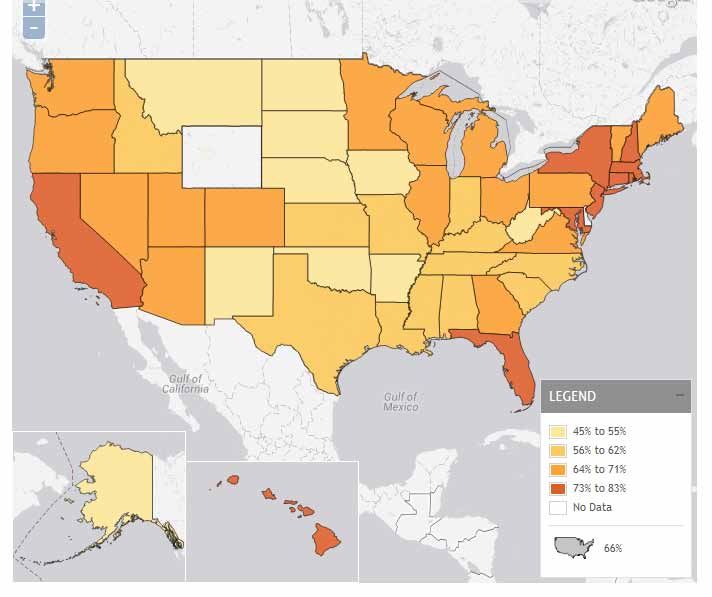
That’s why we need to think beyond individual
     Figure 7                                                                        family-level solutions and address the health
                                                                                     of entire neighborhoods. The good news is that
                                                                                     there are some common-sense ideas capable
                                                                                     of changing the trajectory of children’s lives
                                                                                     that are sustainable over generations. The
                                                                                     Casey report14 highlights several examples of
                                                                                     promising practices and policies to address
                                                                                     concentrated poverty:

                                                                                     •   Promoting community change efforts that
                                                                                         integrate physical revitalization along with
                                                                  LEGEND
                                                                                         human capital development
                                                                    0.0% to 2.0%
                                                                    2.8% to 5.8%
                                                                    10.0 to 13.7%    •   Increasing investments in quality early
                                                                    26.0% to 37.5%
                                                                                         learning,    community        supports     for
                                                                        8.0%             families, and improved infrastructure (e.g.
                                                                                         transportation, housing, and community
 Children Living In Neighborhoods with Poverty Rates of                                  centers) can help families struggling to
 30% or More (Percent)-- 2006-11
 Wisconsin Council on Children and Families                                              meet their basic needs and help break the
 Kids COUNT Data Center, datacenter.kidscount.org
 A project of the Annie E. Casey Foundation                                              cycle of poverty for the next generation.

                                                                                     •   Leveraging “anchor institutions” such
 Figure 8                                                                                as hospitals, schools, and churches to
                                                                                         build and support stronger and healthier
                                                                                         communities for children.
                 Percent of Children Living in Concentrated
                            Poverty (2006-2010)                                      •   Focusing efforts on increasing meaningful
                                                                                         and stable employment opportunities
                 67%                                                                     for adults and supporting asset building
     70.0%
                               57%                                                       strategies for families.
     60.0%
                                            49%         48%
     50.0%                                                           43%             •   Linking neighborhood efforts to larger
     40.0%                                                                               citywide and regional strategies related to
     30.0%                                                                               transportation, housing, employment, and
     20.0%                                                                               education.
     10.0%
      0.0%                                                                           •   Promoting increased access to affordable
             Detroit, MI   Cleveland,   Miami, FL   Milwaukee,   Fresno, CA              housing in safe and economically stable
                              OH                        WI
                                                                                         neighborhoods.

10                                                            a publication of THE WISCONSIN COUNCIL ON CHILDREN AND FAMILIES Fall 2013
Finally, we are very concerned about children living in with the highest percentages of children living in
extreme poverty, defined as families with incomes extreme poverty are rural. But it is also important to
below 50% of the poverty line. For a family of three, note that nearly one-third of the 100,000 Wisconsin
that’s $9,765 per year. These families and children, children living in extreme poverty (33,000 of them)
which can be found in all corners of our state (Figure live in Milwaukee County.
9), face significant challenges. Several of the counties
Figure 9
% Children Living Below 50% Poverty Line
(Extreme Poverty)
Kewaunee 9.6%
Adams 10.3%
Trempealeau 10.5%
Waupaca 10.8%
Racine 12.0%
Juneau 12.1%
Milwaukee 13.9%
Jackson 15.0%
with generous support from the ANNIE E. CASEY FOUNDATION 11Increased utilization of free and
reduced school meals
Figure 10
The rise in children living in poverty through
the last decade, and especially following the
economic downturn in 2008-09, has also had
an impact on the use of the free and reduced
school meals by K-12 students around the
state. The statewide enrollment rate was
40% in 2012, and Figure 10 illustrates how
varying levels of use are experienced across
the state.
LEGEND
Data from 2012 also reflects the significant 15% to 31%
32% to 43%
increase in the need for this benefit over the 44% to 56%
57% to 88%
past decade (Figure 11). Just over one in
four schoolchildren was registered for free 40%
and reduced school meals in 2002; by 2012
Free & Reduced Lunch (Percent) - 2012
it had grown to four of ten. This is consistent Wisconsin Council on Children and Families
Kids COUNT Data Center, datacenter.kidscount.org
with the rapid increase in the child poverty A project of the Annie E. Casey Foundation
rate, but also likely reflects other structural
changes in school enrollment, some increase
in alternative programs, and the overall
increase in the use of SNAP supports by
families.
Figure 11
Percent of Wisconsin Children Receiving
Free/ Reduced School Meals
40%
2012
28%
2002
0% 5% 10% 15% 20% 25% 30% 35% 40%
12 a publication of THE WISCONSIN COUNCIL ON CHILDREN AND FAMILIES Fall 2013Parental employment matters Wisconsin’s 29% rate of children living in a household in
which no parent has full-time, year-round employment
The economic future of children is inextricably linked
is slightly lower than the national average of 32%, but it
to the income stability and assets of their parent(s).
represents approximately 378,000 children.
Children who grow up in homes in which no parent is
steadily employed are more likely to face challenges Notably, the rate of children living in Milwaukee
such as limited opportunities for quality early learning, households with no parent fully employed is tied for
housing instability, limited access to pro-social the third highest rate in the nation, at 53%, which
activities, and lack of access to health and dental care. translates to about 83,000 children.
As will be discussed later, focusing on a two-generation
Wisconsin also has a lower-than-national percentage
strategy that includes helping parents/caretakers find
of children under age 6 living in a household in which
and maintain gainful employment is an important
there is no parent in the labor force (6%), but that
component of changing the future for children in
percentage is double for the City of Milwaukee.
poverty.
Figure 12
LEGEND
22%-27%
28%-31%
32%-34%
35%-38%
32%%
Children Living in Families Where no Parent has Full-Time,
Year-Round Employment (Percent) - 2011
National KIDS COUNT
Kids COUNT Data Center, datacenter.kidscount.org
A project of the Annie E. Casey Foundation
with generous support from the ANNIE E. CASEY FOUNDATION 13Figure 13
Percent of Children Living in Household with
No Parent Fully Employed
64%
70% 59%
53% 53%
60%
50%
40%
30%
20%
10%
0%
Detroit Cleveland Bal more Milwaukee
Figure 14
LEGEND
5% to 6%
7% to 8%
9% to 10%
11% to 16%
10%
Children Under Age 6 with No Parent in the Labor Force (Percent) - 2011
National KIDS COUNT
Kids COUNT Data Center, datacenter.kidscount.org
A project of the Annie E. Casey Foundation
14 a publication of THE WISCONSIN COUNCIL ON CHILDREN AND FAMILIES Fall 2013Housing will have poorer health outcomes; (2) the family will
encounter greater difficulties in purchasing food; (3)
A significant challenge for low-income families is
the adult(s) will not own a car; and (4) the family faces
that the cost of housing alone takes up a substantial
a greater challenge in accumulating assets through
percentage of disposable income. In 2011 in Wisconsin,
home ownership.15
over 340,000 children were living in low-income
households that spent over 30% of their income on Moving frequently also creates challenges for children,
housing. Spending a higher percentage of income often disrupting their education and links to other
on housing increases the likelihood that (1) children consistent pro-social opportunities. Based on 2010
Figure 15
LEGEND
45% to 55%
56% to 62%
64% to 71%
73% to 83%
No Data
66%
Children in Low-Income Households Where Housing Costs Exceed 30 percent of
Income(Percent) - 2009
National KIDS COUNT
Kids COUNT Data Center, datacenter.kidscount.org
A project of the Annie E. Casey Foundation
with generous support from the ANNIE E. CASEY FOUNDATION 15figures, only about one-third of children in Figure 16
low-income families had not moved within
the last year. It is likely that for most readers Residential Move By Income Status of Children
of this report, this frequency of moving from 2010 National Center for Children in Poverty
one residence to another is far from their own
experience.
67%
61%
Race/ethnicity of children in 70%
60%
poverty
50% 39%
33%
In Wisconsin, one of every two African- 40%
30%
American children lives in poverty, 40%
20%
higher than the nation as a whole and
10%
four times higher than the rate for non-
0%
hispanic white children (Figure 17). Has not moved in last year Has moved in last year
A high level of racial disparity can be found Low Income Above Low Income
across the state, but each community has a
slightly different dynamic. For example, in
Milwaukee County, the poverty levels for African-American children (51%) and white children (16%) are both
higher than the state average. Meanwhile, in Dane County in 2011 the African-American child poverty rate
was nearly 75% which is 13 times higher than the county’s white child poverty rate of 5.5%. This means that
the disparity between African-American children and white children is much higher in Dane County than other
places in the state.
As one might expect, these differences in poverty impact the percentage of children living in households that
Figure 17 Percent of Children Living in Poverty
by Race 2011
49%
50%
45%
40% 35%
35%
30%
25%
20% 16%
15% 12%
10%
5%
0%
Black or African Hispanic or La no Asian and Pacific Non-Hispanic
American Islander White
16 a publication of THE WISCONSIN COUNCIL ON CHILDREN AND FAMILIES Fall 2013spend greater than 30% of their income on housing, with nearly two-thirds of African-American children in that
situation, compared to less than 30% of non-Hispanic white children. This is but one example of the “opportunity
gap” that exists between white and black children in Wisconsin.
Figure 18
Children in Households Spending >30% of
Income on Housing by Race 2011
70% 63%
60% 51%
50% 43%
35%
40% 29%
30%
20%
10%
0%
Widening income and wealth gaps threaten accumulation of wealth (the sum of assets such as houses,
our future cars, savings and checking accounts, investments, etc.).
This gap is in many ways generational, as families who
Income inequality continues to increase in Wisconsin as
are already middle class may have accumulated some
well as around the nation. In Pulling Apart: Wisconsin’s
wealth, particularly through the growing value of
Growing Income Inequality16, the Wisconsin Budget
home ownership. This can be passed on to the next
Project and the Center on Wisconsin Strategy (COWS)
generation, so that generation starts out their working
note that trends in income favor those who already
or early family years with some help, and that dynamic
have been earning more. For example, between 1996
keeps repeating. However, we know that this dynamic
and 2010 the adjusted gross income of the top 1% of
has changed for the middle class as well for those
earners grew by 43%; the next highest 4% of earners
working poor who may have once had an opportunity
grew by 25%; and the bottom 40% of earners fell by
to accumulate some wealth. As the working poor pay
5%. In addition, in 2010, over half of all income flowed
an increasing percentage of their income for housing,
to the top 20%, and between 2002 and 2010 the ratio
have a harder time getting loans, and often pay higher
of total income of the top fifth of earners grew from 4.2
interest rates, all the while living from paycheck to
times that of the middle fifth to 4.9 times.
paycheck, the hope of accumulating anything to pass
Income is one measure of the economic future of on to their children becomes ever more difficult. It
our families, but another important factor is the was never easy to “climb the ladder” to the next level
with generous support from the ANNIE E. CASEY FOUNDATION 17of wealth, but it seems to be an increasingly distant The income and asset accumulation gaps add another
dream for many families. dimension to the growing opportunity gap for poor
children. Not only do they have fewer current
Finally, the gap in wealth between white and black
opportunities to fulfill their immediate potential,
Americans has also increased over the past 25 years. It
but their future opportunity is also hindered by this
is interesting that in the early- to mid-1990s the ratio of
widening economic divide. It will be difficult to change
white-to-black median wealth was actually decreasing,
these trends for current adults, but it is essential that
reaching a low of seven to one. But by 2009 median
we implement ways to change this path for future
wealth among white Americans had surged to 19 times
generations.
that of their African-American neighbors, $113,149
compared to $5,677.17 18
18 a publication of THE WISCONSIN COUNCIL ON CHILDREN AND FAMILIES Fall 2013INITIAL
INITIALRECOMMENDATIONS
RECOMMENDATIONS Themes
Themes
AsAs
a society
a society
and
and
asas
a state,
a state,
wewe
need
need
toto
adjust
adjust
our
our mindset Begin
mindset Beginwith
withaa
two-generation
two-generation
strategy
strategy
inin
mind.
mind.
19 19
about
about
poverty.
poverty.Instead
Instead
ofof
viewing
viewing
poverty
poverty
mainly
mainly a a The
asas Theevidence
evidenceis isclear
clearthat
thatasasweweinvest
investininchildren,
children,
failure
failure
atat
the
the
individual
individual
level,
level,
social
social
mobility
mobility
should bebe weweneed
should needtotosimultaneously
simultaneouslywork
worktotosupport
supportparents
parents
seen
seen
asas
a mixture
a mixture
ofof
personal
personal
responsibility,
responsibility, economic and
economic andcaretakers
caretakersinintheir
theirefforts
effortstotoprovide
providea asafe
safeand
and
trends,
trends,and
andpublic
publicpolicies.
policies. This
Thisthen positions economically
thenpositions economicallystable
stableenvironment.
environment. Some
Someofofthe
the
poverty
povertyasas
it it
should
should
be,be,
anan
issue
issue
ofof
broader
broader
concern forfor following
concern followingstrategies
strategiesand
andrecommendations
recommendationsmay
mayapply
apply
communities
communities
and
and
the
the
state
state
asas
a whole.
a whole.Fighting
Fighting poverty totoone
poverty onegeneration
generationmore
morethan
thanother,
other,but
butwewemust
mustnot
not
not
notonly
onlyhelps
helpsthe
the
poor;
poor;
it it
helps
helps everyone.We
everyone. We dodo letlet
allall competition
competition
between
between
them
them
(whether
(whether
ideological
ideological
oror
better
betterwhen
whenwe
weallall
dodo
better.
better. financial)
financial)
force
force
usus
into
into
anan
either-or
either-or
strategy.
strategy.
We
Webegan
began
this
this
brief
brief
with
with
the
the
notion
notion
that
that
wewe
know
know a lot Communities
a lot Communitiesand
andneighborhoods
neighborhoodsmatter.
matter.AsAs
about
aboutwhat
whatcan
canwork
worktotoboth
bothreduce
reducepoverty
povertyand the discussed
andthe discussed
previously
previously
inin
the
the
section
section
about
about
concentrated
concentrated
harmful
harmfuleffects
effects
it it
cancan
have
have
onon
the
the
trajectory
trajectory
ofof a child’s poverty,
a child’s poverty,the
theeconomic
economicand
andsocial
socialhealth
healthofofthe
the
life.
life.We
Wealso
alsoknow
knowthat
thatfamilies
familiesinincommunities can neighborhoods
communitiescan neighborhoodsininwhich
whichchildren
childrengrow
growupupplays
playsanan
make
makea abig
bigdifference,
difference,and
andthat
thatdespite
despiteoften difficult important
oftendifficult importantrole
roleinintheir
theirdevelopment.
development. We
Weneed
needtoto
circumstances,
circumstances,the
theresiliency
resiliencyofofchildren evident engage
childrenis isevident engage
the
the
full
full
community
community
inin
building
building
the
the
relationships
relationships
ininthe
thelives
livesofofthose
thosewho
whohave
haveovercome
overcomethe barriers between
thebarriers between families,
families, the
the faith
faith community,
community, service
service
that
that
poverty
poverty
creates.
creates.It It
is is
that
that
resilience,
resilience,
that
that strength providers,
strength providers,schools,
schools,and
andother
othersocial
socialinstitutions
institutionsthat
that
ininchildren,
children,that
thatgives
givesusushope
hopethat
thatwewecan decrease help
candecrease helpmake
makecommunities
communitiessafe
safeand
andsupportive.
supportive.Social
Social
childhood
childhoodpoverty
povertyininWisconsin
Wisconsinand
andprovide children investments
providechildren investmentssuch
suchasascreating
creatingfamily
familysupport
supportcenters/
centers/
anan
opportunity
opportunity
forfor
a brighter
a brighter
future.
future.
WeWe
can
can accomplish programs,
accomplish programs,partnering
partneringwith
withthe
thefaith
faithcommunity,
community,and
and
this
thisbybybetter
betterunderstanding
understandingthe
thescope povertyinin meaningful
scopeofofpoverty meaningfuloutreach
outreachbybypolicymakers
policymakerswill
willhelp
helpbuild
build
our
ourstate;
state;agreeing
agreeingthat
thatwewehave obligationtotoactact stronger
haveananobligation stronger
communities.
communities.
totoreduce
reducepoverty;
poverty;agreeing
agreeingthat
thatit itis isininour
ourcollective
collective
“Community
“Communityinvestments
investmentsthat
thatfocus
focusononthe
thesocial
social
interest
interesttotododoso;so;and
andbeing
beingsmart
smartabout
aboutour
ourpublic
public
and
andeconomic
economicwell-being
well-beingofofneighborhoods
neighborhoodscan
can
investments
investments
and
and
strategies.
strategies.
provide
provide
a foundation
a foundation
for
for
children’s
children’s
futures.”
futures.”
Annie
Annie
Recognizing
Recognizingthe
thecomplexity
complexityofofthe
thechallenge,
challenge,weweoffer
offer E.E.
Casey
Casey
Foundation
Foundation
2012
2012
KIDS
KIDS
COUNT
COUNT
Report
Report
some
someinitial
initialrecommendations
recommendationsforforapproaching
approachingthe
the
Use
Useevidence-based
evidence-basedstrategies.
strategies. AsAswewefocus
focus
WCCF
WCCFgoal
goalofofensuring
ensuringthat
thatallallchildren
childrengrow
growupupinin
efforts
effortsononchildren
childrenand
andfamilies,
families,wewemust
mustidentify
identify
safe
safeand
andnurturing
nurturingfamilies
familiesand
andcommunities.
communities. It Itis is
and
andimplement
implementeconomic
economicpolicies
policiesthat
thathave
havebeen
been
important
important
toto
emphasize
emphasize
that
that
our
our
work
work
must
must
bebe
multi-
multi-
demonstrated
demonstrated
toto
help
help
reduce
reduce
poverty.
poverty.A A
good
good
example
example
faceted,
faceted,comprehensive,
comprehensive,and
andsustained.
sustained. We
Wemust
must
ofofthis
thisis isthe
thework
workdone
donebybyCommunity
CommunityAdvocates
Advocates
work
workatatmultiple
multiplelevels,
levels,including
includingpractice,
practice,program,
program,
Public
PublicPolicy
PolicyInstitute
Instituteand theirPathways
andtheir PathwaystotoEnding
Ending
and
and
policy,
policy,
inin
order
order
toto
have
have
the
the
impacts
impacts
wewe
need.
need.Our
Our
Poverty
Povertyresearch
researchand
andpublications.
publications.20 20
There
Thereare
arealso
also
initial
initialrecommendations
recommendationsinclude
includesome
somemore
moregeneral
general
lessons
lessonstotolearn
learnfrom
fromBritain’s
Britain’saccomplishments
accomplishmentsinin
themes
themes
asas
well
well
asas
some
some
specific
specific
areas
areas
forfor
action.
action.
cutting
cuttingchildhood
childhoodpoverty
povertyininhalf
halfafter
afterdeclaring
declaringtheir
their
with
with
generous
generous
support
support
from
from
thethe
ANNIE
ANNIE
E. CASEY
E. CASEY
FOUNDATION
FOUNDATION 1919war on child poverty in 1999.21 Their effort included Communication and collaboration are key.
war on child poverty in 1999.21 Their effort included Communication and collaboration are key.
increased
war on child minimum
poverty inwage 1999.21forTheir
working families,
effort included Communication
We must communicate andabout
collaboration
the issue and areimpact
key.
increased minimum wage for working families, We must communicate about the issue and impact
increased tax credits wage
minimum for children, investments
for working in
families, of
Wechildhood poverty with
must communicate effective,
about consistent,
the issue and
and impact
increased tax credits for children, investments in of childhood poverty with effective, consistent, and
early learning,
increased tax and investments
credits in job investments
for children, training. Most in coherent messaging,
of childhood poverty with particular attention paid
effective, consistent, and
early learning, and investments in job training. Most coherent messaging, with particular attention paid
importantly,
early learning,their
and experience
investmentsshows in job that sustaining
training. Most to the usemessaging,
coherent of languagewiththatparticular
does not trigger partisan
attention paid
importantly, their experience shows that sustaining to the use of language that does not trigger partisan
the public commitment
importantly, to theseshows
their experience strategies
thatover time is
sustaining or non-productive
to the use of language responses.
that doesItnot
is important to use
trigger partisan
the public commitment to these strategies over time is or non-productive responses. It is important to use
critical
the publicto success.
commitment to these strategies over time is the full spectrum ofresponses.
or non-productive communications tools, including
It is important to use
critical to success. the full spectrum of communications tools, including
critical to success. evidence as well asofstories,
the full spectrum so we can meet
communications tools,people
including
Narrow critical gaps. evidence as well as stories, so we can meet people
Narrow critical gaps. where they
evidence as are
wellinasorder to bring
stories, so wethem along.
can meet This is
people
Narrow
We critical gaps.
have highlighted several growing gaps that need to where they are in order to bring them along. This is
We have highlighted several growing gaps that need to not about
where they“welfare,” butto
are in order the future
bring themof our state.
along. Child
Child
be
Weaddressed, including
have highlighted the economic
several growing gapsgapsthat
in income
need to not about “welfare,” but the future of our state. Child
be addressed, including the economic gaps in income well-being is a public good that benefits us all.
and asset accumulation
be addressed, including and racial andgaps
the economic ethnicin gaps.
income well-being is a public good that benefits us all.
and asset accumulation and racial and ethnic gaps.
and asset accumulation and racial and ethnic gaps. And because reducing childhood poverty benefits
To address the economic gaps, there are strategies And because reducing childhood poverty benefits
To address the economic gaps, there are strategies us all, we all have a stake and a responsibility to act.
such as those
To address the highlighted
economic gaps, in Pulling
there areApart 2012:
strategies us all, we all have a stake and a responsibility to act.
such as those highlighted in Pulling Apart 2012: Different organizations and coalitions have different
Wisconsin’s
such as those Growing Income
highlighted Inequality.
in Pulling Apart
22
2012:
These Different organizations and coalitions have different
Wisconsin’s Growing Income Inequality.22 These things to offer, but almost everyone has something of
Wisconsin’s
strategies andGrowing Income Inequality.
others—including reforming regressive
22
These things to offer, but almost everyone has something of
strategies and others—including reforming regressive value that they can do. What we need to do is to make
taxes, ensuring
strategies that work pays, supporting
and others—including access to
reforming regressive value that they can do. What we need to do is to make
taxes, ensuring that work pays, supporting access to it easier for everyone to contribute what they can and
health care (including
taxes, ensuring that workmental
pays,health and dental
supporting care),
access to it easier for everyone to contribute what they can and
health care (including mental health and dental care), to make clear asks for action.
and
healthinvesting in education
care (including mentalfrom child
health andcare
dental through
care), to make clear asks for action.
and investing in education from child care through
college—can
and investingallin help narrow economic
education from child gaps.
care through
college—can all help narrow economic gaps.
college—can all help narrow economic gaps.
Addressing racial and ethnic gaps is challenging and
Addressing racial and ethnic gaps is challenging and
complex
Addressing andracial
oftenandraises uncomfortable
ethnic discussions
gaps is challenging and
complex and often raises uncomfortable discussions
about
complex blame
and and
oftenwho is responsible
raises uncomfortable for discussions
solving the
about blame and who is responsible for solving the
problem.
about blame Butand
as awhostarting point, we for
is responsible can solving
begin withthe
problem. But as a starting point, we can begin with
increasing
problem. awareness in our communities
But as a starting point, we can andbegin
accepting
with
increasing awareness in our communities and accepting
the stark reality
increasing awarenessof the racial
in our and ethnic
communities anddisparities
accepting
the stark reality of the racial and ethnic disparities
that exist.reality
the stark Through
of thestrengthening
racial and ethnic our disparities
education
that exist. Through strengthening our education
system,
that exist. promoting
Through smarter community
strengthening our investment
education
system, promoting smarter community investment
strategies, and improving
system, promoting smarter linkages with employment
community investment
strategies, and improving linkages with employment
opportunities,
strategies, and we can do linkages
improving a betterwithjob employment
of reducing
opportunities, we can do a better job of reducing
disparities
opportunities, for minority
we can do children
a betterandjob families across
of reducing
disparities for minority children and families across
Wisconsin.
disparities for And, we can work
minority to engage
children constituencies
and families across
Wisconsin. And, we can work to engage constituencies
in our community
Wisconsin. And, we canto help
work ensure
to engagethat we do not
constituencies
in our community to help ensure that we do not
shortchange
in our community anothertogeneration
help ensure of that
minority
we do youth.
not
shortchange another generation of minority youth.
More information
shortchange about
another WCCF’s work
generation to addressyouth.
of minority racial
More information about WCCF’s work to address racial
disparities can be found
More information at www.racetoequity.net.
about WCCF’s work to address racial
disparities can be found at www.racetoequity.net.
disparities can be found at www.racetoequity.net.
20 a publication of THE WISCONSIN COUNCIL ON CHILDREN AND FAMILIES Fall 2013
20 a publication of THE WISCONSIN COUNCIL ON CHILDREN AND FAMILIES Fall 2013
20 a publication of THE WISCONSIN COUNCIL ON CHILDREN AND FAMILIES Fall 2013Areas for Action 1. Early learning and education. The research
Over the years, there have been numerous symposia, could not be clearer that quality early learning is
summits, task forces, and projects designed to address critical for children who grow up in poverty, as
poverty. What follows is a brief summary of the they historically begin their school years behind,
main recommendations from these various efforts. and all too often never catch up. Investing in
The purpose of this summary is not to present an parents as “first teachers,” Early Head Start, Head
exhaustive or prioritized list of projects or proposals, Start, and home visitation programs makes both
but rather to acknowledge that good work has been human and economic sense. In Wisconsin we
done in the past and that whatever we do moving need to ensure adequate investments are made in
forward should build on that work. The categories Wisconsin Shares and the YoungStar quality rating
include: and improvement system. This means: (1) ensuring
that the Wisconsin Shares budget and payment
1. Early learning and education
structure reflects the real costs of providing
2. Employment quality early learning programs, including raising
the reimbursement rates and investing more
3. Healthcare funds into training and technical assistance for
providers; and (2) continuing support for the
4. Housing
YoungStar system and more closely integrating
5. Income supports that system with greater investments that help
providers (both family care and child care centers)
6. Place based initiatives
improve their skills and “move up the ladder” of the
with generous support from the ANNIE E. CASEY FOUNDATION 21rating system. Finally, Wisconsin must continue provided by the federal government to expand the
providing pre-school opportunities for children Badger Care program and implemented a robust
through a combination of public and community- health insurance exchange.
based 4K programs that now are in place in nearly
4. Housing. Access to affordable, stable, and safe
90% of school districts around the state.
housing is critical to economic self-sufficiency
2. Employment. Family-supporting jobs provide for children and their families. It ensures
children with the financial resources they need consistency in a child’s education, and promotes
to thrive. Improved education and skills have stable employment for parents; children thrive
historically been the route to a higher standard of when they live in homes that are located in safe
living for Wisconsin workers. We need to promote and thriving communities. We should maximize
opportunities for low-skill, low-wage workers public and private resources to expand affordable
to obtain skill training and education that meet housing through increased support, coordination,
the specific needs of employers. The technical and flexibility; support healthy housing through
college system is a key resource, providing training weatherization, lead abatement, and code
accessible to workers and relevant to employers. compliance; and aggressively address homelessness
Career pathways and industry partnerships are two by targeting resources at prevention.
other ways Wisconsin can continue to modernize
5. Income Supports: A good, multi-faceted
its workforce skill development, by improving the
example of strengthened income supports is
connections between job seekers and employers.
the work done by Community Advocates Public
Another important employment component is
Policy Institute and their Pathways to Ending
to ensure that all taxpayer investments in job
Poverty research and publications. This research
creation are accounted for and that the jobs that
highlights four basic components to a poverty-
are created pay family-supporting wages. Finally,
reduction strategy: (1) Providing a tax credit for
additional financial aid is needed to facilitate the
seniors and adults with disabilities; (2) investing
participation of low-income people in training and
in Transitional Job programs for unemployed
higher education.
workers; (3) increasing the minimum wage; and
3. Health. According to the Neighborhood Funders (4) reforming the Earned Income Tax Credit for
Group, research consistently shows that the gap low earners. Their research was independently
between the rich and poor is the most significant analyzed by the Urban Institute23, which showed
predictor of the health of a country’s population. that had these policies been fully implemented
Quality healthcare promotes healthy child in 2008 in Wisconsin, it would have resulted in
development, and children and families with access bringing a quarter of a million Wisconsinites out
to quality health care experience increased success of poverty, a reduction of 58% from current levels.
in school and fewer absences from work. We must Other important forms of income support that can
ensure that every child in Wisconsin has access to help boost low-income families are unemployment
affordable healthcare, including dental and mental insurance and the Homestead Tax Credit. It is also
health care. We would make significant progress in important to promote financial literacy, through
this area if we were to take advantage of the tools financial education for youth and resources (e.g.
22 a publication of THE WISCONSIN COUNCIL ON CHILDREN AND FAMILIES Fall 2013You can also read


