China's automotive market - How to merge into the fast lane with consumer and digital marketing insights - Accenture
←
→
Page content transcription
If your browser does not render page correctly, please read the page content below

China’s automotive market
How to merge into the fast lane with consumer and
digital marketing insights
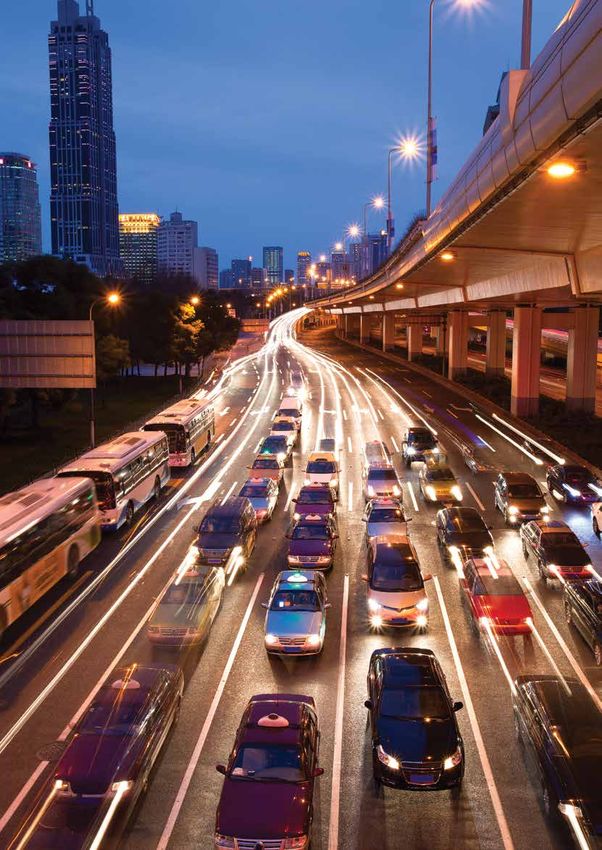
China’s spectacular economic growth over the past 20 years is
reflected not only in a tenfold increase in its gross domestic
product, but also in the emergence of the world’s fastest-
growing consumer market and a vibrant, burgeoning
middle class.

As incomes in China have risen, so have             analysts of IHS Automotive estimate               is still quite immature and consumer
Chinese consumers’ interest in products             that vehicle sales will grow by a healthy         behaviors are continually evolving.
that were previously out of their reach.            8.8 percent in 2013 and average about             There is still plenty of time and plenty
Automobiles fall squarely into this                 6 percent year-over-year growth through           of room for other local and foreign auto
category. In 2005, approximately six                2020. In that year, 31 million passenger          manufacturers to capture significant
million vehicles were sold in Greater               cars and SUVs will be sold in Greater             market share. At Accenture, we believe
China. In 2012, that number had climbed             China (see Figure 1). By comparison,              the OEMs that will fare best in China
to nearly 19 million, making Greater                the second largest market, Europe,                are those that will truly understand
China the largest automobile market                 will report auto sales of only 23 million.1       the needs and preferences of Chinese
in the world. While this exceptional                It is not surprising that automobile              consumers and then give them what they
compound annual growth rate (CAGR)                  manufacturers from around the world are           want—in terms of vehicles and the overall
of 18.1 percent is not expected to                  placing China at the very center of their         car-buying experience.
continue, there is no doubt that Greater            long-term growth strategies. Currently,
China will remain the number one car-               Volkswagen is the undisputed sales
buying nation for years to come. Market             leader. However, the consumer market

Figure 1. While China’s automotive market growth is cooling down, it is still
expected to reach 31M new registrations in 2020.

Greater China Light Vehicle Sales Development (2005-2020; Millions of Units)

                                                                                                  +

                                                                                          6.3%
                                                                                                                      30.3 31.0
                                                                                                               29.5
                                                                                                        28.5
                                                                                              26.9
                                         +
                                                                                                                                   +48.1%
                                                                                       25.2
                                    18.1%                                       23.1
                                                                         20.9
                                                     17.3 18.0 19.0

                                             13.3
+221.2%
                                     8.9
                             8.3
                     7.1
              5.9

            2005 2006 2007 2008 2009 2010 2011 2012 2013 2014 2015 2016 2017 2018 2019 2020
Source: IHS AutoInsight April 2013; Accenture Research Analysis

1
2
Who’s in the driver’s seat?

3
China is a huge and highly complex automobile market.
The sheer expanse of its geography, the complexity of its
sales channels, and the rapid pace of urbanization—which
has created 14 modern metropolises with populations of
more than 10 million and 150+ cities with populations of
more than one million—can all be overwhelming.

Regardless of how and where                 focus on the more affordable domestic
automakers choose to compete in             vehicles. Three groups are highly
China, they will need to address a          interested in foreign brands. One, which
diverse mix of values, preferences and      we call the “Young Royals,” is keen on
behaviors that influence consumers’         exclusivity and is willing to pay more for
buying decisions.                           the latest high-end products. The other
                                            two groups comprise lower-income
Several years ago, Accenture identified     people who aspire to buy trendier and
major consumer segments in China.           sophisticated brands (the “Aspirationals”)
We believe the distinctions among           and higher-income men and women (the
these groups are particularly relevant      “Established Money”) who also want
in today’s burgeoning auto market. One      exclusive products, but value brands that
group is “domestic leaning.” They tend      are established and have been in the
to buy Chinese brands either because of     market for a long time.2
a feeling of loyalty to their country and
local companies or because their lack
of disposable income forces them to

                                                                                         4
“Nice ride”

 5
Figure 2. Although Volkswagen remains the dominant market leader, Chery,
Geely, SAIC, FAW, BAIC, Toyota and Honda are all strongly catching up

Competitive Landscape Development (2013/2020; % CAGR, Unit Increase)

CAGR 2013-2020
                                                     Average Unit Increase 310K
17
                                  Fiat                                                                                       Sales Volume
16                                                                                                                           2013
                                   150
15
                                                                           377 Chery                                                500K
14
13
12                                                        SAIC
                              Mazda                       302
11                                                                             435 Geely
10            Hainan Auto.
                                         FAW
9                                              BAIC
                            Jianghuai            Honda
8          Lifan                          464                                                Toyota                          Total Market
                 Daimler            BMW
7     Soueast                                                                       965                                      CAGR 6%
                                                 725
                  Brilliance Auto            668                                                                             (2013-2020 )
6                                      Ford          1,014
5                                                                             Renault/Nissan
                           BYD
                                     Dongfeng                 1,068
4        Suzuki    Jiangling PSA                                                SAIC-GM-Wuling
                               Great Wall                                                                 Volkswagen
3                                                                     1,440
                                                  Changan                                                    3,282
2        Zotye                  Hyundai                  1,504
1                                                                     GM                                                      Sales Increase
0                                                                                                                             2013/2020
     0        100,000        200,000      300,000        400,000      500,000      600,000     700,000      800,000     900,000

     European             American              Korean             Chinese           Japanese

Source: IHS AutoInsight April 2013; Accenture Research Analysis

While the Chinese market is expanding               are following the lead of Hyundai and             Telematics services are also playing
to include buyers of second (or even                Volkswagen and developing new models              an increasingly important role in
third and fourth) vehicles, the majority            to meet the Chinese market’s demand               Chinese consumers’ vehicle purchasing
of consumers continue to be first-                  for larger sedans.                                decisions. By some estimates,
time car-buyers. Of the top 20 models                                                                 85 percent of consumers look for
currently being purchased in China,                 Most auto consumers around the world              in-vehicle technologies and 75 percent
Volkswagen accounts for 54 percent of               are attracted to tangible, distinguishable        acknowledge they would spend more
sales, followed by Hyundai at 19 percent.           features such as brand, appearance and            for a vehicle with the right telematics
Volkswagen and Hyundai also top the                 engine performance. This is certainly             services. Consumers are particularly
list of the top 20 SUVs sold. Other                 true in China, where brand prestige—              interested in services that provide
manufacturers, however, are catching up             even among smaller vehicles—will                  navigation support and facilitate
and demonstrating a strong projected                continue to play an important role in             emergency rescue, Wi-Fi connectivity
CAGR over the next seven years                      purchasing decisions. Several luxury car          and access to real-time traffic data.
(see Figure 2).                                     manufacturers are setting up production           Accenture estimates that in-vehicle
                                                    facilities to be closer to the growing            technologies could generate up to $200
At this point, car and SUV bestsellers              pool of brand-conscious Chinese buyers.           in added revenue per car sold. Such
tend to be “C Compact” models sold                  For example, in 2013, Audi will begin             technologies are now common in luxury
by foreign manufacturers. Yet, many                 producing its A3 sedan in FAW-VW’s                vehicles, and we believe the availability
of these vehicles have wheelbases that              Foshan facility. The A3 will be China’s           of telematics services will grow
extend to 2.7 meters, which makes                   first locally sourced compact luxury-             quickly in all segments. The challenge
them nearly the size of the typical                 branded sedan. BMW, Mercedes and                  for vehicle manufacturers will be to
D-sedan. This reflects a noticeable                 Jaguar Land Rover are expected to also            incorporate the right technologies for a
growing preference for larger vehicles              localize production of several vehicles in        given vehicle’s price range.
among Chinese consumers, both in the                the near future.
sedan and SUV segments. Many OEMs

                                                                                                                                               6
What do you think?

7

Recent Accenture research confirms that when it comes
to deciding which car to buy, Chinese consumers rely
predominantly on four factors: friends and colleagues,
family members, manufacturer websites and social media.

Compared to their global peers, Chinese    conducting research online topped           Chinese consumers’ prolific use of
consumers are much less likely to simply   90 percent. Like shoppers in other parts    social media is particularly important
visit a dealership or order a vehicle      of the world, Chinese consumers tend to     (see next page). It suggests that auto
from a call center after conducting        “research online, purchase offline.” And    manufacturers and their dealers may
preliminary research. The car-buying       this so-called ROPO effect is growing.      be wise to eschew large investments
experience for them is much more           In 2010, 33 percent of Chinese              in television and radio advertising in
deliberate and involves Web-based          consumers purchased products offline        favor of establishing a strong social
searches, combined with test-drives at     after looking online for pricing, product   media presence.5
local dealerships.3                        and brand information, as well as for
                                           customer reviews. In 2011, that figure
These findings confirm earlier Accenture   jumped to nearly 43 percent.4 While that
research, which found that Chinese         research assessed purchasing practices
consumers, in general, are considerably    across the consumer goods space, one
more likely to rely on the Internet when   can assume a similar phenomenon is
deciding what and whether to buy.          occurring in the area of vehicle sales.
In 2012, the proportion of consumers

Four factors influencing Chinese consumers’ car buying decisions

       49%                            64%                              53%                             64%
49 percent look to               64 percent seek                 53 percent look at              64 percent are
recommendations                  advice from family              manufacturer                    influenced by
from friends and                 members.                        websites.                       opinions shared via
colleagues.                                                                                      social media.

                                                                                                                                8
The impact of social media on
consumer behavior in China
Accenture’s 2011 and 2012 Global Consumer
Research studies found that social media is having a
significant effect on Chinese consumers’ purchasing
behaviors:

>90% 60%
More than 90 percent Chinese consumers
use social media and microblogs (known
                                                60 percent interact directly with
                                                companies on social media sites about
as “weibos”) to learn about companies’          their products or customer service.
products or services.

2/3
Two-thirds say that positive or negative
comments have some impact on
their decision to buy a given product.
                                                72%
                                                72 percent Chinese consumers read about
                                                companies’ products or services on social
                                                media sites at least several times a month.
Interestingly, it is not just the opinions of

                                                2/3
friends and family that matter. In 2011,
more than a third of Chinese consumers
based their purchasing decisions, at
least partly, on posts made by complete
strangers. In 2012, that number climbed
to nearly 44 percent.

25%
Nearly 25 percent post their opinions about
a company’s products or services several
                                                Two-thirds think that a company’s
                                                presence on social media sites increases
                                                the likelihood that they will do business
                                                with them.

times a week.
9
10
Rev your digital engine
Despite their differences in demographics and vehicle
preferences, Chinese consumers share at least one important
characteristic: the expectation for a personalized and
satisfying customer experience. At Accenture, we know
that creating a satisfying end-to-end customer experience
is a hallmark of high performance and an imperative for all
companies, in all markets.

In China, however, the issue is made         Upon analyzing the survey findings in
more complicated by rapidly growing          greater detail, we found that Chinese
and changing expectations, the high          consumers basically want three
influence of others’ experiences (both       things when it comes to their digital
positive and negative) on purchasing         experience. The first is more access.
behaviors, and the variety of direct and     Nearly 80 percent would welcome more
indirect sales channels that are needed      mobile-enabled websites. This is hardly
to cover a country and customer base of      surprising, given the tremendous rise
such considerable size. When multiple        in smartphone and mobile Internet
touch points are employed, the process       penetration in China over the past three    84 percent want easier and
of interacting with customers must be        years. Manufacturers need to realize        clearer pricing to help
seamless and consistent. If it is not, the   that mobility has taken hold in China
consumers may well go elsewhere.             and will be a driving force in purchasing   expedite the car-buying
                                             behavior moving forward.                    process.
We believe that digital marketing holds
particular promise for automakers            The second thing Chinese consumers
looking to build strong consumer             want is more content and/or digital
relationships and ultimately sell more       features. Large numbers of survey
cars. In fact, we believe the digital        respondents indicated their interest in a
channel will soon be the predominant         range of digital options. For example:
method of interacting. We are not
the only ones. Some 3,000 Chinese
respondents to a recent Accenture
survey made it clear that they would
like the auto industry to offer a better
and more customized online experience.
More than 80 percent indicated
                                                                                         82 percent are interested in
their desire for more integrated                                                         using digital communications
digital marketing experiences from                                                       to find out more about new
manufacturer and dealer sites. Even                                                      in-vehicle technologies.
more noted that a better interactive
digital marketing capability is “a must”
for the auto industry.

11
Finally, consumers in China want a
digital experience that is simple to
navigate. Approximately three-quarters
of respondents noted the need for
simpler digital experiences related to
three distinct activities: information
gathering, vehicle comparisons and
vehicle configurations.
80 percent would like to be 74 percent would like to see OEMs can use these insights to develop
a truly differentiated and customized
able to compare additional more integration with dealer experience for consumers. Opportunities
options within an automaker’s sites and inventory search abound for automakers to use digital
product line. functions. marketing in new ways to strengthen
relationships and brand loyalty. For
example, OEMs and their dealers might
consider making the entire end-to-
end purchasing process—including
financing, price negotiation, back-
office paperwork and home delivery—
available via the online environment.
Approximately one-third of consumers
indicated they would definitely take
advantage of such an option. Another
60 percent said they would consider it.
“Virtual dealerships” that make better
74 percent would like more 70 percent would welcome use of videos or 360-degree tours
intuitive content, customized the ability to chat online with are also a possibility. Approximately
to their preferences. a dealer. 80 percent of consumers noted they
could see themselves buying a car
virtually, without ever visiting
a dealership.
12Enjoy the ride
Over the past 20 years, profound
social, economic and cultural changes
in China have converged to create a
consumer auto market that is unlike
any other.
Complicating matters is the speed at Consumers believe that digital marketing
which it continues to evolve. To win can help align the automaker’s message
the hearts and wallets of Chinese and value proposition with their own
consumers, automakers need to reasons for buying. We agree. When
understand the preferences and insights and digital marketing converge,
behaviors of the consumers they are consumers can take advantage of a car-
hoping to reach. They then need to buying experience that is faster, simpler
translate those consumer insights into and more enjoyable. And automakers
quick action. can more confidently move into the fast
lane of growth, profitability and high
performance.
1314
About Accenture                                        Reference
Accenture is a global management                       1. Accenture analysis (based on IHS data).
consulting, technology services and
outsourcing company, with approximately                2. W. Driggs et al., “China Brand
266,000 people serving clients in                      Opportunities: Where they are and how
more than 120 countries. Combining                     to make the most of them to achieve high
unparalleled experience, comprehensive                 performance,” Accenture, 2008.
capabilities across all industries and
business functions, and extensive                      3. Accenture survey research, conducted
research on the world’s most successful                in association with Coleman Parkes
companies, Accenture collaborates with                 Research, August-September 2012.
clients to help them become high-
performance businesses and governments.                4. J. Beg et al., “Meet the new Chinese
The company generated net revenues of                  consumer,” Outlook Magazine (Accenture),
US$27.9 billion for the fiscal year ended              2013(1).
Aug. 31, 2012. Its home page is
                                                       5. Neumann et al., “Taming the channel
www.accenture.com.
                                                       complexities of the Chinese consumer
                                                       market: New challenges, rules and growth
                                                       opportunities,” Accenture, 2012.

Copyright © 2013 Accenture
All rights reserved.

Accenture, its logo, and
High Performance Delivered
are trademarks of Accenture.

This document makes descriptive reference to trademarks that may be owned by others. The use of such
trademarks herein is not an assertion of ownership of such trademarks by Accenture and is not intended
to represent or imply the existence of an association between Accenture and the lawful owners of
such trademarks.                                                                                         13-2556_lc/11-6419
You can also read


