Christmas Island Reptile Reintroduction Communications Plan 2019 - 2021 - Parks Australia Version 3.0 (07/02/20)
←
→
Page content transcription
If your browser does not render page correctly, please read the page content below
2019 – 2021

             Christmas Island Reptile
Reintroduction Communications Plan

Parks Australia
Version 3.0 (07/02/20)
Christmas Island Reptile Reintroduction
Communication Plan

1.0    INTRODUCTION

This communication plan identifies the community and stakeholder engagement that will support the
reintroduction of the Christmas Island Blue-tailed skink and Lister’s gecko under the Christmas Island
Reptile Captive Breeding Project (Project ID: 1617/65). Whilst reptile captive breeding activities and
associated communications have been undertaken since 2010, this plan will focus on communication
activities specifically relating to the reintroduction of Blue-tailed skinks and Lister’s geckos in to the wild on
Christmas Island and new introductions to the Cocos (Keeling) Islands planned during 2019 to 2021 (see
Section 7.0).

Detailed background information on the project can be found in the project plan. The Christmas Island
Reptile Advisory Panel (CIRAP) exists however it is not the intention to outline in detail communication
processes related to the operation of this group as this is outlined the CIRAP Terms of Reference.

2.0    PURPOSE OF COMMUNICATIONS

To educate and inform key stakeholders and the broader community about:

a) The day-to-day management of the reptile captive breeding program;

b) Future plans for reintroduction;

c) The results of any research and monitoring; and

d) In collaboration with other threat mitigation projects, the importance of threat mitigation for reptile
   recovery.

3.0    KEY MESSAGES

The key messages that should be woven into all media communications include the following with the top 5
in order of priority:

a) Critically Endangered Blue-tailed skinks and Lister’s geckos are extinct in the wild but a successful
   captive breeding program has secured their future.

b) The presence of invasive species on Christmas Island may limit the success of future reptile
   reintroductions therefore alternative options for release are being investigated including soft-release on
   Christmas Island and conservation introductions to locations outside of their natural range.

c) The feasibility of introducing Christmas Island reptiles to another location with a similar climate is being
   investigated. Evidence based research will identify any environmental and social benefits or impacts to
   the destination location.

d) This is a collaborative program involving many stakeholders and the community play an essential role in
   achieving a successful outcome.

e) The reintroduction of Christmas Island reptiles back into the wild will be informed by well-planned and
   structured research that will investigate the impacts of centipedes and wolf snakes on survivorship.
                                                      2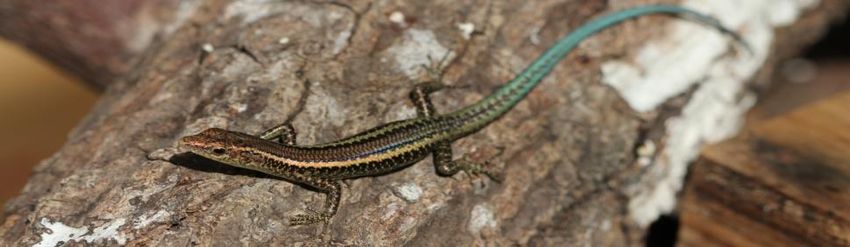
f) Introduced species such as cats, rats, wolf snakes and centipedes have a devastating impact on native
wildlife, particularly on Christmas Island where native species have evolved without competitors or
predators.
g) Cats and rats have contributed to a number of wildlife species extinctions and/or declines on Christmas
Island including the reptiles.
h) The removal of stray and feral cats from the island and control of rats will help the recovery of a number
of threatened species on Christmas Island, particularly the native reptiles and ground nesting birds.
i) The control of yellow crazy ants will promote habitat regeneration and support reptile reintroductions.
4.0 TARGET AUDIENCE
A range of audiences will be engaged in various capacities during the course of this project. Each
stakeholder group and their perceived level of support are outlined below.
Stakeholder Group Stakeholder views
Christmas Island
Local residents of Christmas There is general support for the project from the Christmas Island
Island Caucasian, Chinese and Malay communities.
There may be some people that are critical of the various threat
mitigation activities associated with this project but this may be
mitigated through the distribution of relevant and timely educational
material through those respective projects.
Local business and organisations There is strong support for the project from the two local
including: conservation groups, CINHA and Island Care.
Christmas Island District High CIP have general support for the project and often incorporate a
School (CIDHS) visit to the Pink House during their mine tours.
Christmas Island Natural CITA supports the project as it aligns with their nature-based
History Association (CINHA) tourism aspirations as the project will conserve the island’s natural
Christmas Island Phosphates values and attractions.
(CIP) There is general support from CIDHS and they have previously
been directly involved in maintaining a breeding population of
Christmas Island Tourism
skinks. Information on biodiversity and the reptile program is
Association (CITA)
advocated through their school curriculum.
Island Care
The CCC have general support for the project and welcome Parks
Community Consultative to provide updates at their meetings.
Committee (CCC)
Government including: The Administrator is generally supportive of the broader
Administrator conservation initiatives on island.
Department of Infrastructure, DITCRD and SOCI are in general support of the reptile project but
Transport, Cities and Regional don’t have any direct involvement in its management.
Development (DITCRD) (incl.
Health Services)
Shire of Christmas Island
(SOCI)
Cocos (Keeling) Islands
Local residents of Cocos (Keeling) There is good support for Parks programs from the Cocos
Islands (this includes various (Keeling) Island community particularly with respect to the Cocos
groups such as Home Island Buff-banded Rail translocation that occurred in 2013. The Cocos
Seniors, local “pondok” owners) community have a reasonable knowledge of the proposed reptile
3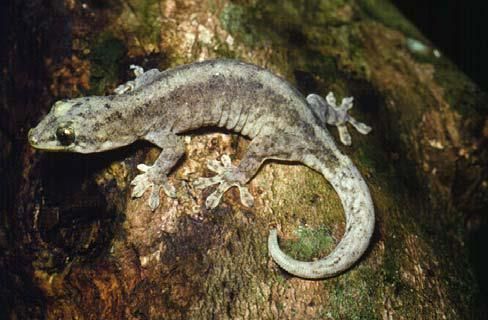
translocation. The introduction of Christmas Island reptiles is a new
concept for the community and it must be demonstrated that it will
not impact on their use of the islands. All communications should
include conservation, environmental and social benefits to the
islands and community.
Local business and organisations There is strong support for Parks programs from the CKIDHS with
including: Parks staff initiating and leading several science based excursions,
Cocos Keeling Islands District activities and school lessons. However, the school community
High School (CKIDHS) would have limited knowledge of the proposed translocation.
Cocos Keeling Islands Visitor CKITA supports Parks programs as they align with CKITA nature-
Centre (CKITA) based tourism aspirations. Parks is a long-term CKITA committee
member.
Pulu Keeling National Park
Community Management There is strong support for Parks programs from the PKNPCMC.
Committee (PKNPCMC) Most committee members are up to date with the progress of the
proposed translocation.
Government including: In 2013 SOCKI supported a feasibility study to introduce Christmas
Shire of Cocos (Keeling) Island reptiles to the southern atoll of the Cocos (Keeling) Islands.
Islands (SOCKI) In 2017, support for the feasibility study was re-iterated. In 2019
approval was given for a first release on Pulu Blan. Future
Administrator communications regarding the next steps of the project need to be
Department of Infrastructure, frequent and effective.
Regional Development and The Administrator is generally supportive of the broader
Cities (DITCRD) (incl. Health conservation initiatives on island.
Services)
DITCRD are generally supportive of the broader conservation
Department of Agriculture, initiatives on island.
Water and the Environment
DAWE have provided strong support and advice on this program
through the import permit process and development of appropriate
quarantine measures. They have developed an excellent
knowledge of the proposed translocation.
Other
External stakeholders including: Taronga Conservation Society Australia and CIRAP strongly
Taronga Conservation Society support the reptile captive breeding program and are both involved
in an advisory capacity, while the Taronga Conservation Society is
Australia
also directly involved in captive breeding, maintaining captive
Christmas Island Reptile populations at Taronga Zoo.
Advisory Panel (CIRAP) The IUCN will have a specific interest in the reintroduction and
IUCN Reintroduction and new introduction of Christmas Island reptiles to Christmas and
Invasive species specialist Cocos (Keeling) Islands respectively to ensure that it is consistent
with their guidelines.
group
Virgin Australia and Virgin Australia Regional Airlines (VARA)
Virgin Australia strongly support the introduction of reptiles to the Cocos (Keeling)
Islands and we have developed a partnership for transport of
personnel and animals.
Internal stakeholders including: There is strong support for the project from all internal
Environment Minister stakeholders and several high-profile announcements have been
made nationally over the previous eight years. These stakeholders
Parliamentary Secretary will be watching the project closely and will likely want to announce
Project Board key milestones nationally.
Threatened Species
Commissioner
45.0 COMMUNICATION MEDIA
The following forms of communication media will be used to deliver key messages about the reptile
reintroduction program.
Print media
‘Islander’ articles If and when appropriate, Islander articles will be used to inform the local
community on:
Project updates and milestones
Regulatory notices
Information on threat mitigation activities
Information on planned reintroductions/introductions
‘Atoll’ articles The Cocos Atoll newsletter will be used to inform the community about
the proposed feasibility study to introduce Christmas Island reptiles, the
results of the study and any proposed reptile introductions.
Letter drop to all Each household should receive a copy of the written “Atoll” article on all
households on West and of the proposed reptile introductions which includes evidence based
Home Islands (CKI) information regarding species benefits and impacts.
Peer reviewed publications Throughout the course of the project, information will be published in
peer reviewed publications.
Reports, briefs and approvals Regular reporting and internal briefs will be prepared through the course
of the project to notify internal stakeholders of project updates and
milestones.
Ethics approval In collaboration with Taronga and the University of Western Australia, an
ethics application will be submitted for approval to experimentally
reintroduce reptiles on Christmas Island and to translocate animals to
the Cocos (Keeling) Islands.
Electronic media
Parks Australia website More detailed information about the project will be included on the Parks
Australia website and copies of all print media will be available for
download.
Departmental social media Social media will be used to educate the broader community about the
progress of the project and good news stories. CINP and Pulu Keeling
will also use their local Facebook pages to reach the local CI and CKI
communities.
Face-to-face
Advisory panel meetings Two CIRAP meetings will be held each year to keep key stakeholders
informed about the project and for input and advice into research and
management activities.
Community and stakeholder A community meeting on West Island and Home Island will be held to
meetings (Cocos) keep the community updated on results of any feasibility study and
proposed translocation. Targeted individual stakeholder meetings will be
held with key stakeholders e.g. Home Island Seniors, SOCKI, pondok
owners.
Pulu Keeling National Park Information on the feasibility study will be presented to the PKNPCMC
Community Management pre and post survey and prior to any reptile introductions (if feasible).
Committee(Cocos)
Community Consultative An offer to the CI CCC will be made to present information directly to the
Committee (Christmas Island) members at one of their meetings.
Guided tours On request, guided tours of the captive breeding facility will be
undertaken to support eco-tourism opportunities on island.
5Information stalls An information stall may be set-up at local events to provide the
community with information about the project. This could include market
days, festivals or other appropriate events.
Open days At least one open day will be held at the Pink House, ‘soft release sites’
or other places of interest each year to run tours and educational talks
about the reptile project.
Senior staff meetings The senior staff at Christmas Island National Park will be kept informed
of the progress of the project though regular updates at the senior staff
meetings.
The Chief Ranger of PKNP will be consulted and briefed on the reptile
project, the feasibility study and the proposed translocation.
All staff meetings All Christmas Island National Park staff will be informed of the project in
conjunction with all staff planning meetings.
Regional and national
media
Media releases Parks Australia will organise media releases when key milestones are
met.
Radio interviews Media releases may result in regional and/or national radio interviews.
Television News and documentary media will be explored.
66.0 APPROVAL PROCESS
As this is a collaborative project involving Taronga Conservation Society Australia (Taronga) and a Master
of Science Candidate of the University of Western Australia (UWA), a staged approval process for all
communications is necessary. Parks Australia will take the lead in drafting all media communications and
go through an internal review and approval process before items are circulated to Taronga and UWA for
approval. Media items generated from Taronga and UWA will be circulated through Parks Australia
approval processes. The following contacts should be used for all media approvals.
Agency Contact
Parks Australia (manager)
Public Affairs, Parks Australia
Parks Australia (website)
Public Affairs, Parks Australia
Parks Australia (social media)
Public Affairs, Parks Australia
Taronga Conservation Society Australia
Supervisor, Herpetofauna Department
University of Western Australia
Supervisor
Master of Science Candidate
77.0 ANNUAL COMMUNICATION PLAN
The communication plan outlined below is an adaptive plan and will be reviewed on an annual basis. The
communication activities listed here will form the basis of regular communications however other
communications may be identified throughout different phases of the project.
Year 1: 2018-19 2019-20 2020-21
Timing Media Key message Responsibility
Monthly PAD Project Board Project planning and progress report CINP, DNP MGT
July 2018 Approvals Apply for import permit CINP NRM/PKNP
Apply for Part 13 permit
Environmental self-assessment
July 2018 SOCKI Seek support and permission from SOCKI CINP NRM, PKNP Chief
Results of feasibility study Ranger and Park
Manager
Overview of CI reptile conservation project
and issues of reintroduction on CI
Overview of proposed translocation in
February 2019
Sept 2018 Ethics application Ethics application assessed by Taronga AEC CINP NRM/PKNP,
Taronga
Nov 2018 Face-to-face with Cocos Results of feasibility study CINP NRM, PKNP Chief
community, SOCKI, Confirm community/stakeholder support Ranger and Park
PKNPCMC and other Manager
Overview of proposed translocation in
targeted meetings
February 2019
Nov 2018 Print media – Atoll article Overview of CI reptile conservation project CINP NRM/PKNP, PhD
and letter drop and issues of reintroduction on CI Candidate, Public Affairs
Results of feasibility study
Overview of proposed translocation in Feb
2019
Nov 2018 Social media (PKNP Overview of CI reptile conservation project CINP NRM/PKNP, PhD
Facebook page) and issues of reintroduction on CI Candidate, Public Affairs
Results of feasibility study
Overview of proposed translocation in 2019
Jan 2019 Social media Rat eradication on Pulu Blan CINP NRM/PKNP
Feb 2019 CIRAP meeting #14 Update on Cocos Introduction CIRAP members
Report on rat eradication
Feb 2019 Social media LG reintroduction at SRS CINP NRM, PhD
Candidate
June 2019 DNP Annual Report & Progress and results of program CINP
Performance Indicator
reportYear 2: To be updated by May 2019
2018-19 Year 2: 2019-20 2020-21
Timing Media Key message Responsibility
Monthly PAD Project Board Project planning and progress report CINP, DNP MGT
Monthly Quarantine reports Health of animals in quarantine CINP
Sept 2019 Social media First release of reptiles Pulu Blan CINP NRM/PKNP
Sept 2019 Print media First release of reptiles Pulu Blan CINP NRM/PKNP
Sept 2019 Television and radio First release of reptiles Pulu Blan CINP NRM/PKNP
Oct 2019 CIRAP meeting #15 Update on Cocos introduction CIRAP members
Feb 2020 Approvals Apply for updated Part 13 permit CINP NRM
Apply for import approval
March 2020 Social media Overview of proposed translocation in 2020 CINP NRM/PKNP, MSc
(Destination Island #2) Candidate, Public Affairs
Progress on translocated reptiles
March 2020 Print media - Atoll article Overview of proposed translocation in 2020 CINP NRM/PKNP, MSc
(Destination Island #2) Candidate, Public Affairs
Progress on translocated reptiles
May 2020 CIRAP meeting #16 Progress on translocated reptiles Steering Committee
Senior staff meeting Research priorities members
Conservation advices All CINP staff
June 2020 DNP Annual Report & Progress and results of program CINP
Performance Indicator
report
2Year 3: To be updated by May 2020
2017-18 2018-19 Year 3 2019-20
Timing Media Key message Responsibility
Monthly PAD Project Board Project planning and progress report CINP, DNP MGT
July 2020 Social media Rat eradication on Destination Island #3 CINP NRM/PKNP, PhD
Print media - Atoll article Candidate, Public Affairs
Nov 2020 CIRAP meeting #17 Results of rat eradication on Destination CIRAP members
Island #3
Proposed release on Destination Island #3
Long-term monitoring of released animals
Dec 2020 Social media Release of reptiles to Destination Island #3 CINP NRM/PKNP,
Print media - Atoll article Public Affairs
June 2021 DNP Annual Report & Progress and results of program CINP
Performance Indicator
report
3You can also read


