Climate and climate change sciences: 30 years of IPCC assessment reports - Valérie Masson-Delmotte
←
→
Page content transcription
If your browser does not render page correctly, please read the page content below
Climate and climate change sciences:
30 years of IPCC assessment reports

             Valérie Masson-Delmotte

@valmasdel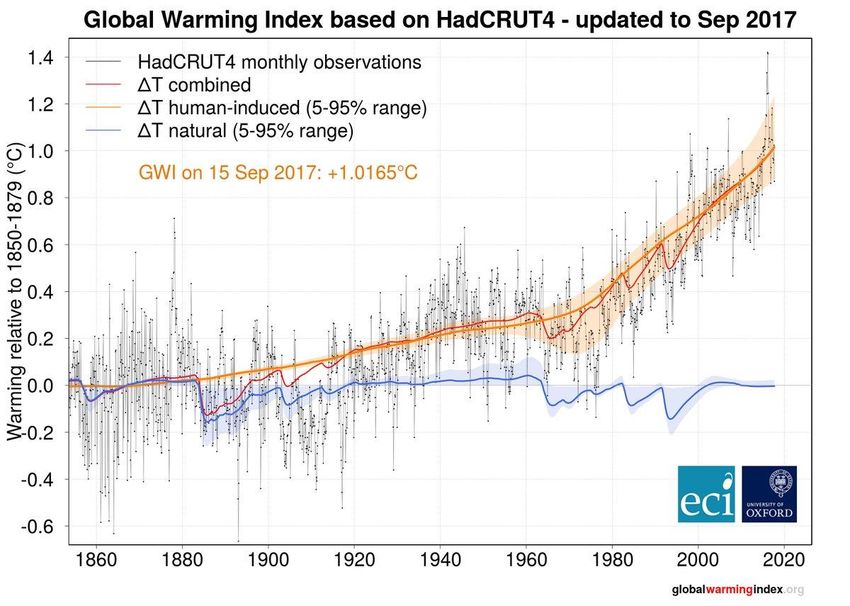
Emissions from fossil fuel use and industry
Global emissions from fossil fuel and industry: 36.2 ± 2 GtCO2 in 2016, 62% over 1990
             Projection for 2017: 36.8 ± 2 GtCO2, 2.0% higher than 2016

                                                                                     Uncertainty is ±5% for
                                                                                     one standard deviation
                                                                                      (IPCC “likely” range)

     Estimates for 2015 and 2016 are preliminary. Growth rate is adjusted for the leap year in 2016.
                    Source: CDIAC; Le Quéré et al 2017; Global Carbon Budget 2017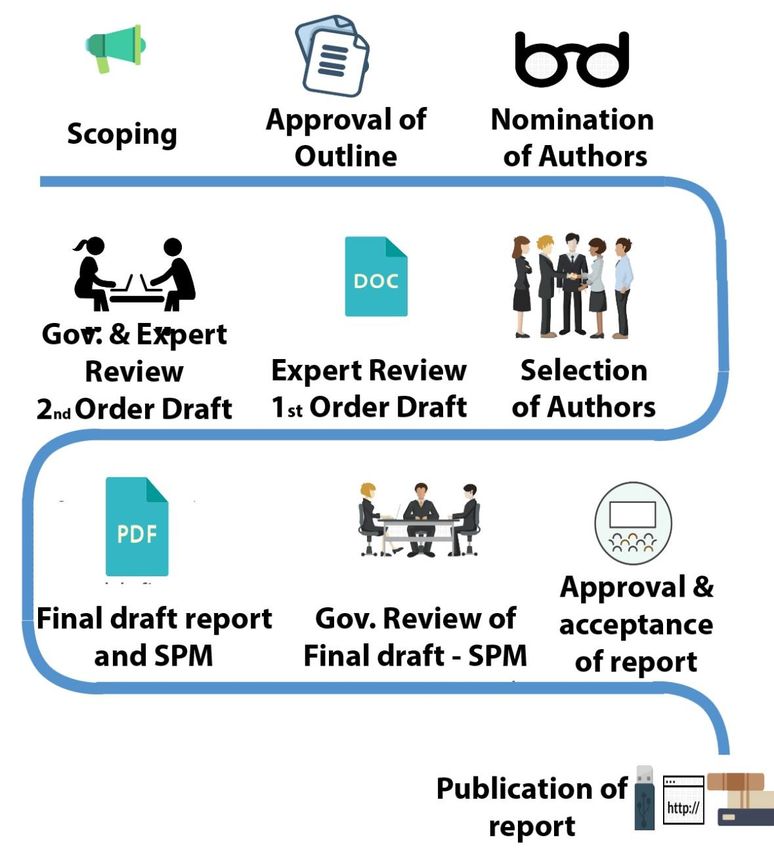
Warming due to human influence

Haustein et al, Scientific Report, 2017
More warming = more risks
                                                                         Global warming
                                                                         (°C) above 1850-
                                                                         1900

                                                                                 2017

                 Unique and   Extreme Distribution  Global Large scale
                 threatened    events of impacts aggregated singular
                  systems                          impacts   events

O’Neil et al, NCC, 2017
Paris Agreement mechanism

                             Long term target

                             Emission decrease
                             towards carbon
                             neutrality

                             Talanoa Dialogue 2018

                             Global stocktake 2023
                             adaptation, mitigation, finance

Rogelj et al, Nature, 2016
A major scientific endeavour

                         Fluid physics         Chronology, proxies
                         Thermodynamics        Super computors
                         Radiative transfers   Satellites

Antiquity Middle   17th C      19th C          20th C
          Age      Weather     Networks        Past climate
                   instruments Ice ages        Climate modelling
                               Greenhouse
                               effect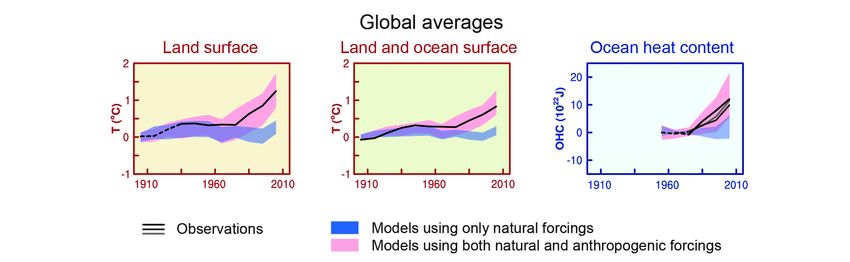
From knowledge production …

20000
           Number of peer-review papers with
           the keyword « climate change »
15000

10000

5000

   0
    1970   1975   1980   1985   1990   1995   2000   2005   2010   2015
…to the assessment of the state of knowledge
The IPCC assesses the scientific, technical and socio-economic
information relevant to understanding the scientific basis of risk of
human-induced climate change, its potential impacts and options for
adaptation and mitigation.
The IPCC is organized in Working Groups and one Task Force :
- WGI : the physical science basis
- WGII : impacts, adaptation and vulnerability
- WGIII : mitigation of climate change
- Task Force on national greenhouse gas inventories
IPCC reports must be policy-relevant but not policy-prescriptive
COMPREHENSIVE, OBJECTIVE, OPEN AND TRANSPARENT BASIS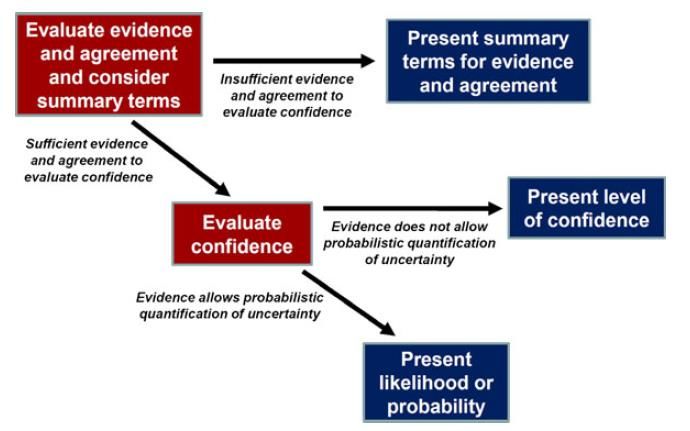
Science/Policy Interface
 IPCC – jointly established by WMO and UNEP, action endorsed by the UN General Assembly

Intergovernmental Panel: 195 member States                    Hundreds of scientists and experts from around
       appointing National Focal Points                       the world are involved in the preparation of IPCC
                                                                                   reports

                                                                                      Authors
                              Working Group (WG) I        WGIII
Plenary                         The Physical          Mitigation of
                               Science Basis         Climate Change
            Bureaux                                                            Expert            Review
                                      WGII            Task Force on           Reviewers          Editors
                                    Impacts,             National
                                  Adaptation &         Greenhouse
                                  Vulnerability      Gas Inventories
From published literature to Summaries for Policy-Makers

• Assessments are based on published literature, preferably peer-
  reviewed; updates of figures/tables using published methodology are
  OK, but new research is not.

• Assessment statements must be traceable and the lines of evidence
  made clear.

• Executive Summaries distill key results/messages from each chapter,
  and Summary for Policy Makers (SPM) distills even further.
   – SPM must be approved line-by-line by governments.
   – Underlying chapter text provides foundation for SPM.
How does an assessment differ from a review?

• It is intended to objectively summarize the state of (scientific) knowledge in
  a balanced way, including an assessment of confidence/uncertainty.

• It is to be policy relevant (and not policy prescriptive); therefore it need not
  comprehensively cover all of the literature in the field.
          Indicative bullet points provide guidance

• It is a consensus document produced by the author team, not a collection of
  individual contributions. Assessment statements should be agreed as a
  group, based on expert judgment.

• Calibrated language is an essential element.
Using a calibrated language to report confidence in findings
Concrete example :
Chapter section and summary statement
                    {this section is 14 pages long}
Concrete example
… Chapter Executive Summary …Concrete example : … Summary for Policy Makers …
FAR     SAR       TAR         AR4              AR5           AR6

    IPCC – jointly   UNFCCC   Kyoto Adaptation   2 °C limit Paris Agreement          UNFCCC
    established by            Protocol                                               Global
    WMO and UNEP                                                                     Stocktake

                                                 Nobel Peace Prize

         1988                 1995                 2007                     2018         2023

1970s-1980s          1990              2001                     2013-2014
2001
“new and stronger
evidence that most of the
1990 warming observed over the
broad overview of climate last 50 years is attributable
change science, discussion to human activities”
of uncertainties and
evidence of warming 2007
"Warming of the
1995 climate system is
“The balance of evidence unequivocal…"
suggests a discernible
human influence on global
2013
climate”
“Human influence
on the climate
system is clear.”
Improvements:Methods of attribution : global scale
IPCC AR5
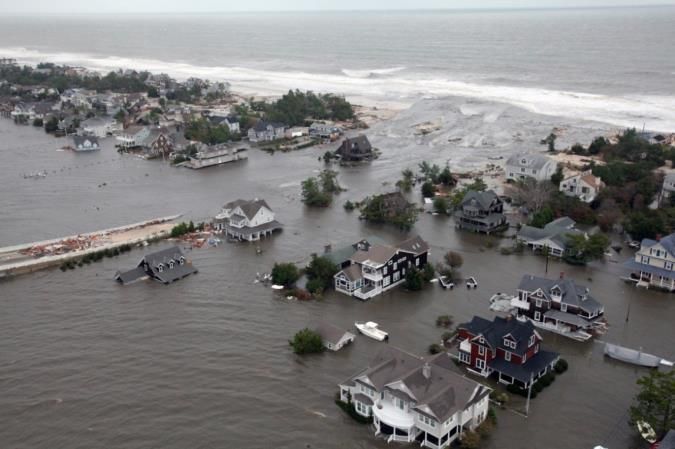
New developments for single extreme events
Example : role of high sea
surface temperature on wind
speeds of Hurricane Sandy
Magnusson et al 2013 WMREmergence of sea level science
-
1950s 1960s 1970s 1980s 1990s 2000s 2010s
Extreme sea level
Astronomical theory Vulnerability of West
and ice ages Antarctic ice sheet Interior rivers
Observed sea Coastal habitats
level rise
Irreversibility
Glacier Fast glacier flow Regional
mass aspects
Sea level projections
balance
Ice sheet - oceanSea level in the FAR (1990) and AR5 (2013) Over the last century, global sea level has increased by 10-20 cm Over the period 1901 to 2010, global mean sea level rose by 0.19 [0.17 to 0.21] m. 1.7 [1.5 to 1.9] mm yr–1 between 1901 and 2010 2.0 [1.7 to 2.3] mm yr–1 between 1971 and 2010, 3.2 [2.8 to 3.6] mm yr–1 between 1993 and 2010. Over the period 1993 to 2010, global mean sea level rise is, with high confidence, consistent with the sum of the observed contributions from ocean thermal expansion due to warming, from changes in glaciers, Greenland ice sheet, Antarctic ice sheet and land water storage. It is very likely that there is a substantial anthropogenic contribution to the global mean sea level rise since the 1970s.
Sea level in the FAR (1990) and AR5 (2013)
Under the business as usual scenario, the predicted rise is about 65cm by the end
of the next century. There will be significant regional variations.

For RCP8.5, the rise by the year 2100 will likely be
in the range of 0.52 to 0.98 (relative to 1986-2005)

There is currently insufficient evidence
to evaluate the probability of specific levels
above the assessed likely range.

Sea level rise will not be uniform. By the end of the 21st century, it is very likely that
sea level will rise in more than about 95% of the ocean area. About 70% of the
coastlines worldwide are projected to experience sea level change within 20% of the
global mean sea level change.
Sea level in the FAR (1990) and AR5 (2013)
Although, over the next 100 years, the effect of the Antarctic and Greenland ice
sheets is expected to be small they make a major contribution to the
uncertainty in predictions

Changes in outflow from both ice sheets combined will likely make a
contribution in the range of 0.03 to 0.20 m by 2081−2100

Only the collapse of marine-based sectors of the Antarctic ice sheet, if initiated,
could cause global mean sea level to rise substantially above the likely range
during the 21st century. However, there is medium confidence that this
additional contribution would not exceed several tenths of a meter of sea level
rise during the 21st century.
Sea level in the FAR (1990) and AR5 (2013)

Even if greenhouse forcing increased no further, there would still be a
commitment to a continuing sea level rise for many decades and even centuries
due to delays in climate ocean and ice mass responses

It is virtually certain that global mean sea level rise will continue beyond 2100,
with sea level rise due to thermal expansion to continue for many centuries.
RCP 2.6 :
Sea level in the FAR (1990) and AR5 (2013)

The most severe effects of sea level rise are likely to result from extreme events
(for example, storm surges) the incidence of which may be affected by climatic
change

It is very likely that there will be a significant increase in the occurrence of future
sea level extremes by 2050 and 2100. This increase will primarily be the result of an
increase in mean sea level (high confidence), with the frequency of a particular sea level
extreme increasing by an order of magnitude or more in some regions by the end of the
21st century. There is low confidence in region-specific projections of storminess
and associated storm surges.
The Fifth Assessment Report (AR5)

830 Coordinating Lead Authors, Lead Authors and Review Editors
                       from 85 countries

Developed Countries                   Male writing team members
                                                                    New to the IPCC process

Developing Countries & Economies in   Female writing team members
Transition                                                          Previously involved

                                        21%
   36%                                                              37%

                  64%                                                              63%
                                                   79%
Specificities of the IPCC AR6 2030 international agenda Paris Agreement Knowledge: risk management & solutions
Aspirations for the AR6

•   More experts from developing countries
•   More integration across Working Groups
•   High level scenarios and concrete steps
•   Connections with sustainable development goals
•   Focus on solutions linked to domestic challenges
        Poverty alleviation, job creation, health, innovation, energy access…
• Strengthen relevance for a variety of stakeholders
        Three Conventions (climate, biodiversity, desertification)
        Subnational policy makers (cities…)
        Business, industry, finance…

    Improve communication (graphics, SPM, FAQ…)
IPCC report preparation steps
Cut-off dates for
cited referencesSchedule
May 2019
Emission
inventories
Oct. 2018 Oct. 2019 April 2021 October 2021 April 2022
Global Oceans Climate Change The Synthesis
warming of and cryosphere The Physical Impacts, Report
1.5 oC Science Basis Adaptation and
Vulnerability
Facilitative Land Mitigation Global stocktake
dialogue of 2023
UNFCCC Climate Change UNFCCC
Aug. 2019 July 2021
March2018 Cities and Climate Change Science Conference
May 2018 Expert Meeting on Assessing Climate Information for Regions
May 2018 Expert Meeting on Short Lived Climate ForcersGlobal warming of 1.5°C (SR1.5)
Chapter 1: Framing and context 15
Chapter 2: Mitigation pathways compatible with 1.5°C
40
in the context of sustainable development
Chapter 3: Impacts of 1.5°C global warming on natural 60
and human systems
Chapter 4: Strengthening and implementing the global 50
response to the threat of climate change
Chapter 5: Sustainable development, poverty 20
eradication and reducing inequalitiesIPCC Special Report on Climate
Change and Land (SRCCL)
Chapter 1: Framing and context 15
Chapter 2: Land-climate interactions 50
Chapter 3: Desertification 35-40
Chapter 4: Land degradation 40
Chapter 5: Food security 50
Chapter 6 : Interlinkages between desertification, land
degradation, food security, and greenhouse gas fluxes 40
: synergies, trade-offs and integrated response options
Chapter 7 : Risk management and decision making
In relation to sustainable development 40IPCC Special Report on the Ocean and
Cryosphere in a Changing Climate (SROCC)
Chapter 1: Framing and context 15
Chapter 2: High mountain areas 30
Chapter 3: Polar regions 50
Chapter 4: Sea level rise and implications for low lying 50
islands, coasts and communities
Chapter 5: Changing ocean, marine ecosystems, and 65
dependent communities
Chapter 6 : Extremes, abrupt changes and managing 20
risks
Box : Low lying islands and coastsWGI Outline
Summary for Policy Makers
Technical Summary
Chapter 1: Framing, context, methods
Large-scale climate change
Chapter 2: Changing state of the climate system
Chapter 3: Human influence on the climate system
Chapter 4: Future global climate: scenario-based projections and near-term information
Chapter 5: Global carbon and other biogeochemical cycles and feedbacks
Chapter 6: Short-lived climate forcers
Chapter 7: The Earth’s energy budget, climate feedbacks, and climate sensitivity
Chapter 8: Water cycle changes
Chapter 9: Ocean, cryosphere, and sea level change
Chapter 10: Linking global to regional climate change
Chapter 11: Weather and climate extreme events in a changing climate
Chapter 12: Climate change information for regional impact and for risk assessment
Annexes incl. options for a Regional Atlas and Technical Annexes
Glossary
IndexWGI Outline Summary for Policy Makers Technical Summary Chapter 1: Framing, context, methods Chapter 2: Changing state of the climate system Climate processes Chapter 3: Human influence on the climate system Chapter 4: Future global climate: scenario-based projections and near-term information Chapter 5: Global carbon and other biogeochemical cycles and feedbacks Chapter 6: Short-lived climate forcers Chapter 7: The Earth’s energy budget, climate feedbacks, and climate sensitivity Chapter 8: Water cycle changes Chapter 9: Ocean, cryosphere, and sea level change Chapter 10: Linking global to regional climate change Chapter 11: Weather and climate extreme events in a changing climate Chapter 12: Climate change information for regional impact and for risk assessment Annexes incl. options for a Regional Atlas and Technical Annexes Glossary Index
WGI Outline
Summary for Policy Makers
Technical Summary

Chapter 1: Framing, context, methods                      Regional climate
Chapter 2: Changing state of the climate system
Chapter 3: Human influence on the climate system              information
Chapter 4: Future global climate: scenario-based projections and near-term information
Chapter 5: Global carbon and other biogeochemical cycles and feedbacks
Chapter 6: Short-lived climate forcers
Chapter 7: The Earth’s energy budget, climate feedbacks, and climate sensitivity
Chapter 8: Water cycle changes
Chapter 9: Ocean, cryosphere, and sea level change
Chapter 10: Linking global to regional climate change
Chapter 11: Weather and climate extreme events in a changing climate
Chapter 12: Climate change information for regional impact and for risk assessment

Annexes incl. options for a Regional Atlas and Technical Annexes
Glossary
Index
WGI Outline
Summary for Policy Makers
                                                               Link to WGII
Technical Summary
                                                                Link to WGIII
Chapter 1: Framing, context, methods
Chapter 2: Changing state of the climate system
Chapter 3: Human influence on the climate system
Chapter 4: Future global climate: scenario-based projections and near-term information
Chapter 5: Global carbon and other biogeochemical cycles and feedbacks
Chapter 6: Short-lived climate forcers
Chapter 7: The Earth’s energy budget, climate feedbacks, and climate sensitivity
Chapter 8: Water cycle changes
Chapter 9: Ocean, cryosphere, and sea level change
Chapter 10: Linking global to regional climate change
Chapter 11: Weather and climate extreme events in a changing climate
Chapter 12: Climate change information for regional impact and risk for assessment

Annexes incl. options for a Regional Atlas and Technical Annexes
Glossary
Index
WGII Chapters
Chapter 1: Point of departure and key concepts
SECTION 1: Risks, adaptation and sustainability for systems impacted by climate change
Chapter 2: Terrestrial and freshwater ecosystems and their services
Chapter 3: Ocean and coastal ecosystems and their services
Chapter 4: Water
Chapter 5: Food, fibre, and other ecosystem products
Chapter 6: Cities, settlements and key infrastructure
Chapter 7: Health, wellbeing and the changing structure of communities
Chapter 8: Poverty, livelihoods and sustainable development
CROSS-CHAPTER PAPERS
SECTION 2: Regions
• Biodiversity hotspots (land, coasts and oceans)
Chapter 9: Africa
Chapter 10: Asia
• Cities and settlements by the sea
Chapter 11: Australasia • Deserts, semi-arid areas, and desertification
Chapter 12: Central and South America • Mediterranean region
Chapter 13: Europe • Mountains
Chapter 14: North America • Polar regions
Chapter 15: Small Islands
• Tropical forests
SECTION 3: Sustainable development pathways: integrating adaptation and mitigation
Chapter 16: Key risks across sectors and regions
Chapter 17: Decision-making options for managing risk
Chapter 18: Climate resilient development pathways* *connection to WG III
ANNEX I: Regional AtlasOutline of WG III AR6 on mitigation
Framing (1 chapter) Set up sustainable development as
key framing concept
1. Introduction and framing
High-level assessment of emission trends, drivers
Balancing sources and sinks/warming
and pathways (3 chapters) levels
2. Emissions trends and drivers
3. Mitigation pathways compatible with long-term goals NDCs, emissions peaking, mid-
4. Mitigation and development pathways in the near- to mid-term century long-term low greenhouse
gas emission development strategies
Sectoral chapters (8 chapters)
Orients sectors to human needs
5: Demand, services and social aspects of mitigation
6: Energy systems 9. Buildings
The sectoral core: maps on to
7. Agriculture, Forestry, and Other Land Uses 10. Transport inventories
8. Urban systems and other settlements 11. Industry
12. Cross sectoral perspectives Responses not captured by sectoral
framing
Institutional drivers (2 chapters)
13. National and sub-national policies and institutions Institutions, policies and cooperation
14. International cooperation
Financial and technological drivers (2 chapters) Financial flows + technological
innovation
15. Investment and finance
16. Innovation, technology development and transfer
Synthesis (1 chapter) Synthesis sustainable development in
17. Accelerating the transition in the context of sustainable different geographical scales
developmentSchedule
May 2019
Emission
inventories
Oct. 2018 Oct. 2019 April 2021 October 2021 April 2022
Global Oceans Climate Change The Synthesis
warming of and cryosphere The Physical Impacts, Report
1.5 oC Science Basis Adaptation and
Vulnerability
Facilitative Land Mitigation Global stocktake
dialogue of 2023
UNFCCC Climate Change UNFCCC
Aug. 2019 July 2021
March 2018 Cities and Climate Change Science Conference
May 2018 Expert Meeting on Assessing Climate Information for Regions
May 2018 Expert Meeting on Short Lived Climate ForcersCut-off dates for reports
Report Cut-off dates for Cut-off dates for
submitted papers to papers accepted for
be cited in Second publication to be cited
Order Drafts in report
SR1.5 01 November 2017 15 May 2018
SROCC October 2018 May 2019
SRCCL September 2018 April 2019
AR6, WG1 31 January 2020 15 October 2020Author teams Coordinating Lead Authors (CLAs) Lead Authors (LAs) Review Editors (REs) Contributing Authors (CA) Chapter Scientists (CS)
Next review processes
              2017                2018            2019

SR15                        SOD      – Jan
        FOD – July          Approval – Oct

SRCCL                       FOD      – May   Approval – Aug
                            SOD      – Oct

SROCC                       FOD      – Apr   Approval – Sept
                            SOD      – Nov

                     Outreach Activities
Closing remarks
• Multiple roles of IPCC reports :
- assessment of the state of knowledge for governments
- synthesis of available research, regional results into global context
- identification of knowledge gaps and uncertainties
- maturation of science and stimulation of research
- teaching
• New knowledge is vital for IPCC assessments
• The review process is crucial for the quality of the assessment
• AR6 : a new IPCC approach with 3 special reports
• Which approach for the AR7 and beyond?THANK YOU FOR YOUR ATTENTION!
For more information:
Website: http://ipcc.ch/
IPCC Secretariat: ipcc-sec@wmo.int
IPCC Press Office: ipcc-media@wmo.int
Find us on:
@IPCCNews @IPCC_CH
IPCC_Climate_Change https://www.linkedin.com/company/ipcc
http://www.slideshare.net/ipcc- https://www.flickr.com/photos/ipccphoto/sets/
media/presentations
https://www.youtube.com/c/ipccgeneva https://vimeo.com/ipccChapter 1: Framing, context, methods Executive Summary • Synthesis of key findings from AR5 and earlier assessment reports, and connections to AR6 Special Reports • Framing of the physical science information relevant for mitigation, adaptation, and risk assessment in the context of the Global Stocktake • Assessment approach • Observational and reanalysis developments since the AR5 • Model and experimental design developments since the AR5 • Emissions and forcing scenarios • Treatment and evaluation of uncertainty throughout the report Frequently Asked Questions
Chapter 2:
Changing state of the climate system

Executive Summary

• Multi-millennial context, pre-industrial to present day
• Natural and anthropogenic forcings
• Radiative forcing
• Large-scale indicators of observed change in the atmosphere, ocean,
  cryosphere, land, and biosphere
• Modes of variability

Frequently Asked Questions
Chapter 3:
Human influence on the climate system

Executive Summary

• Overview of model performance and development since the AR5
• Simulated large-scale indicators of change in the atmosphere, ocean,
  cryosphere, land, and biosphere
• Simulated modes of variability
• Natural variability versus anthropogenically-forced change
• Attribution of large-scale observed changes

Frequently Asked Questions
Chapter 4:
Future global climate: scenario-based projections
and near-term information

Executive Summary

• Projections of global mean surface temperature and other key global
  indicators
• Evaluation of multi-model ensemble methods
• Large scale patterns of climate change
• Committed climate response, climate targets, overshoot, irreversibility,
  abrupt change
• Climate response to greenhouse gas removal scenarios
• Climate response to solar radiation management scenarios
• Interplay between internal variability and response to forcings, including
  short-lived forcers
• Variability and unexpected changes of global mean surface temperature
• Near-term predictability, sources and capabilities
• Synthesis of climate information in the near-term

Frequently Asked Questions
Chapter 5:
Global carbon and other biogeochemical cycles and
feedbacks

Executive Summary

• Feedbacks between climate and biogeochemical cycles, including
  paleoclimate information
• Ocean acidification
• Historical trends and variability of CO2, CH4 and N2O; sources and sinks
• Projections of global biogeochemical cycles from near-term to long-term
• Abrupt change, irreversibility
• Model evaluation, emergent constraints
• Transient climate response to cumulative emissions and remaining carbon
  budgets for climate targets
• Biogeochemical implications of land and coastal management mitigation
  options including greenhouse gas removal
• Biogeochemical implications of solar radiation management scenarios

Frequently Asked Questions
Chapter 6:
Short-lived climate forcers

Executive Summary

• Key global emissions: global overview, natural, anthropogenic, historical
  and scenarios
• Observed and reconstructed concentrations and radiative forcing
• Direct and indirect-aerosol forcing
• Implications for greenhouse gas lifetimes
• Implications of different socio-economic and emission pathways, including
  urbanisation, for radiative forcing
• Connections to air quality and atmospheric composition

Frequently Asked Questions
Chapter 7:
The Earth’s energy budget, climate feedbacks,
and climate sensitivity

Executive Summary

• Energy budget and its changes through time
• Radiative forcing: definitions, estimates, and its representation in models
• Climate feedbacks
• Sensitivity of the climate system: methods and uncertainty
• Empirical constraints on the sensitivity of the climate system, including
  paleoclimate
• Global warming potential, global temperature change potential, and other
  metrics

Frequently Asked Questions
Chapter 8:
Water cycle changes

Executive Summary

• Observations, models, methods and their reliability
• Past, present and projected changes, trends, variability and feedbacks in
  the physical components of the water cycle
• Circulation, processes and phenomena (e.g. monsoon systems) affecting
  moisture and precipitation patterns, including extremes
• Cloud-aerosol processes affecting the water cycle
• Changes in seasonality of natural storage and water availability
• Abrupt change
• Confidence in projections

Frequently Asked Questions
Chapter 9:
Ocean, cryosphere, and sea level change

Executive Summary

• Past and future changes in ocean circulation and properties (trends,
  variability and extremes)
• Past and future changes in marine and terrestrial cryosphere
• Evaluation of models and projection methods
• Detection and attribution
• Past global and regional sea level changes
• Projections of global and regional sea level change
• Abrupt change and long-term commitment
• Extreme water levels (tides, surge and ocean waves)

Frequently Asked Questions
Chapter 10:
Linking global to regional climate change

Executive Summary

• Regional phenomena, drivers, feedbacks and teleconnections
• Regional scale observations and reanalyses
• Interplay between internal variability and forced change at the regional
  scale, including attribution
• Evaluation of model improvements, methods, including downscaling and
  bias adjustment and regional specificities
• Confidence in regional climate information, including quantification of
  uncertainties
• Scale specific methodologies e.g. urban, mountains, coastal, catchments,
  small islands
• Approaches to synthesizing information from multiple lines of evidence

Frequently Asked Questions
Chapter 11:
Weather and climate extreme events in a changing climate

Executive Summary

• Extreme types encompassing weather and climate timescales and
  compound events (including droughts, tropical cyclones)
• Observations for extremes and their limitations, including paleo
• Mechanisms, drivers and feedbacks leading to extremes
• Ability of models to simulate extremes and related processes
• Attribution of changes in extremes and extreme events
• Assessment of projected changes of extremes and potential surprises
• Case studies across timescales

Frequently Asked Questions
Chapter 12:
Climate change information for regional impact and for risk
assessment

Executive Summary

• Framing: physical climate system and hazards
• Region-specific integration of information, including confidence
• Information (quantitative and qualitative) on changing hazards: present
  day, near term and long term
• Region-specific methodologies
• Relationship between changing hazards, global mean temperature
  change, scenarios and emissions

Frequently Asked Questions
“Ultimately what we do about climate issues depends upon the state of our
scientific knowledge. Only to the extent that we have understanding can we
help our governments.

Governments wish to know where to focus effort and resources. The
international resources that can be made available to deal with climatic
problems are limited. This is so not merely because finances are limited, but
because the number of scientists capable of working effectively on these
problems is limited.

Because of this, efforts must be focused on those climatic problems where
there is an urgent need for answers, and where the state of our scientific
knowledge leads us to believe that it may be possible for science to make a
useful contribution.”

Robert White, Keynote address, World Climate Conference, 1979
You can also read


