CMS Alliance to Modernize Healthcare - Federally Funded Research and Development Center
←
→
Page content transcription
If your browser does not render page correctly, please read the page content below
Centers for Medicare & Medicaid Services

      CMS Alliance to Modernize Healthcare
Federally Funded Research and Development Center

                                    Ordering Guide

                                              Version 3.0

                                        February 26, 2021
Centers for Medicare & Medicaid Services

                                           Record of Changes
   Version                  Date                 Author / Owner            Description of Change

      0.9        October 24, 2018          D. Lester / CMS        Initial draft for second period of performance.
                                           J. Kuebel III / CMS
      1.0        February 5, 2019          D. Lester / CMS        Approved initial version for second period of
                                           J. Kuebel III / CMS    performance. Changes based on new
                                                                  FFRDC contract (effective 8/30/18) and
                                                                  revision to FFRDC short name.
      2.0        June 12, 2019             D. Lester / CMS        Updated Figures 1 and 2 (ordering process
                                           J. Kuebel III / CMS    diagrams). Modified section 2.1.3.1 to
                                                                  specify mandatory pre-review of work
                                                                  request packages. Revised section 2.4 to
                                                                  include CMS mailbox for Health FFRDC
                                                                  communications.
      3.0        February 26, 2021         D. Lester / CMS        Revisions to make the Ordering Guide more
                                           J. Kuebel III / CMS    user friendly. Added Frequently Asked
                                                                  Questions; more information about the
                                                                  Three-Part Test; details about how to
                                                                  prepare for ordering; and information about
                                                                  ordering timelines. Revised and streamlined
                                                                  the step-by-step descriptions of the ordering
                                                                  process. Expanded and clarified information
                                                                  about task order modifications and
                                                                  Modification Memos. Added three new
                                                                  appendices: Appendix A: Background
                                                                  Information About FFRDCs; Appendix C:
                                                                  Health FFRDC Project Library; and Appendix
                                                                  D: Resources.

Ordering Guide                                                                                                        i
Version 3.0                                                                                          February 26, 2021
Centers for Medicare & Medicaid Services
Table of Contents
1. Introduction .................................................................................................................. 1
1.1 The Health FFRDC ..........................................................................................................1
1.2 The Ordering Guide .........................................................................................................1
2. Frequently Asked Questions – and How to Find Additional Information in the
Ordering Guide ............................................................................................................ 1
3. Determining Appropriateness of Work for the Health FFRDC.............................. 5
3.1 The Three-Part Test ..........................................................................................................5
3.1.1 Part 1: Purpose and Scope ....................................................................................5
3.1.2 Part 2: Special Relationship ..................................................................................6
3.1.3 Part 3: Strategic Alignment...................................................................................7
3.2 Additional Considerations ................................................................................................7
4. Preparing to Request Work: Responsibilities of the Requiring Office................... 9
4.1 Assemble Resources (Ordering Guide and Companion Documents) ..............................9
4.2 Prepare Your (Requiring Office) Team............................................................................9
4.3 Understand the Contracting Environment ......................................................................11
4.3.1 IDIQ Task Order Awards ...................................................................................11
4.3.2 Market Research .................................................................................................11
4.3.3 Ordering Period and Performance Period ...........................................................11
4.3.4 Conflict of Interest ..............................................................................................11
4.3.5 Severability vs. Non-Severability .......................................................................12
4.3.6 Consent for Subcontracting ................................................................................12
4.4 Additional Considerations for Federal Non-Sponsors ...................................................13
5. The Ordering Process: An Overview and Timeline ............................................... 13
5.1 Process and Timeline for CMS Requiring Offices.........................................................13
5.2 Process and Timeline for Broader HHS and Non-Sponsor Agency Requests ...............15
6. The Ordering Process: Step-By-Step ....................................................................... 17
7. Modifying Task Orders ............................................................................................. 21
7.1 No Changes to Original Scope (No Modification Request Memo) ...............................21
7.2 Changes to Original Scope (Modification Request Memo Is Required)........................21
8. After Work is Awarded: Responsibilities of the Requiring Office ....................... 22
8.1 Health FFRDC Quality Assessments .............................................................................22
8.2 Past Performance ............................................................................................................22
9. Health FFRDC Points of Contact ............................................................................. 23
Appendix A. Background Information About FFRDCs .............................................. 24
Ordering Guide ii
Version 3.0 February 26, 2021Centers for Medicare & Medicaid Services
Appendix B. Health FFRDC Task Area Descriptions ................................................. 25
Appendix C. Health FFRDC Project Library .............................................................. 28
Appendix D. Resources ................................................................................................... 29
Table of Figures
Figure 1. The Three-Part Test ......................................................................................................... 5
Figure 2. Seven Task Areas for Health FFRDC Work ................................................................... 6
Figure 3. CURF Detail Needed to Justify FFRDC Special Relationship ....................................... 7
List of Tables
Table 1. Frequently Asked Questions ............................................................................................. 2
Table 2. Roles in the Health FFRDC Ordering Process ............................................................... 10
Table 3. Ordering Process and Average Timeline for CMS Requiring Offices ........................... 14
Table 4. Ordering Process and Average Timeline for Broader HHS and Federal Non-Sponsor
Requiring Offices .......................................................................................................................... 16
Table 5. The Ordering Process...................................................................................................... 17
Table 6. Resources ........................................................................................................................ 29
Ordering Guide iii
Version 3.0 February 26, 2021Centers for Medicare & Medicaid Services
1. Introduction
1.1 The Health FFRDC
The Centers for Medicare & Medicaid Services (CMS) sponsors and administers the CMS
Alliance to Modernize Healthcare Federally Funded Research and Development Center (Health
FFRDC). The Health FFRDC performs research and analysis on various topics in the health
domain and provides an enterprise approach to supporting achievement of the core missions of
the Department of Health and Human Services (HHS), its various operating and staff divisions,
and federal agencies outside of HHS (non-sponsoring agencies) that have healthcare missions.
The Health FFRDC provides access to unbiased advice and assistance from a trusted, objective,
and conflict-free source. Under special provisions in law and regulation, the FFRDC is a full
partner with government leaders, with access as needed to pre-decisional, acquisition-sensitive,
and other confidential and proprietary information.
Through a competitive procurement, CMS selected The MITRE Corporation (MITRE) as the
Health FFRDC Operator. MITRE is a not-for-profit entity chartered to work in the public
interest. As the FFRDC Operator and partner, MITRE serves as an objective, independent
advisor to sponsors and approved non-sponsors. In this document, MITRE is referred to as the
Health FFRDC Operator.
1.2 The Ordering Guide
The Ordering Guide helps sponsors and non-sponsors understand what the Health FFRDC is and
how to use it. The guide:
• Describes the Health FFRDC “ordering process”—the steps involved in seeking approval
for and awarding task orders under the Health FFRDC contract. This step-by-step process
is described in Section 6.
• Identifies the responsibilities of Health FFRDC sponsors and non-sponsors
• Provides contact information for questions and for handling requests to use the Health
FFRDC
2. Frequently Asked Questions – and How to Find Additional
Information in the Ordering Guide
Table 1 provides short answers to questions that are frequently asked about the Health FFRDC
and identifies sections of the Ordering Guide that provide additional information.
Ordering Guide 1
Version 3.0 February 26, 2021Centers for Medicare & Medicaid Services
Table 1. Frequently Asked Questions
Number Question Answer Ordering Guide
Section (Additional
Information)
1 What is an FFRDC? An FFRDC is a unique organization sponsored by a Appendix A:
government agency and subject to a unique set of Background
operating conditions specified by the Federal Acquisition Information about
Regulation (FAR 35.017). It is not a commercial FFRDCs
contractor. An FFRDC meets some special long-term
research or development need that can’t be met as
effectively by existing in-house or commercial contractor
resources.
2 What is the Health FFRDC? The Health FFRDC performs research and analysis on • 1.1. The Health
various topics in the health domain and provides an FFRDC
enterprise approach to supporting achievement of the • 3.1. The Three-Part
core missions of HHS, its various operating and staff Test
divisions, and federal agencies outside of HHS (non-
sponsoring agencies) that have healthcare missions.
CMS sponsors and administers the Health FFRDC.
3 Who may use the Health FFRDC? The Health FFRDC is available to all HHS Staff and • 4.2. Prepare Your
Operating Divisions—which are known as sponsors— (Requiring Office)
and to CMS-approved non-sponsors. These entities are Team
also known as “requiring offices” in this document. • 4.4. Additional
Considerations for
Federal Non-
Sponsors
4 When or why should I use the Health The three-part test helps determine whether work is • 3.1. The Three-Part
FFRDC? appropriate for the Health FFRDC. The planned work Test
must meet all conditions of the three-part test. It must: • 3.2. Additional
(1) fit within the purpose and scope of the Health Considerations
FFRDC; (2) require the special relationship with the
FFRDC; and (3) align with your agency’s strategic plan
or legislative mandates.
Ordering Guide 2
Version 3.0 February 26, 2021Centers for Medicare & Medicaid Services
Number Question Answer Ordering Guide
Section (Additional
Information)
5 When or why should I use a contracting You should use another contracting vehicle whenever • 3.2. Additional
vehicle other than the Health FFRDC? your planned work does not meet all conditions of the Considerations
three-part test. Engaging the FFRDC is not appropriate
to avoid competition, mature a program or project
management office, or procure certain types of staff
support (e.g., staff augmentation). 1
6 What type of contract governs the Health The Health FFRDC is a single-award, indefinite delivery, N/A
FFRDC? indefinite quantity (IDIQ) contract. Task orders are
usually non-severable.
7 What types of work can the Health FFRDC The Health FFRDC can perform work in 7 categories: 3.1. The Three-Part
perform? (1) Strategic and Tactical Planning and Analysis; (2) Test (including 3.1.1.
Conceptual Planning and Proof of Concept; (3) Part 1: Purpose and
Acquisition Assistance; (4) Organizational Planning and Scope)
Relationship Management; (5) Continuous Process
Improvement; (6) Strategic Technology Evaluation; and
(7) Feasibility Analysis and Design. In addition,
proposed work must meet all conditions of the three-part
test.
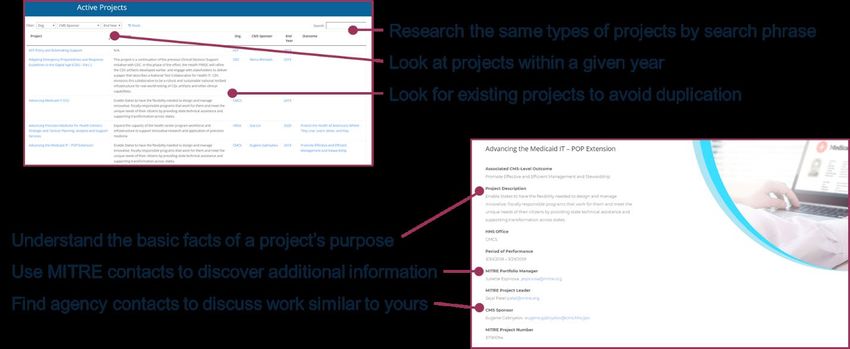
8 I have an idea for work under the Health The Health FFRDC Project Library is an online tool that Appendix C: Health
FFRDC. How can I learn more about similar includes information for all task orders, dating to the FFRDC Project Library
work that the Health FFRDC has performed? inception of the Health FFRDC in 2012. You can use this
tool to look for past and/or current Health FFRDC work
that might have relevance for your planned task order.
You can access the Project Library at
https://publish.mitre.org/health. You will need to request
an account the first time you use the Library.
9 How long does it take to place work with the The average elapsed time from initial identification of 5. The Ordering
Health FFRDC? need to final award ranges from 3 – 7 months, Process: An Overview
depending on scope and complexity of the planned and Timeline (Tables 3
work. and 4)
1 Developing or establishing (as distinguished from maturing) a program/project management office may be appropriate FFRDC work. Please consult with
CMS’s Program Management Office for additional guidance.
Ordering Guide 3
Version 3.0 February 26, 2021Centers for Medicare & Medicaid Services
Number Question Answer Ordering Guide
Section (Additional
Information)
10 How do I place work with the Health FFRDC? • Work with your Contracting Officer (CO) and contact • 4. Preparing to
the CMS Program Office (PO) to express your Request Work
interest in using the FFRDC and to ask any questions (Responsibilities of
you might have. the Requiring Office)
• Become familiar with the Ordering Guide. • 5. The Ordering
• Allow sufficient time (3 – 7 months) to develop your Process: An
request, obtain approval, and complete the Overview and
contracting process. Timeline
• 6. The Ordering
Process: Step-By-
Step
Ordering Guide 4
Version 3.0 February 26, 2021Centers for Medicare & Medicaid Services
3. Determining Appropriateness of Work for the Health FFRDC
In accordance with the governance and oversight requirements for the Health FFRDC, CMS
must review and approve work before requiring offices may issue task orders. CMS uses the
three-part test and additional criteria when determining whether to approve work under the
Health FFRDC.
3.1 The Three-Part Test
The three-part test helps determine whether work is appropriate for the Health FFRDC; the
planned work must meet all conditions of the three-part test (Figure 1). Requiring offices use the
Contract Use Request Form (CURF) to describe how work meets the three-part test.
Figure 1. The Three-Part Test
3.1.1 Part 1: Purpose and Scope
The Health FFRDC IDIQ contract defines seven potential areas for work (Figure 2). Proposed
work must fit within the purpose and scope of one or more of these task areas:
Ordering Guide 5
Version 3.0 February 26, 2021Centers for Medicare & Medicaid Services
Figure 2. Seven Task Areas for Health FFRDC Work
Appendix B of this Ordering Guide includes additional descriptions of tasking in each area.
3.1.2 Part 2: Special Relationship
A unique and special relationship exists between the FFRDC and its sponsors to ensure that
specific long-term business and technical needs are met effectively. FFRDC support is
appropriate when one or more of the following special relationship qualities are needed:
• Objectivity and independence – ability to produce thorough, independent analyses to
address complex technical and analytical problems
• Freedom from conflicts of interest – independence from commercial, shareholder,
political, or other associations
• Special access to sensitive or proprietary information – absence of institutional
interests that could lead to misuse of information or cause contractor reluctance to provide
such information
• Comprehensive knowledge of agency needs/institutional memory – mission, culture,
expertise, and institutional memory regarding issues of enduring concern for sponsoring or
non-sponsoring agencies
• Quick response capability – ability to offer short-term assistance to meet urgent and
high-priority requirements
• Long-term continuity – uninterrupted, consistent support based on a continuing
relationship
• Comprehensive knowledge of the healthcare policy, business, delivery, quality
improvement, and IT landscape, with an emphasis on relationship management across
entities and the demonstrated ability to bring the agency together to resolve enterprise
challenges
Ordering Guide 6
Version 3.0 February 26, 2021Centers for Medicare & Medicaid Services
The CURF requires a detailed, specific explanation of why the Health FFRDC is needed to
perform the planned work. For each special relationship quality identified on the CURF (from
the list above), the requiring office must describe why the work requires the special relationship
quality.
Figure 3 provides an example. The left side of Figure 3 shows an early draft CURF, which stated
that the FFRDC’s “objectivity and independence [are needed] to accurately develop and
implement a data driven evidence-based approach to prioritize children for manual reviews of
case management records.” This statement does not fully explain why the FFRDC—rather than a
commercial entity—is the best entity for the work. A revised version of the CURF (the right side
of Figure 3) more clearly explains the sensitivity associated with the work and why the work is
not appropriate for commercial entities: “The independence of entities involved in assisting the
agency has been specifically questioned, and the agency has fielded questions on this topic from
multiple Congressional hearings.” CMS approved the revised CURF.
Figure 3. CURF Detail Needed to Justify FFRDC Special Relationship
3.1.3 Part 3: Strategic Alignment
The requiring office must identify and describe the project, intermediate, and end outcomes of
the planned work and explain how those outcomes align with the agency’s strategy, plans, or
legislative mandates.
3.2 Additional Considerations
In addition to the three-part test, the following criteria help determine work that may or may not
be appropriate for the Health FFRDC.
Ordering Guide 7
Version 3.0 February 26, 2021Centers for Medicare & Medicaid Services
Appropriate Health FFRDC work generally:
• Solves a problem
• Involves research and development studies and analysis
• Develops innovative solutions
• Develops new technology/prototypes
• Is progressive versus steady state, delivering an end product such as an analysis, model
development, or prototype
• Is typically non-severable
The following activities may not require the special relationship of the FFRDC and may
therefore be more appropriate for in-house or commercial contractor resources:
• Maturing a program/project management office 2
• Procuring certain types of staff support:
– Program managers/planners who primarily plan, develop, implement, or maintain
project schedules and project management artifacts.
– Staff augmentation – Work that can/should be accomplished by in-house staff.
– Resident experts, such as FFRDC subject matter experts waiting for work to
materialize (work should instead be project based).
– Commercial contractor-type work that does not require the special relationship of the
FFRDC – For example, consultants and commercial contractors are available on the
GSA Professional Service Schedule who can provide analysis, strategy formulation,
advisory and assistance, research, and acquisition management support.
– Production or steady state/repeatable work – Examples include but are not limited to
maintaining an IT system or running a program management office.
– Administrative/clerical support – Examples include scheduling meetings, taking notes,
and conference planning, when those functions are the main purpose of the work.
– Significant subcontract work with commercial contractor(s) – However, this is
scenario driven as there may be situations where significant subcontractor work might
be necessary.
In addition, the FFRDC is not a vehicle of convenience. It should not be used in place of proper
planning for commercial procurements or to avoid competition.
2 Developing or establishing (as distinguished from maturing) a program/project management office may be
appropriate FFRDC work. Please consult with CMS’s Program Office for additional guidance.
Ordering Guide 8
Version 3.0 February 26, 2021Centers for Medicare & Medicaid Services
4. Preparing to Request Work: Responsibilities of the Requiring
Office
Multiple steps are involved in placing work under the Health FFRDC. Requiring offices are
advised to gather information and resources and engage the appropriate stakeholders at the
beginning of the process.
4.1 Assemble Resources (Ordering Guide and Companion Documents)
This Ordering Guide is a definitive resource for preparing to work with the Health FFRDC. The
Appendices provide expanded information. The Attachments are templates used in the ordering
process.
Appendices
• Appendix A – Health FFRDC Task Area Descriptions
• Appendix B – Background Information About FFRDCs
• Appendix C – Health FFRDC Project Library
• Appendix D – Additional Resources
Attachments/Templates (separate documents)
• Attachment 1 – Contract Use Request Form
• Attachment 2 – Sample Task Order Request for Proposal
• Attachment 3 – Modification Request Memo
The Ordering Guide, Appendices, and Attachments can be obtained by contacting the CMS
Program Office (PO) (email: HealthFFRDC@cms.hhs.gov).
4.2 Prepare Your (Requiring Office) Team
The requiring office of the ordering agency is responsible for developing the CURF package
(including task requirements), establishing performance measures, certifying funds, and issuing
the task order.
The requiring office will assign a COR, who will work with the Task Order CO to coordinate
these activities.
Table 2 identifies primary team members who are involved with the Health FFRDC task order
request process. Consulting these individuals early can help ensure a more efficient process.
Ordering Guide 9
Version 3.0 February 26, 2021Centers for Medicare & Medicaid Services
Table 2. Roles in the Health FFRDC Ordering Process
Stakeholder Role
The IDIQ Contracting Officer’s • Initial resource for any questions regarding the Health
Representative (COR) (located in FFRDC
the CMS PO) 3 • Assists in determining if the work is appropriate for the
Health FFRDC
• Reviews, comments on, and approves CURF
packages
• Coordinates CMS Executive Steering Committee
(ESC) and ESC Chair review of CURF packages
Task Order Contracting Officer • The requiring office’s primary point of contact for
(CO) (located in the requiring contracting
office’s agency) • Works with requiring offices during initial work shaping
(and modifications)
• Assists in determining if the work is appropriate for the
Health FFRDC
• Submits CURF packages to the CMS PO and
transmits feedback and approval to the requiring office
• Oversees contracting activities (proposal solicitation
and evaluation; awards and modifications)
CMS IDIQ CO and Contracts • Assists in determining if the work is appropriate for the
Specialist (CS) Health FFRDC
• Provides guidance about working with the Health
FFRDC and the solicitation/evaluation process
• CMS IDIQ CO reviews CURF packages along with the
IDIQ COR for approval
• For agencies outside of CMS, CMS IDIQ CO reviews
and approves the use of the Health FFRDC IDIQ
contract
Health FFRDC Operator • Provides resource information about the Health
Representatives (MITRE) FFRDC
• Assists with clarifying and shaping FFRDC-
appropriate work
• Provides input to draft CURFs and Statements of
Work (SOW)
• Provides cost estimates/rough orders of magnitude
(ROM)
3 Additional CMS PO representatives may also participate in CURF reviews and outreach to requiring offices.
Ordering Guide 10
Version 3.0 February 26, 2021Centers for Medicare & Medicaid Services
4.3 Understand the Contracting Environment
4.3.1 IDIQ Task Order Awards
Awards under the Health FFRDC follow the ordering agency’s standard processes for placing
task orders under an existing single-award, competitively awarded IDIQ contract. The terms and
conditions of the Health FFRDC IDIQ contract apply to orders placed under the contract.
Requiring offices must specify any terms specific to their agency, e.g., personnel security
requirements. A copy of the Health FFRDC contract is available from the IDIQ CO or CS.
4.3.2 Market Research
In accordance with FAR Part 10, market research is required, appropriate to the circumstances,
before awarding a task order under an IDIQ contract in order to arrive at the most suitable
approach to acquiring services. This market research, among other things, will inform the
ordering agency’s determination of whether work can be accomplished in-house or by contractor
resources other than the FFRDC. The cognizant task order CO can assist with this research. The
CURF requires that the outcome of the market research be described.
4.3.3 Ordering Period and Performance Period
The ordering period of the Health FFRDC IDIQ contract is October 1, 2018 – August 30, 2023.
The last date on which task orders may be awarded under this IDIQ contract is August 30, 2023.
The IDIQ contract also includes a provision for task order performance to continue through
August 30, 2025. For work to continue, the related task order must be awarded on or before
August 30, 2023.
In addition, option periods that are included as part of task orders awarded before August 30,
2023 may be exercised after August 30, 2023 provided they end by August 30, 2025.
4.3.4 Conflict of Interest
Because of the FFRDC’s special characteristics (e.g., objectivity, independence, access to
information beyond the “normal” contractual relationship), evaluating and mitigating for
potential conflict of interest (COI) is a critical aspect of each FFRDC task order. This begins
during the ordering process.
The Health FFRDC Operator’s (MITRE’s) organizational foundation protects against conflict of
interest and provides the framework needed to establish trusted relationships with both
government and industry. MITRE:
• Is not for profit.
• Does not produce products.
• Does not provide commercial services.
• Does not compete with any non-FFRDC concern in response to a federal agency request
for proposal for other than the operation of an FFRDC.
Ordering Guide 11
Version 3.0 February 26, 2021Centers for Medicare & Medicaid Services
However, the same attributes are not necessarily true for subcontractors who might participate in
the prospective work. As such, when subcontractors are involved, it is important to plan for
avoiding and mitigating COI. Steps include:
• The requiring office should talk early with the Health FFRDC Operator about potential
subcontractor involvement so that potential COI can be identified up front and mitigation
or alternate approaches planned.
• Before issuing a Task Order Request for Proposal (TORP), the requiring office CO shall
identify and evaluate potential Organizational COI and shall recommend to the head of
the contracting activity a course of action for resolving the conflict (see FAR 9.504).
Note: CMS COs must complete a COI memo before they send a Health FFRDC TORP to
the Health FFRDC Operator.
• Before submitting a proposal, the Health FFRDC Operator will obtain COI information
from each potential subcontractor using the form titled “Contractor/Offeror Conflict of
Interest (October 2020).” The Health FFRDC Operator is responsible for conducting an
analysis of each subcontractor’s COI submissions to ensure the subcontractor can
perform services conflict-free and for submitting the results of this analysis with its
proposal.
• Upon receiving the proposal from the Health FFRDC Operator, the requiring office must
perform due diligence to review the submitted COI analysis and determine that COI does
not exist or communicate concerns back to the Health FFRDC Operator prior to award.
Monitoring for and mitigating COI is ongoing and continues throughout the life of the project.
4.3.5 Severability vs. Non-Severability
Health FFRDC task orders are generally non-severable. This is because most FFRDC work
represents a single or sustained undertaking, and the government realizes value when the entire
project is complete. Ultimate determination of severability or non-severability rests with the
Task Order CO. Please coordinate with your CO to ensure the appropriate determination for your
task order.
4.3.6 Consent for Subcontracting
MITRE currently has an approved purchasing system and as a result would normally only be
required to provide advance notice of their intent to subcontract in accordance with FAR 52.244-
2 SUBCONTRACTS (OCT 2010) ALT 1 (2007).
However, CMS has imposed additional subcontract consent requirements in accordance with
FAR 52.244-2(d). The paragraph indicates that if the Contractor has an approved purchasing
system, the Contractor nevertheless shall obtain the Contracting Officer’s written consent before
placing the following subcontracts:
• All cost reimbursement, time and materials, and labor hour subcontracts greater than
$750,000.
• Fixed price subcontracts over 5% of the total estimated costs of the task order for the
current period of performance.
Ordering Guide 12
Version 3.0 February 26, 2021Centers for Medicare & Medicaid Services If consent is provided, the CO shall fill in paragraph (j) of the clause with the name(s) of the subcontractor(s). 4.4 Additional Considerations for Federal Non-Sponsors While focused on supporting the mission of CMS and HHS, the Health FFRDC may accept work from non-sponsors including other federal agencies, state and municipal governments, and public charities, when such work is determined by CMS to be in the best interest of the federal government and consistent with the Health FFRDC mission, purpose, and scope. In particular, requests for support that may result in far-reaching improvements and impact on current practices within the healthcare community, including policy issues of national importance, are appropriate for the Health FFRDC. The CMS PO coordinates requests for non-sponsors to use the contract. Ordering processes for federal non-sponsor agencies are generally the same as those for requiring offices outside of CMS. See Sections 5.2 (Process and Timeline for Broader HHS and Non-Sponsor Agency Requests) and 6 (The Ordering Process: Step-By-Step). 5. The Ordering Process: An Overview and Timeline All requiring offices must complete a CURF package to document their work requirements and describe how the work is appropriate for the FFRDC. The CURF package includes the CURF, an Independent Government Cost Estimate (IGCE), and a SOW or Statement of Objectives (SOO). CMS then reviews the CURF package. If it determines the work is FFRDC appropriate, CMS will grant approval for the requiring office to solicit a proposal from the Health FFRDC Operator and to issue a task order under the Health FFRDC IDIQ contract. Because the Health FFRDC IDIQ is a single-award contract, TORPs are issued only to the FFRDC Operator. As there are slight variations in the ordering steps in and outside of CMS, this guide includes separate process overviews. Section 5.1 applies to orders from CMS requiring offices, and Section 5.2 applies to orders outside of CMS. 5.1 Process and Timeline for CMS Requiring Offices Table 3 identifies the primary phases of the ordering process for CMS and corresponding timeframes. The table also identifies the primary office that is responsible during each phase. Depending on the complexity of the request, completing the ordering process (from CURF development through contract award) may require from 3 to 7 months. Please keep this potential timeframe in mind when planning your request. Ordering Guide 13 Version 3.0 February 26, 2021
Centers for Medicare & Medicaid Services

                                                   Table 3. Ordering Process and Average Timeline for CMS Requiring Offices

Prepare Draft CURF          Perform CURF Pre-         Prepare Final CURF           Perform CURF Final            Prepare and Issue      Prepare Proposal       Award Task Order
     Package                      Review              Package, Including                 Review                  TORP (Requiring            (MITRE)                (OAGM)
 (Requiring Office)             (CMS PO)                  Signatures                  and Approval               Office and OAGM)
                                                       (Requiring Office)               (CMS PO
                                                                                        and ESC)

    1 – 3 months              6 – 10 business         Approx. 1 – 2 weeks        Up to 15 business days              1 – 3 weeks        10 business days          2 – 6 weeks
                                    days

Varies – Can take          CURF package must          Make corrections to       CURF package must be            Varies depending on    Allow at least 10     Varies depending on
several months for         be submitted by the        CURF as applicable        submitted by the CO.            requiring office and   business days. More   CO / CS workload and
early outreach and to      CO.                        and obtain final                                          CO / CS workload.      time may be needed    number of proposal
                                                                                If requirement is > $1
draft CURF, SOW,                                      signatures.                                               (Note: A completed     for complex           revisions required.
                           Mandatory for all                                    million, the ESC votes
IGCE                                                                                                            Acquisition Plan is    requirements.
                           CURFs. Streamlines                                   before sending to the ESC
                                                                                                                required.)
                           review / approval of                                 Chair for final signature. If
                           final signed package.                                requirement is < $1 million,
                                                                                CURF goes directly to the
                           Note: no signatures
                                                                                ESC Chair.
                           are obtained at this
                           stage.

  Legend:
                                                                            •    Independent Government Cost Estimate
      •    Contracting Officer (CO)
                                                                                 (IGCE)
      •    Contracts Specialist (CS)
                                                                            •    Office of Acquisition and Grants
      •    Contract Use Request Form (CURF)                                      Management (OAGM)
      •    Executive Steering Committee (ESC)                               •    CMS Program Office (PO)
      •    Indefinite Delivery, Indefinite Quantity                         •    Statement of Work (SOW)
           (IDIQ)
                                                                            •    Task Order Request for Proposal (TORP)

        Ordering Guide                                                                                                                                                      14
        Version 3.0                                                                                                                                          February 26, 2021
Centers for Medicare & Medicaid Services
5.2 Process and Timeline for Broader HHS and Non-Sponsor Agency
Requests
Table 4 identifies the primary phases and corresponding timeframes of the ordering process for
broader HHS and federal non-sponsor requiring offices. The table also identifies the primary
entity that is responsible during each phase. Depending on the complexity of the request,
completing the ordering process (from CURF development through contract award) may require
from 3 to 7 months. Please keep this potential timeframe in mind when planning your request.
Ordering Guide 15
Version 3.0 February 26, 2021Centers for Medicare & Medicaid Services
Table 4. Ordering Process and Average Timeline for Broader HHS and Federal Non-Sponsor Requiring Offices
Prepare Draft CURF Perform CURF Pre- Prepare Final CURF Perform CURF Final Prepare and Issue Prepare Proposal Award Task Order
Package Review Package, Including Review TORP (Requiring (MITRE) (Requiring Office’s
(Requiring Office) (CMS PO) Signatures (Requiring and Approval Office’s Contracting Contracting Office)
Office) (CMS PO, ESC Chair, Office)
and IDIQ CO)
1 – 3 months 6 – 10 business Approx. 1 – 2 weeks Up to 10 business days 1 – 3 weeks 10 business days 2 – 6 weeks
days
Varies – Can take The requiring office’s Make corrections to The requiring office’s CO Varies depending on Allow at least 10 Varies depending on
several months for CO must submit the CURF as applicable must submit the CURF to requiring office and business days. More CO / CS workload and
early outreach and to CURF to the CMS and obtain final the CMS PO. CO / CS workload. time may be needed number of proposal
draft CURF, SOW, PO. signatures. (Note: A completed for complex revisions required.
The CMS PO sends the
IGCE Acquisition Plan is requirements.
Mandatory for all The requiring office’s CURF to the ESC Chair
required.)
CURFs. Streamlines Head of Contracting for review and approval.
review / approval of Activity (HCA) or HCA The final step is the
final signed package. designee must sign the FFRDC IDIQ CO’s
Note: no signatures CURF to confirm work (CMS) approval to use
are obtained at this is appropriate for the the Health FFRDC
stage. Health FFRDC. contract.
Legend:
• Contracting Officer (CO) • Independent Government Cost Estimate
• Contracts Specialist (CS) (IGCE)
• Contract Use Request Form (CURF) • CMS Program Office (PO)
• Executive Steering Committee (ESC) • Statement of Work (SOW)
• Indefinite Delivery, Indefinite Quantity (IDIQ) • Task Order Request for Proposal (TORP)
Ordering Guide 16
Version 3.0 February 26, 2021Centers for Medicare & Medicaid Services
6. The Ordering Process: Step-By-Step
Table 5. The Ordering Process
Step Responsible Actions Additional Details
1: Prepare Draft Requiring Office a. COR: Begin to develop your Acquisition Plan. • Ask the CMS PO to help involve the Health FFRDC
CURF Package COR and CO/CS Contact your (Requiring Office) CO if assistance is Operator if you don’t already have a point of contact.
and Submit to needed. • The CURF form includes detailed instructions for
CO b. COR: Contact your (Requiring Office) CO and the completion.
CMS PO to notify them of your interest in working • MITRE may provide input to draft CURFs and SOWs.
with the Health FFRDC and to ask any questions • The Health FFRDC Operator will provide a Rough Order of
you might have. Magnitude (ROM)—a cost estimate—to support your
c. COR: Prepare a draft CURF package: (1) CURF; (2) IGCE, if needed.
SOW or SOO; and (3) IGCE. • HHS recommends use of the Acquisition Gateway IGCE
d. COR: Submit the CURF package (CURF, tool: https://hallways.cap.gsa.gov/app/#/igce. Federal
SOW/SOO, and IGCE) to your (requiring office) CO. users must log in to access the template.
e. CO/CS: Submit the package to the CMS PO • Ensure that your CURF, SOW, and IGCE include
(HealthFFRDC@cms.hhs.gov) for pre-review. information (description and cost estimates) for proposed
option periods and/or optional tasks.
• Signatures are not required for pre-review.
• The CO/CS will prepare an HHS 653 (Small Business
Review Form) and submit it to the cognizant small
business representative for approval (as applicable).
Ordering Guide 17
Version 3.0 February 26, 2021Centers for Medicare & Medicaid Services
Step Responsible Actions Additional Details
2: Perform CMS PO a. Review to verify that the CURF has been filled out • Pre-review can help ensure that necessary changes are
CURF Pre- correctly, that outcomes and performance measures made before the CURF routes for approval signatures and
Review are well defined, and that work is appropriate for the can help avoid delays before the contracting phase.
Health FFRDC.
b. Return comments to the Requiring Office CO and
request revisions if needed.
c. Advise Requiring Office CO when pre-review is
complete and when signatures should be gathered
on the CURF (to prepare for final review).
3: Prepare Final Requiring Office a. Make corrections to the CURF and verify that the • When finalizing the CURF, remove tracked changes and
CURF Package, COR CURF is complete and in final format. open comments and ensure all relevant fields are
Obtain b. Obtain signatures. completed. Verify that cost estimates on the CURF and
Signatures, and c. Submit the CURF package (CURF, SOW/SOO, and the IGCE match. The CMS PO will return CURF
Submit to CO IGCE) to your (requiring office) CO. packages that are incomplete or contain errors.
d. The CO will submit the package to the CMS PO • Refer to instructions on the CURF for obtaining signatures.
(HealthFFRDC@cms.hhs.gov) for final review. • For Requiring Offices outside of CMS, the HCA or HCA
designee must sign the CURF to confirm work is
appropriate for the Health FFRDC.
Ordering Guide 18
Version 3.0 February 26, 2021Centers for Medicare & Medicaid Services
Step Responsible Actions Additional Details
a. All requests: The CMS PO performs a final review • The requiring office may be asked to provide additional
4: Perform For CMS Orders:
to determine whether the work is appropriate for the information to support review and approval.
CURF Final
• CMS PO Health FFRDC. Next steps (b, c, or d) depend on
Review and
• ESC and/or the requesting office and value of the CURF.
Approval
ESC Chair b. CMS requests greater than $1 million: The CMS
PO forwards requests to the ESC for review and
For broader HHS
approval through an electronic voting (e-vote)
and Non-
process. Assuming a favorable e-vote, the ESC
Sponsor Orders:
Chair performs a final review and approval. Next,
• CMS PO the CMS PO provides a final copy of the signed
• ESC Chair CURF to the requiring office.
• IDIQ CO/CS c. CMS requests less than $1 million: The CMS PO
forwards requests to the ESC Chair for final review
and approval. If approved, the CMS PO provides a
final copy of the signed CURF to the requiring office.
d. Broader HHS and non-sponsor requests: The
CMS PO sends the CURF to the ESC Chair for
review and approval. The CMS Health FFRDC
CO/CS then reviews and responds to the requiring
office by returning the signed CURF, authorization
to use the Health FFRDC, and instructions for
placing an order; OR justification for denial.
5: Prepare Requiring Office a. COR: Prepare the Request for Contract (RFC) • The RFC must include the SOW, IGCE, fully executed
Request for COR and CO/CS package. CURF, and completed Acquisition Plan.
Contract b. COR Submit the RFC package to your CO, through • Evaluation criteria are not required, because this is a
Package your agency’s contract management system (e.g., single-award IDIQ contract.
the Comprehensive Acquisition Management • If the scope of work will include conference travel, the
System (CAMS) for CMS submissions). ordering agency or component is required to obtain
approval in advance of placing funds on the task order for
said conference (as applicable) and must follow the HHS
Conference Spending Policy found at
https://www.hhs.gov/grants/contracts/contract-policies-
regulations/efficient-spending/index.html.
Ordering Guide 19
Version 3.0 February 26, 2021Centers for Medicare & Medicaid Services
Step Responsible Actions Additional Details
6: Develop and Requiring Office a. Prepare and forward a TORP to the Health FFRDC • See Ordering Guide Attachment 2 for a sample TORP
Issue Task CO/CS Operator. format. Additional information may be requested in
Order Request individual TORPs.
for Proposal
(TORP)
7: Prepare Health FFRDC a. Prepare and return a proposal in accordance with • Allow at least 10 business days.
Proposal Operator the TORP requirements. • More time may be needed for complex requirements.
8: Review Requiring Office a. Review the proposal for reasonableness and • The requiring office CO may contact the CMS IDIQ CO or
Proposal and CO/CS and COR completeness and to verify that the proposed CS with any questions regarding the FFRDC Operator’s
Award Task approach meets the requirements. proposal.
Order b. Determine that the proposed and negotiated • Contact information for the CMS IDIQ CO, CS, and COR
pricing is fair and reasonable using the applicable may be found in Section 9.
analytical techniques described in FAR 15.4.
c. Negotiate with the Health FFRDC Operator and
come to an agreement on the task order terms and
conditions.
d. Sign the task order award and provide a copy of all
award documents to the CMS IDIQ CO, CS, and
COR.
Ordering Guide 20
Version 3.0 February 26, 2021Centers for Medicare & Medicaid Services
7. Modifying Task Orders
Orders may be modified by agreement between the requiring office CO and the Health FFRDC
Operator.
All modifications to task orders must be effected using a Standard Form 30, which is prepared
and issued by the requiring office CO. The requiring office must provide a copy of all
executed modifications to the CMS IDIQ CO and the CMS PO.
Some modifications may also require that a supplemental Modification Request Memo be
submitted to the CMS IDIQ CO and CMS PO for approval prior to issuing the modification (see
7.1 and 7.2 below). When you need to modify a task order, consult first with your CO, to
confirm whether a Modification Request Memo is needed. Only the requiring office CO has
the authority to make this determination.
7.1 No Changes to Original Scope (No Modification Request Memo)
Modifications where there are no changes to the original scope do not require a modification
request memo prior to issuance of the Standard Form 30. Examples include exercising
previously approved actions (via an initial CURF), such as an option year or optional task,
incremental funding, and a no-cost extension of the period of performance. In these cases, no
additional approvals from the CMS IDIQ CO and CMS PO are needed.
7.2 Changes to Original Scope (Modification Request Memo Is Required)
Certain types of modifications require a Modification Request Memo (Attachment 3) to ensure
changes meet the requirements of the FFRDC three-part test. At a minimum, a Modification
Request Memo is required if one or more of the following conditions exists:
• The modification adds new work or deliverables beyond the original scope of work.
• The modification adds funding beyond 50 percent of the original value of the period of
performance.
• The modification extends Health FFRDC work beyond August 30, 2023, regardless of
whether there are changes to the scope or funding. This applies to extending the
performance period or adding options that extend beyond August 30, 2023, if not
approved as part of the initial award. In addition, work that is planned to end after August
30, 2023 but before August 30, 2025 requires a modification memo if more time is
needed to complete the work. All FFRDC work must conclude by August 30, 2025.
• Other situations where the requiring office CO believes that changes require a
reassessment of appropriateness to using the Health FFRDC vehicle.
Modification Request Memos originate in the requiring office. As with CURF packages, the
Health FFRDC Operator may assist the requiring office with completing the Modification
Memo.
Ordering Guide 21
Version 3.0 February 26, 2021Centers for Medicare & Medicaid Services
The Modification Request Memo must be submitted by the requiring office CO to the CMS PO
(email: HealthFFRDC@cms.hhs.gov). Both the CMS IDIQ COR and the CMS IDIQ CO must
approve the modification. Please assume at least 3–5 business days for the review and approval
process.
8. After Work is Awarded: Responsibilities of the Requiring
Office
After award, the COR will work with the Task Order CO to manage task order terms and
conditions, updates to task requirements, payment of invoices, task order close-out, and
contractor performance reports.
8.1 Health FFRDC Quality Assessments
The Health FFRDC requires that task order CORs complete quarterly quality assessments. These
assessments are integral to ensuring that high-quality work is being completed by the Health
FFRDC Operator. The assessments also ensure that timely performance feedback is provided to
the Health FFRDC Operator so that adjustments can be made if needed in real time. The quality
assessment cycle is quarterly and will be requested for all task orders. When a quality assessment
is due for submission:
• The requiring office representative (the COR and/or other designee) will receive an
assessment document (fillable form) from the Quality@MITRE.org mailbox.
• The requiring office must respond within two weeks to the Quality@MITRE.org
mailbox.
Responding to quarterly assessments is a basic requirement for using the Health FFRDC vehicle.
CMS will follow up with all non-responding task order representatives. Repeated non-
responses may lead to denial of future work requests.
8.2 Past Performance
When a past performance evaluation is due for submission to the Contractor Performance
Assessment Reporting System (CPARS), the CO for each order will be required to initiate both
interim and final evaluations and to review and approve the task order entries before they are
finalized in CPARS. The CMS PO may follow up with the task order CO on a periodic basis to
confirm that CPARS assessments are being completed.
Ordering Guide 22
Version 3.0 February 26, 2021Centers for Medicare & Medicaid Services 9. Health FFRDC Points of Contact Centers for Medicare & Medicaid Services John Kuebel, III Health FFRDC IDIQ COR Office of Information Technology (CMS Program Office) 7500 Security Blvd Baltimore, MD 21244-1850 HealthFFRDC@cms.hhs.gov 410-615-2928 Deborah Lester Health FFRDC IDIQ Contracting Officer Office of Acquisition and Grants Management 7500 Security Blvd, B3-30-03 Baltimore, MD 21244 Deborah.Lester@cms.hhs.gov 410-786-5136 Jennifer Davis Health FFRDC IDIQ Contract Specialist Office of Acquisition and Grants Management 7500 Security Blvd, B3-30-03 Baltimore, MD 21244 Jennifer.Davis@cms.hhs.gov 410-786-2460 The MITRE Corporation (Health FFRDC Operator) Jon Kunzman Health FFRDC Contracts Manager The MITRE Corporation 7515 Colshire Dr. McLean VA 22102 JKunzman@mitre.org 703-983-6272 Heidi Giles Health FFRDC PMO Manager The MITRE Corporation 7515 Colshire Dr. McLean, VA 22102 HGiles@mitre.org 703-943-7044 Ordering Guide 23 Version 3.0 February 26, 2021
Centers for Medicare & Medicaid Services

             Appendix A. Background Information About FFRDCs
As defined in FAR 35.017, an FFRDC:
     •    Is a unique organization sponsored by a government agency and subject to a unique set of
          operating conditions specified by the Federal Acquisition Regulation (FAR 35.017). It is
          not a commercial contractor.
     •    Meets some special long-term research or development need that can’t be met as
          effectively by existing in-house or commercial contractor resources.
     •    User private sector resources to accomplish tasks integral to agency mission and
          operation.
     •    Operates in the public interest with objectivity and independence, serving as a strategic
          partner with its sponsoring government agency.
     •    Is free from organizational conflicts of interest.
     •    Has special access (beyond the “normal” contracting relationship) to government and
          supplier data; sensitive and proprietary data; and employees, installations, equipment, and
          property. This access provides the ability to perform functions closely associated with
          inherently governmental functions and to maintain a long-term perspective on how to
          best achieve the sponsoring agency’s needs
     •    Is organized as an independent entity (an autonomous organization or separate operating
          unit) with limitations and restrictions on its activities. This structure ensures that the
          FFRDC provides highly objective information and unbiased services.
     •    Does not use privileged information or access to compete with the private sector; may not
          compete other than for award of an FFRDC contract.
     •    May perform work that is “closely associated with the performance of inherently
          governmental functions or work that is critical to maintaining control of an agency’s
          mission and operations.” 4

Because of its special access to information, the benefit of an enterprise perspective, and the
long-term nature of the relationship between the FFRDC and the government sponsor, an
FFRDC can support government sponsors and non-sponsors across a full spectrum of planning
and concept development, research and development, and acquisition support.

4    Office of Federal Procurement Policy (OFPP) Letter 11-01, Performance of Inherently Governmental and Critical
     Functions (76 Fed Reg 56227).

Ordering Guide                                                                                                     24
Version 3.0                                                                                         February 26, 2021
Centers for Medicare & Medicaid Services
Appendix B. Health FFRDC Task Area Descriptions
The Health FFRDC will provide strategic, technical, health domain, and program management
independent evaluation, expert advice, and guidance to support CMS and HHS Programs. The Health
FFRDC's seven core competencies are:
1. Strategic and tactical planning and analysis
2. Conceptual planning and proof-of-concept
3. Acquisition assistance
4. Organizational planning and relationship management
5. Strategic technology evaluation
6. Continuous process improvement
7. Feasibility analysis and design
The descriptions in the following sub-sections represent the detailed requirements for each of these work
areas. These include, but are not limited to:
Task Area 1: Strategic and Tactical Planning and Analysis
1. Assist sponsors with planning and development of future program policy.
2. Collaborate on the development and advancement of new legislative initiatives and
improvements.
3. Support the Center for Medicare and Medicaid Innovation (CMMI).
4. Assist with managing and developing long term strategic plans.
5. Provide analytical support and information to help establish goals and direction.
6. Conduct special studies.
7. Analyze sponsors’ planning issues.
8. Recommend and assist with implementing strategic cost-savings initiatives across the
organization.
9. Conduct reviews and analysis of operating rules called for under legislation for administrative
simplification.
10. Provide integrated implementation plans for major initiatives.
11. Assist with the development and management of integrated strategic plans for major initiatives
including:
a. Support visioning by working with sponsors’ groups individually and collectively to
establish a shared vision and to further identify tactical initiatives aligned to the shared
vision.
b. Coordinate the groups' vision and tactical plans toward a shared Strategic Plan.
c. Support development of transitional planning from the "as-is” architecture to the "to-be"
vision state. This transitional planning would include identification of dependencies,
interrelated issues, impact on stakeholders, and unintended consequences across the groups.
d. Support data and systems life-cycle planning.
e. Support development of communication to articulate the sponsor’s Strategic Plan both
within and outside the sponsor’s agency.
Ordering Guide 25
Version 3.0 February 26, 2021Centers for Medicare & Medicaid Services
f.Support to identify and consider impact of potential technical, security, and cost risks, and
to help ensure that sponsor considers risks appropriately in the planning process.
g. Help identify performance measures and an evaluation process to ensure sponsor spends
strategic initiative funds wisely and delivers results.
12. Provide program evaluation and data set analysis leading to insight.
13. Develop and provide “playbook” summaries that highlight challenges and lessons learned as
well as risks and associated mitigation strategies.
Task Area 2: Conceptual Planning and Proof-of-Concept
1. Concept of operations.
2. Alternative analysis.
3. Business analysis.
4. Business requirements.
5. Standard operating procedures.
6. Analytical support.
Task Area 3: Acquisition Assistance
1. Reviews and recommendations for current contract processes to include contract reform.
2. Technical guidance.
3. Serve on technical evaluation panels (TEPs).
4. Price and cost estimating.
5. Support source selection evaluation including the following:
a. Analysis of technical, management, and cost/price risks upon receipt of Contractor task
proposals.
b. Assist with documentation in support of acquisition planning and Request for Proposal
(RFP) development including a Concept of Operations as well as other documentation as
may be required.
Task Area 4: Organizational Planning and Relationship Management
1. Functional analysis: i.e., what is currently being performed, what needs to be performed, gap
analysis and possible transition strategies.
2. Entity evaluation, assessment, and audit.
3. Portfolio, program, and project assessment: cost/benefit analysis.
4. Connect with internal and external partners, especially senior management.
Task Area 5: Strategic Technology Evaluation
1. Assessment of new technologies.
2. Advice on medical and technical innovation and health information technology matters.
3. Complete environment scanning to identify and evaluate emerging trends.
4. New product evaluations.
5. Trade studies.
Task Area 6: Continuous Process Improvement
1. Studies, recommendations, and implementation of best practices.
2. Code reviews.
3. Capability Maturity Model Integration (CMMI) assessment.
4. Investment Life Cycle (ILC), including CMS-approved Life Cycle methodologies and
processes and/or quality reviews.
Ordering Guide 26
Version 3.0 February 26, 2021You can also read


