COLE RIVERS HATCHERY - PROGRAM MANAGEMENT PLAN 2019 Cole Rivers Hatchery Plan - ODFW
←
→
Page content transcription
If your browser does not render page correctly, please read the page content below
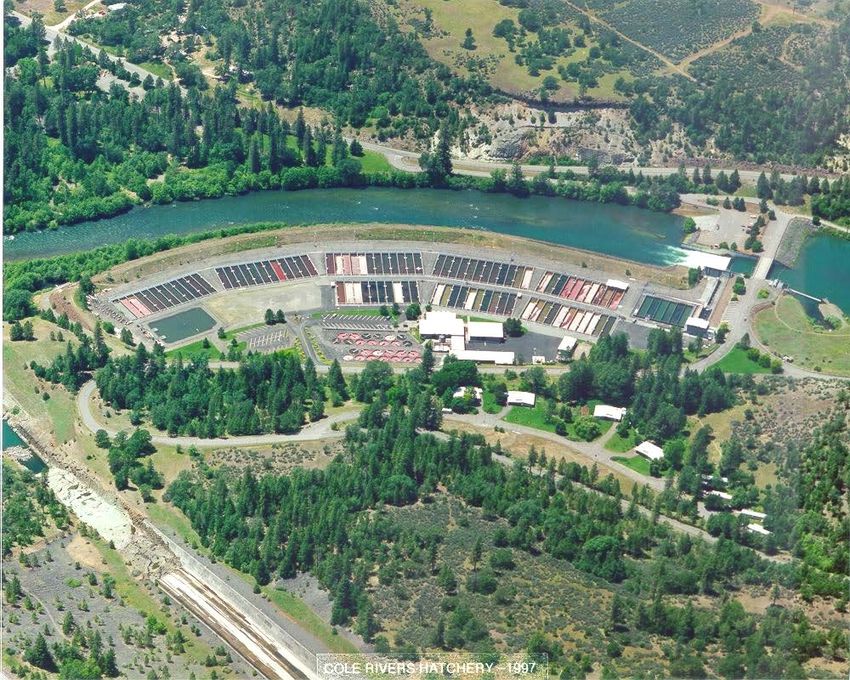
COLE RIVERS HATCHERY

    PROGRAM MANAGEMENT PLAN
             2019

Cole Rivers Hatchery Plan   Page 1
Cole Rivers Hatchery
INTRODUCTION
Cole Rivers Hatchery is located on the Rogue River, 30 miles northeast of Medford, Oregon, on
Highway 62, about ½ mile downstream of Lost Creek Dam. The site is at an elevation of 1,545 feet
above sea level, at latitude 42.6636 and longitude -122.6836. The hatchery land area is 58 acres.
The ambient hatchery water supply is from the Rogue River below William L. Jess Dam, and a warm
water line is available that takes water from the surface of Lost Creek Lake. Water (60 cfs) piped
from the surface of Lost Creek Reservoir. The total water right is 448 cfs. Filtered and UV sterilized
water is used in the main incubation building.
The hatchery operates one offsite adult collection facility located below Applegate Dam.
The facility is staffed with 16.58 FTE's.
Rearing Facilities at Cole Rivers Hatchery
Unit Unit Unit Unit Unit Number Total Construction
Type Length Width Depth Volume Units Volume Material Age Condition Comment
(ft) (ft) (ft) (ft3) (ft3)
Raceways 100 20 4.00 8,000 87 696,000 concrete 1973 fair
Circular Ponds 20 2.50 785 26 20,410 concrete 1973 fair
Adult Holding Ponds 100 20 5.00 10,000 6 60,000 concrete 1973 fair
Adult Holding Ponds 100 20 2.50 5,000 2 10,000 concrete 1973 fair
Canadian Troughs 14 3 3 126 16 1,610 fiberglass 2014 good
Collection Pond 100 20 1 concrete 1973 Fair
Vertical Incubators 1056 fiberglass 1995 good 66 stacks of 16 trays
&1996
Applegate Dam
Collection Pond 100 20 1 concrete 1973 good
PURPOSE
Cole Rivers Hatchery was constructed by the US Army Corps of Engineers (USACE) in 1973 to
mitigate for spawning and rearing areas blocked by the construction of Lost Creek, Applegate, and
Elk Creek Dams. The Hatchery was named in honor of Cole M. Rivers, a biologist on the Rogue
River for 20 years.
The facility is used for adult collection, spawning, egg incubation and rearing of Spring Chinook,
Coho, Summer Steelhead, and Winter Steelhead, and egg incubation and rearing of Fall Chinook and
Rainbow Trout. The USACE Rogue River mitigation program funds the rearing of the Rogue and
Applegate River stocks of fish and a portion of the Rainbow Trout program. The Sport Fish
Restoration program funds the remainder of the Rainbow Trout program, and the state of Oregon
funds the Coos River and Coquille River Salmon and Steelhead programs.
Cole Rivers Hatchery Plan Page 2PROGRAM TYPE
The ODFW Hatchery Management Policy defines hatchery programs as either harvest or
conservation programs. Harvest programs operate to enhance or maintain fisheries without impairing
naturally reproducing populations. Conservation programs operate to maintain or increase the
number of naturally produced fish without reducing the productivity of naturally reproducing
populations.
The programs at Cole M. Rivers Hatchery are harvest programs, used for augmentation of fishing
and harvest opportunities in the Coos River, and mitigation for the loss of habitat and migration
blockage due to the construction of dams on the Rogue and Applegate Rivers.
GOALS
Fall Chinook:
Coos River (37H) Stock: to provide fish primarily for commercial harvest and sport fishing
that are genetically and ecologically similar to wild populations to minimize any potential
impacts to wild populations in the Coos River Basin.
Coquille River (44H) Stock: to provide fish primarily for commercial harvest and sport
fishing that are genetically and ecologically similar to wild populations to minimize any
potential impacts to wild populations in the Coquille River Basin.
Spring Chinook:
Rogue River (52H) Stock: to provide fish primarily for commercial harvest and sport fishing
to mitigate for loss of spawning and rearing habitat that resulted from the construction of
dams in the Rogue River Basin by the United States Army Corps of Engineers.
Coho
Rogue River (52H) Stock:
Goal 1: to provide an artificial reserve to retain future management options in the recovery
of Rogue Basin Coho.
Goal 2: to provide monitoring opportunities related to ocean distribution and marine survival
of Rogue River Coho.
Goal 3: to provide fish for commercial harvest and sport fishing while minimizing potential
impacts to wild populations in the Rogue River Basin.
Goal 4: to provide a return of 2,060 adult Coho as mitigation for wild production lost to the
construction of federal dams in the upper Rogue River Basin.
Rainbow Trout: to produce fingerling, legal-size, and trophy rainbow trout to meet statewide trout
management program objectives.
Summer Steelhead:
Rogue River (52H) Stock: to provide fish primarily for angler harvest to mitigate for loss of
spawning and rearing habitat that resulted from the construction of dams in the Rogue River
Basin by the United States Army Corps of Engineers.
Winter Steelhead:
Coos River (37H) Stock: to provide fish primarily for angler harvest that are genetically and
ecologically similar to wild populations to minimize any potential impacts to wild
populations in the Coos River Basin.
Cole Rivers Hatchery Plan Page 3Rogue River (52H) Stock: to provide fish primarily for angler harvest to mitigate for loss of
spawning and rearing habitat that resulted from the construction of dams in the Rogue River
Basin by the United States Army Corps of Engineers.
Applegate River (62H) Stock: to provide fish primarily for angler harvest to mitigate for loss
of spawning and rearing habitat that resulted from the construction of dams in the Rogue
River Basin by the United States Army Corps of Engineers.
Tenmile Lakes (88H) Stock: to provide fish primarily for angler harvest that are genetically
and ecologically similar to wild populations to minimize any potential impacts to wild
populations in the Tenmile Basin.
OBJECTIVES
Objective 1: Foster and sustain opportunities for sport, commercial, and tribal fishers consistent
with the conservation of naturally produced native fish.
Fall Chinook:
Coos River (37H) Stock:
Produce 200,000 pre-smolts (2,667 pounds) for transfer to Morgan Creek STEP facility for
acclimation and release.
Coquille River (44) Stock:
Produce 144,600 smolts (11,123 pounds) for transfer to various acclimation sites in the
Coquille River basin.
Spring Chinook:
Rogue River (52) Stock:
Provide 10,000 eggs for STEP.
Produce 20,000 fry (21 pounds) for release into the Middle Fork Rogue River.
Produce 150,000 fingerlings (2,344 pounds) for release into Applegate Reservoir.
Produce 50,000 fingerlings (781 pounds) for release into Lost Creek Reservoir.
Produce 5,100 smolts (785 pounds) for release into Fish Lake.
Produce 1,703,250 smolts (174,688 pounds) for release into the Rogue River.
Coho:
Rogue River (52H) Stock:
Produce 75,000 smolts (7,500 pounds) for release into the Rogue River.
Rainbow Trout:
Cape Cod Triploid (72T) Stock:
Produce 64,000 fingerlings (3,580 pounds), 302,585 legal-sized fish (101,662 pounds) and
28,700 trophy-sized fish (31,500 pounds) for release into lakes, reservoirs and streams.
Oak Springs Triploids (53T) Stock:
Produce 116,000 Fingerlings (14,500 pounds), for release into Howard Prairie Reservoir.
Summer Steelhead:
Rogue River (52H) Stock:
Provide 5,000 eyed eggs for STEP programs.
Produce 220,000 smolts (48,889 pounds) for release into the Rogue River.
Cole Rivers Hatchery Plan Page 4Winter Steelhead:
Coos River (37H) Stock:
Produce 125,000 smolts (20,833 pounds) for transfer to Millicoma Pond, Big Creek Pond,
and Hodges Creek Acclimation Sites.
Rogue River (52H) Stock:
Produce 20,000 smolts (4,000 pounds) for release into various standing water bodies.
Produce 132,000 smolts (33,000 pounds) for on-station release into the Rogue River.
Produce 10,000 smolts (2,500 pounds) for transfer to Skunk Creek Acclimation.
Produce 10,000 smolts (2,500 pounds) for transfer to Greens Creek Acclimation.
Applegate River (62H) Stock:
Produce 24,000 fingerlings (240 pounds) for release above Applegate Reservoir.
Produce 20,000 smolts (4,000 pounds) for release into various standing water bodies.
Produce 111,040 smolts (27,760 pounds) for release into the Applegate River.
Tenmile Lakes (88H) Stock:
Produce 25,000 smolts (4,167 pounds) for release into streams in the Tenmile Basin.
Objective 2: Contribute toward the sustainability of naturally produced native fish populations
through the responsible use of hatcheries and hatchery-produced fish.
Objective 3: Maintain genetic resources of native fish populations spawned or reared in captivity.
Objective 4: Restrict the introduction, amplification, or dissemination of disease agents in hatchery
produced fish and in natural environments by controlling egg and fish movements and
by prescribing a variety of preventative, therapeutic and disinfecting strategies to
control the spread of disease agents in fish populations in the state.
Objective 5: Minimize adverse ecological impacts to watersheds caused by hatchery facilities and
operations.
Objective 6: Communicate effectively with other fish producers, managers and the public.
CURRENT PRACTICES TO ACHIEVE OBJECTIVES
The sections that follow describe the current hatchery practices associated with anadromous and
resident fish production at this facility. Because ODFW hatcheries are managed to optimize use of
the hatchery rearing space, hatchery operations are dynamic and subject to annual change depending
upon statewide program needs.
The Native Fish Conservation Policy, the Fish Hatchery Management Policy, the Fish Health
Management Policy and Hatchery Genetic Management Plans provide guidelines for the
management of wild and hatchery fish in Oregon. These policies describe the brood collection,
rearing, release, and health management strategies currently used at this facility.
Objective 1: Foster and sustain opportunities for sport, commercial, and tribal fishers
consistent with the conservation of naturally produced native fish.
Cole Rivers Hatchery Plan Page 5Adult Collection
Fall Chinook:
Coos River (37H) Stock: No adults are collected at this facility. Adults arrive at Morgan
Creek STEP facility on Coos Bay between October and December. Peak spawning occurs
during mid-November.
Coquille River (44H) Stock: No adults collected at Cole Rivers Hatchery; see Bandon
Hatchery Plan for details.
Spring Chinook:
Rogue River (52) Stock: Adults return to the hatchery from May through September.
Broodstock collection goal is 1,050 females and 525 males and ~5% jacks. Spawning occurs
September through early October.
Coho:
Rogue River (52) Stock: Adults return to the hatchery from October to January. Broodstock
are drawn from adults that volitionally enter the hatchery trap. Spawning occurs from
November through January.
Rainbow Trout:
Cape Cod (72T) Stock: Broodstock are maintained at Roaring River Hatchery.
Oak Springs (53T) Stock: Broodstock are maintained at Oak Springs Hatchery.
Summer Steelhead:
Rogue River (52) Stock: Adults return to the hatchery from May to February. Maximum
number of adults to be held for broodstock is 600 pairs. Peak spawning occurs in February.
Winter Steelhead:
Coos River (37) Stock: No adults are collected at this facility. Adults arrive between
December and March at Morgan Creek STEP facility on Coos Bay. Peak spawning occurs
in February.
Rogue River (52) Stock: Adults return to the hatchery from February to May. Broodstock
collection goal is 300 pairs. Spawning occurs in April and May.
Applegate River (62) Stock: Adults are trapped below Applegate Dam from February to May
and held at Cole Rivers Hatchery for spawning in April and May. Broodstock collection goal
is 300 pairs.
Tenmile Lakes (88) Stock: No adults are collected at this facility. Broodstock are collected
at Tenmile Lake and transported to Bandon Hatchery for spawning.
Objective 2: Contribute toward the sustainability of naturally produced native fish
populations through the responsible use of hatcheries and hatchery-
produced fish.
Rearing and Release Strategies
Rearing and release strategies are designed to limit the amount of ecological interactions occurring
between hatchery and naturally produced fish. Fish are reared to sufficient size that smoltification
Cole Rivers Hatchery Plan Page 6occurs within nearly the entire population, which will reduce the retention time in downstream
migration. Rearing on parent river water, or acclimation to parent river water for several weeks, is
used to ensure strong homing to the hatchery, thus reducing the stray rate to natural populations.
Various release strategies are used to ensure that fish migrate from the hatchery with least amount of
interaction with native populations. The specific rearing and release strategies used at this hatchery
are outlined below.
Fall Chinook:
Coos River (37H) Stock:
No eggs were received for this program due to low adult returns
Coquille River (44H) Stock:
Produce approximately 50,000 fish at 13 fish/pound for acclimation and release into
Sevenmile Creek in August and September and Ferry Creek in September. All fish are fin-
clipped prior to release. Due to low adult returns not enough eggs were available to meet
normal production goals.
Spring Chinook:
Rogue River (52H) Stock:
Produce 20,000 unfed fry for release into the Middle Fork Rogue River in February.
Rear 200,000 fingerlings to a size of 64 fish/pound for release in Applegate Reservoir
(150,000) and Lost Creek Reservoir (50,000) in early June. All fish are fin-clipped prior to
release.
Rear 5,100 smolts to a size of 6.5 fish/pound for release in Fish Lake in mid-October. All
fish are fin-clipped prior to release.
Rear 652,000 smolts to a size of 13 fish/pound for on-station release in mid-August. All fish
are fin-clipped and 30,000 are coded-wire tagged prior to release.
Rear 78,000 smolts to a size of 13 fish/pound for release into the Rogue Estuary in mid-
August. All fish are fin-clipped and 30,000 are coded-wire tagged prior to release.
Rear 730,000 smolts to a size of 9 fish/pound for on-station release in mid-September. Prior
to release all fish are fin-clipped and 30,000 are coded-wire tagged.
Rear 193,250 smolts to a size of 6.5 fish/pound for on-station release in mid-October. All
fish are fin-clipped and 30,000 are coded-wire tagged prior to release.
Rear 50,000 smolts to a size of 6.5 fish/pound for release at the Gold Hill boat ramp in mid-
March. All fish are fin-clipped and 30,000 are coded-wire tagged prior to release.
Coho:
Rogue River (52) Stock:
Rear 75,000 smolts to a size of 10 fish/pound for on-station release in early May. All fish are
fin-clipped and 25,000 are coded-wire tagged prior to release.
Rainbow Trout:
Cape Cod Triploid (72T) Stock:
Rear 52,000 fingerlings to a size of 25 fish/pound for release into Holy Water in July and
Howard Prairie Reservoir in September.
Rear 12,000 fish to a size of 8 fish/pound for release into various standing water bodies in
October.
Rear 301,385 fish to a size of 3 fish/pound for release into various standing water bodies from
March to June.
Cole Rivers Hatchery Plan Page 7Rear 1,000 fish to a size of 3 fish/pound for hatchery display and eventual release.
Rear 18,700 fish to a size of 1.0 fish/pound for release into various standing water bodies
from March to May.
Rear 11,200 fish to a size of 0.8 fish/pound for release into various standing water bodies in
September and October.
Oak Springs (53T) Stock:
Rear 116,000 fingerlings to the size of 8.0 fish/pound for release into Howard Prairie
Reservoir in early October.
Summer Steelhead:
Rogue River (52H) Stock:
Rear 183,000 smolts to a size of 4.5 fish/pound for on-station release in late April. All fish
are fin-clipped prior to release.
Rear 37,000 smolts to a size of 4.5 fish/pound for release into the Rogue River at the Gold
Hill boat launch in late April. All fish are fin-clipped prior to release.
Winter Steelhead:
Coos River (37H) Stock:
Rear 125,000 smolts to a size of 6 fish/pound for transfer to Millicoma Pond (35,000), Big
Creek Pond (45,000), and Hodges Creek Acclimation (45,000) for acclimation and release in
March and April. All fish are adipose-clipped prior to transfer.
Rogue River (52H) Stock:
Release up to 20,000 grade-outs and precocials at a size of 5 fish/pound into standing water
bodies in early April. All fish are fin-clipped prior to release.
Rear 132,000 smolts to a size of 4 fish/pound for on-station release in late April. All fish are
fin-clipped prior to release.
Rear 10,000 smolts to a size of 4 fish/pound for transfer to Skunk Creek Acclimation for
acclimation and release into the lower Rogue River in mid-May. All fish are fin-clipped prior
to release.
Rear 10,000 smolts to a size of 4 fish/pound for transfer to Greens Creek Acclimation for
acclimation and release into the lower Rogue River in mid-May. All fish are fin-clipped prior
to release.
Applegate River (62H) Stock:
Rear 24,000 fingerlings to a size of 100 fish/pound for release into the Applegate River above
Applegate Reservoir in early October. All fish are AD-LV clipped prior to release.
Release up to 20,000 precocials at a size of 5 fish/pound into standing water bodies in early
April. All fish are adipose-clipped prior to release.
Rear 111,040 smolts to a size of 4 fish/pound for release into the Applegate River in mid-
April. All fish are adipose-clipped prior to release.
Tenmile Lakes (88H) Stock:
Rear 25,000 smolts to a size of 6 fish/pound for transfer to Eel Creek Acclimation (8,000),
Saunders Creek Acclimation (9,000), and Tenmile Creek Acclimation (8,000) for acclimation
and release in late March/early April. All fish are adipose-clipped prior to release.
Cole Rivers Hatchery Plan Page 8Objective 3: Maintain genetic resources of native fish populations spawned or reared
in captivity.
Broodstock Selection and Spawning
Oregon's Native Fish Conservation Policy and Hatchery Genetic Management Plans outline
broodstock selection and spawning protocols for some fish stocks. The following practices are
currently being used at Cole Rivers Hatchery:
Fall Chinook:
Coos River (37H) Stock: No spawning takes place at this facility. Broodstock selection and
spawning take place at Morgan Creek STEP facility on Coos Bay.
Coquille River (44H) Stock: No broodstock collection or spawning take place at Cole Rivers;
see Bandon Hatchery Plan for details.
Spring Chinook:
Rogue River (52) Stock: Eggs are taken throughout the run. Adults are spawned at a 1:2
male to female ratio. Wild fish make up the majority of the broodstock. Males and jacks are
used one time only.
Coho:
Rogue River (52) Stock: Spawning takes place throughout the run. Adults are spawned at a
1:1 male to female ratio.
Rainbow Trout:
Cape Cod (72T) Stock: Broodstock selection and spawning take place at Roaring River
Hatchery.
Oak Springs (53T) Stocks: Broodstock selection and spawning take place at Oak Springs
Hatchery.
Summer Steelhead:
Rogue River (52) Stock: Eggs are taken throughout the run. Adults are spawned at a 1:1
male to female ratio. Wild fish are given preference as broodstock. Males are used one time
only.
Winter Steelhead:
Coos River (37) Stock: No spawning takes place at this facility. Broodstock selection and
spawning take place at Morgan Creek STEP facility on Coos Bay.
Rogue River (52) Stock: Eggs are taken from throughout the run. Adults are spawned at a
1:1 male to female ratio. Wild fish make up the majority of the broodstock. Eggs from wild
fish are kept separate during incubation; eggs destroyed as excess to program needs are to be
from hatchery fish.
Applegate River (62) Stock: Eggs are taken from throughout the run. Adults are spawned at
a 1:1 male to female ratio. Wild fish make up 20% to 40% of the broodstock. Eggs from
wild fish are kept separate during incubation; eggs destroyed as excess to program needs are
to be from hatchery fish.
Tenmile Lakes (88H) Stock: No spawning takes place at this facility. See Bandon Hatchery
Plan for further details.
Cole Rivers Hatchery Plan Page 9Objective 4: Restrict the introduction, amplification, or dissemination of disease
agents in hatchery produced fish and in natural environments by
controlling egg and fish movements and by prescribing a variety of
preventative, therapeutic and disinfecting strategies to control the
spread of disease agents in fish populations in the state.
Fish Health Management Programs--All Stocks
ODFW has adopted a Fish Health Management Policy that describes measures that minimize the
impact of fish diseases on the state’s fish resources. The primary objective of fish health management
programs at ODFW hatcheries is to produce healthy smolts that will contribute to the fishery and
return sufficient numbers of adults to continue propagation of the stocks and provide supplementation
if desired. Equally important is to prevent the introduction, amplification or spread of fish pathogens
that might negatively affect the health of both hatchery and naturally reproducing stocks.
ODFW has implemented both disease control and disease prevention programs at all of its facilities
to achieve these objectives. These programs include the following standard elements:
Disease Control (Reactive)
• Perform necropsies of diseased and dead fish to diagnose the cause of loss.
• Prescribe appropriate treatments and remedies to disease. This includes recommending
modifications in fish culture practices, when appropriate, to alleviate disease-contributing
factors.
• Apply a disease control policy as stated in the Oregon Administrative Rules which dictates
how specific disease problems will be addressed and what restrictions may be placed on
movements of diseased stocks.
• Conduct applied research on new and existing techniques to control disease epizootics.
Disease Prevention (Proactive)
• Routinely remove dead fish from each rearing container and notify ODFW Fish Pathology if
losses are increasing. Monthly mortality records are submitted to Fish Pathology from each
hatchery.
• Routinely perform examinations of live fish to assess health status and detect problems before
they progress to clinical disease or mortality.
• Implement disease preventative strategies in all aspects of fish culture to produce a quality
fish. This includes prescribing the optimal nutritional needs and environmental conditions in
the hatchery rearing container based on historical disease events. It also involves the use of
vaccines or antibiotics in order to avoid a disease problem.
• Use a disease prevention policy that restricts the introduction of stocks into a facility. This
will help avoid new disease problems and fish pathogens not previously found at the site.
• Use sanitation procedures that prevent introduction of pathogens into and/or within a facility.
• Conduct applied research on new and existing disease prevention techniques.
• Utilize pond management strategies (e.g., Density Index and Flow Index guidelines) to help
optimize the quality of the aquatic environment and minimize fish stress that can be
conducive to infectious and noninfectious diseases. For example, a Density Index is used to
estimate the maximum number of fish that can occupy a rearing unit based on the rearing
unit’s size. A Flow Index is used to estimate the rearing unit’s carrying capacity based on
water flows.
Cole Rivers Hatchery Plan Page 10Fish Health Activities at Cole Rivers Hatchery
Health Monitoring
• All fish are given a health inspection no longer than 6 weeks before fish are released or
transferred. This exam may be in conjunction with the routine monthly visit.
• Monthly health monitoring examinations of healthy and clinically diseased fish are
conducted on each fish lot. The sample includes a minimum of 10 moribund/dead fish (if
available) and 4-6 live fish per lot.
• Examinations for Myxobolus cerebralis, agent of whirling disease, are conducted annually
on 60 fish held for a minimum of 180 days at the facility.
• At spawning, a minimum of 60 ovarian fluids and 60 kidney/spleen/pyloric caeca (based on
a minimum sampling at the 5% incidence level) are examined for viral pathogens from each
salmon and steelhead lot. If pre-spawning mortality is above normal, necropsies are
conducted on dead adult fish for bacteria, parasites and other causes of death.
• Whenever abnormal behavior is reported or observed, or mortality exceeds 0.1% per day over
five consecutive days in any rearing container, the fish pathologist will examine the affected
fish, make a diagnosis and recommend the appropriate remedial or preventative measures.
• Reporting and control of specific fish pathogens are conducted in accordance with the Fish
Health Management Policy. Results from each examination mentioned above are reported on
the ODFW Fish Health or Virus Examination forms.
Fish and Egg Movements
• Movements of fish and eggs are conducted in accordance with the Fish Health Management
Policy.
Therapeutic and Prophylactic Treatments
• Juvenile fish are administered antibiotics orally as needed for the control of bacterial
infections and for prevention of diseases.
• Hydrogen Peroxide is dispensed into water for control of parasites and fungus on adults and
juveniles. Formalin is used for fungus control on eggs. Treatment dosage and exposure time
varies with species, life stage and condition being treated.
• Only approved or permitted therapeutic agents are used for treatments:
o FDA labeled and approved for use on food fish
o Allowed by the FDA as an Investigational New Animal Drug
o Obtained by extra-label prescription from a veterinarian
o Allowed by the FDA as low regulatory priority or deferred regulatory status
o Approved by the FDA through USFWS for fish listed under the federal Endangered
Species Act.
Sanitation
• All eggs brought to the facility are surface-disinfected or water-hardened in buffered
iodophor.
• Disinfection footbaths (or other means of disinfection) are provided at the incubation
facility’s entrance and exit areas while embryos are incubating in the facility.
Cole Rivers Hatchery Plan Page 11• All equipment (e.g., nets, tanks, rain gear, boots) is disinfected with iodophor between uses
with different fish/egg lots or different rearing containers.
• Dead fish are disposed of promptly and in a manner that prevents introduction of disease
agents to the waters of the state.
• Rearing units are cleaned on a regular basis.
• Fish transport trucks are disinfected between the hauling of different fish lots.
• Rearing units are sanitized after removing fish and before introducing a new fish stock either
by thorough cleaning and use of a disinfectant or by cleaning and leaving dry for an extended
time.
Objective 5: Minimize adverse ecological impacts to watersheds caused by hatchery
facilities and operations.
Environmental Monitoring
Primarily, environmental monitoring is conducted at ODFW facilities to ensure these facilities meet
the requirements of the National Pollution Discharge Elimination Permit administered by the Oregon
Department of Environmental Quality. It is also used in managing fish health. On a short-term basis,
monitoring helps identify when changes to hatchery practices are required. Long-term monitoring
provides the ability to quantify water quality impacts resulting from changes in the watershed (e.g.,
logging, road building and urbanization). The following environmental parameters are currently
monitored at all ODFW hatcheries:
• Total Suspended Solids (TSS) – measured quarterly. Two composite samples are collected,
one during normal operations and one during cleaning. Some facilities may take more
samples because of multiple outfalls.
• Settleable Solids (SS) – measured quarterly. Two composite samples are collected, one
during normal operations and one during cleaning. Some facilities may take more samples
because of multiple outfalls.
• pH – measured quarterly when settleable solids are measured.
• Total Ammonia and Total Phosphorus – measured quarterly during the first 12 months of the
permit when settleable solids are measured.
• Water Temperatures – daily maximum and minimum water temperatures are measured within
the hatchery. Temperature units are recorded for egg development in some hatcheries.
Effluent and receiving stream temperatures are measured weekly from April to October.
• Dissolved Oxygen (DO) – measured only when conditions warrant (e.g., periods of low flows
and high temperatures).
• Air Temperatures – maximum and minimum temperatures are recorded daily at some
stations, but there are no special monitoring requirements.
• Flow Logs – changes in water flows through the hatchery ponds are recorded monthly.
Objective 6: Communicate effectively with other fish producers, managers and the
public.
Cole Rivers Hatchery Plan Page 12Coordination/Communication within ODFW
Annual Fish Production Meetings: ODFW conducts meetings throughout the state to set annual fish
production goals for all public hatcheries in Oregon. These meetings involve the participation of
ODFW research, management and fish culture staff as well as representatives from applicable federal
agencies and tribes.
Record Keeping: The following records are kept at all ODFW hatcheries:
• Anadromous Adult Transaction Report – details the collection and disposition of all adult
fish handled at the facility.
• Mark Recovery Report – details sex, fish length and tag information from all marked adult
fish that are captured.
• Egg and Fry Report – records all egg and fry movements, treatments, etc.
• Monthly Ponded Report – updates hatchery operations from the previous month (i.e.,
current number of fish, size, transfers or releases, feed conversion, mortality, medication,
etc.).
• Monthly Progress Report – document summarizing operational activities for the hatchery and
all satellite facilities (e.g., fish culture, fish health, fish distribution, maintenance and safety).
• Fish Loss and Treatment Report – records disease problems and daily mortality.
• Fish Loss Report/Investigation – when 1,000 or more juveniles or 10 or more adult fish are
accidentally lost in a single accident.
• Predator Mortality Report – documents any fish predators that may die at the hatchery facility.
• Fish Liberation Reports – details information regarding all fish releases (e.g., fish numbers,
size, location, method of release, marks, etc.).
• Coded–Wire Tag Release Reports – record of all juvenile fish released with coded-wire tags.
• Length Frequency Record – details fish lengths of all anadromous fish released (based on a
sample of the releases).
• Chemical use, waste discharge monitoring, purchasing, budget, hazardous materials, safety,
vehicles, equipment, maintenance and alarm logs.
• Visitor Log – some facilities record the daily visitor use of the facility; however, this is not a
requirement.
Hatchery Management System (HMS): Computerized system to collect, report, summarize and
analyze hatchery production data. This system is a tool to be used in production control at all hatchery
management levels.
Interagency Coordination/Communication
Pacific Northwest Fish Health Protection Committee (PNFHPC): This group is comprised of
representatives from U.S. and Canadian fish management agencies, tribes, universities, and private
fish operations. The groups meets twice a year to monitor regional fish health policies and to discuss
current fish health issues in the Pacific Northwest.
Communication with the General Public
Cole Rivers Hatchery receives approximately 5,000 visitors each year.
Cole Rivers Hatchery Plan Page 13Cole Rivers Hatchery Plan Page 14
Cole Rivers Hatchery
                 Fall Chinook Salmon – Stock 37H (Coos River)
           This program cannot be carried out in 2019 due to low adult returns.

                                    Cole Rivers Hatchery
                                     220,000 Eyed Eggs
                                   from Bandon Hatchery
                                          January

                                          Transfer

                                    Morgan Creek STEP
                                     200,000 @ 75 fpp
                                           June

                                        Morgan Creek
                                        200,000 @ 75 fpp
                                        June

Cole Rivers Hatchery Plan                                                         Page 15
Cole Rivers Hatchery
Fall Chinook Salmon – Stock 44H (Coquille River)
Program goals will not be met in 2019 due to low adult returns
Cole Rivers Hatchery
170,000 Eyed Eggs
from Bandon Hatchery
April
Transfer
Sevenmile Cr. Acclimation Ferry Cr. Acclimation
80,000 @ 13 fpp 64,600 @ 13 fpp
September September
Sevenmile Creek Ferry Creek
30,000 @ 13 fpp 64,600 @ 13 fpp
September September
Cole Rivers Hatchery Plan Page 16Cole Rivers Hatchery
Spring Chinook Salmon – Stock 52H (Rogue River)
Cole Rivers Hatchery
2,397,000 Green Eggs
October
Release Transfer
Upper Rogue STEP
Mid Fk Rogue River 10,000 Eyed Eggs
Applegate Reservoir January
20,000 @ 950 fish/lb
150,000 @ 64 fpp Classroom Incubators
February
May - June
Lost Creek Reservoir Rogue Estuary
50,000 @ 64 fpp 78,000 @ 13 fpp Rogue River
May - June August 10,000 Unfed Fry
February
Fish Lake
5,100 @ 6.5 fpp
October
Rogue River
652,000 @ 13 fpp
August
Rogue River
730,000 @ 9 fpp
September
Rogue River
193,250 @ 6.5 fpp
October
Lower Rogue River
50,000 @ 6.5 fpp
March
Cole Rivers Hatchery Plan Page 17Cole Rivers Hatchery
Coho Salmon – Stock 52 (Rogue River)
Cole Rivers Hatchery
150,000 Green Eggs
October
Release
Rogue River
75,000 @ 10 fpp
May
Cole Rivers Hatchery Plan Page 18Cole Rivers Hatchery
Rainbow Trout – Stock 72T (Cape Cod Triploid)
Cole Rivers Hatchery
600,000 Eyed Eggs
from Roaring River Hatchery
December
Release
16 Waterbodies – Upper Rogue District
52,000 @ 25 fpp, 12,000 @ 8 fpp, 215,935 @ 3 fpp, 5,500 @ 1.0
fpp, 3,200 @ 0.8 fpp
March – October
13 Waterbodies – Coos-Coquille District
74,500 @3 fpp, 12,000 @ 1 fpp, 8,000 @ 0.8 fpp
March - October
4 Waterbodies – South Coast District
10,950 @ 3 fpp, 1,200 @ 1 fpp
March - May
Display – Cole Rivers Hatchery
1,000 @ 3 fpp
April
Cole Rivers Hatchery Plan Page 19Cole Rivers Hatchery
Rainbow Trout – Stock 53T (Oak Springs Triploid)
Cole Rivers Hatchery
170,000 Eyed Eggs
from Oak Springs Hatchery
October
Release
Howard Prairie Reservoir
116,000 @ 8 fpp
October
Cole Rivers Hatchery Plan Page 20Cole Rivers Hatchery
Summer Steelhead – Stock 52H (Rogue River)
Cole Rivers Hatchery
360,000 Green Eggs
January
Release
Upper Rogue River
183,000 @ 4.5 fpp
April
Lower Rogue River
37,000 @ 4.5 fpp
April
Cole Rivers Hatchery Plan Page 21Cole Rivers Hatchery
Winter Steelhead – Stock 37H (Coos River)
Cole Rivers Hatchery
175,000 Eyed Eggs
from Bandon Hatchery
March
Transfer
Millicoma Acclimation Big Cr. Pond Acclimation Hodges Cr. Acclimation
35,000 @ 6 fpp 45,000 @ 6 fish/lb 45,000 @ 6 fpp
March April April
W. Millicoma River S. Fork Coos River E. Millicoma River
35,000 @ 6 fpp 45,000 @ 6 fish/lb 38,000 @ 6 fpp
April April April
Cole Rivers Hatchery Plan Page 22Cole Rivers Hatchery
Winter Steelhead – Stock 52H (Rogue River)
Cole Rivers Hatchery
280,000 Green Eggs
April
Release Transfer
Standing Waterbodies
20,000 @ 5 fpp
April (precocials) Skunk Creek Acclimation Greens Creek Acclimation
10,000 @ 4 fpp 10,000 @ 4 fpp
April May
Rogue River
132,000 @ 4 fpp
April
Rogue River Rogue River
10,000 @ 4 fpp 10,000 @ 4 fpp
April May
Cole Rivers Hatchery Plan Page 23Cole Rivers Hatchery
Winter Steelhead – Stock 62H (Applegate River)
Cole Rivers Hatchery
280,000 Green Eggs
April
Release
above Applegate Reservoir
24,000 @ 100 fpp
October
Standing Waterbodies
20,000 @ 5 fpp
April (precocials)
Applegate River
111,040 @ 4 fpp
April
Cole Rivers Hatchery Plan Page 24Cole Rivers Hatchery
Winter Steelhead – Stock 88H (Tenmile Lakes)
Cole Rivers Hatchery
30,000 Eyed Eggs
from Bandon Hatchery
March
Transfer
Eel Cr. Acclimation Saunders Cr. Acclimation Tenmile Cr. Acclimation
8,000 @ 6 fpp 9,000 @ 6 fpp 8,000 @ 6 fpp
March March March
Eel Creek Saunders Creek Tenmile Creek
8,000 @ 6 fpp 9,000 @ 6 fpp 8,000 @ 6 fpp
April April April
Cole Rivers Hatchery Plan Page 25You can also read


