Collaborative Multimodal Writing via Google Docs: Perceptions of French FL Learners - MDPI
←
→
Page content transcription
If your browser does not render page correctly, please read the page content below

languages
Article
Collaborative Multimodal Writing via Google Docs:
Perceptions of French FL Learners
Miriam Akoto

                                          Department of Romance Languages and Literatures, University of Michigan, Ann Arbor, MI 48109, USA;
                                          miriamak@umich.edu

                                          Abstract: In spite of the growing integration of computer-mediated collaborative writing and mul-
                                          timodal composition in second language (L2) classrooms, research on collaborative multimodal
                                          writing, as an innovative writing pedagogy, is still underway and largely underrepresented par-
                                          ticularly in non-English learning contexts. To bridge this research gap, the author of this study
                                          implemented a multimodal writing task in which seven French FL learners jointly created digital
                                          postcards describing their vacation activities in groups of two or three over the period of eight
                                          weeks. The study sought to explore learners’ perceptions of the benefits and challenges of this type
                                          of pedagogy and the factors mediating their writing processes. The analyses of a post-task ques-
                                          tionnaire survey and semi-structured interviews, triangulated with the finished products, indicated
                                          that overall, collaborative multimodal writing was a motivating learning experience. Several themes
                                          emerged regarding the perceived benefits (i.e., improvement in their writing skills, genre awareness
                                          and semiotic awareness, mutual learning through peer assessment and easy synchronous writing
                                          and revising via Google Docs), as well as challenges (i.e., tensions between partners largely due to
                                          frustrations over unequal participation, lack of control over the joint text and technical glitches). This
                                paper provides significant implications for collaborative multimodal writing research and pedagogy.


Citation: Akoto, Miriam. 2021.
                                          Keywords: L2 writing; collaboration; digital multimodal composition; perception; computer-assisted
Collaborative Multimodal Writing via
                                          language learning; Google Docs; French; L2/FL learning
Google Docs: Perceptions of French FL
Learners. Languages 6: 140. https://
doi.org/10.3390/languages6030140

Academic Editors: Idoia Elola and
                                          1. Introduction
Raychel Vasseur                                For years, second language (L2) writing had been viewed as a solitary activity intended
                                          for L2 learners to practice linguistic forms (Reichelt et al. 2012). However, in recent decades,
Received: 16 April 2021                   this perception has shifted due to the development of various digital technological tools
Accepted: 18 August 2021                  such as Google Docs, wikis and other collaborative writing spaces. Previous research
Published: 20 August 2021                 has shown that collaborative writing not only fosters language negotiation and mutual
                                          scaffolding during the writing process (Li and Zhu 2013; Li and Kim 2016; Storch 2019;
Publisher’s Note: MDPI stays neutral      Swain and Lapkin 1998), but also contributes to L2 writing development (Bikowski and
with regard to jurisdictional claims in   Vithanage 2016; Strobl 2014) and prepares learners for future collaborative work in the
published maps and institutional affil-   professional world (Ede and Lunsford 1990; Storch 2005). In addition to this current shift
iations.
                                          from individual to collaborative writing, it has been noted that learners’ authentic texts (e.g.,
                                          posters, PowerPoint slides, digital stories, blog posts, videos and scientific documentaries)
                                          produced both inside and outside of the classroom have been increasingly multimodal
                                          (Oskoz and Elola 2019; Yi et al. 2020). Consequently, a plethora of studies (e.g., Hafner 2014;
Copyright: © 2021 by the author.          Smith et al. 2020) have been devoted to examining digital multimodal writing in recent
Licensee MDPI, Basel, Switzerland.        years. Prior studies have reported several pedagogical benefits, including a heightened
This article is an open access article    awareness of metafunctions of semiotic modes (Nelson and Hull 2008; Shin et al. 2020),
distributed under the terms and           improved multiliteracy skills, motivation and autonomy (Hafner 2014; Jiang and Luk
conditions of the Creative Commons        2016; Yi and Angay-Crowder 2016), as well as multiple opportunities for learner self-
Attribution (CC BY) license (https://
                                          expression and identity development (Belcher 2017; Jiang et al. 2020; Vinogradova 2011),
creativecommons.org/licenses/by/
                                          and overall improvement in linguistic and writing competencies (Oskoz and Elola 2014,
4.0/).

Languages 2021, 6, 140. https://doi.org/10.3390/languages6030140                                        https://www.mdpi.com/journal/languages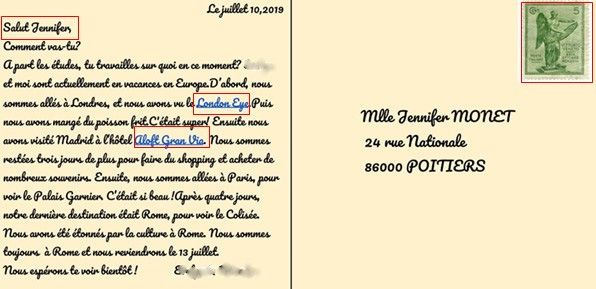
Languages 2021, 6, 140                                                                                             2 of 18

                         2016; Vandommele et al. 2017). In view of these paradigm shifts and the growing interest
                         in the pedagogical implications of collaborative and multimodal writing, the purpose of
                         this paper to provide more insight on the implementation a collaborative multimodal task
                         in a French FL learning context. I opted to focus on the French FL setting at the tertiary
                         level, due in part to the underrepresentation of scholarship within this domain (Yiğitoğlu
                         and Reichelt 2019) and the fact that research at the secondary level has been conducted by
                         Smith et al. (2020). Moreover, an understanding of learners’ perceptions of the benefits and
                         challenges of collaborative multimodal writing is timely in that it helps to shed light on
                         this new writing pedagogy, locate areas that need improvement, identify both affordances
                         and constraints and mediating factors, and inspire more future research efforts.
                               In the following section, I outline the theoretical underpinnings of collaborative writ-
                         ing, i.e., sociocultural theory (Vygotsky 1978), and multimodal writing, i.e., multimodality
                         (Kress 2003, 2010; Kress and Van Leeuwen 2001) and multiliteracies (Cope and Kalantzis
                         2009, 2015; The New London Group et al. 1996), and review representative empirical
                         studies. The subsequent sections present the research questions and methodology that
                         was used to address them. Lastly, I discuss the findings and pedagogical implications of
                         incorporating collaborative multimodal writing in a French FL class.

                         2. Theoretical Background
                               Defined by Storch (2011) as “the joint production or the coauthoring of a text by two or
                         more writers” (p. 275), collaborative writing has received much attention in recent decades
                         resulting from the “social turn” in L2 writing studies (Trimbur 1994). This social turn in
                         L2 studies and paradigm shift towards collaborative learning can be largely attributed to
                         Vygotsky’s (1978, 1981) sociocultural theory and the work of activity theorists, Leont’ev
                         (1978) and Wertsch (1988). Sociocultural theory posits that all cognitive activity is socially
                         mediated (Vygotsky 1981). Therefore, from this perspective, language learning occurs
                         through the knowledge co-construction process between learners and their peers rather
                         than through an individual, isolated process (Swain and Lapkin 1998; Van Lier 1996). This
                         sociocultural view to L2 learning further implies that all writing is in effect collaborative
                         and involves the division of labor and co-authorship (Prior 2006). Two constructs are
                         pivotal to this theory: (1) Zone of Proximal Development (ZPD), i.e., the idea that for
                         successful L2 learning to take place, expert members in a pair/group interaction need to
                         provide assistance to the novice members (Vygotsky 1978); and (2) scaffolding (Wood et al.
                         1976), specifically collective scaffolding (Donato 1988, 1994). Scaffolding is defined by
                         Wood et al. (1976) as “a kind of process that enables a child or novice to solve a problem,
                         carry out a task, or achieve a goal which would be beyond his unassisted efforts” (p. 90).
                         Bruner (1985) also described it as the gradual reduction in the assistance provided by
                         the expert. Further work from Donato (1988, 1994) later extended this definition beyond
                         the typical expert-novice interactions to peer interactions and coined the term “collective
                         scaffolding” to describe the scaffolding that occurs between peers. Donato (2004) asserted
                         that learners can simultaneously act as individual novices as well as collective experts as
                         they pool resources and provide mutual scaffolding to solve language problems.
                               In addition to the social turn, L2 writing has also witnessed a visual turn (Li and Storch
                         2017; Purdy 2014) as evidenced in digital multimodal writing, which Kress (2003) described
                         as the practice by which a writer deploys an arsenal of semiotic resources (e.g., textual,
                         aural, linguistic, visual, spatial, etc.), in order to create what Stein (2008) calls coherent
                         “multilayered communication ensembles” (p. 871). Theoretical support for this practice
                         stems from two intersecting frameworks: (1) the multimodality approach (Kress 2003; Kress
                         and Jewitt 2003; Kress and Van Leeuwen 2001), which drew on Halliday’s (1978) social
                         semiotics theory to describe the intricate combination of different socially-shaped semiotic
                         resources or modes to make meaning; and (2) the multiliteracies framework (Cope and
                         Kalantzis 2009, 2015; The New London Group et al. 1996), which expanded the definition
                         of literacy to encompass multiple literacies. Central to both of these frameworks is the
                         concept of meaning design which considers any meaning-making activity as a semiotic
Languages 2021, 6, 140 3 of 18
experience whereby language is used to produce and consume texts (The New London
Group et al. 1996). According to Paesani et al. (2016), learning in this context is considered
to be a discovery process and as such, meaning design is defined as “a dynamic process
of discovering form-meaning connections through the acts of interpreting and creating
written, oral, visual, audiovisual, and digital texts” (p. 23). Therefore, writing from this
perspective implies the use and recycling of several linguistic, cultural and social resources
(also known as Available Designs) that L2 learners have at their disposal to create new
multimodal texts through multiple communication channels. According to Zapata and
Lacorte (2017), a key element of the multiliteracies pedagogical model, i.e., Learning by
Design, is to encourage “learners’ depth of involvement and engagement in the learning
process” (p. 4). In line with this model, multimodal writing not only invites L2 learners to
make meaning through a variety of modes such as textual, visual, audio, spatial, gestural
and behavioral modes (Miller 2010), but also to critically reflect on the social implications
of the modes on communication (Gilje 2010; Smith 2019).
3. Empirical Research
3.1. Learners’ Perceptions on Collaborative Writing
Research in computer-based collaborative writing has increased during these decades
in line with the social turn in L2 writing studies. One of the main research areas that
published studies have investigated focuses on learners’ perceptions of the collaborative
writing experience. Much of this work relies on the analysis of data collected from surveys,
interviews and observations. Some of the studies have reported positive responses from
L2 students about their collaborative writing experiences. These positive reports include
the value of peer support (e.g., Ducate et al. 2011; Elola and Oskoz 2010; Lund 2008)
heightened motivation (e.g., Li and Zhu 2013; Storch 2005, 2013; Wang 2015) and overall
improvement of writing skills (e.g., Kessler et al. 2012; Bikowski and Vithanage 2016;
Elola and Oskoz 2010). For instance, Kessler et al. (2012) recorded positive attitudes from
L2 students regarding collaborative writing via Google Docs. After conducting a content
analysis of students’ comments, they reported that students found Google Docs to be
effective and convenient and helped to facilitate their writing process. Along the same
lines, Li and Zhu (2013) underscored the benefits of wiki-based collaborative writing for
the development of academic writing skills. They qualitatively analyzed data collected
from surveys and interviews and noted that students found that writing collaboratively
not only broadened their writing perspectives but also ultimately improved their writing
strategies and language skills.
In spite of the positive reports from students about collaborative writing, some con-
straints have also been noted. These mainly include concerns about accountability and
frustrations over unequal participation and late contributions (e.g., Arnold et al. 2012;
Ducate et al. 2011; Kessler and Bikowski 2010; Lee 2010), issues with time management
(e.g., Bikowski and Vithanage 2016) as well as a general hesitation to edit others’ work
stemming from students’ insecurity about their own writing (e.g., Lee 2010; Lund 2008;
Arnold et al. 2012). With regards to unequal contribution, Kessler and Bikowski (2010)
analyzed data from student interviews and wiki archives and found that more than half
of the students (22 out of 40) contributed unsatisfactory work just before the deadline.
These behaviors are referred to in the literature as “free-riding” or “social loafing” (Strobl
2014). Such attitudes were also reported in Strobl’s (2014) study which explored German FL
students’ collaborative writing on Google Docs. Although some of the students expressed
positive attitudes about the collaborative writing task, more than two thirds preferred to
work alone if given the choice simply because of unequal participation, and one out of the
seven groups actually failed the task as a result of some members’ free-riding attitudes.
A suggested solution to this problem is reducing the group size as studies with smaller
groups/pairs seem to encounter fewer issues with accountability (e.g., Kessler et al. 2012;
Kost 2011).Languages 2021, 6, 140 4 of 18
Another challenging issue has to do with students’ reluctance to edit their peers’
written texts due to feelings of inadequacy and the fear of offending others. For example,
Lund (2008) observed that majority of students were hesitant to show their writing drafts to
their classmates and give them feedback. Similarly, Lee’s (2010) case study in the Spanish
FL context found that although students generally liked the revision process, more than
40% of them were reluctant to edit their peers’ writing because they had low confidence
in their own writing. Based on the challenges identified by L2 students in the previous
studies, it is important to understand the extent to which these mediating factors affect
students’ perceptions of their writing process.
Working collaboratively within a group of students from diverse backgrounds also
brings additional challenges. As a result, some studies (e.g., Adams et al. 2005; Janssen
et al. 2009) have examined the impact of group member familiarity on learners’ perceptions
of collaborative work. For instance, Adams et al. (2005) reported that when students
know their group members well, they tend to trust any information they provide and are
less critical of their work. Likewise, Janssen et al. (2009) also noted that although group
member familiarity contributed to more positive perceptions about online collaborative
work, it had a negative effect on overall group performance.
3.2. Learners’ Perceptions on Multimodal Writing
Much like collaborative writing, there has been growing interest in multimodal writing
resulting from the visual turn in writing studies (Li and Storch 2017). A substantial part of
this scholarly work stems from ESL/EFL contexts (e.g., Dzekoe 2017; Koelzer 2017; Lee
et al. 2019; Yeh 2018) but only a limited number of studies have investigated multimodal
texts produced in the FL context, specifically in Spanish FL (e.g., Castañeda 2013; Oskoz
and Elola 2016) and in Dutch FL (e.g., Vandommele et al. 2017). Although work in this area
is still underway, the existing literature has already addressed a variety of issues. One main
line of research is in connection with learners’ writing processes, i.e., their use of semiotic
resources (e.g., Cimasko and Shin 2017; Smith 2017; Yang 2012), remix practices (e.g.,
Hafner 2014; Hafner and Miller 2011), synesthesia, transformation and transduction (e.g.,
Kress 2003; Nelson 2006; Oskoz and Elola 2016). The second research strand deals with
the analysis of the finished writing products. This mainly consists of a close examination
of the qualities of the multimodal texts in terms of complexity, lexical diversity and text
length (Vandommele et al. 2017) and the analysis of the links between the writing processes
and writing products (Lee et al. 2019; Maqueda 2020; Vinogradova 2014). Other studies
(Cimasko and Shin 2017; Jiang 2018; Jiang and Gao 2020; Nelson 2006; Tardy 2005) have
explored themes such as students’ identity expression, voice, digital empathy, investment
and motivation and how these are manifested in the final writing products. However, it is
important to note that the focus of the above-mentioned research has been on individual
multimodal writing projects but not within the collaborative writing task environment, in
which students co-own and co-design a single multimodal product (Storch 2011).
The third area that researchers have explored is learners’ perceptions on multimodal
writing and its pedagogical implications on L2 classrooms. Within the FL context, Oskoz
and Elola (2016) examined Spanish FL learners’ perceptions of digital storytelling. Yeh’s
(2018) study also sought to investigate EFL advanced learners’ views about the role of
DMC in developing multiliteracies, L2 writing skills and semiotic awareness. The main
recurring theme has been the perceived benefits and challenges of this pedagogy on overall
learning experiences. For instance, some studies have found improvement in learner
autonomy, with regards to motivation, authenticity and teamwork (Hafner 2014; Hafner
and Miller 2011). Others have also reported a transformation in learner identity (Lam
2000; Tardy 2005) as well as a heightened awareness of semiotic resources and agentive
voice (Nelson 2006). Dzekoe (2017) likewise noted an increased awareness of linguistic and
organizational structures.
On the contrary, other studies have reported some perceived drawbacks to multi-
modal writing. For example, in Bawarshi and Reiff’s (2010) study, the students viewedLanguages 2021, 6, 140 5 of 18
multimodal writing as “oppositional to ‘academic’ writing” (p. 186). Other students
have been reported as perceiving multimodal writing mainly as an out-of-class practice
and not serious in-class work (Hung et al. 2013). The main sources for gathering data
about students’ perceptions are surveys, questionnaires and observations triangulated
with stimulated-recall interviews. For example, Hung et al.’s (2013) study mentioned
earlier sought to investigate how their proposed rubric affected learners’ multimodal text
production. This study not only evaluated the quality of students’ multimodal products,
but also collected a survey of their perceptions. They triangulated these data by conduct-
ing stimulated-recall interviews. The learning perception survey was made up of eight
statements about the effectiveness of the feedback instrument ranked on a five-point Likert
scale ranging from 5 for strong agreement and 1 for strong disagreement. They performed
a descriptive statistical analysis by calculating the mean and the standard deviation of the
students’ perception survey responses so as to determine if differences existed between the
exploratory and control groups.
Although current research recognizes computer-mediated collaborative writing and
multimodal writing (Li and Storch 2017) as ideal ways for developing L2 writing skills
in the 21st century, there is still a lack of methodological consensus within the field
(Matsuda 2003). As a result, some scholars have called for a more integrated approach
to writing that incorporates multiple elements such as collaboration and multimodality
(Allen 2018). To respond to this call, I aimed to explore elementary-level French FL learners’
perceptions using a qualitative, multiple case study approach in order to paint a contextu-
ally rich picture of this type of writing pedagogy. The study was guided by the following
research questions:
1. How do French FL learners view the benefits and challenges of collaborative multi-
modal writing?
2. What factors do French FL learners perceive as mediating their writing processes in
the collaborative multimodal writing task?
4. Methods
4.1. Context and Participants
This study is part of a larger research project that explored the process by which French
FL learners collaboratively work to complete multimodal writing projects, the quality of
the finished products and their perceptions on the integration of collaborative multimodal
writing. Specifically, the present study was conducted in a second semester elementary
French class at a southern public university in the U.S., where about thirteen students were
enrolled in the course in Fall 2020. This course is aimed at helping students develop both
linguistic knowledge and socio-cultural awareness that allows them to feel comfortable
listening, reading, writing and speaking in French. The main instructional tool used for
this course is En Avant! Beginning French (Anderson and Dolidon 2020) which covers
foundational topics such as talking about family and friends, food, education, occupations
and leisure activities, etc. This textbook also has a companion website known as Connect
French that provides students with an electronic copy of the textbook in conjunction with
videos, audios, podcast programs, tutorials, games and many other valuable resources.
The instructor designed the course by drawing on the pedagogy of multiliteracies and
created lessons around three main units based on the textbook’s chapters, i.e., family, food
and vacation. In each chapter, learners engaged in a variety of instructional activities
including reading and viewing authentic texts from several textual genres such as blog
postings, personal ads, TV commercials, videos on YouTube, Google Forms surveys, online
articles, etc. These activities required learners to interpret, collaborate, problem-solve and
reflect on the texts used. At the end of the third chapter, learners completed a collaborative
multimodal task which served as 20 percent of their final grade.
A total of seven students (four females and three males) volunteered to participate
in this study. The demographic information of the participants is shown in Table 1. The
majority of them (five participants) were first-year students and two indicated that theyLanguages 2021, 6, 140 6 of 18
had previously taken Advanced Placement French courses in high school. Almost all were
comfortable using technology with the exception of one participant who was neutral.
Table 1. Participants’ background information.
Name 1 Age Gender Major
Britney 2020 Female Theatre
Group 1
Eva 20 Female Art
Joshua 21 Male Music
Group 2 Christine 20 Female English
Brian 20 Male History/Political Science
Group 3 Alejandro 23 Male Music
Mary-Ann 21 Female Music/Theatre
1 Pseudonyms are used. Information was retrieved from the pre-task questionnaire surveys.
4.2. Task Description
Drawing on the multiliteracies framework Learning by Design (Cope and Kalantzis
2015; The New London Group et al. 1996) and genre-based writing pedagogy (Hyland
2007), a multimodal task was designed. Learners were asked to collaboratively create a
digital postcard describing their vacation activities via Google Docs by drawing on the
linguistic and cultural knowledge acquired over the course of the chapter. Learners were
also required to apply genre knowledge by referring to three examples of postcards that
were used as model texts. The description of the assignment is as follows:
“Imagine that you and your partner(s) are on vacation somewhere and would like to
send a digital postcard to a French speaking friend. In this multimodal writing activity,
each team will jointly create their own postcard which will provide details such as date,
appropriate greeting, recipient’s name, address (including house/apartment number, street,
town/city, country, ZIP code), a postage stamp, your message (including information about
the weather, your vacation activities, the duration of your stay, your return date etc.) and
an appropriate closure”.
4.3. Description of Data Sources
At the beginning of the study, all seven participants completed a pre-task questionnaire
survey (File S1) in order to gather demographic information such as age, gender, ethnicity,
as well as academic program/major, classification/degree level, past language learning
experiences and past experiences with technology such as Google Docs. They also took
a post-task questionnaire survey (File S2) after completing the collaborative multimodal
assignment along with the rest of the class as part of the requirements for the course. At the
end of the semester, students were individually invited to participate in a semi-structured
interview in English with the researcher via Zoom where they were asked to reflect on
their experiences and opinions about the collaborative multimodal writing project. All
interviews were audio-recorded and transcribed verbatim.
4.4. Data Collection and Instructional Procedures
The data collection for this study took place in a fully-equipped multimedia classroom
where participants worked simultaneously on separate laptops. As recommended by
Hron and Friedrich (2003), “suitable multimedia equipment, communication tools and
transmission time are basic prerequisites for providing net-based collaborative learning”
(p. 73). In addition, the writing sessions were screen and audio recorded for the analysis of
peer interactions as part of the larger research project.
The entire task was completed over a period of six weeks followed by two more
weeks of individual interviews conducted via Zoom at the end of the semester. To ensure
that learners are able to successfully complete the task and co-create the multimodal text,
the instructor created pedagogical activities and tasks based on the Learning by DesignLanguages 2021, 6, 140 7 of 18
model developed by Cope and Kalantzis (2015)which features four knowledge processes
(i.e., experiencing, conceptualizing, analyzing and applying). Zapata and Lacorte (2017)
expound on each of these knowledge-based processes as follows: (1) experiencing involves
allowing learners to depart from known concepts and experiences and embrace new
situations; (2) conceptualizing requires the ability to classify meanings into categories,
make connections between concepts and develop theories; (3) analyzing invites learners to
focus on structures and functions and draw logical conclusions; and (4) applying engages
them in real-world tasks that require the creative application on new knowledge. Following
this model, the pairs/small groups co-designed their digital postcards as part of the
instructional practice over the course of six weeks.
During the first week of the study, the instructor created a shared Google Docs folder
for the entire class and gave access to each pair/small group to a designated file in a
joint Google folder within the class folder where they discussed and co-created their
digital multimodal postcards. Afterwards, the whole class attended an instructor-led
orientation workshop to become reacquainted with using Google Docs, but only consenting
participants’ data are presented in this paper. Specifically, the groups were trained on
the use of certain features on Google Docs such as adding comments through the “Insert”
tab, changing the page layout, inserting hyperlinks and adding images directly from
Google Images. Similar training workshops have been very effectively used in previous
multimodal composition studies (e.g., Cimasko and Shin 2017; Jiang and Ren 2020; Oskoz
and Elola 2014, 2016). The instructor also took advantage of the training workshop to
scaffold learners’ design process during the “experiencing” phase. Specifically, learners
were encouraged to share their past experiences either as senders or recipients of postcards
and answer questions such as “what did type of post card was it (e.g., digital or print)?”,
“who was sender/recipient?”, and “why do people typically send postcards?” Learners
were then introduced to images of postcards written in French found on the internet to
enable them to familiarize themselves with the digital postcard genre. Next, during the
“conceptualizing” stage of the knowledge-based instructional sequence, learners were
invited to further explore the images of digital postcards, paying particular attention to
the use of various modes. They then began reading the example texts together in small
groups and pairs and jointly identified specific multimodal elements used. Next, during
the ”analyzing” stage, the instructor led an open discussion where learners discussed with
their partner(s) the affordances of multiple modes and the ways in which they contribute
to the overall meaning of a text by drawing on the criteria in the multimodal grading
rubric that included explanations of semiotic modes, such as the use of multiple visual
elements (e.g., graphics, fonts, colors, memes, emojis, images, etc.) as well as spatial
elements (e.g., positioning of texts, margins, spacing and the general layout). Therefore, the
rubric served as a useful scaffolding tool during the orientation/training workshop prior
to the collaborative multimodal writing session. The “applying” stage occurred over the
subsequent three weeks during which each pair/small group jointly wrote and co-designed
their own digital postcards by drawing on the instructions on the task prompt and the
grading rubric. Lastly, they shared their products with the rest of the class and received
both instructor and peer feedback via the comment feature in Google Docs. Each team
then completed the necessary revisions based on the feedback received and submitted their
final finished products via the course management system, Desire2Learn, as part of the
course requirements for the semester.
Figure 1 presents an illustrative example of students’ final multimodal postcards,
featuring the use of multiple semiotic resources (both text and non-text) such as texts,
colors, images/pictures and hyperlinks. As Figure 1 depicts, Britney and Eva co-created
a postcard intended to be sent to a mutual friend in France named Jennifer Monet. They
described the weather at their current vacation site, narrated their experiences thus far and
their plans for the next destination. They also included a stamp, hyperlinks to the tourist
attraction sites they visited and designed a collage of pictures as the cover of the postcard.colors, images/pictures and hyperlinks. As Figure 1 depicts, Britney and Eva co-created a
postcard intended to be sent to a mutual friend in France named Jennifer Monet. They
described the weather at their current vacation site, narrated their experiences thus far
and their plans for the next destination. They also included a stamp, hyperlinks to the
Languages 2021, 6, 140
tourist attraction sites they visited and designed a collage of pictures as the cover8of
of 18
the
postcard.
Figure 1. A screenshot of Britney and Eva’s digital postcard entitled “Un voyage touristique en Europe” (Sight-seeing in
Figure 1. A screenshot of Britney and Eva’s digital postcard entitled “Un voyage touristique en Europe” (Sight-seeing in
Europe).
Europe).
4.5. Data Analysis
4.5. Data Analysis
The main data sources used in this study were the transcripts from the semi-structured
interviewsThe main data sources
conducted with theusedseveninparticipants
this study wereas well theas transcripts
their responsesfromtothethesemi-struc-
post-task
tured interviews conducted with the seven participants as well
questionnaire surveys. I first conducted a descriptive analysis of each individual partici- as their responses to the
post-task questionnaire surveys. I first conducted a descriptive
pant’s responses to the eight 5-point Likert scale questions from the post-task questionnaireanalysis of each individual
participant’s
survey. I gatheredresponses
all the to the eightin5-point
responses an Excel Likert scale questions
spreadsheet file andfrom the post-task
calculated ques-
the average
oftionnaire
the points survey.
whichIprovided
gathered me all with
the responses
a general in an Excelofspreadsheet
overview file and calculated
learners’ perceptions. Next, I
the average
used the constantof the points which
comparative provided
method me with
(Corbin a general
and Strauss overview
1990) to analyzeof learners’ percep-
the transcripts
tions.
from Next,
the I used the constant
semi-structured comparative
interviews method (Corbin
and participants’ responses and toStrauss
the four1990) to analyze
short-answer
the transcripts
questions at thefrom
bottom theofsemi-structured interviews and
the post-task questionnaire participants’
survey. responses
Specifically, to the four
I conducted a
short-answer
content analysis questions
by reading at the
and bottom
rereading of the
thepost-task
data duringquestionnaire
the iterativesurvey.
stagesSpecifically,
of coding I
(Saldana
conducted 2016), in order
a content to obtain
analysis emerging
by reading categoriesthe
and rereading rather
datathan
during forcing the existing
the iterative stages
data to fit pre-determined
of coding (Saldana 2016),categories.
in order toI also used
obtain vivo coding
emerging (Saldana
categories 2016)than
rather as a self-check
forcing the
strategy
existingindata order to to
fit reduce the possibility
pre-determined of including
categories. my own
I also used vivointerpretation
coding (Saldana rather
2016)than
as a
presenting
self-checkan accurate
strategy in depiction of participants’
order to reduce perspectives
the possibility and language.
of including For instance,
my own interpretation
the initial
rather codes
than used to describe
presenting an accurate learners’ perceived
depiction challengesperspectives
of participants’ of the collaborative multi-
and language.
modal project were words or phrases taken directly from the
For instance, the initial codes used to describe learners’ perceived challenges of the transcribed interview data.
col-
Examples
laborativeofmultimodal
learners’ descriptions
project wereincludewords or “work division”,
phrases “communicating”,
taken directly “being
from the transcribed
on the samedata.
interview page” and “managing
Examples of learners’ time”. Based oninclude
descriptions the initial
“work coding results,
division”, I found
“communi-
patterns
cating”,and connections
“being on the same by making
page” comparisons
and “managing between
time”.the participants’
Based converging
on the initial codingor re-
diverging perspectives towards different aspects of the project
sults, I found patterns and connections by making comparisons between the participants’ (e.g., multimodal design,
collaborating
converging or with partner(s),
diverging navigatingtowards
perspectives Google different
Docs, revising/editing content,(e.g.,
aspects of the project etc.).multi-
The
codes were then systematically categorized to obtain the emerging
modal design, collaborating with partner(s), navigating Google Docs, revising/editing themes. Four thematic
categories
content, etc.).emerged The fromcodestheweredatathen
analysis in relation to
systematically the learners’
categorized toperceived
obtain thebenefits of
emerging
the collaborative
themes. Four thematicmultimodal writing
categories project:
emerged (1) increased
from motivation
the data analysis and engagement;
in relation to the learn-
(2) improvement in their writing skills, genre awareness and
ers’ perceived benefits of the collaborative multimodal writing project: (1) increased semiotic awareness; (3) mu-
mo-
tual
tivation and engagement; (2) improvement in their writing skills, genre awareness via
learning through peer assessment; and (4) easy synchronous writing and revising and
Google Docs. Three categories were also found in terms of perceived challenges: (1) ten-
sions between partners largely due to frustrations over unequal participation; (2) lack of
control over the joint text; and (3) technical glitches. According to the constant comparative
method, I checked and rechecked the data against each theme and recalculated the fre-
quency of each thematic category to ensure consistency and accuracy. As a supplementary
measure, I also revisited all the participants’ finished products as well as the screen and
audio recordings of peer interactions during the writing process in order to interpret the
appropriate results. However, a limitation worth mentioning is that the findings presented
in this study do not include inter-coder reliability scores due to time constraints.theme and recalculated the frequency of each thematic category to ensure consistency and
accuracy. As a supplementary measure, I also revisited all the participants’ finished prod-
ucts as well as the screen and audio recordings of peer interactions during the writing
process in order to interpret the appropriate results. However, a limitation worth men-
Languages 2021, 6, 140 9 of 18
tioning is that the findings presented in this study do not include inter-coder reliability
scores due to time constraints.
5. Results
5. Results
5.1. Perceived
5.1. Perceived Benefits
Benefits
Toaddress
To addressthe thefirst
firstresearch
researchquestion
question(how
(howdo doFrench
FrenchFL FLlearners
learnersview
viewthe thebenefits
benefits
and challenges of
and of collaborative
collaborativemultimodal
multimodalwriting?),
writing?), I begin by presenting
I begin by presenting learners’ per-
learners’
ceived benefits
perceived benefits based
basedon on
thethe
descriptive
descriptiveanalysis of the
analysis Likert
of the scale
Likert questions
scale questions from fromthe
post-task survey and the content analysis of relevant responses obtained
the post-task survey and the content analysis of relevant responses obtained from the from the indi-
vidual interviews.
individual interviews.
First, the
First, thepost-task
post-tasksurvey
surveyresults
resultsinquired
inquiredabout
aboutlearners’
learners’perceived
perceivedbenefits
benefitsof ofthe
the
collaborativemultimodal
collaborative multimodalwritingwritingproject
projectparticularly
particularlyin inrelation
relationto:
to:(1)
(1)their
theirwriting
writing skills,
skills,
(2)the
(2) thepeer
peerassessment
assessmentcomponent,
component,(3) (3)the
thecollaborative
collaborative experience,
experience, (4)(4) the
the level
level ofof moti-
moti-
vation and
vation and (5)
(5)the
theuse
useofofGoogle
GoogleDocs.
Docs. As
Asseen
seenininFigure
Figure2,2,thethepeer
peerassessment
assessmentactivity
activity
was
wasmost
mostfavorably
favorablyperceived
perceivedas asbeneficial
beneficial(4.63)
(4.63)based
basedon onthe
thefive-point
five-pointLikert
Likertscale
scale (i.e.,
(i.e.,
5: strongly agree, 1: strongly disagree). Overall, learners viewed the collaborative
5: strongly agree, 1: strongly disagree). Overall, learners viewed the collaborative multi- multi-
modal
modal writing
writing experience
experience as as motivating
motivating (4.5)
(4.5)and
andbeneficial
beneficialfor forenhancing
enhancingtheir theirwriting
writing
skills
skills(4.23).
(4.23).InIn addition,
addition,theytheyacknowledged
acknowledgedthat thatthe
theuse
useof ofGoogle
GoogleDocs
Docsas asaacollaborative
collaborative
writing
writing tool
toolwaswasparticularly
particularly helpful
helpful (4.25)
(4.25)due
dueto toits
itssimultaneous
simultaneouswriting
writingand andediting
editing
properties.
properties.ItItisisinteresting
interestingto tonote,
note,however,
however,that thatnot
notall
allparticipants
participantsfound
foundthe theexperience
experience
of
ofworking
workingwith withaapartner(s)
partner(s)to tobe
beenjoyable
enjoyable(3.88),
(3.88),which
whichmay maysuggest
suggestthatthatsome
someof ofthem
them
may
may have had some disagreements with their partner(s) during the writing process;these
have had some disagreements with their partner(s) during the writing process; these
issues
issuesare
arefurther
furtherdiscussed
discussedin inthe
thediscussion
discussionsection
sectionofofthis
thispaper.
paper.
Learners' perceived benefits of collaborative multimodal
writing via Google Docs
Collaborative multimodal writing helped
me improve my writing skills
I found the peer assessment component to
be beneficial.
I enjoyed working with my partner(s) on
this collaborative multimodal project.
I felt motivated to write more than I
generally would in the French class.
I found Google Docs helpful for this
collaborative multimodal writing project.
0 0.5 1 1.5 2 2.5 3 3.5 4 4.5 5
Figure2.
Figure 2. Post-task
Post-task survey
survey results:
results: perceived
perceivedbenefits
benefitsofofcollaborative
collaborativemultimodal
multimodalwriting
writingvia
viaGoogle
Google
Docs (1: strongly disagree, 2: disagree, 3: neutral, 4: agree, 5: strongly agree).
Docs (1: strongly disagree, 2: disagree, 3: neutral, 4: agree, 5: strongly agree).
In addition to the post-task survey results, the semi-structured individual interviews
also yielded some interesting insights about learners’ perceptions concerning this type of
writing pedagogy. Overall, all the participants had positive opinions about the collaborative
multimodal task and peer-assessment. The majority expressed that the task was engaging
and motivated them to write more, and also found the peer assessment to be beneficial to
their learning. For example, Britney from Group 1 said:
To be honest, I felt a little nervous in the beginning because I usually prefer to
do my work alone and don’t really like it when other people view my work or
critique it. [ . . . ] But after working with Eva for over a month, I think that I have
grown a lot and I’m a lot more open to the idea of working with other people. I
also really liked getting feedback from other people and seeing their postcards
was fun; I ended up spending more time on ours because of that. (Interview, 8
December 2020)Languages 2021, 6, 140 10 of 18
Britney’s feelings were echoed by other participants. Her partner, Eva, who is an Art
major, also stated: “For me, I just really enjoyed doing something outside of the norm. I
love the fact that we were allowed to use pictures, links to stuff and even memes if we
wanted to. That was a fun, learning experience” (Interview, 11 December 2020).
Like Eva, Joshua from Group 2 mentioned that he also especially liked the multimodal
creative process as it provided opportunities to pool multiple resources together. He said:
I think ah . . . talking things over with Christine and looking for new ways to
convey our message on the postcard was quite interesting. [ . . . ] because I’ve
never done this type of work before . . . like um . . . normally you don’t get to do
that in my Spanish class. So being able to add like pictures and thinking about
even small things like color and font was sort of new and exciting for me . . . and
yeah I think that all that stuff helps to make the postcard even better. (Interview,
9 December 2020)
A number of students also expressed that the collaborative multimodal task was par-
ticularly beneficial for improving their writing skills in French. Specifically, they mentioned
that they appreciated the opportunity to learn new vocabulary outside of the textbook.
Others also talked about noticing grammar, spelling and accent errors in their classmates’
products during the peer-assessment process. For example, Mary-Ann from Group 3 noted:
“Normally, I have trouble with verb conjugations . . . um that is always difficult for me but
somehow I looked over it and saw the mistakes and knew how to fix them” (Interview, 11
December 2020).
Interestingly, one student (Britney) even commented on the benefits of collaborative
multimodal writing in terms of genre awareness. As she explained:
Like . . . how we all already know what a postcard kinda looks like in English . . .
like there’s the the stamp (of course), the address, the date and all that stuff. And
so when I saw the examples in French it was way easier to understand because
they all follow the same pattern even though the French ones always seem so
formal. [laughs]
In addition, during the interviews, some participants expressed how using Google
Docs was especially helpful in facilitating the writing and revising process. Others also
liked the transparency of synchronous writing as it allowed them access to each other’s
contributions which in turn promoted accountability. As Joshua put it: “We can see who
does what . . . so everyone has to do their part because it literally shows it”. Eva likewise
remarked: “It saves time and it automatically tracks all the changes you’ve made so it’s
real easy to pick up wherever you left off”.
An added bonus that was noted was the opportunity to review others’ work and
provide feedback via Google Docs. Most (four students) felt that it not only fostered
mutual learning but also helped them make better revisions to their own projects. As
Alejandro expressed:
When I compared our postcard with everybody else’s, it gave me a different
perspective . . . Like I realized that ours needed to be developed more. So I left
some comments for Mary-Ann on what needed to be changed in our introduction.
That part was very helpful because if we didn’t do that I don’t think we would
have made any progress. (Interview, 8 December 2020)
5.2. Perceived Challenges
In spite of the positive reports from learners about collaborative multimodal writing,
some concerns were also noted. One main challenge that some learners reported was
tensions with their peers largely due to frustrations over unequal participation. In re-
sponse to the question about her opinion on the collaborative experience, Christine frankly
pointed out:
I don’t think ah . . . we all contributed equally and that was just because . . . um
most of the time I didn’t know what was up with Brian and there was a time ILanguages 2021, 6, 140 11 of 18
even emailed him and he didn’t get back to me for three days and I was kinda
like dude I can’t wait any longer for you to do things so that part was really
frustrating because we were all supposed to work on this together as a team.
(Interview, 11 December 2020)
Similarly, Mary-Ann did not quite enjoy the collaborative experience. In her response
to her least favorite part of the project, she stated: “I didn’t like the partner component
quite as much. Simply because I’m a very detail oriented student and I like things to be
really good. My partner wasn’t as much this way” (Post-task survey).
Moreover, some learners felt reluctant to contribute due to insecurities about their
writing production skills and language proficiency. According to Brian, he chose to take the
“backseat” in the project and let Christine take the lead, because, as he admitted: “I believe
her French is way better than mine. I’ve heard her in class and she’s really good so I figured
she had it under control”. Brian also felt that his contributions were not valued, which is
another reason why his level of participation lessened. He explained: “[ . . . ] whatever
I wrote during the first meeting was deleted without asking me about it” (Interview, 14
December 2020).
This comment illustrates a common frustration about the lack of control over the
collaborative multimodal text that was also mentioned by other students. Alejandro, for
instance, admitted:
Yeah I think it was hard sometimes because . . . um . . . maybe I added something
and then when I checked later it was not there anymore. But me [ . . . ] before
you erase something you have to ask first. I always comment before I delete
or add something but I don’t think that everybody is like me. (Interview, 8
December 2020)
There were also some complaints expressed about some technical glitches in Google
Docs. As Alejandro said: “I sometimes had trouble editing and formatting our postcard. It
took me hours to get the margins and spacing to look right” (Interview, 8 December 2020).
In comparison to Microsoft Word, he also noted that Google Docs has fewer font options.
Christine also mentioned having problems with the commenting function. She stated: “My
main issue with Google Docs is with comments. It seems that because you need a strong
internet connection in order to view comments, edit or even save stuff . . . if you don’t,
forget it” (Interview, 11 December 2020).
5.3. Mediating Factors
To address the second research question (what factors do French FL learners perceive
as mediating their writing processes in the collaborative multimodal writing task?), I
identify below three salient themes addressing the mediating factors (i.e., technologically
supportive environment, good instructional materials and group member familiarity) These
themes were particularly reflected in participants’ responses to the individual interview
question 5, i.e., “What do you think impacted the way in which you interacted with your
partner(s)?” Group member familiarity in this study was operationalized based on students’
responses to the interview questions, “How did you feel about working with your partner?
Were you familiar with him/her prior to this project?” The screen-recorded data also
provided supplementary information that was used to triangulate students’ responses.
The multimedia classroom that was used in this study as well as the technological
tool, Google Docs, emerged as important mediating factors. The participants indicated that
working in a technologically supportive environment mediated their writing processes.
For example, in response to the open-ended question in the post-task survey (i.e., what
is your overall impression of the paired multimodal writing project using Google Docs?),
Eva wrote:
Using Google Docs was very helpful because it allowed us to work together
while not looking at the same screen and also instead of working on it at fullyLanguages 2021, 6, 140 12 of 18
at home, I think the fact that we did it face to face in the multimedia lab made
it successful.
This study also brought to light the central role of instructional materials, e.g., as-
signment guidelines, sample postcards introduced during orientation and multimodal
grading rubrics, in mediating learners’ scaffolding strategies and multimodal writing
processes. Drawing on the screen-recorded data, the groups spent a substantial amount
of time moving back and forth from their multimodal text to the task prompt and grad-
ing rubric throughout the writing process. Moreover, several participants commented
on how the detailed directions and examples received during the orientation workshop
positively mediated their learning experience. For example, Britney, in response to the
interview question about what factors impacted the way in which she interacted with her
partner, replied:
For me . . . um I would say that I was a bit unsure about how the project was
going to go but after the first workshop I felt a lot better because everything we
needed to know about the project was right there . . . uh like right from the get-go
what me and Eva did, was to compare the example postcards that you showed
us and decide what makes a postcard look good and what does not . . . that really
helped us figure out how we wanted ours to look.
Similar sentiments were expressed by Christine, who mentioned the benefit of having
access to the grading rubric prior to completing the task:
Normally you just do the work and then later you can go and check to see what
grade you got . . . like after the fact. [ . . . ] in this one we already knew what
things we would be graded on before we even started so it was kinda different.
Lastly, group member familiarity was found to be a negative mediating factor, whereas
different majors or areas of study within groups had a positive impact on participation and
interaction. For instance, Group 1 was made up of one student specializing in Art and the
other in Theatre and this fostered open-mindedness and mutual respect for each other’s
strengths and weaknesses. In response to the interview questions, “How did you feel about
working with your partner? Were you familiar with him/her prior to this project?”, Eva
shared some past experiences working with familiar group members:
I feel like it is kind of difficult to be in a group with your friends. Like last
semester, I was in a group with my roommate and she didn’t take the work
serious [ . . . ] she kept distracting us and making stupid jokes. So like working
with Britney was cool because she was nice and she always did her part of the
work. (Interview, 11 December 2020)
On the contrary, in Group 3, where both members were Music majors and shared
several classes in common, the learners seemed to take each other for granted and struggled
to stay focused on the task. The screen recorded data indicated that members in this group
would often become distracted and search the internet for irrelevant topics during the
text co-construction process. Moreover, Mary-Ann stated that she felt that her partner’s
feedback was not always constructive. She said: “[ . . . ] so I’m not trying to say that he
wasn’t a good partner but sometimes his suggestions were sort of superficial plus he would
just brush off my ideas without any reason”.
6. Discussion
The aim of this study was to explore French FL learners’ perceptions of collaborative
multimodal writing. To this end, I analyzed learners’ perceived benefits and challenges
of this type of pedagogy through a descriptive analysis of the Likert scale questions from
the post-task questionnaire survey and a content analysis of relevant responses obtained
from the post-task interview. Furthermore, I explored the mediating factors by conducting
a content analysis of learners’ responses to the pertinent open-ended questions from the
post-task interview. The findings indicated that collaborative multimodal writing not only
motivated learners to write more but also increased their awareness of multiple semioticLanguages 2021, 6, 140 13 of 18
resources. Similar affordances of digital multimodal writing have been reported by Yeh
(2018) and Shin et al. (2020), although the tasks used in those studies were intended to be
completed individually and not collaboratively as was accomplished in the present study.
Moreover, this study reinforced the findings of previous studies (e.g., Kessler et al.
2012; Strobl 2014; Yim et al. 2017) on the advantages of using Google Docs as a digital
platform for collaborative writing. My study provides support for the use of Google
Docs which positively mediated learners’ writing processes as it not only afforded more
opportunities for group members to write and edit the same document synchronously but
also promoted timely feedback and exchange of ideas.
Furthermore, according to Zhang et al. (2021), a common concern that some L2
scholars (e.g., Belcher 2017; Manchón 2017; Qu 2017) have toward the integration of digital
multimodal writing is that it could reduce learners’ attention to linguistic development.
In the present study, however, learners found the collaborative multimodal task to be
particularly beneficial for improving their writing skills in French and genre awareness. On
the other hand, learners noted challenges such as tensions between partners largely due
to frustrations over unequal participation, lack of control over the joint text and technical
glitches, which were compatible with the findings of previous studies (e.g., Arnold et al.
2012; Ducate et al. 2011; Kessler and Bikowski 2010; Li 2020).
Regarding group member familiarity, this study conflicts with previous studies (e.g.,
Adams et al. 2005; Janssen et al. 2009) that suggested that the more familiar students are
with their group members, the better their online collaboration will be, since students
would spend less time resolving task management issues. On the contrary, the findings
from the individual interviews revealed that familiarity can have a negative impact on
learners’ perceptions of collaborative multimodal writing as group members complained
that familiar peers tended to contribute less toward the joint product and were reluctant to
provide constructive criticism.
In addition, the findings in this study suggest that merging collaborative writing and
multimodal composition facilitates learner awareness of the multidimensional and social
nature of writing. Drawing on sociocultural theory (Vygotsky 1978) and its associated
constructs (i.e., ZPD and collective scaffolding), this study highlights the important role of
interaction and peer scaffolding in L2 learning by helping learners work together to attain
higher performance levels than they would by themselves (Donato 2004; Ohta 2000; Swain
and Lapkin 1998). Echoing Yi and Angay-Crowder’s (2016) study, multimodal writing does
promote communal learning through knowledge co-construction and collective scaffolding.
Rather than completing traditional writing tasks alone, creating a digital multimodal text
collaboratively engaged and motivated French FL learners, even at the elementary level, to
write more than they generally would.
This study responded to the call for an integrated approach to writing, incorporating
collaboration and multimodality (Allen 2018) in the under-explored French FL context.
The findings indicated that the participants generally had a positive attitude towards the
collaborative multimodal writing task and reported feeling motivated to write more than
they usually would. The main benefits included (1) motivating and engaging learners to
write more; (2) improving their writing skills, genre awareness and semiotic awareness;
(3) boosting mutual learning through peer assessment; and (4) facilitating synchronous
writing and revising via Google Docs. At the same time, a few challenges were noted:
(1) tensions between partners largely due to frustrations over unequal participation; (2) lack
of control over the joint text; and (3) technical glitches. Other important findings were the
factors that learners perceived as mediating their joint multimodal writing processes. In
particular, a technologically supportive environment and good instructional materials and
training emerged as positive mediating factors, whereas group member familiarity proved
to have a negative influence on students’ interactions.You can also read


