COMET 2036 Reference Case - Modelling Assumptions Hertfordshire County Council
←
→
Page content transcription
If your browser does not render page correctly, please read the page content below
COMET 2036 Reference Case
Modelling Assumptions

Hertfordshire County Council

January 2020
Hertfordshire County Council                                           COMET 2036 Reference Case
                                                                               Model Assumptions

Quality information
Prepared by              Checked by                Verified by               Approved by
AY / XK                  CW                        SK                        SK
Senior Consultants       Principle Consultant      Regional Director         Regional Director

Revision History
Revision        Revision date Details            Authorized       Name             Position
V1              Dec 2019         Modelling       Yes              Siamak           Regional
                                 Assumptions                      Khorgami         Director

Prepared for:
Hertfordshire County Council

Prepared by:
AECOM Limited
AECOM House
63-77 Victoria Street
St Albans
Hertfordshire AL1 3ER
United Kingdom

T: +44(0)1727 535000
aecom.com

© 2020 AECOM Limited. All Rights Reserved.

This document has been prepared by AECOM Limited (“AECOM”) for sole use of our client (the
“Client”) in accordance with generally accepted consultancy principles, the budget for fees and the
terms of reference agreed between AECOM and the Client. Any information provided by third parties
and referred to herein has not been checked or verified by AECOM, unless otherwise expressly stated
in the document. No third party may rely upon this document without the prior and express written
agreement of AECOM.

Prepared for: Hertfordshire County Council                                                 AECOM
Hertfordshire County Council COMET 2036 Reference Case
Model Assumptions
Table of Contents
1. Introduction................................................................................................6
Introduction ................................................................................................................................ 6
Transport Model Background and Coverage ............................................................................... 6
Note Structure ............................................................................................................................ 7
Classification of 2036 Reference Case Assumptions ............................8
Infrastructure Assumptions .....................................................................9
Introduction ................................................................................................................................ 9
Highway Network Infrastructure.................................................................................................. 9
Public Transport Schemes........................................................................................................ 15
Planning Data Assumptions ...................................................................17
Planning Data and Trip-Ends .................................................................................................... 17
Uses of the 2036 COMET Reference Case ............................................21
Appendix A Employment Densities .............................................................22
Prepared for: Hertfordshire County Council AECOMHertfordshire County Council COMET 2036 Reference Case
Model Assumptions
Figures
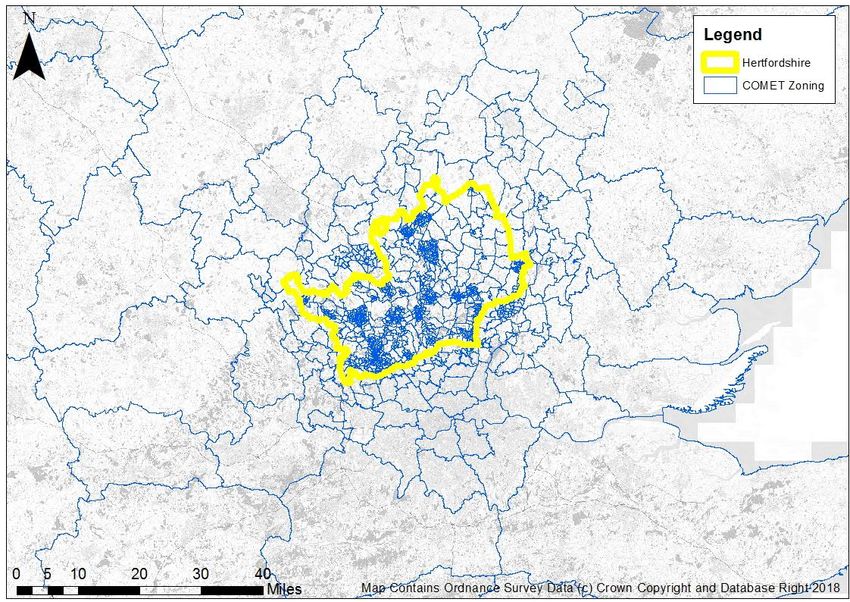
Figure 1: COMET Zoning System ...................................................................................................... 7
Figure 2: Model Development Zone Selection Process .................................................................... 19
Prepared for: Hertfordshire County Council AECOMHertfordshire County Council COMET 2036 Reference Case
Model Assumptions
Tables
Table 1: Classification of Future Inputs ............................................................................................... 8
Table 2: Highway Network Infrastructure List.................................................................................... 10
Table 3: Public Transport Infrastructure List...................................................................................... 16
Table 4: NTEM Population Categories ............................................................................................. 18
Table 5: NTEM Car Availability Categories ....................................................................................... 18
Table 6: NTEM Employment Categories........................................................................................... 18
Table 7: Hertfordshire Planning Data by District (Growth from 2014) ................................................ 20
Table A-1: Employment Densities used for the Calculation of Jobs ................................................... 22
Prepared for: Hertfordshire County Council AECOMHertfordshire County Council COMET 2036 Reference Case
Model Assumptions
1. Introduction
Introduction
1.1 The COMET 2036 Reference Case Model has been developed for Hertfordshire County
Council (HCC) to provide a useful starting point for certain model applications such as
developer testing and potentially business case use1.
1.2 This note sets out the assumptions that have been used in the modelling. These assumptions
should be carefully reviewed alongside the COMET MSR2 and COMET LMVR3 to determine its
suitability for use and when analysing model results.
1.3 The rest of this section describes the transport model background and coverage.
Transport Model Background and Coverage
1.4 The COMET 2036 Reference Case Model utilises the recently updated Hertfordshire
Countywide Model of Transport (COMET v5).
1.5 COMET is a multi-modal transport model which has been developed with a 2014 Base Year.
The modelling suite includes:
§ A Variable Demand Model, built in Emme;
§ A Public Transport assignment model, built in Emme; and
§ A Highway assignment model built in SATURN.
1.6 The Base year highway model represents an average weekday (Monday to Thursday) during
April 2014 for the following time periods:
§ AM Peak hour: 08:00 to 09:00
§ Inter-peak hour: average hour between 10:00 and 16:00
§ PM Peak hour: 17:00 to 18:00
1.7 COMET is most detailed in Hertfordshire; however, it covers the whole of Great Britain as
shown in Figure 1.The highway model has two distinct levels of detail:
§ Detailed (simulation) network and spatially disaggregate demand matrices were
represented in Hertfordshire (Area of Detailed Modelling) and adjacent to Hertfordshire
(Rest of Fully Modelled Area). The Area of Detailed Modelling and Rest of Fully
Modelled Area are collectively referred to as the Fully Modelled Area.
§ Less detailed (buffer with fixed speeds) network and more aggregate demand matrices
outside Hertfordshire and its vicinity.
1
To be suitable for business case use, additional steps will have to be taken with regards to constraining planning data to
NTEM forecasts and a review of the model performance in the AoI of the scheme in question.
2
“COMET_MSR_v3.pdf” issued via email to HCC 28th November 2019
3
“COMET_LMVR_v5.1.pdf” issued via email to HCC 6th November 2019
Prepared for: Hertfordshire County Council AECOMHertfordshire County Council COMET 2036 Reference Case
Model Assumptions
Figure 1: COMET Zoning System
Note Structure
1.8 The rest of the report is structured as follows:
§ Section 2- Classification of 2036 Reference Case Assumptions
§ Section 3 - Infrastructure Assumptions
§ Section 4 - Planning Data Assumptions
§ Section 5 - Uses of the 2036 COMET Reference Case
§ Appendix A - Employment Densities
Prepared for: Hertfordshire County Council AECOMHertfordshire County Council COMET 2036 Reference Case
Model Assumptions
Classification of 2036 Reference
Case Assumptions
2.1 The 2036 COMET Reference Case forecast scenarios include several changes to the modelled
transport network relative to the 2014 Base Year. This primarily concerns the addition of new
transport schemes in the Fully Modelled Area, the adjustment of buffer network speeds in the
External Area and the addition of future year planning data.
2.2 Due to the intended purpose of this model (i.e. primarily a consistent starting point for
developer testing), the certainty level of new transport schemes and planning data has been
considered. New transport schemes have only been included if their certainty level is deemed
by HCC to be “Near Certain” or “More than likely” according to the WebTAG definitions in Table
1 (replication of Table A2 from WebTAG Unit M4 – Forecasting and Uncertainty). The
infrastructure and planning data assumptions used to create the 2036 COMET Reference Case
are detailed in Section 0 and Section 4 respectively.
Table 1: Classification of Future Inputs
Reference Case
Probability of the input Status
Assumption
Near certain: the Intent announced by proponent to This should form part of
outcome will happen or regulatory agencies. the COMET 2036
there is a high probability Approved development proposals. Reference Case
that it will happen Projects under construction. Scenario
More than likely: the Submission of planning or consent This could form part of
outcome is likely to application imminent. the COMET 2036
happen, but there is some Development application within the consent Reference Case
uncertainty process. Scenario
Identified within a development plan.
Not directly associated with the transport These should be
strategy / scheme but may occur if the excluded from the
Reasonably strategy / scheme is implemented. COMET 2036
foreseeable: the outcome
Development conditional upon the transport Reference Case
may happen, but there is
strategy / scheme proceeding. Scenario, but may form
significant uncertainty
Or, a committed policy goal, subject to tests part of the alternative
(e.g. of deliverability) whose outcomes are scenarios
subject to significant uncertainty.
Conjecture based upon currently available These should be
information. excluded from the
Hypothetical: there is
Discussed on a conceptual basis. COMET 2036
considerable uncertainty
Reference Case
whether this outcome will One of a number of possible inputs in an Scenario, but may form
ever happen initial consultation process. part of the alternative
Or, a policy aspiration. scenarios
Prepared for: Hertfordshire County Council AECOMHertfordshire County Council COMET 2036 Reference Case
Model Assumptions
Infrastructure Assumptions
Introduction
3.1 This section provides a description of the transport infrastructure options included in the
COMET 2036 Reference Case.
Highway Network Infrastructure
3.2 Table 2 shows the list of schemes sorted by district included in the COMET 2036 Reference
Case. The 2036 COMET Reference Case includes individual scheme IDs which have been
allocated by AECOM in liaison with HCC.
Prepared for: Hertfordshire County Council AECOMHertfordshire County Council COMET 2036 Reference Case
Model Assumptions
Table 2: Highway Network Infrastructure List
Scheme ID Location Description District Implementation Certainty
Year
Brox_1 M25 jct 25-27 Widening of motorway to 4 lanes with hard shoulder running Broxbourne Implemented Implemented
Brox_2 M25 junction 25 M25 junction 25 RIS 2 capacity improvements - Option 2 Broxbourne 2021 More than likely
Brox_3 Hoddesdon New link to Essex Road roundabout with existing link retained as a local Broxbourne 2021 More than likely
access. New link has greater capacity compared to existing link.
Narrowing of Dinant Link W entry to roundabout from 3 to 2 lanes.
Brox_4 Turnford / New 4 lane Link road runs through to Halfhide Lane which then becomes Broxbourne 2031 More than likely
Brookfield Brookfield Lane W south of the retail park - SB on slip at the Turnford
interchange is no longer assumed.
Brox_5 Hoddesdon Additional lane on eastern arm of roundabout Broxbourne 2021 Near Certain
Brox_6 Hoddesdon Roundabout improvements to provide additional eastbound & southbound Broxbourne 2021 Near Certain
lanes
Brox_7 Hoddesdon A10 Hoddesdon Dumbbell Roundabout - Dinant Link Road - New Broxbourne 2018 Near Certain -
roundabout to permit access to High Leigh development being built
Daco_1 Hemel Hempstead Lane reallocation Dacorum 2031 More than likely
Daco_2 Hemel Hempstead Junction Signalisation Dacorum 2031 Near Certain
Daco_3 Hemel Hempstead Rearrangement of junction & signal optimisation Dacorum 2031 More than likely
Daco_4 Hemel Hempstead New link between Boundary Way and Wood Lane End (assume single Dacorum 2019 Near Certain
carriageway with 3-way traffic and 30mph. Buncefield Lane north of
Boundary Way (between Boundary Way and Cherry Tree Lane and
between the A414 and Green Lane will become a quietway so does not
need to be added).
Daco_5 Hemel Hempstead Signal optimisation Dacorum 2031 More than likely
Daco_6 Hemel Hempstead Signal optimisation Dacorum 2031 More than likely
Daco_7 Hemel Hempstead Signal optimisation Dacorum 2031 More than likely
Prepared for: Hertfordshire County Council AECOMHertfordshire County Council COMET 2036 Reference Case
Model Assumptions
Scheme ID Location Description District Implementation Certainty
Year
Daco_8 Berkhamsted improvements including traffic lights and pedestrian crossings required in Dacorum 2018 Implemented
association with MU/6: Land at Durrants Lane / Shootersway (Egerton
Rothesay School) and Local Allocation LA4: Hanburys.
Daco_10 Hemel Hempstead New roundabout access Dacorum 2031 More than likely
Daco_13 A4146 Water End A4146 HGV ban at Waterend Dacorum 2017 Implemented
EHerts_1 Bishops Stortford Junction capacity improvements associated with Bishops Stortford North East Herts 2021 Near Certain
development
EHerts_2 Bishops Stortford Additional lanes on approach arms East Herts 2021 Near Certain -
being built
EHerts_3 A120 Little Hadham New A120 bypass East Herts 2024 Near Certain
EHerts_4 A602 Ware - signalisation and upgrade of A10 / A602 junction, upgrade of Anchor Lane East Herts 2018 Implemented
Watton at Stone junction, realignment of A602
EHerts_5 Stansted Abbotts Remove the existing Bus Ln on Ware Rd approach to A10 Amwell Rbt East Herts 2021 Implemented
EHerts_6 Bishops Stortford New access from Bishops Stortford North development to A1250 Hadham East Herts 2019 Near Certain -
Road being built
EHerts_7 North Bishops 30mph single carriageway road connecting A1250 Hadham Road with East Herts 2031 Near Certain
Stortford A120 and B1004 Rye Street. Early accesses to existing roads already
being built. Full Spine Road and new A120 access assumed by end of
development
EHerts_8 North Bishops New access from Bishops Stortford North (ASR5) development to Rye East Herts 2021 Near Certain -
Stortford Street being built
EHerts_9 Bishops Stortford Signalisation of existing junction and provision of rear access from East Herts 2021 More than likely
Motorway Service area
Prepared for: Hertfordshire County Council AECOMHertfordshire County Council COMET 2036 Reference Case
Model Assumptions
Scheme ID Location Description District Implementation Certainty
Year
EHerts_10 Bishops Stortford Provision of new MSCP with new signalised access and signalisation of East Herts 2021 Near certain
A1250 / Northgate End junction
EHerts_11 Bishops Stortford Signal optimisation - signals are being refurbished East Herts 2018 Near certain
EHerts_12 Standon Signalisation of junction East Herts 2025 More than likely
EHerts_13 Bishops Stortford Introduction of traffic calming measures, improvements of pedestrian East Herts 2021 Near Certain
footpaths and crossing facilities.
EHerts_14 North and East of 1.Newarm on A1170 / A10 roundabout and signalisation. 2.Access onto East Herts 2031 More than likely
Ware B1004 Widbury Hill East of Ware. 3. Two Accesses are joined by a
distributor Road in between which also intersects with Fanhams Hall Road
EHerts_15 Sawbridgeworth Upgrades of A1184/West Road/Station Rd junction East Herts 2021 More than likely
EHerts_16 Buntingford Capacity enhancements to junction East Herts 2021 Near Certain
EHerts_17 Hertford Signal optimisation. East Herts 2021 More than likely
EHerts_18 Buntingford Reduced speed limit from 40 - 30mph East Herts 2021 Near certain
Hmere_1 Borehamwood Changes to signal staging and timing Hertsmere 2017 Implemented
Hmere_2 Bushey Traffic calming & pedestrian enhancements Hertsmere 2021 Near Certain
Hmere_3 Borehamwood Upgrade of junction to continental roundabout (DWG files available on Hertsmere 2031 More than Likely
AGOL)
Hmere_4 Borehamwood Junction improvement with replacement of the Tesco roundabout with Hertsmere 2031 More than likely
signals
Hmere_5 M25 junction 18-25 Smart motorway with hard shoulder running Hertsmere 2016 Implemented
Nherts_1 Royston New left in left out access from York Way onto A505 North Herts 2031 Near certain
Nherts_2 Baldock Signal optimisation North Herts 2021 More than likely
Nherts_3 Letchworth A505 / Norton Way. Signal optimisation: add extra stage for the North Herts 2021 More than likely
movements from Willian Way
Prepared for: Hertfordshire County Council AECOMHertfordshire County Council COMET 2036 Reference Case
Model Assumptions
Scheme ID Location Description District Implementation Certainty
Year
Nherts_4 Hitchin Signal controlled System at junction with optimisation of timings North Herts 2021 More than likely
Nherts_6 Royston Widening of junction approach arms North Herts 2021 Near Certain -
being built
Nherts_7 Hitchin Improve signalised junction and pedestrian phasing North Herts 2021 More than likely
Nherts_8 Hitchin Improve signalised junction and pedestrian phasing North Herts 2021 More than likely
Nherts_9 Royston Widening of roundabout approach arms North Herts 2021 Near Certain -
being built
Nherts_10 Royston Widening of roundabout approach arms North Herts 2021 Near Certain -
being built
Nherts_11 Royston Construction of a new roundabout onto A505, Royston North Herts 2021 Near Certain -
being built
StAlb_1 St Albans St Albans Road/Sandridge Road/Marshalswick Lane/Beech Road - St. Albans 2021 Near Certain
junction improvement
StAlb_2 Colney Heath A414 Colney Heath longabout safety scheme St. Albans 2021 Near Certain
StAlb_3 St Albans Oaklands development new access onto Sandpit Lane St. Albans 2021 Near Certain -
being built
StAlb_4 Chiswell Green New Arm to roundabout to serve new hotel development St. Albans 2021 Near Certain
Stev_1 A602 Stevenage Junction Signalisation Stevenage 2018 Implemented
Stev_2 Stevenage Upgrading of the existing Gresley Way/A602 roundabout to signals Stevenage 2031 More than likely
Stev_4 Stevenage Upgrade of A602 / Gunnels Wood Road / GSK junction to hamburger Stevenage 2021 More than likely
layout
Stev_5 Stevenage Signalisation and capacity improvements at existing junction (A602 phase Stevenage 2018 Implemented
1 improvement works)
Stev_6 Stevenage (south) Hertford Road Speed reduction measures & bus gate Stevenage 2021 Near Certain -
being built
Prepared for: Hertfordshire County Council AECOMHertfordshire County Council COMET 2036 Reference Case
Model Assumptions
Scheme ID Location Description District Implementation Certainty
Year
Wat_1 Watford Implement 20 mph zone in defined areas Watford 2031 Near Certain
Wat_2 Watford New link road from Dalton Way providing access to Watford Health Watford 2018 Implemented
Campus
WelHat_1 Welwyn Garden Welwyn Garden City Town Centre Development Welwyn 2021 More than likely
City Hatfield
A1M_1 A1 (M) jct 6-8 Widening of motorway to 3 running lanes between junctions 6-8. North Herts / 2026 More than likely
Stevenage /
Welwyn
Hatfield
CBeds_1 M1 - A5 New link between M1 and A5 north of Dunstable Central Beds 2017 Implemented
CBeds_2 Biggleswade A1 Biggleswade Junction improvements – capacity improvements and Central Beds Complete Implemented
dedicated left turn
Lut_1 M1 jnc 11a - A6 New link between M1 and A6 around North Luton Luton 2022 More than likely
Lut_2 Luton Dualling of Vauxhall Way between Stopsley Way / Hitchin Road and Luton 2021 Near certain
Kimpton Road
Lut_3 Luton Widening of Gipsy Lane between Kimpton Road to just before link road to Luton 2020 Near certain
New Airport Way to 4 lanes (no central reserve
Lut_4 Luton Luton Town Centre Bypass Luton Implemented Implemented
(opened Sept 2014)
Prepared for: Hertfordshire County Council AECOMHertfordshire County Council COMET 2036 Reference Case
Model Assumptions
Public Transport Schemes
3.3 Table 3 sets out the public transport schemes included in the COMET 2036 Reference Case.
Prepared for: Hertfordshire County Council AECOMHertfordshire County Council COMET 2036 Reference Case
Model Assumptions
Table 3: Public Transport Infrastructure List
Scheme ID Location Description District Implementation Certainty
Year
Brox_1 Broxbourne New bus service High Leigh - Broxbourne Station Broxbourne 2031 Near Certain
Lut_1 Luton New Light Rail Transit connection between Luton Parkway Luton 2021 More than
and Luton Airport likely
Stev_1 Stevenage Hertford Road Speed reduction measures & bus gate Stevenage 2019 Near certain
Stev_2 Stevenage Relocation of existing bus station Stevenage 2021 More than
likely
Herts_1 East Coast Main Line and Timetable changes and change in route for Thameslink and Hertfordshire 2018 Implemented
Hertford Loop services Great Northern services
Herts_2 Heathrow to Harlow Rationalisation of existing 724 route into route 724, & 302 - Hertfordshire 2020 Near Certain
splitting it into sections with improved frequency over
shorter distances e.g. WGC to Hertford 1bph to 2bph
Herts_3 Aylesbury to Watford, and Aylesbury to Watford now 20 min frequency on 500 service. Hertfordshire 2019 Implemented
Maple Cross to Watford 520 retention on section from Maple Cross to Watford
Junction section only (rather than Hemel).
Herts_4 Hemel Hempstead to Route now becomes 300, 301 and 303 Hertfordshire 2019 Implemented
Stevenage
Prepared for: Hertfordshire County Council AECOMHertfordshire County Council COMET 2036 Reference Case
Model Assumptions
Planning Data Assumptions
Planning Data and Trip-Ends
4.1 The forecast planning data (i.e. employment and dwelling growth) by COMET zone for all 10
Hertfordshire districts was collated and provided by HCC. Similarly, to the infrastructure data,
only planning data with a high level of certainty has been included. In practice this means the
planning data provided contains two elements:
· Completions (completed sites between the COMET base year of 2014 and the current
year of 2019); and
· Permissions (planning data with a high level of certainty).
4.2 Outside of Hertfordshire growth assumptions are based on National Trip End Model (NTEM)
v7.2 projections.
Planning Data within Hertfordshire
Housing/Dwellings
4.3 The growth projections from HCC are provided for housing and employment, however, this
doesn’t include population changes. Therefore, AECOM converts housing projections into
population by using the average population/household value for the appropriate MSOA and
year from NTEM v7.2.
Employment
4.4 Local planning authorities have less control over employment growth and therefore less
information on likely growth by location. Much of the employment data provided for the
Hertfordshire districts was in terms of employment floor space rather than jobs and has
therefore been converted to an estimated number of jobs by AECOM. This conversion process
is based on employment densities as defined in the Employment Densities Guide (November
2015 – Homes and Communities Agency). For land use types not included in this guide, site
data from TRICS has been used to generate an employment density value. The conversion
factors used for COMET can be seen in Appendix A .
4.5 Projected conversions/demolitions which involve the change or loss of a certain land use type
have been taken into consideration during the employment data collation process. This reduces
the risk of double counting job sites.
4.6 In most cases, the conversions/demolitions are directly accounted for in their COMET zone. For
some zones, however, deducting the number of units to be demolished leads to negative
values. This is due to discrepancies between the planning data and NTEM v7.2 employment
allocations. To address this, where reduction of employment exceeds existing employment in a
zone, the remaining reduction of employment has been subtracted from neighbouring zones
proportionally to reconcile the data. This addresses planning data and NTEM v7.2 employment
allocation discrepancies, whilst maintaining the total reduction in employment forecast for each
area.
Planning Data Processing
4.7 Population and employment data are processed to be consistent with the NTEM categories.
For population, the data are classified firstly by age, gender and employment status into 11
categories, and secondly by car availability into eight classifications. Employment forecasts are
included within the attraction data (along with households and holiday homes), with jobs
classified into 12 employment categories. The factors used to split total population and total
jobs into the categories listed below are derived from the corresponding MSOA and year from
NTEM v7.2.
4.8 A summary of the classifications for population, car availability and employment are given in
Table 4, Table 5, and Table 6 respectively.
Prepared for: Hertfordshire County Council AECOMHertfordshire County Council COMET 2036 Reference Case
Model Assumptions
Table 4: NTEM Population Categories
NTEM Category Description
PT01 Children, aged 0 to 15
PT02 Males in full-time employment, aged 16 to 74
PT03 Males in part-time employment, aged 16 to 74
PT04 Male students, aged 16 to 74
PT05 Males not employed / students (i.e. economically inactive), aged 16 to 74
PT06 Males aged 75 or over
PT07 Females in full-time employment, aged 16 to 74
PT08 Females in part-time employment, aged 16 to 74
PT09 Female students, aged 16 to 74
PT10 Females not employed / students (i.e. economically inactive), aged 16 to 74
PT11 Females aged 75 or over
Table 5: NTEM Car Availability Categories
NTEM Category Description
HHT1 One adult household with no car
HHT2 One adult household with one or more cars
HHT3 Two adult households with no car
HHT4 Two adult households with one car
HHT5 Two adult households with two or more cars
HHT6 Two adult households with no car
HHT7 Two adult households with one car
HHT8 Two adult households with two or more cars
Table 6: NTEM Employment Categories
NTEM Category Description
E03 Primary & Secondary schools
E04 Higher education
E05 Adult education
E06 Hotel, camp sites, etc.
E07 Retail trade
E08 Health / Medical
E09 Services (business, other, postal / courier) & equipment rental
E10 Industry, construction and transport
E11 Restaurants and bars
E12 Recreation and sport
E13 Agriculture and fishing
E14 Business
Planning Data outside Hertfordshire
4.9 The availability of planning data outside Hertfordshire is limited. Consequently, growth in terms
of housing, employment and population in the rest of Great Britain is derived directly from
NTEM v7.2.
Prepared for: Hertfordshire County Council AECOMHertfordshire County Council COMET 2036 Reference Case
Model Assumptions
Model Development Zones
Background
4.10 The following section provides information on development zones in COMET, their likely use for
future applications and guidance for using development zones.
4.11 There are a number of locations in Hertfordshire where significant levels of growth (in terms of
housing and/or employment) are anticipated to come forward in previously undeveloped areas.
The trip patterns of these developments are likely to be materially different to those of the
existing land use, and as such require special consideration in terms of forecast demand
estimation and loading point(s) onto the network.
4.12 Given the limited number of development zones available in the model (50), care has been
taken to minimise the number used at this stage (thereby leaving more available for later
applications). To this end, developments are allocated to model development zones according
to the selection process in Figure 2.
4.13 Specifically, for the COMET 2036 Reference Case scenario, no existing development zones
have planning data associated to them. This is due to the level of certainty associated to the
sites within development zones. It is expected future applications using the 2036 Reference
Case model as starting will make use of development zones as part of development testing.
Figure 2: Model Development Zone Selection Process
Derivation of Development Zone Demand
4.14 Zones which are empty in the Base Model require special consideration in the demand model.
The trip-end model generates estimates of trips from them as described in the section entitled
COMET Trip End Model Forecast Update. However, it is not possible to apply proportional
growth to the base matrix for these zones as the Base matrix has no associated demand.
4.15 A set of gravity models, calibrated by mode and purpose based on the distribution of the base
matrices, have been created for the purpose of estimating distribution to and from development
zones. Because the incremental variable demand model will be applied to these zones as well
as all others, the gravity models are based on base year generalised cost of travel, along with
the trip-ends for the forecast year.
4.16 Having estimated the distribution of travel using a gravity model, the total level of trip-making
for the development zones is then set to the trip ends from the trip-end model.
Planning Data Inputs
4.17 Table 7 below shows the planning data by district used as an input to the 2036 COMET
Reference Case. The table shows changes to planning data from 2014.
Prepared for: Hertfordshire County Council AECOMHertfordshire County Council COMET 2036 Reference Case
Model Assumptions
Table 7: Hertfordshire Planning Data by District (Growth from 2014)
District Zones Dwellings Jobs
Broxbourne 1001 – 1500 2655 -2032
Dacorum 1501 – 2000 5397 2159
East Hertfordshire 2001 – 2500 8256 -505
Hertsmere 2501 – 3000 3519 -5140
North Hertfordshire 3001 – 3500 3329 -2618
St Albans 3501 – 4000 4212 -109
Stevenage 4001 – 4500 2603 -1866
Three Rivers 4501 – 5000 2178 1662
Watford 5001 – 5500 5232 457
Welwyn-Hatfield 5501 – 6000 4757 -2991
Total 42,138 -10,983
Prepared for: Hertfordshire County Council AECOMHertfordshire County Council COMET 2036 Reference Case
Model Assumptions
Uses of the 2036 COMET Reference
Case
5.1 The COMET 2036 Reference Case is intended to be an off the shelf model to be used as a
starting point primarily for developer testing. It is envisaged future applications of the model will
take the inputs as specified above and make adjustments on top to reflect the application.
5.2 HCC and AECOM would advise all developers/scheme promotors should review the COMET
Model Brochure and complete the Model Use Pro-Forma following detailed discussions with
HCC. Copies of both documents are available from HCC.
5.3 Prior to any testing and use of the 2036 Reference Case, high level checks of the
calibration/validation of the base year model in the vicinity of a proposed application will need to
be undertaken to determine its suitability for use. This will highlight any strengths or
weaknesses of the model in respect to the proposed applications and determine whether or not
there may be a need for base year model improvements to increase confidence in forecast year
model results.
5.4 The expected steps therefore for a standard application will be:
1. High level checks of base year model performance.
2. Planning data update and Trip End Model Run;
3. Network Update;
4. VDM run;
5. Model analysis and network optimisation; and
6. Results reporting
Prepared for: Hertfordshire County Council AECOMHertfordshire County Council COMET 2036 Reference Case
Model Assumptions
Appendix A Employment Densities
Table A-1: Employment Densities used for the Calculation of Jobs
Land Use Class Area per Comment
FTE (m2)
A1 (Retail) 18 Assumed value is the average of “High Street” (15-20) and
“Food store” (15-20) in Employment Density Guide. Value
for “Retail Warehouse” (90) is excluded as it is significantly
higher and would distort the calculation.
A2 (Finance & Professional 16.0 Directly from Employment Density Guide
Services)
A3 (Restaurants & Cafes) 18 Assumed average of range (15-20) in Employment Density
Guide
A4 (Drinking 46 Not available in Employment Density Guide, so derived
Establishments) from 47 TRICS sites.
A5 (Hot Food Takeaways) 59 Not available in Employment Density Guide, so derived
from 28 TRICS sites.
B1(a) (Offices) 10 Assumed value is average of the 5 “General Office” types
and Call Centres.
B1(b) (R&D Space) 50.0 Assumed value is average of given range (40-60)
B1(c) (Light Industrial) 47.0 Directly from Employment Density Guide
B2 (Industrial & 36.0 Directly from Employment Density Guide
Manufacturing)
B8 (Storage & Distribution) 81 Assumed value is average of 3 “Storage & Distribution” use
classes.
C1 (Hotels) 100 Value in Employment Density Guide is given in terms of
hotel rooms, which is inconsistent with HCC planning data.
Therefore, TRICS is used to derive a density value based
on 40 sites.
C2 (Residential institutions) 100 Not available in Employment Density Guide, so derived
from 49 TRICS sites.
D1 (Non-residential 36 Not available in Employment Density Guide, so derived
institutions) from 203 TRICS sites.
D2 (Assembly and leisure) 75 Assumed value is the average of “Fitness Centres” (all
types), “Cinema”, and “Amusement & Entertainment
Centres” in Employment Density Guide. Value for “Visitor &
Cultural Attractions” (30-300) is excluded as its range is
very large and would distort the calculation.
Sui Generis 92 Not available in Employment Density Guide, so derived
from 26 TRICS sites.
Prepared for: Hertfordshire County Council AECOMHertfordshire County Council COMET 2036 Reference Case
Model Assumptions
aecom.com
Prepared for: Hertfordshire County Council AECOMYou can also read


