Communication - Commemorating 75 years of advocacy and member service - New ...
←
→
Page content transcription
If your browser does not render page correctly, please read the page content below
ISSUE /NGĀ TAKE 44
                               75 YEARS

communication
                                 2021

                Commemorating
                75 years of advocacy
                and member service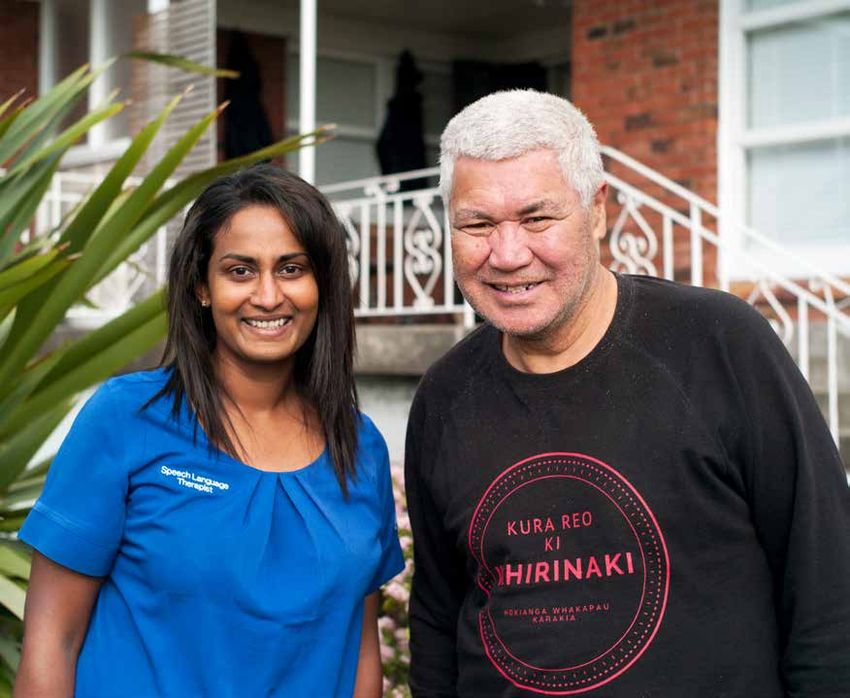
Haere mai
    Annette Rotherham, President
    Rukingi Haupapa, Kaumatua

    Ko te kai o te rangatira ko te kōrero
    Leaders lead through communication
    Ko te tohu o te rangatira ko te manaaki
    Leaders exhibit by helping others
    Ko te mahi o te rangatira ko te whakakōtahi i te iwi
    Leaders unite the people
    By Bishop Manuhuia Bennett, gifted by Matua Rukingi Haupapa

    Haere mai, welcome to                        It has been really enjoyable digging into             with strong evidence based practice,
                                                 the archives and finding our history and              ethical standards and strong cultural
    this special edition of                      timeline with so much change in scope                 values. The NZSTA has grown into a
    Communication Matters where                  of practice over this time. The role of               thriving and stable organisation. We are
    we celebrate 75 years of the                 speech-language therapy has grown                     recognised and respected nationally
                                                 immensely. We are a rich and diverse                  and internationally due to the mahi of
    New Zealand Speech-language                  profession working in partnership in                  our members and to those who have
    Therapists’ Association.                     education settings, health settings,                  volunteered to be in leadership and
                                                 communities, courts, homes, with                      service roles over these past 75 years.
    In this edition we hear from many people     whānau and individuals, to lead full lives
                                                                                                       Thank you to all those who have gone
    who have shaped our profession over          and make the most of their abilities. Our
                                                                                                       before us, who have set the path and
    the 75 years. Just like in this beautiful    future is dynamic and there is challenge
                                                                                                       shone the light on the direction we need
    whakatauki, we look right back to when       ahead of us, ensuring we continue
                                                                                                       to go. •
    Marian Saunders formed the Association in    as a profession to be seen and heard.
    1946. We touch on all those who have led     We must continue to meet the needs                    He waka eke noa
    and served the profession since, and those   of the people of Aotearoa who have                    We are all in the waka together
    who shaped us into who we are today.         communication and swallowing needs,                   Annette and Rukingi

        2   •   Communication Matters            Cover: Rawiri Paratene at his show Peter Paka Paratene. Photo credit: Amarbir Singh.
YEARS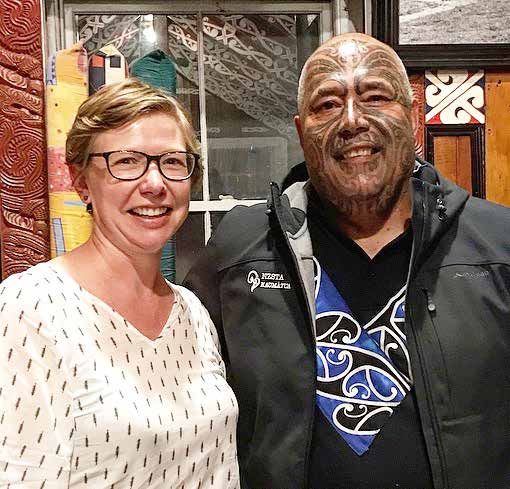
Look who is turning 75!
Siobhan Molloy, Executive Director

Be part of NZSTA celebrating
our achievements over
                                                      Provide feedback and photos
75 years by:                                          for the NZSTA Time capsule

                                                                                        Share your favourite
                          Organise a celebratory event in                               reminiscences on social media
                          your region                                                   #NZSTA-75years

   NZSTA time capsule
   In celebration of our 75th birthday,      • 2021 Speech-language Therapy         Is there anything missing?
   the NZSTA Board will put together           Awareness week poster                Tell me at executivedirector@
   a time capsule to preserve a slice of     • 2021 publications of Speech,         speechtherapy.org.nz
   today for tomorrow’s members. The           Language and Hearing, NZSTA’s
   items that we will be including are:                                             The Board will seal the capsule at their
                                               official journal
                                                                                    first meeting in 2022. The intention
   • 2021 list of NZSTA members              • 2021 conference programme:           is the capsule can be opened at our
   • Photos to commemorate NZSTA               Aoraki Iho Ake: Grounded –           centenary in 2046.
     activities this year – please send        Aspiring – Connected
     in any you have and caption and         • 2021 NZSTA Board minutes
     notate who is who                       • 2021 area meeting minutes
   • 2021 publications of                    • 2021 NZSTA Bulletin
     Communication Matters including           communications to members
     this commemorative edition
                                             • 2021 NZSTA annual report and
                                               audited financial statement.                        Communication Matters   •   3
                                                                                                                                   YEARS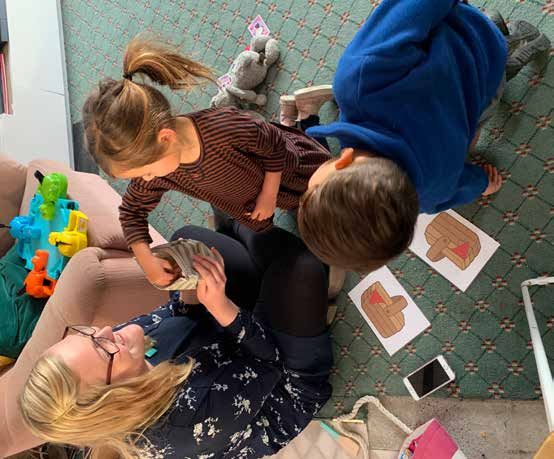
NZSTA happenings
    Some of our recent Association happenings at a glance...

                                  ONGOING                              ONGOING                              ONGOING

        Position Statements                    NZSTA Consumer group               Board meetings
        Statement on the rapid prompting       14 May – Focus on shared           28 June – Hosted at the
        method published on web site.          decision making and capacity.      University of Canterbury – a
                                                                                  great opportunity to have a walk
        Other position statements in           31 May/5–2 June – Speech
                                                                                  around the conference Venue.
        production: therapy assistants and     Pathology Australia virtual
        laryngectomy – close to completion.    conference attended by Annette     19 July – AGM planning.
        Paediatric fluency, cleft palate and   Rotherham, NZSTA president.
        AAC are now in development.            Some fantastic keynotes
                                               exploring the future of the                                   25–27
                                                                                                              JULY
                                               profession, the ways to become
                                    11 JUNE    more global and address many
                                               influences such as colonisation,
                                               that are a barrier to inclusion.
                                                                                  Māori SLT Hui
                                                                                  At Te Kuirau Marae, Rotorua.
        International                                                   23 JUNE
        Communication Project
        Zoom meeting for strategic                                                                            29–31
                                                                                                             AUGUST
        planning group – NZSTA
        represented by Annette
                                               Allied Health Aotearoa
        Rotherham and Siobhan Molloy.
                                               New Zealand
                                               AHANZ meeting and launch           Aoraki Iho Ake: Grounded –
                                               of ‘Hidden in Plain Sight’ at      Aspiring – Connected
                                               the Great Hall in Parliament       At the University of Canterbury.
                                               – advocacy strategy for
                                               Allied Health in Aotearoa –
                                               unfortunately postponed due
                                               to Level 2 announcement.
        4   •   Communication Matters
YEARS
What’s coming up…

                           AUGUST                                 20–24                               SEP–NOV
                                                                   AUG

NZSTA Area Meetings                   IALP 2023                             NZSTA Board Meeting
16 August – Otago area                The venue – Aotea Centre,             27 September – in Auckland
                                      Auckland is booked and                and a welcome to new Board
18 August – Waikato/BOP area
                                      registrations will open in mid        members.
18 August – Canterbury                2022. Save the date:
                                                                            29 November – venue TBC.
                                      20–24 August 2023.
19 August – Auckland area
20 August – Wellington area
25 August – Central area                                         27 SEP –                                 NOV
                                                                  3 OCT

                           AUGUST

                                      Speech-language Therapy               NZSTA Area Meetings
                                      Awareness Week                        8 November – Wellington area
                                      This year’s theme is
70th annual general meeting                                                 10 November – Central area
                                      highlighting one of our values –
An opportunity to celebrate           Rangatiratanga – Share                11 November – Otago area
NZSTA reaching 75 years since         our expertise in the field of
its establishment in August 1946.                                           17 November – Waikato/
                                      communication and swallowing.
                                                                            Bay of Plenty area
                                      Rangatiratanga is associated
                                      with sovereignty, leadership,
                                      autonomy to make decisions,
                                      and self-determination.

                                                                              Communication Matters   •   5
                                                                                                                YEARS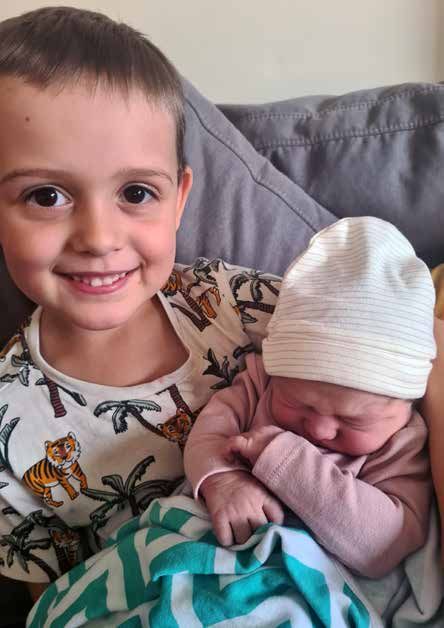
Vision for Māori and Cultural
    Development Portfolio
    Katrina McGarr, Tūranga Kaupapa Māori

    Each year we’ve made new achievements within the Cultural Development portfolio.
    In the last few years alone, we’ve welcomed matua Rukingi Haupapa as our Kaumatua
    who has been instrumental in supporting this role and the wider membership make
    gains in cultural safety, as well as sharing his knowledge and demonstrating patience
    as we continue to learn and grow as a profession.

                                                    This year, we have introduced three         connectedness with the wider Māori
                                                    new tohu that will be presented at this     Allied Health community.
                                                    year’s conference. These are Tohu
                                                                                                Looking forward, I wish to see the
                                                    Manaaki, for recognition of a member’s
                                                                                                person holding this portfolio is someone
                                                    contribution and action to manaaki
                                                    others in our profession; Tohu Rangahau,    nominated and supported by our Māori
                                                    for Kaupapa Māori research; and Tohu        rōpū so that this person can be the
                                                    Kaupapa Māori, a team or individual         voice of our Māori members (and Māori
                                                    award for service and commitment to         SLT non-members). This will ensure that
                                                    kaupapa Māori in the workplace. We will     priorities for this rōpū are given space
                                                    be hosting our first Māori SLT wānanga      and a place to be heard and that Māori
                                                    this July in Rotorua, with the support of   SLT are protected in learning, practicing,
                                                    the board to see this happen. This is       and researching as Māori. I envision that
                                                    something we wish to host every year        the next 25 years will see this portfolio
                                                    as a chance to strengthen our Māori         continue to grow and refine itself as we
                                                    SLT community, working together to          continue to learn how to be responsive
                                                    support our wider aspirations and vision.   Treaty partners. In 25 years we will have a
                                                    As well as this, the board has committed    skilled workforce that is able to provide
                                                    to supporting our Māori colleagues          services to clients across the motu in their
                                                    with membership for Ngā Pou Mana            chosen language, we will have university
    Above:                                          as needed to ensure Māori SLT               programmes that not just teach and assess
    Katrina recently welcomed pēpi Maeve into the   have access to appropriate cultural         in Te Reo Māori, but with a Te Ao Māori
    world, pictured here with her brother Deegan.   support and supervision, as well as         lens enriched in our values and tikanga. •

        6   •   Communication Matters
YEARS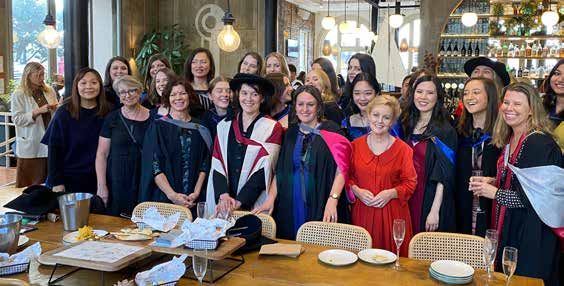
Te Reo o Te Kaumatua
Nā Rukingi Haupapa
Rukingi Haupapa, Kaumatua

Ngā mihi o te wā.
It has been another busy three months
since the last Communication Matters.        Matariki gives us a ‘kiwi’ way of celebrating the
The difference is that ‘Matariki’ is here
again.                                       history and people who laid the organisation that
The Matariki stars arrive usually in June    we are now following and to reflect on our work
and July and signify and celebrate Hōtoke
(Winter) when the old year ends and the
                                             and improve it, ahakoa te iti he pounamu tonu
new one begins. Māori and indigenous         (no matter how small, our efforts will be beneficial).
peoples all over the world have seen that
the natural environment uses this time
to build up and prepare for the new year
coming and remember and reflect those        Matariki gives us a ‘kiwi’ way of          Whakawhanaungatanga and reflecting
that we have lost over the last 12 months.   celebrating the history and people who     and planning will be a big part of the hui.
                                             laid the organisation that we are now      Those who are unable to attend PLEASE
Aotearoa/New Zealand had almost lost         following and to reflect on our work and   SHARE YOUR whakaaro to whoever you
the knowledge and beliefs with Matariki,
                                             improve it, ahakoa te iti he pounamu       know are coming. If you don’t know
but year by year it has been revived
                                             tonu (no matter how small, our efforts     anyone, please pass on to Hana Tuwhare,
to where it is today. Whether Subaru
                                             will be beneficial). The conference and    Katrina NcGarr, or me. We will make sure
in Japan or Matariki in Polynesia and
                                             AGM later in the year will no doubt        your voice and whakaaro is included.
New Zealand – Matariki hunga nui =
                                             give more views and whakaaro for us
Matariki has many admirers. The people                                                  A big THANK YOU and MIHI NUI to the
                                             to improve.
follow by using the natural cycles of the                                               NZSTA board, employers, and our own
stars and moon and putting them into         In a few weeks Māori SLTs have the first   whānau to support by allowing us to find
their lives.                                 hui together. YUHU!!! The timing of        time to meet. Mā whero mā pango ka
                                             Matariki is not an accident with the       oti te mahi – with support from all we’re
What does that have to do with
                                             moon and stars (and universe) but
Communication Matters and you, us?                                                      bound to get our mahi done. •
                                             rather another example of Te Taiao
A chapter in the NZSTA history book          me ngā tūpuna (environment and             Nākū noa.
is closing with 75years in operation.        ancestors) lining up in support.           Rukingi Haupapa

                                                                                                   Communication Matters   •   7
                                                                                                                                    YEARS
A korero
    with Koro
    Sharon Collins, Community Speech-
    Language Therapist, Te Toka Tumai /
    Auckland District Health Board

    The beloved New Zealand
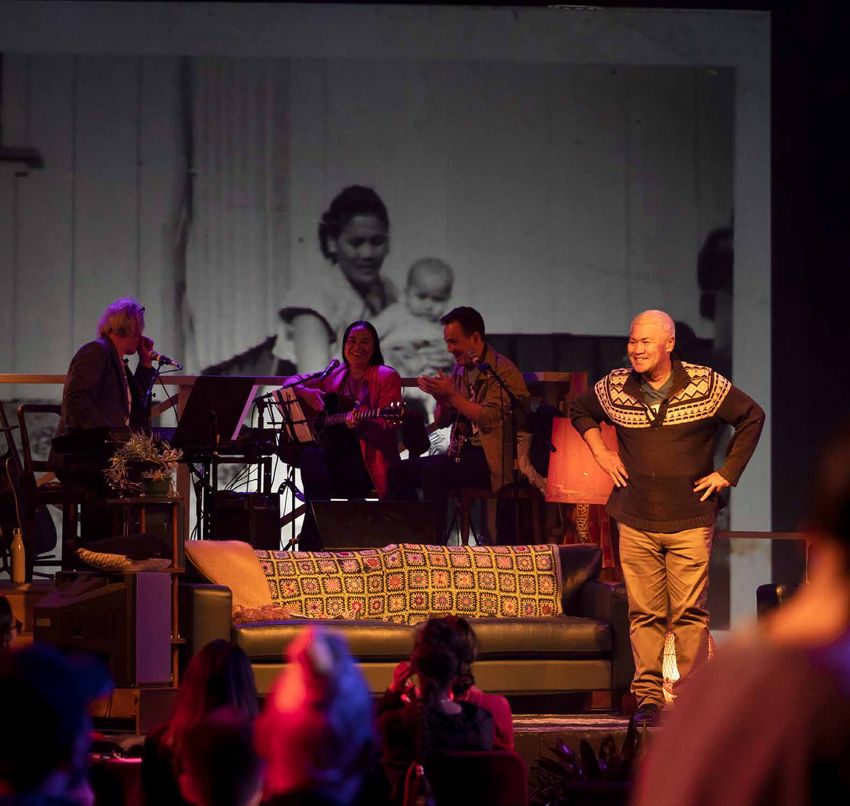
    icon Rawiri Paratene (Ngā
    Puhi, Te Rarawa) who acted
     as Koro in the award-winning

                                                                                                                               Photo credit: Eugene Polkan
    Kiwi film Whale Rider, suffered
    his first stroke in 2019 which
     changed the course of his life.
    Rawiri’s inspirational stroke
     and aphasia recovery has             Above:
    recently been showcased in            Rawiri Paratene and Sharon Collins.

    his swan song performance
    ‘Peter Paka Paratene-Ask Me           I had the privilege of working         at Te Pou Theatre, I got to witness our
    Anything’ that celebrated his         with Rawiri after his 2019 stroke      national taonga share significant aspects
                                          alongside interdisciplinary team       of his life and mahi with sincerity, humour
    50-year career as an actor,
                                          members from the Auckland              and confidence to go off script to answer
    writer, producer and director.        District Health Board Community        questions from his audience.
                                          Rehabilitation Team. As we practiced
                                                                                 One winter’s morning, before setting
                                          saying his children’s names and
                                                                                 off to the marae to a hui with fellow Ngā
                                          getting him into the routine of
                                                                                 Tamatoa members (activist organisation
                                          naming objects when walking in his
                                                                                 that fought for Māori rights, land,
                                          neighbourhood, little did I know
                                                                                 language and culture), Rawiri sat down
                                          that Rawiri was aspiring to get back
                                                                                 with me to reflect on his life before and
                                          on stage for one final curtain call.
                                                                                 after his multiple strokes.
                                          Attending one of his sold out shows

        8   •   Communication Matters
YEARS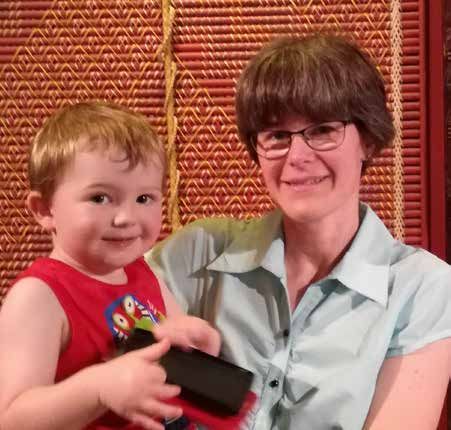
Describe your childhood
My childhood was good. First, we lived
in Hokianga. Then we moved to Ruawai,
near Dargaville. We lived there for three
to four years then moved to Otara, where
my parents bought our family home.

                                                                                                                                              Photo credit: Amarbir Singh
Otara was a good place to grow up.

What inspired your career
ambitions?
                                             Right:
I didn’t know what I was going to do         Rawiri Paratene
when I left school. I was bright so the      at his show Peter
principal at Hillary College wanted          Paka Paratene.
me to do law, especially for Māori.
My parents wanted me to get a white-
                                             What activities have helped you               What are your plans after retiring
collar job like accounting.
                                             to recover?                                   from acting?
I went to my first play Hamlet at The        I go for walks and this is good for me.       I’m going to start a Masters in Arts soon.
Mercury. I had studied Shakespeare at        When I walk, I try and name things            My plan is to graduate in six to seven years.
school and was good at English. After        that I see. The Stroke Club and Gavel         I know that it will be hard but I will have
the show, I went to my teacher and said      Club are really good for me too. They         help. I would like to study English, literature,
I want to act and write like Shakespeare.    are really good socially. The people          art history and political studies. If I can do
That’s what I wanted to do and that’s what   at the clubs have become my mates.            my Masters in Arts, then I might become a
I’ve done. I’ve been a writer, producer,     The Stroke Club is a long way from me.        doctor next. Maybe when I’m 90, I’ll have
director and actor all over                  I take a bus to the club then I get a train   a PhD. That would be cool.
the world.                                   and bus back home. By the end of that
                                             I’ve had it. People have been helping         What have you learnt about life after
What are some special milestones                                                           stroke and living with Aphasia?
in your career?                              me with fatigue management. I’ve also
                                             been participating in stroke research.        I think I’m doing pretty well with my Aphasia.
Working at the Globe Theatre in London                                                     I remember when I had my first stroke,
                                             I participate because I hope the research
was special. I still keep in touch with my                                                 I decided that my work now is to recover.
                                             will help other people who are stroke
mates from there. They knew that I was                                                     People should be positive. Keep positive.
                                             survivors and living with Aphasia.
doing my swan song show and got hold                                                       Know that it’s hard work to recover but the
of me to wish me luck.                       What is your advice for                       work is worth it. I’m grateful that I have my
It was also great to be part of a show       Speech-Language Therapists?                   wife and all of my whānau. It’s really good to
called Children of the Sea. I went to        Speech-Language Therapists do amazing         feel that whānau support or awhi as we call
Sri Lanka, four to six months after the      work. Patience is a virtue. I think that      it. Don’t give up. Trust in love for whānau. •
tsunami. We took that show to the            therapists have to be patient with us and     Arohanui,
Edinburgh Festival and won a couple          they are. Humour is very important too.       Rawiri Paratene aka
of awards.                                                                                 Peter Broughton ONZM

                                                                                                       Communication Matters   •   9
                                                                                                                                        YEARS
Child language, NZSTA
    and a vision for the future
    Dr Jayne Newbury, senior lecturer in paediatric speech and language
    disorders in the School of Psychology, Speech and Hearing, University
    of Canterbury and NZSTA Expert Advisor on Child Language.

    Seventy five years ago, SLTs were articulation specialists and

                                                                                                                                               Photo credit: Catherine They
    child language was not part of our practice. Over time, the
    emphasis shifted to communication and became inclusive
    of language. We are now established as clinical experts in
    evidence based assessment and intervention in child language.
    Our improved understanding of neurological development,
                                                                                                 Above:
    genetics and application of technology over the last 30 years                                Lexie and Jayne at Willowbank,
    is also a cause for celebration.                                                             talking about the otters.

    It is heartening to see the work of Raising   ensuring parents realise their child’s         intervention agents (where appropriate),
    Awareness of Developmental Language           language needs are ongoing and will            spaced learning principles and digital
    Disorder (RADLD) in the UK, and similar       impact on classroom learning (when             technology to maximise service provision.
    organisations in Australia and USA.           this is the case); that teachers realise the    We need to discuss DLD in the cultural
    While there are some excellent publicly       child’s learning difficulties are a result      context of Aotearoa. Many Māori prefer
    funded services available for children        of language challenges (when this is            a strengths based or positive approach
    with language disorders in NZ, few            the case); have accurate terminology to         to what are referred to as disabilities or
    would agree that current public funding       refer to children’s language needs in a         disorders in Western culture. This has led
    levels for language supports allow            way that they are comfortable with; have        to the creation of Māori terms for some
    these children to meet their potential        access to full and accurate information         groups of people, such as takiwātanga (in
    (see Pūatotanga, NZEI, 2021). My 10           about what would best help children             his own space/time) for autism spectrum
    year vision for child language is that        in terms of learning supports; and              disorder. However, the absence of a
    DLD will be as well known as dyslexia         use their time/energy as efficiently as         Māori label for DLD, combined with
    and autism, and that improved and             possible to raise language skills of the        NZ’s current trend away from diagnosing
    increased support services follows. It’s      children on their caseloads. This includes      children with learning disabilities can be
    important all SLTs actively advocate for      structured evidence based programmes,           a source of confusion in terms of what is
    children with language needs, including       group service delivery, other adults as        “best practice”.

        10   •   Communication Matters
YEARS
We need to work together with Māori information about language enrichment
and Pasifika SLT leaders to ask and answer should be readily available and quality
culturally relevant questions within these practices supporting early language
communities to inform SLT practice. development should be part of the
All SLTs need to continue to develop culture of every NZ whānau. It is great to
our own cultural competence to work see the work on this goal by a variety of
across cultures and languages. And people, including Talking Matters, The
we need to be confidently “bilingual” Next Foundation, Andrew Becroft (The
when it comes to our use of terminology Children’s Commissioner) and our own
around disorders, for example, flexibly UC Child Language Research Group.
using either “diagnosis of DLD” or
We have limited data on the language
“identification of the need for learning
ability of children in NZ and how this
Photo credit: Phoebe McCrae
supports in language” depending on
has changed over time. Some data is
the preferences of each family.
available from the narrative sampling
On the positive side, questions about data in SALT (Westerveldt, Gillon &
local bicultural and cross linguistic Miller, 2004) and the GUINZ study
practice for child language are being (www.growingup.co.nz/published-
asked, answered and published (see articles ). My vision for the next 10 years
Gillon & MacFarlane, 2017; Faithful et al., is that we will have accurate monitoring
2020; Newbury et al., 2020; Reese et systems of language abilities for all Above:
al., 2017). We have strong NZ research NZ children in at least English and te Tim and Nina.
projects in child language scheduled for reo Māori at school entry. The recent
the upcoming NZSTA conference. My Preschool Early Literacy Indicators (PELI)
10 year goal in this area is that publishing NZ adaptation is a great start in this
it is important that we find a shared
NZ research will be business as usual for direction (Cameron et al., 2020). This
pathway forward, united in the common
SLTs. Independent research teams should data keeping is important for tracking the
goal of enhancing child outcomes in
be invited (and funded) to evaluate need for language and literacy supports
Aotearoa.
the effectiveness of publicly funded SLT in schools and in the early childhood
services. Evaluations of these services sector, to inform policy decision making. We have come a long way in 75 years.
should be published in peer reviewed NZ SLTs’ capability in both practice and
Finally, my vision is that in 10 years’ time
international literature. It would then research in child language is starting to
all SLTs working in child language would
become the norm to have several high come of age and continued hard work
be NZSTA members, feel an integral
quality NZ studies informing practice in the right direction will lead us to a
part of this organisation and that the
and policy decisions in child language, bright future. •
NZSTA would make strong and positive
alongside applicable international studies.
contributions to their practice. We will be
Our research has demonstrated NZ secure in how our practice in NZ relates Editor’s note: Dr Newbury provided
parents need to be more aware of to international trends and how it is an extensive array of helpful resources
the long term impact of language unique to our context. Over the last few with her article. Please contact her for
further information.
impoverishment in the early years of years external influences have at times
life (Gibson et al., 2020). High quality threatened the unity of our profession, jayne.newbury@canterbury.ac.nz
Communication Matters • 11
YEARSCommemorating
75 years of advocacy
and member service
Siobhan Molloy 1939
The Education
Department altered
1920 policy enabling
Speech therapy began in Christchurch at the teachers interested
School for the Deaf. It was to this school that 1930 in speech and
children with difficulties travelled to for help with Miss Marion E. Saunders appointed hearing disability to
their speech. Adults with war injuries impacting to establish a speech class at the set up speech clinics
speech were also directed to the school. Normal School, Christchurch. instead of classes.
1920 1930 1940
1921 and 1922 1942
Three teachers sent from the School for the Christchurch Teachers
Deaf to Dunedin, Wellington, and Auckland to College chosen as
initiate the first speech classes in New Zealand. first centre for formal
speech therapy
training – a one year
course post 2-years
of primary teacher
training. Three
students selected –
Above: Evelyn Widdowson,
First three speech therapy students 1942. Grace Gane and
Muriel Lister.
Above:
Miss Marion E. Saunders, first president and
first director of speech therapy training.
12 • Communication Matters
YEARS1944
The Hutt Valley Left:
Speech Therapy The first five years
Association formed. of NZST Journals
(Other regions 1965
followed – Otago, 1954 Incorporated as a society,
North Canterbury, Annual general meetings the New Zealand Speech
Wellington…) and conferences moved to Therapy Association
biennial events for ten years. (Incorporated).
1950 1960
1946 1968
The New Zealand Speech Therapists’ Journal founded in May with Grace Gane as editor. Speech therapy
A practical supplement of value to parents and teachers accompanied each issue. training changed
to a two-year
The New Zealand Speech Therapy Association formed in Christchurch in August, during
course following
the first refresher course for therapists to be held in New Zealand. Thirty-three members
one-year primary
recorded as having paid the first annual membership fee of £1.
teacher training.
Left:
Speech Therapy
Journal supplement –
1959.
Above:
Registrants at first refresher course 1946.
Communication Matters • 13
YEARS1983
Budget announcement
that a Bachelor of
Speech-Language
Therapy would be set
up at the University
of Canterbury with
Right: open entry.
Final diploma
graduates 1988–9. First edition of the
NZSTA Bulletin
1973 1979 published – for more
practical sharing of
Marion Saunders’ Trust Mary Roberts
professional news and
Fund launched dedicated in became advisor in
events in addition to
perpetuity as a prize fund for speech therapy to
the journal.
original writing or research the Department of
into matters or problems Education.
related to speech therapy.
1970 1980
1978 1982
The McKeracher Movement from area
Report executive to a national
recommended executive adopted
Let us remember that we are part of a degree training in with Lois Lawn as
movement in New Zealand which is still speech therapy. first president of new
active and growing. We must record now. national format.
It is almost a duty to write down something Marilyn Heine
became advisor for
of what we like to recollect about our
speech therapy at the
experience. Not all of it will find its way into Department of Health to
print but. If written down, it will be there to be ensure that the training
enabled therapists to
called on when needed. It should not be lost. work in health as well
It is our very own history, and it is precious. as education.
Marion E. Saunders, April 1971 – quoted in Looking Back with Joy –
Recollections of an Early New Zealand Speech Therapist.
14 • Communication Matters
YEARS1987 1992 1996
Speech-language therapy Speech-language therapists 50th anniversary of NZSTA.
training extended to three-year increasingly incorporate dysphagia
diploma course post one-year as part of their remit. Inaugural Inaugural joint NZSTA and AASH
primary teacher training. dysphagia themed conference: conference: Communication Partnership –
Speaking of Swallowing. first of its kind with Australasia.
Communication Matters first published. First Speak Week – a collaboration
1989 between Telecom, The New Zealand
The first 25 students Disorders Trust and NZSTA.
enrolled for the 1994 NZSTA’s position regarding ethics,
intermediate year of Adopted the standards, quality measures and
the BSLT programme standards contained in complaints procedures articulated –
with Jo de Seriere as “Communicating Quality” a move towards self-regulation.
head of department. (RCSLT). Standards were
The Asia-Pacific Journal of Speech,
The last diploma gradually modified to
Language and Hearing is launched –
students graduated. meet our unique cultural
Bruce Murdoch as editor.
and geographical needs.
1990
1986 1993 1995 1999
NZSTA joined a working party with Dame Ann Hercus The outcome of NZSTA official
representatives from health, education, and launched the the review of the logo registered
current lecturers. The goal was to integrate the New Zealand BSLT programme with a certificate
needs of both health and education and ensure Communication at University of of trademark
it underpinned the philosophy and content of Disorders Trust. Canterbury secured registration from
the proposed Bachelor of Speech-Language NZSTA donated the future of the Intellectual
Therapy at the University of Canterbury. $1,000. speech-language Property Office.
therapy education
The first 14 students
in New Zealand
graduated from the
including masters
BSLT programme.
and PhDs.
Left:
Evelyn Terris, Anne Buckley,
Rosemary Hargreaves, Above:
Sally Claridge, Jo de Seriere. Past NZSTA logo.
Communication Matters • 15
YEARSLeft:
Programme
Accreditation
Framework working 2010
party – 2002.
Dean Sutherland
appointed as first
2002 2005
male president.
Launch of the Programme Accreditation Massey University
Framework reflecting both New Zealand established the Established new
and international values and standards Bachelor of Speech and NZSTA executive
related to speech-language therapy Language Therapy with council portfolio of
education. Framework updated in 2011 and Honours at the Albany Māori and Multicultural
will undergo a formal review in 2022–23. campus, Auckland. Development.
2000 2010
2003 2008
University of Canterbury programme The Mutual Recognition of
successfully accredited against the NZSTA Professional Association
Programme Accreditation Framework. Credentials signed at
ASHA Congress in Chicago
NZSTA a founding member of Allied Health
between ASHA. CASLPA,
Aotearoa New Zealand (AHANZ) (formerly
RCSLT, IASLT, SPA and NZSTA.
Allied Health Association of NZ) – a national
voice for allied health professions.
Master of Speech Language Therapy
Practice established at University of
Auckland along with PhD opportunities.
16 • Communication Matters
YEARS2013 2016
Volume 16 the Asia Pacific Journal of Speech, Launch of yearlong advocacy campaign – Giving Voice
Language and Hearing (APJSLH) published Aotearoa including communication accessible awards and
under a new title: Speech, Language and the development of communication access principles.
Hearing (SLH) – Michael Robb as editor.
Successful bid to host an IALP 2022 congress
(postponed to 2023).
2014
NZSTA, a founding member of the
International Communication Project
2018
whose aim is to influence international
health and disability policy. Over 50 Establishment of a consumer reference group
organisations participate now. and consumer lead position.
At the United Nations’ Universal Periodic Review
2015 for New Zealand NZSTA highlighted actions the
Karen Brewer established He Government can take to work towards the goal
Kete Whanaungatanga – a of a fully accessible society for Aotearoa.
support network for Māori SLTs.
2020
2011 2019 2021
Judge Andrew Appointment of kaumatua, 75 years on, the
Becroft appointed Rukingi Haupapa (Te Arawa, New Zealand Speech-
the first patron of Ngāti Whakaue) and the language Therapists’
NZSTA. development of our NZSTA Association continues
kaupapa including our waiata: to flourish. A vision of a
Tōnā Reo. thriving profession working
in partnership to enhance
NZSTA established a self-
lives is embedded with
regulation model and began
its values of kotahitanga,
Above: issuing annual practising
NZSTA Board with kaumatua, whanaungatanga,
certificates.
Te Roro o Te Rangi ki Te Kuirau Marae. rangatiratanga and aroha.
Third joint NZSTA and SPA
Members number over 960.
conference: Engaging,
Collaborating and Empowering, Conference hosted in
hosted in Brisbane Christchurch: Aoraki Iho
Right: Ake: Grounded – Aspiring –
Postponement of biennial
Giving Voice Aotearoa Connected.
Consumer Representative:
conference to 2021.
Geneva Hakaraia-Tino.
Communication Matters • 17
YEARSFrom our
Massey University
Being a student representative for the NZSTA
at Massey University has enabled me to
student reps connect with students in other year groups.
I have learned a lot and felt supported from
year 1 of the SLT program as students in
years 2, 3, and 4 were just a message away.
I think the NZSTA facilitates a sense of
agency and togetherness by offering
student representative roles. In the future,
I think the NZSTA will continue to support
us through their new graduate framework
and foster kinship through area meetings
and conferences. I hope these will offer
networking opportunities and promote
systematic decision-making pathways.
Above:
Mikayla Left to right: Rachel Maloy,
Chloe Hamilton-Walker,
Mikayla Scott, Elena Boikov.
University of Canterbury
From the students’ perspective, the NZSTA
is a great platform for us to connect with SLTs
in the field and be up to date with the latest
developments. We are very grateful to have Left:
had NZSTA members volunteer to talk to University of Auckland
us about their work and experiences in the staff and 2021 graduands
field. This has been extremely helpful for us celebrate with whānau.
students to get real-world insight about the
SLT field. This helps us to be prepared for our The University of Auckland
future careers as we are able to get an idea In our time as students, we have come to see the NZSTA as a medium
of what to expect and skills that help SLTs through which SLTs can have a voice to bring about change in the
achieve in their careers. profession at a macro level. We enjoy that it is inclusive and open to
Laura, Jess, Renee feedback regardless of whether you’re a student or an expert. We
personally use the NZSTA as a point of reference for better understanding
our scope of practice while we train. We hope to use the principles
Above: and frameworks set out by the NZSTA in our careers as new graduate
Canterbury Student reps and awareness week. SLTs to practice safely and ensure delivery of a high-quality service.
Crystal and Ella-Rose
18 • Communication Matters
YEARSFrom our
Patty Govender, Aphasia
In the last 75 years we have seen tremendous
medical advances, including in the area
expert advisors of stroke interventions. New acute stroke
treatments such as thrombolysis and clot
retrieval, which are becoming more widely
used in stroke management are demonstrating
more positive outcomes for stroke survivors.
Thus, we are likely to see a decrease in aphasia
frequency and severity. Moving into the future,
this means that clinicians will need to manage
increasing numbers of people with milder
forms of aphasia. What we know is that milder
forms may have fewer visible impairments and
yet induce profound psychosocial impact for
the individual and those around them. There
Robyn Gibson, Aphasia
are also broader impacts on the economy
In the last 75 years, the field of aphasia has changed radically. From and society. We are likely to see more young
advances in neuroscience allowing us to see through scanning the survivors of stroke experiencing difficulty
effects of brain injury and rehabilitation, and to understand the neural returning to work due to lack of appropriate
networks behind language and communication, to the dawn of SLT service, to support them to return to being
cognitive neuropsychology. We have seen monumental shifts from contributing members of society. SLT must
the medical model and purely impairment based therapies, to the continue to champion all people with aphasia
social model which provided scope for SLTs to work at a functional to live life to the fullest.
level, to present services which often combine both. We have seen As an Expert Advisor, my vision is that NZSTA
the rise of aphasia conversation groups, peer support, and the can support the profession, stakeholders,
power of music through the rise of choirs for those with neurological decision makers and consumers by raising
communication changes. We have learnt the importance of tailoring awareness about communication impairment
aphasia rehabilitation to the person, particularly with respect to and reduce barriers to all who need our service
ensuring aphasia rehabilitation is culturally safe for Māori. being able to access it. We must be part of
Aphasia is currently in a period of change again, with international society growing to accept disability amidst
research focusing on what best practice looks like and how that diversity as a whole.
might be achieved across all settings. As public recognition and The current status quo where dysphagia is
understanding of communication disorders grows, and as the prioritised over communication impairment
health care system evolves and changes, our role as SLTs is also likely needs to change! Communication, interaction
to evolve as it has for the past 75 years. In another 75 years, the and participation is as important!
profession may look very different. But what is unlikely to change is
our devotion and commitment to those who live with aphasia and
other communication disorders, and our passion for supporting
them to find their own voices and achieve their dreams. Continues over...
Communication Matters • 19
YEARSFiona Hewerdine, Adult
Neurodegenerative Conditions
75 years of NZSTA is a great time to
reflect on the position of SLTs as well- NZSTA has defined our role, expanded our scope
placed to make a difference to people
with neurodegenerative conditions. of practice and adjusted to the increasing cultural
SLT is a perfect spot from which complexity of our society.
to work holistically and honour Te
Whare Tapa Wha with end of life care,
including saliva management, legacy
recordings and enduring power of Liz Fairgray, Hearing Impairment
attorney. We can support quality living and Cochlear Implant
and quality dying. In this frightening
space, SLTs are great team workers NZSTA has defined our role, expanded
with our specialism for verbal and our scope of practice and adjusted to the
non-verbal communication. increasing cultural complexity of our society.
Due to NZSTA allegiances with RCSLT and
As an Expert Advisor I can see first- ASHA; NZ SLTs have become recognised
hand how the Association’s investment and valued world wide, including in the
in Training Modules in this and other area of hearing loss; my own area of interest.
specialisms and interests can enhance NZSTA has supported the inclusion of
our professional workforce. “Palliative audiology as a significant component of
Care in SLT” is an excellent new the SLT degrees and enabled collaborative
professional development resource participation with audiologists so the
embodying evidence-based practice principles of best practice can actually
for this population. www.onlinecpd. be achieved. In the context of hearing
co.nz/course-providers/speech- loss, we respect Whanaungatanga, using
language-therapists/show/16 a whānau relationship centred approach
includes the lived experience of two which is crucial if children are to achieve
patients, one with laryngectomy and their potential. This clearly links to another
one with motor neuron disease. NZSTA value, Aroha, as we empower
Why not view the short videos, read parents and grandparents to gain the skills
the associated evidence and have to necessary to help their tamariki with
an interactive learning session with hearing loss. This 75th anniversary is an
your team? opportunity for us to step back and think
of early therapists such as Lois Lawn, Grace
Gane. Having known them, I believe that
they would be proud of the advances being
made by NZSTA and would want us to
continue with the work they pioneered.
20 • Communication Matters
YEARSAnn Smaill, Augmentative and Alternative Communication
Over the past 40 years the field of to continue to advocate for better Maegan VanSolkema,
AAC has developed significantly, inclusion and a non-disabling Traumatic Brain Injury
and in the past 10 or so years I society. The work NZSTA is doing As NZSTA grows older and wiser so do our
would like to think that we have through initiatives such as Giving amazing clinicians. The clinical excellence
moved away from thinking AAC is Voice Aotearoa and ICP is helping of SLTs working in the area of traumatic brain
solely a specialist field, to seeing raise awareness. This must continue injury is absolutely remarkable. Clinicians in the
SLTs embrace AAC tools and and gain further momentum. community, residential rehabilitation, intensive
strategies into their day to day rehabilitation, and in the acute settings are all
I have been privileged to work at
practice. Undergraduate training extremely dedicated to serving the brain injury
TalkLink for the last 30 years, and as
has incorporated more AAC into the population and all the challenges that come
a result have also been privileged
courses – although it would be great with this. As an expert advisor in the area of
to work with a small number of
to see even more! traumatic brain injury I have been able to see an
clients for a significant portion of
Over the past 30 years, we have this time. They have some amazing increase in clinicians practicing, asking tough
shifted to a more inclusive society. stories to share and through these and important questions, and really trying to
The closure of psychopaedic stories we can see how far we have seek out ongoing learning especially in the
hospitals and deinstitutionalization come, but that there is still work to area of cognitive communication disorders
has seen more people with complex do, work that hopefully NZSTA can (CCD). In the past 15 years that I have been
communication needs participate support and help to further break practicing in New Zealand there has been an
in society. Access to AAC support down barriers to full inclusion and amazing growth in this area, with SLT’s now
has contributed to breaking down participation. A few examples of at the table of discussions about their clients
the barriers to inclusion. We need three outstanding wāhine: cognitive communication abilities. Exposure
and confidence of clinicians continue to grow
Maqymseahe Ninces but CCD continues to be an area that requires
Maqymseahe had an inclusive education, with multiple university degrees, more attention and acknowledgement in
but struggled to have her “alternative voice “ accepted when sitting NCEA. other populations outside of TBI and across
Fortunately, this is not so likely to be a barrier now, as Maqymseahe influenced the lifespan; support and guidance from all
change. However she still experiences discrimination and recently highlighted aspects of practice including ensuring it is in
this at the UN level. NZSTA ICP work helped facilitate this opportunity. the curriculums of our universities, supporting
Maqymseahe is presenting at our NZSTA conference this year. practicing clinicians how to identify and treat,
and supporting clinicians to feel comfortable
Lusi Faiva within the interdisciplinary cognitive
Multiple award winner – a recent Podcast is worth a listen space, alongside occupational therapy and
www.nukuwomen.co.nz/2021/06/22/074-lusi-faiva/ psychology. I look forward to what the future
has in store for the next 75 years if we keep on
Geneva Hakaraia-Tino this track of being forever learners and aiming
Geneva has been campaigning for a Te Reo Māori synthetic voice for the to get things right.
past five years. The technology exists, and we are working to get funding to
develop the first voice. However we are only just dipping our toes into how
to support Te Reo AAC options. My dream is that we have a range of Te Reo
voices AND a range of symbol-based AAC systems to use with the voices.
Communication Matters • 21
YEARSFrom our
life members I have never regretted my
choice of this profession. It has
led to many opportunities and
Jo de Seriere
friendships. Much has been
Life membership was a great privilege to
be acknowledged by my peers. learned on the way and I am
This was especially so after some initial still learning. The key is to be
xenophobic reactions when I took
on leadership of the Christchurch
open to new ideas.
programme in 1982. Lois Lawn, Life Member and Past President,
interviewed in Communication Matters in 2012
NZ society has diversified hugely since
I arrived in NZ. NZSTA has matured
tremendously over these intervening
years, taking significant steps towards
meeting the needs of our tangata Sally Schoon professional practice and then
whenua and the wider multicultural When Philippa wrote to me about to mutually support colleagues.
environment. I’m proud of these efforts becoming awarded Life Membership Supporting increased access and
– recognition and respect for cultural I was stunned, embarrassed and training for Māori students were
diversity has always been my passion. confused – the “Why me?” and the actions I pushed for when
imposter syndrome scenarios. President/Vice President in the
SLT is a great career. It is a privilege to 1980s, and it is a great thrill to see
be connected, often very closely, to our I was honoured of course. Humbled the collective work of NZSTA
clients and their whānau. definitely. And now 5 years later I making tangible change.
am pleased and grateful too. Thank
you NZSTA. IT developments within the profession
are also positively impacting on both
It is wonderful seeing the Association clients and practice.
welcoming a Kaumatua whose
presence, guidance and influence Another earlier dream is now
are perhaps not accidentally aligned in evidence with graduate
Left: with processes already in progress. programmes. Research in our field
Jo de Seriere I am delighted to see NZSTA should continue to widen and
in her Redcliffs working for increased access for grow, with the very real possibility
Mount Pleasant Māori students to study, to be of seeing New Zealand at the
Bowling Club supported during their study. We forefront of breakthroughs of
uniform. must then support them within international significance.
22 • Communication Matters
YEARSMarilyn Heine jobs in order to work towards a common good.
Becoming a Life Member has been one of the It is an uplifting memory for me.
greatest joys in my life. I spent all my working life I look back with affection to Dr Jean Seabrook
as a speech-language therapist and would do and Grace Gane and have such good memories
it all again and enjoy the greater opportunities of Cranmer Square and Purchas House (where
that are available now. we trained before the move to Ilam).
One of the greatest highlights for me was the Jean and Grace worked tirelessly towards a
working party which was set up in the eighties profession which I realise looking back was only
to plan for the new degree. My role was to just starting to establish itself in its own right.
represent the needs of the health sector and
And all along the NZSTA has continued to work Above:
I received tremendous support from senior for us. Each executive has worked in their own Marilyn Heine.
health department officials. I remember the time on top of busy caseloads and as a result
many long meetings in Christchurch and over the years we have gained so much.
the enthusiasm and hard work from people Below:
like Lois Lawn and Jo de Seriere and Brigette I am thrilled that we are at 75 acknowledging Fiona Hewerdine.
Larkins. There were many differing agendas of how far we have come and how dedicated so
course but all the way through the NZSTA was many have been over the years with the result
consistent with the dream to have a degree we have a profession we can be so proud of.
course which was as good as anywhere in I feel quite emotional writing this and can
the world. I still admire how many gave away only say again how thrilled I am to be a
privileges such as school holidays and even Life Member.
Life members
Mrs Gwen Broadley (d) Fiona Hewerdine Māori title for SLT, in common usage. I would
Mrs Jo De Seriere It was a huge shock to me to be awarded also like to see increased engagement of our
Mrs Ngaire Harding Life Membership of NZSTA. As the meeting service users in all areas of our association.
Mrs Marilyn Heine erupted into waiata, it was an enormous I am delighted to see the explosion of NZ-
honour. I reflected that this is not something based evidence supporting practice. I am
Mrs Chris Justin (d)
which would have happened in the early also delighted to see our current leaders
Mr Vijay Kumar years of NZSTA’s AGMs. How appropriate is it building on the work of our earlier pioneers,
Kaniyanoor Venkatesan that this taonga should be our way of affirming for advocacy for adults and children with
Mrs Lois Lawn (d) someone and expressing ourselves as a communication disorders. We need to
Mrs Evelyn Terris profession which treasures communication. keep the flames alive and continue to ignite
Sally Schoon Going forward, there are many things I would the future of SLT – and NZSTA is a fantastic
like NZSTA to achieve. I would like to see a platform to keep the fires burning!
Gail Gillon
Fiona Hewerdine
Honorary member Communication Matters • 23
Dr Margaret Maclagan YEARSFrom our I’m so proud to be part of an association that
past presidents
continues to develop and progress. The challenges
facing NZSTA keep growing and members keep
stepping up to meet them.
We had almost 500 members, which seemed
huge, yet we all seemed to know each other!
Such a dedicated group, with such high energy
Carla
levels, sense of “fun”, and enthusiasm. I think those
Darling-
qualities define us as SLTs and ensure NZSTA stays
Knott
strong into the future.
2002–2004
Anne Mannion Our achievements included forming Programme
1996–1998 Accreditation Council, contributing to the Health
We focussed on increasing Practitioners’ Competence Assurance Bill, and
professionalism and public profile, establishing Special Interest Contacts.
moving to Portfolio structures and
increasing links with Australia. We
appointed Ngaire Hamilton as
Executive Officer who did a fabulous Stella Ward
job for the next decade. 2002–2004
NZ’s first SLT Awareness week Presidency offered great opportunity to learn as NZSTA matures as a platform for
occurred in 1996. Telecom NZ and lead, and I treasured the experience. advocacy. The website and social media
provided sponsorship and Dame demonstrate NZSTA continues to evolve,
Ann Hercus (Labour politician and We were very focussed on the Mutual
just as we were taught that language does!
UN Advisor) toured and spoke. Recognition Agreement and it was an honour
The media coverage was excellent, to attend the signing in the US. Another SLT has been instrumental in my leadership
raising our profile. focus was ensuring sufficient rigour and success in health and disability, and now as
standards across SLT, including university a Digital Leader across All of Government.
I was also proud of ushering in degree programmes’ accreditation and I can advocate for digital inclusion and
shorter AGMs! continuing professional development highlight the importance of digital skills
As a profession without formal framework. We continued attempts to for all. When I first embarked on my SLT
registration, NZSTA remains essential become a regulated profession and it is career, I recognised that technology would
to provide ongoing education, regrettable that this wasn’t achieved. fundamentally affect how we live, work and
direction and of course accountability play – but the most important part of being
NZSTA has made strides to support Māori
and no one else can bring Aotearoa’s human is our need as social beings.
practitioners, building on foundations of
particular perspective to our work. previous executives. Continued NZSTA SLT has a role in shaping how technology
leadership is needed to meet our Treaty of enhances our communication abilities.
Waitangi obligations. I look forward to seeing how new leaders
within SLT tackle this great opportunity.
There has been support for members and
24 • Communication Matters service users to lobby and raise awareness,
YEARSDuring my presidency we continued to develop strong
international relationships with partner associations. Despite
our size, we certainly punch above our weight! I’d like to
acknowledge the many others who worked alongside me; giving
Dean
and continue to give, hours of their time for our profession.
Sutherland,
2010–2012 It’s so very exciting to see NZSTA becoming more representative
There are many memorable of our bicultural context.
Helen
reflections for me from my McLauchlan SLTs are working in new and varied areas of practice, and as
term as NZSTA’s president. 2012–2015 our numbers grow we see SLTs moving into diverse roles. We
Navigating the move of the need to consider how we use these networks to ensure we
‘office’ from Christchurch to don’t view them as having ‘given up SLT’ but rather having taken
Auckland during the seemingly their awesome skill set in another direction. What exciting new
endless earthquake period opportunities this opens up for our profession.
was challenging. Creating
the concept of International
Communication Project in
collaboration with Chris Stone
(SPA President) and then
successfully pitching this to
US, UK, Canada, and Ireland
was an absolute highlight. It Philippa Friary
is rewarding to see this, and 2015–2018
our relationship with SPA, still With the risk of losing my ‘lit-ness’ impact influencing policy locally. We are taking
very active in 2021. Some factor … I completed my SLT degree at steps forward in mahi tahi as tangata
of the challenges for the the University of Canterbury without the whenua and tangata tiriti … and we have
profession are quantifying use of the world wide web, let alone a more mahi to do.
the social and economic smartphone. During this time in the late
benefits of SLT work. We must How can we work in true partnership
80s and early 90s, the profession needed
increase public awareness with our whānau and communities? How
to focus on working out who we were and
and galvanise political action can we continue to grow more diversity
jostling for recognition at the table with
to ensure SLTs in Aotearoa in our profession? How can we create
our interprofessional colleagues.
are recognised, valued and the education and health services that
rewarded appropriately. The SLT Looking to today, we have dusted off we would want for our mokopuna? A
workforce must be sufficiently our Doc Martens again and have found whakatauki to send us towards our 100
prepared (in size and skill) and our tribe and our voice. We are known year milestone is about strength and
equipped to support the aging and respected in our workplaces and no resilience, ‘Kia mate ururoa kei mate wheke’
and diversifying population longer need to jostle for our invitation. (don’t fight like an octopus, fight like a
of people in Aotearoa who We are leading researchers globally and hammerhead shark). Mauri ora, kia ora.
experience communication
challenges.
Communication Matters • 25
YEARSMargaret Maclagan,
From NZSTA’s Honorary Member
After I’d been teaching SLT students
community for some years I applied to join the
association. I thought it would be
helpful because I hoped to find
courses that were relevant to my
teaching. I was told it would ‘bring the
association into disrepute’ because
I didn’t have SLT qualifications. I could
Renee Taylor, former Tūranga Kaupapa Māori, Māori and Cultural see where they were coming from,
Development Portfolio but I was disappointed. Some time
When I naively and enthusiastically entered the role as Māori and Cultural later NZSTA created the category of
portfolio I had no idea how hard it would be spiritually and professionally. Honorary Member so I could join.
But when I look at where the NZSTA is now I can see that it was worth it. The I really appreciated that and I also
ripples made are now making waves. Although we still have a long way to appreciated receiving an NZSTA
go, it’s clear we’ve come a long way. All thanks to all those before me, and membership badge. Since my
now those who continue to push forward fiercely. We are moving away from ‘retirement’, I’m glad I can continue
tokenism to truly trying to understand the importance of why, in order to make to be associated with the NZSTA
it the norm. Ahhhh equity! It takes a village, and in previous years having one and the department. I was happy to
voice was challenging. So to see our village grow with more representation of stop teaching, but I still enjoy
Māori on the board in roles other than ‘the cultural one’, plus the never ending research – I hope that lasts for a long
support of our most amazing and active kaumatua, combined with the support time yet! By far the best part of my
of a beautiful rōpū of Māori SLTs who wānanga regularly, we’ve solidified our association with NZSTA is the people
foundation and our purpose. That’s what’s taking us forward. That’s the magic. – especially students who have
become valued colleagues.
Karen Brewer, former Cultural Development Portfolio Holder
Congratulations to the NZSTA on the 75th anniversary. As we reflect on where we’ve
been and where we are going, top of my mind are the wāhine who have held the
Māori and Cultural Development portfolio since it’s inauguration. Kerrie Gallagher
(now Collier) was the first person in the role, followed by Adele Siave, then me,
Renee Taylor and now Katrina McGarr. I also acknowledge Waimirirangi Andrews
and the support she gave me personally. Each of these wāhine have brought
different skills and experience to the role. Each of us has developed it a little further
and we have all had similar struggles. In our Association, and our profession, I see
a huge willingness and enthusiasm to engage with Māori, although sometimes we
“don’t know what we don’t know”. As we move forward may we always remember
“titiro, whakarongo ... kōrero” so we look and listen with all our senses before we
26 • Communication Matters speak or act.
YEARSYou can also read


