2019 MEDICINE & HEALTH SCIENCES - UNDERGRADUATE PROGRAMMES - Keele University
←
→
Page content transcription
If your browser does not render page correctly, please read the page content below

MEDICINE &
HEALTH SCIENCES
   UNDERGRADUATE PROGRAMMES

                   2019
We’re Keele University and we’re different. Founded more
    than 60 years ago to meet the demands of a new kind of
   society, economy and world, our principles resonate now
  more than ever. Our approach to education is central to this
               and is, above all, what defines us.

keele.ac.uk                eele difference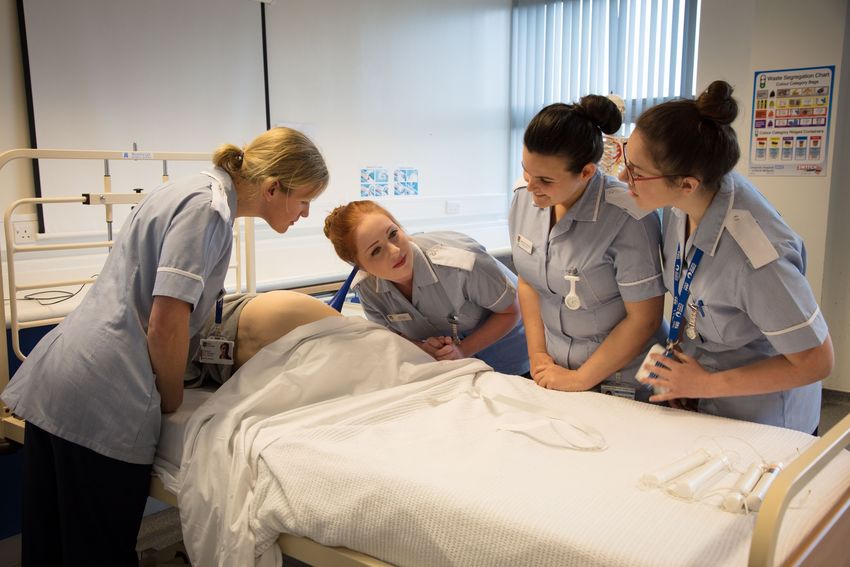
CONTENTS | 3

Contents

Faculty of Medicine & Health Sciences   | 5

State-of-the-art facilities             | 6

Our Faculty programmes                  | 11

School of Health & Rehabilitation       | 12

School of Medicine                      | 20

School of Nursing & Midwifery           | 26

School of Pharmacy                      | 42

Foundation year programmes              | 50

Keele campus - your home from home      | 52

How to find us                          | 56

Useful links                            | 58

Further information                     | 58

How to apply                            | 58

Tuition fees                            | 58

Important information                   | 58

Contact details                         | 59

Keele has been named as one of the Top 5
most beautiful universities in the country
(Times Higher Education, 2018).

                                                keele.ac.uk
4 | FACULTY OF MEDICINE & HEALTH SCIENCES

Do you want to make a difference
to the world of healthcare?

Discover the Faculty of
Medicine & Health Sciences at Keele University…

…we offer a range of highly rated professional health
programmes in Medicine, Pharmacy, Physiotherapy,
Radiography, Nursing, and Midwifery that will enable you to
have a varied and interesting career, and make a real
difference to the world we live in, and people’s lives.

keele.ac.uk
FACULTY OF MEDICINE & HEALTH SCIENCES | 5

Faculty of Medicine & Health Sciences

The Faculty has expanded considerably in recent years to become a
major driver of growth within the University in conjunction with our
acute and community-based NHS partners. Our four highly-rated
Schools are now graduating health professionals of the future.

The Schools of Health & Rehabilitation, Medicine, Nursing & Midwifery, and Pharmacy, offer a
wide range of undergraduate and postgraduate degree programmes normally only found in
much larger universities. Throughout this period of growth, we have remained firmly focused
on the quality of education, underpinned by research-led teaching and a first-rate experience
for all our students. This focus is reflected in feedback from the professional bodies
responsible for validating degree courses and top-ten rankings for all four Schools in
disciplinary league tables and the National Student Survey.

The Faculty of Medicine & Health Sciences is based on both Keele campus and the University
Hospitals of North Midlands NHS Trust, in addition to regional placement areas. The Schools
of Health & Rehabilitation, Medicine, and Pharmacy are based on Keele campus.

The School of Nursing & Midwifery is based at the Clinical Education Centre within the
University Hospitals of North Midlands NHS Trust (UHNM), approximately four miles from
Keele campus, on the A34. The Clinical Education Centre is a contemporary, state-of-the-art,
building which houses not only the School of Nursing & Midwifery, but also incorporates part of
the well-established Undergraduate and Postgraduate School of Medicine, and the Health
Library.

UNIVERSITY HOSPITALS OF NORTH MIDLANDS NHS TRUST
The University Hospitals of North Midlands NHS Trust provides a full range of general acute
hospital services for approximately 900,000 people locally in Staffordshire, South Cheshire,
and Shropshire. We employ over 10,000 staff members and with more than 1,450 inpatient
beds across our two hospitals, Royal Stoke University Hospital in Stoke-on-Trent and County
Hospital in Stafford, we also provide specialised services for three million people in a wider
area, including neighbouring counties and North Wales.

The Trust met the demands of one million patients last year, of which more than 175,000
people attended our A&E departments. Many emergency patients are brought to us from a
wide area by both helicopter and land ambulance because of our Major Trauma Centre status.
As such UHNM is the regional specialist hospital within the North Midlands. As a University
Hospital, we work with very closely with Keele University.

                                                                                     keele.ac.uk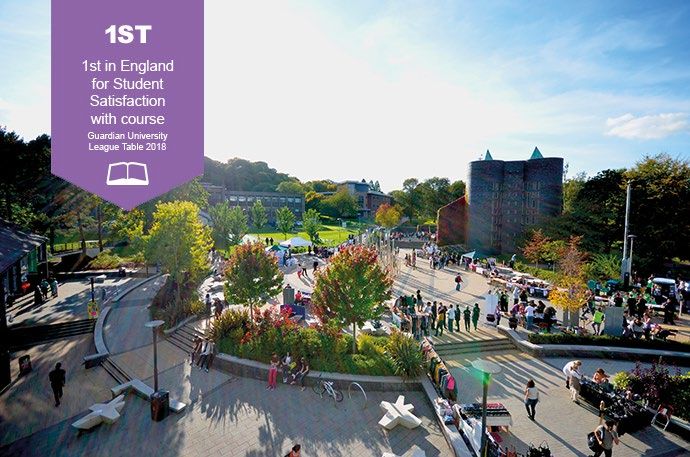
6 | STATE-OF-THE-ART FACILITIES

State-of-the-art facilities
WE HAVE ALL THE FACILITIES YOU’D EXPECT TO FIND AND MORE…

                                                      3D CINEMA
                                                      SCHOOL OF PHARMACY
                                                      We have developed a new 'Health Cinema' used on
                                                      Pharmacy programmes. This is a large screen,
                                                      visualisation facility located in our 133-seat lecture
                                                      theatre. The cinema-grade projection system can
                                                      use both 2D and 3D. The 3D cinema is an
                                                      immersive environment in which students and
                                                      researchers can explore healthcare simulations
                                                      including anatomy and molecular modelling.
                                         3D CINEMA

PHARMACY LABORATORIES
SCHOOL OF PHARMACY
The pharmaceutical chemistry and pharmaceutics
laboratories are open spaces in which students can
undertake experimental work. They contain
state-of-the-art equipment and students carry out
preparations and analyses to industry standards.
Students may also be based in research laboratories
should they elect to undertake an experimental
project.                                                                        PHARMACY LABORATORIES

                                                      SCHOOL OF PHARMACY’S AUGMENTED
                                                      REALITY APPS TO AID LEARNING AND
                                                      SIMULATION FOR OUR PHARMACY
                                                      PROGRAMME
                                                      Search for ‘PharmaCard’ on your app store to
                                                      download a free app and scan the ‘Amoxicillin’
                                                      image (left) for a demonstration. This app allows
                                                      our students to examine molecules studied on the
                                                      Pharmacy programme in 3D using a standard iOS
                                                      or Android smartphone or tablet with integrated
                                                      camera.

keele.ac.uk
STATE-OF-THE-ART FACILITIES | 7

THE CLINICAL SKILLS SUITE AND
WELL PHARMACY SHOP ON CAMPUS
This new training facility has been designed to help
Keele University in revolutionising the way
Pharmacy is taught within the School and to produce
pharmacists who can take on an even more patient
focused role. The new suite includes a mock
dispensary and seven consultation rooms. In order                                             WELL PHARMACY
to help make the suite possible, the UK’s largest
independent pharmacy chain, Well Pharmacy, has
invested £130,000 in Keele University School of
Pharmacy. This investment encompasses Well’s
on-campus Pharmacy as well as the Clinical
Consulting Suite. The on-campus pharmacy and the
Well Network, provide work placement opportunities
for Keele University pharmacy students and also
collaborative practice research between the two
                                                                                          CLINICAL SKILLS SUITE
organisations.

                                              IT SUITE                              DAVID WEATHERALL BUILDING

EXTENSIVE IT SUITES                                      STATE-OF-THE-ART LECTURE THEATRES
The Health Library has an IT Suite with around 60        The lecture theatres and seminar and meeting
PCs on the Keele network in addition to an               rooms are equipped with an impressive networked
extensive IT suite in the David Weatherall Building,     system of teaching-related technology. Students can
Keele campus, and in the main Keele library on           gain access to the internet, online learning
campus.                                                  environment (KLE), audio/visual technology and in
                                                         some of the main seminar suites and skills
                                                         laboratories, the option is available to film and
                                                         record student activity.

                                                                                                    keele.ac.uk
8 | STATE-OF-THE-ART FACILITIES

                                      ANATOMY SUITE                                       CLINICAL SKILLS LAB

DAVID WEATHERALL BUILDING                               CLINICAL SKILLS LABORATORIES,
The David Weatherall building at Keele Campus was       CLINICAL EDUCATION CENTRE

opened in September 2003. It contains everything        The Clinical Skills Laboratories form part of the

that one would expect in a modern purpose-built         Clinical Education Centre and are a facility shared

facility, including a large lecture theatre, seminar    between Nursing, Midwifery and Medical students.

rooms, IT laboratory, an anatomy suite, multi-user      The laboratories provide a safe, supportive

laboratories, resource room, student common room        environment for the teaching and practise of various

and refreshment area.                                   clinical skills throughout both pre- and
                                                        post-registration courses. The facilities are flexible

In 2013, the building was extended to provide           with full AV and computer support and/or a simulated

state-of-the-art anatomy facilities, an enhanced IT     ward environment, allowing students to be taught

suite and more seminar rooms. In addition to this,      and to practise clinical skills relevant to their stage of

the University provides library and information         training. The laboratories are extremely well

services in the nearby Information Services building.   equipped with a number of manikins and patient
                                                        simulators, in addition to general ward equipment.
                                                        The School has specialist clinical skills lecturers who
                                                        organise laboratory bookings, maintain stock and
                                                        equipment, and develop and deliver sessions
                                                        throughout the pre- and post-registration curriculum,
                                                        and for external courses.

                                                        THE SCHOOL OF HEALTH & REHABILITATION
                                                        MACKAY BUILDING
                                                        The School building was opened at Keele in 1994,
                                                        and contains everything that one would expect in a
                                                        modern purpose built facility, including a large
                                                        lecture theatre and specialist practical rooms.

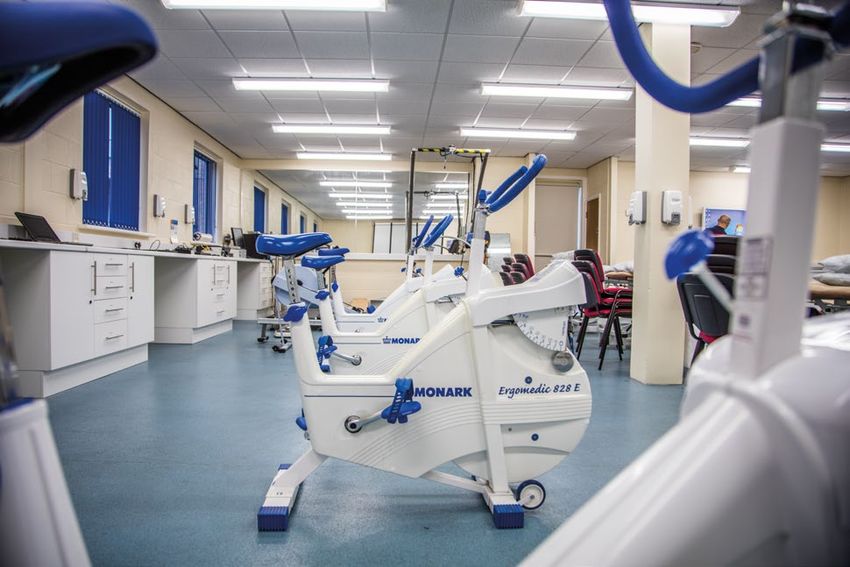
                                                        A programme of investment in capital equipment
                                                        ensures that the most up to date physiotherapy
                                                        equipment is available for teaching and student
                                     MACKAY BUILDING
                                                        research projects.

keele.ac.uk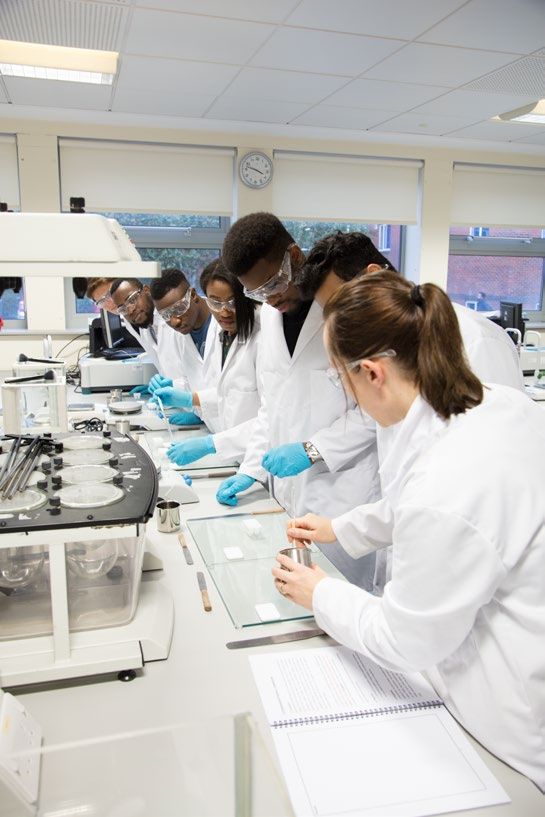
STATE-OF-THE-ART FACILITIES | 9

                                                                                           DIGITAL HEALTH HUB

DIGITAL HEALTH HUB
The Digital Health Hub (DHH) is a joint project between two Schools to support the use of technology in
teaching across the courses of Pharmacy and the new Radiography course in Health & Rehabilitation. The
innovative design uses augmented reality apps developed in Pharmacy. The space facilitates small
team-working on tables of up to six students, centred around 10 large high-quality displays. Twenty PCs offer
twin screen display, allowing Radiography students to immerse themselves into simulation software designed
to emulate the clinical environments of using CT and MRI imaging solutions. Forty laptops are provided in a
flexible learning space for students to use, or bring their own device. Using software designed by the School of
Pharmacy, each table can become a virtual hospital bed, each supporting a different virtual patient or virtual
molecule using augmented reality.

HEALTH LIBRARY
The Health Library is available to students and staff
of Keele University and everyone who works for or
with the NHS in North Staffordshire, and boasts one
of the finest collections of health-related literature in
Staffordshire. In addition to extensive loan facilities
within the library, the staff regularly offer training to a
multi-professional audience on an extensive subject
area. The library also provides access to a range of
clinical databases, allowing you to carry out fast,
powerful and thorough searches of published clinical
research. These databases can be accessed either
                                                                                               HEALTH LIBRARY
from home, work or the library.

                                                                                                    keele.ac.uk
10 | OUR FACULTY PROGRAMMES                                             TOP 5
                                                                         in the TEF
                                                                       Times Higher ranking
                                                                          of the Teaching

The Faculty of Medicine
                                                                    Excellence
                                                                       Excellence
                                                                               Framework
                                                                                  Framework2017
                                                                     (broad-based universities)

& Health Sciences

Major University Hospital partner...

                 highly-rated programmes

                              ...graduating excellent clinicians.

• All our teaching is informed by evidence-based practice
  and internationally recognised research;
• We have well qualified professional academic staff,
  many of whom hold joint appointments with local NHS
  Trusts;
• A number of our staff have been awarded National
  Teaching Excellence Awards;
• Relatively small cohorts with excellent education and
  clinical facilities create an ideal learning environment;
• Our programmes offer small group teaching,
  case-based/problem-based learning;
• Excellent teaching and student support;
• Multiprofessional health library;
• Broad range of clinical experience with placements in
  local NHS Trusts, and private and independent sector
  healthcare providers;
• Opportunities for elective placements abroad;
• Multi and interprofessional learning opportunities with
  students from health disciplines across the Faculty.

keele.ac.uk
2019
ENTRY
OUR FACULTY PROGRAMMES | 11
Our Faculty programmes
PROGRAMME LENGTH INDICATIVE ENTRY UCAS CODE
CRITERIA 2019
SCHOOL OF HEALTH & REHABILITATION
Master’s degree in Physiotherapy* 4 years ABB/A*BC B162
Master’s degree in Physiotherapy with Health Foundation Year* 5 years ** B163
BSc (Hons) Radiography 3 years BBB/ABC B821
BSc (Hons) Radiography with Health Foundation Year 4 years ** B822
BSc (Hons) Rehabilitation Science 3 years BBC/ACC B900
BSc (Hons) Rehabilitation Science with Science Foundation Year 4 years *** B902
SCHOOL OF MEDICINE
MBChB 5 years A*AA A100
MBChB with Health Foundation Year 6 Years ** A104
SCHOOL OF NURSING & MIDWIFERY
BSc (Hons) Midwifery 3 years ABB B720
BSc (Hons) Midwifery with Health Foundation Year 4 years ** B721
BSc (Hons) Adult Nursing 3 years BBC B740
BSc (Hons) Adult Nursing with Health Foundation Year 4 years ** B742
BSc (Hons) Children’s Nursing 3 years BBC B730
BSc (Hons) Children’s Nursing with Health Foundation Year 4 years ** B731
BSc (Hons) Learning Disability Nursing 3 years BBC B761
BSc (Hons) Learning Disability Nursing with Health Foundation Year 4 years ** B762
BSc (Hons) Mental Health Nursing 3 years BBC B760
BSc (Hons) Mental Health Nursing with Health Foundation Year 4 years ** B763
BSc (Hons) Health and Wellbeing* 3 years CCD B704
BSc (Hons) Health and Wellbeing with Health Foundation Year* 4 years ** B705
Honours degree at 2:2 or
MSc Nursing (Adult) 2 years above in any subject B701
SCHOOL OF PHARMACY
MPharm 4 years AAB - ABB B230
MPharm with Health Foundation Year 5 years ** B231
MPharm with Integrated Training Year 5 years AAB - ABB B233
BSc (Hons) Pharmaceutical Science, Technology and Business 3 years BBB/ABC 1B11
BSc (Hons) Pharmaceutical Science, Technology and Business 4 years *** B232
with Science Foundation Year
For full list of entry requirements, please see: keele.ac.uk/ug-entry-requirements-uk
*Subject to approval
**For Health Foundation Year entry requirements, please see: keele.ac.uk/foundation/health
*** For Science Foundation Year entry requirements, please see: keele.ac.uk/foundation/sciences�12 | SCHOOL OF HEALTH & REHABILITATION School of Health & Rehabilitation Our highly regarded programmes are innovative, well supported and foster high levels of student satisfaction. keele.ac.uk
SCHOOL OF HEALTH & REHABILITATION | 13

THE SCHOOL OF HEALTH & REHABILITATION is a dynamic and forward thinking School
which offers both undergraduate and postgraduate programmes, short courses, and
stand-alone modules to students from across the globe. The School is consistently in the top
ten in all the major national league tables (The Times, The Guardian, and The Complete
University Guide). The School’s undergraduate programmes also have some of the highest
student satisfaction rates in the country; with the School averaging 98% student satisfaction
for the previous six years.

Following on from our highly rated BSc (Hons) Physiotherapy programme, for 2019 the
School now offers the full-time MSc Physiotherapy* which leads to eligibility to apply for
registration with the Health and Care Professions Council (the UK regulator) and
membership of the Chartered Society of Physiotherapy. The undergraduate programme
equips students to deliver patient-centred and evidence-based care in a health and social
care environment that will continue to develop and change across their career span.
Students study in both university and clinical settings, with clinical experience being offered
across a wide geographical area in England and North Wales. There are also several
opportunities for credit and non-credit bearing international placements as students progress
on the programme.

              1st
          in the UK for
       Health Professions
     (The Guardian University
          League 2018)

The BSc (Hons) Radiography is a three-year single honours programme that supports full
integration of the science of radiography with clinical practice in a healthcare setting. The
programme aims to develop high levels of academic and professional competence and to
promote an awareness of present and future demands in health and social care.

The School also offers an innovative BSc (Hons) Rehabilitation Science Programme. This
unique UK full-time programme complements other programmes offered within the School.
The Rehabilitation Science Programme explores the science surrounding rehabilitation
concepts from the physical as well as psychological health perspective. Factors influencing
successful rehabilitation globally, the many forms of disability and how this can impact upon
physiological functioning are central features of the programme.

*subject to approval
                                                                                 keele.ac.uk
2019
ENTRY
14 | SCHOOL OF HEALTH & REHABILITATION
Physiotherapy
Integrated Master’s degree in Physiotherapy*
WHY STUDY THIS COURSE?
Learn how to promote, maintain and restore an individual’s physical, psychological and social wellbeing through
our popular course.
Course type: Single honours Study abroad: Yes
Course details: Integrated Master’s International year: Yes
Course start: September 2019 Learn a language: Yes
Course duration: Four years
COURSE OVERVIEW:
Physiotherapy plays a vital role in health and social care and provides a range of career paths from practice
through to leadership and management roles. Keele will help you develop high levels of academic and
professional competence, seeing you study current content and contemporary practise, learning alongside other
professions to promote an awareness of present and future demands in health and social care. Our course
embraces a vision of patient-centred care within health and social care settings and you’ll gain invaluable
experience using a range of quality local clinical bases. You’ll study in a supportive environment, encouraging
reflection and enriched by research awareness.
WHAT WILL THIS MEAN FOR MY FUTURE?
A physiotherapy degree from Keele will develop your attributes as a competent practitioner, flexible to the
changing demands of health and social care. You will have the skills to practice as an autonomous professional
across a range of practice environments that may include the NHS, private sector or performance sport.
PROGRAMME INDICATIVE UCAS LENGTH OF FURTHER
ENTRY COURSE PROGRAMME INFORMATION
CRITERIA CODE
Integrated ABB/A*BC B162 Four years keele.ac.uk/ugcourses/physiotherapy
Master’s full-time
Physiotherapy* For full list of entry requirements please see:
keele.ac.uk/ug-entry-requirements-uk
Integrated ** B163 Five years Please see Page 50 for more details on the
Master’s full-time Health Foundation Year and progression
Physiotherapy requirements in order to progress to the
with Health principal course.
Foundation
Year*
*Subject to approval
**For Health Foundation Year entry requirements, please see: keele.ac.uk/foundation/health
keele.ac.ukINDICATIVE MODULES:
First year
• Anatomy, Physiology and
Movement Science
• Health and Wellbeing
• Fundamentals of Physiotherapy
Practice
• Principles of Rehabilitation
• Professionalism and Effective
Communication
• Principles of Measurement
• Practice Experience 1
Second year
• Musculoskeletal Practice
• Neurological Practice
• Cardiovascular and Respiratory
Practice
• Evidence Based Health and
Rehabilitation
• Interprofessional Education
• Practice in Specific Populations
• Practice Experience 2 & 3
Third year
Student Profile:
• Learning and Teaching in Helena Janovova
Healthcare
3rd YEAR BSc (HONS)
• Health Behaviour Change
• Physiotherapy Management of the PHYSIOTHERAPY STUDENT
“
Complex Patient (1)
• Research Skills and Design (1) I am a third year student on the BSc Physiotherapy
• Physiotherapy Management of the programme. The most important contribution to my success on this
Complex Patient (2) course has been the friendly and supportive atmosphere in the
• Practice Experience 4 & 5 School of Health & Rehabilitation. Staff have an open door policy
and no matter how big or small your issue, they will help you to deal
Fourth year with it there and then. The programme is very intense with many
• Research Skills and Design 2 contact hours, but the timetable is evenly spread between lectures
• Leadership and Management for and hands-on practical sessions in a simulated clinical
Healthcare Professionals environment. The opportunity to visit the anatomy suite at the
• Research Project medical school has been an invaluable experience in terms of
• Option Modules 1 & 2 being able to visualise the structures of the human body. There is
• Practice Experience 6,7 & 8 also time allocated to directed study, online quizzes and work
packages to enhance our knowledge. We are also able to sign up
for tutorials prior to exams and to undertake mock exams to
“
prepare for the formal assessments. If you believe that working as
a Physiotherapist is the career choice for you, then the School of
Health & Rehabilitation offers a truly holistic education to ensure
that you can offer your future patients a holistic treatment.
keele.ac.uk2019
ENTRY
16 | SCHOOL OF HEALTH & REHABILITATION
BSc (Hons) Radiography (Diagnostic Imaging)
WHY STUDY THIS COURSE?
Learn how to produce high quality images whilst providing the highest standards of care for our patients through
our BSc (Hons) Radiography (Diagnostic Imaging) programme.
Course type: Single honours Course duration: Three years
Course details: BSc (Hons) Radiography (Diagnostic Imaging) Study abroad: No
Course start: September 2019 Learn a language: Yes
COURSE OVERVIEW:
The Radiography course is new to Keele and has been established to help meet the high demands for
Radiographers locally and nationally. Our new radiography students will join the Keele family on campus and will
undertake clinical placement in the local hospitals in Staffordshire, Shropshire and Crewe.
To become a radiographer you will need to develop skills in patient care and communication as well as
understanding the science and technology of image production to enable effective diagnosis for the patient. Core
subjects will include anatomy and physiology, science and instrumentation of imaging, image interpretation and
patient management. When qualified you will have opportunities to extend your scope of practice and advance
your career in a profession that has embraced the four tiers of professional practice.
PROGRAMME INDICATIVE UCAS LENGTH OF FURTHER
ENTRY COURSE PROGRAMME INFORMATION
CRITERIA CODE
BSc (Hons) BBB/ABC B821 Three years keele.ac.uk/ugcourses/radiography
Radiography full-time For full list of entry requirements,
(Diagnostic please see:
Imaging) keele.ac.uk/ug-entry-requirements-uk
BSc (Hons) * B822 Four years Please see Page 50 for more details on
Radiography full-time the Foundation Year and progression
(Diagnostic requirements in order to progress to the
Imaging) with principal course.
Health
Foundation
Year
*For Health Foundation Year entry requirements, please see: keele.ac.uk/foundation/health
keele.ac.ukSCHOOL OF HEALTH & REHABILITATION | 17
WHAT WILL THIS MEAN FOR
MY FUTURE?
As a radiography graduate from
Keele you will have the skills and
knowledge that you will need not
only to set out on your chosen
career, but also the foundations to
build on this through continuous
professional development to reach
your career aspirations in this
exciting and dynamic field of
practice.
INDICATIVE MODULES:
First year
• Introduction to the Human Body
• Foundations of Radiography
Science
• Image Interpretation
• Introduction to Radiographic
Practice
• Principle of Measurement and
Research
• Professionalism and
Communication
Second year
• The Human Body 2
• Exploring Radiation Protection
• Image Interpretation 2
• Radiographic Practice 2
• Evidence Based Diagnostic
Imaging
• Interprofessional Learning
Third year
• Human Body 3
• Advancing Imaging modalities
• Initial Image Commenting
• Radiographic Practice
• Research Project
• Professionalism, Collaboration
& Leadership
CLINICAL PLACEMENT FACILITIES AT UHNM2019
ENTRY
18 | SCHOOL OF HEALTH & REHABILITATION
BSc (Hons) Rehabilitation Science
WHY STUDY THIS COURSE?
Explore the science and factors surrounding rehabilitation within the national and global health and wellbeing
agenda.
Course type: Single honours Study abroad: Yes
Course details: BSc (Hons) Rehabilitation Science International year: Yes
Course start: September 2019 Learn a language: Yes
Course duration: Three years
COURSE OVERVIEW:
At Keele you’ll investigate the many factors that influence rehabilitation management and its success as well as
explore subjects including anatomy, physiology, human movement, exercise and interpersonal skills. You’ll learn
about the varied forms of disability and their impact upon physiological functioning, from the individual to national
and global perspectives as well as the management of frequently encountered global conditions.
WHAT WILL THIS MEAN FOR MY FUTURE?
You will have the attributes to develop a career within health and wellbeing in the public or private sector, charity
sector, leisure industry, education and business. You will also graduate with qualifications to undertake a variety
of postgraduate courses and graduate training programmes.
PROGRAMME INDICATIVE UCAS LENGTH OF FURTHER
ENTRY COURSE PROGRAMME INFORMATION
CRITERIA CODE
BSc (Hons) BBC/ACC B900 Three years keele.ac.uk/ugcourses/rehabilitationscience
Rehabilitation full-time For full list of entry requirements,
Science please see:
keele.ac.uk/ug-entry-requirements-uk
BSc (Hons) * B902 Four years Please see Page 51 for more details on
Rehabilitation full-time the Science Foundation Year and
Science with progression requirements in order to
Science progress to the principal course.
Foundation
Year
* For Science Foundation Year entry requirements, please see: keele.ac.uk/foundation/sciences
keele.ac.ukINDICATIVE MODULES:
First year
• Anatomy, Physiology and
Movement Science
• Principles of Rehabilitation
• Professional and Effective
Communication
• Principles of Measurement
• Elective Modules 1 and 2
Second year
• Health and Wellbeing for
Rehabilitation Science 2
• Behaviour Change Rehabilitation
Science
• Evidence Based Health and
Rehabilitation
• Research Skills
• Health and the Environment
• Exercise Science for Specialist
Populations
Third year
• Research Project
• Health and Wellbeing for
Rehabilitation Science 3
• Global Healthcare Matters
• Organisation and Management in a
Rehabilitation Setting
Professor Anand Pandyan
PhD (Bioeng)
Head of School
“ The teaching team at the School of Health & Rehabilitation
draws on a rich source of expertise from experienced clinicians,
clinical and academic researchers, and clinical experts working
both in the NHS and private sector. Many of our teaching staff are
engaged within research and therefore our teaching is not just
current but cutting edge. For the courses that have professional
body regulation, i.e. Physiotherapy and Radiography, the teaching
team primarily consists of staff with current professional body
registration. In addition, the teaching team is complemented by staff
with expertise in exercise physiology, biomedical engineering and
“
business practice. This does mean that all our students,
irrespective of programme of study, are able to benefit from the
multidisciplinary expertise within the School.
keele.ac.uk20 | SCHOOL OF MEDICINE School of Medicine Medicine is a highly rewarding and challenging career that has a huge impact on society and makes a real difference to people’s lives. keele.ac.uk
SCHOOL OF MEDICINE | 21

THE SCHOOL OF MEDICINE offers you an outstanding combination of a distinctive
curriculum, excellent educational and clinical resources, and a friendly and safe
environment where staff and patients are keen to help you learn. Compared to many other
UK medical schools, we have a relatively small student intake, an attractive campus, and a
supportive community with enthusiastic and committed staff.

Study Medicine at Keele and you’ll be thoroughly prepared for a very diverse profession
with an expanding range of career options. You’ll have a strong grounding in contemporary
science alongside a high level of patient contact in both hospital and community settings.
You will also gain an insight into the health needs of our population, the needs of our
patients and their experiences of the NHS.

Why study medicine?
A career in medicine can be very rewarding. Medicine is a very diverse profession with an
expanding range of career options.
It may appeal to you because:
•   you can make a real difference to people’s lives by helping to alleviate pain and suffering
•   it’s a respected profession;
•   there’s a wide choice of careers – in fact there are over 60 specialties and there are
    opportunities to get involved with teaching, research and management;
•   the day-to-day work can be very varied;
•   you will face all kinds of practical and intellectual challenges;
•   once you graduate, you’ll earn a reasonable salary and this increases with experience;
•   doctors will always be in demand.

                                                                          DAVID WEATHERALL

The training pathway
After gaining your medical degree (usually a 5 year degree programme), you take a
two-year Foundation Programme. This is followed by training either as a GP (currently
lasting three years) or in a specialty (taking five to eight years).

At Keele University we aim to train excellent clinicians, well prepared for future practice and
the globalisation of health care. The School of Medicine is committed to ‘Graduating
Excellent Clinicians’.
                                                                                    keele.ac.uk
2019
ENTRY
22 | SCHOOL OF MEDICINE
Medicine
MBChB
WHY STUDY THIS COURSE?
We aim to graduate excellent clinicians who are equipped to practise in the 21st century, with a deep
understanding of the scientific foundations of medicine and high levels of clinical expertise.
Course type: Single honours, full-time Course duration: Yes
Course details: Medicine MBChB Accreditation: This subject/programme
Course start: September 2019 is accredited by the
Course duration: Five years General Medical Council.
PROGRAMME INDICATIVE UCAS LENGTH OF FURTHER
ENTRY COURSE PROGRAMME INFORMATION
CRITERIA CODE
Bachelor of A*AA A100 Five years keele.ac.uk/ugcourses/medicine
Medicine and full-time Applicants must submit their UCAS
Bachelor of application for course code A100 (MBChB)
Surgery at K12 (Keele University) by the 15th
(MBChB) October deadline.
Grades of A*AA are required from three
A-levels within a two year period, to
include chemistry or biology and a second
science. Further details of academic and
non-academic entry criteria are available
on keele.ac.uk/medicine/entrycriteria
Bachelor of * A104 Six years The Health Foundation Year is designed to
Medicine and full-time provide an entry into Medicine for those
Bachelor of without the conventional A-Level subjects
Surgery normally required for direct entry, subject
(MBChB) with to achieving specified grades in the
Health Foundation Year assessments.
Foundation Applicants must submit their UCAS
Year application for course code A104
(Medicine with Health Foundation Year) at
K12 (Keele University) by the 15th
October deadline.
Please see Page 50 for more details on
the Health Foundation Year and
progression requirements in order to
progress to the principal course.
*For Health Foundation Year entry
requirements, please see:
keele.ac.uk/foundation/health
keele.ac.ukMBChB CURRICULUM
The modern, spiral, highly-integrated medical
curriculum combines a range of learning
strategies, including contemporary science, early
clinical experience, integrated communication
and clinical skills teaching, practical sessions,
including dissection, problem-based-learning
(PBL), lectures and seminars. You will have
experience of clinical placements in both primary
and secondary care settings and in the
community sector. Interprofessional learning and
student interests are fostered throughout the
programme.
The course is designed to ensure you meet the
necessary standards in terms of knowledge, skills
and attitudes that new doctors need, as identified
by the GMC in its publication, ‘Outcomes for
Graduates’. Throughout the course there is an
emphasis on feedback to help you improve your
knowledge, understanding and performance of
medical practice.
MBChB 2019 ENTRY REQUIREMENTS:
It is your responsibility to check that you meet our
entry criteria for your chosen course, as
published on our web pages, prior to submitting
Professor Andrew Hassell
your UCAS application. Please see our web
pages for the most up-to-date details:
MBChB, MD, MMedED, FRCP
keele.ac.uk/ugcourses/medicine
Head of School
If you apply and are offered a place at the School
“
of Medicine, you will also be required to apply,
through the University, for an Enhanced In the School of Medicine, students learn from
Disclosure from the Disclosure and Barring bio-scientists, social and behavioural scientists and a
Service (DBS). All students entering the course fantastic range of local clinicians: general practitioners and
must undergo occupational health screening and specialists covering the full gamut of Medicine, as well as
comply with vaccination requirements. As part of nurses, therapists and pharmacists, all committed to
our non-academic conditions all successful helping students develop into excellent clinicians.
applicants will be required to complete
satisfactory health and DBS checks. We are lucky to have state-of-the-art, bespoke learning
facilities in our School on campus and within our partner
“
teaching NHS trusts. Keele School of Medicine looks
forward to welcoming enthusiastic, bright students eager to
serve the community as doctors.
keele.ac.uk2019
ENTRY
Additional entry requirements
All applicants for courses A100 and A104 should note that as
part of the entry requirements they must undertake the United
Kingdom Clinical Aptitude Test (UKCAT). These applicants
must also complete the Roles and Responsibilities form as
part of the application process.
All applicants with international fees status for 2019 entry will
be required to take the Biomedical Admissions Test (BMAT):
admissionstestingservice.org/for-test-takers/bmat
They will not be required to take UKCAT. BMAT will be used
instead of the Roles and Responsibilities form when ranking
for interview. In addition, international applicants will be asked
to undertake an English language qualification such as the
International English Language Testing Service (IELTS, with a
minimum score of 7.0 in each component taken at the same
sitting) or the Cambridge Certificate of Proficiency in English
(CPE). Test of English as a Foreign Language (TOEFL) and
Test of English for International Communication (TOEIC)
qualifications are not usually acceptable.
Additional Costs
In common with other Medical Schools our medical students
should be aware that there are additional costs involved,
such as the purchase of books, laboratory coats and travel to
placements. We do not usually recommend that students
purchase books or equipment before starting the course as
advice will be given at registration and during the degree as
to what is required. Students intending to bring a car to
campus should note that student car parking is limited and
there is a charge for student permits. An additional cost
applicable to medical students is the purchase of smart
clothing for clinical placements.
Currently the School of Medicine is able to help with the costs
for immunisations and the initial Disclosure and Barring
Service check (DBS). Students may need to pay for any
additional DBS checks required by elective placement
coordinators. Please see the School website for more details:
keele.ac.uk/medicine
For detailed course information please contact the
School of Medicine to request our MBChB brochure or visit:
keele.ac.uk keele.ac.uk/medicineSCHOOL OF MEDICINE | 25
Work experience
It is essential that all applicants
gain experience in a caring role
and/or a role involving
significant interpersonal
interaction. Details of such
experience will be requested in
a ‘Roles and Responsibilities’
form that all applicants must
complete. More advice and
guidance is available on the
School of Medicine website:
keele.ac.uk/medicine
Widening access Student Profile:
The Medical School is actively
involved in widening access to
Liam Adams
MBChB STUDENT
medicine. To this end, UCAS
“
contextual data relating to
The treatment of disease is a fascinating and inspiring field; the
educational and techniques used to aid recovery from major illnesses and injuries are
socio-economic disadvantage is remarkable and ever-evolving. I have wanted to become a doctor
used to support eligible since before I started high school (I have the proof, they made us
students. Students may also be write letters to ourselves in year seven and gave them back when we
left five years later!). I had always had an interest and natural affinity
supported through the
for the sciences. I also wanted to help and care for people. I know this
Steps2Medicine programme.
is a common answer, but it is honestly why most people who work in
healthcare choose it as a career! I did well in my GCSEs and went on
Admissions statistics to study A-levels. I did lots of work experience, did my research and
For 2018 entry we received made my UCAS application, with biomedical science as a backup.
Unfortunately my A level results were not good enough to apply
1500 applications for A100 and
directly to medicine. However, I had been accepted to study biomed
130 applications for A104.
and I still had the same desire to study medicine and help people, so I
decided to go the long way around and did a BSc, graduating with a
For detailed course information 2:1 before applying again and finally was accepted to study medicine.
please contact the
School of Medicine to request Having recently finished my first year, I am glad that I chose to carry
on despite my exam results and failed applications. I have enjoyed
our MBChB brochure or visit:
learning more about the body and how it works, but a more fulfilling
keele.ac.uk/medicine
part has been interacting with the healthcare system, speaking to
patients and other healthcare professionals and seeing the potential
difference I can make in the near future when I have finished studying.
Medicine is hard, it is competitive, and it is a long time to study.
“
However it is also one of the most rewarding, interesting and
beneficial careers I can think of, and one that anyone with an interest
in it should consider.
keele.ac.uk26 | SCHOOL OF NURSING & MIDWIFERY School of Nursing & Midwifery Nursing and Midwifery as a career choice enables you to make a positive impact on people, their lives, and their health - a career for life with opportunities for specialism and advancement. keele.ac.uk
SCHOOL OF NURSING & MIDWIFERY | 27

THE SCHOOL OF NURSING & MIDWIFERY is based at the Clinical Education Centre within the Royal Stoke
University Hospital (part of the University Hospitals of North Midlands NHS Trust). The Clinical Education
Centre, which opened in September 2004, is a contemporary, state-of-the-art, building which houses not only
the School of Nursing & Midwifery, but also incorporates part of the well-established Undergraduate and
Postgraduate School of Medicine.

The spacious and light interior of the building consists of seminar rooms, extensive clinical skills laboratories,
interprofessional Health Library and IT laboratories, which not only provide high-tech learning and teaching
facilities, but also allow and encourage multidisciplinary learning and team working, an approach that we believe
is key to developing a professional healthcare workforce for the future. The School has increased investment in
simulation and clinical skills; students can undertake a range of exciting scenarios within a safe environment to
ensure they are well equipped prior to undertaking clinical placements. The School also utilises a range of
e-Learning software, which is now well established and used within both learning and assessment strategies;
these include medicines optimisation, anatomy and physiology, clinical skills and a wealth of e-textbooks and
e-journals. In addition, the teaching and learning strategy in the School is varied and dynamic, often centred
around small group learning, case study work, and Problem Based Learning (PBL).

The partnership with Service Provider Partners is strong at all levels, with robust systems in place which provide
for structured evaluations. Partners are involved in programme development and delivery across all curricula;
the School has several joint appointments, where clinicians hold honorary contracts and contribute to
programme delivery in a structured and deliberate way. The School is focused on ensuring contemporary
nursing and midwifery practice is at the heart of curriculum delivery. To further support this, academic staff work
within key Trust areas in a range of roles, acting as link support lecturers whilst students are out on practice,
fulfilling their own case load within a defined practice area. To ensure students are enabled to grow in their
confidence and competence at an appropriate level in practice, the School has a strong tradition of preparing
and supporting mentors. This serves to further the quality of education in the clinical environment; Clinical
Practice Facilitators liaise directly with the School placement office to ensure relevant, timely, and excellent
placement opportunities.
                                                                                                       keele.ac.uk
28 | SCHOOL OF NURSING & MIDWIFERY keele.ac.uk
Dr Patricia Owen
                            RGN; RSCPHN (HV);
                            BSc; MPH; PhD. MIHPE
                            Head of School

                            “     The strength of our School is the people who
                            work in it - both staff and students who work together
                            for patient and client benefit.

                            We value our students and the experience they bring to
                            their learning and it is great to see how using this, their
                            studies and working with other students across the
                            Faculty they develop and become successful nurses
                            and midwives. Graduation is always a great celebration
                                                  “
                            and we look forward to you joining us, using our
                            state-of-the-art facilities to achieve your own successes
                            and qualifications.

                                                                        keele.ac.uk
CLINICAL EDUCATION CENTRE
2019
ENTRY
30 | SCHOOL OF NURSING & MIDWIFERY
BSc (Hons) Midwifery*
WHY STUDY THIS COURSE?
Women, newborn babies and their families are at the centre of the midwifery programme, which aims to provide
student midwives with the knowledge and skills to deliver optimum care for women throughout the childbearing
continuum.
Course type: Single honours Course duration: Three years
Course details: BSc (Hons) Midwifery * Study abroad: No
Course start: September 2019
COURSE OVERVIEW:
Students develop into independent learners through a programme of study which combines classroom-based,
directed and self-directed learning alongside supervised engagement in clinical care for women and babies,
leading to the professional registration with the Nursing and Midwifery Council on completion. The programme
aims to develop understanding of the physiological, psychological, social, and public health dimensions of
normal pregnancy and childbirth. Progression through the course develops knowledge about conditions that may
complicate pregnancy, the impact of these on women, babies, and other family members, and the skills required
to manage them effectively within the multidisciplinary team setting. The final part of the programme focuses on
leadership and management skills in order to prepare students for the role of qualified midwife.
Clinical skills development is supported in skills laboratories by experienced lecturers and by qualified mentors in
practice placements which have been developed to reflect women’s experience of maternity care. Placements
are undertaken in a range of contexts: women’s own homes; clinics in the community; hospital; and midwifery
birth centres. The importance of communication for effective caring and professional relationships is integral to
the course along with exploration of research evidence as the basis for providing optimal care.
PROGRAMME INDICATIVE UCAS LENGTH OF FURTHER
ENTRY COURSE PROGRAMME INFORMATION
CRITERIA CODE
BSc (Hons) ABB B720 Three years keele.ac.uk/ugcourses
Midwifery * full-time For full list of entry requirements, please see:
keele.ac.uk/ug-entry-requirements-uk
BSc (Hons) ** B721 Four years This programme is designed for students
Midwifery with full-time who wish to study midwifery but lack the
Health necessary background qualifications for
Foundation entry onto the main degree programme.
Year * Successful completion of the Health
Foundation Year leads onto the identified
three-year BSc (Hons) Midwifery
programme (four years study in total).
**Please see Page 50 for more details on
the Health Foundation Year, entry criteria,
and progression requirements in order to
progress to the principal course.
*Subject to approval
**For Health Foundation Year entry requirements, please see: keele.ac.uk/foundation/health
For full list of entry requirements, please see: keele.ac.uk/ug-entry-requirements-ukINDICATIVE MODULES:
First year
• Introduction to Midwifery
Second year
• Developing as a Midwife
Third year
• Becoming a Midwife
What will this mean for my future?
You will experience providing care to
pregnant women at all stages of
pregnancy and in a range of contexts:
women’s own homes; clinics in the
community; hospital; and the
midwifery birth centre. This will
develop your experience and
understanding for a career within
Midwifery.
Please Note
Currently the professional body
(Nursing and Midwifery Council) is Student Profile:
reviewing all the education standards
and programme specific standards for
Amy Fradley
midwifery nationally. In light of the 3rd YEAR BSc (HONS) MIDWIFERY
review of standards by the NMC in STUDENT
“
2018 there will be changes following
this review which will affect students Midwifery at Keele was always my first choice and I
studying on the programme beyond can honestly say I have no regrets. The programme has
2019. These changes are not known given me a holistic approach to midwifery care both in the
at the time of writing this programme classroom and in the clinical setting. Having the University
specification but we will communicate Hospitals of North Midlands (UHNM) as a placement setting
them to you as soon as they are has given me a real depth of experience and with over 7000
confirmed. To ensure each student is babies being born each year, the opportunities are endless!
fully informed and aware, all changes
will be discussed with the student Midwifery training is challenging and demanding and not
community as the changes are something you can do alone. Throughout my training the
planned and implemented. support I have received has been wonderful from both the
midwifery lecturing team and the clinical staff on placement.
Timeframes are uncertain at this stage Being part of a small cohort is also key in giving you this
although it is proposed that midwifery support, I have made friendships that I hope continue into
specific standards will be operational
from September 2020. The
programme will be approved by the
“
the future as we begin our careers as Midwives. I feel very
proud and privileged to be part of Midwifery at Keele and feel
confident if you choose Keele you would too.
NMC and the University to ensure it
meets the changes that the NMC have
published.
keele.ac.uk2019
ENTRY
32 | SCHOOL OF NURSING & MIDWIFERY
BSc (Hons) Nursing Programmes*
Course type: Single honours combinations Course start: September 2019
Course details: BSc (Hons) Adult Nursing * Study abroad: No
BSc (Hons) Children’s Nursing * International Elective
BSc (Hons) Learning Disability Nursing * Placement: Yes
BSc (Hons) Mental Health Nursing *
PROGRAMME INDICATIVE UCAS LENGTH OF FURTHER
ENTRY COURSE PROGRAMME INFORMATION
CRITERIA CODE
BSc (Hons) BBC B740 Three years keele.ac.uk/ugcourses
Adult Nursing* full-time
BSc (Hons) BBC B730 Three years keele.ac.uk/ugcourses
Children’s full-time
Nursing*
BSc (Hons) BBC B761 Three years keele.ac.uk/ugcourses
Learning full-time
Disability
Nursing*
BSc (Hons) BBC B760 Three years keele.ac.uk/ugcourses
Mental Health full-time
Nursing*
BSc (Hons) ** B742 Four years In addition to the BSc (Hons) programmes,
Adult Nursing full-time the School also offers Health Foundation
with Health Years with BSc (Hons) programmes leading
Foundation to professional registration (RN). These
Year* programmes are designed for students who
wish to study nursing but lack the necessary
BSc (Hons) ** B731 background qualifications for direct entry
Children’s onto the main degree programme.
Nursing with Successful completion of the Health
Health Foundation Year leads onto an identified
Foundation three-year BSc (Hons) programme (four
Year* years study in total). Students should apply
for a specific course with a Health
BSc (Hons) ** B762 Foundation Year. You can discuss options
Learning with the Foundation Year Course Director
Disability before applying to Keele, but you will not be
Nursing with able to change your choice of progression
Health route within the Faculty of Medicine & Health
Foundation Sciences after accepting a place.
Year* Please see Page 50 for more details on the
Health Foundation Year and progression
BSc (Hons) ** B763 requirements in order to progress to the
Mental Health principal course.
Nursing with
Health
Foundation
Year*
*Subject to approval
**For Health Foundation Year entry requirements, please see: keele.ac.uk/foundation/health
For full list of entry requirements, please see: keele.ac.uk/ug-entry-requirements-uk2019
ENTRY
SCHOOL OF NURSING & MIDWIFERY | 33
BSc (Hons) Adult Nursing*
WHY STUDY THIS COURSE?
Our Adult Nursing degree programme adopts a contemporary person-centred approach to healthcare that
prepares students to meet evolving health needs. Keele develops Adult Nurses who deliver excellent
evidence-based practice in a range of care settings and who place the patient at the centre of decision-making by
promoting dignity, care, and compassion. Over their three years, students develop the ability to assess, plan,
implement, evaluate, and monitor care safely and effectively. By taking a person centred-approach to care delivery,
students initially focus on meeting people’s essential care needs and, as they progress through their second and
third years, they develop the skills and capabilities to assess, provide, and manage the complex care needs of
individuals and groups of people.
Students’ clinical and academic skills are developed within a strong and established system of support through
personal tutors in the School and clinical supervisors in placements. To this end, students experience a range of
hospital and community placements in which they develop the requisite skills, knowledge, and attitudes needed for
contemporary adult nursing practice. To develop their skills in academic writing, reflection, critical thinking, and
decision-making, a small group approach to learning is adopted whereby students are supported by their personal
tutor. This is complemented by lectures, online activities, individual tutorials, directed study, and skills-based
learning in the School’s Clinical Skills Laboratories. Learning in the School of Nursing & Midwifery at Keele is
enhanced by superb classroom facilities, an excellent Health Library, computer suite, and established relationships
with local primary and secondary health care providers.
For details of the programme and indicative modules, please visit the School website:
keele.ac.uk/nursingandmidwifery
WHAT WILL THIS MEAN FOR MY FUTURE?
You will experience a range of hospital and community placements in which you’ll develop the requisite skills,
knowledge, and attitudes needed for contemporary adult nursing practice.
*Subject to approval
Student Profile:
Rebecca Lorenz
2nd YEAR BSc (HONS) ADULT NURSING STUDENT
“ Since starting my journey to become a registered nurse, Keele has
always been supportive, both emotionally and academically. Everything I
have needed has been available. There are a wide range of journals,
books, and learning resources available within the Health Library, which
has extended opening hours; as a Mum, this is a great help. Lectures are
both academic and practical, and we learn a wide range of clinical skills
such as catheterisation and venepuncture (obtaining blood samples). The
degree has also helped me to develop and grow as a person. It has
opened my eyes to new ways of thinking, I am developing my prioritisation
and decision-making in placements and it has helped me be more “
resilient. I feel confident that with the continued support from Keele I will
qualify next year as a confident and competent adult nurse. keele.ac.uk2019
ENTRY
34 | SCHOOL OF NURSING & MIDWIFERY
BSc (Hons) Children’s Nursing*
WHY STUDY THIS COURSE?
The Children’s Nursing programme has at its centre the child or young person, and their family. The aim of the
programme is to develop Children’s Nurses who are inquisitive, clinically astute, intelligently adaptable, and able
to respond to the current and future needs of children and young people.
Our Children’s Nursing degree adopts an innovative curriculum model integrating theory and practice elements,
which upon successful completion, contribute to admission to the Nursing and Midwifery Council Professional
Register. A variety of teaching and learning strategies are used throughout the programme including lead
lectures, seminars, group discussions and tutorials. IT based exercises and presentations are also used to
develop work relevant skills and self-directed study is encouraged to promote independent learning and the
development of lifelong learning skills.
The development of clinical skills is an integral part of the programme and is supported in practice placements
and in the excellent clinical skills laboratories by experienced lecturers.
The programme encompasses an innovative assessment strategy, utilising a range of assessment methods.
Student support is taken seriously with each student being allocated a personal tutor and having access to a
variety of academic and pastoral advice services. Alongside these services a peer mentoring system is employed
in order to support students through the Children’s Nursing degree.
The wider benefits of enrolling onto our Children's Nursing degree are:
• Working in partnership with children, young people, and their families;
• An innovative curriculum model;
• Established placement circuit offering a variety of quality experiences;
• Excellent library, IT, and clinical skills laboratory facilities;
• Experienced and quality student support services.
For details of the programme and indicative modules, please visit the School website:
keele.ac.uk/nursingandmidwifery
WHAT WILL THIS MEAN FOR MY FUTURE?
Placements for the Children’s Nursing degree have been developed to reflect the reality of the journey children
and young people experience when receiving healthcare. Placements will be undertaken within the acute hospital
children’s setting and in a variety of community areas, which will help you prepare for a career within Children’s
Nursing.
*Subject to approval
“ All of the lecturers are incredibly supportive and
knowledgeable, willing to go above and beyond to help “
us with all aspects of our course. Amy Jones, Children’s Nursing Student
keele.ac.ukSchool Alumni:
Vicky Ramsden
“
CHILDRENS NURSE
Hi. I’m Vicky! I
qualified with a BSc (Hons) in
Children’s Nursing in 2013.
My experience of studying at
Keele University was fantastic.
The course was extremely well
structured, with experienced
and knowledgeable lecturers
who used a variety of teaching
styles and techniques. I always
felt well supported and
learning was fun!
The facilitation of clinical
placements was well
organised which ensured
exposure to all aspects of
Children’s Nursing, from
acute hospital wards and
intensive care units to
community and hospice
settings. The skills I developed Student Profile:
and the experience gained Kelly Bloor
during my degree at Keele 3rd YEAR BSc (HONS)
held me in good stead for CHILDREN’S NURSING STUDENT
“
qualifying as a Children’s
Nurse and subsequently I decided to study Children’s Nursing at Keele because the
degree course, campus and clinical skills facility stood out beyond
working within a Children’s all others. Keele offered a range of open days before securing my
Medical Ward and High place, and after. Once starting the course the organisation was very
Dependency Unit. impressive, all staff greeted the students and offered help and
support from day one. The Lectures are informative, using the
latest evidence based practice, clinical examples and linking to
I have since progressed to a anatomy and physiology. The subjects link in well with practical
Teaching Fellow in Children’s sessions that can be carried out in the clinical skills labs. Using the
Nursing, training current labs has enabled me to practice in a safe environment before
heading out into placement areas. Keele University has an
pre-registration nursing excellent health library, which has a host of helpful, knowledgeable
students. It’s nice to think that
I was once a student at Keele
“
librarians ready to support you. I have loved being a Keele student
Children’s Nurse and really feel that Keele has given me the best
University and now I am
“
teaching future nurses also
start to my nursing career.
keele.ac.uk
training at Keele.You can also read


