RISK OUTLOOK 2021 Five predictions - International SOS
←
→
Page content transcription
If your browser does not render page correctly, please read the page content below
RISK OUTLOOK 2021 Five predictions

International SOS | Risk Outlook 2021 Five Predictions | International SOS
Contents Introduction
Introduction 3 Geopolitics & by the crisis and reassess their positive impact
Civil Unrest
Ben Page, CEO, Ipsos MORI upon society. Milton Friedman’s dictum from
14 1970, that the sole responsibility of business is to
engage in activities designed to grow profits, is
Exec Summary
UNDERNEATH A COVID-19 MYOPIA 15 increasingly challenged: 62% of the global public
4 now say businesses have a responsibility to speak
Arnaud Vaissié, CEO, International SOS CITIZEN ACTIVISM 17 out on the big social and political issues affecting
their country.
Research Process Duty of Care
While parts of the economy face massive
6 disruption, elsewhere we are likely to see
Practices
permanent, positive changes. These include
WORKFORCE RESILIENCE 19 less commuting, more distributed workforces,
COUNCIL VIEWS 6 a better carbon footprint, a re-imagining of
‘EMERGING RESILIENTS’ 20 offices, and potentially better quality of life
BUSINESS RESILIENCE TRENDS SURVEY 7 for employees. In turn, these changes bring
CHANGING C-SUITE RESPONSIBILITIES 23 increased domestic risks; so this year, for the
COVID-19 IMPACT SCALES AND UNDERLYING first time, the Risk Outlook report looks at how
MEDICAL & SECURITY RISK RATINGS 7 The future is uncertain. In the 12 months since employers’ strategies for Duty of Care and
Infodemic
the last Risk Outlook report, COVID-19 has dealt employee health and safety are evolving, in
ON-THE-GROUND MEDICAL 26 a sudden shock to the system which has left response.
& SECURITY INTELLIGENCE NETWORK 7 people, governments and businesses focusing on
A SOURCE OF TRUTH 29 their immediate survival. As this report describes, There’s also cause for optimism. In our recent
our view of all the risks and opportunities which study, 7 in 10 of the global public said their own
A Year of
lie ahead of us is now filtered through the prism employer was doing a good job to help their
Mental Health
of the pandemic. country recover from the pandemic – in some
34
COVID-19
countries, a much better rating than the national
8 Ipsos research shows that, in response to government achieved. Many businesses have, in
Dr Pascal Rey-Herme, Group Medical Director, NEW PSYCHOLOGICAL VULNERABILITIES 35 uncertainty and inequality, many people double-quick time, re-engineered entire business
International SOS around the world are gripped by anxiety about processes and driven through profound cultural
LOWERING FINANCIAL BARRIERS 36 the future. Globally, 78% agree we live in an change.
THE PRISM OF FUTURE RISKS 9 increasingly dangerous world and 52% expect
a global conflict to erupt in the next 25 years. For the fifth year in a row, we are proud to have
Risk Blind Spots
Concern about the speed of change is another developed the Risk Outlook report alongside
38
2021 Risk
trigger; eight in ten say the world is changing International SOS. 2020 has shown that, on its
too fast. At the same time, trust in experts – as a own, the past is a poor guide to the future. But
Dependencies
WORKING FROM HOME 39 defence against fake news and misinformation of armed with this expert analysis and insight,
12 all kinds – has never been stronger. leaders will be better equipped to navigate the
HOW WILL THE PANDEMIC END? 42 uncertain times ahead.
FIVE PREDICTIONS FOR 2021 13 We also know that business leaders want to build
back better: to grasp the opportunity presented Ben Page
© Copyright 2020 - International SOS Assistance UK Ltd - All rights reserved. CEO, Ipsos MORI
Reproduction in whole or in part is prohibited without the prior consent of International SOS Assistance UK Ltd. 1130
2 internationalsos.com 3
International SOS | Risk Outlook 2021                                                                                                                                                 Five Predictions | International SOS

    Exec Summary
                                            Intelligence is the key to navigating                   3 years’ worth of innovation in 6 months                           2021: a need to protect domestic
                                            uncertainty                                                                                                                workers at home or in the office
                                                                                                    Change will continue to be the only constant
                                            In last year’s paper, I began by saying that            in 2021, our ability to continually adapt will                     International SOS, as an enabler of globalisation,
                                            ‘the only certainty is uncertainty’, and those          define our success. I estimate that we have                        is emotionally vested in our physical presence
                                            words have never felt truer than they do today.         delivered three years’ worth of innovation and                     at our clients’ sites and enabling safe business
                                            We accurately predicted that an increase in             organisational change at International SOS in just                 travel. We operate in over 1,000 locations around
                                            geopolitical tensions and infectious disease            a few months.                                                      the world – going to an office and travelling the
                                            outbreaks would be among the biggest                                                                                       world felt like a necessity to success.
                                            disruptors to business in 2020.                         Innovation, even with challenging budgets, has
                                                                                                    allowed us to look at our risk registers in order to               The working-from-home explosion was
                                            In this year’s report, I wanted to reflect on several   prioritise response and future practices: concerns                 surprisingly rapid and effective. But it is creating
                                            important variables that have shaped my thinking        over digital growth have now been matched by                       new high-volume risks; if we can no longer see
                                            as a CEO in 2020, and I feel are central to             health and wellbeing2. Because the pandemic                        our teams, how sure can we be of their optimal
                                            remaining resilient in 2021:                            has reminded us that no machine is going to                        health and security?
                                                                                                    function without humans.
                                                                                                                                                                       Pre-pandemic, the growing trend in domestic
                                            The C-Suite have an opportunity to                                                                                         employee health and wellbeing was a significant
                                            deliver positive sustainable change                     For many, healing will come with safe                              discussion point with our clients; many aspired to
                                                                                                    travel                                                             go further but most approached with caution.
                                            This year has felt worse than the global financial
                                            crisis in 2007/8, the pandemic has truly                We all have a desire to move to a feeling of                       In 2020, we have quickly turned on a switch;
                                            encompassed the whole world. And it keeps               normalcy, to get back to a more reasonable                         domestic employee health matters just as much
                                            going: the length is very unique, and its endpoint      rhythm of change. Our priority now, on our way                     as for those working abroad. The risks are no
                                            is not in sight.                                        to regain control, is to encourage our people to                   longer ‘foreign’. They are in our everyday lives.
                                                                                                    take leave, visit families, regroup, reenergise, so
                                            At the very start of the crisis, explaining its         we can emerge stronger in 2021. Because of this,                   While there is more uncertainty, than certainty
                                            severity to the C-Suite was critical for us; but        we have an emotional investment in return to                       ahead of us, be assured that we are on familiar
                                            some of our clients did not have an easy path.          travel.                                                            ground. Our business and our clients thrive in the
                                            Health and security were often seen as someone                                                                             unfamiliar. We must keep a close eye on the path
                                            else’s job. Fast forward to where we stand                                                                                 ahead, address threats with razor-sharp focus,
                                            today and we find ourselves with a firm seat at                                                                            and emerge stronger from this into a promising
                                            the table. Why? Leaders quickly realised that                                                                              future.
                                            employee health is the most important variable in
                                            the survival of their organisation.
                                                                                                                                                                       Arnaud Vaissié
    Arnaud Vaissié                          Health and security advisors are now recognised                                                                            CEO, International SOS
    CEO, International SOS                  as integral to leadership in a crisis1 today and for
                                            a long time to come.

                                                                                                    1   https://www.mckinsey.com/business-functions/organization/our-insights/leadership-in-a-crisis-responding-to-the-coronavirus-
                                                                                                    outbreak-and-future-challenges
                                                                                                    2   Accenture: ‘Every business will be a health business’ https://www.bbc.co.uk/news/business-52289142

4                                                                                                                                                                                                            internationalsos.com     5
International SOS | Risk Outlook 2021 Five Predictions | International SOS
Research Process BUSINESS RESILIENCE
TRENDS SURVEY
Now in its fifth year, the survey is targeted to those
business sustainability during the pandemic. The
impact is dynamic and will change as outbreaks
progress and mitigation measures are implemented
and withdrawn.
who organise, influence, or are responsible for, their International SOS assigns medical risk ratings
organisation’s employee health, security and risk based on the pre-pandemic situation. The rating
This 2021 risk forecast is the result of the detailed analysis from several research pillars: mitigation processes and policies. The survey seeks must be interpreted in conjunction with the
to understand whether perceptions of employee COVID-19 domestic operations scale and the
risk have changed: what health and security risks COVID-19 cases status. For locations in outbreak
are of most concern to organisations and their status, even the best healthcare systems may be
people, including: domestic employees, assignees overwhelmed, limiting access to medical care, and
and business travellers. Are there significant the risk of infection in the general community is
RESEARCH FIVE PREDICTIONS FOR differences in risk mitigation methods and concerns increased.
PILLARS across regions? How are organisations and their
2O21
people modifying their behaviour or policies to The security risk rating evaluates the threat posed
Workforce Resilience
Council Views respond to these new realities? to employees by political violence (including
terrorism, insurgency, politically motivated unrest
Business Resilience On behalf of International SOS, Ipsos MORI carried and war), social unrest (including sectarian,
Trends Survey
out an online survey among 1,425 risk professionals communal and ethnic violence) as well as violent
COVID-19 Impact Scales across 99 countries. International SOS provided and petty crime. Other factors, such as the
Ipsos MORI with the sample which consisted of robustness of the transport infrastructure, the
Medical & Security Risk
customers and contacts. Fieldwork took place state of industrial relations, the effectiveness of
Ratings
between 22 September and 19 October 2020. the security and emergency services and the
On-the-ground Health country’s susceptibility to natural disasters are
& Security Intelligence also considered where they are of sufficient
Network
magnitude to impact the overall risk environment
COVID-19 IMPACT SCALES for employees.
AND UNDERLYING MEDICAL &
SECURITY RISK RATINGS To find out more, go to:
internationalsos.com/risk-outlook
In the 2021 edition of Risk Map, International
SOS provides underlying health and security risk
ratings for each location. However, these should
The 36 participants in this year’s Council are be reviewed in parallel with the COVID-19 impact
WORKFORCE RESILIENCE from a mix of think tanks, associations, advisory scales. ON-THE-GROUND HEALTH
COUNCIL VIEWS boards, NGOs, and IGOs. Ipsos MORI conducted & SECURITY INTELLIGENCE
an in-depth interview with each participant Due to the rapidly changing nature of the NETWORK
The Workforce Resilience Council (‘Council’) is on behalf of International SOS. The opinions pandemic, COVID-19 impact scales change
made up of representative experts of all health, provided by the Council are noted as ‘expert’ frequently. Together, the medical & security risk International SOS has health and security experts
security, and safety fields relevant to the risks of opinions throughout this report, unless stipulated ratings and COVID-19 impact scales provide a based on-the-ground in over 1,000 locations
working at home or abroad. These expert-fields from another source. This research is designed holistic view of the risks and COVID-19 impact in across 90 countries. The qualitative opinions
include but are not limited to: international risk to be illustrative, detailed and exploratory. each location. of our senior health and security intelligence
and security, employee health, employee security, Findings are not statistically representative of the experts have been analysed in order to verify
travel safety, employee wellbeing, occupational audience interviewed. The COVID-19 impact scales assess the current the on-the-ground reality of the research
health, geopolitics, sustainability, digitalisation impact of the disease on (a) domestic operations, findings and to provide subsequent best practice
and cyber security, public policy, and labour law. The telephone interviews were conducted or (b) inbound travel. The respective scales take recommendations on how to address the risks.
between 13 August - 16 September 2020. into account integrated health, security and
logistics considerations - three key factors in
6 internationalsos.com 7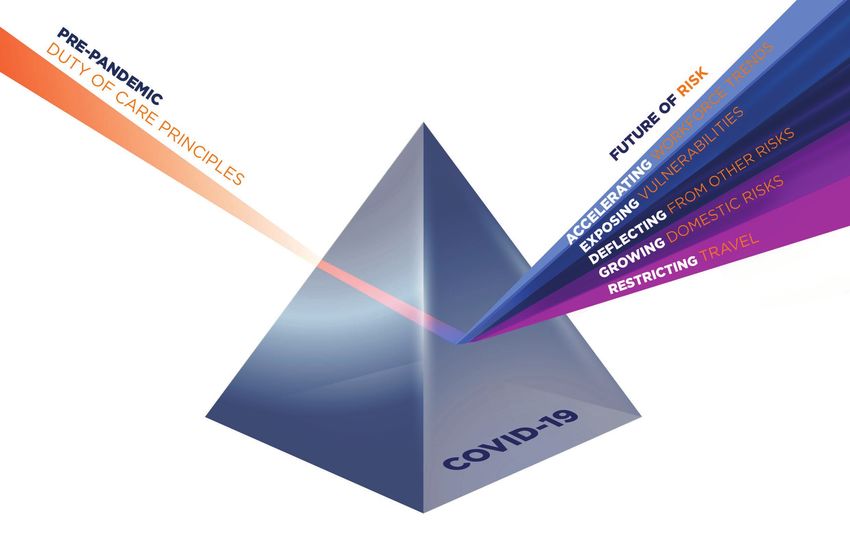
International SOS | Risk Outlook 2021                                                                                                                                         Five Predictions | International SOS

    A year of COVID-19                                                                                    RISK PROFESSIONALS PERCEPTION OF RISK IS AT A 5-YEAR HIGH
                                                                                                          When we look at risk professional’s
                                                                                                          perceptions of risks, around 8 in 10
                                                                                                          believe health and security risks faced
                                                                                                                                                          % say travel risks have increased in 2020

                                                                                                                                                                                                               79%
                                                                                                                                                                                                                 Up 28pp

                                                                                                          by domestic employees, assignees                72%
                                                                                                          and travellers have increased in 2020.                       63%
                                            COVID-19 has created three globally unified                   Those responsible for domestic                                                           51%
                                            crises: public health, economic and geopolitical.             employees are most likely to agree that                                    47%

                                            Woven through each of these three is also a                   it has increased.1
                                            major concern about the sharing of accurate,
                                            timely and trusted information. Accurate                      For business travellers alone, this figure
                                            information ultimately being a key variable in the            is 79%, a noticeable increase from 51%
                                            prevention of infections, and potentially death.              last year and the highest it has been           2016          2017          2018            2019        2020
                                                                                                          in the past five years. The last peak (of
                                            Just as the 9/11 attacks redefined employer                   72%) was reported in 2016, following a
                                            Duty of Care responsibilities from a security                 series of domestic terrorist attacks experienced         further in the next year. This is most acutely
                                            point of view, so will COVID-19 for the health                in the west. And the future is uncertain: around         felt by those based in Asia, especially for those
                                            agenda: following the 9/11 attacks, the way                   half of risk professionals believe that health and       responsible for assignees (60%) & business
                                            that employers saw their Duty of Care agenda                  security risks faced by employees will increase          travellers (60%).1
                                            completely changed. The responsibility of an
                                            employer needed to go beyond just ensuring that
                                            people were not injured in the workplace. And it              COVID-19 HAS BECOME THE PRISM THROUGH
                                            has been forever changed.                                     WHICH MOST FUTURE RISKS ARE SEEN
                                                                                                          The pre-pandemic Duty of Care practices we knew as employers have been called into question during
                                            What we have witnessed during the pandemic                    the pandemic. COVID-19 acts like a prism for those variables previously held-dear, creating five new
                                            is a complete change in approach: before                      shaping principles for the future of risk:
                                            the pandemic – as long as the employer was
                                            obeying health & safety regulation – no one was
                                            expecting them to prevent an employee from
                                            contracting seasonal flu in the workplace. Today,
                                            when we are talking about ‘return to work’ it’s no
                                            longer an expectation, it is a requirement that an
                                            employer puts in place measures to ensure their
                                            people will not get infected.

                                            Preventative measures have become highly
                                            politicised: perhaps most surprising of all to the
                                            health community has been the politicisation of
                                            preventative health measures. For example, the
                                            subject of mask-wearing has become a hotly
                                            debated topic in many countries. If it is a subject
    Dr Pascal Rey-Herme                     being questioned on the political battleground,
                                            it leads organisations to indirectly be seen as
    Group Medical Director,
                                            supporting one party or another. This is the case
    International SOS                       even if the intent is solely to protect and save
                                            lives.

                                                                                                  1   Business Resilience Trends Survey 2021

8                                                                                                                                                                                                 internationalsos.com     9
International SOS | Risk Outlook 2021                                                                                                                                           Five Predictions | International SOS

     ACCELERATING                                              burn security issues that have the potential to   RESTRICTING TRAVEL
     WORKFORCE TRENDS                                          quickly flare up (e.g. tensions between Russia    & WORK ABROAD
     Accelerating workforce trends that were                   and Turkey in various locations, ethnic issues    A lack of freedom of travel has meant that a        This also applies overseas, due to the physical
     already starting to be put in place, including:           in Ethiopia, protests in Thailand, etc.), or      focus on travel risk has shifted from concern       and mental health risks that COVID-19 is posing
     increased working from home and cybersecurity,            other ongoing emerging new zoonotic threats       around geopolitical threats, cybercrime and         to travelling employees. Any business travel or
     less business travel, and more investment in              such as bird flu and Middle East Respiratory      environmental disruptions to a shift towards the    international assignments in the near future will
     risk or crisis management capabilities within             Syndrome Coronavirus.                             physical and mental wellbeing of employees.         be more complex and more costly, yet arguably
     organisations.                                                                                                                                                  more precious.
                                                            •	Many pre-existing health issues among
                                                               employees have been unveiled consequent to
                                                               the crisis, from ergonomic issues, untreated
     EXPOSING VULNERABILITIES                                  chronic diseases to stress and mental health
     Exposing vulnerabilities that were previously             decompensation. This has emphasised the
     hidden such as departmental silos; lack of                need to understand the crisis with a much         EMPLOYEE HEALTH AND SAFETY ARE NOW
     board sponsorship; communication systems;                 broader perspective than one of a solitary        MATERIAL TO BUSINESS RESILIENCE
     ill-equipped organisational structures; and crisis        existentialist infectious disease threat.
     management gaps. It also appeared in areas like                                                             The traditional biomedical model of health at the   organisations, the wider the benefits are in terms
     global supply chains which have relied heavily                                                              workplace (with health threats as root causes       of employee engagement and retention.
     on countries working multilaterally. This has                                                               of diseases) is no longer valid. The health and
     shown that diseases cannot be addressed with           GROWING DOMESTIC RISKS                               wellbeing of employees and stakeholders of an       Never before has health become so material
     an occupational health lens in opposition to a         Employee health and security is now more firmly      organisation needs a broader approach that          to organisations as it has impacted business
     public health one; a holistic approach is needed       a domestic issue for corporates – 85% of risk        appreciates that health outcomes are predilected    growth, raised costs and increased risks. Business
     to tackle challenges from workplace organisation       professionals who are responsible for domestic       upon a number of ‘social determinants’.             post-pandemic has woken up to the realisation
     to case management, and from transmission              employees believe the risks have increased in        Health programming increasingly addresses           that good health is becoming as important to
     prevention to mental health consequences.              2020, the highest of all employee types1.            issues across the wider organisation from the       external stakeholders (employees, customers,
     Similarly, the fact that the workplace is no                                                                perspective of populations.                         suppliers, investors and society) as it is internally.
     longer limited to an office / factory / site / place   •	The key theme running throughout is an                                                                Increasingly we see the opportunity for firms to
     but to an employee’s home has brought many                agreement that COVID-19 has prompted              It is thus no longer possible to fully meet         engage in health initiatives to help address the
     new health challenges around sleep, exercise,             a loss of control for some organisations,         employees’ occupational health needs in the         huge equity gaps in health among employees
     nutrition, ergonomics and burnout prevention.             largely because their workforces are now          workplace without taking into consideration their   and their communities. In areas like malaria, TB,
                                                               remote and working from home. Experts             environmental, personal, mental and emotional       or vaccine-preventable disease – all of which
     Furthermore, pre-existing societal vulnerabilities        interviewed particularly note this in the area    health. For example, healthy lifestyle promotions   are predicted to rise post-pandemic - control
     around information silos – and the tendency for           of cybersecurity and wellness/wellbeing –         must now factor in cultural aspects, workplace      programmes can profoundly impact both
     the politicisation of issues not traditionally seen       with both mental and physical wellbeing           organisation, and employee commuting methods,       employees and communities alike.
     as political, such as public health measures –            being intertwined.                                while navigating the wide array of emerging
     have all been brought into sharp focus in certain                                                           technologies enabling an evidence-based and         Given its complexity, strategic health
     countries during the course of the pandemic.           •	We have witnessed the emergence of                data-driven approach.                               management is required to address the
                                                               Human Resources at the forefront of the                                                               requirements of health promotion, prevention
                                                               management of the crisis and taking the lead      Health management calls for a broader sense of      and protection in the context of the Sustainable
                                                               on its strategic direction. HR leaders have       responsibility, beyond the prevention and cure      Development Goals, particularly SDG 3 on health
     DEFLECTING ATTENTION                                      become our specific interlocutors to discuss      of diseases to the holistic management of a         and wellbeing. To date, corporate involvement in
     FROM OTHER RISKS                                          response plans and workforce support.             balanced state of physical and mental harmony,      meeting this metric has been ad hoc and industry
     Creating health and security blind spots:                 Additionally, the need for independent,           at a personal and organisational level.             or sector based. We see a trend towards more
                                                               factual, global, pragmatic advisory on the                                                            inclusion of health as a key priority for companies
     •	We have taken the focus off threats to                 disease and its consequences on health has        Health has become one of the strategic risks of     in the years to come.
        security that still exist, such as climate             emerged as a key priority for organisations.      organisations, as we have grown to understand
        change and extreme weather events, slower-                                                               how health management can directly influence
                                                                                                                 business performance. We see how the                Dr Pascal Rey-Herme
     1   Business Resilience Trends Survey 2021                                                                  higher the health agenda is considered within       Group Medical Director, International SOS

10                                                                                                                                                                                                   internationalsos.com     11
International SOS | Risk Outlook 2021 Five Predictions | International SOS
2021 Risk FIVE PREDICTIONS FOR 2021
Dependencies
Infectious diseases are just one variable shaping the future of risks in 2021. Even through the prism
1
Ecopolitical turbulence will exacerbate tensions, civil unrest and crime
• After infectious diseases, organisations predict that the biggest employee productivity
disruptors in 2021 will be country risk ratings, transport concerns, and security threats.1
• More than a fifth also cited ‘geopolitical threats’ and ‘civil unrest’ as key causes.1
of a COVID-19 pandemic, risks are interdependent and, often, mutually inclusive. While the risks are
discussed independently within this research, it is important not to address any singular risk in isolation.
A balanced risk management approach is the key to business resilience and long-term sustainability. Pandemic-borne crisis management teams will redefine Duty of Care practices
• Over half of risk professionals (54%) think having adequate resources to deal with
The respective UN Sustainability Development Goals are listed for each risk category. A helpful COVID-19 is a challenge for their organisation in ensuring the health and security of
reminder of how we can address the risks of 2021, without losing sight of global sustainability goals.
2 employees.1
• Over a quarter of organisations (28%) cite the ability to evacuate employees as a
challenge in ensuring their health & security. Of those evacuations, risk professionals predict
MENTAL that COVID-19 medical reasons will be the number one cause of employee evacuations in
HEALTH
2021.1
NCDs
EMPLOYEE
HEALTH FITNESS
The growing infodemic will increase demand for trusted sources of health &
SDGs 2, 3, 6
security information and advice
• Trust in advice from local governments & health bodies is seen as a key challenge for
INFECTIOUS
DISEASE
3 a third of risk professionals – most acutely felt in the Americas (40%). This corroborates
a gradual erosion of importance placed on the information and advice provided by those
institutions.1
• Risk professionals identify that having access to accurate and timely information on health
CYBER POLICY &
and security threats as a frequently mentioned challenge (40%), particularly among those
PROCESS
CRIME
responsible for assignees (45%).1
EMPLOYEE HEALTH &
SECURITY TOOLS ORGANISATION SECURITY
EXPERTS
SDG 1 SDGs 17, 9, 5
PHYSICAL PETTY
Mental health issues will be a primary productivity disruptor
SECURITY CRIME
• Almost 1 in 3 business risk professionals see mental health issues being likely to cause a
4 decrease in employee productivity in 2021. Across the board, those based in Oceania are
FINANCIAL
PERFORMANCE
ACCURATE
& TIMELY
INFORMATION more concerned than in other regions about the impact of mental health on productivity in the
SDG 4 coming year.1
• Furthermore, experts saw mental health overtaking infectious disease risks in 2021. Experts
believe organisations could have more employees on sick leave due to mental health issues
than COVID-19.
Singular focus on COVID-19 will create risk blind spots
• The future is uncertain: around half of risk professionals believe that health and security
5
EXTREME
ECONOMY
WEATHER
risks faced by employees will increase further in the next year. This is most acutely felt by
those based in Asia, especially among those responsible for assignees (60%) and business
travellers (60%).1
ENVIRONMENT SOCIOECONOMICS PUBLIC
POLITICS HEALTH
SYSTEM
• Experts expressed concerns that organisations focusing too singularly on COVID-19, are
SDGs 7, 13 SDGs 10, 11, 16
NATURAL
creating risk blind spots, primarily: (1) the physical, psychological and security implications
MAN-MADE
DISASTER
of working-from-home, (2) underlying health issues going unaddressed, and (3) wider
DISASTER
SOCIAL
UNREST
environmental issues: extreme weather events, natural disasters and climatic changes such
as extreme temperatures and pollution.
1 Business Resilience Trends Survey 2021
12 internationalsos.com 13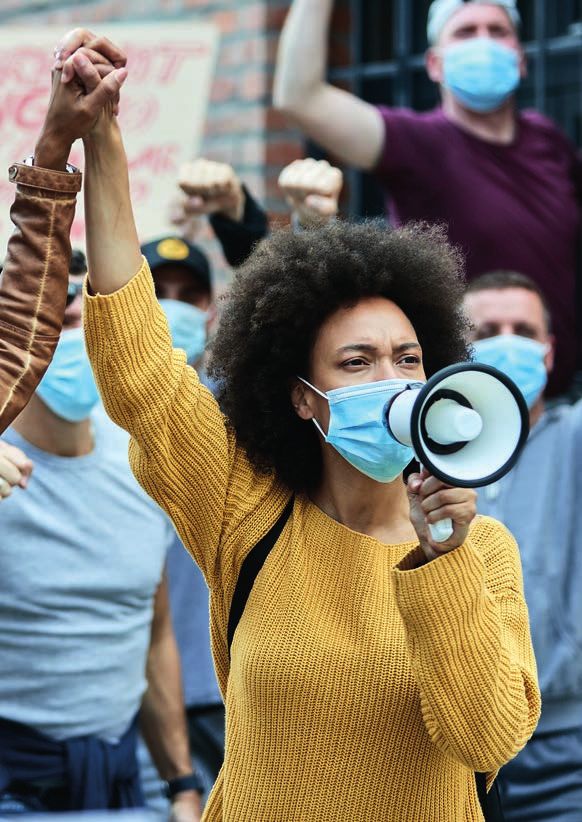
International SOS | Risk Outlook 2021                                                                                             Five Predictions | International SOS

     1                                                                                                                      I think geopolitical issues
                                                                 Workforce Resilience Council experts expressed
                                                                 deep concerns over the potential impact of the
                                                                 pandemic on the global geopolitical environment.       have been significantly
                                                                 With the economic, political and social effects        exacerbated. The position
                                                                 of the pandemic manifesting at international
                                                                 and national levels, the direct or indirect fiscal
                                                                                                                        of some countries has been
                                                                 stress especially will shape interstate relations      opportunistic with the
     ECOPOLITICAL                                                and exacerbate pre-existing trends. On a national
                                                                 level, public perception of government and
                                                                                                                        environment and the world
                                                                                                                        we’re living in at the moment
     TURBULENCE WILL                                             health bodies’ management of the pandemic
                                                                 will play into pre-existing divisions and security     and you’ve got other politicians,
     EXARCERBATE                                                 issues in certain states. In some cases, where the
                                                                 government is not perceived to have managed
                                                                                                                        who have been really expedient

     TENSIONS,                                                   the pandemic successfully, or has been unable          with the crisis as well from a
                                                                 to develop a robust sense of national purpose          personal political gain.
     CIVIL UNREST                                                in tackling the pandemic, there will be a higher
                                                                 likelihood of social unrest and anti-government
                                                                                                                                           Jason Smith
     AND CRIME                                                   sentiment, in addition to a hardening of pre-
                                                                 existing ideological divisions.                                           Principal Consultant –
                                                                                                                                           Risicare Consulting

                                                                 More broadly, while the pandemic’s significance                           Director - Risk Management
                                                                 is not in any doubt, it should not be the only                            Institute of Australasia
                                                                 lens through which we view security risks in                              Workforce Resilience Council
                                                                 2021 and beyond. In various states across the
                                                                 world, long-standing security issues remain the
                                                                 primary concern and whilst the pandemic is a
                                                                 complicating factor, it is the long-standing drivers   INTERNATIONAL & NATIONAL
                                                                 for these security risks which will shape the          SECURITY CONCERNS ARE
                                                                 overall environment in 2021.                           BUBBLING UNDERNEATH A
                                                                                                                        COVID-19 MYOPIA
                                                                 ECONOMIC AND POLITICAL                                 While adding to existing hardships on the
                                                                 OPPORTUNISM                                            ground, the pandemic has not brought about
                                                                                                                        a fundamental shift in the vast majority of
         COVID-19 is causing an economic decline which will      On a macro-level, those countries and                  the ongoing conflicts, which will continue to
     increase political tensions and will end in trouble. So I   communities who are severely impacted by               feed regional security issues and great power
     think there will be supply chain disruption, personnel      economic recession and public health crises,           engagement, as will be the case in Afghanistan,
                                                                 may need to seek support from other nations.           for example.
     security and distribution issues coming out of it.          Furthermore, all states will be seeking vaccines.
                                                                 These factors will play into various pre-existing      Furthermore, the pandemic has also complicated
                         John Ludlow                             global dynamics and regional power struggles           the calculus with regard to key geopolitical
                                                                 with states seeking to use the pandemic to             issues. As 2021 draws on, with – in all likelihood
                         CEO, Airmic
                                                                 accelerate pursuit of strategic interests.             – increased vaccine production and take-up
                         Workforce Resilience Council
                                                                                                                        and reduced immediate term social, economic
                                                                 This has already been borne out with some of           and logistical restrictions, these conflicts and
                                                                 the politics surrounding vaccines developed in         geopolitical questions will again rise to the fore.
                                                                 Russia, the US, Europe and China, for example,         Whether this is the evolving situation between
                                                                 and is expected to be a notable feature of             the US and Iran, social unrest linked to stagnating
                                                                 interstate relations and soft power influences in      quality of life standards in Latin America, the
                                                                 2021.

14                                                                                                                                                    internationalsos.com    15
International SOS | Risk Outlook 2021                                                                                                                                 Five Predictions | International SOS

                                                       emerging Salafi-jihadist threat in         Citizen activism will continue                          Timely intelligence and response will
     TOP FIVE EXPECTED CAUSES                          northern Mozambique, the regional                                                                  build resilience in a turbulent world
     OF EMPLOYEE PRODUCTIVITY                          fallout of the rising ethnic violence in                    James Bird
     DECREASES IN 20211                                Ethiopia, populism and nationalism in                       Security Director, Intelligence and    Given all of the above, and the complex and
                                                       Europe, or tensions between India and                       Operations, International SOS          interwoven health, economic, social, political and
                                                       China, or the US and China – some or all                                                           security aspects of the pandemic, risk managers

      91%
                                                       may pose potentially thorny challenges                                                             are going to face many challenges in 2021. These
                                                       for risk managers in 2021.                 The pandemic has also shone a bright light on           are going to be compounded by the problems of
                                                                                                  structural inequality, with individuals of lower        both excessive information, and misinformation.
      infectious diseases (COVID-19, malaria,          Domestically, in general terms, public     socioeconomic status – which in many countries
      dengue, Ebola, Zika etc.)                        sentiment to their governments             has direct correlation with ethnicity – often           At a time when the distinction between opinion
                                                       has been defined by how well they          disproportionately affected in mortality terms.         and fact is often blurred, obtaining timely,

      32%
                                                       are perceived to have handled the                                                                  apolitical, verifiable and actionable information
                                                       pandemic. In certain cases, such           This dovetailed with a reinvigoration of the Black      has never been more valuable to organisations
                                                       as Lebanon, the pandemic has               Lives Matter movement in the United States              to inform strategic and tactical decisions and to
      country risk rating                              highlighted pre-existing issues around     following the killing of George Floyd at the            ensure the business continuity.
                                                       governance and added further fuel          hands of police in May 2020. His death sparked

      32%
                                                       to anti-government sentiment. Whilst       widespread protests not just in the US but all over     A key part of access to analysed and assessed
                                                       impressive pandemic performance in         the world, with solidarity gatherings in counties in    information is using this to build an organisation
                                                       places such as South Korea, or New         Europe, Asia and Africa and South America, many         specific picture of the types of domestic and
      transport concerns                               Zealand has bolstered public faith in      of which also addressed local issues of structural      international threats and risks that would
                                                       the government. That said, impressive      inequality and racial injustice at the hands of the     necessitate an organisational response, and

      30%
                                                       pandemic response does not nullify         law.                                                    then putting the plans in place to manage that
                                                       the threat posed by underlying popular                                                             response. The pandemic has brought business
                                                       discontent, as has been recently           Prior to the pandemic, the issue of climate change      continuity planning to the fore and the flexible
      security threats                                 demonstrated with the growing protests     was a notable source of mobilisation and as 2021        approach adopted by many companies in 2020
                                                       in Thailand, which have expanded           progresses the expectations of many citizens will       will need to be retained and developed, as they

      30%
                                                       despite a well-regarded pandemic           be for their government to take advantage of the        analyse the dynamic threat environment and build
                                                       response.                                  ‘re-set’. These expectations cross various issues       actionable plans to enable their business to thrive
                                                                                                  including, but not limited to, social justice and       in the uncertainty and be prepared to respond
      mental health issues                             In Europe and the United States            climate change. They will, however, likely clash with   nimbly when the situation necessitates.
                                                       especially but not exclusively, the        competing visions and priorities across the political
                                                       pandemic has heightened societal           spectrum, as various countries map out their
                                                       divisions and led to increases in          economic, social and political trajectories.

                                                                                                                                                            30%
      More than a fifth also cited ‘geopolitical       support for various right-wing populist
      threats’ and ‘civil unrest’ as key causes.       politicians and groups, fuelled in         This will translate into more demonstrations
                                                       significant part by misinformation         and highly charged political atmospheres,
                                                       and social media. This has led to the      particularly as the slower-burn economic impacts
                                                       increased politicisation of scientific     of the pandemic start to be felt, which, again will       Around a third of risk professionals felt that
                                                       outputs such as mask wearing and           disproportionately fall on those at the lower end of      security threats would be among the top
                                                       vaccines, the effects of which will not    the socio-economic spectrum.                              causes of employee productivity decreases in
                                                       only outlast the pandemic but also                                                                   2021.1
                                                       complicate and slow the ongoing
                                                       pandemic response. This in turn has led
                                                       to increased mobilisations on the right
                                                       and on the left, trends which we expect
                                                       to continue well into 2021 and likely to
                                                       be played upon by politicians of various
                                                       ideological persuasions.

16                                                 1    Business Resilience Trends Survey 2021                                                                                            internationalsos.com    17
International SOS | Risk Outlook 2021                                                                                                      Five Predictions | International SOS

     2
     PANDEMIC-                                                             The pandemic quickly affected every employee
                                                                                                                                 to be an individual employee-managed risk, or one
                                                                                                                                 managed by local public health. For example, this

     BORNE CRISIS                                                          in a way that no other event in modern history
                                                                           has – the heightened risk of international travel
                                                                                                                                 might have involved ensuring an employee can
                                                                                                                                 get to and from their workplace with minimal risk

     MANAGEMENT                                                            quickly paled in significance to domestic risk.
                                                                           Issues were no longer felt by those travelling,
                                                                                                                                 of infection or being stopped by local restrictions.
                                                                                                                                 Pre-pandemic, this simply was not front of mind

     TEAMS WILL                                                            they were at home and in every workplace. The
                                                                           knock-on impact in organisations is that roles
                                                                                                                                 for many people. But they are now, and for the
                                                                                                                                 foreseeable future.

     REDEFINE DUTY OF                                                      previously only concerned with workplace
                                                                           safety soon found themselves in an unfamiliar         Experts interviewed felt that organisations have

     CARE PRACTICES                                                        territory of managing employee health and safe
                                                                           logistical management – with a primary objective
                                                                           to prevent infections and reduce the risk of death.
                                                                                                                                 now recognised how vulnerable they are as a
                                                                                                                                 business if they don’t protect their employees
                                                                                                                                 from these new risks: in future there will be more
                                                                           This role was often extended to not just their own    emphasis on the health aspects of employee
                                                                           employees, but in the wider business units, or        health and safety. Health and wellbeing have now
                                                                           even in communities in which they operate.            moved to the top of the agenda: it is now for
                                                                                                                                 the first time for many companies a board-level
                                                                           Boards, HR and general management found               matter. There is an expectation not just that there
                                                                           themselves thrust into the frontline of clinical      will be an increase in preventative measures, but
                                                                           decision making, with incredibly high stakes. In      that there will be an aspect of long-term health
                                                                           most cases this ultimately led to both global and     monitoring of a company - not just ensuring the
                                                                           local crisis management teams being formed.           business is healthy, but that employees are too.
                                                                           Whether formal or informal, most of these crisis      This will in future extend beyond treating the
                                                                           management teams have shaped the future of            sick or supporting during short crises, but will
         The COVID-19 pandemic has been a wakeup call for all              Duty of Care. If we look at an HR department, they    encompass a more holistic measure of health
     employers regarding the importance of the health and wellbeing        have quickly been propelled to new roles, involved    performance.
     of their workforce. They have now realised that the health and        on topics they had no direct influence on before,
                                                                           such as vulnerable persons, mental health, home       Experts highlighted three major variables that
     viability of their business is dependent upon the health and          violence, schooling, etc.; which correspond to a      will also define how this will play out in 2021:
     vitality of their workforce. Employers will increase their emphasis   broader definition of Duty of Care.
                                                                                                                                 1
                                                                                                                                   an organisation’s willingness to change,
     on maintaining a healthy and safe workforce as a key driver for
                                                                           Many of these teams have evolved to be more             seeing this as positive opportunity to deliver
     the sustainability of their business enterprise. The health and       nimble and agile. Those organisations fortunate         more value to their people;
     productivity and performance of their workers are inextricably        enough to already have internal and external
                                                                           health and security expert support were in general    2	its ability to afford the necessary resources
     linked to the bottom line of the company.                             quickest to respond with suitable plans. However,        in order to deliver change, in light of the
                                                                           while some of those had the foundations in place         economic downturn; and
                                                                           to manage such a brutal crisis, they too have
                        Ron Loeppke                                        had to rethink and repurpose their teams and          3	the introduction of new regulation and
                        Vice Chairman, U.S. Preventive Medicine            processes to help manage variables previously felt       legislation.

                        Workforce Resilience Council

18                                                                                                                                                              internationalsos.com    19
International SOS | Risk Outlook 2021 Five Predictions | International SOS
‘EMERGING RESILIENTS’ WILL ‘CHANGE RESISTERS’ WILL Now if you join a company
CAPITALISE ON LESSONS RISK PRODUCTIVITY LOSS,
LEARNT FROM THE PANDEMIC ABILITY TO RETAIN TALENT, and they say we don’t cover
– CHANGING ROLES AND AND COSTLY LITIGATION you for hospitalisation and all
RESPONSIBILITIES that stuff, that will become
There are many industries where working-
Experts saw great opportunity for employers from-home just isn’t a viable option: we will see a factor for the employee,
as health and wellbeing is pushed up the continued innovations there, as they adapt to whether they want to take up
agenda, expecting ‘employer care’ to become simply survive.
the job or not.
They need to reach out to more critical in future employee attraction,
engagement and retention. The primary changes However, there are some which are not adapting
their risk community… senior forecasted in 2021 are: or are waiting for a resolution, a return to Jaleel Rahiman
roles tend to be driving normal – that may not ultimately come, or at Secretary General,
• Breaking departmental silos of boards, human least not the ‘normal’ they are expecting. While National Safety
towards their objectives resources, health and safety, and security this reluctance to change is understandable Council of Singapore
and often blind to risks; • Leadership in general will need to be stronger considering the financial burden so many are Workforce Resilience Council
they’re very optimistic but also more empathetic with the workforce under, this could ultimately result in long-term
• Health and wellness roles will take greater productivity loss, the ability to retain/attract
people and … they need to prominence on senior leadership teams with talent, and costly litigation.
be a bit more risk aware. the increasing value placed upon the role of a
54%
Chief Health Officer as a strategic advisor: Organisations offering a new provision of
They also need to be more
» Data is increasingly noisy and its enhanced Duty of Care to their employees will be
joined up too, because as interpretation more nuanced far more attractive to both talent and investors.
I’ve mentioned, risks are » Strategists, like McKinsey & Company1, This goes beyond offering simple health
now recommend that a medical advisor is insurance or wellness perks, but will become Over half of risk professionals think having
very connected these days integral to crisis response leadership, as part increasingly more proactive and outcomes- adequate resources to deal with COVID-19
and issues very seldom stay of a network of teams driven. is a challenge for their organisation.1
in one department… so if • Crisis/risk management roles will be valued
more within organisations
HR have a problem then • Human resources will evolve further to RESOURCES WILL NOW BE
soon operations will have a become a more strategic function within the PRIORITISED BY ORDER OF A risk review for an organisation will help decide
problem and so might sales organisation RISK LEVEL, WITH GREATER the priorities: is mental health becoming a
• Security roles will become more holistic, IMPORTANCE PLACED growing reason for employee sick-leave? Are
and marketing. So businesses repurposing intelligence and analysis skills to ON HEALTH & SECURITY travellers being sufficiently screened? How is
need to de-silo and join up support health and wellbeing too. ADVISORS ergonomic risk being proactively managed? If
• Health, safety and security will become so, have we put in place both preventative and
and that can only be done if more material to organisations, leading to Following the pandemic, experts expect reactive support to help those people?
the C-Suite leads the team. transformation and innovation in business willingness to engage and invest in employee
practices, which will in due course be reflected health and wellbeing to only increase. As the complexity has grown, independent
in future sustainability reports and investor Employers traditionally focused on safety will see unbiased health and security advisors will
expectations. emphasis shifting towards the health aspect of play an increasingly important role – helping
HSE (health, safety and environment). organisations to make decisions based on their
profile and needs, while not spending above
But there are concerns about resourcing: over their means and avoiding being seen as taking a
half of risk professionals (54%) think having political stand on COVID-19 measures. Ultimately,
John Ludlow adequate resources to deal with COVID-19 is a their role will be to help organisations anticipate
challenge for their organisation in ensuring the the next health challenges, beyond the current
CEO, Airmic
health and security of employees.1 pandemic, they need to start addressing now.
Workforce Resilience Council 1 ‘Leadership in a crisis: Responding to the coronavirus
outbreak and future challenges’ – McKinsey & Company
2 Business Resilience Trends Survey 2021
20 internationalsos.com 21International SOS | Risk Outlook 2021 Five Predictions | International SOS
THE ABILITY TO EVACUATE AND RELOCATE EMPLOYEES
WILL CONTINUE TO BE COMPLEX BUT ESSENTIAL COVID-19 and the changing Instead, the two are seen as increasingly
responsibilities of the C-Suite interconnected, with employees being recognised
Nearly a third of organisations Most likely evacuation causes in 20213: as organisations’ most valuable assets.
(28%) cite the ability to evacuate Dr Philippe Guibert
employees as a challenge in Regional Medical Director, Europe Given these trends and awareness of employee
ensuring their health and security. Health Consulting, International SOS safety, C-Suite executives will need to continue
This is felt most acutely by to drive decision-making on how their facilities
respondents supporting assignees Beyond the direct disruption the can be made COVID-19-safe, whether employees
(39%) and those based in Africa & pandemic has caused, there have been major are office-based, mobile or working at retail or
the Middle East (37%), and Japan organisational shifts at the C-Suite level. Many manufacturing or other industry-relevant sites.
(37%).3 executives have broadened their remit as the This focus on expanding aspects of employee
pandemic has evolved, taking a more hands- safety will undoubtedly stay beyond the
Of those evacuations, risk
professionals predict that
73% 31% 26% 25% 21% on approach to mitigate the disruption caused
by the coronavirus crisis. This burden in many
pandemic, even if the C-Suite may become less
hands-on as the crisis passes.
COVID-19 medical reasons will be COVID-19 Border Returning Security Natural cases has been borne due to the urgency with
the most likely cause of employee medical closure employee threats disaster which decisions need to be made, as the C-Suite In addition to the physical health and safety
evacuations next year.3 reasons to home is generally best placed to quickly respond to of employees, organisations also appear
country issues, updating policies in an agile manner to to be gaining a greater level of sensitivity
cope with the dynamic situation. and understanding regarding mental health
issues. The number of organisations reporting
One of the main areas where the C-Suite has stress-related, emotional fatigue or employee
expanded their responsibilities is with the disengagement leading to accidents and
health and security of employees. Recent absenteeism has recently increased. Chief Health
research from IBM1 highlights this, 80% of Officers (CHOs) in particular are invaluable
INCREASED REGULATION & surveyed C-Suite executives reported that they assets in this field, as their expertise can help
LEGISLATION were now supporting the physical and mental businesses understand the best ways to support
health of the employees whom they oversee. employees’ mental health. They can support the
Experts highlighted some blind spots at present This is underscored in our own data whereby HR function’s focus on a medically-informed
on regulation and legislation: how do you International SOS has observed a tenfold mental health strategy, which HR professionals
evidence your workplace is ‘COVID-19 secure’? increase in calls to our Assistance Centres from can implement without becoming experts in the
With the confusion on measures and the lack of members of our clients’ management teams, and field. Organisations should certainly consider
consistency across national jurisdictions, how do a doubling in the number of C-Suite level calls. these benefits as a matter of urgency: a recent
you navigate through the many national visions International SOS survey2 showed that over 20%
of what constitutes ‘best practice’? Who is It’s clear that C-Suite executives are now doing of organisations are expecting mental health
responsible for monitoring the appropriateness more to ensure that decisions account for the issues to cause operational issues over the next
of an employees’ homeworking environment? health and safety of employees. Specifically, 12 months – highlighting the importance of
employees’ personal health issues are no longer having an expert to deal with this issue.
2021 will start to bring clarity, both through seen as separate from business concerns.
regulation but also via costly litigation. Singular
court cases can and will define the future.
We explore the complete working-from-home
picture later. in our fifth prediction.
1 https://www.prnewswire.co.uk/news-releases/ibm-study-majority-of-global-c-suite-executives-are-rapidly-accelerating-digital-
transformation-due-to-covid-19-pandemic-but-people-and-talent-are-key-to-future-progress-841602437.html
2 https://www.businesswire.com/news/home/20200610005323/en/New-International-SOS-Survey-Reveals-Second-Wave-of-
COVID-19-Feared-as-Leading-Threat-to-Business-Continuity
3 Business Resilience Trends Survey 2021
22 internationalsos.com 23International SOS | Risk Outlook 2021 Five Predictions | International SOS
COVID-19 and the changing management and communication in support of
responsibilities of the C-Suite (cont.) a greater number of domestic issues: navigating
return to work, volatile logistical restrictions
Erika Weisbrod and compound crises – as seen borne from civil
Director of Security Operations, unrest and extreme weather events – such as
Europe, International SOS hurricanes/typhoons, flooding and wildfires.
Beyond the direct health Moving forward, we can expect the C-Suite to
implications of COVID-19, the C-Suite is maintain a continued interest in and oversight of
increasingly needing to take additional the issues sparked by the COVID-19 pandemic.
issues, such as the broader security role, into While executives may take a less involved
account as the pandemic has affected various approach as we exit the crisis, it is likely that the
geopolitical and economic tensions. It has mindset of caring for employee safety and overall
brought to the forefront the impact and far- workforce resilience will remain. Additionally,
reaching repercussions that both health and the C-Suite will be looking for more incisive
security issues can have for both employees and accurate data to inform and prevent being
and society generally. For instance, earlier this caught off guard by the next major disruptive
year around 75% of the security-related requests event – something with which
that International SOS received were related to International SOS strives to support its clients.
COVID-19, as the crisis has exacerbated existing For example, security and HSE professionals
security risks due to growing anti-government are increasingly being tasked to provide
sentiment, xenophobia and general social unrest. sustainability reporting, a trend that will
likely continue in coming months and years.
The Security function has increasingly been Coupling this data-driven approach with agile
asked to narrow its focus to more national, decision-making based on robust and up-to-
local and virtual threats and mitigations. Roles date actionable insight, will be key for the most
and responsibilities have also shifted to take effective organisations going forward.
on more aspects of business continuity, crisis
24 internationalsos.com 25International SOS | Risk Outlook 2021 Five Predictions | International SOS
3
THE GROWING It has been estimated that
the amount of academic
mask-wearing have caused
division and confusion. This
INFODEMIC information published on
COVID-19 in the last nine
involvement of political
language (‘speaking in the
WILL INCREASE months is about 50% of that
published on HIV-AIDS in the
name of science/facts’)
into health matters is new
DEMAND FOR last 39 years2. Advice from the
most trusted of national and
territory for many nations.
Organisations now also need
TRUSTED SOURCES international authorities about
transmission and prevention of
to consider if their decisions
on health and safety are
OF HEALTH COVID-19 has been conflicting
and changing.
going to be seen as political
support or lack thereof. It
AND SECURITY is becoming increasingly
difficult to navigate, especially
INFORMATION & Trust in local governments
and health bodies is seen as
if companies are unable to
source opinion from (and
ADVICE a key challenge for a third
of risk professionals – most
acutely felt in the Americas
share responsibility with) an
apolitical independent.
(40%).1 This corroborates Organisations are increasingly
recent findings reflecting a looking to engage subject
gradual erosion of importance matter experts to help them
placed on the information sift through ever growing
and advice provided by those amounts of information.
institutions. Being able to discuss specific
concerns and scenarios
Perhaps most damaging of allows appropriate response,
all has been the politicisation minimising the risks of over-
of health topics. Politicians and under-reaction.
expressing counter-opinions
to preventative measures like
31%
Around a third of risk professionals felt that
trust in local governments & health bodies
was a top challenge when ensuring the health
and security of all employees.1
1 Business Resilience Trends Survey 2021
26 2 International SOS analysis internationalsos.com 27International SOS | Risk Outlook 2021 Five Predictions | International SOS
EMPLOYEES WILL TURN TO
THEIR ORGANISATIONS FOR » Remote working – How to monitor
A SOURCE OF TRUTH productive and healthy remote work
environments? How do we keep people
Where trust has eroded, employees have turned mentally healthy, and actively manage the
to their organisations to bridge the gap: helping lack of social contact?
them to cut through the ‘noise’ (huge volume
…information has almost of information being shared) and provide clear » GDPR & cybersecurity – Monitoring
become ubiquitous in a way, advice which they can use not only to protect cybersecurity, ensuring GDPR practises
themselves but also to help their loved ones. are still being adhered to under limited
and that’s got pros and cons. supervision.
On the one hand, it’s a great
equaliser, you and I both having
40%
EMPLOYEE PRODUCTIVITY
access to the same information, IS NOW HINGED ON THE
should give us each the same ABILITY TO ACCESS & UTILISE
COVID-19 INFORMATION
opportunity, I’d make that Risk professionals identify access to accurate
argument. On the other hand… Risk professionals identify that having access and timely information on health and security
it becomes a great breeding to accurate and timely information on health threats as a key challenge.1
and security threats as a challenge (40%),
ground for misinformation to particularly among those responsible for
be put out… it’s very difficult, assignees (45%).1
I think many of us
I think, to parse out and tell Key considerations highlighted by experts: experienced the kind of
what’s credibly resourced and
avalanche of emails that started
referenced and researched • The clarity of information provided, the
amount of information provided, and the lack coming in since March, and it can
data, versus what is someone’s of consistency in the data - leads to increased
be very overwhelming just using
opinion being pulled out as confusion e.g. in understanding the different
localised rules about where you can travel to. the sort of old fashioned kind of
data. I think long term, that has
tools for keeping in touch with
a very big impact on all our • This creates a lot of work in vetting
people, but on the other hand
futures. information. The source of information has
grown in importance; trusted information from there’s a great deal of really
credible sources have become increasingly rapid development of just the
vital.
Peter J. O’Neil tools that we already have, all
CEO, ASIS International • The increased volume of information that the kinds of video conferencing…
Workforce Resilience Council needs to be considered by organisations has
led to additional resources being deployed to
we’ll have to adapt our habits to
focus on: use these things.
» Return to office - How many employees Judy Kuszewski
can be accommodated? Where have they
Chair, Global Sustainability
travelled from? How can physical distance Standards Board (GRI)
be achieved? Is the ventilation adequate?
Chief Executive, Sancroft
Are the cleaning and disinfection measures
sufficient? Workforce Resilience Council
28 1 Business Resilience Trends Survey 2021 internationalsos.com 29You can also read


