Orange County Perinatal Mental Health Toolkit
←
→
Page content transcription
If your browser does not render page correctly, please read the page content below
Orange County
Perinatal Mental Health Toolkit

                Orange County Perinatal Mental Health Toolkit   1
This work has been made possible by the Pritzker Children’s
Initiative, funder of the National Collaborative for Infants
and Toddlers. Through their generous support, this toolkit
was compiled by First 5 Orange County’s Pritzker Fellow,
Hoda Shawky, MSN, PCNP, PHN, PMHS, IBCLC, in collaboration
with members of the Orange County Perinatal Mood and
Anxiety Disorder Collaborative Steering Committee.

                                  Orange County Perinatal Mental Health Toolkit   2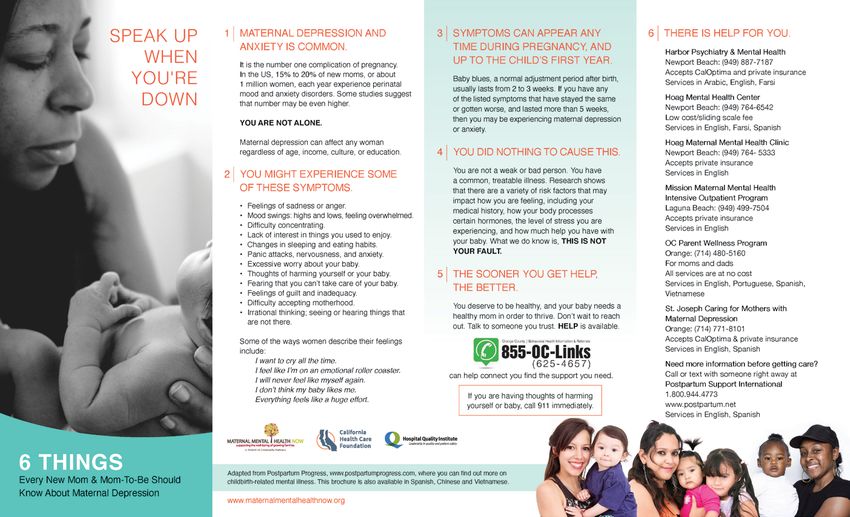
Table of Contents

     Background................................................................................................................. 4

     When to Use This Toolkit....................................................................................... 5

     Prevention.................................................................................................................... 7

          Prevention Classes, Peer Mentorship, and Support Groups................. 8

     Identification............................................................................................................ 10

         Mental Health Screening Tools...................................................................... 11

         Substance Use Screening and Resources...................................................16

     Referrals for Health Care Providers.................................................................20

          Maternal Screening and Care Pathway.....................................................20
          (algorithm for healthcare providers)

          Referral Tools for Community Based Organizations............................. 22

     Training on Perinatal Mental Health.................................................................24

     Additional Trainings...............................................................................................25

     Treatment and Decision-Making Support....................................................... 26

     Billing Information.................................................................................................. 27

     Medi-Cal Benefits Information........................................................................... 29

     Useful Numbers.......................................................................................................33

     Education...................................................................................................................34

     References.................................................................................................................54

                                                                                                        Orange County Perinatal Mental Health Toolkit   3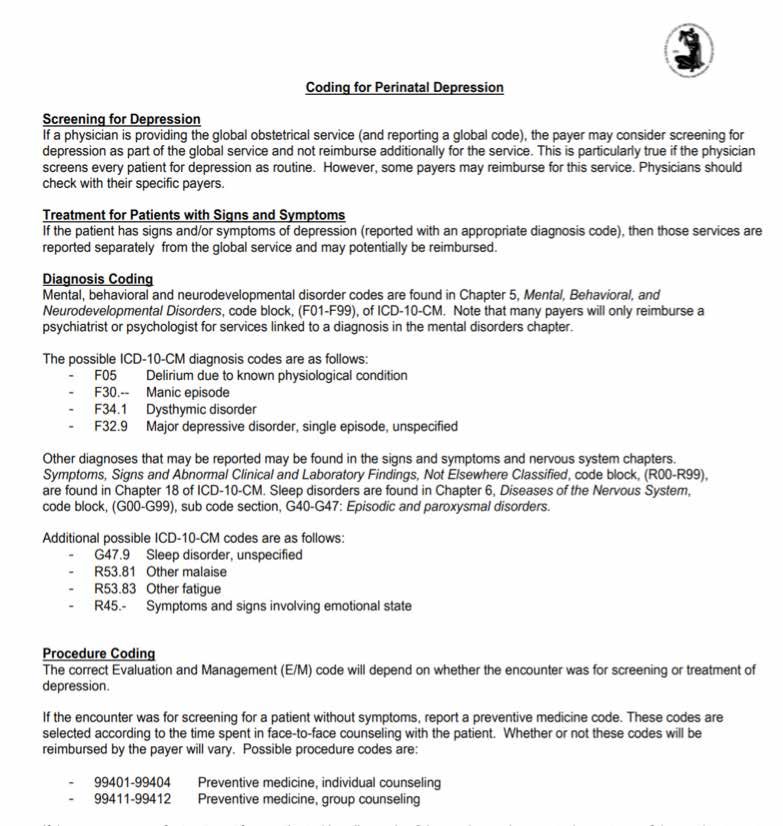
Background

Nearly one in five women living in Orange County
are affected by a form of depression or anxiety
either during pregnancy, up to 12 months after
birth, or both. Nationally, one in ten men are
impacted as well. Referred to as Perinatal Mood
and Anxiety Disorders (PMADs), the rate of these
conditions increases among mothers experiencing
multiple stressors, such as racism, poverty, and
adverse childhood events during their own child-
hood. Left untreated, depression in mothers and
other caregivers can put a strain on relationships
at home, in addition to negatively impacting all
aspects of the young child’s development.
Recognizing the long-term impact of perinatal
mood and anxiety disorders on families and
children, and after the 2018 passage of a Maternal
Mental Health Bill Package in California, the need
for local systems building around perinatal mental
health became evident.
While several programs to treat PMADs already
existed in Orange County, access to those services
was limited due to a lack of knowledge on the
topic and of the resources available. Building
on the substantive work by the Orange County
Health Care Agency (OCHCA) and the Orange
County Perinatal Council, community partners,
First 5 Orange County, OCHCA, the Orange
County Medical Association, CalOptima, Hoag
and St. Joseph Hospitals, MOMs Orange County,
                                                       Nearly one in five
Children and Family Futures, the Hospital
Association of Southern California, and the
Regional Perinatal Network, formed the Orange
                                                       women living in Orange
County Perinatal Mood and Anxiety Disorders
Collaborative in 2019.
                                                       County are affected by
The Orange County Perinatal Mental Health Toolkit
was developed by the OC PMAD Collaborative in
order to build the foundation for a perinatal mental
                                                       a form of depression or
health system of support. The toolkit contains
local resources, evidence-based tools, and
                                                       anxiety either during
recommendations to assist healthcare and service
providers in offering education, preventive
interventions, screening, referral, and treatment
                                                       pregnancy, up to
                                                       12 months after birth,
for new and expecting parents. Updates to this
toolkit will be made yearly. Questions and
feedback directed to First5OC@cfcoc.ocgov.com
are welcome.
For specific inquiries regarding mental health         or both.
services and treatment programs for
non-perinatal adults and children, contact
1-855-OC-LINKS (1-855-625-4657).
                                                              Orange County Perinatal Mental Health Toolkit   4
When to Use this Toolkit

In accordance with best practice recommendations by the American College of Obstetricians
and Gynecologists, the American Academy of Pediatrics, Bright Futures, as well as in compliance
with California Assembly Bill 2193 requiring prenatal and postpartum mental health screenings,
this toolkit seeks to equip health care and other providers with tools for identifying and connecting
families to resources that address their emotional and mental well-being.
It is recommended that all perinatal clients receive an evidence-based screening during the
primary care visit, whether in the obstetric, family practice, or pediatric setting. Recommendations
include but are not limited to:
 • Obstetric visit: At minimum once prenatally and once postpartum
 • Pediatric visit: At minimum during the first, second, fourth, and sixth month well child visits.
 • Whenever index for suspicion is high
 • Note that fathers, partners, and other caregivers can be affected by perinatal mood and
   anxiety disorders and should also be screened during well child visits or whenever there may
   be a concern about their well-being
                                                                      Orange County Perinatal Mental Health Toolkit   5
Key Risk Factors

Regardless of ethnicity, level of education, socio-economic status, or other factors, perinatal
mood and anxiety disorders can affect any parent. Furthermore, additional factors known to
increase the risk for perinatal mood and anxiety disorders include:
 • Personal or family history of depression
 • History of physical or sexual abuse, intimate partner violence
 • Unplanned or unwanted pregnancy
 • Stressful life events
 • Pregestational or gestational diabetes
 • Complications during pregnancy (e.g. preterm delivery or pregnancy loss)
 • Low socioeconomic status
 • Lack of social or financial support
 • Adolescent parenthood
The negative short and long term impacts of the COVID-19 pandemic on the emotional and
mental well-being of parents and their children make it even more important than ever to screen
perinatal parents for risks and signs of distress and link them to the support they need.
For that reason, the Perinatal Mental Health Toolkit begins first with preventive interventions
and ends with educational resources to underscore the importance and effectiveness of education
and prevention to reduce the risk of perinatal anxiety and depression on mothers, fathers, or
other caregivers and their infants.

                                                                     Orange County Perinatal Mental Health Toolkit   6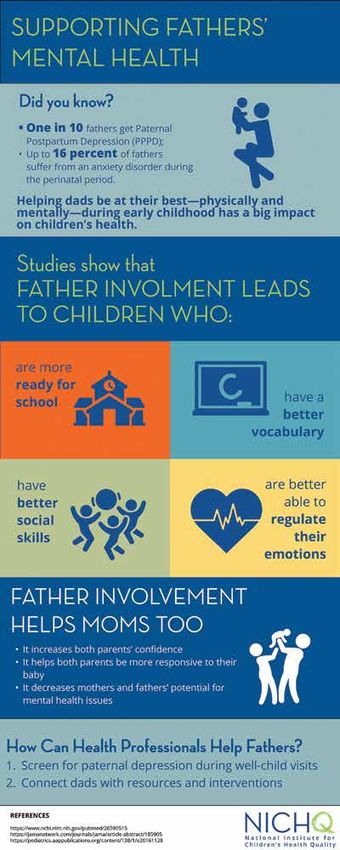
Prevention

                            Preventive Interventions to Integrate Into Practice
  Based on strong evidence to support the effectiveness of counseling in reducing the risk of
  postpartum depression, a 2019 U.S. Preventive Services Task Force publication recommended
  implementation of preventive interventions for women at risk of developing perinatal depression,
  such as those with a history of depression, current depressive symptoms, or certain socioeconomic
  risk factors (e.g., low income or young or single parenthood). See the page above for a more
  complete list of risk factors.
  Below are two evidence-based programs proven to reduce the risk of perinatal depression by up
  to 50% among at risk clients.

                                                               Mothers and Babies Program

  This 6-12 week individual or group- based program uses psychoeducation, attachment theory,
  and cognitive behavioral therapy approaches to provide new mothers with tools to help reduce
  the onset of depressive symptoms. Designed to be delivered prenatally, this curriculum empowers
  mothers to by encouraging them to engage in enjoyable activities, build their social support
  network, and develop healthier ways of thinking. It can be offered in clinic or community based
  settings (such as home visiting programs, WIC, or community centers) by either paraprofessionals
  or professionals with mental health training. Training information and curriculum are available
  online at https://www.mothersandbabiesprogram.org/. New parents can access the Mothers
  and Babies program at OC Parent Wellness Program by contacting (714) 480-5160 or
  OCParentWellness@ochca.com.

                    ROSE (Reach Out, Stay Strong, Essentials for mothers of newborns)

  This preventive intervention consists of four to five individual or group sessions using an inter-
  personal therapy approach to provide psycho-education, stress management, role transitions,
  and interpersonal conflicts. Intended to prevent postpartum depression among low-income
  women, the ROSE program may be offered by paraprofessionals or mental health professionals
  in either clinic or community based settings. Mothers can access the ROSE program at MOMS
  OC by contacting (714) 972-2610 or the YMCA by calling (714)-508-7643.

Interventions to Prevent Perinatal Depression US Preventive Services Task Force Recommendation Statement JAMA. 2019;321(6):580-587. doi:10.1001/jama.2019.0007

                                                                                                                                      Orange County Perinatal Mental Health Toolkit   7
PREVENTION: Peer Mentorship, Classes, and Support Groups
                                        Peer Mentorship

Parent to Parent
The English/Spanish Support Group provides an opportunity for parents/caregivers to share
firsthand information and coping strategies when caring for a child with special needs. For more
information on the Parent-to-Parent program, please call (714) 447-3301.

National Alliance Mental Illness of Orange County (NAMI OC) offers a 12 -week peer to peer phone
based mentorship program for affected individuals or their loved ones, as well as online sup- port
groups. Contact (714) 544-8488 for more information.

                                 Classes and Support Groups

  MOMS Orange County currently offers in person and virtual classes and groups on a variety of
  topics such as postpartum support, Mommy and Me, and My Family and Me.
  The ROSES (Reach Out Stay Strong Essentials) evidence- based postpartum depression prevention
  course is offered in English and Spanish for mothers. To refer clients, contact (714) 972-2610.

Healthy Care Agency’s Orange County Parent Wellness Program offers parent support groups
to current clients using the evidence-based Mothers and Babies Program. Refer clients by
contacting (714) 480-5160.

Click here for Hoag’s perinatal educational classes, postpartum support groups, pregnancy and
infant loss support group, and more. The Maternal Mental Health Support Line can be reached
at 949-764-5333.

                                                                     Orange County Perinatal Mental Health Toolkit   8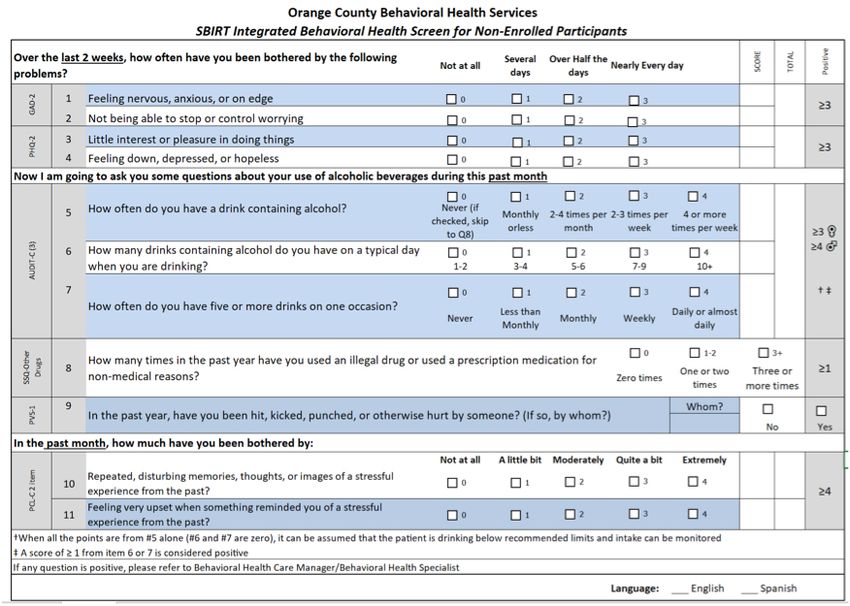
Multiple Providence locations across Orange County provide pregnancy and postpartum support
groups including:
Mission Hospital Laguna Beach, currently offering a virtual support group. The Maternal Mental
Health Referral Line is available at 949-499-8663
St. Jude and St. Joseph Hospitals offer postpartum depression groups in English and Spanish as
well as Dads postpartum groups. Call 714-771-8101 for information or referral.

Over 14 specialty online support groups are offered 5 days a week including groups for Black
mothers, Military moms, NICU parents, South Asian moms, Queer parents, Spanish speaking
mothers, and many more. Learn more at https://postpartum.net/, call or text (800) 944-4773.

                                        Father Support

Dads groups allow fathers the opportunity to connect, gain practical tips for managing stress,
and ways to best support their partners and are offered at the following agencies, either in
person or online:
HCA OC Parent Wellness Program: (714) 480-5160
MOMS OC (Spanish only): (714) 972-2610
Postpartum Support International: (800) 944-4773
Providence St. Joseph: (714) 771-8101

                             Pregnancy and Infant Loss Groups

Parents grieving the loss of a pregnancy or infant often feel isolated and can benefit from con-
necting with others who have gone through similar experiences. The following agencies offer
support for pregnancy and infant loss:
Hoag: (949) 764-5333
Postpartum Support International: (800) 944-4773
Providence St. Joseph: (714) 771-8101

                                                                    Orange County Perinatal Mental Health Toolkit   9
Identification

While many providers may rely on conversations with expecting or new parents to detect perinatal
depression or anxiety, studies have shown that cases can be missed without the use of a
standardized screening tool. Furthermore, routine practice of asking standardized questions will
help normalize discussion about mental health and can eliminate the stigma associated with
this issue.

                                  Screening Women of Color

California data shows that women of color experience proportionately higher rates of perinatal
mood and anxiety disorders than White women. Research studies also found Black and Latina
women had a longer timespan between the time of experiencing symptoms and when they
sought care, compared to White women. Further, although they expressed less feelings of
depression and anxiety, Black women had much higher rates of PMADs than their White
counterparts. For these reasons, the National Perinatal Association recommends lowering the
threshold for referral by 2-3 points on the screening tool to ensure earlier identification and support.

                                                                        Orange County Perinatal Mental Health Toolkit   10
Mental Health Screening Tools
Below are some commonly used, evidence-based tools to screen for depression, anxiety, or both, some
of which may already be included in your practice’s electronic medical record (EMR). Otherwise,
patients may be able to complete surveys on a printed form or tablet, after which the score can
be entered into the chart. Some practices may choose to screen all patients with an initial Patient
Health Questionnaire (PHQ)-2 or PHQ-4 as part of routine intake and follow up a positive score
with the PHQ-9 or Edinburgh.
For Edinburgh and PH-Q 9 surveys in additional languages, go to:
https://www.ochealthinfo.com/about-hca/public-health-services/services/children-families/
healthy-pregnancy-and-newborns-3
For non-English speaking clients who are CalOptima members, access the CalOptima 24/7 language
interpreter service through customer service by calling 1-714-246-8500 or toll-free at 1-888-587-
8088 (TTY: 711).
Patient Health Questionnaire- 4 (PHQ-4)
Developed by Drs. Robert L. Spitzer, Janet B.W. Williams, Kurt Kroenke and colleagues, with an educational grant from Pfizer Inc. No permission required to reproduce, translate, display or distribute.
Orange County Perinatal Mental Health Toolkit 11Edinburgh Postnatal Depression Scale (EPDS)
EDINBURGH
EDINBURGHPOSTNATAL
POSTNATALDEPRESSION
DEPRESSIONSCALE
SCALE(EPDS)
(EPDS)
NAME:
NAME: DATE:
DATE:
WEEKS
WEEKSOF
OFPREGNANCY:
PREGNANCY: (or)
(or)AGE
AGEOF
OFBABY:
BABY:
Since
Sinceyou
youare
areeither
eitherpregnant
pregnantororhave
haverecently
recentlyhadhadaababy,
baby,we
wewant
wanttotoknow
knowhow howyou
youfeel.
feel.Please mark“X”
Pleasemark “X”(☒) (☒)ononthethebox
boxbybythe
the
answer
answerthat
thatcomes
comesclosest
closesttotohow
howyouyouhave feltININTHE
havefelt THEPASTPAST77DAYS—not
DAYS—notjust justhow
howyou
youfeel today.Complete
feeltoday. Completeallall1010items
itemsand
andfind
findyour
your
score
scorebybyadding
addingeach
eachnumber
numberthatthatappears
appearstotothe
theright
rightofofyour
left yourchecked
checkedanswer.
answer.This
Thisisisaascreening
screeningtest;
test;not
notaamedical
medicaldiagnosis.
diagnosis.IfIf
something
somethingdoesn’t
doesn’tseem
seemright,
right,talk
talktotoyour
yourhealth
healthcare
careprovider
providerregardless
regardlessofofyour
yourscore.
score.
Below
Belowisisananexample,
example,already
alreadycompleted.
completed.
I Ihave
havefelt
felthappy:
happy:
00 ☐
☐ Yes,
Yes,allallofofthe
thetime
time
11 ☒
☒ Yes,
Yes,most
mostofofthe thetime
time This
Thiswould
wouldmean:
mean:“I“Ihave
havefelt
felthappy
happymost
mostofofthe
thetime”
time”ininthe
thepast
pastweek.
week.
22 ☐
☐ No,
No,not
notveryveryoften
often Pleasecomplete
Please completethe
theother
otherquestions
questionsininthe
thesame
sameway.way.
33 ☐
☐ No,
No,not
notatatallall
InInthe
thepast
past77days:
days:
1.1. I Ihave
havebeen
beenable
abletotolaugh
laughand
andsee
seethe
thefunny
funnyside
sideofofthings:
things: *6.
*6. Things
Thingshave
havebeenbeengetting
gettingonontoptopofofme
me
00☐ ☐AsAsmuch
muchasasI Ialways
alwayscould
could 33☐☐Yes,
Yes,most
mostofofthe
thetime
timeI Ihaven’t
haven’tbeen
beenable
abletotocope
cope
11☐ ☐Not
Notquite
quitesosomuchmuchnownow 22☐☐Yes,
Yes,sometimes
sometimesI Ihaven’t
haven’tbeen
beencoping
copingasaswell
wellasasusual
usual
22☐ ☐Definitely
Definitelynot notsosomuch
muchnow
now 11☐☐No,No,most
mostofofthe
thetime
timeI Ihave
havecoped
copedquite
quitewell
well
33☐☐Not Notatatallall 00☐☐No,No,I Ihave
havebeen
beencoping
copingasaswell
wellasasever
ever
2.2. I Ihave
havelooked
lookedforward
forwardwith withenjoyment
enjoymenttotothings
things *7.
*7. I Ihave
havebeen
beensosounhappy
unhappythat thatI Ihave
havehad
haddifficulty
difficultysleeping
sleeping
00☐☐As Asmuch
muchasasI Iever
everdiddid 33☐☐Yes,Yes,most
mostofofthe thetime
time
11☐☐Rather
Ratherless
lessthan thanI Iused
usedtoto 22☐☐Yes,Yes,sometimes
sometimes
22☐☐Definitely
Definitelyless
lessthanthanI Iused
usedtoto 11☐☐No, No,not
notvery
veryoften often
33☐☐Hardly
Hardlyatatallall 00☐☐No, No,not
notatatallall
*3.
*3. I Ihave
haveblamed
blamedmyself
myselfunnecessarily
unnecessarilywhen
whenthings
thingswent
wentwrong
wrong *8.
*8. I Ihave
havefelt
feltsad
sadorormiserable
miserable
33☐☐Yes,Yes,most
mostofofthe
thetime
time 33☐☐Yes,Yes,most
mostofofthe thetime
time
22☐☐Yes,Yes,some
someofofthe
thetime
time 22☐☐Yes,Yes,quite
quiteoften
often
11☐☐Not Notvery
veryoften
often 11☐☐Not Notvery
veryoften
often
00☐☐No, No,never
never 00☐☐No, No,not
notatatallall
4.4. I Ihave
havebeen
beenanxious
anxiousororworried
worriedfor
fornonogood
goodreason
reason *9.
*9. I Ihave
havebeen
beensosounhappy
unhappythat thatI Ihave
havebeen
beencrying
crying
00☐☐No, No,not
notatatallall 33☐☐Yes,Yes,most
mostofofthe
thetime
time
11☐☐Hardly
Hardlyever
ever 22☐☐Yes,Yes,quite
quiteoften
often
22☐☐Yes,Yes,sometimes
sometimes 11☐☐OnlyOnlyoccasionally
occasionally
44☐☐Yes,Yes,very
veryoften
often 00☐☐No, No,never
never
*5.
*5. I Ihave
havefelt
feltscared
scaredororpanicky
panickyfor
fornonovery
verygood
goodreason
reason *10.
*10.The
Thethought
thoughtofofharming
harmingmyself
myselfhas
hasoccurred
occurredtotome
me
33☐☐Yes,Yes,quite
quiteaalotlot 33☐☐Yes,
Yes,quite
quiteoften
often
22☐☐Yes,Yes,sometimes
sometimes 22☐☐Sometimes
Sometimes
11☐☐No, No,not
notmuch
much 11☐☐Hardly
Hardlyever
ever
00☐☐No, No,not
notatatallall 00☐☐Never
Never
Total
TotalScore:
Score:
Edinburgh Postnatal Depression Scale (EPDS). Adapted from the British Journal of Psychiatry, June, 1987, vol. 150 by J.L. Cox, J.M. Holden, R. Sagovsky.
Edinburgh
EdinburghPostnatal
PostnatalDepression
DepressionScale
Scale(EPDS).
(EPDS).Adapted
Adaptedfrom
fromthe
theBritish
BritishJournal Psychiatry,June,
JournalofofPsychiatry, June,1987,
1987,vol.
vol.150
150bybyJ.L.
J.L.Cox,
Cox,J.M.
J.M.Holden,
Holden,R.R.Sagovsky.
Sagovsky.
Orange County Perinatal Mental Health Toolkit 12Edinburgh Postnatal Depression Scale (EPDS)
EDINBURGH POSTNATAL DEPRESSION SCALE (EPDS)
The EPDS was developed for screening postpartum women in outpatient, home visiting settings, or at the 6
–8 week postpartum examination. It has been utilized among numerous populations including U.S. women
and Spanish speaking women in other countries. The EPDS consists of 10 questions. The test can usually
be completed in less than 5 minutes. Responses are scored 0, 1, 2, or 3 according to increased severity of
the symptom. Items marked with an asterisk (*) are reverse scored (i.e., 3, 2, 1, and 0). The total score is
determined by adding together the scores for each of the 10 items.
Validation studies have utilized various threshold scores in determining which women were positive and in
need of referral. Cut-off scores ranged from 9 to 13 points. Therefore, to err on safety’s side, a woman
scoring 9 or more points or indicating any suicidal ideation – that is she scores 1 or higher on
question #10 – should be referred immediately for follow-up. Even if a woman scores less than 9, if the
clinician feels the client is suffering from depression, an appropriate referral should be made. The EPDS is
only a screening tool. It does not diagnose depression – that is done by appropriately licensed health care
personnel. Users may reproduce the scale without permission providing the copyright is respected by quoting
the names of the authors, title and the source of the paper in all reproduced copies.
Instructions for Users
1. The mother is asked to underline 1 of 4 possible responses that comes the closest to how she has
been feeling the previous 7 days.
2. All 10 items must be completed.
3. Care should be taken to avoid the possibility of the mother discussing her answers with others.
4. The mother should complete the scale herself, unless she has limited English or has difficulty with
reading.
Edinburgh Postnatal Depression Scale (EPDS). Adapted from the British Journal of Psychiatry, June, 1987, vol. 150 by J.L. Cox, J.M. Holden, R. Sagovsky.
Edinburgh Postnatal Depression Scale (EPDS). Adapted from the British Journal of Psychiatry, June, 1987, vol. 150 by J.L. Cox, J.M. Holden, R. Sagovsky.
Orange County Perinatal Mental Health Toolkit 13Patient Health Questionnaire- 9 (PHQ- 9)
PATIENT HEALTH QUESTIONNAIRE-9
P A T I E N T H E A L(TPHH Q
Q -U9E) S T I O N N A I R E - 9
(PHQ-9)
Over the last 2 weeks, how often have you been bothered More Nearly
by any of the following problems? Several than half every
(Use ✔” to
Over “the indicate
last yourhow
2 weeks, answer)
often have you been bothered Not at all days the days
More day
Nearly
by any of the following problems? Several than half every
(Use “✔” to indicate your answer) Not 0at all days the 2
days day
1. Little interest or pleasure in doing things 1 3
1. Little interest or pleasure in doing things 0 1 2 3
2. Feeling down, depressed, or hopeless 0 1 2 3
2. Feeling down, depressed, or hopeless 0 1 2 3
3. Trouble falling or staying asleep, or sleeping too much 0 1 2 3
3. Trouble falling or staying asleep, or sleeping too much 0 1 2 3
4. Feeling tired or having little energy 0 1 2 3
4. Feeling tired or having little energy 0 1 2 3
5. Poor appetite or overeating 0 1 2 3
5. Poor appetite or overeating 0 1 2 3
6. Feeling bad about yourself — or that you are a failure or
0 1 2 3
have let yourself or your family down
6. Feeling bad about yourself — or that you are a failure or
0 1 2 3
have let concentrating
7. Trouble yourself or your
onfamily
things,down
such as reading the
0 1 2 3
newspaper or watching television
7. Trouble concentrating on things, such as reading the
8. Moving or speaking so slowly that other people could have 0 1 2 3
newspaper or watching television
noticed? Or the opposite — being so fidgety or restless 0 1 2 3
that youorhave
8. Moving been moving
speaking around
so slowly a lot people
that other more than usual
could have
noticed? Or the opposite — being so fidgety or restless 0 1 2 3
9. Thoughts that been
that you have you would be around
moving better off dead
a lot or of
more hurting
than usual 0 1 2 3
yourself in some way
9. Thoughts that you would be better off dead or of hurting
0 1 2 3
yourself in some way
FOR OFFICE CODING 0 + ______ + ______ + ______
=Total Score: ______
FOR OFFICE CODING 0 + ______ + ______ + ______
=Total Score: ______
If you checked off any problems, how difficult have these problems made it for you to do your
work, take care of things at home, or get along with other people?
If you checked off any problems, how difficult have these problems made it for you to do your
work,Not
takedifficult Somewhat
care of things at home, Very
or get along with other people? Extremely
at all difficult difficult difficult
Not difficult Somewhat Very Extremely
at all difficult difficult difficult
Developed by Drs. Robert L. Spitzer, Janet B.W. Williams, Kurt Kroenke and colleagues, with an educational grant from
Pfizer Inc. No permission required to reproduce, translate, display or distribute.
Developed by Drs. Robert L. Spitzer, Janet B.W. Williams, Kurt Kroenke and colleagues, with an educational grant from
Pfizer Inc. No permission required to reproduce, translate, display or distribute.
Orange County Perinatal Mental Health Toolkit 14Generalized Anxiety Disorder (GAD-7)
GAD-7
More than
Over the last 2 weeks, how often have you Not Several Nearly
half the
been bothered by the following problems? at all days every day
days
(Use “✔” to indicate your answer)
1. Feeling nervous, anxious or on edge 0 1 2 3
2. Not being able to stop or control worrying 0 1 2 3
3. Worrying too much about different things 0 1 2 3
4. Trouble relaxing 0 1 2 3
5. Being so restless that it is hard to sit still 0 1 2 3
6. Becoming easily annoyed or irritable 0 1 2 3
7. Feeling afraid as if something awful 0 1 2 3
might happen
(For office coding: Total Score T____ = ____ + ____ + ____ )
Developed by Drs. Robert L. Spitzer, Janet B.W. Williams, Kurt Kroenke and colleagues, with an
educational grant from Pfizer Inc. No permission required to reproduce, translate, display or distribute.
Orange County Perinatal Mental Health Toolkit 15Substance Use Screening and Resources
Pregnancy is an opportune time to screen and connect women to resources because of an
increased motivation to change habits for the future well-being of their child. Estimates of
perinatal psychiatric and substance use co-morbidity range from 57 to 91%, with the most
common diagnoses being depression, anxiety, and post-traumatic stress disorder. For this rea-
son it is crucial to screen, at minimum, those with positive perinatal mood and anxiety disorder
scores for substance use risk. Referral and follow up are warranted for any positive scores on
any of the screens below.
It is important to encourage a woman who may be reluctant to admit to substance use or to
accept help. Reassure her that by enrolling in supportive services earlier, she increases the likeli-
hood of delivering a healthy baby that can remain safely in the home.
Recovery Referral Sources
Beneficiary Access Line at (800) 723-8641, available 24/7 for Medi-Cal eligible clients
(855) OC-LINKS or (855) 625-4657 Behavioral Health Navigators available from 8 am – 6
pm to link clients with recovery services.
Perinatal Substance Abuse Services Assessment and Coordination Team (PSAS/ACT)
home visiting program which increases access and adherence to treatment (714) 834-7747.
For more resources on substance and opiate use, visit NAStoolkit.org for the Mother & Baby
Substance Exposure Toolkit.
Orange County Perinatal Mental Health Toolkit 16NIDA Quick Screen
NIDA Quick Screen V1.0 1 F
NIDA Quick Screen V1.0 1
Name: .........................................................................
F
Sex ( ) F ( ) M Age.......
Interviewer........................................ Date ....../....../......
Name: ......................................................................... Sex ( ) F ( ) M Age.......
Introduction (Please read to patient)
Interviewer........................................ Date ....../....../......
Hi, I’m __________,
Introduction (Please read nice
to to meet you. If it’s okay with you, I’d like to ask you a few questions that will
patient)
help me give you better medical care. The questions relate to your experience with alcohol, cigarettes,
and other
Hi, I’m drugs. Some
__________, niceofto
the substances
meet we’ll
you. If it’s talkwith
okay about
you,are
I’dprescribed
like to ask by
youa adoctor (like painthat will
few questions
medications). But I will only record those if you have taken them for reasons
help me give you better medical care. The questions relate to your experience with alcohol, or in doses other than
cigarettes,
prescribed. I’ll also
and other drugs. ask you
Some about
of the illicit orwe’ll
substances illegaltalk
drug use––but
about only to better
are prescribed diagnose
by a doctor (likeand treat you.
pain
medications). But I will only record those if you have taken them for reasons or in doses other than
Instructions: Foralso
prescribed. I’ll eachask
substance, mark
you about in the
illicit appropriate
or illegal drug column.
use––butForonly
example, if thediagnose
to better patient has
andused cocaine
treat you.
monthly in the past year, put a mark in the “Monthly” column in the “illegal drug” row.
Instructions: For each substance, mark in the appropriate column. For example, if the patient has used cocaine
NIDA Quick Screen Question:
monthly in the past year, put a mark in the “Monthly” column in the “illegal drug” row.
Monthly
Once orOnce or
Daily orDaily or
WeeklyWeekly
AlmostAlmost
Never Never
Twice Twice
Daily Daily
In theQuick
NIDA past year, how
Screen often have you used the following?
Question:
Monthly
In the past year, how often have you used the following?
Alcohol
• For men, 5 or more drinks a day
• For women, 4 or more drinks a day
Alcohol
Tobacco
• ForProducts
men, 5 or more drinks a day
• For women,
Prescription 4 or
Drugs for more drinksReasons
Non-Medical a day
Tobacco Products
Illegal Drugs
Prescription Drugs for Non-Medical Reasons
Illegal Drugs
If the patient says “NO” for all drugs in the Quick Screen, reinforce abstinence. Screening is
complete.
If the patient says “Yes”
“NO” for all drugs
to one in the
or more Quick
days Screen,
of heavy reinforce
drinking, abstinence.
patient Screening
is an at-risk is
drinker.
complete.
Please see NIAAA website “How to Help Patients Who Drink Too Much: A Clinical Approach”
http://pubs.niaaa.nih.gov/publications/Practitioner/CliniciansGuide2005/clinicians_guide.htm,
If the patient says “Yes” to one or more days of heavy drinking, patient is an at-risk drinker. for
information to Assess,
Please see NIAAA Advise,
website “HowAssist, and
to Help Arrange
Patients helpDrink
Who for at riskMuch:
Too drinkers or patients
A Clinical with alcohol
Approach”
use disorders
http://pubs.niaaa.nih.gov/publications/Practitioner/CliniciansGuide2005/clinicians_guide.htm, for
information
If to“Yes”
patient says Assess,
to Advise, Assist, and
use of tobacco: AnyArrange
currenthelp for at
tobacco risk
use drinkers
places or patients
a patient at risk.with alcohol
Advise all
use disorders
tobacco users to quit. For more information on smoking cessation, please see “Helping Smokers
Quit: A Guide
If patient says for Clinicians”
“Yes” to use ofhttp://www.ahrq.gov/clinic/tobacco/clinhlpsmksqt.htm
tobacco: Any current tobacco use places a patient at risk. Advise all
tobacco userssays
If the patient to quit.
“Yes”For
tomore
use ofinformation onorsmoking
illegal drugs cessation,
prescription drugsplease see “Helping
for non-medical Smokers
reasons,
Quit:
proceedA Guide for Clinicians”
to Question 1 of thehttp://www.ahrq.gov/clinic/tobacco/clinhlpsmksqt.htm
NIDA-Modified ASSIST.
If the patient says “Yes” to use of illegal drugs or prescription drugs for non-medical reasons,
proceed to Question 1 of the NIDA-Modified ASSIST.
1
This guide is designed to assist clinicians serving adult patients in screening for drug use. The NIDA Quick Screen was
adapted from the single-question screen for drug use in primary care by Saitz et al. (available at http://archinte.ama-
assn.org/cgi/reprint/170/13/1155) and the National Institute on Alcohol Abuse and Alcoholism’s screening question on heavy
1
drinking daysis(available
This guide atassist
designed to http://pubs.niaaa.nih.gov/publications/Practitioner/CliniciansGuide2005/clinicians_guide.htm).
clinicians serving adult patients in screening for drug use. The NIDA Quick Screen was
The NIDA-modified
adapted ASSIST was adapted
from the single-question screen forfrom theuse
drug World Health Organization
in primary (WHO)
care by Saitz et Alcohol,atSmoking
al. (available and Substance
http://archinte.ama-
Involvement Screening Test (ASSIST),
assn.org/cgi/reprint/170/13/1155) andVersion 3.0, developed
the National andAlcohol
Institute on published by WHO
Abuse (available atscreening question on heavy
and Alcoholism’s
http://www.who.int/substance_abuse/
drinking activities/assist_v3_english.pdf).
days (available at http://pubs.niaaa.nih.gov/publications/Practitioner/CliniciansGuide2005/clinicians_guide.htm).
The NIDA-modified ASSIST was adapted from the World Health Organization (WHO) Alcohol, Smoking and Substance
Involvement Screening Test (ASSIST), Version 3.0, developed and published by WHO (available at County Perinatal Mental Health Toolkit
Orange 17
http://www.who.int/substance_abuse/ activities/assist_v3_english.pdf).1CRAFFT (for teens/young adults up to age 21)
The CRAFFT Interview (version 2.1)
To be orally administered by the clinician
Begin: “I’m going to ask you a few questions that I ask all my patients. Please be
honest. I will keep your answers confidential.”
Part A
During the PAST 12 MONTHS, on how many days did you:
1. Drink more than a few sips of beer, wine, or any drink containing
alcohol? Say “0” if none. # of days
2. Use any marijuana (cannabis, weed, oil, wax, or hash by smoking,
vaping, dabbing, or in edibles) or “synthetic marijuana” (like “K2,”
# of days
“Spice”)? Say “0” if none.
3. Use anything else to get high (like other illegal drugs, prescription
or over-the-counter medications, and things that you sniff, huff, vape,
or inject)? Say “0” if none. # of days
Did the patient answer “0” for all questions in Part A?
Yes No
Ask CAR question only, then stop Ask all six CRAFFT* questions below
Part B No Yes
Have you ever ridden in a CAR driven by someone (including yourself)
C who was “high” or had been using alcohol or drugs?
Do you ever use alcohol or drugs to RELAX, feel better about yourself, or
R fit in?
A Do you ever use alcohol or drugs while you are by yourself, or ALONE?
F Do you ever FORGET things you did while using alcohol or drugs?
Do your FAMILY or FRIENDS ever tell you that you should cut down on
F your drinking or drug use?
Have you ever gotten into TROUBLE while you were using alcohol or
T drugs?
*Two or more YES answers suggest a serious problem and need for further
assessment. See back for further instructions
NOTICE TO CLINIC STAFF AND MEDICAL RECORDS:
The information on this page is protected by special federal confidentiality rules (42 CFR Part 2), which prohibit disclosure of this information unless
authorized by specific written consent.
Orange County Perinatal Mental Health Toolkit 18Orange County Perinatal Mental Health Toolkit 19
Referrals for Health Care Providers
Maternal Screening and Care Pathway for Perinatal Mood and Anxiety Disorders
The following algorithm and referral guide will help direct practitioners to local resources available for at risk clients as well as those
with scores suggesting mild to severe symptoms. Updated versions can be found at https://www.ochealthinfo.com/about-hca/
public-health-services/services/children-families/healthy-pregnancy-and-newborns-3
Suspect:
Ask patient to complete: Routine visit: • Depression
Edinburgh Postnatal Depression Scale (EPDS) or Pregnancy or Postpartum • Anxiety
Patient Health Questionnaire (PHQ9) • Substance Abuse
• Intimate Partner
CPT CODE SCREEN CPT CODE SCREEN RISK FACTORS INDICATING IMPORTANCE OF SCREENING Violence
G8431 Mod HD G8510 Mod HD • Stressful life events
• Current or history of
depression • Financial hardship
• Anxiety • Low social support
Screening Score Clinical Assessment:
• Substance use • NICU birth
• IPV • Breast feeding problems 1) Affect, Coping, Social Support, Maternal
-Infant interactions, Depression/Anxiety
Symptoms
2) Validated Depression Screening Tool:
REGARDLESS EPDS or PHQ9
OF SCORE 3) Substance Abuse Screen: National
Institute on Drug Abuse (NIDA) Quick
≤4 Positive Result Screen and NIDA-Modified ASSIST
EPDS Question #10 resources
No apparent Immediate danger to self
depression or
or others?
Re-screen at next PHQ9 Question #9 • Assess further for suicidality Orange County Crisis Services
routine visit (Risk for self-harm or • Implement Agency/Practice Centralized Assessment Team
suicidal ideation) Guidelines
• Refer to emergency services (24 hours—7 days/week)
for psychiatric treatment (866) 830-6011
(714) 517-6353
5-9 ≥ 10 *Calls are routed to OC LINKs 24/7
Increased Risk Probable OR CALL 9-1-1
No
Depression
• Educate on perinatal
depression & If No Immediate Danger:
treatment options
• Risk Assessment & Treatment Plan See information on Orange
and benefits County Services for Perinatal
• Engage patient’s • Offer Mental Health Referral Mood and Anxiety Disorders
family (listed on back)
• Re-screen in two to • Engage Family Support
Provide referrals based upon
four weeks • Give Resource Information clinical judgment
• Evaluate again in 1-2 weeks
The American College of Obstetricians and Gynecologists recommends that obstetrician–gynecologists and other obstetric care providers screen patients at least once during the perinatal period for depression and anxiety
symptoms using a standardized, validated tool. It is recommended that all obstetrician–gynecologists and other obstetric care providers complete a full assessment of mood and emotional well-being during the
comprehensive postpartum visit for each patient. If a patient is screened for depression and anxiety during pregnancy, additional screening should then occur during the comprehensive postpartum visit. This care pathway
was designed to assist the clinician and is not intended to replace the clinician’s judgment or establish a protocol for all patients with a particular condition. Diagnosis and treatment should be under the close supervision of a
qualified health provider. Rev.12.11.19
Orange County Perinatal Mental Health Toolkit 20Orange County Services for Perinatal Mood and Anxiety Disorders – Health Care Provider Resource
Symptoms Services
Patient Cost/
Prenatal/ Insurance Types
Program/Contact Info Mild- Moderate- Group Support Additional Information
Postpartum Psychiatry Accepted
Moderate Severe &Education
Child Guidance Center • Serve youth up to age 20
Santa Ana: (714) 953-4455 Medi-Cal, • Additional languages spoken: Spanish, or translation services
Fullerton/Buena Park: (714) 871-9264 ü ü ü ü ü Sliding scale
San Clemente: (949) 272-4444
• Zulresso via IV infusion over 60 hours while monitored.
Harbor Psychiatry & Mental Health Medi-Cal, Most
ü ü ü ü private plans • Family allowed during visit
(949) 887-7187
• Additional languages spoken: Farsi, and Arabic
Orange County also has a network of private medi cal providers of feringtreatment. Consult your local providernetwo rk directory. The AC OG Postpartum Toolki t includes resources on the key components of postpartum
artum-Toolkit.
• Short-term, individual, couples, family support, up to 12
sessions
Hoag Mental Health Center Family Therapy Low/no cost,
Newport Beach: (949) 764-6542 ü Inform ation on AccessingStroller
Additional Serviceswalks ü
for Perinat al Moodand ü
Anxiety Disorders Incl uding Depression
Sliding Scale in Orange County languages spoken: Spanish, Farsi
• Additional
• Support groups and stroller walking group offered
• Pre-conception and comprehensive psychiatric evaluation,
medication management and psychotherapy up to one year
post-partum. Wide range of diagnoses.
Hoag Maternal Mental Health Clinic Pregnancy loss Most private
ü ü ü ü • Support groups and prenatal mental health workshops
Newport Beach: (949) 764-5333 support group plans
• Maternal Mental Health Support Line: 949-764-5333
• Group individual, and family treatment provided.
• Ongoing psychiatric evaluation, follow up, and
medication management throughout the course
Mission Hospital’s Maternal Mental Pregnancy/postpa of treatment by a reproductive psychiatrist &
Health and Wellness Intensive rtum support Most private psychiatry team
Outpatient Program ü ü group (free) ü ü plans • Must commit 9 hours/week to intensive outpatient program
Laguna Beach: (949) 499-7504 • Fee for service for uninsured ($250/half day session)
• Maternal Mental Health Referral Line: 949-499-8663
• Enrolls prenatally and postpartum until child is 1 year
OC Parent Wellness Program (OCPWP) Parent support • Provides short term (3-6 mos.) of counseling
ü ü No cost
Orange: (714) 480-5160 groups • Moms and dads able to receive care
• Languages: Portuguese, Spanish, Vietnamese,
St. Joseph Hospital • Open to clients delivering outside of St. Joseph health system
Perinatal support,
Caring for Mothers with Maternal Medi-Cal, most • Flexible scheduling based on client’s need
ü ü Grief support, ü ü
Depression private plans • Languages spoken: Spanish
Dad support
Orange: (714) 771-8101
Medi-Cal only • Provides services to youth up to age 21
Western Youth Services
Santa Ana: (714) 704-5900 ü ü ü ü ü No cost
Additional Information on Accessing Mental Health and Other Essential Family Services in Orange County
Program Name To enroll or obtain more information Notes
Call between 8 a.m. and 6 p.m. to be connected to a Behavioral Health
OC Links 1-855-OC-LINKS (1-855-625-4657)
Navigator
211 Orange County 211 Access to local resources for basic needs, including intimate partner violence
CalOptima Behavioral Health 1-855-877-3885 CalOptima members may call to obtain a referral to appropriate services
Rev. 12.11.19
24/7 access for Medi-Cal clients needing mental health or substance use
Orange County Health Care Agency- Beneficiary Access Line (800) 723-8641
services
Postpartum Support International- Perinatal Psychiatric Consult
(800) 944-4773, ext. 4 No-cost consultation line for medical professionals treating clients with PMADs
Line
EveryWomanOC.org https://everywomanoc.org A resource for anyone who is thinking of becoming pregnant, is pregnant or has
https://sp.everywomanoc.org/ (Spanish) a new baby
Orange
This document is available at: http://www.ochealthinfo.com/civicax/filebank/blobdload.aspx?BlobID=47188. Orange County also has a network of private medical providers offering treatment. Consult your local provider CountyThePerinatal
network directory. Mental
ACOG Postpartum Health
Toolkit Toolkit
includes 21
resources on the key components of postpartum care, including postpartum depression and substance use: https://www.acog.org/About- ACOG/ACOG-Departments/Toolkits-for-Health-Care-Providers/Postpartum-Toolkit.Referral Tools for Community Based Organizations
Community Based Provider Decision Tree
Steps to Support Pregnant or New Moms’ Well-Being
Community Based Provider Decision Tree
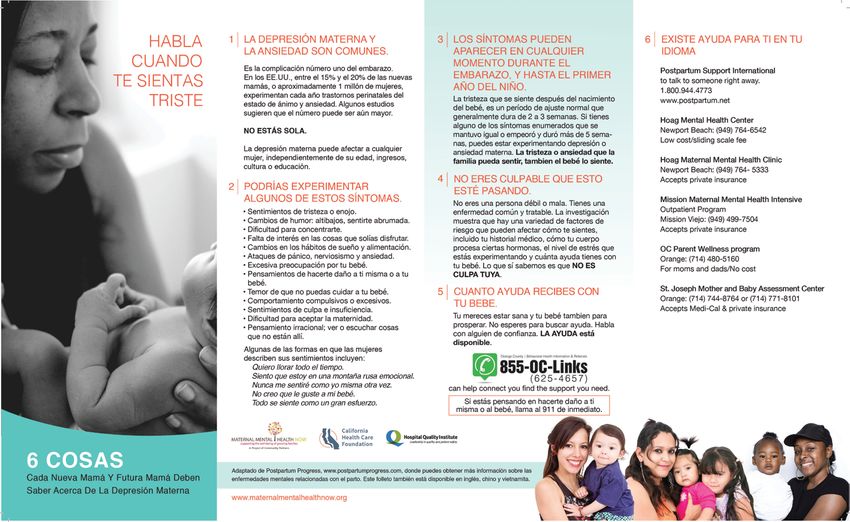
Offer the “Speak Up When You’re Down” brochure
Nearly half
of young women in Steps toAsk
Support Pregnant or
the following New Moms’ Well-Being
questions:
home visiting, WIC, Early 1. How are you feeling?
yo u n g Offer the “Speak Up When You’re Down” brochure
Head StartNeand
a rl y Head
h a lf ofStart
e visitin
g , 2.ØHow long have you been feeling this way?
programs in h o m Ø Ask the following questions:
women mayy be Sta rt
rl Head
WIC, Ea tart programs Listen closely for:
depressed.
d H e a dS
ssed.
a n
d epre 1. How are you feeling?
may be
2. How long have you been feeling this way?
Listen closely for: Guilt
Despair She may blame herself
Loneliness for being depressed
Guilt
and
DepressionDespair
causes feelings She may blame
Depression causes When she talks about her worry that she isn’tfor taking
of hopelessness and herself being
feelings of life, she may feel that she
Loneliness depressed and worry
good enough care of
helplessness
hopelessness and When she talks
helplessness can’t possibly getabout
help that she isn’t taking
her children.
her life, she may feel good enough care of
that she can’t possibly her children.
get help
Does mom have any of the Does Mom have one or more
following symptoms lasting of theDoes
following Encourage Mom to do
Does mom have any of the Mom haverisk factors?
one or more of the
> 2following
weeks? symptoms lasting > 2 following risk factors? the following:
weeks? Personal history of depression or
q Personal history of depression or other
Sadness other mental health concerns
q Sadness mental health concerns • Eat, sleep,
Encourage Momand gofollowing:
to do the outdoors
Lacks energy
q Lacks energy Lackqof Lack
support
of support
No Relationship regularly each
• Eat, sleep, and day
go outdoors
q Low motivation
Low motivation q Relationship stress/intimate partner
stress/intimate partner No regularly each day
q Increased anger or irritability violence • Welcome support from
Increased anger or irritability
q Cries easily violence • Welcome support from family
q Financial Stress
Cries easily
q Difficulty concentrating No Financial Stress
q Medical Problems No family and friends
and friends
• Learn the signs to watch out for
Difficulty
q concentrating
Constant worries q Traumatic Birthing Experience
q Recurring and unwanted thoughts Medical Problems
q Adolescent Parenthood • Learn
(refer the
to the signs to watch
brochure)
Constant worries
q Loss of interest in herself or the Traumatic
q Lack Birthing
of Social or Experience
financial support out for (refer to the
Recurring baby
and unwanted
thoughts
Yes q Unplanned
Adolescent or unwanted pregnancy
Parenthood brochure)
Loss of interest in herself or Lack of Social or financial support
the baby Unplanned or unwanted pregnancy
Walk her through a
Check
Yes for Safety self care plan
“For safety reasons, we ask everyone these 2
1. Include names of key people
questions” Walk her through
who are supportive and nearby
Check for
ü Do you Safety
currently have thoughts of wanting to a self
2. Include care plan
an emergency number
“For safety reasons, wedie
askor everyone
not wanting to live? 2 questions”
these No (put directly into their phone)**
1. Include names of key mental
people
ü Do you have thoughts of wanting to hurt
• Do you currently have thoughts No 3. Connect her to maternal
others, such as your child?to die or not
of wanting who
healthare supportive
resources ++ and nearby
wanting to live? 2. Include an emergency number
• Do you have thoughts of wanting to hurt others, such as (put directly into their phone)**
your child? 3. Connect her to maternal
Yes mental health resources ++
Yes
**Emergency Numbers
National Suicide Prevention Line: 800-273-TALK (8255), 24/7
immediate over-the-phone suicide prevention support
Call for a Call for a **EmergencyOCNumbers
LINKS and Crisis Assessment Team: 855-625-4657
psychiatricpsychiatric National Suicide Prevention Line: 800-273-TALK (8255), 24/7
evaluation at evaluation
OC linksat OC
++Counseling Resources
immediate over-the-phone suicide prevention support
See Resources on page 2
links Behavioral
Behavioral Health
Health Services
OC LINKS and Crisis Assessment Team: 855-625-4657
Services Line Line ++Counseling Resources
855-OC LINKS855-OC LINKS Scanpage
See Resources on the QR 2
Code for more information on
Perinatal Mental Health and the OC Perinatal
(855-625-4657)
(855-625-4657) Mental Health Toolkit from the
Customize with logo here Scan the QR Code for more informationMood
OC Perinatal on Perinatal Mental
and Anxiety
Customize with logo here Health and the OC Perinatal Mental Health Toolkit from the
Disorder Collaborative
OC Perinatal Mood and Anxiety Disorder Collaborative
Orange County Perinatal Mental Health Toolkit 22Maternal Mental Health Resources
Harbor Psychiatry & Mental Health
Newport Beach: (949) 887-7187
Accepts CalOptima and private insurance
Services in Arabic, English, Farsi
Hoag Mental Health Center
Newport Beach: (949) 764-6542
Low cost/sliding scale fee
Services in English, Farsi, Spanish
Hoag Maternal Mental Health Clinic
Newport Beach: (949) 764- 5333
Accepts private insurance
Services in English
Mission Maternal Mental Health Intensive Outpatient Program
Laguna Beach: (949) 499-7504
Accepts private insurance
Services in English
OC Parent Wellness Program
Orange: (714) 480-5160
For moms and dads
All services are at no cost
Services in English, Portuguese, Spanish, Vietnamese
St. Joseph Caring for Mothers with Maternal Depression
Orange: (714) 771-8101
Accepts CalOptima & private insurance
Services in English, Spanish
Need more information before getting care?
Call or text with someone right away at
Postpartum Support International
1.800.944.4773
www.postpartum.net
Services in English, Spanish
24/7 telephone service for anyone who has concerns about mental health
OC Warm Line: 877-910-WARM (9276)
Reference
SAMHSA Toolkit for providers “Depression in Mothers: More Than the Blues A Toolkit for Family Service Providers” (designed for
community-based providers, including those in home visitation programs; workers in the WIC program; and staff in Early Head Start, Head
Start, and other child care programs) https://store.samhsa.gov/sites/default/files/d7/priv/sma14-4878.pdf
Orange County Perinatal Mental Health Toolkit 23Trainings
Below are several online resources where providers and staff working with new and expecting
parents can become more aware of the impact of mental health, substance use, and implicit
bias on parental and infant well-being, and what they can do to help.
Perinatal Mental Health
https://www.maternalmentalhealthnow.org/providers/#online-training
Obtain CME credits for taking these brief 1-2 hour courses on screening and counseling patients
struggling with mental health.
https://www.postpartum.net/professionals/
Offer a variety of trainings from a complimentary webinar to certification and psychopharmacology
trainings, including CEUs.
2019 Orange County Maternal Mental Health Symposium
https://www.youtube.com/watch?v=E-GEf8R6s2U&feature=youtu.be
This is a free recording of the symposium to hear first-hand experiences from 2 mothers with
perinatal anxiety and psychosis, an overview of PMADs and treatment by a reproductive psychia-
trist, and information on local Orange County resources.
Orange County Perinatal Mental Health Toolkit 24Additional Trainings
Perinatal Substance Use Disorder Trainings
Recognizing perinatal substance use disorder as a significant consideration when addressing
perinatal mental health system-wide, First 5 Orange County adapted a series of short videos
originally produced in Florida, as a resource for local healthcare and other prenatal-to-3 ser-
vice providers. The videos demonstrate recommended screening and intervention strategies
for perinatal substance use, appropriate language and attitudes to reduce stigma, the use of
motivational interviewing, and how to establish a Plan of Safe Care in order to keep mother
and baby together safely upon discharge from the hospital. Partners are encouraged to uti-
lize the videos when training staff or offering education to their clients.
From Judgment to Healing: This video helps shift communication to a more strengths-based
approach in order to be more encouraging of women to seek care.
Plan of Safe Care Role Play: This video demonstrates communication strategies to link
mothers and babies to important services.
Getting Real About Substance Use Disorder: This video features two inspiring stories from
two mothers that can serve as a source of hope for others that recovery is possible and that
they are not alone.
SBIRT Role Play: This video demonstrates how to conduct Screening, Brief Intervention, Referral to
Treatment (SBIRT) with perinatal women within a limited amount of time.
Perinatal Health Equity Training
Dignity in Pregnancy and Childbirth is a free implicit bias and reproductive justice course
for perinatal providers developed in accordance with the training requirements outlined in the
California Dignity in Pregnancy and Childbirth Act (Senate Bill 464).
More information about this California Health Care Foundation funded project is available at
diversityscience.org.
Orange County Perinatal Mental Health Toolkit 25Treatment and Decision-Making Support
Below are free phone and app based support to provide healthcare and mental health clinicians with
access to evidence-based information to guide decision making and medication prescription for cases.
Free Psychiatric Consultation
Free real-time psychiatric consultation lines for provider support with diagnosis, treatment planning
and medication management of pregnant and postpartum women with depression and anxiety.
Consultation with a perinatal psychiatrist
Available Monday-Friday, 12:00pm-4:30pm
1-833-205-7141
Calls will be answered immediately or returned within 1 hour
1-800-944-4773 extension 4
https://www.postpartum.net/professionals/perinatal-psychiatric-consult-line/
Call the number or complete the form online to schedule an appointment within 24 hours for
consultation with a reproductive psychiatrist regarding a perinatal patient.
California Substance Use Line
The UCSF National Clinician Consultation Center for Substance Use Management (hyperlink:
https://nccc.ucsf.edu/clinician-consultation/substance-use-management/) offers “peer-to-peer
consultation from physicians, clinical pharmacists, and nurses with special expertise in substance
use evaluation and management.”
For California physicians seeking consultation call (844) 326-2626, every day, 24/7.
For providers outside of California, call (855) 300-3595 from Monday to Friday, from 9am to 8pm ET.
Free App
Free downloadable app containing PMAD assessment and decision support tool for obstetric
providers.
IOS (https://apps.apple.com/us/app/lifeline4moms/id1365668000?ls=1) and Android (https://
play.google.com/store/apps/details?id=com.ionicframework.testapp414533&hl=en_US)
Orange County Perinatal Mental Health Toolkit 26Billing Information
Orange County Perinatal Mental Health Toolkit 27Orange County Perinatal Mental Health Toolkit 28
Medi-Cal Benefits Information

                                Medi-Cal Update
                                Psychological Services July 2019 Bulletin 524

Counseling to Prevent Perinatal Depression is Now Reimbursable
Effective for dates of service on or after February 12, 2019, and consistent with the U.S. Preven-
tive Services Task Force recommendation, Medi-Cal will now reimburse individual and/or group
counseling sessions for pregnant or postpartum women with certain depressive, socioeconomic
and mental health related risk factors. These risk factors include perinatal depression, a history
of depression, current depressive symptoms (that do not reach a diagnostic threshold), low in-
come, adolescent or single parenthood, recent intimate partner violence, elevated anxiety symp-
toms and a history of significant negative life events.
Up to a combined total of 20 individual counseling (CPT codes 90832 and 90837) and/or group
counseling (CPT code 90853) sessions are reimbursable when delivered during the prenatal pe-
riod and/or during the 12 months following childbirth. Modifier 33 must be submitted on claims
for counseling given to prevent perinatal depression.

                                 Medi-Cal Update
                                 Psychological Services July 2019 Bulletin 526

Depression Screenings for Select Recipients Are Now Reimbursable
Effective for dates of service on or after December 1, 2018, depression screening is reimbursable
under Medi-Cal as an outpatient service. Screening should be implemented with adequate
systems in place to ensure accurate diagnosis, effective treatment options including referral to
mental health specialists and appropriate follow-up.
Billing Codes
The following chart lists procedure codes that must be used when billing for depression screening:

   Recipient Category           Positive Depression Screen       Negative Depression Screen

  Age 12 or older, whether or             G8431                                G8510
  not pregnant or postpartum

                                                                     Orange County Perinatal Mental Health Toolkit   29
You can also read


