Community Developments - Investments Profitable Partnerships - OCC
←
→
Page content transcription
If your browser does not render page correctly, please read the page content below
Community Developments
May 2018                       Investments

Profitable Partnerships
 Collaborating With Minority
 Depository Institutions
Profitable Partnerships:
Collaborating With Minority Depository Institutions

  A Look Inside …
  This edition of Community Developments Investments reviews how minority depository institution (MDI) collaborations with large
  and midsize banks can be profitable for the parties involved and help MDIs fulfill their missions and serve customers in a rapidly
  evolving industry.

  Community Reinvestment Act Consideration for Collaborations That Promote Community
  Development
  Banks may receive Community Reinvestment Act (CRA) consideration from partnerships with other financial institutions, including
  those with minority- and women-owned financial institutions and low-income credit unions.

  Catalyzing Impact: NCIF Fosters Bank Partnerships With MDIs
  The National Community Investment Fund (NCIF) has invested in mission-oriented banks, including MDIs. To encourage high-
  impact projects, the NCIF provides metrics and information that banks can use to analyze potential partnerships, projects, and
  investments.
  • Detroit: Liberty Bank and Trust Partners on Gateway Marketplace
  • East Baltimore: The Harbor Bank of Maryland and City First Bank Partnership

  Citibank: Partnering With Community Banks to Expand Financial Access
  The Citi Community Automated Teller Machine (ATM) Network allows customers of Continental Bank and several other
  community banks to use—without paying out-of-network fees—any of Citibank’s 2,400 branch ATMs, including those in
  Chicago, Los Angeles, Miami, New York, San Francisco, and Washington, D.C.

  Texas Capital and Texas National Banks: Collaborating for Mutual Benefit
  Texas Capital Bank is collaborating with and providing correspondent banking services to Texas National Bank and other MDIs
  and community development financial institutions.

  Resources
  A variety of resources is available to help banks interested in developing mutually beneficial partnerships with MDIs.

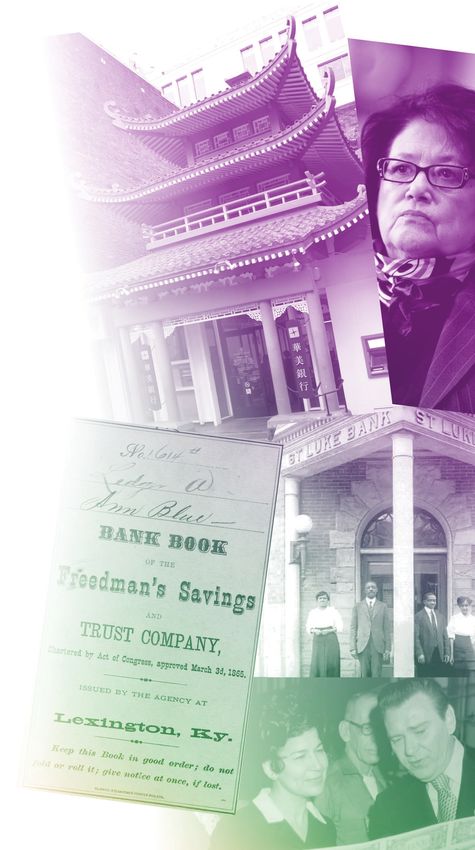
    On the cover

    A Diverse and Entrepreneurial History
    Minority depository institutions today are descendants of an entrepreneurial group of community banks founded by minority
    bankers dedicated to serving their diverse communities. This newsletter’s cover honors this rich heritage with images of
    (clockwise from top right):

    Façade of a bank in San Francisco (Alamy); Elouise Cobell, a Native American woman who spearheaded the capital
    campaign to fund Blackfeet National Bank, predecessor to today’s Native American Bank, N.A. (AP Images); St. Luke Penny
    Savings Bank employees (National Park Service); Romana Acosta Bañuelos, Latina co-founder of Pan American Bank in
    East Los Angeles, Calif. and U.S. Treasurer (1971-1974), pictured with James A. Conlon, Director, Bureau of Engraving
    and Printing (1967-1977) (Bureau of the Public Debt); Freedman’s Savings and Trust Co. passbook (U.S. Department of
    the Treasury); Maggie L. Walker, the first African American woman to charter a U.S. bank and founder of St. Luke Penny
    Savings Bank (National Park Service); Frederick Douglas, the first president of Freedman’s Bank, the first black-owned bank
    (Shutterstock).
A Look Inside …
Barry Wides, Deputy Comptroller for Community Affairs, OCC

T
        he Office of the Comptroller                  national banks and federal savings                     addition, MDIs help to ensure that
        of the Currency (OCC)                         associations (collectively, banks).                    the nation’s vibrant and diverse
        recognizes the vital role that                MDIs represent a small2 but                            banking system benefits the financial
minority depository institutions                      important part of the federal banking                  needs of all customers, businesses,
(MDI) can play in improving                           system because they often serve                        and communities they serve.
financial outcomes for their                          customers in minority,
customers and promoting the                                                                                  This issue of Community
                                                      low- and moderate-income (LMI),                        Developments Investments highlights
economic viability of minority
                                                      and underserved communities. In                        the OCC’s continuing efforts to
and lower-income communities.
Consistent with its mission of
ensuring a safe and sound federal
banking system, the OCC is
committed to promoting the
preservation of robust and healthy
MDIs and, in so doing, fulfilling
its congressional and regulatory
responsibilities.1
Preserving MDIs is an important
and timely goal for the nation
and the OCC, which supervises

                                                                                                                                                       Citibank
   Community Developments
                                                      An ATM partnership between Citibank and Continental National Bank, in Miami, uses
       Investments                                    Spanish materials to reach Continental’s Hispanic customers.

             Deputy Comptroller
                Barry Wides

                 Editorial Staff
                  David Black
                   Janet Fix
                  Emily Gold

                 Design Staff
                Vincent Harris
              Richard Shacklette

       Questions or comments, please
       phone (202) 649-6420 or email
      communityaffairs@occ.treas.gov.
   This and previous editions are available
   on the OCC’s website at www.occ.gov.

                   Disclaimer
         Articles by non-OCC authors
       represent the authors’ own views
              and not necessarily                                                                                                                          OCC
             the views of the OCC.
                                                      Bank executives from women- and minority-owned banks gather at a recent meeting at OCC
                                                      Headquarters.

1 Section 367 of the Dodd–Frank Wall Street Reform and Consumer Protection Act; OCC, “Policy Statement on Minority National Banks and Federal Savings
Associations,” June 7, 2013.
2 Less than 3 percent of the depository institutions in the United States are MDIs. Only 30 percent of MDIs operated continuously throughout 2001 to 2013,
compared with 57 percent of community banks, according to “Minority Depository Institutions: Structure, Performance, and Social Impact,” FDIC Quarterly, Volume
8, No. 3, 2014.

May 2018                                                                                                                                                     1
support and encourage new and            LMI communities. The OCC’s                 critical resources into low-income
existing MDIs through collaboration      roundtable discussions, which began        communities and strengthen MDIs.
roundtables. These roundtable            in 2016, are continuing, and some of       The NCIF explains its work in
discussions bring together the senior    the collaborations that came out of        “Catalyzing Impact: NCIF Fosters
executives of MDIs and those             those initial meetings are highlighted     Bank Partnerships With MDIs.”
of midsize and large banks. By           in the articles “Citibank: Partnering      By highlighting MDI collaborations
collaborating with MDIs, the OCC         With Community Banks to Expand             and resources in this publication,
believes, large and midsize banks        Financial Access” and “Texas               the OCC hopes to encourage
can help MDIs better serve the           Capital and Texas National Banks:          similar collaborations. The OCC’s
credit needs of their communities,       Collaborating for Mutual Benefit.”         District Community Affairs Officers
while expanding their own business       Nonprofit organizations have been          are available to answer technical
opportunities, fulfilling strategic      critical in facilitating collaborations.   questions, and the OCC’s website
goals, and potentially receiving         The National Community Investment          (www.occ.gov) has helpful resources.
Community Reinvestment Act (CRA)         Fund (NCIF), a nonprofit private           In addition, MDI executives are
consideration. These partnerships can    equity trust and impact investor, is       encouraged to attend the OCC’s
be profitable for the parties involved   dedicated to supporting mission-           bank director workshops on risk
and help MDIs fulfill their missions     oriented MDIs and other banks              governance, credit risk, compliance
and serve customers in a rapidly         operating in and serving LMI               risk, and other important banking
evolving industry.                       communities. The NCIF’s goal is            issues.
In 2015, the OCC issued a                to channel financial products and          MDIs and midsize and large banks,
paper titled “An Opportunity for         services to LMI areas, minority            as well as their customers, benefit
Community Banks: Working                 communities, and other underserved         from a healthy, diverse federal
Together Collaboratively.” The           areas. To encourage high-impact            banking system. After reading
paper highlighted the benefits           projects, the NCIF provides metrics        this publication, you will better
of bank partnerships pooling or          and information that banks can use         understand the important role that
sharing resources to reduce costs,       to analyze potential partnerships,         MDIs play in their communities. We
achieve economies of scale, and          projects, and CRA-qualified                hope you also will share the OCC’s
leverage specialized expertise to        investments. NCIF has also been            commitment to ensuring the future
serve customers and communities,         using the New Markets Tax                  viability and preservation of the
particularly those in minority and       Credit Program as a way to bring           nation’s MDIs.

2                                                                                   Community Developments Investments
Community Reinvestment Act Consideration
for Collaborations That Promote Community
Development
David Black, Community Development Expert, OCC

T
         he Community Reinvestment
         Act (CRA), passed in 1977,
         encourages national banks
and federal savings associations
(collectively, banks) to help meet
the credit needs of all segments
of their communities, including
low- and moderate-income (LMI)
neighborhoods. Today, federal
financial supervisory agencies,
including the OCC, evaluate financial
institutions on their performance
regarding activities that qualify for
consideration under the CRA.
This article reviews ways in
which banks may receive CRA
consideration from partnerships with
                                                                                                                                                      OCC
other financial institutions, including
                                                    The East Baltimore Development Initiative used new markets tax credits, which is an eligible
minority depository institutions                    community development activity under the Community Reinvestment Act.
(MDI), women-owned financial
institutions, and low-income credit
unions (MWLI financial institutions).               of “community development,” which                    a broader statewide or regional area
                                                    is defined in the CRA regulations.3                  that includes the bank’s assessment
Community Development                               The definition of “community                         area(s).
                                                    development” includes affordable
Activities                                                                                               Examples of partnerships between
                                                    housing for LMI individuals,                         banks and other entities to promote
All federally regulated financial                   community services targeted to LMI                   community development include4
institutions, regardless of minority                individuals, activities that promote
ownership designation, may receive                  economic development by financing                    • loans made to a financial institution
CRA consideration for certain                       eligible small businesses and farms,                   that primarily lends to promote
                                                    and activities that revitalize or                      community development.
community development activities
                                                    stabilize LMI geographies or other                   • purchasing or selling a participation
conducted in partnership with other
                                                    geographies designated in the CRA                      in a larger community development
entities, including other Federal
                                                    regulations.                                           loan made by another financial
Deposit Insurance Corporation-
                                                                                                           institution. Loan participations
insured financial institutions.                     A bank may receive CRA                                 can allow smaller institutions
Community development activities                    consideration for community                            to originate larger loans when
include loans, investments, and                     development activities provided                        other banks agree to purchase
services that have a primary purpose                the activities benefit the bank’s                      participations.
                                                    assessment area(s) or, in most cases,

3   12 CFR 25.12(g) and 195.12(g).
4   “Community Reinvestment Act; Interagency Questions and Answers Regarding Community Reinvestment; Guidance,” 81 Fed. Reg. 48506 (July 25, 2016).

May 2018                                                                                                                                               3
• investments or holding shares                     women-owned depository institution,                  ventures undertaken by a majority-
  in, or making grants or deposits                  as these terms are defined in the                    owned institution in cooperation
  available to, a financial institution             CRA statute, may receive CRA                         with MWLI financial institutions,
  that primarily lends or facilitates               consideration. The bank branch                       provided that the activities help
  lending in LMI areas or to LMI                    must be located in a predominantly                   meet the credit needs of local
  individuals.                                      minority neighborhood.5 The amount                   communities in which the MWLI
• grants that allow a financial                     of the contribution or the amount                    financial institutions are chartered.
  institution to undertake community                of the loss incurred in connection                   The majority-owned institution
  development activities, such                      with such activity may be a factor in                may receive consideration for such
  as financial counseling to LMI                    determining whether the depository                   activities even if the MWLI financial
  individuals.                                      institution is meeting the credit needs              institution is not located in, or the
• technical assistance, in-kind                     of the institution’s community.6                     activities do not benefit, the majority-
  contributions, or other community                                                                      owned institution’s assessment
  development services to a financial               Partnerships Between                                 area(s) or broader statewide or
  institution whose primary purpose                 Majority-Owned                                       regional area that includes the
  is community development.                         Institutions and MWLIs                               institution’s assessment area(s).7

                                                    CRA consideration is permitted                       For more information, contact David
Sales or Donations of Bank                          for majority-owned institutions                      Black at david.black@occ.treas.gov.
Branches in Predominantly                           that partner with MWLI financial
Minority Neighborhoods                              institutions. The federal financial
Under some circumstances, a sale of                 agencies may provide CRA
a bank branch on favorable terms or                 consideration for capital investments,
a branch donation to a minority- or                 loan participations, and other

5   12 USC 2907(a).
6   Ibid.
7   OCC, Community Developments Fact Sheet, “Partnerships With Minority- and Women-Owned Financial Institutions, Low-Income Credit Unions,” August 2016.

4                                                                                                       Community Developments Investments
Catalyzing Impact: NCIF Fosters Bank
Partnerships With MDIs
Saurabh Narain, President and Chief Executive Officer, National Community Investment Fund

M
            inority depository             mission-oriented institutions; and                           to analyze potential partnerships,
            institutions (MDI)             using research to showcase impact.                           projects, and investments that
            play a vital role in the                                                                    may qualify them for Community
                                           The NCIF has invested tier 1 and tier
communities they serve by providing                                                                     Reinvestment Act (CRA)
                                           2 capital directly into MDIs to support
access to investment capital,                                                                           consideration. The NCIF considers
                                           the financial services they provide to
financial products, and services that                                                                   impact as the foundation for all its
                                           LMI and minority communities. In all,
may not otherwise be available.                                                                         investing and lending activities. The
                                           the NCIF has invested in 58 mission-
As community-focused banks,                                                                             NCIF measures and demonstrates
                                           oriented financial institutions of which                     the social impact of its investments
MDIs have a unique understanding           23 were MDIs (current investments
of their local markets and needs.                                                                       in communities with its unique and
                                           are in 14 MDIs). Together with other                         proprietary Social Performance
MDIs leverage this knowledge to            NCIF investments, these mission-                             Metrics. The NCIF developed its
support small businesses, faith-based      oriented institutions have generated                         Social Performance Metrics to
organizations, community facilities,       over $7 billion in loans in LMI                              identify high-impact MDIs and other
real estate developments, and              communities.                                                 mission-oriented financial institutions
community members.
                                                                                                        as potential partners for banks with
Historically, the first MDIs grew out      Social Performance Metrics                                   similar missions and goals. The
of the pre-civil rights era providing      To encourage high-impact projects,                           metrics provide a suite of quantitative
banking services in underserved            the NCIF provides metrics and                                and qualitative data, including
areas; later ones were founded to          information that banks can use                               “mission intensity” data (see figure 1).
serve immigrant communities. Today,
MDIs continue to play significant          Figure 1: Mission Intensity of NCIF’s Portfolio of CDFI Banks and Minority Depository
                                           Institutions (2015)
roles in minority communities in
urban and rural areas throughout the                                                           Affordable housing (5.2%)
United States.                                                                                 Clean energy (1.3%)
                                                                                               Minority-owned businesses (3.4%)
                                                                                               Neighborhood stabilization (2.9%)
Founded in 1996, the National
Community Investment Fund (NCIF)
is a nonprofit private equity trust                                                            Nonprofit organizations (20.5%)

and impact investor dedicated to
increasing the flow of responsibly                                                             Sustainable food & agriculture (4.1%)

priced financial products and services                                                         Woman-owned businesses (7.1%)

in low- and moderate income (LMI)
communities. The NCIF achieves its
mission through three complementary
lines of business: investing in mission-                                                       Development lending intensity total loans (40.4%)
oriented financial institutions, most
of which are MDIs or certified
community development financial
institutions (CDFI); using new
markets tax credits (NMTC) to invest       Note: The Mission Intensity Index shows how much of a bank’s lending is mission-related. It is the percentage of
in high-impact development projects        a bank’s total annual lending that supports the bank’s mission by 1) being located in a qualified census tract or 2)
                                           supporting a specific mission-relevant category. The figure shows the median percentage of 2015 lending by the
that benefit these communities, in         NCIF’s portfolio of CDFI banks and MDIs. The percentages do not add up to 100 because banks do other, non-
                                           mission intensity lending. For additional information, please see the NCIF report “Telling the Story: The Impact of
partnership with the                       the Reporting Banks and the Mission-Oriented Banking Industry.”

May 2018                                                                                                                                                     5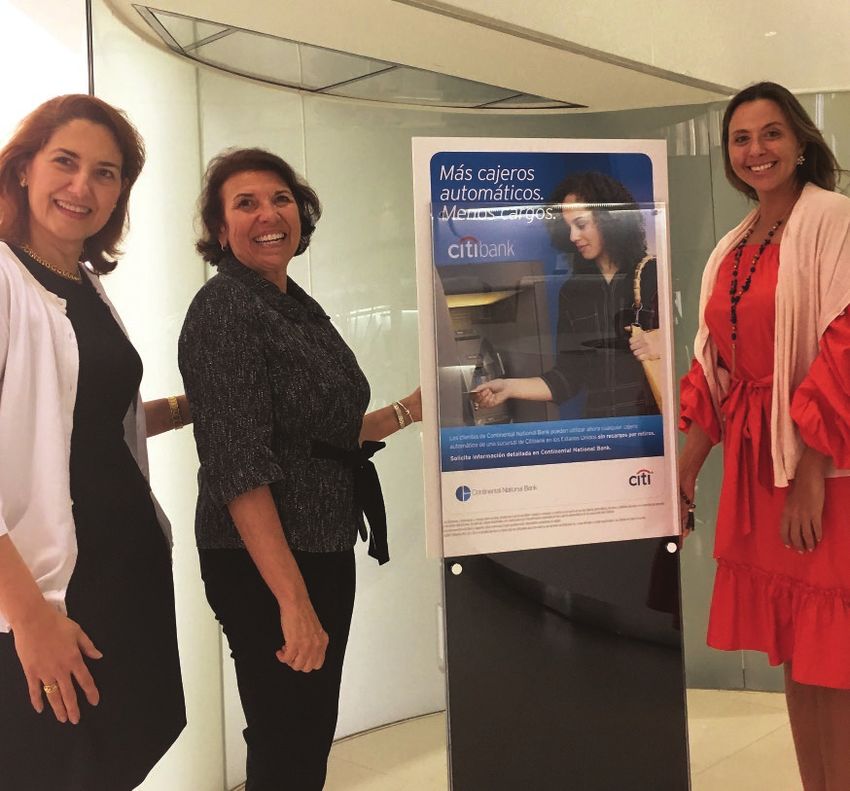
Some of these metrics are available     Figure 2: NCIF’s Social Performance Metrics Illustrated by Quadrants
from the NCIF’s search engines, www.
BankImpact.org and BankImpact
Maps (www.bankimpactmaps.org).
The NCIF develops these metrics
using the self-reported data received
from banks and from publicly
available sources, such as federal
Home Mortgage Disclosure Act
(HMDA) data. The NCIF analyzes
this data to quantify and compare
the social impacts of banks by the
percentage of HMDA-reported
lending and the number of branches
in LMI areas and highly distressed
U.S. Census tracts. The NCIF then
assigns the banks to quadrants to
help investors and consumers make
informed banking choices
(see figure 2). Banks exceeding
the NCIF’s “impact thresholds”
are assigned to the upper-right
quadrant and highlighted for
                                        Note: The Development Deposit Intensity (x-axis) shows the percentage of a bank’s branches located in low-and
potential partnerships. (For detailed   moderate-income census tracts. The Development Lending Intensity (y-axis) shows the percentage of a bank’s
                                        mortgage lending volume in low- and moderate-income census tracts.
information on the NCIF’s quadrant
rankings, visit www.ncif.org.)
The social performance metrics of       mission-oriented MDIs and larger                             customer or build new customer
MDI banks clearly show the banks’       banks interested in impactful projects                       relationships. The bank is able to
importance in their communities.        in LMI communities. The 3-Way                                book assets and income through
As a peer group, MDI banks have         Partnership comprises the following                          the loans. Second, some banks
a substantial presence in LMI           parties (see figure 3 for more detail                        joining in the partnership often
communities, regarding both branch      on the structure):                                           provide depository services to
locations and lending. The median       1. The NCIF, as the tax credit                               the borrower. Third, all banks
MDI bank has 57 percent of its             allocatee, selects projects that                          participating in the partnership
branches in LMI areas, compared            will benefit communities and                              gain experience and familiarity
with 40 percent for the median bank        involve mission-oriented banks as                         with the NMTC structure. Some
in the United States. In addition,         strong partners. Entities that are                        banks that have gained experience
based on HMDA reporting, MDI               customers of NCIF partner banks                           through participating in the 3-Way
banks are much more likely to lend in      often sponsor these projects.                             Partnership have gone on to
LMI areas, with 48 percent of MDI       2. MDIs and other mission-oriented                           receive their own allocation. These
lending going to these communities,        banks have participated in the                            banks can then participate in
compared with just 26 percent for the      3-Way Partnership in one or                               projects as co-allocatees. Finally,
median bank overall.                       more ways. First, an MDI can                              and perhaps most importantly,
                                           participate as a leveraged lender                         through participation in the 3-Way
New Markets Tax Credits                    (lending within the NMTC                                  Partnership, mission-oriented
                                           structure) or as a direct lender                          banks can gain a relationship with
In deploying NMTCs, the NCIF uses
                                           (directly financing or sponsoring                         larger banks.
its own 3-Way Partnership Model
to create relationships between            the project) to support its

6                                                                                                Community Developments Investments
3. large bank typically purchases          Figure 3: NCIF’s New Markets Tax Credits 3-Way Partnership
   the tax credits, turning them into
   equity for the project as part of
   the NMTC structure. In addition
   to the benefit of the tax credits,
   the large bank can develop a
   partnership with the mission-
   oriented bank and fulfill its CRA
   responsibilities. To date, the NCIF
   has completed 27 NMTC projects
   with 3-Way Partnerships, 11 of
   which were partnerships with
   CDFIs including MDI banks.

The following two examples show
how NMTC projects were used to
leverage community bank and
large bank relationships as well as
positively affect communities.

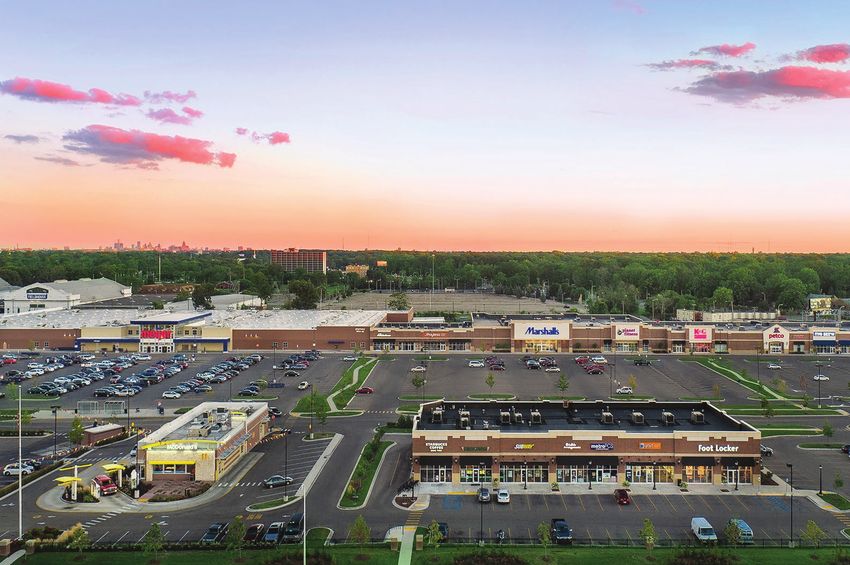
Detroit: Liberty Bank and
Trust Partners on Gateway
Marketplace
Liberty Bank and Trust, a New              Note: For additional information on NCIF’s New Markets Tax Credits 3-Way Partnership, please visit the NCIF’s
Orleans-based MDI, along with the          website.

NCIF and U.S. Bank contributed to
the NMTC financing for the Gateway
Marketplace in Detroit.
This new 350,000-square-foot retail
center is the first major retail project
in Detroit in over 40 years. The
project remediates a 36-acre blighted
and contaminated brownfield site and
brings a fresh grocer to a federally
designated food desert. Hundreds of
new construction jobs and permanent
jobs were created as a result of the
development.
Liberty Bank and Trust entered
the Detroit market in 2009 and has
been very active in community
revitalization efforts. By building
relationships with public and private
partners, Liberty Bank and Trust                                                                                                                 REDICO

has made a substantial contribution        Liberty Bank and Trust, a New Orleans MDI, partnered with the National Community
                                           Investment Fund and U.S. Bank to finance the Gateway Marketplace, Detroit’s first major
to several high-impact housing and         retail project in decades.
commercial revitalization efforts in
Detroit.

May 2018                                                                                                                                                   7
East Baltimore: The
Harbor Bank of Maryland
and City First Bank
Partnership
The Harbor Bank of Maryland, City
First Bank of DC, the NCIF, and
U.S. Bank contributed to the $33
million in NMTC financing for the
development of the 1812 Ashland
project. The project, developed by
the Forest City–New East Baltimore
Partnership, includes lab and office
space for local and national tenants
that have research relationships with
Johns Hopkins University (JHU),
as well as additional companies                                                                                            OCC
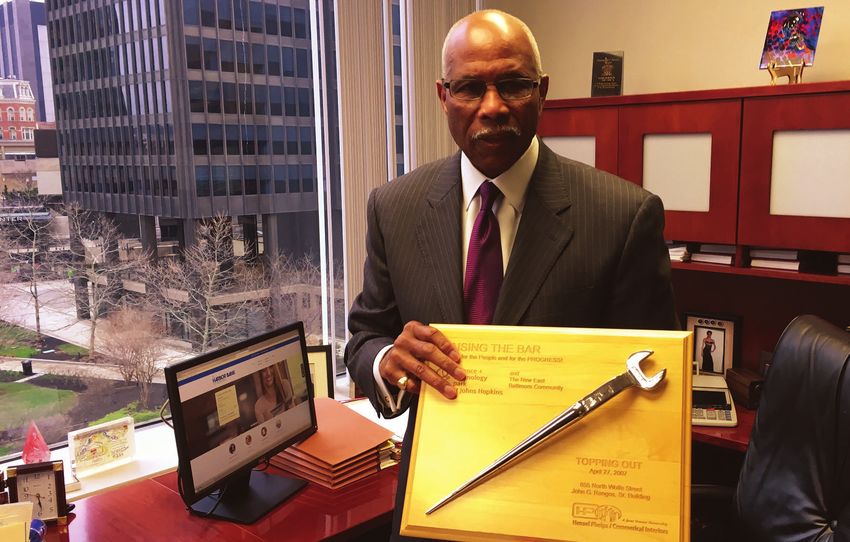
attracted to Baltimore’s emerging        Joseph Haskins Jr. Chairman and CEO of the the Harbor Bank of Maryland, shows an award
technology sector. The project           he received for the bank’s community development work in East Baltimore.
created hundreds of construction
and permanent jobs and generates         re-energize, and rebuild East                For more information on the
significant economic activity in the     Baltimore, oversees the initiative.          NCIF and how to use its Social
local community.                         The Harbor Bank of Maryland has a            Performance Metrics, please visit
                                         long-term presence in the community          www.ncif.org. Detailed information
This project is a key component
                                         and often acts as a catalyst for             on the NCIF’s impact analysis is
of a larger, $1.8 billion initiative                                                  available at www.bankimpact.org.
to revitalize the highly distressed      economic development in Baltimore.
                                                                                      Maps that can help investors and
community of East Baltimore, an          Joseph Haskins Jr., Chairman
                                                                                      banks connect with geographically
area that has suffered from persistent   and CEO of the Harbor Bank of
                                                                                      convenient partners are available at
poverty and high unemployment.           Maryland, who was instrumental in            www.bankimpactmaps.org.
East Baltimore Development Inc.          the formation of EBDI, believes that
(EBDI), a nonprofit organization         such partnerships have allowed local
                                         and national entities to leverage their       Articles by non-OCC authors represent
established by community,                                                              the authors’ own views and not
government, institutional, and           strengths and maximize the impact of          necessarily the views of the OCC or the
philanthropic partners to revitalize,    their investments in the community.           organization they represent.

8                                                                                     Community Developments Investments
Citibank: Partnering With Community Banks to
Expand Financial Access
Janet Fix, Analyst to the Deputy Comptroller for Community Affairs, OCC
W
hen the Office of
the Comptroller of
the Currency (OCC)
encouraged minority depository
institutions (MDI) in 2016 to form
collaborations with larger banks,
Guillermo Diaz-Rousselot was
initially as skeptical as anyone
would be if asked to team up with a
competitor.
“Yeah, right,” thought Mr. Diaz-
Rousselot, President and Chief OCC OCC
Executive Officer of Continental Natalie Abatemarco, Managing Director Spanish language marketing in Continental
of Citi Community Development, and Bank’s lobby in Miami is presented by,
National Bank, an MDI in Miami.
Guillermo Diaz-Rousselot, President of from left, Sonia Canessa-Gonzalez, CFO
As a trustee for Miami’s Olympia Continental National Bank, discuss their of Continental National Bank; Natalie
Theater at the Gusman Center for the banks’ ATM partnership. Abatemarco of Citibank; and Natalia Arana,
Performing Arts, he said, “I thought Marketing Director of Continental National
collaboration was something only unions across the nation that are Bank.”
musicians did.” initial partners in Citibank’s Citi
ATM Community Network, a pilot organizations on these efforts to aid
A phone call from Citibank, however, financially underserved individuals,
program created in July 2016.
soon gave Mr. Diaz-Rousselot reason families, and communities.
to be more optimistic. Continental’s “At Citi, we share the same goal as
minority-owned banks and credit Together, the MDIs and other
customers were invited to use—
unions, which is to provide wide institutions in the Citi ATM
without paying out-of-network
access to safe and affordable financial Community Network serve more than
fees—any of Citibank’s 2,400 branch products and services, especially 400,000 customers, many of whom
automated teller machines (ATM), in low-income communities and live in low- to moderate-income and
including those in Chicago, Los communities of color,” said Bob majority-minority neighborhoods
Angeles, Miami, New York, San Annibale, Global Director of Citi
considered to be underserved by large
Francisco, and Washington, D.C., Community Development and
financial institutions. The typical
cities where Citibank has 600 retail Inclusive Finance. “The Citi ATM
Community Network enables us MDI customer has a relationship with
branches.
to collaborate in a new way by his or her community bank, which
What did Citibank request in return? may have only a handful of ATMs
expanding access and convenience
“They did not request anything,” locally.
for the customers of these partner
said Mr. Diaz-Rousselot. “At first, institutions, while at the same time In 2016, Citibank executives learned
I did not take them seriously, but strengthening local trusted credit the OCC was encouraging Citibank
it was true and it turned out to unions and minority-owned banks.” and other OCC-supervised banks
be the beginning of a beautiful
Expanding financial access and to collaborate with MDIs. At the
relationship.” same time, Citibank was building
inclusion for community bank
For Citibank, it was a serious customers is a key part of Citi’s off the creation of both the Access
strategic move that led to positive corporate strategy, said Mr. Annibale, Account, in 2014, and its pioneering
relationships with seven other MDIs, who leads Citi’s partnerships collaborations to develop savings
four community banks, and 11 credit with global, national, and local accounts for schoolchildren in the
May 2018 9city and county of San Francisco and • Mission National Bank, California said. “We could continue, almost
the low-income immigrant clients • National Bank of Malvern, exponentially, to expand financial
of Grameen America. In addition, Pennsylvania access.”
Citibank was looking to further • Pacific Global Bank, Illinois Meanwhile, Continental Bank and its
expand its financial inclusion efforts customers are enjoying the benefits
by exploring ways to expand ATM In addition, four community banks
are participating in the Citi ATM of Continental’s relationship with
access to small community financial
Community Network: City First Citibank, including greater brand
institutions. Soon after, Citibank
Bank of DC, Spring Bank in New awareness and free access to their
began its ATM pilot program and
York City, Neighborhood National cash at any Citibank ATM.
contacted Mr. Diaz-Rousselot to
invite Continental to join the Citi Bank in San Diego, Calif., and Mr. Diaz-Rousselot said the Citi
ATM Community Network. Quontic Bank in New York City. ATM Community Network has
The Citi ATM Community Network helped Continental to stand out in
By participating in the network, recognizes the way bank customers
banks enable their customers to a crowded South Florida banking
work and live. “These partnerships market where 60 community banks
avoid paying out-of-network ATM expand ATM access to people who
fees that otherwise could total nearly compete for the same customers and
have relationships with the local market share. “Our partnership is
$5 per transaction. Typically, bank banks that, perhaps, they feel best
customers pay both an ATM fee a big plus, at the board level, with
about,” Mr. Annibale said. “They
charged by the out-of-network bank our officers, our customers … and
also leverage Citi’s branch network
that owns the ATM and a second fee in terms of branding and public
and expand our footprint in the local
that their own bank charges for using relations,” Mr. Diaz-Rousselot said.
communities of our partners.”
an ATM owned by another bank. In Results, he said, have “been quite
2017, out-of-network ATM fees in In 2018, the Citi ATM Community positive.”
the United States hit a record high of Network continues as a pilot, and
His customers increased their ATM
$4.69 per transaction, up 2.6 percent Citibank will, at its discretion, add
new partners while maintaining usage by 10 percent, with 30 percent
from the previous year, Mr. Annibale using ATMs to check balances before
said. “People who are juggling control over the impact of the added
volume on its retail branch network, making withdrawals. He said 67
limited cash flows and withdrawing
according to Mr. Annibale. percent of customers are using the
just $40 at a time are paying a
network to withdraw funds.
significant potential cost to get access “We know that people who use our
to their money,” he said. 399 Park Avenue ATM don’t live In addition, Mr. Diaz-Rousselot
a few blocks away from 399 Park has overcome his initial concerns
The Citi ATM Community Network
Avenue,” Mr. Annibale said. “They that Citibank might try to entice his
does not boost Citi’s bottom line
come from all over New York, from customers away or cross-sell Citibank
or allow Citi to sell its products to
its bank partners’ customers, Mr. all over the country, and around products to them. Citibank has not
Annibale said. Proof of this, he the world. They live elsewhere but done this, Mr. Diaz-Rousselot said.
said, is in the data Citi has collected may work in Manhattan, or they Most importantly, Mr. Diaz-Rousselot
since the pilot began. “Most of pass by as taxi drivers, delivery is pleased because his customers are
these customers are just using our men, cleaners, office workers, civil happy and saving money.
ATMs, not the rest of the bank,” Mr. servants, and pedestrians.” “We know 91.3 percent of our
Annibale said. While Citi may not quickly expand customers are aware of our alliance
The Citi ATM Community Network its ATM network, it does hope that with Citibank and 64 percent have
benefits the customers of Continental other OCC-supervised banks will see used a Citibank ATM at no cost,”
National Bank of Miami and seven what it has done and follow its lead Mr. Diaz-Rousselot said. “It’s been
other MDIs: by providing access to their ATMs at fantastic for us.”
no charge to other community banks.
• American Plus Bank, California For more information, contact
• Broadway Federal Bank, California “There are many other [large banks] Patricia Tuma, Vice President for
• City National Bank, New Jersey which could do the same, and that Corporate Communications at
• Executive National Bank, Florida would be amazing,” Mr. Annibale Citibank, at patricia.tuma@citi.com.
10 Community Developments InvestmentsTexas Capital and Texas National Banks:
Collaborating for Mutual Benefit
Janet Fix, Analyst to the Deputy Comptroller for Community Affairs, OCC
W
hen the Office of the headquarters for chief executives
Comptroller of the of selected MDIs and CDFIs.
Currency (OCC) invited That meeting focused on how
Texas Capital Bank to join the first Texas Capital Bank could support
Minority Depository Institutions MDIs and CDFIs through loan
(MDI) Collaboration Roundtable, participations, reciprocal deposit
Chief Executive Officer Keith relationships, sharing intellectual
Cargill and Director of Community capital and specialized expertise
Development Effie Dennison did about talent management, recruiting,
not know what might result from compliance risk, marketing, and
the meeting. They returned home to cybersecurity.
Dallas with a new—and potentially Next, Texas Capital Bank ensured
profitable—opportunity for the the collaborations it formed were
bank’s business strategy. successful for all involved by
Two years later, Texas Capital Bank OCC • staying in touch with partners
is collaborating with and providing Jesse Jackson, a Senior Vice President regularly through on-site visits and
correspondent banking services of Texas Capital Bank, and Jose “Joe” meetings.
to about 21 MDIs and community Quiroga, President of Texas National
• building relationships with each
Bank, consider their partnership mutually
development financial institutions MDI’s executive management
beneficial.
(CDFI). The partnerships are giving team.
Texas Capital Bank, a $25 billion • offering deposit rates that
agreements and other correspondent
commercial and private client successfully compete with the
bank services designed to meet the
bank, access to new business and federal funds rate and rates offered
balance sheet needs and earning asset
consumer relationships in culturally by other banks.
goals of its partners. These MDI and
diverse and low-to moderate-income • reducing the size of loan
CDFI partners are coast to coast and
communities across the nation. participations to $1 million to $5
range in size from $80 million to $4
In return, Texas Capital Bank is billion in assets. million (a fraction of the bank’s
receiving Community Reinvestment typical $10 million to $15 million
The partnerships further Texas minimum) to meet the lower
Act consideration for its MDI
Capital Bank’s strategic plan, which lending limits of partners.
collaborations.
has led the bank to partner with more
“What we heard from these than 340 banks in 40 states. “We’ve “At the end of the day, our job
banks was their long, rich history quietly built what some would say is to create opportunities for [our
of meeting the needs of their is the largest correspondent banking partner] banks to buy into deals,” Mr.
communities, and that they were division in the country, based on Jackson said. “Our internal credit
not looking for a handout,” said Ms. deposits,” said Jesse Jackson, a culture and the folks that manage
Dennison. “Rather, they were looking Senior Vice President of Texas MDI–CDFI relationships in our bank
for an opportunity to be strategic by Capital Bank. have become familiar with the size
helping each other’s businesses grow of transactions these banks require.
Texas Capital Bank formed its MDI–
for mutual benefit.” We are comfortable with the segment
CDFI partnerships after the OCC’s
Texas Capital Bank’s MDI–CDFI first roundtable in 2016 and held a of banks that are participating in our
program provides reciprocal deposit subsequent meeting at its program.”
May 2018 11Relationship banking is a key a deposit in our institution that “Texas Capital Bank is not in my ingredient. “When we do business diversifies our funding sources was backyard, and I don’t have a presence with you, we enjoy getting to know very helpful for us.” in its market in Dallas or Houston,” you,” Mr. Jackson said. “That is the The asset diversification has helped Mr. Quiroga said. “If anything, I wish way we cultivate our relationships.” Texas National better compete in I could do more from the standpoint The results have proven to be a growth market that is 90 percent of dreaming up new ideas of how we mutually beneficial to Texas Capital Hispanic and to provide loans to could collaborate together.” Bank and its partners. customers, Mr. Quiroga said. The That is at the core of these efforts. “The social impact is very important, partnership also has resulted in “We are free to ask, ‘How can I but we also set out to build a phone-based trainings for Texas make you better and how can you profitable business with our MDI and National’s staff members by Texas make me better?’” Mr. Quiroga said. CDFI partners,” Mr. Jackson said. Capital Bank’s experts in a number Texas Capital Bank is open to “The overall impact is far-reaching of key areas. collaborating with other MDIs and and rewarding. We’ll touch more Additional collaborations are CDFIs in 2018. banks, more communities, and more possible, Mr. Quiroga said, because “We’ve worked closely with each people through MDI collaborations Mr. Jackson and his Texas Capital of [our partner] banks to understand than you can on your own.” Bank team are “just phenomenal. their needs, to identify where the The rewards have been positive and They keep an open mind about where opportunities are, and to determine unexpected, said Jose “Joe” Quiroga, our partnership can go from here. … what fits with what we’re trying president of Texas National Bank, There’s a variety of different things to do to meet both organizations’ which is based in Mercedes, Texas, we are working on together, going profitability objectives,” Jackson and has locations in four other small forward.” said. “We want to make sure we are communities. Unlike other bankers who may balk adding value and doing things to “The partnership with Texas Capital at suggestions they collaborate with move these partnerships forward.” Bank has helped us to leverage our bigger banks that could be viewed For more information, visit Texas minority status in a growing market,” as competitors, Mr. Quiroga had no Capital Bank’s website or contact Mr. Quiroga said. “To have Texas qualms about partnering with Texas Jesse Jackson at jesse.jackson@ Capital Bank come in and make Capital Bank. texascapitalbank.com. 12 Community Developments Investments
Minority Depository Institutions Resources
A variety of resources is available to help banks interested in developing mutually beneficial partnerships with MDIs.
The electronic version of this publication on the OCC’s website (www.occ.gov) contains links to these resources at
www.occ.gov/mdicollaborations.

OCC Resources
•   “An Opportunity for Community Banks: Working Together Collaboratively”
•   “Policy Statement on Minority National Banks and Federal Savings Associations”
•   Listing of OCC-supervised minority depository institutions
•   Minority Depository Institutions Advisory Committee
•   Minority Depository Institutions Resource Directory
•   “Minority-Owned Banks: Making a Difference in Their Communities”
•   “Partnerships With Minority- and Women-Owned Financial Institutions, Low-Income Credit Unions”
•   “Annual Report: Preservation and Promotion of Minority-Owned National Banks and Federal Savings Associations.”

Other Federal Resources
• FDIC Minority Depository Institutions Program
• Board of Governors of the Federal Reserve System Partnership for Progress
• CDFI Fund Minority Depository Institutions Resource Bank

Banking Industry Resources
•   Community Development Bankers Association
•   Independent Community Bankers of America
•   National Bankers Association
•   National Community Investment Fund

May 2018                                                                                                                 13
C
                           ommunity Affairs supports the OCC’s mission
                           to ensure a vibrant banking system by helping national
                           banks and federal savings associations to be leaders in
      providing safe and sound community development financing and
      making financial services accessible to underserved communities and
      consumers, while treating their customers fairly.

                                                                                                                                      ME
                      WA
                                           MT              ND
                                                                        MN                                                            VT
                     OR
                                                                                                                                      NH
                                 ID                        SD                      WI                                  NY             MA
                                                                                                  MI                                  RI
                                            WY
                                                                                                                      PA              CT
                                                                         IA
                                                           NE                                                                         NJ
                                                                                             IN        OH
                           NV                                                           IL                                            DE
                CA                    UT        CO                       MO                                       VA
                                                                                                            WV                        MD
                                                                KS                                KY
                                                                                                                             Washington, DC
                                                                                                                  NC
                                                                                             TN
                                                                   OK                                        SC
                                  AZ                                          AR
                                             NM
         Guam                                                                                          GA
                                                                                             AL
                                                                                    MS
                                                              TX              LA

                      AK                                                                                         FL

                                                      HI                                               Puerto Rico           Virgin Islands

          Western District                 Central District                  Southern District                        Northeastern District

E-mail and telephone information for the OCC’s District Community Affairs Officers is available at www.occ.gov/cacontacts.

                                  Community Affairs
                                Office of the Comptroller of the Currency
                                          Washington, DC 20219
                                              (202) 649-6420
                                     www.occ.gov/communityaffairs
You can also read


