COMPARATIVE REPORT DEvelop COmpetences in Digital Era. Expertise, best practices and teaching in the XXI century IO2. Innovative training models ...
←
→
Page content transcription
If your browser does not render page correctly, please read the page content below
DEvelop COmpetences in Digital Era.
Expertise, best practices and teaching in the XXI
century

IO2. Innovative training models, methods and
tools for teachers in the digital age

COMPARATIVE REPORT

Authors:
Antonio Cocozza
Mario Pireddu
Emanuela Proietti
Lucandrea Massaro

Version:
October 2017

                           DECODE: 2016-1-IT02-KA201-024234
               Co-funded by the Erasmus+ Programme of the European Union
TABLE OF CONTENTS

Forward ............................................................................................................................................................... 4
Introduction .......................................................................................................................................................... 5
1.      The national contexts.................................................................................................................................. 7
     1.1.      National legislative framework ............................................................................................................. 7
        The adoption and the development of ICT in education ............................................................................. 8
        Institution, organisational processes and key figures ................................................................................. 9
        Financing projects supporting innovative didactic approaches based on ICT .......................................... 10
     1.2.      Contractual framework ...................................................................................................................... 11
        Career perspective for school leaders and teachers and the framework of professional competences... 11
        Assessment and Quality Assurance Systems .......................................................................................... 11
     1.3.      Teaching digital skills ........................................................................................................................ 12
        Experiences in the field of training teachers’ digital skills ......................................................................... 12
        Pedagogical models in teachers’ digital skills ........................................................................................... 18
        Final considerations .................................................................................................................................. 20
2.      The national survey results ....................................................................................................................... 23
     2.1.      The main issues emerging from the focus groups ............................................................................ 23
        Introduction ............................................................................................................................................... 23
        Innovation and digital revolution ............................................................................................................... 23
        New competences required ...................................................................................................................... 25
        Professional development ........................................................................................................................ 26
        Pedagogical issues ................................................................................................................................... 27
        Best Practices ........................................................................................................................................... 30
     2.2.      Deepening interviews ........................................................................................................................ 32
        Introduction ............................................................................................................................................... 32
        European recommendations and current national policies ....................................................................... 32
        National policies for ICT and innovating education................................................................................... 33
        Digital challenges for national education systems .................................................................................... 37
        Problems in implementation process ........................................................................................................ 39

The European Commission support for the production of this publication does not constitute an endorsement of the contents
which reflects the views only of the authors, and the Commission cannot be held responsible for any use which may be made
of the information contained therein.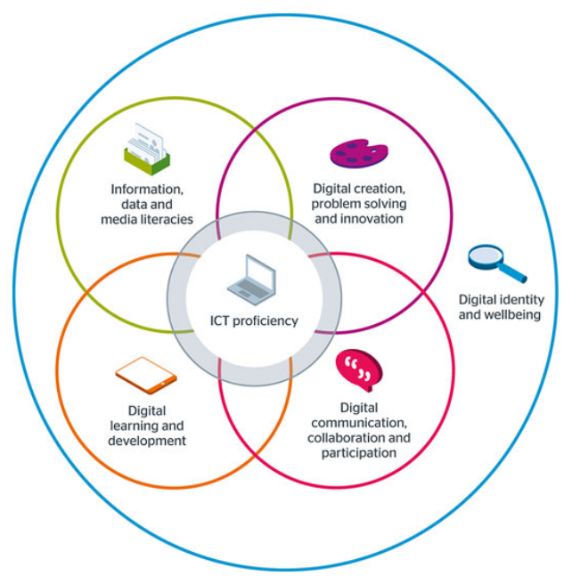
National specificity that is considered useful to enhance ......................................................................... 40
       Opportunities in teacher training for the enhancement of their digital skills.............................................. 41
       Needs and perspective of improvement ................................................................................................... 41
3.     Concluding remarks .................................................................................................................................. 43
     3.1.    Where we stand and perspectives: a transnational SWOT analysis ................................................. 43
     3.2.    Recommendations ............................................................................................................................ 44

The European Commission support for the production of this publication does not constitute an endorsement of the contents
which reflects the views only of the authors, and the Commission cannot be held responsible for any use which may be made
of the information contained therein.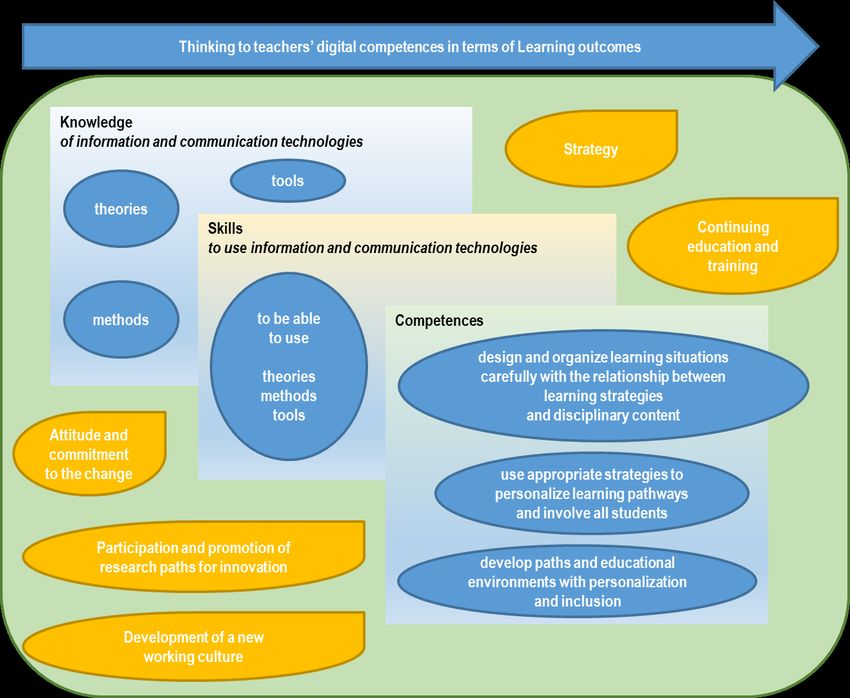
COMPARATIVE REPORT
         IO2 - Expertise, best practices and teaching in the XXI century

  Forward

  The present report is part of the second intellectual output (IO2) planned within the DECODE PROJECT -
  DEvelop COmpetences in Digital Era. Expertise, best practices and teaching in the XXI century, an Erasmus+
  KA2 - Strategic Partnerships in the field of Education.

  The IO2 focuses on National Researches on "Innovative training models, methods and tools for teachers in the
  digital age” and it has been realized on the bases of IO1 - Research methodological design, tools and outputs
  prepared by University Roma Tre in the first phase of the project.

  The National reports aimed to feed into the next research process in the Project DECODE, giving important
  information about national implementation process regarding the incorporation of ICT in schools and didactical
  practices.

  They focus on national education policies, training models and successful methodologies to develop school
  staff`(teachers, headmasters, administrators, etc.) digital, methodological and socio-relational skills requested
  by digital era.

  Based on the methodological design of IO1, the National reports explore the governance practices in order to
  understand:

  §   what innovative policies were implemented;
  §   significant experiences spread in the countries of the project (Italy, England, Finland, Romania and Spain);
  §   classification of profiles and skills of educational professionals in the ICT field;
  §   best practices and educational successful methodologies, spread in the participating countries.
  The present Report provides a comparative analysis of the most significant results of the national researches,
  trying to present them in terms of remarkable characteristics, common elements and notable differences.

The European Commission support for the production of this publication does not constitute an endorsement of the
contents which reflects the views only of the authors, and the Commission cannot be held responsible for any use      4
which may be made of the information contained therein.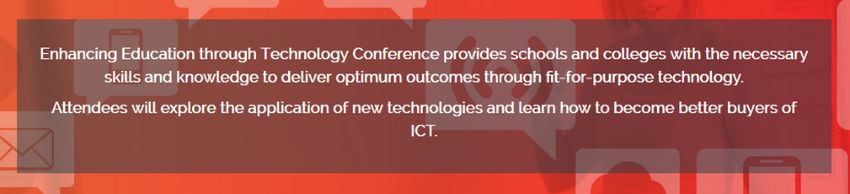
Introduction

  The development of an innovative educational model requires taking into account a digital revolution, which
  involves the whole educational community at various levels: political, institutional, organisational, but also at a
  pedagogical level.

  Through the national reports "Innovative training models, methods and tools for teachers in the digital age”, the
  research team tried to assess the current school needs, to identify the key digital opportunities and risks in a
  procedural and organizational perspective in the project countries.

  To reach the objective, the national researches present:

  § a new understanding of the national contexts: trends and policies activated at national level in relation to the
    introduction of training models and successful methodologies to develop the school staff` digital
    competences;
  § the national legal framework and the available funding programs;
  § the framework of contractual rules and career perspective in relation to the educational digital challenges;
  § the identification of local good practices.
  To reach these goals, as defined in IO1, a qualitative approach has been used. Focus groups and interviews
  has been organised through a three months period (March to May) to reach key actors (policy makers, decision
  makers, institutional representatives). The objective was to evaluate the steps taken for the integration of ICT in
  the education system and teaching practices. The reports present the emerging key elements of the national
  context and the main and the most relevant results of the national research.

  Research activities realized in the five countries are:

                Focus       Target / Number / Location         Interviews Target / Location
                group
    Italy       4           Head Masters:                 5                  Institutional Key Actors / National
                            5 / Rome
                            11 / Genoa
                            12 / Bari
                            Animatori Digitali:
                            12 / Online environment
    England     2           School ICT Staff and          5                  School leaders with focus on digital
                            Teachers:                                        leads / National
                            25 / Bradford
    Finland     3           Head masters, ICT tutors - 5                     Director general in Finnish National
                            members of digital team, head                    Agency for Education;
                            of departments                                   Councellor of Education at Finnish
                            20 / Helsinki, Espoo, Uusimaa                    Agency for Education;
                            region                                           Director of Education in Espoo city;
                                                                             Vice Chairman of OAJ, the Trade
                                                                             Union of Education;

The European Commission support for the production of this publication does not constitute an endorsement of the
contents which reflects the views only of the authors, and the Commission cannot be held responsible for any use        5
which may be made of the information contained therein.
Vice chairman of The Advisory Board
                                                                             of the Education and Early Childhood
                                                                             Education Board in Espoo
    Romania 3               Head Masters:                      5             Decision makers, School county
                            3 / Bucharest                                    inspectors / Bucharest, Iasi, Vrancea
                            4 / Focsani
                            1 / Odobesti
                            1 / Ploiesti
                            5 / Iasi
                            ICT School leaders:
                            1 / Bucharest
                            1 / Ploiesti
                            2 / Focsani
                            1 / Odobesti
                            5 / Iasi
    Spain       1           ICT experts, school teachers,      5             Experts in the education ICT policy
                            TAC coordinators                                 area / National
                            National, mainly of the
                            autonomous community of
                            Catalonia:
                            24

  Based on the national reports, this document is articulated in two main sections.

  The first part presents the main elements of the analysis of the national contents and the second one describes
  the main results of the field researches, with particular attention to emerging strengths, weaknesses, risks,
  threats and opportunities.

  The first part offers a comparative analysis of the five national frameworks, with particular attention to: the
  national legislative framework for the adoption and the development of ICT in education (specific laws, decrees,
  acts, ministry orders etc.); the institutional and organisational processes; the key institutional framework; the
  financing programs supporting implementation of innovative didactic methods based on ICT; the contractual
  framework and career perspective for school leaders and professors, the professional profiles and competence,
  and the assessment and quality assurance systems; the main and most interesting experiences in the field of
  training teachers’ digital skills as well as the main and most interesting pedagogical adopted models in teachers’
  digital skills.

  The second part presents the main issues emerging from the focus groups and the interviews.

  Finally, a brief reflection about the most important results of the comparative analysis concludes the report: it is
  offered in the form of a comprehensive SWOT analysis of main emerged issues.

The European Commission support for the production of this publication does not constitute an endorsement of the
contents which reflects the views only of the authors, and the Commission cannot be held responsible for any use         6
which may be made of the information contained therein.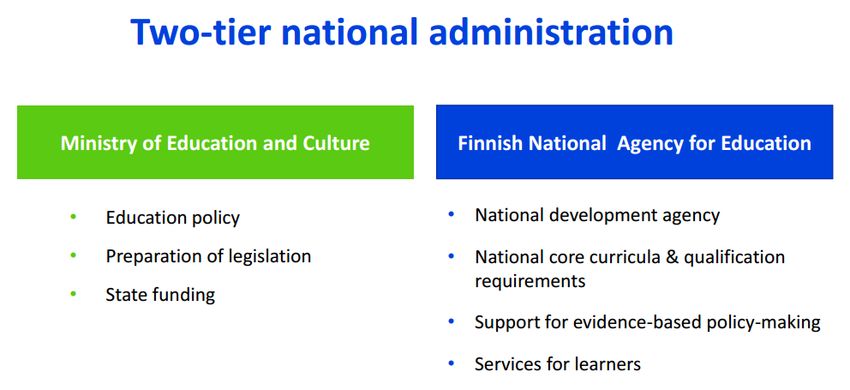
1. The national contexts

       1.1. National legislative framework

  Framework of ICT in education, in every country involved in DECODE projects, is polyhedric and much more
  different for national culture that produces different kind of school's educational program. From the Finnish
  paradox – that has not a specific law about ICT's learning but the most interesting use of digital opportunity in
  their school – to the Romanian difficulty with having digital competencies as it results in the Digital Economy and
  Society Index (DESI): last one in EU. In the midst of these, there are some countries: England (and Wales in
  report), Spain (and Catalonia), Italy (see below in text).

  Although Eurydice report (2011), Key Data on Learning and Innovation through ICT at school in Europe,
  recommended the promotion of innovative pedagogical approaches, to enable students to learn in appropriate
  ways, every country response to this is different. In depth:

  Finland - There are no policy provisions on ICT in school education, but a major reform to improve mathematical
  and programming skills, even in lower grades of their schooling path. Compulsory school starts at 7 years. Each
  subject at school uses a variety of learning methods, giving the pupils chances to learn different skills.

  The government launched an action plan to revamp comprehensive schools in the autumn 2016. “It serves to
  put the new curricula into practice and responds effectively to existing and imminent challenges in
  comprehensive school education. As outlined in the Government Programme, EUR 90 million will be used over
  three years to execute the plan. Of these resources, around EUR 8 million was made available in autumn 2016
  through the Finnish National Board of Education for activities relating to experimenting, development and
  innovation, and roughly EUR 7.5 million will be disbursed for training and activities for tutor teachers”.

  England - There is not formal legislation. Instead, the government’s approach has been to hand responsibility to
  individual institutions to develop their own approaches and strategies towards the use of ICT in the classroom.
  Institutions/practices which work particularly well are monitored by the government, who then circulate and
  promote best practice examples. The Joint Information Systems Committee (JISC) sponsored within the Further
  Education Learning Technology Action Group (FELTAG) report gave impetus to ideas and developments around
  online and digital teaching. With no government support on actively pursuing a digital strategy, funding for these
  staff costs needs to be found from within existing budgets of singular school.

  Italy - The 2002/2003 school year is to be considered the birth of the first online environment for systematically
  training teaches, called the PUNTOEDU platform, an e-learning platform managed by INDIRE (National Institute
  of Documentation and Educational Research) for the implementation of compulsory training courses for the
  newly-to be trained teachers. However, first attempt to introduce ICT in compulsory school was inaugurated into
  the Italian education system by Law 59/1997 art. 21, and it has been developing since then up to today with
  many experimental projects that involved thousands of schools patchy in the country. From 1997 to 2000 the
  National Plan of Didactic Technologies (PNTD in Italian) was held, the most important initiative that for the first

The European Commission support for the production of this publication does not constitute an endorsement of the
contents which reflects the views only of the authors, and the Commission cannot be held responsible for any use        7
which may be made of the information contained therein.
time introduces computer science and telematics in all classes and grades of the school and training for all
teachers. Last school reform was introduced by Law 107/15 that starts a new PNTD with a specific allocation
for 2015-2020 period.
Spain - At a general level, the inclusion of educational policies for the integration of ICT into the education system
has been progressive. In reference to specific laws, decrees and acts, references in the implementation and use
of ICT can be found in successive Spanish laws. In this sense, this implementation in the last three educational
reforms: LOGSE (1990 not on ICT but introduce the concept of knowledge society), LOE (2006 concentration
on mathematical and linguistic skill, mention on ICT), LOMCE (2013 ICT is one of the axis of the modernization
of the education ). Catalonia approve similar law in 2009 with the LEC and “rearranged” by Government of
Catalonia in 2013.
Romania - Ministry of Education launched in 2001 the national program Digital Education System which lasted
for 10 years. In 2011 a new National Education Law nr. 1/2011 is issued (which states that the national
preuniversitary curriculum pursues the development of the key competences, including the digital competence
as defined by the European Framework of Key Competencies of the European Commission). Funds and goals
are determined in the National Strategy on the Digital Agenda for Romania 2020, approved in 2014 and
according to the OMENCS 3590/5.04.2016 in the lower secondary school will introduce starting with the 2017-
2018 school year a new subject matter on Programming and ICT with an allocation of 1 hour per week.
The adoption and the development of ICT in education
In Italy the introduction of ICT in school education starts with the National Plan for Information Technology (Piano
nazionale di Informatica - PNI in Italian). In 1997 - the introduction of school autonomy represents a restart for
improvement of ICT in primary and secondary school. The experience of PNI came to an end during the
reordering of the school system following the 2010 decrees (Minister Gelmini). The beginning of this experiment
coincided with a two-year Teacher Training Plan, initially only involving the two disciplines concerned, and then
extended to letters and languages. From 1997 to 2000 the National Plan of Didactic Technologies (PNTD in
Italian) was held, the most important initiative that for the first time introduces computer science and telematics
in all classes and grades of the school and training for all teachers, with three objectives:
§ education of students in multimedia and communication;
§ improving the effectiveness of teaching and learning of the disciplines;
§ improving the professionalism of teachers.
The Common framework for Teaching Digital Competences in Spain and the Project of Digital Teaching
Competence in Catalonia. These frames of reference emphasize the Digital Competences of teachers and their
implementation in educational practice. During the last years the figure of the ICT coordinator has appeared for
the implementation and the correct use of digital technologies in the educations centers. In the different
autonomous communities, the figure is considered differently. The central and regional governments define
competences and skills that students must to goal in primary and secondary schools. In Catalonia the TAC Plan
runs as a vector for introducing ICT in education and an assessment on implementation.
The European Commission support for the production of this publication does not constitute an endorsement of the
contents which reflects the views only of the authors, and the Commission cannot be held responsible for any use 8
which may be made of the information contained therein.As said previously there is not a specific institutional strategy in ICT development in education in England and
Finland so there is no a specific feedback from the schools or local governments.
Institution, organisational processes and key figures
As already mentioned above, there are some differences in the organization of education among the countries
of the DECODE project. For example, Finland and England have not a centralizated way of skill’s growth in ICT
among the teachers and all is delegated to a singular school budget and/or to the parents contribution (specially
England) or joint municipal boards (Finland). In Italy, the Guidelines for the implementation of the PNTD
1997/2000 provide, in addition to the financing of general projects for the allocation of funds for the
implementation of more than 11 pilot projects, engaging a limited number of schools, to have organizational
methods and particular solutions and types of specific verification, starting with a series of ongoing or
concomitant activation.
In Spain and Catalonia the local and general Government introduces and implements ICT in the classroom
through the definition of basic digital competences (LOMCE 2013), specific for primary and secondary
compulsory school. In Romania, the National Education Law defines the training profile of the graduate of
compulsory education and explicitly target the developing of the digital skills. Furthermore, the Ministry of
Education encourages schools and educational institutions to promote educational projects and partnerships
with different companies.
Furthermore in Finland, a national agency is responsible for the implementation of the policy aims.
Table 1 shows this separation of competences:
Then, in England, the Department of Education is supported by several agencies including:
§ Ofsted - This is a non-ministerial department of the UK Government with the responsibility for inspecting
educational institutions in England
§ Ofqual - this is the Office of Qualifications and Examinations Regulation which deals with examinations,
qualifications and assessment in England
§ Education and Skills Funding Agency – deals with funding for education and training for children, young people
and adults
The European Commission support for the production of this publication does not constitute an endorsement of the
contents which reflects the views only of the authors, and the Commission cannot be held responsible for any use 9
which may be made of the information contained therein.§ Standards and Testing Agency - this organisation sets the tests to assess children in education from early
years to the end of Key Stage 2 (age 11)
§ Higher Education Funding Council for England - this organisation is responsible for the distribution of funding
to universities and colleges of Further Education in England
The Department has responsibility for primary, secondary and further education but at local level, the Local
Education Authorities (LEAs) are responsible for setting in place educational policies. This is similar to Finland
in which Local administration is the responsibility of local authorities.
The Italian key institutional figures framework is focus on training courses in order to encourage the use of ICT
in classroom: operative program of training is ForTic Plan (National Information and Communication
Technologies Teacher Training Plan, 2002), a broader scope project launched at the end of 2002, involving
about 180,000 teachers supported by approximately 8500 tutors. ICT’s training is often considered a collateral
step than a core business of teachers preparation.
Financing projects supporting innovative didactic approaches based on ICT
Fund for ICT England Italy Finland Romania Spain
State x x x x
Regional or local x
European x x
International x
institution
Private x x
In Italy, by Ministerial Decree 851 of the 27th October 2015, the new PNSD (National Digital School Plan - Piano
nazionale Scuola Digitale in Italian) was launched, which provides for the period 2015/2020 over one billion
euros of investment. The overall challenge of the whole project, articulated in 35 operations, is of a cultural
nature. The initiative is not complete and conclusions will soon be drawn and judgements made. A lack of
governance by central administration discourage to make an assessment during the course of work.
In Finland a Government Programme, provides 90 million euros to execute a three years plan. Of these
resources, around 8 million euros were made available in autumn 2016 through the Finnish National Board of
Education for activities relating to experimenting, development and innovation, and roughly 7.5 million euros will
be disbursed for training and activities for tutor teachers.
In Romania funds for innovation come either from specific programs of international organizations (i.e. World
Bank) as well as from specific contributions of companies (i.e. Orange a telecom company).
In Spain during the last decade of the twentieth century and the first decade of the XXI, regional educational
policies to integrate ICT in schools were raised and implemented without there being shared objectives or actions
between regional governments; these were policies that followed European directives but were partly funded by
the European Union. Also a drive resource and guidelines for ICT learning in Spain is the PNTIC (Programa
The European Commission support for the production of this publication does not constitute an endorsement of the
contents which reflects the views only of the authors, and the Commission cannot be held responsible for any use 10
which may be made of the information contained therein.Nacional de Tecnologías de la Información y la Comunicación, in English: National Program of Information and
Communication Technologies).
1.2. Contractual framework
As for other aspects of school’s life, the contractual frameworks of the analised countries present many
differences. In Finland and Italy the Labor Unions have a specific role in definitions of works conditions in
respective countries, the professional profile of the Italian teacher -in example - is described in the National
Labour Contract for Teaching Staff and his duty is guaranteed by Constitutional Charts. In England there are
differences in salary between different types of schools.
Career perspective for school leaders and teachers and the framework of
professional competences
In Italy in 2015, Law 107 states that the school leader can identify, within the scope of self-employment, up to
10% of teachers who support Headmaster in organizational and educational support activities of the school
institution, as well as other teachers who will receive assignments from the school manager. A Master’s degree
in necessary to attend in any schools level and field of teaching.
In Finland class teachers have a Master’s degree in education. Subject teachers have completed a Master’s
degree in the subject they teach as well as pedagogical studies. Teachers are required to participate in in-service
training every year as part of their agreement on salaries and in Finland, teaching career is highly valued,
selection is hard: 10% of applicants become class teacher and between 10 and 50% subject teacher (depending
by field).
In England (and Wales) if you have a degree, you can train through a postgraduate teacher training course.
There are 2 main routes to take this achievement: school-led and university-led. Both provide you with the
practical skills and theoretical knowledge needed for teaching, but are delivered differently. For those who don’t
have a degree, they can qualify by taking a Higher Education course that awards qualified teacher status (QTS).
Assessment and Quality Assurance Systems
In Italy the 107 law (La Buona Scuola) of 2015 introduces the valorisation of the profession, entrusting the School
Manager with the choice of professors to be rewarded with a bonus on the basis of three dimensions to be
rejected in criteria by a three-year evaluation committee, consisting of the chairman, who presides over it, three
faculty members, two of whom are chosen by the college one by the board of directors, two parents or one
student and one parent chosen by the board of directors, an external member identified by the USR among
teachers, executives and inspectors. A budget for merit of 200 millions of Euro was destinated in 2016.
In Finland key of evaluation of quality is autovalutation. School inspections were abolished in the early 1990s
and the education providers receive their own results to be used only for development purposes.
The European Commission support for the production of this publication does not constitute an endorsement of the
contents which reflects the views only of the authors, and the Commission cannot be held responsible for any use 11
which may be made of the information contained therein.In England checking of quality in teaching and specially in ICT confidence is lead directly by single school and
ICT coordinator for digital compentences. At the start of every year all staff were surveyed on their confidence
in using ICT within the classroom. Goal of this survey is having 90+% of staff respond that they now have good
skills for using technology in education delivery.
In Romania there are no currently any specific regulation for the Assessment and Quality Assurance of
integration of ICT in Education. Within each school there function several committees, on of the most important
being the Quality Assurance and Evaluation Committee.
1.3. Teaching digital skills
Experiences in the field of training teachers’ digital skills
The DECODE partners present in the national reports the following main and most interesting experiences in
the field of training teachers’ digital skills.
The English research team presents four projects:
§ JISC - Building Digital Capability (https://www.jisc.ac.uk/rd/projects/building-digital-capability)
§ NAACE ICT Mark (https://www.naace.co.uk/school-improvement/ict-mark/)
§ Education ICT Conference (https://enhancingeducationtech.co.uk/)
§ Blended Learning Consortium (http://www.blc-fe.org/)
Regarding digital capabilities, JISC - Building Digital Capability. Building capability for new digital leadership,
pedagogy and efficiency - developed a framework, which is now often used by digital leaders in their work. The
framework describes the skills needed by staff from a wide range of academic settings to perform well in a digital
environment. The project deals with the use of digital technology in the field of learning. It has developed a set
of elements, which enable staff to provide a better learning environment for students, which in turn can lead to
a better return on the investment put in to digital technology by the university or college.
The framework has 6 elements: ICT Proficiency/ICT Productivity
(Functional Skills); Information, data and media literacies (Critical
Use); Digital creation, problem solving and innovation (Creative
Production); Digital communication, collaboration and participation
(Participation); Digital learning and development (Development);
Digital identity and wellbeing (Self-actualising).
The framework is used to support discussions around the
capabilities required in a digital organisation and to plan staff
development and review the curriculum using the above elements;
it also offer a facility to highlight skills gaps among staff and to plan
development accordingly.
The European Commission support for the production of this publication does not constitute an endorsement of the
contents which reflects the views only of the authors, and the Commission cannot be held responsible for any use 12
which may be made of the information contained therein.The project NAACE ICT Mark is an award for schools with good use of technology to support teaching, learning
and school administration. This accreditation is awarded to schools for the best use of technology and learning
and in the day to day running of the school. The Award is valid for 3 years from date of receipt.
Schools who achieve this award have demonstrated that they are committed to the use of technology for the
overall benefit of the school. Among the benefits of a school having the ICT Mark are that parents and the whole
school community will
understand the
commitment of the school
towards technology and
showcases the school as a
go to hub for technology
among its peers.
The NAACE ICT Mark is a way for teachers who use ICT in their day to day teaching across many subject areas
to receive the recognition for this. As schools invest more in technology, the ICT Mark allows them to show that
they are getting the best value from this investment and the best commitment from school staff.
The Education ICT Conference is an annual conference brings together schools and colleges to learn about the
skills needed to make the best use of technology in their institutions. Delegates explore the application of new
technologies and how they can buy the best technology to suit their needs.
The conference addresses the innovative use of technology enhanced learning in the classroom setting and
how teachers can make the best use of this knowledge. Exhibitors meet an audience of over 200, including:
headteachers, heads of digital learning, heads of IT, directors of blended learning from organisations such as
primary and secondary schools, the Department for Education, Local Education Authorities.
The Blended Learning Consortium was launched in 2015 by the Heart of Worcestershire College to support
Further Education Colleges to meet accredited guidelines and to share quality digital/online learning resources
for further education. The Heart of Worcestershire College recognised how it was hard to find high quality digital
resources targeted to the needs of the further education sector and therefore decided to solve this themselves.
Blended Learning is a mixture of traditional classroom methods and online digital methods. The consortium
produces learning resources which cover different learning levels and subjects. Colleges in the Consortium can
share good practice by contacting other members through discussion forums or by using the blog which has
been set up by the project team at the Heart of Worcestershire College. The Blended Learning Consortium was
set up to offer a solution to providing face to face contact time for 100% of a course which was proving difficult
due to budget reductions.
The European Commission support for the production of this publication does not constitute an endorsement of the
contents which reflects the views only of the authors, and the Commission cannot be held responsible for any use 13
which may be made of the information contained therein.The Blended Learning Consortium focuses on the effective use of digital technology in further education
institutions and the sharing of knowledge between staff members. The result of
this collaboration is high quality digital resources, which are developed for the
further education curriculum. Quality support is provided for the development of
staff members’ digital capabilities; they can develop their skills to produce content,
which can be cascaded across the Blending Learning Consortium network.
In Romania the teacher training system includes:
§ initial teacher training which is done through either the Departments for teacher training from each university
organizing the pedagogical module. The curriculum of the module includes 6 semester courses, one of them
being Computer Assisted Instruction. Due to the university autonomy, there is no clear or uniform structure of
the module, respectively of the Computer Assisted Instruction course. The main topics covered on this course
could include: potential of ICT for learning, approaches to ICT based learning, ICT based education tools and
methods or through the Didactical Master programme;
§ continuous teacher training run through the Teacher Training County Centres. According to the official
provisions each teacher is obliged to acquire a minimum number of 90 professional development credits within
a period of 5 years. Failing to do this can hinder teachers possibility of promotion, professional stimulants etc.
The Romanian research team presents several good practices that were highlighted by participants during the
interviews and focus groups. They are local, national and transnational initiatives or online resource hubs. With
particular reference to the development of teachers’ competences, the aims of these practices are different:
§ to improve access to broadband internet and the ICT infrastructure in rural and small urban areas, as well as
the acquisition of ICT skills;
§ to improve access and participation to initial and continuous training opportunities for teachers;
§ to develop abilities of teachers to use interactive teaching methods and ICT;
§ to expand the skills of primary school teachers in order to match the requirements of the new curriculum;
§ to develop digital resources for teaching;
§ to equip maths teachers to develop and implement curricular activities while using ICT resources;
§ to train teaching staff to acquire the digital competences that make up the e-skills for the 21st century and
enabling them to implement modern teaching methods and strategies that make use of tablets;
§ to promote the use of mobile devices in teaching;
§ to promote the teaching/learning of elements related to ICT, technology, maths, programming and
engineering;
The European Commission support for the production of this publication does not constitute an endorsement of the
contents which reflects the views only of the authors, and the Commission cannot be held responsible for any use 14
which may be made of the information contained therein.§ to create and promote the implementation of a curriculum on programming for the lower secondary cycle at
county level;
§ to improve the quality of education by developing the capacity of schools to build key competences in the
areas of maths, sciences and technologies;
§ to develop and implement digital tools for improving the evaluation and self-evaluation in upper-secondary
education;
§ to create an e-learning platform for a wide range of subjects within the national curriculum;
§ to create an online community for sharing tools and experiences related to K-12 education;
§ to promote and support a Europe-wide collaboration among STEM (science, technology, engineering and
maths) teachers, education researchers, policymakers and other STEM education professionals.
The Spanish research team presents in its report the Common Framework for Teacher Digital Competence. An
Institute of the Ministry of Education, the INTEF (Instituto Nacional de Tecnologías Educativas y de Formación
del Profesorado), created in 2012 this common framework, based on DigComp. It is used as a base for planning
teacher Professional Development programmes, such as MOOC, NOOCS and other digital resources (European
Commission, 2017).
In 2013, the draft version v1.0 was published and, in 2017, the Digital Teacher Competence Framework has
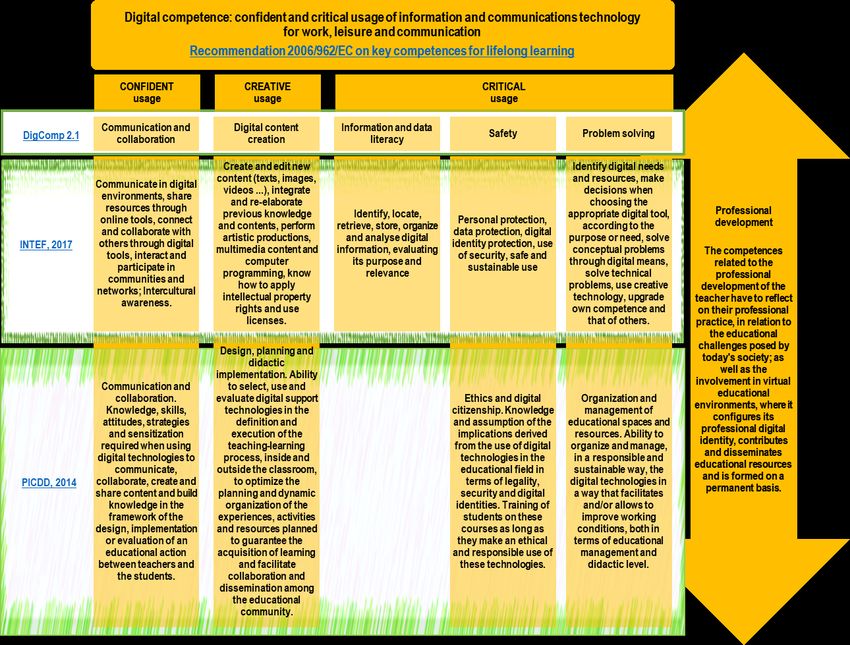
been updated to its current version. The "Common Framework of Digital Competence for Teachers 2017" is a
standardized proposal that specifies the digital competence through competency descriptors of 21 sub-
competencies organized in 6 levels and five areas of competence (INTEF, 2017):
1. Information and information literacy. Identify, locate, retrieve, store, organize and analyse digital
information, evaluating its purpose and relevance.
2. Communication and collaboration. Communicate in digital environments, share resources through
online tools, connect and collaborate with others through digital tools, interact and participate in
communities and networks; Intercultural awareness.
3. Creation of digital content. Create and edit new content (texts, images, videos ...), integrate and re-
elaborate previous knowledge and contents, perform artistic productions, multimedia content and
computer programming, know how to apply intellectual property rights and use licenses.
4. Security. Personal protection, data protection, digital identity protection, use of security, safe and
sustainable use.
5. Problem solving. Identify digital needs and resources, make decisions when choosing the appropriate
digital tool, according to the purpose or need, solve conceptual problems through digital means, solve
technical problems, use creative technology, upgrade own competence and that of others.
In Spain, in 2015, Extremadura implemented Teachers Digital Competence Portfolio, a document that details
and organizes in levels the digital competences necessary for the exercise of teaching in the context of the
current society (DOE 112, General Secretariat of Extremadura, 2015).
The Spanish team presents also the Projecte Interdepartamental de Competència Digital Docent (PICDD)
(Project of Digital Teaching Competence). It was launched in 2014, with the objective of identifying the digital
competences of non-university teachers and establishing the framework and design of the ways for acquiring
and accrediting these competences, both in initial training and in in-service teachers (ENS/1356/2016 resolution,
The European Commission support for the production of this publication does not constitute an endorsement of the
contents which reflects the views only of the authors, and the Commission cannot be held responsible for any use 15
which may be made of the information contained therein.DOGC, 2016). In this project, the initial and continuous training of ICT teachers was analysed in order to make
proposals. In this sense, the project defined five areas or dimensions of digital teacher competences:
1. Design, planning and didactic implementation. Ability to select, use and evaluate digital support
technologies in the definition and execution of the teaching-learning process, inside and outside the
classroom, to optimize the planning and dynamic organization of the experiences, activities and
resources planned to guarantee the acquisition of learning and facilitate collaboration and dissemination
among the educational community.
2. Organization and management of educational spaces and resources. Ability to organize and manage,
in a responsible and sustainable way, the digital technologies in a way that facilitates and/or allows to
improve working conditions, both in terms of educational management and didactic level.
3. Communication and collaboration. Knowledge, skills, attitudes, strategies and sensitization required
when using digital technologies to communicate, collaborate, create and share content and build
knowledge in the framework of the design, implementation or evaluation of an educational action
between teachers and the students.
1. Ethics and digital citizenship. Knowledge and assumption of the implications derived from the use of
digital technologies in the educational field in terms of legality, security and digital identities. Training of
students on these courses as long as they make an ethical and responsible use of these technologies.
2. Professional development. The competences related to the professional development of the teacher
have to reflect on their professional practice, in relation to the educational challenges posed by today's
society; As well as the involvement in virtual educational environments, where it configures its
professional digital identity, contributes and disseminates educational resources and is formed on a
permanent basis.
In Italy, like in the other countries, continuing education is an integral part of the teaching function, but today the
Italian law n. 107/2015 (The Good School) recognizes and strengthens this principle, corroborates some rules
of operation and gives it financial resources. Three tools have strengthened the awareness that professional
development of teachers is crucial for the growth of a quality school: The Triennial Plan for the Training Offer,
the School Improvement Plan and the Self-Assessment Report (RAV - Rapporto di Autovalutazione, in Italian).
First, it is the same Law 107/2015, which recognizes that participation in training, with a variety of possible
choices, must refer to the school community, specifically in the Triennial Plan of the Training Offer. It should
include within it the anticipation of the training actions that the institute undertakes to design and implement for
its teachers (and for all staff), in a differentiated form in relation to the needs detected. Secondly, there are tools
for linking the systematic design to the training operations within the school to the priorities and the improvement
goals of each institute. The Self-Assessment Report (RAV), which each school has created and updated,
identifies the goals of improvement that, accordingly, each school community intends to achieve in the next three
years. The RAV internal analyses are the starting point for the Improvement Plan and RAV identifies training as
one of the 7 process areas on which a judgment is made about the institution and one of the project goals that
the school can point and define to achieve the results. The plan of each school must consider staff training as a
lever to successfully pursue the Institute's development and improvement strategy.
Mandatory, permanent and structural, three "heavy" adjectives that change the relationship between teachers
and the profession, seen here as a constantly evolving process, to be treated according to needs that intertwine,
among those of the person who carries out a profession and those who come from the environment.
The European Commission support for the production of this publication does not constitute an endorsement of the
contents which reflects the views only of the authors, and the Commission cannot be held responsible for any use 16
which may be made of the information contained therein.The Personnel Training Plan, as an act adopted by decree of the Minister of Education, University and Research, defines the priorities and the financial resources for the three-year period 2016-2019 and outlines, starting from the school year 2016-2017 (also taking into account the training initiatives launched in 2015-2016), a strategic framework to support in a transparent, innovative and effective way a concrete policy for the growth of human and professional capital of the school. Between the different objectives of the plan, in the training area, we can find: a. Personal and professional growth goals of the individual teacher; b. School improvement goals; c. Strategy for the development of the entire country. The Plan is an informative and strategic prerequisite for addressing the theme of career enhancement of teachers. A professional development system allows documenting, through devices such as the professional portfolio - as in the Spanish context - and the professional development plan, the gradual refinement of skills, attitudes and expertise of the faculty to give an overall representation of the teaching function. According to digitalization in EU, Finnish government made action plan and followed the general lines. One of the strategic priorities is Digitalisation, experimentation and deregulation (procedures). These priorities are materialized in the 26 different key projects. Digitalisation mentioned in followed key projects: public services will be digitalized; a growth environment will be created for digital business operations. One active key project is in the educational sector (2015 – 2019): New learning environments and digital materials to comprehensive schools. Teacher’s ICT skills were developed and supported during projects Ope.fi 1, Ope.fi 2 and Ope.fi 3. Oppiminen online is a part of the “OsaOppi III – Osaamispisteet pelissä” and OsaOppi IV project in which the requisite skill sets, as defined by the Ope.fi standards (in Finnish), are provided over 3 levels and 3 locations around Finland: Espoo, Hämeenlinna and Oulu. Teachers ICT skills are followed during years 2012 – 2017 by e-platform http://opeka.fi/fi. Teachers from basic and general upper secondary schools can give feedback about their skills and competences of ICT using on this self-assessment platform. The answers will identified skills and competences on the five different groups: § technological capabilities (‘teknologiset valmiudet’) § methods/mode of operation (‘toimintatavat’) § attitude (‘asennoituminen’) § using in the teaching process (‘opetuskäyttö’) § competences (‘osaaminen’) The Finnish report presents the results of the survey. Teachers have progress in some sectors (answers are more positive compared to the earlier years): § The devices and software in use work well. *** § I have got devices, what I need, from my school. *** § The school is using a wireless network, and students and visitors can use the Wifi with their own devices. *** § I follow social media networks to learn new. § ICT skills are one topic during development discussions with my leader. *** The European Commission support for the production of this publication does not constitute an endorsement of the contents which reflects the views only of the authors, and the Commission cannot be held responsible for any use 17 which may be made of the information contained therein.
§   I have tried graphic or other types of programming with my students. ***
  §   Better level of my ICT skills. ***
  §   I will receive sufficient technical support to ICT in my school.
  §   Pupils can use their own devices (eg laptops, smartphones, tablets) in their classes. *
  Some other answers are less positive compared to the earlier years:

  §   Scope of new technology into teaching is a burden. ***
  §   Level of using the information and communication technology during my lessons.
  §   I can influence my school to procurement of ICT.
  §   I find good ways to utilize information and communication technologies in different learning situations.
  §   My school has jointly agreed goals for using ICT in teaching. ***
  §   I would like to use information and communication technology more in my teaching. **
  §   Students use information and communication technology most of my lessons. **
  §   I can use digital materials in my teaching. *
  §   The working atmosphere is positive to experimenting with new things in teaching. *
  The school leaders have the other e-platform for following the digital environments and development needs in
  their schools (self-assessment tool http://ropeka.fi/fi). Answers will identify followed sectors:

  §   strategy (‘strategia’)
  §   commitment to the change (‘sitoutuminen muutokseen’)
  §   developing of the new working culture (‘uuden toimintakulttuurin luominen’)
  §   developing of competence (‘osaamisen kehittäminen’).
  Omnia, partner of DECODE, one of the biggest vocational and education training center in Finland, have got
  own project with specific objectives for the next year. The goal is that learning will be possible in digital
  environments in cases when the presence learning is not possible. Digital environments will support developing
  of distance learning, larger cooperation between different education providers and working life, and skills of
  lifelong learning. For that, Omnia will have decided followed activities:

  § Ensure that all students have good digital skills for developing their own skills and working life.
  § Ensure that different departments develop specific objectives of digital skills according to their needs in
    distance learning and using ICT in the teaching.
  § Departments and work groups identify their need and form for the digital support according to their objectives
    to reach the goals.
  § Ensure the competence of the personnel, infrastructure and support for ICT.
  § Provide more forms of cooperation and identify together of production contents.
  § Evaluate effectiveness.

            Pedagogical models in teachers’ digital skills
  The DECODE partners present in the national reports the following main and most interesting pedagogical
  adopted models in teachers’ digital skills.

  The Italian research examines in depth how much is important the creation of a continuous professional
  development system, a "diffused" learning environment qualified by a variety of cultural opportunities for training,

The European Commission support for the production of this publication does not constitute an endorsement of the
contents which reflects the views only of the authors, and the Commission cannot be held responsible for any use         18
which may be made of the information contained therein.
throughout different tools: courses, community practices, journals, publications, associative experiences,
research proposals, and academic activities. To achieve the goals associated with an effective decline in training
in the field of teaching, the starting point is the adoption of "professional standards". As is the case in many
educational systems around the world, it is necessary to link the teacher's continuous professional development
goals to clear and defined professional standards.
Through an analysis of the main models proposed at international level and as anticipated by the Italian
Ministerial Decree 850/2015, the following areas of professional development will be considered as the starting
point:
1. Possession and exercise of the cultural, disciplinary, didactic and methodological competences in
relation to the objectives of the competence and the learning objectives envisaged by the school
ordinances;
2. Possession and exercise of relational and organizational skills in relation to the best management of
teaching and learning environments;
3. Participation in the organization of school, collaborative work on the network, also ensuring coordination
and animation functions;
4. Care for their own training in the form of teaching research, documentation, reflection on practices,
dissemination of experiences of excellence.
The attainment of adequate standards makes it indispensable to introduce tools that can accompany the career
path. The Italian Education Ministry will make an on-line system available in which each teacher will be able to
document and reorganize his/her "training and professional history" by building his/her own professional
portfolio.
The macro areas on which the plan is based are:
1. Area of expertise related to teaching (didactics): a. design and organize learning situations carefully with
the relationship between teaching strategies and disciplinary content; b. use appropriate strategies to
personalize learning pathways and involve all students, develop paths and educational environments
with personalization and inclusion; c. Observe and evaluate students; d. Evaluate the effectiveness of
your teaching.
2. Skills area related to school attendance (organization): e. Working as a peer group and favouring its
constitution both within the school and between schools; f. Participate in the management of the school,
working in collaboration with the executive and the rest of the school staff; g. Informing and involving
parents; h. Contribute to student well-being.
3. Area of skills related to training (professionalism): i. To examine in depth the duties and ethical problems
of the profession; j. Maintain continuing education; k. Participate and promote research paths for
innovation, also by taking care of documentation and portfolio.
In Italy, the Law 107/2015 identifies some of the priority objectives that, in order to be achieved, require specific
actions at national level. They concerns:
§ the methodological innovation in all its forms and connects to the new environments for the learning and use
of teaching technology;
The European Commission support for the production of this publication does not constitute an endorsement of the
contents which reflects the views only of the authors, and the Commission cannot be held responsible for any use 19
which may be made of the information contained therein.§ the study of foreign languages, with the aim of raising the level of language-communicative skills of students,
with particular attention to the CLIL methodology;
§ opportunities for curricular, organizational and didactic autonomy;
§ acceptance, aimed at inclusion, as a "daily" way of managing the classes;
§ the culture of evaluation and improvement;
§ the school-work alternation and the relationship between school and the outer world
Final considerations
From the analysis of the European and the different national digital competences frameworks, a possible
common framework is proposed.
Certainly, it is not exhaustive, but it just represents the common elements of these frameworks, consequent from
the results of the national researches.
The European Commission support for the production of this publication does not constitute an endorsement of the
contents which reflects the views only of the authors, and the Commission cannot be held responsible for any use 20
which may be made of the information contained therein.You can also read


