Junior School Handbook 2017 - Kristin School
←
→
Page content transcription
If your browser does not render page correctly, please read the page content below

Junior School Handbook 2017

Front Cover: Beijing Tour 2016
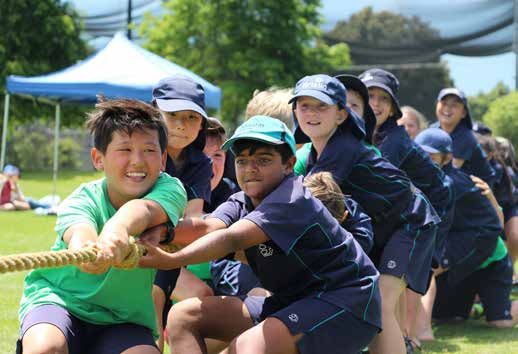
Back Cover: Year 4-6 Athletics Day 2016
Contents

School Term Dates..............................................................................................................2
Daily Routine.......................................................................................................................3
From the Junior School Principal........................................................................................4
Teaching Staff......................................................................................................................5
What to do...........................................................................................................................6
Student Conduct..................................................................................................................7
Student Support..................................................................................................................9
Dress Code Requirements................................................................................................10
Junior School Uniform.......................................................................................................11
Recognition.......................................................................................................................12
Prestige Cups....................................................................................................................13
Junior School ezlunch.......................................................................................................15
Emergency Evacuation and Lockdown Procedures..........................................................16
International Baccalaureate Primary Years Programmes..................................................17
Overall Aims......................................................................................................................18
Kristin Programme of Inquiry.............................................................................................20
Enhanced Learning...........................................................................................................25
Language - English...........................................................................................................26
Language - Chinese..........................................................................................................27
Language - Te Reo and Tikanga Maori.............................................................................29
Language Taster - French, Spanish and Chinese.............................................................30
Mathematics......................................................................................................................31
PYP Inquiry - Social Studies, Science, Personal and Social Education (PSPE)...............32
The Performing and Creative Arts.....................................................................................35
Physical Education............................................................................................................37
Sport..................................................................................................................................38
Sport Code of Conduct......................................................................................................39
Outdoor Education............................................................................................................39
Houses..............................................................................................................................41
Teaching and Learning Technologies................................................................................42
Assessment and Reporting...............................................................................................43
The Junior Library - The Hive............................................................................................44
Kristin School Map............................................................................................................48

                                                                                                                                            1
School Term Dates 2017
Term 1 Tuesday 31 January – Friday 7 April
Term 2 Monday 1 May – Friday 30 June
Term 3 Monday 24 July – Friday 29 September
Term 4 Monday 16 October – Thursday 7 December
2017
2018
2Daily Routine
BELL TIME: PERIOD:
8.15am Doors Open
8.30am – 9.25am Period 1
9.30am – 10.25am Period 2
10.25am – 10.45am Interval
10.50am – 11.35am Period 3
11.40am – 12.25pm Period 4
12.25pm – 12.40pm Supervised Lunch Eating
12.40pm – 1.25pm Lunch Break
1.30pm – 2.15pm Period 5
2.15pm – 3.00pm Period 6
3.00pm – 3.10pm Tutor Period
Junior School Assemblies: Friday, 2.00pm – 3.00pm
3From the Junior School Principal – Mrs Diana Patchett
Welcome to the Kristin Junior School.
Current educational research supports what I have long held to be true; that the
foundation for success in life is laid with children in their early years. The development of
strong literacy and numeracy skills, enhanced through inquiry-based learning enriched
with a global perspective, will ensure that our students are well prepared for their move
up through the school, into tertiary education and beyond.
Programmes in the Junior School are designed to challenge our students, while ensuring
that their natural inquisitiveness, their creativity and their inherent sense of fun are
nurtured along the way. Our teachers are professional educators, with the children’s
best interests at heart. Their skills are supported by the International Baccalaureate PYP
framework to ensure that support and extension opportunities are available for all our
students. This capacity for differentiation allows students to access the curriculum at their
level, while encouraging individual growth and the achievement of personal bests.
I look forward to maintaining and improving strong student outcomes in the Junior School.
At the same time, working together to strengthen the valuable partnership between home
and school, which is central to your child’s success and to the positive culture of Kristin.
Diana Patchett
Junior School Principal
4Teaching Staff
Executive Principal Mr Tim Oughton
Principal Junior School Mrs Diana Patchett
Assistant Principal - Student Care Mrs Sharon Fordham
Assistant Principal - Curriculum Mr Robert Hutton
Junior School Reception Mrs Gaynor Kimber
Year Level Year Level Dean Class Teachers
Kindergarten/ Mrs Leila Twinn Ms Angela Brown
Year 0 Mrs Katrina Chamberlain
Ms Kristy Gilder (Assistant Manager)
Miss Nikki Kim
Miss Lisa Anderson
Ms Mieke Lyons
Mrs Dianne Scoones
Miss Elise Tan
Year 1 Mr Nathan Calvert 1C (JS5) Mrs Judy Shand 1S (JS4)
Miss Bianca Chapman 1B (JS6)
Mrs Carol Page-Wood 1P (JS7)
Year 2 Mrs Jane Harker 2H (JS11) Mrs Toni Howe 2T (JS10)
Mrs Alex Powell 2P (JS12)
Mrs Nicole Timmins 2N (JS13)
Year 3 Mrs Dori Lloyd 3L (JS3) Mrs Jane Sargeant 3S (JS8)
Mrs Diane Thomas 3T (JS9)
Year 4 Mrs Bronwyn Bell 4B (JS17) Ms Genna Clements 4C (JS18)
Mrs Sandy Drubé 4D (JS16)
Year 5 Ms Leona Marsh 5M (JS21) Mrs Yvonne Bull 5B (JS19)
Ms Kerry Peirce 5P (JS20)
Year 6 Mrs Chantel Ashley 6A (JS23) Mrs Lisa Marwick 6M (JS24)
Mrs Tamsin Neubert 6N (JS25)
Specialist Subjects and Teachers
Chinese Mrs Edith Poon-Lai (JS14)
Mrs Katherine Yang (JS22)
Performing Arts Mrs Hayley Hunter (JSPA)
Mrs Edith Poon-Lai (JS14)
Physical Education and Sport Mrs Fiona Ackroyd (RMG)
Mr Nigel Messervy (RMG)
Visual Arts and Digital Media Mrs Timea Willemse (JSVA)
Te Reo Maori K-Year 6 Mr Mata Mataio (JM4)
Junior School Librarian Ms Alison Hewett
Enrichment Teachers
Early Years Mrs Barbara Bailey Year 3 Mrs Shayne de Beer (JM2)
Year 0-1 Mrs Laura Weston (JM3) Year 4 Mrs Rachel Kinley (JM1)
Year 1 Mrs Shelley McHugh (JS7A) Year 5 & ESOL Co-ordinator Mr John Lockyer (JS8A)
Year 2 Ms Dale Connell (JS15) Year 6 Mrs Helen McMurtrie (JS8B)
5What to do
If your child ... Then you…
Is unable to come to school Phone the school and register their absence on the
Absence Line by 8.20am each day they are absent
(415 9566).
Is late to school or has to Go to the Junior School office and sign the ‘Late Book’.
leave school during the day
Is ill while at school The School Nurse will call you.
Is looking for lost property Look in the bin outside the retail shop or main
administration building.
Needs to use a phone Ask a teacher.
Intends to be away during Send a letter requesting leave to the Junior School
term time Principal.
Has a change of address or Inform the main office immediately.
phone number
Wants information about Contact Sports Co-ordinator, Mrs Fiona Ackroyd Ext
sporting activities 2821, Kristin Clubs Co-ordinator, Mr Nigel Messervy Ext
2800, Sports Office, Ext 2385.
Wants music tuition Contact the Performing Arts Manager Administrator, Mrs
Lesley Fifield Ext 2857.
Wants to work in the Library See a Librarian.
Wants to know what’s going Refer to upcoming events in the Newsletter and school
on website.
Doesn’t have the correct See your Classroom Teacher and bring a note.
uniform
Wants to order lunch Complete your order online with ezlunch by 9am
(www.ezlunch.co.nz).
Needs medicine at school Contact the School Nurse Ext 2490.
Wants to catch the bus Contact Mrs Ngaire Clayton Ext 2365.
Needs before or after Contact sKids Kristin (kristin@skids.co.nz).
school care
6Student Conduct
STANDARDS
1. I will show respect for other people and their property
This means
• respecting the rights of others to learn
• following my classroom’s essential agreement/routines/guidelines/directives
expectations
• showing courtesy and respect towards others
• showing respect for other people’s property
• helping to create a peaceful and positive school environment
2. I will dress neatly and correctly whenever I am in my school uniform
This means
• wearing school uniform to and from school
• wearing approved jewellery: plain ear studs, watch, Medic Alert bracelet
• wearing regulation hair accessories
• wearing a school sun hat in the summer months – Terms 1 and 4
• wearing regulation sportsgear for all P.E. lessons and sporting activities
• deviation from school uniform must be supported by communication from
parents to an Assistant Principal
3. I will respect the Kristin Environment
This means
• doing all I can to keep our school clean and tidy
• putting rubbish in bins
• caring for plants, furniture, equipment and buildings
• taking my lunch rubbish and leftovers home
• returning play equipment to where it belongs
4. I will work and play safely and sensibly in appropriate places
This means
• staying on the school grounds
• playing only in our playground areas
• staying outside the classrooms at intervals and lunchtimes in fine weather
• remembering all playground equipment is out of bounds before and after
school (unless supervised by an adult)
• using play equipment for how it was designed
75. I will know what to do at lunchtime and intervals
This means
• playing sensibly and safely at all times in designated areas
• choosing suitable things to do in my room on wet days
• paying attention to bells
• sitting down and eating my lunch in the classroom/courtyard until dismissed
6. I will travel to and from school safely
This means
• sitting quietly and behaving sensibly on the bus
• stowing my bag safely
• crossing the road on a pedestrian crossing, or if there is not one, crossing
behind the bus, and after it has moved off and it is safe
• moving safely through school grounds to parked vehicles, staying on paths,
using the designated crossings and avoiding the carpark/bus bay
7. I will know what I can bring to school
This means
• bringing food and drink that is suitable for playtime or lunchtime
• bringing drinks in plastic containers
• leaving toys, games and other special things at home unless the teacher allows
it for a special occasion
8. Bus Behaviour
Each bus will have a bus monitor whose responsibility it is to ensure satisfactory
behaviour on the bus. Students who do not comply with these regulations will be
reported by the bus monitor to the Assistant Principals. Should you be reported for
unsatisfactory behaviour, either of a serious nature or frequently, your parents and
the Principal will be notified and you will be warned that a subsequent referral will
prohibit you from travelling on the school bus for a period of two weeks. In this case,
parents will be responsible for arranging alternative transport to and from school.
Students must wear full school uniform when travelling by bus.
9. Anti Bullying
Kristin School is determined to ensure you have a learning environment free of
any form of bullying. Therefore if at any time you do not feel safe at school, or
are concerned about the safety of another student, inform your teacher, Dean or
Assistant Principal immediately. You will be listened to and supported to ensure a
positive and safe resolution.
8Student Support
Procedure for establishing and maintaining appropriate behaviour in the classroom.
Discuss, establish and display rules
Discuss routines allowing for
reinforcement of appropriate behaviour
IF A PROBLEM ARISES
STEP 1
Teacher Teacher observe and clearly identify
the problem
TO ATTEMPT TO SOLVE THE PROBLEM
Remove child to another Discussion with child to find
adult temporarily cause of situation/problem
WHEN APPROPRIATE
STEP 2
Teacher 1. Discuss problem with child and specify appropriate behaviour SERIOUS
2. Set an individual contract for behaviour required ACTION
3. Monitor contract and behaviour
4. Complete necessary documentation, e.g. contract review
STEP 3
Team 1. Refer to Year Level Dean
2. Devise strategies, e.g. contract
3. Advise Assistant Principal/Teachers and monitor progress
4. Assess as a team, e.g. referral, advise parents
5. Documentation - Student Records - Meeting/Phone Call
STEP 4
Management 1. Consult Assistant Principal or Principal - intervention
- parental involvement
2. Document - e.g. Daily Behaviour Contract
Outside Agencies Assistant Principals/
Professional Services
Counsellors
9Junior School Dress Code Requirements
The public perception of Kristin School is strongly influenced by the appearance of
the students and uniform standards must be kept at the highest possible level. The
Kristin School uniform must be worn with pride.
1. In General
• pull socks up
• correct wearing of shorts
• keep your uniform clean and in good repair (e.g. no holes, no ragged sleeves)
• shoes must be clean
• fully name each article of clothing, (the Retail Shop has labels for clothing)
2. Junior School rain jacket
• available from the Retail Shop
3. Hair - Must be styled conservatively
Students must:
• tie their hair back if it is longer than collar length
• not have any style that draws undue attention
• not dye their hair or use excessive gel
• keep their hair clean, well groomed and tied off the face with regulation hair
accessories
4. Jewellery
Students may wear:
• a watch or a Medic-Alert bracelet
• a single pair of plain silver or gold studs worn in the lobe only of each ear (one only
in each ear)
5. Makeup
• makeup and coloured nail polish are not permitted
6. Sunsafe
All students are required to ensure that they are sun safe through the following:
• a ‘NO HAT NO PLAY’ policy is adhered to in the Junior School in Terms 1 and 4
• the wearing of sun block is strongly encouraged and is to be supplied by students
10Junior School Uniform
All uniform items are available for purchase from the school Retail Shop.
Girls’ Summer Uniform Girls’ Winter Uniform
Navy pinafore or regulation navy skirt Navy pinafore or regulation navy skirt
or shorts or shorts (shorts not worn with tights)
Kristin short sleeve blouse or white Kristin long sleeve blouse
T-shirt with logo Jersey, cardigan or vest
Jersey, cardigan or vest Junior School tie
Junior School tie Junior School fleece blazer (optional)
Junior School fleece blazer (optional) Middle School blazer (optional Year
Middle School blazer (optional Year 5-6)
5-6) Black T-bar shoes or black leather
Black T-bar shoes or black leather lace-up school shoes regulation navy
lace-up school shoes with regulation ankle socks or black tights
navy ankle socks or black sandals
without socks
Boys’ Summer Uniform Boys’ Winter Uniform
Regulation navy shorts or trousers with Regulation navy shorts or trousers with
navy school belt navy school belt
Kristin short sleeve shirt Kristin long sleeve shirt
White (logo) T-Shirt (optional) Jersey, cardigan or vest
Jersey, cardigan or vest Junior School tie
Junior School tie Junior School fleece blazer (optional)
Junior School fleece blazer (optional) Middle School blazer (optional Year
5-6)
Middle School blazer (optional Year
5-6) Black leather lace-up school shoes with
regulation navy long socks
Black leather lace-up school shoes with
regulation navy long socks or black
sandals without socks
Physical Education:
School regulation PE shirt and shorts Sport shoes and white socks
School hoodie and tracksuit (optional) House coloured T-shirt
Navy swimwear (one piece swimsuit for girls, speedos/board shorts for boys)
11Recognition
Acknowledgement of Positive Behaviour, Attitudes and Achievements
• Classroom rewards programme - teacher developed and monitored
• Merit Certificates - awarded to students at the weekly Junior School/Year Level
Assembly
• The Junior School Mascot - presented to the class who displays positive behaviour at
the Junior School Assembly
• Chapel Committee - selected to serve in the Chapel and community each semester
• Service Badges - presented to students who give service to the school
• House Captains - elected by peers and presented with Badges each semester
• Peer Mediator Service Badges - awarded at the end of the training session
• Principal’s Awards - presented to students at the Junior School Assemblies
• Cups/Trophies - these various prestigious awards are presented at the end of year
celebrations: Sport and Cultural Assembly, Year 0-3 Prize-giving, Year 4-6 Prize-giving
Class Awards Criteria
Academic Endeavour - Students who have consistently worked hard and have been
committed to improving their academic results throughout the year.
Citizenship - Student who has consistently shown courtesy, co-operation and
consideration for teachers and students.
Kristin Spirit - Student who is involved in the co-curricular life of the school and who
consistently displays a positive, caring, thoughtful and sincere concern for their peers.
Year Level Specialist Awards Criteria
Physical Education - Students who have consistently shown leadership, co-operation,
teamwork and a high standard of physical skill across all areas of the Physical Education
curriculum.
Chinese - Students who have consistently demonstrated a high level of motivation and
enthusiasm towards learning Chinese and have consequently made excellent progress.
Visual Arts - Students who have consistently demonstrated a high level of motivation and
enthusiasm towards the Visual Arts and have consequently made excellent progress.
Vocal Music and Drama - Students who have consistently demonstrated a high level
of motivation and enthusiasm towards Vocal Music and Drama and have consequently
made excellent progress.
Instrumental Music and Movement - Students who have consistently demonstrated a
high level of motivation and enthusiasm towards Instrumental Music and Movement and
have consequently made excellent progress.
12Prestige Cups
Prestige Cups may be awarded at the discretion of the Principal.
Awards Criteria
Sportsmanship Cup
Donated by Mrs Viv Morrison. This is not a cup for sporting excellence but is awarded
to the student/students who are involved in many sports and always display a positive,
caring, fair minded attitude.
Devonport Cup - Sports Personality
Donated by Mr Ray Milligan. For all round sporting excellence in Junior School sport.
Kaipara Cup - Physical Education
Donated by Mr Ray Milligan. For all round excellence in skills development and ability in
Physical Education.
Taiaha Cultural Award
Donated by Stephen and Ngaire Clayton. The student/students who receive this award
will have shown involvement and excellence in all or at least four out of five of the
following - drama, dance, art, choir, orchestra.
Visual Arts
This award is presented to the student or students who have consistently demonstrated a
high level of creativity, artistic flair and innovation in the use of materials and processes to
create visual works.
Vocal Music and Drama
This award is presented to the student or students who have consistently demonstrated a
high level of dedication, creativity and passion for Vocal Music and Drama.
Instrumental Music and Movement
This award is presented to the student or students who have consistently demonstrated a
high level of dedication, creativity and passion for Instrumental Music and Movement.
Progress in Chinese
This cup is for the student who has consistently demonstrated a high level of motivation
and enthusiasm towards learning Chinese as a second language and has made
outstanding progress in all aspects of Chinese.
Excellence in Chinese
This cup is awarded to the student who has Chinese as their first language and has taken
responsibility for his/her learning, set high standards and strived for improvement in all
areas of Chinese.
Newton Cup - Science
Students must have attained a high standard in a wide variety of skills and processes.
These include observing, measuring, reading and interpreting information, predicting,
drawing conclusions and higher order skills such as reasoning and problem solving.
13Technology Cup
Is awarded to the student/students who have an in-depth understanding of how
technologies work, how technology impacts on people and vice versa, and can
successfully at a very high level undertake and succeed in technological practice.
Inquiry Trophy
The exceptional Inquirer will show curiosity through questioning, observing and exploring.
This student will demonstrate competent research and thinking skills in inquiry situations,
using relevant, varied sources. Effective planning, note-taking and organising of
information, leading to interpretation and analysis of data will be evident. The student/
students will explain their personal conclusions, reflect thoughtfully on their learning
journey and identify action they will take as a result of the inquiry.
Pythagoras Cup - Mathematics
Students must demonstrate high ability in mathematics skills, concepts, understandings
and attitudes. They will also have developed a variety of approaches to problem solving
and be confident, logical thinkers.
Shakespeare Cup - English
The student who receives this award must have demonstrated a very high ability in
comprehension, data interpretation, language and vocabulary. They must also have
attained a consistently high standard in the curriculum strands.
Rotary Shield
This is awarded to a group or individual within the school that has made a contribution to
either the school or the local community.
Courtesy Cup
Donated by Mrs Lyn Williams. This is awarded to the student/students who consistently
show helpfulness, tidiness, enthusiasm, organisation, manners, caring towards others
and positiveness towards all school activities.
K Factor Cup
This cup is awarded to the student/students who co-operate effectively as a member of a
team.
Principal’s Award
Donated by the Roelants Family. This trophy is awarded, at the Principal’s discretion, to
a student/students in the Junior School (other than Year 6 students) who have made an
outstanding contribution to, or achievement in, the sporting or cultural fields.
Kristin Cup
For all round excellence throughout their time in the Junior School - academic excellence,
and have had a major involvement in school sports and cultural activities. The recipient
must also display what is termed true ‘Kristin Spirit’ - positive, caring, thoughtful,
concerned approach to all fellow students and activities.
14Junior School ezlunch
Kristin School is pleased to be able to offer a balanced, nutritious and tasty lunch to all
students with the ezlunch Online Service. Junior School students will not be able to buy
direct from the Tuck Shop.
The streamlined ordering system will assist parents and students with their selection of
lunches in advance and on-the-day. We would encourage parents to order in advance
and to take advantage of the pre-payment service as explained below:
• Same day delivery for orders placed by 9am
• Ordering online or via text in less than a minute
• Hot and cold food made by local suppliers
• Online order tracking for convenient reordering
• Real-time account information and top-up service
To set up your account – login to www.ezlunch.co.nz. Please ensure you enter the correct
room number for delivery.
If you need help, just contact the helpdesk on 09 475 5287 or 0800 EZLUNCH or email
helpdesk@ezlunch.co.nz
The Pavilion Café is specifically for Senior School students, staff and visitors to the
school. It offers a café environment with over-the-counter service and barista coffee with
the option to dine outside on a balcony overlooking the sports grounds.
15Emergency Procedures – Evacuation
In the case of fire or other danger:
• an alarm for an emergency evacuation is a continuous siren
• exit quickly and quietly under the direction of the teacher through the most suitable
exit route to the designated assembly point
• a copy of this procedure will be in classrooms
• leave behind school bag, books and personal possessions
• do not close windows
• the teacher will be the last to leave the classroom
All students, visitors and personnel must move quickly and calmly to the assembly
point.
Further instructions will be given at the assembly point. Any missing students are
to be reported to the Class Teacher.
Emergency Procedures – Lockdown
Alert:
If you see a suspicious person or dangerous situation, tell the nearest teacher who will
contact a Principal’s office immediately
Warning:
Repeating Beep and voice command to lockdown
Actions:
• If out of class, move quickly to the nearest room
• Close and lock all doors and windows
• Draw curtains/blinds and move out of sight of windows
• Stay calm and quiet
• Only the teacher may send messages - students and parents must NOT use phones
and/or computers
• Teachers - if possible, check adjacent spaces and nearby outdoor areas before
locking the room
All Clear:
Constant bell tone and voice command
Assemble as follows: Junior School in Roy Munn Gym
Middle School in Auditorium
Senior School in Old Gym
16The International Baccalaureate Primary Years
Programme Information for Parents
The Kristin Junior School is the first school in New Zealand authorised to teach the
International Baccalaureate Primary Years Programme.
The Primary Years Programme (PYP) is an international curriculum framework designed for
children between the ages of 3 and 12 years. The programme focuses on the total growth
of the developing child, addressing social, physical, emotional and cultural needs in addition
to academic welfare. The PYP combines the best research and practice from a range of
national systems with a wealth of experience from international schools to create a relevant
and engaging educational programme. The PYP offers a comprehensive, inquiry-based
approach to teaching and learning. It incorporates guidelines on student learning styles,
teaching methodologies and assessment strategies.
Key Features
International Perspective
In order to make the most of the diversity of background and experience of our students,
the PYP synthesises the best from educational systems around the world. Emphasis is
placed on the ideals of international understanding and responsible citizenship.
Inquiry Based
Inquiry approaches to teaching and learning are incorporated. Our teaching methods will
build on students individual knowledge and interests, and emphasise learning how to learn
and how to find out, using both traditional and contemporary media.
Integrated
The subject areas of Mathematics, Language, Science, Social Studies, Personal and Social
Education and Technology are taught through transdisciplinary themes in order to help
the students make connections between the subjects, thereby facilitating more effective
learning.
IB Mission Statement
The International Baccalaureate aims to develop inquiring, knowledgeable and caring
young people who help to create a better and more peaceful world through intercultural
understanding and respect.
To this end the organisation works with schools, governments and international
organisations to develop challenging programmes of international education and rigorous
assessment.
These programmes encourage students across the world to become active, compassionate
and lifelong learners who understand that other people, with their differences, can also be
right.
17Overall Aims
To provide education for international understanding and to nurture globally minded
citizens who follow the IB Learner Profile:
• Communicators
• Principled
• Thinkers
• Caring
• Inquirers
• Open-minded
• Courageous
• Balanced
• Knowledgeable
• Reflective
Concepts
Key concepts form a powerful set of ideas which drive the teacher/student constructed units
of inquiry that lie at the heart of the curriculum.
The following key concepts are big ideas that have relevance within and across subject
areas. Expressed as questions, these eight ideas are explored through each topic studied:
• Form (What is it like?)
• Function (How does it work?)
• Causation (Why is it like it is?)
• Change (How is it changing?)
• Connection (How is it connected to other things)
• Perspective (What are the points of view?)
• Responsibility (What is our responsibility?)
• Reflection (How do we know?)
Attitudes
Developing the following attitudes is an essential component of the programme.
• Appreciation
• Commitment
• Confidence
• Co-operation
• Creativity
• Curiosity
• Empathy
• Enthusiasm
• Independence
• Integrity
• Respect
• Tolerance
18Skills
These are performance objectives through which students demonstrate mastery in the
areas of:
• Thinking
• Communication
• Socialising
• Research
• Self-management
Action
Students are encouraged to put what they have learned into practice through service to the
school community, the local community, and the global community.
Knowledge
The knowledge component of the programme is the content of the different subject areas
that are included in the Kristin Junior School curriculum. These subject areas are:
• The Arts
• Languages: English, Chinese, Te Reo Maori
• Mathematics
• Science
• Social Studies
• Technology
• Health and Physical Education
Transdisciplinary Themes
The subject areas are integrated through the following six transdiciplinary themes that help
students make meaningful learning connections between the subjects:
• Who we are
• Where we are in place and time
• How we express ourselves
• How the world works
• How we organise ourselves
• Sharing the planet
Regular reviews of the success of the Primary Years Programme are ongoing with action
plans in place for continual improvement and development.
1920
2017 Kristin Junior School Programme of Inquiry
Transdisciplinary Themes
Who we are Where we are in place and time How we express ourselves How the world works How we organise ourselves Sharing the planet
An inquiry into the nature of An enquiry into orientation An inquiry into the ways in An inquiry into the natural world An inquiry into the An inquiry into rights and
the self; beliefs and values; in place and time; personal which we discover and express and its laws; the interaction interconnectedness of responsibilities in the struggle
personal, physical, mental, histories; homes and journeys; ideas, feelings, nature, culture, between the natural world human-made systems and to share finite resources with
social and spiritual health; the discoveries, explorations beliefs and values; the ways (physical and biological) and communities; the structure other people and with other
human relationships including and migrations of humankind; in which we reflect on, extend human societies; how humans and function of organisations; living things; communities
families, friends, communities the relationships between and ad enjoy our creativity; our use their understanding of societal decision-making; and the relationships within
and cultures; rights and the interconnectedness of appreciation of the aesthetic. scientific principles; the impact economic activities and their and between them; access to
responsibilities’ what it means individuals and civilisations, of scientific and technological impact on humankind and the equal opportunities; peace and
to be human. from local and global advances on society and on the environment. conflict resolution.
perspectives. environment.
Term 1 Term 2 Term 3 Term 4
Kindergarten Sharing the planet How the world works Who we are How we express ourselves
Junior Concept: Responsibility Concepts: Function, Form Concept: Form, Connection Concepts: Connection, Responsibility
Related concepts: Habitat Related concepts: Transportation Related concepts: Family, Identity Related concepts: Communication
Central Idea: Living things have certain Central Idea: People create different types Central Idea: I am learning about my identity Central Idea: We express our feelings in
requirements in order to grow and stay of transportation to go from one place to and the things I can do different ways in order to communicate with
healthy another Lines of Inquiry: others
Lines of Inquiry: Lines of Inquiry: • My physical characteristics - what I Lines of Inquiry:
• Our needs and the needs of other living • Different types of transport look like • How we communicate our feelings in an
things • Different types of transportation have • What makes me unique appropriate way
• Our responsibility for the well-being of special jobs • Myself as part of my family and as part • Different types of feelings
other living things • Road rules keep us safe of the wider community • Events that can affect our feelings
• How living things can help us • My responsibility and roles • How we express our feelings affects
our family and friends
Term 1 Term 2 Term 3 Term 4
Kindergarten Sharing the planet Who we are How the world works How we express ourselves
Transition Concepts: Causation, Responsibility Concepts: Form, Change Concepts: Causation, Change, Connection Concepts: Perspective, Reflection
Related concepts: Conservation, Related concepts: Growth, Systems Related concepts: Systems Related concepts: Self expression,
Sustainability Central Idea: Our bodies change and grow Central Idea: The earth’s natural cycles Communication
Central Idea: People’s actions affect the over time influence the activity of living things Central Idea: People express themselves
living and the non-living environments Lines of Inquiry: Lines of Inquiry: in many ways
Lines of Inquiry: • What I need to grow • Changes in the seasons Lines of Inquiry:
• The impact of human behaviour on the • My body changes over time • How seasonal change affects our lives • The different mediums for expressing
rocky shore • What I can do changes over time • How seasonal change affects our ourselves
• Classification of living and non-living environment • We can communicate through different
things mediums
• Our responsibility for the well-being of • How we respond to the arts
other living thingsYear 0 Term 2 Term 3 Term 4
Who we are How we express ourselves How the world works
Concepts: Function, Connection, Perspective Concepts: Form, Reflection Concepts: Causation, Change
Related concepts: Systems, Interdependence Related concept: Creativity Related concepts: Cycles, Interaction
Central Idea: We are part of a team when we work together Central Idea: Stories inform and entertain us and help our Central Idea: Our lives depend on the sun
Lines of Inquiry: imaginations to grow Lines of Inquiry:
• Why we have teams Lines of Inquiry: • The sun as the source of energy and light
• What makes a team function • Stories help us to understand the world around us • The importance of the sun to life on Earth
• Different ways we can work together collaboratively • The structure of stories • Night and day cycles
• We all have stories to tell
Year 1 Term 1 Term 2 Term 3 Term 4
Who we are Where we are in place How we express ourselves How the world works How we organise Sharing the planet
Concepts: Connection, and time Concepts: Perspective, Concepts: Change, Form ourselves Concepts: Responsibility,
Responsibility Concepts: Function, Reflection Related concept: Changes Concepts: Function, Change
Related concepts: Causation Related concept: of state, properties of Causation Related concepts:
Relationships, Behaviour, Related concepts: Communication, Beliefs, materials Related concepts: Adaptations, Habitat
Resilience Discovery, Innovation, Values Central Idea: Heat energy Networks, Roles Central Idea: The world is
Central Idea: Understanding Progress Central Idea: Cultures affects the state of matter Central Idea: Our school for living things to share
feelings helps us in Central Idea: Inventions express stories in different Lines of Inquiry: functions effectively when Lines of Inquiry:
relationships change the way we live ways and for different roles and responsibilities are
purposes • The properties of solids, shared • Animals structure and
Lines of Inquiry: Lines of Inquiry: liquids and gases their functions
• Why relationships are • The purpose of Lines of Inquiry: Lines of Inquiry:
• Temperature and • The way animals
important inventions • The purpose of its effect on particle • The people who help us structure differ to suit
• How relationships are • How inventions affect traditional stories behaviour in our school their environments
made and kept our lives • Common features of • Why people change the • The roles and • Our responsibility
• Our feelings and those • Why inventions change traditional stories state of matter responsibilities of for the well-being
of others over time • The way we share people in our school of animals in our
stories with others • Systems that are in communities
place to maintain the
order of our school
2122
Year 2 Term 1 Term 2 Term 3 Term 4
Who we are Where we are in place How the world works How we organise How we express ourselves Sharing the planet
Concept: Connection, and time Concepts: Change, Causation ourselves Concept: Perspective Concepts: Responsibility,
Responsibility Concept: Change, Related concepts: Concepts: Function, Related concepts: Self- Form
Related concepts: Reflection Adaptation, Patterns Connection expression, Communication Related concept:
Relationships, Consequence Related concepts: History, Central Idea: Environmental Related concepts: Central Idea: Through Reflection, Biology
Central Idea: Social skills Innovation changes influence our lives Networks, Roles the arts people express Central Idea: All living things
are needed to make friends Central Idea: Discoveries Lines of Inquiry: Central Idea: In communities themselves in a variety of need plants to survive
Lines of Inquiry: over time have influenced there are special people to ways Lines of Inquiry:
how we live and interact with • Weather changes and keep us safe
• How our actions impact its effects Lines of Inquiry: • Our responsibility to
others Lines of Inquiry:
others • Instruments used to • Inspiration for cultural look after the natural
Lines of Inquiry: measure and record • The different roles of forms of art environment
• The skills you need to weather
be a friend • How daily life has the emergency services • Exploration of different • Relationships within the
changed over time • We adapt to change in • Effective styles of art natural environment
• Our rights and our environment
responsibilities with • Similarities and communication with • Personal expression • The role of living things
friends differences between emergency services through art
objects used by • Responsible actions to
different generations take in an emergency
• The role technology
plays in our lives
Year 3 Term 1 Term 2 Term 2-3 Term 3 Term 4
Who we are Sharing the planet How we express ourselves Where we are in place How the world works How we organise
Concepts: Perspective, Concepts: Change, Concepts: Form, Function and time Concepts: Causation, ourselves
Reflection Connection, Responsibility Related concepts: Concepts: Causation, Function, Reflection Concepts: Function,
Related concepts: Related concepts: Movement, Communication Change, Connection Related concepts: Responsibility, Perspective
Communication, Empathy, Conservation, Central Idea: Movement is a Related concepts: Magnetism, Forces, Motion Related concepts: Supply
Open-mindedness Interdependence, Balance way to express ideas Exploration, Discovery, Central Idea: Forces and and Demand, Process,
Central Idea: Relationships Central Idea: All forms Navigation Motion happen all around us Interdependence
Lines of Inquiry:
with others shape our identity of life share the natural Central Idea: Exploration all the time Central Idea: Marketplaces
environment in different ways • There are different and discovery leads to depend on the ability to
Lines of Inquiry: forms of expressive Lines of Inquiry:
Lines of Inquiry: new understandings and produce goods and supply
• Social interactions movement opportunities • The properties and services that can be
• Acknowledging others • Interdependence of life • The different ways we purpose of forces exchanged
forms Lines of Inquiry:
perspectives move our bodies • How forces affect the Lines of Inquiry:
• Changes that affect the • Past and present motion of objects
• Managing and resolving • How other cultures explorations • Mediums of exchange
conflict balance of Biomes communicate their • How scientists use
• Reasons why people in various marketplaces
• Human responsibility ideas through methods and tools to
towards the world’s expressive movement explore conduct a fair test • Ethics of the
Biomes • Methods of navigation marketplace
• The process of
producing a productYear 4 Term 1 Term 2 Term 2-3 Term 3 Term 4
Who we are Sharing the planet How the world works How we organise Where we are in place How we express ourselves
Concepts: Responsibility, Concepts: Form, Function, Concepts: Form, Change ourselves and time Concepts: Connection,
Reflection, Causation Responsibility Related concept: Concepts: Change, Concepts: Connection, Reflection
Related concept: Choice, Related concept: Similarities, Differences, Causation Form, Change Related concepts:
Relationships Conservation Properties, Transformation Related concept: Related concepts: Celebration, Culture
Central Idea: Being Central Idea: Water is a Central Idea: Energy may Technological advances Similarities, Differences, Central Idea: Celebrations
informed enables us to make finite resource that gives life be converted from one form Central Idea: Technological Transformations create an awareness and
better choices to our planet to another which allows it to development impacts on the Central Idea: People and appreciation of culture
Lines of Inquiry: Lines of Inquiry: be used in various ways world of work and leisure places have a history which Lines of Inquiry:
Lines of Inquiry: Lines of Inquiry: can change over time
• Building positive • Sources of water • What different cultures
relationships with others • Different forms of • Technology and Lines of Inquiry: celebrate
• How water is used
• Social, emotional and energy and their origins inventions of the home, • Our personal history - • Why and how
• Responsibilities workplace and leisure significant people and
physical factors that regarding water • The storage and celebrations occur
influence our choices transformation of activities places in our lives
• Distribution and • Connections between
• Possible consequences energy • Circumstances that lead • Our local history - culture and celebrations
availability of useable to the development of significant events and
of our choices water • How we use energy
important inventions changes in Auckland
• Renewable and and their impact over time
sustainable energy
• The systems in the • Ways we can record
design process and share our personal
history
Year 5 Term 1 Term 1-2 Term 2 Term 3 Term 4
Where we are in place Sharing the planet How the world works Who we are How we organise How we express ourselves
and time Concepts: Responsibility, Concept: Change Concept: Connection ourselves Concepts: Perspective,
Concepts: Causation, Reflection Related concept: Chemical Related concept: Systems Concepts: Form, Function, Function
Change Related concept: and physical transformations Perspective Related concepts:
Central Idea: Systems rely
Related concepts: Conservation, Sharing Central Idea: Scientific on different parts working Related concept: Creativity, Uniqueness,
Migration, Settlement Central Idea: Conservation study is necessary to together to function Persuasion, Choice Identity
Central Idea: Human of living things contributes to understand and use Lines of Inquiry: Central Idea: Advertising Central Idea: Through The
migration is a response the continuation of species changes in the world influences what we think and Arts, people use different
to challenges, risks and around us • Different body systems the choices we make forms of expression to
Lines of Inquiry:
opportunities Lines of Inquiry: • Connections between Lines of Inquiry: convey their uniqueness
• The endangerment of the body systems
Lines of Inquiry: species • The characteristics of • The purpose of Lines of Inquiry:
• The reasons people matter • Keeping our bodies advertising • The diverse ways in
• The role of conservation healthy
migrate organisations • The processes that lead • Language used to make which people express
• Migration throughout to changes of state advertising effective themselves
• Our responsibilities
history towards conservation of • How scientific and to influence our • The need for artistic
• Effects of migration on different species processes relate to choices expression
communities everyday use • Different types of media • The role of ‘The Arts’ in
used in advertising society
• Music can be used to
influence mood and
emotion in advertising
2324
Year 6 Term 1 Term 2 Term 3 Term 4
Who we are How we organise Where we are in place How we express ourselves Sharing the planet How the World Works
Concepts: Form, Function ourselves and time Concepts: Perspective, Exhibition Theme Concepts: Function,
Related concept: Concepts: Function, Concepts: Causation, Connection, Change The Central Idea and Lines Reflection, Perspective
Citizenship Responsibility Change, Connection Related concept: of Inquiry will be decided by Related concept: Systems,
Related concept: Roles Related concepts: Initiative Communication, Technology the students during 2017 Opinion, Fact, Evidence
Central Idea: Communities
are strengthened by their Central Idea: Systems are Central Idea: People shape Central idea: A variety of Central Idea: The scientific
individuals developed to help us and the future through their media facilitates local and study of evidence promotes
Lines of Inquiry: keep us safe actions global communication understanding
• Teams we belong to Lines of Inquiry: Lines of Inquiry: Lines of Inquiry: Lines of Inquiry:
• Roles that strengthen • The need for personal • Reasons people take • How communication is • The study of human
a team and community action changing physical characteristics
preparedness • Actions people take can • How media connects • The collection and
• The ways I can
strengthen the teams I • Systems that help make a difference people presentation of scientific
belong to us in our homes and • Changes as a result • How we communicate evidence
communities of action through media • The interpretation of
• Our responsibilities to evidence, events and
prepare for and respond findings
to situations that
endanger usEnhanced Learning
The Enhanced Learning Team in the Junior School is made up of a team of teachers who
work with staff to cater for students with special needs.
Kristin Junior School acknowledges that the challenge of assisting all students to meet the
highest possible standards has implications for the resourcing of intervention and extension
programmes to meet each student’s individual needs. In the Junior School our philosophy is
that children with special needs:
• are entitled to the best possible education we can provide
• learn best in a nurturing environment of trust, acceptance and challenge
• form a significant part of our school
• require interventions which are based on sound educational knowledge and pedagogy
to improve outcomes for the student
• have parents who can make a valuable contribution to educational planning and should
be involved in the collaborative decision-making process.
We believe that:
• curriculum differentiation occurs in the classroom
• individualised intervention must be developed in recognition of the needs of the child
• intervention must respond to changes in the educational environment and needs of the
child
• educational professionals are in partnership with students and families
• learning holistically (intellectual, social, emotional, physical and spiritual) is vital in a
childs’ development
• learning is a socially interactive experience for all.
The Enhanced Learning Team works with the teachers and families to:
• identify students with special needs
• identify students who require intervention procedures
• plan and implement individual programmes for support/extension
• monitor and assess progress
• review and evaluate programmes of support/extension
• resource learning and special interest activities.
The Enhanced Learning Team works in collaboration with teachers of specific year levels to
ensure the individual needs of students are catered for
The Enhanced Learning Team:
• plan, implement, advise on and record individual educational plans
• offer individual, small group or whole class support
• attend parent/teacher interviews with classroom teachers, when required
• liaise with outside agencies and school counsellors
• make appropriate referrals for specialist intervention.
Children with special needs include those who have:
• a sensory deficit, e.g. hearing, sight
• exceptionally high ability in a specific area
• a specific learning difficulty
• social and/or emotional problems
• behavioural problems
• a significant health problem
• English as a second language and are undertaking an English programme.
25Language - English
The English programme aims to develop the students’ skills so that they are able to speak,
listen, read, view and write with confidence, purpose and enjoyment in a wide range of
contexts.
The English programme is divided into the following modes, which are interrelated to
provide students’ with the opportunities to select and use sources of information, processes,
and strategies to identify, form and express ideas.
• Listening, Reading, Viewing (making meaning of ideas or information received)
• Speaking, Writing, Presenting (creating meaning for themselves or others)
Teachers provide a range of learning contexts for the children, which involve them using the
modes in interrelated way. English is taught within specific reading, writing, speaking and
listening sessions as well as across all subject areas.
At every year level, activities simultaneously enable students to learn language, learn
through language and learn about language. They learn about the systems involved in oral
and written English language and develop knowledge of the processes involved in listening,
speaking and reading, viewing and writing in a variety of situations for a variety of purposes.
Classroom programmes provide opportunities for use of English in a range of contexts for
different purposes and for learning English as they gather and disseminate information.
Classroom teachers provide opportunities for students to use language to learn within other
subject areas and to learn how English is used in these subjects.
Specific English sessions teach students the conventions of English, such as the sound
system (pronunciation, intonation, stress etc) and the written system (spelling, word
derivation, punctuation, grammar etc).
However, students need to do more than learn to read and write: they are taught to use
their literacy tools to meet specific learning purposes across the curriculum. This means
that students read and write texts in ways that help them organise their thinking, construct
and create meaning, communicate information and ideas in both print and electronic texts.
There is a Junior School-wide system of editing. Children use three highlighted colours to
focus carefully when proofreading. Yellow highlighter - “Go for gold” - Children highlight
specific literacy goals. Pink highlighter - “To think” - Children highlight words which could be
improved or sentences which need more information or don’t make sense. Blue highlighter
- “To do” - Children highlight possible spelling, punctuation or grammatical errors.
In Kindergarten the focus is on establishing the foundations for English learning in the
context of the school. Teachers build on the children’s enthusiasm for learning and provide
stimulating and enjoyable classroom experiences, which enable the children to develop
their knowledge and skills in the modes of English. Through active participation in a
stimulating, supportive environment the children gain confidence and perceive themselves
as speakers, listeners, readers and writers.
26In Years 1 and 2 the focus is on extending the children’s English abilities and their
knowledge of how language is used in a broad range of contexts. With teacher support
and through the sharing of text, children develop an appreciation of the characteristics of
language in use.
They are assisted to develop a range of strategies needed for effective speaking and
listening, reading and writing. A stimulating and supportive programme providing a wide
range of learning contexts gives them the opportunity to develop a repertoire of skills for
interpreting and constructing meaning from spoken, printed and non-print texts.
In Years 3 and 4 the focus is on developing the students’ independence and skills in
speaking and listening, reading and writing, and how to collect, respond to and organise
ideas and information. They are encouraged to develop and use a broad range of strategies
for confidently conveying meaning in speech and writing. They construct meaning from,
and respond to, spoken, printed and non-print texts, and are encouraged to speak, read
and write with some critical awareness, using a variety of texts with relatively simple and
obvious structures. Students are assisted to develop, recognise and respond to basic
literacy forms and characteristics of some mass media and everyday texts. Students are
developing expertise in locating and evaluating information and ideas with texts.
In Years 5 and 6 the focus is on expanding the range and complexity of the texts children
speak, listen to, read, view and write. There is a particular emphasis on responding to fiction
and factual texts with more critical awareness and on developing more advanced research
and reporting skills. During classroom activities the children are shown how to recognise the
differences between written and spoken texts of different types – formal, informal, personal
and public – and how these relate to purpose and context. They are taught how to read,
write and respond to a variety of text types. There is particular emphasis on developing
more conscious reflection on how language is used to construct meaning, including the
ways grammar works in this process, and the correct terms to use when talking about these
features of language. As their expertise develops, students use their reading and writing to
become more reflective about their learning.
Language - Chinese
Learning a second language is a key component of the PYP and is considered essential
to an international education and for enriching intercultural understanding. Through the
learning of another language, students are encouraged to not only develop their ability to
speak more than one language but also to broaden their understanding and appreciation of
their own and other cultures, and to learn to live in a multicultural society like New Zealand.
In learning English and Chinese, children gain a better understanding of their mother
tongue and expand their vocabulary in both languages.
27You can also read


