St Brigid's Catholic College Lake Munmorah Parent Handbook 2020 - St Brigid's Catholic College 48 Carters Road Lake Munmorah NSW 2259
←
→
Page content transcription
If your browser does not render page correctly, please read the page content below
St Brigid's Catholic College
Lake Munmorah
Parent Handbook
2020
St Brigid's Catholic College College Phone: 4358 4278
48 Carters Road Email: stbrigids@dbb.catholic.edu.au
Lake Munmorah NSW 2259 Website: www.sbccdbb.catholic.edu.au
1
Table of Contents

1. St Brigid’s Catholic College

        a.   Principal’s Welcome
        b.   College Mission Statement
        c.   Our Values
        d.   Our Students
        e.   College Patron - St Brigid
        f.   College Logo and Colours
        g.   College Motto
        h.   College Prayer
        i.   College History
        j.   Our School Day

2. Catholic Life and Mission

3. Teaching and Learning

        a.   Directory of Staff
        b.   Flame of Learning
        c.   Students with Special Learning Needs
        d.   Teaching Teams
        e.   Technology and Learning Management System
        f.   Mobile Phone Use
        g.   Our Learning Environment
        h.   Assessment
        i.   Reporting
        j.   Homework

4. Wellbeing for Learning and Pastoral Care

    Support for Students
       a. House Structure
       b. Counselling Support
       c. Student Resource Hub (SRH)
       d. Ready to Learn Space (R2L)
       e. Period 5 Thursday (P5Th)

                                                          2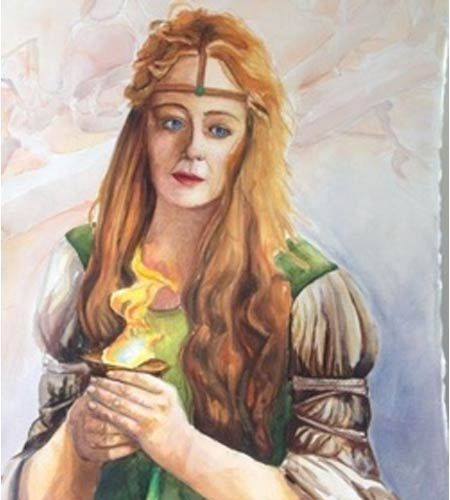
Restorative Practice
           a. Behaviour Management Principles
              i. Preventative / Proactive
              ii. Problem Solving Day to Day Problems and Difficulties
              iii. Formal interventions to address serious incidents
                   of harm
           b. Behaviour Management Procedures
              i. Recognition of positive contributions
              ii. Management of inappropriate behaviour in the classroom
              iii. Student Service Referral
              iv. Non-negotiable Behaviour
              v. Management of inappropriate behaviour in the playground
              vi. Major Disciplinary Action
              vii. Child Protection and Mandatory Reporting
              viii. Police Liaison Officer
              ix. Data for Wellbeing

5. General Administration and Policies

              a.   Communication with Home
              b.   Uniform Policy
              c.   Student Attendance and Absence from School
              d.   Illness at School
              e.   Parent and Volunteer Participation
              f.   Complaints Handling
              g.   Who to Contact

6. A Glossary of Terms for Secondary School

                                                                           3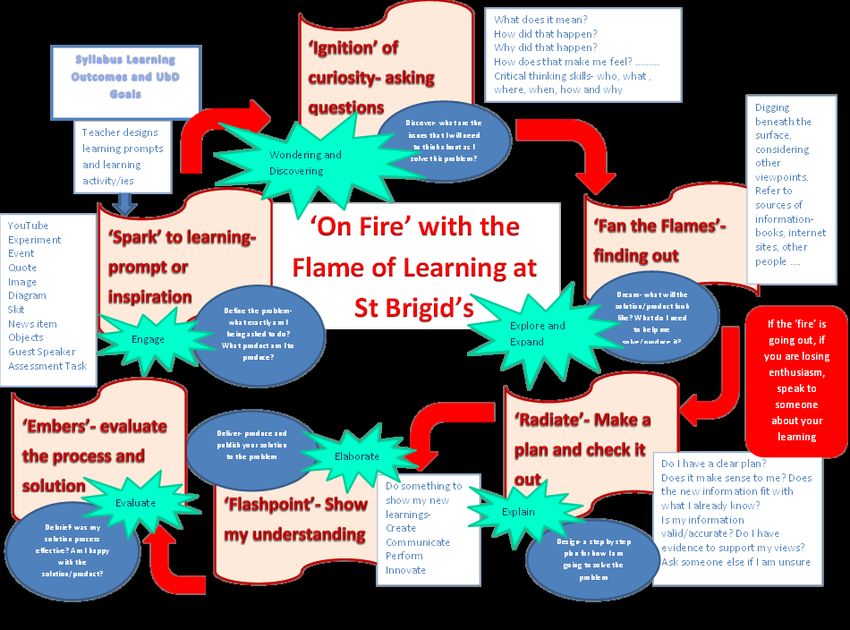
1. St Brigid’s Catholic College
a. Principal’s Welcome

I am delighted that you have chosen to entrust your child to us for their secondary education. I am
confident that St Brigid’s staff, both teaching and support, are a group of dedicated professionals
who are committed to ensuring your child has the best holistic educational experience possible at
our beautiful College. St Brigid’s has been established as a school for your child’s future, as we
know that the demands of living and working in contemporary society need a different way of
educating.

I hope that you find the contents of this handbook informative. Open communication between
home and school is vital to the best outcomes for your child. We acknowledge that parents are the
first educators of their children and so we are committed to working with you so that your child
leaves us with dignity, purpose and options for the future.

I look forward to getting to know your child as a new member of the St Brigid’s family.

Adam Murdoch

b. College Mission Statement

St Brigid's Catholic College is a Catholic school in the Diocese of Broken Bay and exists to educate
and form young people in Catholic discipleship, offering them experiences of following Jesus as
members of the Catholic community.

The College aims to foster a spirit of inquiry and a reflective disposition to learning, so as to
provide students with a strong foundation for making realistic, life giving choices in their journey
as Catholics.

St Brigid was renowned as an educational leader and was often portrayed holding a reed cross
(which was adopted as the College cross) and a lamp or flame of learning. Our patron saint St
Brigid was one of the most remarkable women of her times. Her extraordinary spirituality,
boundless charity, and compassion for those in distress were notable; she was also known to be a
woman of peace and reconciliation.

At St Brigid’s we strive to create a dynamic faith community in which each student will internalise
Christian values and become vitally involved in the promotion and practice of justice. Our aim is
for all students to be ‘life giving’ members within their communities, lived out through the school
motto ’Inflaming hearts and minds in Christ’.

Parents are recognised as the prime religious educators of their children, and teachers, through
their vocation, support parents in this role. Engagement with the religious curriculum, social
justice initiatives and the liturgical life of the College provides students and staff with
opportunities to develop their relationship with God and others.

                                                                                                  4
c. Our Values
❖ Compassion
❖ Courage
❖ Stewardship
❖ Wisdom
d. Our Students
Inspired by the life of St Brigid and her love of Christ, our students
❖ are moved by compassion for others and empathise through action
row in wisdom to know what is right and have the courage to act with integrity
❖ g
❖ t ake responsibility for their role in the stewardship of all of Creation
e. College Patron - St Brigid
Brigid was probably born in AD451 in Ireland. According to legend, her father was Dubhthach, an
Irish chieftain and her mother, Brocca, was a slave at his court. Even as a young girl she showed an
interest for a religious life and entered the convent when she was 18 years old. About the year
470 she founded a double monastery at Cill-Dara (Kildare), the Church of the Oak, and was
Abbess of the convent, the first in Ireland. The monastery was a co-educational facility, and
became famous as an exemplary place of learning and spirituality, and around the abbey grew
the Cathedral city of Kildare. Brigid founded a school of art at Kildare and its illuminated
manuscripts became famous, notably the Book of Kildare, which was praised as one of the finest
of all illuminated Irish manuscripts before its disappearance three centuries ago. She also
established a school of art and metal work. Brigid was one of the most remarkable women of her
times, and many miracles are attributed to her. Her extraordinary spirituality, boundless charity,
and compassion for those in distress were notable. She also had a great respect for Creation and
was known to be a woman of peace and reconciliation.
Brigid is often portrayed holding a reed cross. It is told that she sat at the bedside of a dying man
and told him the story of Christ. She made the cross from reeds on the floor and the man was so
impressed by the story of her Saviour that he asked to be baptised. Brigid is also shown carrying a
lamp or flame of learning as she was renowned as an educational leader. One of the traditional
Irish rituals is for families to hang the Cross of St Brigid in their home for protection from evil and
fire. They do this at the beginning of spring on the 1st of February, which is celebrated as Brigid’s
feast day.
5
f. College Logo and Colours
The logo is a modern interpretation of St Brigid's reed cross. The flames at the apex of the cross
represent the flame or lamp of learning for which she was remembered.
The College colours of maroon, navy, white and teal were chosen to reflect the symbols for which
she is noted. The maroon is for the flame of learning; white is the colour associated with Brigid,
and teal green represents peace and reconciliation and blue for the love of Creation, for which she
is renowned.
g. College Motto - 'Inflaming Hearts and Minds in Christ'
'Inflaming Hearts and Minds in Christ' reminds us of the centrality of Christ in Brigid's life and calls
us to centre ourselves on Him. St Brigid's passion for igniting in others the love of learning is
particularly relevant to holistic learning in the context of a modern educational setting such as St
Brigid's Catholic College. It is hoped that our students are impassioned and that their hearts and
minds are set afire with the love of life and learning through the experiences that are offered to
them at our College.
6
h. College Prayer
St Brigid,
Woman of wisdom and compassion
Steward of God's precious gift of Creation
Peacemaker where turmoil reigned
Light of hope to those who suffered
You ignited passion for learning,
empowering those in your care
Inflame our hearts and minds in Christ
So that we may have the courage to live out our call
to love as His disciples
And ensure that our world is a better place for our having lived
Amen.
i. College History
In mid-2012 the Bishop of Broken Bay, Most Rev David Walker announced the decision to realise
his vision to establish an additional Diocesan Catholic College at Lake Munmorah. Under the
auspices of Bishop David, Mr Peter Hamill, Director of Schools, began negotiations with the local
families of the Lake Munmorah area for the secondary College.
Potential students and their parents together with Bishop David gathered in mid-December to
celebrate the first step towards the new Catholic College at Lake Munmorah. It was announced
that the College will cater for students from Years 7 to 12, beginning with a Year 7 cohort in 2014.
The College is named after St Brigid (451-525), a great Irish saint who was a contemporary of St
Brendan (484-577). This name provides a direct connection with the broader Lake Munmorah
community it serves, and with St Brendan’s Catholic Primary School. Brigid was a pioneer of Irish
monasticism. She was an innovator who was co-leader of a mixed male and female religious
community, the great monastery of Kildare, renowned for its faith and learning. Therefore, she is a
great model for a Catholic co-educational College. Stories abound of her generosity to the poor,
her thirst for peace and reconciliation, and of her care of the earth.
In December 2012, Mrs Julie Terry was announced as the founding principal of St Brigid’s Catholic
College. The senior administration officer, Mrs Rita Buchanan began her appointment in Term 4 of
2013. The founding teaching staff of seven teachers began in 2014 and the staffing numbers have
grown with the student cohorts. The College community is fortunate to have an outstanding staff
to lay the foundations of exemplary education for students at St Brigid’s.
7The College continues to grow as a vibrant learning community. 2017 saw the addition of a new
building incorporating Science, Visual Arts and a large general learning space with break-out
rooms. A sacred space has been established on the top floor to facilitate House Masses and
student and staff prayer. Adjacent to this building is a magnificent amphitheatre where students
can gather. It provides an open air venue for community events. Staff facilities were upgraded
with the construction of a kitchen facility.
In 2019 we saw see the first senior cohort graduate with the Higher School Certificate. A broad
range of learning opportunities, including established Board of Studies courses, combined with
School Based Apprenticeships, online and Vocational Education Training (VET) courses are on
offer. At the beginning of 2019, a new facility was opened inclusive of a commercial grade
Hospitality kitchen and another learning piazza.
j. Our School Day
Our lessons are 75 minutes long, having four each day. Lesson 1 and 2 are followed by Break 1 for
half an hour and Lesson 3 is followed by Break 2 for half an hour, with Lesson 4 completing the
day. Our hours are from 8.15 am until 2.30 pm.
2. Catholic Life and Mission
Catholic Life and Mission underpins life at St Brigid's Catholic College. Our mission is to 'educate
and form young people in Catholic discipleship, offering them experiences of following Jesus as
members of the Catholic community'. As such Sacrament, Word and Prayer, are the framework of
our faith tradition, are essential in the day to day life of the College. Sacred symbols will be visible
throughout the College facilities to signify our connection to our faith and the wider church.
We are fortunate to have strong links with our priests at the local parish, St Mary of Perpetual
Succour at Toukley. St Brendan's Church in Carters Road enables our students to celebrate Mass
and liturgies in this sacred space. Our opening school Mass will also be a day to celebrate the
College's Feast Day of St Brigid, on or around the 1st February. The celebration of the Eucharist is
central to the expression of 'communio' as a community of disciples. Other liturgical experiences
will be offered to our students either on site or at St Brendan's Church. Prayer life in the College
will be expressed whenever we gather together as a community. Each day students will be led by
staff in praying the Examen. Our God is revealed to us through the Sacred Scriptures and so
reflection on the scriptures will be afforded at appropriate times.
The Religious Education program of study is an essential component of the faith education of
students at St Brigid's. Years 7 and 8 will follow the program endorsed by the Catholic Schools
Office, in Years 9 and 10 students will study the Board Endorsed Course and in Years 11 and 12,
the one unit BOS Studies of Religion course or Catholic Studies course will be compulsory for
senior students.
Students will also experience Reflection Days and Retreats at times throughout their six years of
enrolment and these are seen to be essential for the formation of young people. Students will also
have the opportunity to engage in social justice initiatives throughout their time at the College.
8Student Examen
THANK
Take some time to relax
Have a think about today
Acknowledge and be grateful for the good things
Notice what I need help with
Know that God is with me
3. Teaching and Learning
St Brigid’s is a school for the future. Before the school was established much planning and
investigation occurred to ensure that the teaching and learning was going to meet the needs of all
of our students for a changing world. Teaching and learning at St Brigid’s is founded on
contemporary research which ultimately informs our pedagogical framework to ensure that a
graduate of St Brigid’s is equipped with the capabilities to lead a successful and fulfilling life.
Teachers at St Brigid’s have been carefully selected to ensure that they are dedicated to our
students’ having a deep understanding of concepts rather than a superficial coverage of content. It
is important in the modern landscape that children know how to learn as it is likely that they will
need to be adaptable for the changing nature of the workforce.
a. Directory of Staff
College Principal Mr Adam Murdoch
College Assistant Principal Mr Paul Lynch
Director of Mission Mr Michael Landrigan
Director of Wellbeing for Learning Mrs Monique Smith
Director of Learning for Wellbeing Mrs Alex Walters
Director of Professional Growth Mrs Kylie Robinson
Director of Student Growth TBC
Administration Coordinator Mr Mark Peterson
Leaders of Wellbeing TBC(Lakes), TBC (Walker),
Mrs Lauren Bristow (Kildare), Ms Tegan Bayliss (Terry)
Leaders of Pedagogy Ms Janice Peel, Mrs Rachael Foo,
Mrs Erin Gilbert, Mr Paul McLoughlin, Mr Ashley Sadler
Leader of Learning Support Mrs Sarah Benham
Teaching Staff Miss Rebecca Rutherford, Mr Luke Evans, Mr Paul Nield,
Mr Luke Richardson, Mrs Kieran Lowrie, Mr Scott Williams,
Mrs Iona Symons, Mrs Nadia Hagberg, Mrs Sherrie Cooper,
Mr Nick McFarlane, Mrs Rachel Foo, Miss Rebecca Ardern, Mr
9Joshua Killen, Mr Nicholas McFarlane, Mrs Michelle Wilson,
Ms Chelsea Hokin, Ms Tess Higgins
Senior Administration Officer Mrs Rita Buchanan
Administration Support Mrs Natasha McFadden
Mrs Ashlee Lanzini
Mrs Belinda Wright
Mrs Meggen Young
Learning Support Assistant Mrs Vanessa Larkin, Mrs Meredith Carantinos, Miss Sheree
Hoskins
School Psychologist Mrs Natalie Ross
ICLT Technician Mr Dominic Jordan
Canteen Supervisor Mrs Annette Maat & Mr Chris Maat
Aboriginal Education Worker Ms Brittany Pass
Science Lab Assistant Mrs Sarah Adamson
All staff undergo a Working with Children Check as part of the recruitment process.
b. Flame of Learning
The work of Kath Murdoch and Lee Watanabe-Crockett have been adapted to produce the ‘Flame
of Learning’ which is an inquiry cycle for student learning. Learning activities l are firstly informed
by the NESA curriculum documents and teachers then design learning experiences using the
Understanding by Design framework of Wiggins and McTighe. Students are then motivated to
learn by ‘Spark’ activities which inspire curiosity and provide a reason for gaining the particular
knowledge, skills and understandings associated with the lesson, topic or unit of work. It is critical
for our students that they have a choice in how they demonstrate their learning and where
appropriate, choice about what they will study e.g. it may be that a student has a particular
interest which can be accommodated and still lead to the same learning outcome.
10c. Students with special learning needs
Because of student choice, differentiation of the curriculum is an integral part of what teachers do
to plan learning activities. Some students will need adaptation of the material, the way in which
they demonstrate their learning or the learning environment to enable them to have equitable
access to learning experiences. Life Skills curriculum is also an option for students who find the
regular curriculum inaccessible. We have an excellent learning support department who work
closely with families who have children with recognised learning difficulties and disabilities.
d. Teaching Teams
Students at St Brigid’s learn together with their peers in their year group and are taught by a team
of teachers. There is much research to support this mode of organisation. According to the latest
research by John Hattie, collective teacher efficacy has the highest impact on positive student
learning outcomes. We have a fundamental belief in the power of team and believe that student
access to different adults in the learning environment is essential. Research also shows that there
can be a lack of consistency in the experience of students in different classrooms within the one
11school. This does not occur at St Brigid’s as teachers plan, deliver and evaluate the learning
experiences together for all students in that course.
Within each subject each team member will have responsibility for tracking of student progress for
a group of students within the cohort. This is the teacher who speaks with parents if there is a
concern and also at parent teacher interviews. However during the course of lessons students
have access to all of the teachers in the team according to the lesson design.
Having a team of teachers also leads to flexibility in grouping of students. For example, if a group
of students needs extending, a teacher could take those students for an appropriate length of time
to provide them with ideas for extending their thinking. Students who may need extra assistance
can also be taken as a group by one of the teachers. There has been no identified advantage to
streaming of students, in fact it has been demonstrated that for some students it can be
detrimental. However the flexibility to group students differently as the need arises does provide
the option for teachers to adapt to the needs of the students rather than students being locked
into a particular class.
e. Technology and Learning Management System
Use of the computer is essential for the learning that will occur at St Brigid’s. An inquiry-based
approach is well documented in assisting students to gain a deep understanding of the learning
outcomes and the internet is an essential resource for research, as well as the use of different
applications so that the students will become responsible and effective users of technology. These
devices will also be supplemented with higher specification machines for multimedia production.
Parents/carers lease the device for their child/children for three years and make payments each
year. The device remains the property of the College until the end of the three years. The cost of
the device includes insurance and a satchel for protection, as well as the diocesan ICT department
taking responsibility for the update of software. Should an accidental breakage occur the first
repair is covered under the insurance. If another breakage occurs there is a one off fee for the
repair. At the end of the 3 years the device belongs to parents. If a child should leave the College
prior to the three years, an option to buy the device can be negotiated otherwise the device
remains the property of the College.
Students bring their own personal electronic equipment to the College at their own risk. Mobile
phones are to be switched to non-vibrate silent and not used during class unless specifically
directed by the teacher. We ask that parents do not ring students directly on their mobiles but call
the College reception if they need to pass on a message or speak with their child.
The GAfE (Google Apps for Education) suite is used as our learning management system. The GAfE
suite incorporates Google Drive, Sites and Classroom which work together to support the delivery
of online activities. During 2017 staff experimented with the use of Hapara which provides
augmentation to the facility of GafE. Hapara is now the platform for access to the Google Suite.
12Parents will be provided with the opportunity to learn about both systems so that they may at all
times have access to the online learning of their child.
Some students prefer to write rather than type all of their learning activities. We are mindful that
handwriting is an important skill, so at times learning will be demonstrated on paper. There is no
requirement for a student to type all the time, should they wish to write they are able to do so as
they can photograph their work and submit it online.
i. EPortfolios
Students, with the support of their Mentor Coaches will maintain and use the ePortfolio as a
platform to store, record and reflect on achievements in the NPDL competencies, how they have
lived the College Values and the learning of which they are most proud. The ePortfolio will record
achievements both within and outside the college. The semester report will also be available on the
ePortfolio. The ePortfolio therefore provides a holistic record of student achievements and will be a
key platform for students to be able to engage with future employers or future educational
providers. The ePortfolio will be used as a stimulus for discussion at the Student-led Conference.
Parents can and are encouraged to access the ePortfolio to see their child's growth in NPDL and
learning, lived values and future goals. Students will present their ePortfolio to their parents at the
student-led conferences twice per year. The Student-led conference provides a vehicle for
students, parents and Mentor Coaches to connect in a way that allows for close partnership in
developing student confidence and success.
ii. Digital Citizenship
As a 21st Century learning environment we embrace the use of technology within our community.
This being said there is a responsibility within our school and the wider community to use all
elements of technology to positive ends. Digital citizenship is the safe, positive and smart use of
digital technology including social media, email, messages, photos etc.
The College has an existing Wellbeing Statement on Technology - a full copy of this document
appears in the Appendix.
iii. Mobile Phone Use
During 2017 staff and parents of the college worked collaboratively to establish guidelines for
acceptable use of mobile phones during school time. As a place of learning, we are committed to
developing the knowledge and skills for students to use mobile phone technology responsibly.
Essentially, students can use mobile phones before and after school and during their morning and
lunch breaks. No student is to use a mobile phone during class unless it forms part of the formal
learning activity for that lesson and is approved by the teaching staff. The full Wellbeing Statement
on Technology can be accessed on the College website. In the interests of establishing a positive
and safe learning environment, all parents should be familiar with this document.
13g. Our Learning Environment
It is critical that our physical learning environment is aesthetically pleasing, comfortable and
conducive to learning in our framework. As such the design of our buildings is informed by the
teaching and learning, uses colour and texture to make the space a pleasant one to be in. Copious
natural light and good ventilation and temperature control ensure that our students have a
pleasant physical environment in which to learn. Our first building was a demountable one; it was
designed to provide a large learning space for the whole cohort to gather, as well as smaller
‘break-out’ spaces where students could learn in smaller groups or be able to find a space should
they wish to work individually. This theme has been continued in our beautiful permanent
buildings. We believe each new building improves on the last and the spaces are the envy of those
who visit us.
Specialist spaces have been provided to meet the needs of the curriculum such as science
laboratories, music studios, kitchen, timber technology workshop and art studio.
h. Assessment
The NSW Board of Studies provides teachers with guidelines for the monitoring of student
progress. Assessment is of two forms: assessment for learning a nd assessment of learning.
Teachers provide students with opportunities in the context of everyday classroom activities, as
well as planned assessment events, to demonstrate their learning.
Assessment for learning is designed to give students opportunities to produce the work that leads
to the development of their knowledge, skills and understanding. It involves teachers in deciding
how and when to assess student achievement, as they plan the work students will do, using a
range of appropriate assessment strategies including self-assessment and peer assessment. It
could include research or class tests. Assessment for learning provides feedback to students so
that they may improve their learning throughout the learning process. It is formative rather than
summative. Teachers are continually monitoring students learning. Feedback can be verbal or
written. Throughout units of work students are asked to demonstrate the learning they have done
up to that point in what we call Check-In Points. Parents are able to see all of the submitted tasks
through accessing their child’s Hapara workspaces. At this stage students need to provide access
to parents however we are working on a parent portal.
Gathered evidence can also be used for assessment of learning that takes place at key points in
the learning cycle, such as the end of a year or stage, when schools may wish to report
differentially on the levels of skill, knowledge and understanding achieved by students.
Assessment of learning is usually summative. Assessment of learning is communicated to parents
in reports.
For Year 7 students, acknowledging the transition to secondary schooling and the increased rigor
demanded, there will be no research tasks expected to be completed outside of school during
Term 1; all tasks will be given time in class to complete. Students may be asked to complete
14sections of the task for homework from time to time, particularly if they have not used the time in
class well
i. Reporting
Student progress is communicated to parents in both formal and informal ways. The more formal
reporting system is outlined below:
Formal Reporting
Parents will receive a half yearly and a yearly report on their child’s academic progress. Students
are graded as per the Common A-E Grade Scale outlines below;
A The student has an extensive knowledge and understanding of the
content and can readily apply this knowledge. In addition, the student
has achieved a very high level of competence in the processes and
skills and can apply these skills to new situations.
B The student has a thorough knowledge and understanding of the
content and a high level of competence in the processes and skills. In
addition, the student is able to apply this knowledge and these skills to
most situations.
C The student has a sound knowledge and understanding of the main
areas of content and has achieved an adequate level of competence in
the processes and skills.
D The student has a basic knowledge and understanding of the content
and has achieved a limited level of competence in the processes and
skills.
15E The student has an elementary knowledge and understanding in few
areas of the content and has achieved very limited competence in
some of the processes and skills.
ii. Student Led Conferences
The student-led conference at St Brigid’s aims to enable students to showcase their learning by
celebrating their successes and contributions to life here at the college and in the wider
community.This provides students with opportunities for honest reflection and ownership over what
is shared about their learning. New Pedagogies for Deep Learning (NPDL) provides the
framework which students will use to showcase their learning through a student designed
ePortfolio. This will culminate with a student-led conference, where, with the support of their Mentor
Coach, students will celebrate their learning and achievements with their parents or carers.
iii. Merit System
If a student acquires 60% Effective and no Supported they will be awarded a Teal Award. During
each calendar year, two Teal Awards will accumulate to a Bronze Award. Three Teal Awards
acquires a Silver Award and Four Teal Awards is recognised by a Gold Award which will be
presented at the Annual Awards Evening.
Academic Awards will be given to students who earn an A grade in the course and will be
acknowledged at the Annual Awards Evening. The Principal’s Award for Academic Excellence will
be awarded to students for outstanding academic results.
Awards for Positive Contribution to the College Community will be given for ongoing service to the
College or any outreach programs. This could include contributions to student leadership, ongoing
commitment to a social justice group, collecting for charitable organisations organised by the
school, representation of the College in sporting or performing arts, or service to the community
over at least one term.
Student Learning Profile
meets criteria of 60% or
Teal Award
more ‘Effective’ with no
‘Supported’
Two Teal Awards during a
Bronze Award
calendar year
Three Teal Awards during a
Silver Award
calendar year
Four Teal Awards during a Gold Award (recognition at
calendar year Annual Awards Evening)
j. Homework
16There has been much debate about homework. There has also been educational research which
demonstrates that homework has little effect on learning outcomes for students.
Homework which is set to be completed by the next day is not something that we ascribe to at St
Brigid’s unless it will impact on the next phase in the learning. We believe that families have
different pressures in this current climate; with the demands of work and possible commuting long
distances there is little time for parents to manage homework; we believe that physical activity in
the afternoon is important for children; we believe that if a child learns well during the school day
then the afternoon should be for other purposes. This needs to be balanced with the reality that
sometimes students will need to use time at home to complete tasks, and as the demands of the
curriculum increase it will be essential for students to study and complete tasks out of class time.
For Year 7 during Term 1, as students transition into secondary school life, homework will be kept
to a minimum. Beyond Term 1 homework could include work set by the teacher, reading over the
notes of the day, reading for pleasure, assessment task work or preparation for tests or
examinations.
Staff will instruct students via Hapara as to expectations for learning. Students in Year 7 will not be
required to use homework time to complete assessment tasks during Term 1 as they will be
completed in class.
If a student is unable to complete assigned homework, or has worked for the allocated time and
not completed the work, it is important for parents to communicate this via email or note. Parents
are asked to provide a suitable place at home for their child to complete homework and to inform
the school should there be any issues. It is the student’s responsibility to complete the work and
the responsibility of teachers to monitor the completion and quality of the homework.
174. Wellbeing for Learning & Pastoral Care
"Optimal wellbeing is characterised by positive feelings and attitude, positive relationships
with others, resilience and satisfaction with self and experiences and engagement in
learning."
Pastoral Care and Wellbeing for Learning Framework - Diocese of Broken Bay
Pastoral care in Catholic Schools in the Diocese of Broken Bay is based firmly on the Catholic
worldview and the Christian vision as expressed in the following statements:
Pastoral Care...
... has as its focus the life of Jesus Christ.
... is concerned with the dignity and integral growth of the person.
... is a responsibility entrusted to all members of the faith community.
... is a force for healing, reconciliation and liberation.
... is an expression of and commitment to justice.
As a place of learning St Brigid’s Catholic College;
● affirms the right of all members of the school community to feel safe and be safe. For our
students, we acknowledge that being safe and supported at school is essential for
wellbeing and effective learning.
● acknowledges the age range and developmental needs of our students. The adolescent
brain is typically impulsive and changing rapidly. Social and emotional learning forms a
crucial cornerstone of a holistic education.
● believes respectful relationships between all members of the community are essential for
providing an environment in which students can develop and learn.
● promotes positive mental health and wellbeing for all community members, through
policies, practices and procedures that create a positive environment where all community
members feel included, valued and supported.
Support for Students
a. House Structure
Following enrolment, students are allocated to a House group. Within the College, there are four
Houses;
● Kildare - the place where St Brigid started her monastery in Ireland Green
● Lakes - after our beautiful environment surrounded by water Blue
● Terry - our founding Principal, Julie Terry Purple
● Walker - the Bishop of Broken Bay who commissioned the school Red
Each House has a Leader of House (middle leadership position) responsible for day to day
wellbeing of students.
18Within each House, students are allocated to a Mentor Group. A Mentor Group consists of a group
of approximately 25 students comprised of students from all year groups.
Each Mentor Group has a staff member who acts as a coach or mentor to the students in their
care. The Mentor Coach is the primary point of contact for parents. Each school year commences
with an opportunity for the family to meet with the Mentor Coach.
The Director of Wellbeing for Learning, in conjunction with the Leaders of Wellbeing, College
Psychologist and Leader of Learning Support provide specific support for student wellbeing.
b. Counselling Support
A registered psychologist, is available to assist those students who may need expert / specialist
help beyond the intervention of teachers. Currently, she works four days per week - Monday to
Thursday.
Students in need of support can;
1. Speak with their Mentor Coach, classroom teacher or Leader of House
2. Complete a Student Wellbeing Form. The counsellor and Director of Wellbeing will triage
these forms and direct the student to the most appropriate person.
c. Student Resource Hub (SRH)
A student resource hub has been established for students to access learning tools such as video
equipment and desktop computers. There is provision for staff supervision, with students
reporting first to their normal class teacher before accessing the SRH during class time.
The SRH is also a place where students can go during most breaks to play board games such as
Monopoly, table tennis and use musical instruments. It is a quiet place for group interaction and
connection, where students can sit and share conversation.
d. Ready to Learn Space (R2L)
The R2L Space was established to provide support for students who were experiencing difficulty
regulating their emotions and were not ‘ready to learn’. It provides a place where students were
given a short space of time to settle and self-regulate, before returning to their normal timetabled
class. The intention is not to use this room consistently but as a place accessible to all students
when they experience emotions or feelings that would disrupt their ability to learn.
Students report to their classroom teacher before requesting to access the R2L space.
e. Period 5 (P5) Tuesday & Thursday
Currently, P5 takes place after school on a Wednesday and Thursday afternoon from 2:30 to
4:00pm. Tuesday is a voluntary time where students can work on projects and classwork in a quiet
space. Middle Leaders and volunteer staff provide additional support for students who; i) are
voluntarily seeking a quiet place to study, work on assessment tasks or classwork with teacher
support and ii) fall behind in classwork or do not submit assessment tasks and are invited to
19attend by classroom teachers. An important aspect of this provision is to recognise that learning is
by invitation not as a means of punishment or detention. It is the decision of the family to
determine whether the child attends or not.
Restorative Practice
Restorative Practice underpins behaviour management and social-emotional learning at St Brigid’s
Catholic College.
“Restorative practice is a way of thinking and being, focused on creating safe spaces
for real conversations that deepen relationships and create stronger, more
connected communities.”
Vander Vennen (2015)
The following material is adapted from the Wellbeing Australia website.
It is acknowledged that from time to time staff and students will make mistakes. At St Brigid’s
Catholic College, the principles of restorative justice are embedded to ensure that right
relationships are at the core of our pastoral care. The tenets of Restorative Justice are grounded in
the principle that when something happens, it harms and damages relationships.
A different approach is employed compared to the traditional one of blame, punishment and
disconnection which can alienate students and disconnect them from the school community.
Rather, we explore together:
What happened?
Who has been affected?
What do we need to do to repair the relationships?
It is only when a person can take responsibility for what they have done and how that has affected
others, that there will be enough trust between the parties to be able to explore together what
needs to happen to make amends. It is a solution focused approach that develops the critical
aspect of social-emotional learning. Rather than stigmatising and excluding students, the process
affirms that, even though your behaviour is inappropriate, you are a valued member of our
community and we need to work out a way to reconnect you to the community. The behaviour
management practices at St Brigid’s Catholic College are based on these principles.
a. Behaviour Management Principles
Intrinsically, schools are social places and learning is a social process. Students do not learn alone
but rather in collaboration with their teachers, in the company of their peers, and with the support
of their families. Emotions can facilitate or hamper their learning and their ultimate success in
school'.
Zins et al. 2004
20Using the principles of Restorative Practice, mistakes are seen as opportunities for learning.
Student behaviour management respects the dignity of each person, and seeks to give students
the opportunity to learn to manage their own behaviour. It is an attempt to build social capital in
the College.
There are three levels of intervention.
I. Preventative/proactive.
These are the classroom practices or universal programs we teach and are designed to
build students’ self-worth, resilience, self-management of emotions, ability to work with
others, decision-making, morals and values. Particular focus areas include Wellbeing
lessons, Mentor Conversations, INFLAME, the outdoor learning program, guest presenters
and live theatre, Religious Education and Personal Development, Health and Physical
Education curriculum.
One lesson per fortnight is devoted to Wellbeing programs. Students may work together
with their Leader of Wellbeing and Mentor Coaches in their House groups, with year
groups or gender-based groups - where age-appropriate programs or discussions take
place. Student Leaders (Year 11) have been added to each Mentor Group to promote
student voice and leadership. They are supported through a Student Representative
Council, consisting of students in Years 7 to 10.
These lessons have as a focus a positive psychology approach to Wellbeing and Learning.
Complimented by a well researched, current and engaging program - THRIVE, students
engage with three core modules Growth Mindset, GRIT (persistence, determination) and
Wellbeing (promoting the concept of positive wellbeing or flourishing).
Lessons often incorporate guest presenters, such as our Police Liaison Officer & external
agencies. On occasions students are involved in specific focus programs such as, The
Inter-House Challenge, Mental Health Month, National Day of Action Against Violence and
Bullying or RUOK? Day. Friday afternoon INFLAME also provides opportunities to pursue
areas of interest that students find engaging and supportive.
An outdoor learning program provides a time where students are challenged to grow and
move out of their comfort zone, to share new experiences and build the skills that
employers are seeking in today’s rapidly changing world. These skills include such traits as;
adaptability, resilience, communication, collaboration, critical thinking and problem
solving. These outdoor learning experiences are considered essential to the holistic
development of each student and align with promoting the core skills of the New
Pedagogies for Deep Learning.
An overview of the program follows;
21YEAR LOCATION FOCUS
7 Booti Booti State Recreation Area Building Community & making connections
(15kms south of Forster) Aquatics - canoeing, SUP, bushwalking, team
3 days games, archery, camping. Meet new friends and
Term 1 develop new skills in an outdoor environment.
8 Coastal Trek: Munmorah State Strengthening community
Recreation Area An overnight coast trek completed in House
2 days groups. Parents have the opportunity to join in a
Term 4 community BBQ.
9 Billy Grace Reserve, Wee Jasper Exploring the Natural World
Abseiling, Bushwalking and Caving in the
5 days picturesque Brindabella Ranges. A truly amazing
Term 2 adventure where students experience growth in
ways they may have thought impossible.
10 Cockatoo Island, Sydney Exploring the Urban World
Combining learning, mission and wellbeing
3 days students engage in a program of activities that
Term 4 immerse them in a busy urban environment.
Travel, workplaces, entertainment, service in the
community, budgeting are amongst the skills and
experiences on offer.
Attendance and participation in these learning experiences are viewed as an essential
aspect of the students’ holistic education. As such they are compulsory events. Each
contributes to the progressive development of the six key elements of collaboration,
creativity, critical thinking, communication, character and citizenship (NPDL). As well as the
expression of our College Values; Stewardship, Compassion, Wisdom and Courage.
To conduct these outdoor learning experiences, the college enters into contracts with a
variety of suppliers who require final numbers to confirm bookings. Once these are
established the only consideration for exemption from payment will be;
i) a medical certificate stating that the student is unfit to attend the outdoor learning
experience OR
ii) prior approval for leave by the College Principal - this must be submitted in writing, at
least two weeks prior to the event.
II. Problem Solving Day to Day Problems and Difficulties
The day to day difficulties, differences and conflicts provide a window of opportunity for us
to assist children to problem solve, resolve conflict and assume responsibility. Rather than
the adult attempting to determine blame, establish what rule has been broken, and hand
out the appropriate punishment, the adult (or perhaps the peer) assists those involved to
resolve their own difficulties.
22Students have an active voice in this process, with training in peer mentoring and volunteer
groups such as the Angels and Big Brothers Yrs 10-12 providing a valuable source of
support to younger students.
III. Formal Interventions to Address Serious Incidents of Harm: Restorative Practice
When a situation of damage to relationships has occurred then more formal intervention is
required. A conference would normally involve all those involved and seeks to restore the
relationships by agreeing to a way to repair any damage that may have been done. All
participants are invited into a process that is solution-focused. The facilitator asks a
number of key questions that are designed to assist the people involved to take
responsibility for their behaviour and to understand the impact it has on others.
To respond to challenging behaviour;
What happened?
What were you thinking of at the time?
What have you thought about since?
Who has been affected by what you have done? In what way?
What do you think you need to do to make things right?
To help those harmed by others actions
What happened?
What were you hoping to achieve by this behaviour?
What did you think when you realised what had happened?
What impact has this incident had on you and others?
What has been the hardest thing for you?
What do you think needs to happen to make things right?
Is there a wrong question?
The question most asked but least effective is, “Why did you do that?”
The response most often given by the young person is; “I don’t know” OR “I didn’t think
about the consequences.” This question reflects the stage of brain development of an
adolescent, namely that emotions often drive behaviour, not rational (frontal lobe)
thought processes, which are not fully developed until early adulthood.
Together those involved look at repairing the relationships and making things right, with
the outcomes dependent on what the group needs and what they feel will make amends. It
is often the starting place to repair relationships. It may expose problems that need
addressing at a curriculum, classroom, school or family level. Conferencing assists in
building responsibility, personal accountability, empathy and problem solving. At the core
of this is the belief that you are OK, but your behaviour may not have been in this instance.
It is inclusive, concerned with reintegrating those involved back into the community -
maintaining and building connectedness.
23The most important points to remember are;
1. All behaviour has a purpose: to avoid or to gain advantage
2. The adolescent brain is still developing - decisions are often impulsive
3. Social-Emotional Learning is at the heart of restorative practice and takes time,
patience and persistence to achieve.
4. Restorative Practice is built on building strong relationships and connection, which
build the foundations of a productive and functional society
5. Punishment has it’s sole focus on a ‘perpetrator’ - in these instances the other is
often not considered. Punishment often has no lasting impact and more often
results in feelings of disconnection, reduced empathy and trust.
b. Behaviour Recognition and Management Procedures
i. Recognition of positive contributions
At St Brigid’s Catholic College, students are recognised for their positive behaviour and
achievements in many ways. These may include verbal praise and/or the issuing of a merit.
Teachers are to record the merit in our online database, Edumate. Ten merits will
accumulate to the award of a Certificate of Merit. An acknowledgement assembly is held
each Friday to distribute Certificates of Merit and/or recognise other student
achievements.
Each semester students who have not received a Student Service Referral will be
acknowledged through a reward afternoon. This may include a privilege such as a movie.
ii. Tiered System of Behaviour Support & Intervention
Tier 1 Universal procedures and programs: Data collected from our online system Edumate is
analysed by the Wellbeing Team during a weekly case management meeting. In some instances of
minor repeated behaviours, the Mentor Coach may be asked to follow up with the student and
their parents.
Tier 2 Targeted interventions: Where it is clear that the universal programs and interventions are
not resulting in a reduction in problematic behaviours, the Wellbeing Team will consider the
appropriate support required for the student. This may involve any one or a combination of the
following; counselling, learning support, CSO support, family meetings with Leaders of house
and/or Leaders of Pedagogy to identify appropriate supports.
Tier 3 High-level intervention: For behaviours or concerns requiring external intervention, such as
Catholic Schools Office - Office of Safeguarding and Child Protection, Family and Community
Services (FACS) intervention, allied health services, risk management, Police, typically senior
leaders and the College Psychologist will become involved.
24iii. Management of inappropriate behaviour in the classroom
Teachers are obligated to ensure a classroom environment which is conducive to good
learning. They are also expected to monitor student commitment to the rules of the
community, such as wearing the uniform with pride and respecting the environment.
Teaching staff have their own strategies for managing low level inappropriate behaviour in
their classroom such as minor disruptions to classroom learning, failing to bring
appropriate equipment, failure to remain on task. Strategies may include verbal reminders
of expectations; a short time or reflection and time to settle before returning to the
learning space, speaking with a student after class; contact with parents via email or phone
call; asking students to return at breaks to complete work.
iv. Student Service Referral
There may be instances where the student’s behaviour warrants a more formal approach.
This would typically happen following an escalation of behaviour e.g. refusal to follow a
reasonable instruction, repeated interruption to learning of other students, an act of
defiance or a serious matter warranting immediate referral or the student refusing to
learn. In these instances, teachers may instruct students to report to Student Services. The
threshold for staff to consider when referring a student is the question: “Is the student
learning?”
The referring teacher will;
● notify Student Services about the nature of the incident.
● return to hold a conversation with the student toward the end of the lesson or at
an arranged time.
● record the incident including any corrective actions that were taken prior to the
referral
● the referring teacher will correspond with parents where necessary
The student will;
● report to Student Services with their laptop and continue with their learning as
well as complete a self-reflective exercise. They will not return to class that lesson.
NOTE: if the student continues to escalate, their parents may be called to collect
them.
● engage with the teacher to discuss their behaviour and resolve the issue. For
students who request support, this will be made available.
● If a satisfactory resolution is reached, which may include a consequence, such as,
Community Restoration during INFLAME on Friday afternoon, the student will then
return to the learning space the following lesson. During Community Restoration
the student will report to the Assistant Principal, reflect on their behaviour,
complete any outstanding work and assist with any community service required.
25● Community Restoration is just one possible consequence. Ideally each situation
requires careful discussion and a solution that works toward assisting the student
help repair any harm caused to a relationship, whether student to staff or student
to student or student to environment/community.
Parents will;
● Parents will communicate with the teacher should they require further information
or follow up
v. Non-negotiable behaviour
To maintain standards and expectations across the College, there are certain behaviours that are
not subject to a restorative conversation. These include;
● Uniform and jewelry, including hats on in the sun
● Mobile phone use - only before and after school and at morning tea and lunch breaks
● Chewing gum
Although these might seem trivial to some, they are indicators that the student does not accept
the agreed standards under which they attend the College. A direct consequence will involve
either Friday Community Restoration, handing their phone into Student Services for collection
after school. In the case of chewing gum; gloves and a scraper will be provided and students will
remove chewing gum attached to furniture or school property. Repeated behaviour will result in a
formal interview and parent involvement.
vi. Management of inappropriate behaviour in the playground
All staff have a duty of care to diligently supervise students when they have a rostered playground
duty. They are also expected to monitor student commitment to the rules of the community, such
as wearing the uniform with pride and respecting the environment, leaving their area free from
litter.
At times, student behaviour may be at a level requiring further intervention than verbal prompting
to behave appropriately. If student behaviour is deemed as causing discomfort to peers or staff
then the student will be sent to Student Services to stay until the teacher completes the duty. Staff
will then contact the front office as to the reason why the student has been sent. The office staff
will inform the Principal or delegate that the student has been sent to the front office and
appropriate action will be decided in consultation with the reporting staff member.
The teacher or staff member on duty will record the incident in the electronic system, Edumate.
vii. Major disciplinary action
For serious breaches of behaviour please refer to the Diocesan Behaviour Management
and Student Discipline Policy.
26Strategies may include;
● Interview and behaviour management plan with Middle or Senior Leader
● Formal Parent / Student meetings with Middle Leaders
● Formal Student Review with Director of Wellbeing for Learning
● Risk Assessment in conjunction with the Catholic Schools Office
● Notification to the Office of Safeguarding and Child Protection at CSO
● Notification to Police Liaison Officer
● Referral to external support agencies
● Review of Student Enrolment with Principal / Assistant Principal
viii. Child Protection and Mandatory Reporting
Under the Children and Young Persons (Care and Protection) Act 1998 and the Child
Protection (Working with Children) Act 2012 , professionals who work with children are
considered mandatory reporters. As such, they are required to report notifiable behaviour
to the recognised authority - NSW Family and Community Services. This would normally
happen through the Principal or their delegate.
Mandatory Reporting. All staff are mandatory reporters and required by law to ensure that
a report is made to Family and Community Services when there are reasonable grounds to
suspect that a student is at risk of 'significant harm' from abuse or neglect. Staff are to
respond seriously and sensitively to any disclosures by students. Staff must inform the
Principal of any concerns, who will make a report to NSW Family and Community Services
on their behalf using the Keeping Them Safe tool - Mandatory Reporter Guidelines.
The CSO Office of Safeguarding and Child Protection Resource Manual is available through
CuriaNet / Human Resources / (Compliance Services and Support) Office of Safeguarding
and Child Protection and articulates expectations and procedures to be followed by
employees and volunteers of St Brigid’s Catholic College.
ix. Police Liaison Officer
The College is fortunate to have an excellent relationship with our Police Liaison Officer,
Senior Constable Kim Smith. Kim is involved in prevention, intervention and postvention as
the need arises. Kim also avails herself to present to students and works with parents,
should the need arise. Snr Constable Smith can be contacted through Wyong Police Station
on 4356 6099.
27x. Data for Wellbeing
There are a variety of indicators that are monitored to determine interventions, programs
or support structures for students. These include patterns of attendance, Student
Wellbeing Forms, Counsellor Referrals, R2L feedback, electronic tracking of student
behaviour patterns.
xi. Parent support
As educators we are aware of our responsibilities and the privilege we have in working with
young people. A position of relational trust is critical to ensure a positive relationship exists
between each family and the college. The emphasis focuses on working collaboratively and
respectfully to help each child achieve and be confident to approach the future with hope,
dignity and purpose.
The college has a family liaison officer who can work with parents and families to ensure
the best learning outcomes for our students. Our family liaison officer Rebecca Leahy
works between St Brigids and St Brendans Catholic Colleges.
Ways in which parents can support the ethos, standards and overall success of our College
community include;
● Attending information evenings designed to assist families with understanding the
changing nature of education, including; technology, learning and wellbeing.
● Communicating and liaising with the College if you have any concerns related to
wellbeing and learning. The first point of contact is your child’s Mentor Coach.
● Ensuring your child attends all College community events, including College masses
and liturgies, carnivals, outdoor learning programs.
● Ensuring each child’s wellbeing needs are met; e.g. nutrition, adequate sleep and a
safe environment are key to learning
● Monitoring of mobile phone, social media and internet use. The Office of the
e-Safety Commissioner provides excellent resources and advice here.
● Ensuring your son/daughter has the equipment they need for school and their
laptop is charged overnight
● Ensure your child is dressed according to the College Uniform policy before leaving
home
● Ensuring travel arrangements between home and school are safe; this includes the
wearing of helmets for students riding bikes and skateboards
5. General Administration and Policies
a. Communication with Home
Effective communication between home and school is essential for the best outcomes for
students. The College website, email, Facebook and reports are the main forms of contact with
28You can also read


