COMPASS: STRATEGIC PLAN - THE BOSTON PUBLIC LIBRARY
←
→
Page content transcription
If your browser does not render page correctly, please read the page content below
The Boston Public Library

Compass: Strategic Plan
The Boston Public Library

Compass: Strategic Plan

www.bpl.org/compass
contents

Welcome                                 1

Compass: Strategic Plan                 3

Principles for Excellence               4
Strategic Plan and Profiles             7
Planning Process                       34
Community Comments                     36
Outreach Examples                      38

Supporting Documents                   41

Engagement Summary                     43
Online Survey Summary                  47
Online Survey Open Response Themes     54
BPL Locations                          57
Boston 2010 Census Population          58
Massachusetts 2010 Census Population   60
Population Density                     62
Foreign-Born Population                63
Historic Trends                        65

Acknowledgements                       69

Leadership                             70
Production Credits                     72
Welcome

When I arrived in Boston as the new President of the Boston Public Library in 2008,
it was a professional librarian’s dream come true. I knew of the bpl’s world-class book
collection and treasures like its 15th century illuminated manuscripts and seafaring
maps. I know now, however, that the library’s greatest treasure lies in the people with
whom I am privileged to work.
For many years, long before I arrived in Boston, it has been clear that the way people
read, think, learn, and teach is being redefined. Libraries everywhere must place
themselves at the forefront of such change all while minding the gap, so to speak,
between those with access to technology and information and those without.
This strategic planning process has afforded my colleagues and me the privilege of
personally communicating with thousands of Bostonians. Whether we serve people
in buildings, online, or out in the community, we have listened to them talk about
the library they have loved since childhood and their hopes for the library of
the future.
Libraries have never been more important or useful than they are today. In this
era of ever-expanding information, libraries help people make sense of the world.
In buildings, the Boston Public Library’s core services will thrive with more books,
open hours, story times, programs, and access to and assistance with technology.
Online, the Boston Public Library will truly open the gate to the information
highway in our buildings, at work, and on-the-go. In the community, the Boston
Public Library will extend itself beyond bricks and mortar to meet our users –
and our potential users – where they are.
Fulfilling the Boston Public Library’s 21st century potential may take some time,
but I believe we can deliver on the vision contained within these pages. With
Mayor Thomas M. Menino’s support and leadership, the Boston Public Library
is committed to investing in the future of Boston. With this document, we have
our compass.

Amy E. Ryan
President, Boston Public Library

                                                                                       1
The Boston Public Library

    Compass: Strategic Plan

2
The Boston Public Library

                                                                                             Compass: Principles for Excellence

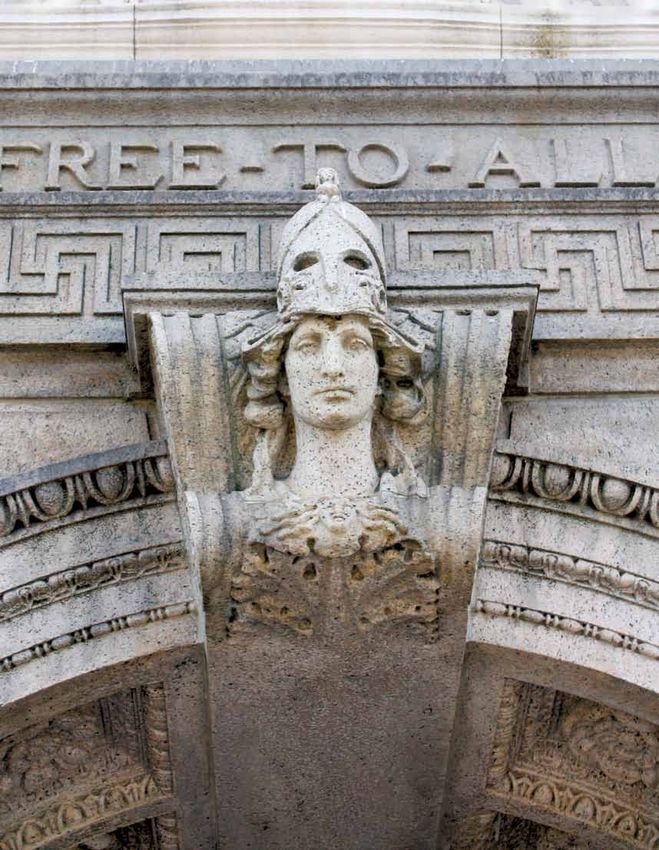
                                                                                             The Public Library of the City of Boston built by
                                                                                             the people and dedicated to the advancement of
                                                                                             learning. The Commonwealth requires the education
                                                                                             of the people as the safeguard of order and liberty.
                                                                                             Free to all. MDCCCLXXXVII (1887).
                                                                                             Carved in stone on the McKim Building of the Central Library in Copley Square

I) User-Centered Institution                                                                 V) Children and Teens
The bpl is a user-centered institution with services that anticipate and respond             The bpl fosters the love of reading and skills in critical and creative thinking among
to neighborhood interests and the changing demographics of the City and                      children and teens – from early literacy through mature readership – by offering a slate
Commonwealth.                                                                                of services that provide academic support and intellectual growth.

II) Community Gathering                                                                      VI) Access and Innovation
The bpl exists to serve and sustain communities that foster discovery, reading, thinking,    The bpl provides access to and training in innovative technology, electronic resources,
conversing, teaching, and learning, in accessible, sustainable, and welcoming facilities     and digital information through its own holdings and its strategic position within the
throughout the City, as well as with an engaging online presence.                            wider world of knowledge.

III) Special Collections                                                                     VII) Sustainable Organization
The bpl is committed to the ongoing development and preservation of its distinctive          The bpl depends on sustainability of resources through a judicious stewardship
special collections, which provide citizens from all walks of life with access to their      of finances; active employee participation and professional development in an
common cultural heritage.                                                                    environment of dignity and respect; and partnerships that enrich services, expand
                                                                                             outreach, and leverage public investment through private support.
IV) Center of Knowledge
The bpl is a center of knowledge that serves researchers, lifelong learners, and the         VIII) Fun
intellectually curious through its incomparable collections, digital resources, and access   The bpl leads the way for people of all ages with recreational reading and media,
to other scholarly networks.                                                                 invigorating programs, user-created content, and opportunities for discovery in settings
                                                                                             that are stimulating and engaging.

4                                                                                                                                                                                      5
strategic Plan

I) User-Centered Institution

                     The bpl is a user-centered institution with services
                     that anticipate and respond to neighborhood interests
                     and the changing demographics of the City
                     and Commonwealth.

                     Outcomes

                 A	Enable       easy and effective access to library services.
                 1 Evaluate and improve programs and services offered to the public
                 2 Improve navigation and use of physical locations for able-bodied users and
                     those with physical, vision, or auditory challenges
                 3 Evaluate hours, staffing levels, and capabilities across the system in order to provide
                     optimal, sustainable public service

                 B	Continue        to collect and value input from library users.
                 1   Develop ongoing plan to obtain input from public and staff
                 2   Track suggestions, evaluate, and implement accordingly
                 3   Create meaningful and dynamic advisory groups
                 4   Use data about library use to analyze patterns and develop better service

                 C   Enhance commitment to serving diverse users.
                 1 Conduct a demographic study to determine scope of potential audiences
                 2 Plan and initiate services in other languages – online and in print
                 3 Value and develop the skills and capacity of staff to respond to diverse communities
                     of users

                                                                                                             7
When Josephine Bruzzese’s parents moved from
Italy to the United States, they faced a challenge
that is common to immigrants to this country:
ensuring that their children become fluent in
a language they themselves could neither speak
nor understand. They realized that the best way
to go about it was to have their children mingle
with native English speakers. So, when Josephine
was just four years old, they began sending her
to the library.

That decision instilled in Josephine a lifelong
love of libraries—in particular, her neighborhood      User-Centered Institution

                                                       Amy E. Ryan
library. “The neighborhood branch is the center
of the community,” she explains. And as her
neighborhood has diversified over the years            President, Boston Public Library
with the arrival of Latino, Chinese, and North
African Muslim immigrants, she has seen how
the library helps others for whom English is
a second language, just as it once did for her.        When Amy Ryan became president of
                                                       the Boston Public Library in 2008, one of
Because she believes so strongly in the                her first priorities was to create a structure for
importance of the library to her neighborhood,         moving the library forward. “The Compass is
Josephine today is active in her local friends         rooted in some of the excellent work that came
of the library group. “The requirements of one         before me, especially the Neighborhood Services
branch location are different from another,            Initiative,” said Amy. “With the leadership of
because the demographics are so different in           Board Chair Jeffrey Rudman, the community’s
different parts of the city,” she says. “There’s       help, and thoughtful contributions from staff,
a lot going on with the library, all over the city.”   the Compass strategic plan has developed into
                                                                                                                                        A national leader on neighborhood issues, Mayor
                                                       a living, breathing plan for the future.”
                                                                                                                                        Thomas M. Menino believes that government is about
                                                       Describing the strategic plan and the principles                                 helping people. Elected five times as Mayor of Boston
User-Centered Institution                              for excellence as “community-identified” is                                      and five times as a City Councilor from Hyde Park,
                                                       something that Amy is particularly proud of.                                     he has spent a lifetime building a better Boston for
Josephine Bruzzese                                     “We’re fortunate at the Boston Public Library                                    residents and businesses.
                                                       to be able to directly interact with our users
Friends of the Orient Heights Branch                                                                                                    “The Boston Public Library is an important place for
                                                       each and every day. The BPL and its strategic
                                                                                                                                        the people of Boston to make a connection – to learning,
                                                       plan are better for the conversations we have –
                                                                                                                                        to history, and to each other,” says Mayor Menino.
                                                       large and small – with the people who use
                                                                                                                                        “Libraries are not only a place where families can find
                                                       our services, our collections, and our buildings.
                                                                                                                                        books to read, they are also the place where people
                                                       In fact, all of those things belong to the people
                                                                                                                                        can learn how to use a computer, search for jobs, and
                                                       of Boston and the people of the Commonwealth.
                                                                                                                                        research their family trees. Libraries are opportunity.”
                                                       We are the guardians and are charged with
                                                       the privilege of sharing the community’s                                         While Mayor Menino has been in office, Boston’s
                                                       treasures as widely as possible.”                                                population has grown. According to 2010 Census
                                                                                                                                        numbers, the City of Boston population is 617,594,
                                                       According to Amy, a great many things are
                                                                                                                                        a 4.8% increase over the 2000 census or 28,453 more
                                                       possible at the Boston Public Library. “At
                                                                                                                                        residents. The latest numbers mark the first time since
                                                       our core, we want to do our work well, we want
                                                                                                                                        the 1970s that Boston’s population exceeded 600,000.
                                                       it to be customized for the communities and          User-Centered Institution
                                                       neighborhoods we serve, and we want it to                                        “Now, more than ever, building connections in our
                                                       have a positive, lasting impact on our users.”       Thomas M. Menino            communities is an important part of a great, growing
                                                                                                                                        city,” says Mayor Menino. “The public library was born in
                                                                                                            Mayor, City of Boston
                                                                                                                                        Boston. We can be proud of our history and prouder still
                                                                                                                                        of all that libraries do for the people of Boston today.”

8                                                                                                                                                                                                 9
strategic Plan

II) Community gathering

                     The bpl exists to serve and sustain communities
                     that foster discovery, reading, thinking, conversing,
                     teaching, and learning, in accessible, sustainable, and
                     welcoming facilities throughout the City, as well as
                     with an engaging online presence.

                     Outcomes

                 A   Provide library spaces that are inviting, stimulating,
                     comfortable, clean, and safe.
                 1 Develop a long-term capital plan for existing and potential locations, including
                   the reduction of physical barriers to accessibility
                 2 Develop a plan to update or renovate furnishings, as needed
                 3 Review security plan to foster a safe workplace
                 4 Evaluate existing locations, including outdoor spaces, in order to maximize usage
                 5 Look for opportunities to create “innovation lab” space in existing buildings for
                   group work, conversation, and conference
                 6 Establish and enforce community behavior guidelines for online and offline spaces

                 B	Reimagine     and redesign the BPL website to create
                     a single location for connecting users with resources
                     and with each other.
                 1 Develop a plan to create and foster online communities through the catalog and
                     social media
                 2 Work with community to develop avenues for user-created content in catalog,
                     collections, and other online services
                 3 Develop and implement a training program that is deliverable online, i.e., e-training
                 4 Create plan for development of mobile applications

                 C	Link   community members to library programs and services
                     within the BPL system and beyond.
                 1 Position library as a community information node linking library users to
                     other resources in their communities
                 2 Create outreach plans for neighborhoods
                 3 Deliver outreach programs to communities and different community organizations
                     out in the community

                 D   Minimize the library’s environmental impact.
                 1 Improve existing environmental and recycling efforts
                 2 Develop a plan to become a greener institution
                 3 Track suggestions, evaluate, and implement accordingly

                                                                                                           11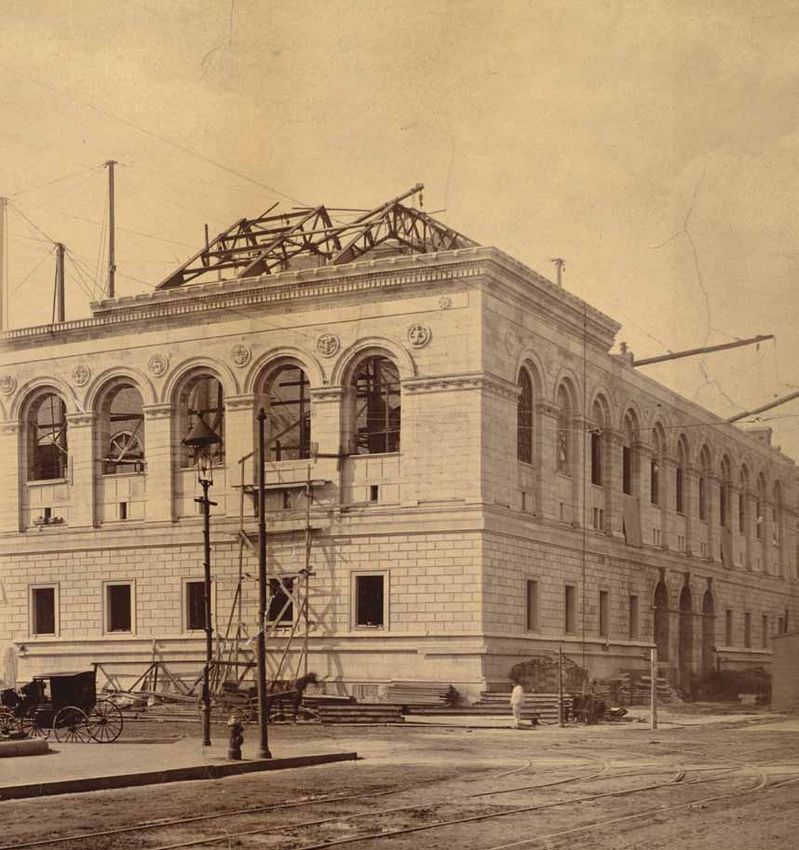
Community Gathering

Uma Murthy
Branch Librarian, Boston Public Library

When Uma Murthy first came to the U.S. from
India, she wanted a place where she could go and
feel part of the community. She found it at her
local branch of the Boston Public Library. Now,
as a Boston Public Library branch librarian, she is
delighted to offer that same sense of belonging
to others in her neighborhood.

The branch at which Uma serves is the Brighton
Branch, which is housed in a building that was
recently extensively renovated according to
U.S. Green Building Council’s LEED (Leadership
in Energy & Environmental Design) Commercial
Interiors guidelines. “People come to see it and
ask how we’re saving money,” Uma reports.
                                                      Community Gathering                                           Community Gathering
More than that, the building design invites the
community in. “It has big double doors and very
good lighting,” she says. “It’s very welcoming.”      Christine Schonhart                                           Ronaldo Rauseo-Ricupero
                                                      Director, Branch Libraries, Boston Public Library             Associate, Nixon Peabody LLP
The branch’s programs and resources also                                                                            Member, BPL Compass Committee and Strategic Planning Committee
draw people in—from books and technology
resources to active children’s and adults’
programming, including book clubs, English            To Christine Schonhart, the Boston Public Library             Growing up in East Boston, home of the first branch
as a Second Language classes, support groups,         branches are more than just books and programs.               library in America, Ronaldo Rauseo-Ricupero had
and more, depending on the current needs of           They are the very heart of the communities in which           a keen sense of the importance of branch libraries
the community.                                        they’re located. “I see the library as a safe and             to local neighborhoods. “The branches are uniquely
                                                      welcoming environment, a haven for kids and adults,”          Boston,” he says. “They double as community
The branch’s two librarians also often reach
                                                      she says. “Each branch is a beautiful place for people        centers—a place for reading groups, exhibitions,
beyond the building walls to drop off pamphlets
                                                      to bring their families, and it’s free, so it’s accessible    lectures, research, and community-based activities.
at local colleges, restaurants, and the YMCA.
                                                      throughout the city.”                                         They’re the lifeblood of the community.”
“We want to let our friends and neighbors know
we’re here,” says Uma.                                As the director of branch libraries, Christine juggles        Now an Associate with Nixon Peabody LLP,
                                                      a host of responsibilities, from hiring staff and             a Global 100 law firm, Ronaldo also served as
                                                      developing new programming to overseeing operations           a member of the Boston Public Library’s Strategic
                                                      and budgets. “It’s an interesting job every day,” she says.   Planning Committee. He sees this initiative as
                                                                                                                    a way for the library and local communities to build
                                                      To do her job, she also is mindful of the need for
                                                                                                                    a future together. “It’s a way to sit down and think
                                                      each local branch to evolve with its community.
                                                                                                                    about a systematic approach for where the library
                                                      “Neighborhoods change and grow more diverse,”
                                                                                                                    should be,” he says.
                                                      she points out. “I want to hire staff who know
                                                      the neighborhoods, and at the same time provide               He also recognizes that, in this era of limited
                                                      consistent, quality programming throughout the city.”         resources, creative strategies are needed.
                                                                                                                    “We need to keep changing to meet the needs
                                                      To keep her finger on the pulse of each neighborhood,
                                                                                                                    of the communities on a day-to-day basis,”
                                                      Christine makes customer feedback a priority, through
                                                                                                                    he says. “I’m more than honored to be a part
                                                      surveys, online forums, social media, and outreach
                                                                                                                    of it. The library is a special place.”
                                                      programs. “I want each branch to be seen as a fun,
                                                      engaging, welcoming, friendly space where people
                                                      can come no matter what’s going on in their lives,”
                                                      she says.

12                                                                                                                                                                                   13
strategic Plan
III) Special Collections
The bpl is committed to the ongoing development
and preservation of its distinctive special collections,
which provide citizens from all walks of life with
access to their common cultural heritage.
Outcomes
A Strengthen and grow collections that focus on
existing strengths and geographic specialties.
1 Prioritize the preservation of the City’s local history; identify, exhibit,
and promote appropriate collections
2 Create clear, structured evaluation process for acquisitions and gifts to
special collections
3 Develop local collections with focus on cultural heritage
4 Complete work on Collections of Distinction and focus financial and staff resources
on collection strengths and gaps in existing collections
5 Prioritize archiving, storing, and describing current collections over acquiring
new ones
B Special collections will be discoverable by users
in buildings and online.
1 Create 3-year plan to make items and collections discoverable in online catalog
including retrospective conversion and in-house cataloging
2 Create and maintain an online space for users to contribute their specialized
knowledge
3 Develop and maintain statewide digital repository and web portal in conjunction
with Digital Commonwealth
4 Create and support public Map Center space that provides service point for
bpl’s map collections
5 Consolidate off-site storage space to City of Boston Archives Center with
public access
C Develop a digitization plan.
1 Focus plan on Collections of Distinction
2 Begin development of a preservation plan for digitized material
3 Continue collaboration with the Associates of the Boston Public Library to
conserve and restore books, manuscripts, works of art, and historic documents
4 Continue to work with Map Center on conservation efforts of library’s
cartographic collection
15Special Collections
Chrissy Rissmeyer strategic Plan
IV) Center of Knowledge
Digital Projects Metadata Coordinator,
Boston Public Library
Even in library school, Chrissy Rissmeyer
was more attracted to the cataloging side
of library work than the research side. So
The bpl is a center of knowledge that serves researchers,
it was only natural that she would be drawn lifelong learners, and the intellectually curious through
to digitization—that is, converting printed
materials or film into electronic files. “Digital
its incomparable collections, digital resources, and access
libraries open these materials up to the wider to other scholarly networks.
world and make them accessible,” she raves.
“It’s part of the future of libraries.”
The Boston Public Library has two digital
imaging laboratories, one for books and
“anything bound,” as Chrissy describes it,
Outcomes
and the other for unbound materials such as
posters, maps, postcards, photographs and Special Collections
A Develop community-responsive and neighborhood-reflective
negatives, manuscripts for rare books, and
more. It is with the unbound materials that Sean Casey circulating collections.
Chrissy shines as the library’s Digital Projects Reference Librarian, Boston Public Library 1 Assess current circulating collections and develop plan for maximizing the use
Metadata Coordinator. (“It’s an evolving title,” of existing collections through weeding and collection development
she laughs.) 2 Leverage information from demographic study on diverse users, ongoing surveys,
“What I love most about digitizing is that it and industry best practices
The George Ticknor Collection of Spanish and
makes things available to people that they 3 Continue development of plan to float collections and centralize the selection process
Portuguese literature. A portion of Shakespeare’s
might not come across otherwise,” says Chrissy. 4 Purchase and use collection assessment tool to discover areas of neighborhood interest
first folio. The first printed dictionary in the West.
For example, photographer Leslie Jones’ 5 Increase access to eBooks and other digital content
The John Adams Library. One of the largest
humorous depiction of 20th-century Boston collections of anti-slavery manuscripts in
has inspired a lively online social engagement the world. These are just a few of the treasures B Develop and support a public training program that
that probably would not have occurred in of the Boston Public Library’s Rare Books & meets the needs of a wide range of communities.
a traditional library setting. Manuscripts Department. And they are in
1 Develop tools to determine community training needs
the care of reference librarian Sean Casey.
“We have some of the most fun in the building,” 2 Provide and enhance public training program to include technical, health, civic,
Chrissy says. “I love seeing people interacting Much of Sean’s day is spent answering emails or and financial literacy
with these collections and enjoying them. assisting patrons in the reading room. For him, 3 Develop creative ways to engage and support community skills sharing with
Sometimes it even inspires them to learn more every day brings new discoveries. “We have PhDs public trainers such as genealogy experts and more
about it.” and scholars coming here from all over the world
and we have people walking in off the street. C Support the research, scholastic, and literacy needs
Anybody can access these collections. It’s amazing.”
of the City and Commonwealth.
While many of these rare books and manuscripts 1 Expand adult literacy volunteer and mentor program
can only be handled at the library, digitization is 2 Highlight and leverage the knowledge and expertise of staff
increasingly making them available online— 3 Establish the library as the go-to place for basic computer skills learning
a phenomenon that is rescuing many precious 4 Work with Map Center to explore expansion of k-12 educational programming
documents. One such document is the Code Henry, 5 Increase collaboration with local schools, higher learning institutions, corporations,
which established the independent government and private organizations
of Haiti in 1812. When the earthquake destroyed
Haiti’s national library, the Boston Public Library
held the only known surviving copy. It has since
been digitized. “With digitization, formerly rare
things are now available to the world,” Sean says.
“It’s great.”
16 17literate,” he explains. “So from Gutenberg to
Shakespeare, this revolution in human awareness
embodied in reading and the book, and the changes
in the way the human mind works, the way
communication works, the way culture identifies itself—
all of that followed on a technological revolution in
Center of Knowledge
Center of Knowledge
how human beings read.”
Miriam Carrasquillo
To Jim, we’re going through a version of the very
same thing—perhaps with even more far-reaching
Mimi Jones Library Assistant, Boston Public Library
Vice President, Board of Directors, Member, Staff Compass Committee
consequences. “And libraries are at the dead center of
Friends of the Dudley Branch Library
this revolution, which is why it’s so urgent,” he says.
Member, City-Wide Friends
Recognizing that there is resistance to the evolution of the Boston Public Library “As soon as I started here, I knew it was my place,”
in digital technology, he warns against succumbing declares Miriam Carrasquillo. That was more
Member, BPL Compass Committee
to it. “The library can’t be defensive and afraid of new than 24 years ago, and Miriam has since served
and Strategic Planning Committee
technologies on one hand—that’s the perfect formula the library in a number of departments, including
for being left behind and discarded by culture—and it rare books, music, and now human resources.
can’t let go of its custodianship of the treasured literacy
Established in 1978, the Friends of the Dudley Over the years, she has observed a sharp increase
of the past,” he says. “It’s more important than ever
Branch Library—a nonprofit partnership between in the number of immigrants coming to Boston
that we remember what the book was and learn
Center of Knowledge from how human beings treasured it. The Boston the Dudley Branch of the Boston Public Library and from other countries. “Some don’t speak much
English at the beginning, and they don’t know what
James Carroll Public Library is doing a great job, in my opinion, of the local community—promotes an appreciation
for the arts, culture, and humanities. Fifteen-year programs are available,” she says. “They come to
maintaining the cultural tradition by keeping the book
member and now Vice President of the board the library as a place to find that information in this
Writer as the central symbol, but also understanding that
of directors, Mimi Jones is proud of the events country. It’s a place of knowledge. A place to start.”
Former Trustee, Boston Public Library service to the public is about far more than books.”
He adds that, “If there were no public libraries today, supported by the group. Another change she has seen taking place is
Chair, BPL Compass Committee
someone with the brilliant idea of establishing public Her passion for the library is not limited to the shift toward the internet. “I’ve seen how people
libraries would never get the funding. It would never the Dudley Branch, however. Mimi recognizes are using computers more than books now,” she
happen today. There’s no way government—local, the Boston Public Library as one system and has says. “Click click is what people are requiring more
“I love the library and had done a lot of work there state, or federal—would undertake to embark on taken an active role in planning for its future, as often, not encyclopedias and yellow pages.”
as a researcher and writer, going back to when I first the library system.” a member of both the Compass Committee and Miriam is proud that the Boston Public Library
came to Boston in 1969,” says James Carroll. “It was the Strategic Planning Committee. “I’ve been
Fortunately, he sees a brighter future ahead for is the oldest public library in the nation, and, as
such a vital center of civic life and intellectual life very pleased with the fact that there’s been
the Boston Public Library. As he puts it, “I think a member of the Staff Compass Committee, she is
for me already, and I knew from my own experience tremendous public discourse around the strategic
it’s the center of public service, the heart of the way dedicated to honoring that history while ensuring
how urgently important the library is for the citizens plan,” she says. “The goals and vision of the
city government responds to the needs of its citizens that the library continues moving forward, in step
of our Commonwealth.” So, when an unofficial previous documents like the Neighborhood
as they grow from infancy to old age, centrally and with technology. “Being part of an institution that
“writer’s seat” previously held by Doris Kearns Services Initiative dovetail nicely with the new,
in partnership with public schools and other helps the community—it’s a privilege,” she says.
Goodwin and David McCullough became open, system-wide strategy. It’s a privilege to be at
public institutions.”
Jim was happy to join the Boston Public Library’s the table to make a contribution and help
Board of Trustees. During his 11-year tenure, Jim For that reason, he predicts “more and more, not less shape things.”
chaired the Neighborhood Services Initiative and and less” public resources poured into libraries, enabling
the BPL Compass Committee. them to expand their services. In his vision, libraries Ultimately, to Mimi, what’s most important is
will serve as community centers and connectors. “Many to make sure the Boston Public Library system
“Culture changed more between 1450 and 1550, remains a window into the world of knowledge.
community members urgently require the services that
one might argue, than in any other century over “Beyond books, the Boston Public Library is a place
are available at the library, whether you’re talking about
the last several millennia. A vast population of where so much can be acquired, discovered, and
internet access so that people can go online and apply
Europe that had no relationship to reading, for learned,” she says.
for jobs or academic assistance for kids who are living
example, within a century became significantly
in homes where both parents are working late, and so
forth,” he says. “The library does it all.”
18 19strategic Plan
V) Children and teens
The bpl fosters the love of reading and skills in critical
and creative thinking among children and teens – from
early literacy through mature readership – by offering
a slate of services that provide academic support and
intellectual growth.
Outcomes
A Focus on providing early learning experiences.
1 Enhance early literacy programs, such as reading readiness, including age-appropriate,
multilingual collections
2 Collaborate with area organizations on early learning experiences
3 Explore expanded outreach to special institutions that serve children, such as
children’s hospitals, family centers, and more
B Provide scholastic support during out-of-school time.
1 Enhance and re-imagine the library’s Homework Assistance Program
to provide learning and critical thinking support to young people
2 Develop collections in support of academic excellence
C Invest in and support systemwide youth services.
1 Hire and support Youth Services Coordinator
2 Examine use of teen and children’s services across the system and determine
appropriate staffing
3 Provide positive and energetic programs for children and teens
4 Explore the possibility of volunteer opportunities or internship programs
to get youth interested in and involved with the library earlier
5 Provide training to public service staff on current understanding of
youth development to facilitate age-appropriate services
6 Adopt appropriate standards for services to youth and teens
7 Update and enhance technology provided for youth and teens
21strategic Plan
Children & Teens VI) Access and Innovation
Angela P. Bonds
Children’s Librarian, Boston Public Library
The bpl provides access to and training in innovative
technology, electronic resources, and digital information
Although she was 24 before she realized through its own holdings and its strategic position within
her true calling, Angela Bonds has always
loved the library. “It was librarians who got the wider world of knowledge.
me enthusiastic about the library,” she recalls.
Early in her career, when she worked in circulation
and shelving, she loved spending time in the teen
Children & Teens room of the Central Library in Copley Square
—“even when I wasn’t working,” she says.
John Nguyen “I liked watching the interactions of the kids,
and even shelving books in the children’s room
Outcomes
Senior, Excel High School was so much fun. I liked the hustle and bustle A Lead in digitization practices.
Member, Boston Public Library Teen Council and being asked for book suggestions.”
1 Provide leadership in the statewide digital library program in collaboration
Today, Angela is thrilled to be a new children’s with Digital Commonwealth
librarian for the Boston Public Library. “I want to 2 Increase participation in national digital initiatives
The Boston Public Library’s Teen Council was
make sure kids have a good time in the library,”
formed to help teenagers engage their peers
she says. To accomplish that, she hopes to find B Provide state-of the art public computing spaces.
in library activities. Comprised of eight to 20
“fun ways to connect” with young people, from
members, the Teen Council meets weekly to 1 Deliver a reliable and dynamic it infrastructure
story hours and showing movies based on books
plan programs such as talent shows, computer 2 Implement new technologies and train both staff and public in their use
to providing out-of-school time experiences.
workshops, video games, special-interest clubs,
and poetry slams for the teen room, a dedicated Serving a mix of age groups is one of the rewards
C Keep pace with evolving standards on in-person access to
space for teenagers at the Central Library in of her job. “Seeing kids go from babies to teens
Copley Square. is exciting,” she says. “Maybe someday one of public computing resources, and to online resources.
them will become a librarian.” 1 Improve ease-of-use of downloading electronic materials, audiobooks, and eBooks
“The teen room is a place where we can
2 Integrate electronic resources into the rest of the library’s collections regardless
hang out and have fun in a safe environment,”
of format
explains John Nguyen, a senior in high school
3 Utilize current software to support needs of users with learning challenges
in South Boston who is also a current member
4 Explore innovative ways to expand access to digitized material
of the Teen Council. John discovered the library
5 Modernize method of recommending external online resources for bpl website
only a couple of years ago, when a sophomore
project led him to the Central Library. He went
inside and “the lines connected,” as he puts it.
“I started enjoying reading books again.”
Currently, the Teen Council is spearheading
the making of a Hollywood-style movie, from
start to finish. “All the teens are involved in it,”
says John. The Teen Council is also giving him
an opportunity to practice public speaking—
a skill he’ll rely on as he pursues his dream
of becoming a community leader.
“The library is a fun place,” he says.
22 23Access & Innovation
Zamawa Arenas
Principal, ARGUS
Trustee, Boston Public Library
Member, BPL Strategic Planning Committee
A native of Venezuela, Zamawa Arenas spent part
of her childhood in Pittsburgh, Pennsylvania, where
she discovered that the library “mattered to me,”
as she puts it. So when she moved to Boston from
Venezuela to obtain a Master’s degree at Boston
University, “the first thing I did was get a BPL library
card,” she says. “It was a place to start connecting
with the city.”
Today, Zamawa is the Principal of ARGUS, a Boston-
Access & Innovation
based multidisciplinary communications company
Michael Colford specializing in multicultural markets. She has proven
herself a far-sighted strategist. For example, prior to
Director of Library Services, Boston Public Library ARGUS in 1996, she helped launch the first art-house
pay-per-view movie service on the internet—long
before the creation of Netflix and Hulu.
Michael Colford has many responsibilities at Zamawa brought those visionary skills to bear
the Boston Public Library, including overseeing on the Boston Public Library’s Strategic Planning
the BPL’s role as Library for the Commonwealth, Committee. “The library is doing a great job of being
a designation that signifies that the BPL provides forward-thinking,” she says. “Establishing itself as
services and access to its collections to people a venue for digital content is critical for the library to
across the entire state of Massachusetts. “We have expand and grow.”
a lot of very rich and deep collections, and access
To Zamawa, that focus on digitization benefits
If you ever sit down at one of the free computers at is a very important concern,” he says. “A big part
not only future generations of library users,
the Boston Public Library, you might not realize what of what libraries do is describe and catalog their
but also the city’s many different cultural groups.
it takes to keep those computers humming. And not materials and make them discoverable.”
“The demographics of the city have changed
just the computers available to the public, but also
For that reason, the library is focused on dramatically,” she points out. “We need to be mindful
all the administrative technology.
cataloging and digitizing material in order to of inclusiveness and serving people of all ages and
Among those charged with maintaining and updating make it accessible online. Michael is also taking backgrounds. To me, the most rewarding aspect of
the library system’s more than 600 computers plus the next logical step by providing technological my involvement with the library is seeing it alive with
copiers and printers is technical specialist Julio Chang, equipment and training programs that help to users and seeing how they enjoy
who has been with the library full-time for more than bridge the “digital divide” between the most going online.”
15 years. “We try to help patrons satisfy their needs,” techno-savvy and those who might not yet know
Julio says. “Technology keeps moving ahead, and we how to use a mouse.
try to implement these changes in a way that’s easy to
Does that mean that the physical library is
use.” That includes providing training for patrons and
becoming obsolete? On the contrary, according
staff alike.
to Michael. “The thing I think comes as a surprise
Julio points out that the library’s computers also offer to everyone is that people still want to come
special services to library patrons. “We get a lot of in to the library and be a part of a community,”
tourists who use the express terminal to print passes he says. “While people are saying everything’s
and find directions,” he cites as an example. Julio also moving online and we’re not going to need
Access & Innovation enjoys lending a hand directly to library users—such as the library building any more, that’s definitely
recently, when a woman had trouble printing a PDF file not true. People are coming to socialize, to go
Julio Chang due to a problem with the website she was accessing.
“I was able to go to my office, print off the document
to programs, to go to events, and to physically
interact with the collections. Libraries have
Technical Specialist, Boston Public Library
from my own computer, and hand it to her,” Julio says. a unique role in society. It’ll be very interesting
“It’s all about customer satisfaction.” to see how things grow and change.”
24 25strategic Plan
VII) Sustainable Organization
The bpl depends on sustainability of resources
through a judicious stewardship of finances; active
employee participation and professional development
in an environment of dignity and respect; and
partnerships that enrich services, expand outreach, and
leverage public investment through private support.
Outcomes
A Support a staff that is diverse and enriched through
professional development and training.
1 Create a culture of inclusion and accountability for staff
2 Develop and implement a customer service campaign
3 Commit to technical literacy for staff; create program to constantly upgrade
technology skills; develop librarians as teachers/librarians to help users with resources
B Be financially stable and fiscally transparent.
1 Explore new revenue streams to supplement services
2 Limit use of one-time funding sources to support operating budget or
to close budget gaps
3 Continue to post financial documents online
4 Continue to engage stakeholders in the budget development process
C Evaluate business practices and workflow
to optimize efficiency.
1 Introduce additional means of payment for fines and services, including
electronic check payment, debit cards, and credit cards
2 Improve fine receipt procedures and explore alternatives to current
pay-for-print system
3 Increase access to financial reporting for managers and supervisory personnel
4 Ensure adherence to internal controls, including the security of existing assets
5 Streamline workflow in collections, technology, and resource sharing areas
D Seek out and establish partnerships that enhance services.
1 Explore a new programming model where partner organizations complement
and enhance library services and expertise
2 Enhance volunteer and docent programs
3 Provide collaborative opportunities to foster connections/relationships with
local schools, businesses and improve coordination with city agencies
4 Work with other libraries and related organizations to contribute to the future
of librarianship
continued
27strategic Plan
VII) Sustainable Organization
The bpl depends on sustainability of resources Sustainable Organization
through a judicious stewardship of finances; active Byron Rushing
employee participation and professional development Massachusetts House of Representatives
in an environment of dignity and respect; and Trustee, Boston Public Library
partnerships that enrich services, expand outreach, and Chair, Strategic Planning Committee
leverage public investment through private support.
One of the things that makes Representative What it all comes down to is chiseled in granite
Outcomes continued Byron Rushing’s work for the library a pleasure above the doors of the Central Library in Copley
is the positive feedback he gets from its users. Square: Free to all. “You can’t take that sign down,”
“If you ask people what they don’t like about Byron points out. “And everyone, when they see
E Coordinate with affiliate partners and Friends
the library, there’s very, very little that people say. that, they know what that means. It means that
in order to develop and expand fundraising efforts, People love libraries. People use words like that,” all of the services of the library are available to
both large and small scale. he says. “In fact, most of the suggestions I hear everybody. And everyone knows to do that costs
1 Continue to work with Boston Public Library Foundation, Associates of are to make the library more accessible and keep money. That’s the remarkable thing about a public
the Boston Public Library, Norman B. Leventhal Map Center, and Friends it as up to date as possible.” institution—the public says we are actually willing
on prioritizing initiatives for fundraising purposes to pay money in order for it to be available to
That, of course, takes money, which prompts
2 Develop fund-raising strategy that yields a unified and systemwide approach everybody. We never want to get to a point where
Byron to reflect on the library’s role as a public
3 Be responsive to Friends groups and foster coordination of support a significant amount of tax dollars aren’t going to
institution. “I think one of the things that people
the library, because that’s a significant part of what
take for granted about libraries is one of the most
makes it public.”
F Create ongoing marketing campaigns and initiatives profound things about them, and that’s that they
that inform residents of programs and services. are public institutions,” he says. “We really have Still, Byron believes that it’s important to find ways
1 Implement updated visual identity and brand standards across system very few public institutions—schools, parks—and to add to the coffers with private funds. Those
2 Create a marketing and advertising budget, and increase marketing and there are not many public institutions we have public dollars need to be supplemented. The library,
communications capacity that serve so many and such a variety of people.” like other cultural institutions, has the ability to
3 Leverage information from demographic study on diverse users, ongoing surveys, raise money. A great future source of sustainability
“Think about it,” he says. “When you compare
and industry best practices is the people who use the library for free, who “love
libraries to parks, it’s sort of interesting, because
the library,” and would welcome an opportunity to
in most parks, you can’t go pick the flowers.
give back.
You’ll get arrested if you go to some parks and
say, ‘Oh what wonderful flowers, I’m going to Underlying all of Byron’s activities on behalf of
take some home.’ So think about how remarkable the Boston Public Library is a strong belief in
it is to be a library, because we let you borrow the library’s robust future. “I’m a library user, I love
the books and the DVDs and even computers. libraries, and I’ve had an ongoing relationship with
What is so remarkable about the libraries is that various branches over the years as I’ve done work
they are a real example of a public institution in Boston,” he says. “I think that the library has
and what it means to be a public institution.” an incredible constituency, which is bigger than
its users, because people like libraries even if they
buy books. The major resource the library has for
sustaining itself is all the people who use it and
love it.”
28 29strategic Plan
VIII) Fun
The bpl leads the way for people of all ages with
recreational reading and media, invigorating programs,
user-created content, and opportunities for discovery
in settings that are stimulating and engaging.
Outcomes
Sustainable Organization
JoshUA Kraft A Connect people to popular books, music, films,
and artwork – whether the materials are brand new
President & CEO, Boys & Girls Club of Boston
or simply new to select audiences.
Compass Committee Member, Boston Public Library
1 Use catalog to highlight acquisitions
2 Develop book discussion groups, online and in-person, coordinated with
He doesn’t live in Boston. And by his own author visits
description, he’s a “bookstore guy” more than 3 Rededicate efforts to support interactive formats through collections
a library user. Then why is the president and CEO and programming
of the Boys & Girls Club of Boston active with
the Boston Public Library? B Embrace role as a cultural and entertainment hub
To Josh Kraft, the answer is simple. “Education in the City of Boston.
is the great equalizer,” he says. “We all know that, 1 Embrace Central Library as a tourist destination, exhibition space, architectural
and libraries are free and open to anyone and attraction, and performance venue
everyone, which makes them a great equalizer, too.” 2 Embrace neighborhood branches as tourist destinations, exhibition spaces,
architectural attractions, and performance venues
The Boys & Girls Club of Boston serves
3 Add new programs; attract new users and audiences
approximately 14,000 children, ages six to 18–49%
of whom come from families with an income of
less than $27,000, according to Josh. “We try to do C Create an engaging and positive atmosphere
as much as we can for kids,” he says. “In order to for library users and staff.
sustain our ability, we partner with other nonprofits, 1 Hire and develop a staff that is fun, energetic, and joyous
be it the Boston Public Library or other education- 2 Embrace social media fully; accept user-created content and highlight
based organizations.” users’ contributions
That partnership can take many forms, such as 3 Encourage collective staff activities, such as rewards for best Halloween costume,
bringing kids into the library to view a recent recognition of holidays, family-focused gatherings, and other events
Civil War exhibition. And Josh envisions future
library-based programs that could help club D Showcase the library’s collections through vibrant,
members gain access to college and apply for
interactive exhibitions and programs.
financial aid. “Partnerships with other nonprofits will
help get more kids into the library,” says Josh. 1 Develop a multi-year plan for exhibitions that involves the Central Library
and branches
30 31Fun
Laura Irmscher
Collection Development Manager, Boston Public Library
Next time you walk into the Boston Public Library
and find exactly what you were looking for, think
of Laura Irmscher. As the library’s Collection
Development Manager, she and her staff are charged
with purchasing and managing everything from
books, DVDs, and CDs to electronic resources such
as eBooks and databases. It’s a daunting task,
considering that it includes not only the Central
Library in Copley Square, but all the branches.
It’s a challenge Laura embraces.
“The heart of the collections are the things people
are excited to use,” she says. To decide what those
things are, Laura relies on a number of sources.
Many suggestions come directly from users through
Fun email, the library website, Facebook, and Twitter.
She also works closely with the librarians at the
Gina Perille various branches. “We use a lot of data about what’s
being checked out to find out what the trends are,”
Chief Communications Officer, Boston Public Library she says. “In one branch, DVDs might need more
shelving. In another branch, it might be romance.”
One thing is certain. A lot has changed since librarians
As head of the communications office, Gina relied mainly on traditional book reviews to decide
is responsible for the Boston Public Library’s what to acquire. “We look at a lot of websites and
internal and external communications. “It is magazines,” Laura says. “We’re always taking the
always someone’s first time walking into the pulse of what people are interested in as a culture.”
Boston Public Library and interacting with us
online,” says Gina. “We have opportunities each
and every day to introduce ourselves to new
users and to demonstrate our relevance to
long-time library card holders.”
One of the ways Gina has expanded
the library’s conversation with the public is
through social media. “Communications tools
like Twitter, Facebook, and Foursquare provide
the opportunity to directly connect with
readers and visitors. It’s one of the elements
of my job that I enjoy the most. The Boston
Public Library has a lot of personality and
social media is a fun way to show it.”
Gina says that there is no shortage of content
to share or programs to highlight. “My colleagues
never cease to amaze me with their creative
programming and strong core services. Whether
it’s an exhibition of the library’s holdings,
a best-selling author visit, or a new literacy
experience for children, there are wonderful
things happening at the Boston Public Library
each day.”
32 33Planning Process
82
meetings
over 1,500
Participants
Phase 1: 2009 Phase 2: 2010 Phase 3: 2011
• Began in September • Began in September • Began in March
• Compass Committee and Staff Compass Committee established • Draft set of Principles for Excellence reintroduced to staff • Strategic Planning Committee established
• Community Conversations, staff meetings, Friends meetings, and the public for feedback • Staff Compass Committee re-engaged to examine community
community blog, staff blog, committee meetings • Public working sessions, focus groups, staff meetings, Compass input from earlier phases and update demographic info with
• Website www.bpl.org/compass and email address Committee meetings, Staff Compass Committee meetings, 2010 Census numbers
compass@bpl.org created online chat, and blog • Visual identity work continued; embedded into strategic
• Launch of visual identity research • Online survey launched, gathering nearly 16,000 responses planning process
• 1,000 individual comments from staff, affiliates, friends, • 10,000 postcards distributed to non-library locations • Roundtables held across the city and online – for staff and
and the community throughout the city to gather non-user survey responses for communities of users, including elected officials, affiliates,
• Linked to the Neighborhood Services Initiative and • Key-question paper survey distributed at the branches, friends, and more
the Central Library Services Initiative gathering an additional 1,000+ responses • Compass blog and compass@bpl.org email address utilized
• Strategic planning committee and staff generated first list of
Result: A draft set of Principles for Excellence was created. Result: Using all the additional community input, the bpl draft outcomes for the plan, based on approved principles
Later, in response to community requests, the bpl took a break revised the Principles for Excellence, which were approved by • Outcomes tested with community and new outcomes
from strategic planning during the annual budget process in the Boston Public Library Trustees on December 16, 2010. accepted and added at roundtable meeting that took place
early 2010. throughout spring and summer
• Draft outcomes shared with community for additional feedback
and review in the fall
15,632
Result: The full strategic plan – principles, outcomes,
and strategies – was approved by the Boston Public Library
Trustees on November 15, 2011.
online surveys
Completed 10,000 postcards
3 phases
distributed to non-library locations
throughout the city
34 35Community Comments
This word cloud was generated via Wordle.net using comments collected
from the public and staff during Phase ii. The cloud gives greater prominence
to the words that were used more frequently.
36 37Outreach Examples
This is a selection of tools utilized by the library to keep the community informed
about and engaged in the strategic planning process.
38 39Supporting Documents 40
Engagement Summary

     Phase I
     2009–2010 	FORUM	LOCATION	ATTENDEES
     November 16     Staff Committee          Johnson Trustees Room, Central Library                  10
     November 17     Trustee Meeting          Codman Square Branch                                    35
     December 7      Manager Forum            McKim Lower Level, Central Library                      30
     December 7      Staff Forum              Johnson Trustees Room, Central Library                  45
     December 7      Staff Forum              Fields Corner Branch                                     5
     December 8      Staff Forum              Parker Hill Branch                                      28
     December 8 Trustee Compass Committee     McKim Orientation Room,                                 14
     			                                      Central Library
     December 7–21   Staff Blog               Online                                   Over 150 comments
     January 1–15    Community Blog           Online                                   Over 160 comments
     January 5       Community Meeting        Mattapan Branch                                         32
     January 7       Community Meeting        Hyde Park Branch                                        29
     January 11      Community Meeting        South Boston Branch                                     19
     January 11      Staff Committee          Johnson Trustees Room, Central Library                   8
     January 25 Trustee Compass Committee     McKim Orientation Room,                                 14
     			                                      Central Library
     February 6      Friends Meeting          Jamaica Plain/Egleston, Junebug Café                     8
     February 6 Friends Meeting               Dudley, Grove Hall, Parker Hill,                         4
     			                                      Haley House Café
     February 8      Staff Committee          Johnson Trustees Room, Central Library                   8
     February 13 Friends Meeting              Mattapan/Roslindale/Hyde Park/                           8
     			                                      West Roxbury, West Roxbury Branch
     February 13 Friends Meeting              West End/Charlestown/South End/                          6
     			                                      North End/Tealuxe, Newbury Street
     February 20 Friends Meeting              Allston/Brighton,                                        7
     			                                      Friends President’s home
     February 23 Trustee Compass Committee    McKim Orientation Room,                                 14
     			                                      Central Library

42                                                                                                    43
Phase II Phase III
2010 FORUM LOCATION ATTENDEES 2011 FORUM LOCATION ATTENDEES
June 8 Staff Committee Johnson Trustees Room, Central Library 8 March 17 Strategic Planning Committee Meeting McKim Trustees Room, Central Library 8
September 14 Trustees Meeting McKim Orientation Room, 40 March 23 bpl Trustee Meeting Rabb Lecture Hall, Central Library 45
Central Library
March 29 Community Blog www.bpl.org/compass
October 1 - Online Survey www.bpl.org Over 15,500
March 29 compass@bpl.org dedicated email address
November 30 responses
April 12 Staff Meeting: Manager Forum Johnson Trustees Room, Central Library 15
October 12 - Branch Key survey cards All locations Over 1,000
November 30 responses April 13 Strategic Planning Committee Meeting Orientation Room, Central Library 12
October 23 bpl Compass Phase ii Launch Boston Room, Central Library 20 April 19 Staff Meeting: Johnson Trustees Room, Central Library 8
& Open House Resource Services Department
October 27 Community Meeting South End Branch 53 April 21 Roundtable West End Branch 15
October 30 Community Meeting Grove Hall Branch 10 May 4 Staff Meeting: Managers Orientation Room, Central Library 30
November 2 – Community Blog Online Over 30 May 5 Roundtable West Roxbury Branch 30
December 31 comments
May 7 Friends Appreciation Breakfast Central Library 49
November 3 Managers’ Forum McKim Lower Level, Central Library 29
May 10 bpl Trustee Meeting Rabb Lecture Hall, Central Library 35
November 3 Community Chat (online) www.bpl.org 18
May 10 Staff Meeting, Branch Librarians Conference Room 4, 5 22
November 4 Community Meeting Charlestown Branch 43 Central Library
November 5 Focus Group – Seniors City Hall 88 May 11 Staff Meeting Open to All Staff Orientation Room, Central Library 5
November 9 Staff Forum McKim Orientation Room, Central Library 12 May 11 Staff Meeting: McKim Trustees Ante Room, 8
Central Dept. Heads Central Library
November 9 Branch Librarians Forum McKim Conference Room, Central Library 14
May 12 Staff Meeting: Open to All Staff Orientation Room, Central Library 23
November 9 Focus Group – Teens City Hall 25
May 12 Staff Compass Committee McKim Trustees Ante Room, 6
November 9 Community Meeting Roslindale Branch 48
Central Library
November 10 Staff Forum McKim Orientation Room, Central Library 8
May 18 Staff Meeting: Library Assistants Mezzanine Conference Room, 31
November 10 Branch Librarians Forum McKim Conference Room, Central Library 13 Central Library
November 10 Central Department Heads Johnson Trustees Room, Central Library 6 May 25 Staff Meeting: Public Service Librarians Mezzanine Conference Room, 4
Central Library
November 10 Trustee Compass Committee Mezzanine Conference Room, 15
Central Library June 1 Staff Compass Committee Johnson Trustees Room, Central Library 6
November 13 Community Meeting Dudley Branch 28 June 1 Roundtable Adams Street Branch 17
November 16 Trustee Meeting Roslindale Branch 65 June 6 Roundtable Connolly Branch 20
November 17 Library Assistants Forum Conference Room 04, Central Library 22 June 9 Staff Meeting: Teen Librarians Teen Room, Central Library 7
December 6 Community Meeting McKim Orientation Room, Central Library 15 June 9 Roundtable Orientation Room, Central Library 9
December 7 Trustee Compass Committee McKim Orientation Room, Central Library 10 June 15 Strategic Planning Committee Meeting Orientation Room, Central Library 14
December 16 Trustee Meeting East Boston Branch 41 August 3 Staff Meeting: Managers Meeting McKim Conference Room, 24
Central Library
continued
44 45You can also read


