CONCERNED ABOUT ELEVATED PSA LEVELS? - Partner with your doctor in finding your recurrent prostate cancer - Axumin
←
→
Page content transcription
If your browser does not render page correctly, please read the page content below
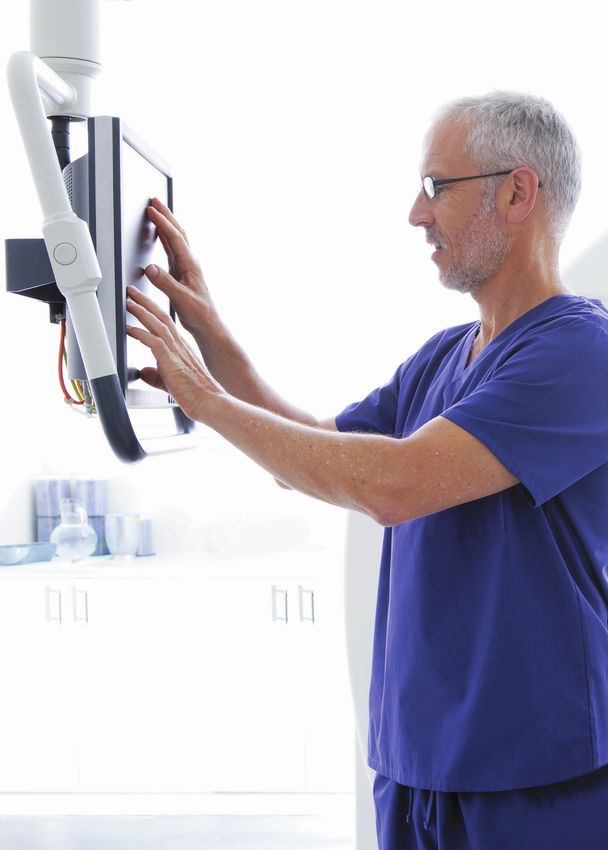
CONCERNED
ABOUT ELEVATED
PSA LEVELS?
Partner with your doctor
in finding your recurrent
prostate cancer
Learn about Axumin®
(fluciclovine F 18) injection

                                                        *This is not an actual patient.

What is Axumin?
Axumin® (fluciclovine F 18) injection is a diagnostic imaging agent (sometimes called
a radiotracer). Axumin is used along with a positron emission tomography (PET)
imaging scan for men who have had prior treatment for prostate cancer and now
have prostate specific antigen (PSA) levels that are elevated.
IMPORTANT SAFETY INFORMATION
What do I need to know about Axumin?
• As with all diagnostic imaging tests such as x-rays, bone scans and computed
   tomography (CT) scans, it is possible that the physician (a radiologist or nuclear
   medicine physician) that reviews your Axumin PET/CT scan can interpret your
   results incorrectly. This means that a negative Axumin PET/CT scan does not rule
   out that you have recurrent prostate cancer, and a positive Axumin PET/CT scan
   does not confirm that you have recurrent prostate cancer.
Please see Important Safety Information on back cover and the enclosed
Please see Important
Prescribing          Safety Information on back
             Information.
cover and the enclosed Prescribing Information.
Prostate cancer recurrence

Your prostate cancer may                                                        The meaning of
be back, but you’re not alone                                                   elevated PSA levels

Up to 40% to 50% of patients who have been diagnosed and                        After your initial prostate cancer treatment, you likely had regular
treated for prostate cancer have a recurrence within 10 years                   checkups with your doctor. These checkups usually include a blood
                                                                                test to monitor your prostate specific antigen, also called PSA.
Recurrent prostate cancer is when your cancer has come back after
you have had treatment like prostate surgery or radiation. It can also          If your blood test shows your PSA has gone up after surgery,
come back later after being treated with other medicines, including             radiation, or hormone therapy, your doctor will likely order
hormone therapy.                                                                another PSA test to confirm the results.

You are part of a team of shared decision makers in your prostate
cancer treatment, and it’s important to be informed about all
available options.
                                                                                                                         PSA Testing

                                                                         PSA Levels
“By learning about
my recurrent prostate
cancer and talking
with my urologist,                                                                       Diagnosis Treatment                                 Recurrence
I can be my own                                                                                                   Time
best advocate“
                                                                                If your PSA is still elevated after these tests, a recurrence of your
                                                                                prostate cancer is indicated. After this, imaging tests may be
                                                                                scheduled to locate where the prostate cancer has returned
                                                                                in your body.

                       *This is not an actual patient.

Please see Important Safety Information on back
cover and the enclosed Prescribing Information.
Localizing the disease

Challenges in locating
recurrent prostate cancer

For some patients, recurrent prostate cancer may still be in the
prostate if you have had radiation or in the area of the prostate if it
has been removed. But the disease can also spread to other parts of
the body, including lymph nodes, bones, or other tissues.

It is important to understand exactly where the recurrent prostate
cancer is located in your body so that you and your doctor can
choose the most appropriate treatment plan for you.

While routine imaging tests including bone scans, CT scans, and MRIs
can help provide some information about recurrent prostate cancer,
these tests have limitations. There are newer advanced imaging tests
available today. Talk to your doctor about which imaging tests are
right for you.

      “There are limitations with each of the
       current imaging tests used to locate
            recurrent prostate cancer“
Imaging tests that help your doctor in their decision making

                                          TYPE                                           PROS                                      CONS
                                                                            etects cancer if it’s spread to the
                                                                           D                                       But only useful at relatively high
  Bone scan – looks for different type of bone disease, including cancer   bone, a common site of recurrence…      PSA levels

                                                                            etects cancer in both bones
                                                                           D                                       But it may not detect smaller
  CT – creates cross-section images of tissues, bones, and organs          and soft tissue…                        tumors or lesions

                                                                            etects cancer in both bones
                                                                           D                                       But if you have metal anywhere inside
  MRI – uses magnets and radio waves to create a detailed image            and soft tissue...                      your body, like a pacemaker or artificial
                                                                                                                   joints, you can’t have this type of scan

Please see Important Safety Information on back
cover and the enclosed Prescribing Information.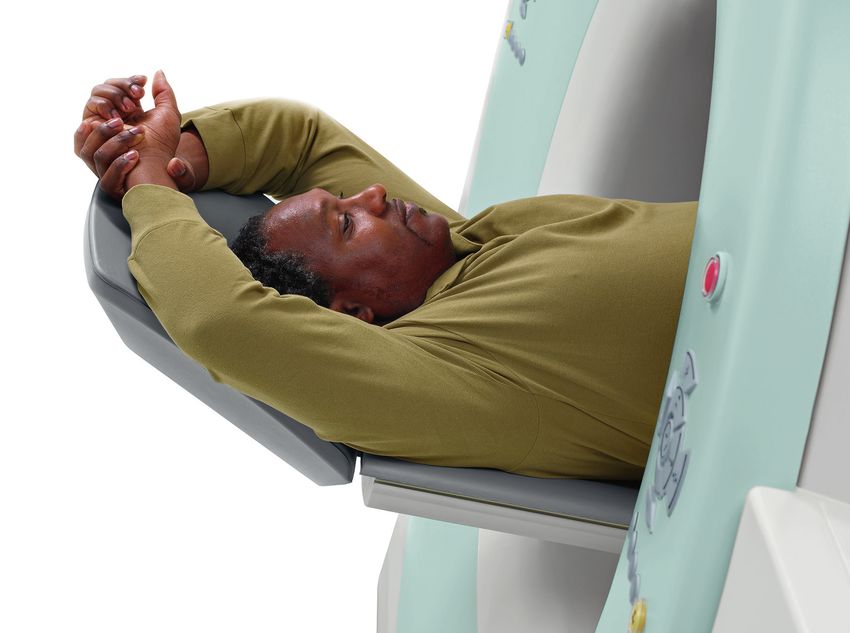
Introducing Axumin
                                                                               “An Axumin PET/CT scan may help
What an Axumin (fluciclovine F 18)  ®
                                                                               my doctor and me make important
PET/CT scan can tell your doctors                                                    treatment decisions“

Better detection can lead to more personalized treatment               What to expect when getting an Axumin scan

If you have recurrent prostate cancer, your doctor needs to get more   After the injection, Axumin travels into your cancer cells – including
accurate information about the location of your disease.               prostate cancer cells – and lights up in the PET/CT scan. An imaging
                                                                       physician will review your scan to find out where the recurrent prostate
An Axumin scan may help.                                               cancer is located. It is important to note that Axumin may not detect
                                                                       all recurrent prostate cancer, especially at very low PSA levels.
Axumin is an advanced diagnostic imaging agent (sometimes
called a radiotracer) used as part of a PET/CT scan
for men who have had prior treatment for prostate
cancer and now have PSA levels that are elevated.

                                                                           INJECT                       SCAN                    REVIEW
                                                                         3-5 MINUTES                TAKES AROUND              AND DISCUSS
                                                                       BEFORE THE SCAN              20-30 MINUTES             AT YOUR NEXT VISIT

                                                                       As with all diagnostic imaging tests, it is possible that a physician can
                                                                       interpret your Axumin PET/CT scan results incorrectly. This means that
                                                                       a negative Axumin PET/CT scan does not rule out a prostate cancer
                                                                       recurrence. Similarly, a positive Axumin PET/CT scan does not confirm
                                                                       a prostate cancer recurrence.

                                                                                                     See the attached appointment tracker
                                                                                                     and Axumin doctor discussion guide

Please see Important Safety Information on back
cover and the enclosed Prescribing Information.
Your Axumin scan

Making informed decisions                                                               Preparing for your
through greater knowledge                                                               PET/CT scan with Axumin

The more information your doctor has about your recurrent
prostate cancer, the more personalized your treatment
plan can be.                                                                            Day before scan                      Day of scan

Ask your doctor if an Axumin® (fluciclovine F 18) scan is                                                                                 Don’t eat or drink
                                                                                                    Don’t exercise within
                                                                                                                                          anything for 4 hours
right for you. Your healthcare team can use the results from                                        the 24-hour period
                                                                                                                                          before your scan other
                                                                                                    before your Axumin
the Axumin scan, along with other tests, to help them find                                          PET/CT scan.
                                                                                                                                          than sips of water for
                                                                                                                                          taking medications.
your recurrent prostate cancer and create a personalized
treatment plan for your cancer.                                                                                                           Empty your bladder
                                                                                                                                          30 to 60 minutes before
                                                                                                                                          you receive Axumin.
                                                                                                                                          Avoid further urination
                                                                                                                                          until after the scan is over.

                                                                                        Preparing for your PET/CT scan
                                                                                        • You’ll get an IV of saline (salt water) before your Axumin injection
                                                                                          to check if the IV has been properly inserted and after Axumin to
                                                                                          make sure you received the full dose
                                                                                        • The scan is painless and lasts 20-30 minutes. You will have to lie
                                                                                          as still as possible on the scanner bed, but you can breathe
                                                                                          normally. If you feel any discomfort, be sure to tell a staff
                                                                                          member immediately
                                                                                        • The bed will move slowly through the PET/CT scanner opening.
                                                                                          A nurse or technologist will be there to assist you or provide any
                                                                                          additional instructions
                                                                                        In clinical trials that looked at the safety of Axumin, reported side
                                                                                        effects were uncommon. These included redness and pain at the
                                                                                        injection site, and an unusual taste in the mouth.

PET/CT scan
Image courtesy of Siemens Healthineers                *This is not an actual patient.

Please see Important Safety Information on back
cover and the enclosed Prescribing Information.
Notes

                                                  Talk with your doctor about                  Having an Axumin PET/CT scan can
                                                                                               provide you and your doctor with
                                                  Axumin® (fluciclovine F 18)                  important information about your
                                                                                               recurrent prostate cancer.
                                                                                               The following questions and concerns
                                                                                               can help guide your conversation with
                                                                                               your doctor at your next visit.

                                                                                                  Questions about an Axumin scan:

                                                                                                 My PSA levels are rising but my
                                                                                                  bone scan is negative. Can an
                                                                                                  Axumin scan tell my doctor where
                                                                                                  it is coming from?

                                                                                                 Now that my prostate cancer is back,
                                                                                                  what are my treatment choices?

                                                                                                       General discussion topics
                                                                                                           for your doctor:

                                                                                                 I am interested in a personalized
                                                                                                  treatment plan.

                                                                                                 I am interested in treating my
                                                                                                   recurrent prostate cancer
                                                                                                   aggressively.

                                                                                                  Being healthy for as long as
                                                                                                  possible is very important to me.

                                                                                                 Avoiding hormone therapy for as
                                                                                                  long as possible is very important
                                                                                                  to me.

                                                                                                       Tear off and bring with you
                                                                                                        to your next appointment.

Please see Important Safety Information on back                                 Please see Important Safety Information on back
cover and the enclosed Prescribing Information.                                 cover and the enclosed Prescribing Information.
What is Axumin?
Axumin® (fluciclovine F 18) injection is a diagnostic imaging agent
(sometimes called a radiotracer). Axumin is used along with a positron
emission tomography (PET) imaging scan for men who have had prior
YOUR SCHEDULED AXUMIN SCAN treatment for prostate cancer and now have prostate specific antigen
Date: (PSA) levels that are elevated.
IMPORTANT SAFETY INFORMATION
Time: What do I need to know about Axumin?
• As with all diagnostic imaging tests such as x-rays, bone scans and
Imaging computed tomography (CT) scans, it is possible that the physician
center: (a radiologist or nuclear medicine physician) that reviews your
Axumin PET/CT scan can interpret your results incorrectly. This
Address: means that a negative Axumin PET/CT scan does not rule out that
you have recurrent prostate cancer, and a positive Axumin PET/CT
scan does not confirm that you have recurrent prostate cancer.
Phone • How well Axumin works seems to be affected by PSA levels. As PSA
levels go up, an Axumin PET/CT scan is better able to identify
number: recurrent prostate cancer.
•S erious reactions including anaphylaxis, a severe, potentially life-
Day before scan threatening allergic reaction may occur in patients who receive Axumin.
• Axumin adds to your long-term overall radiation exposure, which
can lead to an increased risk of cancer.
Don’t exercise within the 24-hour period
before your Axumin PET/CT scan. What are the possible side effects of Axumin?
Most commonly reported adverse reactions are:
• Injection site pain
Day of scan • Injection site redness
• Unusual taste in the mouth
Don’t eat or drink anything for 4 hours Tell your doctor if you have any side effect that bothers you or does
before your scan other than sips of water not go away.
for taking medications.
These are not all the possible side effects
of Axumin. For more information, ask
Empty your bladder 30 to 60 minutes your doctor or pharmacist. Call your
before you receive Axumin. Avoid further
urination until after the scan is over.
doctor for medical advice about side
effects. You may report side effects to
FDA at 1-800-FDA-1088.
FOLLOW-UP VISIT Visit www.MyAxuminScan.com for
more information.
Date:
Time:
A Bracco Company
©2021 Blue Earth Diagnostics, Inc. All rights reserved. BEDPRC21-0049 5/21
Visit www.MyAxuminScan.com Order No. A91MI-10533-C1-7600 | Printed in the USA | MI-5232
for more information.
Please see enclosed full Prescribing Information.----------------------DOSAGE FORMS AND STRENGTHS---------------------
HIGHLIGHTS OF PRESCRIBING INFORMATION Injection: clear, colorless solution in a 30 mL or 50 mL multiple-dose vial
These highlights do not include all the information needed to use containing 335 MBq/mL to 8,200 MBq/mL (9 mCi/mL to 221 mCi/mL)
AXUMIN safely and effectively. See full prescribing information for fluciclovine F 18 at calibration time and date (3).
AXUMIN.
-----------------------------CONTRAINDICATIONS--------------------------------
AXUMIN (fluciclovine F 18) injection, for intravenous use
None (4)
Initial U.S. Approval: 2016
------------------------WARNINGS AND PRECAUTIONS-----------------------
-----------------------------INDICATIONS AND USAGE--------------------------
• Image interpretation errors can occur with Axumin imaging (5.1).
Axumin is a radioactive diagnostic agent indicated for positron emission • Radiation risk: Axumin contributes to a patient’s long-term cumulative
tomography (PET) imaging in men with suspected prostate cancer recurrence radiation exposure. Ensure safe handling to protect patients and health care
based on elevated blood prostate specific antigen (PSA) levels following prior workers from unintentional radiation exposure (2.1, 5.3).
treatment (1).
-------------------------------ADVERSE REACTIONS------------------------------
--------------------------DOSAGE AND ADMINISTRATION-------------------- Most commonly reported adverse reactions are injection site pain, erythema,
• Use appropriate radiation safety handling measures (2.1). and dysgeusia (6.1).
• Aseptically withdraw Axumin from its container and administer 370 MBq
(10 mCi) as a bolus intravenous injection. (2.2). To report SUSPECTED ADVERSE REACTIONS, contact Blue Earth
• Initiate imaging 3 minutes to 5 minutes after administration. Scanning Diagnostics, Ltd at 1-855-AXUMIN1 (1-855-298-6461) or FDA at 1-800-
should start from mid-thigh and proceed to base of skull, with a total scan FDA-1088 or www.fda.gov/medwatch.
time of approximately 20 minutes to 30 minutes (2.4).
• The (radiation absorbed) effective dose associated with 370 MBq (10 mCi) See 17 for PATIENT COUNSELING INFORMATION
of injected activity of Axumin is approximately 8 mSv (0.8 rem) in an adult Revised: 5/2021
(2.6).
FULL PRESCRIBING INFORMATION: CONTENTS*
1 INDICATIONS AND USAGE 10 OVERDOSAGE
2 DOSAGE AND ADMINISTRATION 11 DESCRIPTION
2.1 Radiation Safety - Drug Handling 11.1 Chemical Characteristics
2.2 Recommended Dose and Administration Instructions 11.2 Physical Characteristics
2.3 Patient Preparation Prior to PET Imaging 11.3 External Radiation
2.4 Image Acquisition Guidelines 12 CLINICAL PHARMACOLOGY
2.5 Image Display and Interpretation 12.1 Mechanism of action
2.6 Radiation Dosimetry 12.2 Pharmacodynamics
3 DOSAGE FORMS AND STRENGTHS 12.3 Pharmacokinetics
4 CONTRAINDICATIONS 13 NONCLINICAL TOXICOLOGY
5 WARNINGS AND PRECAUTIONS 13.1 Carcinogenesis, Mutagenesis, Impairment of Fertility
5.1 Risk for Image Misinterpretation 14 CLINICAL STUDIES
5.2 Hypersensitivity Reactions 16 HOW SUPPLIED/STORAGE AND HANDLING
5.3 Radiation Risks 16.1 How Supplied
6 ADVERSE REACTIONS 16.2 Storage and Handling
Clinical Trials Experience 17 PATIENT COUNSELING INFORMATION
8 USE IN SPECIFIC POPULATIONS
8.1 Pregnancy
8.2 Lactation *Sections or subsections omitted from the full prescribing information are not
8.3 Pediatric Use listed.
8.4 Geriatric Use
Page 1 of 9FULL PRESCRIBING INFORMATION
1 INDICATIONS AND USAGE
Axumin is indicated for positron emission tomography (PET) in men with suspected prostate cancer
recurrence based on elevated blood prostate specific antigen (PSA) levels following prior treatment.
2 DOSAGE AND ADMINISTRATION
2.1 Radiation Safety - Drug Handling
Axumin is a radioactive drug and should be handled with appropriate safety measures to minimize
radiation exposure during administration [see Warnings and Precautions (5.3)]. Use waterproof gloves
and effective shielding, including syringe shields, when handling and administering Axumin.
2.2 Recommended Dose and Administration Instructions
The recommended dose is 370 MBq (10 mCi) administered as an intravenous bolus injection.
• Inspect Axumin visually for particulate matter and discoloration before administration. Do not use
the drug if the solution contains particulate matter or is discolored.
• Use aseptic technique and radiation shielding when withdrawing and administering Axumin.
• Calculate the necessary volume to administer based on calibration time and date, using a suitably
calibrated instrument. The recommended maximum volume of injection of undiluted Axumin is
5mL.
• Axumin may be diluted with 0.9% Sodium Chloride Injection, USP.
• After the Axumin injection, administer an intravenous flush of sterile 0.9% Sodium Chloride
Injection, USP to ensure full delivery of the dose.
• Dispose of any unused drug in a safe manner in compliance with applicable regulations.
2.3 Patient Preparation Prior to PET Imaging
• Advise the patient to avoid any significant exercise for at least one day prior to PET imaging.
• Advise patients not to eat or drink for at least 4 hours (other than sips of water for taking medications)
prior to administration of Axumin.
• Advise patients to void approximately 30 minutes to 60 minutes prior to administration of Axumin
and then refrain from voiding until after the scan has been completed
2.4 Image Acquisition Guidelines
Position the patient supine with arms above the head. Begin PET scanning 3 minutes to 5 minutes after
completion of the Axumin injection. It is recommended that image acquisition should start from mid-
thigh and proceed to the base of the skull. Typical total scan time is between 20 minutes to 30 minutes.
2.5 Image Display and Interpretation
Localization of prostate cancer recurrence in sites typical for prostate cancer recurrence is based on
fluciclovine F 18 uptake in comparison with tissue background. For small lesions (less than 1cm in
diameter) focal uptake greater than blood pool should be considered suspicious for prostate cancer
recurrence. For larger lesions, uptake equal to or greater than bone marrow is considered suspicious for
prostate cancer recurrence.
Page 2 of 92.6 Radiation Dosimetry
The radiation absorbed doses estimated for adult patients following intravenous injection of Axumin are
shown in Table 1. Values were calculated from human biodistribution data using OLINDA/EXM (Organ
Level Internal Dose Assessment/Exponential Modeling) software.
The (radiation absorbed) effective dose resulting from the administration of the recommended activity of
370 MBq of Axumin is 8 mSv. For an administered activity of 370 MBq (10 mCi), the highest-
magnitude radiation doses are delivered to the pancreas, cardiac wall, and uterine wall: 38 mGy, 19 mGy,
and 17 mGy, respectively. If a CT scan is simultaneously performed as part of the PET procedure,
exposure to ionizing radiation will increase in an amount dependent on the settings used in the CT
acquisition.
Table 1: Estimated Radiation Absorbed Doses in Various Organs/Tissues in Adults who Received
Axumin
Mean Absorbed Dose per Unit Administered Activity
Organ/Tissue
(microGy/MBq)
Adrenal glands 16
Brain 9
Breasts 14
Gallbladder wall 17
Lower large intestine wall 12
Small intestine wall 13
Stomach wall 14
Upper large intestine wall 13
Heart wall 52
Kidneys 14
Liver 33
Lungs 34
Muscle 11
Ovaries 13
Pancreas 102
Red bone marrow 25
Osteogenic cells 23
Skin 8
Spleen 24
Testes 17
Thymus gland 12
Thyroid 10
Urinary bladder wall 25
Uterus 45
Total body 13
Effective dose 22 (microSv/MBq)
Page 3 of 93 DOSAGE FORMS AND STRENGTHS
Injection: supplied as a clear, colorless solution in a 30 mL or 50 mL multiple-dose vial containing
335 MBq/mL to 8,200 MBq/mL (9 mCi/mL to 221 mCi/mL) fluciclovine F 18 at calibration time and
date.
4 CONTRAINDICATIONS
None
5 WARNINGS AND PRECAUTIONS
5.1 Risk for Image Misinterpretation
Image interpretation errors can occur with Axumin PET imaging. A negative image does not rule out
the presence of recurrent prostate cancer and a positive image does not confirm the presence of recurrent
prostate cancer. The performance of Axumin seems to be affected by PSA levels [See Clinical Studies
(14)]. Fluciclovine F 18 uptake is not specific for prostate cancer and may occur with other types of
cancer and benign prostatic hypertrophy in primary prostate cancer. Clinical correlation, which may
include histopathological evaluation of the suspected recurrence site, is recommended.
5.2 Hypersensitivity Reactions
Hypersensitivity reactions including anaphylaxis may occur in patients who receive Axumin.
Emergency resuscitation equipment and personnel should be immediately available.
5.3 Radiation Risks
Axumin use contributes to a patient’s overall long-term cumulative radiation exposure. Long-term
cumulative radiation exposure is associated with an increased risk for cancer. Ensure safe handling to
minimize radiation exposure to the patient and health care providers [see Dosage and Administration
(2.1)].
6 ADVERSE REACTIONS
Clinical Trials Experience
Because clinical trials are conducted under widely varying conditions, adverse reaction rates observed in
the clinical trials of a drug cannot be directly compared to rates in the clinical trials of another drug and
may not reflect the rates observed in practice. The clinical trial database for Axumin includes data from
877 subjects including 797 males diagnosed with prostate cancer. Most patients received a single
administration of Axumin, a small number of subjects (n = 50) received up to five administrations of the
drug. The mean administered activity was 370 MBq (range, 163 MBq to 485 MBq).
Adverse reactions were reported in ≤1% of subjects during clinical studies with Axumin. The most
common adverse reactions were injection site pain, injection site erythema and dysgeusia.
8 USE IN SPECIFIC POPULATIONS
8.1 Pregnancy
Risk Summary
Axumin is not indicated for use in females and there is no information on the risk of adverse development
outcomes in pregnant women or animals with the use of fluciclovine F 18.
Page 4 of 98.2 Lactation
Risk Summary
Axumin is not indicated for use in females and there is no information of the presence of fluciclovine F
18 in human milk.
8.3 Pediatric Use
Safety and effectiveness have not been established in pediatric patients.
8.4 Geriatric Use
Of the total number of patients in clinical studies of Axumin, the average age was 66 years with a range
of 21 to 90 years. No overall differences in safety or effectiveness were observed between older subjects
and younger subjects.
10 OVERDOSAGE
In case of overdose of Axumin, encourage patients to maintain hydration and to void frequently to
minimize radiation exposure.
11 DESCRIPTION
11.1 Chemical Characteristics
Axumin contains the fluorine 18 (F 18) labeled synthetic amino acid analog fluciclovine. Fluciclovine F
18 is a radioactive diagnostic agent used with PET imaging. Chemically, fluciclovine F 18 is (1r, 3r)-1-
amino-3[18F]fluorocyclobutane-1-carboxylic acid. The molecular weight is 132.1 and the structural
formula is:
H NH2
18
F COOH
Axumin is a sterile, non-pyrogenic, clear, colorless, hyperosmolal (approximately 500 mOsm/kg to
540 mOsm/kg) injection for intravenous use. Each milliliter contains up to 2 micrograms of fluciclovine,
335 MBq to 8,200 MBq (9 mCi to 221 mCi) fluciclovine F 18 at calibration time and date, and 20 mg
trisodium citrate in water for injection. The solution also contains hydrochloric acid, sodium hydroxide
and has a pH between 4 and 6.
11.2 Physical Characteristics
Fluorine 18 (F 18) is a cyclotron produced radionuclide that decays by positron emission (ß+ decay,
96.7%) and orbital electron capture (3.3%) to stable oxygen 18 with a physical half-life of 109.7 minutes.
The positron can undergo annihilation with an electron to produce two gamma rays; the energy of each
gamma ray is 511 keV (Table 2).
Page 5 of 9Table 2: Principal Radiation Produced from Decay of Fluorine 18 Radiation
Energy (keV) Abundance (%)
Positron 249.8 96.7
Gamma 511.0 193.5
11.3 External Radiation
The point source air-kerma coefficient for F 18 is 3.75 x 10⁻¹⁷ Gy m2/(Bq s). The first half-value thickness
of lead (Pb) for F 18 gamma rays is approximately 6 mm. The relative reduction of radiation emitted by F
18 that results from various thicknesses of lead shielding is shown in Table 3. The use of 8 cm of Pb will
decrease the radiation transmission (i.e., exposure) by a factor of about 10,000.
Table 3: Radiation Attenuation of 511 keV Gamma Rays by Lead Shielding
Shield Thickness cm of Lead (Pb) Coefficient of Attenuation
0.6 0.5
2 0.1
4 0.01
6 0.001
8 0.0001
12 CLINICAL PHARMACOLOGY
12.1 Mechanism of action
Fluciclovine F 18 is a synthetic amino acid transported across mammalian cell membranes by amino acid
transporters, such as LAT-1 and ASCT2, which are upregulated in prostate cancer cells. Fluciclovine F
18 is taken up to a greater extent in prostate cancer cells compared with surrounding normal tissues.
12.2 Pharmacodynamics
Following intravenous administration, the tumor-to-normal tissue contrast is highest between 4 and 10
minutes after injection, with a 61% reduction in mean tumor uptake at 90 minutes after injection.
12.3 Pharmacokinetics
Distribution
Following intravenous administration, fluciclovine F 18 distributes to the liver (14% of administered
activity), pancreas (3%), lung (7%), red bone marrow (12%) and myocardium (4%). With increasing
time, fluciclovine F 18 distributes to skeletal muscle.
Excretion
Across the first four hours post-injection, 3% of administered radioactivity was excreted in the urine.
Across the first 24 hours post-injection, 5% of administered radioactivity was excreted in the urine.
13 NONCLINICAL TOXICOLOGY
13.1 Carcinogenesis, Mutagenesis, Impairment of Fertility
Carcinogenesis
No long term studies in animals have been performed to evaluate the carcinogenic potential of
fluciclovine.
Page 6 of 9Mutagenesis
Fluciclovine was not mutagenic in vitro in reverse mutation assay in bacterial cells and in chromosome
aberration test in cultured mammalian cells, and was negative in an in vivo clastogenicity assay in rats
after intravenous injection of doses up to 43 mcg/kg. However, fluciclovine F 18 has the potential to be
mutagenic because of the F 18 radioisotope.
Impairment of Fertility
No studies in animals have been performed to evaluate potential impairment of fertility in males or
females.
14 CLINICAL STUDIES
The safety and efficacy of Axumin were evaluated in two studies (Study 1 and Study 2) in men with
suspected recurrence of prostate cancer based on rising PSA levels following radical prostatectomy and/or
radiotherapy.
Study 1 evaluated 105 Axumin scans in comparison to histopathology obtained by biopsy of the prostate
bed and biopsies of lesions suspicious by imaging. PET/CT imaging generally included the abdomen and
pelvic regions. The Axumin images were originally read by on-site readers. The images were
subsequently read by three blinded independent readers. Table 4 shows the performance of Axumin in the
detection of recurrence in each patient scan and, specifically, within the prostatic bed and extra-prostatic
regions, respectively. The results of the independent read were generally consistent with one another and
confirmed the results of the on-site reads.
Page 7 of 9Table 4: Performance of Axumin in Patients with Biochemically Suspected Recurrent
Prostate Cancer, at the Patient Level and at the Prostate Bed and Extraprostatic
Region Levels
Reader 1 Reader 2 Reader 3
Patient N = 104 N = 105 N = 99
True Positive 75 72 63
False Positive 24 23 13
True Negative 5 7 15
False Negative 0 3 8
Prostate Bed N = 98 N = 97 N = 96
True Positive 58 56 47
False Positive 29 26 15
True Negative 10 12 24
False Negative 1 3 10
Extraprostatic N = 28 N = 28 N = 25
True Positive 25 26 22
False Positive 2 2 2
True Negative 0 0 0
False Negative 1 0 1
N = number of patient scans evaluated
The detection rate of Axumin seems to be affected by PSA levels [see Warnings and Precautions (5.1)].
In general, patients with negative scans had lower PSA values than those with positive scans. The
detection rate (number with positive scans/total scanned) for patients with a PSA value of less than or
equal to 1.78 ng/mL (1st PSA quartile) was 15/25, of which 11 were histologically confirmed as positive.
In the remaining three PSA quartiles, the detection rate was 71/74, of which 58 were histologically
confirmed. Among the 25 patients in the first PSA quartile, there were 4 false positive scans and 1 false
negative scan. For the 74 patients with PSA levels greater than1.78 ng/mL, there were 13 false positive
scans and no false negative scans.
Study 2 evaluated the concordance between 96 Axumin and C11 choline scans in patients with median
PSA value of 1.44 ng/mL (interquartile range = 0.78 ng/mL to 2.8 ng/mL). The C 11 choline scans were
read by on-site readers. The Axumin scans were read by the same three blinded independent readers used
for Study 1. The agreement values between the Axumin and C11 choline reads were 61%, 67% and 77%,
respectively.
Page 8 of 916 HOW SUPPLIED/STORAGE AND HANDLING
16.1 How Supplied
Axumin is supplied as a clear, colorless injection in a 30 mL or 50 mL multiple-dose glass vial containing
approximately 26 mL solution of 335 MBq/mL to 8,200 MBq/mL (9 mCi/mL to 221 mCi/mL)
fluciclovine F 18 at calibration time and date.
30 mL sterile multiple-dose vial: NDC 69932-001-30
50 mL sterile multiple-dose vial: NDC 69932-001-50
16.2 Storage and Handling
Store Axumin at controlled room temperature (USP) 20°C to 25°C (68°F to 77°F). Axumin does not
contain a preservative. Store Axumin within the original container in radiation shielding. Do not use
Axumin more than 10 hours after end of synthesis and dispose of in accordance with institutional
guidelines.
This preparation is approved for use by persons under license by the Nuclear Regulatory Commission or
the relevant regulatory authority of an Agreement State.
17 PATIENT COUNSELING INFORMATION
• Instruct patients to avoid significant exercise for at least a day before the PET scan.
• Instruct patients not to eat or drink for at least 4 hours before the PET scan (other than sips of
water for taking medications).
• Instruct patients to try to urinate approximately 30 minutes to 60 minutes prior to planned start
time of the PET scan and to avoid further urination until after the scan has been completed.
Marketed by Blue Earth Diagnostics Ltd. Oxford, UK OX4 4GA
Axumin® is a registered trademark of Blue Earth Diagnostics Ltd.
© 2021 Blue Earth Diagnostics Ltd – all rights reserved.
Page 9 of 9You can also read


