Conference 2018 Friday July 27th - Wodonga Federation of Government Schools
←
→
Page content transcription
If your browser does not render page correctly, please read the page content below
Conference 2018 Friday July 27th
Contents
    Contents
    Welcome				                     		                							                                3

    General Information												4

    Conference Schedule											5

    Venue														6 - 7

    Workshop One - Creating Assessments for Teaching and Learning Using SOLO Taxonomy        8

    Workshop Two - Mathematics Learning Pathways & Assessment					9

    Workshop Three - The Communication Playground 							10

    Workshop Four - Making Space for Learning – Trauma Informed Practice for Schools		       11

    Workshop Five - Differentiating the Curriculum								12

    Workshop Six - Digital Technology									13

    Workshop Seven - Writing											14

    About the Federation											15

    Federation Highlights 2017											16

    Federation Structure 											17

    Notes														18 - 19

    Conference Team

    Caryle York                                    Haylee Penny
    Melrose Primary School                         Wodonga Senior Secondary College
    James Harris                                   Linda Wright
    Wodonga Primary School                         Wodonga South Primary School
    Luke Wakefield                                 Mellisa Long
    Wodonga Middle Years College                   Wodonga Federation of Government Schools

    Acknowledgement of Country

    Wodonga Federation of Government Schools acknowledges the traditional owners of this land and
    pay our respects to Elders, both past, present and future, for they hold the memories, the
    Traditions and the culture of Aboriginal and Torres Strait Islander people.

2
Welcome
It gives me great pleasure to welcome you to the 2nd Wodonga Federation of Government
Schools’ conference. What a success last year’s conference was!! This year’s program has been
designed for you to delve deeper into areas relevant to your school and the Federation with high
quality facilitators.

We have a diverse range of education consultants, as well as, facilitators from The Australian
Childhood Foundation, Corwin, Australian Curriculum Assessment and Reporting Authority this
year. You will have the opportunity to engage with the facilitators and your colleagues during the
all-day interactive workshops and breaks.

We are delighted that all the Federation Schools will be represented and over 430 staff attending.
Opportunities like this conference certainly strengthen the collaborative and supportive culture of
the Federation.

At the conclusion of this conference booklet you can find a snapshot of the 2017 achievements for
The Federation. I thank you for the work you do on a daily basis that contributes to this and
ultimately benefits children and young people in Wodonga.

Please make the most of the networking and professional learning that this year’s conference
offers. We want you to return to your school inspired and energised, knowing that you are part
of an education community that has the common objectives for children and young people and
shares the load.

We remain committed to working with you to ensure that all students within The Federation
benefit from the highest standards of learning and teaching and are inspired, supported and
ethically prepared to fulfil their potential.

On behalf of the Board I thank you and wish you well for the conference.

Guinever Threlkeld
Wodonga Federation of Government Schools Board
Chair

                                                                                                      3
n f o r m a t i o n
    General I
    All Day Workshop Selection                           Evaluating the Inaugural Federation
    Please check with your school Principal regarding    Conference
    the allocation of the all day workshops at your      We would love to know what you thought of
    school.                                              the conference: what worked well, what did
                                                         not and how might we make the next one even
    Register via the link provided by your school        better.
    principal.
                                                         Here is how you can let us know:
    Workshop selection closes 30 June 2018.              • complete our online survey available at
                                                             http://www.wodonga.vic.edu.au/conference2018/
    Car Parking
    The Commercial Club, Albury has a multifloor         •   send us an email to (info@wodonga.vic.edu.
    carpark with space for over 700 cars. Enter at 582       au), give us a call (0419 213 496), or have a
    Stanley St, Albury.                                      chat with one of the organising team.

    Conference Registration and                          Information from The Commercial
    Information Desk                                     Club, Albury
    Registration will start from 8.30am on the 27 July   Food and Beverage
    2018 at The Commercial Club, Albury in the           Under the Club’s By-Laws no food or beverage
    Landing/Piano Lounge area. Name tags should          of any kind is permitted to be brought into or
    be worn at all times inside the conference to        removed from the Club for consumption. (Eg
    assist with networking.                              takeaway coffees, lunch boxes, catering for
                                                         conference)
    Mobile Phones
                                                         Sign In Procedures
    As a courtesy to presenters and delegates, please
                                                         As part of the Registered Clubs Act all patrons
    ensure your phone is either turned off or on
                                                         attending the Commercial Club are required by
    silent during all sessions.
                                                         law to sign the register upon arrival. An
                                                         appropriate form of identification will be re-
    Break Times                                          quired, such as a drivers licence or concession
    Morning tea and lunch will be served in the Eliza-   card, to be produced upon arrival
    beth Room, The Commercial Club, Albury.
                                                         Club Access Prior To 9am
    Bring Your Own Device                                To assist with security within the club access to
    Where possible, please bring your own device to      event rooms prior to 9am is via the Elizabeth
    the workshops. Some sessions will actively use       street reception only (car park entrance).
    these devices. Laptops and iPads preferable.         There will be no access via the dean street
                                                         reception.
    Conference Resources / Website                       Attendees will be assisted upon their arrival at
    For the latest information on the Conference pre     reception.
    and post the event visit:
    http://www.wodonga.vic.edu.au/conference2018/        Dress Regulations
                                                         For the comfort of all patrons, guests attending
                                                         events within private function rooms are
    WiFi Access At The Commercial Club
                                                         required to adhere with Club Dress Regulations.
    Conference attendees will be able to access WiFi
    at The Commercial Club, Albury. The password
    will be supplied on the day.

4
S c h e d u l e
C   onference
8.30 - 8.50     Registration
                Venue: Commercial Club, Albury

8.50 - 9.00     Offical Welcome
                Acknowledgement of Country
                Room: Auditorium, The Commercial Club, Albury
9.00 - 9.30     Keynote speaker
                Peter Cole
                Room: Auditorium, The Commercial Club, Albury
9.40 - 11.00    Creating       Mathematics       The             Making Space     Differentiating   Digital      Writing
                Assessments    Learning          Communication   for Learning –   the Curriculum    Technology
                for Teaching   Pathways &        Playground      Trauma
                and Learning   Assessment                        Informed
                Using SOLO                                       Practice for
                Taxonomy                                         Schools
11.00 - 11.30   Morning Tea
                Room: Elizabeth Room, Ground Floor, The Commercial Club, Albury
11.30 - 1.00    Creating       Mathematics       The             Making Space     Differentiating   Digital      Writing cont.
                Assessments    Learning          Communication   for Learning –   the Curriculum    Technology
                for Teaching   Pathways &        Playground      Trauma           cont.             cont.
                and Learning   Assessment        cont.           Informed
                Using SOLO     cont.                             Practice for
                Taxonomy                                         Schools cont.
                cont.
1.00 - 1.45     Lunch
                Room: Elizabeth Room, Ground Floor, The Commercial Club, Albury
1.45 - 4.00     Creating       Mathematics       The             Making Space     Differentiating   Digital      Writing cont.
                Assessments    Learning          Communication   for Learning –   the Curriculum    Technology
                for Teaching   Pathways &        Playground      Trauma           cont.             cont.
                and Learning   Assessment        cont.           Informed
                Using SOLO     cont.                             Practice for
                Taxonomy                                         Schools cont.
                cont.

Keynote Speaker
Peter Cole
Peter is a former senior executive of the Victorian Department of Education and has extensive
management and strategic leadership experience within the education sector. As a Senior Executive
within the Education Department Peter managed School Reorganisation; Curriculum Development;
Education Programs: School Improvement; Training and Development and was the Senior Policy
Advisor to the Managing Director of Schools. Peter is an education consultant with a primary focus
on improving school education.

Peter was a consultant for the World Bank over an eight year period in Azerbaijan, and has been
commissioned internationally by Hong Kong, England, and Brunei education systems and in 2017
was engaged to advise Quebec schools districts on school improvement processes.

Peter’s presentation will address three key questions:
• What instructional practices are the bedrock of good teaching?
• What professional learning model guarantees improved school-wide/federation-wide teaching
   practice?
• How might this school-managed, on-going, team-based professional learning model be
   implemented across the Wodonga Federation of Government Schools?

                                                                                                                                 5
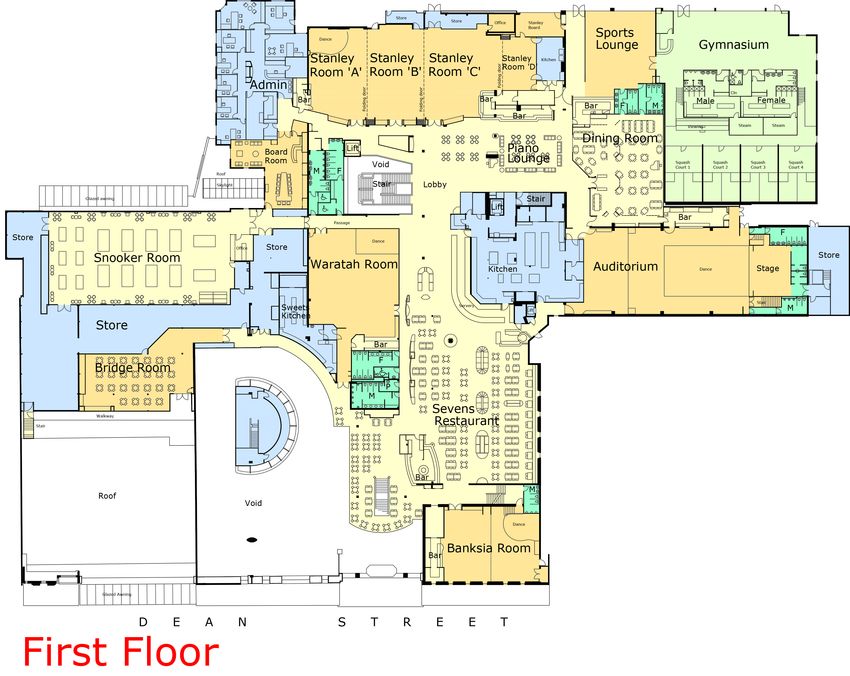
Venue
    The Commercial Club, Albury, Ground Floor

6
Venue
The Commercial Club, Albury, First Floor

                                           7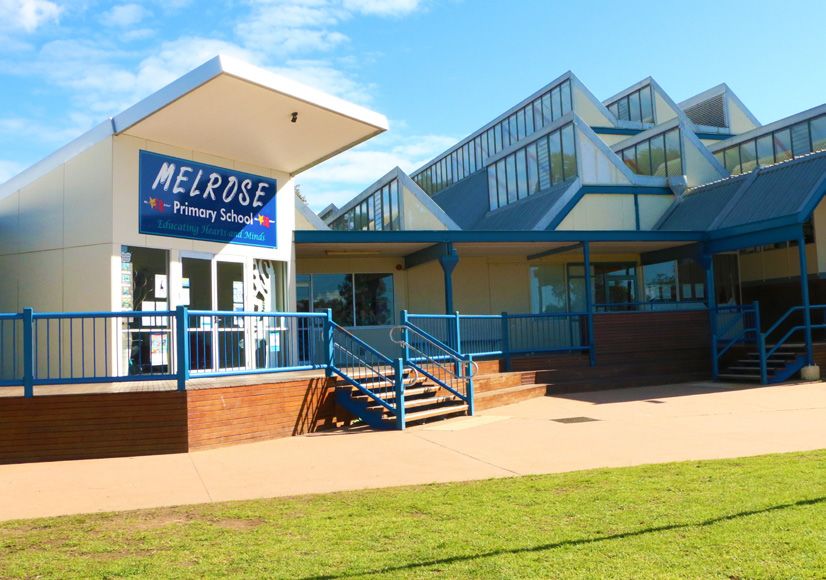
o r k s h o p s
    All Day W
    1 - Creating Assessments for Teaching and Learning Using SOLO Taxonomy
    Faciliator: Jenny Sesta, Professional Learning Manager, Corwin AU
    Room: Stanley A

    Topic:
    This workshop will help you to create effective pre-and post-tests using the SOLO taxonomy as the
    framework for effective and reliable design.

    Learning intention
    By the end of the day, you will:
    • know how to create effective classroom assessments using the SOLO taxonomy.

    Success criteria
    By the end of the day, you will:
    • know and enact three of the mindframes:
       • 'I am an evaluator’
       • ‘I see assessment as feedback to me’
       • ‘I use the language of learning’
    • know the structure of the SOLO taxonomy
    • know how to use the SOLO taxonomy to design learning intentions and success criteria
    • be able to explain why it is important to create robust assessments to measure progress
    • know how to use the SOLO taxonomy to ask a range of deep and surface level questions
    • be able to create assessments to measure progress and to evaluate impact of teaching

    Bio
    Over the past 3 years at Corwin Australia I have worked extensively in both system-wide and school-
    wide professional learning and school improvement. I have worked as a school leader, a Literacy
    Coach and a Visible Learning Impact Coach and have supported schools across Australia to
    implement visible learning. I have a particular passion for developing instructional approaches that
    have the most significant impact on student achievement and progress. As the Professional Learning
    Manager at Corwin my primary roles include the facilitation of workshops nationally, the development
    of training and workshop materials and mentoring and supporting our current team.

    Workshop Prerequisite
    Those attending this workshop will need to be using Learning Intentions and Success Criteria's in
    their classroom.

8
o r k s h o p s
All Day W
2 - Mathematics Learning Pathways & Assessment
Faciliator: Toby McIlrath, Education Consultant
Room: Stanley B

Topic:
Do you have a strong knowledge of Mathematics content and how to organise this content to
improve student learning?

Do you understand how this information relates to your teacher judgements?

Can you confidently utilise formative assessment strategies to inform your planning?

Implementing the Victorian Curriculum Mathematics developmental continua (F-10) and integrating
an assessment system that works for teachers takes careful consideration. Teachers must develop an
in-depth understanding of the learning pathways to teach them effectively. They must also learn how
to select, and design, formative and summative assessment tasks related to these pathways to target
teaching appropriately.

This workshop is an opportunity to:
•     Connect your Mathematics content to your formative and summative assessment strategies
•     Build teacher capacity (assessment literacy)
•     Enhance your Mathematics teaching and learning program

Bio:
Toby McIlrath is an experienced school educator, who has worked in various educational leadership
roles in both the Government and Independent school sectors, including multi-campus schools P-12.

Toby has been awarded a Masters Degree in Education, specialising in School Leadership, Curriculum
Design, Human Resource Management and Change Management. He has also previously worked for
the Victorian Department of Education and Training, specialising in curriculum design, planning and
assessment.

With his extensive operational teaching background, combined with his academic and management
experience, Toby is uniquely qualified to help schools reach their potential in the development of a
guaranteed and viable curriculum, the design of effective assessment systems and in curriculum
mapping.

                                                                                                       9
r k s h o p s
 All Day Wo
     3 - Communications Playground
     Faciliator: Glenn Capelli , Professional Speaker
     Room: Room: Stanley C

     Topic:
     Better, Smarter, Wiser in a Crazy World
     • The Backpack of Learning
     • Making Everyone an Ideas Person
     • A Three Step Plan for Being Better, Smarter & Wiser
     • What Glenn Learned from Interviewing Sir Richard Branson (and what it means for you)

     Group Genius
     • The Magic Brain Model
     • The Challenge of Difficult Situations (The Red Room!)
     • Having an Impact – Shaping Influence
     • The school as ‘Group Genius’ with everyone playing a role

     Flow – You At Your Best
     • Developing Character – words and actions
     • Developing Frames – flexibility thinking
     • Developing Influence – the empathy factor

     Bio
     A presenter, educator and professional speaker with more than thirty years experience,
     Glenn Capelli has delivered ideas on innovation, leadership, creativity and dynamic thinking to
     audiences around the world. Awarded at the highest level including Keynote Speaker of the Year,
     Educator of the Year, Speaking Hall of Fame, Sir Winston Churchill Fellowship, Nevin Awardee,
     member of Mensa as well as the International Jugglers Association!, Glenn continues to lead the way
     as one of Australia’s most enduring and unique professional speakers. A former ‘hobo’ who back-
     packed his way around the world for seven years, Glenn explores ways to live better, smarter and
     wiser and brings that learning to life with his inspiring, practical, humorous and totally original style.

10
o r k s h o p s
All Day W
4 - Making Space for Learning - Trauma Informed Practice for Schools
Faciliator: Carolyn Grace, Senior Training Consultant, Australian Childhood Foundation
Room: Warratah
Topic:
The aim of the Trauma Sensitive Practice in Schools professional development training, delivered by
the Australian Childhood Foundation for the various Education Departments across Australia, is to
enhance the capacity of schools to meet the needs of children and young people who have
experienced trauma, significant disruption and disadvantage. Effectively meeting the needs of these
students requires an understanding of the impact of their traumatic experiences on their emotional,
psychological and behavioural functioning, which in turn impacts on their ability to learn and manage
social relationships within the school environment.
Within the educational context, we aim to build the capacity of schools to better identify, understand
and respond to those children and young people at risk who have experienced complex relational
trauma, developmental trauma, abuse, neglect or family violence.
The Trauma Sensitive Practice in Schools will incorporate professional learning in the following areas:
• Understanding of and defining trauma
• The neurobiology and neurophysiology of Complex relational and Developmental Trauma
• How trauma impacts children and young people’s: Brain, Body, Memory,
• Emotions, Relationships, Behaviour and Learning
• Responding to traumatised children and young people in the school setting
• Introducing a variety and activities and strategies that can help heal the impacts of trauma to
allow for improved behavioural and cognitive capacities for the children
Bio:
Carolyn Grace is a Senior Training Consultant with the Australian Childhood Foundation and
registered professional Counsellor and Clinical Supervisor in private practice.
Carolyn has had 25 years’ experience working as a Youth Worker, Community Support Worker, School
Counsellor and Counsellor in Australia and the UK. She has worked in both Government,
Independent and Catholic primary and high schools and Non-Government Organisations providing
specialist counselling and trauma-informed training to schools.
Her main focus has been working with children, young people and their families and has specialised
as a grief, loss and trauma counsellor and a child and family counsellor.
Carolyn has also spent many years working with refugees and asylum seekers who have experienced
torture and trauma, both in Australia and the UK as a Trauma Counsellor, Educator and a Counselling
Team Leader.
She is passionate about supporting both the children and young people impacted by grief, loss and
trauma and those who care and support them.
11o r k s h o p s
All Day W
5 - Differentiating the Curriculum
Faciliator: Jo Prestia, Education Consultant
Room: Auditorium
Topic:
In this session we will explore the essence and purpose of differentiation with an emphasis on
inclusive classrooms. The three ways to differentiate, based on the work of Carol Tomlinson, will be
investigated. This will assist educators in recognising when, how and why we should differentiate in
order to cater to individual needs and help students to succeed. This session will feature a range of
strategies that have worked in classrooms over many years and give participants an opportunity to
showcase some of their own so we can fill that toolbox.
This final session will have participants apply their knowledge and skills from the morning on real life
case study investigations for specific learners as well as working on their own lesson ideas, existing or
new assessment tasks and tests with others in collaborative workspaces.
Participants are invited to bring along any tasks they wish to re-visit preferably in soft copy on a
device so that they can be manipulated on the spot.
Bio:
Jo Prestia is an Education Consultant, teacher and PhD student with a Bachelor of Education, a
Masters in Educational Leadership and a Post Grad in Education Research. She has held various
leadership positions and taught in schools for 30 years. Jo also works at Monash University as a
Teaching Associate in the Faculty of Education and with English Connect, assisting students with
academic writing and facilitating orientation programs for international students. She facilitates
workshops for Critical Agendas and designs professional development programs in many schools
and with undergraduate teachers. Jo is conducting research in the area of special needs. She also
maintains an education blog ‘Smart is Cool’. Jo can be contacted via her website: www.joprestia.com.
au
This workshop is sponsored by School Focussed Youth Services
12o r k s h o p s
All Day W
6 - Digital Technology
Faciliator: Simon Collier, Australian Curriculum Assessment andReporting Authority
Room: Banksia A
Topic:
This workshop will assist you to:
• understand the purpose and intent of the Digital Technologies curriculum
• understand the key concepts of the Digital Technologies curriculum
• recognise the progression of concepts across the bands and how they intersect with other
curriculum learning areas
• understand computational thinking through hands-on activities
• become aware of resources to support the Digital Technologies curriculum
Bio:
Simon Collier is supporting clusters of schools across three states and territories (Central Victoria,
Murray River (NSW and Victoria) and Darwin (NT). Simon is an experienced school leader with a
history working in both primary and secondary schools across Victoria. He has worked as a teaching
and learning leader and curriculum coordinator for 10 years, implementing school-wide and regional
initiatives. Simon played a pivotal role in the Skilling the Bay – Digital Technologies project, providing
professional teaching and support to both primary and secondary school teachers. More recently,
Simon was employed by the Victorian Curriculum and Assessment Authority (VCAA) as a specialist
teacher, supporting Victorian schools in implementing school-wide change and incorporation of the
Digital Technologies curriculum.
Please bring along your own device for this session.
13o r k s h o p s
All Day W
7 - Writing
Faciliator: Bradley Wade Ruff, M.A., lives in Bakersfield, CA and works as an AVID for
Higher Education consultant and staff developer
Room: Banksia B
Topic:
This workshop will focus on strategies for integrating writing consistently as a learning tool across
year levels and content areas. Participants will explore the power of metacognitive writing to
promote student growth and autonomy including how to use focused note-taking, a powerful
component to learning that must be taught and scaffolded across year levels and disciplines.
Teachers will learn to use writing to help students access rigorous content and deepen
understandings through these writing strategies.
Bio:
Brad earned his M.A. degree in English and has taught developmental writing and composition at
the university level for 20 years. After earning his B.S. in Education at the University of North
Dakota, he worked as a high school German, English, and Latin teacher for 29 years, teaching 9
years in North Dakota and another 20 years in California. In 2005 he was appointed Coordinator of
AVID for Kern County in Region 8 of California. Brad has over 13 years of experience as a consultant,
facilitator, and trainer working with grants and committees associated with student transition from
secondary to postsecondary education. At the end of the 2016-2017 school year, he retired after 38
years of working as a high school teacher, County Coordinator of AVID, and District Director of AVID.
He continues to teach writing courses at California State University, Bakersfield and has recently
been working with students in the Teaching High School English-Language Arts course preparing
prospective high school English teachers to join the ranks of full-time English teachers in the state of
California.
Brad has focused much of his career on developing, teaching, and promoting courses that help
students with the transition from secondary to higher education. While at California State University,
Bakersfield, he became instrumental in leading the university to become California’s first four-year
college/university to implement AVID for Higher Education and served as the AVID for Higher
Education Liaison for California State University, Bakersfield. He also acts as an AVID for Higher
Education faculty/staff developer and an AVID Summer Institute staff developer.
14e d e r a t i o n
A bout the F
Wodonga Federation of Government Schools Vision
is a locally led strategic collaboration providing Together, we will ensure that all Federation
a variety of learning and developmental path- students benefit from the highest standards of
ways for 60% of Wodonga’s school aged chil- learning and teaching and are inspired, support-
dren and young people. ed and ethically prepared to fulfil their potential.
Member schools formalised their commitment Four Year Objectives
to the Federation in August 2016 by signing a • Every student is genuinely known and un-
memorandum of understanding which outlines derstood as they progress from early years
how the schools will work together and the through to career
governance arrangements. • Every student learns in a highly innovative
environment and excellence in teaching
The Federation consists of eight government • Every student is self-directed and has a
schools (Wodonga Senior Secondary College meaningful pathway
(including Wodonga Flexible Learning Centre), • Every student’s needs are supported
Wodonga Middle Years College, Baranduda
PS, Melrose PS, Wodonga South PS, Wodon- The Federation will achieve these goals through:
ga West PS, Wodonga PS and Belvoir Special • Developing a shared vision and working
School) in the local government area of Wo- in unison.
donga. • Mobilising resources, knowledge and exper-
tise to support what works.
Member schools have a combined Student • Sharing accountability and creating opportu-
Family Occupation score (SFO) of 0.5872. Each nities for all children and young people.
member school shares a commitment to the • Enabling and enhancing strategies that work.
principles of education as outlined in the Edu- • Advocating for equity and policy / practice
cation and Training Reform Act 2006 Sect 12.2. improvement and investments.
In particular, ensuring guaranteed universal
access to education for all children and young
people.
Federation Profile
350 51.5% 7.6%
WORKFORCE
Teachers 4318 of students are male
190
Contributes over
students attend a 48.5% of students have a
Non-teaching $53 million to Federation School in
Wodonga
of students are female disability
staff the local economy
5 Primary Schools
6.7%
31.5%
1 Middle Years College
1 Senior Secondary
speak a
language
3.4% 3.6%
Of students
identify as College other than of students
live in single English at
Aboriginal or parent families 1 Special School home
are born
overseas
Torres Strait
Islander 1 Flexible Learning
Centre
Data from MySchool and CASES 21
15h l i g h t s 2 0 1 7
r a t i o n H i g
Fede
Teach the Teacher
Student leaders from their
respective schools delivered a
professional development
session for their teachers on an is-
sue affecting the students. VicSRC
initially equipped the leaders with
specialised facilitation skill.
Inaugural Conference Digital Literacy
410 teaching and non-teaching The Federation received $50,000
staff from seven of the Federation from the Federation Government
schools attended the Federation's to establish the Wodonga Digital
Conference. Over 55 workshops Creators Community. Federation
were presented as well as two schools will be able to obtain
keynote speaker themes. Access to specialised hardware and create
high quality professional opportunities for students to
development locally was a interact, innovate and challenge
highlight. each other.
Respectful Relationships
All schools have secured RR
funding. Staff have attended
identifying family violence and
gender equity training, undertaken
a Baseline Assessment and been
part of Wodonga's Intimate
Partner Violence Taskforce.
Multi-School Staffing Professional Learning
To further enhance the level of Communities (PLC)
cooperation between Federation Schools piloted the PLC for the
schools staff can take advance of Department. It enabled schools to
the Multi-School Staff Professional deepen their strategic practices
Learning Programs which allows when it comes to working with
staff a year to teacher in another teams of teachers in a focused way
Federation school. - Inquiry Change Challenge.
Strategic Resource
Management
Schools have collaborated on
initiatives to improve
efficiencies eg. developing
common policies, compliance and
leveraged their collective buying
power to save money.
School-based Index Analysis - Student Leadership Program
LaTrobe University Project 46 students leaders from year five
The Federation has partnered with to year 12 across seven Federation
LaTrobe University to analyse the schools participated in a student
school's data, provide insights leadership. Program included
into interrelated variables and the development of leadership skills,
impacts on particular groups of VicSRC Teach the Teacher and a
students. presentation from the Mayor.
16o n St r u c t u re
F e d e r a t i Advisory Committee
Provides advice to the
Board on technical,
implementation and broad
Federation Board policy issues. The
Provides Strategic committee also provides
Direction, Community guidance and direction
Engagement, Resource to the Action Groups and
recommendations, oversees the
Performance and implementation of decisions
Accountability. made by the Board.
Action Groups
The Federation has nine
Action Groups working together,
they share resources, expertise,
Currently Priorities curriculum, data and best practice
The work of the Federation is optimising learning and for evidence informed action.
developmental outcomes for children and young people in
Wodonga. The following is a list of some of our major projects:
• Common online visitor and contractor management system
• Shared data management system
• Shared policies
• English Learning Centre
• Coordinated Respectful Relationships Education
o ls
cho
• Student Achievement data analyses
• Digital Technology
t S
en
e r nm
G ov rs
n of be
tio Me m
e r a d
Guinever
ed Boar
Threlkeld
F
ga
LaTrobe
n
Brendan University
do Baxter
Wo
Chair
Baxter
Les Burr
Concrete
Wodonga Deputy Chair
Institute of
Paul Thorpe TAFE
Wodonga
Primary School
Martin School Council
Butcher
Jocelyn Owen Disability
Wodonga Information
West Primary and Advocacy
Vern Hilditch School Service
Wodonga Principal
Senior
Secondary
College
Principal
17Notes 18
Notes

        19
Contact Us Email: Info@wodonga.vic.edu.au Website: www.wodonga.vic.edu.au Facebook: Facebook.com/WodongaFGS Address: 69 Woodland St, Wodonga, Vic, 3690 Phone: 0419213496
You can also read


