Confidence & Supply Arrangement - Budget Two FIANNA FÁIL - Fianna Fail
←
→
Page content transcription
If your browser does not render page correctly, please read the page content below
Confidence
& Supply
Arrangement

Budget Two
  FIANNA FÁIL
  T H E R E P U B L I CA N PA R T Y
Foreword
Following the inconclusive election in     in favour of services. Some of the key        Summer Economic Statement.
February 2016 Fianna Fáil negotiated       measures we achieved in Budget 2017           Similar to last year’s document, this is
a Confidence & Supply arrangement          were an increase in mental health,            not a formal pre-budget submission.
in order to ensure Ireland had a stable    education & health services, a ¤5 increase    As part of the Confidence and Supply
government. Fianna Fáil wanted to be       in the pension, the re-activation of the      Arrangement it was agreed that
constructive and is determined to give     National Treatment Purchase Fund to           Fianna Fáil would facilitate Budgets
effect to our 2016 election manifesto      treat more patients, boosting supports        that were consistent with the agreed
policies. Our commitment remains to        for post graduate students, 800 new           principles in the agreement. Progress
provide credible, responsible opposition   Gardaí and tax cuts for low to middle         in these commitments is monitored
and have a real impact on government       income earners.                               on an ongoing basis. Some are
policy while also holding the Fine Gael                                                  easier to measure than others and
led minority government to account.        This second pre-budget document sets          where there have been difficulties in
The basis of entering the confidence and   out our core budget policy objectives         implementation, meetings have been
supply arrangement was our core aims       drawn from the Confidence & Supply            held between the two parties to try
of investing more in services, helping     arrangement. Our main objective is to         and resolve them. There were several
communities and giving practical effect    curb the regressive, right wing ideology      meetings held this year about mental
to the commitments in our manifesto.       of Fine Gael. Fianna Fáil fully accepts the   health, career guidance and other
                                           requirements of the Fiscal Treaty and EU      matters. We have now secured the full
In Budget 2017 Fianna Fáil secured         rules and the subsequent limited fiscal       cost of fully implementing a Vision for
a progressive budget with a 3:1 split      space available in 2018 as outlined in the    Change as and from January 2018.

    Fianna Fáil Achievements Since The
    Confidence And Supply Arrangement In 2016

        Ensured the first progressive budget in six years and focused USC reductions on low to
        middle income earners.

        Raised the Old Age Pension by ¤5.

        Increased carer’s allowance, disability allowance and unemployment benefits by ¤5.

        Increased the Home Carer Tax Credit and Earned Income Credit .

        Reduced Capital Gains Tax for entrepreneurs to 10%.

        Secured 800 new Gardaí.

        Restored Post Graduate Grants for low income students.

        Re-activated the National Treatment Purchase Fund.

        Increased Rent Supplement and Housing Support Payments by 15%.

        Abolished water charges & restored Group Water scheme funding levels.

        Expanded the Rural Social and Farm Assist schemes.

        Boosted Third Level Funding by ¤36m.

        Secured 100 new Career Guidance Councillors and moved towards ex-quota restoration.

        Re-opened the Clár programme & Local Improvement Scheme.
Fiscal Responsibility
Commitment
Ireland exited the corrective arm of According to the Fiscal Advisory Council in real expenditure.
the Stability and Growth Pact in 2015. compliance with the Expenditure It is not clear yet whether we will
Since then the principal budgetary goal Benchmark was “only secured in 2016 breach these two pillars of the fiscal
has been to meet the Medium Term due to a temporary, one-off boost to rules, but it only serves to highlight
Objective (MTO) as set by the European the spending base in 2015.” This one- the need to be prudent while giving
Commission under the Stability and off boost was the conversion of AIB priority to providing much needed
Growth Pact. Fianna Fáil supports the preference shares held by the State. In capital expenditure in the vital areas
government aim to reach a structural 2017, it is projected that Ireland will not of housing, health and transport.
deficit of 0.5 per cent of GDP in 2018. meet its structural deficit target of 0.5 Fianna Fáil is committed to adhering
In 2016, Ireland missed its structural per cent of GDP and the expenditure to EU Fiscal rules and sustainable
deficit target of 0.6 per cent of GDP. benchmark target of 1.3 per cent growth economic policies in Budget 2018.
Core Fiscal Responsibility Principles
A minimum 2:1 Investment to tax reduction ratio.
The full establishment of the independent Parliamentary Budget Office.
Full adherence to EU and national fiscal obligations.
Full operation of the Rainy Day Fund.
Complete implementation of the Public Service Stability agreement.Economic
Outlook
Headline upward Economic growth While Ireland’s economic recovery is funding in our housing, in our health
trends are clear, however Fianna Fáil consistent, major issues still persist. The service, in our education system and
remains committed to ensuring that it recovery has not been felt across the in our transport and infrastructure.
does not remain a two tiered recovery. country. Economic growth risks being
While unemployment is well down concentrated in fewer and fewer hands. Other economic challenges need
there are still many black spots across Job security and lower salaries are a to be addressed over the coming
the country and many regional areas concern particularly as house prices and years including refinancing our
are still struggling. In addition to this rents continue to rise at an alarming rate National Debt, dealing with Brexit
budget we are working to ensure that and the homelessness crisis escalating. and countering any prospect of
this divided recovery will be addressed There are now over 5000 adults and over overheating in the economy.
in the forthcoming Mid Term Capital 3,000 children homeless which morally
Plan review. demands to be tackled as a matter of Over the next five years Ireland needs
urgency. In addition to this challenge to refinance around ¤50 billion in
Gross Domestic Product (GDP) grew there are over 50,000 family households debt. This will come at a time when
by 5.2 per cent last year which is the in mortgage arrears over 90 days. we are facing the reality of Brexit. UK
highest in the EU. Private consumption consumption is key when assessing
surpassed pre-crisis levels and exports In healthcare some 697,000 people the impact of Brexit on Ireland. We
continue to grow. Unemployment has are still on waiting lists and we still believe that there should be more
fallen to 6.1 per cent and is set to move have people waiting on trolleys in our investment in preparing for the
below 6 per cent next year. hospitals. Investment in mental health implications of Brexit. We have been
services is far off what is required and calling for an increase in Ireland’s
Government revenue is continuing to more home care and home help hours global footprint for the past two
grow and the deficit is continuing to are needed. Disability services are also years and believe that government
fall. Next year Ireland is set to balance under pressure due to demographic agencies should also be able to recruit
its books in structural terms and the changes and all of these demands pose more specialised staff to increase our
interest on our National Debt is €¤6.7 real challenges in the short and medium market presence in countries other
billion per annum, 9.8 per cent below its term. than the UK.
peak in 2014. If the favourable interest
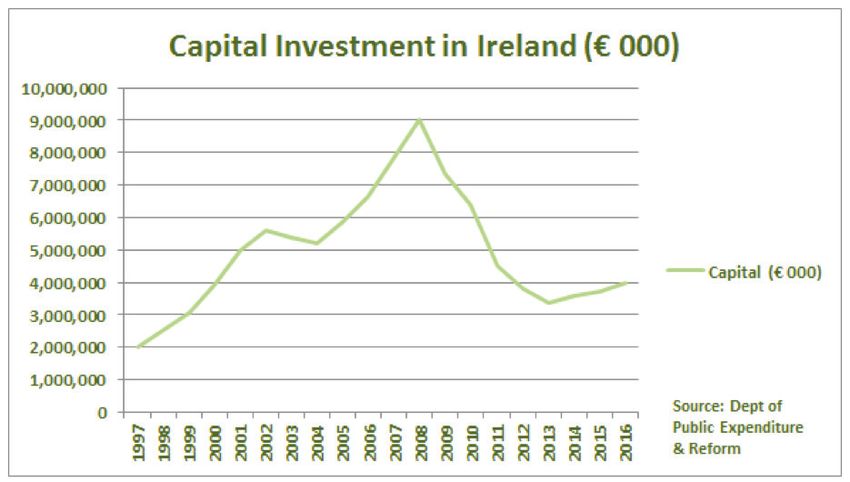
rate environment continues the interest Capital expenditure is still shockingly With a depreciating Sterling, British
figure could very well move below€¤6 below where it needs to be. Only last year inflation is running ahead of earnings
billion per annum. capital expenditure surpassed the level growth. This can continue for only
reached in 2001. This explains the lack of so long and the fear is that whencredit streams begin to dry up the fully considered. It is for this reason that Ireland has proven remarkably
British consumer will have to reduce Fianna Fáil called for the establishment resilient and we have come through
consumption, which will likely hit Irish of a Rainy Day Fund. Due to the some very difficult years but we have
exports significantly. Confidence and Supply arrangement the to acknowledge that key challenges
Rainy Day Fund is set to be established in remain and if we are to meet these
Fianna Fáil has consistently called for 2019 subject to Ireland meeting its goals challenges it is vital that we meet our
the United Kingdom to remain within under the fiscal rules. obligations under the fiscal rules next
the Customs Union, a special economic year. This will provide extra fiscal
zone for Northern Ireland and the The Rainy Day Fund is designed to space to meet the demographic and
maintenance of the Common Travel smooth expenditure when the economy economic challenges in the years to
Area as essential components of any is in recession and to protect the economy come.
Brexit deal. in times of overheating. This will prove
a very useful tool given that Ireland has Fianna Fáil has made it clear that we
Brexit aside, if the economy continues little or no control over its interest rates. want USC reductions in Budget 2018
to grow at the current pace in the years In the event of there being surplus and we also want the commitment
to come it is important that economic revenue to the state it would be prudent in the Confidence and Supply
policies are prudent and prevent a to place a portion of extra tax revenue to arrangement implemented while
situation where the economy could over the Rainy Day Fund. This would ensure giving priority to Housing, Health and
heat. The ESRI and the Fiscal Council that we do not make the mistakes of the Brexit.
have made several recommendations past and spend potential unsustainable
about this and their views should be tax revenues each year.
Fiscal Space In The Coming Years
If Ireland meets the Medium Term Objective in 2018 it will free up vital fiscal space that will be needed for services and capital
expenditure. As there are a number of moving parts with fiscal space projections, the fiscal space calculated in the Summer
Economic Statement is different from that of Budget 2017.
Net Fiscal Space 2018 To 2021
2018 2019 2020 2021 Total
Net Fiscal Space - SES 2017, bn 1.3 3.2 3.4 3.4 11.3
According to Budget 2017, the Net Fiscal Space available in 2018 was ¤1.2 billion (nominal ¤1.5 billion). In the Summer Economic
Statement this year the Net Fiscal Space was recalculated at ¤1.3 billion. However, ¤1.2 billion is still being used because any
additional expenditure to the ¤1.2 billion will jeopardise the achievement of the MTO next year.
The Nominal Fiscal Space for 2018 is ¤1.5 billion. From this, there are pre-committed budgetary measures that amount to ¤650
million and a capital allocation of ¤330 million to the Action Plan for Housing. This means that the remaining Nominal Fiscal
Space for 2018 is approximately ¤530 million.
The Public Service Stability Agreement will cost a further ¤180 million leaving a net space of ¤320-350 million before any
discretionary revenue measures are considered. This figure forms the basis of our adherence to EU fiscal rules in the budget.Capital
Key Policies
Establish a National Infrastructure Commission.
Fully utilise Public Private Partnerships by amending the 10% rule.
Direct NAMA proceeds into housing investment.
Negotiate with the EU to direct bank shares proceeds into infrastructure.
Re-direct part of the 6bn ISIF into Irish capital projects.
Fine Gael’s dire record on capital expenditure has left Ireland lagging far behind our international competitors and struggling
to cope with a rising population. The failure to invest will be felt for years to come. Budget 2018 must address this yawning
infrastructural deficit particularly in Housing Transport and Health.
It was only last year that capital expenditure surpassed the level set in 2001. Meanwhile our secondary and minor road network
is at breaking point, our National Broadband roll out is faltering and we are faced with an immense housing crisis. In addition,
we need more acute beds in our hospitals and more investment in our step down facilities.
The current capital plan “Building on Recovery: Infrastructure and Capital Investment 2016-2021” was released towards the end
of 2015.
Despite the fanfare, the plan lacked any real ambition or substance and was utterly inadequate at dealing with Ireland’s massive
infrastructure deficit.It is crucial for Ireland both in terms of our competitiveness and the cohesiveness of our society that capital spending is ramped
up. It allows geographic mobility and connectivity but also is essential for social mobility.
A lack of investment in capital infrastructure, in social housing, in healthcare, in schools, in third level institutions, in roads and
in internet connectivity will leave Ireland a more unequal society where urban areas continue to press ahead and rural areas lag
behind.
There has been a two tier recovery in Ireland and Brexit threatens to exacerbate this. It is vital that both the National Planning
Framework and the Capital Plan reflect the need to address this division and help drive development in the regional and border
areas of the country.
Joined-Up Thinking
Fianna Fáil believes a National Infrastructure Commission adequately syncing the two as the Mid Term Capital Review
should be established and that there should be an is set to be published before the National Development Plan
overarching long term plan for development and capital is finalised.
expenditure. The Commission should provide long term
objectives for regional, rural and urban development across Ireland lags well behind in terms of quality of infrastructure
a 25 year time frame. and is ranked 24th in the OECD in 2015. Currently, Ireland
is ranked 23rd in the World Economic Forum Global
The Capital Plan then should derive from the work of the Competitiveness Report and 18th in the World Bank’s Ease
Commission. Unfortunately the Government still are not of Doing Business Index.
Alternative Funding Models
Fianna Fáil believes Ireland can and should do better than will still face a major capital investment deficit.
this, and key to this aim is prioritising capital investment in
the short, medium and long term on a sustainable basis. It is for this reason that the Government need to be far more
ambitious when it comes to capital investment and we have
General Government investment in capital projects is asked that Housing ,Transport and Health be prioritised
limited in what it can provide. Even if Ireland does meet its next year.
MTO next year and fiscal space is freed up to 2021, Ireland
Public Private Partnerships
Public Private Partnerships (PPPs) should be availed of is still an obligation on the State but it is spread out over many
far more. Unfortunately, up to now the Government have years. We are currently in a very low interest rate environment
completely neglected PPPs as a solution to our capital deficit. and with PPPs Ireland has a chance maximise on these lower
Currently, the Government has a rule that the total costs of rates for the next 25 years. Over time the rate paid on a PPP
PPPs cannot exceed 10 per cent of the total annual capital project will be surpassed by interest rates on Irish government
spend from the Exchequer. bonds.
This is an outdated policy given the current and future This was a view expressed by the Chief Executive of the
demographic demands and when spending is still only at 2001 National Treasury Management Agency (NTMA) who
levels. appeared before the Oireachtas Budget Oversight Committee
Fianna Fáil believes this rule should be removed. The on March 8th 2017.
Government have now agreed to undertake a review of the
10% limit but this should have been done a long time ago. By It is unacceptable that the Chief Executive of Transport
spreading the cost over the life of the contract the State does Infrastructure Ireland, Michael Nolan, recently confirmed
not have to use up valuable fiscal space in year one of the that roads have been excluded from the next phase of the PPP
project. In some cases they can be kept ‘off balance sheet’. It programme.European Investment Bank and the
Investment Plan for Europe (Juncker Plan)
With the Investment Plan for Europe the European Investment Back in May of this year in front of the Finance Committee the
Bank (EIB) can provide vital funding for major capital projects. EIB said that “Ireland should do a lot more financing of PPPs
One of the key ways the EIB will provide funding is through PPPs. were they available in the capital programme.”
Yet the Government still persist with their 10 per cent rule.
This is extraordinary given the constraints we face with the fiscal
We are missing out on vital funding for key projects because of rules and challenges we face with regards housing, education and
this outdated rule. healthcare.
Ireland Strategic Investment Fund
The Ireland Strategic Investment Fund (ISIF) can be another ISIF can play a vital role in the provision of social and
useful funding tool. ISIF has a double bottom line whereby affordable housing for example. Activate Capital uses ISIF
its investments must create a commercial return and must funding to provide credit on a commercial basis to builders
have a real economic impact. for residential construction. Fianna Fáil believes that the
Activate Capital model should be availed of far more and is
Currently over 6 billion or 82% of the Discretionary currently being underutilised.
Portfolio is invested in the Global Portfolio, outside the
State. By directing more funds from Global Portfolio to In a time where many builders are going to international
the Irish Portfolio we can begin to invest in key capital and funds looking for capital, Activate Capital can provide the
infrastructure projects. same or a portion at very competitive rates.
National Asset Management Agency
There are other funding alternatives within the arms of the surplus where it can support the provision of social and
State also. NAMA for example, is expected to return a surplus affordable housing.
of 3 billion to the State when its current mandate is completed.
An alternative is that the mandate of NAMA is changed through
It is unclear at this point whether the surplus will be available for primary legislation. Fianna Fáil proposed nearly two years ago
general government expenditure or whether it will be deemed that NAMA should be allowed to manage housing development
to be a financial transaction like the sale of shares in AIB. What on public owned sites on behalf of Local Authorities.
is clear is that there are and will be a number of options the
Government should be considering with NAMA. NAMA already funds the acquisition of social housing on
NAMA funded sites via the National Asset Residential Property
Firstly, if the expected surplus is available for general government Services.
expenditure, this should be directed to capital projects.
If the expected surplus is not available for general government NAMA provides these houses to Local Authorities and Approved
expenditure then a portion of the surplus could be put into Housing Bodies on long term leases.
ISIF. This is similar to what was done when Aer Lingus was
sold. The proceeds were invested in a Connectivity Fund that These and other alternatives need to be explored now so that
was managed by ISIF and invested in projects that improved when NAMA does in fact return a surplus we are very clear as
connectivity in the economy. to what is and isn’t possible. This did not happen with the sale
of AIB and as a result there was very little debate in the end on
Again Activate Capital would be an ideal place to invest the what the options were.Key Priorities in the Coming Years
In our submission to the Mid Term Capital Review earlier this Our regional road network is in serious disrepair and in urgent
year we outlined the priority areas for capital in the coming years. need of investment. Regional roads like the N4 Longford
The most acute priority at this point in time is the provision of Sligo road and N5/N26 Mayo Roscommon road need urgent
social and affordable housing. upgrading.
In the past six years the State has built just 4,000 social houses, In the context of Brexit, renegotiation with the new Northern
which is fewer than what we built in almost every year from Ireland Executive when it is set up, should take place in relation
1994 to 2009. We need an extensive social and affordable house to the funding of the A5 Donegal Road and the Narrow Water
building programme from the State through Local Authorities as Bridge on the Louth/Down border.
was the case in the past. We need again to utilise EIB funding to
assist in this. The roll out of national broadband plan has been a debacle
from day one with deadlines missed at almost every juncture.
In healthcare we need more investment in acute beds and Currently there are around 600,000 premises indefinitely
stepdown facilities. In transport we need DART Underground, awaiting broadband connectivity. This is unacceptable and a
Metro North and the M20 Cork Limerick Motorway to be huge problem for our competitiveness. Other areas needing
prioritised. These projects would seem to be ideal candidates urgent investment include flood defence, childcare and the
for Public Private Partnerships. decarbonisation of our economy.Addressing The
Housing Crisis
Housing is the most pressing policy issue facing the country. Over 130,000 households languish on the Social Housing waiting list.
The country is experiencing the highest rents on record while house prices are rapidly growing beyond the reach of ordinary working
people. The homelessness scandal is a scar on our cities and towns with some 8,000 people in emergency accommodation.
The Fine Gael record on building homes is abysmal. Since 2011, the State has built just 4,000 new social houses, which is fewer than
Fianna Fáil built in almost every single year from 1994 to 2009. Fine Gael has launched some 6 plans or reviews on housing in three
years but has completely failed to get to grips with a crisis that is affecting countless families across the country.
Comparison of Social Housing Units 2007-2016
Total number of Average number of
Year Social Houses completed homes per year
FF 2007-2010 14,581 3,645
FG 2011-2016 2,550 510
Difference (%) -82.5% -86%
Getting to grips with this multi-faceted crisis must mean additional capital investment in social and affordable housing, measures to
increase private home supply and affordability as well as reliefs for hard pressed renters.
Many of the blockages in the system require technical legislative changes to speed up the planning process and reduce construction
costs. Other aspects will demand an outright increase in government funding to capital investment which is half what it was at the
peak.
Comparison Social Housing Current Expenditure & Capital Expenditure Programmes
Year Current - ¤m Capital - ¤m Total - ¤m
2008 195 1,515 1,710
2017 566 732 1,298
Difference (%) 191% –52% –24%
Budget 2018 and the upcoming Capital Plan must reflect the need for a substantive increase in the allocations made under the Re-
Building Ireland programme. The ambition of Re-Building Ireland must be advanced upon, integrate with the National Planning
framework and set out a long term vision of where Irish families will live into the future.
Fianna Fáil is calling for a series of actions to be undertaken:1. Accelerating Social and Affordable Housing Construction The government needs to increase social housing capital investment back to 2008 levels. Traditionally the State (through Local Authorities) has acted as the largest single house builder in the country, adding significant levels of new supply annually. 2. Utilising Vacant Properties Census 2016 revealed that over 180,000 homes are vacant across the country. There are also thousands of square feet of liveable space, commercial zoned buildings that also have obvious potential for residential use with relatively limited refurbishment or redevelopment. Our party’s Vacant Housing Bill 2017 has passed second stage. This bill will help simplify building regulations to open up more buildings to accommodation use. 3. Getting Construction Moving We have comprehensive proposals to reduce construction costs including regulatory and planning changes to get the sector moving again, so we can see a reduction in house prices and rents. Only one of these suggestions included reducing VAT. There appears to be no willingness of government to tackle the most fundamental barriers that are holding back supply of more affordable housing. NAMA can play a role in this process. 4. Improving Rental Standards And Safety We are advocating improving accommodation & fire safety standards and reducing over-occupancy in private rented sector by creating a new ‘NCT style’ inspection system. The explosion in rents coupled with completely inadequate inspection and regulation has created unsafe fire traps in the rental sector around the country. 5. Dealing with Mortgage Debt Fianna Fáil has produced several pieces of legislation and policy to fundamentally address the mortgage debt crisis, including reforming the Mortgage to Rent Scheme, creating streamlined initiatives to deal with mortgage arrears as well as putting pressure on the Government to accept our proposals that offer greater protection to homeowners and SME’s from unregulated loan owners (or vulture funds).
Getting Brexit Ready
  Key Overall Policies

        Minister for Brexit.

        Change to EU state aid rules to help support Irish SME and agriculture.

        Detailed sector by sector planning to get prepared for Brexit.

        Special Economic Zone status for Northern Ireland.

        Retain the Common Travel Area.

Brexit represents the most serious geo-political and economic      Budget 2018 must see the government get to grips with the
challenge to the country in decades. The continued uncertainty     potentially devastating impact of Brexit on Irish businesses
over what shape the UK’s withdrawal from the European Union        across a wide range of sectors. Equipping our tax system to
will take remains a looming cloud over Ireland’s economic          compete with the UK will be a key aspect of a co-ordinated
prospects. This is preventing businesses from planning and is      national response. Underlining our core commitment to
having a lurking impact on consumer confidence.                    retaining our 12.5% Corporate Tax rate must be the cornerstone
                                                                   of that approach.
The clock is ticking on the March 2019 deadline. At least now
there will be a transition phase to allow more planning to take    We believe the Capital Gains Tax relief for Entrepreneurs
place to prevent a hard Brexit.                                    should be extended out to the £10m threshold currently in
                                                                   place in the UK as resources allow. This will help ensure we
Fianna Fáil believes that Ireland must fight its corner as part    can continue to draw business and enterprise into this state.
of the EU. Ireland must work to reform and improve the EU
to ensure it delivers for ordinary citizens. The withdrawal of     As outlined above, additional supports for key agencies such as
the UK will not define the future of the world’s most successful   Bord Bia, IDA and Enterprise Ireland will be vital to ensuring
multilateral organisation. Beyond the broader diplomatic and       our agencies are fully enabled to access new markets and
political efforts to achieve a viable deal with the UK and a       diversify away from our reliance upon the UK. This budget
comprehensive EU responsive there are a number of targeted         document highlights a number of measures to help prepare for
measures the government should pursue in Budget 2018.              Brexit.
Confidence & Supply
Budget Two Priorities
Tackling Homelessness And Securing Homes
Increase Capital Funding For Social & Affordable Housing
Secure Re-Building Ireland targets with additional capital investment to meet 2008 levels.
Ensure Older People Can Live Independently
Increase the state pension. This increase should cover both the contributory and non-
contributory pensions.
Introduce extra home care packages and additional home help hours to help older people
stay at home.
Creating DecentJjobs & Supporting Enterprise
Increase The CGT Entrepreneurial Relief Rate Threshold
Increase the chargeable gains threshold towards ¤15m to ensure Ireland
can compete with the UK.
Move To Equalise The Tax Treatment Of The Self-Employed
Increase the earned income tax credit in line with the PAYE Tax Credit
to ensure equalisation is maintained into the future.
Increase Payments Under The Areas Of Natural Constraints Scheme
ANC payments should be increased in line with 2007 levels. In addition, further taxation
measures to address income volatility for farmers should be undertaken.Cut Costs For Families And Improving Public Services
Reduce USC On Low And Middle Income Earners
Reduce USC for the second budget in a row.
Reduce Childcare Costs
Reduce childcare costs targeted at low and middle income workers and provide investment
to improve quality and availability of child care services.
Expand The Home Carer’s Tax Credit
Increase the Home Carer’s tax credit to ensure parents who choose to stay at home are not
unfairly discriminated against.
Re-activate The National Treatment Purchase Fund To tackle Waiting Lists
Ensure at least 55m is in place for the NTPF in 2018.
Reduce Prescription Charges
Move to abolish prescription charges on a phased basis focusing on those with
chronic illnesses.
Lower the Drug Payment Scheme Threshold
The Drug Payment scheme threshold should be reduced from its current level
of ¤144.
Hire Additional Therapists
Tackling waiting times for assessment and essential therapy services must be
prioritised with extra new speech, physical and occupational therapists.Ensure Every School Has A Guidance Service Complete the restoration of the ex-quota Guidance counsellor provision to all schools. Reduce Average Class Aizes At Primary Level By One Point In 2018 Hire additional teachers to progressively reduce Pupil-Teacher Ratios to 27:1, next year. Prioritise reductions for the youngest children under 9 years of age and super-size classes which we will have the biggest impact on long term outcomes for children. Protect small schools from adverse teacher pupil ratios affecting their viability. Continue Restoration Of Post Graduate Grants Continue the restoration of Post Graduate grants with the restoration of the partial band rate to ensure low income households can access 4th level education. Increase Third Level Funding Increase the government block grant to Higher Level Institutes and re-assign the surplus from the National Training fund to boost resources for its and Universities.
Tackle Crime & Develop Community Services

 Recruit 800 New Gardaí

    Increase Garda numbers by 800 in 2018 as part of an on-going effort to reach
    15,000 members by 2021 in order to combat crime across Ireland.

 Increase funding for mental health to finance the
 achievement of “A Vision For Change”

    Fully implement the 2017 pledge of a ¤35m increase in Mental Health funding and
    undertake an additional increase Mental Health funding in 2018 in order to fully
    implement “A Vision For Change” objectives by 2021.

 Protect & Develop Our National Language

    Increase funding for the 20 year strategy through Foras na Gaeilge and Údarás na
    Gaeltachta.

 Improve Services And Increase Supports For People With A Disability

    Increase Personal Assistance Hours to ensure people with a disability can play an
    active role in their community.

    Increase Disability & Carer’s allowance and Blind & Invalidity pension.
Core Principles for the Confidence and Supply Arrangement
For A Fine Gael–led Government
This is the document that outlines the confidence and supply arrangement to facilitate a Fine Gael-led Minority
Government subject to the ongoing implementation of the attached policy principles:
Fianna Fáil Agrees To:
Abstain in the election of Taoiseach, nomination of Ministers and also the reshuffling of
Ministers.
Facilitate Budgets consistent with the agreed policy principles attached to this document.
Vote against or abstain on any motions of no confidence in the Government, Ministers, and
financial measures (eg money bills) recognised as confidence measures.
Maintain pairing arrangements for EU Council meetings, North South meetings and other
Government business as agreed.
The Fine Gael-led Minority Government agrees to:
Accept that Fianna Fáil is an independent party in opposition and is not a party to the
Programme for Government.
Recognise Fianna Fáil’s right to bring forward policy proposals and bills to implement
commitments in its own manifesto.
Publish all agreements with Independent Deputies and other political parties in full.
Allow any opposition bills (that are not money bills) that pass 2nd stage and proceed to
Committee stage within 10 working weeks.
Implement the agreed policy principles attached to this document over a full term of
Government.
Have an open approach to avoiding policy surprises.
Introduce a reformed budgetary process in accordance with the OECD review of the
Oireachtas along with the agreed Dáil reform process.
Should an event arise that has potential to undermine this arrangement, efforts will be made to have it
resolved by the two Party Leaders. It is agreed that both parties to this agreement will review this Framework
Arrangement at the end of 2018. It is agreed that the final arrangements will be recorded in a written
document signed by the respective Party Leaders. This is a political arrangement and is not justiciable.Appendix 1.
Policy Framework for a Confidence and Supply
Arrangement to facilitate a Fine Gael -Led Minority
Government
Ireland’s Economy
Maintain our commitment to meeting in full the domestic and EU Fiscal rules as enshrined in
law.
Facilitate the passage of budgets presented by the Government within these rules and which
are consistent with the policy principles contained in this document..
To address unmet needs, introduce budgets that will involve at least a 2:1 split between
investment in public spending and tax reductions.
Base health expenditure on multi-year budgeting, supported by a 5 year HSE Service Plan
based on realistic, verifiable projections.
Introduce reductions in the Universal Social Charge (USC) on a fair basis with an emphasis
on low and middle income earners.
Establish a “Rainy Day” Fund.
Maintain Ireland’s 12.5% corporation tax, and engage constructively with any measures to
work towards international tax reform while critically analysing proposals that may not be in
Ireland’s long term interests.Industrial Relations And Public Sector Pay Recognise full implementation of the Lansdowne Road Agreement in accordance with the timelines agreed and recognise that the recruitment issues in the public service must be addressed as part of that Agreement. Establish a Public Service Pay Commission to examine pay levels across the public service, including entry levels of pay. Support the gradual, negotiated repeal of the Financial Emergency Measures in the Public Interest Acts having due regard to the priority to improve public services and in recognition of the essential role played by public servants. Tackle the problems caused by the increased casualisation of work that prevents workers from being able to save or have any job security. Respect the Workplace Relations Commission and the Labour Court as the proper forum for state intervention in industrial relation disputes and ensure that both bodies are supported and adequately resourced to fulfil their roles. Securing affordable homes and tackling homelessness Significantly increase and expedite the delivery of social housing units, remove barriers to private housing supply and initiate an affordable housing scheme. Retain mortgage interest relief beyond the current end date of December 2017 on a tapered basis. Increase rent supplement and Housing Assistance payment (HAP) limits by up to 15% taking account of geographic variations in market rents, and extend the roll out by local authorities of the HAP, including the capacity to make discretionary enhanced payments. Protect the family home and introduce additional long term solutions for mortgage arrears cases. Improve supports and services for older people to live independently in their own home, including provisions for pension increases. Provide greater protection for mortgage holders, tenants and SMEs whose loans have been transferred to non-regulated entities (‘vulture funds’).
Appendix 1 (Contd.)

 Creating Decent Jobs & Supporting Enterprise

    Fully implement Food Harvest 2020 and Food Wise 2025.

    Secure the future of family farms and support our fishing industry.

    Seek to introduce a PRSI scheme for the self-employed and provide a supportive tax regime
    for entrepreneurs and the self-employed.

    Increase capital investment in transport, broadband, education, health and flood defences
    following the mid-term review of the Capital Plan which is expected mid-2017.

    Examine all options for increased credit availability, competition and quality of service in the
    banking sector through the development of new and existing platforms.

    Develop a strategy for the growth and development of the credit union sector.

 Cutting Costs For Families And Improving Public Services

    Reform the public sector to ensure more accessible public services.

    Maintain a humane approach for discretionary medical card provision.

    Develop targeted supports to reduce childcare costs, broaden parental choice and increase
    supports for stay at home parents.

    Tackle child poverty by increasing community based early intervention programmes.

    Ring fence 15m in 2017 to fund the National Treatment Purchase Fund to urgently address
    waiting lists for those waiting longest.

    Reduce primary school class sizes; reintroduce guidance counselling to secondary schools
    and increase financial supports for post graduate students with a particular focus on those
    from low income households.

    Take all necessary action to tackle high variable interest rates.

    Seek to alleviate pressures affecting household budgets across energy, childcare, medical and
    insurance costs.
Tackling Crime And Developing Community Services Increase Garda numbers to 15,000; invest in CCTV and mandate the Policing Authority to oversee a review of the boundaries of Garda districts and the dispersement of Garda stations. Increase funding to LEADER. Strengthen the Social Inclusion and Community Activation Programme (SICAP) and develop new Community Development Schemes for rural areas; and reactivate and increase funding to RAPID areas through the Local Authorities. Improve services and increase supports for people with disabilities: particularly for early assessment and intervention for children with special needs and provision of adult day services. Fully implement ‘Vision for Change’ in the area of mental health. Strengthen and develop cross border bodies and services in Northern Ireland and implement the ‘Fresh Start’ agreement. Establish a Judicial Appointments Commission to identify the most suitable candidates for judicial office. Ensure that local Government funding, structure and responsibilities strengthen local democracy. Increase investment in the Irish language.
Appendix 2
FF-FG Agreement on Water Services
Irish Water will be retained as a single national utility in public ownership responsible for the delivery of
water and wastewater services.

The Government will establish an External Advisory Body on a statutory basis to build public confidence
in Irish Water. It will advise on measures needed to improve the transparency and accountability of Irish
Water. It will publish advice to the Government and give quarterly reports to an Oireachtas Committee on
the performance by Irish Water on the implementation of its business plan, with particular regard to:

  Cost reduction and efficiency improvements.

  Procurement, remuneration and staffing policies.

  Infrastructure delivery and leakage reductions.

  Improvements in water quality, including the elimination of boil water notices.

  Responsiveness to the needs of communities and enterprise.

The Government will suspend the Water Conservation Grant, while restoring exchequer funding to Group
Water Schemes to pre-2015 levels, implement multi-annual funding for the Rural Water Programmes and
revise grant levels to new group water schemes and for the refurbishment of private wells.

The Government will, within six weeks of its appointment, introduce and support legislation in the
Oireachtas to suspend domestic water charges for a period of nine months from the end of the current
billing cycle. The suspension of domestic water charges will be extended by the Government if this is
required and requested by the Special Oireachtas committee on the Funding of Domestic Water Services
(see below) in order to facilitate the completion of its work and the consideration of its recommendations
by the Oireachtas.

The Government will establish within eight weeks of its appointment an Expert Commission to make
recommendations for the sustainable long-term funding model for the delivery of domestic water and
wastewater services by Irish Water (see draft terms of reference below). The Expert Commission will
endeavour to report within five months of its establishment.

The recommendations of the Expert Commission will be considered by the Special Oireachtas Committee
which will endeavour to make its own recommendations to the Oireachtas within a period of 3 months.
The recommendations of the Special Oireachtas Committee will be considered and voted upon by the
Oireachtas within a one month period.

The Fine Gael and Fianna Fáil parties reserve their right to adopt differing positions on any consequent
legislation or resolutions being debated by the Oireachtas.

The Government will facilitate the passage of legislation (whether it be a money bill or otherwise)
the implementation of the recommendations in relation to domestic water charging supported by the
Oireachtas (including abolition, a reformed charging regime or other options).

We affirm that those who have paid their water bills to date will be treated no less favourably than those
who have not.
Draft Terms of Reference for the Expert Commission
  An Expert Commission will be set up to assess and make recommendation upon the funding of domestic
  water services in Ireland and improvements in water quality, taking into account:

  The maintenance and investment needs of the water and waste system on short, medium and long-term basis;

  proposals on how the national utility in State ownership would be able to borrow to invest in water
  infrastructure;

  the need to encourage water conservation, including through reviewing information campaigns on water
  conservation in other countries;

  Ireland’s domestic and international environmental standards and obligations;

  the role of the Regulator; and

  submissions from all interested parties.

  The Commission will be empowered to commission relevant research and hear evidence to assist this
  work. The Commission shall endeavour to complete its work within five months.
You can also read


