Connections Martin Luther King Jr January 2021 - US Department of the Interior
←
→
Page content transcription
If your browser does not render page correctly, please read the page content below
Connections
                                   Martin Luther King Jr
                                           January 2021

U . S . D E PA R T M E N T O F T H E I N T E R I O R
PMB Admin istrative Se rvices and th e
O f f i c e o f D i v e r s i t y, I n c l u s i o n a n d C i v i l R i g h t s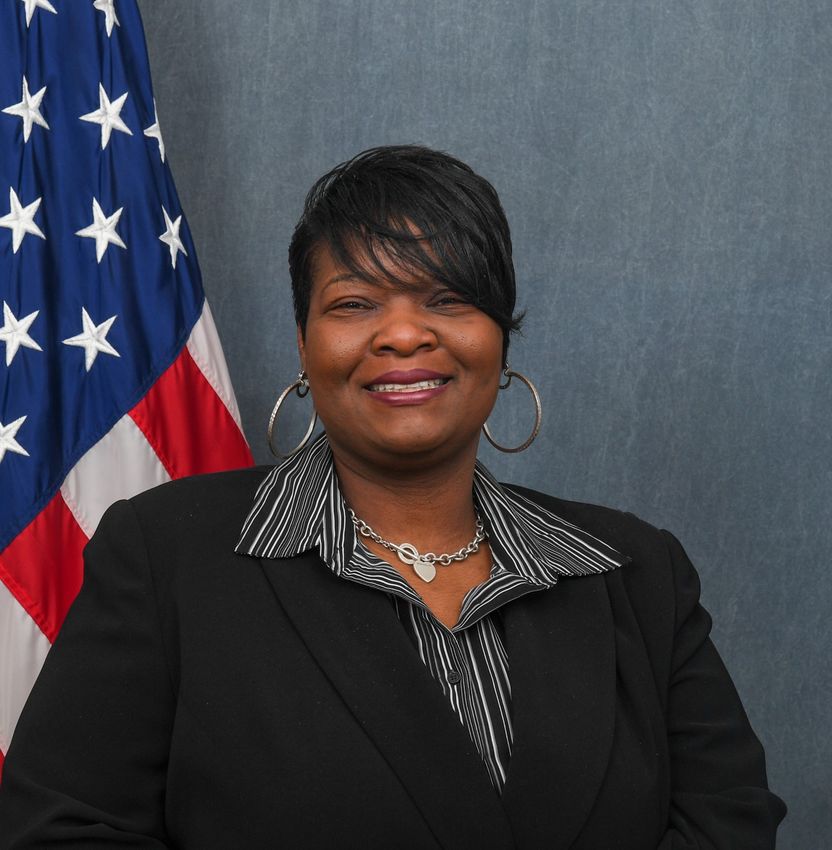
Message from the Deputy Assistant Secretary for Administrative Services

January 2021
Dear Colleagues,
The life and legacy of the Rev. Dr. Martin Luther
King, Jr., inspires me every day, particularly when
the troubles of the world seem to have placed
what appear to be insurmountable obstacles on
the path to achieving Dr. King’s vision. Yet I know
that those obstacles will eventually melt away
when we focus our hearts and minds on finding
solutions together.
While serving as leaders of the civil rights
movement, Dr. and Mrs. King raised their family in
much the same way my dear parents raised my
brothers and myself. It gives me comfort to know
that at the end of the day, their family came
together in love and faith the same way our family did, grateful for each other and grateful knowing the path
ahead was illuminated by a shared dream of a fair and equitable world.
This issue of Connections begins on the next page with wise words of introduction from our collaborative
partner, Erica White-Dunston, Director of the Office of Diversity, Inclusion and Civil Rights. Erica speaks
eloquently of Dr. King’s championing of equity, diversity and inclusion in all aspects of life long before others
understood how critically important those concepts were in creating and sustaining positive outcomes.
I hope you find as much inspiration and hope within the pages of this month’s Connections magazine as I did.
As always, please be well and stay safe.

       Jacqueline M. Jones
       Deputy Assistant Secretary for Administrative Services

                                                           3       Introduction by Erica White-Dunston
                                                           4       National Gallery of Art portrait
                                                           5       March on Washington for Jobs and Freedom
                                                           8       “I’ve Been to the Mountaintop.”
                                                           9       Letter From a Birmingham Jail
                                                           10      International Stamps featuring Dr. King
                                                           11      Coretta Scott King
                                                           13      Recommendations: Books for Children
                                                           14      “Love is the Greatest Force in the Universe.”
                                                           15      Dr. King’s Lasting Legacy
                                                           16      About the Special Emphasis Program               2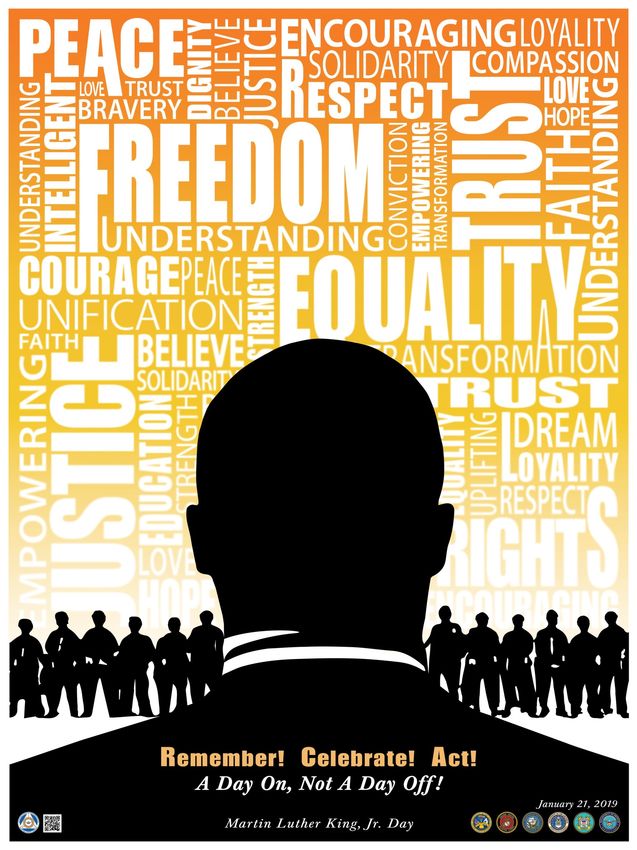
Introduction

January 2021
Dear Colleagues,
When asked to provide this month’s introduction, I
was both thrilled and a bit nervous. How could I
possibly provide new insight on the life of the Rev.
Dr. Martin Luther King, Jr.? Most people are aware
that Dr. King lived a life that exemplified non-
violence and dreamed of a world where people
would not be judged by the color of their skin but
the content of their characters. I could tell you that
he championed the needs of the poor and was
more respected abroad than at home at the time of
his death. However, I am sure that you are aware
of those facts as well.
What I will tell you is that Dr. King made an indelible
impact on my life. He was my first introduction to,       recognized that without their support, such systems
and the foundation for, my understanding of the           will inherently still fail. In short, Dr. King
importance of Equity, Diversity and Inclusion (EDI)       championed the development of EDI allies.
in every aspect of life, including the employee life
                                                          So, I ask…how has the life and legacy of the Rev. Dr.
cycle. First, he embodied the spirit of equity,
                                                          Martin Luther King, Jr., inspired you, personally and
diversity and inclusion in the community that
                                                          professionally? Is your professional network diverse
surrounded him, which included, but was not
                                                          and inclusive? Let each of us use this time of
limited to literally every protected class identified
                                                          remembrance as inspiration to continue to foster an
by Title VII (race, color, sex [to include sexual
                                                          EDI culture at DOI.
orientation and identity], age, disability, national
origin and religion). Second, he mentored and                    “Life’s most persistent and urgent question
coached everyone who sought assistance, so that                  is, ‘What are you doing for others?’”
the next generation was prepared to not only                     “If I cannot do great things, I can do small
continue to foster a transformative culture that                 things in a great way.”
supported EDI concepts, but was included and
                                                                        - The Rev. Dr. Martin Luther King Jr.
prepared for leadership development.
                                                          With best regards,
Third, he valued people first, then process and
procedure. He understood that processes and                      Erica White-Dunston
procedures were necessary for organizational
change but, most notably, because of his innate                  Director, DOI Office of Diversity, Inclusion
understanding of the needs of the people,                        and Civil Rights

                                                                                                                3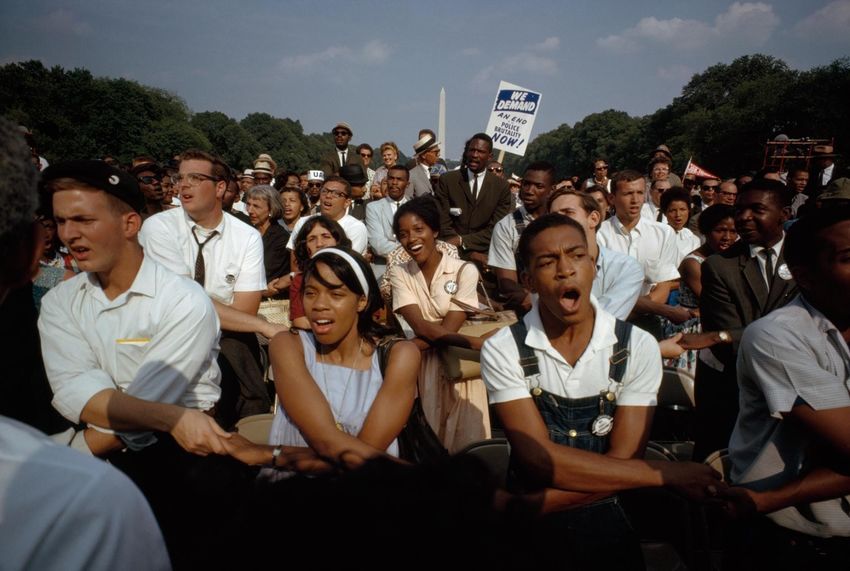
Martin Luther King Jr. by Boris Chaliapin (1904–1979) / Watercolor and pencil on board, 1957. National Portrait Gallery
                                                                                                                          4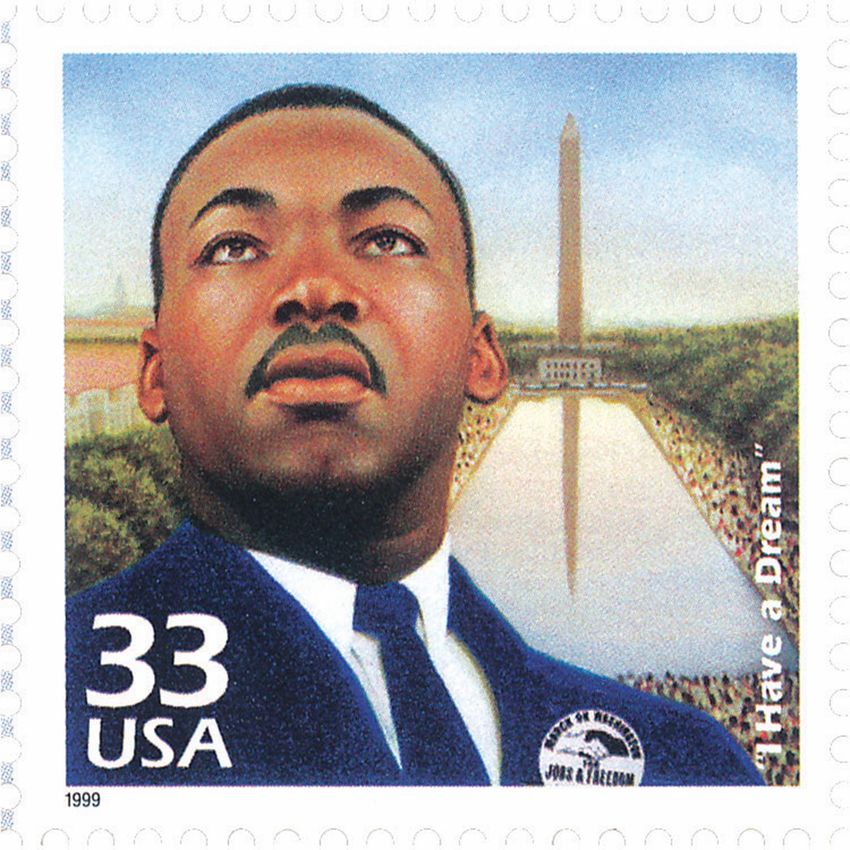
Remembering Dr. King
                      March on Washington for Jobs and Freedom

From the National Park Service                                       the original idea came from A. Philip Randolph, a labor organizer
                                                                     and founder of the Brotherhood of Sleeping Car Porters and the
It was the largest gathering for civil                               Negro American Labor Council (NALC). His vision for a march on
                                                                     the Nation's Capitol dated to the 1940s when he twice proposed
rights of its time: an estimated 250,000
                                                                     large-scale marches to protest segregation and discrimination in
people attended the March on                                         the U.S. military and the U.S. defense industry and to pressure
                                                                     the White House to take action. The pressure worked. President
Washington for Jobs and Freedom on                                   Roosevelt signed Executive Order 8802 (Prohibition of
August 28, 1963, arriving in Washington                              Discrimination in the Defense Industry, 1941) and President
                                                                     Truman signed Executive Order 9981 (Desegregation of the
by planes, trains, cars, and buses from                              Armed Forces, 1948), and Randolph cancelled the marches.

all over the country.                                                Organizing the March

Introduction                                                         By the 1960s, a public expression of dissatisfaction with the
                                                                     status quo was considered necessary and a march was planned
The event focused on employment discrimination, civil rights
                                                                     for 1963, with Randolph as the titular head. Joining Randolph in
abuses against African Americans, Latinos, and other
                                                                     sponsoring the March were the leaders of the five major civil
disenfranchised groups, and support for the Civil Rights Act that
                                                                     rights groups: Roy Wilkins of the National Association for the
the Kennedy Administration was attempting to pass through
                                                                     Advancement of Colored People (NAACP), Whitney Young of the
Congress. This momentous display of civic activism took place
                                                                     National Urban League (NUL), Martin Luther King, Jr. of the
on the National Mall, known as America's Front Yard, and was
                                                                     Southern Christian Leadership Conference (SCLC), James Farmer
the culmination of an idea born more than 20 years before.
                                                                     of Congress On Racial Equality, and John Lewis of the Student
While the March was a collaborative effort, sponsored by             Nonviolent Coordinating Committee (SNCC).
leaders of various student, civil rights, and labor organizations,
                                                                                                                     [cont’d]
                                                                                                                                   5
                                                                                                                                         4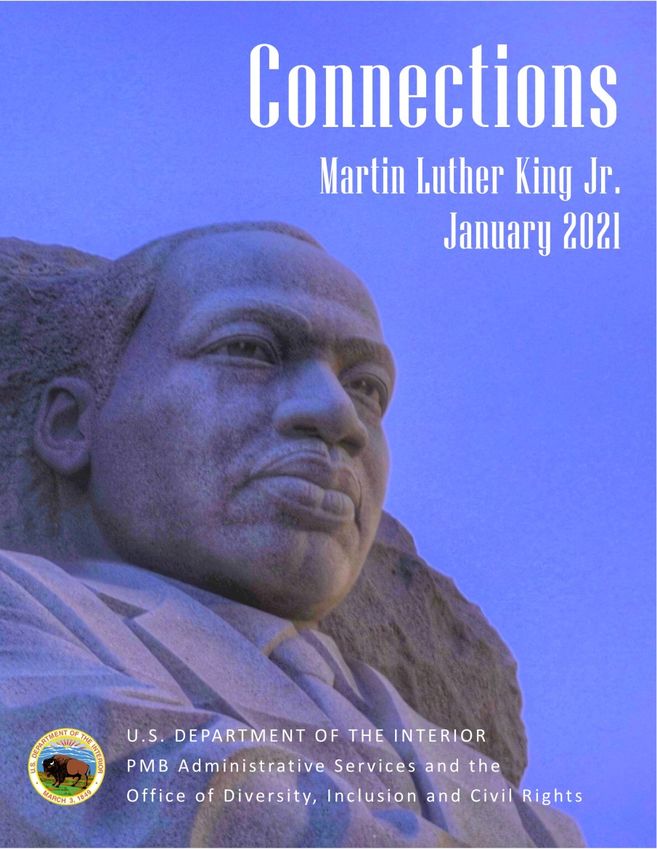
Remembering Dr. King

These "Big Six," as they were called, expanded to include Walter     Rustin coordinated a staff of over 200 civil rights activists and
Reuther of the United Auto Workers (UAW), Joachim Prinz of           organizers to assist in publicizing the march and recruiting
the American Jewish Congress (AJC), Eugene Carson Blake of the       marchers, organizing churches to raise money, coordinating
Commission on Religion and Race of the National Council of           buses and trains, and administering all of the other logistical
Churches, and Matthew Ahmann of the National Catholic                details. In many ways, the march defied expectations. The
Conference for Interracial Justice. In addition, Dorothy Height of   number of people that attended exceeded the initial estimates
the National Council of Negro Women participated in the              made by the organizers. Rustin had indicated that they expected
planning, but she operated in the background of this male-           over 100,000 people to attend - the final estimate was 250,000,
dominated leadership group.                                          with 190,000 blacks and 60,000 whites in attendance.

The march was organized in less than three months. Randolph          A Powerful, Peaceful Protest
handed the day-to-day planning to his partner in the March on
                                                                     With that many people converging on the city, there were
Washington Movement, Bayard Rustin, a pioneer of the 1947
                                                                     concerns about violence. The Washington, D.C. police force
Journey of Reconciliation and a brilliant strategist of nonviolent
                                                                     mobilized 5,900 officers for the march and the government
direct action protests. Rustin planned everything, from training
                                                                     mustered 6,000 soldiers and National Guardsmen as additional
"marshals" for crowd control using nonviolent techniques to the
                                                                     protection. President Kennedy thought that if there were any
sound system and setup of porta-potties. There was also an
                                                                     problems, the negative perceptions could undo the civil rights
organizing manual that laid out a statement of purpose, specific
                                                                     bill making its way through Congress. In the end, the crowds
talking points, and logistics. Rustin saw that to maintain order
                                                                     were calm and there were no incidents reported by police.
over such a large crowd, there needed to be a highly organized
support structure.                                                                                                        [cont’d]

                                 Photo by James P. Blair, National Geographic, August 28, 1963
                                                                                                                                     6
                                                                                                                                         4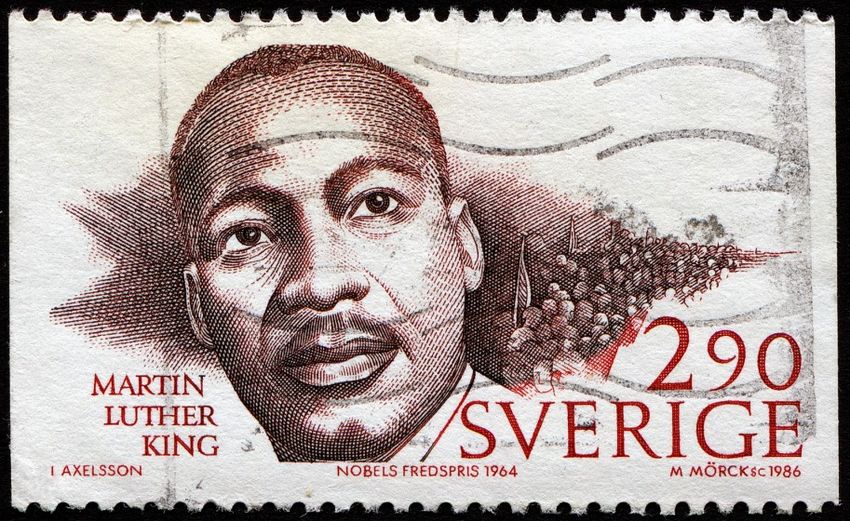
Remembering Dr. King

While the March was a
peaceful occasion, the words
spoken that day at the
Lincoln Memorial were not
just uplifting and
inspirational such as Dr.
King’s "I Have a Dream"
speech, they were also
penetrating and pointed.
There was a list of Ten
Demands from the sponsors,
insisting on a fair living wage,
fair employment policies,
and desegregation of school
districts.

John Lewis in his speech said,
"We do not want our
freedom gradually but we
want to be free now" and
that Congress needed to pass
"meaningful legislation" or
people would march through
the South. Although the
SNCC chairman had toned
down his remarks at the
request of liberal and
moderate allies, he still
managed to criticize both
political parties for moving
too slowly on civil rights.

Others such as Whitney
Young and Joachim Prinz
spoke of the need for justice,
for equal opportunity, for full
access to the American
Dream promised with the
Declaration of Independence
and reaffirmed with the
passage of the 13th, 14th, and 15th Amendments. They spoke          attending a church service while others wore overalls and boots;
of jobs, and of a life free from the indifference of lawmakers to   veterans of the Civil Rights Movement and individuals new to
people's plights.                                                   the issues locked arms, clapped and sang and walked. Many
In the end, after all of the musical performances, speeches, and    began without their leaders, who were making their way to
politics, it was the people that truly made the March on            them from meetings on Capitol Hill. They could no longer be
Washington a success. They brought box lunches, having spent        patient and they could no longer be held back, and so they
all they could spare to get to Washington; some dressed as if       started to march for their civil rights.

                                                                                                                                  7
                                                                                                                                       4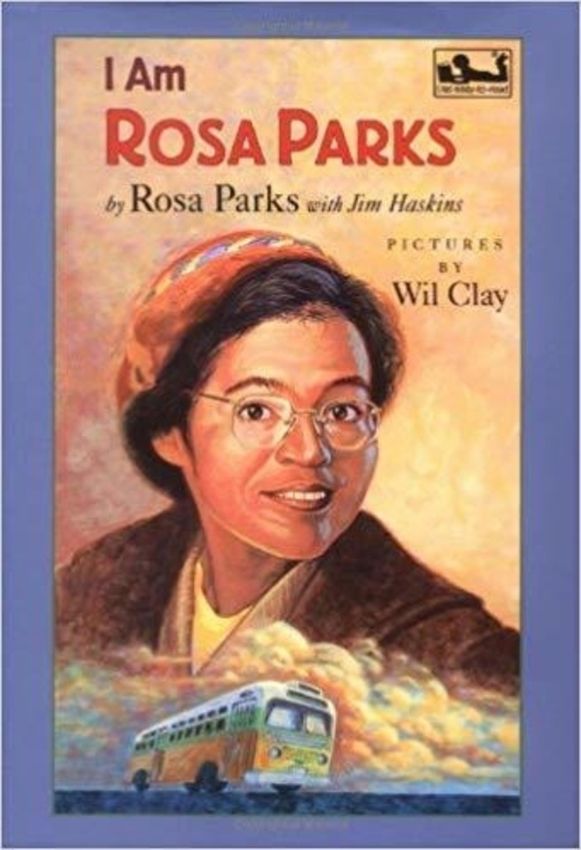
Remembering Dr. King

“I’ve Been to the Mountaintop.”                                     and convinced him to brave the bad weather and come down to
                                                                    the temple. When King arrived, the crowd gave him a standing
From the Martin Luther King, Jr. Research and Education             ovation. After Abernathy introduced King, the 39-year-old
Institute, Stanford University                                      leader took the podium and began to speak to the audience
“We’ve got some difficult days ahead,” Martin Luther King, Jr.,     extemporaneously. “Something is happening in Memphis,” King
told an overflowing crowd in Memphis, Tennessee, on April 3,        said. “Something is happening in our world.” Surveying great
1968, where the city’s sanitation workers were striking. “But it    times in history, including Egypt, the Roman Empire, the
really doesn’t matter with me now, because I’ve been to the         Renaissance, and the Civil War, King said he would “be happy” if
mountaintop … I’ve seen the Promised Land. I may not get there      God allowed him “to live just a few years in the second half of
with you. But I want you to know tonight, that we, as a people,     the twentieth century.”
will get to the Promised Land.” Less than 24 hours after these      As King recalled the events in Birmingham in 1963, he painted a
prophetic words, King was assassinated.                             bleak picture of the times, yet said this was the best time in
King had come to Memphis two times before to give aid to the        which to live. As King concluded his speech, he began to
Memphis Sanitation                                                                                             reminiscence about his
Workers’ Strike. On                                                                                            near fatal stabbing in
March 18th, he spoke                                                                                           September 1958. He
at a rally before                                                                                              exclaimed that he
15,000 people and                                                                                              would have missed the
vowed to return the                                                                                            emergence of the
following week to                                                                                              student sit-ins in 1960,
lead a march. James                                                                                            the Freedom Rides in
Lawson and King led a                                                                                          1961, the Albany
march on March                                                                                                 Movement in 1962,
28th, which erupted                                                                                            the March on
in violence and was                                                                                            Washington for Jobs
immediately called                                                                                             and Freedom in 1963,
off. Against the                                                                                               and the Selma to
advice of his                                                                                                  Montgomery March in
colleagues in the                                                                                              1965.
Southern Christian                                                                                             In a prophetic finale to
Leadership                                                                                                     his speech, King
Conference, King                                                                                               revealed that he was
returned to Memphis                                                                                            not afraid to die: “Like
on April 3rd, seeking                                                                                          anybody, I would like
to restore                                                                                                     to live a long life—
nonviolence back to                                                                                            longevity has its place.
the movement in                                                                                                But I’m not concerned
Memphis.                                                                                                       about that now. I just
After arriving in                                                                                              want to do God’s
Memphis, King was exhausted and had developed a sore throat         will…. And so I’m happy tonight; I’m not worried about
and a slight fever. He asked Ralph Abernathy to take his place at   anything; I’m not fearing any man. Mine eyes have seen the
that night’s scheduled mass meeting at Bishop Charles Mason         glory of the coming of the Lord.” Witnesses, including
Temple. As Abernathy took the podium he could sense the             Abernathy and Andrew Young said King had tears in his eyes as
disappointment of the crowd, which had turned out in the            he took his seat. “This time it just seemed like he was saying,
hundreds to hear King speak. Abernathy called King at the hotel     ‘Goodbye, I hate to leave,’” said Young.

                                                                                                                                     8
                                                                                                                                          4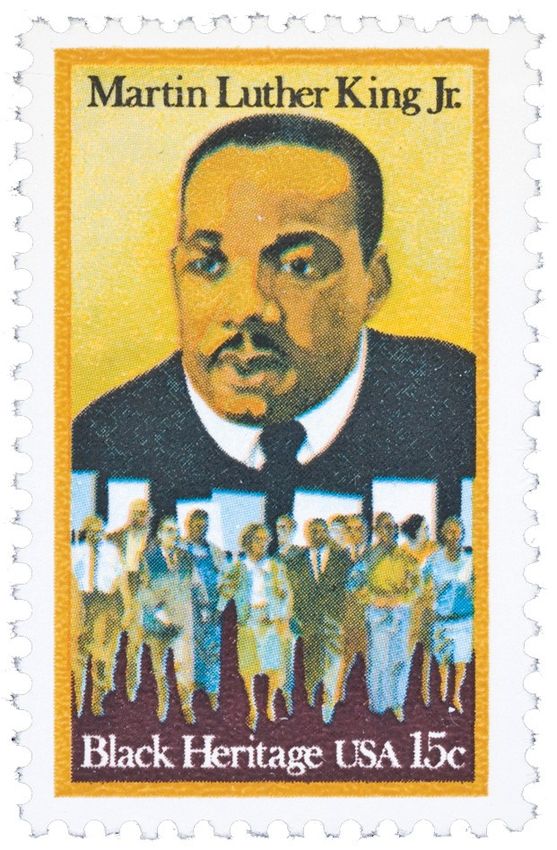
This quote is drawn from Dr. Martin Luther King Jr.’s “Letter From a Birmingham Jail.” Written as a response to local
clergy’s “call for unity” during the protests of 1963, the letter’s defense of nonviolent resistance and its insistence
on justice for all have made it a foundational text of both the civil rights movement and history classrooms.
                                                                                                                          9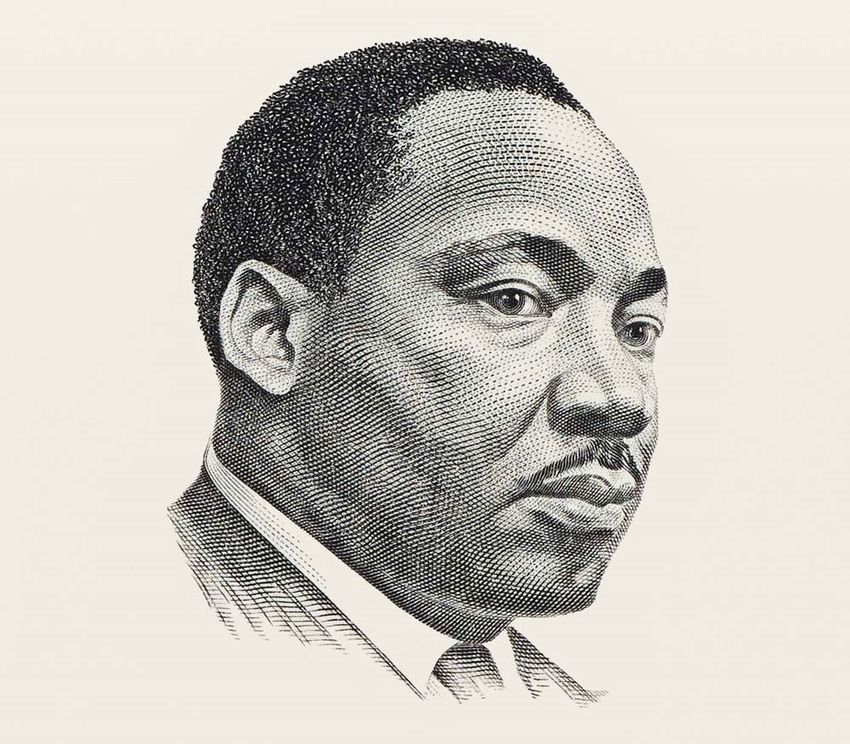
Honoring Dr. King: International Stamps

               Dr. King’s legacy is honored by countries far and wide on official stamps. Pictured here are the two
               U.S. stamps issued [top left], along with stamps from Mali, India, the Republic of the Congo, Sweden,
               Samoa, Gabon, Liberia, Ghana and Yemen. A complete listing of stamps is available here.                      4
                                                                                                                       10
                                                                                                                            4
Remembering Coretta Scott King
CORETTA SCOTT KING
From The King Center
Coretta Scott King was one of the most influential women
leaders in our world. Prepared by her family, education, and
personality for a life committed to social justice and peace, she
entered the world stage in 1955 as wife of the Reverend Dr.
Martin Luther King, Jr. and as a leading participant in the
American Civil Rights Movement. Her remarkable partnership
with Dr. King resulted not only in four children, who became
dedicated to carrying forward their parent’s work, but also in a
life devoted to the highest values of human dignity in service to
social change.
Mrs. King traveled throughout the world speaking out on
behalf of racial and economic justice, women’s and children’s
rights, gay and lesbian dignity, religious freedom, the needs of
the poor and homeless, full-employment, health care,
educational opportunities, nuclear disarmament and
environmental justice. She lent her support to pro-democracy
movements worldwide and consulted with many world
leaders, including Corazon Aquino, Kenneth Kaunda, and
Nelson Mandela.
Born and raised in Marion, Alabama, Coretta Scott graduated
From the earliest days, however, she balanced mothering and
valedictorian from Lincoln High School. She received a B.A. in
Movement work, speaking before church, civic, college,
music and education from Antioch College in Yellow Springs,
fraternal and peace groups. She conceived and performed a
Ohio, and then went on to study concert singing at Boston’s
series of favorably-reviewed Freedom Concerts which
New England Conservatory of Music, where she earned a
combined prose and poetry narration with musical selections
degree in voice and violin. While in Boston she met Martin
and functioned as significant fundraisers for the Southern
Luther King, Jr. who was then studying for his doctorate in
Christian Leadership Conference, the direct action organization
systematic theology at Boston University. They were married
of which Dr. King served as first president.
on June 18, 1953, and in September 1954 took up residence in
Montgomery, Alabama, In 1957, she and Dr. King journeyed to
with Coretta Scott King Ghana to mark that country’s
assuming the many independence. In 1958, they spent a
responsibilities of pastor’s belated honeymoon in Mexico, where
wife at Dexter Avenue they observed first-hand the immense
Baptist Church. gulf between extreme wealth and
extreme poverty. In 1959, Dr. and
During Dr. King’s career,
Mrs. King spent nearly a month in
Mrs. King devoted most of
India on a pilgrimage to disciples and
her time to raising their
sites associated with Mahatma
four children: Yolanda
Gandhi. In 1964, she accompanied him
Denise (1955), Martin
to Oslo, Norway, where he received
Luther, III (1957), Dexter
the Nobel Peace Prize.
Scott (1961), and Bernice
[cont’d]
Albertine (1963). 4
11
4Remembering Coretta Scott King
Even prior to her husband’s public stand against the Vietnam Coretta Scott King tirelessly carried
War in 1967, Mrs. King functioned as liaison to peace and the message of nonviolence and the
justice organizations, and as mediator to public officials on dream of the beloved community to
behalf of the unheard. almost every corner of our nation
and globe. She led goodwill missions
After her husband’s assassination in 1968, Mrs. King founded
to many countries in Africa, Latin America, Europe and Asia.
and devoted great energy and commitment to building and
She spoke at many of history’s most massive peace and justice
developing programs for the Atlanta-based Martin Luther King,
rallies. She served as a Women’s Strike for Peace delegate to
Jr. Center for Nonviolent Social Change as a living memorial to
the seventeen-nation Disarmament Conference in Geneva,
her husband’s life and dream. As founding President, Chair,
Switzerland in 1962. She was the first woman to deliver the
and Chief Executive Officer of The King Center, she dedicated
class day address at Harvard, and the first woman to preach at
herself to providing local, national and international programs
a statutory service at St.
Paul’s Cathedral in London.
A life-long advocate of
interracial coalitions,
in 1974 Mrs. King formed a
broad coalition of over 100
religious, labor, business,
civil and women’s rights
organizations dedicated to a
national policy of full
employment and equal
economic opportunity, as Co
-Chair of both the National
Committee for Full
Employment and the Full
Employment Action Council.
In 1983, she brought
together more
than 800 human rights
organizations to form the
Coalition of Conscience,
sponsors of the 20th
that have trained tens of thousands of people in Dr. King’s
Anniversary March on Washington, until then the largest
philosophy and methods; she guided the creation and housing
demonstration ever held in our nation’s capital. In 1987, she
of the largest archives of documents from the Civil Rights
helped lead a national Mobilization Against Fear and
Movement; and, perhaps her greatest legacy after establishing
Intimidation in Forsyth County, Georgia. In 1988, she re-
The King Center itself, Mrs. King spearheaded the massive
convened the Coalition of Conscience for the 25th anniversary
educational and lobbying campaign to establish Dr. King’s
of the March on Washington. In preparation for the Reagan-
birthday as a national holiday.
Gorbachev talks, in 1988 she served as head of the U.S.
In 1983, an act of Congress instituted the Martin Luther King, delegation of Women for a Meaningful Summit in Athens,
Jr. Federal Holiday Commission, which she chaired for its Greece; and in 1990, as the USSR was redefining itself, Mrs.
duration. And in January 1986, Mrs. King oversaw the first legal King was co-convener of the Soviet-American Women’s
holiday in honor of her husband, a holiday which has come to Summit in Washington, DC.
be celebrated by millions of people world-wide and, in some
Mrs. King passed away on January 30, 2006.
form, in over 100 countries. 4
12
4Recommendation: Books for Children
< Child of the Civil Rights Movement: The youngest
daughter of civil rights leader Andrew Young shares a
time when she and her two older sisters moved from
New York to Atlanta to protest and ultimately change
unfair laws.
> Martin’s Big Words: Martin Luther King Jr. grew up
fascinated by big words. He would later go on to use
these words to inspire a nation and call people to
action. In this award-winning book, powerful portraits
of King show how he used words, not weapons, to fight
injustice.
< Happy Birthday, Martin Luther King: The significance
and impact of Dr. King and why his birthday is
celebrated is presented in a handsome package. Fluid
text combines with stunning illustrations done in
scratchboard and paint, to make a sometimes difficult
subject accessible to younger children.
> Freedom on the Menu—the Greensboro Sit-ins: A
girl and her mom want to have a sweet treat on a hot
day but cannot sit at the soda fountain simply because
they are “colored.” Impressionistic paintings soften the
harshness of the story of segregation in the South
during a turbulent time.
< March On! The Day My Brother Martin Changed the
World: Martin Luther King, Jr. prepared diligently for
his now famous “I have a dream” speech given on
August 28, 1963 during the March on Washington for
Jobs and Freedom. This informal account is both
personal and satisfying as revealed by Martin’s older
sister who watched it on television with their parents
in Atlanta.
> I Am Rosa Parks: The famous civil rights activist Rosa
Parks has simplified her autobiography for young
readers in this Puffin Easy to Read book. She describes
how she was arrested for not giving up her bus seat
and shows that her personal role was part of a wider
political struggle.
< City Green: There is a garbage-filled, vacant lot on
the street where Marcy lives. Instead of growing
flowers in coffee cans like they usually do each spring,
she and her friend Miss Rosa decide to plant a garden
there. Their enthusiasm and energy spread and
everyone in the neighborhood joins together to create
an urban oasis.
> Freedom Summer: Joe and John Henry are friends
who have many interests in common, including
swimming. But because John Henry has brown skin and
Joe’s is the “color of pale moths,” they cannot swim
together in the town’s pool. Told by Joe and eloquently
illustrated, the emotions and power of friends trying to
understand an unfriendly world are timeless.
13
4Dr. King’s Lasting Legacy
A handwritten note from Dr. King believed to be circa 1962 was recently discovered.
Dr. King spoke eloquently and compellingly about equality, "Every man must decide whether he will
freedom, social justice, courage, family, friendship and
forgiveness, but his most powerful messages of all were about walk in the light of creative altruism or in
love. Martin Luther King Day is a holiday meant to inspire and the darkness of destructive selfishness."
commemorate, and you can do both by sharing these quotes
about love. They are just as relevant and applicable today as "Forgiveness is not an occasional act; it is a
they were decades ago, and they are a perfect way to constant attitude."
remember King as we celebrate his moving legacy.
"Life's most persistent and urgent question
"I have decided to stick with love. Hate is too
is, 'What are you doing for others?'"
great a burden to bear."
"Man must evolve for all human conflict a
"Love is the only force capable of
method which rejects revenge, aggression
transforming an enemy into a friend."
and retaliation. The foundation of such a
"Darkness cannot drive out darkness; only method is love."
light can do that. Hate cannot drive out hate;
"At the center of nonviolence stands the
only love can do that."
principle of love."
"In the end, we will remember not the
"I believe that unarmed truth and
words of our enemies, but the silence of
unconditional love will have the final word in
our friends."
reality. This is why right, temporarily
"The time is always right to do what is right." defeated, is stronger than evil triumphant." 4
14
4Dr. King’s Lasting Legacy
NON-VIOLENT PROTEST: In a 1959 radio address during his visit to India, King said: “Today we no longer
have a choice between violence and nonviolence; it is either nonviolence or nonexistence.” His philosophy was
inspired by Gandhi’s nonviolent action to end British rule in India. In his turn, King inspired others to change their
societies through nonviolent means, from the Solidarity movement’s cracking of Soviet occupation in Poland to
Nelson Mandela’s struggle to end apartheid in South Africa.
FIGHTING PREJUDICE: During the 1963 March on Washington, King declared that all people should be
judged not “by the color of their skin, but by the content of their character.” The King Center in Atlanta is a living
memorial to King’s vision of a free and equal world dedicated to expanding opportunity, fighting racism and
ending all forms of discrimination.
PURSUING SOCIAL JUSTICE: The Martin Luther King Jr. Research and Education Institute at Stanford
University is home to the King Papers Project, a comprehensive collection of all of King’s speeches,
correspondence and other writings. The institute is also involved with the Liberation Curriculum Initiative and
the Gandhi-King Community, both of which use King’s life and ideas to connect social activists around the world
working to promote human rights.
SERVICE TO OTHERS: In the United States, Martin Luther King Day is designated a national day of service.
Americans celebrate “a day on, not a day off” in honor of King’s commitment to improving the lives of others. 4
15
4About the Special Emphasis Program
Special Emphasis Programs (SEPs) are
implemented and observed throughout
the Department of the Interior primarily to
ensure that all are provided an equal
opportunity in all aspects of employment.
These programs help DOI improve its
employee engagement efforts and fosters
an environment where all employees are
valued, accepted, appreciated and feel
included.
The Administrative Services Special
Emphasis Program Team, in collaboration
with the DOI Office of Diversity, Inclusion and Civil Rights, publishes Connections magazine to coincide with each
monthly commemoration. We would be delighted to have you be a part of our efforts by:
• Shaping subject matter for each magazine
• Creating and submitting content
• Participating in and hosting virtual observances and informal discussions
• Celebrating diversity with family, friends and co-workers
Team members spend approximately one hour per pay period on SEP initiatives, are able to take time away when work
schedules require it, and can focus on those subject areas that are most meaningful to them.
To get started, please send an email here and a team member will contact you.
Thank you sincerely for your interest!
Connections Magazine for
February: African American
History Month
The Special Emphasis Program Magazine is a publication of the Office of
the Deputy Assistant Secretary, Administrative Services, in collaboration
with the Office of Diversity, Inclusion and Civil Rights. Your input is
essential to making this a valuable resource for all employees. Please feel
free to share your ideas, suggestions and articles/pictures with editor
Steve Carlisle by emailing Stephen_Carlisle@ibc.doi.gov. Thank you!
The views and conclusions contained in this work are those of the authors
and should not be interpreted as representing the opinions or policies of
the U.S. Government. Mention of trade names or commercial products
does not constitute their endorsement by the U.S. Government.
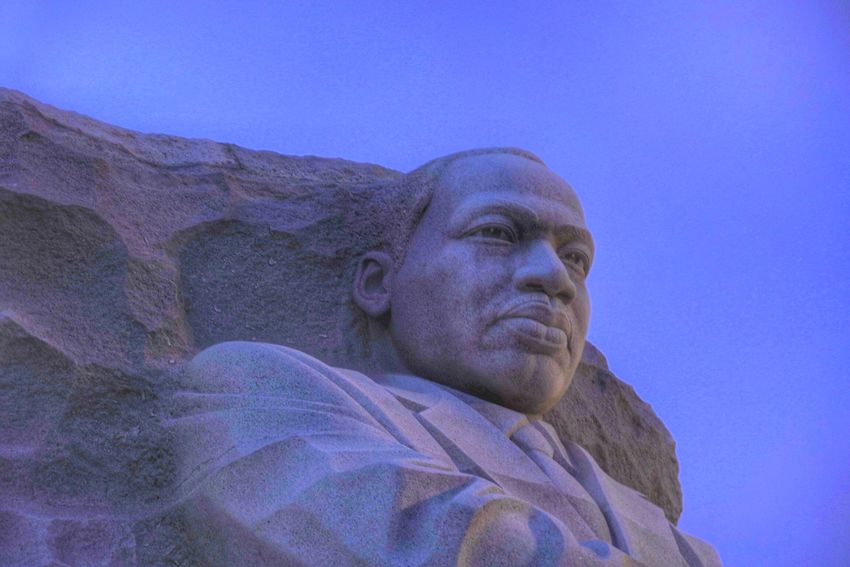
On the cover: the Martin Luther King Memorial.
Photo by Evan Wexler 23You can also read


