LIBOR TRANSITION MARKET UPDATE: 16-31 MARCH 2021 - PWC
←
→
Page content transcription
If your browser does not render page correctly, please read the page content below

LIBOR Transition
Market update:
16-31 March 2021

        days to                                                       1 – Highlights
                                                                      - ARRC’s progress report

1 Highlights                                                          - No term rate, no problems?
                                                                      - EC consultation on CHF LIBOR
ARRC’s progress report                                                  replacement
What happened? The Alternative Reference Rates Committee
(ARRC) published a report on the transition away from USD             - Math class: Updated guidance for GBP
LIBOR. Amid slower than hoped for transition progress,                  loans
especially in the loan markets, the committee suggests that “the      - Math class (extra credit): ARRC
transition needs to accelerate quickly” for firms to meet               whitepaper on CMS fallbacks
regulatory expectations for an end of issuances of new LIBOR-
based products by year end 2021. This sentiment was echoed            - Dear CEO: Hanging on to LIBOR should
later in the day by Fed Vice Chair for Supervision Randal               have consequences
Quarles, who in his keynote address at the ARRC’s SOFR
Symposium suggested regulators would place “intense                   2 – RFR adoption: Derivatives
supervisory focus” on firms’ transition progress, specifically with   - Futures and options
respect to efforts to end the use of USD LIBOR in new
products.                                                             - Swaps trading
Compared to estimates of industry-wide exposures published            3 – RFR adoption: Cash products
by the committee just over three years ago, the use of USD
LIBOR appears to have increased rather than decreased. While          - FRN issuances
the continued publication of USD LIBOR into June 2023 will            - Other cash products and RFR adoption
allow for the majority of exposures to mature prior to LIBOR’s
cessation, roughly $68 trillion in derivatives and $5.1 trillion in   4 – Publications at a glance
cash products are set to mature sometime after June 2023.             - ARR working groups
With the ISDA IBOR Fallbacks Protocol as well as plans for a          - Regulators
preemptive conversion of outstanding LIBOR trades at the
central clearing counterparties (CCPs) in place, there is now a       - Industry groups, infrastructure providers
clear transition path for the vast majority of legacy LIBOR-based       and other items
derivatives. The picture remains mixed in the case of cash
products, however. The report notes that an increasing number         5 – Target dates
of recent issuances have adopted the ARRC’s recommended
hardwired fallback language, providing a backstop of last resort
at the time of LIBOR’s cessation. Uptake of hardwired fallback
language, however, has not been consistent across all product
classes. That leaves a potentially
Market update:16-31 March 2021

significant number of contracts that might rely on the                   USD LIBOR, especially in the loan markets. Some held
amendment approach, contain inadequate fallback                          out hope for a credit sensitive alternative or supplement
language not contemplating LIBOR’s permanent                             to SOFR, while others counted on the emergence of a
cessation or not contain any fallback language at all.                   forward looking term rate version of SOFR. Between
To address the issue of legacy contracts containing                      the ARRC’s progress report, the unsurprising
either inadequate or no fallback language, the ARRC                      concession that a SOFR term rate was unlikely to
had put forward a legislative proposal in New York                       arrive until later in the year — if at all — and Quarles’
State. That proposal has recently been passed by the                     reminder that regulators would be watching banks’
state’s legislature and is expected to be signed into law                transition progress intently over the coming months, it
by the governor. The legislation would allow for the                     is becoming abundantly clear that time has already
statutory replacement of certain LIBOR references in                     started to run out. Embracing SOFR in its current forms
the afore described contracts upon LIBOR’s cessation,                    as a lending rate, at least for the time being, should
should they fall under New York State law.                               represent the most practical, direct path to meeting
                                                                         regulatory expectations for ending LIBOR-based
Our take: Many of us followed the recent news story of                   issuances before year-end. Other alternatives may
a container ship blocking the Suez Canal. Widely                         well, and should be expected to, evolve over time. But
circulated pictures of a seemingly tiny excavator                        with the deadline approaching, any bank that continues
working to free the bow of the immense vessel sparked                    to hesitate in moving away from USD LIBOR is bound
plenty of humorous commentary across the globe. But                      to face difficult questions from its regulators.
while the excavator paled in size next to the supersized                 Any acceleration in the shift away from LIBOR not only
ship, it wouldn’t be entirely accurate to call it “small” —              entails establishing the operational capabilities to price
given that it weighs about 20 tons. The same holds true                  and process new RFR transactions but also needs to
for USD LIBOR exposures in cash products with                            be supported by increased customer outreach and
maturities extending past June 2023. A small                             engagement. Amid the continued publication of USD
percentage of $223 trillion remains a rather large                       LIBOR, corporate borrowers might not feel the same
amount, as the comparisons included in our table                         urgency to make the shift to alternative reference rates.
below seek to put into perspective.                                      For banks to be successful in accelerating the move
Even amid the prospect of supervisory actions targeting                  away from LIBOR, they will need an effective strategy
institutions falling behind in their transition efforts, firms           to educate and communicate the urgency to change
have been slow to reduce their reliance on                               gears to their corporate customers.

(in $ trillion)                                 Year-end 20161          Year-end 20202
                                               Gross                    Gross       Maturing after
Product type                                   outstanding              outstanding June 2023         Post June 2023 balance compares to...3
OTC derivatives                                      145                    171             66        2019 Global GDP (est.): $88 trillion
Exchange traded derivatives                           45         ▲          43               2        National debt - Germany: $2.4 trillion
Business loans
Syndicated loans                                     1.5                     2.0            1.1       National debt - Spain: $1.4 trillion
Non-syndicated business loans                        0.8         ▲           1.3            0.4       National debt - Singapore: $0.4 trillion
Non-syndicated CRE/commercial mortgages              1.1                     1.5            0.8       National debt - Mexico: $0.7 trillion
Consumer loans
Retail mortgages                                     1.2                     1.3            0.8
Other consumer loans                                 0.1         ►           0.1            0.1
                                                                                                      National debt - Korea: $0.7 trillion

Bonds

Floating/variable rate notes                         1.8         ▼           1.1            0.3       National debt - Switzerland: $0.3 trillion

Securitizations
Mortgage-backed securities (incl. CMOs)              1.0                    0.8             0.8
Collateralized loan obligations                      0.4                    0.5             0.5
Asset-backed securities                              0.2         ►          0.2             0.2
                                                                                                      National debt - Canada: $1.6 trillion

Collateralized debt obligations                      0.2                    0.1             0.1
Total USD LIBOR exposure                             199                    223             74
Please note: This table has been revised from an earlier version to reflect updates made by the ARRC to its progress report.
                          1Source:Second Report, The Alternative Reference Rates Committee, March 2018
PwC | LIBOR Transition    2Source:Progress Report: The Transition from U.S. Dollar LIBOR, The Alternative Reference Rates Committee, March 2021 2
                          3Sources: IMF, The World Bank
Market update:16-31 March 2021

No term rate, no problems?                                  Risk Free Rate (TORF) on 26 April 2021. A prototype
                                                            version of TORF had been published since May 2020.
What happened? The lack of term structures in the
                                                            TORF is determined using TONA overnight index swap
recommended RFRs expected to replace LIBOR has
                                                            transactions and will be published at 17:00 JST on
long been a key topic of discussion. Over the past two
                                                            Tokyo business days in one month, three month and
weeks, a number of developments across different
                                                            six month tenors. The Cross Industry Committee (CIC)
markets have provided some additional clarity on the
                                                            on Japanese Yen Interest Rate Benchmarks had
role term reference rates can, or cannot, be expected to
                                                            selected Quick Corp. as recommended publisher early
play.
                                                            last year.
The ARRC announced that the committee would not be
in a position to recommend a forward-looking SOFR           Our take: It is becoming increasingly clear that the role
term rate by the end of Q2 2021, citing insufficient        of term rates in the transition away from LIBOR is going
liquidity in SOFR derivatives required to construct such    to differ between jurisdictions — and in some cases
a rate at this time. Market participants are encouraged     significantly so.
to continue their transition efforts without relying on a
                                                            No term SOFR...
SOFR term rate, as the committee continues to
evaluate a limited set of cases in which a term rate        While the ARRC’s announcement may have been the
might be used. The announcement followed a related          least surprising announcement of last week, for some it
discussion at the ARRC’s 17 February meeting.               may have been the most disappointing one.
The ARRC also published a white paper                       Both the ARRC and regulators have clearly
recommending the use of 30-day average SOFR set in          communicated that a formal recommendation for a
advance in asset-backed securities (ABS). An “in            SOFR term rate would require robust liquidity in the
advance” setting applies a reset of the rate at the         SOFR derivatives market, from which it is expected to
beginning of the interest period, which differs from the    be derived. Unfortunately, the USD derivatives markets
committee’s recommendation for the use of SOFR in           today are far from being anchored in SOFR. For the
arrears for business loans and other products, which        sake of comparison: When production versions of Term
would involve a reset of the rate toward the end of the     SONIA were made available in the UK earlier this year,
accrual period.                                             notional traded in SONIA swaps over the preceding 12
                                                            months had roughly been equal to notional traded in
In the UK, the FICC Markets Standards Board (FMSB)          GBP LIBOR swaps. SOFR swaps, even after the CCP
published a draft standard on the use of term SONIA         switch to SOFR for PAI and discounting in October of
reference rates. The paper describes a set of principles    last year, have rarely accounted for more than 2% to
intended to guide market participants in determining        3% of the USD derivatives markets.
whether there is a robust rationale to employ a term
                                                            The sheer size of the USD market, combined with the
reference rate for a specific financial instrument. Most
                                                            continued publication of USD LIBOR into June of 2023,
of the provided use cases that could be expected to fit
                                                            might make it difficult for SOFR to replace USD LIBOR
the described criteria align with previous suggestions
                                                            as a primary reference rate in the near future. But while
made by the WG on Sterling RFRs, such as trade
                                                            that might not necessarily be required for a term SOFR
finance loans, Islamic finance products or working
                                                            rate to become sufficiently robust, trading clearly needs
capital products. The standards also leave the door
                                                            to increase. Even in absolute terms trading in SOFR
open for the occasional use of a term rate in mid
                                                            swaps continues to be less developed than that in
corporate, private, retail, export finance or emerging
                                                            SONIA swaps. In the last week of March, SOFR swaps
markets lending — as long as a specific situation
                                                            saw $57.5 billion in notional traded, compared with
complies with the described principles. The FMSB also
                                                            $250.7 billion in SONIA-based swaps.
suggests that the use of a forward-looking term rate
may be appropriate in derivatives used in the hedging       Whatever desire there may be for a term rate, market
of cash instruments based on a term rate or tough           participants will need to find practical solutions to
legacy exposures referencing a synthetic LIBOR. The         enable life without a term rate, at least for the time
WG on Sterling RFRs, along with the FCA and BOE,            being.
issued a statement welcoming the draft. Comments are        ...means SOFR in advance for ABS
requested by 28 May 2021.                                   The ARRC’s recommended use of 30-day average
In Japan, Quick Benchmarks announced that it would          SOFR in advance in ABS represents such a practical
start publishing a production version of the Tokyo Term     solution. The proposal is the result of three (!) years of
                                                            discussions within the subgroup on securitizations,
PwC | LIBOR Transition                                                                                                   3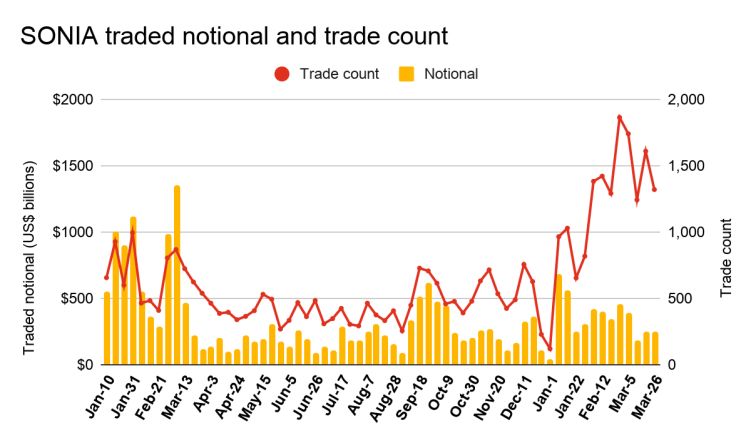
Market update:16-31 March 2021

which is comprised of a broad range of stakeholders.         progress towards meeting the 30 June 2021 target
The white paper describes the compromises that               cessation date for new issuance of JPY LIBOR-indexed
needed to be struck between the economic accuracy of         loans and bonds, as recommended by the CIC, the
an in arrears based SOFR solution, contrasted with the       Bank of Japan and Japan’s Financial Services Agency
practical realities of operating in the market.              (FSA). With some institutions hesitant to embrace RFR-
An in arrears solution would have the economic               based lending (i.e., based on TONA), TORF can be
advantage of aligning coupon receipts to incurred            expected to play a significant role in both new product
funding costs in the same time period. For operational       issuances and the transition of existing loans and
reasons, however, an in arrears use in securitizations       bonds away from JPY LIBOR. In contrast to the US and
would likely require at least a 7 business day lookback.     the UK, there has not yet been an indication that the
Given the prevalence of monthly paying instruments in        use of a term rate would be similarly restricted.
the market, such an extended lookback period could           Market participants now have the rates they have been
reflect 35% or more of the payment period, negating          waiting for. We anticipate new cash instrument
much of the economic advantage of alignment. At that         issuance away from LIBOR to pick up this summer,
point, the operational ease of an in advance rate,           setting the stage for completion of the transition away
combined with the frequency of reset, appears a more         from JPY LIBOR by the end of the year.
palatable compromise. There is little doubt that
additional variations in conventions will continue to be     EC consultation on CHF LIBOR replacement
developed. But for now, the ARRC’s proposal appears          The European Commission (EC) launched a
to provide a practical solution adhering to an age-old       consultation on the possible designation of a statutory
principle — don’t let perfect be the enemy of good.          replacement rate for CHF LIBOR in saving accounts,
                                                             mortgages and small business loans. The consultation
Some term SONIA                                              follows the FCA’s recent announcement on the
The principles-based approach laid out by the FMSB           cessation of CHF LIBOR at the end of 2021. The
puts the burden of proof to justify the use of a term rate   commission is looking to address concerns that the
squarely on the end user’s back. As is the case with         cessation of CHF LIBOR could impact the financial
recommendations made by the WG on Sterling RFRs,             stability of various consumer markets in the European
such as suggested end dates for the issuance of new          Union (EU), as most outstanding contracts maturing
GBP LIBOR products, issuers should expect regulators         after 2021 might not contain robust — if any — fallback
to hold them to the FMSB standards.                          language to address the benchmark’s permanent
Some might point to the explicit mention of a potential      cessation.
use case for derivatives as a diversion from existing        The EC proposes to limit the use of a statutory
guidance or indication that the use of term SONIA will       replacement rate to CHF LIBOR contracts entered into
become more widespread than expected. The reality is         before 1 January 2018 and maturing after December
likely to be quite different, with the use of a term rate    31, 2021. A replacement rate would be proposed only
being scrutinized heavily going forward, especially in       for the 3M CHF LIBOR setting — all other CHF LIBOR
new products.                                                tenors are not considered in the consultation. The
The FMSB’s standard arrived just shortly before the          replacement would align with the recommendations
WG on Sterling RFR’s end of Q1 target (read: deadline)       from the Swiss National Working Group on CHF
for an end to issuances of new GBP LIBOR loans —
and after the publication start of production-ready
SONIA term reference rates. The late arrival of the
standards seems to indicate that the emphasis lies
primarily on term rates as a solution for legacy products     CHF LIBOR: What
who absolutely require it.                                    comes next?
Yes, term TONA                                                Join PwC CH on Wednesday, April
With less than nine months to go until cessation of JPY       7 2021, from 2:30 to 3:30 p.m.
                                                              CEST
LIBOR, the publication of the official term rate for
TONA, known as TORF, starting on 26 April is bound to
receive a very warm welcome. This will be true
                                                                                                        Join the webinar
especially in cash markets, as the industry continues to

PwC | LIBOR Transition                                                                                                4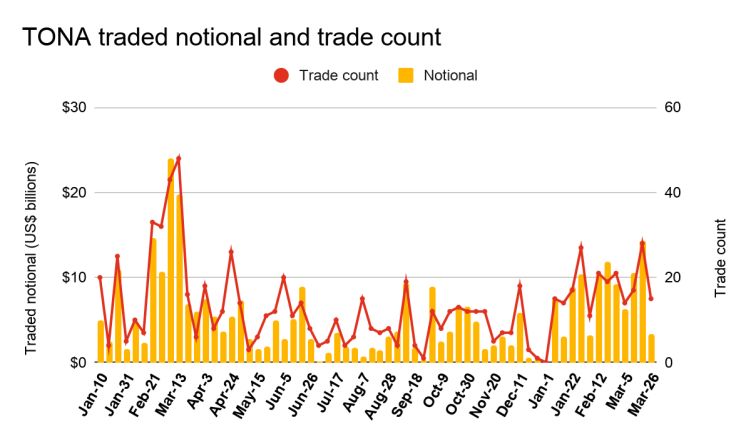
Market update:16-31 March 2021

Reference Rates, consisting of a three-month                  LIBOR contracts to the greatest extent possible, simply
compounded SARON rate plus a spread adjustment.               to be prepared for all eventualities.
That adjustment, intended to account for the economic         In the absence of a term rate and considering EU
difference between CHF LIBOR and SARON, would                 consumer protection rules, the last reset methodology
align to that proposed by ISDA as fallback for                might in fact represent the only option as replacement
derivatives contracts, i.e., based on a historical median     rate for adjustable CHF LIBOR mortgages, unless
approach over a five-year lookback period.                    market participants were willing to transition to a fixed
According to the EU Mortgage Credit Directive, any            rate. However, the last rest methodology could give rise
changes in the borrowing rate for mortgages would             to interest rate risk, resulting from to potential changes
need to be communicated to a retail client in advance.        to the observed SARON during the current interest
In line with these consumer protection considerations,        period compared with the previous observation period.
the EC proposes that the SARON-based replacement              It is expected that the EC will publish similar
rate would be calculated based on the “last reset             consultations for EONIA, GBP LIBOR and USD LIBOR
methodology.” Under this method, the rate applicable          in due course.
for the following three months is determined based on
the daily SARON overnight rates over the last three           Math class: Updated guidance for GBP loans
months. The proposed methodology aligns with the              What happened? The WG on Sterling RFRs published
recommendation of the working group on euro RFRs              an updated version of its best practice guide for GBP
for fallbacks in adjustable rate EURIBOR mortgages,           loans, supporting slides on loan conventions and
consumer and SME loans, in cases where a forward-             worked examples to provide additional detail on
looking term rate is not available. The Swiss National        calculation methodologies, incorporation of floors and
Working Group on RFRs has long made it clear that it          prepayments, as well as clarifications on using
would not recommend a forward-looking SARON term              noncumulative and cumulative rate compounding
rate.                                                         approaches.
The consultation closes on 18 May 2021. Thereafter,           A new technical appendix describes various system
the EU Commission will adopt an implementing act to           capabilities required to support the recommended
designate such a replacement rate for CHF LIBOR.              conventions for the use of SONIA in loan products. The
Our take: The consultation constitutes a prerequisite         guide, as well as the worked examples, were also
for the EC to exercise its new powers under the               updated to reflect changes in the guidance on rounding
recently amended EU Benchmark Regulation (BMR) to             methodologies with the intent to address possible
designate a replacement rate for LIBOR in contracts           discrepancies between a bank's application of the
with inadequate fallback language. The EC has                 noncumulative and cumulative compounded RFR
previously communicated that market participants              formulae. The amendments clarify that interest
should not rely on a legislative solution, as it would only   payment amounts should only be rounded to two
provide for a safe harbor or backstop of last resort. As      decimal places at the end of the interest period —
such, the restrained scope of the consultation is not         rather than daily — to ensure that the results of the final
surprising. In limiting a possible replacement to a           interest rate calculation align.
products entered into prior to 2018, and the three-           The updates also include clarifying comments on the
month CHF LIBOR setting, the EC appears to indicate           application of prepayments and floors, as well as
that it is willing to address areas with the greatest         recommendations for the automation of credit
transition risk, but stopping well short of providing a       adjustment spreads made possible by the fixing of
holistic solution for any and all legacy exposures.           ISDA’s credit adjustment spread following the FCA’s
As the consultation concludes only in May 2021, even          announcement on LIBOR cessation.
an immediate turnaround into rulemaking would leave           Finally, an additional point of guidance was added for
only a few months until CHF LIBOR’s permanent                 lead or coordinating banks looking to remediate a
cessation at the end of the year. While it remains            legacy LIBOR-based syndicated loan. The Sterling WG
unlikely that the scope of the proposed legislation will      suggests that borrower consent should be sought prior
be narrowed further, it’s not a given that it will            to engaging in discussions about the mechanics of
eventually be enacted either. Market participants             active transition with other members of the syndicate.
should look to proactively remediate legacy CHF               The updates were also taken into account by the Loan
                                                              Market Association (LMA), which issued revised

PwC | LIBOR Transition                                                                                                  5
Market update:16-31 March 2021

versions of its full suite of RFR documentation. In          count conventions, the fallback rates have a number of
addition to upgrading exposure drafts to recommended         different characteristics that market participants need to
forms, the LMA also provided additional SONIA and            be aware of.
SOFR single currency agreements, one based on an             For operational simplicity, the calculation of the fallback
observation shift and one without.                           rate assumes a flat yield curve, rather than having a
Our take: At first glance the updates appear to              term structure. It’s not clear, however, that adding
describe technical nuances of limited consequence. In        further accuracy to the calculation would provide much
reality, a number of market participants had indicated       additional benefit. Backtesting conducted by the WG on
that a lack of common standards for precise details          Sterling RFRs showed that, since 2008, the proposed
such as rounding conventions presented not                   fallback rate based on SONIA deviated at most 0.175
insignificant challenges in the transition to RFRs.          basis points from the ISR it is looking to replace. The
                                                             difference was at its peak in 2008-2009, when rates
Banks now need to react quickly to ensure that any
                                                             were the highest. Remarkably, the results also
calculation logic implemented in internal systems is
                                                             evidence a positive bias when the curve is positive
aligned to the revised guidance. Legal departments
                                                             upward sloping. While the ARCC did not publish an
need to ensure that loan documentation is updated as
                                                             equivalent test, we estimate that it would yield similar
needed, taking into account not only the WG’s revised
                                                             results.
guidance, but also the comprehensive updates
provided by the LMA. All that should literally be finished   Further, LIBOR fallbacks may differ for different
by yesterday, as we have now passed the WG on                products. These differences might create basis risk
Sterling RFR’s end of Q1 target for an end of issuances      between LIBOR swaps subject to the ISDA fallback
of new GBP LIBOR products.                                   mechanisms and instruments based on the RFR-based
                                                             fallback rate. Managing this basis risk will require
                                                             valuation adjustments, such as convexity adjustments,
                                                             and fallback risk reserves.

                                                             Dear CEO: Hanging on to LIBOR should have
                                                             consequences
                                                             What happened? The UK’s Prudential Regulation
                                                             Authority (PRA) and Financial Conduct Authority (FCA)
                                                             wrote to the CEOs and senior management
                                                             accountable for LIBOR transition at the largest and
                                                             most complex institutions. The regulators are
                                                             cementing their expectation that firms cease the
                                                             issuance of new GBP LIBOR-based products after the
                                                             end of Q1 2021, in line with the milestones put forth by
                                                             the WG on Sterling RFRs.
Math class (extra credit): ARRC whitepaper on CMS            In addition to ceasing the issuance of new GBP LIBOR
fallbacks                                                    products, the letter’s appendix sets out a series of
                                                             additional priorities for firms. These include
What happened? The ARRC published a white paper              accelerating the establishment of system readiness,
describing a potential methodology and formula to            active transition of legacy exposures, conduct risk
calculate a fallback for the USD LIBOR ICE Swap Rate         mitigation, development of liquidity in RFR markets,
(or constant maturity swap rate, also CMS) to a spread-      model change management and the selection of
adjusted SOFR Swap Rate. Earlier this year, the WG           appropriate LIBOR alternatives.
on Sterling RFRs had published a corresponding
discussion document on a SONIA- based replacement            The PRA and FCA suggest they would intensify their
for the GBP LIBOR ICE Swap Rate (ISR).                       supervisory focus not just on firms’ transition progress,
                                                             but also on the “management and oversight of the risks
Our take: Both proposals result in similar, rather           associated with transition.” As part of oversight and
straightforward replacement rates, as a function of the      governance over the transition, regulators expect that
RFR swap rate (i.e., the SOFR or SONIA swap rate)            the variable compensation of senior management
and the respective ISDA fallback spread adjustment.          accountable for the transition should be influenced by
But as a result of differences in frequency and day          the level of progress in the transition away from LIBOR.

PwC | LIBOR Transition                                                                                                 6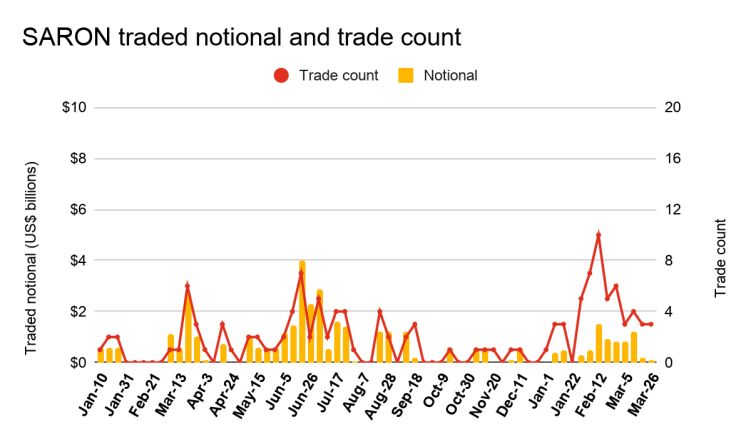
Market update:16-31 March 2021

Our take: Over the past two years, nearly every piece
of regulatory guidance, speech or statement on the
transition from LIBOR has become incrementally more
strongly worded. Some may have wondered how
regulators could possibly amplify their message even
further. The answer: A lack of progress should hit the
accountable managers where it hurts — their wallet.
A successful transition requires collaboration from the
sell-side, buy-side, corporates, third-party service
providers, CCPs and other market participants. But the
explicit tie in of transition progress to variable
compensation seems to make it clear that bankers
should not be permitted to place the blame for any
potential lack in progress on others. Rather, large and
complex firms should assume leadership positions in
the transition, acting as change agents to lead the
industry into a future free from LIBOR.
For more information, read Regulators use bonus
reduction as the latest threat to accelerate LIBOR
transition efforts.
                                                            Listen HERE

2 RFR adoption: Derivatives
Futures and options

Source: CME, ICE (accessed March 29, 2021)                  Source: CME, LCH, ICE (accessed March 29, 2021)

Our take: The pullback in volume and open interest in
RFR futures trading from the record highs seen in
                                                             ISDA IBOR Fallbacks Protocol adherence
February continued in the final two weeks of March. For
                                                             (as of 31 March 2021)
now, the provided certainty on fallback spreads has not
yet translated into a significant increase of derivatives    - 13,681 total entities (up from 13,552)
trading, may it be futures or swaps.                         - 1,467 sign-ups on or after the effective date
For both SOFR and SONIA futures, open interest and           - 29 out of 30 G-SIBs (unchanged)
average daily trading volumes remain higher in 3M
contracts than in 1M contracts.                             Source: ISDA

PwC | LIBOR Transition                                                                                          7
Market update:16-31 March 2021

Swaps trading

Our take: Trading in RFR swaps remains a mixed bag
— and a concern in the transition away from LIBOR.
Both the ARRC’s recent announcement on the delay of
a recommendation for a potential SOFR term rate, as
well as the UK regulators’ Dear CEO letter, drew
attention to the need for increased liquidity in RFR
derivatives trading. That increase is of particular
importance in the US markets, where several market
participants continue to show a strong preference for a
forward-looking term SOFR.
With respect to the sterling swaps market, it now
remains to be seen whether the passing of the WG on
Sterling RFR’s Q1 target date for an end of new GBP
LIBOR issuances will further accelerate the move from
GBP LIBOR to SONIA derivatives.
Trading in the remaining RFRs remained somewhat
indifferent in March. While small changes in trading      Source: analysis.swapsinfo.org (interest rate and credit derivatives
volumes tend to be very noticeable amid the generally     weekly trading volume): Week ending March 26, 2021, accessed
lower volumes, there has not been any sustained           March 29, 2021.
momentum toward a significant increase in liquidity.
PwC | LIBOR Transition                                                                                                           8
Market update:16-31 March 2021

3 RFR adoption: Cash products
FRN issuances (as of 31 March 2021)                                                                                   Source: Bloomberg
USD FRN issuances (in billions)                                            SONIA FRN issuances (in billions)

Our take
We have now seen over $4 billion in USD LIBOR-based FRNs since January, i.e., since the ARRC’s target date
for ending such issuances has passed. While most of these have remained relatively small in size, there are
several issuances of $250 million or greater, including one offering of $1 billion with a maturity of five years.
But at the same time, momentum continues to build for SOFR FRN issuances. March saw the first two sets of
issuances from corporate issuers, with more expected to follow in Q2 of 2021. Additionally, over 75% in total
amount issued for the month of March has come from non-GSE market participants, the highest such share in
over a year. In fact, issuances from non-GSE firms have accounted for more than two thirds of total amounts in
Q1 2021, compared with just over 40% in Q4 of 2020.

Notable cash product issuances and other RFR adoption1

RFR          Company            Detail                                                                                 Resources
SOFR         Verizon            The telecommunications company is looking to raise money via a US high-grade bond      Press coverage
                                issue, including three- and five-year floaters that will be priced over SOFR.
             PIMCO              Issued the largest, non-agency SOFR-based RMBS (residential mortgage-backed            SFA research
                                securities) to date.
             Southern CA        Issued its first floating rate bond using compounded SOFR (referencing the SOFR        Prospectus
             Edison             Index) to calculate each quarterly interest period.
             Arch Mortgage      Completed the first mortgage insurance-linked note (MILN) transaction tied to SOFR.    Press release
             Insurance
             IADB               Issued a $500 million 7-year SOFR-linked FRN, reportedly its longest ever in the format. Press coverage
             NextEra Energy     Became one of the first non-financial corporate bond issuers to issue a SOFR-linked    Term sheet
                                FRN.
             State Bank of      Extended its first corporate loan linked to SOFR to Indian Oil Corporation.            Press coverage
             India
SONIA        Aviva Investors    Extended its first SONIA-linked senior debt facilities to an alternative investment    Press coverage
                                manager. The five-year deals were made on behalf of external clients.
             Kensington         Issued the first social RMBS that complies with new ICMA social bond guidelines, based Press release
             Mortgages          on SONIA.                                                                              (ext. counsel)
             Yorkshire          Issued an RMBS featuring both GBP and USD notes, with the GBP tranche referencing      Press coverage
             Building Society   SONIA.
For additional details on employed conventions and other parameters of recent RFR-based loans, see the Loan
Market Association’s (LMA’s) regularly updated list of RFR referencing syndicated and bilateral loans.
1 Please   note: This information has been obtained from publicly available sources.
PwC | LIBOR Transition                                                                                                                    9
Market update:16-31 March 2021 4 Publications at a glance National working groups Alternative Reference Rates Committee (ARRC) • Published a progress report on the transition away from USD LIBOR. • Hosted a symposium on the use of SOFR in new loans, including remarks from the chairs of both the WG on Sterling RFRs and the ARRC itself, followed by panel discussions on the use of SOFR in new business loans. A recording has been made available. • Announced that it would not be in a position to recommend a forward-looking SOFR term rate by the end of Q2 2021. • Published a white paper that suggests the use of 30-day average SOFR in advance in asset-backed securities (ABS). • Published supplemental, simplified versions of its recommended fallback language for syndicated and bilateral business loans, incorporating information on cessation timing and spread adjustment values known as a result of the FCA’s recent announcements. • Published a white paper describing a potential methodology and formula to calculate a fallback for the USD LIBOR ICE Swap Rate based on a spread-adjusted SOFR-based Swap Rate. • Selected Refinitiv as vendor to publish recommended spread adjustments and spread-adjusted SOFR rates for use in cash products. • Published its newsletter for February/March 2021. WG on Sterling RFRs • Published a summary of responses to its consultation on a successor rate in GBP LIBOR legacy bonds. • Published minutes of the group’s 23 February meeting. • Published an updated version of its best practice guide for GBP loans, supporting slides on loan conventions and worked examples to provide additional detail on calculation methodologies, incorporation of floors and prepayments, as well as clarifications on using noncumulative and cumulative rate compounding approaches. NWG on CHF Reference Rates • Updated its starter pack on LIBOR transition in Switzerland to reflect recent announcements on LIBOR cessation. Cross-Industry Committee on JPY IR Benchmarks • Minutes from March 26 included an update from the sub-group on term reference rates. Market participants are expected to end the issuance of new JPY LIBOR IR swaps by September 2021. Liquidity providers should switch the convention for quoting IR swaps from TONA to LIBOR by the end of July 2021. Steering Committee for SOR & SIBOR Transition to SORA (SC-STS) • Announced a new timeline for the end of issuances of new SOR and SIBOR-linked products. Firms are expected to end the issuance of new SOR based derivatives and SIBOR based contracts by the end of Q3 2021. Regulators • Fed: Vice Chair for Supervision Randal Quarles spoke at ARRC’s SOFR Symposium, reiterating the call for market participants to end the use of USD LIBOR in new contracts. He suggested regulators would place “intense supervisory focus” on firms’ transition progress. • US Treasury: In testimony before the House Committee on Financial Services US Treasury Secretary Janet Yellen echoed Fed chairman Jerome Powell’s comments on the necessity of a federal legislative solution to address tough legacy USD LIBOR contracts. • OCC: Requested comments on its collection of information through its LIBOR self-assessment tool released earlier this year. • FHFA: The agency’s Office of the Inspector General published an update on Fannie Mae and Freddie Mac’s transition from LIBOR to SOFR for single-family ARMs, discussing the potential risks faced by the enterprises should SOFR not be widely adopted. • New York: The state’s legislature passed a bill based on ARRC’s legislative proposal, allowing for a statutory replacement of LIBOR in contracts containing no or inadequate fallback language as well as providing a safe harbor from litigation for the use of such a replacement rate. The governor is expected to sign the bill into law. The ARRC welcomed the passage of the bill, as did SIFMA. • PRA / FCA: Wrote to the CEOs and senior management accountable for LIBOR transition at the largest and most complex institutions, cementing their expectation that firms cease the issuance of new GBP LIBOR based products after the end of Q1 2021. • FCA / BOE: Asked GBP nonlinear derivatives market liquidity providers to base quoting of inter-dealer trading on SONIA after May 11. • Bank of England: Published minutes of the SONIA Stakeholder Advisory Group meeting on 25 February. Updated its market notice on its risk management approach to LIBOR-based collateral, confirming 1 April as the start date for haircuts applied to such collateral. Collateral referencing any USD LIBOR setting will no longer be accepted after 1 January 2022. • European Commission: Launched a consultation on the designation of a statutory replacement for CHF LIBOR in mortgages and small business loans entered into prior to 2018. Responses are due by 18 May 2021. • European Central Bank: Announced the publication of compounded €STR averages and index beginning 15 April of this year. • ESMA: Updated its statement on Brexit’s impact on the BMR, noting that the extension of the provisional period would also apply to third country benchmarks recognized in the UK. The agency’s report on trends, risks and vulnerabilities includes an analysis on outstanding LIBOR exposures in the EU and the UK. • FSA: Published a Q&A on transitional measures for OTC derivative transaction regulations related to legacy contracts that are impacted by benchmark reform (permanent suspension of publication of LIBOR) (in Japanese). • HKMA (w/ TMA): Announced they no longer expected institutions to cease issuances of new LIBOR-based products by the end of Q2 2021. Firms are expected to continue their transition efforts, ceasing the issuance of new LIBOR-linked contracts by the end of 2021. Senior Exec. Dir. Edmond Lau spoke at a recent industry event, noting that he believed the work ahead remained substantial. • Reserve Bank of Australia: Assistant Governor Christopher Kent reiterated the FSB’s LIBOR transition milestones and addressed specifics of the transition in the Australian markets during his keynote address at a recent industry event. • Bank of Thailand: Updated its milestones for the transition to THOR, extending the end date of THBFIX publication until June 2023. As THBFIX relies on USD LIBOR for calculation, its continued publication allows for the continued publication of THBFIX as well. • Central Bank of Malaysia: The Shariah Advisory Council ruled that an RFR as LIBOR replacement is permissible. • Florida: The state senate’s finance and tax committee has advanced a bill that would clarify that changing the rate on certain financial instruments as a result of benchmark reform would not constitute a renewal, and hence not be subject to document excise tax. PwC | LIBOR Transition 10
Market update:16-31 March 2021

Industry groups, infrastructure providers and other items
• FICC Markets Standards Board: Published a draft standard on the use of term SONIA reference rates, describing a set of principles
    to guide market participants in determining whether a term reference rate is suitable for a specific financial instrument. Comments are
    requested by 28 May 2021. The WG on Sterling RFRs, along with the FCA and BOE, issued a statement welcoming the draft.
•   LSTA: Published a concept document for syndicated multi-currency loans based on simple average RFRs (member access only).
    Summarised the rationale for ARRC’s simplified hardwired fallback language.
    Commented on the passing of the ARRC’s legislative solution for legacy LIBOR contracts in New York State.
    Cautioned market participants that an ARRC recommended term SOFR rate may not be available for quite some time.
•   LMA: Updated its various exposure drafts for RFR based facilities to recommended forms. Among other items, the documents were
    refreshed to reflect the Sterling WG’s revised guidance for GBP loans referencing SONIA. The LMA also replaced existing single
    currency SONIA and SOFR exposure drafts with two recommended single currency agreements, one based on an observation shift
    and one without (18 documents in all, member access required).
    Published a set of considerations for the use of a forward-looking term SONIA reference rate in loan products (member access only).
    Published an interview with a law firm representative, focused on a recent multicurrency deal employing a rate switch mechanism.
    Published an updated list of RFR referencing syndicated and bilateral loans.
•   Structured Finance Association: Recapped a busy month in the transition away from LIBOR, including a closer look at the status of
    the transition in the structured finance markets.
•   LCH: Announced the timing and additional details on its planned preemptive conversion of existing LIBOR based contracts. The
    conversion will take place on 3 December 2021 for CHF, EUR and JPY LIBOR contracts, and on 17 December 2021 for GBP LIBOR
    contracts. Details on the conversion for USD LIBOR trades can be expected later.
•   LCH SA: Issued a member notice on the transition from EONIA to €STR.
•   ICE Futures Europe: Proposed 17 December 2021 as the date for conversion of 3M GBP Sterling Futures & Options into 3M SONIA
    Futures & Options, and 3M EuroSwiss Futures into 3M SARON Futures & Options.
•   Bundesverband Deutscher Banken: The German banking association published an IBOR fallback supplement to its widely used
    master agreement (Deutscher Rahmenvertrag, or DRV).
•   Quick Benchmarks: Announced it would begin the publication of production versions of the Tokyo Term Risk Free Rate (TORF) for
    use in cash products on 26 April 2021. A beta version of the forward-looking term rates has been published since October 2020.
•   Japan Securities Clearing Corporation: Announced plans to preemptively convert JPY LIBOR referencing instruments to TONA
    (OIS) instruments shortly prior to LIBOR’s cessation at year end. The methodology is expected to mirror that employed by the LCH for
    the preemptive conversion of contracts in other currencies.
•   JBA TIBOR Administration: As part of its latest statement on IOSCO compliance, the JBATA announced that it would look to consult
    on its intention to retain yen TIBOR and discontinue euroyen TIBOR at the end of December 2024.
•   ISDA: Confirmed that JBATA’s announcement on a coming consultation on yen TIBOR and euroyen TIBOR did not constitute an index
    cessation event under the ISDA IBOR Fallbacks.
    Published a press briefing on what the FCA’s announcement on LIBOR’s end means for the derivatives markets.
    Clarified the treatment of the anticipated gap in SOFR publication on April 2, 2021 (Good Friday) in the context of ISDA’s 2006
    Definitions.
•   International Islamic Financial Market: Published a white paper on the implications of IBOR transition on Islamic finance.

PwC | LIBOR Transition                                                                                                                        11
Market update:16-31 March 2021
5 LIBOR transition target dates
30 June 2023
US Supervisors: no new USD LIBOR End of publication / loss of representativeness:
products “as soon as practicable” o/n, 1-, 3-, 6- and 12-month USD LIBOR
31 December 2021
March 5, 2021 (all LIBOR settings)
FCA announcement End of publication / loss of representativeness:
on future cessation / loss GBP, EUR, JPY, CHF LIBOR and 1W, 2M USD LIBOR
of representativeness US Supervisors/FCA/FSB/FINMA:
“Spread Adjustment Fixing Date” no new USD LIBOR products
2021 2022 2023
December 2021 (various dates)
CCPs: preemptive transition of legacy LIBOR trades to RFRs
by Q3, 2021
ARRC: no new LIBOR CLOs
CIC: significant reduction in LIBOR loans and bonds, interdealer
quotations move from JPY LIBOR to TONA
Sterling RFR WG: complete remediation of legacy LIBOR contracts
by Q2, 2021
ARRC: no new LIBOR business loans, securitizations (excluding CLOs) or
derivative trades that increase LIBOR risk; SOFR term rate
25 January 2021 Sterling RFR WG: no new LIBOR nonlinear derivatives
ISDA: IBOR CIC: no new LIBOR loans or bonds
Fallbacks Protocol
became effective FSB/FINMA: system and process changes complete
ICE BA: Consultation 11 May 2021 - FCA/BOE: interdealer quotations move from GBP LIBOR to SONIA
on potential LIBOR
cessation closed 26 April 2021 - JPY OIS term rates
by Q1, 2021
31 January 20211 Sterling RFR WG: no new LIBOR loans, bonds, securitizations or linear derivatives; complete
identification of legacy LIBOR contracts and accelerate active conversion
FINMA: No new “tough
Euro RFR WG: recommendations on EURIBOR Fallbacks
legacy,” ability to offer
ARR loans CIC: system and ops readiness for RFR compounding,
ARRC: dealers quote USD derivatives in SOFR
BoE: haircut add-ons to LIBOR-linked collateral (start 1 April)
FINMA: plans for reduction of “tough legacy”
PwC Global LIBOR Transition contacts
Singapore APAC US
Yura Mahindroo Sergey Volkov Alfredo Martinez John Garvey
Singapore LIBOR Transition Lead Japan LIBOR co-Lead Australia LIBOR Transition lead Global LIBOR Transition Lead
yura.k.mahindroo@pwc.com sergey.volkov@pwc.com alfredo.martinez@pwc.com john.garvey@pwc.com
Irene Liu Tetsuya Adachi Jimmy Leung John Oliver
Singapore LIBOR Partner Japan LIBOR co-Lead China LIBOR Transition Lead US LIBOR Transition Lead
Irene.l.liu@pwc.com tetsuya.adachi@pwc.com Jimmy.leung@cn.pwc.com john.m.oliver@pwc.com
Denise Lim Ilka Vazquez Bum Hong UK
Singapore LIBOR Partner HK LIBOR Transition Lead Korea LIBOR Transition Lead
denise.ll.lim@pwc.com Ilka.t.vazquez@hk.pwc.com Bum.hong@pwc.com
Andrew Gray
Saliya Gunaratne UK LIBOR Transition Lead
Ruchi Sharma Sinsiri Thangsombat
LIBOR Senior Manager agray@pwc.com
India LIBOR Transition Lead Thailand LIBOR Transition Lead
saliya.k.gunaratne@pwc.com ruchi.sharma@pwc.com Sinsiri.thansombat@pwc.com Nassim Daneshzadeh
Partner, UK
William Mah David Wake nassim.daneshzadeh@pwc.com
Malaysia LIBOR Transition Lead Indonesia LIBOR Transition Lead
william.mah@pwc.com David.wake@pwc.com EMEA
Eric Lin Zaldy Aguirre Dirk Stemmer
Taiwan LIBOR Transition Lead Philippine LIBOR Transition Lead EMEA LIBOR Transition Lead
Eric.h.lin@pwc.com zaldy.aguirre@pwc.com dirk.stemmer@pwc.com
© 2021 PwC. All rights reserved. PwC refers to the PwC network and/or one or more of its member firms, each of which is a separate
PwC
legal |entity.
LIBOR Transition
Please see www.pwc.com/structure for further details.
This content is for general information purposes only and should not be used as a substitute for consultation with professional advisors.You can also read


