CONSERVING ENDANGERED RHINOS IN SOUTH AFRICA - EARTHWATCH PICERNE 2018 - The Picerne Family ...
←
→
Page content transcription
If your browser does not render page correctly, please read the page content below
EARTHWATCH PICERNE 2018

CONSERVING ENDANGERED
 RHINOS IN SOUTH AFRICA
PLANNING CHECKLIST
 PLANNING CHECKLIST

 IMMEDIATELY                                                   90 DAYS PRIOR TO EXPEDITION
 q Make sure you understand and agree to Earthwatch’s         qM
                                                                 ake sure you have all the necessary vaccinations
    Terms and Conditions and the Participant Code of            for your project site
    Conduct.
                                                               qR
                                                                 eview the packing list to make sure you have all the
                                                                clothing, personal supplies, and equipment needed.
 6 MONTHS PRIOR TO EXPEDITION
 q Complete and submit your Earthwatch volunteer forms        30 DAYS PRIOR TO EXPEDITION
    and other documents. Your forms can be downloaded
                                                               qL
                                                                 eave the Earthwatch 24-hour helpline number with
    from the Kenneth A. Picerne Foundation website at
                                                                a parent, relative, or friend.
    www.picernefoundation.org.
                                                               qL
                                                                 eave copies of your photo ID and flight reservation
 q Make sure your passport is current and, if necessary,
                                                                number with a parent, relative, or friend.
    obtain a visa for your destination country.

 q Complete and submit the parental consent affidavit
    documents required for youth to enter South Africa.
    See the Kenneth A. Picerne Foundation website and
    South Africa embassy guidelines online for details.

 q Bring your level of fitness up to the standards required
    (see the Project Conditions section).

READ THIS EXPEDITION BRIEFING THOROUGHLY. It provides the most accurate information available
at the time of your Earthwatch scientist’s project planning, and will likely answer any questions you
have about the project. However, please also keep in mind that research requires improvisation,
and you may need to be flexible. Research plans evolve in response to new findings, as well as to
unpredictable factors such as weather, equipment failure, and travel challenges. To enjoy your
expedition to the fullest, remember to expect the unexpected, be tolerant of repetitive tasks, and
try to find humor in difficult situations. If there are any major changes in the research plan or field
logistics, Earthwatch will make every effort to keep you well informed before you go into the field.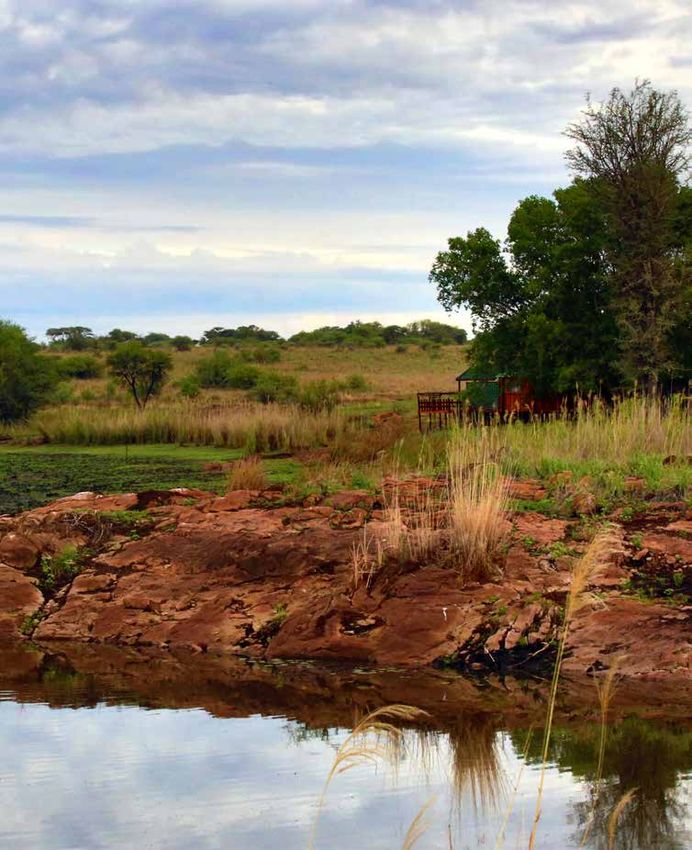
TABLE OF CONTENTS
   NOTE FROM THE PI......................................... 2

   THE RESEARCH............................................... 4

   DAILY LIFE IN THE FIELD................................ 6

   ACCOMMODATIONS AND FOOD....................... 8

   PROJECT CONDITIONS.................................. 10

   POTENTIAL HAZARDS...................................11

   HEALTH & SAFETY........................................ 12

   TRAVEL TIPS................................................. 13

   TRAVEL PLANNING....................................... 14

   EXPEDITION PACKING CHECKLIST.............. 16

   PROJECT STAFF............................................ 18

   RECOMMENDED READING............................ 19

   LITERATURE CITED....................................... 19

   EMERGENCY NUMBERS................................ 20

CONSERVING ENDANGERED RHINOS IN SOUTH AFRICA 2018                    1
NOTE FROM THE PI
    DEAR EARTHWATCHER

    Welcome to a unique opportunity to be involved with research that is aims to help to conserve rhinos in South Africa.
    The current extent of poaching and consequential declines in rhino populations throughout Africa is shocking. On average
    more 3 rhinos are illegally killed every day in Africa and at the current rate this species may go extinct in the next 10–20
    years. Our project aims to help conserve rhino population by providing evidence of the impacts of different management
    on the behavior of rhinos and investigating how they are essential to support other biodiversity.
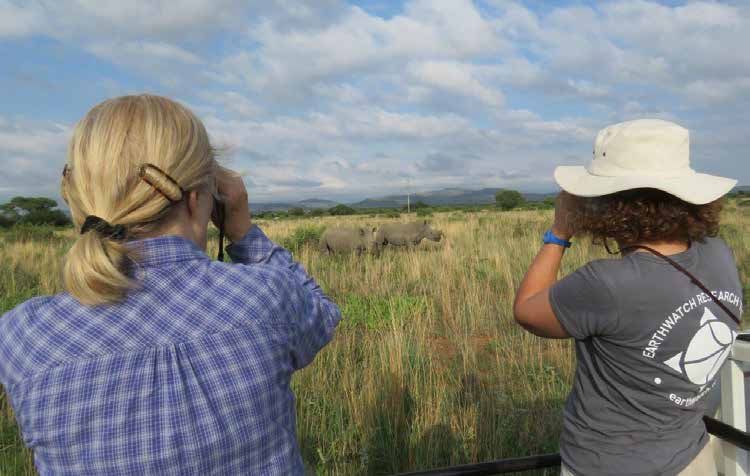
    As part of this Earthwatch team, you will be involved in monitoring the rhino movements and recording their behavior as
    well as assessing bird, mammal and invertebrate biodiversity associated with rhinos and their habitats. Helping to collect
    evidence to protect and value these animals for the future.
    As volunteers you will be involved in many different aspects of the project survey work and education side. But for all of
    our hard work, there will also be exciting opportunities to experience and learn more about other wildlife, enjoy the local
    cuisine and traditional activities, and to relax and take in the African sunset.
    We are looking forward to welcoming you to South Africa!
    Yours faithfully,
    Lynne MacTavish
    Dawn Scott, Ph.D.
    Angelo Pernetta, Ph.D.
    Anja Rott, Ph.D.,
    Rachel White, Ph.D.
    Maureen Berg, Ph.D.

                                                                         CONNECT
                                                                           WITH OTHER
                                                                        EARTHWATCHERS!
                                                                      FIND US ON FACEBOOK
                                                                       AT FACEBOOK.COM/
                                                                          EARTHWATCH
                                                                                                     OR ON TWITTER
                                                                                                  @EARTHWATCH_ORG,
                                                                                                    AND ON YOUTUBE
                                                                                                   AT YOUTUBE.COM/
                                                                                                 EARTHWATCHINSTITUTE

2                                                                    CONSERVING ENDANGERED RHINOS IN SOUTH AFRICA 2018
CONSERVING ENDANGERED RHINOS IN SOUTH AFRICA 2018 3
THE RESEARCH
    CONSERVING ENDANGERED RHINOS IN SOUTH AFRICA

    THE STORY
    Rhino populations are in crisis due to the high value of rhino         This situation requires immediate action not only to reduce
    horn combined with widespread poaching. There has been an              the levels of poaching but also to investigate 1) the impacts
    exponential increase in poaching of both white rhinos and black        of anti-poaching management land and animal management
    rhinos in South Africa (Pernetta, 2014), which contains 74% of         (such as de-horning rhinos) on the animals themselves and
    the world’s remaining rhino population. Between 2010 and 2015          to 2) determine the impacts of the loss of this megaherbivore on
    4,843 rhinos have been poached in South Africa, with 1,175             ecosystems to help quantify their functional role and alternative
    deaths in 2015 alone. This amounts to an average of three              economic value for conservation initiatives.
    individuals per day (Pernetta, 2014). It is estimated at the current
                                                                           The goal of the project is to provide information that will help
    rates of poaching rhinos in South Africa may be extinct within
                                                                           to conserve and manage rhinos in South Africa. We share
    the next 10–20 years. Poaching is predominantly driven by illegal
                                                                           information with rhino owners on the behavioral and welfare
    trade of rhino horn in South East Asia; on the black markets of
                                                                           implications of de-horning and provide supporting evidence on
    Southeast Asia rhino horn is reported to be worth more than
                                                                           land management practices that may help to identify and reduce
    gold (Milliken & Shaw, 2012).
                                                                           poaching risk. In addition we will demonstrate how rhinos support
                                                                           biodiversity and ecosystem functions, and in so doing, provide
                                                                           further evidence of their inherent value in ecosystem support.

4                                                                           CONSERVING ENDANGERED RHINOS IN SOUTH AFRICA 2018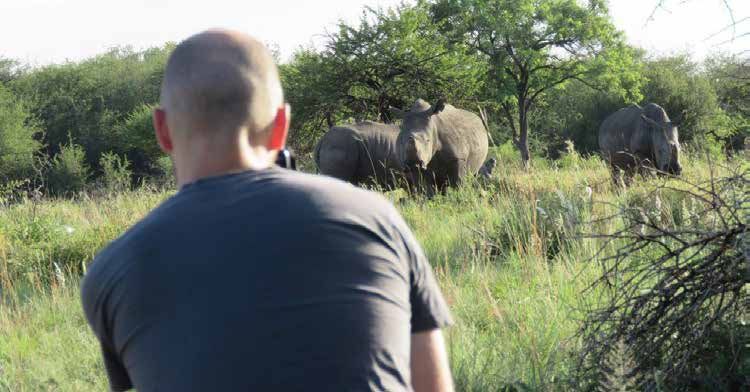
RESEARCH AIMS                                                        HOW YOU WILL HELP
The research has the following objectives and will address           Research tasks volunteers will be involved with:
these research questions:
                                                                     • Finding and recording locations of individual rhinos every
1.) To determine the consequences of de-horning on the behavior        day for group composition, spatial distribution and habitat
     of white rhinoceros.                                               use assessment.
2.) T
     o investigate bird species and assemblages indirectly          • Behavioral observations of rhinos on foot and from vehicles;
    supported by rhinos, in order to evaluate the potential impact      Observe and record their behavior over set periods to time to
    of localized loss of this megaherbivore on avian communities.       determine habitat use, foraging activity, interactions between
3.) To determine what behavioral and environmental factors             individuals of different ages and genders, and determine
     determine the spatial distribution of white rhinos in game         extent of behavior to indicate vigilance in relation to threat.
     reserves.                                                       • Recording foraging signs of rhinos and assessing foraging
4.) Evaluate the impact of changes in megaherbivores                   behavior from visual, observational and vegetation surveys.
     (white & black rhino) in structuring the dung beetle            • Collecting rhino dung samples for analysis.
     community diversity.                                            • Undertaking dung beetle experiments and determining
5.) Raise community awareness of the impacts of the decline in         community analysis. Identify and observe different species
     rhinos to raise community support in its protection.               of dung beetle, insects that can indicate the health of mammal
                                                                        populations in an area.
                                                                     • Bird and mammal transects and point counts. Determine
                                                                        Rhino species associations by surveying birds and mammals
                                                                        to assess their species richness and populations in areas
                                                                        where rhinos are and are not present.
                                                                     • Conduction vegetation surveys: When the animals move off
                                                                        of foraging sites, record the vegetation in the area to assess
                                                                        habitat use
                                                                     • Walkover surveys for habitat mapping.
                                                                     • Behavioral analysis of rhinos at inaccessible sites from
                                                                        camera trap videos.

CONSERVING ENDANGERED RHINOS IN SOUTH AFRICA 2018                                                                                         5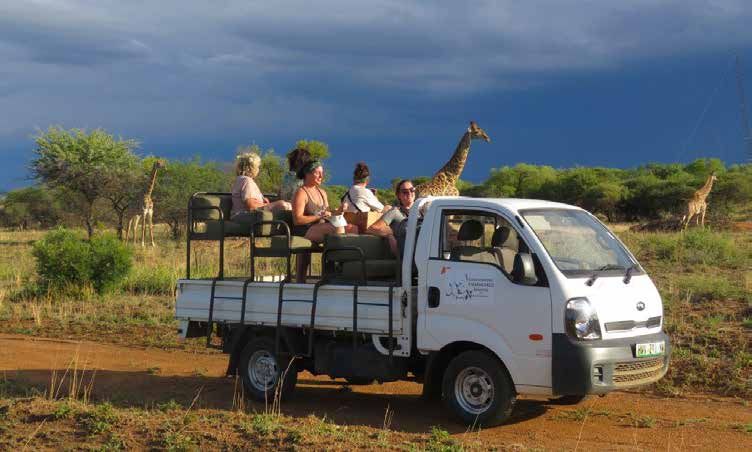
DAILY LIFE IN THE FIELD
    PLANS FOR YOUR TEAM

    You’ll have one or two days of training in field and survey        ITINERARY
    techniques, behavioral methods, use of GPS and field               Weather and research needs can lead to changes in the daily
    equipment, and identification of mammals and birds. Other          schedule. We appreciate your cooperation and understanding.
    educational opportunities will happen throughout the expedition,
    covering topics such as the history of the project; health and     Project activities will also vary seasonally. Below is an outline
    safety on site and during fieldwork; rhino ecology and             of what is likely to happen on each team, but the exact schedule
    conservation; rhino conservation and management in South           will depend on the project’s current needs and will be set at the
    Africa; methodological theory and practice; bird and mammal        start of each expedition.
    identification with qualified staff; game reserve management;
    research methodology; basic field skills, distance estimation,      ALL TEAMS:
    use of GPS, species identification, and more.                       Rhino monitoring, behavioral studies, mammals and
                                                                        bird surveys.
                                                                        RAINY SEASON         (DEC–MARCH—WEATHER DEPENDENT):
                                                                        Habitat mapping and vegetation assessment foraging studies
                                                                        & dung beetle surveys.
                                                                        WHEN POSSIBLE:
                                                                        Local school visit

6                                                                       CONSERVING ENDANGERED RHINOS IN SOUTH AFRICA 2018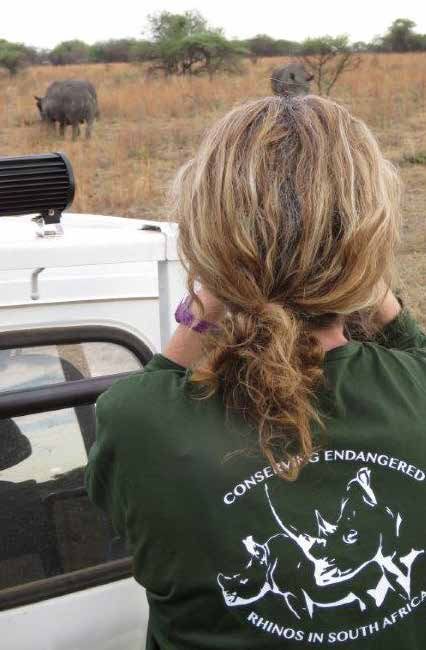
ITINERARY AND DAILY SCHEDULE

   TYPICAL ITINERARY                                               TYPICAL RESEARCH DAY
                                                                   You’ll typically have a midday break, during which we
   DAY 1
                                                                   encourage you to rest in the shade. The team will also have a
   Meet and travel to field site, introduction and orientation     full recreational day, usually in the middle of the expedition.
   drive, downtime in the evening.
   DAY 2                                                            TIME         ACTIVITY
   Orientation, field training in methodology, identification of    6:00 a.m.    Rise, quick breakfast
   mammals/birds, group activities, downtime in the evening         6:30 a.m.    Begin early morning fieldwork
   DAYS 3–7                                                         9:00 a.m.    Breakfast
   Rhino monitoring, behavioral observations, habitat               10:00 a.m.   Morning fieldwork
   mapping/surveys, biodiversity assessments.                       12:00 p.m.   Lunch and midday break, daily briefing, data
   DAY 8                                                                         collection talks
   Recreational day with an excursion to Pilanesberg National       2:00 p.m.    Continue fieldwork
   Park in the morning or afternoon and evening and other           6:00 p.m.    Dinner
   team activities (park entry fees are covered; meals and          7:00 p.m.    Evening data check, summary/discussion
   snacks are at your own expense)
   DAYS 9–10
                                                                   RECREATIONAL DAY
   Rhino monitoring, behavioral observations, habitat
   mapping/surveys, biodiversity assessments.                      For safety reasons, the team will spend the recreational
                                                                   day as a group. You will have the option to stay at the
   DAY 11                                                          accommodations to rest, but you CANNOT leave camp or go
   Data collation, project summary, and sundowner evening          off on your own if you choose this option. Following is a
   at field site.                                                  typical schedule for the recreational day (schedule may
   DAY 12                                                          change for reasons beyond our control.
   A transfer company will pick up the team at 12:00 p.m. and       TIME          ACTIVITY
   take you to the airport for departure.
                                                                    8:00 a.m.     Rise, eat breakfast
                                                                    9:30 a.m.     Depart field site
                                                                    10:00 a.m.    Visit local curios market
                                                                    11:00 a.m.    Visit Kwa Maritane Lodge (game hide and
                                                                                  swimming pool)
                                                                    1:00 p.m.     Lunch
                                                                    3:00 p.m.     Game drive in Pilanesberg National Park
                                                                    7:00 p.m.     Return to field site for dinner
                                                                    8:00 p.m.     Evening around campfire

CONSERVING ENDANGERED RHINOS IN SOUTH AFRICA 2018                                                                                    7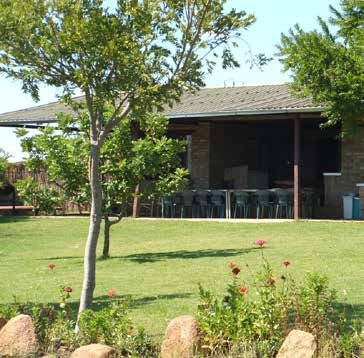
ACCOMMODATIONS AND FOOD
    ABOUT YOUR HOME IN THE FIELD

    During the expedition, your team will be based at campsite in the    BATHROOMS
    heart of a Private Wildlife Reserve at a scenic spot overlooking a   Bathroom facilities include hot showers and flush toilets. Hot
    dammed lake.                                                         water is supplied by a wood-fired or gas boiler.

    SLEEPING                                                             ELECTRICITY
    There are three different accommodations at the reserve. You         The electricity at the site is generated by solar power. It is
    may sleep in a two-room brick house, a wooden cabin, or a            220/230 volts AC, 50 Hz. Most plugs are Type M (three round
    walk-in safari tent, depending on the number of team members         pins) but some plugs with two smaller pins are also found on
    and the gender makeup of the team. The house sleeps up to            appliances. U.S.-made appliances may need a transformer. The
    eight people in two separate bedrooms. There are three tents         campsite has electrical outlets, so cameras, cell phones, iPods,
    that sleep two to four people and have an en suite bathroom with     etc. may be charged during the day. Please do not bring
    flush toilet, sink, and shower. The two wooden cabins have an en     unnecessary electrical equipment, as the system at the
    suite bathroom, and can accommodate up to four volunteers, but       campsite is easily overloaded and charging capabilities will be
    are generally kept to two when possible. Most people will share      limited. This will help preserve energy for other camp
    a sleeping area with one or two others of the same gender.           necessities. Some equipment (e.g., rechargeable batteries) can
    Although not guaranteed, it may be possible to accommodate           be charged at the Wildlife Reserve with the permission of
    couples or single room requests, depending on group size, on a       Operations Manager Lynne MacTavish. We advise, though, that
    first-come, first-served basis—please inform Earthwatch if you       you make sure to bring all batteries required for camera
    would like to request either of these options. Beds, pillows,        equipment, etc. as it can be very hard to find them locally.
    duvets, and sheets are provided, but you must bring your own         Please also bring the correct adaptors for South African plugs.
    warm sleeping bag during the winter months (June, July, and
    August). Sleeping bags are not necessary for teams during the
    South African summer (October–January teams). A camp
    attendant will sweep up and clean bathroom facilities.

8                                                                         CONSERVING ENDANGERED RHINOS IN SOUTH AFRICA 2018
PERSONAL COMMUNICATIONS communally on site in the eating area.
The cellphone reception at the camp has greatly improved, so
volunteers can use smartphones to gain access to the Internet. When we are working in the Pilanesberg National Park, a picnic
Please ensure that you register for international roaming in your dinner will be eaten at one of the game- viewing hides in the park.
own country. SIM cards may be purchased at the Johannesburg
Lynne runs an on-site shop that sells snacks, drinks, postcards,
airport upon arrival. MTN service provider has the strongest
and project merchandise, such as T-shirts and hats. To make
reception in our area. The Internet connection is very slow, so it
purchases at the shop, place your order in the order book
is impossible to Skype at the reserve. On the recreational day,
provided, and Lynne will bring the requested items that evening
you can use the Internet at Kwa Maritane Lodge for about R50
or the following day. Your shop bill will be calculated at the end
(US$5.40). You can’t connect your own computer to the Internet
of your stay. Lynne takes Great Britain Pounds, U.S. Dollars, and
at camp; in the case of an emergency, Lynne will bring her
South African Rand; shop accounts may not be paid by traveler’s
laptop with Internet connection to the camp. It may be possible
checks or credit cards.
for project staff to download photos onto a computer if you bring
appropriate cables, etc. If you’d like a copy of photos taken Alcohol consumption is not permitted by minors or on teen
during the expedition, we suggest you bring a memory stick. teams regardless of local law. It is permitted on adult teams,
and available for purchase at the camp.
FACILITIES AND AMENITIES The following are examples of foods you may find in the field.
The camp has a wooden dining area, including a sink, refrigerator, Variety depends on availability. We appreciate your flexibility.
and cooking utensils, and a washing area with clotheslines.
There are two barbeque areas with fire pits and a communal
TYPICAL MEALS
teaching hut with a field library and equipment, as well as two
covered study areas outside. There is also a small shop on site BREAKFAST Cereal, fruit, toast/bread, jam, tea, coffee,
where you can purchase snacks, project clothing/souvenirs and occasionally hot breakfast
on adult standard teams only, some alcoholic refreshments. LUNCH Salad, quiche, soups, bread rolls
(Alcohol is not permitted on teams with minors.) The shop DINNER Braais, stews, pasta, potatoes, vegetables,
accepts USD, GBP (British Pounds), and South African Rands. All vegetarian options, dessert
proceeds go towards the anti-poaching efforts on the reserve. SNACKS Fruit, biscuits, crisps (potato chips); chocolate,
etc. may be purchased from the on-site shop at
DISTANCE TO THE FIELD SITE your own expense
The reserve is about a 15-minute drive from Pilanesberg BEVERAGES Clean drinking water available on site
National Park’s entrance and about 40 minutes from Kgaswane
Mountain Reserve. The team will be transported around the SPECIAL DIETARY REQUIREMENTS
Wildlife Reserve in open-topped vehicles, but closed vehicles
Please alert Earthwatch to any special dietary requirements
will be used at all other sites and on public roads. There are no
(e.g., diabetes, lactose intolerance, nut or other food allergies,
services in walking distance. The nearest town is Mogwase, a
vegetarian or vegan diets) as soon as possible, and note them in
15-minute drive from camp.
the space provided on your volunteer forms.
FOOD AND WATER We can accommodate vegetarian, vegan, gluten free, nut free
and lactose free diets but very specialized diet accommodation
A local chef will prepare breakfast, lunch, and dinner. Lunch and
is not guaranteed and can be very difficult due to availability of
dinner will be a mix of international and local cuisine, including
food, location of field sites, and other local conditions. You have
traditional South African meals such as poitjiekos (game stews)
special dietary needs; it is recommended that you bring
and braais (barbeques), using free- range game from the game
supplemental snacks.
reserve. You don’t need to assist in shopping, food preparation,
or clean up, unless you want to. In the occasional event that the
team wishes to bring a picnic or braai on a day trip, you may be
asked to help prepare your own lunch. Most meals will be eaten
CONSERVING ENDANGERED RHINOS IN SOUTH AFRICA 2018 9PROJECT CONDITIONS
THE FIELD ENVIRONMENT
The climate of the area is sub arid, with an annual rainfall of ESSENTIAL ELIGIBILITY REQUIREMENTS:
approximately 650 millimeters (25 inches), mostly falling during All participants must be able, independently or with the
summer thunderstorms between October and March. assistance of a companion, to:
Remember that seasons in the Northern and Southern
Hemispheres are reversed. • Consistently and immediately comply with instructions from
all staff field rangers, and guides.
GENERAL CONDITIONS • See clearly (with or without corrective lenses) to a distance
The following are averages. Please check weather resources of 500 meters (1,640 feet), and see close up to read research
for your team dates for more accurate weather predictions. instruments. We may go out in the evening or for a night drive,
Projects have experienced unseasonable weather at all times so the ability to see in low light is also a must.
of year. • Enjoy being outdoors all day in all types of weather, often
exposed to the sun for long periods of time or highly variable
HUMIDITY: 20%–50%
weather conditions, which may include large temperature
TEMPERATURE RANGE: 42º F–95º F (0º C–35º C)
differences between night and day and sudden storms or d
June/July/August temperature: Temperatures can drop rops in temperature
below freezing at night and be up to 79º F (28º C) in the day.
• Enjoy being outdoors in the potential presence of wild,
dangerous animals, including snakes and insects.
• Walk over rough, uneven terrain with areas of dense, thorny
vegetation, animal holes that can be hard to spot, or rocky and
steep slopes for up to five kilometers (3.0 miles) per day and
generally up to three hours per day an average rate of one
kilometer (0.6 miles) in 15 minutes, with minimal fatigue.
• Tolerate long periods of time in the field; days can be long.
• W ithout assistance, get up into and down out of project
vehicles, which may include vans, trucks with high beds,
and open-topped safari vehicles.
• Sit or ride in project vehicles with seat belt fastened and in
close proximity to other team members while traveling over
rough and bumpy roads or have to sit still during behavioral
observations for up to approximately five hours per day.
Although the team will take regular breaks, in some research
areas you will not be permitted to get out of the vehicle and
walk around due to the presence of dangerous animals.
• Get low enough to access and collect samples and identify
plants on the ground and in the brush and to access or set up
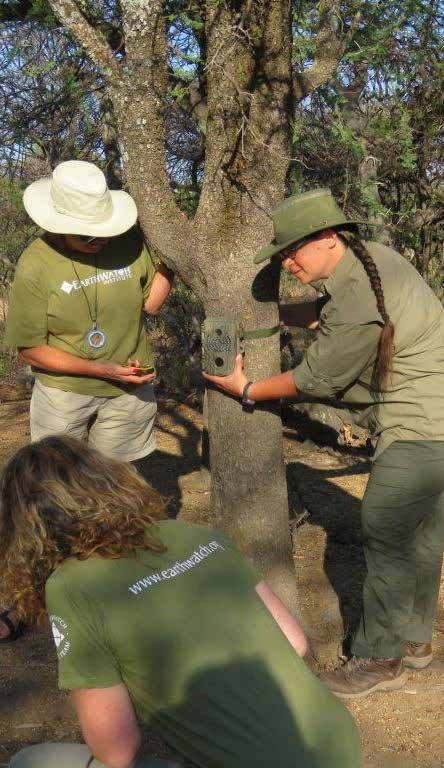
camera traps.
• Keep as quiet and still as possible while observing animals
and working in the bush.
• Tolerate some smoke in the air if participating in the
controlled- burn monitoring. Those who choose to participate
will be placed in areas unlikely to be affected by smoke—but
winds can change and it is impossible to guarantee a smoke-
free zone (only applicable to May–August teams).
• Tolerate not having a reliable source of electricity throughout
the night for the length of the project.
10 CONSERVING ENDANGERED RHINOS IN SOUTH AFRICA 2018POTENTIAL HAZARDS
CONSERVING ENDANGERED RHINOS IN SOUTH AFRICA
HAZARD TYPE ASSOCIATED RISKS AND PRECAUTIONS
Transportation Hazards include fast and reckless drivers, livestock and wildlife in the road, rain, poor lighting, banditry, tire punctures due to
thorny brush, and vehicle breakdowns. Traffic moves on the left side of the road. South African road conditions are considered
good, particularly in urban areas; however, roads at the study sites can be poor: dirt, gravel, or corrugated and very bumpy and
either dusty or muddy and slippery depending on weather conditions. Wear seat belts whenever they are available and remain
seated when the vehicle is in motion. Speeds will be kept at 50-km/ hr. (30 mph) or below, and will usually be around 30 km/hr.
(20 mph). Only authorized, insured, experienced staff will drive. Volunteers are not permitted to drive. We will avoid night
transportation (some night drives are part of the research).
Walking/Hiking/ Terrain can be rocky, steep, and uneven with thick vegetation, especially in the wet season. There may be animal holes in the
Climbing ground, covered by grasses and hard to spot. Some areas have dense, thorny acacia scrub. There is a possibility of sprains,
bruises, and strains when walking. Walk carefully and attentively, and be aware of your surroundings at all times. We will walk
on tracks and paths where possible. Appropriate clothing and footwear (e.g., long trousers, hat, socks, and well-broken-in
hiking boots with ankle support) are required for fieldwork. Closed-toe shoes must be worn at night.
Animals at Two domesticated cats live at the Wildlife Reserve. Those with allergies should note this on their participation forms and bring
Accommodations medication as appropriate. Several types of snakes are present in the reserve, including venomous snakes.
Perimeter Fence The reserve perimeter fence is electrified because of wildlife. Do not touch this fence to avoid shock.
Project Location The reserve has been on land leased from the AEL Mining Services Company for over 20 years. Next to the reserve, AEL runs a
factory that produces detonators for mining operations, which poses a risk of accident. However, AEL has over 100 years of
experience and extensive risk management practices.
Biting insects Trypanosomiasis, leishmaniasis, chikungunya, tick bite fever, dengue, and West Nile virus are present in this region. Participants
(ticks, are advised to use insect repellent (20–30% DEET) and wear neutral-colored field attire with long sleeves and long pants tucked
mosquitoes, into socks. Participants with potential for allergic reactions to insect bites should bring appropriate medications (antihistamines,
scorpions, flies at least two Epi-Pens as necessary). Volunteers will be informed about where ticks may be more prevalent in the field and how to
and wasps) and avoid them. Participants and staff will be reminded to thoroughly check their skin and clothes for ticks daily. If a tick is found,
vector-borne participants will be instructed how to remove it properly (it will be removed using fine-point tweezers, grasping the tick as close to
diseases its mouth as possible, slowly pulling the tick straight out. The area will be immediately washed with soapy water). Malaria is not
present at the research site; however, it is found elsewhere in the country, including chloroquine-resistant malaria.
Plants Some plants may be poisonous if eaten or if they come into close contact with open wounds. Several plants, such as acacias,
have large thorns that can cause injury. Staff will help you identify harmful plants. Certain plants and pollens may cause
allergic reactions (e.g., hay fever) in some volunteers. Those with allergies should bring and carry medication as appropriate
and identify themselves to staff.
Large Animals Many large, potentially dangerous mammals, including lions, rhinos, buffalo, and elephants, live in the region. All wild animals
can be dangerous. Do not approach, antagonize, or tease any animal. Because of wildlife, you may not leave the research camp
(as defined by the lawns surrounding the camp, beyond which is tall grass). Teams may travel in open vehicles at sites with no
large predators. When traveling between sites or in Pilanesberg National Park, where dangerous wildlife is present, the team
will ride in closed vehicles. In Pilanesberg, you are strictly forbidden to lean or climb out of the vehicle windows. You may only
exit the vehicle at tourist hides and at the Pilanesberg Visitors Centre. Field rangers will accompany groups in areas with large,
dangerous animals and will carry weapons for your protection. Rangers are well trained in weapon use. Volunteers will NOT be
permitted to handle weapons at any time. Weapons are kept unloaded unless the teams are walking transects. When with
armed rangers, walk in single file and always stay behind the guide. Keep within five meters of the person in front of you, be as
quiet as possible, and wear earth-toned clothing. Always obey the guide and be aware of your surroundings.
Monitoring for While this optional task is scheduled for times when poachers are not typically active, encountering a poacher is always
Evidence of possible. Those who take part in this activity should heed the instruction of the project staff, scouts, and/or trackers at all
Poaching times. Do not engage with a poacher should one be encountered.
Animal Handling You may participate in animal handling. Potential risks are bites or scratches. If you do participate, you’ll receive instructions and
and Rabies a safety briefing, and be supervised or assisted at all times. You may not handle animals unless under the direct supervision of
trained project staff. Protective equipment (e.g., gloves) will be provided. Always wash your hands after handling an animal.
Animals known to carry Rabies will not be handled, however, you may wish to consult with their healthcare providers about the
vaccine given the prevalence of loose and stray dogs in the region. Avoid stray dogs at all times.
Firearms Field staff may carry firearms during research and non-research activities. The firearms are mainly for firing warning shots in
the event of an animal encounter. This is standard practice in a bush environment. Only trained field staff will handle firearms.
Volunteers will not hold or use firearms while on this project.
CONSERVING ENDANGERED RHINOS IN SOUTH AFRICA 2018 11HEALTH & SAFETY
CONSERVING ENDANGERED RHINOS IN SOUTH AFRICA
EMERGENCIES IN THE FIELD IMMUNIZATIONS & TRAVEL VACCINATIONS
Project staff members are not medical professionals. Minor Please be sure your routine immunizations are up-to-date
injuries can be treated onsite. If medical advice is required a (for example: diphtheria, pertussis, tetanus, polio, measles,
local doctor is located 20 minutes away by vehicle from the mumps, rubella and varicella) and you have the appropriate
campsite and from Pilanesberg National Park in Mogwase. vaccinations for your travel destination. Medical decisions are
the responsibility of each volunteer and his or her doctor, and
There is also a private hospital with an emergency room in
the following are recommendations only. Visit cdc.gov or
Rustenberg, approximately a 45-minute drive from the reserve
who.int for guidance on immunizations.
and Pilanesberg. If medical evacuation is necessary,
Pilanesberg Airport, approximately a 30-minute drive from the If traveling from countries or region where yellow fever is
reserve, has the nearest airstrip. The reserve also has landing endemic, you must have a certificate of vaccination.
permission for an airlift anywhere on site in case of emergency.
If there’s an emergency at home for which a volunteer must ADVICE REGARDING DISEASES
leave the expedition early, he or she will be transported by Diseases found in South Africa include malaria, dengue fever,
vehicle to the Sun City bus terminal to catch a bus to the filariasis, leishmaniasis, onchocerciasis, African tick bite fever,
Johannesburg International Airport. The bus company runs a trypanosomiasis, schistosomiasis, tuberculosis, and HIV.
private shuttle to the airport with three departures a day. Traveler’s diarrhea also affects many international travelers.
Please see the U.S. Centers for Disease Control and Prevention
For emergency assistance in the field, please contact
(cdc.gov) or the World Health Organization (who.int/) websites
Earthwatch’s 24-hour emergency hotline number on the last
for more information on these conditions and how to avoid them.
page of this briefing. Earthwatch is available to assist you
24 hours a day, 7 days a week; someone is always on call to
respond to messages that come into our live answering service.
12 CONSERVING ENDANGERED RHINOS IN SOUTH AFRICA 2018TRAVEL TIPS
SUGGESTIONS FOR THE ROAD
LOCAL CURRENCY: South African Rand (ZAR; symbol R) = 100
cents. There are currency exchange counters at Johannesburg
airport. Cash machines/ATMs can be accessed at Mogwase and
Rustenberg (communities close to the research site). You will
need money to cover additional snacks, drinks, and y souvenirs.
Operations Manager Lynne MacTavish can often accept and
change common currencies.
COUNTRY AND PROJECT ENTRY REQUIREMENTS
Entry visa requirements differ by country of origin, layover,
and destination, and do change unexpectedly. For this reason,
please confirm your visa requirements at the time of booking
and, again, 90 days prior to travel. Please apply early for your
visa (we recommend starting 6 months prior to the start of your
expedition). Refunds will not be made for volunteers cancelling
due to not obtaining their visa in time to meet the team at the
rendezvous. You can find up to date visa requirements via one
of the following sites:
www.passportsandvisas.com
www.travisa.com
If a visa is required, participants should apply for a TOURIST
visa. Please note that obtaining a visa can take weeks or even
months. We strongly recommend using a visa agency, which
can both expedite and simplify the process.
YOUR DESTINATION
Generally, passports must be valid for at least six months from
LANGUAGE: Afrikaans, English, and various local tribal and
the date of entry and a return ticket is required.
regional languages. All project activities and instruction will be
conducted in English. Minors have special entry requirements for South Africa.
Details can be found at:
TIME ZONE: GMT + 2 hours.
http://www.dha.gov.za/index.php/statements-speeches/621-
CULTURAL CONSIDERATIONS: In general, you should not wear
advisory-new-requirements-for-children-travelling-through-
skimpy or revealing clothing and particularly when not at camp.
south-african-ports-of-entry-effective-1-june-2015
If you would like to contribute to the local schools, stationery,
pens, pencils, etc. are always welcome as they are perennially
undersupplied. Most restaurants do not add a service charge to
CONTACT INFORMATION
bills, and it is customary to leave a 10% to 15% tip. Parking and You may be required to list the following contact information on
gas station attendants may be given whatever small change you your visa application and immigration form, or if your luggage
have available; this is always appreciated, even though it may does not make it to baggage claim at your destination:
seem like a small amount. NOTE: Gratuities for the kitchen and Lynne McTavish
camp staff at the Wildlife Reserve are completely voluntary but P.O. Box 20784
much appreciated. Protea Park 0305
Northwest Province, South Africa
+27 (083) 453-3133
CONSERVING ENDANGERED RHINOS IN SOUTH AFRICA 2018 13TRAVEL PLANNING
RENDEZVOUS AND DEPARTURE INFORMATION
ARRIVING EARLY
RENDEZVOUS
Please do not arrive early at the project site.
LOCATION: The Tourist Information Desk in Terminal A at
Johannesburg ORT International Airport (JNB), South Africa
ARRIVING LATE
DATE: Team 1P: Jul. 26, 2018
Do not reserve a flight that arrives after your team’s scheduled
TIME: Meet for airport pick up at 9:00 a.m. rendezvous time. If you plan an arrival after your scheduled
rendezvous time, you may be asked to reschedule at your own
expense. If your flight is delayed and/or you miss the
HOW TO MEET YOUR TEAM
rendezvous, call operations manager Lynne MacTavish at + 27
The Picerne Family Foundation will make round trip flight (83) 453-3133 (outside South Africa) or 083-453-3133 (within
arrangements and pay for airfare from Los Angeles South Africa) or Dougal MacTavish at + 27 (83) 380-1914 (outside
International Airport to Johannesburg ORT International Airport South Africa) or 083-380-1914 (within South Africa) to arrange
(JNB) for the GSP group. GSP students may not make separate alternative transport. Any expenses incurred due to a late arrival
travel arrangements, and must travel with the GSP group to and will be the responsibility of the late volunteer.
from South Africa. The teacher leading the expedition will give
If you are unable to reach a project staff member, please contact
specific flight information to students when flight arrangements
Earthwatch’s 24-hour emergency hotline number on the last
have been finalized.
page of this briefing.
Your flight will be booked to arrive on the first morning of the
expedition. You will collect your bags, pass through customs and DEPARTURE
make your way to the rendezvous point as a group. Please wear LOCATION: Johannesburg ORT International Airport (JNB)
your Earthwatch T-shirt and look out for the transfer company
driver, so that we may easily assemble the group. The transfer DATE: Team 1P: Aug. 6, 2018
company driver will be holding an Earthwatch sign in the TIME: Book a flight at 6:00 p.m. or later on Day 12
arrivals hall at Terminal A as you come through customs.
Transportation from JNB to Mankwe Wildlife Reserve and back NOTE: Early departures cannot be accommodated except in
will be provided by a minibus or similar vehicle. It will take cases of emergency. Before leaving a project early for any
approximately two hours to get from the airport to the project reason you must sign an Earthwatch release form.
site. The Picerne Family Foundation will inform Earthwatch of Volunteers will be collected from the project site by a transfer
your exact arrival and departure times. company at 12:00 p.m. on the last day of the expedition and taken
to the Johannesburg International Airport for departure. Please
book a flight that leaves after 6:00 p.m. on the last day to ensure
that you make your departure time. The drive can be long and
there can be a lot of traffic on the route.
14 CONSERVING ENDANGERED RHINOS IN SOUTH AFRICA 2018CONSERVING ENDANGERED RHINOS IN SOUTH AFRICA 2018 15
EXPEDITION PACKING LIST
     WHAT TO BRING

       EXPEDITION PACKING CHECKLIST

      GENERAL                                                      CLOTHING/FOOTWEAR FOR LEISURE
      q This expedition briefing                                  q At least one set of clothing to keep clean for end
      q Your travel plans, rendezvous details, and Earthwatch’s      of expedition.
         emergency contact information                             q Shorts
      q Photocopies of your passport, flight itinerary, and       q T-shirts
         credit cards in case the originals are lost or stolen;    q Comfortable pants
         the copies should be packed separately from the
                                                                   q Lightweight long-sleeved shirts for sun protection
         original documents
                                                                   q Comfortable closed-toe shoes to wear around camp
      qP assport and/or visa (if necessary)
      q  ertification of vaccination (if necessary)
        C                                                          FIELD SUPPLIES
      q Documentation for travel by minors (if necessary)         q Small daypack to keep your personal items together
                                                                      and dry
      CLOTHING/FOOTWEAR FOR FIELDWORK
                                                                   q Insect repellent spray
      NOTE: Field clothing must be khaki, earth-toned, or dark
                                                                   q Two one-liter water bottles
      colors; white and bright colors will scare animals away.
                                                                   q Flashlight/torch or headlamp with extra batteries and
      q Earthwatch T-shirt                                           extra bulb this is used for walking around camp at night.
      q Long-Sleeved shirts                                       q W histle
      q Pants                                                     q Notebook
      qF  leece/jumper/sweater or other warm clothes for          q Pens or pencils
         night work
                                                                   q Binoculars—We have just a few pairs of project
      qW  ell broken-in hiking boots                                 binoculars to lend
      q W ide-brimmed hat to protect face, neck, and head from
         the strong sun                                            BEDDING AND BATHING
                                                                   NOTE: A pillow, duvet, and bed sheet will be provided.
      ADDITIONAL CLOTHING/FOOTWEAR FOR
      FIELDWORK: NOVEMBER TEAM                                     q Four-season sleeping bag (for June, July, and August
                                                                      teams only)
      q Lightweight waterproof jacket
                                                                   q Towel
      q Waterproof footwear
                                                                   q Mosquito net if you are sensitive to insects or insect bites
      ADDITIONAL CLOTHING/FOOTWEAR FOR
      FIELDWORK: JUNE, JULY & AUGUST TEAMS
      q Warm windbreaker or jacket
      q Several layers of warm clothing, including thermal
         under-layers
      q Warm hat and gloves

16                                                                  CONSERVING ENDANGERED RHINOS IN SOUTH AFRICA 2018
EXPEDITION PACKING CHECKLIST
PERSONAL SUPPLIES PROJECT STAFF
qP
ersonal toiletries (biodegradable soaps and shampoos YOUR RESOURCES IN THE FIELD
are encouraged)
q A ntibacterial wipes or lotion (good for cleaning hands
while in the field)
q Personal first aid kit (e.g., anti-diarrhea pills, antibiotics,
antiseptic, itch-relief, pain reliever, bandages, blister
covers, etc.) and medications
q Spending money
OPTIONAL ITEMS
qC amera, film or memory card(s), extra camera battery
q Hardware for sharing digital photographs at the end of
the expedition
q Books, games, etc. for free time
q Earplugs for light sleepers
q Comfortable shoes to change into after conducting field
work
q Bathing suit for recreation day (If warm enough)
q Dry bag or plastic sealable bags (e.g. Ziploc) to protect
equipment like cameras from dust, humidity, and water
qT ravel guide
q Field guide(s)
q Mosquito net
q Money belt
q A small amount of biodegradable laundry soap to
wash clothing
q Flip-flops or sandals for the shower
q Favorite snacks, if you have specific dietary requirements
(NOTE: Please store these in the kitchen tent cabinets
when you arrive to avoid attracting small mammals to
your sleeping tent)
NOTE: Do not bring more luggage than you can carry and
handle on your own. If traveling by air and checking your
luggage, we advise you to pack an extra set of field clothing
and personal essentials in your carry-on bag in case your
luggage is lost or delayed.
CONSERVING ENDANGERED RHINOS IN SOUTH AFRICA 2018 17PROJECT STAFF
YOUR RESOURCES IN THE FIELD
NOTE: The specific staff scheduled to run your team is subject to change.
EARTHWATCH SCIENTIST DR. DAWN SCOTT, a principal lecturer at the University of Brighton
(U.K.), specializes in mammalian predator and prey ecology. In 2000, she completed her Ph.D.
on aspects of the ecology of desert rodents in Jordan. Dr. Scott has over ten years of research
experience and expertise in mammal ecology, biodiversity, and behavior. She has worked on
research projects on human-wildlife conflict in Jordan, Chile, Zambia, South Africa, Indonesia,
and the U.K.
EARTHWATCH SCIENTIST LYNNE MACTAVISH has served as the operations manager at the
Wildlife Reserve since 1999. She has worked in the tourist industry for more than eighteen years
and is an experienced field guide. She received the UBS African Scientist Programme fellowship
award for training in principal investigator responsibilities, scientific training, and support. She
has been fundamental in developing this project and its success, and leads the field training,
safety assessment, data collection, and field logistics. Schedule: All teams
EARTHWATCH SCIENTIST DR. ANJA ROTT is a principal lecturer at the University of Brighton.
She earned her Ph.D. researching parasitoid food webs at Imperial College (U.K.). She has more
than fifteen years of experience in academic research with expertise in community, population
and chemical ecology, and entomological ecology (namely in multi-trophic insect plant interactions
and pollination and dung beetle ecology). She has conducted fieldwork in South Africa, India,
and Europe.
EARTHWATCH SCIENTIST DR. RACHEL WHITE is a senior lecturer at the University of Brighton.
She has a PhD in Biodiversity Management on the Global biogeography of traits and extinction risk
in birds from Durrell Institute of Conservation and Ecology (DICE), University of Kent. She also has
an MSc in Conservation Science and has undertaken research on the impact of tourist development
on birds of conservation concern. She has conducted fieldwork in South Africa, St Lucia, Ascension
Island and Europe.
EARTHWATCH SCIENTIST DR. ANGELO PERNETTA is a principal lecturer at the University of
Brighton. He earned his Ph.D. researching the impact of habitat fragmentation on smooth snake
populations at University of Southampton (U.K.). His research interests are focused on the
consequences of anthropogenic impacts on ecological communities and populations. He has
conducted fieldwork in South Africa for over 5 years.
EARTHWATCH SCIENTIST NIALL WALKDEN is a postgraduate student at the University of
Brighton. He has a BSc in Ecology and has been working with Earthwatch teams at the field site
since 2012. His PhD is investigating ecosystem services and human attitudes towards wildlife.
EARTHWATCH SCIENTIST SAMUEL PENNY is a postgraduate student at the University of Brighton.
He has a BSc in Biology and MSc by research from Bristol University, UK. He has an interest in
behavioral ecology having previous researched acoustic behavior of amphibians in Madagascar
and gibbons in Thailand. Schedule: Teams All
18 CONSERVING ENDANGERED RHINOS IN SOUTH AFRICA 2018RECOMMENDED READING
YOUR RESOURCES AT HOME
RESOURCES
ARTICLES FIELD GUIDES
• Du Toit, R. & Anderson A., (2013). Dehorning rhinos. • E stes, R. The Behavior Guide to African Mammals.
Wildlife Ranching. Autumn: 82-85 Berkeley, CA: University of California Press, 1991.
• Milner-Gulland, E.J., Leader-Williams, N., Beddington, NOTE: Excellent for large mammal behavior.
J.R. (1993) Is dehorning African rhinos worthwhile?. • Sinclair, I., Hockey, P., and Tarboton, W. Guide to the Birds
Pachyderm 17: 52-58. of Southern Africa. 2nd ed. Cape Town: Struik Publishers,
• Waldrom, M.S., Bond, W.J. & Stock, W.D. (2008) Ecological 1998. NOTE: Essential for birdwatchers.
engineering by a mega-grazer: White rhino impacts on a • Stuart, C. and Stuart, T. Field Guide to Mammals of
South African savannah. Ecosystems, 11, 101-1 Southern Africa. Cape Town: Struik Publishers, 2000.
• Hempson, G.P., Archibald, S., Bond, W.J., Ellis, R.P., Grant, NOTE: Good photos for animal identification.
C.C., Kruger, F.J., Kruger, L.M., Moxley, C., Owen-Smith,
N., Peel, M.J.S., Smit, I.P.J. & Vickers, K.J. (2014) Ecology PROJECT-RELATED WEBSITE
of grazing lawns in Africa. Biological Reviews. doi:10.1111/ • PILANESBERG NATIONAL PARK:
brv.12145 tourismnorthwest.co.za/pilanesberg/index.html
• Pernetta, A (2014) A disappearing drylands icon? White • PUBLICITY FILM:
rhinoceros conservation and the need for public private youtube.com/user/EarthwatchInstitute
Partnerships. BIODIVERSITY, 2014Vol. 15, Nos. 2 , http:// • SAVE THE RHINOS: www.savetherhino.org/rhino_info/
dx.doi.org/10.1080/14888386.2014.931248 issues_for_debate/de-horning.
BOOKS EARTHWATCH SOCIAL MEDIA
• A nthony, L. & Spence, G. The Last Rhinos.2013 Pan • FACEBOOK: facebook.com/Earthwatch
Publisher.
• T WITTER: twitter.com/earthwatch_org
• Rademeyer, J. Killing for a profit: Exposing the illegal
• INSTAGRAM: instagram.com/earthwatch
rhino horn trade. 2012. Zebra Press.
• BLOG: https://blog.earthwatch.org/
• YOUTUBE: youtube.com/earthwatchinstitute
LITERATURE CITED
• Pernetta, A (2014) A disappearing drylands icon? White rhinoceros conservation and the need for public private
Partnerships. BIODIVERSITY, 2014 Vol. 15, Nos. 2 , http://dx.doi.org/10.1080/14888386.2014.931248
• Milliken T & Shaw, J, 2012. The South Africa-Vietnam rhino horn trade nexus: A deadly combination of institutional lapses,
corrupt wildlife industry professionals and Asian crime syndicates. TRAFFIC, Johannesburg.
CONSERVING ENDANGERED RHINOS IN SOUTH AFRICA 2018 19EMERGENCY NUMBERS
AROUND-THE-CLOCK SUPPORT
EARTHWATCH’S 24-HOUR
EMERGENCY HOTLINE
Call Earthwatch’s 24-hour on-call duty officer in the U.S.:
+1 (978) 461.0081
+1 (800) 776.0188 (toll-free for calls placed from within the U.S.)
After business hours, leave a message with our live
answering service. State that you have an emergency and
give the name of your expedition, your name, the location
from which you are calling, and if possible, a phone
number where you can be reached. An Earthwatch staff
member will respond to your call within one hour.
FOR VOLUNTEERS BOOKED THROUGH THE
EARTHWATCH AUSTRALIA OFFICE:
Earthwatch Australia 24-Hour
Emergency Helpline
+61.0.3.8508.5537
20 CONSERVING ENDANGERED RHINOS IN SOUTH AFRICA 2018MESSAGE FROM EARTHWATCH DEAR EARTHWATCHER, Thank you for joining this expedition! We greatly appreciate your decision to contribute to hands-on environmental science and conservation. It is volunteers like you who fuel our mission and inspire our work. While at Earthwatch, I’ve had the opportunity to field on a few expeditions, most recently in Kenya with one of my daughters. Each expedition has touched me deeply, and made me proud to be able to roll up my sleeves alongside my fellow volunteers and contribute to such meaningful work. As an Earthwatch volunteer, you have the opportunity to create positive change. And while you’re out in the field working toward that change, we are committed to caring for your safety. Although risk is an inherent part of the environments in which we work, we’ve been providing volunteer field experiences with careful risk management and diligent planning for nearly 45 years. You’re in good hands. If you have questions as you prepare for your expedition, we encourage you to contact your Earthwatch office. Thank you for your support, and enjoy your expedition! Sincerely, Scott Kania President and CEO, Earthwatch CONSERVING ENDANGERED RHINOS IN SOUTH AFRICA 2018 3
Earthwatch U.S.             Earthwatch Europe          Earthwatch Australia             Earthwatch Japan
114 Western Ave.            Mayfield House             Suite G–07, Ground Floor         Food Science Bldg. 4F
Boston, MA 02134            256 Banbury Rd.            60L Green Building,              The University of Tokyo
United States               Oxford, OX2 7DE            60–66 Leicester Street Carlton   1-1-1, Yayoi, Bunkyo-ku
                            United Kingdom             VIC 3053, Australia              Tokyo 113-8657, Japan
info@earthwatch.org
earthwatch.org              info@earthwatch.org.uk     earth@earthwatch.org.au          info@earthwatch.jp
                            earthwatch.org             earthwatch.org                   earthwatch.org
Phone: 1-978-461-0081
Toll-Free: 1-800-776-0188   Phone: 44-0-1865-318-838   Phone: 61-0-3-9016-7590          Phone: 81-0-3-6686-0300
Fax: 1-978-461-2332         Fax: 44-0-1865-311-383     Fax: 61-0-3-9686-3652            Fax: 81-0-3-6686-0477
You can also read


