CONTACT BIRTH OF SKAO THE INSPIRING INTERNATIONAL STORY BEHIND SKA-LOW LET'S TALK ABOUT... SETI - Square Kilometre Array
←
→
Page content transcription
If your browser does not render page correctly, please read the page content below

CONTACT
          ISSUE O7                         MARCH 2021

          BIRTH OF SKAO

          THE INSPIRING INTERNATIONAL
          STORY BEHIND SKA-LOW

          LET’S TALK ABOUT... SETI

23014_Contact 7 - Main Version_v2.indd 1           12/03/2021 19:08
CONTENTS

                                                         05                                                                14

                                                                 24                        32                              36

          FOREWORD                                                    INSIGHT

          03     Prof. Philip Diamond, SKAO Director-General          24    ARTA – a new astronomy visualisation
                                                                           C
                                                                           tool for the era of Big Data
                                                                      25    hen the brain meets the stars: knowledge
                                                                           W
          IN BRIEF                                                         made visible to the naked eye
          04      KA synchronisation technology leads to
                 S
                 world’s most stable laser transmission               PATHFINDERS
          05      ambridge SKALA antenna becomes
                 C
                                                                      27 Cosmic beasts and where to find them
                 part of South Pole observatory
                                                                      28 Outcomes of MeerKAT’s call for observing proposals
          06      urope’s radio and optical astronomy communities
                 E
                 team up in new EC-funded project                     28 ASKAP team wins prestigious American science prize
          07      he Spanish SRC prototype: supporting the
                 T                                                    29 ASKAP continues countdown to full survey science
                 community beyond Radio Astronomy                     30	100m Radio Telescope Effelsberg: the first 50 years
                                                                      31	uGMRT probes stellar magnetospheres
          FOCUS ON                                                         through study of stars with rare emission
          08      ed sand in our shoes: the inspiring
                 R                                                    32	Life cycle of supermassive black hole revealed
                 international story behind SKA-Low
          12     Infographic: How does SKA-Low work?                 TEAM SKA

                                                                      33   Dr Anna Bonaldi – SKAO Project Scientist
          LET’S TALK ABOUT

          14     The Search for Extra-Terrestrial Intelligence        EVENTS

                                                                      36   Countdown to the 2021 SKA Science Conference
          FEATURED IMAGE                                              36   Indo-French meeting for the promotion of
                                                                            advanced research, diversity and inclusion
          18    The eagle has landed: radio telescopes
                                                                            in multiwavelength astronomy
          front and centre for the show
                                                                      37   East Asian SKA Science Workshop 2021

          HQ CORNER                                                   37   LOFAR community readies for sixth Data School

          20	2 minutes with… Hao Qiu – SKAO Postdoctoral Fellow      NEWS & JOBS
          20 Review season begins as preparations
                 ramp up for procurement                              38   News Roundup / Partner Publications

          21     First Council meeting marks birth of SKAO            39   SKA Jobs

          2                                                                                             C O N TA C T | M A R C H 2 0 21

23014_Contact 7 - Main Version_v2.indd 2                                                                                          12/03/2021 19:08
Above: Screenshot of the first Council meeting, held virtually, on the 3-4 February

                                           Dear Friends and Colleagues,

                                           You may not feel it, but this edition of Contact     functioning organisation in May. Subsequent
                                           – its 7th edition – is published under a different   Council meetings will focus much more on
                                           era for the SKA. The long-awaited evolution          preparing SKAO to enter the construction
                                           of SKA Organisation to the SKA Observatory           phase and subsequently approving the start of
                                           (or SKAO as we will call it) is now underway.        construction; you can read more about some
                                           On 15 January, SKAO finally ‘entered-into-           of the work underway in an article below.
                                           force’, that is, the legal entity existed, albeit
                                                                                                As I write, preparations for the meeting
                                           as an empty vessel. On 3-4 February, the first
                                                                                                ‘A Precursor View of the SKA Sky’ are well
                                           Council meeting of SKAO was held, which was
                                                                                                advanced; the meeting will take place from
                                           another dramatic step. The transition from
                                                                                                15-19 March and is, naturally at this time, fully
                                           SKA Organisation to SKAO will be complete
                                                                                                virtual. We have been pleasantly surprised at
                                           in early May, when the staff and the assets
                                                                                                the level of interest in the meeting with, as of
                                           formally transfer from one organisation to
                                                                                                this morning, over 900 registrations, which far
                                           the other. The process of closing down SKA
                                                                                                surpasses the number we would have seen for
                                           Organisation will then follow.
                                                                                                a physical meeting. Being virtual brings with it
                                           As described elsewhere in this issue, the first      a number of challenges, not least coping with
                                           Council meeting was held virtually. At this          the rotation of the Earth. All talks are being
                                           time, Council has six Members: Australia,            recorded and will be transmitted twice, 12
                                           Italy, the Netherlands, Portugal, South Africa       hours apart, to enable participants across the
                                           and the United Kingdom. However, the open            world to attend at a time convenient for them.
                                           session of the Council meeting was attended          The scientific programme looks excellent and I
                                           by representatives from ten other countries,         hope all enjoy the meeting.
                                           which are all in various stages of preparing to
                                                                                                I hope you and your families remain safe and
                                           join SKAO, some imminently, others on slightly
                                                                                                well.
                                           longer timescales driven by their national
                                           processes.                                           Prof. Philip Diamond
                                           The Council had an immensely productive first        SKAO Director-General
                                           meeting, with decisions and approvals flying
                                           thick and fast. Of course, these had all been
                                           well prepared in advance, this first meeting
                                           being designed to approve the various policies
                                           and regulations required to turn SKAO from
                                           that empty vessel I mentioned above to a fully

                                                                                                                                                3

23014_Contact 7 - Main Version_v2.indd 3                                                                                                     12/03/2021 19:08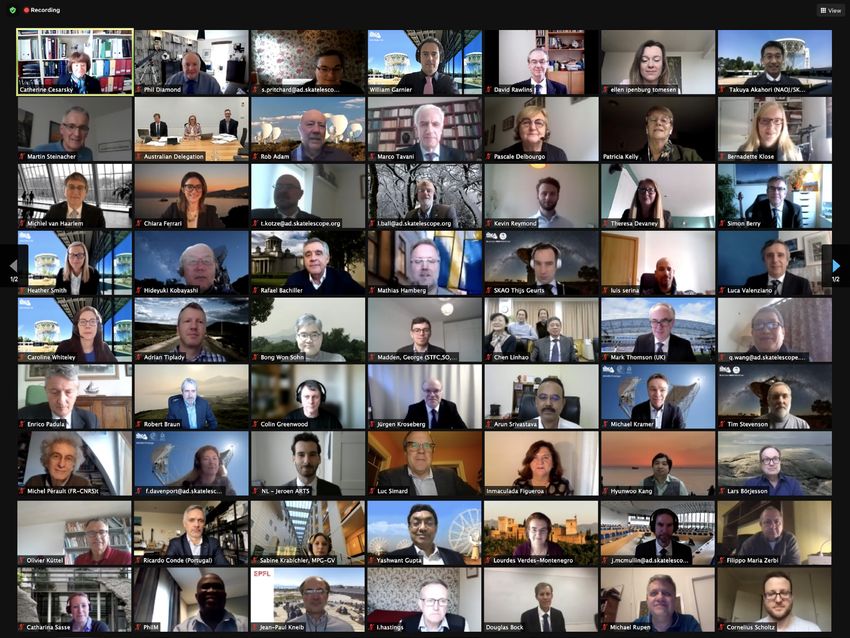
IN BRIEF

                                                                                                                            The rooftop
                                                                                                                            observatory at
                                                                                                                            The University of
                                                                                                                            Western Australia.
                                                                                                                            Credit: ICRAR/
                                                                                                                            UWA.

          SKA SYNCHRONISATION
          TECHNOLOGY LEADS TO
          WORLD’S MOST STABLE
          LASER TRANSMISSION
          BY ICRAR COMMUNICATIONS TEAM

          In a study published in the journal Nature Communications, ICRAR researchers have teamed up with colleagues from the
          French National Centre for Space Studies (CNES) and the French metrology lab Systèmes de Référence Temps-Espace (SYRTE)
          to set a world record for the most stable transmission of a laser signal through the atmosphere.

          “By combining our phase stabilisation technology with             aligned with extreme precision so they can be successfully
          advanced self-guiding optical terminals we were able to send      combined by the SKA’s supercomputers.
          a laser signal from one point to another without interference
                                                                            It has now led to the world’s most precise method for
          from atmospheric turbulence,” said lead author Benjamin
                                                                            comparing the flow of time between two
          Dix-Matthews, a PhD student at ICRAR and The University of
                                                                            separate locations using a laser system
          Western Australia.
                                                                            transmitted through the atmosphere.
          “It’s as if the moving atmosphere has been removed and
                                                                            ICRAR-UWA senior researcher
          doesn’t exist. It allows us to send highly-stable laser signals
                                                                            Dr Sascha Schediwy said
          through the atmosphere while retaining the quality of the
                                                                            the technology’s precise
          original signal,” he added.
                                                                            measurements also have
          In 2017, a similar optical fibre-based synchronisation            practical uses in earth science
          distribution system designed by the team was selected for         and geophysics.
          SKA-Mid dishes in South Africa. The long distances between
                                                                            “This technology could improve
          the SKA antennas mean radio waves from the sky reach
                                                                            satellite-based studies of how
          each antenna at different times. To achieve the performance
                                                                            the water table changes over
          demanded by the SKA science cases, the signals must be
                                                                            time, or to look for ore deposits
                                                                            underground,” Dr Schediwy said.
                                                                            There are further potential benefits for
                                                                            optical communications, an emerging field that
                                                                            uses light to carry information. Optical communications can
                                                                            securely transmit data between satellites and Earth with much
                                                                            higher data rates than current radio communications.
                                                                            “Our technology could help us increase the data rate from
                                                                            satellites to ground by orders of magnitude,” Dr Schediwy
                                                                            said. “The next generation of big data-gathering satellites
                                                                            would be able to get critical information to the ground faster.”
                                                                            Above: Members of the project team standing in front of a
                                                                            telescope dome located at the CNES campus in Toulouse,
                                                                            containing one of the self-guiding optical terminals. Credit:
                                                                            ICRAR/UWA.
                                                                            Far Left: A schematic view of our point-to-point atmospheric-
                                                                            stabilised optical link between two buildings at the CNES
                                                                            campus in Toulouse.
                                                                            Left: One of the self-guiding optical terminals on its telescope
                                                                            mount, and the phase-stabilisation Transmitter Module and
                                                                            Receiver Module. Credit: ICRAR/UWA.
          4                                                                                                       C O N TA C T | M A R C H 2 0 21

23014_Contact 7 - Main Version_v2.indd 4                                                                                                    12/03/2021 19:08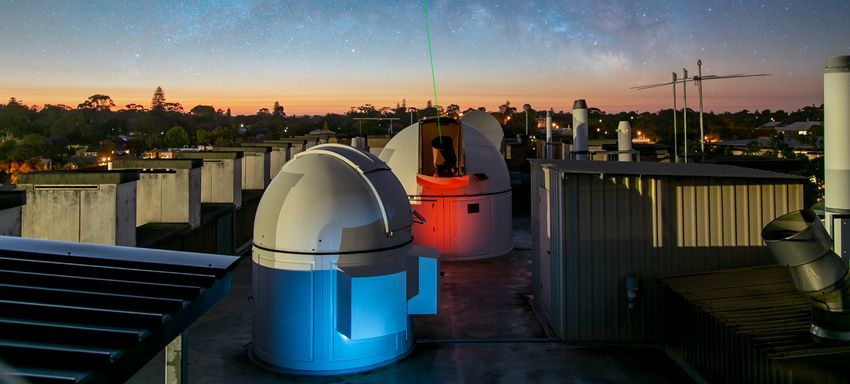
CAMBRIDGE SKALA
          ANTENNA BECOMES
          PART OF SOUTH
          POLE OBSERVATORY
          BY HILARY KAY (THE UNIVERSITY OF MANCHESTER – UK SKA)

          As SKA construction activities start this year, the site of the SKA1-Low telescope
          in Western Australia will be increasingly peppered with the familiar SKALA4.1
          antennas (See Contact Magazine Issue 4).

          An earlier version of these low-frequency
          antennas (SKALA2) has remarkably made its                      Right: Model of a
          way to an even more remote, and equally                        SKALA4 antenna,
          environmentally challenging, region of the                     developed as part
          globe, the South Pole.                                         of the design work
                                                                         for the SKA-Low
          A team from the University of Cambridge, who                   telescope.
          led the Antenna and LNA working group as
          part of the Dutch-led Low Frequency Aperture
          Array (LFAA) consortium, have formed a
          spinoff company, Cambridge ElectroMagnetic
          Technology Ltd (CEMTL), providing consultancy
          services building on the team’s experience in
          antenna design, low noise electronics, phased
          array systems and electromagnetic modelling.
          The company also supplies wideband
          antennas and low noise amplifiers, and has
          provided SKALA2 antennas for the PeV-Radio
          project at the South Pole, funded through a
          European Research Council grant and led by
          Dr. Frank Schröder at the Karlsruhe Institute of
          Technology.
          The antennas are deployed at the IceTop
          cosmic-ray surface array of the international
          IceCube Neutrino Observatory, a revolutionary
          detector encompassing one cubic kilometre of
          ice, located near the Amundsen-Scott South
          Pole Station. The SKALA2 antennas will further
          increase the sky coverage of IceTop, to include
          the centre of our own galaxy. They will also
          enable a higher accuracy for the detection of
          atmospheric particle cascades, helping to shed
          light on their currently unknown origin.
          “We are thrilled to see SKALA antennas used
          in applications beyond astronomy”, says Dr
          Eloy de Lera Acedo, co-founder and director,
          CEMTL. “After leading the antenna design
          team in the consortium, we are excited to
          embark on this new adventure with Cambridge
          Electromagnetic Technology Ltd. and are
          now focused on expanding the impact of the
          SKALA technology in other markets.”

          Right: A SKALA2 antenna has made it all
          the way to the South Pole. Credit: Dr Frank
          Schröder, KIT, and Delaware University.

                                                                                                  5

23014_Contact 7 - Main Version_v2.indd 5                                                       12/03/2021 19:08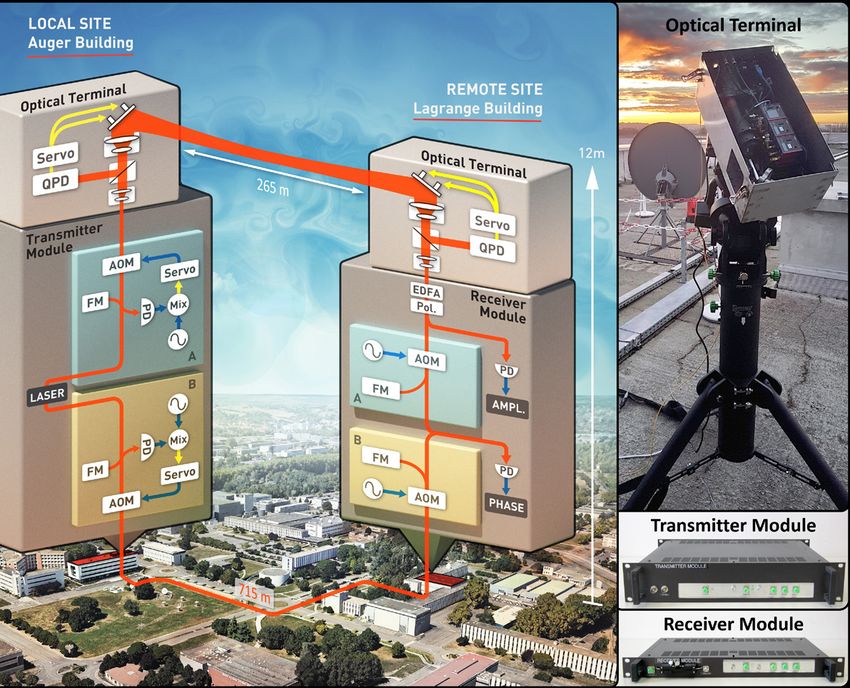
IN BRIEF

          EUROPE’S RADIO
          AND OPTICAL
          ASTRONOMY
          COMMUNITIES
          TEAM UP
          IN NEW
          EC-FUNDED
          PROJECT
          SOURCE: RADIONET & MPIFR

          A new project to enhance cooperation between European           “This project is largely about sharing and opening up access
          astronomy facilities and promote transnational access           to existing European radio and optical astronomy facilities,”
          among them in which SKAO is a partner kicked off on             says Thijs Geurts, SKAO Senior External Relations Policy
          1 March.                                                        Officer. “As an international observatory, this is also an
                                                                          opportunity for SKAO to advocate common interests such as
          The new four-year project, called OPTICON RadioNet Pilot        radio frequency interference (RFI) protection and help define
          (ORP), brings together the two flagship communities of          a broad astronomy strategy amongst our European partners.”
          advanced radio and optical/infrared astronomy in Europe
          through a funding commitment of 15 million euros by the         The French CNRS coordinates the overall project, while the
          European Commission.                                            Max Planck Institute for Radioastronomy serves as scientific
                                                                          coordinator for the radio astronomy partners.
          Thirty-seven partners are part of the project, among them
          SKAO and 13 radio astronomical institutes operating world-      The ORP project will build on previous successful programmes
          class European radio astronomy facilities, including a number   of transnational access to telescopes and arrays in Europe
          of SKA pathfinders such as the e-Merlin network in the          but will go further towards the harmonisation of national and
          UK, the international LOFAR telescope and the Effelsberg        European procedures, providing free reciprocal access to
          telescope in Germany.                                           some of the best ground-based telescopes as well as training
                                                                          and support in operating the complex infrastructures.

          6                                                                                                   C O N TA C T | M A R C H 2 0 21

23014_Contact 7 - Main Version_v2.indd 6                                                                                                12/03/2021 19:08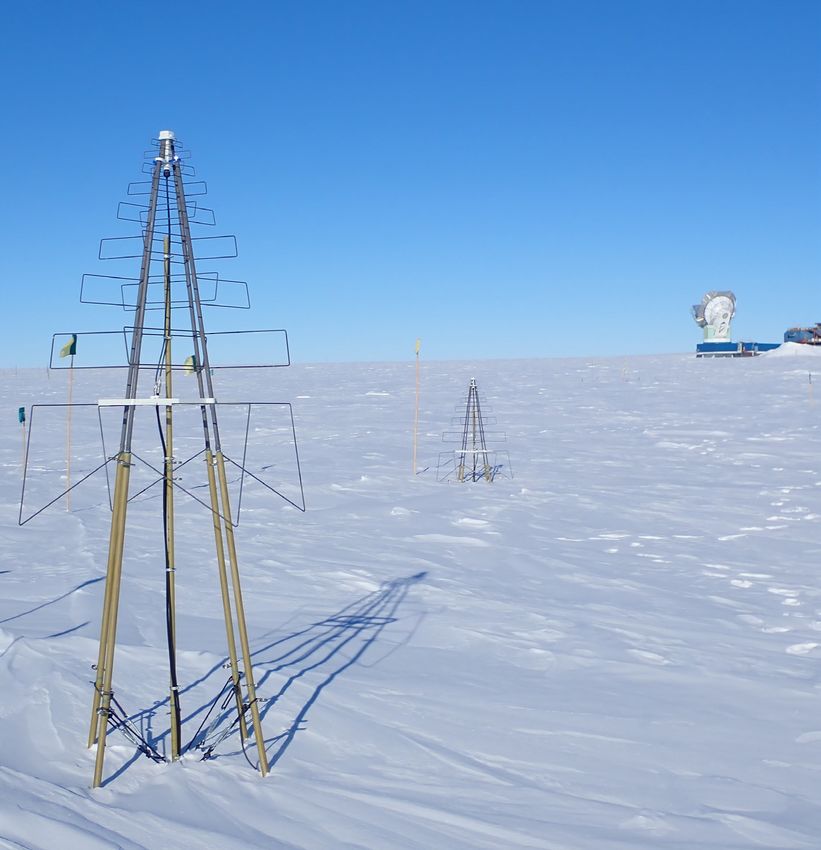
THE SPANISH
          SRC PROTOTYPE:
          SUPPORTING THE
          COMMUNITY BEYOND
          RADIO ASTRONOMY
          BY THE SPANISH SRC PROTOTYPE TEAM (INSTITUTE OF ASTROPHYSICS OF ANDALUCÍA
          IAA-CSIC)

          The IAA-CSIC, the institution that coordinates the scientific and technological SKA activities in Spain, organised
          SOMACHINE 2020 last November, a school on Machine Learning, Big Data, and Deep Learning in Astronomy
          co-organised by the Severo Ochoa Excellence Programme at the IAA-CSIC (SO-IAA) and the Andalucía Research
          Institute on Data Science and Computational Intelligence.
          IAA-CSIC is also currently developing the Spanish Prototype of
          an SKA Regional Centre (SPSRC)*. Being a transversal facility,
          the SPSRC has provided resources and support to the training
          activities in SOMACHINE 2020.
          The SPSRC is preparing its infrastructure to develop scientific
          programmes using innovative computing platforms, advanced
          data processing techniques and services to share data and
          tools. With this aim, the team deployed a cloud-based system
          (OpenStack) to provide a variety of services. In particular,
          a JupyterHub server (a web-based interactive computing
          platform) was set up where users can run research software
          using notebooks, an environment that improves code sharing.
          Thanks to its interactive and friendly interface, this is an excellent
          training tool and was hence offered to SOMACHINE 2020.
          The school combined lectures, including talks on the SKA, and
          practical hands-on sessions on advanced processing techniques
          like the ones needed to extract SKA science. The participants
          had access to the SPSRC platform where they could execute
          and experiment with the tutorials in real time. The JupyterHub
          deployment at the SPSRC contained all the software and
          computational resources required to run the sessions from
          any web browser regardless of the participants computer and
          requiring no software installation. The SPSRC team collaborated
          with the school organisers to publish a repository in GitHub (a
          web platform for software hosting) containing the materials and
          instructions to prepare the environment to run the tutorials.
          Documentation and support were provided so the event could
          run smoothly.
          Fifty participants from several countries attended the school.
          During the school, 181 clones (i.e. downloads) of the repository
          were registered and the supporting web pages in GitHub
          received 1523 views from 106 people.
          Given the impact and oversubscription of the event, the SPSRC
          will support the next SOMACHINE edition in April, contributing
          to train the next generation of SKA researchers.
          *The SPSRC is funded by the SO-IAA programme and additional
          competitive calls issued by the Junta de Andalucía and the
          Spanish Ministry of Science and Innovation, as well as CSIC, IAA’s
          home institution.

          Assembly of the hardware used to support the training event
          SOMACHINE 2020, with the event’s banner superimposed on
          top. Credit: SPSRC team/SOMACHINE 2020.

                                                                                                                                  7

23014_Contact 7 - Main Version_v2.indd 7                                                                                       12/03/2021 19:08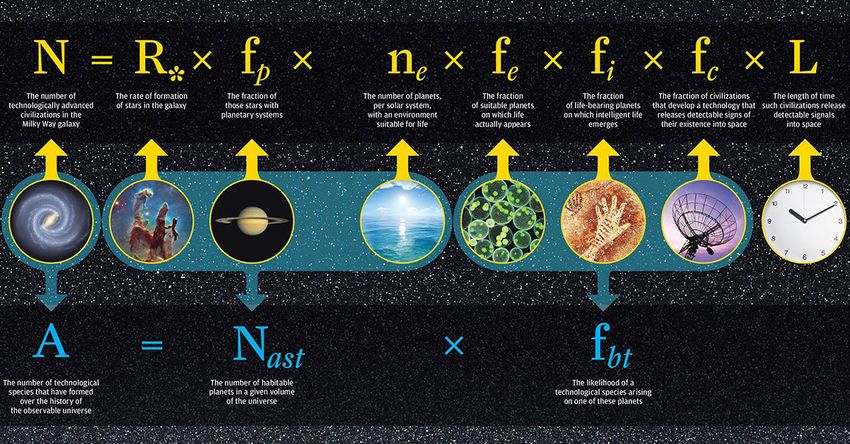
FOCUS ON

                 RED SAND IN OUR
               SHOES: THE INSPIRING
               INTERNATIONAL STORY
                  BEHIND SKA-LOW
          BY MATHIEU ISIDRO (SKAO)

          How do you go from an ambition to explore the formation of the first stars and galaxies after the Big Bang to assembling
          hundreds of thousands of metal parts and cables in the middle of the Australian outback? Not in a day, that’s for sure, and not
          alone. As the start of construction of the SKA telescopes dawns on the horizon, we look back at what it took to deliver the
          design of the SKA-Low telescope, and what makes it so special.
          One key date was 4 November 2013. On that day, more than         (MRO), the future SKA-Low site in Australia.
          350 scientists and engineers, representing 18 nations and
                                                                           “MWA was proposed as a prototype for SKA,” recalls Mark
          some 100 institutions, universities and industry gathered in
                                                                           Waterson, SKAO Domain Specialist, who worked on the MWA
          10 international consortia to tackle the final phase of pre-
                                                                           at the time. “Back then we were just at the very edge of ‘could
          construction: the detailed design of the key elements of the
                                                                           we possibly do this?’”
          SKA.
                                                                           Both the MWA and LOFAR, an SKA precursor and pathfinder
          One of them was the “Low Frequency Aperture Array” (LFAA)
                                                                           respectively, came out of a desire to force a breakthrough
          element, covering the set of antennas, on-board amplifiers
                                                                           in sensitivity for astronomical observations at low radio
          and local processing required for the SKA-Low telescope,
                                                                           frequencies. They demonstrated the use of key technologies
          to be located in Australia. Nine institutes in six countries
                                                                           for a large, distributed low-frequency telescope that wasn’t
          contributed to LFAA work under the Aperture Array Design
                                                                           possible until then. To achieve this, they focused on the use
          & Construction (AADC) consortium, led by the Netherlands
                                                                           of large numbers of relatively cheap antennas without any
          Institute for Radio Astronomy (ASTRON) in collaboration
                                                                           moving parts, concentrated in stations, with the mapping
          with SKAO. This included major design and development
                                                                           performed using the “aperture synthesis” technique. Sounds
          contributions from the Universities of Cambridge and Oxford
                                                                           familiar? Today, this concept is at the heart of the SKA-Low
          in the UK, the Italian National Institute for Astrophysics
                                                                           telescope.
          (INAF) and the Curtin University node of the International
          Centre for Radio Astronomy Research (ICRAR) in Australia, as     Around the same time, INAF also started work on low-
          well as contributions from the Joint Institute for VLBI ERIC,    frequency antennas, and was involved in work that would form
          the Universities of Manchester, Malta, and the Key Lab of        an important test bed for developing technologies which are
          Aperture Array and Space Application in China.                   now part of SKA-Low.
          The consortium’s work comprised not only the design of the       Meanwhile, Cambridge University started working on the
          SKA-Low antennas, of which there will be more than 130,000       design of radio antennas, which eventually led to the antenna
          in the first phase of construction, but also the low-noise       prototype first used on the Australian SKA site.
          amplifiers (LNAs) which will boost the faint astronomical
                                                                           A lot of this early design work was supported by European
          signals being received, optical systems to carry radio
                                                                           Commission funding, either through the long-running
          frequency signals for long distances without attenuation and
                                                                           RadioNet programme or as part of the four-year, 28-million-
          custom high-performance digital signal processing for each
                                                                           euro SKA Design Study, to which the Commission contributed
          antenna station.
                                                                           10 million euros. “That design study is where much of the
          The early years                                                  foundation of the consortium was laid,” explains André Van
                                                                           Es, SKA-Low Senior Project Manager at SKAO. “It looked at
          “One of the most important aspects of designing a complex
                                                                           the R&D readiness, in particular the feasibility of aperture
          system like the SKA, is prototyping,” explains Pieter Benthem,
                                                                           arrays for radio astronomy within the planning and costing of
          SKA Programme Manager at ASTRON. “It’s absolutely crucial
                                                                           the project.”
          to help designers verify their design, as many of the SKA
          precursors and pathfinders have shown over the years.”           As a consequence of that previous experience and support,
                                                                           the consortium was ready to fine-tune designs and build
          Prototyping for SKA-Low began long before the consortium
                                                                           hardware from the moment it was set up.
          was formally established, around 2006, when the first
          station of the LOFAR telescope was installed in a field in the   Prototyping and Integrating
          Netherlands, and the construction of the MWA telescope
                                                                           Nearly 10 years ago, 16 first-generation SKA Log-periodic
          started at CSIRO’s Murchison Radio astronomy Observatory
                                                                           Antennas (SKALA) were built in the UK at the Mullard Radio

          8                                                                                                     C O N TA C T | M A R C H 2 0 21

23014_Contact 7 - Main Version_v2.indd 8                                                                                                  12/03/2021 19:08
Astronomy Observatory near Cambridge, making up the                 the fourth-generation antennas called SKALA4.1AL. AAVS2.0
          first Aperture Array Verification System, AAVS0. “That very         helped the teams validate the electromagnetic models used
          first array of SKALA antennas was fundamental to verify the         and mitigate the risks associated with station-level calibration,
          performance and support the development of the hardware             a crucial step to ensure observations are accurate.
          and electronics being designed by the consortium,” explains
          Dr Eloy de Lera Acedo, SKA team lead at Cambridge
          University.
          Then from 2017, drawing from a decade of engineering work
          worldwide in low-frequency radio astronomy, the consortium
          set out to build a full-sized station of 256 antennas as a
          demonstrator and a way to develop improved antenna
          designs to meet the SKA’s stringent requirements.
          “AAVS was a brassboard, a way to explore these fairly new
          technologies which we didn’t have a lot of confidence in and              BUILDING A GIANT TELESCOPE
          become familiar with the results,” explains Mark Waterson.                IN THE OUTBACK (VIDEO)
          “The principal motivation was to provide a platform to help               Two complete stations of prototype antennas for the
          the design team investigate, mitigate and retire key risks,”              future SKA-low telescope were completed & successfully
          complements Pieter Benthem.                                               tested at the SKA site in Western Australia.

          As such, AAVS used a risk-based approach. The features it                 AAVS1 – Watch here       AAVS2 – Watch here
          included were technologies that were necessary to explore
          to build up confidence, while the technologies it didn’t
                                                                              “By installing and testing these prototypes on site, we gained
          incorporate were those the engineers weren’t worried about.
                                                                              a lot of experience in the field and developed new ideas for
          This process is common in the space and aeronautics industry,
                                                                              maintenance and debugging,” explains Dr Jader Monari,
          where increasingly ambitious prototypes are developed to
                                                                              SKA-Low Programme Manager at INAF.
          assess technology readiness levels.
                                                                              One such example was the innovative use of a drone in 2019
          One of those new risky technologies at the time, at least in the
                                                                              to conduct measurements on the antennas and validate the
          world of radio astronomy, was “Radio Frequency Over Fibre”
                                                                              models being used to predict their behaviour in the field,
          (RFoF), converting a radio wave into light by modulating
                                                                              which built on similar work at the Mullard Radio Astronomy
          the intensity of the light source, so the light signal can be
                                                                              Observatory and LOFAR. Equipped with a precision GPS, the
          transmitted over optical fibre rather than the more traditional
                                                                              drone emitted a signal from various points above the station,
          copper coaxial cable. RFoF has become widely used in the
                                                                              in effect simulating an astronomical source so the behaviour
          telecommunications industry over the past 20 years as it
                                                                              of the antennas could be tested (see our article in Contact 01).
          provides a more reliable way to transmit more data over
          long distances and as a result, the cost of components has          “It’s important to validate those models with real data from
          dramatically dropped, making it an attractive solution for the      the field to make sure we’re calibrating the antennas properly,
          SKA.                                                                otherwise astronomical observations would be useless,” said
                                                                              Dr Pietro Bolli, Antenna & Calibration Engineer at INAF at the
          But “using such optical technology hasn’t been so common in
                                                                              time.
          radio astronomy until now,” explains Dr Maria Grazia Labate,
          SKAO’s Low Telescope Engineer. “The dry dusty conditions            Finally, in January 2020, the consortium passed its critical
          on site made the design of the components and the balancing         design review, completing six years of work to design SKA-
          of each parameter quite hard, and the fact we need hundreds         Low.
          of thousands of those converters meant we needed a very
                                                                              But the work hasn’t stopped there. In parallel, the Cambridge
          cheap, but very reliable, solution. Including RFoF technology
                                                                              team led by Eloy de Lera Acedo has been building a small
          as part of AAVS allowed us to demonstrate its feasibility,
                                                                              array of 64 SKALA4 antennas to support the telescope’s
          enabling us to relocate other key components away from the
                                                                              construction and validate an electromagnetic simulation
          field into a single shielded processing facility.”
                                                                              software tool they have developed with the Université
          Built on site at the MRO thanks to extensive logistical             Catholique de Louvain, in Belgium. The tool allows users to
          support from CSIRO, ICRAR and Curtin University with their          quickly – 10,000 times faster than commercial solutions in
          experience of constructing and deploying radio telescopes in        fact – simulate the response of antennas to sky signals, an
          remote regions, AAVS allowed the consortium to validate key         important element for calibration and the future science data
          enabling technologies and performance requirements, gather          pipelines for SKA-Low, where accurate and fast predictions of
          production knowledge, test interfaces and assess prototypes         its performance will be essential.
          in a realistic operating environment.
                                                                              “With this tool called HARP we can quickly model tens
          “It’s one thing to design, simulate and test inside a computer,     of stations without losing accuracy, which allows us to
          and a totally different thing to deal with the practicalities and   understand the impact of design decisions much quicker and
          logistical complexities of deploying an array on a remote site,     produce fast evolutions of our designs,” explains Eloy de Lera
          on the other side of the planet,” continues Pieter Benthem,         Acedo.
          who served as Project Manager for the first full station on site.
                                                                              Similarly, the SKA-Low Prototype System Integration facility in
          That first full station, AAVS1, was successfully completed in       Sydney was developed by CSIRO in early 2020 (see our article
          2018. The lessons learned from it fed into the larger design        in Contact 03) to offer a geographically accessible location
          process of SKA-Low and eventually led to fourth-generation          for the SKA-Low telescope’s digital ‘backend’ prototypes
          “SKALA4” antennas, an evolution of the second-generation            that would mimic the MRO’s “super-computing” control
          “SKALA2” antennas used for the AAVS1 station.                       building. By bringing parts of the telescope together early,
                                                                              the facility has enabled engineers to conduct continual tests,
          The following year, another station was completed on site (see
                                                                              resolve issues and iron out bugs ahead of construction, saving
          our article in Contact 04) using a parallel implementation of
                                                                              precious time.

                                                                                                                                                9

23014_Contact 7 - Main Version_v2.indd 9                                                                                                     12/03/2021 19:08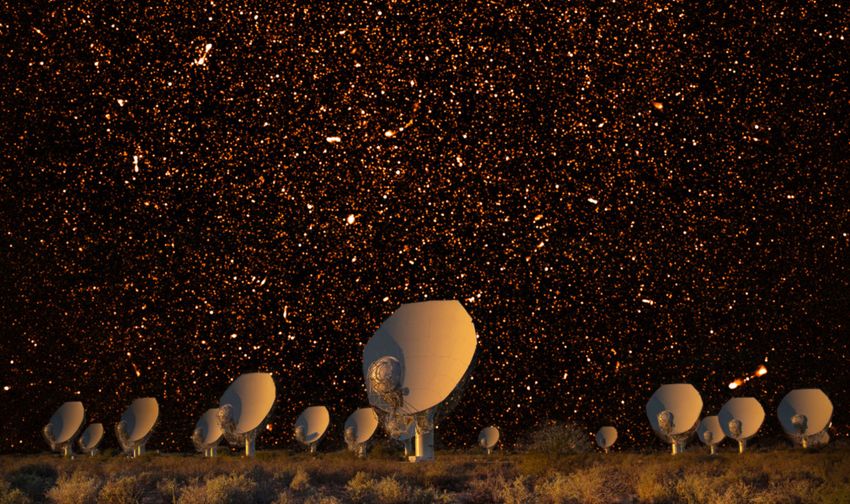
FOCUS ON

          “Over the last 20 years we’ve designed this telescope. Over         That remoteness means that each component needs to be
          the last five years we’ve refined that design, and over the last    qualified to withstand the tough environmental conditions it
          year, we’ve brought that design to finality,” concludes Prof.       will be placed in, making reliability a challenge.
          Steven Tingay, Deputy Director of ICRAR. “The next step is
                                                                              “Keeping the entire system ticking while ensuring low
          to take this final design, put it into a pre-production design
                                                                              power consumption and high reliability in such a remote and
          process and then take that into full construction.”
                                                                              inaccessible location is definitely an interesting challenge,”
                                                                              says Jader Monari.
                                                                              “In some ways, designing SKA-Low is quite similar to
                                                                              designing a space probe or a rover to go on the surface

      LEARN MORE ABOUT                                                        of Mars,” adds Dr Federico Perini, RF engineer at INAF
                                                                              responsible for the receiver development within the LFAA

       THE CONSORTIUM
                                                                              Italian Technical Group. “Everything has to work seamlessly,
                                                                              meeting tight specifications for decades in an extreme
                                                                              environment where maintenance won’t be easy.”
                                                                              Then comes the end-to-end logistics challenge. Delivering
                                                                              significant volumes of component parts from various parts
                                                                              of the world on a compressed timeline and on schedule to a
                                                                              remote site in the Australian outback three hours’ drive from
                                                                              the nearest town is no small feat. There’s the international
                                                                              shipping, clearing through customs, handling, warehousing
                                                                              on site, as well as loss prevention and insurance to consider.
                                                                              If problems occur in any of these steps and components are
                                                                              not available when they are needed, assembly teams will be
                                                                              stuck…
          Documentation is key
                                                                              “This is why good relationships with vendors is a key
          The years of work and effort by hundreds of experts from            ingredient for success,” explains Ian Hastings, SKAO’s Head
          around the world culminated in the recently published 278-          of Procurement. “How do you build and maintain effective
          page Construction Proposal and 220-page Observatory                 and efficient supply-chain relationships that enable us to
          Establishment and Delivery plan, which set out exactly what         achieve our goals? Having win-win contractual agreements
          SKAO is proposing to build and how. But these documents             that encourage dynamic problem solving will be a major part
          are just the tip of the iceberg; behind them are hundreds of        of successful delivery.”
          engineering documents and tens of thousands of pages of
                                                                              Rolling out 512 stations, consisting of 131,072 antennas and
          technical documentation describing every system, every nut
                                                                              thousands of kilometres of optical fibre over 65km in just a
          and every bolt. SKA-Low alone accounts for more than 1,300
                                                                              few years will also require strong project management skills.
          of these documents!
                                                                              “Building this telescope has more in common with building a
          This may seem over the top, but a strong systems engineering        5G network than with building a traditional telescope,” jokes
          approach and documentation has been essential to the                André Van Es.
          project’s success in particular due to its internationally
                                                                              Finally, there’s the challenge of working with such an
          distributed nature.
                                                                              international collaboration, with partners spread across the
          “For a smaller telescope delivered by a single institute where      world, a very narrow window of common hours, different
          everyone you need to speak to is just down the corridor, you        cultures and ways of working.
          probably wouldn’t need it,” says Daniel Hayden, SKAO’s Low
                                                                              The importance of diversity
          System Engineer. “But the SKA is a huge, global, distributed
          project involving hundreds and thousands of people. No              Overall though, the teams are adamant that this diversity is a
          one has a complete understanding of it, hence the need to           net benefit, allowing them to look at the same problem from
          document everything to make sure everyone understands               different angles and different perspectives and understand
          what to do.”                                                        it much better. “This cultural diversity is invaluable when it
                                                                              comes to studying complex systems. Sometimes the best
          “Coordinating remote teams is challenging,” adds André
                                                                              solution can be really far from one’s comfort zone,” explains
          Van Es. “When you’re meeting over different time-zones,
                                                                              Jader Monari. “We’ve assembled a very close-knit team with
          working with hundreds of people from different backgrounds,
                                                                              our Australian partners that tackles problems in a compact
          information management becomes crucial.”
                                                                              and determined way.”
          Challenge after challenge
                                                                              “Working with people with so many different areas of
          Even with all the documentation, the SKA-Low telescope              expertise and experience is like going through a living
          remains an exceptionally challenging project to deliver. Ask 10     library,” adds Maria Grazia Labate. “You have access to so
          engineers what’s most challenging about it and you’ll get 10,       many lessons learned from other projects and so many ways
          or possibly more, answers and a twinkle in their eye.               of working, it’s enriching.”
          It is certainly true that the SKA-Low telescope is unique in        “It also maintains the attraction and the newness to see new
          many ways. Not only will it be the most sensitive telescope         people come in,” adds Mark Waterson. “Continuing to bring
          in the world at these frequencies, it will also be the largest in   new people into the project and understanding what they
          terms of the number of antennas and as a consequence will           need to know keeps me engaged and alive.”
          need to have the most powerful processing capability for such
                                                                              Working with industry
          a telescope. But the cherry on top? It will also be the one of
          the most remote such telescopes ever built, adding another          Long gone are the days of the backyard radio astronomer,
          layer of complexity to its delivery.                                tinkering in their shed to build a radio telescope with metal

          10                                                                                                        C O N TA C T | M A R C H 2 0 21

23014_Contact 7 - Main Version_v2.indd 10                                                                                                     12/03/2021 19:08
poles and mesh. The precision, quantity and reliability past few years, it’s the first observation that will make use of
required for today’s telescopes means a close relationship all 512 stations, or the first integration of one thousand hours
with industry. of observations.
“The antenna design is crucial, because we need something “To be able to help get data to astronomers who are then
that is cost-effective, can be reliably replicated tens of going to go and make amazing discoveries, that’s really
thousands of times, is quick to install, and yet still meets our exciting to be involved in that process,” says Mia Walker,
extremely demanding system requirements – this is a tricky Instrument Support Engineer at ICRAR.
balancing act,” explains André Van Es.
For the scientists, it’s unlocking one of the few remaining
To get there, there’s been nearly 10 years of industry- mysterious ages of the Universe and answering the question:
academic development to evolve the mechanics of the how did the first stars and galaxies form?
antenna.
“SKA-Low will be a game-changer,” adds Associate Prof.
“One of the earliest industrial features we introduced in the Cathryn Trott from ICRAR. “For the first time, the SKA will
antenna design through our partnership with Cambridge allow us to produce images around the first stars.”
Consultants Ltd was the use of cost-efficient bent wire for the
The central region of SKA-Low, and in particular the dense
dipoles, leveraging from industry involved in the fabrication of
1km core of stations, will provide the photon-collecting area
cloth hangers and supermarket trolleys” explains Eloy de Lera
required to detect and explore the first billion years of the
Acedo.
Universe and in particular the births and deaths of the first
While the research institute teams have had the experience stars, allowing us to see the stars’ effect on the surrounding
to design and optimise the SKA-Low antenna from an gas. The size of the stations of SKA-Low are tuned to be able
electromagnetic point of view, there are aspects such as to map this structure from the earliest stars in the Universe.
mechanical design, material selection and mass production
Little is known from that time when the Universe transitioned
skills that require industrial partners.
from being a vast volume filled with basic elements to
“Public research institutes and Universities usually work in the realm of cosmic complexity we see today. “With the
frontier research to develop innovative technologies that extraordinary capabilities of these antennas, I very much hope
meet state-of-the-art requirements,” explains Jader Monari. to continue learning and eventually be able to unveil in a big
“This process is followed by building a few prototypes way the mysteries of the early Universe,” says Eloy de Lera
to experimentally validate these technologies, but these Acedo.
institutions don’t have the skills nor the resources to engage
Meanwhile, the large scale of SKA-Low, including stations that
in large volume production and ensure long-term reliability of
are separated by 65km, will allow unprecedented resolution
the components, two things that are essential for a telescope
to study the structure of nearby and distant galaxies, and
the size of the SKA due to operate for 50 years in harsh
provide a map of the locations and properties of millions of
environments.”
active galaxies in the Universe that are currently hidden to us.
On the other hand, industry excels at design optimisation to
For those who’ve been lucky enough to experience the
reduce production cost. Cost analysis, procurement plans,
Australian SKA site, there is something deeply special about
maintenance and quality procedures are all part of what
it, its colour, its remoteness, and these simple antennas,
industry does really well and are essential for a project of the
quietly mapping and exploring the dark skies above.
size of the SKA.
“The view of the sky, especially at night, is just breathtaking”
The potential for spinoffs
says Jader Monari.
With prestigious research institutes working hand-in-hand
“That red, dusty and ancient landscape may look empty at
with cutting-edge industry on innovative antenna technology
first, but it’s full of hidden richness,” adds Federico Perini. “To
and data transfer, it perhaps won’t surprise anyone to hear
me it’s the perfect metaphor for the Universe we’re going to
that the work to design and deliver SKA-Low is already
look deeper into thanks to these antennas.”
leading to spin-offs.
“Technologies that we develop for the SKA might spin off
into things that might help everyday people in their everyday
lives,” hopes Kim Steele, MWA Site Hand at ICRAR.
As reported in Contact 04, the Italian industrial partner SIRIO
Antenne have developed a new commercial antenna working
at 4G-LTE frequencies, based on the SKALA4.1 antenna
developed by INAF in collaboration with CNR-IEIIT (which
itself built on previous designs from UK and Dutch partners
as part of the AADC consortium). That 4G-LTE won a tender
in France for the electrical network supplier, and SIRIO have
been working on a similar antenna for 5G.
And as mentioned in this issue on page 5, the team from the
University of Cambridge who led the Antenna design and
LNA working group as part of the AADC consortium, has
formed a spin-off company providing consultancy services
and has supplied SKALA2 antennas to the IceCube Neutrino
MEET SOME OF THE
Observatory at the South Pole. INTERNATIONAL TEAM
Time for science BEHIND SKA-LOW
What does success look like? For the Observatory’s engineers
who have worked to deliver the SKA-Low telescope over the
11
23014_Contact 7 - Main Version_v2.indd 11 12/03/2021 19:08INFOGRAPHIC: HOW DOES SKA-LOW WORK?
The SKA-Low telescope makes the most of building a incredibly powerful. An SKA-Low antenna sees the
very large array of very simple elements, generating the whole sky and the processing can flexibly select many
telescope’s performance by combining all those simple simultaneous directions towards different parts of the
elements to reduce individual flaws. As a result of such sky even though the antenna has no moving part. It is a
a design, there are fewer single points of failure, and ‘mathematical’ telescope that works by filtering out what
any failure (an antenna or a station being offline) has less is not desired from the observable sky.
of an impact on the overall performance. The 2-m high
In total, 131,072 antennas will be distributed over
antennas of SKA-Low may look simple, but combined
512 stations spread over 65km at the Murchison
with state-of-the-art back-end technologies they become
Radio-astronomy Observatory in Western Australia.
SKA-Low antennas are made LOCATION: 3 1 Incoming radio
of a number of horizontal MURCHISON, waves of different
wavelengths excite
branches of different
lengths. These branches are
WESTERN dipoles of different
called dipoles, the simplest AUSTRALIA sizes and generate an
electrical current.
and most widely used type
of antenna. 2 A transmission line
collects the electrical
From top to bottom, pairs of current generated
3
dipoles get increasingly at the dipoles and
bigger. Each of them brings it to the top
absorbs radio waves coming of the antenna.
from the sky, and the bigger 3 A pair of Low Noise
the dipole, the lower the
x256
Amplifiers (LNAs) at the
frequency it absorbs. top of the antenna
amplify the weak signal.
Because the Universe is
expanding, radio waves 4 Short coaxial cables
emitted by objects and 1 transmit the signal
phenomena get elongated from each antenna
to a smartbox.
to longer wavelengths and
lower frequencies the 5 SMARTBOX: Houses
further away they are, a Radio Frequency over
process called redshift. This Fiber (RFoF) modules,
means the bottom part of 2 which contain laser
diodes to convert
the antenna detects “older”,
electrical signals to
further away signals and the
optical signals.
top part detects “younger”,
closer ones. So with their 6 FIELD NODE
x24
large collection of dipoles of DISTRIBUTION HUB:
different sizes, these Contains a power
module that receives
simple-looking antennas will
4 incoming power and
actually let us explore a big distributes it to the
chapter in the history of the 5
smartboxes, and a
early Universe. fibre module that
allows ‘patching’ of
5 8 individual antenna
optical signals onto the
main fibre cable to the
processing facility.
7 Central area stations send
the signal directly to the 6
Central Processing Facility. ONE STATION
7
8 RF OVER FIBRE: Transmits
the signal to a processing
facility via optical fibre.
8
REMOTE
PROCESSING
FACILITIES (RPFs)
9 Located along the telescope's 9
3 spiral arms, each RPF
processes the signals from
six remote stations in a
shielded container before
sending them on to the
Central Processing Facility.
10 14
10 The most remote stations
and processing facilities are
powered by small stand-alone
photovoltaic plants.
12 C O N TA C T | M A R C H 2 0 21
23014_Contact 7 - Main Version_v2.indd 12 12/03/2021 19:08LOCATION: CENTRAL PROCESSING
MURCHISON, WESTERN AUSTRALIA FACILITY (CPF)
11 The SKA-Low CPF is a shielded building
located on site containing a range of
11
processing and support equipment.
12 TILE PROCESSING MODULE (TPM): Each
TPM converts and digitises the signals from 16
antennas. There are more than 8,000 TPMs in
total, located either in the CPF or the RPFs.
13
12a ANALOG BOARD: Converts the signal
back to electrical and cleans it.
12b DIGITAL BOARD: Digitises the signal
from the antennas in a station then combines
them to point to one or multiple directions of
the sky.
12
13 CORRELATOR AND ARRAY-LEVEL
BEAMFORMER: Combines the signals
13 coming from different stations to prepare
them for imaging, and to point with more
14 accuracy to multiple directions on the sky.
14 PULSAR SEARCH AND TIMING
14 ENGINES: Search these multiple directions for
pulsars and other transient phenomena and
also time them accurately.
15 SKA-LOW OBSERVATORY CLOCK
SYSTEM: To time signals accurately, SKA-Low
uses three ultra-stable clocks called hydrogen
masers. The times they produce are
continuously compared with one another to
identify failures and are also compared via
satellite with UTC time kept by the
International Bureau of Weights and Measures.
16 Power for the CPF and central stations is
provided by a photovoltaic plant and energy
15 storage system backed up by diesel
12b generators, generating renewable energy a
x3
majority of the time to power the antennas
12a 16 and all site infrastructure.
x8,192 TELESCOPE MANAGER (TM): The system
control and monitoring sub-system.
It orchestrates the hardware and software
12 TILE PROCESSING MODULES (TPMs) systems to control observations and facilitates
maintenance by logging ‘health’ parameters.
MURCHISON It provides support to perform diagnostics
and delivers relevant data to operators,
17 DEDICATED HIGH-SPEED OPTICAL FIBRE LINK:
Delivers data from the Australian SKA site in the Murchison to Perth.
17
800km maintainers, engineers and science users.
PERTH
21
18 LOCATION:
PERTH,
WESTERN
AUSTRALIA
SCIENCE PROCESSING 19a
CENTRE (SPC)
18 The SKA-Low SPC will be located in the
Pawsey Supercomputing Centre in Perth.
19a THE SCIENCE DATA PROCESSOR
(SDP): A 130PFLOPS supercomputer flags and
calibrates the data in preparation for imaging
using state-of-the-art computer code. 20
19b The SDP also creates 3D images called
data ‘cubes’ (2 spatial dimensions plus velocity
or ‘depth’). At 50,000 pixels across, each cube
will contain 1 petabyte of data.
19b
20 SUBMARINE COMMUNICATIONS
CABLE: SKAO will ‘rent’ fibre capacity on the
main submarine cable off the west coast of
Australia to export data products. 21 Each year, some 350 PETABYTES worth of
SKA-Low data products will be delivered to the
SKA Regional Centres around the globe.
V1 March 2021
13
23014_Contact 7 - Main Version_v2.indd 13 12/03/2021 19:08LET’S TALK ABOUT
LET’S TALK ABOUT...
SETI
BY CASSANDRA CAVALLARO (SKAO)
In December, an intriguing radio signal was detected by the Parkes radio telescope in Australia, originating from around
Alpha Centauri, the nearest star to our Solar System. ‘Intriguing’ because it fits the profile of signals sought by one
particular community among astronomers: those engaged in the search for extra-terrestrial intelligence (SETI).
“SETI attempts to answer the most profound question in It was in 1960 that modern SETI began in earnest with
science: Are we alone in the Universe? It’s also a question Dr Frank Drake’s Project Ozma, which used a 26m radio
that humans have asked themselves since they first looked telescope at Green Bank Observatory in the United States
up at the night sky,” says Dr Steve Croft, a researcher at to observe two stars, Tau Ceti and Epsilon Eridani. It was
the Berkeley SETI Research Center and member of the looking for unusual “blips” in signals around 1420 MHz,
SKA’s Cradle of Life Science Working Group. This topic is a the frequency emitted by neutral hydrogen, the most
favourite for sci-fi fans, and Hollywood has spent decades abundant element in the Universe. The idea was that any
imagining just how we might one day interact with alien smart civilisation would choose a frequency that others were
lifeforms, whether it was harmless little ET being accidentally likely to be scanning, and as 1420 MHz is so fundamental
stranded on Earth, Jodie Foster making contact through to studies of the Universe, this would be a good place to
radio astronomy (and inspiring the name of this very start looking. Nothing out of the ordinary was discovered by
magazine), or the USS Enterprise using warp speed to seek Project Ozma, but the search was on.
out new life and new civilisations. Sci-fi aside, there have
been a couple of tantalising “maybes” in the real-life quest A year later Dr Drake wrote what came to be known as
over the past 50 years. the Drake Equation, outlining all the factors which would
contribute to the probability of finding intelligent life
Let’s start with some background: SETI is concerned elsewhere in our galaxy (see image). As science writer Dr
with intelligent life (rather than the building blocks of life Nadia Drake has pointed out, many of the variables were
discussed in the last issue of Contact) so the focus is on unknown at the time her father wrote the equation, but it
detecting signals from any alien technology. These signals continues to guide modern SETI as astronomers learn more
are known as technosignatures. These could be messages and can fill in the blanks.
being broadcast deliberately, or just the electromagnetic
noise that technology creates which can leak out into space. That period also saw the first transmission sent from Earth
This happens with our own technology too, so signals from into outer space with the sole purpose of reaching other
our early radios, then TVs, radar, etc. here on Earth have civilisations – a controversial topic to this day – using the
been travelling further into space since they were first Arecibo radio telescope in Puerto Rico in 1974. Dr Drake
emitted. designed a message which included depictions of our
number system, the human form and Arecibo itself. Read
more about it here.
Above: SETI is the search for intelligent life elsewhere in the Universe.
14
23014_Contact 7 - Main Version_v2.indd 14 12/03/2021 19:08The famous Drake equation, which is still informing SETI debates to this day. Credit: University of Rochester
In 1977 came the “Wow!” signal, so named because when “Breakthrough Listen is already capable of surveying stars
analysing the data, astronomer Dr Jerry R. Ehman circled it out to distances of hundreds of light years or more, for
in red pen and wrote an accompanying ‘Wow!’. Detected by technology no more advanced than what we already have on
Ohio State University’s “Big Ear” radio telescope, it lasted Earth,” says Steve, who is also Breakthrough Listen’s Project
72 seconds and then was never heard from again. It is still Scientist for the Green Bank Telescope. “Frank Drake’s
unexplained, but pops into the news now and then when instrument was limited to a tiny region of the spectrum,
a new theory emerges: was it a comet as was suggested but now the increase in computing power over the last few
in 2016? Or could it have originated from an exoplanet in decades means that Breakthrough Listen can scan billions
that neighbourhood of the Universe, as was theorised last of channels at once, across regions of the spectrum that are
year? Regardless, the Wow! signal stood out because it was many GHz wide, giving us a better chance of detecting any
a narrow-band signal, exactly what SETI researchers are transmissions that might be out there.”
looking for, in contrast to natural phenomena.
The problem, of course, is that the Universe is very big,
“Nature, as far as we know, can’t generate narrow-band so even a search of this scale, using the most advanced
radio signals – transmissions occupying a very small chunk technology available, has its limits. Nobody knows the
of frequencies on the radio dial,” Steve explains. “So if you challenges of SETI better than Dr Jill Tarter, who is a pioneer
see something like that, you know it’s from technology, and in the field and Chair Emeritus for SETI Research at the SETI
that’s what we saw in the example of the signal Breakthrough Institute. She points out that SETI searches involve a massive
Listen detected recently at Parkes.” “discovery space”, that’s all the different boxes you have to
tick in order to have a chance of being successful: looking in
Breakthrough Listen is the right place, at the right time, with sufficient sensitivity, at
the biggest search the right frequency and so on.
for intelligent life
ever undertaken “You have this huge volume you’d like to search through,”
by humankind. Jill says. “We made an estimate after the first five decades of
Launched in 2015 the kind of SETI work we’ve been doing, and set that volume
by two very big equal to the volume of all the world’s oceans – how much
names, the late have we searched? The disappointing answer is about one
Prof. Stephen glass out of all those oceans.”
Hawking and
entrepreneur Yuri
Milner – who is
also a physicist DID YOU KNOW?
by training –, it
aims to survey Dr Jill Tarter was the inspiration for Jodie Foster’s
one million of character in the 1997 sci-fi movie Contact,
the nearest stars and was closely involved in preparations for
to Earth, and 100 the film. The movie features the Very Large
nearby galaxies using
Array, another SKA pathfinder facility.
radio telescopes including
MeerKAT in South Africa
and a pilot programme on MWA
in Australia, both SKA precursors. So far it has completed Left: The 72-second long Wow! signal, detected in 1977, is
detailed technosignature searches of more than 1,000 stars. still unexplained. Credit: Big Ear Radio Observatory and
North American AstroPhysical Observatory (NAAPO).
15
23014_Contact 7 - Main Version_v2.indd 15 12/03/2021 19:08LET’S TALK ABOUT
To add to the difficulty, our own technology is also very Nor is the data processing behind SETI. Searching
noisy. This creates a digital cacophony which telescopes for artificial narrow band signals means dividing radio
detect, causing a headache for astronomers, particularly frequencies up into billions of channels so that each one can
those focused on finding signs of technology elsewhere in be scoured, and it’s unfeasible to store that much data.
the Universe. So how do they do it?
“We need to triage for interesting signals in real time, and
“We’re faced with a vast haystack of signals from mobile then save little snippets of data for deeper analysis later,”
phones, GPS satellites, planes, and so on, that we have Steve says. “This still requires many petabytes of storage
to search through for the faint needle that might be a (remember, a single petabyte is a million gigabytes!),
transmission from ET,” Steve says. “We have a number of in addition to fast processing powered by GPUs (the
smart techniques to help us do that, including looking for cards video gamers use to hunt for aliens, but used by
signals that only appear when the telescope is pointed at the SETI scientists to do massive number-crunching), and
target star. This tends to filter out things like satellites - which powerful algorithms. Fortunately, we benefit from the huge
don’t tend to follow the motions of stars as they move across investment that’s gone into all of these areas by the tech
the sky - mobile phones, and other human transmissions, giants.”
that we call radio frequency interference, or RFI.”
For 20 years, there was also the citizen science project
Occasionally this isn’t enough to work out what’s going on SETI@home which used the computing power of millions of
and further examination is required, as happened for the people’s personal computers all over the world to process
signal detected by Parkes, dubbed Breakthrough Listen SETI data. Volunteers downloaded software which kicked in
Candidate 1 (BLC1). The results of that study are due to be when their computer was idle, creating a kind of distributed
published soon. supercomputer. That project was wrapped up in March 2020
to give professional researchers a chance to catch up with
What helps when doing this kind of examination – pointing analysing the results.
away from the signal and back to it – is having a telescope
that can look at several different parts of the sky at once, as
MeerKAT and MWA can do.
DID YOU KNOW?
“This not only helps with observing efficiency since you
can look at several stars at once, but it also helps you ‘Oumuamua is a name of Hawaiian origin. In
to distinguish between a candidate technosignature (or designating it as the first interstellar object,
indeed some other natural astrophysical phenomenon) and the IAU noted “The name, which was chosen
someone microwaving their lunch.” by the Pan-STARRS team, reflects the way this
object is like a scout or messenger sent from
Ah yes. Parkes fans will be nodding knowingly at this point,
the distant past to reach out to us (‘ou means
as in 2015 it was announced that strange radio signals
detected by the telescope, which for years had confused
reach out for, and mua, with the second mua
its astronomers, were indeed caused by a microwave oven placing emphasis, means first, in advance of).
in the observatory’s kitchen (it was shielded to protect the
telescope, but hungry astronomers were opening the door
Below: Breakthrough Listen is using South Africa’s MeerKAT
before the ping had sounded, thereby releasing microwaves
radio telescope, an SKA precursor, to scan the Universe for
from the appliance). Astronomy is not easy.
technosignatures. Credit: SARAO; NRAO/AUI/NSF
16 C O N TA C T | M A R C H 2 0 21
23014_Contact 7 - Main Version_v2.indd 16 12/03/2021 19:08THE SKA HAS THE POTENTIAL TO BECOME
A REALLY SPECIAL PLACE; A PLACE ON
THE EARTH WHERE WE FIRST DISCOVERED
SOMETHING UNBELIEVABLE, MAYBE A PLACE
WHERE WE FINALLY UNDERSTAND WHETHER
OR NOT WE’RE ALONE IN THE COSMOS.
Dr Jill Tarter, SETI Institute
Credit: Seth Shostak/SETI Institute
While much focus has been on stars and the exoplanets implications for SETI, by allowing us to see more of the sky in
orbiting them which could host life, in recent years greater detail than ever before, and to detect even very faint
interstellar objects have also piqued the interest of some signals. Remember earlier when Dr Jill Tarter mentioned
in SETI. One in particular, called ‘Oumuamua, spotted we’ve only searched about a glass-worth of the Universe?
passing through our solar system in 2017 by the Pan-STARRS That’s not the end of the story.
telescope in Hawaii, is currently at the centre of a somewhat
heated debate. “The thing about the SKA is it’s exponential in its capability
to allow us to explore further and faster and in so many
Harvard Professor Avi Loeb has made headlines with different ways,” Jill adds. “For me personally it’s exciting to
his assertion that it could have been an alien spacecraft think about getting beyond the glass, beyond the swimming
because it followed a trajectory that defied immediate pool and beyond the lake, and actually begin to have access
explanation, accelerating with no apparent cause. Many to exploration for a significant portion of that cosmic ocean.
other astronomers are equally certain that it has a natural
origin – even if it’s not fully understood yet - and have been “The SKA has the potential to become a really special place;
publishing papers to that effect. Breakthrough Listen also a place on the Earth where we first discovered something
observed ‘Oumuamua using the Green Bank Telescope and unbelievable, maybe a place where we finally understand
detected no narrow band radio emission coming from its whether or not we’re alone in the cosmos.”
direction.
“There is a high burden of proof to claiming alien origins for
anything, given the incredible range of weird phenomena
that occur in astrophysics,” Steve notes. “Fortunately, the
next generation of optical telescopes should find many more SETI AND THE SKA
interstellar objects, helping to refine their characteristics,
and SKA and its precursors will be there to make radio
observations of any that look particularly interesting.”
SETI also benefits from a technique known as “piggy-
backing”, which analyses the data captured during other
unrelated observations, meaning it doesn’t necessarily need
dedicated telescope time and researchers can cover more
ground (or sky, in this case).
Sci-fi fans may wonder, given the possibly superior
intelligence of other civilisations, why good old radio waves
are the focus of SETI. Well, it turns out that when you’re
sending a signal across billions of miles, simple is actually
best. In 2018, SKA Global Headquarters hosted a
workshop on widefield SETI searches, bringing
“Radio waves are a great way to communicate over long together radio astronomy experts from around
distances. They don’t get absorbed much as they pass the world who work in this field. Also present was
through other stuff out in space, the power requirements Prof. Dame Jocelyn Bell Burnell, who spoke about
for transmitters are fairly modest, and it’s easy to use making unexpected discoveries based on her
radio waves to encode information,” Steve says. “Some
experience of discovering pulsars. In this video,
communications technologies become obsolete (smoke
signals, pigeon post, and the like). But it’s not like the some of those experts discuss the challenges
development of WiFi meant that we no longer use sound and potential rewards of SETI research, and
waves to communicate, or light waves for that matter. how the SKA can play a role. As former SKAO
So, assuming that any intelligent beings on other worlds Project Scientist Dr Evan Keane said at the time:
are as excited about radio astronomy as the readers of “We would be mad not to do it – even if the
Contact, radio frequencies are a good place to look for chances of success are very small, if we were to
technosignatures.” succeed it would be the biggest discovery ever.”
It stands to reason then that building the biggest radio
telescope on Earth, the SKA, could have some very big
17
23014_Contact 7 - Main Version_v2.indd 17 12/03/2021 19:08You can also read


