Copyright 2021 National Register of Health Service Psychologists. All rights reserved.
←
→
Page content transcription
If your browser does not render page correctly, please read the page content below
Copyright © 2021 National Register of Health Service Psychologists. All rights reserved.
Suicide and the Older Adult
                                                   Joy Nadler Frankel, PsyD
                                                 CHE Behavioral Health Services

                                                                  Presented by

                                                            1 CE Credit, Instructional Level: Intermediate
                                                           1 Contact Hour (New York Board of Psychology)
                    The National Register is approved by the American Psychological Association to sponsor continuing education for psychologists.
                                             The National Register maintains responsibility for this program and its content.
The National Register of Health Service Psychologists is recognized by the New York State Education Department's State Board for Psychology as an approved provider of
                                                        continuing education for licensed psychologists #PSY-0010.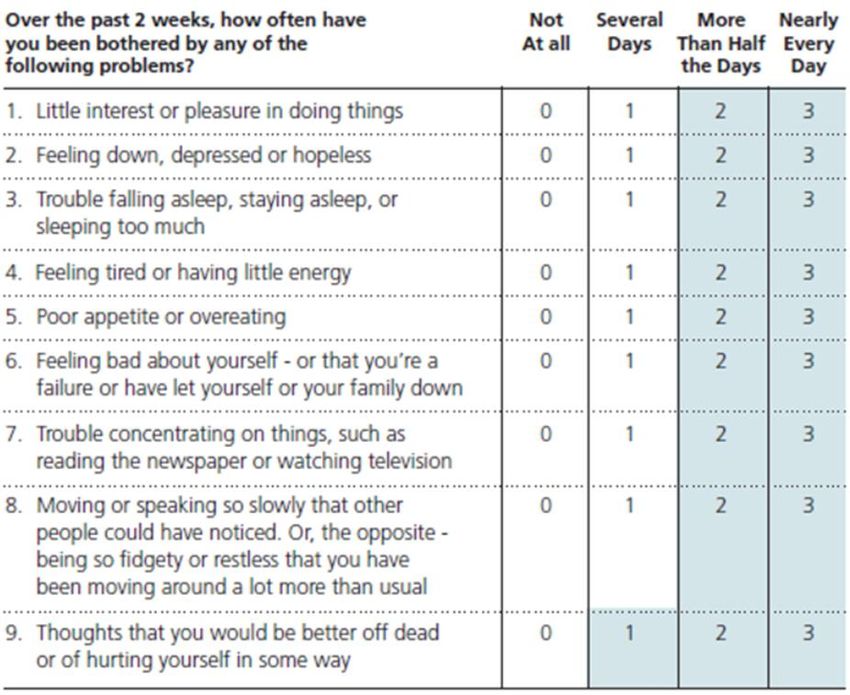
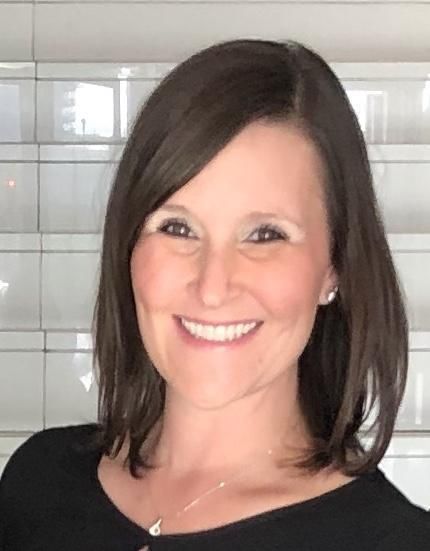
Dr. Joy Nadler Frankel is a Regional Director at CHE
                         Behavioral Health Services, a clinical organization
                         that provides both psychology and psychiatry
                         services in multiple settings including CHE’s
                         Outpatient Telehealth Services Clinic and in skilled
                         nursing facilities and other long-term care settings.
                         She also manages CHE’s postdoctoral program, is
                         actively creating a robust CEU program for the
                         company and assists with a program to transition
                         continuity of care from the skilled nursing setting
                         post-discharge into the community. Dr. Frankel has
                         worked through the lifespan from early intervention
                         to end of life care, but specializes in clinical
Joy Nadler Frankel, PsyD geropsychology    and women’s issues, both within
                         CHE and in her private practice.
Disclosures/Conflicts of Interest

• I am a Regional Director for CHE Behavioral Health Services, which is
  collaborating on today’s webinar.
Learning Objectives
1) Describe the scope of suicide in older adults.
2) Identify both risk and resiliency factors in the geriatric population.
3) List strategies for suicide assessment and prevention in the elderly
   population.
4) Describe strategies to promote emotional health among older
   adults.
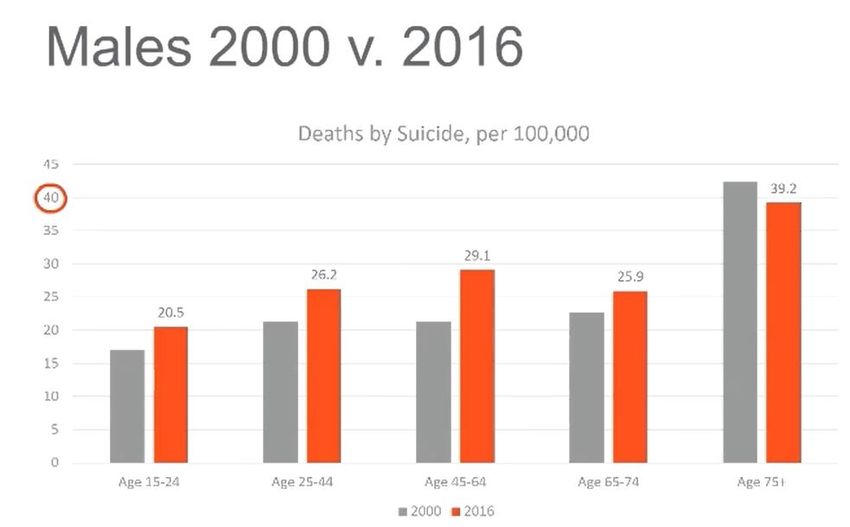
Prevalence of Suicide in Older Adults

 Source: Centers for Disease Control and Prevention. (2018, June) Suicide rates
 continue to increase. National Center for Health Statistics Data Brief No. 309 [pdf].
Myths vs. Reality
       •   Depression is a normal part of
           aging.
       •   Depression is painful and makes it
           impossible to go on.
       •   Asking about suicide will put the
           suicidal thoughts into their heads.
       •   Older people do not want to learn
           about these issues.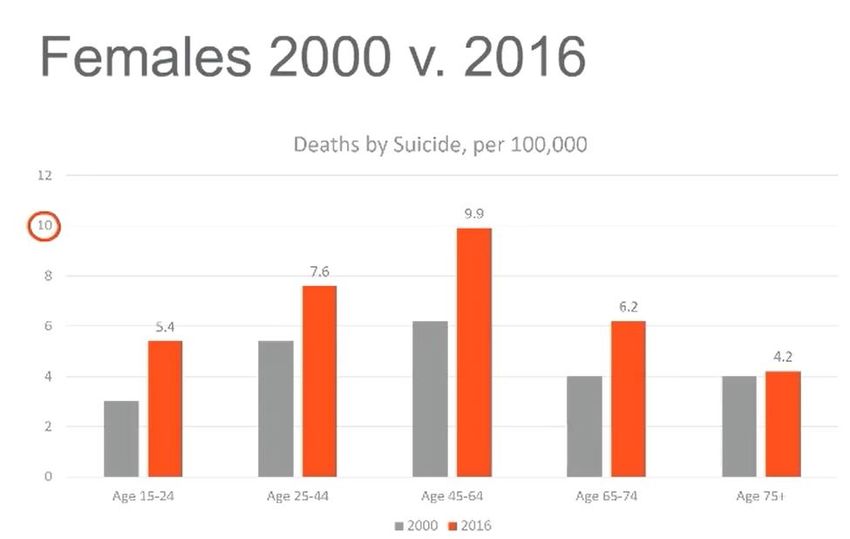
The Relationship Between Cognitive Impairment
                  and Suicide
•   The timing of the diagnosis is key to the increased odds of suicide
    attempts.
•   Suicide attempts spike soon after receipt of a diagnosis of Dementia
    •   anticipate cognitive and functional decline
    •   fear loss of autonomy
    •   worry about becoming a burden to their family
•   People in the early stages of mental decline are more capable to
    both plan and carry out a suicide attempt
•   Late stage dementia could protect against suicidal ideation and
    suicide attempts.
          Source: Heisel, M., Gordon, F., & Besser, A. (2002). Cognitive Fucntioning and
          Geraitric Suicide Ideation. American Journal of Geriatric Psychiatry, 10 (4): 428-
          436.
Long Term Care (LTC) Settings and Suicide
● Limited information is available regarding the prevalence of suicide in Skilled Nursing Facilities.
● A study in Finland by Osgood (1992) examined suicides among older adults in a nursing home
   ○ Little difference in risk factors between community and LTC, except at time of transition into
       residence
   ○ Prevalence of suicidal thoughts was highest in the first seven months of entering a LTC
   ○ Many LTC facilities would benefit from additional training regarding the difference between death
       ideation and active ideation/intent
● There is a need to develop resources and prevention efforts for increase future residents of nursing
  homes (such as members of the baby boomer generation)
   ○ SAMHSA tool kit (link to download in resources slide)

                  Source: Osgood, N.J. Environmental factors in suicide in long-term care
                  faclilities. (1992). Suicide Life Threatening Behaviors, 22, 98-106.
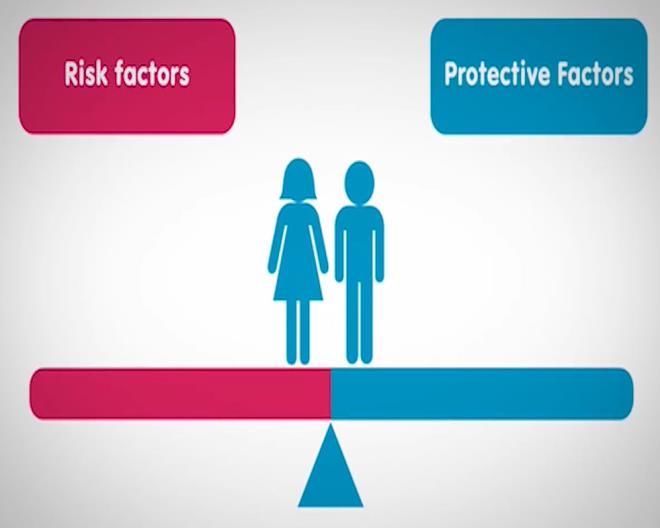
Risk Factors                                      Protective Factors
                                                      ● Access to behavioral/mental health and
● Mental health disorders, particularly depression      health care
  and bipolar                                         ● Social connectedness
                                                         ○ Supportive and caring family and
● Physical illness, disability, severe chronic pain         friends
                                                         ○ Participation in community activities
● Stressful events/critical transitions and losses
                                                      ● Personal characteristics and skills
                                                         ○ Internal locus of control
                                                         ○ A sense of purpose or meaning
                                                         ○ Cultural or religious beliefs that
                                                            discourage suicide
                                                         ○ Optimism
Warning Signs
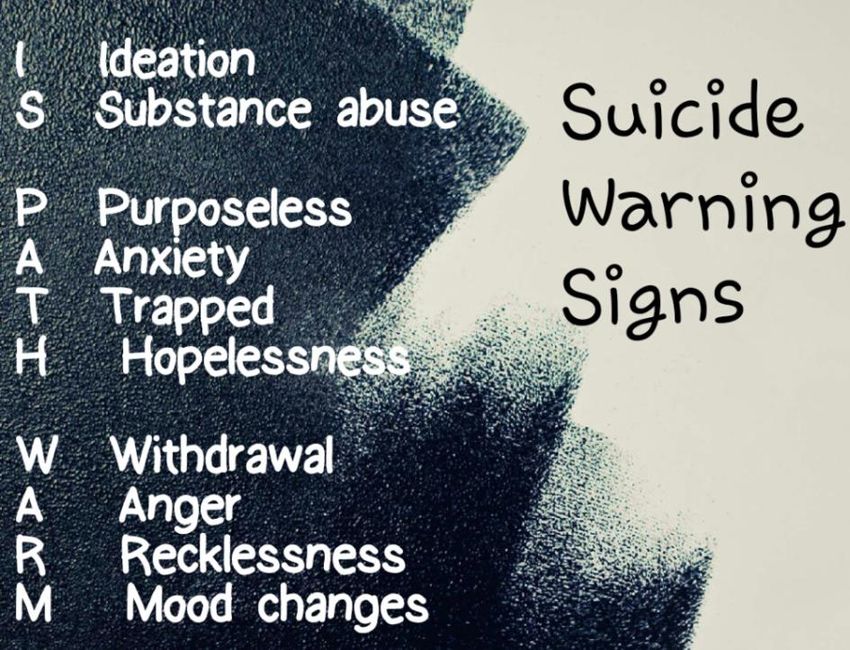
• IS PATH WARM?
• Loss of interest in activities typically enjoyed
• Reduction in self care
• Noncompliance with treatment
• Withdrawal from social activities
• Lack of concern for personal safety
• Giving things away
• Rushing to revise a will
• Increased use of alcohol or drugs
• Altering sleep habits
• Making “goodbye” comments:
• This is the last time you will see me,
• You don’t need to come back for a session next week
• No need to schedule my follow up PCP appointment.
• Soon you won’t have to worry about me.
• It’s been nice knowing you.
• I’m ready to join my spouse.
• I’m not sure why God is keeping me here.Screening for Potential Suicide Risk
• What to Screen for
• Direct actions
• Indirect actions
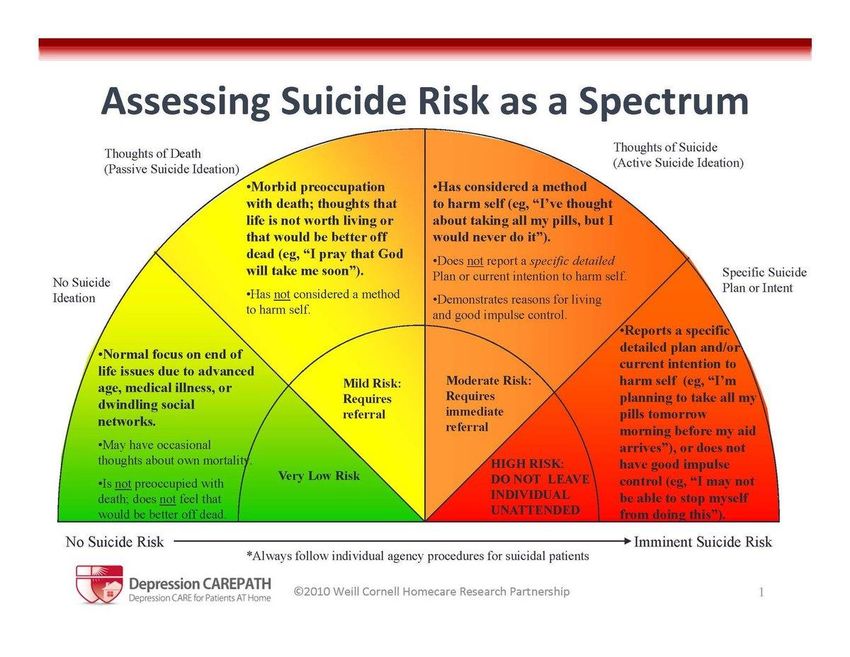
• Assess level of risk
• Measures
• Brief basic interview
• Geriatric Suicidal Ideation Scale (GSIS) -
can be used to monitor changes in risk
factors throughout treatment
• 5 point likert scale
• SAFE-T
• 5 step workflow to evaluate and follow
up
• PHQ-9 - administered as a CMS measure in
LTC facilitiesPHQ-9
• CMS required measure, depression
screener, that assesses symptoms of
depression and specifcally asks about
suicide
• Frequency of symptoms correlates
to a potential level of depression.
• Mild = 5-9
• Moderate =10-14
• Moderately severe = 15-19
• Administered to all new residents in
Long Term Care Settings.
• Administer in a narrative form for most
accurate and honest responses
• Ask objectively, without judgement
• If wish to die is endorsed, follow with
risk assessment.Determining Level of Risk and Plan Be specific and Direct ● Have you been feeling so sad lately that you were thinking about death and dying? ● Have you had thoughts that life is not worth living? ● Have you been thinking about harming yourself? These questions should be followed by more direct questions about suicide intent: ● Have you ever attempted to harm yourself in the past? ● Have you had thoughts about how you might actually hurt yourself? ● How likely do you think you will act on these thoughts about hurting yourself or ending your life over the next month? ● Is there anything that would prevent you from harming yourself?
Prevention Efforts for Both
                     LTC and the Community
● Prevention is the overall goal!
● Most current prevention efforts are geared towards women, despite the high incidence rates
  for men.
● In a residential environment designated staff education is the most critical component.
   ○ All staff must be educated on warning signs and policies for when they are detected.
   ○ need for individualized assessment and care planning
● Programming should focus on the emotional health and well being for all residents
   ○ need to engage more males in prevention
● It is crucial that friends and family of older adults identify signs of suicidal thoughts and take
  appropriate follow up actions to prevent them from acting on these thoughts.
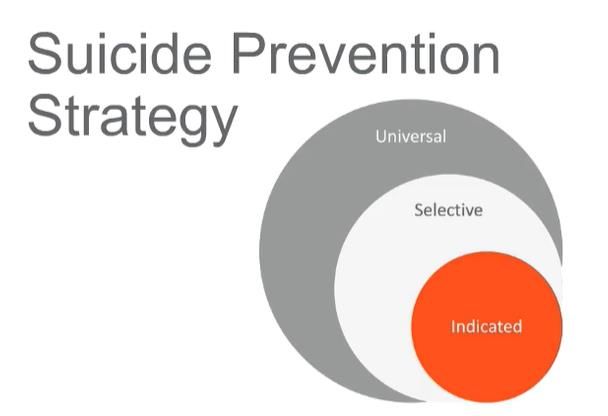
Suicide Prevention Strategies 1) Universal Prevention - targets locally, regionally, nationally 2) Selective Prevention - targets high risk groups 3) Indicated Prevention - targets those at imminent risk
Key Strategies to Promote Emotional Well
          Being and Reduce Risk of Suicide
○ 1) promote emotional health - focuses on all older adults regardless of individual risk for
  suicide. It includes providing a range of programs, activities and services that support emotional
  health and helping older adults develop positive social connections

○ 2) recognize and respond to suicide risk - focuses on identifying older adults who may be at risk
  for suicide, as well as related mental health or substance abuse problems, and linking them to
  sources of help. LTC facilities and staff are in a unique position to notice signs of a problem and
  encourage help seeking behavior.

○ 3) Staff response to a suicide attempt or death - can have a profound impact on older adults in
  the community, their families and their caregivers, as well as the staff.
Resources ● Promoting Emotional Health and Preventing Suicide | SAMHSA Publications and Digital Products ● Promoting Psychological Health and Suicide Prevention among Older Adults during COVID-19 ● The National Suicide Prevention Lifeline (1-800-273-TALK/8255) - 24 hour, toll free confidential suicide prevention hotline that provides crisis counseling ● The Friendship Line (1-800-971-0016) - nations only 24 hour toll-free hotline specifically for older and disabled adults. Trained staff and volunteers make and receive calls to and from individuals who are either in crisis or in need of a friend. ● Crisis Text Line - https://crisistextline.org - The crisis text line provides 24/7 crisis counseling and emotional support through text messaging. It can be accessed by texting HOME to 741741. ● American Foundation for Suicide Prevention - Local Chapters https://afsp.org/calendar ● Positive Aging Resource Center (PARC) - http://positiveaging.org ● American Foundation for Suicide Prevention - http://www.afsp.org
References
•   Centers for Disease Control and Prevention. (2018, June) Suicide rates continue to increase. National Center for
    Health Statistics Data Brief No. 309 [pdf]. https://www.cdc.gov/nchs/products/databriefs/db309.htm
•   Conejero, I., Navucet, S., Keller, J. Olie, E., Quartet, P. and Gabelle, A. (2018). A complex relationship between
    suicide, dementia and amyloid: A narrative review. Frontiers in Neuroscience, 12. 12:371.
•   Heisel, M. (2006) Suicide and Its Prevention Among Older Adults. Canadian Journal of Psychiatry, 51, 143-154.
•   Heisel, M. (2004) Purpose in life, satisfaction with life and suicide ideation in a clinical sample. Journal of
    Psychopathology and Behavioral Assessment, 26, 127-135.
•   Heisel, M., Gordon, F., & Besser, A. (2002). Cognitive Functioning and Geriatric Suicide Ideation. American
    Journal of Geriatric Psychiatry, 10 (4), 428-436.
•   Juurlink DN, Hermann N, Szalai J, Kopp, A. , (2006). Medical Illness and the risk of suicide in the elderly. Arch
    Intern Med, 164, 179-184.
References
• Kalfent, D., Wondrak, T., Kapusta, N.D., & Sonneck, G. (2010). Suicidal ideation and its correlates among elderly in residential care homes.
International Journal of Geriatric Psychiatry, 29 (12), 1198-1121.
• Kiriakidis, S. (2015). Elderly Suicide: Risk factors and preventive strategies. Annuals of Gerontology and Geriatric Research. (Retrieved
from SciMed.central)
• Loebel, J.P., Loebel, J.S., Dager, S.R., Centerwall, B.S., & Reay, D.T. (1991) Anticipation of nursing home placement may be a recipient of
suicide among the elderly. Journal of American Geriatric Society, 39, 407-408.
• Mak , I. W. C., et al. (2009). Long term psychiatric morbidities among SARS survivors. General Hospital Psychiatry, 31, 318 326.
• Mezuk, B., Prescott, M., Tardiff, K., Vlahov, D., & Galea, S. (2008). Suicide in older adults in long-term care: 1990 to 2005. Journal of the
American Geriatrics Society, 56 (11), 2107-2111.
• Osgood, N.J. Environmental factors in suicide in long-term care facilities. (1992). Suicide Life Threatening Behaviors, 22, 98-106.
• O’Riley, A., Nadorff, M. R., Conwell, Y. & Edelstein, B. (2013). Challenges Associated with Managing Suicide Risk in Long-Term Care
Facilities. Official Journal of the American Medical Directors Association, 28-34.
• Panchal, N., Kamal, R., Cox, C. and Garfield, R. (2021). The Implications of COVID-19 for Mental Health and Substance Use. Retrieved June
7, 2021 from ttps://www.kff.org/coronavirus-covid-19/issue-brief/the-implications-of-covid-19-for-mental-health-and-substance-use/.
• Reiss, N.S. & Tishler, C.L. (2008). Suicidality in nursing home residents: Part I. Prevalence, risk factors, methods, assessment, and
management. Professional Psychology: Research and Practice, 39 (3), 264-270.
• Walker, B.L. & Osgood, N.J. (2000). Preventing suicide and depression: A training program for long-term care staff. OMEGA, 42 (1) 55-69.Q&A With Dr. Nadler Frankel
• This Q&A will address select
questions that were submitted
via the Q&A feature throughout
the presentation.
• Due to time constraints, we will
not be able to address every
question asked.You can also read


