Coral's Story The true adventures of a real humpback whale Whale and Dolphin Conservation
←
→
Page content transcription
If your browser does not render page correctly, please read the page content below
Coral’s Story
The true adventures of a real humpback whale

                a   l e of
       a   wh
Hav e
                 i t h  my
          e   w
 at  i m
                    b o ok!
       t i v i ty
   ac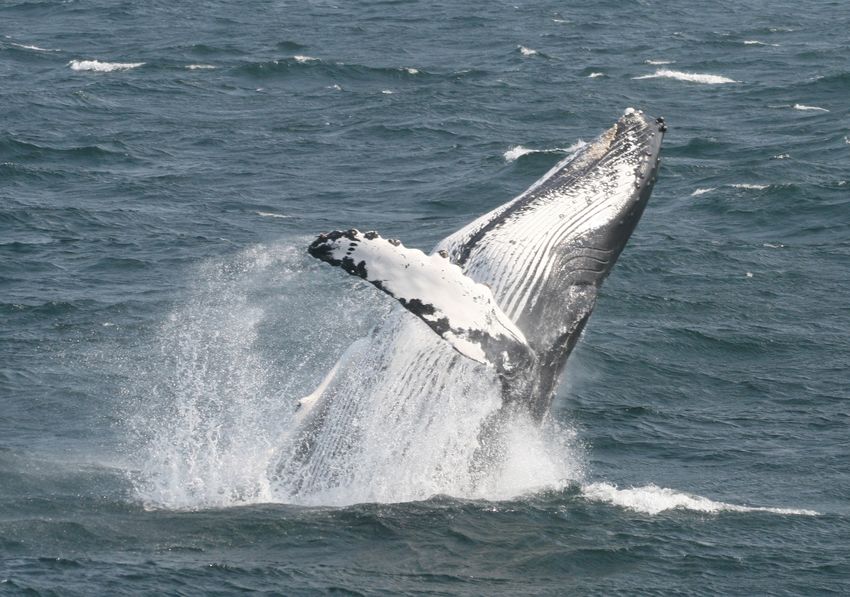
My name is Coral and I’m an adult
male humpback whale. I’m about
40 feet (12 meters) long and weigh
almost 40 tons.

In 1986, I was born in the warm,
tropical waters of the West Indies
where I continue to spend my winter
and breed. Each year, I migrate to
the colder waters of the Gulf of
Maine, off the East Coast of the
USA, to feed. Along the way, I face
many threats. You can help me and
my friends live safely in the oceans.

                                         Gulf of Maine

                                        West Indies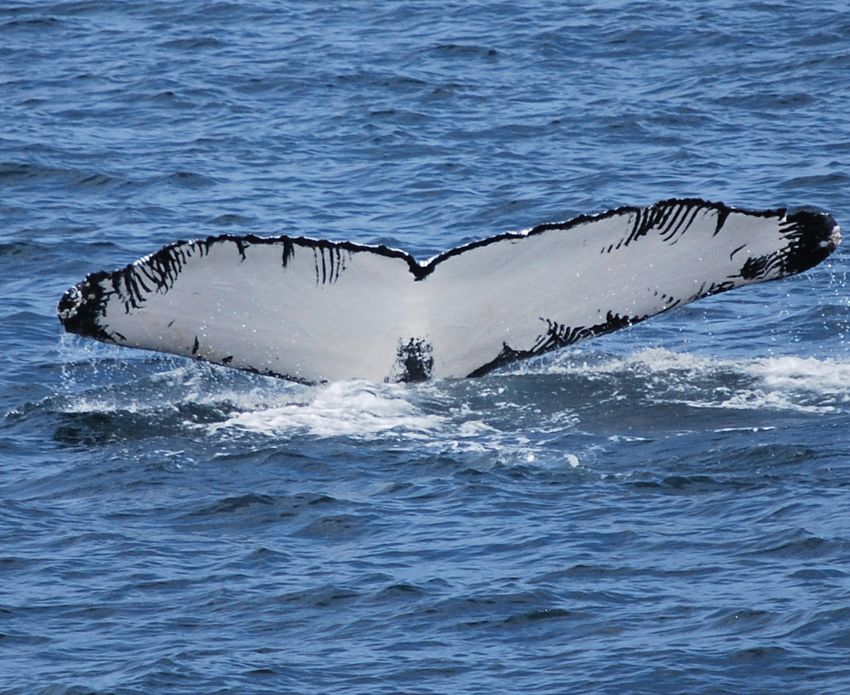
Scientists refer to all whales, dolphins and porpoises as
“cetaceans” (from the Latin word “Cetus” meaning “large sea
animal” and the Greek word “Kotos” meaning “sea monster”.
Although whales are large sea creatures, we are definitely not
monsters!

  Like you, we are mammals, and share similar traits with
  humans:
  -- We are warm-blooded (meaning we can maintain our
     body temperature at about 99°F {37°C}).
  -- We give birth to live young and feed our newborns
     milk produced by our moms.
  -- We breathe air from the atmosphere through our lungs.
  -- We have hair (mostly whiskers on our faces).
  -- We have a similar skeleton. The bones of our front
     flippers include the bones of your arms and hands!

 Like all newborn mammals, I drank
 milk when I was born. You most
 likely drank 0.08-0.3 gallons (0.3-
 1.25 liters) of milk each day when
 you were a baby. My mom, Silver,
 nursed me and I drank 40-60
 gallons (150-180 liters) each day!
 I stayed with her for most of my first
 year and she looked after me and
 kept me safe.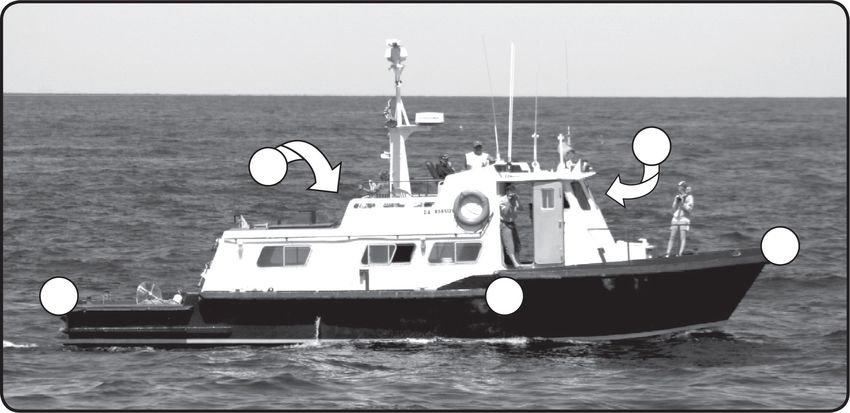
CAN YOU DRAW ANOTHER MAMMAL
        IN THE FRAME BELOW?

Take this page out when you’re done to hang up somewhere special!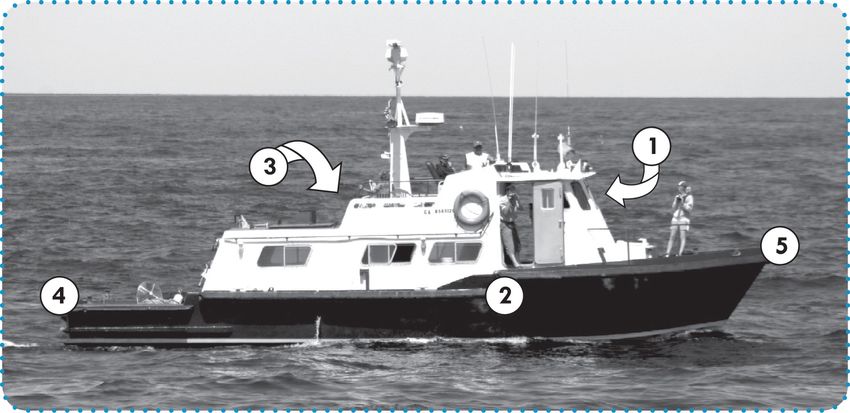
All cetaceans can be divided into two groups:
  odontocetes or toothed whales and mysticetes or baleen
  whales.

  Toothed whales have teeth and one visible blowhole (nostril),
  and include dolphins, porpoises, orcas, and sperm whales.
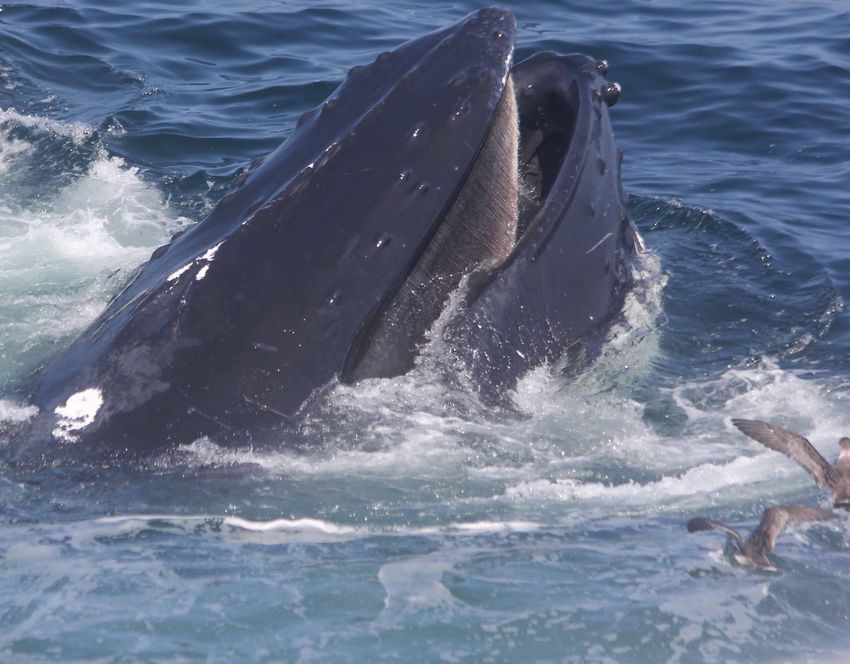
  Baleen whales include most of the large whales like my
  family of humpback whales. I don’t have teeth. Instead, I have
  baleen plates which help me filter my food from the sea water.
  You can also see both of my blowholes (nostrils).
  As a mysticete, I have about 600
  hairy plates of baleen that hang
  down from my upper jaw, like
  teeth on a comb. Baleen is made
  out of the same protein (keratin)
  as your fingernails and hair, but I
  don’t scratch with my baleen.
  Instead, I use it to strain plankton      ^ Baleeen whales
  and fish from the sea water. Since         strain their food
  the food I eat is very small, I eat        just like we strain
                                             spaghetti!
  about one ton of it each day in the
  summer!

Feeding sequence of a humpback whale: Can you see the water
straining through the baleen and out the sides of my friend’s mouth?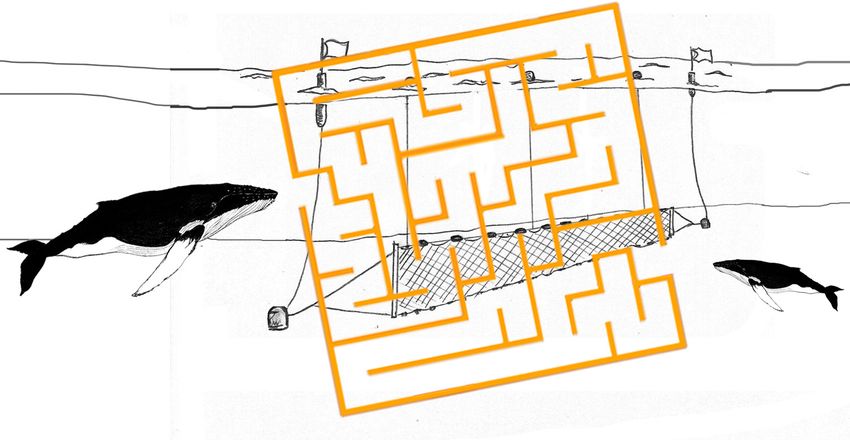
Blowhole
                                                           (1 visible blowhole in
                                                                odontocetes)               Teeth

Fluke
(tail)                                                                              This is my friend
                                                                                    Fife. He lives in
                                  Pectoral fin                       Eye            the Pacific ocean.

Orcas are odontocetes or toothed whales. They are the
biggest dolphins in the world!
Toothed whales use their melon (rounded forehead) for
echolocationnwhich enables them to “see” things using sounds.
                 Blowhole                                                                   Ventral side
           (2 visible blowholes                       The lines on my tail are              (underside)
              in mysticetes)                           called "rake marks".
 Rostrum

                                                                  Dorsal fin

  Baleen plates

                                                                                                Fluke (tail)

                                  Eye                 Pectoral fin
                                                      (also named flipper)

                                        Humpbacks like me have the longest arms in the whale world. My
                                        pectoral fins are about 15 feet (5m long) long!

Humpback whales are 40 feet (12 meters) long! This is as long as a school bus!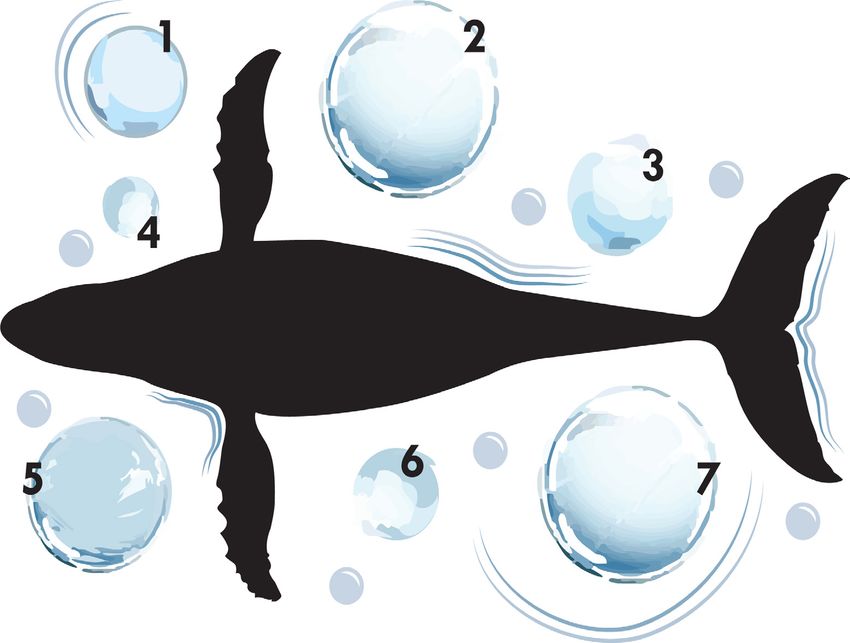
When I was still a calf, I was attacked by a group of orcas. My mom
saved me, but I ended up with rake marks (orca tooth scars) on my
fluke. I will keep these scars for my entire life and researchers identify
me by these marks, together with other marks on my tail.

 Similar to human fingerprints, humpback whales are born with a unique
 pattern on the ventral (underside) of our fluke. Researchers use these
 marks to identify individuals and learn about them. Most humpbacks are
 named for their fluke design, like looking at shapes in clouds.

Can you match the whale names to the flukes based on the
                patterns on their tails?
           MIDNIGHT, TWISTER, 57, DALMATIAN, WALRUS, EXCLAIM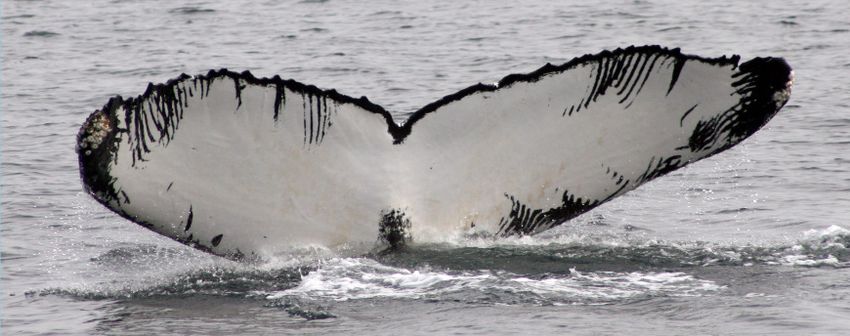
Which two bubbles are exactly the same?

                    Fun Feeding Facts
    1. I eat nearly one ton of fish every day during the summer.
    2. I use bubbles to corral small fish into a bait ball before I
       eat them.
    3. I chew my food with my stomach!
    4. Humans have no idea how I find my food!

                      Swimmers & Divers
       Can you guess which of the cetacean silhouettes to the
       left belongs to a humpback whale like me? Write the
       correct letter below!

       Do you think I’m one of the best cetacean divers?
       Why or why not?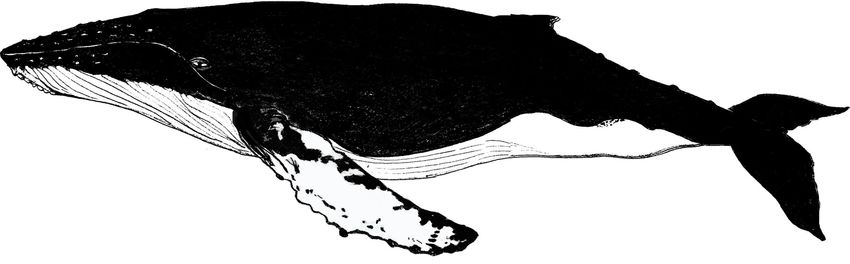
Across
1. Like humans, whales are ________________ (they breathe air, have
   hair, are born alive, and are warm-blooded) .
2. You just read a story about me. Do you remember my name?
3. What are the hairy plates in my mouth that I use to filter my food
   called?
4. My dolphin friends use sound to “see” things. It’s called ___________.
5. I was born in the waters of the _____ _____
6. My friend Fife is an ______, the biggest dolphin in the world.
Down
7. My pectoral fins are also called my ______________.
8. The group that includes all baleen whales is called __________.
9. As mammals whales breath ____________ from the atmosphere.
10. What was my mom’s name?
11. My fluke is also called my _________.
12. The group that includes all dolphins and porpoises is called ________.
What threats do I face?

Human Disturbance:
Disturbance can be caused by people that want to get too close to me. If I have to spend my
time avoiding curious people, I have less time to eat, rest and socialize. Human activities such
as building structures in the ocean, military exercises and seismic testing can also disturb me.

                          Captivity:
                          Taking my dolphin and orca friends out of the wild takes them away from their families.
                          They have to perform tricks and they get tired and upset. They often get sick and don’t live
                          very long when they are put in captivity.

Vessel Strikes:
Ships and other boats that travel across my ocean home often go very fast and I can’t get out
of their way. About 15% of my humpback friends in the Gulf of Maine have been struck by
passing vessels.

                        Climate Change:
                        Climate change is dramatically changing my home. When the ocean temperature rises, it’s
                        harder for my food to survive so it’s harder for me to survive.

Chemical Pollution:
Chemicals end up in the ocean from air pollution or from rivers and land that dump them in
the ocean. They get into my food and can make me sick.

                       Prey Depletion:
                       Humans sometimes like to eat the same food as my whale friends. But when they take too
                       much of it, none is left for us and my friends can starve.

Bycatch/ Entanglement in Fishing Gear:
Humans have become much better at catching fish by using nets and fishing lines that last
a long time. Unfortunately, my whale and dolphin friends sometimes get caught in the nets
and lines and drown.

                          Habitat Degradation:
                          When lots of humans use the coastal waters, it can reduce the quality of the water, ocean
                          plants, plankton, and fish, making it hard for us to survive there too.
Whaling:
While commercial whaling largely stopped in 1986, some countries, like Japan, Iceland and
Norway, still hunt whales.
Marine Debris:
Trash from land often ends up in the ocean. Sometimes my whale and dolphin friends get
stuck in it. Some of my friends eat it by mistake and it fills their stomach so they can’t eat
healthy food, leaving them to starve.
Noise Pollution
Loud noises make it hard for me to hear my friends and find my food. It really stresses me out. If
it’s too loud, it can actually kill me.
Just one of these conditions makes me feel less safe, but often we are faced with several of these threats and it
creates a MUCH BIGGER PROBLEM!!!!!
Can you help this baby whale navigate through the maze
to be safe with her mom?Sing a Song!
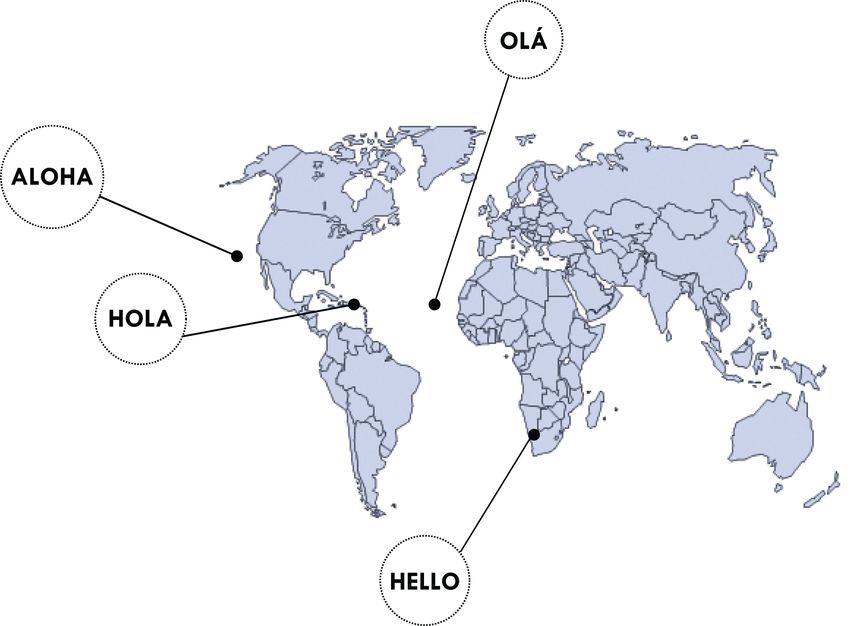
Do you like to sing? I do! All male
humpback whales love to sing,
especially when we are in our tropical
breeding areas. Just like people in
different countries have their own
Can you match
way of saying hello, humpbacks sing
these countries with
different songs in different areas.
their greetings?
Did you know that while we all sing,
my friends in Hawaii, South Africa
and the Cape Verde Islands all sing Germany Bonjour
different versions of the song that I Australia Guten Tag
sing off of Puerto Rico? Russian Fed. Apakhabar
France Dobry dyen
USA G’day
Brunei Hello
u wish
How do yo
o n e a g o o d day?
some
HELLO: SOUTH AFRICA
ALOHA: HAWAII
OLA: CAPE VERDE ISLANDS
HOLA: PUERTO RICOYou’re at the Helm! As you know, whales and humans share the oceans. Sometimes boats are going so fast that whales barely have time to get out of the way! Sadly, some whales I know have been hit by boats. To make our shared oceans safer, boats need to slow down or avoid areas important to whales. So if you see a spout, please watch out and slow down. In the waters of several countries who are concerned about whales, boats have to slow their speed in some areas to protect my friends. Can you label the parts of the boat above? 1. Wheelhouse (room where the captain drives the boat) 2. Starboard (right side of the boat) 3. Port (left side of the boat) 4. Stern (back of the boat) 5. Bow (front of the boat)
Crossword
             Across:
             1. MAMMALS
             2. CORAL
             3. BALEEN
             4. ECHOLOCATION
             5. WEST INDIES
             6. ORCA
             Down
             7. FLIPPERS
             8. MYSTICETE
             9. AIR
             10. SILVER
             11. TAIL
             12. ODONTOCETES

               Countries and
               their greetings
          Germany        Bonjour
           Australia     Guten Tag
         Russian Fed     Apakhabar
              France     Dobry dyen
                USA      G’day
              Brunei     Hello

         Swimmers & Divers
1. (b)
2. The best diver is the Sperm whale (e)

             Can you help this baby
             whale navigate through
             the maze to be safe with
             her mom??
Coral is a male humpback whale who was born in 1988 to his mother,
Silver.His story is one of a survivor. Silver protected her new calf when
he was attacked by orcas as a newborn and now he bears only scars, or
rake marks, on his fluke as a reminder. In 1991, Silver succumbed to an
entanglement in fishing gear, a fate Coral nearly suffered when he
became entangled in gear in 2005. Luckily, Coral was able to free
himself from the gear. No one knows for sure how he acquired the scar
he bears behind his blowhole, but perhaps it is another reminder of the
harsh realities of the life he faces in an ocean he shares with humans.
Despite all of this, Coral remains one of the most sociable whales we
have ever observed and, when spotted on whale watches, he is often
seen swimming with other whales. Coral’s determination serves as a
beacon of hope to us all, and stands as a reminder that the choices we
make every day can make a difference, and help save whales
like Coral.You can adopt Coral!
We’ll send you monthly
updates about Coral & his
family, and we’ll let you know
when we see him throughout
the year!
WHALES.ORGYou can also read


