Coronary Computed Tomography Angiography
←
→
Page content transcription
If your browser does not render page correctly, please read the page content below
Available in :   ENGLISH

Coronary Computed
Tomography Angiography

Scan the QR code to view patient
education videos on NUHCS
       channel!                                        In collaboration
                                                       with Department
                                                        of Diagnostic
STEP                 STEP
                                                           Imaging
01                   02

 Download a FREE     The QR code will decode
 QR Reader on your   instantly. You’ll be brought to
 smartphone and      www.youtube.com/user/
 scan the QR code.   NUHCS                               Scan here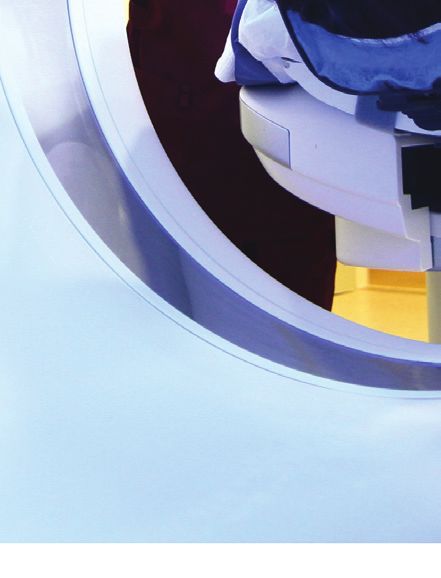
What is Coronary Computed Tomography
(CT) Angiography?
It is an advanced imaging modality that uses X-rays, coupled with
computer technology, to produce detailed cross-sectional images of
the internal organs of the body.

Coronary CT Angiography uses a 256 or 384 slice scanner to capture
cross sectional and detailed images of the heart and is a highly
accurate alternative to the conventional coronary angiogram.

Comparison of lesions on conventional coronary angiogram (left) and coronary
CT angiography (right)
What can I expect before the procedure?
You will be required to fast for 4 hours prior to the scan. However,
you can take your morning medicines with plain water, unless you
are specifically instructed to omit certain medicine (such as
metformin). You will be advised to go to one of the locations below
for the scan:

          Main Building Zone G, Level 2, G02-13
         Kent Ridge Wing Zone C, Level 3, C03-04
          Medical Centre Zone B, Level 4, B04-02

You may be given oral medication (beta-blockers) to slow your
heart rate to an optimal level for the scan. It usually takes between
45 to 90 minutes for the medication to take effect.

Wear loose and comfortable clothing on the day of the scan. You
may be asked to change into a gown. A locker to store your
personal belongings will be available for your convenience.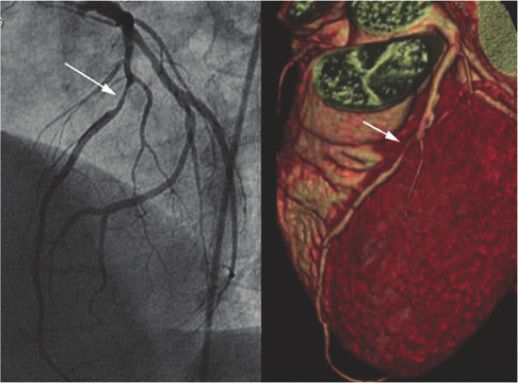
What can I expect during the procedure?
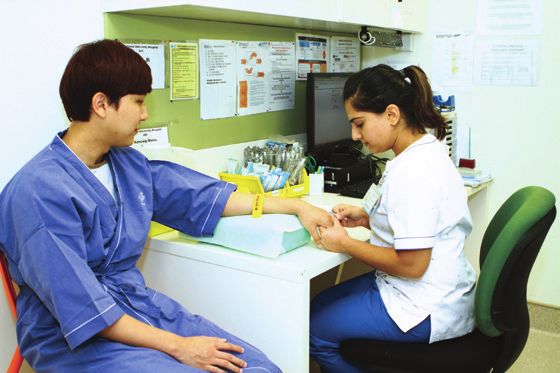
As intravenous contrast is
required for the scan to     1

indicate the exact position
of your heart vessels, a
plastic cannula will be
inserted into one of your
veins by a nurse. During
the injection of contrast,
you may experience a warm sensation followed by a metallic taste
in the mouth which should disappear after few minutes.

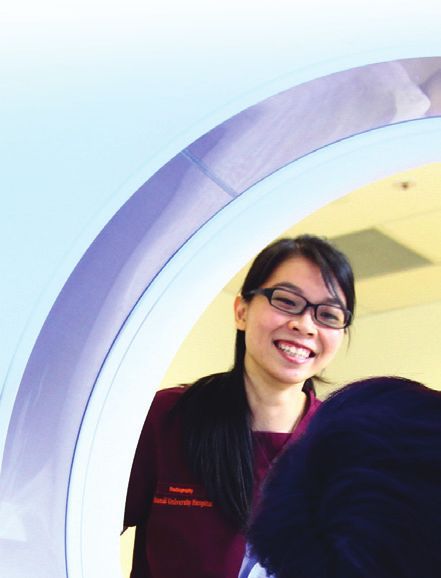
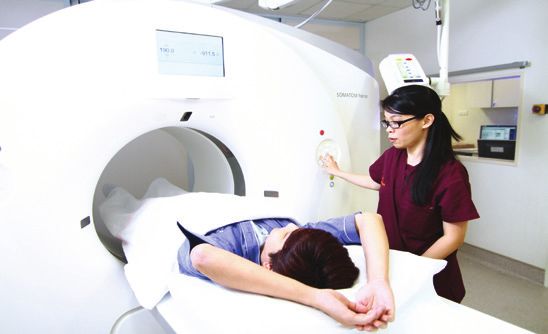
A radiographer will            2
position you appropriately
on a padded couch that
will move through a round
opening of the scanner.
A liquid will be sprayed
under your tongue for
better visualisation of the heart vessels. Electrodes will be
attached to your chest to monitor your heart. The radiographer
may instruct you to hold your breath for 5 to 15 seconds while
the scan is being performed. For optimal imaging, it is important
that you remain still during the scan and follow the breathing
instructions.

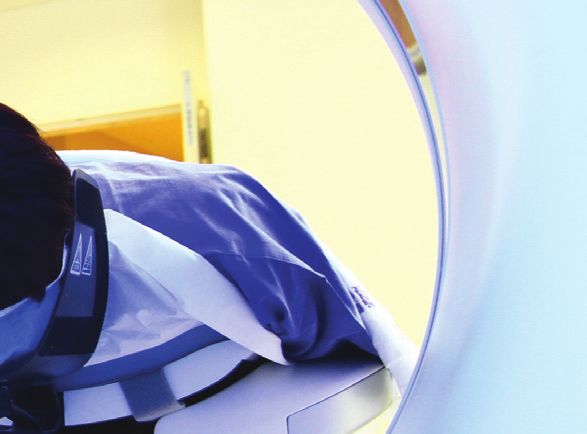
As the couch moves           3
through the opening,
images of your heart will
be taken. The scan takes
no more than 15 minutes
to complete. After the
scan, your blood pressure and heart rate will be monitored for
about 10 minutes to ensure you are well before leaving.

Depending on the nature of the scan, the entire procedure,
including preparation, may vary from 30 minutes to 2 hours.
What can I expect after the procedure?
You can resume normal activity after the procedure. If contrast
agent has been administered, special aftercare instructions may
be given. Your doctor will advise you of the results at your next
appointment.

What are the potential risks/complications
with this test?
Main risks of the procedure include:

        • Allergic reaction to the contrast agents

        • Leakage of the intravenous contrast outside of the vein

These risks are low and all necessary precautions will be taken to
minimize such occurrences.

Important Points to Note

        • Please inform us if you have asthma, diabetes,
          renal problems or any drug allergy.

        • Patients who are diabetic may be required to stop
          medication 48 hours before the scan while patients
          with asthma and multiple drug allergies may be given
          premedication.

        • Do inform your doctor and the CT radiographer if you
          are pregnant or unsure if you are pregnant.

        • Do not use Viagra, Cialis, Levitra for 48 hours before
          and after the scan.

        Should you have any queries or require
        further clarifications, please contact:
        Department of Diagnostic Imaging
        Tel    : (65) 6772 3700
        Fax    : (65) 6772 5219
        Email : DDI_enquiries@nuhs.edu.sg
Location

Getting to NUH
By Bus
Bus stop along Ayer Rajah Expressway (AYE):
SBS Transit Bus Service No: 97, 197, 198 (opposite NUH only)
SMRT Bus Service No. 963
Bus stop on South Buona Vista Road (outside Science Park I):
SBS Transit Bus Service No. 92, 200
Bus stop on Lower Kent Ridge Road (outside Kent Ridge MRT station):
SBS Transit Bus Service No.: 95

By Car
From Ayer Rajah Expressway (AYE), towards Changi Airport:
Take Exit 8 to South Buona Vista Road, turn right at traffic light and travel along
South Buona Vista Road. Make a right turn at traffic light onto Lower Kent Ridge Road.
From Ayer Rajah Expressway (AYE), towards Tuas:
Take Exit 8 to South Buona Vista Road, go straight at traffic light junction onto
Lower Kent Ridge Road.

By MRT Train
The Circle Line Kent Ridge Station is at our door step.
To get to NUH from the East West Line, transfer at the Buona Vista MRT Interchange to
take the Circle Line and alight at the Kent Ridge Station.

Information in this brochure is given as a guide only and does not replace medical advice from your doctor.
Please seek the advice of your doctor if you have any questions related to the surgery, your health or medical
condition. Information is correct at time of printing (May 2021) and subject to revision without notice. Copyright©
is held by the publisher. All rights reserved. Reproduction in whole or in parts without permission is strictly
not allowed.

                                     Every day, we impact lives by providing assistance to
                                     financially disadvantaged patients. Help us continue
                                     our vital work and fight for every heartbeat hrough
                                     your generous support!

                                     To make a donation, log on to
                                     https://www.giving.sg/nuhs-fund-limited/
    Scan here to donate              NUHCSHeartFund or scan the QR code.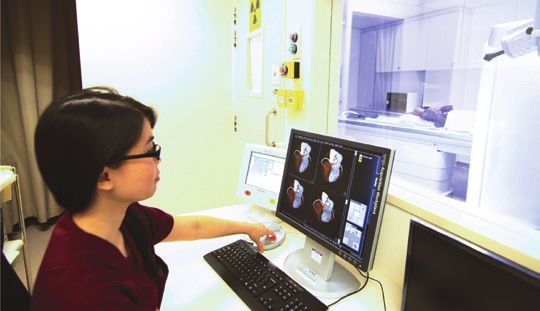
You can also read


