Counseling centers conference - big ten 2018
←
→
Page content transcription
If your browser does not render page correctly, please read the page content below
2018
big ten
counseling
centers
conference
February 21 - 23, 2018
our committee
                                 Committee Members
                                     Eugina Becton
                                     Maria Berbery
   Conference Co-Chairs             Megan Bergandy
      Kimberly Bethea               Shirley Browner
    Theodore Pickett Jr            Kimberly Campbell
                                     Noah M. Collins
    Subcommittee Chairs                Tiana Cruz
        Allison Asarch                Tessa DiPerri
      Rashanta Bledman             Jo Ann Hutchinson
        Carlton Green                 Jinhee Kang
       David Petersen                  Yi-Jiun Lin
        Yu-Wei Wang                   Erica Merson
     Simone Warrick-Bell              Alice Mitchell
                                       Roz Moore
Conference & Visitor Services    Yanira Pacheco-Ortiz
         Lisa Press                  Pepper Phillips
      Kelly Hedgepeth                Chandni Shah
                                        Kim Tran
                                    Michelle Watson
                                Cassandra Wierzbolowicz
innovations:
Seeking to Support,
 Heal and Inspire

 #Big10CounselingCenters

at a glance
Wednesday | February 21
1 p.m. - 5 p.m.           Registration (Foyer A)
3 p.m. - 4:30 p.m.        Discussion Groups
                          •   All Directors (Henson Room), Clinical Directors (Carroll Room), Training
                              Directors (Key Room), Outreach Directors (Curry Room), Care Managers
                              (Tubman Room), Trainees (Salon E)
                          •   Eating Disorders, Emotional Support Animals, Socio-Political Climate, Self-Care,
                              Managing High Risk Clients, AOD, Group (Salon FG)
5 p.m. - 7 p.m.           Welcome Reception (Top of the 7’s Ballroom)
7 p.m.                    Dinner on Your Own

Thursday | February 22
7 a.m. - 8 a.m.           Morning Stretch - Zumba (Top of the 7’s Ballroom)
7:30 a.m. - 9 a.m.        Continental Breakfast (Foyer A)
8 a.m. - Noon             Poster Sessions (stationed 8 a.m. - 9 am. in Foyer A)
9 a.m. - 9:15 a.m.        Opening Remarks and Greetings, Dr. Linda Clement,
                          Vice President for Student Affairs (Salon AB)
9:15 a.m. - 10:15 a.m.    Keynote Speaker - Rev. Dr. Jamie Washington (Salon AB)
10:15 a.m. - 10:30 a.m.   Break (Foyer A)
10:30 a.m. - 11:45 a.m.   Session I
                          •   Keynote Follow-up (Carroll Room; no CEs offered)
                          •   A Care Team Model: Innovation in Crisis Specialization (Salon C)
                          •   Let’s Make Something Perfectly Queer: Innovative Models for Counseling
                              Centers Working with Transgender Students (Salon D)
                          •   No Wrong Door: Increasing Treatment Access and Reducing Health Disparities
                              through Integrated Behavioral Health (Salon E)
                          •   Creating a Welcoming Environment for All: Improving the Recruitment and
                              Retention of Diverse Staff within a Counseling Center Setting (Salon F)
                          •   Naan Stop Conversation: Developing an Indian American Identity Group (Salon G)
11:45 a.m. - 1 p.m.       Lunch on Your Own
11:45 a.m. - 2:15 p.m.    Big Ten Directors Luncheon Meeting (Harriett Tubman Room)
1 p.m. - 2:15 p.m.        Session II
                          •   Innovative Mobile Technologies for College Counseling Centers (Salon C)
                          •   Pushing the Limits of Polite Conversation by Talking about Social Class:
                              Supporting Poor and Working Class/ First Generation College Students (Salon D)
                          •   Our Ears Are to These Streets: The “Meso Practice Model” (Salon E)
                          •   Traversing Culture and Mental Health: A Look at the University of Illinois’ Latinx
                              Outreach and Prevention Team (Salon F)
                          •   Innovative Outreach and Intervention Programs for International Students
                              (Salon G)
2:15 p.m. - 2:30 p.m.     Break (Foyer A)
2:30 p.m. - 3:45 p.m.     Session III
                          •   Let’s Talk About Sex Baby: Addressing the Effects of Hook Up Culture in a
                              Clinical Setting (Salon C)
                          •   Being an Ally for DACA Students: Understanding the Past, Present, and Future
                              (Salon D)
                          •   Re-Inventing Self-Care on Campus: A Three Part Self-Care Series Reaching
                              Students in Need (Salon E)
                          •   Grief Therapy for College Students: A Developmental and Cultural Perspective
                              (Salon F)
                          •   Adapting Psychological Assessment to the University Counseling Center: A
                              Framework for Ethical and Collaborative Client-Centered Assessment (Salon G)
4 p.m. - 5:30 p.m.        Campus and Counseling Center Tour (Meet in Hotel Lobby)
6 p.m. - 7 p.m.           Evening Reception (Foyer A)
7 p.m. - 10 p.m.          Dinner Banquet (Salon AB)

Friday | February 23
7 a.m. - 8 a.m.           Morning Stretch - Yoga (Top of the 7’s Ballroom)
7:30 a.m. - 9 a.m.        Continental Breakfast (Foyer A)
8 a.m. - 9 a.m.           Big Ten Directors Suicide Registry Meeting (Carroll Room)
9 a.m. - 10:15 a.m.       Session IV
                          •   A Journey Towards Healing: Empowering Survivors of Sexual Assault and
                              Interpersonal Violence through a Therapeutic Group and Collaboration with
                              Campus Partners (Salon C)
                          •   Meeting Them Where They Are…Literally: Collaborating with Residence Life to
                              Extend Innovative Mental Health Services in the Residence Halls (Salon D)
                          •   Let’s Talk: A Three Pronged Approach to Multicultural Outreach, Consultation,
                              and Counseling (Salon E)
                          •   What Did I Just Say Yes To? Trainees, Tapes, and Timely Service (Salon F)
                          •   The Role of College Counseling Centers as Part of the Continuum of Care
                              to Address the Opioid Overdose Epidemic: Intervention, Assessment, and
                              Recovery from Substance Use Disorders (Salon G)
10:15 a.m. - 10:30 a.m.   Break (Foyer A)
10:30 a.m. - 11:45 a.m.   Keynote Speaker - Dr. Jennifer Golbeck (Salon AB)
11:45 a.m. - 12:15 p.m.   Preview - Big Ten Conference 2019 & Closing Remarks (Salon AB)

                                                                                                               5
Main Administration Building
                                                                             College Park, Maryland 20742
                                                                             301.405.5803 TEL 301.314.9560 FAX
OFFICE OF THE PRESIDENT

 Dear Colleagues:

 Welcome to the University of Maryland! We are delighted you could take part in this Big Ten
 Counseling Centers Conference. Over the next few days, you will have the opportunity to work
 with professional colleagues from B1G 10 schools and from colleges and universities in the
 Washington, D.C. area.

 The contributions of counseling professionals to campus life and student success have never
 been more important, driven by rising professional challenges. I am struck by this statistic: 523
 B1G counseling professionals serving some 570,000 students—a ratio of more than a thousand
 to one. At a moment of record demand for services, your contributions to our campuses are
 irreplaceable.

 You are meeting in one of the newest buildings on our campus, The Hotel at the University of
 Maryland. This privately funded project anchors our Discovery District where new ideas take
 shape. I hope you find it a productive setting for a conference whose theme is “innovation.”

 Around the sessions, please take the opportunity to see the many other new developments on
 campus. Enjoy your stay at Maryland.

 Sincerely,

 Wallace D. Loh
 President, University of Maryland
February 1, 2018

Dear Colleagues,

       Thank you for joining us at the University of Maryland for the Big Ten
Counseling Centers Conference focused on “Innovation: Seeking to Support, Heal, and
Inspire.” We are pleased to host this event at the University of Maryland!

       This annual conference will bring together psychologists, counselors, and
therapists from the Big Ten and Washington, DC area university and college counseling
centers to discuss best practices, share resources, and consider new ideas for providing
innovative counseling and mental health services.

       Over the next few days, I hope you will take the opportunity to attend professional
presentations, poster sessions, and keynote addresses focusing on current Counseling
Center issues and challenges. I hope you will also find time to explore the campus and
surrounding area.

       On our campus, as well as others in the Big 10, record numbers of students are
seeking counseling services and the severity of their mental health concerns is increasing.
Counseling Centers are examining service delivery models, and how to address the needs
of a growing population of students. I appreciate your commitment to finding a solution
to help all of us meet the needs of today’s college students.

     I hope you have a productive conference over the next several days. Welcome to
campus and enjoy your stay at the University of Maryland!

Sincerely,

Linda M. Clement
Vice President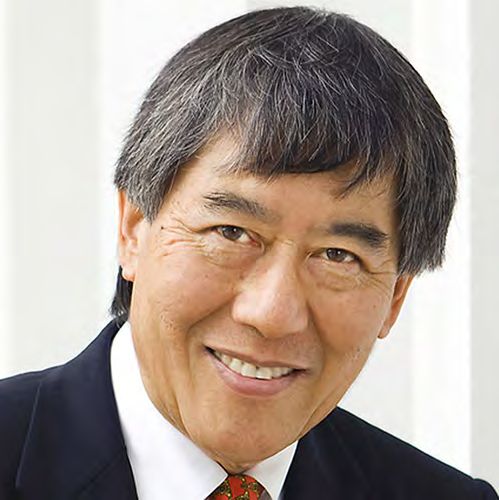
conference theme, “Innovations: Seeking to Support, Heal and Inspire” provides an opportunity
to examine best practices and creative solutions to address our most critical issues. This is the
perfect setting to connect with each other, share information, and exchange innovative strategies
to enhance our professional development and service delivery.

Each year, the Big Ten institutions provide counseling and therapeutic support services to over
half a million student help-seekers. Our primary goal as providers is to promote overall wellness
and ensure that our students succeed in fulfilling their personal, educational, career, and lifetime
dreams. We hope that you will be inspired during the conference by a variety of outstanding
presentations and programs that align with this goal.

   Dear
With   an Big  Ten and
          emphasis    on Maryland     Area Colleagues,
                          evidence-based      practice, this year’s program includes presentations on
prevention strategies, multicultural issues, treating high-risk clients, and new models of service
   On behalf
delivery   Youofalso
                   the will
                        University   of Marylandfor
                            have opportunities        Counseling      Center,
                                                          self-reflection    andwelcome    to the
                                                                                  meaningful       Big Tenacross
                                                                                                dialogues   Counseling
   Centers
race, genderConference
               and cultureatabout
                               the University     of Maryland!
                                     this extraordinary     time in  Weour
                                                                         arecountry,
                                                                              delighted  to be
                                                                                      when   weyour   hosts. Our
                                                                                                  are called upon to
   conference    theme,   “Innovations:     Seeking    to  Support,    Heal  and  Inspire”
address issues of social justice and the psychological experiences of those impacted by hateprovides   an  opportunity
   to examine
speech,          best practices
         marginalization,          and xenophobia,
                              racism,   creative solutions
                                                        sexism, to address   our most critical
                                                                    sexual misconduct,           issues.
                                                                                           and other      Thisofis the
                                                                                                       forms
   perfect
oppression. setting  to connect    with  each   other,  share   information,    and exchange     innovative   strategies
   to enhance our professional development and service delivery.
During your time in Maryland, we encourage you to explore our campus and the surrounding
   Each
area. Theyear,  the BigofTen
           University           institutions
                            Maryland          provide
                                         is only   a fewcounseling
                                                           miles fromand  ourtherapeutic   support
                                                                               nation’s capital,     services
                                                                                                  where   theretoare
                                                                                                                  over
                                                                                                                     a
   half aofmillion
myriad      culturalstudent  help-seekers.
                      and social    enrichment  Our   primary goal as providers is to promote overall wellness
                                                  activities.
   and ensure that our students succeed in fulfilling their personal, educational, career, and lifetime
   dreams. thank
In closing,   We hopeyou that  you will be inspired
                          for contributing                during the
                                              your knowledge         andconference   bythis
                                                                          expertise to   a variety  of outstanding
                                                                                             conference.    You are
   presentations    and  programs    that  align  with   this  goal.
critical players in helping all of us enhance our services, enrich our thinking, and employ
innovative strategies to advance counseling services on our campuses. What propels us as
   With an emphasis
practitioners,  scholars,onand
                             evidence-based
                                 leaders is ourpractice,
                                                   capacity to thisengage
                                                                     year’sinprogram   includes
                                                                               continuous         presentations on
                                                                                            learning,
   prevention strategies,
transformative    processes,multicultural
                               and synergistic issues,  treating This
                                                   interaction.     high-risk  clients,
                                                                         is what        and to
                                                                                   we seek   new   models
                                                                                                achieve  at of
                                                                                                            thisservice
   delivery
conference.    You   also  will  have  opportunities     for  self-reflection   and meaningful     dialogues   across
   race, gender and culture about this extraordinary time in our country, when we are called upon to
Weaddress    issuesfor
     are grateful    ofyour
                        social  justice and the psychological experiences of those impacted by hate
                             presence.
   speech, marginalization, racism, xenophobia, sexism, sexual misconduct, and other forms of
   oppression.
Sincerely,

   During your time in Maryland, we encourage you to explore our campus and the surrounding
   area.Kirkland-Gordon,
Sharon  The University of Ph.D.,
                            Maryland   is only a few miles from our nation’s capital, where there are a
                                   Director
andmyriad  of cultural
    the University  of and social Counseling
                       Maryland   enrichment Center
                                               activities.
                                                       Staff

   In closing, thank you for contributing your knowledge and expertise to this conference. You are
   critical players in helping all of us enhance our services, enrich our thinking, and employ
   innovative strategies to advance counseling services on our campuses. What propels us as
   practitioners, scholars, and leaders is our capacity to engage in continuous learning,
   transformative processes, and synergistic interaction. This is what we seek to achieve at this
   conference.

   We are grateful for your presence.

   Sincerely,

   Sharon Kirkland-Gordon, Ph.D., Director
   and the University of Maryland Counseling Center Staff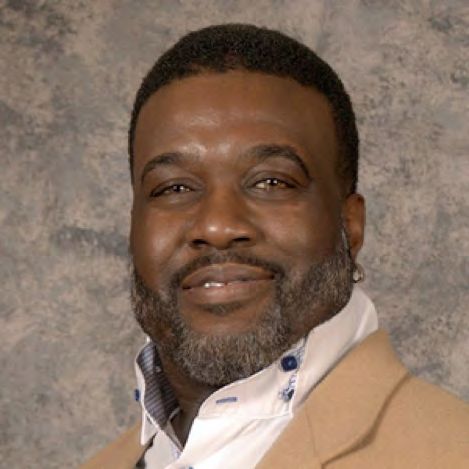
keynotes
Rev. Dr. Jamie Washington
Building Capacity for Greater Inclusion: The Role of Counseling and Wellness Centers for the Next Round
Thursday, February 22 | 9:15 a.m. | Salon AB
                                    Rev. Dr. Jamie Washington is President & Founder of the Washington Consulting Group
                                    (WCG). In October 2015, WCG was named by The Economist as one of the top 10
                                    global diversity consultants in the world. Dr. Washington has served as an educator,
                                    administrator, and consultant in higher education for over 33 years. He is President and
                                    Co-founder of the Social Justice Training Institute and Vice President and President-Elect
                                    of the American College Personnel Association (ACPA).

                                    A recipient of many awards and honors, Dr. Washington was recently presented with
                                    the University of Maryland Baltimore County’s Legends of Excellence Award for his
                                    contributions to the lives and education of Black and LatinX faculty, staff, and students.
                                    He is a member of Omicron Delta Kappa, Golden Key, Alpha Phi Omega, and a lifetime
                                    member of Alpha Phi Alpha Fraternity, Inc. In addition, Dr. Washington serves as Pastor
                                    of Unity Fellowship Church of Baltimore.

Dr. Washington holds a Bachelor of Science in therapeutic recreation from Slippery Rock State College; dual master’s
degrees in higher education administration and counseling, with a concentration in human sexuality from Indiana University,
Bloomington; and a Ph.D. in college student development from the University of Maryland, College Park. In 2004, he completed
a Master of Divinity degree from the Howard University School of Divinity.

Dr. Jennifer Golbeck
Footprints in the Digital Dust: What Social Media Reveals About Our Behavior and Our Minds
Friday, February 23 | 10:30 a.m. | Salon AB
                                    Dr. Jennifer Golbeck is Director of the Social Intelligence Lab and an Associate Professor
                                    in the College of Information Studies at the University of Maryland, College Park. She is
                                    a world leader in social media research and science communication. She began studying
                                    social media from the moment it emerged on the World Wide Web. Highly regarded as a
                                    pioneer in the field of social data analytics, Dr. Golbeck’s research focuses on analyzing
                                    and computing with social media by predicting user attributes, and using the results to
                                    design and build systems that improve the way people interact with information online. In
                                    the field of computer science, she is considered a forerunner in creating human-friendly
                                    security and privacy systems. Her research has influenced operations in industry, the
                                    government, and the military.

                                 A prolific researcher, sought-after speaker, and distinguished teacher, Dr. Golbeck is the
                                 author of five books, several book chapters, and numerous articles in refereed journals.
                                 An invited guest on numerous radio and television shows, she is a frequent guest host on
NPR’s, The Kojo Nnamdi Show and hosts the podcast, Science Magazine.

Dr. Golbeck holds a Doctor of Philosophy degree in Computer Science from the University of Maryland; a Scientiae Magister
and Scientiae Baccalaureus in Computer Science; and an Artium Baccalaureus in Economics from the University of Chicago.
                                                                                                                                 11
session i
Thursday, February 22 | 10:30 a.m. - 11:45 a.m.
Keynote Follow-up Discussion with Rev. Dr. Jamie Washington. (no CE’s offered)
Building Capacity for Greater Inclusion:
The Role of Counseling and Wellness Centers for the Next Round
Location: Carroll Room
Abstract: Session is offered as an opportunity for continued discussion around the topics presented
in the keynotes address.
A Care Team Model: Innovation in Crisis Specialization
Location: Salon C
Shonali Raney, Ph.D., Shivani Edwards, LISW-S, Alex Dokas, LPCC, and Jennifer Lang, LISW-S
The Ohio State University
Abstract: Presenters will describe the creation of a Care Team in response to the increase in demand
for services. The team has provided support for those with the highest needs; care management
services for students returning to campus after being hospitalized; more triage and crisis appointments;
connecting with community providers; consultations; and clinician support. Presenters will share their
experiences with the specialized positions and describe the impact on students and the agency.
Learning Objectives:
• Identify two ways that crisis and care management services can be utilized in a university
counseling center practice setting.
• Describe what led to the development of the Care Team along with the various roles and functions.
• Discuss the benefits and challenges of having Care Teams in addressing increasing demands and
greater client acuity.
Let’s Make Something Perfectly Queer:
Innovative Models for Counseling Centers Working with Transgender Students
Location: Salon D
Barry Schreier, Ph.D. and Paula Keeton, Ph.D.
University of Iowa
Abstract: Trans* communities continue to reach out for mental health services and support.
Knowledge, skills, and values pertaining to Trans* mental health continue to evolve. This workshop will
focus on advances in philosophical and practical foundations for working with Trans* communities,
including the APA “Guidelines for Psychological Practice with Transgender and Gender Nonconforming
People.” The program tracks progression of models from required gatekeepers, to providers of
recommended services, to minimal interface stemming from a true informed consent model.
Learning Objectives:
• Demonstrate increased knowledge concerning the cultural aspects of the Transgender communities.
• Demonstrate increased awareness of personally held values, beliefs, and attitudes concerning
gendered people.
• Demonstrate enhanced knowledge concerning the clinical needs of Transgender clients.
• Demonstrate increased knowledge concerning the WPATH Standards of Care-7 and APA Guidelines.No Wrong Door:
Increasing Treatment Access and Reducing Health Disparities through
Integrated Behavioral Health
Location: Salon E
Ellen Marks, Ph.D. and Simone Collins, Ph.D.
University of Wisconsin-Madison
Abstract: This presentation will discuss how incorporating integrated behavioral health can address
challenges faced by counseling centers on college campuses. Using the integrated behavioral health
program at UW-Madison as an example, presenters will offer a framework for developing integrated
care and provide evidence of its efficacy. Presenters also will discuss the challenges associated with
developing such a program and how these challenges might be addressed.
Learning Objectives:
• Demonstrate an increased understanding of integrated care models of treatment.
• Describe a conceptual framework for integrating behavioral health and primary care on
university campuses.
• Articulate the benefits of integrating mental health services and primary care in a university
health setting.
• Identify challenges in integrating behavioral health into a university health setting as well as
discuss ways to address these challenges.
Creating a Welcoming Environment for All:
Improving the Recruitment and Retention of
Diverse Staff within a Counseling Center Setting
Location: Salon F
Jordan Barnard, Psy.D., Laura Briscoe, Ph.D., Caitlin Chun-Kennedy, Ph.D., and Ben Locke, Ph.D.
Penn State University
Abstract: In the spirit of the conference theme of innovation to meet student needs, this
presentation will outline the steps taken by staff at Penn State Counseling and Psychological
Services (CAPS) to create guidelines for improving our ability to recruit and retain diverse mental
health professionals. This presentation will discuss the steps taken to accomplish this task (including
benchmarking and consultation) and review the most salient themes present in the guidelines.
Learning Objectives:
• Describe procedures that Big Ten schools currently use in their recruitment of diverse staff.
• Identify and navigate potential challenges and systemic barriers related to diversifying
counseling center staff.
• Discuss different strategies hypothesized to reach a greater population of diverse staff.
• Explain interview processes that may minimize bias and create a more inclusive environment.
13Naan Stop Conversation: Developing an Indian American Identity Group
Location: Salon G
Nidaa Shaikh, Psy.D.
University of Michigan
Abstract: Racial/ethnic identity therapy groups are an innovative way to support Indian American
(IA) students’ self-discovery racial/ethnic identity development. This presentation will explore how
racial/ethnic identity development models specific to IA may be applied when developing a group
for IA women. The presenters also will show how media with IA representation can be used to foster
discussions around a variety of themes pertaining to growing up Indian in America.
Learning Objectives:
• Utilize a multicultural lens to increase awareness of the impact of American and Indian cultural
forces on identity development.
• Discuss strategies to create a culturally-sensitive and inclusive racial/ethnic identity
development group for Indian American female college students.
• Discuss ways to use media with Indian American representation to foster meaningful discussions
around identity.
• Increase understanding of the racial/ethnic identity development models pertaining to Indian
Americans in the literature.
session II
Thursday, February 22 | 1 p.m. - 2:15 p.m.
Innovative Mobile Technologies for College Counseling Centers
Location: Salon C
Ryan Hansen, Ph.D., Rahul “Ryan” Patel, D.O., and Iony Schmidt, M.A.
The Ohio State University
Abstract: Tired of students pulling their phones out during therapy? Now you can put them to use!
We will review the evidence basis for mobile applications, best practices when incorporating them
into therapy, and the ethical and legal precautions regarding their use. This workshop will include
interactive demonstrations of commonly used apps, with an emphasis on free tools that you can
employ tomorrow. Make sure to bring your smartphone!
Learning Objectives:
• Describe ways in which mobile apps can be incorporated into college counseling center
practices.
• Identify at least 3 apps that can be incorporated into current practices.
• Identify key legal and ethical considerations surrounding the use of mobile technologies in
college counseling centers.Pushing the Limits of Polite Conversation by Talking about Social Class:
Supporting Poor and Working Class First Generation College Students
Location: Salon D
Aleska Hagan, Ph.D., Ken Volk, M.A., and Rachel Bitman-Heinrichs, Ph.D.
University of Wisconsin-Madison
Abstract: Poor students experience low purchasing power, reduced food quality, insufficient living
conditions, and reduced access to health care. Furthermore, socialization and culture vary with social
class adding barriers to social mobility for low income and first-generation students in environments
that value the language and cultural capital of privileged classes. This presentation will explore
common classist microaggressions and potential barriers to social mobility that may be found in
university settings, and university counseling services.
Learning Objectives:
• Demonstrate an enhanced understanding of social class categories as cultures and involving
much more than access to resources.
• Demonstrate an increased understanding of the ways that universities and university counseling
services perpetuate classism and inhibit social mobility.
• Describe internalized classism, survivor’s guilt, and imposter syndrome.
• Articulate strategies for providing mental health services to low-income and first generation
college students.
Our Ears Are to These Streets: The “Meso Practice Model”
Location: Salon E
Annamarie Wacha-Montes, Psy.D., Wilhelmina Vargas, LCSW, and Antonio Morales, LSW
Rutgers University
Abstract: The presenters will describe the use of the Meso practice, which fuses micro and macro
elements to implement preventive measures that meet the unique needs of our students and staff in a
collaborative approach. We will include an overview of the “Meso Practice Model,” share innovative
wellness initiatives, and lead an experiential component focused on the intersection of wellness and
self-identity.
Learning Objectives:
• Demonstrate an increased understanding of the theory and implementation of a “Meso Practice
Model” in a university mental health/counseling center.
• Formulate steps to improve cross-campus collaboration surrounding access to mental wellness.
• Identify innovative and diverse practices that expand wellness resources based on the findings
of student groups (e.g., men of color, LGBTQ).
• Describe alternative outreach efforts that focus on the intersection of wellness and self-identity.
15Traversing Culture and Mental Health:
A Look at The University of Illinois’ Latinx Outreach and Prevention Team
Location: Salon F
Arellys Aguinaga, Ph.D., Alejandro Gomez, MSW, Zhenni Wang, M.A., and Louie Limas, M.A.
University of Illinois at Urbana-Champaign
Abstract: As the need for mental health services on college campuses grows, novel approaches
targeting underserved and marginalized college student populations warrant attention. The Latinx
Outreach and Prevention Team at The University of Illinois seeks to empower students to advocate
for their mental health needs, combat stigma, and promote holistic wellness. Discussion topics will
include partnership with La Casa Cultural Latina and other campus units, outreach programming
development, and personal experiences on the team.
Learning Objectives:
• Articulate an understanding of Latinx culture to better incorporate culturally competent
practices/concepts into clinical work and outreach efforts.
• Identify innovative strategies to collaborate and/or reinforce partnerships with university-level
cultural programming units.
• Describe culturally sensitive outreach events developed by the Latinx Outreach and Prevention Team.
Innovative Outreach and Intervention Programs for International Students
Location: Salon G
Nupur Sahai, Ph.D., Jungeun Kim, Ph.D., and Tzu-An Hu, Ph.D.
University of Illinois at Urbana-Champaign
Yi-Jiun Lin, Ph.D., Jinhee Kang, Ph.D., and Yu-Wei Wang, Ph.D.
University of Maryland
Abstract: This workshop will focus on innovative prevention and intervention programs for
international students on two Big Ten University campuses with a large international student
population. Two of the presenters, who are co-chairs of the American Psychological Association
Division 17 International Section, will discuss issues facing international students (e.g., xenophobia
and acculturative stress) and relevant research evidence. Rationales for the program, ways to build
campus partnerships, and promotion strategies will be discussed.
Learning Objectives:
• Discuss innovative prevention and intervention programs for international students.
• Summarize useful approaches to build campus partnership and promotion strategies for the
programs.
• To enhance one’s international counseling competencies.session III
Thursday, February 22 | 2:30 p.m. - 3:45 p.m.
Let’s Talk About Sex Baby:
Addressing the Effects of Hook Up Culture in a Clinical Setting
Location: Salon C
Naomi Rawitz, LLMSW and Rachael Lynch, LLMSW
University of Michigan
Abstract: This session will use relational-cultural, feminist, and ecological theory to analyze college
hookup culture and its impact on students’ psychosocial, sexual, and mental health. The presenters
will situate the evolving consequences of this culture within a multicultural and multidimensional
sexual health framework. In addition, session participants will learn about innovative, sex-positive
techniques that aim to increase clinician self-efficacy in addressing prevalent student sexual health
concerns.
Learning Objectives:
• Explain the role of neoliberalism and gendered scripts in college hookup culture.
• Identify the effects of hookup culture on student psychosocial, sexual, and mental health.
• Discuss barriers to student sexual health and how college counseling centers can address these
concerns.
• Demonstrate an increased sense of clinician self-efficacy in addressing student sexual health
concerns through sex-positive techniques such as the PLISSIT model.
Being an Ally for DACA Students: Understanding the Past, Present, and Future
Location: Salon D
Kayi Hui, Ph.D., Kelsey Autin, MSW, and Andrew Shelton, M.S.
The Ohio State University
Abstract: In this presentation, the presenters will discuss the history and latest development of
Deferred Action for Childhood Arrivals (DACA). In addition, we will present findings of a recent
qualitative study on the career development of undocumented college-aged adults (Autin, 2017) to
enhance participants’ understanding of the impact of DACA through first-person narratives. Finally,
the presenters will introduce a conceptual model of ally-identity development (Edwards, 2006) to
address the social injustice related to DACA.
Learning Objectives:
• Recite the history and latest developments of DACA.
• Describe the impact of DACA through empirical studies.
• Provide strategies through allyship building to address social injustice and systemic oppression
of DACA/undocumented migrants.
17Re-inventing Self-Care on Campus:
A Three Part Self-Care Series Reaching Students in Need
Location: Salon E
Jessica Banes, M.A., Kim DuBose, MSW., Tanesha Walker, M.A., and Ryan Hansen, Ph.D.
The Ohio State University
Abstract: Academic distress and mental health concerns combine to make self-care a vital area
for growth among today’s college students. These three self-care presentations were developed to
engage first-year students in a discussion of self-care. These presentations target students using
social media, African American identified students, and student advocates or activists. The series
aims to educate and change students’ view of self-care, so that it is a priority and not a luxury.
Learning Objectives:
• Demonstrate an enhanced awareness of the importance of self-care, so students may prevent
and manage stress symptoms.
• Demonstrate an increased self-awareness so students are able to identify when self-care is
needed, and to provide strategies to reduce identified stress.
• Demonstrate strategies to incorporate intentional and regular self-care into students’ lives as priority.
Grief Therapy for College Students: A Developmental and Cultural Perspective
Location: Salon F
Jeeseon Park-Saltzman, Ph.D., Shonali Raney, Ph.D., and Samantha Christopher, M.A.
The Ohio State University
Abstract: With the increase in tragedies and violence on campuses, university counseling center
staff are engaging in increasingly more crisis interventions and debriefings, which involve attending
to students’ grief reactions. Based on the dual processing model of grief and meaning construction
approach, this presentation will focus on unique challenges faced by grieving college students
with an emphasis on their developmental needs and cultural backgrounds. Creative grief therapy
interventions will be discussed.
Learning Objectives:
• Discuss various grief models.
• Describe challenges faced by college students in grief from a developmental perspective.
• Explain how gender socialization, religious backgrounds, and familial and cultural messages on
death and grief affect college students’ grief process.
• Describe creative grief therapy interventions.Adapting Psychological Assessment to the University Counseling Center:
A Framework for Ethical and Collaborative Client-Centered Assessment
Location: Salon G
Maria Bruno, Ph.D. and Adam Hinshaw, Ph.D.
University of Iowa
Abstract: Although psychological assessment can provide clients with unique insights and
therapeutic experiences, assessment has been underutilized in college counseling centers, perhaps
because assessment is often used for diagnostic labeling rather than for therapeutic dialogue,
intervention, process, or empowerment. To re-introduce psychological assessment as a therapeutic
process, this workshop provides a college counseling center framework for psychological assessment
that emphasizes collaboration, clients’ unique individual experiences, and social justice.
Learning Objectives:
• Describe ways that psychological assessment can help the clinical work and counseling center.
• Distinguish between collaborative assessment and diagnostic labeling.
• Discuss ways to ethically use assessment as an empathic and empowering intervention.
• Identify an effective, client-centered assessment report.
session IV
Friday, February 23 | 9 a.m. - 10:15 a.m.
A Journey Towards Healing:
Empowering Survivors of Sexual Assault and Interpersonal Violence through a
Therapeutic Group and Collaboration with Campus Partners
Location: Salon C
Danielle Zohrob, Psy.D. and Kelly Bickel, LLMSW
University of Michigan
Abstract: At the University of Michigan, the number of students presenting to CAPS with unwanted
sexual experiences has increased by 7% since 2014. This presentation will share innovative strategies
that offer support and facilitate healing through a therapeutic group for survivors of sexual assault
and interpersonal violence. We will discuss how we integrate interventions to promote collective
healing and empower self-agency in a group that restores relationships and community by
addressing shame, self-blame, and intimacy.
Learning Objectives:
• Utilize innovative, multitheoretical group interventions focused on multicultural awareness and
unique campus dynamics to address sexual assault and interpersonal violence.
• Explain how to create collective healing spaces within a group structure that integrates a
person’s trauma narrative into their journey towards healing.
• Employ a multicultural lens to frame the impact of current events on students and the university
(e.g., Title IX changes).
• Describe mechanisms to maximize collaboration with campus partners to address the
perpetuation of rape culture and to support survivors on a macrosystemic level. 19Meeting Them Where They Are…Literally: Collaborating with Residence Life to
Extend Innovative Mental Health Services in the Residence Halls
Location: Salon D
Michael Lute, Ph.D., The Ohio State University
Stephanie Leigh-Field Stama, Ph.D. and Jason Yoder, MSW, Pennsylvania State University
Patrick Galligan Ph.D., University of Iowa
Abstract: Embedded counselors in residence life at The Ohio State University, Penn State University,
and The University of Iowa will present and discuss the unique ways that mental health services are being
provided in the residence halls, including innovative programming, collaborating with and supporting
residence life staff, reducing stigma, and addressing some challenges with providing services in these
locations.
Learning Objectives:
• Identify and discuss unique strengths inherent in collaborating with Residence Life staff and services.
• Apply methods of building and maintaining relationships with Residence Life staff, including liaison
relationships, collaborative programming, and supportive consultation.
• Develop unique programming and collaborative efforts between the counseling centers and
Residence Life staff and collect data on service delivery.
• Demonstrate an increased awareness of the challenges associated with establishing and
providing a variety of services within the residence halls.
Let’s Talk: A Three Pronged Approach to
Multicultural Outreach, Consultation, and Counseling
Location: Salon E
Muhammad Saahir, M.S., Ed.S. and Holly Weber, M.S.
Indiana University
Abstract: IU CAPS’ Let’s Talk Program has a three-pronged approach focused on a) low-barrier
informal consultation, b) formal counseling in convenient locations, and c) programs/workshops
appealing to diverse students. At completion of the Let’s Talk presentation, participants will be able
to a) identify campus partnership opportunities, b) promote holistic approaches to normalizing mental
health services, and c) discuss ways to expand multicultural outreach, consultation, and counseling
initiatives to meet the demands of traditionally underserved students.
Learning Objectives:
• Identify campus partnership opportunities specified for diverse student populations.
• Promote holistic approaches to normalizing mental health services for underrepresented student
populations.
• Discuss ways to expand multicultural outreach, consultation, and counseling initiatives to meet
the growing demands of traditionally underserved students.What Did I Just Say Yes To? Trainees, Tapes, and Timely service
Location: Salon F
Sarah Cronin, M.A., Kelly Jordan, M.A., Nicholas Oleen-Junk, M.A., and Jennifer Robinson M.A.
University of Minnesota - Twin Cities
Abstract: With the increased demand for services at university counseling centers and growing
wait lists, student-clients face increasing pressure to agree to be recorded in order to have timely
access to services. Do our clients understand the multiple and varied implications of working
with trainees? This discussion-based workshop will highlight relevant research and pose ethical
considerations as we focus on innovations related to informed consent and obtaining permission to
record.
Learning Objectives:
• Describe relevant literature research related to informed consent and obtaining permission to
record.
• Examine the merits and challenges of the current practices at their center related to informed
consent and permission to record.
• Formulate ideas about what changes could be made to their current processes.
The Role of College Counseling Centers as Part of the
Continuum of Care to Address the Opioid Overdose Epidemic:
Intervention, Assessment, and Recovery from Substance Use Disorders
Location: Salon G
Lisa Laitman, MSEd, LCADC
Rutgers University
Abstract: The opioid overdose epidemic has placed a spotlight on issues ranging from the
practices of pharmaceutical companies to questions about a nation in pain. The presenter will
discuss the complex issues of the opioid epidemic, the campus risk associated with non-medical
use of prescription drug and opioid use disorder, and the impact on diverse student populations.
Discussion will also include screening and intervention with substance use disorders and co-
occurring mental health problems.
Learning Objectives:
• Describe current campus risks associated with substance abuse trends; prescription drug and
heroin abuse.
• Describe the role that counseling centers can play in efforts to address the opioid epidemic on
campus.
• Give examples of how recovery supports relapse prevention and wellness for students in
recovery.
• Explain the difficulties of discussing substance abuse in a college counseling setting.
21poster session Thursday, February 22 | Stationed 8 a.m. - 9 a.m. | Foyer A Intake and Emergency Service Utilization Trends Michael Gale, Ph.D., University of Hartford Yi-Jiun Lin, Ph.D. and Jinhee Kang, Ph.D., University of Maryland Invisible Identities in Psychotherapy: Sexual Identity Disparities in Outcome Joanna Drinane M.Ed., Kate Winderman, M.Ed., Tangela Roberts, M.S., Vanessa Freeman, M.S., and Yu-Wei Wang, Ph.D. University of Maryland When In Doubt, Trust the Process: Promoting Group Therapy as Treatment of Choice Stephanie Carrera, Ph.D., and Sean Serluco, Psy.D. Northwestern University Creating a Student Support Group for Family, Friends and Loved Ones of Those with Substance Use Disorders Matthew Waddell, MSW University of Michigan A Further Examination of Therapist Effects Due to Clients’ Intersecting Identities of Gender and Race Martin Kivlighan, Ph.D., Isaac Hooley, B.A., Maria Bruno, Psy.D., Lanaya Ethington, Paula Keeton, Ph.D., and Barry Schreier, Ph.D. University of Iowa Outreach and Prevention at the University of Illinois at Urbana-Champaign: Understanding the Doctoral Intern Experience Louie Limas, M.S., Yu Li Cunningham, M.Ed., Joey Rea, M.A., and Joel Muller, M.A. University of Illinois at Urbana-Champaign Reaching Out so They Can Reach In: Normalizing Mental Health within Collegiate Athletics Brooke Leach, B.A. and Kelly Bickel, MSW University of Michigan
DBT Program at Rutgers CAPS:
The Implementation of the Dialectics Over 4 Years
Benjamin Glueck, M.A., Amri Sabharwal, M.A.,
Annamarie Wacha-Montes, Psy.D., and W. Reese Mayer, Ph.D.
Rutgers University

Celebrating our Strengths:
Utilizing a Strengths-based Approach for Counseling Trainees
Julie Hazel, B.A., Manda Petry, B.A., and Tim Graham, M.A.
The Ohio State University

Once Upon a Time:
Storying to Become Multiculturally Competent Clinicians at Michigan State University
Caitlin Erdman, M.S., Jessica Garcia, M.A., Daniel Elchert, B.A.,
and Inna Fatkins, M.A.
Michigan State University

Story Tellers:
Using a Narrative Approach to Help First Generation
College Students Build Self Efficacy
Kipp Pietrantonio, Ph.D., Julie Hazel, B.A., Ashlee Wolfgang, Psy.D.,
and Michael Ebin, B.A.
The Ohio State University

Post-Masters Clinical Fellowships:
How UCCs Can Meet Increased Student Demand
Tanesha Walker, M.A., Kim Dubose, MSW, Jessica Banes, M.A.,
James Braga, MSW, Rosalind Gjessing, MSW, and Holly Davis, Ph.D.
The Ohio State University

A Curriculum-Based Psychological Flexibility Intervention for
Procrastination in First-Year Undergraduate Students
Sejal Prajapati M.S.
Rutgers University
Donald Marks, Psy.D., Jennifer Block-Lerner, Ph.D.,
and Ashlyne Mullen, M.S., M.A.
Kean University

Making the Leap:
Transitioning from Predoctoral Intern to New Staff
Joshua Rutherford, Psy.D., Arellys Aguinaga, Ph.D., and Zhenni Wang, M.A.
University of Illinois at Urbana-Champaign

Inspiring Innovation Through Paraprofessional Outreach
Jeffrey Graham, M.A. and Emily Barnum, Ph.D.
University of Illinois at Urbana-Champaign

                                                                                       23
umd highlights
1856
Founded as Maryland
Agricultural College
1988 2014
by Charles B. Calvert, a Established as
University of Maryland Joined the Big Ten
planter and slaveholder, Conference.
and Benjamin Hallowell, a System flagship campus.
Quaker abolitionist.
Colors Mascot Faculty
Red, Gold, White, and Black “Testudo” (Terrapin) 4,394
• No. 8 best value college—Kiplinger’s Personal • 17 Fulbright Scholars in 2016-17
Finance magazine • 3 Nobel laureates
• No. 15 most innovative school—U.S. News & World • 2 Pulitzer Prize winners
Report • 60 members of National Academies
• No. 22 public research institution—U.S. News & • 3 Emmy winners and 2 Tony winners
World Report
Diversity Firsts Fall 2017 Enrollment
• 1891 UMD student Pyon Su is the first Korean • 40,521 undergraduates and graduates
student to receive a degree from any American • 49% White, 12.5% Black/African American, 16.8%
college or university. Asian, 0.1% Native Indigenous Americans, 9.6%
• 1916 Elizabeth Hook and Charlotte Vaux are the Hispanic/Latinx, 4.2% Biracial/Multiracial, 5.1%
first women enrolled at UMD. International
• 1951 Chun-Jun C. Chen is the first Chinese
student admitted to UMD.
• 1951 Hiram Whittle and Elaine Johnson are the
first African American students admitted to UMD.
Counseling Center Milestones
Counseling Service • Learning Assistance Service • Accessibility and Disability Service • Research Unit • Testing Office
• 1937 Counseling Center established; Roger • 1969 APA-accredited doctoral psychology
Bellows was the first director internship established
• 1958 University Student Census established by • 1970 The HELP Center, a student operated peer
Tom Magoon, Ph.D. support service established
• 1960 Tom Magoon appointed to serve as • 1975 National Minority Professional Databank
Counseling Center director created by Vivian S. Boyd, Ph.D.
• 1962 National Counseling Center Directors • 1988 Vivian S. Boyd becomes first African
Databank Survey created by Tom Magoon American Counseling Center directorThe Thurgood Marshall Conference Room
Shoemaker Building
Legend has it that on or about March 29, 1935, the celebrated attorney
Thurgood Marshall, and Harry C. “Curly” Byrd, then assistant to the
president of the University of Maryland, had a confrontation in the
president’s office over the university’s refusal to admit Donald Gaines
Murray to the law school simply because of his race. At that time, the
university library and administration offices were in Shoemaker Building,
and room 1106A was the president’s office. The discussion in that room
was about the university’s denial letter, in which Murray was advised to
attend Princess Anne Academy, which was a separate college for blacks.
Undaunted, Marshall and lead attorney Charles Hamilton Houston filed suit
in Baltimore City Court in June 1935. The ruling judge, Eugene O’Dunne, Thurgood Marshall with Donald Gaines Murray and
acknowledged Marshall’s central argument that, “since the State of another attorney, probably Charles Houston, during
court proceedings in Maryland, circa 1935. (Library
Maryland had not provided a comparable law school for blacks, Murray of Congress, Prints & Photograph Division, Visual
should be allowed to attend the white university.” The ruling was appealed Materials from the NAACP Records.)
to the Maryland Court of Appeals, which affirmed the lower court’s ruling
on January 15, 1936. Subsequently, Murray gained admission to the University of Maryland Law School, where he
received his law degree with distinction in 1938. Shoemaker Building later became the home of the Counseling Center,
and room 1106A is now the Counseling Center conference room.
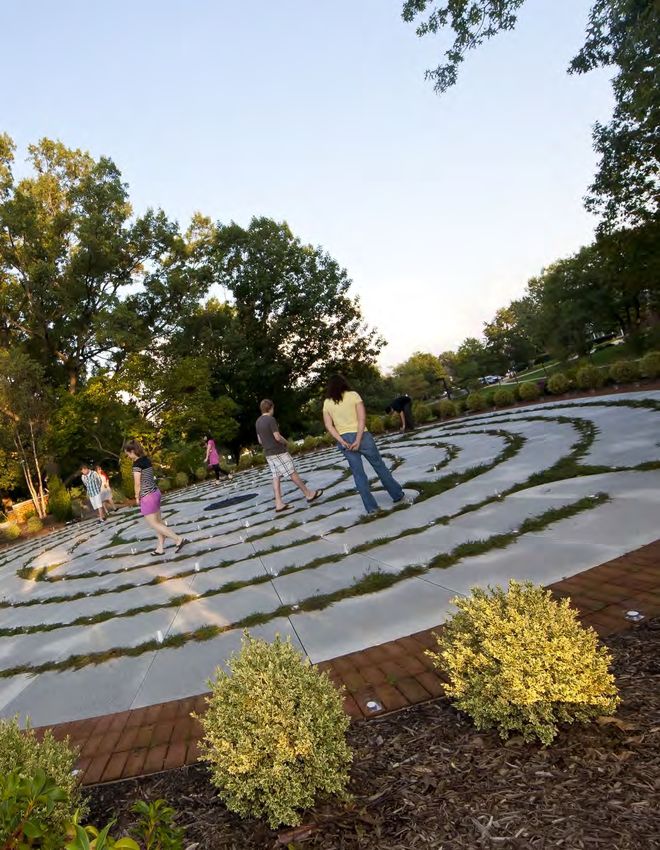
Garden of Reflection and Remembrance
The Garden of Reflection and Remembrance is located near the Counseling Center
on the south side of the Memorial Chapel. Features include a granite labyrinth, two
sustainable fountains, signature benches with journals to capture the thoughts and
feelings of visitors, and a restored Vietnam Veterans memorial. The garden provides a
path to explore and discover, destination points to guide ones movement, and a sense of
surround that separates you from your daily activities and allows quiet contemplation.
Frederick Douglass Square
Dedicated in 2015, this garden prominently honors one of Maryland’s greatest native sons,
Frederick Douglass, on Hornbake Plaza at the University of Maryland. Born into slavery on
the Eastern Shore of Maryland, Douglass taught himself how to read and write and taught
others as well. He escaped from slavery and became a powerful orator, a counselor to
presidents, and a leader in the fight to end slavery and achieve equal rights for all men and
women. This garden area pays homage to his legacy with a bronze statue of Douglass mid-
speech and his words etched in stone pavers and cut into a steel wall.
Jim Henson Statue and Memorial Garden
In 2003, the University of Maryland dedicated the statue of Jim Henson conversing
with Kermit the Frog and the surrounding garden outside the Adele H. Stamp Student
Union Center for Campus Life. Henson graduated from the University of Maryland
in 1960 and became known the world over for his creation of the Muppets and his
work in television with Sesame Street and The Muppet Show. His work included six
Muppet movies and two fantasy pieces, The Dark Crystal and Labyrinth. The statue
was created by sculptor Jay Hall Carpenter. The memorial garden was designed
by landscape architect Philip Cho. The project was funded in part by gifts from the
classes of 1994, 1998, and 1999.
25entertainment
Hart GP Jazz Trio
Originally from Towson, MD, Hart Guonjian-Pettit is
quickly becoming one of the most sought after young
trumpet players and educators in the D.C./Baltimore and
Maryland area. With regular engagements throughout
the entire DMV region, Hart maintains an active perfor-
mance career balanced with a busy schedule teaching
weekly private trumpet lessons. Hart can be heard per-
forming live jazz regularly at the Elk Room in Baltimore—a
brand new speakeasy establishment featuring some of
the strongest jazz musicians in the Baltimore/D.C. area. In
2017, Hart was selected to perform as the trumpet soloist
in the Mid Atlantic Collegiate Jazz Orchestra directed by
Delfeayo Marsalis.
Faux Paz
Faux Paz is the University of Maryland’s oldest
co-ed a cappella group. In 2015, they made
it to the finals of the International Champion-
ship of Collegiate A Capella (ICCA), and in
2016 they placed third. During the 2016 ICCA
season, Faux Paz also starred on Pop TV’s
docu-series, “Sing It On” produced by John
Legend. Last year, the group competed at a
festival in Boston called BOSS and placed first.
Faux Paz recently released their ninth studio
album, which can be found on Spotify, iTunes,
Tidal, and more!
DJ Mike
Mike Hall has been performing as a DJ/party planner/promoter/sound
man since 1974. Based in Montgomery County, MD, he has traveled to
perform from New York to Florida. Mike specializes in all types of music
for all types of people and tailors every event to the people he is enter-
taining. Feel free to request a song you’d like to hear.floor plan LOBBY LEVEL
LOBBY LEVEL
POTOMAC
PIZZA
TERRAPIN BALLROOM
DIAMONDBACK
BOARDROOM
SALON III SALON II SALON I
OLD MARYLAND GRILL
BY MIKE FRANKLIN PREFUNCTION
THE LOBBY BAR
KAPNOS TAVERNA
BY MIKE ISABELLA
ELEVATORS
ELEVATORS
LOBBY
BAGELS ‘N
GRINDS
CONFERENCE LEVEL on Next Page
27CONFERENCE LEVEL
CONFERENCE LEVEL
JIM HENSON ROOM
CROSSLAND BALLROOM
SALON G
CURRY ROOM
SALON F
WAYNE K.
SALON E
BOARDROOM
BROTHERS
WRIGHT
SALON FLEX
TUBMAN ROOM
HARRIET
PREFUNCTION B SALON D
FRANCIS SCOTT
SALON B SALON A
KEY ROOM
SALON C
CARROLL ROOM
CHARLES
BUSINESS
CALVERT BALLROOM
CENTER
PREFUNCTION A
ELEVATORS
COATS
TERRACE B
Gender
TERRACE A
Neutral
Restrooms
TOP OF THE 7’S BALLROOM
Take elevators highlighted above to
Top of the 7’s Ballroom TheHotelUMD.comsponsors
Silver Level
Bronze Level
American Psychological Association
Maryland Psychological Association
ProtoCall Services
Stop, Breathe & Think
TherapyNotes
Trac Systems by Redrock Software Corporation
Acknowledgments
& Special Thanks
Adele H. Stamp Student Union
National Register of Health Service Psychologists
Parent and Family Affairs
University Book Center
University Counseling Jobs
University Recreation & Wellness
The Counseling Center wishes to extend our appreciation to
Dr. Linda Clement and the Office of the Vice President for
Student Affairs for supporting the spirit of this conference.
29Further Your Education Summer Session Winter Session Freshmen Connection Terp Young Scholars Terp Discovery Post-Baccalaureate Programs Professional Graduate Programs Continuing Education Providing opportunities for you to keep learning. oes.umd.edu Suite 0132 Main Administration | 7901 Regents Drive | College Park, MD 20742 301.405.7762 | oes@umd.edu
attendees
Indiana University
  Muhammad Saahir
                                    Rutgers University
                                      Lauren Carino
                                                                       Alejandro Gomez
                                                                       Jungeun Kim
                                                                                                   University of Michigan
                                                                                                   Kristen Adams
  Holly Weber                         Richard Carlson                  Christopher Lewis           Christine Asidao
Johns Hopkins University              Sandra Dias                      Eleuterio Limas             Jamye Banks
  Durriya Meer                        Benjamin Glueck                  Carla McCowan               Kelly Bickel
  Angela Termini                      Nicky Isaacson                   Joel Muller                 Dwaine Campbell
  Matthew Torres                      Lisa Laitman                     Joey Rea                    Ryan Cardinale
Loyola University Maryland            Beverly Mason                    Josh Rutherford             Sarah Cissell
  Claudette Williamson-Taylor         Reese Mayer                      Nupur Sahai                 Rachel Crutchfield
Maryland Institute College of Art     Antonio Morales                  Zhenni Wang                 Jim Dolan
  Pamela Altemos                      Sejal Prajapati                  Deidre Weathersby           Cassie Garety James
Michigan State University             Jill Richards                  University of Iowa            Elizabeth Gonzalez
  Gail Anderson                       Amri Sabharwal                   Maria Bruno                 Vicki Hays
  Daniel Elchert                      Najmi Shaikh                     Adam Hinshaw                Luke Henke
  Inna Fatkins                        Wilhelmina Vargas                Paula Keeton                Karen Henry
  Jessica Garcia                      Annmarie Wacha-Montes            Martin Kivlighan            Ed Huebner
  Tawa Sina                         St. Mary’s College of Maryland     Scott Liu                   Sheryl Kelly
Morgan State University               Laurie Scherer                   Sneha Pitre                 Michael Kristovic
  Nina Hopkins                      Stevenson University               Barry Schreier              Brooke Leach
  Ralph Piper                         Salvatrice Bonefas               Kyle Votroubek              Rachael Lynch
Northwestern University             The Ohio State University        University of Maryland        Anne Marie McGuire
  Stephanie Carrera                   Kelsey Autin                     Allison Asarch              Tyler Perala
  John Dunkle                         Jessica Banes                    Maria Berbery               Naomi Rawitz
  Rebecca Lewis                       Samantha Christopher             Kimberly Bethea             Todd Sevig
  Keaton Muzika                       Alexandra Dokas                  Rashanta Bledman            Nidaa Shaikh
  Meaghan Rowe-Johnson                Kim Dubose                       Vivian Boyd                 Gerald Shorty
  Sean Serluco		                      Shivani Edwards                  Shirley Browner             Huan-Hsiang Ueng
Pennsylvania State University         Carrie Fleider                   Kimberly Campbell           Erin VanVoorhies
  Jordan Barnard                      Tim Graham                       Noah M. Collins             Matt Waddell
  Laura Briscoe                       Ryan Hansen                      Tiana Cruz                  Juemei Yang
  Paul Carswell                       Julie Hazel                      Tessa DiPerri               Kelsey Young
  Caitlin Chun-Kennedy                Kayi Hui-Spears                  Joanna Drinane              Danielle Zohrob
  Clare Cowen                         Shawn Levstek                    Vanessa Freeman           University of Minnesota-
  Margaret Doby                       Michael Lute                     Carlton Green             Twin Cities
  Sangsun Kim                         Gabriel Pagán-Llorens            Jo Ann Hutchinson           Sarra Beckham Chasnoff
  Benjamin Locke                      Jeeseon Park-Saltzman            Jinhee Kang                 Sarah Cronin
  Daveon McMullen                     Ryan Patel                       Sharon Kirkland-Gordon      Alexa Fetzer
  John Mitchell                       Amanda Petry                     Yi-Jiun Lin                 Glenn Hirsch
  Brett Scofield                      Shonali Raney                    Erica Merson                Kelly Jordan
  Julie Scott                         Iony Schmidt                     Yanira Pacheco              Nicholas Oleen-Junk
  Camille Sluzis                      Micky Sharma                     David Petersen              Jennifer Robinson
  Katharine Staley                    Tanesha Walker                   Pepper Phillips             Jerry Shih
  Stephanie Stama                   Towson University                  Ted Pickett Jr            University of Wisconsin-
  Elana Szczesny                      G Wei Ng                         Tangela Roberts           Madison
  Elizabeth Toepfer                 U.S. Naval Academy                 Chandni Shah                Rachel Bitman-Heinrichs
  Nadiya Tucker                       Jessica Mohler                   Yu-Wei Wang		               Simone Collins
  Jason Yoder                         John Ralph                       Simone Warrick-Bell         Kandace Cross
Purdue University                   Universities at Shady Grove        Kate Winderman              Danielle Gautt
  Katherine Earl                      Jessica Branch                 University of Maryland at     Aleska Hagan
  Kate Esterline                      Carl Coleman                   Baltimore                     Andrea Lawson
  Pei-Chun Hou                        Jonathan Kandell                 Emilia Petrillo             Ellen Marks
  Kyle Kittleson                    University of Illinois at        University of Maryland,       Robyn Rauman
  Susan Prieto-Welch                Urbana-Champaign                 Baltimore County              Ken Volk
  Benjamin Reagan                     Arellys Aguinaga                 Bruce Herman              Washington College
  Laura Wagner                        Emily Barnum                     University of Maryland      Miranda Altman
                                      Theresa Benson                   Eastern Shore
                                      Yu Li Cunningham                 Kate Kent
                                                                                                                             31
2019
WE’RE
IN THIS
TOGETHER!
ENHANCING COUNSELING CENTER CARE
THROUGH COLLABORATION AND PARTNERSHIPS
WEDNESDAY
FEBRUARY 20 FRIDAY
FEBRUARY 22
Rutgers University–New Brunswick Campus
Conference Co-Chairs:
Beverly Mason, LCSW, MSW, Group Program Coordinator
Sandra Dias, Ph.D, Staff Psychologist
rhscaps.rutgers.edu
COUNSELING, ALCOHOL & OTHER
/RUStudentHealth (848) 932-7884 DRUG ASSISTANCE PROGRAM AND
*Persons with disabilities who anticipate needing accommodations or who have questions about physical access for this PSYCHIATRIC SERVICES (CAPS)
event may contact (848) 932-7884 in advance of the program.You can also read


