Master of Science in Epidemiology Handbook 2020-2021 - Department of Epidemiology College of Public Health and Health Professions College of ...
←
→
Page content transcription
If your browser does not render page correctly, please read the page content below

2020-2021
Master of Science in
       Epidemiology
           Handbook

         Department of Epidemiology
College of Public Health and Health Professions
             College of Medicine
           http://epidemiology.phhp.ufl.edu/
                     August 2020

                          1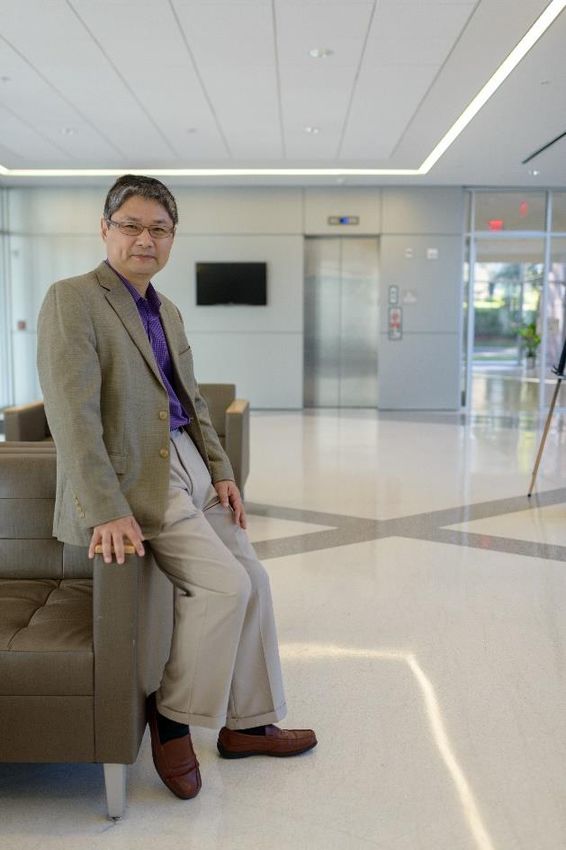
Table of Contents
Welcome from the Acting Chair of the Department of Epidemiology ..................................................... 3
Welcome from the Master of Science in Epidemiology Program Director .............................................. 4
Introduction .............................................................................................................................................. 5
Part I: The University of Florida ................................................................................................................ 6
 Overview of UF........................................................................................................................................ 6
 The UF Academic Health Center ............................................................................................................. 7
 College of Public Health and Health Professions .................................................................................... 8
 College of Medicine .............................................................................................................................. 10
 Department of Epidemiology ................................................................................................................ 12
Part II: Master of Science in Epidemiology ............................................................................................. 13
 Program Overview ................................................................................................................................ 13
 Student Learning Outcomes ................................................................................................................. 14
 Faculty and Administration ................................................................................................................... 15
 Student Guidance and Mentoring ........................................................................................................ 21
 Curriculum............................................................................................................................................. 23
 Registration ........................................................................................................................................... 26
 Supervisory Committee......................................................................................................................... 28
 Thesis Defense ...................................................................................................................................... 31
 Thesis Defense Rubric ........................................................................................................................... 34
Part III: Other Important Information ..................................................................................................... 35
 GatorLink ............................................................................................................................................... 35
 Emails from the Department ................................................................................................................ 35
 Financial Aid .......................................................................................................................................... 35
 Florida Residency .................................................................................................................................. 35
 Funding for Professional Travel ............................................................................................................ 35
 Academic Integrity and Professionalism ............................................................................................... 36
 Grievance Procedures ........................................................................................................................... 38
 Required Immunizations ....................................................................................................................... 39
 Campuswide Policy on Face Coverings ................................................................................................. 39
 Computer Requirements....................................................................................................................... 39
 HIPAA and FERPA .................................................................................................................................. 40
 IRB ......................................................................................................................................................... 40
 Additional Resources ............................................................................................................................ 40
 Counseling and Student Health ............................................................................................................ 40
 Shared Governance ............................................................................................................................... 41
 Readmission Requirements .................................................................................................................. 42
 Policy Changes ...................................................................................................................................... 42

                                                                               2
Welcome from the
Acting Chair of the Department of Epidemiology
Welcome!
Welcome to the Department of Epidemiology. I
am excited to have this opportunity to serve as your
acting chair before the arrival of the new department
chair. The department has many accomplishments since
its establishment in 2010. For instance, the department
received $9.65 million extramural grant funding during
the 2019-2020 academic year alone. Many of our faculty
members are national leaders in our research areas, and
our graduate programs provide rigorous training to
exceptional students in a supportive and collaborative
environment. The department is ranked ninth among
epidemiology departments in all public universities in the
nation based on productivity measures used by Academic
Analytics. More importantly, our dynamic and growing
faculty and staff are dedicated to excellence across our
missions in research, education, and service. We are
dedicated to promoting and improving the health of the
public through:
Advancing scientific knowledge through application of innovative epidemiological research
across a broad range of contemporary health issues and populations
Offering high quality master’s, PhD, and post-doctoral programs and contributing to
undergraduate programs that prepare students for academic and applied health careers
Actively supporting service and outreach activities to address community needs
In addition, because we are uniquely co-located within the Colleges of Public Health and Health Professions
and Medicine and within an academic health center, we have tremendous opportunities for broad
interdisciplinary collaborations, which creates a training environment in which our students thrive. We are
proud to be educating the next generation of leaders in public health and health professions. We hope you
will enjoy exploring our web site and learning more about the wonderful work happening in our department
and across the University.
Peihua Qiu, PhD
Acting Chair, Department of Epidemiology
https://epidemiology.phhp.ufl.edu/about/chair/
3Welcome from the
Master of Science in Epidemiology Program Director
Dear Students:
On behalf of our faculty and staff, and your fellow epidemiology students, welcome to the
University of Florida Department of Epidemiology. You are joining a growing and dynamic department;
faculty members are committed to your success. In addition to the MSE student cohort, you join two other
groups of students: our PhD students and epidemiology concentration MPH students.
This handbook describes the policies and procedures of our
program. We hope that it answers most of your questions. Keep it as a
guide as you move through the program. Details of many topics
important to graduate students are also addressed in the University of
Florida Graduate Catalog. Please take the time to read through the
handbook and to discuss any questions with your advising and
mentoring team.
Again, a warm welcome to our program! I hope to see each of you
frequently. Stop by my office; email me. Let’s take the time to get to
know each other. Your success is our success!
Warm wishes,
Cathy
Catherine Woodstock Striley, PhD, MSW, MPE
Director, Master of Science in Epidemiology Program
Associate Professor of Epidemiology
Department of Epidemiology
College of Public Health and Health Professions
College of Medicine
University of Florida
2004 Mowry Road
PO Box 100231
Room 4237
Gainesville, FL 32611
epidemiology.phhp.ufl.edu
352-273-5359
4Introduction
The Graduate School establishes and administers graduate student policies and procedures campus- wide
for the University of Florida. Policies and requirements listed in this handbook are either clarifications of
those described in the Graduate Catalog or additional requirements or policies of the Master of Science in
Epidemiology Program. The Master of Science in Epidemiology Program is administered through the
Department of Epidemiology, which is housed in both the Colleges of Public Health and Health Professions
and Medicine.
Throughout this handbook, you will find links to programs, institutes, colleges and centers in the University
of Florida. These links allow us to keep up with the ever-changing complexion of the University.
5Part I: The University of Florida
Overview of UF
The University of Florida in Gainesville is a major research university and one of only 34 public universities
that belong to the Association of American Universities. It is the state's Flagship University, the oldest and
most comprehensive University and is among the nation's most academically diverse public higher
education institutions. UF has a long history of established programs in education, research, health care and
service. It is ranked #7 among all US public universities.
UF has a 2,000-acre campus and more than 900 buildings, including 170 with classrooms and laboratories.
UF's extensive capital improvement program has resulted in facilities ideal for 21st century academics and
research, including the Emerging Pathogens Institute; the Cancer and Genetics Research Center; the
McKnight Brain Institute, the Institute on Aging and the Clinical and Translational Research Institute (shown
below).
UF is 5th largest in terms of student population and is in the 3rd-most populous State.
6The UF Academic Health Center
The UF Academic Health Center may be the country’s only academic health center with six health-related
colleges located on a single, contiguous campus with a nearby VA. They include the Colleges of 1) Dentistry,
2) Medicine, 3) Nursing, 4) Pharmacy, 5) Public Health and Health Professions, and 6) Veterinary Medicine.
The Colleges teach the full continuum of students from undergraduates to professional students to
advanced post-doctoral students.
The Health Science Center is also a world leader in interdisciplinary research. Major Institutes and Centers
include the Clinical and Translational Science Institute, the Emerging Pathogens Institute, the Institute on
Aging, the UF Health Cancer Center, the UF Genetics Institute, and the McKnight Brain Institute. Information
on other UF Health centers and institutes can be found at this link.
The Health Science Center is closely affiliated with the UF Health System. Together with clinical programs
and services across all HSC colleges, the UF Health partnership is helping to create Florida’s future healthcare
workforce.
The Health Science Center’s strategic plan of core vision, values, and goals is called the Power of Together.
7College of Public Health and Health Professions
The mission of the UF College of Public Health and Health Professions (PHHP) is to shape tomorrow’s public
health and health professionals through dynamic and responsive educational programs, transformational
research, groundbreaking discoveries, and equitable health-related service.
In 2014, the College was re-accredited by the Council on Education for Public Health (CEPH). PHHP is the
first college to include both public health and health professions that has received accreditation as a School
of Public Health. Quick Facts about PHHP can be found on the college fact sheet. In 2018, the College
celebrated its 60th anniversary.
Teaching
The College is composed of eight departments: 1) Biostatistics; 2) Clinical and Health Psychology; 3)
Environmental and Global Health; 4) Epidemiology; 5) Health Services Research, Management and Policy; 6)
Occupational Therapy; 7) Physical Therapy; and 8) Speech, Language and Hearing Sciences.
Research
The College of Public Health and Health Professions was granted nearly $32 million in external funding this
past year.
The Department of Epidemiology is home to the Southern HIV and Alcohol Research Consortium (SHARC)
Center for Translational HIV Research. The College of Public Health and Health Professions is home to
additional centers, which can be found on the PHHP website.
Research Training
The College has six NIH training grants, including two in the Department of Epidemiology. These focus on
substance abuse and alcohol and HIV infection. Other training grants in the College include those in the
areas of rehabilitation and neuromuscular plasticity; movement disorders and neurorestoration; physical,
cognitive, and mental health in older adults; and breathing research and therapeutics.
Patient Care
The College of Public Health and Health Professions is home to the Clinical and Health Psychology clinic,
which offers both general and specialty psychological services to children, adolescents, and adults.
Service
One major service site is provided through the Department of Epidemiology’s HealthStreet, which is a
community-based effort that works every day to reduce disparities in healthcare and research participation
by linking the medically underserved to medical and social services and opportunities to participate in
research. HealthStreet offers an innovative hub for students and faculty to learn community based research
methods. With its cohort of 11,500 community members, it offers unlimited opportunities for dissertations
and service learning.
8Global Health Research
On an international level, students and faculty in the Departments of Physical Therapy and Speech,
Language, and Hearing Sciences travel annually to countries in Latin America to provide training, health care
services and public health needs assessments. The College has also opened a UF Public Health Field
Laboratory in Haiti. The Department of Epidemiology has launched a population study to assess non-
communicable disorders in rural and urban Haiti called the Haiti Health Study. The department has been
home to a Fogarty International Center training program for 8 years. The department has a Memorandum
of Understanding with the esteemed National Institutes of Mental Health and Neuroscience and a second
MOU with Chulalongkorn University in Bangkok, Thailand. Faculty members also work in collaboration with
various universities in the United Kingdom and China.
9College of Medicine
The UF College of Medicine is acknowledged as having one of the strongest medical education programs in
North America. Its mission is to improve health care in Florida, our nation and the world through excellence
and leadership in education, clinical care, discovery and service. 2016 was the 60th anniversary of the
founding of the College of Medicine.
Teaching
The College offers a variety of educational opportunities in addition to the medical degree, including the
Interdisciplinary Program in Biomedical Sciences, which leads to a PhD or MS degree, and joint programs for
both MD and PhD degrees. Also part of the College of Medicine is the School of Physician Assistant Studies.
The College plays an important role in the continuing education of resident physicians and fellows through
its collaboration with UF Health. The College offers residencies in nearly 60 medical specialties and sub-
specialties as well as clinical and research fellowships.
The College of Medicine is ranked 40th among the nation’s top research medical schools, according to U.S.
News & World Report. The College includes 28 research-oriented basic and clinical academic departments,
almost 900 students, over 700 residents and fellows, and more than 1,200 faculty members. The Jacksonville
campus, located 75 miles to the northeast, is home to more than 350 physicians and scientists delivering
medical care in an urban setting, performing research and educating medical students and residents.
Research
College of Medicine faculty are national leaders in fundamental, translational and clinical research in areas
pertaining to diseases of the nervous system, human aging, cancer, diabetes, infectious disease,
immunology and inflammation, genetics and gene therapy. College of Medicine faculty and collaborative
research teams continue to receive awards and honors that reflect their exceptional distinctions and
contributions. College of Medicine researchers have achieved an increase in National Institutes of
Health funding reflected in the impressive rise in national rankings from 62nd to 42nd (joining the upper
third of United States medical schools), according to U.S. News & World Report. The College of Medicine
houses 8 affiliated research institutes and 61 affiliated research facilities/centers.
Two of the most widely recognized products to come out of research at the College of Medicine are
Gatorade®, a popular sports beverage, and Trusopt®, an eye drop developed to treat certain forms of
glaucoma.
Patient Care
Patient care is provided by the UF Physicians Group Practice, a close collaboration with UF Health, the
Malcolm Randall Veterans Affairs Medical Center, and several community health-care sites and other
affiliated hospitals in Florida. Patient care occurs at two principal locations — Gainesville and Jacksonville —
and at nearly 50 clinical practices. Clinical strengths are in cancer, neurosciences, aging, gene therapy,
psychiatry and addiction medicine, transplantation and children’s services. UF faculty members account for
approximately 700,000 physician visits and 48,000 discharges annually. The UF Health Shands Cancer
10Hospital, a 192- bed hospital designed to meet the area’s growing need for cancer services, opened its doors
to patients in November 2009. It also houses the Critical Care Center for Emergency and Trauma services.
The Florida Recovery Center is available for those who seek recovery from addiction and eating disorders.
In January 2018, two new towers were completed: the UF Health Heart and Vascular Hospital and the UF
Health Neuromedicine Hospital.
11Department of Epidemiology
The Department of Epidemiology is housed in both the Colleges of Public Health and Health Professions and
Medicine at the University of Florida. Faculty members are appointed in both Colleges. This forward
governance structure was designed to create synergies resulting in a strong, competitive research profile
and in highly trained students.
The mission of the Department of Epidemiology is to improve health globally through education, training,
research and service.
As a leader in the field, the Department aims to:
• Advance the field's theoretical and empirical base through rigorous multidisciplinary
epidemiological research that monitors health globally.
• Prepare the next generation of scientific leaders to design and conduct ethical, relevant and
innovative epidemiological studies.
• Train a public health workforce committed to working with diverse communities to bring about
outcomes that matter.
• Develop and refine epidemiological measures and methods that address the dynamic and complex
factors impacting public health globally.
• Provide leadership and service in epidemiology and public health through international, national,
state, and local collaboration and community engagement.
The department offers the MS in Epidemiology, a PhD in Epidemiology, an Epidemiology concentration in
the MPH Program, and an online Graduate Certificate in Psychiatric Epidemiology. Currently, there are over
70 students across these academic programs in the Department.
12Part II: Master of Science in Epidemiology
Program Overview
The Master of Science in Epidemiology (also known as the MS in Epidemiology and the MSE) degree is a 36
credit program that prepares students for careers in the public health arena that are focused on the
surveillance and prevention of illnesses among diverse populations around the world. Students will be
trained in the foundational aspects of epidemiology including person, place and time, risk and protective
factors, and the social determinants of health. Areas of focus will include: chronic disease, infectious disease,
geriatric, environmental, psychiatric, social, cancer and maternal and child health epidemiology.
The thesis is required to demonstrate skill in independent inquiry and investigation, under the tutelage of a
mentor.
Graduates of the MSE Program will be able to:
Apply surveillance, assessment, evaluation, and other foundational epidemiological research
designs to all areas of interest,
Choose appropriate measurement and analytic methods to study health and disease in a population,
Utilize biological, behavioral and social theory to understand how to prevent and intervene to
promote the public health.
The program consists of required coursework and the successful completion of a thesis. Students may
complete the course in four semesters (fall, spring, summer, and fall) although five semesters is the norm
(fall, spring, summer, fall, spring) with 36 credits.
13Student Learning Outcomes
Degree
SLO Student Learning Outcome Assessment Method
Delivery
Knowledge Apply surveillance, 1) Evaluation of the student's Campus
assessment, evaluation, and performance in their program of study
other foundational as judged by the Supervisory
epidemiological research Committee (Research Mentor,
designs to all areas of interest. Academic Advisor, Program Director,
and in case of any disagreement, the
Department Chair); 2) Evaluation of the
student's thesis defense by the
Supervisory Committee
Skills Choose appropriate 1) Successful defense of a thesis as Campus
measurement and analytic judged by a Supervisory Committee; 2)
methods to study health and Submission of thesis manuscript for
disease in a population. publication in a peer-reviewed journal
Skills Utilize biological, behavioral 1) Successful defense of a thesis as Campus
and social theory to judged by a Supervisory Committee 2)
understand how to prevent Submission of thesis manuscript for
and intervene to promote the publication in a peer-reviewed journal
public health.
Professional Display ethical behavior, 1) Consistent adherence during the Campus
Behavior cultural sensitivity, integrity in degree program to the UF Honor Code
research conduct, honesty, as judged by the Supervisory
and teamwork. Committee; 2) Observation by faculty of
professional behavior during class
activities, seminars, research and thesis
activities
14Faculty and Administration
The graduate faculty members of the MSE Program are:
a) Core faculty in the Department of Epidemiology,
b) Affiliated graduate faculty from other Departments and Colleges around the university,
c) Part time faculty (Adjunct Faculty): Individuals with satisfactory professional qualifications who
teach, conduct research, and sometimes extended functions in connection to established programs,
or
d) Courtesy faculty appointees: Individuals currently not employed or paid by the university
A current listing of core faculty is shown below and on the Department of Epidemiology website. The
Director of the MSE Program, appointed by the Chair of the Department, works with the Chair to oversee
the MSE Program, assuring student progress and monitoring program accomplishments. The Director works
closely with core faculty members in the Department of Epidemiology and collaborates with the
Epidemiology Curriculum Committee and the Admissions Committee.
The Academic Program Assistant, also known as the Academic Assistant or Program Assistant, is responsible
for maintaining student records and assisting the Program Director.
Graduate faculty members, invited by the Chair, are voted on by a majority of all other graduate faculty in
Epidemiology. Once voted in, their names are sent to the UF Graduate School for approval.
A current list of all graduate faculty members in Epidemiology is included in the Department of Epidemiology
website.
15Core Faculty in the Department of Epidemiology
Role in Program Faculty/Degree(s) Legacy Mentor
(Year Joined UF)
Acting Chair of Epidemiology Peihua Qiu, PhD Brian Yandell, PhD
(2013) PhD – 1996: University of Wisconsin – Madison (Statistics/Biostatistics) Hubert Chen, PhD
MS – 1993: University of Georgia (Statistics)
MS – 1989: Fudan University (Statistics)
BS – 1986: Fudan University (Mathematics)
Professor and Chair of Stephen E. Kimmel, MD, MSCE
Epidemiology (December MSCE – 1995: Perelman School of Medicine, University of Pennsylvania (Clinical
2020) Epidemiology)
MD – 1988: New York University School of Medicine
AB – 1984: Princeton University (Chemistry)
Professor of Epidemiology Dejana Braithwaite, PhD, FRS (Med)
(November 2020) PhD – 2004: University of Cambridge (Epidemiology)
MSc – 1999: University College London/Kings College (Public Health)
BSc – 1998: London Guildhall University (Psychology and Psychobiology)
Clinical Assistant Professor of Shantrel S. Canidate, PhD, MPH Robert L. Cook, MD, MPH
Epidemiology (2020) PhD – 2017: University of Florida (Public Health – Social and Behavioral Science) Giselle D. Carnaby, PhD, MPH,
MPH – 2012: University of Florida (Public Health – Social and Behavioral Science) FASHA
BS – 2010: University of Central Florida (Health Services Administration) Christa L. Cook, PhD, MSN,
PHNA-BC
Nicole Ennis, PhD
Professor of Epidemiology Xinguang (Jim) Chen, MD, PhD, FACE Bonita Stanton, MD
(2014) PHD – 1993: University of Hawaii (Biostatistics and Epidemiology)
MPH – 1992: East West University, University of Hawaii (Population Studies)
MPH – 1987: Tongji Medical University (Biostatistics)
MD – 1982: Wuhan Medical College
Assistant Professor of David Cheng, PhD Thomas A. Pearson, MD, MPH
Epidemiology (2016) MHS, MD – 2007: Johns Hopkins School of Public Health (Epidemiology)
PhD – 2013: University of Washington (Epidemiology)
Professor of Epidemiology and Robert Cook, MD, MPH Roberta Ness, MD, MPH
Medicine (2007) MD – 1991: University of North Carolina at Chapel Hill Wishwa Kapoor, MD, MPH
MPH – 1991: University of North Carolina at Chapel Hill (Epidemiology) Duncan Clark, PhD, MD
BSPH – 1986: University of North Carolina at Chapel Hill (Biostatistics)
16Core Faculty in the Department of Epidemiology
Role in Program Faculty/Degree(s) Legacy Mentor
(Year Joined UF)
Dean’s Professor of Linda B. Cottler, PhD, MPH, FACE Lee N. Robins, PhD
Epidemiology (2011) PhD – 1987: Washington University in St. Louis (Sociology/Psychiatric Epidemiology) John E. Helzer, MD
Founding Chair of MPH – 1980: Boston University School of Public Health (Epidemiology)
Epidemiology (2011-2018) BA – 1977: Emmanuel College (Biology)
RN – 1972: Jewish Hospital School of Nursing
Assistant Professor of Kelly K. Gurka, PhD, MPH Stephen W. Marshall, PhD
Epidemiology (2015) PhD – 2007: University of North Carolina at Chapel Hill (Epidemiology) Stephen Lankenau, PhD
MPH – 1999: University of Alabama at Birmingham (Epidemiology)
BS – 1998: Spring Hill College (Biology)
Assistant Professor of Hui Hu, PhD Xiaohui Xu, PhD
Epidemiology (2017) PhD – 2016: University of Florida (Epidemiology) Linda B. Cottler, PhD, MPH,
BS –2012: Fudan University (Nursing) FACE
Assistant Professor of Catalina Lopez-Quintero, MD, PhD Yehuda Neumark, PhD, MPH
Epidemiology (2018) PhD – 2012: Hebrew University (Public Health) James C. Anthony, PhD
MPH – 2003: Hebrew University Mario De La Rosa, PhD
MD – 1998: Universidad Colegia Mayor de Nuestra Señora del Rosario Raul Gonzalez, PhD
Associate Professor of Volker Mai, PhD, MPH Arthur Schatzkin, MD
Epidemiology (2012) MPH – 2000: Harvard School of Public Health (Quantitative Methods) Steve Hursting, PhD, MPH, RD
PhD – 1999: University of Georgia (Microbiology)
BS –1992: University of Georgia (Biochemistry)
Research Assistant Professor Simone Marini, PhD Riccardo Bellazzi, PhD, FACMI
of Epidemiology (2019) PhD – 2012: Hong Kong University of Science and Technology (Bioengineering) Benajmin Levi, MD
MS – 2007: University of Pavia (Biomedical Engineering)
BS – 2004: University of Pavia (Biomedical Engineering)
Professor of Epidemiology Thomas A. Pearson, MD, MPH, PhD Leon Gordis, MD
(2013) PhD – 1983: Johns Hopkins University, School of Hygiene and Public Health (Epidemiology) DA Henderson, MD, MPH
MPH – 1976: Johns Hopkins University, School of Hygiene and Public Health
MD – 1976: Johns Hopkins University, School of Medicine
BA – 1973: Johns Hopkins University
Clinical Assistant Professor of Cindy Prins, PhD, MPH, CIC, CPH Richard J. Frisque, PhD
Epidemiology (2010) MPH – 2006: University of Florida (Epidemiology) Robert Cook, MD, MPH
PhD – 2000: Pennsylvania State University (Biochemistry, Microbiology, and Molecular
Biology)
BS – 1993: University of Central Florida (Biology)
17Core Faculty in the Department of Epidemiology
Role in Program Faculty/Degree(s) Legacy Mentor
(Year Joined UF)
Associate Professor of Mattia Prosperi, MEng, PhD William Hogan, MD, MS
Epidemiology (2015) PhD – 2008: Roma Tre University (Computer Science and Automation) Linda B. Cottler, PhD, MPH,
MEng – 2003: Roma Tre University (Computer Science Engineering) FACE
Iain E. Buchan, MD, FHHP,
FACMI
Giovanni Ulivi, MEng, PhD
Research Assistant Professor Huaizhen Qin, PhD Xiaofeng Zhu, PhD
of Epidemiology (2018) PhD – 2008: Michigan Technological University (Statistical Genetics) Shuanglin Zhang, PhD
PhD – 2001: Chinese Academy of Sciences (Survey Sampling) Yong Li, PhD
MS – 1998: Beijing Normal University (Theoretical Statistics) Alan T. K. Wan, PhD
BS – 1993: Beijing Normal University (Mathematical Education) Shiyong Feng
Lecturer (2006) Jerne Shapiro, MPH Steven Weismer, MD]
MPH – 2001: University of South Florida (Tropical Public Health and Communicable Thomas Belcuore, MS
Diseases)
BS – 1998: University of Florida (Microbiology and Cell Science; Plant Pathology)
Research Professor of Ronald I. Shorr, MD, MS Wayne A. Ray, PhD
Epidemiology (2012) MS – 1990: Case Western Reserve University (Epidemiology)
MD – 1982: Ohio State University (Medicine)
BA – 1978: Duke University (Chemistry)
Research Associate Professor Catherine W. Striley, PhD, MSW,ACSW, MPE Linda B. Cottler, PhD, MPH,
of Epidemiology (2011) MPE – 2004: Washington University in St. Louis (Psychiatric Epidemiology) FACE
Master of Science in PhD – 2002: Washington University in St. Louis (Social Work) Arlene Rubin Stiffman, PhD
Epidemiology Program MSW – 1989: George Warren Brown School of Social Work, Washington University (Social
Director Work)
Certificate in Psychiatric BA – 1980: University of Missouri at Kansas City (Political Science)
Epidemiology Program
Director
18Core Faculty in the Department of Epidemiology
Role in Program Faculty/Degree(s) Legacy Mentor
(Year Joined UF)
Research Assistant Professor Krishna Vaddiparti, PhD, MPE, MSW Linda B. Cottler, PhD, MPH,
of Epidemiology (2013) MPE – 2005: Washington University in St. Louis (Psychiatric Epidemiology) FACE
MPH, Epidemiology PhD – 2002: National Institute of Mental Health and Neuro Sciences Deemed University Prabha S. Chandra, MD,
Concentration Coordinator (Psychiatric Social Work) MRCPsych
MPhil – 1996: National Institute of Mental Health and Neuro Sciences Deemed University
(Psychiatric Social Work)
MSW – 1994: Osmania University (Social Work)
BA – 1992: Osmania University (Sociology)
Research Assistant Professor Deepthi Satheesa Varma, PhD, MPhil, MSW Linda B. Cottler, PhD, MPH,
of Epidemiology (2014) PhD – 2005: National Institute of Mental Health and Neuro Sciences Deemed University FACE
PhD in Epidemiology Program (Psychiatric Social Work) Prabha S. Chandra, MD,
Director MPhil – 1998: National Institute of Mental Health and Neuro Sciences Deemed University MRCPsych
(Psychiatric Social Work)
MSW – 1994: Mahatma Gandhi University (Medical and Psychiatric Social Work)
BSc – 1992: Mahatma Gandhi University (Chemistry)
Assistant Professor of Yan Wang, PhD Robert Cook, MD, MPH
Epidemiology (2016) PhD – 2013: Syracuse University (Child and Family Studies)
MS – 2008: Syracuse University (Child and Family Studies)
Assistant Professor of Lusine Yaghjyan, MD, MPH, PhD Rulla M. Tamimi, ScD
Epidemiology (2013) PhD – 2009: University of Cincinnati College of Medicine (Epidemiology)
MPH – 2003: College of Health Sciences, American University of Armenia
MD – 1997: Yerevan State Medical University
Professor of Epidemiology Jinying Zhao, MD, PhD Viola Vaccarino, MD, PhD
(2016) PhD – 2005: University of Texas Health Science Center at Houston (Statistical Genetics &
Genetic Epidemiology)
PhD – 1999: Chinese Academy of Medical Sciences (Molecular Genetics)
MD- 1989: Zhengzhou University School of Medicine
Joint Faculty
Role in Program
Faculty/Degree(s) Mentor
(Year Joined UF)
Professor of Pediatrics and Sonja A. Rasmussen, MD, MS Ada Hamosh, MD, MPH
19Epidemiology (2018) MD – 1990: University of Florida Margaret (Peggy) Wallace,
MS – 1983: University of Wisconsin, Madison (Medical Genetics) PhD
BS – 1981: University of Minnesota Duluth (Biology and Mathematics)
20Student Guidance and Mentoring
Students accepted into the MSE Program will have two active supervisors: 1) a Research Mentor and 2) an
Academic Advisor.
Research Mentor
The Research Mentor will:
1. Serve as Chair of the student’s Thesis Supervisory Committee if they are a core or joint faculty
member within the Department of Epidemiology. If a faculty member is not a core or joint faculty
member, they will serve as the Co-Chair.
2. Be chosen in the first or second semester of the student’s enrollment.
3. Review coursework and progression toward graduation at least once per semester.
4. Work with the student to form a supervisory committee as early as possible, but no later than the
semester prior to the intended graduation date.
5. Provide extensive mentoring and guidance as the student develops a research proposal.
Additionally, the Research Mentor should:
1. Meet with the student to review progress at least once per month, although more frequently is
recommended.
2. Provide detailed guidance regarding how to organize and write the MSE thesis.
3. Provide opportunities for interactions with visiting scholars and presentation of data at local and/or
national meetings.
4. Provide career guidance and advice as the student moves through the program.
Soon after selecting the Mentor, the student will obtain a Mentoring Compact, which outlines expectations
for mentoring for both the student and the Research Mentor. Students will meet with the Mentor, review
the Compact, both will sign it, and the student will bring a copy to the Academic Assistant. Compacts must
be signed annually with copies being given to the Academic Assistant for the student’s file.
Academic Advisor
Students are assigned an Academic Advisor by the Chair of the Department of Epidemiology or MSE Program
Director prior to the start of their program. The Academic Advisor will:
1. Be a core faculty member within the Department of Epidemiology
2. Work with the Research Mentor and the student to ensure that the student is completing the
specific requirements needed to obtain the MSE.
3. Meet with the student in advance of the course registration period each semester to discuss
academic progress.
4. Be available throughout the year to consult with students about academic issues.
21Additionally, the Academic Advisor:
1. Provides other general advice.
2. Can serve as a member of the Supervisory Committee, although this is not required.
3. Facilitates communication between the student and others.
Guidance
Every semester, the Research Mentor and the Academic Advisor will sign off on the Course Registration
Form. For each registration period, the Mentor and student will help plan courses to be taken; however, it
is the responsibility of the Academic Advisor to know the curriculum requirements and to review the form.
To keep track, the Academic Assistant will document the completion of specific curricular requirements. This
form will be provided to the student, the Research Mentor, and the Academic Advisor each semester.
At the end of the first year of study, by May, students and Mentors will meet and review the Student Annual
Mentoring Plan and Review of Progress toward Goals. The Annual Mentoring Review Form, completed by
the student before the meeting, outlines specific goals for the upcoming and final year of the program. The
Research Mentor adds comments in the presence of the student; the completed copy is then delivered to
the Academic Assistant by the student. The Program Director will review all Mentoring Review Plans.
Students should keep a copy of their form and bring it with them when meeting with their Academic Advisor
or in subsequent annual meetings with their Mentor.
Change in Mentor
Due to extenuating circumstances, students may need to change the Research Mentor. Such a change
should be discussed with the Program Director (or Department Chair, if the Program Director is involved). A
formal written request to the Program Director will be required to finalize the change. If the student is not
in good academic standing or the Program Director does not agree to the change, the student will seek the
advice of the Department Chair, who will resolve the issue.
Ombudsperson
Any concerns about the program should be discussed with the Program Director. The Program Director will
consult with the Chair of the Department as appropriate. If a student does not feel that their concern has
been addressed by the Program Director, they may seek the advice of the Department Chair. In addition,
students should be aware that UF has an Office of the Ombuds (currently Mr. Ronald L. Anderson) to discuss
student concerns.
22Curriculum
All students are required to complete, or to have completed, the following courses before they begin their
coursework.
Course Epidemiology Prerequisites
N/A HIPAA & IRB certification
PHC 6937 Introduction to Public Health for the Health Professions
The HIPAA & Privacy and IRB courses are available on myTraining through a sign in process using the Gator1
sign in. The HIPAA Class can be found by search “UF_PRV801v_OLT”; the IRB Course can be found by
searching “UF_IRB800_OLT”. Both trainings should be completed in the first 30 days of the program.
The current curriculum is shown below. All students must complete a minimum of 36 credits of epidemiology
coursework. Students will regularly review their progression towards meeting program curriculum
requirements by completing the MSE Curriculum Form and reviewing it regularly with the Academic
Assistant, the Research Mentor, and the Academic Advisor each semester.
Department of Epidemiology
Master of Science in Epidemiology Curriculum (36 credits minimum)
Epidemiology Core Courses (15 Credits)
Course Epidemiologic Methods (All 3 courses required for 9 Credits) Credit
PHC 6001 Principles of Epidemiology 3
PHC 6000 Epidemiology Research Methods I 3
PHC 6011 Epidemiology Research Methods II 3
Course Epidemiology Core Electives (Choose 2 courses for 6 Credits) Credit
PHC 7017 Advanced Epidemiology Methods III 3
PHC 6016 Social Epidemiology 3
PHC 7595 Molecular Epidemiology 3
PHC 6937 Genetic Epidemiology 3
PHC 6937 Hospital Epidemiology 3
PHC 6194 Methods in Spatial Epidemiology 3
PHC 7007 Cancer Epidemiology 3
PHC 7038 Psychiatric Epidemiology 3
Biostatistics Courses (8 Credits)
Course Statistics & Data Management (All 3 courses required for 8 Credits) Credit
PHC 6052 Introduction to Biostatistical Methods 3
PHC 6053 Regression Methods 3
PHC 6xxx (number Critical Skills in Epidemiology Data Management 1
in process; when
approved) or PHC 2
7065 until
approved
Electives (5 Credits)
23Course Epidemiology Electives Credit
Other course(s)
Choose from Epidemiology Core Electives (above) or other epidemiology
approved by 2-3
methods courses at the 6000 or 7000 level in consultation with advisor.
Advisor
Course Electives (2 –3 Credits as appropriate) Credit
Other course
approved by Choose up to one other class from another area as appropriate 2-3
Advisor
Other Requirements (4 Credits)
Course Journal Club Series (2 Credits) Credit
PHC 7901 Epidemiology Literature Review and Critique (Journal Club) (Fall) 1
PHC 7902 Epidemiology Writing Circle (Spring) 1
Course Ethics (2 Credits) Credit
PHC 6xxx (when
approved) or 7427 Ethics in Population Science for Master’s Students 2
(until approved)
Required Epidemiology Thesis(4 Credits)
Course Credit
PHC 6971 Research for Master’s Thesis (Can be taken over two semesters) 4
Transfer Credit
Transfer credits may be requested.
The Department of Epidemiology Curriculum Committee meets regularly to review and adjust the
curriculum. Substitution or exemption for any specific curriculum requirements but may be considered after
the student files a letter of explanation that is signed by the student’s Research Mentor and Academic
Advisor and given to the Program Director. Such requests will then be reviewed by the Curriculum
Committee, and the decision of the Curriculum Committee will be placed in the student’s academic file.
The Department of Epidemiology and Curriculum Committee will consider transferring graduate coursework
that was obtained prior to acceptance in the MSE program. This includes graduate work previously
conducted at the University of Florida. All course transfers must meet guidelines outlined in the UF Graduate
Catalog guidelines for graduate degrees as well as guidelines of the Department of Epidemiology.
A maximum of 9 credits can be requested to apply to the 36- credit requirements in the MSE program with
these caveats:
A grade of B or higher was obtained. Pass/Fail courses are not transferrable.
Required courses are not transferrable unless there is a direct match to our course.
Only courses directly related to the MSE will be transferred.
Course credits are based on instructional hours; in general, one hour of instruction per week during
a semester equals one credit.
Procedure
Course transfer requests must be submitted in the first semester after enrollment in the MSE program. (i.e.,
Courses begin in August - transfers must be submitted by October 31st of that year). Transfers will only be
considered once; in other words, you may not submit transfers separately over several months or later in
24the program. To request a transfer, students must:
Be sure to have previous academic transcripts, course syllabi, have identified potential courses that
may qualify for transfer, and have identified which required courses or general categories within
the current MSE curriculum that each transferred course may fulfill or replace prior to meeting with
their Academic Advisor.
Meet with the Research Mentor and Academic Advisor to complete the Course Transfer Request
Form and obtain signatures of approval.
Submit the Course Transfer Request Form and any accompanying course syllabi to the Academic
Assistant.
The Academic Assistant will track that this was submitted, and give transfer request materials to the
Epidemiology Curriculum Committee Chair for review. The Curriculum Committee Chair, in consultation with
the Committee if needed, will approve, disapprove, or request more information for each course transfer
request. The Academic Assistant will then submit the approved courses to the UF Graduate School for final
approval.
Final Check
No transferred course can be taken for MSE credit at UF. For example, if the student is allowed to transfer
Spatial Epidemiology from University X, Spatial Epidemiology cannot be taken at UF for credit towards the
MSE. However, the Supervisory Committee Chair may request an exception based on the academic needs
of the student.
25Registration
Registration requirements are consistent with the UF Graduate School Requirements, unless otherwise
specifically stated in this handbook. Full-time students in the Epidemiology program are required to register
for a minimum of either 9 (fall and spring semesters) or 8 (summer semester) credits while they are actively
working toward their degrees. Students failing to register for two or more consecutive terms are removed
from the program and must submit an Application for Readmission if they wish to resume their graduate
studies at the University of Florida. Taking a leave of absence requires written approval.
Registration Procedure
Registration for students in the MSE program is carried out by the Academic Assistant after paperwork is
completed by the student. Prior to each upcoming semester, the Academic Assistant will compile a list of
courses to be offered that are approved by the Curriculum Committee as program requirements or approved
electives. Once students have identified their proposed schedule, they will complete a Course Registration
Form, have the form signed by the people listed on the form, and submit it to the Academic Assistant.
Registration for Independent Research
If registering for an independent study (PHC 6937) or Research for Master’s Thesis (PHC 6971), the student
should initiate the process several weeks prior to registration. The steps needed to register for these courses
include:
Completing a PHC 6971 Research for Master’s Thesis contract or a PCH 6937 Independent Study
contract that outlines contact time with the instructor, time allocation by students, and specific plan
(goals and objectives) and deliverables to be completed during the semester
Obtaining signatures from the Instructor, the Research Mentor, and the Academic Advisor.
Obtaining signature from the Chair of the Curriculum Committee. The Chair of the Curriculum
Committee will then either approve the Contract, or communicate with the student about changes
or clarifications that must be completed before approval for registration.
Obtaining signature from the MSE Program Director
Submitting signed contracts to the Academic Assistant
The Academic Assistant will then complete the registration process and create a unique section number for
the student that links the course to the supervising faculty member. By the end of the semester, students
must complete the work in the contract to receive credit (S/U). If work is not completed, the instructor may
assign an “I” (incomplete) grade if the student is eligible for an “I” grade according to UF requirements. For
students being given an “I” grade, the instructor will complete the approved Incomplete Grade Contract
with the student. This I grade can be changed once the student has completed the work outlined in the
Incomplete Grade Contract.
Please refer to the Orange Book section 3, page 12 for additional information on what constitutes a violation
of the honor code with regard to incomplete work.
26All non-lecture courses (e.g., PHC 6905, PHC 6937 Independent Study and PHC 6971) are considered hybrid
courses and will meet the federal requirements to validate F-1 visas for international students if the
student and the instructor or research mentor meet at least twice in person during the semester. Face
mask and social distancing rules will apply during these in-person meetings as required by UF; when this
requirement is lifted, this will not apply.
Registration in Final Semester
In accordance with the requirements of the graduate school, all MSE students must register for a minimum
of either three (fall and spring semesters) or two (summer semester) credits of PHC 6971 during the term
they graduate. As noted above, these credits are arranged and documented using the Research for Master’s
Thesis Contract. Candidates must submit a Degree Application online through ONE.UF by approximately the
second week of their final term (see the Graduate Catalog or posted deadlines for the exact date). This
application must be renewed for a subsequent term if all degree requirements are not fulfilled in the term
in which the application was filed.
27Graduation and Thesis Defense Guidelines
Upon successful completion of 32 hours of required and elective courses, the student will be admitted to
Candidacy Status (i.e., “MSE degree candidate”). For partial fulfillment of the requirements for an MSE
degree, all degree-seeking candidates must successfully defend their manuscript, which serves as a thesis
reflective of knowledge gained and skills acquired in the MSE Program.
The manuscript must be submitted for the thesis with the MSE Candidate as sole author. In addition, the
paper must be original; if the candidate has submitted the paper for credit as an independent study, it
cannot be used again for the thesis. It must not be submitted to a journal until the thesis defense process is
complete.
Supervisory Committee
Composition
The Supervisory Committee oversees and mentors the MSE student through completion of the thesis.
Supervisory Committee membership is dictated by the UF Graduate School (see Graduate Catalog). The table
below shows the requirements for the committee. The supervisory committee is composed of at least three
members selected from the Graduate Faculty. At least two members, including the Chair, must be core or
joint faculty members in the Department of Epidemiology. Of these two members, at least one must be
tenured or tenure accruing. One member may be from the Department of Epidemiology or another
academic unit.
Graduate Faculty
Role on Committee Status
Chair Yes, in Epidemiology
Co-Chair (optional) Yes, at UF
Member (internal) Yes, in Epidemiology
Member (general) Yes, at UF
Special Member (optional and requires special approval from the Department Not required
Chair and the Graduate School)
The Co-Chair may substitute for either the internal member or the general member according to their
qualifications.
Chair and Co-Chair of the Supervisory Committee
A Chair is required on all Supervisory Committees. A Co-Chair is optional. Appointing a Co-Chair is
appropriate if the student receives significant mentorship from a Graduate Faculty member outside of the
Department of Epidemiology. On committees with both a Chair and a Co-Chair, the following responsibilities
apply:
28The Chair:
Ensures the student meets all milestones according to the standards of the Department of
Epidemiology.
The Co-Chair:
Serves as the student’s Research Mentor in consultation with the Committee Chair (see the
Research Mentor’s responsibilities on page 20).
Supervisory Committee
In consultation with the Research Mentor, the student will identify the proposed Supervisory Committee
during the semester before the thesis defense.
After the student and Committee Chair agree on the proposed Supervisory Committee, the student will
submit the Supervisory Committee Selection Form to the Program Director, who will confirm that the
proposed committee meets the Department guidelines as shown in the table below and discuss with the
Department Chair if needed based on the guidelines provided earlier in this document.
Once students have permission from the Program Director to go ahead, the student will obtain members’
agreements to serve. Once selected, the Committee Chair will alert the Program Director to the committee
selection. Once approved, the student will obtain the signatures of all Supervisory Committee Members on
the Supervisory Committee form. The last person to sign, the Department Chair, will return the form to the
Academic Assistant, who will enter the committee into the UF Graduate School system for final approval at
the Graduate School, and into the Epidemiology MSE database.
Final decision on who can be accepted also depends on faculty effort distribution as approved by the
Department Chair.
29Supervisory Committee Roles and Responsibilities Regarding Dissertation:
The Chair of the Supervisory Committee will:
Mentor the student according to the Mentoring Compact, which is signed annually
Evaluate the student officially with a yearly letter of evaluation (Annual Mentoring Review Form)
Communicate with other members of the committee and the student
Provide optimum support and guidance to help the student meet academic goals
Provide guidance on the student’s thesis topic
Sponsor written approval of the topic and proposal by all Committee members.
Monitor and evaluate the student's progress and give clear direction as to the final work plan leading
to graduation
Conduct the thesis defense to satisfy that the thesis is original research, a contribution to the field,
and a publishable paper. The oral portion of the defense must be conducted in compliance with
Graduate School policies.
Inform the Department Chair and Program Director of all progress as the steps are completed, via
email, within one day of the completion
The Supervisory Committee Members will:
Provide guidance to the student on the acceptability of the thesis in a timely way before the thesis
defense
Critically evaluate the quality of the thesis and thesis defense to ensure that the original research
will contribute to knowledge and will be publishable
Attend the thesis defense in person
Changes in Committee Membership
If a student wants to change a Supervisory Committee member, they must first discuss this with the
Supervisory Committee Chair (as noted on page 21, if a student is interested in changing their Supervisory
Committee Chair, they must first speak with the Program Director). The Supervisory Committee Chair
discusses the student’s request with the relevant member and the Program Director and confirms with the
proposed new member their willingness to serve on the student’s committee. The Program Director will
present the request to the Department Chair. Changes need to be approved at least 60 days prior to the
date of the Final Oral Defense so that the request can be reviewed and so any new member will have ample
time to become familiar with the student’s work. If a change must be made after the deadline for a
graduating student then the department will need to submit a petition to the Graduate School.
30Thesis Defense
Students obtaining a master’s degree must orally defend prior to making their first submission to the
Editorial Office. Accordingly, for master’s students, the Final Thesis Defense must be scheduled with enough
time prior to the first submission deadline to allow the student to make any changes recommended by the
Supervisory Committee at the Final Thesis Defense. Please see the Graduate School’s editorial deadlines for
your intended term of graduation and plan accordingly.
Each Candidate is expected to work closely with the Supervisory Committee during the active research phase
and while developing the written thesis. A draft copy of the whole thesis must be given to the Supervisory
Committee at least four weeks prior to the Final Thesis Defense. Committee members are strongly
encouraged to submit major comments to the Supervisory Committee Chair as soon as possible within the
four-week time frame in order for the Candidate to have ample time to make revisions as necessary. The
Chair will meet as soon as possible with the Candidate to offer the Committee’s responses so the Candidate
will have the feedback necessary to make improvements before the Final Thesis Defense.
Defenses will be scheduled after the Committee has reviewed the thesis. The Candidate’s final draft to be
defended must be submitted to Committee members for their opportunity to review no later than two days
before the scheduled Defense. Following the Defense, the Candidate has until the Final Submission Deadline
to make changes and submit his or her finalized defended thesis to the Mentor. The Mentor will then obtain
the necessary signatures for approval, with submission of the paper to a journal as the final phase to
complete the process prior to awarding the MSE degree.
Theses must be written according the UF Graduate School requirements. If these requirements are not met,
the thesis will not be accepted. The Graduate Council requires the Graduate School Editorial Office, as agents
of the Dean of the Graduate School, to review theses to ensure the format is acceptable, and to make
recommendations as needed. When first presented to the Graduate School Editorial Office, the thesis should
be final and completely formatted. Students should be familiar with the format requirements and should
work with the Application Support Center to troubleshoot their files before providing their first submission
document to the Editorial Office for review. The Graduate School also regularly provides thesis workshops
to help students prepare their theses according to the guidelines. Students are encouraged to attend these
workshops and to frequently refer to the Graduate Catalog while planning and preparing their thesis.
Thesis and Dissertation Deadlines
Thesis and Dissertation Format Requirements
Thesis Checklist
Editorial Document Management System
Graduate School Graduation Checklist
ETD Technical Support
31You can also read


