THE INTERAGENCY EMERGENCY HEALTH KIT 2017 - Medicines and medical devices for 10 000 people for approximately three months
←
→
Page content transcription
If your browser does not render page correctly, please read the page content below
THE INTERAGENCY
EMERGENCY HEALTH KIT
2017
Medicines and medical devices
for 10 000 people for approximately three months

                        HEALTH
                        EMERGENCIES
                              programme            1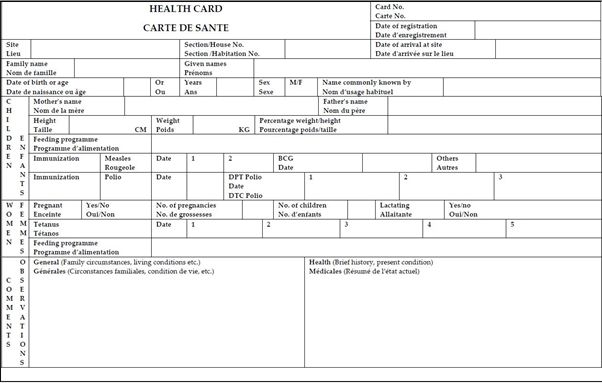
The interagency health kit 2017: medicines and medical devices for 10 000 people for approximately
     three months

     ISBN 978-92-4-151522-1

     World Health Organization 2019

     Some rights reserved. This work is available under the Creative Commons Attribution-Non
     Commercial-Share Alike 3.0 IGO licence (CC BY-NC-SA 3.0 IGO;
     https://creativecommons.org/licenses/by-nc-sa/3.0/igo).

     Under the terms of this licence, you may copy, redistribute and adapt the work for non-commercial purposes, provided the
     work is appropriately cited, as indicated below. In any use of this work, there should be no suggestion that WHO endorses
     any specific organization, products or services. The use of the WHO logo is not permitted. If you adapt the work, then you
     must license your work under the same or equivalent Creative Commons licence. If you create a translation of this work, you
     should add the following disclaimer along with the suggested citation: “This translation was not created by the World Health
     Organization (WHO). WHO is not responsible for the content or accuracy of this translation. The original English edition shall
     be the binding and authentic edition”.

     Any mediation relating to disputes arising under the licence shall be conducted in accordance with the mediation rules of the
     World Intellectual Property Organization.

     Suggested citation. The interagency health kit 2017: medicines and medical devices for
     10 000 people for approximately three months. Geneva: World Health Organization; 2019. Licence: CC BY-NC-SA 3.0 IGO.

     Cataloguing-in-Publication (CIP) data. CIP data are available at http://apps.who.int/iris.

     Sales, rights and licensing. To purchase WHO publications, see http://apps.who.int/bookorders. To submit requests for com-
     mercial use and queries on rights and licensing, see http://www.who.int/about/licensing.

     Third-party materials. If you wish to reuse material from this work that is attributed to a third party, such as tables, figures
     or images, it is your responsibility to determine whether permission is needed for that reuse and to obtain permission from
     the copyright holder. The risk of claims resulting from infringement of any third-party-owned component in the work rests
     solely with the user.

     General disclaimers. The designations employed and the presentation of the material in this publication do not imply the
     expression of any opinion whatsoever on the part of WHO concerning the legal status of any country, territory, city or area
     or of its authorities, or concerning the delimitation of its frontiers or boundaries. Dotted and dashed lines on maps represent
     approximate border lines for which there may not yet be full agreement.

     The mention of specific companies or of certain manufacturers’ products does not imply that they are endorsed or recommend-
     ed by WHO in preference to others of a similar nature that are not mentioned. Errors and omissions excepted, the names of
     proprietary products are distinguished by initial capital letters.

     All reasonable precautions have been taken by WHO to verify the information contained in this publication. However, the
     published material is being distributed without warranty of any kind, either expressed or implied. The responsibility for the
     interpretation and use of the material lies with the reader. In no event shall WHO be liable for damages arising from its use.

2   INTERAGENCY EMERGENCY HEALTH KIT 2017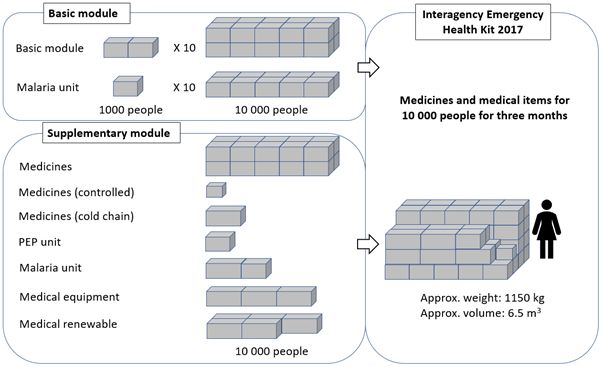
THE INTERAGENCY
EMERGENCY HEALTH KIT 2017

Medicines and medical devices
for 10 000 people for approximately three months

World Health Organization
International Committee of the Red Cross
International Federation of the Red Cross and Red Crescent Societies
Médecins Sans Frontières
United Nations Children’s Fund
United Nations High Commissioner for Refugees
United Nations Population Fund

                                      INTERAGENCY EMERGENCY HEALTH KIT 2017   3
Abbreviations and acronyms
COPD chronic obstructive pulmonary disease
EML Essential Medicines List
EPI Expanded Programme on Immunization
IATA International Air Transport Association
IEHK Interagency Emergency Health Kit
ICRC International Committee of the Red Cross
IFRC International Federation of Red Cross and Red Crescent Societies
INCB International Narcotics Control Board
MSF Médecins Sans Frontières
NCD noncommunicable disease
ORS oral rehydration salts
PEP post‐exposure prophylaxis
SAM Severe acute malnutrition
SARS Severe acute respiratory syndrome
TST Time, steam, temperature
UN United Nations
UNFPA United Nations Population Fund
UNHCR United Nations High Commissioner for Refugees
UNICEF United Nations Children’s Fund
WHO World Health Organization
4 INTERAGENCY EMERGENCY HEALTH KIT 2017Contents
Abbreviations and acronyms 4
Acknowledgements 6
Chapter 1: Introduction 7
History of the IEHK 7
Principles behind the Interagency Emergency Health Kit 2017 7
Selection of medicines 7
Key points about the kit 8
Major changes since the IEHK -2011 8
Chapter 2: Contents of the IEHK 2017 10
Overview of the IEHK 2017 10
Contents 10
Basic module (for 1 000 people for three months) 11
Supplementary module (for 10 000 people for three months) 13
Chapter 3: Ordering the IEHK 2017 23
Obtaining the IEHK 2017 23
Before ordering the IEHK 2017 23
Cost of the IEHK 2017 23
Packaging 24
Packaging and shipping of cold chain items 24
Additional supplies to be considered to complement
the IEHK for management of NCDs 25
Quality Assurance 25
Feedback 25
Annex 1: Resources 27
Annex 2: Complementary kits for use in emergencies 29
Annex 3: Sample health card 30
Annex 4: Sample daily medicine consumption form 31
Annex 5: Sample stock card 32
Annex 6: Management of controlled substances in emergencies 33
Model regulatory aspects of exportation and importation
of controlled substances 33
Introduction 33
Standard procedure for international transfer of narcotic
and psychotropic substances 33
Procedure to be followed in disaster relief 34
Outline of standard agreement between the supplier and
control authorities of exporting countries 35
Shipment request/ notification form for emergency supplies
of controlled substances 37
Annex 7: Information slips 39
INTERAGENCY EMERGENCY HEALTH KIT 2017 5Acknowledgements
The following individuals and organizations contributed to the development of this revision
and their advice and support are gratefully acknowledged.
Groningen University: Hans Hogerzeil
International Committee of the Red Cross (ICRC): Stephanie Arsac-Janvier
International Federation of Red Cross and Red Crescent Societies (IFRC): Selma Bernardi
Médecins du Monde: Gerardo Muñoz
Médecins Sans Frontières (MSF): Tamma Aloudat, Myriam Henkens
Save the Children: Elizabeth Berryman
United Nations Population Fund (UNFPA):
Johnny Abas, Wilma Doedens, Giovanni Masiello, Roberto Mena
United Nations Childrenʹs Fund (UNICEF):
Brenda Kaaya-Hallen, Natasa Moracevic, David Muhia, Henrik Nielsen, Atieno Ojoo
United Nations High Commissioner for Refugees (UNHCR):
Ann Burton, Heiko Hering, Javier Utande
World Health Organization (WHO) Evidence, Research, Action on Mental & Brain Disorders:
Tarun Dua, Mark Van Ommeren
WHO Management of Noncommunicable Diseases:
Gojka Roglic, Marcello Tonelli
WHO Essential Medicines and Health Products:
Francisco Blanco, Bernadette Cappello, Gilles Forte, Lisa Hedman, Anita Sands, Adriana Velazquez
WHO Corporate Procurement Policy and Coordination:
Sophie Laroche
WHO World Health Emergencies:
Olexander Babanin, Rudi Coninx, Hyo-Jeong Kim, Alejandra Velez
6 INTERAGENCY EMERGENCY HEALTH KIT 2017CHAPTER 1: INTRODUCTION
History of the Interagency Emergency Health Kit The kit and its modules are not intended as
The Interagency Emergency Health Kit (IEHK) re-supply kits and, if used as such, may
was first developed in 1990. Since its inception result in the accumulation of items and
it has been revised several times to better fit the medicines which are not needed.
changing needs of various emergency situations
and the health profiles of affected populations. It must be emphasized that, although supplying
The last revision was conducted in 2011 and medicines and medical devices in standard
incorporated content to better address mental pre-packed kits is convenient early in an emer-
health and special needs of children. The malaria gency, specific local needs must be assessed
and post-exposure prophylaxis modules were as soon as possible and further supplies must be
further reviewed in 2015. The revision of the ordered accordingly. Therefore, once basic health
IEHK 2017 has followed the same process as was care services have been established, the health
used in 2011, involving several expert consulta- care coordinator should assess primary health
tions with representatives from different partner care needs and re-order medicines, renewable
agencies. The World Health Organization (WHO) medical devices and medical equipment based
acts as the Secretariat for coordination of updates on consumption of these items. All efforts should
of the kit. The IEHK has been widely accepted be made to strengthen or develop a medical
and used to respond to various emergencies. It supplies logistics management information
is one of the most popular emergency health kits system that can enable appropriate quantification
available and has been benchmarked for the and stock management as soon as the emergency
development of other health kits. situation stabilizes.
Principles behind the Interagency Emergency Selection of medicines
Health Kit 2017 The selection of medicines in the kit is based on
The IEHK 2017 is designed principally to meet the global burden of disease, expert knowledge
the priority health needs of a population affected on the types of health conditions presented by
by emergencies, who have limited access to the affected population in recent emergencies
routine health care services. The kit is designed and recommendations of the WHO Expert
primarily for “life-saving” purposes, not for health Committee on Selection and Use of Essential
conditions requiring continued care. Given its use Medicines. The IEHK includes relevant clinical
in emergency situations, the IEHK fills immediate guidelines and information to support appro-
medical gaps; it does not aim to replace existing priate use (a full list of documents included is
medical supply chain mechanisms. described in Annex 1).
The kit contains essential drugs, supplies and
equipment to be used for a limited period of time
and target a defined number of people. Some
of the medicines and medical devices contained
in the kit may not be appropriate for all cultures
and countries, or every kind of emergency. This is
inevitable as it is a standardized emergency kit,
designed for worldwide use, which is pre‐packed
and kept ready for immediate dispatch.
INTERAGENCY EMERGENCY HEALTH KIT 2017 7Key points about the kit Major changes since the IEHK 20111
• The full IEHK contains medicines and medical
devices for 10 000 people for approximately BASIC MODULE
three months.
• The IEHK is designed for use in the early phase • Removal of magnesium trisilicate and
of an emergency situation. replacement with omeprazole in line
with Essential Medicines List (EML)
• The IEHK is designed to be self-sufficient recommendations.
and is made up of a basic module for use by
health care workers with limited training and • Lower strength of ibuprofen from
a supplementary module for use by physicians 400 mg to 200 mg to cater to
or senior health care workers. children’s needs2.
• The supplementary module should only be
used together with at least one basic module.
• The IEHK is updated on a regular basis using
the most up-to-date information available.
SUPPLEMENTARY MODULE
• The IEHK is not designed to cover needs for:
Cardiovascular diseases
◦◦ immunization and nutrition
• Inclusion of medicines for treatment
◦◦ reproductive health services of acute severe hypertension, acute
◦◦ HIV/AIDS, tuberculosis and coronary syndrome, acute stroke and
leprosy diagnosis and treatment acute heart failure (acetylsalicylic acid,
◦◦ chronic management of amlodipine, enalapril, glyceryl trinitrate,
noncommunicable diseases furosemide and heparin sodium).
◦◦ major surgery. • Increase in the quantity of hydrochlo-
rothiazide to allow for treatment of
Information on other kits available to acute severe hypertension.
complement the IEHK is included in Annex 2. • Replacement of atenolol by bisoprolol
(based on EML update).
Diabetes
• Inclusion of human insulin (and
insulin syringes) for stabilization of
acute life-threatening hyperglycaemia
or diabetic ketoacidosis.
• Inclusion of glucometer and urine test
strips for ketones, glucose and albumin.
1
A full report that contains all the changes from the 2011 version
can be found on the WHO website: http://www.who.int/medicines/
publications/emergencyhealthkit2011/en/
2
Ibuprofen is not indicated in children aged less than three months
8 INTERAGENCY EMERGENCY HEALTH KIT 2017Pulmonary diseases Items for treatment of malaria and
• Inclusion of beclomethasone and post-exposure prophylaxis (PEP) were
increase in the amount of salbutamol changed during an interim update in
inhalers for treatment of acute asthma 2015 and these changes are incorporated
and acute chronic obstructive pulmonary in the IEHK 2017. The main changes from
disease (COPD) exacerbation. the IEHK 2011 are the following.
• Increase in the quantity of prednisolone
Malaria
5 mg tablets to cover treatment of
• Removal of quinine tablets 300 mg
COPD and asthma.
from the basic malaria unit.
• Inclusion of pulse oximeter for
• Removal of artemether injection and
monitoring acute respiratory distress.
quinine injection from the supplemen-
tary malaria unit and replacement
Other changes with artesunate injection 60 mg.
• Inclusion of morphine tablets
• Addition of injection devices and
(immediate release) 10 mg.
guidelines for management of
• Replacement of phenobarbital with severe malaria and reconstitution
carbamazepine 200 mg scored tablet of artesunate injection.
for easier importation. Phenobarbital
remains a secondary option in case
carbamazepine is not available, or Post-exposure prophylaxis
if the country allows for phenobarbital • Replacement of antiretroviral
importation. medicines to align content with
updated treatment guidelines.
• Revision of anti-infective medicines
(replacement of cloxacillin by cefalexin • Introduction of lamivudine + tenofovir
to adapt to new recommendations; tablets 300 + 300 mg and atazanavir
miconazole muco-adhesive tablets + ritonavir tablets 300 + 100 mg for
by nystatin suspension; and removal adults and adolescents. Introduction
of procaine benzylpenicillin – of lamivudine + zidovudine dispersible
the latter two due to unavailability tablets 30 + 60 mg, lopinavir + ritonavir
of quality-assured products). tablets 200 + 50 mg and lopinavir
• Removal of promethazine + ritonavir tablets 100 + 25 mg for
(no longer on EML). children.
• Replacement of amitriptyline by
fluoxetine following EML.
• Increase in the amount of glucose for
treatment of acute severe hypoglycaemia.
• Introduction of new types of sutures
to cover skin and face.
• Inclusion of guidelines on mental
Health31and non/communicable
diseases4.2
3
mhGAP humanitarian intervention guide (mhGAP-HIG).
Clinical management of mental, neurological and
substance use conditions in humanitarian emergencies.
Geneva: WHO/UNHCR; 2015
4
Package of Essential Noncommunicable (PEN) disease
interventions for primary health care in low-resource
settings. Geneva: World Health Organization; 2010 INTERAGENCY EMERGENCY HEALTH KIT 2017 9CHAPTER 2: CONTENTS OF THE IEHK 2017
Overview of the IEHK 2017
Contents
The IEHK comprises two modules, basic and The supplementary module is to cover the
supplementary. primary health care needs and basic hospital
care needs of a target population of 10 000 people,
The basic module is to cover the primary health when used together with 10 basic modules (total
care needs of a catchment population of 10 basic modules and 1 supplementary module).
1000 people. It contains oral and topical medi- It contains medicines and medical devices as well
cines, medical devices and a malaria unit with as a malaria unit for treatment of severe malaria
oral antimalarial medicines and rapid diagnostic and a PEP unit. The supplementary malaria unit
tests. The basic malaria unit can be removed on and the PEP unit are included unless there is a
request. One full IEHK contains 10 basic modules. specific request not to include them.
Some of the items in the supplementary module
might be withdrawn by implementing agencies
according to their own protocols and comple-
mentarity with other kits.
10 INTERAGENCY EMERGENCY HEALTH KIT 2017Basic module (for 1000 people for three months)
Item description Unit Quantity
Medicines
Albendazole, chewable tablets 400 mg tablet 200
Amoxicillin, dispersible tablets 250 mg tablet 3000
Benzyl benzoate, lotion 25% bottle, 1 litre 1
Chlorhexidine digluconate, solution 5% bottle, 1 litre 1
Ferrous sulfate + folic acid, tablets 200 mg + 0.4 mg tablet 2000
Ibuprofen, tablets 200 mg tablet 4000
Miconazole, cream 2% tube 30 g 20
Omeprazole, solid oral dosage form 20 mg tablet/capsule 100
ORS (oral rehydration salts) powder for dilution sachet for 1 L 200
Paracetamol, dispersible tablets 100 mg tablet 1000
Paracetamol, tablets, 500 mg tablet 2000
Povidone iodine, solution 10% bottle, 200 ml 12
Tetracycline, eye ointment 1% tube 5 g 50
Zinc sulfate, dispersible tablets 20 mg tablet 1000
Medical devices, renewable
Bandage, elastic, 7.5 cm x 5 m, roll unit 20
Bandage, gauze, 8 cm x 4 m, roll unit 200
Compress, gauze, 10 x 10 cm, non-sterile unit 500
Cotton wool, 500 g, roll, non-sterile unit 2
Gloves, examination, latex, medium, single use unit 100
Soap, toilet, bar, approximately 110 g, wrapped unit 10
Tape, adhesive, zinc oxide, 2.5 cm x 5 m unit 30
Stationary
Book, exercise, A4 size, 100 pages, hard cover unit 4
Envelope, plastic, 10 cm x 15 cm unit 2000
Health card unit 500
Pad, note, plain, A6 size, 100 sheets unit 10
Pen, ball-point, blue unit 10
Plastic bag, for health card, 11 cm x 25 cm, snap-lock fastening unit 500
... continue on next page
INTERAGENCY EMERGENCY HEALTH KIT 2017 11Basic module (for 1000 people for three months) ... continued
Item description Unit Quantity
Guidelines for IEHK 2017 users
Flash drive with full set of guidance documents51 unit 1
Content list of the complete kit IEHK 2017 unit 1
Medical devices, equipment
Basin, kidney, stainless steel, 825 ml unit 1
Bottle, plastic, 1 L, wash bottle unit 3
Bottle, plastic, 250 ml, with screw cap unit 1
Bowl, stainless steel, 180 ml unit 1
Brush, hand, scrubbing, plastic unit 2
Drum, sterilizing, approximately 150 mm x 150 mm unit 2
Pail, with water scoop, handle, polyethylene, 10 L or 15 L unit 2
Scissors, Deaver, 140 mm, straight, sharp/blunt unit 2
Surgical instruments, dressing set62 unit 2
Thermometer, clinical, digital, 32–43 Celsius unit 5
Tray, dressing, stainless steel, 300 mm x 200 mm x 30 mm unit 1
Water container, PVC/PE, collapsible, 10 L or 15 L unit 1
Malaria unit in the basic module (can be with held from the order upon request)
Item description Unit Quantity
Artemether + Lumefantrine, dispersible tablets 20 mg + 120 mg,
Box, 30 blisters 5
6 tablets, blister
Artemether + Lumefantrine, dispersible tablets 20 mg + 120 mg,
Box, 30 blisters 1
12 tablets, blister
Artemether + Lumefantrine, tablets 20 mg +120 mg,
Box, 30 blisters 1
18 tablets, blister
Artemether + Lumefantrine, tablets 20 mg +120 mg,
Box, 30 blisters 6
24 tablets, blister
Malaria rapid diagnostic tests7,3with lancets and buffer unit 800
Safety box, for used lancets 5 L84 unit 2
Biohazard bag, 2-5L unit 10
51
The full list of documents is described in Annex 1. The flash drive should be placed in a plastic pouch attached to the inner side of box number 1
6
Dressing set:
• 1 forceps, artery, Kocher, 140 mm, straight
• 1 forceps, dressing, standard, 155 mm, straight
• 1 scissors, Deaver, 140 mm, straight, sharp/blunt
• 1 tray, instruments, stainless steel, 225 mm x 125 mm x 50 mm, with cover
7
For selection follow latest WHO guidance (http://www.who.int/malaria/areas/diagnosis/en/).
Kit should be prequalified by WHO and include test devices, assay buffer, sample cups, alcohol swabs and blood lancets
8
Other sharps containers can be considered
12 INTERAGENCY EMERGENCY HEALTH KIT 2017Supplementary module (for 1000 people for three months)
Item description Unit Quantity
Medicines
Anaesthetics
Ketamine, injection 50 mg/ml 10 ml/vial 25
Lidocaine, injection 1% 20 ml/vial 50
Analgesic91
Morphine, injection 10 mg/ml [controlled substance] 1 ml/ampoule 50
Morphine, tablet 10 mg (immediate release) tablet 200
[controlled substance]
Already in basic module
Ibuprofen, tablets 200 mg (10 x 4000) 40000
Paracetamol, dispersible tablets 100 mg102 (10 x 1000) 10000
Paracetamol, tablets, 500 mg (10 x 2000) 20000
Antiallergics
Hydrocortisone, powder for injection 100 mg vial 50
(as sodium succinate)
Prednisolone, tablet 5 mg tablet 1000
Anticonvulsants/antiepileptics
Carbamazepine, tablets (scored) 200 mg113 tablet 2200
Diazepam, injection 5 mg/ml [controlled substance] 2 ml/ampoule 200
Magnesium sulfate, injection 500 mg/ml 10 ml/ampoule 30
Antidotes
Calcium gluconate, injection 100 mg/ml 10 ml/ampoule 10
Naloxone, injection 0.4 mg/ml 1 ml/ampoule 10
... continue on next page
9
Analgesics included in the supplementary module are classified as controlled substances and their importation might be subject to special
controls by the authorities. Guidance on management of importation of these substances in the context of emergencies is included in Annex 6
10
Dispersible tablets are preferred for children, if available from supplier and quality assured. If not available, it is possible to procure
non-dispersible tablets
11
Phenobarbital tablets 50 mg is an alternative if carbamazepine is not available or if inclusion does not impact importation
INTERAGENCY EMERGENCY HEALTH KIT 2017 13Supplementary module (for 1000 people for three months) ...continued
Item description Unit Quantity
Medicines
Anti-infective medicines
Benzathine benzylpenicillin, powder for injection vial 50
2.4 million IU (1.44 g)/vial
Benzylpenicillin, powder for injection 5 million IU (3 g)/vial vial 250
Cefalexin, solid oral dosage form 250 mg tablet/capsule 2000
Ceftriaxone, powder for injection 1 g vial 800
Clotrimazole, pessary 500 mg pessary 100
Doxycycline, tablets 100 mg tablet 3000
Metronidazole, tablets 500 mg tablet 2000
Nystatin, oral liquid 100 000 IU/ml12 bottle, 30 ml 50
Already in basic module
Albendazole, chewable tablets 400 mg (10 x 200) 2000
Amoxicillin, dispersible tablets 250 mg (10 x 3000) 30000
Cardiovascular medicines
Acetylsalicylic acid, tablets 75–100 mg132 tablet 1500
Amlodipine, tablets 5 mg143 tablet 500
Bisoprolol, tablets 5 mg154 tablet 2000
Enalapril, tablets 5 mg165 tablet 5000
Glyceryl trinitrate, tablets 500 mcg176(sublingual) tablet 500
Hydralazine, powder for injection 20 mg ampoule 20
Methyldopa, tablets 250 mg tablet 100
Dermatological medicines
Silver sulfadiazine, cream 1% tube, 50 g 30
Already in basic module
Benzyl benzoate, lotion 25%187 (10 x 1 L) 10
Miconazole, cream 2% 30 g (10 x 20) 200
Povidone iodine, solution 10% 200 ml (10 x 12) 120
Tetracycline, eye ointment 1% 5 g (10 x 50) 500
12
1 bottle for 1 treatment of 7 days, adults and children
... continue on next page
13
For acute coronary syndrome and acute stroke. Tablets in strength 75–100 mg are suitable
14
For acute severe hypertension. Can also be used for pregnancy-induced hypertension if required
15
Replaces atenolol tablets. Quantity increased due to inclusion of treatment for acute heart failure
16
For treatment of acute severe hypertension and acute heart failure
17
For treatment of acute coronary syndrome and acute heart failure. Small pack size preferred.
18
Can be procured in smaller sizes for single patient use
14 INTERAGENCY EMERGENCY HEALTH KIT 2017Supplementary module (for 1000 people for three months) ...continued
Item description Unit Quantity
Medicines
Disinfectants and antiseptics
Sodium dichloroisocyanurate (NaDCC), tablet 1.67 g tablet 1200
Already in basic module
Chlorhexidine digluconate, solution 5% (10 x 1 L) 10
Diuretics
Furosemide, injection 10 mg/ml 2 ml/ampoule 20
Furosemide, tablets 40 mg19 tablet 50020
Hydrochlorothiazide, tablets 25 mg tablet 500
Gastrointestinal medicines
Atropine, injection 1mg/ml 1 ml/ampoule 50
Already in basic module
Omeprazole, solid oral dosage form 20 mg (10 x 100) 1000
Hormones, other endocrine medicines and contraceptives
Intermediate-acting insulin, injection213100 IU/ml [cold chain] 10 ml/vial 20
Soluble insulin, injection 100 IU/ml [cold chain] 10 ml/vial 20
Medicines affecting the blood
Folic acid, tablets 5 mg tablet 1000
Heparin sodium, injection 5 000 IU/ml224 vial 5 ml 25
Already in basic module
Ferrous sulfate + folic acid, tablets 200 mg + 0.4 mg (10 x 2000) 20000
Oxytocics
Misoprostol, tablets 200 mcg tablet 60
Oxytocin, injection 10 IU/ml [cold chain] ampoule 200
... continue on next page
19
Oral dose introduced for treatment of acute heart failure
20
Quantity increased, for treatment of acute severe hypertension
21
For stabilization of acute life-threatening hyperglycaemia or diabetic ketoacidosis
22
For treatment of acute coronary syndrome; no cold chain required
INTERAGENCY EMERGENCY HEALTH KIT 2017 15Supplementary module (for 1000 people for three months) ...continued
Item description Unit Quantity
Medicines
Mental health medicines
Biperiden, tablets 2 mg tablet 400
Diazepam, tablets 5 mg [controlled substance] tablet 240
Fluoxetine, tablets 20 mg231 tablet 5000
Haloperidol, injection 5 mg/ml 1 ml/ampoule 20
Haloperidol, tablets 5 mg tablet 1300
Medicines acting on the respiratory tract
Beclomethasone, inhaler 100 mcg/dose24 unit 75
Epinephrine (adrenaline), injection 1 mg/ml 1 ml/ampoule 50
Salbutamol, inhaler 100 mcg/dose unit 75253
Medicines used in diarrhoea
Already in basic module
ORS (oral rehydration salts) powder for dilution (10 x 200) 2000
Zinc sulfate, dispersible tablets 20 mg (10 x 1000) 10000
Solutions correcting water, electrolytes and acid-based disturbances
Compound solution of sodium lactate (Ringer’s lactate), 500 ml bag 200
injectable solution, with giving set and needle
Glucose 5%, injectable solution, with giving set and needle264 500 ml bag 100
Glucose 50%, injectable solution (hypertonic) 50 ml/vial 100275
Water for injection 10 ml/plastic vial 2000
Vitamins
Ascorbic acid, tablets 250 mg tablet 4000
Retinol (vitamin A), capsules 200 000 IU capsule 4000
23
To treat 54 patients for 60 days
24
For immediate follow-up treatment for acute asthma and acute COPD exacerbation
25
Amount increased from 50, to treat acute asthma and acute COPD exacerbation
26
Glucose 5% solution is kept for management of NCDs
27
Increased from 50 to 100 for treatment of acute severe hypoglycaemia
16 INTERAGENCY EMERGENCY HEALTH KIT 2017Supplementary module - Malaria unit (can be withheld from the order upon request)
Item description Unit Quantity
Malaria
Artesunate injection 60 mg vial 500
Each box contains the following:
• One vial of artesunate (as anhydrous artesunic acid), pow-
der for injection, 60 mg
• One ampoule of 5% sodium bicarbonate.
• One ampoule of 0.9% sodium chloride injection
Syringe, 5 ml with needle 18G or 21G, sterile, single use unit 1200
Syringe, 5 ml, sterile, single use unit 500
Needle, 21G (0.8 x 40 mm), sterile, single use unit 500
Needle, 23G (0.6 x 25 mm), sterile, single use unit 500
Needle, 25G (0.5 x 16 mm), sterile, single use unit 500
Guidelines for administration of injectable artesunate unit 2
– poster A3 (English)
Guidelines for administration of injectable artesunate unit 2
– poster A3 (French)
Guidelines for administration of injectable artesunate unit 2
– poster A3 (Portuguese)
Management of severe malaria: a practical handbook. unit 1
Third edition, 2013. WHO
Flash drive with full set of guidance documents281 unit 1
Already in basic module malaria unit
Artemether + Lumefantrine, dispersible tablets 20 mg + 120 mg, (10 x 30 x 5) 1500
6 tablets, blister
Artemether + Lumefantrine, dispersible tablets 20 mg + 120 mg, (10 x 30 x 1) 300
12 tablets, blister
Artemether + Lumefantrine, tablets 20 mg +120 mg, 18 tablets, (10 x 30 x 1) 300
blister
Artemether + Lumefantrine, tablets 20 mg +120 mg, 24 tablets, (10 x 30 x 6) 1800
blister
Malaria rapid diagnostic tests, with lancets and buffer (800 x 10) 8000
Safety box, for used lancets 5 L29 (10 x 2) 20
28
The full list of documents is described in Annex 1. The flash drive should be placed in a plastic pouch attached to the inner side of box number 1.
29
Other sharps containers can be considered
INTERAGENCY EMERGENCY HEALTH KIT 2017 17Supplementary module - Post-exposure prophylaxis (PEP) unit
(can be withheld from the order upon request)
Item description Unit Quantity
PEP unit, 50 treatments adults + 10 children
Azithromycin, powder for oral suspension, 200 mg /5 ml bottle, 15 ml 10
Azithromycin, tablets/capsules 250 mg tablet/capsule 200
Cefixime (as trihydrate), powder for oral suspension, 100 mg/5 ml301 bottle, 50 ml 10
Cefixime, tablets 200 mg312 tablet 112
Atazanavir (ATV) + ritonavir (r), tablets 300 + 100 mg tablet 1500
Lamivudine (3TC) + tenofovir (TDF), tablets 300 + 300 mg tablet 1500
Lamivudine (3TC) + zidovudine (AZT), tablets 30 + 60 mg tablet 1800
Lopinavir (LPV) + ritonavir (r), tablets 100 + 25 mg32 3 tablet 180
Lopinavir (LPV) + ritonavir (r), tablets 200 + 50 mg tablet 480
Levonorgestrel, tablets 1.50 mcg tablet 50
Pregnancy test, (urine dipstick) unit 50
Flash Drive with full set of guidance documents334 unit 1
Supplementary module - Guidelines
Item description Unit Quantity
Guidelines
Flash Drive with full set of guidance documents33 unit 1
IEHK 2017 Booklet (English)345 unit 2
IEHK 2017 Booklet (French) unit 2
IEHK 2017 Booklet (Spanish) unit 2
IEHK 2017 Booklet (Arabic) unit 2
MSF Essential drugs guideline (English) unit 1
MSF Essential drugs guideline (French) unit 1
MSF Essential drugs guideline (Spanish) unit 1
MSF Clinical guideline (English) unit 1
MSF Clinical guideline (French) unit 1
MSF Clinical guideline (Spanish) unit 1
30
Can be substituted by cefixime dispersible tablets
31
Could be interchanged with 400 mg
32
LPV/r tablets must be swallowed and should not be crushed or dissolved in liquid. Children who are unable to swallow LPV/r tablets
should use LPV/r liquid. If this is not available, an alternative age-appropriate drug should be used (refer to PEP guidelines). Lack of a suitable
third drug should not be a barrier to prompt initiation of PEP with AZT/3TC
33
The full list of documents is described in Annex 1. The flash drive should be placed in a plastic pouch attached to the inner side of box number 1
34
The IEHK 2017 booklet is to be included in as many languages available at the time of kit deployment
18 INTERAGENCY EMERGENCY HEALTH KIT 2017Supplementary module - Medical devices, renewable
Item description Unit Quantity
Medical devices, renewable
Bag, urine, collecting, 2000 ml unit 10
Cannula, IV short, 18G (1.3 x 45 mm), sterile, single use unit 100
Cannula, IV short, 22G (0.8 x 25 mm), sterile, single use unit 50
Cannula, IV short, 24G (0.7 x 19 mm), sterile, single use unit 50
Catheter, Foley, CH12, sterile, single use unit 10
Catheter, Foley, CH14, sterile, single use unit 5
Catheter, Foley, CH18, sterile, single use unit 5
Clamp, umbilical, sterile unit 100
Compress, gauze,10 x 10 cm, non-sterile unit 2000
Compress, gauze,10 x 10 cm, sterile unit 1500
Gloves, examination, latex, large, single use unit 100
Gloves, examination, latex, medium, single use unit 100
Gloves, examination, latex, small, single use unit 100
Gloves, surgical, 6.5, sterile, single use, pair unit 50
Gloves, surgical, 7.5, sterile, single use, pair unit 150
Gloves, surgical, 8.5, sterile, single use, pair unit 50
Indicator, time, steam, temperature (TST) control spot, unit 300
for sterilization pack
Masking tape, 2 cm x 50 m, for sterilization pack unit 1
Needle, 19G (1.1 x 40 mm), sterile, single use unit 2000
Needle, 21G (0.8 x 40 mm), sterile, single use unit 1500
Needle, 23G (0.6 x 25 mm), sterile, single use unit 1500
Needle, 25G (0.5 x 16 mm), sterile, single use unit 100
Needle, scalp vein, 21G (0.8 x 19 mm), sterile, single use unit 100
Needle, scalp vein, 25G (0.5 x 19 mm), sterile, single use unit 300
Needle, spinal, 22G (0.9 x 90 mm), sterile, single use unit 25
Needle, spinal, 22G (0.7 x 40 mm), sterile, single use unit 25
Paper sheet, crepe, approximately 1 m x 1 m, for sterilization pack unit 100
Razor, safety, single use unit 100
Safety box for used syringes/needles, 5 litres351 unit 50
Scalpel blade, no. 22, sterile, single use unit 100
Suture, non-absorb., synthetic, monofilament, DEC 2 (3/0), unit 144
curved needle 3/8 circle, 18 mm, cutting362or reverse-cutting,
triangular point
... continue on next page
35
Other sharps containers can be considered
36
Both cutting and reverse-cutting needles are considered as options
INTERAGENCY EMERGENCY HEALTH KIT 2017 19Supplementary module - Medical devices, renewable .... continued
Item description Unit Quantity
Medical devices, renewable
Suture, absorbable, synthetic, braided DEC2 (3/0), curved needle unit 144
3/8 circle, 26 mm, round body
Syringe, 20 ml, sterile, single use unit 100
Syringe, 10 ml, sterile, single use unit 600
Syringe, 5 ml, sterile, single use unit 2000
Syringe, 2 ml, sterile, single use unit 700
Syringe, 1 ml, sterile, single use unit 200
Syringe insulin, 1 ml with needle, graduated, single use371 unit 400
Syringe, feeding, 50 ml, conical tip, sterile unit 10
Syringe, feeding, 50 ml, Luer tip, sterile unit 10
Tongue depressor, wooden, single use unit 500
Tube, aspirating/feeding, CH16, L125 cm, conical tip, sterile, single unit 10
use
Tube, feeding, CH08, L40 cm, Luer tip, sterile, single use unit 50
Tube, feeding, CH05, L40 cm, Luer tip, sterile, single use unit 20
Urine test strips for ketones, glucose and albumin382 unit 100
Already in basic module: Medical devices, renewable
Bandage, elastic, 7.5 cm x 5 m, roll (10 x 20) 200
Bandage, gauze, 8 cm x 4 m, roll (10 x 200) 2000
Compress, gauze, 10 x 10 cm, non-sterile (10 x 500) 5000
Cotton wool, 500 g, roll, non-sterile (10 x 2) 20
Gloves, examination, latex, medium, single use (10 x 100) 1000
Soap, toilet, bar, approximately 110 g, wrapped (10 x 10) 100
Tape, adhesive, zinc oxide, 2.5 cm x 5 m (10 x 30) 300
Already in basic module: Stationery
Book, exercise, A4 size, 100 pages, hard cover (10 x 4) 40
Envelope, plastic, 10 cm x 15 cm (10 x 2000) 20000
Health card (10 x 500) 5000
Pad, note, plain, A6 size, 100 sheets (10 x 10) 100
Pen, ball-point, blue (10 x 10) 100
Plastic bag, for health card, 11 cm x 25 cm, snap-lock fastening (10 x 500) 5000
37
Added for administration of insulin
38
For diagnostic and management of acute severe hyperglycaemia
20 INTERAGENCY EMERGENCY HEALTH KIT 2017Supplementary module - Medical devices, equipment
Item description Unit Quantity
Medical devices, equipment
Apron, protection, plastic, single use391 unit 100
Basin, kidney, stainless steel, 825 ml unit 2
Bowl, stainless steel, 180 ml unit 2
Brush, hand, scrubbing, plastic unit 2
Drawsheet, plastic, 90 x 180 cm unit 2
Drum, sterilizing, approximately 150 mm x 150 mm unit 2
Filter, drinking, candle, 10–80 litres per day unit 3
Forceps, artery, Kocher, 140 mm, straight unit 2
Glucometer including 250 glucose strips and 250 blood lancets402 unit 2
Otoscope set, cased413 unit 1
Pulse oximeter fingertip, adult, spot-check424 unit 1
Scale (only), infant, spring type, 25 kg x 100 g unit 3
Scale, electronic, mother/child, 150 kg x 100 g unit 1
Scissors, Deaver, 140 mm, straight, sharp/blunt unit 2
Spare battery, R6 alkaline AA size, 1.5V (for otoscope) unit 12
Sphygmomanometer (adult), aneroid unit 4
Sterilizer, steam, 21 or 24 litres unit 1
Stethoscope, binaural, complete unit 4
Stethoscope, fetal, Pinard unit 1
Stove, kerosene, single-burner, pressure unit 1
Surgical instruments, delivery set435 unit 1
Surgical instruments, dressing set446 unit 5
... continue on next page
39
Alternative: apron, protection plastic, reusable, 2
40
For management and immediate follow up of acute severe hyperglycaemia. Display units in mg/dL. Suitable for use with multiple patients
. Glucose strips and blood lancets can be reordered as needed. Contains batteries; need to consider shipping requirements
41
Spare bulb must be included within the otoscope set
42
Simple finger version for monitoring of acute respiratory distress, including COPD exacerbation and asthma.
Contains batteries; need to consider shipping requirements
43
Delivery set:
• 1 scissors, Mayo, 140 mm, curved, blunt/blunt
• 1 scissors, gynaecological, 200 mm, curved, blunt/blunt
• 1 forceps, artery, Kocher, 140 mm, straight
• 1 tray, instruments, stainless steel, 225 mm x 125 mm x 50 mm, with cover
44
Dressing set:
• 1 forceps, artery, Kocher, 140 mm, straight
• 1 forceps, dressing, standard, 155 mm, straight
INTERAGENCY EMERGENCY HEALTH KIT 2017 21Supplementary module - Medical devices, equipment ... continued
Item description Unit Quantity
Medical devices, equipment
Surgical instruments, suture set451 unit 2
Tape measure, arm circumference, mid-upper arm circumference unit 50
(MUAC)
Tape, measure, vinyl-coated, 1.5 m unit 5
Thermometer, clinical, digital, 32–43°C unit 10
Timer, 60 min unit 1
Tourniquet, latex rubber, 75 cm462 unit 2
Tray, dressing, stainless steel, 300 mm x 200 mm x 30 mm unit 1
Weighing trousers for scale infant spring, set of 5 unit 3
Already in basic module:
Basin, kidney, stainless steel, 825 ml unit 1
Bottle, plastic, 1 L, wash bottle unit 3
Bottle, plastic, 250 ml, with screw cap unit 1
Bowl, stainless steel, 180 ml unit 1
Brush, hand, scrubbing, plastic unit 2
Drum, sterilizing, approximately 150 mm x 150 mm unit 2
Pail, with water scoop, handle, polyethylene, 10 L or 15 L unit 2
Scissors, Deaver, 140 mm, straight, sharp/blunt unit 2
Surgical instruments, dressing set unit 2
Thermometer, clinical, digital, 32–43°C unit 5
Tray, dressing, stainless steel, 300 mm x 200 mm x 30 mm unit 1
Water container, PVC/PE, collapsible, 10 L or 15 L unit 1
45
1 scissors, Deaver, 140 mm, straight, sharp/blunt
1 tray, instruments, stainless steel, 225 mm x 125 mm x 50 mm, with cover
One suture set should be reserved for repair of postpartum vaginal tears. Abscess/suture set:
• 1 forceps, artery, Halsted‐mosquito, 125 mm curved
• 1 forceps, artery, Kocher, 140 mm, straight
• 1 forceps, tissue, standard, 145 mm, straight
• 1 needle holder, Mayo‐Hegar, 180 mm, straight
• 1 probe, double‐ended, 145 mm
• 1 scalpel handle, No. 4
• 1 scissors, Deaver, 140 mm, curved, sharp/blunt
• 1 tray, instruments, stainless steel, 225 mm x 125 mm x 50 mm, with cover
46
Alternative: tourniquet with Velcro
22 INTERAGENCY EMERGENCY HEALTH KIT 2017CHAPTER 3: ORDERING THE IEHK 2017 Before ordering the IEHK 2017
• Undertake a rapid assessment of the local
situation to confirm that the emergency health
Obtaining the IEHK 2017 kits are needed, which types are needed and
The IEHK 2017 can be ordered through different where they are needed. The IEHK could also
agencies that make it available for their own pro- be stockpiled in reasonable quantity and for
grammes and for third-party organizations. It can specific purposes. When stockpiling it is
also be obtained from commercial wholesalers. essential to monitor expiry dates and ensure
that the storage conditions are in line with
Additional details on the provision of IEHK 2017 WHO good storage practices.
and on the procedures for ordering can be found
• Base the quantity and type (basic and/or
at the following links and by contacting the
supplementary modules) of emergency health
organizations using the email addresses indicated.
kits requested on the size of the population
to be served, the location and type of health
WHO centres and the skills of health care providers
email: procurement@who.int in these centres.
weblink: WHO Intranet 471
• Ensure that necessary funds are available to
cover the cost of clearance, distribution and
UNICEF safe storage.
email: psid@unicef.org
weblink: https://www.unicef.org/supply/ • Determine if the malaria modules (basic and
supplementary) are required.
MSF logistique
email: office@bordeaux.msf.org Cost of the IEHK 2017
weblink: https://www.msflogistique.org/ The cost of each kit changes periodically. The
latest prices can be obtained by consulting the
MSF supply agencies listed above as well as from commercial
email: office-msfsupply@brussels.msf.org suppliers. Additional overhead cost might apply
and these should be confirmed with the provider
msfsupply.order@brussels.msf.org
early in the planning phase.
weblink: https://www.msfsupply.be
Airfreight costs: airfreight cost will vary widely
depending on the route. The following weights
and volumes can be used as reference for
estimating cost.
47
http://intranet.who.int/tools/wcat/Categories.aspx?catid=71739
INTERAGENCY EMERGENCY HEALTH KIT 2017 23Approximate Approximate Approximate
Module weight (kg) volume (m3) number of boxes
Basic (without malaria unit) 38 0.22 2
Basic – Malaria 19 0.14 1
Supplementary – Medicines
330 1.20 20
(ex-cold chain/controlled)
Supplementary – Medicines (controlled) 5 0.04 1
Supplementary – Medicines (cold chain) 20 0.15 1
Supplementary – Malaria 46 0.26 2
Supplementary – PEP 20 0.12 1
Supplementary – Medical renewable 110 0.80 5
Supplementary – Medical equipment 50 0.32 3
Full IEHK 2017 (10 basic + 1 supplementary modules) 1150 6.50 63
Packaging Packaging and shipping of cold chain items
To facilitate logistics in the country, the boxes • The IEHK contains medicines that require cold
containing the supplies: storage (insulin and most brands of oxytocin).
It is recommended that these medicines be
• are marked with the weight and volume of packed together and shipped in consideration
each module/unit; of manufacturer instructions.
• weigh no more than 25 kg, to be handled by • Products should be packed in a way to avoid
one or two people; breakage, contamination and theft. The packing
should be adequate to maintain the storage
• are clearly marked with kit number and box
conditions of the product during transport.
number, description, consignee and other rel-
evant information; • It is recommended to place a temperature-
monitoring device and instructions for use
• have a self-adhesive pouch attached to the
by recipient in the box to monitor temper-
outside, containing a detailed list of contents.
atures during transport. A list of WHO PQS
Each carton in the basic and supplementary mod- validated data-loggers can be found in the
ule should contain an information slip in at least PQS catalogue48.1
three languages (English, French and Spanish),
• Packaging systems should be validated before
with the text defined in Annex 7.
use. The supplier is responsible for ensuring
product temperature compliance during
transport. Refer to model guidance for the
storage and transport of time- and
temperature-sensitive pharmaceutical products:
WHO Technical Report Series, No. 961, 201149,2and
its related Technical Supplement 12503
48
http://apps.who.int/immunization_standards/vaccine_quality/
pqs_catalogue/
49
http://www.who.int/medicines/areas/quality_safety/quali-
ty_assurance/ModelGuidanceForStorageTransportTRS961Annex9.
pdf?ua=1
50
http://www.who.int/medicines/areas/quality_safety/quality_as-
surance/supplement_12.pdf?ua=1
24 INTERAGENCY EMERGENCY HEALTH KIT 2017• Adequate notification of shipment arrival
should be provided to consignee to ensure
timely completion of import formalities and
clearance of cargo on arrival. The labels in
the boxes should identify clearly the storage
temperature, need for urgency in handling
and clearance, and a label indicating need to
avoid freezing.
• IATA Time and Temperature Sensitive Labels
apply to all shipments booked as time- and
temperature-sensitive cargo.514
Additional supplies to be considered to
complement the IEHK 2017 for management
of NCDs
Provision of comprehensive diagnostics and suppliers is the responsibility of the agencies
management of noncommunicable diseases is that prepare or purchase the kits. References to
complex and requires equipment and resources previous assessments can be requested from
that depend on the needs and capacity existing suppliers.
in country. The IEHK 2017 includes a hand held
glucometer and set of strips and lancets validated
for use in multiple patients. Other types of gluco- Feedback
meters more appropriate for hospital settings are The IEHK is reviewed regularly to optimize its
not included in the kit, as their management with- content and configuration to fit needs. Feedback
in kits is challenging; however, they can be con- from users is very important to ensure continuous
sidered for purchase after the needs assessment improvement, especially in the following areas:
is done. It is also recommended that equipment
such as electrocardiographs be considered for • appropriateness of content (selection, quantity,
purchase after the needs assessment is conducted. items not included)
This type of equipment is usually available from • content and clarity of information provided
stock of medical wholesalers. (booklet, packing list, guidelines)
• Quality of kit’s contents and packaging.
Quality assurance
Agencies and suppliers are responsible for
ensuring the quality of the supplies provided in Please send your feedback to the IEHK Secretariat
the IEHK. The model quality assurance system for (emp@who.int).
procurement agencies525 should form the basis of
the assessment of the capacity of kit suppliers to
provide high-quality products. Suppliers should
also have capacity to manage and supply the kits
under applicable good distribution practices. The
assessment and verification of the capacity of
51
http://www.iata.org/whatwedo/cargo/pharma/Pages/index.aspx
52
http://apps.who.int/medicinedocs/documents/s21492en/
s21492en.pdf
INTERAGENCY EMERGENCY HEALTH KIT 2017 2526 INTERAGENCY EMERGENCY HEALTH KIT 2017
ANNEX 1: RESOURCES
The documents listed below are included in electronic and/or hard copy in the basic and
supplementary modules.

A full list of technical guidelines for health emergencies can be found at:
http://www.who.int/hac/techguidance/guidelines/en/.

MSF medical guidelines and additional information for medical field workers can be access through
a mobile app available at medicalguidelines.msf.org.

Guidelines and resources                    Languages                          Web links

General
Clinical guidelines. MSF; 2018              English, French, Spanish           https://medicalguidelines.msf.org
Essential drugs. MSF; 2018                  English, French, Spanish, Arabic   https://medicalguidelines.msf.org
IEHK 2017 Handbook. WHO; 2018               English, French, Spanish, Arabic

Malaria
Management of severe malaria –              English, French, Spanish           http://www.who.int/malaria/publications/
A practical handbook. Third edition.                                           atoz/9789241548526/en/
WHO; 2013
Guidelines for the treatment of malaria.    English                            http://www.who.int/malaria/publications/
Third edition. WHO; 2015                                                       atoz/9789241549127/en/
Malaria control in humanitarian             English                            http://www.who.int/malaria/publications/
emergencies – An inter-agency field                                            atoz/9789241548656/en/
handbook. Second edition. WHO; 2013
Universal access to malaria diagnostic      English, French                    http://www.who.int/malaria/publications/
testing – An operational manual.                                               atoz/9789241502092/en
WHO, rev. 2013
Injectable artesunate tool kit, including   English, French,                   https://www.mmv.org/access/tool-kits
reconstitution and administration job       Portuguese
aid (poster). MMV; 2015

HIV (including post-exposure prophylaxis)
Consolidated guidelines on the use       English                               http://www.who.int/hiv/pub/arv/arv-2016/en/
of antiretroviral drugs for treating and
preventing HIV infection.
Recommendations for a public health
approach – Second edition. WHO; 2016

Noncommunicable diseases (NCD)
Package of Essential Noncommunicable English                                   http://www.who.int/nmh/publications/essen-
(PEN) disease interventions for primary                                        tial_ncd_interventions_lr_settings.pdf
health care in low-resource settings.
WHO; 2010

                                                                       INTERAGENCY EMERGENCY HEALTH KIT 2017                 27
ANNEX 1: RESOURCES
Guidelines and resources Languages Web links
Mental health
mhGAP humanitarian intervention guide Arabic, English, French, https://www.who.int/mental_health/publications/
(mhGAP-HIG). Russian, Spanish, Ukrainian mhgap_hig/en/
Clinical management of mental,
neurological and substance use
conditions in humanitarian
emergencies. WHO/UNHCR; 2015
Medicines and diagnostics
WHO Model Lists of Essential Medicines English http://www.who.int/medicines/publications/es-
sentialmedicines/en/
WHO Model Formulary English http://www.who.int/selection_medicines/list
WHO Model List of Essential English http://www.who.int/medical_devices/diagnostics/
in Vitro Diagnostics Selection_in-vitro_diagnostics/en/
Medicine management
The logistics handbook: English, French, Spanish, https://www.jsi.com/JSIInternet/Resources/publi-
A practical guide for the supply chain Arab, Hindi, Portuguese cation/display.cfm?txtGeoArea=INTL&id=11497&-
management of health commodities. thisSection=Resources
Arlington (VA): United States Agency
for International Development; 2011
MDS-3: Managing access to medicines English http://www.msh.org/resources/mds-3-manag-
and other health technologies. ing-access-to-medicines-and-health-technologies
Arlington (VA): Management Sciences for
Health; 2012
Further resources can be found in Annexes 4 and 5, which contain samples of a daily medicine consumption form and stock
card, respectively.
Waste management
Safe management of wastes from health- English https://www.healthcare-waste.org/fileadmin/
care activities. Second edition. WHO; user_upload/resources/Safe-Management-of-
2014 Wastes-from-Health-Care-Activities-2.pdf
28 INTERAGENCY EMERGENCY HEALTH KIT 2017ANNEX 2: COMPLEMENTARY KITS FOR USE IN EMERGENCIES
The IEHK is designed to cater to the basic health conditions that can present in an emergency situation. There are other
emergency health kits that meet other needs. Some of the most commonly used interagency and WHO kits are listed below.
Kit description Agency
Nutrition kits
Nutrition kit Standard anthropometric kit containing weighing and measuring equipment for UNICEF
children aged under 5 years and additional modules (registration, equipment and
medical supplies), designed specifically for inpatient and outpatient therapeutic
feeding centres, which can be ordered separately.
WHO severe acute To be used together with the UNICEF nutrition kit. For clinical treatment of 50 hos- WHO
malnutrition (SAM) kit pitalized patients.
Trauma, emergency and surgical care kits
A number of kits are available to cover surgery, trauma care and emergency room needs. WHO
Cholera kits
The revised cholera kits are designed to help prepare for a potential cholera outbreak and WHO, UNICEF
to support the first month of the initial response to an outbreak.
• Three kits are designed for the treatment of cholera patients within existing structures at
the central, peripheral and community levels.
• One kit provides the necessary material to set up a provisional structure for patient care
when no existing structure is in place.
• Two kits include the equipment needed for the investigation of cholera outbreaks and
for the laboratory confirmation of suspected cholera cases
Noncommunicable diseases kit
Addressing noncommunicable diseases within a population of 10 000 for three months focuses on the pro- WHO
vision of essential care at the primary health care level. Two modules are available.
• The basic module is for management of the most common NCDs at the primary health care level.
• The supplementary module is for management of acute exacerbations of NCDs/stabilization of patients
before their referral to a higher level of care.
Reproductive health kits
Interagency reproductive Set of reproductive health kits for use by humanitarian agencies. UNFPA
health kits
Midwifery kit Pharmaceuticals and medical devices for 50 deliveries. UNICEF
Obstetric kit Pharmaceuticals and medical devices for 100 deliveries, including 25 surgical UNICEF
deliveries.
Further information on the above kits as well as additional related resources can be found at the following webpages:
WHO http://www.who.int/emergencies/kits/en/
UNICEF https://supply.unicef.org/
UNFPA https://www.unfpa.org/resources/emergency-reproductive-health-kits
INTERAGENCY EMERGENCY HEALTH KIT 2017 29ANNEX 3: SAMPLE HEALTH CARD 30 INTERAGENCY EMERGENCY HEALTH KIT 2017
ANNEX 4: SAMPLE DAILY MEDICINE CONSUMPTION FORM

DATE:				LOCATION:

#    Item discription                                       Unit                 Quantity dispensed (*)   Total
1    Albendazole, chewable tablets 400 mg                   tablet
2    Amoxicillin, dispersible tablets 250 mg                tablet
     Artemether + Lumefantrine, sidpersible tablets
3
     20 mg + 120 mg
                                    6 dispersible tablets   blister
                                   12 dispersible tablets   blister
                                              18 tablets    blister
                                              24 tablets    blister
4    Benzyl benzoate, lotion 25%                            bottle
5    Chlorhexidine digluconate, solution 5%                 bottle
     Ferrous sulfate + folic acid,                          tablet
6
     tablets 200 mg + 0.4 mg
7    Ibuprofen, tablets 200 mg                              tablet
8    MIconazole, ream 2%                                    tube
9    Omeprazole, tablets/capsules 20 mg                     tablet/capsule
10   ORS (oral rehydration salt) powder for dilution        sachet for 1 litre
11   Paracetamol, dispersible tablets 100 mg                tablet
12   Paracetamol, tablets 500 mg                            tablet
13   Povidone iodine, solution 10%                          bottle
14   Tetracycline, eye ointment 1%                          tube
15   Zinc sulfate, dispersible tablets 20 mg                tablet

(*) For example: 10 + 30 + 20…

                                                                        INTERAGENCY EMERGENCY HEALTH KIT 2017     31
ANNEX 4: SAMPLE STOCK CARD
Item: Strength/Form:
Material code: Unit of issue:
Other info (calssification, average consuption, price...)
Date Origin/Designation IN OUT STOCK Remarks/Signature:
32 INTERAGENCY EMERGENCY HEALTH KIT 2017Management of controlled substances in emergencies
ANNEX 6: MANAGEMENT OF CONTROLLED SUBSTANCES IN EMERGENCIES
Model regulatory aspects of exportation
and importation of controlled substances
Introduction
Organizations involved in the provision of medical Texts of the treaties can be found on the web-
supplies in emergency situations are often faced site of the International Narcotics Control Board
with serious difficulties in providing narcotic and (INCB) at www.incb.org. The most recent lists of
psychotropic medicines because of the regulatory controlled substances can be found on the same
requirements concerning their exportation and website.
importation. The lack of these medicines results
in additional human suffering by depriving those Standard procedure for international transfer of
in need of adequate pain relief and sedation.
narcotic and psychotropic substances
This makes these medicines an essential part of
medical supplies in emergency situations. The international transportation of narcotic
medicines and psychotropic substances in emer-
The basic unit of the Interagency Emergency gencies is classified as “exportation” from one
Health Kit 2017 does not contain any substances country and “importation” to another one. This
that are regarded as narcotics or psychotropics, action therefore requires an export authorization
so they are not under international control and from the authorities of the sending country as well
do not require additional formalities for interna- as an import authorization from the authorities
tional transport. However, the supplementary unit of the receiving country. The export authorization
contains substances under international control. is granted only after the issue of the import
Substances from the kit under international authorization.
control are morphine injection 10 mg/ml,
morphine tablets 10 mg, diazepam injection As such, the import/export authorization system
5 mg/ml, diazepam tablets 5 mg and phenobar- makes the quick international transportation
bital tablets 50 mg. Morphine and all products of controlled medicines to sites of emergencies
classified as C1 in the exporting country require virtually impossible. In addition, countries have
import and export licences . to estimate their narcotic drug consumption in
advance and send the estimates to the INCB.
There are three international treaties that control Only after the INCB has received an estimate for a
narcotic and psychotropic substances: substance from a receiving country, will the
sending country grant an application for an
• UN Single Convention on Narcotic Drugs export authorization. It is clear that the rigorous
(1961, amended by Protocol Amending the application of the estimate system can further
Single Convention on Narcotic Drugs of 1972) complicate the procedure, especially in situations
of sudden increased demand.
• UN Convention on Psychotropic Substances
(1971) This procedure takes too long to meet the
• UN Convention against the Illicit Traffic in acute need for relief in emergency situations –
Narcotic Drugs and Psychotropic Substances from several weeks to many months. When the
(1988). control authorities in the receiving country are
themselves struck by a disaster, the procedure is
even more challenging to employ.
INTERAGENCY EMERGENCY HEALTH KIT 2017 33You can also read


