Countering Cyber Proliferation: Zeroing in on Access-as-a-Service - CYBER STATECRAFT
←
→
Page content transcription
If your browser does not render page correctly, please read the page content below
#ACcyber

                                            CYBER STATECRAFT
                                            I N I T I A T I V E

            Countering Cyber Proliferation:
           Zeroing in on Access-as-a-Service

                      WINNONA DESOMBRE,
                     JAMES SHIRES, JD WORK,
                        ROBERT MORGUS,
                     PATRICK HOWELL O’NEILL,
                   LUCA ALLODI, AND TREY HERR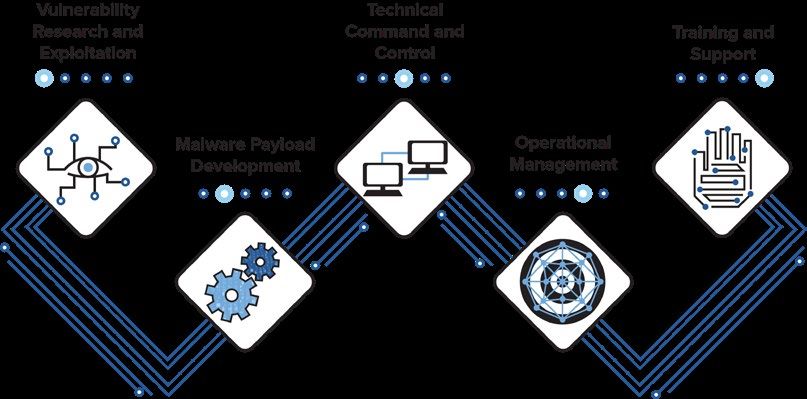
COUNTERING CYBER PROLIFERATION: ZEROING IN ON ACCESS-AS-A-SERVICE

                               Scowcroft Center for Strategy and Security

               The Scowcroft Center for Strategy and Security works to develop sustainable, nonpartisan
              strategies to address the most important security challenges facing the United States and the
            world. The Center honors General Brent Scowcroft’s legacy of service and embodies his ethos of
             nonpartisan commitment to the cause of security, support for US leadership in cooperation with
                  allies and partners, and dedication to the mentorship of the next generation of leaders.

                                           Cyber Statecraft Initiative

           The Cyber Statecraft Initiative works at the nexus of geopolitics and cybersecurity to craft strategies
             to help shape the conduct of statecraft and to better inform and secure users of technology. This
            work extends through the competition of state and non-state actors, the security of the internet and
           computing systems, the safety of operational technology and physical systems, and the communities
                of cyberspace. The Initiative convenes a diverse network of passionate and knowledgeable
                       contributors, bridging the gap among technical, policy, and user communities

 This report is written and published in accordance with the Atlantic Council Policy on Intellectual Independence.
                      The authors are solely responsible for its analysis and recommendations.
The Atlantic Council, its partners, and funders do not determine, nor do they necessarily endorse or advocate for,
                                      any of this report’s particular conclusions.

     © 2021 The Atlantic Council of the United States. All rights reserved. No part of this publication may be
 reproduced or transmitted in any form or by any means without permission in writing from the Atlantic Council,
   except in the case of brief quotations in news articles, critical articles, or reviews. Please direct inquiries to:

                     Atlantic Council, 1030 15th Street NW, 12th Floor, Washington, DC 20005
#ACcyber
Atlantic Council
SCOWCROFT CENTER
FOR STRATEGY AND SECURITY
Countering Cyber Proliferation:
Zeroing in on Access-as-a-Service
WINNONA DESOMBRE, JAMES SHIRES,
JD WORK, ROBERT MORGUS,
PATRICK HOWELL O’NEILL,
LUCA ALLODI, AND TREY HERR
ISBN-13: 978-1-61977-161-1
Cover: The Pandora's Box of Cyber Proliferation. Source: Sarah Orio
This report is written and published in accordance with the Atlantic Council Policy on Intellectual Independence.
The authors are solely responsible for its analysis and recommendations. The Atlantic Council and its donors do not
determine, nor do they necessarily endorse or advocate for, any of this report’s conclusions.
March 2021#ACcyber COUNTERING CYBER PROLIFERATION: ZEROING IN ON ACCESS-AS-A-SERVICE
Table of Contents
Executive Summary����������������������������������������������������������������������������������������������������������������������������������������������������������������� 1
Introduction������������������������������������������������������������������������������������������������������������������������������������������������������������������������������ 2
Offensive Cyber Capability Proliferation: a Quick Review���������������������������������������������������������������������������������������� 6
The Five Pillars of Offensive Cyber Capability Proliferation��������������������������������������������������������������������������������� 7
Case Studies����������������������������������������������������������������������������������������������������������������������������������������������������������������������������� 8
1. NSO Group���������������������������������������������������������������������������������������������������������������������������������������������������������������������� 8
2. ENFER������������������������������������������������������������������������������������������������������������������������������������������������������������������������������11
3. DarkMatter Group.�������������������������������������������������������������������������������������������������������������������������������������������������������14
Previous Approaches to Countering Proliferation of OCC��������������������������������������������������������������������������������������17
Countering Proliferation Policy Recommendations���������������������������������������������������������������������������������������������������19
1. UNDERSTAND & PARTNER����������������������������������������������������������������������������������������������������������������������������������������19
Recommendation 1.1: Build a coalition of like-minded partners�������������������������������������������������������������������� 20
Recommendation 1.2: Elevate the issue of offensive cybersecurity
capabilities proliferation in international forums����������������������������������������������������������������������������������������������� 20
Recommendation 1.3: Pass “Know Your Vendor” laws or regulations�������������������������������������������������������� 20
2. SHAPE�����������������������������������������������������������������������������������������������������������������������������������������������������������������������������21
Recommendation 2.1: Develop ban lists for vendors that are caught selling
capabilities to states or entities on published lists of concern������������������������������������������������������������������������21
Recommendation 2.2: Standardize risk assessment for the AaaS industry������������������������������������������������21
Recommendation 2.3: Incentivize corporate ethics committees������������������������������������������������������������������22
Recommendation 2.4: Limit foreign military sales and other foreign assistance
to states that purchase from banned AaaS providers or use AaaS tools to infringe
on human rights������������������������������������������������������������������������������������������������������������������������������������������������������������22
3. LIMIT�������������������������������������������������������������������������������������������������������������������������������������������������������������������������������23
Recommendation 3.1: Widen the scope of selective defensive vulnerability disclosure�����������������������23
Recommendation 3.2: Establish post-employment restrictions for former government
cybersecurity employees������������������������������������������������������������������������������������������������������������������������������������������23
Recommendation 3.3: Pursue legal action against AaaS providers and subcontractors����������������������24
Recommendation 3.4: Encourage technical limits on malware payload jurisdiction�������������������������������24
Conclusion�������������������������������������������������������������������������������������������������������������������������������������������������������������������������������25
About the Authors����������������������������������������������������������������������������������������������������������������������������������������������������������������26
For more on Offensive Cyber Capabilities and the private marketplaces where they proliferate, check out our associated
Primer: A Primer on the Proliferation of Offensive Cyber Capabilities
IV ATLANTIC COUNCIL#ACcyber COUNTERING CYBER PROLIFERATION: ZEROING IN ON ACCESS-AS-A-SERVICE
Executive Summary
T
he proliferation of offensive cyber capabilities (OCC)— covering and operating in the Middle East, and is, at the time
the combination of tools; vulnerabilities; and skills, of this report, the subject of a lawsuit by several leading US
including technical, organizational, and individual technology companies. ENFER (a cryptonym), is a contractor
capacities used to conduct offensive cyber operations— operating in the Russian Marketplace, which allegedly
presents an expanding set of risks to states and challenges partakes in offensive operations under the direct instruction
commitments to protect openness, security, and stability in of the Russian Federal Security Service (FSB). DarkMatter is
cyberspace. As these capabilities become more prolific, their located in and operates under the jurisdiction of the United
regulation through formal international norms and export Arab Emirates (UAE), but originated in a collaboration with
controls is increasingly ineffective. Countering the spread US contractors through Project Raven (under which former
of dangerous capabilities is not a new policy challenge, US intelligence operatives were recruited by the UAE for
but its specific application to the cyber domain remains surveillance activities). DarkMatter appears to take a larger
uncertain both in theory and in practice. Left unchecked, the role, comparatively, in operational targeting and is tightly
continued proliferation of OCC could significantly damage associated with key UAE intelligence agencies.
the global economy, international security, and the values
that the United States and its allies hold dear. Thus, it is The report uses these three cases to derive several policy
imperative that governments reevaluate their approach to recommendations for states to better understand this
countering the proliferation of OCC. This report profiles the proliferation of OCC, shape the behavior of these companies,
“Access-as-a-Service” (AaaS) industry, a significant vector for and limit their activities where it conflicts with national security
the proliferation of OCC, as a means of both illustrating the priorities, together with international partners. To better
character of this proliferation and investigating policies to understand this proliferation, states should create “know your
counter it. vendor” laws requiring AaaS firms to identify all their vendors
and customers before selling their services to governments.
AaaS firms offer various forms of “access” to target data or To more effectively shape behavior, the report recommends
systems, and through these business practices are creating states widen the scope of selective disclosure to include the
and selling OCC at an alarming rate. These companies capabilities developed and sold by selected AaaS firms and
advertise their wares to myriad groups, mostly states, who ban vendors that fail to adhere to “know your vendor laws.”
would not otherwise be able to develop such capabilities States should also implement contracting preferences for
themselves. AaaS products and services vary in form, but those which adhere to these laws, and develop standards on
share foundations that can be categorized under five “pillars” which firms can map self-regulatory schemes, including ethics
of OCC: Vulnerability Research and Exploitation, Malware committees. Finally, where states see an overriding national
Payload Development, Technical Command and Control, security need to limit the proliferation of OCC through these
Operational Management, and Training and Support. firms, they can introduce more rigorous post-employment
reporting for certain intelligence and cybersecurity-specific
Framed along these pillars, the authors present three case roles in the public sector. Additionally, they can work with
studies (the NSO Group, ENFER, and DarkMatter) to illustrate firms to impose technical limitations on OCC, like geofencing
the complexity of the overlapping activities within the self- and and registered customer lists.
semi-regulated markets of the AaaS industry. These companies
operate within a semi-regulated market, functioning openly Implementing these recommendations would create crucial
and legally under the jurisdiction of their country of operation. tools for states to better counter the proliferation of OCC
Together, their activities cover the full spectrum of OCC through the activities of AaaS firms. These are initial steps;
development described in five pillars below. They are also the larger counterproliferation effort will be a longer process
significant cases for policy-maker attention spanning back as these products and their customer base evolve. And while
almost a decade. NSO Group is an Israeli firm that offers this is not the first time concerns have been raised around
services, including targeted surveillance software, to multiple such problematic activities, earlier policy attention had largely
government clients. NSO software has been connected to been focused on the human rights implications of offensive
multiple human rights abuses, particularly against journalists cyber capabilities, leveraged by authoritarian states or
ATLANTIC COUNCIL 1#ACcyber COUNTERING CYBER PROLIFERATION: ZEROING IN ON ACCESS-AS-A-SERVICE
through abuse of weak operational controls in the absence challenges of Access-as-a-Service associated OCC
of effective oversight. The interactions within this emerging proliferation. International cooperation will be crucial, as no
market have contributed to compromises of critical national country is a large enough customer or jurisdictional home
infrastructure and driven the development of new offensive for AaaS firms to make a systematic difference alone. The
programs by states that had otherwise been unable to rely United States and the European Union (EU) in particular have
upon the transfer of key tooling, expertise, and instruction by an opportunity to work in concert to understand, shape,
allied and partner military intelligence services. and limit this proliferation over the next decade, as public-
private links with the research community strengthen and
These issues however involve a greater range of national the harms of OCC proliferation continue to sharpen in the
security equities; this accordingly demands an expanded public consciousness.
conversation and that we elevate the priority in addressing
Introduction
T
he proliferation of offensive cyber capabilities occurs for-hire or AaaS industry. These companies, sometimes also
largely uncontrolled. Unlike their nuclear counterparts, labelled “Intrusion-as-a-Service”4 organizations, often offer
cyber capabilities are easier for states to access and use. access—to target data, a target account, or sets of mobile
State cyber capabilities, and the people that build them, can devices—as a service. They help drive the spread of cyber
also become a form of proliferation. Offensive capabilities like capabilities, resulting in increased adversary cyberattacks.
EternalBlue, allegedly engineered by the United States, have These firms represent channels through which ever more
already been reused by the Russian, North Korean, and Chinese potent offensive cyber capabilities can proliferate. By virtue
governments.1 Moreover, former US government cyber security of this proliferation, states extend their operational reach,
professionals are regularly recruited by foreign firms. US sweat enhance their efficacy against widely used technologies,
equity has contributed to cyber capabilities used to target US and provide greater leverage to their strategic aims. The
citizens on more than one occasion.2 Recognizing the problem, result is that present tensions and efforts contradictory to
but struggling to manage it, the CIA issued a notice which the interests of the United States and allies in the EU are
received widespread attention in January 2020, warning former magnified while new threats emerge.5
intelligence officers against working for foreign governments.3
The national security implications of unlimited proliferation For the United States, home to many of the technology
are well recognized, but states are confronted by the need to providers compromised by these OCC and source of the
do more than simply limit what moves from government to the talent and human skills subject to some of the most widely
private sector or between states. profiled examples of this proliferation, the problem posed
here is neither theoretical nor disconnected from other
The ability to develop an effective and targeted cyberattack national security activities. US provision of assistance to
is not only in the hands of states. States entering the cyber allied governments and third parties in the form of offensive
domain now find that they can purchase cyber capabilities technologies has long been tricky, witness the decades-
at scale from private companies within a growing hacker- long attempt to recover Man Portable Air Defense Systems
1 Gil Baram, “The Theft and Reuse of Advanced Offensive Cyber Weapons Pose a Growing Threat,” Council on Foreign Relations, June 19, 2018, https://www.
cfr.org/blog/theft-and-reuse-advanced-offensive-cyber-weapons-pose-growing-threat; Insikt Group, “Chinese and Russian Cyber Communities Dig Into
Malware From April Shadow Brokers Release,” Recorded Future, April 25, 2017, https://www.recordedfuture.com/shadow-brokers-malware-release/; and Leo
Varela, “EternalBlue: Metasploit Module for MS17-010,” Rapid7, May 19, 2017, https://blog.rapid7.com/2017/05/20/metasploit-the-power-of-the-community-and-
eternalblue/.
2 Christopher Bing and Joel Schectman, “Inside the UAE’s Secret Hacking Team of American Mercenaries,” Reuters, January 20, 2019, https://www.reuters.
com/investigates/special-report/usa-spying-raven/.
3 Julian E. Barnes and Maggie Haberman, “CIA Warns Former Officers about Working for Foreign Governments,” New York Times, January 26, 2021, https://
www.nytimes.com/2021/01/26/us/politics/intelligence-officers-foreign-governments.html.
4 “CyberPeace Institute Calls for Accountability of Intrusion as a Service Sector,” the CyberPeace Institute, December 24, 2020, https://medium.com/the-cyber-
peace-institute/cyberpeace-institute-calls-for-accountability-of-intrusion-as-a-service-sector-c1c5597864c3.
5 The EU is the focus of this discussion as what little existing regulatory apparatus applies to OCC can be found in export controls and other restrictions on
commercial activity. NATO, while an important alliance structure and forum for international security, is less directly concerned with these activities and so not
the focus of this analysis.
2 ATLANTIC COUNCIL#ACcyber COUNTERING CYBER PROLIFERATION: ZEROING IN ON ACCESS-AS-A-SERVICE
(MANPADS) or more recent effort to stymie the flow of small to OCC positions it as more of a proliferation concern than
arms and mine-resistant vehicles across the Middle East.6 a regulatory ally. And Brexit complicates the picture still
OCC present this risk of resale and reuse but may also further, as the United Kingdom (UK) could seek to align with
build the capacity of their ultimate recipients in knowledge, US policy or exploit its new freedom to undercut emerging
training, and skills. This human capital and understanding EU standards.
enables adaptation or further development of these
capabilities beyond that initially transferred. Without greater The profusion of commercial OCC vendors, left unregulated
understanding and caution to shape this proliferation, the US and ill-observed, poses national security risks. For states
risks seeding unintended offensive cyber programs beyond that have strong OCC programs, proliferation to state
its sphere of influence with little effort. adversaries or certain non-state actors can be a threat
to immediate security interests, long term intelligence
From a European perspective, as both a producer and advantage, and the feasibility of mounting an effective
influential regulator of offensive cyber capabilities, the sale of defense on behalf of less capable private companies and
OCC acts as a useful lubricant for EU member states’ global vulnerable populations. The acquisition of OCC by a current
defense and diplomatic relationships and an easy extension or potential adversary makes them more capable—for
to a strong market in other law enforcement and security instance while conducting cyber-espionage for commercial
sector technologies. But OCC sales, especially to regimes or intelligence gain, or more disruptive or damaging
with poor human rights records, are also an increasingly operations.7 For states that do not already possess OCC,
polarized point of contention between both EU member others’ use of OCC is a source of risk and their acquisition
states with varying stakes in the market, and different blocs is often an attempt to address this imbalance.
in the European Parliament.
OCC proliferation can also threaten human rights, both
Current European efforts to carve out a third way between individual and collective. OCC have been used for intelligence
Chinese and US technospheres have so far depended on collection by organizations that have subsequently engaged
the strength of its privacy regulation and broader human in the arbitrary detention, mistreatment, and torture of those
rights protections, but are beginning to be framed in terms targeted, as well as part of broader campaigns of surveillance
of EU “strategic autonomy,” highlighting a clear national and suppression of dissent. This ‘human rights’ risk does
security rationale for the control of OCC proliferation. not always align with the national security risk outlined
Closer to home, EU cooperation with its southern neighbors previously—many human rights violations associated with
across the Mediterranean—often conducted in terms of OCC occur in the context of their use for national security
“security sector reform”—combines both human rights and purposes (e.g., by state intelligence agencies). This dichotomy
national security justifications for careful transfer of cyber illustrates the diverse set of risks posed by the proliferation
capabilities, especially as southern EU states such as of offensive cybersecurity capabilities. These risks include
Spain, Italy, and Greece are drawn closer into geopolitical both what Lin and Trachtman term “vertical” uses (by states
divisions in the Middle East. NATO offers scant assistance against their own populations) and “diagonal” uses (against
here, as its member states include Turkey, whose approach the populations of other states, including diaspora).8
6 Molly Moore, “CIA Falters in Recovery of Missiles,” Washington Post, March 7, 1994, https://www.washingtonpost.com/archive/politics/1994/03/07/cia-falters-
in-recovery-of-missiles/73a9a4d7-2952-4077-9746-46bd2e5b81ca/; Ken Silverstein and Judy Paternak, “A Market for Missiles for Terror,” Los Angeles
Times, March 6, 2003, https://www.latimes.com/archives/la-xpm-2003-mar-06-fg-sams6-story.html; Matt Schroeder, “Global Efforts to Control MANPADS,”
SIPRI Yearbook, Stockholm International Peace Research Institute, 2007, https://www.sipri.org/sites/default/files/YB07%20623%2014A.pdf, p. 636;Nima
Elbagir, Salma Abdelaziz, Mohamed Abo El Gheit, and Laura Smith-Spark, “Sold to an Ally, Lost to an Enemy,” CNN, February 2019, https://www.cnn.com/
interactive/2019/02/middleeast/yemen-lost-us-arms/; and C.J. Chivers, “How Many Guns Did the U.S. Lose Track of in Iraq and Afghanistan? Hundreds of
Thousands,” New York Times Magazine, August 24, 2016, https://www.nytimes.com/2016/08/23/magazine/how-many-guns-did-the-us-lose-track-of-in-iraq-
and-afghanistan-hundreds-of-thousands.html.
7 We do not distinguish between espionage, disruption, and destruction here, as it is difficult to disentangle preparation for each in practice, and requires
close assessment of specific targeting and malware potential, as well as broader strategic objectives. See, for instance: Ben Buchanan, Fiona S.
Cunningham, “Preparing the Cyber Battlefield: Assessing a Novel Escalation Risk in a Sino-American Crisis,” Texas National Security Review, Fall 2020,
https://tnsr.org/2020/10/preparing-the-cyber-battlefield-assessing-a-novel-escalation-risk-in-a-sino-american-crisis/.
8 Herb Lin and Joel P. Trachtman, ”Using International Export Controls to Bolster Cyber Defenses,” Protecting Civilian Institutions and Infrastructure from Cyber
Operations: Designing International Law and Organizations, Center for International Law and Governance, Tufts University, September 10, 2018, https://sites.
tufts.edu/cilg/files/2018/09/exportcontrolsdraftsm.pdf
ATLANTIC COUNCIL 3#ACcyber COUNTERING CYBER PROLIFERATION: ZEROING IN ON ACCESS-AS-A-SERVICE
One place in which we see this disturbing trend is in the or assist government organizations with operational
exploitation of zero day vulnerabilities. A zero day vulnerability management processes.
is a flaw within a system for which there is no fix at the time
of discovery. In 2020, Google’s Project Zero published a All of these activities fall under the broad term of OCC: a
list of zero day (0day) exploits discovered in the wild9 from combination of technological, individual, organizational, and
2014 onwards. While only seventy-two of those 129 0days infrastructural elements that jointly enable operations in the
have been publicly attributed to any threat group, fourteen cyber domain. Companies offer AaaS by combining most, if
of these seventy-two, collectively more than any single state, not all, elements into a single service for clients. Currently,
are attributed to private companies: Lench IT Solutions (the AaaS companies proliferate the full range of offensive cyber
creators of commercial surveillance malware FinFisher), capabilities by effectively selling fully fledged services and
Exodus Intelligence, NSO Group, and Hacking Team. capabilities alongside detailed training, resulting in a scale
of proliferation not seen in government or criminal spaces.11
Many of the same companies mentioned above provide As this model becomes increasingly common among private
training at conferences (or exclusive training upon request), firms, the shortfalls of previous policy interventions focusing
and have developed tailored capabilities for their customers, on the sale or transfer of specific technologies become
some of which include 0days.10 Other similar groups set up more glaring, highlighting the need for a more granular and
their own technical command-and-control infrastructure, systematic treatment of both these transactions and the
GRAPH 1: Number of 0days publicly found exploited in the wild by attributed threat group category / geography.
Unattributed
Private Company
Russia
Criminal
USA
UAE
China
South Korea
Middle East/geography unknown
North Korea
Korea/geography unknown
Israel
France
0 10 20 30 40 50 60
Data taken from Google’s Project Zero database.1 More information on Project Zero’s visibility into 0days in the wild can be found on
the Project Zero website.2
1 “0day ‘In the Wild,’” Google Project Zero, last updated January 14, 2021, https://docs.google.com/spreadsheets/d/1lkNJ0uQwbeC1ZTRrxdt
uPLCIl7mlUreoKfSIgajnSyY/edit?usp=sharing.
2 Ben Hawkes, “0day ‘In the Wild,’” Project Zero, May 15, 2019, https://googleprojectzero.blogspot.com/p/0day.html.
9 “0day ‘In the Wild,’” Google Project Zero, last updated January 14, 2021, https://docs.google.com/spreadsheets/d/1lkNJ0uQwbeC1ZTRrxdtuPLCIl7mlUreoKfSI
gajnSyY/edit?usp=sharing.
10 “On the WhatsApp 0day and Legal Action Against NSO Group,” Nex, May 14, 2019, https://nex.sx/blog/2019/05/14/on-whatsapp-0day-legal-action-nso.html.
11 In this way, AaaS companies can act as proxies for state proliferation, which is the main focus of international relations literature on OCC proliferation. See,
for example: Tim Maurer, Cyber Mercenaries: The State, Hackers, and Power (Cambridge New York: Cambridge University Press, 2018); and Ben Buchanan,
The Hacker and the State: Cyber Attacks and the New Normal of Geopolitics (Cambridge, Massachusetts: Harvard University Press, 2020).
4 ATLANTIC COUNCIL#ACcyber COUNTERING CYBER PROLIFERATION: ZEROING IN ON ACCESS-AS-A-SERVICE
industry as a whole. This scrutiny appears welcome by some activities of this market within the limits of their jurisdiction
major players in the technology industry, with Microsoft and laws.13 These three cases are far from the only vendors
joining others in an amicus brief in support of a case brought in the AaaS marketplaces, nor are they the only ones
by Facebook against NSO Group for capabilities the firm actively developing these capabilities. Rather, they serve as
developed and sold targeting the WhatsApp communications representative cases of certain types of firms and together
service.12 engage in transactions covering all the pillars of offensive
cyber capability development.
Analyzing AaaS helps us investigate more broadly a larger
set of policy levers across OCC, as well as more accurately The next section provides an overview of the five pillars
represent the environment these companies and their for OCC that is key to understanding the subsequent
customers operate in. This proliferation of cyber capabilities case studies section, which breaks down the AaaS actors
is an urgent issue for the United States and allies, including across the proposed five pillars. Each of these cases, all
the European Union and its member states. The current status private sector AaaS firms, showcase a different threat from
quo of patchwork regulation and fragmented international cyber proliferation: an Israeli firm exploiting US technology
policy initiatives does not meaningfully address any of the companies to help foreign governments violate human rights,
threats posed to human rights or national security interests a Russian firm making FSB offensive operations stealthier
by this proliferation. This paper provides a concise summary and more dangerous, and an Emirati firm actively recruiting
of the content of the AaaS market, profiles three prominent former members of the US intelligence community to spy
vendors (Israel’s NSO Group, a contractor for the Russian on neighbors and allies. The paper then analyzes previous
Ministry of Defense that we label ENFER for this discussion, approaches to countering OCC proliferation and provides
and the UAE firm DarkMatter), and offers a policy framework forward-looking policy recommendations tackling the core
for states to more effectively understand, shape, and limit the aspects highlighted within the five pillars of OCC.
12 Catalin Cimpanu, “Microsoft, Google, Cisco, and Others File Amicus Brief in Support of Facebook’s NSO Lawsuit,” December 21, 2020, https://www.zdnet.
com/article/microsoft-google-cisco-and-others-file-amicus-brief-in-support-of-facebooks-nso-lawsuit/; “NSO Group Technologies LTD. et al. v. WhatsApp Inc.
et al.,” No. 20-16408 (9th Cir. Northern District of California), December 21, 2020, https://blogs.microsoft.com/wp-content/uploads/prod/sites/5/2020/12/NSO-
v.-WhatsApp-Amicus-Brief-Microsoft-et-al.-as-filed.pdf.
13 Both NSO Group and ENFER engage in at least four of the five AaaS aspects, with only operational management and control potentially outside their scope.
DarkMatter likely engages in four, if not all five.
ATLANTIC COUNCIL 5#ACcyber COUNTERING CYBER PROLIFERATION: ZEROING IN ON ACCESS-AS-A-SERVICE
Offensive Cyber Capability Proliferation:
a Quick Review
C
ontaining, controlling, or slowing the spread of cyber the latter take place out in the open and are largely regulated
capabilities is not a new policy challenge. Similar actions by local or national laws, as their operation may be affected
have long been undertaken to contain the spread of by the broader geopolitical setting (e.g., for technology export).
nuclear, chemical, and biological weapons, commonly referred Naturally, due to their different regulatory nature, different
to as counter- and non-proliferation efforts. These regimes policies are needed to address these two spaces.
and their applicability to the proliferation of offensive cyber
capabilities have been addressed going back a decade in Nonetheless, OCC at large are built on top of a common
academic and policy literature with minimal tangible progress.14 foundation emerging from five technological and operational
Countering the proliferation of offensive cyber capabilities pillars that, together, characterize the nature of the developed
encompasses a variety of actor activity and behaviors spanning offensive capabilities. These five pillars of cyber capability
both illicit and commercial markets. The former usually take proliferation can be used to characterize capabilities in
place in the criminal underground and operate in largely self- government, criminal, and private industry sectors, as well
regulated spaces (a dynamic similar to that of certain criminal as in AaaS firms, regardless of whether these different actors
communities tightly controlling access to small arms15), whereas operate in either self- or semi-regulated spaces, or in both.
THE FIVE PILLARS OF OFFENSIVE CYBER CAPABILITY PROLIFERATION
14 Trey Herr, “Development and Proliferation of Offensive Weapons in Cyber-Security,” in Cyber Weaponry, ed. Henry Prunckun, (Springer, Cham, 2018), 125–
141; Trey Herr, “Countering the Proliferation of Malware: Targeting the Vulnerability Lifecycle,” Belfer Cyber Security Project White Paper Series, June 27, 2017,
https://papers.ssrn.com/sol3/papers.cfm?abstract_id=3005616; Robert Morgus, Max Smeets, and Trey Herr, “Countering the Proliferation of Offensive Cyber
Capabilities,” GCSC Issue Brief, Memo, 2017, http://maxsmeets.com/wp-content/uploads/2018/09/GCSC-Briefings-from-the-Research-Advisory-Group_New-
Delhi-2017-161-187.pdf; Trey Herr, “Governing Proliferation in Cybersecurity,” Global Summitry 3, no. 1 (2017): 86-107, https://doi.org/10.1093/global/gux006;
Trey Herr and Ryan Ellis, “Disrupting Malware Markets,” in Cyber Insecurity: Navigating the Perils of the Next Information Age, eds. Richard M. Harrison and
Trey Herr, (Rowman & Littlefield Publishers, October 18, 2016), https://www.google.com/books/edition/Cyber_Insecurity/NAp7DQAAQBAJ?hl=en&gbpv=0;
Trey Herr, “Malware Counter-Proliferation and the Wassenaar Arrangement,” 8th International Conference on Cyber Conflict, Tallinn (2016): 175-190, https://
ieeexplore.ieee.org/abstract/document/7529434; Lillian Ablon, Martin C. Libicki, and Andrea A. Golay. Markets for cybercrime tools and stolen data:
Hackers’ bazaar, Rand Corporation, 2014, https://www.rand.org/content/dam/rand/pubs/research_reports/RR600/RR610/RAND_RR610.pdf;Louise Arimatsu,
“A Treaty for Governing Cyber-Weapons: Potential Benefits and Practical Limitations,” 4th International Conference on Cyber Conflict (2012): 91-109, https://
ccdcoe.org/uploads/2012/01/2_3_Arimatsu_ATreatyForGoverningCyber-Weapons.pdf; Joseph Nye, “Nuclear Lessons for Cyber Security?,” Strategic Studies
Quarterly 5, no. 4 (2011): 18-38, https://dash.harvard.edu/handle/1/8052146; and Kenneth Geers, “Cyber Weapons Convention,” Computer Law & Security
Review 26, no.5 (September 2010): 547-551), https://doi.org/10.1016/j.clsr.2010.07.005.
15 P.J. Cook, J. Ludwig, S. Venkatesh, & A.A. Braga, “Underground gun markets,” The Economic Journal, 117(524), F588-F618, 2007.
6 ATLANTIC COUNCIL#ACcyber COUNTERING CYBER PROLIFERATION: ZEROING IN ON ACCESS-AS-A-SERVICE
THE FIVE PILLARS OF OFFENSIVE CYBER 4 Operational management: The more human-centric
CAPABILITY PROLIFERATION aspect of operations, this pillar includes operations
management, strategic organization of resources and
Cyber capabilities exist in many forms, including knowledge, teams, initial targeting decisions, and other functions that
personnel, and skills—less tangible than a nuclear fuel rod or are required to effectively manage an organization that
even a Kalashnikov. This report’s companion primer details the conducts cyber operations.
development of these different forms of OCC across actors
operating in both self-regulated and semi-regulated spaces. 5 Training and support: Offensive cyber operations
The primer provides an extensive breakdown of the identified programs require trained professionals for the programs
five pillars and their relation to different actors in the threat to be successful. This pillar encompasses any training
landscape. The following is an overview. program or education provided by one set of individuals
to another about the offensive cyber operation process,
1 Vulnerability research and exploitation: Individuals, expanding the number of trained professionals and
and sometimes small teams, find vulnerabilities (security creating connections that facilitate the growth of OCC.
holes in software and hardware systems) and write
exploits (code that takes advantage of a vulnerability Each of the pillars contain software, tools, and organizational
and can lead to the violation of the security policies programs that enable sharing capabilities across borders,
enforced on a system) to gain additional footholds or by trade or free flow of information. This five pillar model is
access on a target program or device. This is usually broader than the technologies considered by the Wassenaar
done within the context of a multi-stage operation. This Arrangement, an international export agreement for dual-
pillar includes the vulnerabilities themselves, as well as use technologies modified in 2013 in an attempt to counter
the disclosure programs and research organizations that the proliferation of what it termed “intrusion software.”
facilitate the proliferation of discovered vulnerabilities Currently, Wassenaar only controls items in Pillar 3 (technical
and written exploits. command and control),16 although a previous iteration did
constrain elements of Pillar 1 (vulnerability research and
2 Malware payload development: The central part of development) and Pillar 2 (malware payload development)
many offensive cyber campaigns is malware (i.e., the before persistent opposition from researchers and industry
malicious payload executed on the vulnerable system forced changes.17 Pillars 4 and 5 were not addressed by
after exploitation, also known as a “virus” or “implant”). either version of Wassenaar, as the arrangement focuses on
This pillar includes any malware and malware tools dual-use technologies rather than wider individual skills and
written or used by attackers to conduct offensive cyber organizational capabilities.
operations, or any endeavor that encourages or conducts
exchange of malware. In this study, we focus on three AaaS firms largely operating in
semi-regulated, not self-regulated, spaces. We do so because
3 Technical command and control: This pillar includes the AaaS firms in semi-regulated spaces are the source of many
provision of technologies aimed at supporting the operative significant offensive cyber capabilities, although they are
aspects of OCC, such as bulletproof hosting, domain name not the only ones.18 Firms in semi-regulated spaces are also
registration, server side command-and-control software, an easier target of policy intervention. AaaS firms in semi-
VPN services, and delivery accounts involved with the initial regulated spaces encompass all forms of OCC proliferation
creation of an offensive cyber operation. and are becoming increasingly common.
16 For more detail on these discussion, see: Tim Maurer, Edin Omanovic, and Ben Wagner, Uncontrolled Global Surveillance: Updating Export Controls to the
Digital Age, New America Foundation, Open Technology Institute, Digitale Gesellschaft, and Privacy International, March 2014, https://www.newamerica.
org/oti/policy-papers/uncontrolled-global-surveillance-updating-export-controls-to-the-digital-age/; and Collin Anderson, Considerations on Wassenaar
Arrangement Control List Additions for Surveillance Technologies, Access, 2015, https://www.accessnow.org/cms/assets/uploads/archive/Access%20
Wassenaar%20Surveillance%20Export%20Controls%202015.pdf.
17 For Pillar 1, industry practitioners were concerned that the Wassenaar Arrangement would inhibit legitimate vulnerability research, and, for Pillar 2, that it
would prevent the transfer of “penetration testing” tools across national borders. For push back, see: Sergey Bratus, D.J. Capelis, Michael Locasto, and Anna
Shubina, “Why Wassenaar Arrangement’s Definitions of Intrusion Software and Controlled Items Put Security Research and Defense at Risk – And How to Fix
It,” Dartmouth University, October 9, 2014, https://www.cs.dartmouth.edu/~sergey/wassenaar/wassenaar-public-comment.pdf.
18 Both NSO Group and ENFER engage in at least four of the five AAAS aspects, with only operational management potentially outside their scope. DarkMatter
likely engages in four, if not all five.
ATLANTIC COUNCIL 7#ACcyber COUNTERING CYBER PROLIFERATION: ZEROING IN ON ACCESS-AS-A-SERVICE
Case Studies
T
he three case studies considered in this paper— sells its targeted surveillance product, Pegasus, to multiple
Israel’s NSO Group, Russian Ministry of Defense (MoD) intelligence organizations in the Middle East, Europe, and
contractor ENFER, and the United Arab Emirates firm South America. Pegasus enables third-party access to specific
DarkMatter—are each representative, in different ways, of the mobile devices, without the knowledge or permission of the
broader landscape of AaaS. NSO Group is widely considered user of that device, and works to avoid countermeasures
a leader in the field, marketing “advanced” AaaS technologies aimed at preventing such access, with the ultimate purpose of
to customers worldwide, and has a significant public profile extracting a wide range of information about (and residing on)
due to the association of its technologies with human rights that device. NSO Group’s early marketing literature advertised
violations. ENFER operates in Russia, another important Pegasus as a new “cyber weapon,” which remains the internal
geographical site for AaaS with high policy relevance for the conception of their software.19 However, NSO Group has
United States, and represents the overlap between semi- moved away from this label in recent public communications,
regulated and self-regulated, or criminal, markets for AaaS. instead characterizing their activities as “cyber intelligence.”20
The DarkMatter case study captures a common transition
from dependence on US expertise and technologies to NSO Group operates in a semi-regulated rather than self-
independent AaaS development under the direction of regulated space, contending with international agreements
a single state customer and outside the scope of current such as the Wassenaar Arrangement and domestic law and
international regulatory efforts. The basic characteristics of regulation, and does so openly under the jurisdiction of Israel.
the three cases studies can be seen in Table 1. Internationally, Israel has agreed to conform to the Wassenaar
Arrangement and follow the same human rights conditions
1. NSO GROUP as the participating states.21 Domestically, Israeli exports are
governed under the Import and Export Order of 2006. A
Introduction and background draft “Order for Cyber Products Supervision” that appeared
NSO Group, arguably the most famous of the three case to restrict targeted surveillance exports in the manner of the
studies, is an Israeli firm alleged to be exploiting US technology Wassenaar amendments was made public in 2016; however,
companies to spy on dissidents on behalf of foreign this did not go beyond the draft stage.22 A lawsuit brought
governments. NSO Group is an Israeli company founded in by Amnesty International seeking to withdraw NSO Groups’
2010 by former members of Israeli intelligence. The company export license was rejected by an Israeli court in July 2020,
TABLE 1: Summary of Cases
CASE STUDY COUNTRY DATES ACTIVE KEY CUSTOMERS AAAS PILLARS US NEXUS
LOCATION
NSO Group Israel 2016 (first public Worldwide 1-4 Use of US
reports)–present infrastructure
ENFER Russia Start date Russia 1-4 Connection to US
unknown adversary
DarkMatter UAE 2016-present UAE 1-5 Initially reliant on
US expertise
19 Patrick Howell O’Neill, “Inside NSO, Israel’s Billion-Dollar Spyware Giant,” MIT Technology Review, August 19, 2020, https://www.technologyreview.
com/2020/08/19/1006458/nso-spyware-controversy-pegasus-human-rights/.
20 NSO Group website, NSO Group, accessed January 24, 2021, www.nsogroup.com.
21 James Shires, The Politics of Cybersecurity in the Middle East (London: Hurst Publishers, 2021), www.hurstpublishers.com/book/the-politics-of-cybersecurity-
in-the-middle-east.
22 “Israeli Import, Export, Cyber Regulation & Enforcement,” Shibolet & Co. Law Firm, May 19, 2020, https://perma.cc/3WZP-HSHP.
8 ATLANTIC COUNCIL#ACcyber COUNTERING CYBER PROLIFERATION: ZEROING IN ON ACCESS-AS-A-SERVICE
with the judge pointing to procedures for review based on malware were later killed,28 and that Pegasus may have been
human rights conditions both before and after sale.23 tangentially related to the assassination of Saudi journalist
Jamal Khashoggi.29 NSO Group software was also discovered
NSO Group is thus permitted to operate by the country in which on the device of a Catalan independence movement leader in
it is based—indeed, it has close connections to Israeli military Spain.30 Most recently, Citizen Lab connected NSO’s Pegasus
and intelligence services, like many other cyber companies in malware to the July and August 2020 hack of the personal
Israel (both offensive and defensive).24 Media reports suggest phones of thirty-six journalists and staff at Al Jazeera. These
that sellers of these offensive cyber capabilities sometimes hacks were launched by four Pegasus operators, including
bypass the Ministry of Defense, while other times the same SNEAKY KESTRAL and MONARCHY, which are attributed to
companies export specifically for diplomatic purposes (e.g., to the United Arab Emirates and Saudi Arabia, respectively.31
strengthen relationships with the Gulf states).25
In 2019, NSO Group reportedly had sixty total customers, with
NSO Group’s activities are in the public domain largely due 40 percent in the Middle East, and around $250 million in
to the investigative work of Citizen Lab, a Canadian research revenue in 2018.32 Pegasus sales to the UAE and Saudi Arabia
organization based at the University of Toronto. In a 2018 reportedly cost tens of millions of dollars, paid in installments
report,26 Citizen Lab identified servers communicating with with renewable licenses.33 NSO Group also works with a
NSO’s Pegasus malware belonging to thirty-six different range of other companies to deliver more comprehensive
operators around the world—likely separate security or surveillance packages. For example, the company has wider
intelligence agencies. Many operators are in states with links with the UAE, including connections to Emirati cyber-
poor human rights records and previous indications of intelligence company DarkMatter.34 NSO Group may also
targeted surveillance against political opposition, journalists, offer other tracking or data analysis products for which there
and dissidents. is no public information. For instance, their recent move
into coronavirus track-and-trace products in Israel suggests
A Citizen Lab investigation (the Million Dollar Dissident report)27 broader capabilities.35
indicated that Pegasus was used to obtain access to the phone
of Emirati activist Ahmed Mansoor in 2016. Later Citizen Lab According to open source reporting, NSO Group is the
reports revealed that journalists in Mexico targeted by Pegasus subject of several lawsuits. The highest profile of which is
23 Oded Yaron, “Israeli Court Rejects Request to Revoke Spyware Firm NSO’s Export License,” Haaretz, July 13, 2020, https://perma.cc/86KT-UECK.
24 Chaim Levinson, “With Israel’s Encouragement, NSO Sold Spyware to UAE and Other Gulf States,” Haaretz.com, August 23, 2020, https://perma.cc/VZ84-
RS69.
25 Chaim Levinson, “With Israel’s Encouragement, NSO Sold Spyware to UAE and Other Gulf States,” Haaretz, August 23, 2020, https://perma.cc/VZ84-RS69.
26 Bill Marczak, John Scott-Railton, Sarah McKune, Bahr Abdul Razzak, and Ron Deibert, “Hide and Seek: Tracking NSO Group’s Pegasus Spyware to
Operations in 45 Countries,” The Citizen Lab, September 18, 2018, https://citizenlab.ca/2018/09/hide-and-seek-tracking-nso-groups-pegasus-spyware-to-
operations-in-45-countries/.
27 Bill Marczak and John Scott-Railton, “The Million Dollar Dissident: NSO Group’s iPhone Zero-Days Use Against a UAE Human Rights Defender,” The Citizen
Lab, August 24, 2016, https://citizenlab.ca/2016/08/million-dollar-dissident-iphone-zero-day-nso-group-uae/.
28 John Scott-Railton, Bill Marczak, Siena Anstis, Bahr Abdul Razzak, Masashi Crete-Nishihata, and Ron Deibert, “Reckless VI: Mexican Journalists Investigating
Cartels Targeted with NSO Spyware Following Assassination of Colleague,” The Citizen Lab, November 27, 2018, https://citizenlab.ca/2018/11/mexican-
journalists-investigating-cartels-targeted-nso-spyware-following-assassination-colleague/.
29 Bill Marczak et al., The Kingdom Came to Canada: How Saudi-Linked Digital Espionage Reached Canadian Soil, Citizen Lab, October 1, 2018, https://
citizenlab.ca/2018/10/the-kingdom-came-to-canada-how-saudi-linked-digital-espionage-reached-canadian-soil/.
30 Lorenzo Franceschi-Bicchierai and Joseph Cox, “Source: Spain Is Customer of NSO Group,” Motherboard, July 14, 2020, https://perma.cc/9MZ3-5SFU;
Stephanie Kirchgaessner and Sam Jones, “Phone of Top Catalan Politician ‘Targeted by Government-Grade Spyware,’” Guardian, July 13, 2020, https://www.
theguardian.com/world/2020/jul/13/phone-of-top-catalan-politician-targeted-by-government-grade-spyware.
31 Bill Marczak, John Scott-Railton, Noura Al-Jizawi, Siena Anstis, and Ron Deibert, “The Great iPwn: Journalists Hacked with Suspected NSO Group iMessage
‘Zero-Click’ Exploit,” The Citizen Lab, December 20, 2020, https://citizenlab.ca/2020/12/the-great-ipwn-journalists-hacked-with-suspected-nso-group-
imessage-zero-click-exploit/.
32 Becky Peterson and Shayanne Gal, “Leaked Financials Show Israeli Spyware Company NSO Group Is Wildly Profitable despite Concerns over Misuse of Its
Technology,” Business Insider, September 6, 2019, https://perma.cc/W9AN-229M.
33 Shires, The Politics of Cybersecurity in the Middle East, Chapter Four.
34 See leaked documents available at: Sean Gallagher, “UAE Buys Its Way toward Supremacy in Gulf Cyberwar, Using US and Israeli Experts,” Ars Technica,
February 1, 2019, https://perma.cc/Q89F-Y6FC.
35 Joel Schectman, Christopher Bing, and Jack Stubbs, “Special Report: Cyber-Intel Firms Pitch Governments on Spy Tools to Trace Coronavirus,” Reuters, April
28, 2020, https://www.reuters.com/article/us-health-coronavirus-spy-specialreport/special-report-cyber-intel-firms-pitch-governments-on-spy-tools-to-trace-
coronavirus-idUSKCN22A2G1.
ATLANTIC COUNCIL 9#ACcyber COUNTERING CYBER PROLIFERATION: ZEROING IN ON ACCESS-AS-A-SERVICE
ongoing, brought by WhatsApp in the United States.36 A joint one: individual researchers that initially sell to NSO Group
filing of leading technology companies, including Google and may later be hired for in-house research, while former NSO
Microsoft, for this lawsuit asserted that: Group employees may spin-off their own vulnerability and
exploit development companies.41
widespread creation and deployment of these tools by
private companies acting for profit dramatically increases Malware payload development
the risk that these vulnerabilities will be obtained and The flagship product of NSO Group, Pegasus, is deployed on
exploited by malicious actors other than the initial customer target devices through the use of exploits or other methods,
to cripple infrastructure, commit large-scale financial crime, like phishing emails. While definitions of payload differ in
or cause other catastrophic damage.37 academic and industry research (and the missile analogy of
the word itself is somewhat flawed42), the Pegasus malware
This move shows that there is significant appetite among is both multi-stage and modular.43 Multi-stage malware uses
leading technology companies for increased regulation in several separate exploits, often packaged (and encrypted)
this area. separately or in a “dropper.” Modular malware has distinct
functionalities in logically separate sections, which can
NSO Group has actively sought to counter allegations of either be customized prior to installation or after it is already
proliferation and abuse via post-sale means, especially through installed. Developing these payloads is a complex task that is
lobbying crucial political circles within the United States. often sidelined in proliferation discussions, and many defense
The public disclosure of various lobbying firms working with solutions are triggered by subsidiary parts of the malware
NSO, including Beacon Global Strategies,38 includes advice rather than the exploit itself. Technical analysis of Pegasus
on export regulation and promotion of NSO Group’s views indicates significant development in this area as well as the
following negative publicity. More underhand forms of public research and development (R&D) above.
relations work, including private investigation firms seeking
to find compromising information on Citizen Lab, have been Technical command and control (C2)
attributed to NSO Group in the media, but there is no reliable Pegasus has a sophisticated C2 architecture. Citizen Lab
confirmation of connection.39 Either way, such tactics do not investigations of NSO Group and its competitors relied on
decrease proliferation or abuse risks, they merely affect the internet scanning for fingerprints44 of the servers used to
perception of NSO Group’s responsibility. communicate with instances of the malware on target devices,
as well as those used to host malicious links in 1-click versions.
Vulnerability research and exploit development The acquisition of these servers, and their capabilities of
Reporting suggests that NSO Group is active on vulnerability avoiding accidental detection or deliberate investigations, is a
and exploit markets, purchasing multiple high-value crucial part of access-as-a-service. Reports suggest that NSO
vulnerabilities and conducting some in-house research to Group generally maintains good operational security in these
develop others, though the relative ratio of these activities servers, using decoy pages to reduce suspicion—requiring
is unclear. Based on more detailed reporting on NSO Citizen Lab to identify undisclosed protocol characteristics
Group’s competitors, NSO Group likely also has similar (TLS)45 that fingerprint NSO Group C2 architecture. Some
long-term supplier relationships with exploit vendors, or lapses in operational security have been reported—for
cooperates with them in developing exploits.40 This means example, re-use of domains after the Million Dollar Dissident
that the distinction between NSO Group’s internal activity report46—but it is unclear whether this was by NSO Group or
and that of others on the market is likely not a clear-cut their customers.
36 Will Cathcart, “Why WhatsApp Is Pushing Back on NSO Group Hacking,” Washington Post, October 29, 2019, https://perma.cc/GK33-F3SF.
37 NSO Group v. WhatsApp, (9th Cir. Northern District of California).
38 Josh Rogin, “Washington Must Wake Up to the Abuse of Software that Kills,” Washington Post, December 12, 2018, https://www.washingtonpost.com/
opinions/2018/12/12/washington-must-wake-up-abuse-software-that-kills/.
39 Ron Deibert, Reset: Reclaiming the Internet for Civil Society (Toronto: House of Anansi, October 6, 2020).
40 Vlad Tsyrklevich, “Hacking Team: A Zero-Day Market Case Study,” Tsyrklevich.net, July 22, 2015, https://tsyrklevich.net/2015/07/22/hacking-team-0day-
market/.
41 O’Neill, “Inside NSO, Israel’s Billion-Dollar Spyware Giant.”
42 While missile payloads refer to the explosive warhead, a malware payload is the portion of the malware which performs malicious action. However, unlike a
warhead which has a single function (to explode), malware payloads can include backdoors that can also drop additional payloads. In this sense, payloads
can be delivery mechanisms for other payloads or even other exploits.
43 Ben Buchanan, “The Legend of Sophistication in Cyber Operations,” Belfer Center Cyber Security Project, January 2017, https://www.belfercenter.org/sites/
default/files/files/publication/Legend%20Sophistication%20-%20web.pdf.
44 Marczak, Scott-Railton, McKune, Razzak, and Deibert, “Hide and Seek: Tracking NSO Group’s Pegasus Spyware to Operations in 45 Countries.”
45 Ibid.
46 Marczak and Scott-Railton, “The Million Dollar Dissident: NSO Group’s iPhone Zero-Days Use Against a UAE Human Rights Defender.”
10 ATLANTIC COUNCILYou can also read


