COVID-19 and the challenges faced by gastroenterology trainees: time for capsule endoscopy training? - Frontline ...
←
→
Page content transcription
If your browser does not render page correctly, please read the page content below
Education
Frontline Gastroenterol: first published as 10.1136/flgastro-2020-101704 on 5 January 2021. Downloaded from http://fg.bmj.com/ on March 1, 2021 by guest. Protected by copyright.
Education in practice
COVID-19 and the challenges faced
by gastroenterology trainees: time
for capsule endoscopy training?
Thomas Edward Conley , Joseph Fiske , Tristan Townsend,
Paul Collins, Ashley Bond
Gastroenterology, Royal The impact of the COVID-19 pandemic to be defined.3 Accreditation in diagnostic
Liverpool and Broadgreen
University Hospitals NHS Trust,
on endoscopy services has been profound, gastroscopy is required for CCT although
Liverpool, UK triggering a strategic remodelling of service
colonoscopy is also pursued by most
delivery and prompting recommendation trainees.4 Traditionally, this was already
Correspondence to of a nationwide senior led triage system challenging; half of gastroenterology
Dr Thomas Edward Conley,
Gastroenterology, Royal
in-line with BSG (British Society of Gastro-
trainees surveyed in 2018 lacked accredi-
Liverpool and Broadgreen enterology) and JAG (Joint Advisory tation in colonoscopy as they approached
University Hospitals NHS Trust, Group on Gastrointestinal Endoscopy) CCT.5 There also exists a disparity
Liverpool L7 8XP, UK; Thomas.
Conley@liverpoolft.nhs.uk guidance.1 The anticipated backlog of between mandatory CCT requirements
deprioritised cases during the COVID-19 and the range of endoscopic skills that
Received 14 October 2020 pandemic represents a daunting challenge should equip a trainee for their consul-
Revised 19 December 2020
Accepted 29 December 2020 to those delivering endoscopy services, tant jobs. Biswas et al report low levels
particularly given the recent evidence to of confidence in one quarter of senior
suggest that for several cancers (including specialist trainees when asked about endo-
those of the colorectum, oesophagus and scopic management of gastrointestinal
stomach), a 3-month delay to diagnosis (GI) bleeding; the effect of COVID-19 on
is predicted to result in a reduction in endoscopy training is likely to compound
long-term (10 years) survival of more than this further.6
10% in most age groups.1 2 The challenge In the medium- term to long- term
is compounded further by the pandem- there are opportunities to widen the use
ic’s effect on training, and therefore the of capsule endoscopy (CE) procedures
proportion of independent future endos- for diagnosis and to reduce demands on
copists at time of certification of comple- more invasive endoscopic services.7 The
tion of training (CCT). BSG suggest that in addition to small
bowel capsule endoscopy (SBCE) this
IMPACT OF COVID-19 ON TRAINING might include upper GI capsule endos-
COVID-19 has negatively impacted on copy (UGICE) for suspected upper GI
conventional endoscopy training. Several bleeding/surveillance of varices, as well
strategies to address the challenges faced as colon capsule endoscopy (CCE) in
7
by trainees in the COVID-19 era have been selected symptomatic patients.
3
proposed. The use of online resources The potential for CCE to reduce the
and expert- delivered video endoscopy demands on endoscopy services has been
learning seminars have been suggested explored through the Scottish Capsule
© Author(s) (or their employer(s)) as mechanisms to support the delivery of Programme in which CCE undertaken
2021. No commercial re-use. See non-technical skills. Educational opportu- in symptomatic faecal immunochemical
rights and permissions. Published nities may also be enhanced through the test positive patients has been estimated
by BMJ.
utilisation of video conferencing portals.3 to reduce the need for colonoscopy in
To cite: Conley TE, Fiske J, Limitations have been placed on the up to 70% of those referred for inves-
Townsend T, et al. Frontline 8
Gastroenterology Epub ahead
number of personnel in the endoscopy tigation. In England, a CCE pilot,
1
of print: [please include Day room to protect both patients and staff. sponsored by NHS England and NHS
Month Year]. doi:10.1136/ Whether trainee endoscopists are non- Improvement (NHSE&I), is being rolled
flgastro-2020-101704
essential personnel in this context remains out in several centres.
Conley TE, et al. Frontline Gastroenterology 2021;0:1–4. doi:10.1136/flgastro-2020-101704 1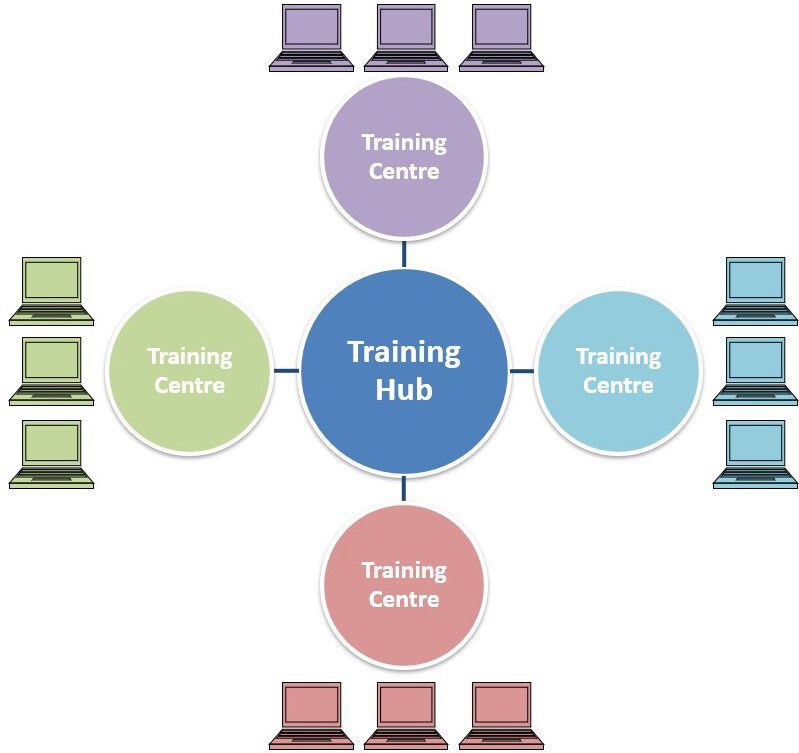
Education
Frontline Gastroenterol: first published as 10.1136/flgastro-2020-101704 on 5 January 2021. Downloaded from http://fg.bmj.com/ on March 1, 2021 by guest. Protected by copyright.
(50) of cases, collecting both formative and summa-
tive directly observed procedures (DOPS) with local
trainer sign-off, completion of e-
learning modules
and successful completion a SBCE knowledge-based
assessment. There also exists a standardised training
programme for CCE which has been advocated by the
BSG and is again based on European and US standards.
Training in UGICE is yet to be formalised.
TRAINING OPPORTUNITIES IN CAPSULE
ENDOSCOPY (COVID-19)
Although COVID-19 has limited training opportuni-
ties in endoscopic procedures requiring face- to-face
contact and tactile assistance, it potentially frees up
time for alternative focus of training. Importantly, CE
is not included in the current gastroenterology training
curriculum. We do not propose that CE training should
replace conventional endoscopy training; however,
while access to endoscopy training remains limited,
there are positive opportunities to train in CE.
Once endoscopy services recover, conventional
endoscopy training should take priority; however, we
anticipate that trainees will have a unique opportunity
to shape their training at this juncture and that ongoing
training in CE might well continue as an adjunct.
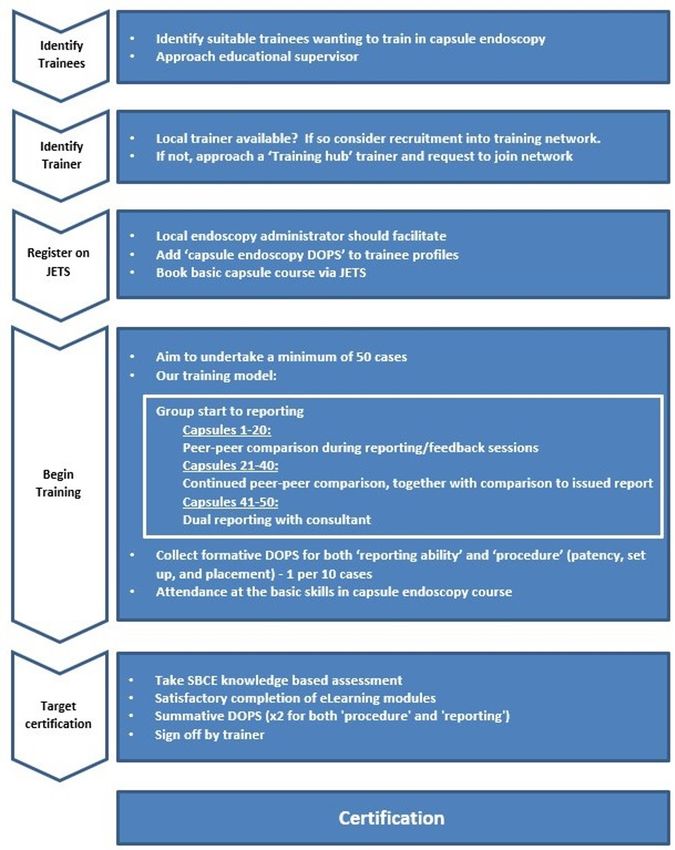
Figure 1 Model currently adopted by our training hub. Adapted The ability to report the study and subsequently
from: JAG certification: capsule endoscopy (small bowel). DOPs, directly have training sessions for feedback remotely lends
observed procedures; JAG, Joint Advisory Group on Gastrointestinal itself perfectly to the limitations faced by trainees in
Endoscopy; SBCE, small bowel capsule endoscopy. the current climate and could ultimately lead to pre-
CCT accreditation in CE. The COVID-19 pandemic
As COVID-19 remains prevalent, further strain has created an environment in which the positioning
on endoscopy and training is expected. We believe of CE in investigation pathways may play a role in the
the proposed strategy to use CE to increase access recovery plan for endoscopy services. This will create
to endoscopy services provides a unique training a need for an appropriately trained workforce to meet
opportunity. With the widespread adoption of remote the demands of a new service model. Existing tech-
working, the use of video-conferencing platforms such nology can facilitate the delivery of CE training and
as Microsoft Teams (which allow screen sharing and it remains to be seen how artificial intelligence based
multiprofessional interaction) and the emerging role models can facilitate endoscopy training through
of CE in the deceleration and early recovery phases assisted lesion-detection.14
of the COVID-19 pandemic, training in CE should be The lack of a CE service in a trainees’ base hospital
more accessible than ever. need not be a barrier to accessing training using a virtual
learning environment. Use of video- conferencing
SMALL BOWEL CAPSULE ENDOSCOPY TRAINING platforms across the NHS facilitates communication
(UK) between geographically disparate sites willing to offer
COVID-19, the JAG released a standardised
Pre- CE training.
training pathway for SBCE in recognition of rising
demand and in line with BSG and European Society CAPSULE ENDOSCOPY TRAINING NETWORKS
of Gastrointestinal Endoscopy guidelines for the The endoscopy team in our trust have taken advantage
investigation for obscure GI bleeding, common of this unique training opportunity by developing a CE
GI conditions and surveillance of polyposis training network. Although this is in its early stages,
syndromes.9–11 Increasing demand was mirrored by the proposed model is demonstrated in figures 1 and
trainees for formal training in CE.12 Figure 1 is an 2. The Training Hub is led by a group of CE reporters
adaptation of the current JAG pathway and is the (gastroenterology consultants) and comprises several
current model adopted by our CE training network. gastroenterology registrars. The team meets weekly
The JAG approved SBCE certification pathway is at a time previously occupied by conventional endos-
based on the American Society for Gastrointestinal copy training, and trainees are rostered to attend the
Endoscopy training guidance.13 This encompasses a relevant surrogate multi- disciplinary team (MDT)
SBCE training course, undertaking a minimum number meetings to maximise output. We have chosen to focus
2 Conley TE, et al. Frontline Gastroenterology 2021;0:1–4. doi:10.1136/flgastro-2020-101704Education
Frontline Gastroenterol: first published as 10.1136/flgastro-2020-101704 on 5 January 2021. Downloaded from http://fg.bmj.com/ on March 1, 2021 by guest. Protected by copyright.
reports was broad, with a significant degree of over-
reporting/misinterpretation of normal findings, heter-
ogeneity of findings in general, and disagreement in
recommendations. Over time, reports have become
more homogenous in structure, terminology, findings
and recommendations. More mature management
plans are being constructed and when disagreements
arise, the consultant supervisors facilitate further
discussion by taking control of the shared image
display and providing structured, constructive feed-
back. Once the 20 preselected CE studies have been
completed, we plan to move to a dual-reporting model
whereby the trainee and consultant remotely report a
live study and compare results.
To date, this has been a success and there are plans
to publish outcome data once the desired number of
Figure 2 Hub and Spoke model depicting the relationship between SBCE studies have been successfully reported by our
the ‘Training Hub’ and peripheral/remote ‘Training Centres’. local training group in order to inform other units/
networks who wish to adopt such a programme. We
on SBCE pro-term given that this service is well estab- hope to inspire an upscaling of such networks to afford
lished in our trust. trainees in remote trusts the opportunity to continue
PillCam Viewer Software was distributed to the to progress in their endoscopy training—our outcome
trainees and an introductory group tutorial on how to data should inform this process further.
successfully navigate the software, identify key land-
marks and structure a report was delivered. A curated Contributors TEC and AB were involved in the initial drafting
of the manuscript. TEC, JF, TT, PC and AB were involved in
set of 20 SBCE studies encompassing a broad set of the final drafting of the manuscript.
endoscopic findings (identified by the consultant Funding The authors have not declared a specific grant for this
supervisors) was then distributed to trainees. A ‘group research from any funding agency in the public, commercial or
start’ was preferred to a ‘staggered start’ for training not-for-profit sectors.
purposes to encourage peer-to-peer comparison and Competing interests TT has received conference attendance
peer- driven feedback. Trainees reported the same funding from Janssen.
studies each week in advance of the weekly training Patient consent for publication Not required.
session. ORCID iDs
Microsoft Teams platform was used, allowing Thomas Edward Conley http://orcid.org/0000-0002-0604-
screen sharing and commentary when presenting 0770
Joseph Fiske http://orcid.org/0000-0003-0486-2663
and discussing cases and capsule studies. While the
full team have been on-site for the majority of meet-
ings, social distancing restrictions brought about by REFERENCES
COVID-19 have meant that remote dial-in has been 1 British Society of gastroenterology (Bsg) endoscopy activity
and COVID-19: Bsg and JAG guidance – update 22.03.20,
the default approach. This has improved efficiency as
2020. Available: https://www.bsg.org.uk/covid-19- advice/
screen-sharing from individual computers has removed endoscopy-activity-and-covid-19-bsgand-jag-guidance/
the need to upload multiple studies onto a single unit. 2 Sud A, Torr B, Jones ME, et al. Effect of delays in the 2-week-
Use of information technology in this way is in keeping wait cancer referral pathway during the COVID-19 pandemic
with the ambition to digitalise secondary care within on cancer survival in the UK: a modelling study. Lancet Oncol
2020;21:1035–44.
the NHS as part of the long-term plan, and although a
3 FitzPatrick M, Clough J, Harvey P. How can gastroenterology
substantial proportion of this effort is directed towards training thrive in a post-COVID world? Frontline
enhancing the patient experience—we believe that the Gastroenterol;9:flgastro-2020-101601.
same ambition can be applied to training which will 4 Joint Royal Colleges of Physicians Training Board.
indirectly contribute to good patient care.15 16 Gastroenterology (includes sub-specialty of hepatology).
Available: https://www.jrcptb.org.uk/specialties/
The structured approach to training also means that
gastroenterology-includes-sub-specialty-hepatology [Accessed
DOPs can be completed on the day of presentation and 12 Oct 2020].
training portfolios can be kept up-to-date. 5 Clough J, FitzPatrick M, Harvey P, et al. Shape of training
review: an impact assessment for UK gastroenterology trainees.
EARLY OUTCOMES OF LOCAL TRAINING Frontline Gastroenterol 2019;10:356–63.
6 Biswas S, Alrubaiy L, China L, et al. Trends in UK endoscopy
NETWORK
training in the Bsg trainees' national survey and strategic
The group-start approach to training has allowed for planning for the future. Frontline Gastroenterol 2018;9:200–7.
the direct comparison of findings between trainees at 7 Penman I, Rees C. British Society of gastroenterology
each weekly meeting. At first, the variation between guidance on recommencing gastrointestinal endoscopy in
Conley TE, et al. Frontline Gastroenterology 2021;0:1–4. doi:10.1136/flgastro-2020-101704 3Education
Frontline Gastroenterol: first published as 10.1136/flgastro-2020-101704 on 5 January 2021. Downloaded from http://fg.bmj.com/ on March 1, 2021 by guest. Protected by copyright.
the deceleration and early recovery phases of COVID-19 of gastrointestinal endoscopy (ESGE) clinical guideline.
pandemic. Available: https://www.bsg.org.uk/covid-19- Endoscopy 2015;47:352–86.
advice/bsg-guidance-on-recommencing-gi-endoscopy-in-the- 12 McAlindon ME, Parker CE, Hendy P, et al. Provision of service
deceleration-early-recovery-phases-of-the-covid-19-pandemic/ and training for small bowel endoscopy in the UK. Frontline
[Accessed 30 Sep 2020]. Gastroenterol 2012;3:98–103.
8 MacLeod C, Wilson P, Watson AJM. Colon capsule endoscopy: 13 ASGE Training Committee 2011-2012, Rajan EA, Pais SA,
an innovative method for detecting colorectal pathology during et al. Small-Bowel endoscopy core curriculum. Gastrointest
the COVID-19 pandemic? Colorectal Dis 2020;22:621–4. Endosc 2013;77:1–6.
9 JAG certification: capsule endoscopy (small bowel). Available: 14 Park J, Hwang Y, Nam JH, et al. Artificial intelligence that
https://www.thejag.org.uk/CMS/UploadedDocuments/ determines the clinical significance of capsule endoscopy
Scheme/Scheme5/Capsule%20endoscopy%20certification% images can increase the efficiency of reading. PLoS One
20crtieria%20and%20process%201.1.pdf [Accessed 12 Oct 2020;15:e0241474.
2020]. 15 UK Government. Making it work: harnessing the power of
10 Sidhu R, Sanders DS, Morris AJ, et al. Guidelines on small health information technology to improve care in England.
bowel enteroscopy and capsule endoscopy in adults. Gut Available: https://www.gov.uk/government/uploads/system/
2008;57:125–36. uploads/attachment_data/file/550866/Wachter_Review_
11 Pennazio M, Spada C, Eliakim R, et al. Small-Bowel capsule Accessible.pdf [Accessed 13 Dec 2020].
endoscopy and device-assisted enteroscopy for diagnosis 16 NHS. The NHS long term plan. Available: http://www.
and treatment of small-bowel disorders: European Society longtermplan.nhs.uk [Accessed 13 Dec 2020].
4 Conley TE, et al. Frontline Gastroenterology 2021;0:1–4. doi:10.1136/flgastro-2020-101704You can also read


