COVID-19 CSNEWSMARCH 2021 | ISSUE 1 - CS IN THE FIGHT AGAINST - University College Dublin
←
→
Page content transcription
If your browser does not render page correctly, please read the page content below

University College Dublin
       School of Computer Science

CS NEWS
                                    MARCH 2021 | ISSUE 1

CS IN THE FIGHT AGAINST

COVID-19
University College Dublin
              School of Computer Science

WELCOME                                                                          THE SCHOOL IN DATA
A MESSAGE FROM THE HEAD OF SCHOOL                                                                STAFF NUMBERS
                                                                                                                                   Academic 28.4%
                                                                                                     56
                     Welcome to the first                                                                     12
                                                                                                                                   Teaching 6.1%
                     issue of our new UCD                                                                        24
                                                                                                                                   Support 12.2%
                     School of Computer                                                              105
                                                                                                                                   Research 53.3%
                     Science magazine, CS
                     News. The magazine                                                  STUDENT NUMBERS 2020/21
                     brings the latest news                                                                                              n Dublin Campus
                                                                                  Graduate Research        131                           n Online
from around the School to our students,                                                                                                  n Global

                                                                                   Graduate Taught            249        159
alumni, collaborators, staff, friends, and the
worldwide computer science community.                                                Undergraduate                    526                  323

                                                                                                       0           200       400       600       800
In our lead article, Professor Gregory O’Hare describes the COMBAT project.
COMBAT is developing novel software to assist in the understanding and
                                                                                          RESEARCH EXPENDITURE €
management of the spread of infectious diseases, including COVID, in Ireland.          8,000,000
                                                                                       6,000,000
Next, Professor Barry Smyth explains his work on analysing and visualising
                                                                                       4,000,000
COVID-19 data.                                                                         2,000,000
The School's latest European projects are introduced, including work                             0
                                                                                                      2015-16      2016-17     2017-18    2018-19   2019-20
on personalised medicine, life sciences data, law enforcement, and analysis
of the British Library’s book collection. Highlights of national funding
                                                                                 FIELD-WEIGHTED CITATION IMPACT 1.74
include development of the latest artificial intelligence (AI) techniques for
sustainability and health applications.                                                                PUBLICATIONS
The magazine catches up with School researchers who are in the news,                 l Book    l Chapter         l Journal article        l Conference paper
alumni working in industry, and students on internships. We have a                             400
spotlight piece on Professor Eleni Mangina who is using augmented and virtual                  300
                                                                                               200
reality in education. On the next page, we find out about CeADAR, the School’s
                                                                                               100
research centre for applied AI and data analytics. Also covered is our work on                   0
                                                                                                       2016           2017      2018       2019        2020
bringing Computer Science to the Leaving Certificate, commencement of new                     (Source: UCD Research Managment System)
educational programmes in UCD, and establishment of our Centres for
Research Training. We wrap up the magazine with the latest community news,
                                                                                     INDUSTRY COLLABORATION 2020
including the latest books authored by UCD CS staff.
Many thanks to Rupert Bowen who was the driving force behind the magazine,                55 publications co-authored with industry
                                                                                                   10 Invention Disclosures
to Léan Ní Chléirigh for writing and editing many of the articles, and to                                  1 Patent
Assistant Professor Colm Ryan for his support and guidance.
Please join our email list at ucd.ie/cs so that you get future editions of the     UCD CS FUNDING BY SOURCE 2020
magazine hot off the presses.                                                                        TOTAL FUNDING €10.3M
                                                                                               National                                    €5.2M
Now, kick back, read on and enjoy!                                                                    EU                      €2.5M
                                                                                                  UCD                   €1.4M

Assoc. Prof. Chris Bleakley, Head of School                                                    Industry               €1.1M
                                                                                                 Other           €0.1M

2 | ISSUE 1 | MARCH 2021
University College Dublin
              School of Computer Science

CS IN THE FIGHT AGAINST
COVID-19
Professor Gregory O'Hare is leading an interdisciplinary team of researchers from UCD to
create a world-first, population-scale Agent-based Modelling (ABM) solution to improve
our understanding and management of COVID-19 and other infectious diseases in Ireland.

COVID-19 has exposed weaknesses in the              modelling techniques taking account of the          alternative policies for lockdown, compliance,
power of existing global epidemiological models     environment within which the disease exists in      and vaccine roll-out. The new modelling
to help us to understand the transmission of        Ireland, modelling societal, geographical and       resource will be adaptable, extensible and
infectious disease in Ireland. Policy makers need   socio-economic dimensions.                          interoperable, facilitating articulation of specific
better models to help with decisions about          It will deliver a national computational resource   future disease characteristics, cogent diverse
containment measures, vaccine roll-out and          for experimentation and modelling of infectious     data streams and prevalent government
controlled sectoral and/or geographic return to     diseases within Ireland.      An experimental       policies. The UCD CS project team includes
work and school.                                    “sandbox” (or dashboard) will help policy           Assoc. Prof. Rem Collier, Asst. Prof. David Lillis,
The COMBAT project uses an innovative               makers to balance risk to life and protection of    Asst. Prof. Fatemeh Golpayegani, Asst. Prof. Vivek
approach based on scientifically advanced           the economy by examining the effects of             Nallur and Asst. Prof. Lina Xu.

  COMBAT
  The COvid-19 Modelling through
  agent-BAsed Techniques (COMBAT)
  project was awarded €303,424 from
  the Science Foundation Ireland/
  Enterprise Ireland/IDA Ireland joint
  Covid-19 Rapid Response Research
  and Innovation Fund.

                                                                                                                    MARCH 2021 | ISSUE 1 | 3
University College Dublin                                                    Current Covid Burden (up to 24/01/21)
              School of Computer Science

DATA IN A TIME OF                                                                                              Covid Burden (%)

COVID
Professor Barry Smyth’s research is
usually focused on machine learning and
recommender systems but as the
pandemic took hold, he found himself
using data science techniques to explore
different aspects of the pandemic at
home and abroad.

There are two main themes that Barry has              such as the number of fatalities per capita,          COVID burden, and its ’tail’ shows its trajectory
explored with his COVID research. One                 Barry developed an alternative measure — the          over the preceding six weeks. The highlighted
concerns the development of risk models to            COVID burden — which is the number of                 countries, in Europe, show how most have
help the general public to better understand          COVID fatalities as a fraction of the expected        expected death rates in the region of 500-1500
the level of infection risk they face, so that they   number of deaths during the same time-period.         deaths per 100,000 of population (a 3x range
can better calibrate their behaviour. For             This not only normalises for population but           from lowest to highest) but their COVID
instance, instead of the usual focus on metrics       also for all-cause mortality rates, which can         deaths vary from 10-200 deaths per 100,000,
such as the number of daily cases — easy to           vary significantly from country to country,           while the COVID burden varies from 1%
understand but difficult to translate into risk       because they depend on factors such as                (Iceland, Norway, Finland, and Belarus) to over
— Barry developed a technique for predicting          population demographics, access to healthcare,        20% (Slovenia, the UK, and Belgium), a 20x
the current exposure risk. Briefly, exposure risk     security, poverty levels etc.                         range from lowest to highest. Even within
is an estimate of the likelihood that a given         The first graph above shows the current COVID         Europe countries have experienced huge
contact will be infected, based on an estimate        burden for countries around the world. In it, we      variation in the toll that COVID has taken from
of the number of undetected infections in a           can see how COVID deaths account for 15-              their populations.
given location, which in turn depends on              30% of the expected all-cause mortality in            What started out as a series of blog posts with
factors such as cases and testing rates. In           some of the hardest hit countries in Central          the general public in mind has evolved into a
Ireland the exposure risk peaked at about 0.03        and South America, which contrasts with much          more formal research effort as several aspects
during the most recent wave; i.e. one in every        lower burdens (
University College Dublin
              School of Computer Science

EUROPEAN
FUNDING
In 2020 the School was awarded funding from          organisations from all over Europe and                  Asst. Prof. Derek Greene is a funded
the European Commission through its Horizon          CYCLOPES, a practitioner network for fighting           collaborator on the ¤2.5 million ERC
2020 and Interreg instruments, amounting to          cybercrime; Cheryl Baker and Dr Ray Genoe as            Advanced Grant led by Professor Gerardine
¤2.58 million.                                       coordinators of INSPECTr, a shared intelligence         Meaney, of the UCD School of English, Drama
In the area of healthcare, Asst. Prof. Andrew        platform for cybercrime investigation that will         and Film. The five-year study will perform text
Hines is a member of the H2020 project               improve digital and forensic capabilities for           analysis on nearly 36,000 books in the British
PRECISE4Q, which uses data-driven models to          cross-border collaboration.                             Library Nineteenth Century Corpus, using big
create personalised treatments for stroke.           Assoc. Prof. Pavel Gladyshev is a member of             data to address key unanswered societal
Asst. Prof. Colm Ryan is a member of ELIXIR-         AIDA, which is creating a data analytics                questions – such as how does migration
CONVERGE, a pan-European project to                  platform and related tools which will prevent,          impact on the cultural identity of both
manage life-sciences data involving 29               identify, analyse and combat cybercrime and             migrant and host communities in the
institutes in 22 countries. Security researchers     terrorist activities.                                   historical long term?
in the School continue to collaborate with Law
Enforcement Agencies (LEAs) to apply cutting
edge research to real world problems. The
team from the UCD Centre for Cybersecurity
& Cybercrime Investigation were part of three
successful H2020 projects in the area of
security; Cheryl Baker as part of ILEANET, a
                                                        Andrew Hines         Colm Ryan            Pavel Gladyshev       Derek Greene     Ray Genoe
sustainable network of LEA practitioner

NATIONAL FUNDING
Assoc. Prof. Georgiana Ifrim is part of a UCD team   to combine human expertise with artificial              in Davra, Nova Leah, Dundalk IT and IBM, received
which won funding from the Science Foundation        intelligence to demystify laws and regulations,         funding for the project Medical Imaging Ireland.
Ireland AI4Good Future Innovator Prize for the       making it easier to do business while also              The project will deliver a platform offering and
GreenWatch project in collaboration with             protecting consumers. The research combines             enabling technologies which can host, manage,
colleagues from the UCD School of Business, and      elements of natural language processing,                process and analyse archived medical images. In
Sustainable Nation Ireland. The project aims to      machine learning and interpretable/explainable          other news, the School was also awarded five
develop AI-based methods to analyse and verify       artificial intelligence. Prof. Tahar Kechadi and        Irish Research Council Post Graduate Scholarships
sustainability claims in company reports and         Assoc. Prof. Brian Mac Namee, with collaborators        in 2020.
thus improve the measurement of progress
towards the United Nations’ Sustainable
Development Goals.
Two UCD CS projects were funded under the
Disruptive Technologies Innovation Fund. Asst.
Prof. David Lillis, in collaboration with industry
partners Corlytics and Version 1, received funding
                                                        Georgiana Ifrim            David Lillis              Tahar Kechadi             Brian Mac Namee
for the TRANSPIRE project, to create a platform

                                                                                                                             MARCH 2021 | ISSUE 1 | 5
University College Dublin
                School of Computer Science

RESEARCHER

SPOTLIGHT
PROFESSOR ELENI MANGINA
Technology has presented educators everywhere       Augmented), which focused on augmented                 digitisation in higher education in general and
with new opportunities to impart knowledge          reality educational tools for children aged 9-11       the promotion of XR-based immersive learning
and help students to learn. In the last couple of   with a diagnosis of ADHD, has already indicated        in particular for the next three years.
decades alone, it has enabled teachers to make      the positive impact of the intervention. ARETE         This is an incredibly exciting time for education.
huge strides in the classroom. I am an advocate     (Augmented Reality Interactive Educational             Technology has been growing at a speed faster
of the impact emerging technologies can have,       System) focuses on improving students’                 than society’s acceptance, but given the
especially in cases where online learning could     performance in literacy, STEM subjects and             pandemic’s impact, technology and society are
become an educational dystopia. My research         enhancing positive behaviour in the classroom.         adapting. The bigger vision is “Education for all”.
focuses on the impact and assessment of applied     The Fairy Tale Science (FANTASIA) project aims         It is about education outside the previous
augmented reality/virtual reality (AR/VR) in        to bring an augmented holistic approach to             “norm” and outside the standardised tests. Not
education. There are a number of projects in my     teaching       science   concepts. The      project    everybody learns the same way. We learn by
portfolio which will mature and deliver             “Promoting Digital Higher Education by                 doing things, by using all our senses. It’s time we
outcomes within the next two-to-three years. A      Introducing Immersive Learning into Educational        bring this into our students’ life.
previous   research    project, AHA      (ADHD      Studies” (XR4Ped) aims to contribute to

AWARDS AND IMPACT
Assoc. Prof. Georgiana Ifrim, PhD Student Abeba     long-running conference series than any other          published ten years ago, proposes the use of fuzzy
Birhane, MSc Alumna Niamh Donnelly and PhD          institution.                                           logic to formalise and monitor requirements
graduate Dr Claudia Orellana-Rodriguez all          Asst. Prof. Dr Madhusanka Liyanage (Ad Astra           which can be adapted at runtime.
featured in Silicon Republic’s “20 Women Doing      Fellow) was Runner-Up in the 2020 IEEE ComSoc          Asst. Prof. Catherine Mooney and Asst. Prof.
Fascinating Work in AI, Machine Learning and        Outstanding Young Researcher Award for EMEA.           Brett Becker won a best paper award for their
Data Science”.                                      This is a great honour and it is the first time that   work “Investigating the Impact of the COVID-
In June 2020 Professors Mark Keane and Barry        this award has been given to an Irish-based            19 Pandemic on Computing Students' Sense of
Smyth were awarded Best Paper at the 28th           researcher. Asst. Prof. Liliana Pasquale won the       Belonging”     at     the    SIGCSE       Technical
International    Conference    on    Case-Based     Most Influential Paper Award at the 28th IEEE          Symposium, as well as best poster award for
Reasoning (CBR) for: “Good Counterfactuals and      International       Requirements       Engineering     "Exploring Sense of Belonging in Computer
Where to Find Them: A Case-Based Technique for      Conference (RE'20) in Switzerland, in recognition      Science Students" at the ACM Conference on
Generating Counterfactuals for Explainable AI       of her paper entitled "Fuzzy Goals for                 Innovation and Technology in Computer
(XAI)”. UCD has won more best papers at this        Requirements-Driven Adaptation". The paper,            Science Education.

  Mark Keane           Barry Smyth        Madhusanka        Liliana              Catherine            Abeba             Claudia              Niamh
                                          Liyanage          Pasquale             Mooney               Birhane           Orellana-            Donnelly
                                                                                                                        Rodriguez

6 | ISSUE 1 | MARCH 2021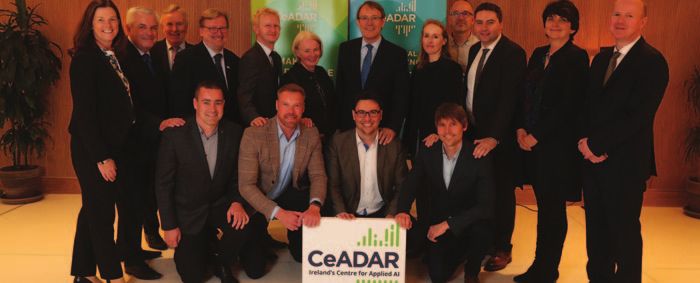
University College Dublin
               School of Computer Science

CeADAR
CENTRE
FOR APPLIED

                                                                                                                                                                     Image credit InvertRobotics
AI AND DATA
ANALYTICS
CeADAR is the National Centre for Applied           the EU focused on delivering AI services to          n training programmes; and,
Artificial    Intelligence.   The   Centre     is   industry. It is a one-stop shop for innovation and   n ecosystem networking and consortium
headquartered in UCD as part of the School of       applied R&D in AI, Machine Learning and Data             building in Ireland and Europe.
Computer Science and is a partnership with TU       Analytics and provides:                              In November 2020, CeADAR was awarded gold
Dublin. Funded by Enterprise Ireland (EI) and the   n proofs of concept;                                 accreditation by the European Big Data Value
IDA, CeADAR has more than 90 member                 n market-ready solutions;                            Forum. There are only 10 other gold members in
companies across a wide span of industry sectors    n investor-ready technology;                         Europe. The gold award recognises the maturity
and is one of 30 Digital Innovation Hubs across     n support to find funding and investment;            and impact of the Centre in AI innovation.

SOME EXAMPLES OF CeADAR’S
RECENT SUCCESSES
n CeADAR secured EI funding for a new high
   performance computer (HPC) cluster called
   Leon. It has several nodes integrating Intel
   Xeon Gold CPUs, 768GB to 1.5TB of RAM and
   the latest NVIDIA A100 GPUs. The system
   has network-attached storage of half a
   petabyte. It will be used to support CeADAR’s
   core work and will be available to companies
   as part of our CeADAR’s test-before-invest
   service;
n CeADAR secured four EU Horizon 2020                  close partnership of Fellow/SME/CeADAR            n in 2020, in collaboration with Asst. Prof. David Lillis
   projects in the past year: EUHubs4Data              supercharges a company through its AI                 of UCD School of Computer Science, CeADAR was
   (¤12m), InterQ (¤9m), DIH-World (¤8m),              capability stages;                                    part of a successful ¤3m DTIF award to apply
   Human Centred AI Masters (¤3.3m);                n in 2019 CeADAR won the NASA Space                      natural language processing to the analysis of
n over the past three years, CeADAR has                Challenge for a combined satellite/earth              financial regulatory documents. This follows on
   been awarded 11 Marie Sklodowska-Curie              observation application with ground data to           from an earlier DTIF ¤1m award in 2019 for a
   Enterprise Ireland Co-Fund Fellowships (with        identify vulnerable populations in conflict           blockchain project for the secure tracking of global
   a further four co-opted Fellowships). This          zones; and,                                           digital assets.

                                                                                                                       MARCH 2021 | ISSUE 1 | 7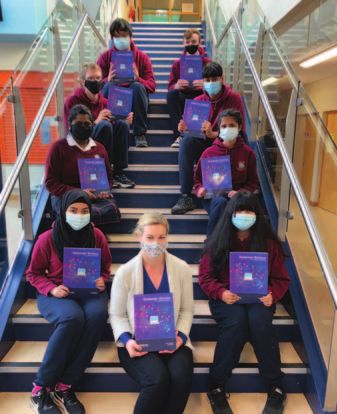
University College Dublin
             School of Computer Science

IRELAND’S                                         TRAINING THE NEXT
FUTURE SKILLS                                     GENERATION OF
NEEDS
                                                  COMPUTER SCIENTISTS
                                                  It’s a very exciting time in Ireland for computer    primary, second and third levels, in addition to
                                                  science education. Following a successful pilot,     government and industry representatives.
                                                  any school in Ireland can now offer Computer         Brett is also involved in the design and delivery
                                                  Science as a Leaving Certificate subject.            of the new BSc in Computer Science,
                                                  Coinciding with this rollout, Asst. Prof. Brett      Mathematics and Education at UCD which
                                                  Becker, in the UCD School of Computer                leads directly to an MSc in Mathematics and
                                                  Science, and his co-author Dr Keith Quille (TU       Science Education. This programme is intended
                                                  Dublin) recently published the first textbook        for those who want to become post-primary
                                                  for the new subject, which is now being used         Computer        Science      and/or      Mathematics
                                 Cheryl Baker     in almost all of the schools across Ireland          teachers.
                                                  offering the subject.
The School is a member of two consortia           Brett and Keith have significant experience in
which secured grants from the Higher              training second-level teachers to teach this
Education Authority (HEA) aimed at building       exciting new subject. They also co-supervise
capacity to meet priority skill needs for Irish   PhD students who are conducting research in
enterprises, society and the economy. Head        this rapidly developing area. Brett is taking on
of School, Chris Bleakley, is the lead on the     a new student this year, through ML-Labs, who
¤14m ADVANCE Centre for Professional              will investigate how artificial intelligence is
Education. The ADVANCE Centre partners            taught in schools in Ireland. Brett, Keith, and
with eight UCD Schools, IT Sligo, TU Dublin       their students have been involved in delivering
and industry leaders from across the high         computing camps for several years to over
tech sector to design and deliver a portfolio     1,500 teachers and 11,000 students, at
of courses addressing industry’s future skills    hundreds of schools in every county. In 2019
needs in the digital arena.                       they, along with Asst. Prof. Catherine Mooney
The UCD Centre for Cybersecurity and              (UCD CS) founded SIGCSEire, the Ireland ACM          Suzanne Linnane was the Educational Consultant for the
Cybercrime Investigation (CCI) is a partner       SIGCSE (Special Interest Group on Computer           book, and is a graduate of the UCD Professional Diploma in
                                                                                                       Educational Studies (Computational Thinking). She teaches
in the ¤8.1m CYBER-SKILLS project, with CIT,      Science Education) Chapter, which now has
                                                                                                       at Adamstown Community College in Dublin where she is
IT Tralee, University of Limerick and TU          nearly 200 members including educators from          pictured with some of her students.
Dublin. CCI has a long-standing relationship
with the financial services sector, so it will
focus its efforts on developing learning                                            COMPUTER SCIENCE FOR
resources for this specific group, supported                                        LEAVING CERTIFICATE
by its banking partners, AIB Bank, Barclays Plc
and the Banking and Payments Federation                                             Speaking at the launch of the new book, Brett said: “This book
Ireland.                                                                            is an important component of a nation-wide effort to make
The ADVANCE Centre and the CYBER-SKILLS                                             Leaving Certificate Computer Science a success. The successful
project are funded by the HEA under the                                             study of computing at all levels is important for all people, not
Human Capital Initiative (HCI) Pillar 3,                                            only for the empowerment of their personal and professional
Innovation and Agility.                                                             lives, but for the national society and economy”.

8 | ISSUE 1 | CS NEWS | MARCH 2021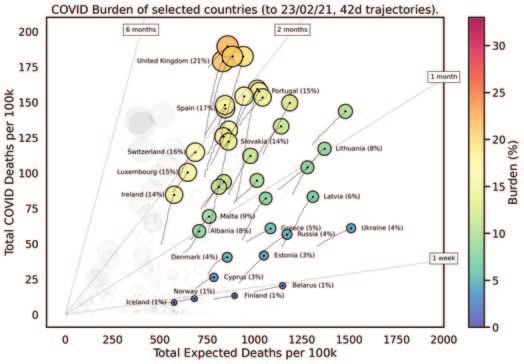
University College Dublin
               School of Computer Science

CENTRES FOR                                                                                              BOOKS
RESEARCH TRAINING                                                                                        PUBLISHED
                                                                                                         THIS YEAR
The School is a partner in two Science Foundation Ireland
                                                                                                                     Fundamentals of
Centres for Research Training.                                                                                       Machine Learning for
                                                                                                                     Predictive Data Analytics
                                                                                                                      Brian Mac Namee together
                                                                                                                      with    co-authors      John
                                                                                                                      Kelleher (TU Dublin) and
                                                                                                         Aoife D'Arcy from the company Krisolis,
                                                                                                         published a new edition of their
                                                                                                         textbook Fundamentals of Machine
                                                                                                         Learning for Predictive Data Analytics
                                                                                                         with MIT Press. The new edition contains
                                                                                                         revised text and questions in all chapters
                                                                                                         plus over 200 pages of new material on
ML-Labs’ mission is to train industry-ready,        UCD is a partner in d-real along with Trinity        deep learning, reinforcement learning
academically excellent graduates who will lead      College Dublin, Dublin City University,              and unsupervised learning.

the current and future transformation of            National University of Ireland Galway and                        Computer Science for
industry, society, and science that machine         TU Dublin. d-real is an innovative, industry                     Leaving Certificate
                                                                                                                     Brett Becker has co-authored
learning is enabling. It is making good progress,   partnered training programme that equips
                                                                                                                     the first textbook for the new
having welcomed the first cohort of 24 PhD          PhD students with deep ICT knowledge and                         Computer Science Leaving
candidates to its three institutions – UCD, DCU,    skills across digital platform technology,                       Certificate subject (see page
                                                                                                                     8).
and TU Dublin - in October 2019 and a second        content and media technology and their
cohort of 29 PhD candidates in September            application in industry sectors.                                 Poems that Solve
2020. These candidates are progressing research     Four UCD Schools are involved in the                             Puzzles: The History and
                                                                                                                     Science of Algorithms
on applications of machine learning from            programme: Computer Science, Information                          Written by Chris Bleakley,
improving water desalination plants to              and Communication Studies, Business, and                          and published by Oxford
                                                                                                                      University Press.
identifying potholes, and developments in           Psychology.
                                                                                                         The book tells the story of algorithms
fundamental machine learning approaches in          Since September 2019, d-real has recruited           from their ancient origins to the present
areas from network analysis to computer vision.     54 PhD students across the institutions, all         day, introducing readers to the inventors
                                                                                                         and inspirational events behind the
The training programme includes:                    with inter-institutional supervisory panels.
                                                                                                         genesis of the world’s most important
n workshops        on     machine      learning,    Current UCD Computer Science-based PhD               algorithms. Along the way, the book
   communications, mental well-being, the law,      projects are focussing on: accommodating             explains, with the aid of clear examples
                                                                                                         and illustrations, how the most
   and ethics;                                      non-native accents for spoken language               influential algorithms work.
n industry seminars from partners including         interaction; improving accessibility for the
                                                                                                                     Cyber and Digital
   Nokia Bell Labs, Accenture Labs, Microsoft,      deaf community through the use of a real-
                                                                                                                     Forensic Investigations,
   Colgate-Palmolive,       Equal1,     Huawei,     time translation avatar for Irish Sign                           A Law Enforcement
   Mastercard, and Aylien; and,                     Language;     identifying   the    impact   of                   Practitioner’s
                                                                                                                     Perspective
n collaborative      development       projects,    augmented reality on concentration for
                                                                                                                      Features     contributions
   including working with the USA National          students diagnosed with autism spectrum              from graduates of the UCD MSc
   Institute of Standards and Technology and        disorder; and, the impact of blended                 in Forensic Computing and Cybercrime
                                                                                                         Investigation,     based    on     their
   the Private Automated Contact Tracing            intelligence on people’s experience of               dissertations (major research projects).
   research group from MIT on developing            agency.                                              The book was co-edited by Asst. Prof.
                                                                                                         Nhien-An Le-Khac. It discusses the state
   machine learning solutions for close contact
                                                                                                         of the art in incident response and
   identification as part of the Covid-19                                                                digital forensics.
   response.

                                                                                                     MARCH 2021 | ISSUE 1 | CS NEWS | 9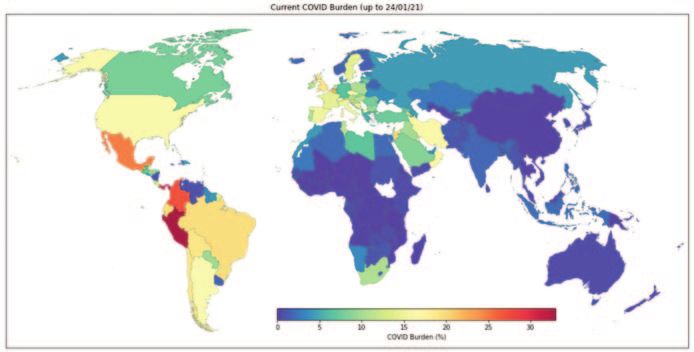
University College Dublin
             School of Computer Science

STUDENT INTERNSHIPS
Since 2018 our undergraduate students               including traditional IT firms but also food          Fortunately, our partner companies made
have had the opportunity to undertake an            production, transport, finance, and business          enormous efforts to adapt the internships and
industry internship as part of their degree         consulting. Our students have worked in               the majority of our internships went ahead,
programme. Students typically spend five-to-        companies such as Aer Lingus, Amazon,                 albeit remotely.
six months working as employees of partnering       Cellusys, Dell, Ericsson, Informatica, Intel, Kerry   In some cases, laptops were shipped to
companies, ranging in scale from small              Group, KPMG, SAP, Swoop and Workday.                  students while in others in-person bootcamps
start-ups to large multi-nationals.                 2020 saw some unique challenges for the               were rapidly moved online.
The work is always technical, typically involving   internship programme – our undergraduate              We are grateful to all of our host companies
software engineering or data science, but the       interns were due to start in mid-March, just as       and hope that 2021 will prove a little more
host companies span multiple industries,            the first national lockdown kicked in.                straightforward!

STUDENT EXPERIENCE
Surabhi Agarwal on her remote internship with Intel Movidius

“I interned at the Intel Movidius Advanced          course of my internship as well as publishing         skill which remote working taught me was to
Architectures group which is a research             a research article. However, the most                 be able to communicate my thoughts in a
group     focused       towards       computer      challenging part for me was to adapt to the           crystal clear manner within my team as well
vision applications. I felt extremely lucky to      remote working environment. Even though               as the various business groups that I was
be able to get the opportunity to work on           there were extremely challenging times and I          working with.”
multiple research projects throughout the           learnt a lot of hard skills, the most important       Surabhi Agarwal, final year BSc.

10 | ISSUE 1 | MARCH 2021
University College Dublin
School of Computer Science
ALUMNI NEWS
Niamh Donnelly MSc 2018 Namee. His encouragement and mentorship improve Apple’s virtual assistant, Siri. Peter
Niamh co-founded the AI throughout the year gave me confidence and made founded Voysis in 2012, having previously spent
start-up Akara Robotics which me feel that I had something to offer in the field. I 15 years researching speech technology and
uses robotics and ultra-violet think we need to start embracing the idea that conducting neural network research. The
light to clean hospital wards, in robotics and AI will be a normal part of life in the company develops technology to help digital
February 2019. She won “Best Application of AI in a future. I think that these areas will be essential in voice assistants improve their understanding of
Student Project” at the Irish 2018 AI Awards. Akara tackling some of the world’s biggest problems like natural language.
is an example of how computer science graduates climate change and global health issues. One of the
use deep technical expertise to assist in combating areas now that is really exciting is space exploration. Cindy Murphy MSc 2011
challenging social issues such as Covid-19. “I The idea that we can actually use robots to explore Cindy is president and founder
conducted a lot of research on the best Masters the surface of another planet or fly a drone in an of Tetra Defense, an incident
programmes available, and ultimately chose UCD atmosphere with virtually no density is fascinating!” response and cyber risk
as I felt they had the most interesting module management firm which helps
choices and you had the autonomy to choose all Peter Cahill PhD 2008 clients recover from incidents like
the modules. I think that this was one of the best In April 2020, Apple acquired the ransomware and wire transfer fraud. In
decisions I ever made in my career to date and I AI voice technology company January 2020, Tetra Defense closed a $3m
loved UCD. While at UCD, I had a great research Voysis for an undisclosed series A investment round. The money will
project supervisor in [Assoc. Prof.] Brian Mac amount, in order to help help the company expand.
COMPUTER SCIENCE SUPPORT CENTRE 2020-2021 SEMESTER 1:
STUDENT RATING OF CSSC
“The tutor explained to me in great detail how to COVID-19, the CSSC has been operating online
solve my problem and provided me with a new way using a queuing and booking system. Students
of thinking. The Support Centre is really helpful!” have 20-30 minutes with a tutor using Google
The Computer Science Support Centre (CSSC) has Hangouts. Never the less, feedback ratings have
provided free tutoring for COMP modules since stayed excellent despite the change of delivery.
2008. It is a popular resource supplementing the CSSC tutors are all experienced and highly rated
module demonstrators and teaching assistants. teaching assistants who are UCD PhD students
CSSC has 17 tutors covering 57 modules and 14 and CS graduates. Tutors are specially selected
programming languages. On a typical day they both for their knowledge and their ability to Very good Good Excellent
will receive a dozen visits. Since the arrival of support students in their learning.
SOCIAL COMMITTEE ACTIVITY
Since April 2020, the Computer Science Social Committee has made it its mission to organise a
variety of online events, fun activities and competitions, to make this time of isolation and remote
working more bearable. There have been pub quizzes, photography competitions, Netflix movie
parties, Halloween pumpkin carving and even a remote Secret Santa to mention but a few!
We are still a team, despite the physical distance! COME TOGETHER #CStogether
A selection of posters for events organised by the Social Committee of Gráinne Ní Nualláin,
Rosemary Deevy, Emily Delaney and Giuseppina Sethuraman.
MARCH 2021 | ISSUE 1 | 11University College Dublin
School of Computer Science
UCD School of Computer Science
University College Dublin
Belfield, Dublin 4, Ireland
Eircode: D04 V1W8
+353 1 716 2483
+353 1 716 2469
Email: computerscience@ucd.ie
https://twitter.com/ucdcompsci
https://www.facebook.com/ucdcs/
https://www.linkedin.com/groups/2195110/
https://www.instagram.com/ucdcs/You can also read


