CRYPTO ASSET REGULATION - AN INTERNATIONAL SURVEY AND KEY DEVELOPMENTS - FS Club News Events Partnerships - Long Finance
←
→
Page content transcription
If your browser does not render page correctly, please read the page content below

FS Club
          News Events Partnerships

CRYPTO ASSET REGULATION – AN INTERNATIONAL SURVEY AND KEY
DEVELOPMENTS
Usman Sheikh, Partner, Gowling WLG

Webinar
Thursday, 03 June 2021, 16:00 BST
A Word From Today’s Chairman

                             Hugh Morris
                        Senior Research Partner
                             Z/Yen Group
                                                  2
FS Club

Platinum
Sponsors

Gold
Sponsors

Silver
Sponsors

Bronze
Sponsors

Personal
Sponsors
Today’s Agenda

• 16:00 – 16:05 Chairman’s Introduction
• 16:05 – 16:25 Keynote Presentation – Usman Sheikh
• 16:25 – 16:45 Question & Answer

                                                      4
Today’s Speaker

                  Usman Sheikh
                    Partner
                  Gowling WLG
                                 5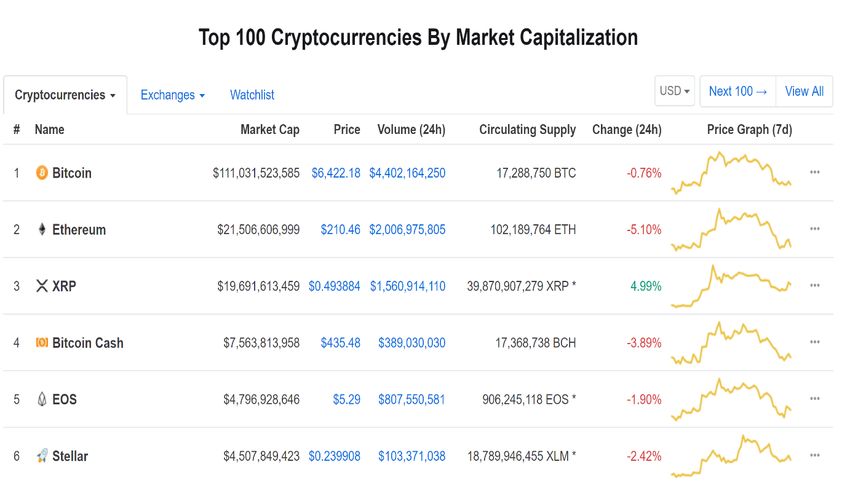
CRYPTO ASSET REGULATION –
KEY DEVELOPMENTS

Usman M. Sheikh (National Head, Blockchain & Smart Contracts)
FS Club – June 3, 2021
BLOCKCHAIN TECHNOLOGY

SIGNIFICANT IMPACT

•   “You should be taking this technology as seriously as you should have been taking the
    development of the Internet in the early 1990’s.” – Blythe Masters

•   “The technology likely to have the greatest impact on the financial services industry and the world
    of business has arrived.” – Blockchain Revolution

•   “Financial Institutions are early adopters. It is estimated that 80% of banks are working on
    blockchain projects. … [B]lockchain will transform the world.” – Ginni Rommetty, IBM
WHAT IS BLOCKCHAIN TECHNOLOGY
•   LEDGER – At its core, a blockchain is just a digital ledger or database of transactions (“distributed ledger
    technology” or “DLT”)

•   CONSIDER THE IMPORTANCE OF LEDGERS IN YOUR LIFE –

    1.   Bank Transactions
    2.   Stock Transactions
    3.   Real Estate Transactions
    4.   Etc.

•   CRITICAL ELEMENT TO EACH OF THESE LEDGERS – A trusted third party intermediary (users do
    not maintain the ledgers; third parties securely update the ledgers; single source of truth). Especially
    required for digital transactions: problem of double spend.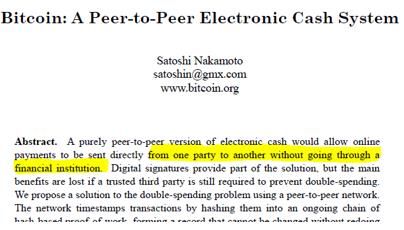
HOW IS THIS LEDGER UNIQUE?

•   NO NEED FOR A TRUSTED THIRD PARTY – A ledger that allows transactions directly from
    one party to another without going through a trusted third party (e.g., a financial institution).
    Trust via cryptographic proof (not via third party).
DISINTERMEDIATION
• “The blockchain protocol threatens to disintermediate almost every process in financial
services.” – World Economic Forum
• “If the banks don’t change, we will change the banks.” – Jack Ma / Alibaba Group
• “Banks may face a ‘Kodak moment’” – former CEO / Barclays12
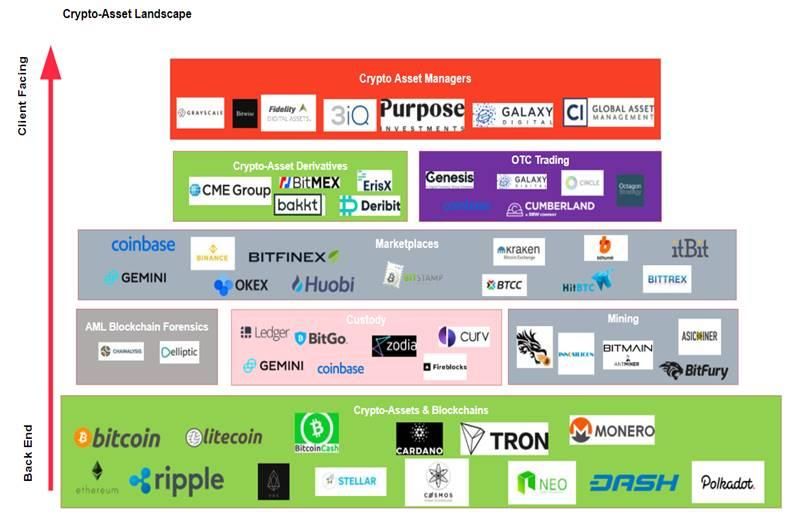
CRYPTO INDUSTRY13
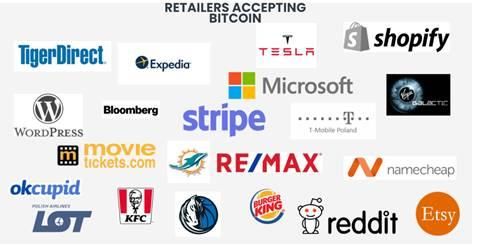
ACCEPTING CRYPTO ASSETS14
BLOCKCHAIN’S RISE IN POPULARITY
Recent rise
in popularitySECURITIES LAWS
REGULATORY RESPONSE – SECURITIES

1.   Regulatory Warnings / Guidance

2.   Regulatory Sandboxes (exemptive relief applications)

3.   Regulatory Studies

4.   Statutory Reform / Rule-Making

5.   Litigation / Enforcement Action

16
REGULATORY WARNINGS /
GUIDANCE
REGULATORY WARNINGS / GUIDANCE
CSA / OSC / IIROC –
•    March 8, 2017 – OSC News Release (“OSC Highlights Potential Securities Law Requirements
     for Businesses Using [DLT]”) (March 8, 2017)

•    August 24, 2017 – CSA Staff Notice 46-307 – Cryptocurrency Offerings

•    June 6, 2018 – CSA Investor Alert: Caution urged for Canadians investing with crypto-asset
     trading platforms

•    June 11, 2018 – CSA Staff Notice 46-308 – Securities Law Implications for Offerings of Tokens

•    March 14, 2019 – CSA / IIROC Consultation Paper 21-402 – Proposed Framework for Crypto-
     Asset Trading Platforms

•    January 16, 2020 – CSA Staff Notice 21-327 – Guidance on the Application of Securities
     Legislation to Entities Facilitating the Trading of Crypto Assets

•    March 29, 2021 – CSA / IIROC Staff Notice 21-329 – Guidance for Crypto-Asset Trading
     Platforms: Compliance with Regulatory Requirements

18
REGULATORY WARNINGS / GUIDANCE
• SEC (Select Only) –
• July 25, 2017 – DAO Report (and related Investor Bulletin + Statement from Enforcement / Corporation Finance)
• December 11, 2017 – Statement on Cryptocurrencies and Initial Coin Offerings (SEC Chairman Jay Clayton)
• Jan 19, 2018 – Joint Statement by SEC / CFTC Enforcement Directors Regarding Virtual Currency Enforcement Actions
• Jan 22, 2018 – SEC Chairman issued warning to companies that change their name to incorporate bitcoin or blockchain
• Jan 24, 2018 – SEC / CFTC Chairs issued Wall Street Journal op-ed that they are closely monitoring cryptocurrency activities;
will take action when warranted
• March 7, 2018 – Statement on Potentially Unlawful Online Platforms for Trading Digital Assets
• May 16, 2018 – “HoweyCoins” website (SEC Office of Investor Education and Advocacy)
• Nov 16, 2018 – Statement on Digital Asset Securities Issuance and Trading
• April 3, 2019 – SEC Statement on “Framework for ‘Investment Contract’ Analysis of Digital Assets
• July 8, 2019 – SEC/FINRA Joint Staff Statement on Broker-Dealer Custody of Digital Asset Securities
• October 11, 2019 – SEC / CFTC / FinCEN Joint Statement on Activities Involving Digital Assets
• Sept 21, 2020 – SEC FinHub Statement on OCC Interpretation
19REGULATORY WARNINGS / GUIDANCE
• Regulatory Position re: ICOs
• CSA: “… in many cases, when the totality of the offering or arrangement is considered, the coins/tokens should properly be
considered securities”. Does the ICO involve: (i) an investment of money; (ii) in a common enterprise; (iii) with the expectation of
profit; (iv) to come significantly from the efforts of others? (see Pacific Coast Coin Exchange)
• If so, prospectus requirement / exemptions, disclosure requirements, risk acknowledgement forms, comply with investor
investment limits, provide audited annual financials, resale restrictions, registration requirement
• Regulatory Position re: Cryptocurrency Asset Trading Platforms
• Those that offer crypto assets that are securities must determine whether they are a marketplace. If so, should comply with rules
governing exchanges / ATSs. Must apply for recognition or exemption from recognition.
• Additional possible requirements: identity verification, AML, counter-terrorist financing, market arbitrage / manipulation,
recordkeeping.
• Regulatory Position re: Crypto Investment Funds
• Funds created to invest in bitcoin and/or other crypto assets to provide investors with exposure to them or baskets of cryptos
• Concerns regarding: (i) valuation (how assess “fair value”; policies when hard forks occur or receive “air drops”), (ii) custody (few,
if any, qualified custodians; how validate existence and exclusive ownership of private keys; cybersecurity threats / hacks; etc);
(iii) use of crypto platforms (whether trading volumes will affect ability to buy/sell cryptos and to fund redemption requests)
20REGULATORY SANDBOXES
REGULATORY SANDBOXES

•    OSC LaunchPad – Established Oct 24, 2016; made permanent in Oct 2017
     •    Purpose: modernize regulation to support FinTech / blockchain innovation while protecting investors
          and also promoting confidence in our markets
     •    Focus: (a) engage with FinTech / blockchain community; (b) offer direct support in navigating rules;
          (c) take learnings and apply them to similar businesses

•    CSA Regulatory Sandbox – Launched on Feb 23, 2017
     •    Consider applications on a coordinated and flexible basis; harmonized approach to business models

•    Other Provincial Regulatory Sandboxes –
     •    AMF – launched AMF Working Group in June 2016; created Fintech lab and entered into partnership
          with R3; appointed Director, Fintech and Innovation
     •    BCSC – launched BCSC Tech Team

•    SEC FinHub – Launched on Oct 18, 2018
     •    Launched Strategic Hub for Innovation and Financial Technology (FinHub)

22
REGULATORY SANDBOXES
Blockchain Related Exemptive Relief Applications / Approvals
• Initial Coin Offerings
• Impak Finance Inc. (AMF / OSC) – August 16, 2017
• Token Funder Inc. (OSC) – October 17, 2017
• Exempt Market Dealer
• TokenGX Inc. (OSC) – April 17, 2019
• Finhaven Capital Inc. – November 2, 2020
• Investment Fund Manager
• First Block Capital Inc. (BCSC) – September 6, 2017
• Ross Smith Asset Management ULC – September 22, 2017
• 3iQ Corp. (OSC) – January 26, 2018
• Majestic Asset Management LLC – January 26, 2018
23REGULATORY SANDBOXES
Blockchain Related Exemptive Relief Applications / Approvals
• Distribution of Tokens
• ZED Networks Inc. – May 2019
• Manager of Investment Portfolio
• Rivemont Investments Inc. – January 26, 2018
• Crypto Asset Trading Platforms
• Wealthsimple Digital Assets Inc.– August 7, 2020
• BlockFilm Inc. – March 1, 2021
24REGULATORY STUDIES
REGULATORY STUDIES

     Examples –
     • European Central Bank (ECB) Occasional Paper 172 – “Distributed Ledger Technologies in
       Securities Post-Trading” (April 2016)
     • ESMA Discussion Paper – “The [DLT] Applied to Securities Markets” (June 2, 2016)
     • FINRA Report – “Distributed Ledger Technology: Implications on Blockchain for the Securities
       Industry” (January 21, 2017)
     • IOSCO Research Report – IOSCO Research Report on Financial Technologies (February 2017)
     • IOSCO Final Report – Crypto-Asset Trading Platforms (February 2020)
     • IOSCO Public Report – Global Stablecoin Initiatives (March 2020)
     • UK FCA Discussion Paper – “Discussion Paper on distributed ledger technology” (April 2017)

26
LEGISLATIVE / RULE REFORM
CRYPTO ASSET TRADING PLATFORMS (CONT’D)
REGULATORY FRAMEWORK
 •       CSA / IIROC Consultation Paper 21-402 – Proposed Framework for Crypto-Asset Trading Platforms
         (March 14, 2019)
     •      Many are performing functions similar to exchanges, ATSs, clearing agencies, custodians and dealers. May also introduce
            novel features which create risks to investors and capital markets that are not addressed by existing regulatory framework
     •      Outlined proposed regulatory framework for platforms
     •      Noted that there are currently no platforms recognized in Canada as an exchange or otherwise authorized to operate as a
            marketplace
     •      Application: If trading securities on platform via non-discretionary methods, must comply. Key positions: (1) ICO tokens
            may be securities; (2) Even when a token may not be a security (e.g., bitcoin – likely not security), a platform that trades the
            token may involve a trade of “securities” depending on the investor’s contractual right to the crypto asset / commodity (e.g., if
            assets are pooled, etc.)
 •       CSA / IIROC Staff Notice 21-329 – Guidance for Crypto-Asset Trading Platforms: Compliance with
         Regulatory Requirements (March 29, 2021)
     •      Sets out framework for platforms that facilitate trading of either: (i) crypto-assets that are securities (“Security Tokens”), or (ii)
            instruments or contracts involving crypto assets that are securities (referred to by Staff as “Crypto Contracts”).
     •      OSC press release separately noted that CTPs must comply, including by contacting Staff by April 19, 2021, or else they
            would face enforcement steps.

28
SECURITIES LITIGATION
INITIAL COIN OFFERINGS
•    Example: PlexCoin
     •   Stated to be new virtual currency (like Bitcoin), promising 1300% returns in a
         month. Received $15 million via ICO.
     •   Aggressive enforcement action by multiple regulators:
         •    AMF – Obtained various Orders to cease raising via ICO, shut down website
              / social media sites. Obtained contempt findings (2 months jail; $100K fine).
         •    SEC – Filed complaint. Obtained emergency asset freeze.

•    Other Enforcement Actions (United States):
     •   DAO – Key enforcement prosecution

     •   REcoin – SEC charged an individual and two related companies with
         allegedly defrauding investors through ICOs supposedly backed by real
         estate and diamonds. Allegations that selling unregistered securities, etc.

     •   Others – Telegram, Kik, Ripple, etc

30
CRYPTO ASSET TRADING PLATFORMS
QUADRIGA CX – OSC REPORT
• Report issued on June 11, 2020. ** Not findings of OSC ***
• Noted that the collapse of Quadriga in 2019 caused massive losses for 76,000 investors from Canada and around
the world, who collectively lost at least $169 million. Approximately 40 per cent of these investors were Ontarians.
• “Staff determined that Quadriga collapsed due to a fraud committed by Cotten. Cotten opened accounts under
aliases and credited himself with fictitious currency and crypto asset balances, which he traded with unsuspecting
Quadriga clients. Cotten sustained real losses when the price of crypto assets changed, thereby creating a shortfall
in assets available to satisfy client withdrawals. Cotten covered this shortfall with other clients’ deposits – in effect,
operating a Ponzi scheme. Staff calculated that the bulk of the $169 million in client losses – approximately $115
million – arose from Cotten’s fraudulent trading.”
• Staff also determined that Cotten misappropriated millions in client assets to fund his lavish lifestyle.
• OSC Staff would likely have pursued an enforcement action against Cotten and Quadriga. However, not practical
since Cotten was deceased and Quadriga is bankrupt.
31CRYPTO FUNDS
• Appeal of a Denial of Prospectus Receipt for Bitcoin Fund
• 3iQ intended to create a non-redeemable investment fund that would invest in bitcoin; available to retail
• OSC Director (Feb 2019): Refused on public interest grounds. Several operational risks (e.g., inability to accurately
value bitcoin due to fragmented and unregulated environment; novel risk on safeguarding of asset due to lack of SOC
assurance reports and insurance; material risk that could not file audited financial statements due to lack of SOC
assurance). Also, there is a restriction in NI 81-102 on funds holding illiquid assets, and bitcoin was an “illiquid asset”.
• OSC Decision (Oct 2019): Not the role of securities regulator to approve or disapprove the merits of securities being
offered to the public, or to immunize investors against risk / loss. Public interest jurisdiction is broad but not infinite. While
Director’s concerns are warranted and should be taken seriously, they do not warrant denying a receipt.
• Bitcoin is not an illiquid asset (substantial volumes trade daily)
• While evidence of market manipulation, one can still achieve price discovery
• While bitcoin can be stolen or lost, Staff did not establish that the proposed custodian did not follow sufficient
practices for safeguarding bitcoin
• Regarding audited financials, Panel accepted 3iQ’s evidence that it could obtain an audit from a qualified auditor
even without a SOC 2 Type 2 report
32CRYPTO FUNDS
Recent Developments
• Closed-End Fund –
• The Bitcoin Fund – Preliminary prospectus filed in Nov 2019; final prospectus on March 31, 2020; final receipt
on April 1, 2020; completes IPO and begins trading on April 9, 2020 (QBTC.U)
• ETFs
• Purpose Bitcoin ETF – Preliminary prospectus filed on Feb 10, 2021; final prospectus on Feb 11, 2021; final
receipt on Feb 11; begins trading on Feb 18 (BTCC.B and BTCC.U)
• Ether ETFs – Three ETFs begin trading on April 20, 2021 (Purpose Ether ETF, CI Galaxy Ethereum ETF and
Evolve Ether ETH)
• United States – Previously rejected (dissents by SEC Commissioner Peirce – e.g., July 2018 and Feb 2020); recent
applications by Fidelity (Wise Origin Bitcoin Trust) and Goldman Sachs (ARK Innovation Fund) in March 2021
33OUTSTANDING ISSUES
LEGAL CLASSIFICATION / JURISDICTION

Regulatory Uncertainty re: Legal Classification of Digital Assets

•    bitcoin (BTC) – security? commodity? currency?

     •   SEC Chairman Jay Clayton – BTC “… is not a security”
         CNBC (June 6, 2018)

     •   CSA CP 21-402 – widely accepted that some crypto assets, such as BTC,
         are not in and of themselves securities / derivatives; commodities

     •   CFTC in Coinflip – bitcoins are “properly defined as commodities”

•    ether (ETH) –

     •   SEC Director of Corporation Finance William Hinman – “… Ether, based on
         my understanding of the present state of Ether, the Ethereum network and
         its decentralized structure, current offers and sales of Ether are not
         securities transactions.” (June 14, 2018)

•    Others – Bitcoin Cash (BCH)? Stellar (XLM)? Monero (XMR)?
ANTI-MONEY LAUNDERING
37

         CANADA – PCMLTFA

     VIRTUAL CURRENCIES

     •    Proceeds of Crime (Money Laundering) and Terrorist Financing Act (“PCMLTFA”) is the cornerstone Canadian
          legislation. Sets out core elements of Canada’s AML / CTF regime.

     •    At the outset, common view was that those who were dealing in virtual currencies were not captured per se by the
          PCMLTFA and, accordingly, were not required to register as a “Money Services Business” (MSB)
          •    Such products were not considered to fall within the definition of “funds” under the PCMLTFA

     •    PCMLTFA was amended in 2014 to close the loop hole
          •    Would expressly extend the reach of the Act to persons/entities that are “engaged in the business of…dealing in virtual
               currencies”
          •    Amendments would not immediately come into force; only when revised regulations were adopted (e.g., “dealing in virtual
               currencies” was to be defined by regulation)
          •    Lengthy history of draft regulations
38
CANADA – PCMLTFA
KEY DEFINITIONS
• Virtual Currency now defined as set out below:
• (a) a digital representation of value that can be used for payment or investment purposes that is not
a fiat currency and that can be readily exchanged for funds or for another virtual currency that can be
readily exchanged for funds; or
• (b) a private key of a cryptographic system that enables a person or entity to have access to a digital
representation of value referred to in paragraph (a).
• Can apply to ICO tokens, likely stablecoins. NFTs?39
CANADA – PCMLTFA
NEW OBLIGATIONS FOR VIRTUAL CURRENCY DEALERS
• Registration: Entities in the business of “dealing in virtual currencies” (“virtual currency dealers”) will be required to register with
FINTRAC prior to carrying out their proposed activities and must renew their registration every two years.
• Record-Keeping: Virtual currency dealers will be required to maintain records of certain transactions, including “virtual currency
exchange transactions”.
• Reporting: Virtual currency dealers will be required to submit certain reports to FINTRAC (e.g., suspicious activity reports).
• KYC: Requirement to verify / ascertain the IDs of clients in the manner prescribed by PCMLTFA Regs
• Compliance Program: Requirement to implement a compliance program (e.g., policies / procedures, appoint compliance officer, train
employees / agents).
• The Travel Rule: Long-standing customer due diligence requirement for banks / other FIs when sending each other money on
customers’ behalf, which requires them to pass on certain pieces of identifying info to the next FI a transaction is sent to.
• Those required to keep a record in respect of a virtual currency transfer will be required to “(a) include, with the transfer, the name, address and, if any,
the account number or other reference number of both the person or entity who requested the transfer and the beneficiary; and (b) take reasonable
measures to ensure that any transfer received includes [such] information.”40
INTERNATIONAL – FATF
RECENT DEVELOPMENTS
• June 2019 – Final adoption of an Interpretative Note to the FATF Recommendations (#15 – New Technologies) occurred on June
18, 2019. Sets out detailed implementation requirements for the regulation of “virtual asset service providers” (“VASPs”).
• Issued related guidance document: Guidance For a Risk-Based Approach: Virtual Assets and Virtual Asset Service Providers
• FATF stated that they will monitor implementation: “The threat of criminal and terrorist misuse of virtual assets is serious and
urgent, and the FATF expects all countries to take prompt action to implement the FATF Recommendations in the context of
virtual asset activities and service providers. The FATF will monitor implementation of the new requirements by countries and
service providers and conduct a 12-month review in June 2020.”
• Sept 2020 – FATF issued “Virtual Assets Red Flag Indicators of Money Laundering and Terrorist Financing”
• Meant to help national authorities detect whether virtual assets are being used for criminal activity. Also help VASPs, financial
institutions, and other reporting entities detect and report suspicious transactions. Highlights the most important red flag
indicators that could suggest criminal behavior.
• March 2021 – Public Consultation on Update to June 2019 Guidance Document
• Addresses issues related to stablecoins, DeFi, decentralized exchanges and peer-to-peer transfersRECOMMENDATIONS
42

     Regulatory Action – Issues to Consider

                       Issue                                 Possible Solutions                 Examples / Comment
     1. Provide Further Regulatory Clarity         Request for Comments / Consultation   e.g., BCSC Notice and Request for
                                                                                         Comments – Consulting on the Securities
        (Proactive and Collaborative               Papers
                                                                                         Law Framework for Fintech Regulation
        Guidance)
                                                   Sandbox Discussions (with immunity)   Offer direct support. Allow
                                                                                         experimentation without excessive
         ➢   Legal status of digital assets
                                                        ➢UK, Singapore, Australia        regulation if remain within boundaries.
         ➢   Regulation of platforms for                                                 Reduces regulatory uncertainty + costs.
             secondary trading of digital assets                                         Limits on use of info.
                                                   Commission Studies (evidence-based    e.g., High Frequency Trading (HFT) study;
                                                                                         FINRA’s Report on DLT
                                                   approach to policy making)
                                                   No Action Letters (publish)           e.g., United States: SEC No Action Letters
                                                                                         - https://www.sec.gov/fast-
                                                                                         answers/answersnoactionhtm.html
                                                   Exemptive Relief Orders               Only a handful issued to date.

                                                   Conferences / webcasts                e.g., FINRA Blockchain Symposium, or “A
                                                                                         Few Minutes with FINRA”
43
Regulatory Action – Issues to Consider
Issue Possible Solutions Examples / Comment
2. Develop Better Mechanisms to Identify Fintech Policy Lead e.g., Delaware Blockchain Ombudsperson
Facilitate Dialogue with
Regulators Create multi-org Regulatory Sandbox e.g., UK Project Innovate, Singapore’s
Smart Financial Centre, Australia, etc –
with federal / provincial bodies (e.g.,
have a unified financial sector regulatory
➢ Uneconomic / time consuming OSFI, OSC, Bank of Canada, IIROC, framework; can take national, unified
dialoguing with multiple regulators FINTRAC, etc), with international approach to encourage FinTech
➢ Need regulatory collaboration and collaboration (“bridges” or “landing development.
unified approach pads”, and global guidelines)
e.g., Global Financial Innovation Network
(GFIN) – Dubai, Singapore, Ontario, UK, etc
3. Work with Stakeholders to Whitelist freshly mined / minted
Develop Solutions to Key Legal cryptocurrencies
Issues Restricting Development Risk ratings (e.g., Chainalysis)
of DLT Projects
➢ Address AML/KYC, anti-terrorist
financing and other concerns44
Regulatory Action – Issues to Consider
Issue Possible Solutions Examples / Comment
4. Statutory / Regulatory Reform: Update / neutralize rules and e.g., Delaware corporate law amendments –
can now use DLT to maintain stock ledgers,
Modernize Regulation legislation to address blockchain,
communicate with stockholders, issue /
smart contracts, etc. maintain shares on the ledger
➢ Technologically-neutral and
device-agnostic regulation e.g., Arizona, Tennesee, etc – smart contract
➢ Principle based regulation legislation (CDC: unnecessary)
➢ Efforts to harmonize across
Develop specialized frameworks or Need to be flexible and proportional to the risk.
jurisdictions
licensing regimes for blockchain,
where required45
Regulatory Action – Issues to Consider
Issue Possible Solutions Examples / Comment
5. Enforcement Publish investigation reports or E.g., SEC’s Report of Investigation: DAO
warning letters
➢ Enforce against bad actors
➢ Avoid regulation by enforcement Case selection
6. Positive Posture Positive campaign Singapore “Smart Nation”, Dubai 2020,
Switzerland
➢ Foster innovation; avoid stifling Experimentation with blockchain (pilot Use in combatting insider trading, assist in
➢ Lead by example projects, proofs of concept) AML/KYC compliance, etc.QUESTIONS? 46
CONTACTS

           USMAN M. SHEIKH
           Partner, Head of Blockchain & Smart Contracts

            usman.sheikh@gowlingwlg.com
            +1 416 862-3627
Comments, Questions & Answers
48FS Club Platinum Sponsors Gold Sponsors Silver Sponsors Bronze Sponsors Personal Sponsors
Thank You For Listening

Forthcoming Events

• Fri, 04 Jun (11:00-11:45)   Brexit: Ending The City’s Dominance Of European Finance?

• Mon, 07 Jun (11:00-11:45) How To Create A Knowledge City – Evidence From London’s Flat White
                              Economy

• Tue, 08 Jun (15:00-15:45)   The European Merger & Acquisition Landscape – Surprising Shots In The Arm
                              From Covid-19

• Wed, 09 Jun (15:00-15:45) Digital Care – One Year Into Covid And Here To Stay

Visit https://fsclub.zyen.com/events/forthcoming-events/
                                                                                                    50
You can also read


