CURRICULUM HANDBOOK - Year 7 2020 - Karratha Senior High School - Karratha Senior High ...
←
→
Page content transcription
If your browser does not render page correctly, please read the page content below
Karratha Senior High School

     CURRICULUM
      HANDBOOK

         Year 7
         2020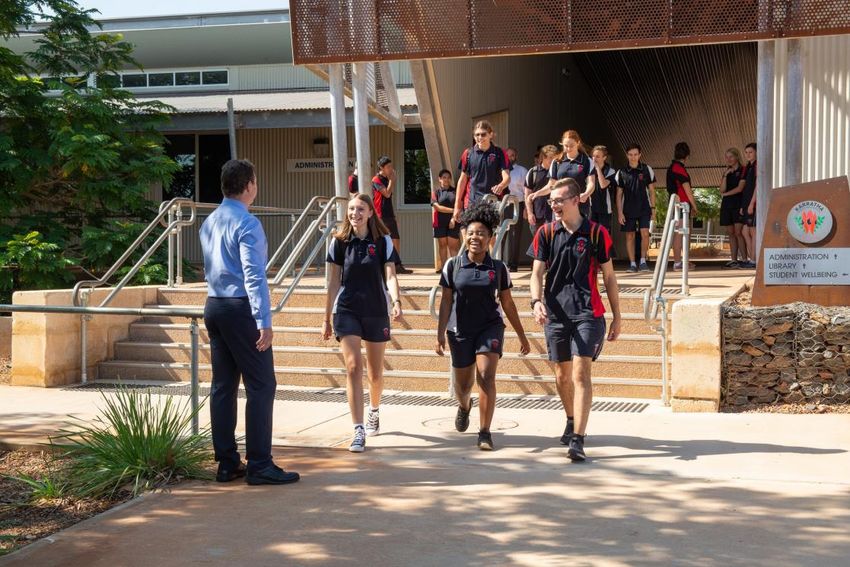
Contents

INTRODUCTION ........................................................................................................ 3

CURRICULUM OVERVIEW ....................................................................................... 4

ASSESSMENT AND REPORTING ............................................................................ 5

STUDENT WELLBEING ............................................................................................ 6

   STUDENT W ELLBEING COORDINATORS ................................................................. 6

   YEAR COORDINATORS ........................................................................................ 6

   SCHOOL DRESS ................................................................................................ 6

   STUDENT USE OF MOBILE PHONES ...................................................................... 7

YEAR 7 SUBJECT DESCRIPTIONS ......................................................................... 8

   ENGLISH ........................................................................................................... 8

   HUMANITIES & S OCIAL SCIENCES (HASS) ........................................................... 8

   MATHEMATICS ................................................................................................... 9

   SCIENCE ........................................................................................................... 9

   HEALTH & PHYSICAL E DUCATION ...................................................................... 10

   TECHNOLOGIES ............................................................................................... 12

   THE ARTS ....................................................................................................... 13

   LANGUAGES - JAPANESE – にほんご .................................................................... 14

   GIRLS ACADEMY ................................................................................................. 15

   CLONTARF ........................................................................................................ 16

CONTRIBUTIONS AND CHARGES IN SCHOOLS: A Guide for Parents ............... 17

SUMMARY ............................................................................................................... 18

WHO CAN HELP YOU ............................................................................................. 19

                                                            2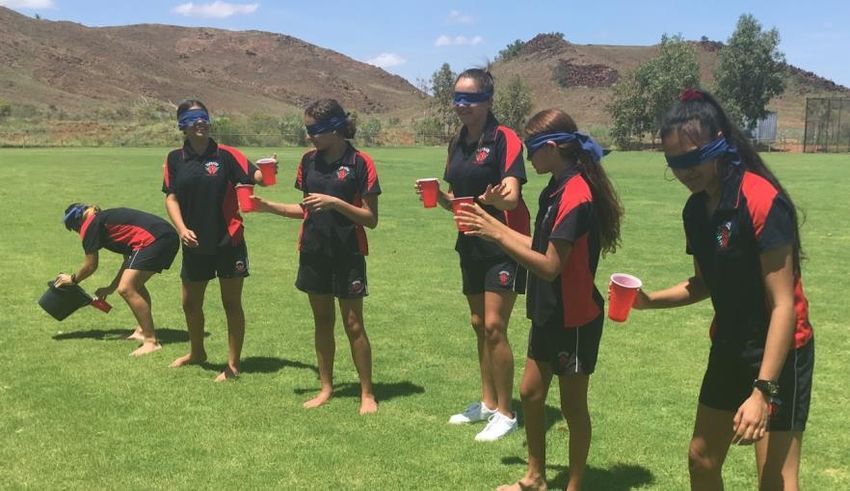
INTRODUCTION

Welcome to Karratha Senior High School, a school that caters for the needs of all children. For
those who are already associated with our school, you will appreciate what a great school we have
and the exciting opportunities that are offered to all children. To those who are new arrivals,
welcome, and I am confident you will soon realise what a great decision you have made in
becoming part of the Karratha Senior High School community.

I encourage you to review our Business Plan 2018-2020, available on our website or from the
school, to gain a greater understanding of the strategic direction of our school.

The information contained in this booklet introduces you to what subjects are offered to Year 7
students in 2020. In addition, information on other aspects of the school such as the support
services and programs that are in place to ensure school is a warm and inclusive environment for
all students. Information on contributions and charges is also detailed so you fully understand your
financial obligations.

The subjects and programs offered are designed to meet the needs of all children. Clear pathways
are created so students can select subjects which allow them to develop the skills and knowledge to
actively engage in their learning and prepare them for future years.

We, as a school, are committed to developing a strong partnership with parents/caregivers
because we believe that working together in the education of your child will result in achieving
positive outcomes. Please take the time to read all the information in this booklet and I am
confident you will get a real sense that we offer an education for your child that is supportive,
comprehensive and challenging.

We look forward to working with you to provide an outstanding education for your child.

Jennifer McMahon
PRINCIPAL

                                                 3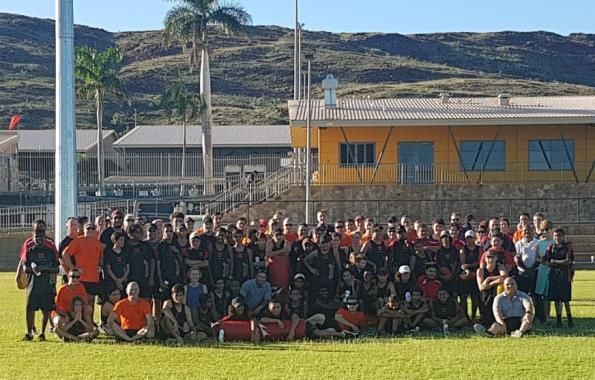
CURRICULUM OVERVIEW
Western Australian Curriculum
The Western Australian Curriculum is fully implemented at Karratha SHS, which is a mandated
requirement for all WA schools. The WA Curriculum provides a comprehensive set of prescribed
content and achievement standards. We use these to plan student learning programs, assess
student progress and report to parents. The learning areas encompassed by the Western
Australian Curriculum are English, Mathematics, Science, Humanities and Social Sciences, Health
and Physical Education, Technologies, The Arts and Languages.
General capabilities in the Western Australian Curriculum encompass the knowledge, skills,
behaviours and dispositions that will assist students to live and work successfully. The general
capabilities are addressed through each learning area at Karratha SHS and are embedded in all
learning programs.
The general capabilities are:
Literacy
Numeracy
Information and Communication Technology
Critical and creative thinking
Personal and social capability
Ethical understanding
Intercultural understanding
4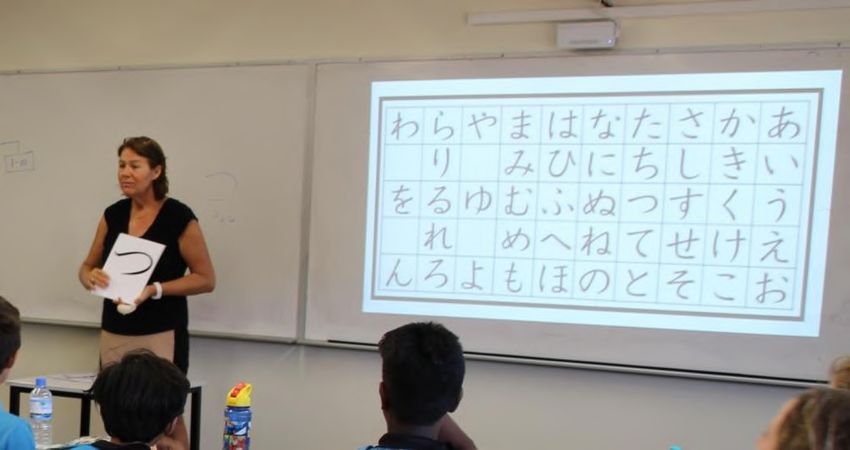
ASSESSMENT AND REPORTING
Student achievement will be assessed in each program of study. Assessment will be carried out
continuously and will be a measure of student progress towards attaining the outcomes of the
subjects being studied. Typical assessment methods are written and objective tests, assignments,
models and projects, experiments, open-ended tasks and portfolios.
Teacher judgements about student performance are based on knowledge of students’ work that is
gained over time and in a range of situations. Each assessment contributes to a cumulative
evaluation of student performance.
The school will provide regular reports on student achievement throughout the year. These will
comprise:
an interim report towards the end of Term 1;
a mid-year report; and
an end of year report.
Parents can also obtain Progress Reports by contacting individual classroom teachers or Student
Wellbeing at any time and can access classroom assessment results via Connect.
There are two parent evenings throughout the year where staff are available, by appointment, to
specifically discuss individual student progress. Parents will be made aware of these dates for 2020.
Connect
Connect is an online learning environment that students can use to access information and course
materials regarding their subjects, and parents can use to monitor their child’s progress at school.
Connect allows students and parents to communicate easily with teachers, stay informed with
their learning anywhere at any time, securely access assessments and feedback, and engage in
their learning outside of the classroom.
Students can log into Connect at school or home using their normal student username and
password. Parents can log in using a Department-supplied secure username to access their child’s
Connect classes and see their child’s results on assessments and daily attendance. Parents will
need to supply the school with an email address in order to receive their login details for Connect.
Formal reports are made available to parents through Connect at the end of Semester 1 and the
end of the year. Parents will receive an email notification that the report is available, and it will be
stored on Connect to be downloaded any time.
5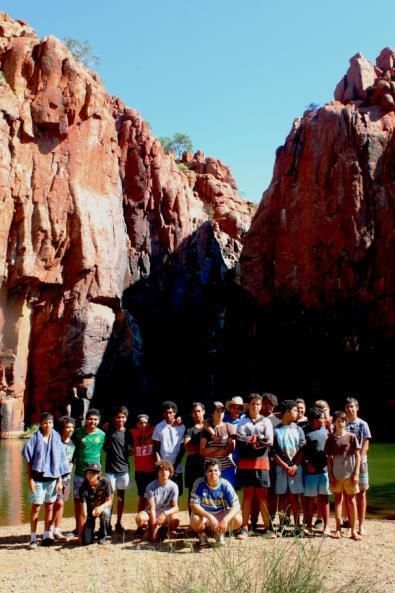
STUDENT WELLBEING
The Student Wellbeing team works to meet the diverse needs of students. The team promotes
personal, academic and social excellence among students and staff and discourages those influences
that can work against the attainment of these standards. The team provides holistic support to assist
students in achieving their academic and personal potential.
The Student Wellbeing team includes the following staff/services:
Deputy Principals
Three Student Wellbeing Coordinators (Years 7/8, 9/10 and 11/12)
Six Year Coordinators
Two School Officers (Student Wellbeing Reception)
School Nurse
Two School Psychologists
Chaplain
Two Student Support Officers
Student Wellbeing Coordinators
The Student Wellbeing Coordinators oversee matters relating to individual students and their welfare,
carrying out a significant role in supporting the overall planning and organisation of student activities
at the school. The Student Wellbeing Coordinators are an excellent point of contact in all matters
relating to student performance and wellbeing.
Year Coordinators
Year Coordinators play an important part in the provision of support and care for students at Karratha
Senior High School for a specific year group. In particular, they have a pivotal role in promoting the
value of care, and the school’s “Towards Tomorrow” motto.
School Dress
A School Dress Policy is endorsed by the School Board and completion of the Enrolment Form implies
an acceptance of and adherence to the School Dress Code regarding uniform. This policy is in place
for the safety of all students. We are proud of our dress code and students in our school uniform are
readily identifiable in our community. All items of School Dress Code are available for purchase at the
school.
LEFT: Uniform for students
in Yrs 7 – 10 (red and navy
shirt).
RIGHT: Students in Yrs 11 &
12 wear the white and navy
shirt.
6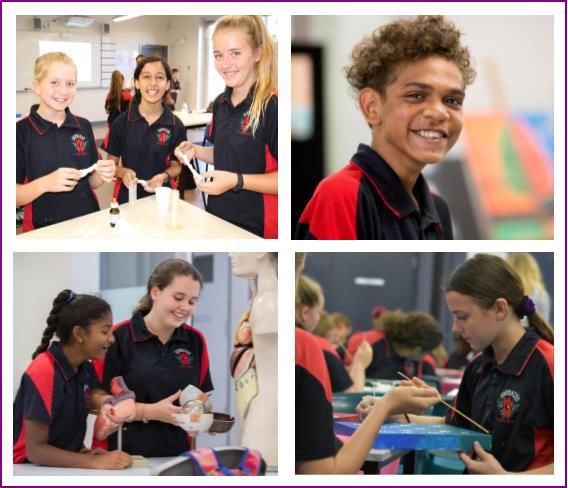
Student Use of Mobile Phones
Mobile phones are not permitted to be used by students at Karratha Senior High School from the time
they arrive at school until the time they leave.
If a student has a mobile phone and/or headphones visible, the procedure is as follows:
The student will be asked to turn off their phone and hand over it to their teacher
The phone will be placed in an envelope with the student’s details written on it
The teacher will take the envelope with the phone to the Administration Office
The teacher will contact the parent / caregiver and ask them to collect the phone from the
front office at their earliest convenience
Students are not permitted to retrieve the phone without permission from their parent. If
permission is granted the phone will only be returned at the end of a school day.
If a student refuses to follow a teacher’s instructions then the normal BMiS policy applies.
7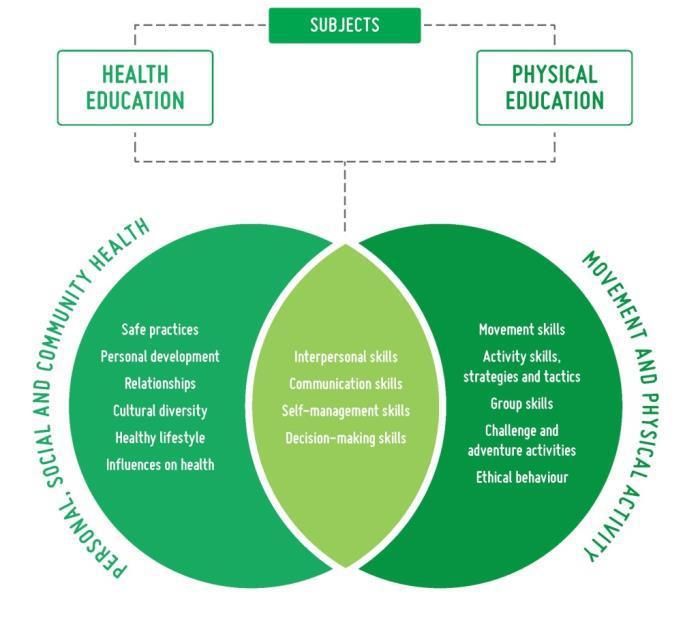
YEAR 7 SUBJECT DESCRIPTIONS
ENGLISH

The English Curriculum is built around the three interrelated strands of Language, Literature and
Literacy. Together the strands focus on developing students’ knowledge, understanding and skills in
listening, reading, viewing, speaking, writing and creating. The English Curriculum builds on concepts,
skills and processes developed in earlier years, and students will revisit and strengthen these as
needed.

Students will engage with a variety of texts for enjoyment. They will listen to, read, view, interpret,
evaluate and perform a wide range of texts. They will also study texts designed to inform and
persuade. Texts will include various types of media texts including newspapers, magazines and digital
texts, novels, non-fiction texts, comics, cartoons, poetry, fairy tales, myths and dramatic
performances.

Texts studied in Year 7 support and extend students. Such texts explore themes of interpersonal
relationships and ethical dilemmas within real-world and fictional settings and represent a variety of
perspectives. Informative texts represent information about a wide range of specialised topics and
text structures are more complex.

HUMANITIES & SOCIAL SCIENCES (HASS)

The HASS program covers units from History, Geography, Economics and Careers & Civics. The
program has been structured to include both understanding and skills required of each unit and has
been mapped to prepare students to undertake Senior School courses.

The History program promotes the understanding of societies, events, movements and developments
that have shaped humanity from earliest times. It helps students appreciate how the world and its
people have changed, as well as the significant continuities that exist to the present day. History, as a
discipline, has its own methods and procedures which make it different from other ways of
understanding human experience.

The Geography program integrates knowledge from the natural sciences, social sciences and
humanities to build a holistic understanding of the world. Students learn to question why the world is
the way it is, reflect on their relationships with and responsibilities for that world, and propose actions
designed to shape a socially just and sustainable future.

The study of Economics and Careers develops the knowledge, understanding and skills that will
inform students about the economy and encourage them to participate in and contribute to it. The
curriculum examines those aspects of Economics and Careers that underpin decision-making at
personal, local, national, regional and global levels. Students learn to appreciate the interdependence
of decisions made, as well as the effects of these decisions on themselves, consumers, businesses,
governments and other economies.

                                                    8
MATHEMATICS
The focus for Mathematics in Year 7 is to continue building students’ skills, knowledge and
understanding. Students will be placed into Mathematics classes based on their previous achievement
in Mathematics and aptitude towards learning.
The focus for Mathematics in Year 7:
understanding includes describing patterns in uses of indices with whole numbers, recognising
equivalences between fractions, decimals, percentages and ratios, plotting points on the Cartesian
plane, identifying angles formed by a transversal crossing a pair of lines, and connecting the laws
and properties of numbers to algebraic terms and expressions
fluency includes calculating accurately with integers, representing fractions and decimals in various
ways, investigating best buys, finding measures of central tendency and calculating areas of shapes
and volumes of prisms
problem-solving includes formulating and solving authentic problems using numbers and
measurements, working with transformations and identifying symmetry, calculating angles and
interpreting sets of data collected through chance experiments
reasoning includes applying the number laws to calculations, applying known geometric facts to
draw conclusions about shapes, applying an understanding of ratio and interpreting data displays.
A course requirement is that all students come prepared for their classes, this means bringing a scientific
calculator and all necessary stationery.
Every student requires a scientific calculator for every Mathematics class (approximate cost
$20)
SCIENCE
Science provides an empirical way of answering interesting and important questions about the
biological, physical and technological world. The knowledge it produces has proven to be a reliable
basis for action in our personal, social and economic lives. The Year 7 Science course involves both
practical and theory work based around Science Inquiry Skills, Science as a Human Endeavour and
four key content areas, Science Understandings.
9
Science Inquiry Skills: Science Inquiry involves identifying and posing questions; planning, conducting
and reflecting on investigations; processing, analysing and interpreting evidence; and communicating
findings.
Science as a Human Endeavour: Through Science, humans seek to improve their understanding and
explanations of the natural world. Science influences society by posing, and responding to, social and
ethical questions, and scientific research is itself influenced by the needs and priorities of society.
Science Understandings:
Biological Sciences: the science of living organisms.
Classification keys for living and non-living things
Ecosystems and interactions between living organisms and their environment
Chemical Sciences: the science of the matter which makes up our world.
Differences between mixtures and pure substances
Separation techniques using physical properties
Earth and Space Sciences: the science of Earth’s dynamic structure and its place in the cosmos
Seasons and moon phases in relation to Earth, Sun and Moon
Advantages and disadvantages of renewable and non-renewable energy sources
Physical Sciences: the science of forces and motion, and matter and energy.
Forces and movement
HEALTH & PHYSICAL EDUCATION
Health and Physical Education provides students with the opportunity to demonstrate and develop
their Personal, Social and Community Health alongside their Activity and Movement Skills enabling
them to make informed decisions for a healthy and active lifestyle. Students develop their skills to
enable their confident participation in physical activity now and as lifelong participants.
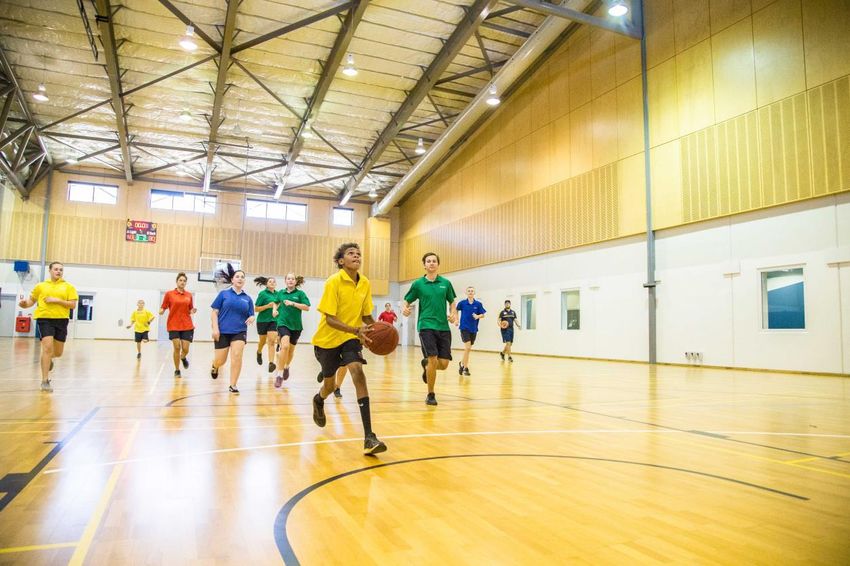
10Year 7 Physical Education includes a variety of sports such as:
Basketball Football Swimming
Futsal T-Ball Hockey
Athletics Volleyball
Australian Rules Ultimate Frisbee
Year 7 Health
Resilience Drug Education
Puberty - social and emotional changes Nutrition, Physical Activity and Fitness
Bullying and Cybersafety
Success in Health and Physical Education in lower school provides students with the opportunity to
represent Karratha Senior High School at many different interschool events across the Pilbara region.
Every student requires a sports shirt for every Physical Education class
11TECHNOLOGIES All students in Year 7 will study Design & Technologies (Materials Specialisation), Design & Technologies (Food and Textiles), Digital Technologies and STEM for one semester each. These courses are designed to give students an introduction to a broad range of materials and design processes. Design & Technologies (Materials Specialisation) - $20.00 Students are given the opportunity to design and produce various articles using wood, metal and plastics. Electronics within Design and Technology for all Year 7 students. Design & Technologies (Food & Textiles) - $25.00 Students study food specialisation for one term and textiles for one term. All students are encouraged to use their creative flair to help in their design and production of projects. Students have the opportunity to be innovative, adaptable and reflective to create solutions for short and long term societal and environmental problems. Digital Technologies - $15.00 Learning in Digital Technologies focuses on further developing understanding and skills in computational thinking, such as decomposing problems and engaging students with a wider range of information systems as they broaden their experiences and involvement in national, regional and global activities. Students have opportunities to create a range of solutions through problem solving, creativity, coding, designing, gaming, group work, resilience, and through interactive web applications or simulations and robotics. STEM (Science & Technology, Engineering & Mathematics) - $15.00 Students will acquire core subject knowledge as well as the skills of collaboration, critical thinking, creativity and problem solving. STEM literacy will enable students to engage with, and succeed in, the world beyond the school gate. Students’ foundational STEM knowledge will be built upon where they can use this to develop deeper engagement and learning.
THE ARTS

All students in Year 7 must study one Performance Arts course (either Music or Drama) and one Visual Arts
course (either Visual Arts or Media). These courses run for one semester each.

Performance Arts (Drama) - $15.00

Drama focuses on performing and builds confidence, skills and knowledge in relation to the Elements of
Drama. Emphasis is placed on positive feedback, building performance knowledge and enhancing
communication skills.

Performance Arts (Music) - $15.00

Music offers students the opportunity to develop their musical interests through a contemporary approach
integrated with music technology. Students learn how to analyse, create and perform music in modern
contexts and develop the skills required to gain employment in the creative arts industry. Students have the
opportunity to learn to play guitar, keyboard and percussion.

Karratha SHS offers instrumental lessons through the School of Instrumental Music on saxophone, flute,
clarinet, trumpet, trombone and percussion and hosts the Karratha Combined Schools Band. For details on
how to apply, please contact KSHS music teacher, Mr James Crocker - james.crocker@education.wa.edu.au.

Visual Arts (Media) - $15.00

Provides students with a better understanding of a variety of media contexts and gives an insight into the
significant influence media has on our daily lives. Students will explore various media technologies such as
photography, gaming and film and have an opportunity to create media productions of their own.

Visual Arts (Visual Arts) - $15.00

Visual Arts introduces students to fundamental drawing and designing skills. Students are given the
opportunity to produce individual projects exploring the elements and principles of art through mediums
such as printmaking, painting, drawing, ceramics, sculpture and 3D construction.

 Please ensure you have completed the Year 7 Subject Selection form for The Arts (Yellow form) and return to
                 Karratha SHS with your completed enrolment pack by Friday 26 July 2019.

                                            ELECTIVE SUBJECTS

 Students in Year 7 will be exposed to the variety of subjects available in The Arts and Technologies over the
   year. Each course runs for one semester. Students who choose to enrol in the Clontarf Academy or Girls
         Academy will only study one of the Design & Technologies courses and will not study STEM.

                                                     13
LANGUAGES - JAPANESE – にほんご
Cost: $25.00
Studying another language is a linguistically, culturally, academically and socially enriching experience. It
helps students better understand and be more aware of their own language and culture, teaches valuable
communication, memory and learning skills and opens young minds up to all sorts of future study, travel or
employment opportunities.
The language offered to students at Karratha SHS is Japanese. In Year 7, students will be required to learn
the Hiragana and Katakana scripts. Although this is quite challenging, it can also be a lot of fun and very
rewarding. However, it does take time and effort to master the scripts and students will be expected to do
10-15 minutes practice at home three to four times a week throughout the year.
As it is not compulsory to study a second language in Year 7, students need to elect to do Japanese when
they choose their other elective subjects. It is not necessary to have studied Japanese in primary school to
do Japanese in high school but students will need to choose Japanese from Semester 1. It is not possible to
start studying Japanese in Semester 2. Students will have two periods of Japanese a week for the whole year
and it is hoped that many students will choose to continue to study Japanese all the way through to Year 12.
14GIRLS ACADEMY
Develop a girl – change a community
Cost $80
The Girls Academy program provides one-on-one mentoring and support to indigenous high school girls to
assist them in achieving their goals and reaching their full potential. The Girls Academy focuses on the “Big
4” objectives to:
1. Increase school attendance
2. Advance academic and personal achievement
3. Improve Year 12 graduation rates
4. Facilitate post-school transition planning
In order to achieve these objectives the Girls Academy uses a wide variety of tools and activities centred
around wellbeing, sport and physical activity, health and nutrition, cultural knowledge and understanding,
community engagement and leadership, and post-school pathways and opportunities.
15CLONTARF
Cost $20.00
The Clontarf Foundation exists to improve the education, discipline, self-esteem, life skills and employment
prospects of young Aboriginal and Torres Strait Islander men and by doing so, equip them to participate
more meaningfully in society.
The Karratha Clontarf Academy provides support and mentoring to all Indigenous males enrolled at Karratha
SHS. The Academy has six full time staff based at the school with two Academy rooms. It focuses on six key
pillars:
1. Education
2. Sport
3. Well-Being
4. Employment
5. Leadership
6. Community
All of these pillars are at the forefront during our planning of activities. Such activities include weekly
morning training sessions, Academy lunches, work-site tours, guest speakers, volunteering at community
events, camps (at least one per year group per term), afterschool excursions and morning pick-ups.
16CONTRIBUTIONS AND CHARGES IN
SCHOOLS: A Guide for Parents
CONTRIBUTIONS
The school can request a contribution of up to $235.00 per student per year in
PARENT Years 7 to 10.
contributions go This contribution is towards the cost of providing an educational program that
towards the cost meets the requirements of the curriculum framework. The contributions
of certain collected from parents are used towards providing materials, services and
materials, services facilities directly used or consumed by students, including hire of textbooks or
and facilities the provision of text material.
directly used or The School and School Board approve the level of contributions. The costs are
consumed by detailed on the school contributions and charges list.
students. These This contribution is voluntary. It is expected that those who can afford to will
contributions make the contribution.
assist schools in Schools offer a range of payment options to assist parents. Please discuss this
the provision of with the business manager.
textbooks or text For parents of secondary students who have a Family Health Care Card the
material.
contribution can be reduced by applying through the Secondary Assistance
Scheme. This scheme provides payment towards the parent contribution as
well as a clothing allowance. Application forms are available at the school.
CHARGES
Charges apply to high cost options (called extra cost options) in Years K to 10
that are alternative to parts of the program covered by the contribution.
Students can opt to select these.
Extra cost options are also specific activities, services or facilities that schools
Where offer for students to use or take part in. Excursions such as camps, the school
students elect yearbook and school social activities are examples. Students opt to take part in
to participate in these activities or use the services or facilities.
extra cost The charge associated with the provision of these activities, services or facilities
optional must be paid. The charge covers the cost of providing the service or running
components the activity.
(including post- The School and School Board approve the level of charges. The costs are
compulsory), detailed on the school contributions and charges list.
compulsory All Senior School courses or programs are treated as extra cost options; charges
charges will apply and must be paid.
apply. Schools offer a range of payment options to assist parents. Please discuss this
with the business manager. For parents of secondary students who have a
Family Health Care Card the Senior School charges can be reduced by applying
through the Secondary Assistance Scheme. This scheme provides payment
towards the course charges as well as a clothing allowance. Application forms
are available at the school.
PARENTS ARE
ALSO
OTHER COSTS
RESPONSIBLE FOR
Personal items
THE PROVISION
These are personal items that students need to own. The list is detailed and
OF A STUDENT’S
provided to parents with the school contributions and charges list. These can
PERSONAL ITEMS.
be purchased from any supplier.
WHERE
The School and School Board approve this list.
STUDENTS WISH
Other services
TO MAKE USE OF
These are services or facilities which students might choose to use. Schools
OTHER OPTIONAL
make provision for these on a cost-recovery basis. Examples include the
SERVICES
provision of photocopying facilities and printing facilities for computer-
PROVIDED BY
THE SCHOOL generated assignments and Internet downloads over and above that provided
THEY WILL BE as part of course allocations.
17SUMMARY
The Government provides a comprehensive education that satisfies the requirements of what is determined
through the School Curriculum and Standards Authority for all students throughout Western Australia.
Government funding is provided to schools for the operating costs associated with the education of
students. The costs include salaries of teaching and administrative staff, school buildings and facilities and
certain materials. This provision accounts for a significant part of the total State budget. Some school
communities also supplement the funds available to them through local fundraising.
Parents are also reminded that there are additional approved charges which are for the school diary, P & C
contributions, Year Book, printing and library fees.
Families may qualify for financial assistance to help with the costs of schooling. If parents have a Centrelink
Health Care Card, Pensioner Concession Card or Veterans Affairs Pensioner Concession Card valid from the
first day of the school year, they can collect a form from the front office and show their current card. This
should be carried out at the commencement of the school year.
The allowances are:
Secondary Assistance Scheme – an allowance of $235.00 to be taken off contributions and charges
Secondary Assistance Scheme (Clothing) – an allowance of $115.00 which is sent to the parent for
uniforms.
Abstudy for Aboriginal & Torres Strait Islander students (application through Centrelink – see the
Corporate Services Manager).
2020 CONTRIBUTIONS AND CHARGES - YEAR 7
COURSE COST
English (Compulsory) $25.00
Mathematics (Compulsory) $20.00
Science (Compulsory) $30.00
Humanities & Social Sciences (Compulsory) $20.00
Physical Education (Compulsory) $25.00
Health (Compulsory) $15.00
Digital Technology $15.00
Performing Arts (Drama or Music) $15.00
Visual Arts (Media or Visual Art) $15.00
D&T (Materials Specialisation) $20.00
D&T (Food & Textiles) $20.00
STEM (Science, Technology, Engineering & Mathematics) $15.00
Total $235.00
Girls Academy (Additional Compulsory Cost if chosen) $80.00
18WHO CAN HELP YOU
Teachers are able to provide valuable advice and guidance to assist students in Years 7 at Karratha SHS.
If you have any general queries whatsoever, please feel free to contact the school.
The contact names of all relevant staff are included below.
CONTACT LIST:
Deputy Principal – Years 7 & 8 Mrs English
Deputy Principal – Years 9 & 10 Mr Eversden
Deputy Principal – Years 11 & 12 Mr Cumming
Student Wellbeing Coordinator – Years 7 & 8 Mr Ross
Student Wellbeing Coordinator – Years 9 & 10 Mr Wilson
Student Wellbeing Coordinator - Years 11 & 12 Ms Banks
English Mr Gardner
Mathematics Mr Ansell
9187 8000
Health & Physical Education Miss Tempone
Science Miss Rose
Society & Environment Mr Sharpe
Technologies Mr Shepherdson
The Arts Ms Hunt
19You can also read


