POST-SECONDARY EDUCATION - PURSUING PATHWAYS THAT FIT YOUR INTERESTS, ABILITIES AND PASSIONS - MOE
←
→
Page content transcription
If your browser does not render page correctly, please read the page content below

POST-
SECONDARY
EDUCATION
Pursuing pathways that fit your
interests, abilities and passions
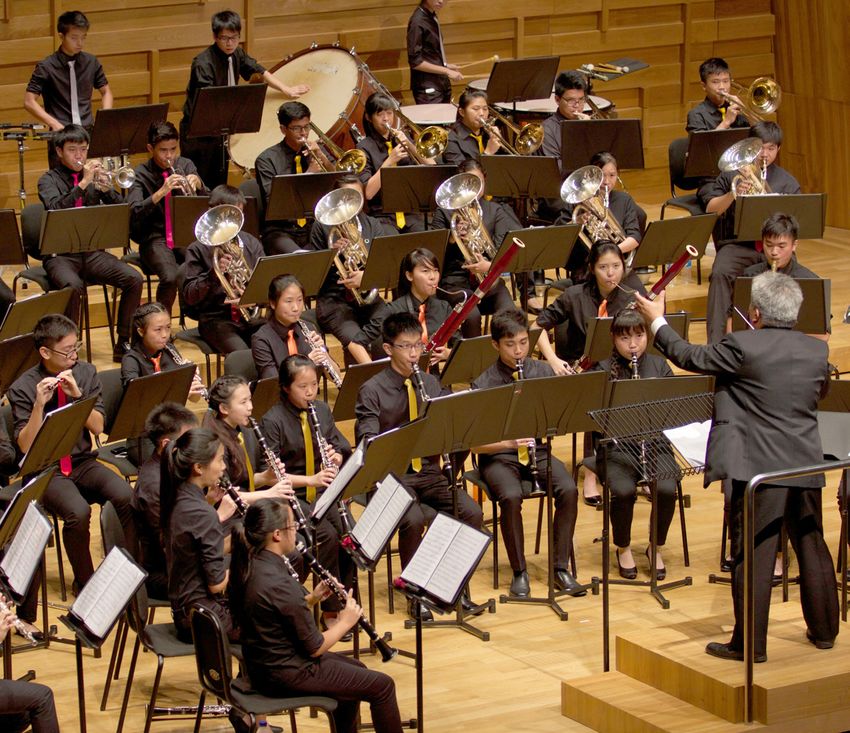
What’s After Secondary School?
Are you about to complete your secondary-        carefully, and manage your education and
school education and standing at the             career pathways purposefully throughout
crossroads of your educational journey?          your life.

Which path should you take? What courses         Our education system has many choices for
should you pursue next? Which institution will   you to pursue your next phase of learning.
best suit your talents?                          Pick a pathway that best suits your interests,
                                                 abilities and passions.
You need to make some important
decisions.                                       Start by getting to know the different post-
                                                 secondary educational institutions and see
Take some time to consider your options          where your interests and strengths fit in.       01   SINGAPORE’S EDUCATION
                                                                                                       SYSTEM: AN OVERVIEW

                                                                                                  03   JUNIOR COLLEGES/MILLENNIA
                                                                                                       INSTITUTE

                                                                                                  07   POLYTECHNICS

                                                                                                  11   INSTITUTE OF
                                                                                                       TECHNICAL EDUCATION

                                                                                                  15   ARTS INSTITUTIONS

                                                                                                  19   UNIVERSITIES

                                                                                                  23   FEES AND FINANCIAL AID

                                                                                                  27   AFTER SECONDARY SCHOOL—
                                                                                                       WHAT LIES AHEAD FOR ME?

                                                                                                       The Ministry of Education (MOE) formulates
                                                                                                       and implements policies on education
                                                                                                       structure, curriculum, pedagogy and
                                                                                                       assessment. We oversee the development
                                                                                                       and management of Government-funded
                                                                                                       schools, the Institute of Technical Education,
                                                                                                       polytechnics and autonomous universities.
                                                                                                       We also fund academic research.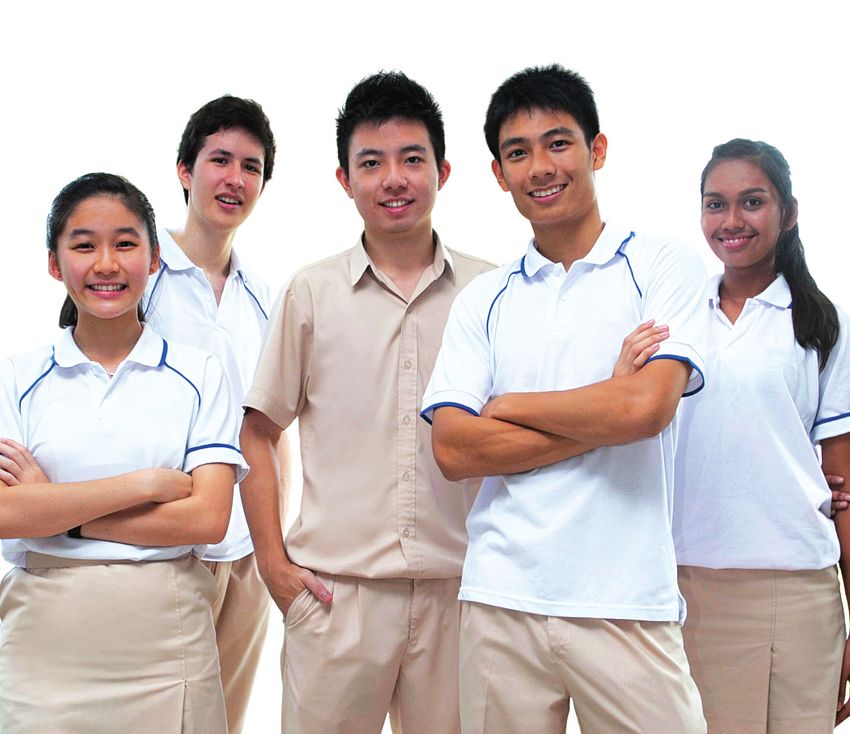
01 02
POST-
SECONDARY
EDUCATION
Singapore’s
Singapore’ Education
s Education System
System : :An
AnOverview
Overview
PRIMARY SECONDARY POST-SECONDARY
6 years 4-5 years
ALTERNATIVE
SPECIAL EDUCATION QUALIFICATIONS5
SCHOOLS1
PRIVATELY ALTERNATIVE
FUNDED SCHOOLS QUALIFICATIONS5 UNIVERSITIES
4-6 Years
SPECIAL
EDUCATION
SPECIALISED
INDEPENDENT
SCHOOLS3 GCE A-LEVEL
4-6 Years
PRIMARY
SCHOOL
LEAVING JUNIOR COLLEGES/
EXAMINATION CENTRALISED
(PSLE) INSTITUTE WORK & LIFELONG LEARNING8
2-3 Years
EXPRESS GCE O-LEVEL
4-6 Years
PFP6 POLYTECHNICS
1 Year 2-3 Years
PRIMARY SCHOOLS
6 Years DPP7
NORMAL GCE N(A)-LEVEL
(ACADEMIC) [N(A)]4
4-5 Years INSTITUTE OF
TECHNICAL
EDUCATION
2-3 Years
NORMAL
GCE N(T)-LEVEL
(TECHNICAL) [N(T)]
4 Years
ARTS
INSTITUTIONS
3-6 Years
SPECIALISED
SCHOOLS2 ALTERNATIVE
3-6 Years
QUALIFICATIONS5
5
1
Students in special education schools which offer the national primary curriculum will sit for PSLE. Some students in Pathlight School who take the national secondary Alternative Qualifications refer to qualifications not traditionally offered at mainstream schools in Singapore.
curriculum may also sit for the GCE N-or O-Level examinations. Note: This has not been fully represented in the graphic.
6
The Polytechnic Foundation Programme (PFP) is a diploma-specific foundation programme conducted by the polytechnics over two academic semesters for students
2
Specialised schools offer customised programmes for students who are inclined towards hands-on and practical learning. Some also offer N(T)-Level exams. who have completed Secondary 4N(A). Students who successfully complete the PFP may progress directly into the first year of their respective polytechnic diploma
These schools are Northlight School, Assumption Pathway School, Crest Secondary School and Spectra Secondary School. courses.
3
Specialised Independent Schools offer specialised education catering to students with talents and strong interests in specific fields, such as the arts, sports, mathematics 7 The Direct-Entry-Scheme to Polytechnic Programme (DPP) is a through-train pathway to polytechnics via ITE, for students who have completed Secondary 4N(A). DPP
and science, and applied learning. These schools are the School of the Arts, Singapore Sports School, NUS High School of Mathematics and Science, and the School of students who successfully complete a two-year Higher Nitec programme at ITE and attain the required qualifying Grade Point Average (GPA) scores are guaranteed a
Science and Technology. Eligible students of the Singapore Sports School can progress directly to Republic Polytechnic. Eligible students of the School of the Arts can place in a polytechnic diploma course mapped to their Higher Nitec course.
pursue a diploma programme at the Nanyang Academy of Fine Arts via special admissions after their fourth year of study.
8
Adults and working professionals are encouraged to upskill and reskill through quality learning options in lifelong learning provided by our Institutes of Higher Learning
4
Secondary 4N(A) students who do well in their GCE N(A)-Levels can apply for the Nanyang Academy of Fine Arts (NAFA) Foundation Programme (NFP). NFP is a full-time, as well as Singapore Workforce Skills Qualifications (WSQ) training providers accredited by Skillsfuture Singapore.
one-year practice-based programme that prepares students to pursue a diploma in the creative arts at NAFA. Successful applicants will be given a provisional offer of
admission to the diploma courses. Upon successful completion of the NFP, students will be offered a place in their chosen diploma courses. Note: Students can opt to transfer laterally between Express, N(A) and N(T), if they are assessed to be more suitable for these courses. (This has not been fully represented
in the graphic).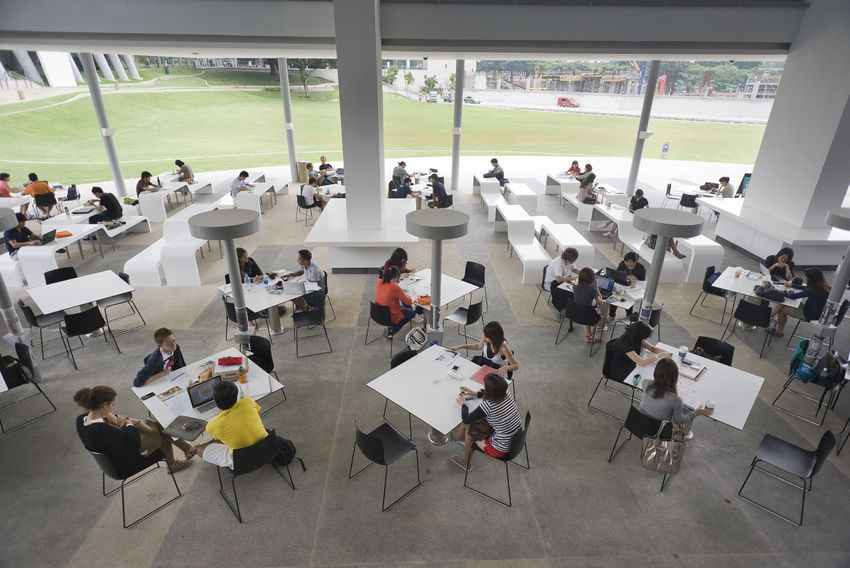
03 04
POST-
SECONDARY
EDUCATION
Junior Colleges/Millennia Institute
• 18 Junior Colleges (JCs)*
• Millennia Institute (MI)
• A holistic approach
• Over 100 different subjects, electives and CCAs
The JCs and MI of the MOE equip students with the skills and
knowledge required for further education so that graduates
GCE A-LEVEL CURRICULUM can lead, serve and contribute to the community.
Most JCs and MI offer the Singapore-Cambridge A-Level
curriculum, which provides students with learning
LANGUAGES
opportunities in three areas: life skills, knowledge and
Mother Tongue Languages
subject disciplines.
3rd Languages
KNOWLEDGE There is flexibility and diversity in your choice of subject
SKILLS combinations with subjects offered at three levels of study
LIFE – Higher 1 (H1), Higher 2 (H2) and Higher 3 (H3). These levels
GP SKILLS PW of study are structured to cater to your interests and abilities.
HUMANITIES MATHEMATICS
& THE ARTS CCA,CCE, & SCIENCES You will need to offer a contrasting subject – a subject
VIA, PE
E.g. Art,
outside your main area of specialisation – to broaden your
Economics, E.g. Biology, educational experience.
KI
Literature in Chemistry,
English, Physics,
Geography, Mathematics,
History, Music, Computing WIDE-RANGING ELECTIVE PROGRAMMES
Theatre Studies
Whether you have a passion for art, music, drama,
& Drama
languages or the humanities, JCs and MI offer a wide
variety of special elective programmes that cater to your
interests.
SPECIAL PROGRAMMES
LEGEND • Art Elective Programme
CCA Co-Curricular Activities • Drama Elective Programme
CCE Character & Citizenship Education1 • Music Elective Programme
PE Physical Education • Bicultural Studies Programme
GP General Paper • English Language Elective Programme
PW Project Work • Chinese Language Elective Programme
KI Knowledge & Inquiry • Malay Language Elective Programme
*These include 14 Junior Colleges, Dunman High School and River Valley High School which offer the A-Level curriculum, VIA Values in Action • National Elective Tamil Language Programme
and Anglo-Chinese School (Independent) and St Joseph’s Institution which offer the International Baccalaureate.
• Language Elective Programmes in French,
At the Pre-University level, Education and Career Guidance
1 German and Japanese
(ECG) and Cyber Wellness are integrated into Character
• Humanities Programme
and Citizenship Education.
• Regional Studies Programme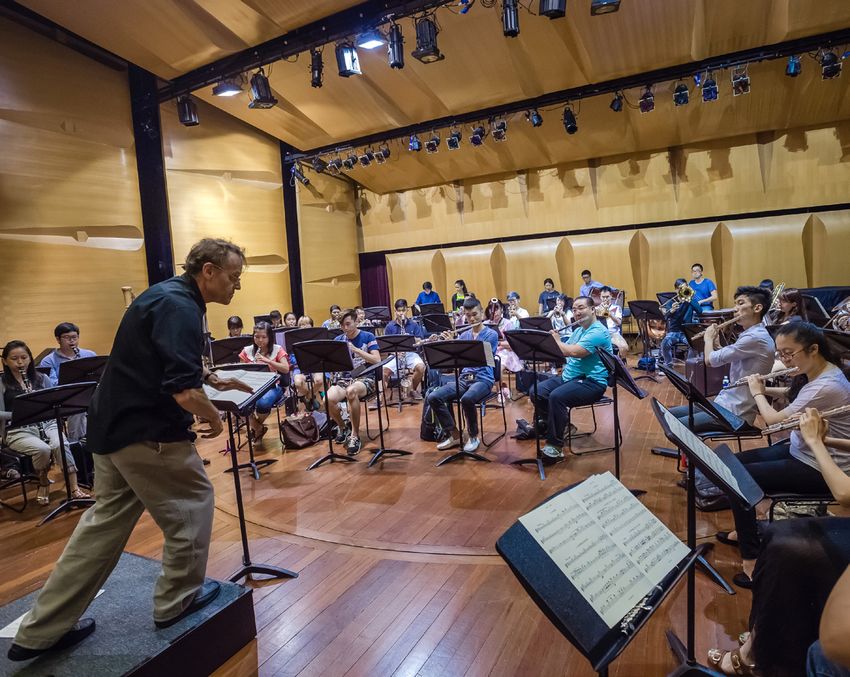
05                                                                                                                                                                                                                  06
                                                                                                                                                                                                      POST-
                                                                                                                                                                                                 SECONDARY
                                                                                                                                                                                                  EDUCATION

                                                                                                  HOW DO I ENROL?                                               WHAT ARE THE REQUIREMENTS?

                                                                                                  •   To gain admission to a JC/MI, you can take part in the    •	A L1R5 aggregate of 20 or less for JCs, or a
                                                                                                      Joint Admissions Exercise (JAE) conducted annually           L1R4 aggregate of 20 or less, for MI.
                                                                                                      after the release of the GCE O-Level examination             You also need to meet the eligibility criteria
                                                                                                      results. Admission is based on applicants’ GCE O-Level       for admission to JC/MI. For details, please
                                                                                                      examination results, course choices and vacancies            refer to Section 6 of the Joint Admissions
                                                                                                      available in the schools.                                    Exercise Information Booklet.

                                                                                                      Visit the MOE’s JAE website at www.moe.gov.sg/
                                                                                                      admissions/jae for more information.
                                                                                                                                                                WHERE DO I GO AFTER I GRADUATE?
                                                                                                  •   Alternatively, you can participate in the Direct School
                                                                                                      Admission-Junior Colleges (DSA-JC) Exercise which         •	With your GCE A-Level certificate/
                                                                                                      allows students to seek admission to a JC on the             International Baccalaureate (IB) Diploma,
                                                                                                      basis of talents and achievements that may not be            you can seek admission to a university or a
                                                                                                      demonstrated at the GCE O-Level Examination. The             specialised institute of higher learning, locally
                                                                                                      DSA-JC enables students to enter suitable academic           or abroad.
                                                                                                      and non-academic programmes in JCs that can
                                                                                                      develop the students in these areas.                         Need to know more before making
                                                                                                                                                                   a decision? Visit the MOE’s website
                                                                                                      Visit the MOE DSA-JC website at: www.moe.gov.                and click on ‘Pre-University Education’
                                                                                                      sg/admissions/direct-admissions/dsa-jc for more              at www.moe.gov.sg/education/
                                                                                                      information.                                                 pre-university

     DEVELOPING HOLISTICALLY
     Education in the JCs and MI focuses on self-   Whether you like kicking a ball on a field,
     development, critical thinking, intellectual   clearing hurdles on a track or swinging a
     analysis, and communications and               racket in a court, sports-related CCA give
     interpersonal skills.                          you a chance to flex your athletic muscles.

     The JCs and MI emphasise holistic              If putting up a play or making music is
     development through various elective           what you enjoy, check out the visual and
     programmes and Co-curricular Activities        performing arts CCA. There is also a whole
     (CCA).                                         host of clubs and societies to choose from
                                                    to meet students’ diverse and specialised
                                                    interests, be they in chess, debating or
                                                    robotics, just to name a few.
07                                                                                                                                                                        08
                                                                                                                                                             POST-
                                                                                                                                                        SECONDARY
                                                                                                                                                         EDUCATION

Polytechnics                                           A polytechnic education gives you
                                                       hands-on experience within a dynamic
                                                       and progressive learning environment.
                                                       It also equips you with strong skills and
• 5 polytechnics                                       competencies that will prepare you well
• More than 30 different courses in each polytechnic   for the workforce.
• More than 70,000 students                            There are five polytechnics in Singapore
                                                       offering industry-driven courses, which
                                                       lead students to fulfilling careers. They
                                                       are: Nanyang Polytechnic (NYP),
                                                       Ngee Ann Polytechnic (NP), Republic
                                                       Polytechnic (RP), Singapore Polytechnic
                                                       (SP) and Temasek Polytechnic (TP).

                                                        ENGINEERING FOR EXCELLENCE                    MAKING A DIFFERENCE

                                                        Discover the world of engineering,            Do you enjoy working with children? Find satisfaction helping
                                                        where you can unravel the mysteries of        individuals and families overcome difficult social challenges and
                                                        electronic devices and design your own        issues? Would you like to make a positive impact in healthcare?
                                                        electronic marvels.
                                                                                                      Enrol in a course in Health Sciences or Social Services at any of
                                                        Enrol in a course at any of the               the polytechnics and improve lives.
                                                        polytechnics, where you will uncover
                                                        what goes into the latest machines            Relevant courses: Early Childhood Development & Education
                                                        and be part of the workforce in the           (NP and TP), Health Services Management (RP), Optometry
                                                        technology-based sector.                      (NP and SP), and Nursing (NYP and NP).

                                                        Related courses:
                                                        Advanced & Digital Manufacturing (NYP),       ENTERING THE DIGITAL WORLD
                                                        Biomedical Engineering (NP),
                                                        Engineering Systems & Management (RP),        Take your gaming passion to the next level with a game-design
                                                        Electrical & Electronic Engineering (SP),     course that allows your imagination to run wild. Or pick up
                                                        and Clean Energy (TP).                        animation skills to bring your creations to life. If you have a knack
                                                                                                      for sniffing out suspicious activities online, why not consider a
                                                                                                      course in cybersecurity and digital forensics?
                                                        A MIND FOR BUSINESS
                                                                                                      Relevant courses: Digital Game Art & Design (NYP), Animation &
                                                        Polytechnics in Singapore can prepare         Visual Effects (NP), Sonic Arts (RP), Game Design & Development
                                                        you to manage the intricacies of business     (SP), and Cybersecurity & Digital Forensics (TP)
                                                        administration and finance. You can look
                                                        forward to learning about how to market
                                                        a product, balance budgets and manage
                                                        customer relations. These will stand you in
                                                                                                      COMMON ENTRY PROGRAMME
                                                        good stead should you consider running
                                                                                                      •	All five polytechnics offer Common Entry Programmes
                                                        your own business in future.
                                                                                                         (CEPs). CEPs provide students with the opportunity to be
                                                                                                         exposed to different specialisations within a discipline,
                                                        Related courses:
                                                                                                         so they can develop a better appreciation of each
                                                        Food & Beverage Business (NYP),
                                                                                                         specialisation before they decide on one. CEPs are
                                                        International Trade & Business (NP),
                                                                                                         offered for: Engineering, Business, and Information &
                                                        Consumer Experience Management
                                                                                                         Digital Technologies. Science CEP is also offered at RP.
                                                        with Business (RP), Human Resource
                                                        Management with Psychology (SP), and
                                                        Accounting & Finance (TP).
09 10
POST-
SECONDARY
EDUCATION
WHAT ARE THE REQUIREMENTS?
• The minimum entry requirements vary from course to
course. Do some research on the courses you have
shortlisted before applying for the course of your
choice.
Information on minimum entry requirements and the
aggregate scores of the lowest ranked students
admitted to courses through the most recent
Joint Admissions Exercise is available at:
www.polytechnic.edu.sg/introduction/available-courses
WHERE DO I GO AFTER I GRADUATE?
• A polytechnic education, with its practice-oriented
training and industry internships, will facilitate your entry
into the workforce.
• Polytechnic graduates may also choose to apply for
the SkillsFuture Work-Study Post-Diplomas (WSPostDips)
that give fresh graduates a head-start in careers related
to their discipline of study and help to build on the skills
and knowledge they acquired in school. To provide
flexible and accessible opportunities for working adults
APPLIED LEARNING to upgrade and learn new skills, part-time programmes
One of the features of polytechnic education is the strong emphasis on applied learning. and modular courses are available at the universities,
polytechnics, as well as ITE.
Industrial attachments are part of the curriculum and can vary in duration from six weeks to six months or
longer for selected courses. These attachments will enable you to gain valuable on-the-job experience, • Although the majority will join the workforce upon
deepen your skills and provide you with opportunities to work with industry experts. graduation, some may choose to apply for a place in a
university or other institutions of higher learning, such as at
the Singapore Institute of Technology (SIT), to further their
HOW DO I ENROL? studies.
For GCE O-Level Students For GCE N-Level Students SIT was set up in 2009 to provide an additional pathway
• If you are keen and passionate to pursue a • Secondary 4 N(A) students who do well in their for polytechnic graduates to work for degrees. More
certain course in polytechnic, you can take part GCE N(A)-Level exams may be invited to apply for details on SIT can be found on Page 22.
in the Polytechnic Early Admissions Exercise (Poly the Polytechnic Foundation Programme (PFP).
EAE) conducted in June during your final year
in secondary school. Polytechnics will consider Top Secondary 4 N(A) students will be prepared for
NEED MORE INFORMATION?
students who demonstrate strong aptitude for enrolment to the relevant diploma courses at the
and interest in specific courses and if assessed to polytechnics through the one-year PFP, subject to For the unique strengths of each polytechnic, visit their
be suitable, students will be given a conditional meeting minimum entry requirements. websites:
offer in the course of their choice. If they meet
the minimum entry requirements of the course Visit the PFP website at www.polytechnic.edu.sg/pfp q Nanyang Polytechnic –
after the release of the GCE O-Level results, their for more information. www.nyp.edu.sg
conditional offers will be automatically confirmed. q Ngee Ann Polytechnic –
www.np.edu.sg
Visit the Poly EAE website at https://eae. q Republic Polytechnic –
polytechnic.edu.sg/ for more information. www.rp.edu.sg
q Singapore Polytechnic –
• Alternatively, you can take part in the Joint www.sp.edu.sg
Admissions Exercise (JAE) conducted annually q Temasek Polytechnic –
after the release of the GCE O-Level exam results. www.tp.edu.sg
Visit MOE’s JAE website at www.moe.gov.sg/ For more general information about polytechnic education
admissions/jae for more information. in Singapore, visit the joint portal at www.polytechnic.edu.sg.
11                                                                                                                                                                                      12
                                                                                                                                                                           POST-
                                                                                                                                                                      SECONDARY
                                                                                                                                                                       EDUCATION

Institute of Technical Education                                 The Institute of Technical Education (ITE) aims to equip its students with the technical skills and knowledge to meet
                                                                 the workforce needs of various industry sectors.
• 3 ITE campuses (College Central, College East, College West)   Whether you aspire to be a technician, an engineering assistant or even a chef, you will find many interesting
• More than 90 full-time Nitec and Higher Nitec courses          courses to choose from at ITE.
• About 28,000 students
                                                                 You will be able to discover and develop your talents, and acquire new skills through hands-on and interactive
                                                                 learning at the same time.

                                                                   DESIGNING SOLUTIONS FOR THE REAL WORLD                      JUST THE RIGHT INGREDIENTS

                                                                   Do you want to learn about and harness the latest           Have you always been drawn to the kitchen? Do
                                                                   technology to solve everyday problems? ITE offers           you like to create new dishes, or improvise on local
                                                                   engineering courses focused on various fields such          cuisine? Put on your chef’s hat and start dicing,
                                                                   as marine, aerospace and manufacturing.                     slicing, stirring, or perhaps even flambe-ing a dish.

                                                                   Whether it’s learning to improve the operational            ITE offers courses that will hone your culinary skills and
                                                                   efficiency of a marine vessel or an aeroplane, it’s         teach you the essentials of managing a food-and-
                                                                   an educational experience that takes you places.            beverage business. Running your own successful
                                                                                                                               restaurant could one day become a reality.
                                                                   Relevant courses:
                                                                   Nitec in Built Environment, Nitec in Mechatronics           Related courses:
                                                                   & Robotics, Higher Nitec in Marine & Offshore               Nitec in Pastry & Baking, Nitec in Western Culinary
                                                                   Technology                                                  Arts, Higher Nitec in Hospitality Operations
13 14
POST-
SECONDARY
EDUCATION
ON THE FRONTLINE OF HEALTHCARE HOW DO I ENROL? WHAT ARE THE REQUIREMENTS?
Do you have a calling to reach out to • If you are passionate about a certain course in • An aptitude for hands-on learning.
those in need? If you possess a pair of ITE, you can take part in the ITE Early Admissions
healing hands, an eye for the intricacies Exercise (ITE EAE) conducted in May in your • For Nitec courses – GCE N- or O-Level graduates
of opticianry, or a clear-headedness final year in secondary school, or final year in who meet course-specific entry requirements.
that can help save lives in critical your Nitec course. ITE will consider students
situations, ITE’s courses in health sciences who demonstrate strong aptitude for and • For Higher Nitec courses – Selected N(A)-Level
may provide some options for you. There interest in specific courses. If you are assessed graduates under the DPP, and GCE O-Level
are also courses in community and to be suitable, you will be given a conditional and Nitec graduates who meet course-specific
social services. offer for the course of your choice. If your GCE entry requirements.
O-Level/GCE N-Level/Nitec results meet the
These options will equip you with the minimum entry requirements of the course, • Some courses require additional prerequisites like
skills to serve Singapore’s growing your conditional offers will be automatically a pre-course interview and medical check-up.
healthcare sector. confirmed.
• For entry requirements to each course, visit:
Related courses: Visit the ITE EAE website at www.ite.edu.sg/ www.ite.edu.sg/wps/portal/what-to-study/.
Nitec in Nursing, Nitec in Opticianry, admission/eae for more information.
Higher Nitec in Paramedic & Emergency
Care. • If you are interested in Nitec courses and prefer WHERE DO I GO AFTER I GRADUATE?
to choose your course after knowing how well
you have done in your GCE N-level or GCE • Your participation in internship programmes,
O-Level examinations, you may apply via the industry projects and overseas exchange
LEARNING BY DOING Joint Intake Exercise (JIE). Since AY2019, ITE programmes can give you industry exposure if you
OTHER COURSES OFFERED ITE employs the latest technology and has expanded aptitude-based assessment to wish to enter the job market at this stage.
• Aerospace Avionics, Automotive teaching methods to ensure that its about half of all Nitec courses. These include
Technology, Hair Fashion & courses stay up-to-date and relevant courses in Business, Hospitality, Engineering and • ITE graduates may choose to apply for ITE’s
Design, Video Production, Space to industry demands. Information & Communications Technology. ITE SkillsFuture Work-Study Diploma (WSDip), formerly
Design (Interior & Exhibition), Early will have greater flexibility to consider a student’s known as the Work-Learn Technical Diploma
Childhood Education, Engineering The numerous partnerships that ITE has with aptitude as part of the assessment criteria, apart (WLTD). ITE’s WSDips are an apprenticeship-
with Business, and more. key industry players will lend immediate from academic grades, in the selection and based programme delivered in partnership
relevance to the skills picked up, priming admission of students into ITE courses. with employers. Students will be employed by
you for the working world. companies and receive on-the-job training, as
For courses offered under JIE and application well as attend lessons at ITE.
instructions, visit www.ite.edu.sg. Alternatively, you
can approach ITE’s customer service centres for • Alternatively, you can also consider pursuing other
assistance. work-study programmes by the polytechnics.
The universities, polytechnics and ITE also offer
• To gain admission to Higher Nitec courses, you part-time programmes and modular courses for
can take part in the Joint Admissions Exercise working adults who are interested to upgrade
(JAE) conducted annually after the release of and learn new skills.
the GCE O-Level exams results.
• Another possibility for those who do well is to
For more information on JAE, visit the MOE apply for a place in a polytechnic and further
website at: http://www.moe.gov.sg/admissions/jae your studies.
Visit www.ite.edu.sg to find out more.
• Secondary 4N(A) students who do well in their
GCE N-Level exams can apply for admission to
Higher Nitec courses under ITE’s Direct-Entry-
Scheme to Polytechnic Programme (DPP). Under
the DPP, you can enrol in a two-year Higher Nitec
course at ITE, which subsequently guarantees
you a place in a mapped polytechnic diploma
course if you achieve the qualifying Grade Point
Average (GPA) in the Higher Nitec course.
Visit http://www.ite.edu.sg/wps/portal/
definitely-dpp for more information.
15                                                                                                                                                         16
                                                                                                                                                   POST-
                                                                                                                                              SECONDARY
                                                                                                                                               EDUCATION

Arts Institutions
• 2 specialised arts schools                There are two publicly-funded arts institutions in Singapore offering specialised creative arts
                                            education. They are: LASALLE College of the Arts (LASALLE) and Nanyang Academy of Fine
• More than 40 diploma and degree courses   Arts (NAFA).
• More than 4,000 students
                                            Both LASALLE and NAFA offer a wide range of design, media, fine arts and performing arts
                                            courses to inspire the most creative minds.

                                            At these institutions, you can learn techniques and conceptualisation skills, in order to
                                            communicate your artistic vision.
17 18
POST-
SECONDARY
EDUCATION
WHAT ARE THE REQUIREMENTS? WHERE DO I GO AFTER I GRADUATE?
• Interest and aptitude in the arts. • The practice-oriented curriculum
provides opportunities for industry-
• For Diploma courses: GCE O-Level led projects. This will prepare you for
qualifications, a Nitec/Higher Nitec careers in the creative industries and
certificate, or equivalent credentials. beyond.
• You will also need to pass an entrance • For those who wish to pursue training
test or audition, which may include in the creative arts at a higher level,
performing a musical piece or LASALLE and NAFA also offer degree
submitting a portfolio. courses in various creative arts
disciplines.
• For the NAFA Foundation Programme:
GCE N(A)-Level qualifications,
subject to meeting minimum entry
requirements.
NEED MORE INFORMATION?
For more information on the application process, entry requirements, or employment
opportunities after graduation, visit:
q www.lasalle.edu.sg
q www.nafa.edu.sg
THE STAGE IS YOURS
COURSES OFFERED
LASALLE and NAFA offer practice-based
• LASALLE – Animation, Fine Arts,
programmes in the creative arts.
Broadcast Media, Interior Design,
Students have the opportunity to learn
Audio Production, Dance, and more.
from practising artists and gain exposure
to the industry through activities such as
• NAFA – Illustration Design with
collaborating with companies on design
Animation, Fashion Merchandising
projects, participating in visual arts
and Marketing, Advertising, Theatre,
exhibitions and performing in concerts.
Music Teaching, Arts Management,
and more.
If you want to pursue your passion and a
career in the creative arts, enrol at either of
Secondary 4N(A) students who do
the two institutions.
well in their GCE N(A)-Levels can
apply for the NAFA Foundation
HOW DO I ENROL? Programme (NFP), a one-year
practice-based programme that
You can apply directly to LASALLE and prepares students interested in the
NAFA on their websites:- arts to enrol in, and complete their
• LASALLE: www.lasalle.edu.sg diploma courses at NAFA.
• NAFA: www.nafa.edu.sg19 20
POST-
SECONDARY
EDUCATION
Universities Aiming for a university degree? There are different routes for you to consider.
The six universities in Singapore* – National University of Singapore (NUS), Nanyang
Technological University (NTU), Singapore Management University (SMU), Singapore University
• Distinct faculties offering a multitude of Bachelor’s and Master’s programmes of Technology and Design (SUTD), Singapore Institute of Technology (SIT) and Singapore
• More than 65,000 students enrolled University of Social Sciences (SUSS) – offer specialised courses across diverse disciplines. In
particular, SIT and SUSS have pioneered an applied-degree pathway, where students receive
more hands-on experience and industry exposure as part of their university education. NUS,
NTU, SIT and SUSS also offer Work-Study Degree Programmes that combine structured on-
the-job training with lessons at the universities. The universities and companies co-design and
co-deliver curricula that connects theory and practice, and co-assess students’ performance
at the workplace.
* The six universities are named in order of founding.
NATIONAL UNIVERSITY
OF SINGAPORE
NUS is a comprehensive and research-intensive
university with 16 faculties and schools, including
two medical schools and a music conservatory.
Through the Yale-NUS College, Singapore’s first
liberal arts college, it also offers a four-year
degree programme that draws on the strengths
of sciences and liberal arts from Asia and the
West.
NUS’s unique offerings also include the NUS
Overseas Colleges, where you can intern at
business start-ups around the world while studying
at prestigious partner universities, and Roots
& Wings, a foundational life skills programme
that equips students to be future-ready for the
challenges in a fast-paced environment.
www.nus.edu.sg
NANYANG TECHNOLOGICAL
UNIVERSITY
NTU is a comprehensive and research-
intensive university, with a strong focus on
engineering, science and technology.
Apart from its five Colleges, NTU also
has a medical school, established in
collaboration with Imperial College
London.
NTU also offers premier programmes such
as its flagship Renaissance Engineering
Programme, where students are able to
spend the third year of their course at
reputable partner universities and do a
professional attachment overseas, and
the research-oriented CN Yang Scholars
Programme, with its overseas final year
project.
www.ntu.edu.sg21 22
POST-
SECONDARY
EDUCATION
SINGAPORE MANAGEMENT SINGAPORE INSTITUTE
UNIVERSITY OF TECHNOLOGY
SMU is a specialised and research- SIT is one of the universities pioneering The Integrated Work Study Programme
intensive university, with six Schools the applied degree pathway, integrating (IWSP) is a feature of all of SIT’s own applied
offering programmes in accountancy, learning, industry and community. It offers degrees. The IWSP allows students to
business management, economics, its own applied degrees, as well as degree undertake paid employment at relevant
information systems, law, and social programmes offered in partnership with companies as part of their overall course
sciences. SMU’s pedagogy features an reputable overseas universities that have of study, thus giving them early exposure to
interactive, collaborative and project- a strong emphasis on practice-oriented industry.
based approach to learning. learning, a strong nexus with industry, and
integration of work and study. www.singaporetech.edu.sg
SMU is unique in having a city campus
located in the heart of downtown
Singapore, which helps to foster a
vibrant student life experience, and
strategic linkages with business,
government and the wider community.
SMU also offers the SMU-X curriculum,
where students are able to take
modules that allow them to work on
real-world industry problems under the
guidance of faculty and industry figures.
www.smu.edu.sg
SINGAPORE UNIVERSITY OF
TECHNOLOGY AND DESIGN
SUTD is a specialised and research-intensive SUTD is also distinguished through its
university, with a focus on design education collaboration with Zhejiang University (ZJU),
in engineering and architecture. It was under which there is a dedicated student
established in collaboration with the exchange programme between SUTD and
Massachusetts Institute of Technology (MIT) ZJU’s International Design Institute.
and aims to cultivate an entrepreneurial
spirit in students. www.sutd.edu.sg
SINGAPORE UNIVERSITY OF SOCIAL SCIENCES
SUSS was restructured into Singapore’s sixth Autonomous University
in 2017 and is one of the universities pioneering the applied degree
pathway. It provides an applied education that targets both fresh
school leavers and adult learners, in the domain of the social
sciences, as well as in disciplines that have a strong impact on
human and community development.
SUSS’s diverse student profile allows fresh school leavers to take
classes alongside more mature part-time students with work
experience, which provides a rich and unique learning experience.
Its e-learning facilities and modular programme structure also
enable students to more flexibly balance pursuing a university
education with other commitments.
www.suss.edu.sg23 24
POST-
SECONDARY
EDUCATION
Fees and Financial Aid ANNUAL SCHOOL FEES AT JUNIOR COLLEGES AND MILLENNIA INSTITUTE FOR ACADEMIC YEAR 2019
W
SINGAPORE SINGAPORE PERMANENT INTERNATIONAL
Fees for Singaporean students at the JCs/MI, ITE, polytechnics, CITIZENS RESIDENTS STUDENTS
autonomous universities and the arts institutions (LASALLE and
NAFA) are highly subsidised to ensure that no deserving student is $11,760 (ASEAN)
deprived of a post-secondary education. School Fees $72 $4,800
$19,200 (Non-ASEAN)
For students who need additional assistance, various financial
Miscellaneous Fees $324
assistance schemes and scholarships are also available.
$12,084 (ASEAN)
Total Fees (Per Year) $396 $5,124
$19,524 (Non-ASEAN)
ANNUAL SUBSIDISED TUITION FEES AT ITE, POLYTECHNICS AND PUBLICLY-FUNDED FULL-TIME DEGREE
COURSES FOR ACADEMIC YEAR 2019
W
SINGAPORE SINGAPORE PERMANENT INTERNATIONAL
CITIZENS RESIDENTS STUDENTS
Nitec $390 $5,250 $14,250
ITE
Higher $590 $7,760 $20,360
Nitec
Polytechnics $2,900 $5,800 $10,400
Autonomous Universities $7,860 to $34,700 $11,500 to $48,600 $17,550 to $74,250
(Undergraduate)
Arts Institutions $4,600 to $5,550 $7,150 to $7,600 $9,900 to $10,400
(Diploma)
Arts Institutions $9,730 to $10,170 $13,795 to $14,250 N.A.
(Degree)
Notes:
Malay Singapore Citizen students in JCs/MI and ITE are eligible for fee waivers.
Miscellaneous fees may also apply for the above post-secondary education institutions.
The Autonomous Universities refer to the National University of Singapore (NUS), the Nanyang Technological University (NTU), the Singapore
Management University (SMU), the Singapore University of Technology and Design (SUTD), the Singapore Institute of Technology (SIT), and the
Singapore University of Social Sciences (SUSS).
The Arts institutions refer to the LASALLE College of the Arts (LASALLE) and the Nanyang Academy of Fine Arts (NAFA).
All the above tuition fees are subsidised fees. International students enrolled in NAFA and Lasalle degree programmes pay non-subsidised fees. For
updated annual tuition fees at ITE, polytechnics and publicly-funded degree programmes, please refer to the websites of the respective institutions.25 26
POST-
SECONDARY
EDUCATION
MINISTRY OF EDUCATION FINANCIAL ASSISTANCE SCHEMES (MOE FAS) FINANCIAL ASSISTANCE SCHEMES FOR POST-SECONDARY EDUCATION
FOR GENERAL EDUCATION SCHOOLS The government and post-secondary education institutions offer assistance for needy students to pursue their
MOE provides financial assistance to Singaporean students who study in government schools, post-secondary education at the publicly-funded institutions. The government bursaries for full-time diploma
government-aided schools and independent schools. students and undergraduates have been enhanced from Academic Year 2020. The table below shows the latest
bursary quanta and various government financial assistance schemes. Visit the respective websites of universities,
Students who wish to apply for financial assistance can obtain the application form from their schools. polytechnics and ITE colleges for more information.
They are to submit the application form together with the relevant documents to their schools.
The schools will inform them of the outcome of their application.
QUANTUM PER YEAR
MOE FAS for Government and Government-Aided Schools AUTONOMOUS
To qualify: ITE DIPLOMA UNIVERSITY
a. The family’s gross household income (GHI) must not exceed $2,750 per month; or SCHEME APPLICATION ELIGIBILITY STUDENTS STUDENTS UNDERGRADUATES
b. The family’s per capita income (PCI)# must not exceed $690 per month.
Higher • Singapore Citizens $1,400 $2,750 • $6,200 (for non-medicine/
#
PCI is gross monthly household income divided by the number of members in the household Education • Gross monthly household income dentistry courses)
Community (GHI) ≤ $2,750, or gross monthly • $18,900 (for NUS medicine/
The types of assistance given to needy students in government or government-aided junior colleges Bursary household per capita income (PCI) dentistry courses)
and Millennia Institute under this financial assistance scheme are shown in the table. (renamed ≤ $690 • $24,700 (for NTU medicine
from CDC/ course)
ASSISTANCE FOR NEEDY STUDENTS IN GOVERNMENT OR GOVERNMENT-AIDED CCC
Bursary) • Singapore Citizens $1,050 $2,400 • $5,000 (for non-medicine/
JUNIOR COLLEGES AND MILLENNIA INSTITUTE UNDER MOE FAS • GHI between $2,751 and $4,000, or dentistry courses)
PCI between $691 and $1,000 • $14,900 (for NUS medicine
SCHOOL STANDARD /dentistry courses)
BURSARY • $20,700 (for NTU medicine
FEES MISCELLANEOUS FEES TRANSPORT
course)
Financial assistance 100% 100% subsidy $900 $10 transport credits per month, up Higher • Singapore Citizens $550 $1,900 • $3,200 (for non-medicine/
to students subsidy to $120 per annum (for students tak- Education • GHI ≤ $6,900 or PCI ≤ $1,725 dentistry courses)
ing public transport) Bursary • $10,900 (for NUS medicine/
(renamed dentistry courses)
MOE INDEPENDENT SCHOOLS BURSARY (ISB) from MOE • $16,700 (for NTU medicine
The income limits and types of assistance given to junior college-level students in Independent Schools under the ISB Bursary) course)
are shown in the table. • Singapore Citizens $350 $850 • $1,350 (for non-medicine/
• GHI between $6,901 and $9,000, or dentistry courses)
INCOME LIMITS AND TYPES OF ASSISTANCE FOR JUNIOR COLLEGE STUDENTS PCI between $1,726 and $2,250 • $4,900 (for NUS medicine/
IN INDEPENDENT SCHOOLS UNDER ISB dentistry courses)
• $10,700 (for NTU medicine
INCOME LIMITS1 (MEET EITHER GHI OR PCI) course)
MONTHLY GROSS FINANCIAL ASSISTANCE TO PUPILS AT JUNIOR Tuition • Full-time diploma students at N.A Up to Up to 90% of tuition fee
HOUSEHOLD INCOME (GHI) PER CAPITA INCOME (PCI) COLLEGE-LEVEL Fee Loan polytechnics 75% of
Scheme • Full-time undergraduates at the tuition fee
Not exceeding $2,750 Not exceeding $690 Students do not have to pay school fees and autonomous universities
miscellaneous fees as well as exam fees2 – they
are fully subsidised. Study Loan • Full-time diploma students at N.A Up to Up to 10% of tuition fee
Scheme polytechnics who are Singapore 25% of plus living allowance loan
Student also receive: Citizens or Permanent Residents tuition of $3,600 per annum
$900 bursary • Full-time undergraduates, regardless fee plus
$10 transport credits per month, up to $120 per of nationality living
annum (for students taking public transport) • Must have taken up the maximum allowance
Tuition Fee Loan first loan of
$2,751 - $4,000 $691 - $1,000 Students pay the same fee3 as those studying • Monthly PCI ≤ $2,700 for Singapore $2,000 per
Citizens and Permanent Residents, or annum
in government and government-aided schools
PCI ≤ $1,200 for international students
(GGAS), after subsidy.
$4,001 - $6,900 $1,001 - $1,725 Notes:
Students pay 1.5 times GGAS fee3, after subsidy.
Household per capita income is defined as the total gross monthly income of immediate and non-immediate family members divided by the
$6,901 - $9,000 $1,726 - $2,250 Students pay 67% of school and miscellaneous total number of immediate and non-immediate family members.
fees, after subsidy. Diploma students include those engaged in full-time MOE subsidised diplomas at LASALLE and NAFA, unless otherwise specified in the
eligibility criteria.
1
Singapore Sports School and School of the Arts have their own schemes to provide financial assistance to pupils. Refer to their website for details. Full-time diploma and undergraduate students at publicly-funded institutions who are CPF members or dependants of CPF members can
also tap on the CPF Education Scheme, which can cover up to 100% of tuition fees.
2
Applicable to students enrolled in the International Baccalaureate Diploma Programme (IBDP). Since 2015, exam fees for Singapore Citizens sitting for
national exams in Government-funded schools have been waived. Malay Singapore Citizens enrolled full-time at polytechnics and our autonomous universities with gross monthly per capita household income
of $2,000 and below can also tap on the Tertiary Tuition Fee Subsidy Scheme by Yayasan Mendaki. This covers up to 100% of tuition fees,
3
GGAS fee comprise school fee, standard miscellaneous fee and maximum 2nd-tier miscellaneous fee payable by students in a GGAS. In 2019, the depending on household income.
yearly GGAS fee for junior college-level is $396.27
After Secondary School –
SUPPORT AND CONTACT
What Lies Ahead for Me?
Reflect on these questions and discuss them with your parents, teachers or Education and For more information on post-secondary
Career Guidance (ECG) Counsellors in your school. Make informed decisions about your education and the various institutions, visit
education and career pathways, and own them. the MOE website at www.moe.gov.sg/
education/post-secondary.
WHO AM I? • Which industry do I want to work in?
THE MORE I KNOW ABOUT MYSELF, THE • Are there learning and training Alternatively, visit:
BETTER MY DECISIONS. programmes offered by the organisations www.moe.gov.sg/education/pre-university
• What are my strengths and interests? How that can nurture my strengths and
www.polytechnic.edu.sg
would they affect my education and interests?
www.ite.edu.sg
career choices? • How can I find future opportunities to
• What are some industries and occupations upgrade my knowledge and skills? www.lasalle.edu.sg
that I would like to explore? • What other factors could influence my www.nafa.edu.sg
• What are my education and career goals? decisions? www.nus.edu.sg
www.ntu.edu.sg
WHERE CAN I GO FROM HERE? HOW DO I GET THERE? www.smu.edu.sg
THERE ARE MANY EDUCATION AND I WILL TAKE OWNERSHIP OF MY GOALS, www.sutd.edu.sg
CAREER OPTIONS WORTH EXPLORING. AND TAKE POSITIVE STEPS TOWARDS www.singaporetech.edu.sg
Continuing With Studies FULFILLING THEM. www.suss.edu.sg
• What are the types of educational To-Do List:
institutions that are suitable for me? • Visit open houses and education fairs.
• Are the programmes offered by the • Visit MySkillsFuture Portal
institutions able to nurture my strengths (www.myskillsfuture.sg/secondary)
and interests? to find out more about industries and
Acknowledgement
• How can I utilise available resources to occupations that I am interested in. The photos on the cover and inside pages are courtesy
reach my education and career goals? • Talk to someone who works in the industry of Millennia Institute, Nanyang Junior College, Institute of
Technical Education, Nanyang Polytechnic, Ngee Ann
• What other factors could influence my that I am interested in. Polytechnic, Republic Polytechnic, Singapore Polytechnic,
decisions? • Engage in part-time or contract job Temasek Polytechnic, LASALLE College of the Arts, Nanyang
opportunities to explore and deepen my Academy of Fine Arts, National University of Singapore,
Nanyang Technological University, Singapore Management
Entering the Workforce strengths and interests. University, Singapore University of Technology and Design,
• Am I ready to enter the workforce? Singapore Institute of Technology, and Singapore University
of Social Sciences.1 North Buona Vista Drive Singapore 138675
Tel: 6872 2220
Email: contact@moe.gov.sg
www.moe.gov.sg
THE INFORMATION IN THIS BOOKLET IS CORRECT AS OF OCTOBER 2019.
PRODUCED BY COMMUNICATIONS AND ENGAGEMENT GROUP, MOE.You can also read


