Data & Facts Spring 2018 - technische universität dortmund - TU Dortmund
←
→
Page content transcription
If your browser does not render page correctly, please read the page content below
technische universität
      dortmund

Data & Facts
Spring 2018
TU Dortmund University:
A university with a unique profile
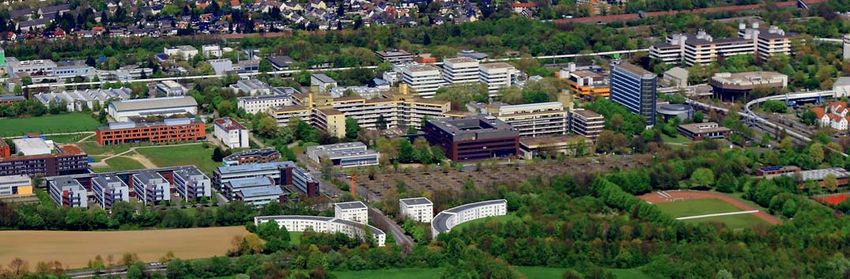
Since its founding 50 years ago, TU Dortmund University has developed a
special profile, encompassing 16 faculties ranging from science and engi-
neering to social sciences and cultural studies. The university currently has
circa 34,600 students and 6,200 staff members, including 300 professors.
The curriculum is comprised of around 80 programs of study, both traditional
and innovative, some even unique to this university. A broad teacher training
program is also offered for all school types. The various scientific disciplines
share a common university spirit in which interdisciplinarity, communication
and cooperation are not only taught, but lived and experienced. This interac-
tion creates an environment conducive to technological innovation and fosters
advances in methods and knowledge.

Faculties
Faculty of Mathematics
Faculty of Physics
Faculty of Chemistry and Chemical Biology
Faculty of Computer Science
Faculty of Statistics
Faculty of Biochemical and Chemical Engineering
Faculty of Mechanical Engineering
Faculty of Electrical Engineering and Information Technology
Faculty of Spatial Planning
Faculty of Architecture and Civil Engineering
Faculty of Business and Economics
Faculty of Education, Psychology and Sociology
Faculty of Rehabilitation Sciences
Faculty of Human Sciences and Theology
Faculty of Cultural Studies
Faculty of Arts and Sports Sciences
Central scientific institutions
Center for Teacher Training (DoKoLL)
Social Research Center Dortmund (sfs)
Center for Synchrotron Radiation (DELTA)
Center for Higher Education (zhb)

Affiliated institutes
Leibniz Institute for Analytical Sciences (ISAS)
Leibniz Research Centre for Working Environment and Human Factors at
TU Dortmund University (IfADo)
Research Association for Gerontology/Institute for Gerontology at
TU Dortmund University (FfG)
German Institute for Civic Art (DIS)
Research Institute for Technology and Disability (FTB)

Associated research institutes
Max Planck Institute of Molecular Physiology (MPI)
Fraunhofer Institute for Material Flow and Logistics (IML)
Fraunhofer Institute for Software and Systems Engineering (ISST)
Federal Institute for Occupational Safety and Health (BAuA)
Research Institute for Regional and Urban Development (ILS)
INVITE GmbH
LogistikCampus
Special strength in four profile areas of research
Research at TU Dortmund University is highly visible both nationally and inter-
nationally in four profile areas. Research projects in these fields contribute for
more than two thirds of the external funding.

                  >2/3                     Materials, production technology and logistics
             of third-party                Chemical biology, drug research
                                           and process engineering
               funding in
                                           Data analysis, modeling and simulation
               academia
                                           Education, schooling and inclusion

 Education, schooling and inclusion             Materials, production technology and
                                                logistics

 The findings of the research area provide      Here researchers at TU Dortmund Univer-
 direction for national and international       sity are developing innovative concepts for
 educational policy. The empirical research     material processing and – together with
 results form the basis for developing con-     experts from the Fraunhofer Institute for
 cepts for the entire breadth of pre-school,    Material Flow and Logistics – are desig-
 school and vocational education.               ning how the flow of goods and production
                                                processes shall be managed.

 Data analysis, modeling and simulation         Chemical biology, drug research and
                                                process engineering

 In this profile area computer science, ma-     In this field the Faculty of Biochemical
 thematics, statistics, the engineering and     and Chemical Engineering (Germany’s
 the economic sciences are collaborating        largest), the Faculty of Chemistry and
 on the modeling of technical processes         Chemical Biology and the Max Planck
 and economic developments.                     Institute of Molecular Physiology (also
                                                located in Dortmund) are collaborating
                                                with other institutions.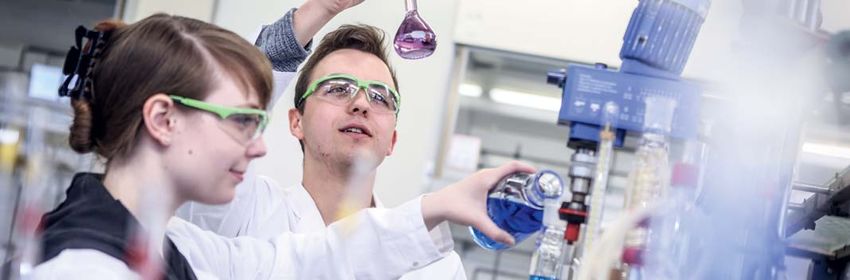
Excellence Initiative
Participation in Excellence Cluster RESOLV, Ruhr Explores Solvation of Ruhr-
Universität Bochum

Collaborative research centers (CRC) and transregional
collaborative research centers funded by the German Research
Foundation
CRC 823: Statistical modeling of nonlinear dynamic processes
CRC 876: Providing information by resource-constrained data analysis
CRC/transregio 160: Coherent manipulation of interacting spin excitations in
tailored semiconductors
Transregio 188: Damage controlled forming processes
Participation in CRC 969 of Universität Konstanz:
Chemical and biological principles of cellular proteostasis
Participation in CRC/transregio 63 together with TU Berlin and University
Magdeburg: Integrated chemical processes in liquid multiphase systems –
InPROMPT
Participation in CRC/transregio 73 together with FAU and Leibniz Universität
Hannover: Manufacturing of complex functional components with variants by
using a new sheet metal forming process – Sheet-bulk metal forming
Participation in CRC/transregio 142 together with Paderborn University:
Tailored nonlinear photonics: From fundamental concepts to functional
structures
Third-party funding

                 6%
            5%
       7%
                           36%   DFG: €28.2m
                                 NRW, Federal Government, EU: €35.4m
                 €77m            Foundations and private institutions: €5.5m
                                 Trade and industry: €3.7m
                                 Others: €4.6m
           46%

For 2017, the third-party expenditures of TU Dortmund University amounted
to €77,4 million, three quarters of which were from public funds.

Doctoral degrees

     31%

                                 Science and engineering:
              236                163 doctoral degrees
        doctoral degrees         Social sciences and
                                 cultural studies: 73 doctoral degrees
                        69%

Many young researchers earn their doctorates at TU Dortmund University:
236 doctorates were awarded in the calendar year 2017.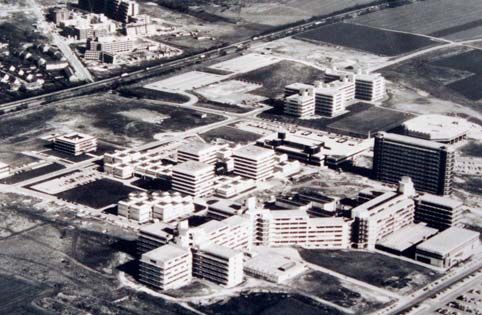
The University Alliance Ruhr – three universities, one community,
endless opportunities
                                      3
                                   Universities
                            TU Dortmund University
                            Ruhr-University Bochum
                          University of Duisburg-Essen

    120,000
     students in around
                                                          1,300
                                                       professors including
    500 degree programs                            approx. 100 junior professorships

                              16,000
                              graduates per year

€1.4 billion
        total budget
                                                   € 300 million
                                                         external funding
                                  200
                            joint research projects
                              funded by MERCUR

                                                            technische universität
                                                            dortmund

Since 2007, TU Dortmund University has been collaborating closely and stra-
tegically with Ruhr-University Bochum and the University of Duisburg-Essen
in the University Alliance Ruhr (UA Ruhr).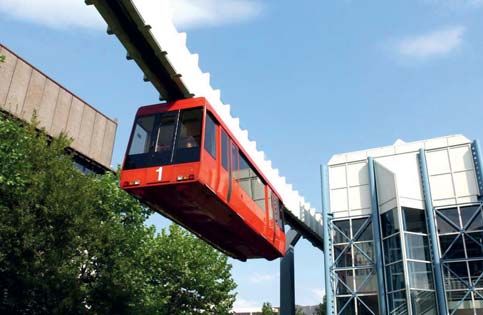
Persons working at TU Dortmund University

                 7% 5%

                                      Professors: 303
                                32%   Academic staff: 1,997
        35%      6,247
                                      Technical and administrative staff: 1,331
               employees
                                      Student assistants: 2,172
                                      Lecturers: 444

                      21%

More than 6,200 people work at TU Dortmund University, including around 300
professors. TU Dortmund University is thus one of the biggest employers of
the city.

Gender equality
TU Dortmund University is well positioned in terms of gender equality. Alrea-
dy in 2013, the German Research Foundation (DFG) ranked the university’s
research-oriented gender equality standards in the top category. The proporti-
on of women shall be further increased according to the cascade model.

                                                         Percentage of
24%                                                      female professors 2017

                                                         Percentage of doctoral
32%                                                      degrees awarded to women
                                                         2015 – 2017
                                                         Percentage of master’s
50%                                                      degrees awarded to women
                                                         2015 – 2017

             45 %                                   43 %
            female          f                      female             f
           students                               employees
Graduates           1%

                                           Bachelor’s degree: 2,417
                 4,580                     Master’s degree: 2,107
      46%
               graduates        53%        Other degrees (e.g. Diplom):
                                           56 graduates

At TU Dortmund University approx. 4,600 students completed a degree in
the examination year 2017, among them about 2,400 bachelor’s and 2,100
master’s degrees.

International students

International students per country of origin
       > 500                     11–50
       101– 500                  1–10
       51–100

Around 11% of the students come from outside Germany. They represent
approximately 110 different countries.
Students                                                32,801 33,554
                                                                      34,235 34,616
                                               31,538
                                      29,672
                             27,010
             24,126 24,873
    22,012

    2008     2009    2010    2011      2012    2013     2014   2015   2016   2017

As of the winter semester 2017/2018, more than 34,600 students were en-
rolled at TU Dortmund University, including around 6,600 new students. The
number of students has been increasing steadily for years: since 2008 there
has been an increase of 57 percent.

Spectrum of subjects

        39%
                     34,616                      Science and engineering
                    students                     Social sciences an
                                      61%        cultural studies

Around 60 percent of the students are enrolled in the various science and
engineering programs, and around 40 percent in the cultural studies and
social sciences programs. Almost a quarter of them are studying to become
teachers.
Timeline
TU Dortmund University is celebrating its 50th anniversary in 2018. This
timeline highlights important milestones in the university’s history: from the
founding of the Association of Friends, the integration of the Ruhr Teacher
Training College to the renaming of the university.
1958
The Association of Friends is founded
to advocate the establishment of a
technical university in Dortmund.
Photo: Stiftung Westfälisches Wirtschaftsarchiv N 35, Nr. 23
1968
The University of Dortmund is inaugu-
rated on December 16th in the pre-
sence of the German Federal President
Lübke in a ceremony in the Dortmund
Opera House.
1974
All eleven faculties of the University of
Dortmund have begun their teaching
activities. Construction is underway for
the North Campus.
1980
The Ruhr Teacher Training College is
integrated into the University of Dort-
mund, doubling the number of
students to around 15,000.1984 The H-Bahn (suspension railway) begins operation and connects the North Cam- pus with the South Campus. 1994 The Auditorium Maximum, or Audimax for short, is opened. The university now has more than 25,000 students. 2007 The Senate decides to rename the university. German name: Technische Universität Dortmund. English name: TU Dortmund University. 2010 The University Floor in the Dortmunder U is opened in the year of the European Capital of Culture RUHR.2010. It forms the City Campus. 2018 Celebration of the 50th anniversary of TU Dortmund University with a colorful anniversary program and a ceremony in the Dortmund Concert House.
You can also read


