LIME Retreat 2018-04-25 - Archiving and registration of official records at Karolinska Institutet
←
→
Page content transcription
If your browser does not render page correctly, please read the page content below
LIME Retreat 2018-04-25
Archiving and registration of official records
at Karolinska Institutet

Linus Askenfelt
sekretariat@phs.ki.se
linus.askenfelt@ki.se
Translation Swedish to English
Allmänna, offentliga, handlingar – Official public
records
Information that is held by, received or drawn up by
a public authority, and does not contain classified
information
Allmänna handlingar – Public records
Same as above but contains classified information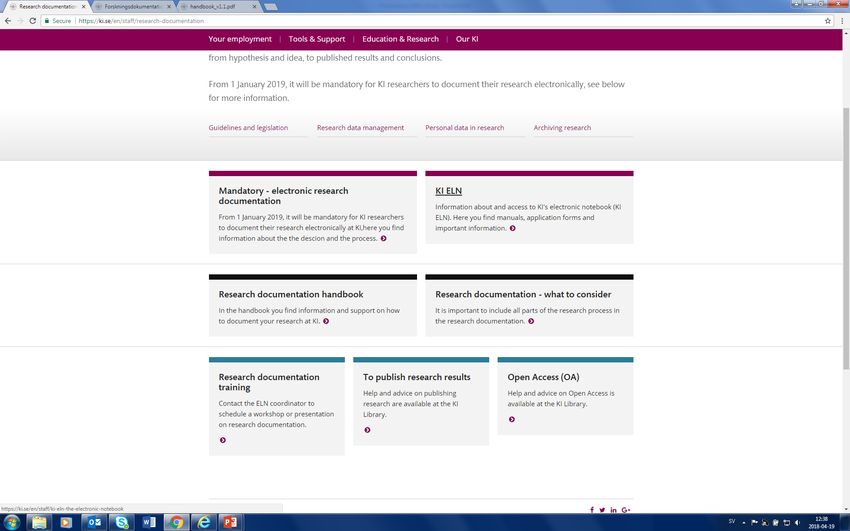
When I say records, I’m talking about information
attached on some kind of medium or data carrier,
be it:

                     Paper

         Video                 Pictures

         Audio                 Websites

                   Databases
                                                    3
To simplify even more Records: “Information created, received, and maintained as evidence and information by an organization or person, in pursuance of legal obligations or in the transaction of business” “Document” = specific piece of information International Organization for Standardization. Information and Documentation: Records Management . 15489-1. Part 1. Geneva: ISO, 2001 4
Legislation
As a government administrative authority, the following regulations apply
for management of, inter alia, official documents, secrecy and archiving:
Freedom of the Press Act (Tryckfrihetsförordningen)
Public Access to Information and Secrecy Act (Offentlighets- och
sekretesslagen)
Public Access to Information and Secrecy Ordinance (Offentlighets-
och sekretessförordning)
Archives Act (Arkivlagen)
Archives Ordinance (Arkivförordningen)
The Swedish National Archives regulations (RA-FS) and authority
specific regulations (RA-MS)
5Principle of public access to official records
and the document concept
Pursuant to the Freedom
Taking part of the documents
of the Press Act, the public on the spot
is guaranteed entitlement
to insight by means of,
Receive copies
inter alia, public access to electronically or on paper
official records
This means that a private individual Photograph the documents
or journalist is entitled to access the
authority’s official records by:
Copies requested in paper form may be charged in accordance with the Fees and charges regulation (Avgiftsförordningen). The first 9 copies are free, copy number 6
10 is 50 SEK and every page beyond that is 2 SEK.What is an official document?
Document is A document is
understood to mean official if it is held by
any written or a public authority,
pictorial matter or
and if it can be
recording which may
be read, listened to, deemed to have
or otherwise been received or
comprehended only drawn up by such
using technical aids. an authority.
7Official records
Note that the legislation is
technology-neutral
ECM Personal
E-mails and Degree system data
Photographs Websites
data files certificates processor’s
contract
8Public access to information and secrecy The Public Access to Information and Secrecy Act contains provisions on registration, disclosure of official documents and other management of official documents by authorities Information in official documents which is not covered by any provision in the Public Access to Information and Secrecy Act, or in the Government’s application decision of the Act in the Public Access to Information and Secrecy Ordinance, is public
Meaning…?
KI cannot itself or by means of agreements, undertake to
observe secrecy which is not based on the Public Access
to Information and Secrecy Act or Public Access to
Information and Secrecy Ordinance
A request for a document to be processed as
“confidential” cannot be considered, unless there is
constitutional support for it
For documents from abroad, the rules on public access to
information of the country of origin do not apply
10Which information in a document can
be covered by secrecy?
Non-disclosure of information in a document must be
based on the law
If the document is deemed to contain classified
information, a reference should be made to the
relevant provision
Secrecy applies to classified information. This means
that unclassified information in the same document
may be disclosed
11OBS!
If you conduct research using classified
data/records provided by another public
agency, the relevant provision at that
agency is transferred to KI (OSL 11:3 §)
That specific provision must be applied
when disclosing information to the
public
12Registration and recordkeeping
(Diarieföring och ärendehantering)
In order to fulfil the requirements on public
access to documents, good organisation of the
documents is important. One way of obtaining
this organisation is to register the official
documents in a register (diarium)
The general rule is that all official documents
received or drawn up by KI should be recorded
13…
Recordkeeping of official documents must take
place without delay
Received documents should be recorded the same
day they arrive. Drawn up documents should be
recorded when they are dispatched, a decision is
made or when they are completed in another
manner
A document’s status as official cannot be deferred
by recording it on a later date
14Examples of documents that should
be registered (diarieförda)
Processing of register/database containing personal data
(Notification form)
Purchase of registry data (Contract)
Personal data processor´s contract
Third party agreement
15And more…
Agreements regarding transfer of research materials
Approvals (Granted Application and Decision)
Authorization of a clinical trial on a medical product
Biobank agreement
Clinical Investigation of Medical Devices
These are just records regarding research activity
There are many other types of records that are held by,
received or drawn up by KI
16Responsibility
registry and
Head of the department
archiving
Head of administration
Secretariat
Research group
Respective PI
Researcher
17The three piles:
• Agreements
Registered
• Financial documents
Not registered • Articles
but preserved • Data collection form
• Consent form
Discarded
• Quality controls
18The Archives Act 3 § The archives of the authorities are a part of the national cultural heritage and shall be preserved, kept in order and handled in such a way so that they can provide: • The right of free access to public records, • The information requirements for jurisdiction and administration, and • Research requirements
The Archives Act 6 §
Organize the records in a manner to facilitate access

Ensure that records are registered correctly to facilitate long-term
accessibility, and ensure that the archive are described to provide both
an introduction to the archive and a systematic archival inventory

Protect the archive from damage, theft and unauthorized access

Delimit the archive by defining which records belong there, and
conduct appraisal and subsequent disposition of official records
How do you prepare your (research) records
for archiving?
Get rid of:
Paper clips
Post-its
Thumbtacks/drawing pins
Plastic pockets
Copies of documents (only archive original documents)
No double-paged papers!
Anything that can damage the records must go!
21The preparation process
Contact your local archivist and book a
meeting
The archivist will check that everything
is in order and ready to be transported
to the archive
The PI must sign approval of
destruction of research data blanket
(This goes for both electronically and analogue records!)
Stored in the archive
22Will the archival holdings be accessible? Yes! That’s the whole point of an archive The records will be preserved, secured and accessible Your office or cabinet is not an approved archive Archival holdings – “The totality of documents in the custody of a records centre, archives, or manuscript repository”. 23 http://www.ciscra.org/mat/mat/term/53
Conclusion

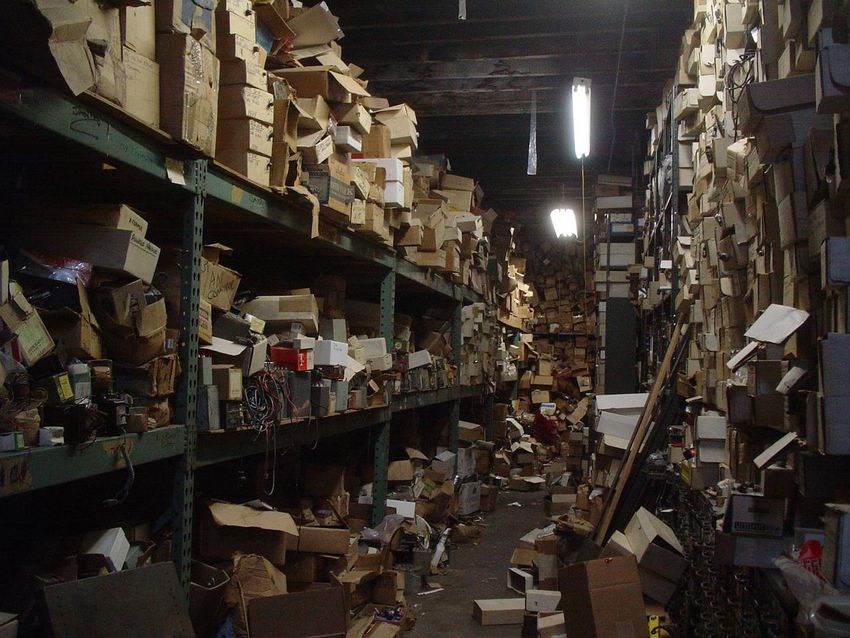
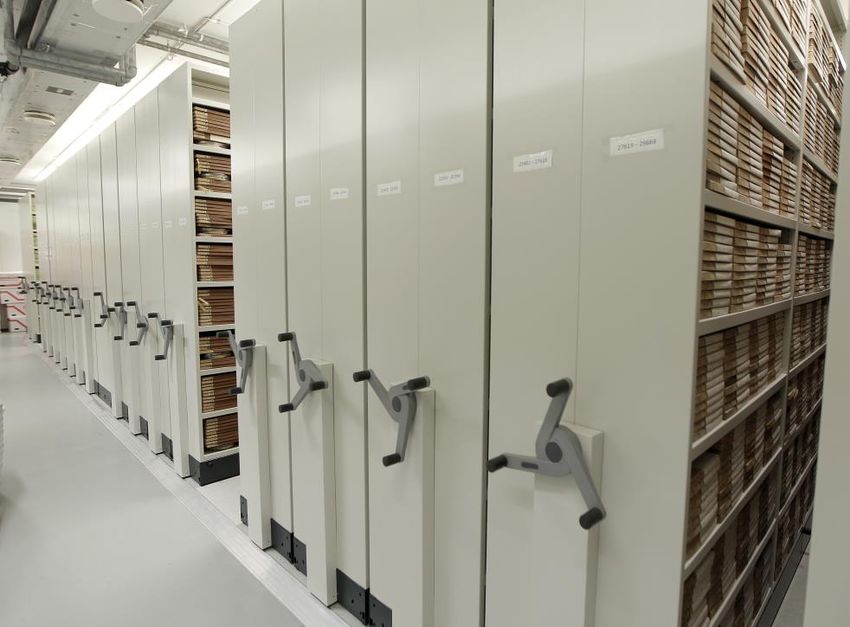
Instead of this:   We should have this:

                                          24
Where to find more information?
LIME internal website (only in Swedish at the moment)
https://ki.se/medarbetare/arkivering-och-diarieforing-pa-lime
KI Staff portal(Medarbetarportalen)
https://ki.se/en/staff/archive-and-registry
Laws and regulations
https://lagen.nu
https://riksarkivet.se/offentlig-forvaltning
25Next chapter
RESEARCH DOCUMENTATION
26Electronic Research Documentation From 1 jan 2019 it will be mandatory for all researchers at KI to document their resarch electronically according to the principal Karin Dahlman- Wright act juni 2017.
28
Why electronic research documentation?
What it is suppose to do: Reception:
Research material will be easier to ”We are not working in a lab
navigate setting, ELN is a lab tool”
Backup
Increased information safety ”ELN is not user friendly”
Improves the dialogue with PhD
sudents
”We do not use logg-books in
Decreases the risk of research our studies” There are
misconduct.
guidelines from KI
Applies to the increased demands of
transparency from journals and
sponsors. ”ELN creates extra work”
Research material will be stored in a
secure and sustainable way.
29Archivist point of view
The work process for a research project cannot always be
described as a coherent flow
You ask different questions and use different methods to
conduct research
This will determine what information is produced, in
other words, records of various kinds
The archivist is in charge of the long-term
preservation/destruction of these records produced by the
department
30An overview
Research
Recordkeeping (hand in at regular intervals)
Project begins Research documentation (ELN)
Ethical approvals
Processor contract
Drafts
Archive
Consortium
agreement Analysis of data
Published articles
Processing
Data collection form
Everything work-
related Important
correspondence
And more…
Name Surname 14/10/2015 31Comments from the archivist:
ELN is, simply put, a notebook in electronic form – it has its limits
Uploading in ELN is not the same as archiving!
Continue working outside ELN and see the system as a place where you
write down what you do during the research process (like a diary or
chapters in a book)
Do not “reinvent the wheel” more than necessary!
We have an official ELN workshop for LIME and PHS. Attend it!
Contact Grants Office for demonstrations and guidance
Ask the other groups how they do. (Innovative Care has a head start)
Have ELN as a point on the agendas for project meetings and research group
meetings
32You can also read


