DEAN'S REPORT 2019 - College of Communication - Boston University
←
→
Page content transcription
If your browser does not render page correctly, please read the page content below
Boston University College of Communication   Increasing Industry
                                              Diversity

COM/365
                                              Great Narratives
                                              A Hollywood Story

            College of Communication

   DEAN’S REPORT 2019
DEAN’S LETTER

                                   DEAR FRIENDS

                                   W
                                                      elcome to COM/365, the Dean’s           moment he revealed anger, it was “righteous indig-
                                                      Report 2019. This is the inaugural      nation.” The key word: “righteous.” Dean LeSourd
                                                      edition of what we intend will come     was an ordained Methodist minister, but he left the
                                                      to you and every COM alumnus            ministry for academia and it was at BU where he
                                                      each year, reporting the highlights     encountered his true pulpit—putting mass media in
                                   of the prior year and signaling exciting things ahead.     the service of teaching.
                                   Even in this era of online communication, we believe          Prominently featured in a 1939–1940 edition of
                                   it continues to be important to deliver some infor-        Bostonia was an article headlined “Boston Univer-
                                   mation in a form to be held in the hands, to be felt,      sity Radio Institute,” a program he pioneered. He’d
                                   to sit on the coffee table. Some things may be old,        enlisted several colleagues to
                                   but also enduring. Which brings me to the story of         develop lectures to be delivered
                                                              our founder.                    on the radio, the emerging media             “EVEN IN THIS
                                                                 Rarely does a day go         of that time. For $2, listeners              ERA OF ONLINE
                                                              by that I don’t walk along      who passed the mail-in exams
                                                                                                                                          COMMUNICATION,
                                                              the COM hallway with the        would earn a certificate.
                                                              gilt-framed oil portrait of a      “Grandfather has a legacy                  WE BELIEVE IT
                                                              dignified gentleman wearing     of seeing the value of mass                CONTINUES TO BE
                                                              dark academic robes. A          communication well before it                 IMPORTANT TO
                                                              small brass plaque beneath      mushroomed,” Jeff LeSourd
                                                                                                                                           DELIVER SOME
                                                              the portrait reads, “Dr.        told me. His visionary work
                                                              Howard M. LeSourd, Dean,        persuaded then-BU Presi-                  INFORMATION    IN A
                                                              School of Public Relations,     dent Daniel Marsh (STH 1908,               FORM TO BE HELD
                                   when established in May 27, 1947.”                         Hon.’53) to authorize LeSourd to           IN THE HANDS, TO
                                      The School of Public Relations is the forebear of       create and lead a school where
                                                                                                                                        BE FELT, TO SIT ON
                                   today’s College of Communication. Then as now, the         students would learn the skills to
                                   school encompassed all the fields that comprise the        become media professionals and            THE   COFFEE TABLE.
                                   mass media professions. Seven decades ago, that            appreciate the positive values of          SOME THINGS MAY
                                   was considered controversial. Today, it’s regarded as      humankind.                                 BE OLD, BUT ALSO
                                   visionary. Again, old but enduring.                           It has been my task and that
                                                                                                                                             ENDURING.”
                                      I knew little about Dean LeSourd until recently,        of my predecessors to carry on
                                   when a stack of yellowed issues of Bostonia arrived        LeSourd’s vision. I will pass that
                                   in the mail, rescued from the attic of a deceased BU       responsibility forward to my successor when I retire
                                   alumnus. As I began reading, I wondered: Who was           later this spring. His ideas may be old, but they’re
                                   this man? What fueled his vision for this school?          certainly enduring.
                                      I was able to locate three of his grandchildren.           We in COM are the inheritors and beneficiaries
                                   Jeff and Chet LeSourd and Linda LeSourd Lader              of Dean LeSourd’s extraordinary vision, which is as
                                   knew him as “Potty,” a man with twinkling eyes who         relevant today as it was then.
                                   brought them to his summer home in Christmas
                                   Cove, Maine, and taught them to fish, to row               Warm regards,
                 Greg Marinovich

                                   and, maybe most important, to set their moral
                                   compasses. Said Chet, “His style would be to nudge
                                   us toward some truth or lesson but never to tell us        TOM FIEDLER (‘71)
                                   what it should be.” Linda recalled that if in a rare       Dean

1   bu.edu/com                                                                                                                   COM/365 2019                 1
CONTENT
Dean
10 BEYOND COM
26 Jacqueline Policastro (’06)
of Gray Television and other
COM alumni have been busy
Tom Fiedler (’71) informing and entertaining.
Check out some of the ways
Assistant Dean,
Development & Alumni Terriers across communica-
Relations tions industries distinguished
Kirsten S. Durocher (CGS’03, themselves.
COM’05)
Director of Strategic
Initiatives & Creative
Production
Kim Relick Tiye Barnes (’19), left, and Kayla
Richardson (’20) are the first
Editor beneficiaries of a COM scholarship
Marc Chalufour for minority students.
Contributing Writers
Rich Barlow
Joel Brown
Lara Ehrlich (UNI’03)
Emma Guillén
COVER STORY: THE CHANGEMAKERS
Amy Laskowski COM is tackling the communications industry’s lack of diversity, starting
Andrew Thurston
Megan Woolhouse
with its own. One of the first steps: a scholarship for two students from a
leading historically black university.
THE TRANSPORTER
Graphic Designer
Raquel Schott 20 By placing Hollywood stars in Ford
cars, Alessandro Uzielli (CGS’87,
COM’89) connects two of America’s
THANKS TO ALL OF YOU
28
Storytelling is at the heart of
COM THIS YEAR IN SEARCH OF
Produced by Boston iconic industries—and now he’s
University Marketing & everything that COM under-
Communications helping COM film students prepare
4 GREAT NARRATIVE
Journalism professor Ellen for their own dream jobs. graduates, graduates and
Cover photo: Ally Schmaling Ruppel Shell on the future of faculty do, and their work
for BU Photo work; an award-winning investi- relies on your support. Meet
COM/365 welcomes your gation of jail suicides; national the donors, including Heather
14
comments. Write to the recognition for PRLab; crisis Barbod (CGS’03, COM’05),
editor at mchalu4@bu.edu. reporting in Venezuela; election who make it all possible.
Send address updates to
alumbio@bu.edu. night at COM; and more Bestselling author Mitchell Stay Connected
Zuckoff has trekked deep
to the
into jungles and interviewed
Recyclable
hundreds of sources to find College of
In keeping with BU’s
stories. At COM, he teaches Communication
commitment to sustainability, other writers how to fill their Join the COM online community! Post, tag,
this publication is FSC-certified.
notebooks and directs the tweet, ask questions, watch videos, network
with fellow alums and reconnect with
renowned Power of professors and classmates.
Narrative Conference. bu.edu/com
facebook.com/COMatBU
instagram.com/COMatbu
linkedin.com/school/COMatBU
twitter.com/COMatBU
youtube.com/COMatBU
f QitY
2 bu.edu/com COM/365 2019 3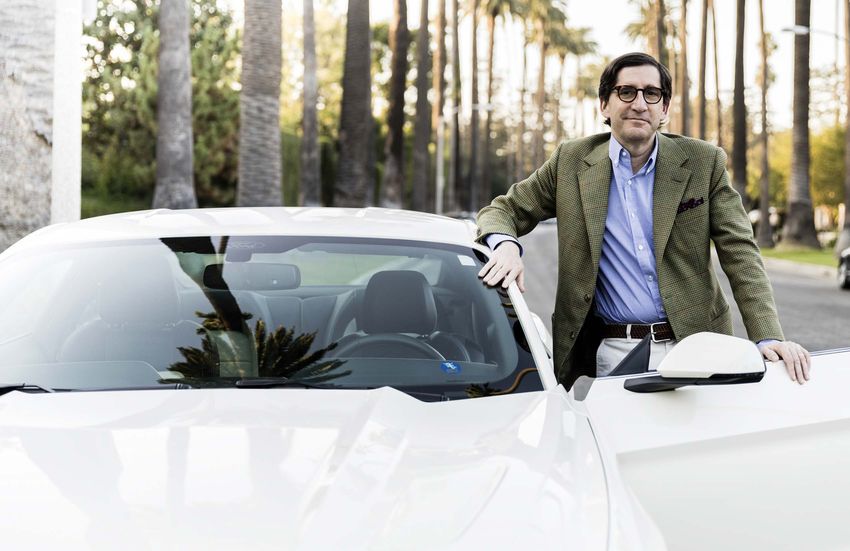
Flaviana
Sandoval (’19)
reported from
COM THIS YEAR
inside this
operating room
on Venezuela’s
organ transplant
crisis.
NEW FACES, NEW ROLES
A fter three decades in public and
corporate affairs, most recently
as US CEO for the global PR firm
Michelle Sullivan (’95)
returned to COM as a
professor of the practice of
A team of
Burson-Marsteller, Michael Fernandez advertising. She helped to
reporters and
joined COM as professor of the practice shape the story of Boston interns found
of strategic communications. Beer Company, brewer of that inmates in
Michael Holley is a new visiting Samuel Adams, for 17 years. Massachusetts
professor of the practice of journalism. Anne Donohue (’89), county jails were
committing sui-
Holley has covered sports for the Bos- associate professor of
cide at twice the
ton Globe, cohosted a show on WEEI, journalism, was appointed (SPH’18)—came out of a new multidisci- rate of those in
authored six books, and was part of a associate dean of diversity, equity and plinary course, Global Health Storytelling, state prison.
Pulitzer Prize–winning team at the Akron inclusion. She chairs a committee of faculty cotaught by Anne Donohue, an associ-
INVESTIGATING JAIL SUICIDES
Beacon Journal. He cohosts a nightly and staff, and works closely with Crystal ate professor of journalism, and Jennifer
sports show on NBC Sports Boston. Williams, BU’s associate provost for diver- Beard, a clinical associate professor of
Jennifer Redfearn, an Academy Award– sity and inclusion. Among her early goals: global health at BU School of Public
nominated documentary filmmaker, joins encouraging recruitment of diverse faculty Health (read more about the program at
COM as an associate professor of the members and graduate degree candidates. sites.bu.edu/pghs).
practice of visual storytelling in journalism. Sandoval’s fellowship began with two
Her short film Sun Come Up documented weeks in Washington, D.C., where she Student journalists’ for investigative reporting in the large institute, an advanced seminar for
a South Pacific island community’s loss of started her reporting at the Pulitzer Center tenacious reporting on market radio category; it also received COM students, workshops for high
land to sea level rise and was nominated CRISIS REPORTER and met with journalists from the Washing- inmate deaths helps earn a 2017 Publick Occurrences award school teachers and boot camps for
for an Academy Award. Redfearn has also ton Post, National Public Radio, National Regional Murrow Award from the New England Newspaper & practicing journalists.
worked for National Geographic, Discovery
Channel, CNN and PBS.
Gary Sheffer was named COM’s Sandra
W hen Flaviana Sandoval was
awarded a 2018 Pulitzer Center
fellowship for international reporting, she
Geographic and other outlets. Then, she
spent six weeks reporting in Venezuela.
“It was very challenging to do a deep
BY ANDREW THURSTON
Press Association.
The close scrutiny of counties’
efforts (or lack thereof) to help those
For the jail suicides story, the stu-
dents worked with McKim and Burrell
to file public records requests, sift
A. Frazier Professor of Public Relations.
He spent 16 years at GE, most recently as
vice president of corporate communica-
knew she wanted to return to her native
Venezuela. Amid Venezuela’s economic
crisis, she spotted a story in the breakdown
dive into such a technical matter,” she says.
She started by asking doctors a simple
question: “How is this supposed to work?”
H alfway through a 30-day jail
sentence for animal cruelty, Guy
Duffy made a despairing call to his
standing on the brink was led by the
center’s full-time veteran reporters,
Jenifer McKim and Chris Burrell—
through data, speak with families and
tour jails; they also helped transcribe
hours of audio, including Duffy’s des-
of the country’s organ She learned the medical jargon and parsed wife. “I’m gonna die here,” he said. and one of their interns. Shaz Sajadi perate calls to his wife.
transplant system. the complex logistics and politics of organ “I’m breaking down.” Less than two shared a byline on the Globe story “It was sort of textbook in terms
Facing page: Conor Doherty (left); Flaviana Sandoval (top); This page: powerofforever/iStock
Transplants, San- waiting lists. Those lists, once overseen by weeks before he was due to walk free, after spending a year collecting the of how we do investigative reporting,”
doval (’19) says, are “a a nonprofit, were taken over by the govern- Duffy killed himself. data that became the story’s foun- says McKim. “We really started with
low-profile issue, often ment shortly before the system ground to Duffy’s harrowing story was one of dation, even calling McKim after her the data that told us a story, and then
overlooked.” But, in June a halt. many in the New England Center for internship ended to push for a deeper found the compelling human stories to
2017, the system became Sandoval remembers when Venezuela’s Investigative Reporting at Boston investigation. Other interns, including make it sing.”
paralyzed after the gov- hospitals were role models and was University’s sweeping 2017 probe of jail Kaylie Piecuch (CGS’16, COM’18) and More than a year after its initial
ernment took it over, and shocked to learn how dire the country’s suicides in Massachusetts. The center, Miranda Suarez (’19), were credited for publication, the series continues to
no transplants have been healthcare situation had become. She also a nonprofit news organization that their reporting contributions. reverberate. In June 2018, McKim
performed since. Sandoval found signs of hope in the doctors still shares its stories through outlets such “We have this dual mission,” says reported that the Massachusetts
was determined to exam- striving to help their patients—and she as the New York Times and National McKim, a senior investigative reporter attorney general had cited the story
ine why. left Venezuela with a sense of purpose. Public Radio, found that inmates in at the center, “doing investigative in a call for an investigation into the
The fellowships are open “Journalists are crucial,” she says. Massachusetts’ county jails were com- reporting that makes a difference in Bristol County sheriff’s office. More
Michael Holley to students from schools “There are so many stories that deserve to mitting suicide at more than twice the our communities and teaching the next recently, McKim tasked her newest
in the Pulitzer Center’s be told, that must be told to do justice rate of those in state prison. generation of investigative journalists.” intern, K. Sophie Will (’20), with
Campus Consortium, and to history.” The exposé (available at necir.org/ Along with its internship program— writing an “impact story for us on how
as a charter member of Read more about Sandoval’s experience investigations), which included a series which is open to COM and other one of the jails actually hired someone
tions and public affairs. He once ranked the consortium, BU sends two students at bu.edu/com/comtalk/an-organ- on NPR station WGBH and a front- Boston-area students like Sajadi, an to look at what was going wrong and
third on PRWeek’s 50 Most Powerful into the program each year. In 2018, those transplant-crisis-at-home. page Boston Globe article, won a 2018 Emerson College graduate—the center what was going right to limit these
People in PR list. students—Sandoval and Arianne Henry –Marc Chalufour Regional Edward R. Murrow Award runs a precollege summer journalism types of things in the future.”/
4 bu.edu/com COM/365 2019 5
COM THIS YEAR
Tom Fiedler (’71),
dean of COM
(left), and Adrian
Yasmin Younis (’18) who might not be Muslim or Arab, but Thomas (’19)
who were part of a first-generation family prepare for an
or persons of color,” she says. “That election-night
really helped me.” broadcast from
Younis was chosen by the Student the Zimmerman
Family Social
Speaker Selection Committee, which Activation Center.
vetted nearly 40 speech proposals. Her
remarks had all the hallmarks of a good
speech, says committee member Tammy
Vigil, an associate professor of communi-
cation: they were personal and relatable,
while weaving together ideas about the
value of diversity and unity. Ellen Ruppel Shell “WE’RE USING SOCIAL MEDIA AS A
“Now all I really ever talk about is
PROXY TO TRY AND GET A SENSE OF
being Iraqi and being Muslim,” You-
HOW THE ELECTORATE IS FEELING.”
nis says. “I can’t even imagine being
ashamed anymore.” –Megan Woolhouse THE FUTURE OF WORK TOM FIEDLER (’71), DEAN
THE ROAD TO
F or many analysts, college has been
part of the answer to finding better
paid work and of enjoying a middle-
class life. Ellen Ruppel Shell, a profes-
SELF-DISCOVERY
LIVE FROM COM
sor of journalism, begs to differ. Her
new book, The Job: Work and Its Future
Y asmin Younis was in kindergarten
when al-Qaeda extremists hijacked
four airplanes on September 11, 2001.
in a Time of Radical Change (Currency,
2018), explores the cost—political, social,
economic and personal—of our growing
Living in Missouri, the daughter of Iraqi anxiety over jobs and suggests ways we COM faculty studies what her fingers. COM’s election coverage is After working through all five races,
immigrants, Younis (’18) became “that Nebeyatt Betre (’18) can regain control over our working lives. social media sentiment can off and running. Fiedler, Thomas and the team call it a
Arab girl,” she says, and endured taunts Ruppel Shell writes, “People everywhere reveal about an election “Hello and welcome to the BU night. The next morning, Guo com-
from classmates who referred to her as wish for the same thing—an education News Service coverage of the midterm pares the results with her analytics.
BY MARC CHALUFOUR
a terrorist. that will launch them into a life of pro- elections,” Thomas says to the camera, Tweet volume and positive sentiment
“It kind of made me hate myself,” GIVING BACK ductive, purposeful, and fairly compen- before turning to Fiedler for an intro- had favored Republican victors Josh
Younis says. “The person I am now is very
different. I’m very comfortable with who
I am.” Younis reflected on her journey E ach year, members of BU’s senior
class encourage their peers to con-
sated work. Wishes not being horses, only
some will ride.”
In the book, Ruppel Shell argues that
I t’s nearly 5:30 pm on election night
and Susan Walker, an associate
professor of journalism, calls out,
duction to the night’s experiment.
“We’re using social media—and
specifically Twitter—as a proxy of
Hawley in Missouri and Rick Scott in
Florida, as well as Martha McSally
who lost a close race in Arizona. In
Facing page: Cydney Scott (left, right), Jackie Ricciardi (center); This page: Cydney Scott
in a speech she delivered as BU’s 2018 tribute to the Class Gift—and in 2018 higher education shouldn’t be considered “We’re nine minutes away from our some kind to try and get a sense of North Dakota, Heidi Heitkamp was
Commencement student speaker. they raised nearly $95,000. That gift the only path to financial security. Her live cut-in—do we have a mic check? how the electorate is feeling,” Fiedler the subject of more tweets than Kevin
The Black Lives Matter movement was included contributions from 2,736 seniors— research spanned eight years and took Can you give me a 5-4-3-2-1?” explains. That sentiment analysis is Cramer, but also had a higher “nega-
a turning point. As a freshman at the the second highest total in BU history. her from Appalachia to the Midwestern Adrian Thomas (’19) and Tom performed by Crimson Hexagon soft- tive” sentiment, and lost.
University of Missouri in 2014, Younis “We’re so spoiled at BU,” says Nebeyatt Rust Belt to the East Coast and included Fiedler (’71), dean of COM, count up ware, which Lei Guo, an assistant pro- Then there was Texas. The Twitter
participated in the street demonstrations Betre (’18), who majored in journalism interviews with dozens of workers—as and down, preparing for their first fessor of emerging media studies, has metrics favored O’Rourke, yet Cruz
in St. Louis after a grand jury acquitted and cochaired the Class of 2018 gift well as economists, computer scientists, on-camera segment of the evening, live programmed to sort tweets about Sen- won. Could losing by just three per-
the white Ferguson, Mo., police offi- committee. “To have a TV studio, all the psychologists and historians—to unveil from the Zimmerman Family Social ate candidates in five races—Arizona, centage points, in a state that hasn’t
cer who fatally shot Michael Brown, an editing equipment, all as part of our tui- the myths surrounding how to build good Activation Center. Florida, Missouri, North Dakota and elected a Democratic senator since the
unarmed black man. tion—and that’s possible because people work in an increasingly globalized world The Zimmerman Center opened in Texas—onto a spectrum from “joy” to 1980s, be considered a victory?
Younis realized that a Muslim of any donated to COM in the past.” where middle-class jobs are threatened. 2017 following a gift from advertising “fear.” What Fiedler and his colleagues “If I was in the Beto O’Rourke
color could also very likely face similar Seniors can direct where their donation “We need to make the creation and executive Jordan Zimmerman, whose want to see is how this information camp, there was a lot here to take
treatment by police. “I had to become goes within the University, from educa- sustaining of good jobs an explicit goal of daughter attended COM. The lab compares to polls and results. away, in a positive sense,” Fiedler says
more in tune with that side of myself tional programs to athletics. “I donated innovation,” Ruppel Shell says. “As I hope provides a space for students to use “We’ll get a sense of energy, inten- on BUTV10’s Wednesday election
rather than being ashamed of it,” she says. to COM specifically,” says Betre. “BU I make clear through the stories of scores powerful analytic tools to study social sity. Just from the size and the vol- wrap-up show. Those positive indi-
She transferred to BU as a sophomore has offered me so many opportunities. of people at work in everything from high- media—and the 2018 midterms pro- ume,” Fiedler adds. And then he and cators, he theorized, could point to a
and found a new and energizing envi- I felt like I could really practice being a end motorcycle design to custom-clothing vided the lab’s biggest showcase yet. Thomas launch into an analysis of the campaign for an even higher office in
ronment. “I was getting to meet a lot of journalist with the safety net of being in manufacture, it is well within our reach.” “All right—stand by. Ten seconds.” Texas race between Republican Ted two years. One thing is certain: COM
other people who are like-minded, people school.” –Marc Chalufour –Rich Barlow Walker counts the final moments with Cruz and Democrat Beto O’Rourke. will cover it from all angles. /
6 bu.edu/com COM/365 2019 7
COM THIS YEAR
COM STATS
2,191
TERRIER
TRIUMPHS $2,521,456 16
Total donations Endowed
A group of 20 COM Advertising
undergraduate and graduate stu-
dents won 13 of 16 student awards given
Maggie Gong (’18), Jackie Wu (’18),
Edward Boches, Pegeen Ryan, Xi
to COM undergraduate
scholarships
out at the 2018 Hatch Awards for Cre- Qin (’18) (kneeling), Doug Gould,
ative Excellence, a prestigious regional
advertising award show. The students
Tara Thomson (’18) and Kara
O’Hearn (’19) celebrate COM’s
success at the Hatch Awards.
9 5
combined to win five golds—a record for Endowed Endowed
the student category—three silvers, three graduate professorships
bronzes and two merit awards. Donors in fiscal year 2018 scholarships at COM
Advertising undergraduate and gradu- focused on opioid awareness campaigns. in Teaching with Technology. Merzbacher
ate students earned awards at the pres- Kara O’Hearn (’19) and Nihal Atawane moved much of his students’ video
216
tigious 2018 One Show, which recognizes (’19) were awarded a Bronze Pencil and watching to streaming services, freeing
80 25 professors
accomplishments in advertising and three other BU teams received merit up more class time for discussion. The
design. Sadie Devane (’19) and Jackie awards in the same category. award “celebrates innovation that results
35 associate professors
Wu (’18) won a Silver Pencil in The Andrea Kremer, a lecturer at COM and in positive learning outcomes for under-
Young Ones Social Brief category, which Emmy Award–winning sports reporter, graduate students.”
received one of foot- BU’s 38th annual Redstone Film Fes-
ball’s highest journal-
istic honors when she
tival recognized the film and television
department’s next generation of filmmak-
Full-time faculty 13 assistant professors
accepted the 2018 Pete ers. The Boswell Incident, a science-fiction
Rozelle Radio-Televi- comedy, was the big winner, claiming first
Total faculty Highlights: 3 Pulitzer Prize winners • 5 Members of the Arthur W. Page Society
sion Award at the Pro place for best director, Wes Palmer (’17),
Football Hall of Fame best screenplay, Luke Shields (’14), and
2,223
induction ceremony. best sound design. Palmer also won best
Kremer also made director in 2016. The festival is sponsored COM undergraduate degrees:
history on September by Sumner Redstone (Hon.’94).
27, 2018, when she PR News named PRLab, COM’s BS in advertising BS in journalism
and broadcast partner student-run public relations agency, as BS in media science BS in film and television
Hannah Storm called the top education program at its 2018
the Los Angeles Rams Platinum & Agency Elite Awards. “This
BS in public relations BA in cinema and media studies
vs Minnesota Vikings national recognition speaks to the unique Total undergraduates
game on Amazon immersive experience PRLab offers for
Prime’s Thursday both students and clients,” says Amy
430
Night Football broad- Shanler, PRLab codirector.
cast. They became the Donald K. Wright, a professor of public
55 113 262
first all-woman booth relations, received the 2018 Dorothy Bowles
to call a major men’s Public Service Award at the Association
sporting event on for Education in Journalism and Mass
Courtesy of Amazon (left); Li Yang (top)
television. Communication (AEJMC) conference in
Charles Merz- Washington, D.C. The award recognizes an
bacher, an associate AEJMC member for connecting the aca-
professor of film and demic and professional communities in the
television, received mass communications industry. Journalism Film/TV Mass
Total graduate students
BU’s Gerald and communication
Lecturer Andrea Kremer was honored at the Pro Football
Deanne Gitner Family Reporting by Rich Barlow, Marc Chalufour, by department
Hall of Fame and became part of the first all-woman NFL
broadcast team. Award for Innovation Emma Guillén and Amy Laskowski
8 bu.edu/com COM/365 2019 9
COM IS TACKLING THE
                                                                                                 COMMUNICATIONS INDUSTRY’S
                                                                                                 LACK OF DIVERSITY,
                                                                                                 STARTING WITH ITS OWN

WHEN ERMOLANDE JEAN-SIMON WALKED INTO HER FIRST
MASTER’S DEGREE CLASS AT COM, SHE HAD A THOUGHT
FAMILIAR TO MANY PEOPLE OF COLOR ENTERING THE
COMMUNICATIONS BUSINESS: WHERE ARE ALL THE PEOPLE
WHO LOOK LIKE ME?
“I was the only black person,” she says.

                                                                            THE CHANGEMAKERS
   Although COM does well by some diversity measures—28
percent of all students are from overseas and 11 percent are
Hispanic/Latinx—just 4 percent of students identify as African
American or black. That lack of students of color reflects the
broader communications industry. According to the Bureau of
Labor Statistics, public relations—Jean-Simon’s chosen profes-
sion—is 87.9 percent white. Most communications occupations
can only muster single-digit proportions of black and African
American employees.
   Jean-Simon (CAS’98, COM’15) says she felt like she didn’t fit
in at college: there was no one to talk to about being black at
COM; she typically completed group projects with other stu-
dents from diverse backgrounds. As she neared graduation, she
told COM’s dean, Tom Fiedler (’71), about her experiences. She
also offered to help.                                                       BY ANDREW THURSTON
   In January 2017, Jean-Simon joined Fiedler on a trip to Orange-          PHOTOGRAPHS BY
burg, S.C., to make a pitch for COM to students at the state’s
oldest historically black college or university, Claflin University. But,
                                                                            ALLY SCHMALING
even though BU had just received a donation to launch the Claflin
Scholarship—a $10,000 merit scholarship for a minority student
                                                                                                                             Tiye Barnes (’19), left, and Kayla Richardson
                                                                                                                             (’20) are the first beneficiaries of a COM
                                                                                                                             scholarship COM/365
                                                                                                                                         for minority2019
                                                                                                                                                        students.      11
pursuing a master’s degree at COM—her talk wasn’t a straightfor- with a broader selection of programs and faculty. “Any time Richardson’s ambition is to land a writing gig in Los Angeles;
ward great faculty, amazing internships, free money plug. people are challenged and given the opportunity to experience eventually, she wants to emulate showrunner Shonda Rhimes
“I told them I want them to come to BU because things need to something new, something they’d never thought about before, it and become an executive producer. She credits the real-world
change, and we have to be the changemakers and not the peo- really does help,” says Gough. experiences woven into the COM program for confirming what
ple who are told to be quiet,” she says. “I also said to them that Fiedler says that from a BU perspective, the program is an she’d like to do with her life—and what she wouldn’t.
the communications industry has a lot of storytellers, but who’s affirmation of its founders’ vision of a university open to all. “I had an internship at Boston Public Schools and found I
actually telling our story? “It’s critically important that we have more diversity among our hated PR,” says Richardson, who by contrast has loved her time
“Most agencies were formed by middle-aged white men. I feel student body and our faculty,” he says. “I think it enriches the with student-run BUTV10. “At Claflin, there wasn’t a place
like now is the time to push those organizations to do a lot more experience of everyone in the classroom to have people who come where you could do that and experience that right away. At BU,
around diversity and inclusion.” from different backgrounds, races, ethnicities and countries. This you can really find yourself.”
At COM, part of the push means restoring a historic connec- is a small way of being able to achieve it.” Although Richardson studies with COM students from differ-
tion with Claflin University, formed in the same year as BU—and ent cultures and countries—and says her professors do a good
by one of the same people. NO SHORTCUTS job incorporating diverse films and writers into their classes—
The scholarship, which was established by an anonymous donor she’s still the only black person in the room. It was the same for
IN THE ASHES OF THE CIVIL WAR in 2016, gives COM the means to turn the exchange program into Barnes, just as it was for Jean-Simon.
In December 1869, just seven months after cofounding Boston a pipeline of potential master’s students.
University, shoe factory magnate Lee Claflin helped launch Kayla Richardson (’20) applied for the scholarship after
Claflin University. Like BU, it had Methodist roots and was to be spending a semester at COM in the exchange program as an “I WAS SO AGAINST GETTING A MASTER’S,” SAYS
open to all. undergraduate; now, she’s studying for an MFA in screenwrit-
The institution, named in recognition of the financial support ing. She says those first few months sampling Boston proved to KAYLA RICHARDSON. “[BUT] I LOVED BU AND I
it received from Claflin and his son William (the Massachusetts be life changing.
governor who signed BU’s founding charter), pledged to admit LOVED BOSTON, SO I WAS JUST LIKE, ’YOU KNOW,
students “regardless of race, complexion, or religious opinion.”
Even in the Yankee North, the Claflins’ vision of a school edu- I’M GOING TO TAKE THE CHANCE.’”
cating men and women and people of different races together was
unusual; in a South still smoldering from defeat in the Civil War,
it was virtually treasonous.
“I would hope that we reach a point that when a student of
color or of a diverse background goes into a classroom,” says
“[A MASTER’S] WAS ALWAYS ON MY MIND, BUT Fiedler, “she or he will see that there are people like them
there—and ideally faculty members like them—and the message
IT WAS A MATTER OF WHEN AND HOW,” SAYS will be that not just this classroom, but the profession, is open
TIYE BARNES. “THE OPPORTUNITY WAS LIKE to me and people like me. That’s ultimately the goal here.”
Fiedler admits that the partnership with Claflin—where 97
DIVINE INTERVENTION.” “Before that, I was so against getting a master’s,” she says. “I
percent of students are African American—is just a small step in
that direction. “I wish there was a shortcut,” he says.
loved BU and I loved Boston, so I was just like, ‘You know, I’m He hopes donors will step up to endow and expand the schol-
going to take the chance.’” arship and others like it; Ray Kotcher (’83), a professor of the
Tiye Barnes (’19) had a different journey to BU. After graduat- practice and former Ketchum CEO and chair, recently endowed
“I think that was so inspirational,” says Fiedler. “They were ing from Claflin with a degree in mass communications, Barnes the Kotcher–Ketchum Scholarship and Internship for African
talking about creating a university where, quite literally, a former landed a sales job at tech company Oracle. She spent her days American PR undergraduates. Other initiatives at COM include
slave and a former slave owner could sit in a classroom together.” chasing potential leads—and itching for something else. Raised the formation of a Diversity, Equity and Inclusion team to help
Fiedler first read the Claflins’ story while studying BU’s history by a single mom who valued education, Barnes says a master’s make diversity a formal part of hiring practices, student out-
shortly after becoming dean in 2008, and decided the connec- degree was “always on my mind, but it was a matter of when and reach and course syllabi [read more about the team’s head, Anne
tion between the two schools was worth celebrating. He reached how.” When a former professor called to tell her about the new Donohue (’89), on page 4]; Jean-Simon is one of the founding
out to Claflin University and began to lay the foundation for a scholarship, she says, “the opportunity was like divine interven- members.
program allowing Claflin undergraduates to spend a semester at tion.” Barnes was the scholarship’s first recipient. “There’s not a lot of us in the communications industry,” says
BU (the scholarship would come later). Since the exchange pro- As a PR student, Barnes worked with COM’s student-run agency Jean-Simon, now marketing and events specialist at the New
gram launched in 2010, about 40 Claflin students have ventured PRLab, interned with medical supplies company Fresenius Medical England Center for Investigative Reporting at Boston Univer-
the 1,000 miles north to BU. Care and interviewed Ayanna Pressley, then a city councilor, now a sity, “and we need all the support that we can get. For a lot of
Donna Gough, professor and chair of Claflin’s department of congresswoman for Massachusetts, for a writing assignment. Today, minority people, there are a lot of factors that fall into place of
mass communications, describes her school as rural: its 2,000 she works at the PR firm LaVoie Health Science. whether or not you go to graduate school; if there’s not someone
students live in a community of just 14,000. Because of BU’s “The classes are intense,” says Barnes. “Coming to BU, it’s a supporting your dream to do that, you’re going to end up stuck
size, she says, students “get some exposure to the wider world” lot of hands-on work; you’re doing a lot of networking.” in a position you don’t want to be stuck in.” /
12 bu.edu/com COM/365 2019 13
Bestselling author
    Mitchell Zuckoff risked
his life in a jungle to uncover a
  forgotten saga of wartime
heroism. At COM, he teaches
    other writers how to fill
   their notebooks and find
           their stories.

        BY LARA EHRLICH
Professor Mitchell Zuckoff delved into the New
Guinea jungle as part of the research for his 2011
nonfiction book, Lost in Shangri-La.
ture every detail. He tuned his senses to the pressure of
the moist air, the squelch of mud under his rubber-soled
hiking boots, the “ripe smells” of the rain forest like “an
overheated funeral parlor”; impressions he’d later jot
down in his notebook and use in a Boston Globe essay.
“YOUR NARRATIVES ARE
Wading through dense ferns, he skirted a steep drop
and came at last upon the scene he’d traveled all this
way to find: a mangled propeller, a camouflaged wing
CREDIBLE IF THEY ARE
consumed by vines, a torn-apart, rusted-out fuselage.
These were the remnants of a C-47 Skytrain US military
transport plane that had crashed during World War II in
DEEPLY, HONESTLY,
May 1945, killing 21 of its passengers.
Two airmen and one member of the Women’s Army
Corps had survived, aided by members of the cannibalis-
THOROUGHLY REPORTED.”
tic Dani tribe who, until then, had never come into con-
tact with the outside world, and a squad of paratroopers
who devised an ambitious rescue plan. The American
public had devoured the news reports—until the bombing
of Hiroshima had overtaken the front page. The story was
lost to history in the advent of the Atomic Age.
Zuckoff recounted the extraordinary rescue in his
book, Lost in Shangri-La: A True Story of Survival,
Adventure, and the Most Incredible Rescue Mission of World War to write a textbook and convey information, you’re not writing a
II (HarperCollins Publishers, 2011). He’d been an investiga- scene. Narrative nonfiction—I’m not limiting it to writing—occurs
tive reporter for the Boston Globe for two decades, published in in scenes. That three-dimensionality is central to what we do.
magazines like the New Yorker and Fortune, and nominated for
a Pulitzer Prize—but Lost in Shangri-La turned Zuckoff from a Why did you need to visit New Guinea to write Lost in Shangri-La?
successful author into a New York Times–bestselling one. Listening to people who’ve been there could never quite give me the
His seven other critically acclaimed books have taken him from feeling of those little details that I hope the reader feels too: the
Greenland to Malta, and closer to home in search of what he humidity and the heat and the jungle scraping against their face.
calls the “understory,” the universal truth animating every great
narrative. Notable among them, 13 Hours: The Inside Account of Why is that kind of reporting integral to narrative nonfiction?
What Really Happened in Benghazi (Hachette Book Group, 2014) Reporting is everything. If you’re really serious about this work,
narrates the security contractors’ divisive account of what hap- you know you can’t fudge it. You’re creating a “you are there”
pened when Islamic militants attacked their American diplomatic experience for your readers, and you can’t do that without an
compound in Benghazi, Libya, and was adapted into the Oscar- overstuffed notebook.
nominated film 13 Hours (Paramount Pictures, 2016). His forth- You’re not using everything in your notebook. You’re using
coming book, Fall and Rise: The Story of 9/11 (Harper, 2019), tells some small percentage of it. If you’ve done the reporting, you can
the stories of the people impacted by the terrorist attacks in New pick the right detail that will stay with your audience and bring
York, Washington, D.C., and Pennsylvania. the narrative to life.
COM/365 talked with Zuckoff, the Sumner M. Redstone Pro- That’s surface-level reporting—and then there’s the next-level
fessor of Narrative Studies, about storytelling and the college’s reporting, which is getting inside someone, where you can say
HE FOUGHT TO GAIN PURCHASE ON He’d find out later that his guide for
the trek through New Guinea’s isolated
annual Power of Narrative Conference, a three-day series of talks,
panels and networking opportunities at which journalists from
with confidence what they were feeling and thinking, what they
believe. Your narratives are credible if they are deeply, honestly,
THE RAIN-GREASED LOG BRIDGING Shangri-La valley had a local pilot on throughout the world gather at BU to learn from industry giants thoroughly reported.
standby in case they needed an emergency like Norman Mailer, Nora Ephron, Ken Burns and Susan Orlean.
A RAVINE, MITCHELL ZUCKOFF evacuation. Widely considered a leading proponent of narrative nonfiction, Can you talk about how you decide which of your interview subjects to
TRIED NOT TO THINK ABOUT THE Jaw clenched, wet hands gripping his Zuckoff also shares how he’s helping position COM at the van- feature as “characters” in your narratives?
guide’s, he inched across the log and into guard of the field. It often happens organically in the reporting. With my book
JAGGED ROCKS 15 FEET BELOW. the relative safety of the jungle vines. 13 Hours, I began to naturally build things around Navy SEAL
Zuckoff took note of his heartbeat, accel- COM/365: What distinguishes narrative nonfiction from other forms Jack Silva because he was a wonderful proxy for the audience.
erated by exercise and anticipation. He’d of nonfiction? He’s a husband and father who’s shedding his old life, quite lit-
Buzz Maxey
journeyed from Boston across the world to Mitchell Zuckoff: Other forms of nonfiction aren’t so focused on erally. When he told me the story of removing his wedding ring
get here, and he was determined to cap- the story; they’re focused on getting information. If your goal is on the plane on the way to Benghazi, I knew intuitively that
16 bu.edu/com COM/365 2019 17Jack Silva, the Navy SEAL at
the center of Zuckoff’s best-
selling 13 Hours, was played by
John Krasinski in a film of the
same name.
To report his book Frozen in Time, Zuckoff
(left, in baseball cap) joined an Arctic
expedition to find the wreckage of a
World War II airplane.
Jack was going to be central. I’ve done this long enough that I they can consume wherever they are, so we have to reach them
listen to that quiet moment of, “What’s the story I’m here to with quality. We’ve got an amazing opportunity.
tell?” [Editor’s note: Zuckoff used the alias “Jack Silva” to protect and Academy Award nominee. Public radio producer and editor What can narrative journalism achieve that other types of journalism can’t?
the Navy SEAL’s identity.] How is COM positioned to take advantage of this opportunity? Anne Donohue is teaching podcasting. We’re building up COM’s Narrative journalism gives the audience the “you are there”
That was, of course, the story of Benghazi on September 11, I use this phrase a lot: “If your only tool is a hammer, every strength—and the journalism department’s strength, in particu- feeling we all crave. You can be at your kitchen table, on the T or
2012—but it’s also the story of these guys nobody was coming for, problem looks like a nail.” We recognize that whatever the story lar—to continue to be a leader in nonfiction narrative. on a plane, and if you are surrounded by characters, setting and
who could rely only on each other. So, the understory—the story is and whatever the best way to tell it is, we need to teach our motive—all these elements formed into scenes, because scenes
underneath that big action story—was, “Who are these guys?” students to pull the right tool out of that toolbox and not have How does the Power of Narrative Conference play into that mission? are the core of narrative—you are transported. You are there,
If there isn’t that story within the story—the idea that ani- them thinking, “Oh no, I’m a writer; the photography department It’s a way to celebrate narrative on a global scale, bringing some of completely, and the story almost melds into memory, as though
mates it—the narrative won’t work. The narratives that really stay is over there.” the greatest practitioners to BU. We’re not just attracting people you experienced it. I don’t know anything more powerful in story-
Facing page: courtesy of Mitch Zuckoff; This page: Paramount Pictures Corp. (top), Cydney Scott (right)
with us have something underneath. We’ve built a faculty of storytellers in all genres: Michael who are giants in the field; we also have people who are writing telling than that. /
Holley is teaching students how to write sports with a storytell- fiction, creating podcasts, learning from our side of the craft. We’re
Could you offer an example of a narrative made memorable by its er’s mind-set. We just hired Jennifer Redfearn, a documentarian saying, “A lot of the same qualities that make a great book or a This interview has been condensed and edited for clarity.
understory? great long-form magazine piece are applicable because they’re ele-
What immediately comes to mind is Seabiscuit. Just think ments of reporting.” Those apply across platforms, across media.
about how Laura Hillenbrand focuses on these three men—the So, this idea of establishing a place where every one of us, from
trainer, the jockey and the owner—each of whom has something every imaginable area, can talk to each other is central to COM’s
2019
“IF THERE ISN’T THAT
animating them. If you don’t understand that it’s about under- idea that we’re going to create it here, teach it here and then we’re
dogs in the Depression and how people held on to hope during going to find ways to collaborate with the world. POWER OF
a decade-long unraveling of everything that people held dear NARRATIVE
STORY WITHIN THE
in America, then I would argue that you missed the point. The How will the conference continue to evolve?
undersized horse was an amazing vehicle to tell a story about In October 2018, we held our first pop-up Power of Narrative CONFERENCE
the Great Depression. event in collaboration with The Marshall Project. They have this
STORY—THE IDEA THAT wonderful project called “We Are Witnesses,” a collection of 19 The 21st annual Power of Narrative Conference will
We often hear how social media has shortened our attention spans and videos from people telling personal stories from different areas of be held March 22–24, 2019, in BU’s George Sherman
Union. The keynote speakers are Katherine Boo, Farai
caused media outlets to abandon long-form narrative in favor of click- the criminal justice system. We brought them to COM for a screen-
ANIMATES IT—THE NAR-
Chideya, Dave Cullen, Matthew Desmond, Jill Lepore,
bait. What does this mean for the future of narrative? ing and panel discussion. We hope to do more pop-up events.
Al Letson and Eli Saslow. Learn more at bu.edu/com/
I’m more optimistic and excited about narrative now than I’ve At the conference, we hope to do more collaborations across narrative.
ever been. iPhones can accommodate any kind of narrative; you media. We’re not just going to put three people who write for
RATIVE WON’T WORK.”
can watch a documentary film, listen to a podcast, read a book. magazines on a panel; I want to see more panelists approaching The keynote speaker is made possible through funds
donated by Thomas R. Schoenenberger (’72).
We can deliver narrative in every imaginable form, at every length, issues like immigration, for example, who are telling the story on
in every medium, on one device. People are consuming more, and radio, on a news website and in a documentary film.
18 bu.edu/com COM/365 2019 19THE TRANSPORTER
AS FORD MOTOR COMPANY’S FACE IN HOLLYWOOD, ALESSANDRO UZIELLI CONNECTS TWO OF AMERICA’S ICONIC INDUSTRIES
by MA RC CH A LU FO U R
Photos by Patrick Strattner COM/365 2019Ignore the celebrity names
on the poster and in the
film’s opening credits:
The real star of the
2014 blockbuster Need
for Speed isn’t Aaron Paul
or Michael Keaton—it’s a
s o u p e d - u p, s i l v e r - a n d - b l u e
F o r d M u s t a n g.
Paul, a rogue race car driver, takes the car on a wild ride from New The job is an unusually good fit for Uzielli, who studied film at
York to California. The story unfolds as a cross-country homage to COM and spent a decade as a producer—and who is also Henry
a bond that film and automobiles have shared since their advent Ford’s great-great-grandson.
in the early 20th century, honoring one famous car scene after
another: Rebel Without a Cause’s street race, Smokey and the Ban- LA LA LAND
dit’s police chases. There’s even a quick glimpse of Steve McQueen It’s a warm September afternoon in LA and Uzielli is making the
speeding across the screen at a drive-in theater. short drive from lunch on Sunset Boulevard in Beverly Hills to
But why a Mustang? The answer can be found in a small office in his office, the conversation drifting between business, movies and
Century City, a Los Angeles neighborhood packed with film studios cars. Today, he’s in his 2015 Mustang—he also has a 2005 Ford
and talent agencies. There, Alessandro Uzielli (CGS’87, COM’89) GT and a leased Lincoln Continental. A small metal plate riveted
runs Ford Global Brand Entertainment, the auto company’s to the aluminum-and-leather dash (there’s a lot of leather)
marketing arm in Hollywood. The group helps Ford benefit from announces that his is #0023 of 1,964 manufactured for the car’s
Hollywood’s spotlight, getting actors behind the wheels of F-150s, 50th anniversary. The engine, all 400-plus horsepower of it, rum-
Explorers and Mustangs on-screen, and associating the brand with bles, even as Uzielli winds down backstreets at 20 miles per hour.
celebrities off of it. Uzielli has helped Fords star in a range of films, “It’s interesting how some cars stereotype a character,” he says.
including San Andreas, Logan Lucky and Quantum of Solace, as well “Like a Prius.”
as in television shows like New Girl and Modern Family. “Like Larry David in Curb Your Enthusiasm,” I say, remembering
“I don’t think there’s a better platform to speak to a global how the show’s neurotic lead character drove his hybrid all over
audience than a movie,” Uzielli says. Ford’s partnership with Need Los Angeles. Yet Uzielli fits none of my Mustang-driver stereo-
for Speed, which grossed more than $200 million globally, aligned types. A pocket square juts from the left breast of his blazer. His
with the launch of the 2015 Mustang, the first edition of the iconic brown leather shoes, belt and tortoise rim glasses all match. His
car that Ford would market and sell overseas. appearance is more Brooks Brothers than muscle cars.
COM/365 2019 23the roomy trunk of a Crown Vic—that Soderbergh binging on 16mm Bond films that Broc-
finally had obtained himself. That experience gave coli had given the family.
Uzielli an idea. By 2006, the newest James Bond,
He started talking to people at Ford, including Daniel Craig, was steering a Ford
the new CEO—his cousin Bill Ford. The company Mondeo sedan along the coast of Nas-
needed a presence in Los Angeles, Uzielli told them, sau, Bahamas, in Casino Royale. If that
and he was uniquely qualified to establish it. seems like an oddly unglamorous car for
the super spy, he steals an Aston Martin
NEVER SAY NEVER AGAIN moments later.
Although Uzielli has helped establish Ford in Hol- As the entertainment distribution
lywood, the company wasn’t completely new to the landscape changes, so does Uzielli’s
silver screen. Uzielli has photos of Mary Pickford strategy. Streaming services like Netflix
and Clark Gable posing with vintage Fords and says are sensitive to their subscribers paying
Uzielli has helped Ford vehicles star in that his great-great-grandfather provided Fords to for a commercial-free experience, Uzielli
a range of films, including Logan Lucky, Keystone Kops movies nearly a century ago. There’s says, so product placement deals have
alongside actors like Channing Tatum. a lot more competition for screen time today, but dwindled. He now spends more time
the potential payoffs remain. developing sponsorship deals with
“The emotional element of storytelling in Holly- celebrity-backed nonprofits, including
wood is an incredibly effective way of reaching your the Geena Davis Institute on Gender in
audience,” Uzielli says. “I’ve felt it as an audience Media and model Karlie Kloss’ Kode
What I hadn’t remembered was the season David spent driving member myself: I remember buying a pair of Way- with Klossy summer camp. His office
a Ford Escape Hybrid. “That was my biggest coup—I got Larry farers after I saw Risky Business.” also helps Ford negotiate commercial
David out of his Prius,” Uzielli says. When Uzielli opened this office in 2004, Tivo was allowing viewers deals with celebrities. A photo propped
Uzielli’s interest in film goes back to childhood, when he and to fast-forward through commercials and the internet was growing. on Uzielli’s windowsill shows Matthew
his father, Giancarlo, spent their weekends at the theater. “I think I reached out [to Ford] at a pivotal point when the whole McConaughey posing with three Lin-
“I was always fascinated by the escapist element of movies landscape was about to change,” he says. Marketers needed new colns. “Al—thanks for the driveway—
and the ability to be lifted out of your environment or life and be ways to get their products in front of customers. just keep livin,” the Oscar winner has
transported elsewhere,” he says. “The thought of being able to tell One of Uzielli’s first calls was to the Broccoli family, stewards of scrawled across the image in silver ink.
stories like that and to transport people really captivated me.” the James Bond franchise. Few products enjoy as close a tie to film
Uzielli took his first film class in high school and studied film as Aston Martin to James Bond. But Uzielli was also aware of a THE HORSE WHISPERER
theory and screenwriting at COM. “I love the solo element of deep connection between Bond and Ford. Henry Ford II, Uziel- As a filmmaker, Uzielli appreciated the
[writing]—the ability to just pull something out of yourself that li’s grandfather, was friends with Albert R. Broccoli, the producer limitless potential of the medium. As a
can be that impactful,” he says. But he admits he didn’t have the of the first 16 Bond films; the Ford Mustang’s first appearance marketer, he has to work within Ford’s
patience for the process. “I did write a screenplay at BU,” he says. on-screen came in the 1964 film Goldfinger. Uzielli remembers corporate message. But even there,
“It was a scandal about coffee and Africa—it was really bad.” he sees room for creativity. “The idea
After grad school at the American Film Institute, Uzielli of helping people move, by whatever
BACK TO SCHOOL
focused on building a career as a producer. He networked, he means possible, is a really interesting story,” he says. In 2011, Uzielli
searched for projects and funding and he even briefly worked as Tania Mallet (pictured) approached executives at Ford with an unusual request. He wanted Now Uzielli helps students make the kinds of films they
and Honor Blackman want to make. In 2012, he began directing an annual
Steven Seagal’s personal assistant. to give an independent filmmaker an inside look at the project to
drove a Mustang in the donation to COM for a graduate thesis film fund. Each
Uzielli invested several years producing Bongwater, a comedy 1964 James Bond film design the 50th anniversary Mustang. Automakers are notoriously
with a cast of soon-to-be stars, including Luke Wilson, Brittany Goldfinger. secretive about their development process, but Uzielli got approval fall, Uzielli returns to campus and joins with faculty to
Murphy and Jack Black. But when the movie premiered at the LA and began recruiting a team. hear student pitches for the short features they plan to
Facing page: Barcroft Media/Getty Images (top); mptvimages.com (left)
Independent Film Festival in 1998 and didn’t sell immediately, Producer Glen Zipper, who had just won an Academy Award for develop over the next year. He offers ideas and critiques.
the agent shopping the film for Uzielli and his coproducers aban- the documentary Undefeated, was hesitant. “It sounded like someone The students refine their projects, then each film receives
doned the project. “That movie really showed me every side of coming in to get us to make a commercial, and that would impugn a grant from Uzielli’s gift. “He wanted to be involved—not
the industry,” Uzielli says. “It was a fun movie to develop, it was a the integrity of documentary filmmakers,” he says. Uzielli convinced just send money,” says Paul Schneider, chair of the film
fun movie to make, I got burned.” him otherwise. “He wanted to make a proper documentary film, and and television department. “Not many people are going to
The film eventually sold, but the experience took a toll. “The that meant us telling the story with a cold eye and a warm heart.” do that, fly from LA to hear students.”
romantic element of it and the storytelling part of it is overshad- In the finished product, A Faster Horse, director David Gelb puts Uzielli brings a pragmatic view to the projects, shaped
owed by the business of it,” Uzielli says. a human face on the Mustang. He introduces the car’s sleep- by 20-plus years of ups and downs in Hollywood. “I’m
While a breakout success eluded him, Uzielli was making con- deprived chief engineer, Dave Pericak, and the passionate fans who looking for depth of character. I’m looking for a good
nections. A coproducer on Bongwater introduced him to Steven form Mustang clubs around the world. We also see the new car story,” he says. “And I’m looking for someone who under-
Soderbergh, who asked for help finding a Ford Crown Victoria for take shape in intimate detail. stands that, given the confines of the budget, they’re going
his next film. Uzielli reached out to Ford, but came up empty— “What David does so well is he puts heart and soul into an to be able to bring their story to life.”
the company had a cumbersome and dysfunctional process in iconic object,” Uzielli says. “I always wanted to make movies that He clearly relishes his involvement. “It’s incredibly reward-
place for handling such a request. would move people and I guess the ones that I ended up making ing to sit down in the classroom and be transported back to
In the opening act of Out of Sight, which premiered in 1998, didn’t really ever do that. A Faster Horse was the closest I ever that time when anything is possible,” he says. “You’re not
George Clooney and Jennifer Lopez share a memorable ride in came to making the movie I had always wanted to make.” limited yet. You can tell the stories you want to tell.”/
24 bu.edu/com COM/365 2019 25You can also read


