December 2020 - Chemical and Biological ...
←
→
Page content transcription
If your browser does not render page correctly, please read the page content below
December 2020
Greetings
   from the
     Chair

     2020 has been a most unusual year for all of us. I       2022, and 2023 are currently declared as CBE concentra-
would like to start this Holiday Newsletter by expressing     tors, 63% of whom are women. Our concentrators remain
my deep gratitude and profound thanks to our staff, fac-      strongly interested in bioengineering and biotechnology.
ulty, and researchers. Their incredible dedication and        Our graduate program attracted 15 new Ph.D. students
hard work have kept our department’s “vital functions”        and one Master’s of Engineering student this past fall;
alive and doing as well as possible under the really chal-    women comprise 47% of the entering graduate class. In
lenging circumstances of the pandemic. We have made it        the past academic year, five students defended their
through to the end of the fall semester, tired but very       Ph.D. dissertations, with an average time to their Final
much looking forward to a gradual normalization of con-       Public Oral exam of 4.7 years. Because of the pandemic,
ditions in 2021, now that the vaccines are finally here. I    there was no annual Graduate Student Symposium (GSS)
hope that you and your families are coping with the pan-      this year and the Saville and Wilhelm Lectures were also
demic well and are staying healthy and safe. I wish you       postponed.
all a most happy and meaningful – even if very different
                                                                   On the staffing front, Katerina Zara moved on to
– holiday season.
                                                              become graduate administrator to the Department of Me-
     I am delighted to share with you many positive de-       chanical and Aerospace Engineering down the hallway
velopments about the department that occurred in 2020.        from us. Scott Lyon is taking a well-deserved brief leave
On the faculty front, Christos Maravelias joined us from      to spend time with his newborn daughter Lucy. Several
the University of Wisconsin-Madison as a tenured and          of our staff have gone above and beyond to help backfill
named professor – the Anderson Family Professor in En-        these positions and keep things running smoothly during
ergy and the Environment. His work covers a wide range        the pandemic.
of application areas, including the optimization of biofuel
                                                                  In other news, the E-Quad building plans are ad-
supply chains and the planning and scheduling of chemi-
                                                              vancing quite nicely. Over the past year, we have been
cal production. David Graves has become Associate Di-
                                                              having what appears to be an interminable sequence of
rector of PPPL with a tenured faculty appointment in the
                                                              Zoom design meetings, but the results are going to be
department. He was previously a professor at the Univer-
                                                              well worth it. The first signs of actual construction will
sity of California, Berkeley and is an expert in plasma
                                                              be visible in the old Ferris Thompson apartment area off
applications for semiconductor manufacturing. Emily
                                                              Western Way in early 2021.
Davidson is starting as an assistant professor on January
1, 2021. She earned her Ph.D. in chemical engineering at           Of course, I am always eager to read any news you
the University of California, Berkeley and did a postdoc      would like to share. Connecting with our alumni (both
at Harvard. Her research focuses on 3-D printing com-         those I knew as students and those who graduated before
plex molecules that are synthetic analogs to biomole-         I arrived) is the best part of being department Chair.
cules, for use in a range of health-related applications      Please come by my office when campus is open again.
such as drug screening and disease modeling. Rod Priest-          Best wishes to you and your families and friends for
ley was named the Pomeroy and Betty Perry Smith Pro-
                                                              2021,
fessor. Cliff Brangwynne received the June K. Wu ’92
Professorship in Engineering and was named the inaugu-
ral director of the Bioengineering Initiative. Celeste Nel-
son was appointed as the Wilke Family Professor in Bio-
engineering. Other major faculty honors are listed on the         Thanos Panagiotopoulos
following page.
    The graduating Class of 2020 in CBE included 24
students. Ninety-nine members of the classes of 2021,
Faculty Spotlight

             Clifford P. Brangwynne
        Wiley Prize in Biomedical Sciences
    Blavatnik National Award in Life Sciences
 Human Frontier Science Program Nakasone Award
 Named the June K. Wu ’92 Professor in Engineering

                Mark P. Brynildsen
            250th Anniversary Fund for
       Innovation in Undergraduate Education

                 Sujit S. Datta
              ACS Unilever Award
           AIChE 35 Under 35 Award
       NAE Innovative Early-Career Engineer

                Yannis G. Kevrekidis
   Elected to the National Academy of Engineering

                   Yueh-Lin Loo
         Materials Research Society Fellow

               Celeste M. Nelson
Named the Wilke Family Professor in Bioengineering

         Athanassios Z. Panagiotopoulos
        SEAS Distinguished Teacher Award

             Rodney D. Priestley
         ACS Young Investigator Award
Named the Pomeroy and Betty Perry Smith Professor

              Robert K. Prud’homme
Dean for Research Award for Distinguished Innovation

             William R. Schowalter
            AIChE Named Lectureship
       Honorary Degree, Princeton University

               Sankaran Sundaresan
               Honorary Appointment,
       Indian Institute of Technology, Madras
Faculty Updates
 ILHAN AKSAY                                                This year our group members were honored
      Ilhan’s first year as an emeritus faculty       with several awards. Sarah Hammer received the
 member was onto a great start in January with a      Air Products Best Thesis Award; Tess Kichuk
 skiing trip to Steamboats Springs in Colorado.       was awarded an NIH F30 fellowship; José Mon-
 My wife, Isabelle, and I had many more plans         taño Lopez won the ALPA award (Association
 for the rest of the year, including a department     of Latino Princeton Alumni); and Peter Colvin,
 sponsored Symposium on May 21, 2020 to com-          Rebecca Mays, and Jae Won Oh received the
 memorate the work of our team. With the arrival      DuPont Senior Thesis Fellowship Award. Lab
 of COVID-19, the Symposium was cancelled,            alumnus Evan Zhao was named a Schmidt Sci-
 most of our plans changed, and we yielded to a       ence Fellow. Congratulations to all!
 house arrest in Princeton, instead. Fortunately,           Despite the lockdown, this year we saw ex-
 we are doing well and our days have never been       citing new publications coming out of our lab
 boring. As many of you did, a new life style took    including two in ACS Synthetic Biology, Bio-
 over our lives and flourished with many Skype,       technology and Bioengineering, WIRE’s Systems
 Zoom, and Bluejeans meetings. It is nice that we     Biology and Medicine, FEMS Yeast Research,
 could attend seminars, government meetings,          Current Opinion in Biotechnology, two in Na-
 work on reports with colleagues without getting      ture Communications, Nature Chemical Biology,
 dressed formally and turn off the video and the      a News & Views article in Nature, and several
 microphone if needed to take a break without         deposits into the BioRxiv. So double kudos to my
 being noticed. It will be nice to keep some of       students and postdocs for being so productive
 these life style changes even after our house ar-    during this difficult year. We have many more
 rests end.                                           studies in the pipeline so stay tuned. We are very
      We wish you peaceful holidays and a suc-        grateful to our closest collaborators at Princeton,
 cessful new year. We also hope that we will soon     Cliff Brangwynne, Daniel Cohen, Yannis Kev-
 return to our University’s normal teaching for-      rekidis, and Jared Toettcher, who enrich our re-
 mat safely.                                          search every day, and to all the staff in the CBE
                                                      department and the ACEE who make our work
 JOSÉ AVALOS                                          possible.
      The Avalos Lab wishes everyone happy and              If you remember, last year I told you about
 healthy holidays, and a much better 2021. This       getting a new cat, Meztli. This year my daughters
 year we welcomed four new members to the lab:        wrote a whole research report on why cats bene-
 Rachel Barocio (MOL), Saurabh Malani, Allison        fit from having a companion (references includ-
 Tang, and Kevin Xu. We are delighted to have         ed). Their effort paid off as this year we rescued
 them. In addition, we had two undergraduate          a second kitten. This one is called Luna, who
 students do their senior thesis with us last year:   shares the same name with her sister, but in
 Ty Gardner (MOL) and Alex Mayo; and this             Spanish. Congratulations to everyone, and best
 year we are hosting four new students for their      wishes for a healthier, happier, and more suc-
 senior thesis projects: Janaya Bruce (MOL), Pe-      cessful New Year!
 ter Colvin, Rebecca Mays, and Jae Won Oh. It
 was bittersweet to see Sarah Hammer graduate         JAY BENZIGER
 and Yanfei Zhang finish his postdoc this year.            Jay Benziger’s big news was that he retired
 We were especially sad that we could not give        at the end of June and has now moved on to
 them a proper farewell due to the shutdown           Emeritus status. Emily retired 6 years ago and
 (we’ll have to do it as soon as possible). We are    has been pushing for Jay to retire. After 41 years
 immensely proud of Sarah to be carrying on with      in the ChemE Department Jay decided it was
 a postdoc in Lee Lynd’s group at Dartmouth           time to try some new activities. He and Emily
 College, and Yanfei for starting his new position    were hoping to travel, spend the winters in
 as an assistant professor at Tianjin Institute of    warmer weather on the beach in Florida, and to
 Industrial Biotechnology, Chinese Academy of         spend more time with the grandchildren (Eli,
 Sciences.                                            Talia, Gracie and Lennox). Jay was also hoping
to continue mentoring groups of students on En-            I hope we see the end of COVID-19 by next
gineering for the developing world.                   year. When the pandemic ends and we return to
     And then came COVID-19. Jay finished the         normal we to normal we hope to have the oppor-
last set of groups for the course Design for the      tunity to have a symposium to celebrate Jay’s
Developing World via Zoom. Most groups were           career at Princeton.
limited to completing virtual designs since eve-
ryone had to abandon campus and groups were           CLIFF BRANGWYNNE
only able to communicate electronically via                 The Brangwynne lab wishes everyone Hap-
email or Zoom. Zoom worked pretty well for the        py Holidays and Best Wishes for the new year!
design work, but with students spread around the      This holiday letter is certainly unlike any previ-
world it was impossible to coordinate lab and         ous one. 2020 has been one of tremendous up-
shop activities. Jay’s desire to continue to be in-   heaval for everyone, on many fronts, and we’re
volved with the engineering projects program          greatly looking forward to stability, health, and
was quashed by the university shutdown. Emeriti       peace in 2021.
faculty have been banished from campus be-                  Cliff was happily teaching his elective
cause of COVID-19.                                    CBE433 in the spring, when COVID-19 hit. The
     Retirement did help alleviate some of the        transition to virtual teaching was tough, but we
COVID-19 problems on the home front as it has         muddled through. Princeton students are remark-
made it easier for Jay to take care of grandchil-     ably resilient! The lab fully closed down in
dren. Most of the summer (May-September) was          March. We donated most of our PPE, and the
occupied with taking care of grandchildren. Due       students and postdocs did their best working
to COVID-19, there was a lack of summer               from home, focusing on writing or transitioning
camps and child care so “Poppy’s” was the place       into fully theoretical/computational work. But a
to hang out. The kids were in the swimming pool       small group of us was soon authorized to return
for several hours almost every day. We also had       to the lab to pursue a COVID-19-related re-
time to work on mastering bicycles - traffic was      search project. This was an exciting effort to “do
very light making it much easier to ride up and       our part” to understand the molecular mecha-
down the street. We also took all the kids to the     nisms of the virus entry process. The team in-
Jersey shore for a week in August when the            cluded postdocs David Sanders, Paul Ackerman,
COVID-19 rates had declined and it looked safe        Chanelle Jumper, and Dan Bracha, working
to social distance at the beach.                      closely with Hahn Kim in chemistry, and helped
     COVID-19 has created problems for kids           by a large number of researchers around the
this fall with school opening up with a hybrid        country. It has been one of the most fast-paced
system. Jay has been able to provide transporta-      and exciting projects from our lab, and is already
tion and helping with supervising virtual school-     catalyzing new research directions. In June the
ing. It gets challenging whenever a kid in the        other lab members were allowed back into the
school tests positive for COVID-19 and the            lab, but of course with social distancing con-
schools have to shut down for a couple of days        straints, it’s not quite the same. But we’ve been
for disinfecting so kids end up back at Poppy’s. I    doing our best (virtual coffee hours, etc.) to
am sure we will all be grateful for the end of        maintain lab culture, and generally everyone is
COVID-19.                                             holding up very well.
     Jay is still keeping part-time active with re-         Despite the massive disruption due to
search. He still serves as Editor of Journal of       COVID-19, we had much of the usual comings
Power Sources. He has also been doing one or          and goings of lab personnel. Our lab manager
two NSF virtual panels for SBIRs every month.         Gena Whitney left right at the beginning of the
Those panels are interesting, they show all kinds     pandemic, and we ultimately found a new lab
of strange ways to make new technology.               manager Elena Fillipova, who is off to a great
     After 25 years, Jay is also seeing end of the    start. Miraculously, our new space on the 4th
Borexino solar neutrino detector. The Italian         floor of Hoyt was ready pretty much on schedule
government has given us to the end of this year       (although getting our occupancy permit took
before we have to shut down. Too bad the price        quite some time, apparently due to a COVID-19
of gasoline has fallen as we have 1200 cubic me-      outbreak in the Princeton permitting office), and
ters of high octane gasoline (pseudocumene) to        Elena has done a great job getting that space or-
dispose of. Borexino has been very successful,        ganized. We were fortunate to recruit two awe-
with our last major paper measuring the neutrino      some CBE grad students, Jessica Zhao and Kev-
spectrum from the sun (Experimental evidence          in Xu who is co-advised with Jose Avalos. Post-
of neutrinos produced in the CNO fusion cycle         doc Steven Wei moved on to a position at BMS/
in the Sun) published as the feature article in Na-   Celgene, and two new postdocs started, Sofi
ture (Nature Nov. 26, 2020).                          Quinodoz from Caltech, and Anita Donlic from
Duke, who are both already having a major im-          few months spent at home for the most part, the
pact in the lab.                                       impression remains that we are living in an alter-
      In a year full of incongruities, this epic and   nate reality, that life doesn’t taste quite like the
epically challenging year of 2020 also brought a       real thing. Still, in this context, we feel fortunate
number of causes for celebration. Graduate stu-        and privileged to be able to carry on with
dent Yoonji Kim won an NSF graduate fellow-            “business as usual” on Zoom and/or in the lab
ship. We also had two new babies coming into           whenever possible. In the midst of this global
the world, from lab members Josh and Shun.             pandemic there are also a few grounds for satis-
Cliff also had quite an eventful year, with a col-     faction on personal and professional levels:
lection of major recognition for the lab’s work.            PT has fulfilled a long-standing dream of
He won several awards, including the Wiley             publishing an article in Nature Physics. This
Prize, Blavatnik award, and HFSP Nakasone              achievement is largely imputable to the hard
Prize, for the discovery and elucidation of phase      work of Etienne who has outdone himself, com-
separation as a fundamental organizing principle       bining an elegant theoretical approach and ex-
within cells. He was also named the inaugural          periments to understand the deformation and
holder of the June K. Wu ’92 Professorship in          bursting of rubber balloons sent towards a wall.
Engineering. Cliff has also been very busy help-       While this mundane topic may raise a smile, the
ing to build the foundations of a new Bioengi-         topic is serious on intellectual merit and impact.
neering Institute, having been this year named         In particular, we observed that balloons deform
the Director of the Princeton Bioengineering Ini-      in a way similar to drops impacting on hydro-
tiative. We had a fantastic virtual symposium          phobic substrates, a topic heavily researched.
right before Thanksgiving, with hundreds of par-       Surfing on the analogy, we unveiled the mecha-
ticipants from around the world, and there is          nisms at play in setting the maximum defor-
much excitement about Princeton’s future in this       mation of an elastic capsule upon impact, there-
transformative research area. We were also ex-         by predicting whether this one would burst or
cited to launch a spinout company from our lab,        remain intact. Additionally, we have shown that
Nereid Therapeutics. It’ll take a while, but the       there is a simple way to program capsules to en-
possibility of seeing a real impact on devastating     sure their bursting at a prescribed velocity, a
diseases with treatments based our lab’s work is       finding that could be used to design fire extin-
truly thrilling.                                       guisher balls operating pretty much like water
      On the home front, we also have had equal        balloons.
measure of joy and challenges. Leana (10) and               Chris is making progress with his project, or
Audrey (7) are doing their best with virtual           should we say projects. We have slightly bifur-
schooling. Daddy has taken on the role of home-        cated over the forced hiatus to study flying
schooling math teacher – having the chance to          snakes that jump from branch to branch? PT,
share the excitement of math with the girls, and       Chris and Trevor teamed up to study this prob-
just spend more time with them in general, is one      lem using a simplified setup; Lien’s necklace
of several unexpected silver linings of the pan-       (the snake) launched towards the neck of a red
demic. Edith (2) now insists that she gets her         wine bottle (the branch) in PT’s kitchen, an ex-
lessons with Daddy too, and we spend time              perimental setup later much improved by Chris.
drawing pizzas and counting the number of pep-         It was also the occasion for a trip down memory
peronis (as a potty training reward for every suc-     lane for PT who apparently did not forget C++
cessful sitting, she gets three M&Ms, and takes a      and the Discrete Elastic Rod algorithm he cher-
special interest in counting each one just to be       ished during his Ph.D.. Work in progress, land-
sure). We added some new members to the fami-
ly this year: 6 chickens, and after a year-long
wait our new puppy Hunder finally arrived – a
beautiful and highly energetic German short
haired pointer (including the chickens, Cliff was
outnumbered 10 to 1, so we decided on a boy
dog). Sarah is doing well, and somehow man-
aged to finish her book, which should be coming
out sometime next year.

PT BRUN
     The Brun group wishes you all a happy
New Year. Like the rest of the world, we are
happy to see 2020 come to an end and are hope-
ful that 2021 will bring us better fortune. After a
ing TBD… In the meantime, Chris is focusing           MARK BRYNILDSEN
on the dynamics of interfacial flows in micro-              Happy Holidays from the Brynildsen lab!
channels filled with a myriad of elastic posts, a     We hope that you and yours have been and con-
hairy problem (pun intended). As typical in re-       tinue to be well during the COVID-19 pandemic.
search, this problem keeps escaping our grasp,              Some highlights from 2020 include Mark
just when we think have a good hold on it. This       chairing Area 15C: Bioengineering at the Annual
is the price to pay for exploring, and Chris is       AIChE meeting this fall, and an award from the
building an impressive skillset to tame the beast,    250th Anniversary Fund for Innovation in Un-
ranging from microfabrication (a.k.a spelling         dergraduate Education to develop a course enti-
casts on the laser cutter) to the theory of these     tled, Antibiotics: From Cradle to Grave. It is cur-
problems coupling fluid mechanics and elastici-       rently in its 1st offering, and it has been fun at-
ty. As a result, he has produced beautiful images     tempting to replicate experiments from Fleming
of this complex system that we leverage to            and Waksman, while teaching students the story
“observe a lot by watching” (Sujit’s favorite         of several antibiotic classes from their discovery
quote from Yogi Berra). The good news is that         to resistance threatening their efficacy. This year
Chris already figured out what happens for one        we also saw some departures and new arrivals.
hair so that he “only” needs to generalize his        Sandra Aedo, who had been a postdoc in the lab,
work to the case where many hairs interact with       secured a position at Janssen Pharmaceuticals
one another.                                          and began there this past spring. Wen Kang
     Trevor’s work on soft robots, or rather on       Chou successfully defended his dissertation in
how to build soft robots is taking shape. He has a    August and joined IEX Trading shortly after.
solid manuscript ready (hopefully submitted be-       Chou is the 5th graduate student to earn their
fore the end of the year). We are just greedy, try-   Ph.D. from the Brynildsen lab and he added his
ing to showcase that his work would be of inter-      initials and graduation year in a bold fashion to
est to a broad range of researchers – asking for      the Birch (see picture). In addition, Heather Cho
increasingly crazy (or inspired?) designs: a soft
hand that would play the piano when inflated, a
beating heart, a fish tail… In the meantime, Tre-
vor has become a well-rounded scientist at ease
with fluid mechanics as well as elasticity: Tre-
vor’s approach to building soft actuators is
“lazy” (fluid flows do the work), but understand-
ing how to manipulate this little orchestra of me-
chanics requires a real maestro!
     Lingzhi has made significant headways on
his work on 3D printing relying on the Rayleigh-
Plateau instability of viscous threads. A long
time ago now, Lingzhi showed us a movie in            and Janet Zhao successfully completed their sen-
group meeting where he observed that this drop-       ior theses and graduated this past spring. Further,
let forming instability has a mode – previously       we welcomed some new additions; Gabrielle
unknown – where drops self-assemble into well         Leon, a new CBE Ph.D. student joined in Janu-
ordered lattices. He has spent the last few           ary; Saira Reyes joined us in February for a jun-
months working on this experiment, but it is on-      ior independent project and has continued in the
ly recently that he figured out how this system       lab as a senior thesis student; and Bryce Bickel
could yield such spectacular results. While we        came on board in September as a senior thesis
haven’t published these results yet (so it’s not      student.
clear if others agree with us on whether we real-          Additional news items include publications
ly figured out how it works), PT is happy to be       in the journals Frontiers in Bioengineering and
able to present this work in seminar without say-     Biotechnology, Frontiers in Physiology, and
ing: “well this is work in progress, so we are un-    Methods in Molecular Biology. In addition,
sure of the details”. Thanks Lingzhi! It should be    Mark has continued in his role as Director of
mentioned that Lingzhi has absolutely nothing to      Undergraduate Studies for the department, and
envy to Sherlock Holmes’ notorious deduction          co-taught core lab, CBE346, for the 1st time this
skills. In particular, he manages to make this        past spring.
complex problem crystal clear, so that Dr. Wat-            On the Brynildsen home front, Keiko con-
son (PT in this story) has the simple job of writ-    tinues to teach psychology at Rutgers University;
ing this scientific case.                             Jack is now a 6th grader who plays tennis and
                                                      cello, and luckily for us he gave up the French
                                                      horn; and Emi is a 2nd grader who also plays ten-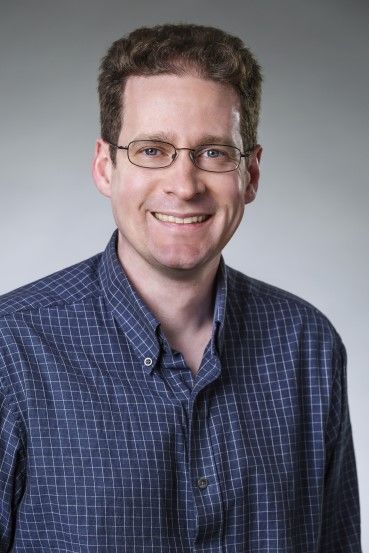
Welcome New CBE Faculty Member!
                              Emily C. Davidson
                              Assistant Professor of
                              Chemical and Biological Engineering

                              Emily Davidson joins the Princeton faculty on January 1, 2021,
                              bringing expertise designing highly specialized materials in conjunc-
                              tion with additive processes such as 3D printing.

nis and loves to sing, loudly. Also, a love for      water from air, and how ideas from soft mechan-
Pokémon among our children, which had been           ics can be used to model respiring lungs.
dormant for a time, has re-emerged in full force,         In our studies of bacterial communities in
with Pokémon cards now winding up in the most        heterogeneous environments, we have been in-
unlikely of places throughout the house.             vestigating the chemotactic migration of dense
     2020 has been a challenging year, on many       populations, the competition between chemotac-
levels, and we look forward to 2021 and a return     tic dispersal and biofilm formation, the influence
to better times.                                     of cell shape on motility, antibiotic susceptibility
                                                     of cells confined in heterogeneous media, and
SUJIT DATTA                                          most recently, have begun developing a new
     Happy Holidays from Sujit, Sachiko, Aiko,       class of “living materials” integrating bacteria
and the entire Datta Lab! While the extraordi-       with polymers. Much of this work relies on a
nary circumstances of this year have been chal-      technology we developed in our lab to study bac-
lenging, we are all thankful to be healthy, happy,   teria in heterogeneous porous media, which we
and productive.                                      filed a patent on through Princeton and which
     It was bittersweet, but we said goodbye to      took 1st place at the Keller Center Innovation
some extraordinarily talented seniors: Audrey        Forum.
Shih, who is now a graduate student at Stanford,          We have disseminated this work in papers
Maggie O’Connell, who is now a graduate stu-         published in Science Advances, Physical Review
dent at Northwestern, and Glenda Chen, who is        Applied, Journal of Fluid Mechanics, and Physi-
now a High Meadows Fellow at the Environ-            cal Review Research, with several more under
mental Defense Fund. We also welcomed sever-         review or in preparation, and in invited talks Su-
al new additions to our team: Presidential Post-     jit has given at various institutions including
doctoral Fellow R. Kōnane Bay, who received          Yale, Caltech, Rice, UIUC, and Brown. We have
her Ph.D. under the supervision of Al Crosby at      also been fortunate to receive several grants to
UMass Amherst, and undergraduates MaryKate           support our work, including from the Schmidt
Neff, Kevin Yeung, Richard Huang, Cristian           Fund for Transformative Technologies, the
Arens, and Selena Chiu.                              Princeton Catalysis Initiative, and the NSF. And
     On the research front, we are continuing to     it was an honor for Sujit to be recognized by sev-
make steady progress elucidating the dynamics        eral national awards, including the AIChE 35
of soft and living matter in complex environ-        Under 35 Award, ACS Unilever Award For Out-
ments. Sujit is particularly proud of how his stu-   standing Young Investigator in Colloid & Sur-
dents and postdocs have managed to be so posi-       factant Science, and being selected to attend the
tive and productive during such a challenging        US NAE Frontiers of Engineering. Several other
time. We are pushing full steam ahead on three       group members were also recognized by awards:
fronts.                                              Chris Browne received the Kristine M. Layn
     In our studies of fluid flow in porous media,   Award winner from CBE, Joanna Schneider re-
we have been investigating how structural heter-     ceived the Mary & Randall Hack '69 Graduate
ogeneities impact immiscible fluid flow, how         Award from the High Meadows Environmental
colloidal particles deposit in and interact with     Institute, Tapomoy Bhattacharjee received the
other phases in the pore space, and how polymer      Outstanding Poster Award at the Carnegie
solutions exhibit elastic instabilities.             Mellon Biomedical Engineering Forum, and Ga-
     In our studies of soft mechanics, we have       len Mandes received the Graduate Presentation
been investigating how hydrogels deform when         Award at the Andlinger Center Annual Meeting.
confined, how hydrogels can be used to harvest            At home, Sachiko transitioned to a new po-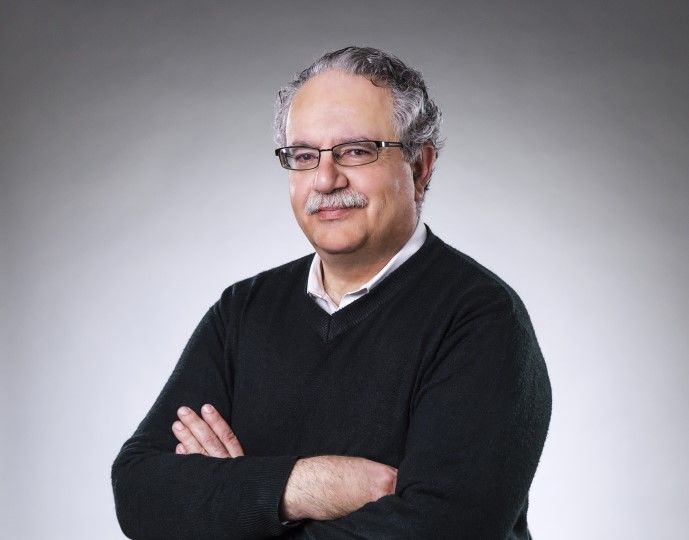
sition as a Health Professions Adviser, which          was not until mid-June that we were able to initi-
enables her to work closely with Princeton un-         ate the phased resumption of laboratory research.
dergraduates and also spend more time with our         Throughout this difficult period, the resilience
daughter, Aiko. Aiko is incredible. She is run-        and creativity of Princeton’s researchers, and the
ning around, getting into all sorts of trouble,        knowledge and professionalism of the research
talking up a storm, and helps Sujit write papers       administration staff, kept our research system
once in a while. Soon to be two, she is more ter-      not just functioning but actually thriving. Many
rific than terrible, and a silver lining of the cur-   Princeton faculty members pivoted successfully
rent pandemic is that we have enjoyed lots of          to COVID-19-related research, securing funding
invaluable quality time with her.                      for a range of exciting projects, and closing the
      Looking forward to a healthy and produc-         fiscal year with the highest volume of research
tive year ahead! Happy holidays from us all!           expenditures to date, a good indicator of our lev-
                                                       el of research activity. Hats off, then, to our la-
EMILY DAVIDSON                                         boratory researchers, who for months have been
     Happy holidays from the (future!) Davidson        able to operate safely and with a high level of
lab! Emily is excited to be joining CBE at             compliance with public health guidance; and to
Princeton, beginning officially on January 1,          our theoretical and computational colleagues,
2021. Her lab designs are completed, and con-          who have worked remotely without interruption
struction underway! She also had the unique ex-        throughout these difficult months.
perience of designing her labs in E-Quad almost              Pablo reports that his research group had an
simultaneously with her (eventual) lab space in        excellent year. Highlights include two computa-
the planned new CBE building!                          tional papers, in Science and PNAS, on water’s
     She is currently recruiting her first group       second critical point (the former with postdoc
members, but has already lined up her youngest         Gül Zerze and collaborator Francesco Sciortino
research assistant, Amos, born in August 2020.         of the University of Rome – La Sapienza; the
                                                       latter with postdoc Tom Gartner and Princeton
                                                       colleagues Thanos Panagiotopoulos and Roberto
                                                       Car). A paper in the Journal of Chemical Theory
                                                       and Computation, with graduate student Dan
                                                       Kozuch and Princeton collaborator Frank
                                                       Stillinger, presented a promising genetic algo-
                                                       rithm approach for the optimization of protein
                                                       anti-freeze activity.
                                                             Thankfully, Pablo’s family is well. Silvia is
                                                       active as a Trustee of The Watershed Institute,
                                                       whose mission is to keep water clean, safe and
                                                       healthy. Son Gabriel continues to enjoy his work
                                                       as national political correspondent for New York
                                                       magazine. Daughter Dina completed her Master
                                                       in Public Health degree at Columbia, focusing
                                                       on epidemiology. She now works at a start-up
At this writing, Amos has just mastered rolling        that uses machine learning to accelerate medical
out of tummy time, but we’re sure he’ll be ready       research. Tobi, our Bernese Mountain Dog, has
to take on polymer synthesis and 3D printing in        slowly adjusted to seeing much more of Silvia
no time. Emily, her husband Eric, and Amos are         and me at home than he used to, pre-pandemic.
excited to move to NJ – a return for Emily, who              This has been a very difficult year for eve-
grew up in Bridgewater, NJ.                            ryone. The pandemic has brought pain, suffer-
     Beyond the new faculty role, we are looking       ing, loss and disruption. My heart goes out to
forward (like everyone!) to 2021 bringing the          every member of Princeton’s extended CBE
eventual return of in-person meetings, teaching,       family, especially to those who have experienced
conferences, and celebrations! Wishing a happy         personal loss. As I write, research and science
new year to all!                                       are bringing back hope to a world desperately in
                                                       need of it. May next year’s Holiday Newsletter
PABLO DEBENEDETTI                                      once again reach all of us at a time of joy and
    The once-in-a-lifetime challenges brought          hope for the world.
about by the pandemic of course impacted
Princeton’s research enterprise, reports Pablo         DAVID GRAVES
Debenedetti, the University’s Dean for Research.           Happy holidays to all of my new colleagues,
On-campus research was halted in March, and it         students and alumni associated with CBE at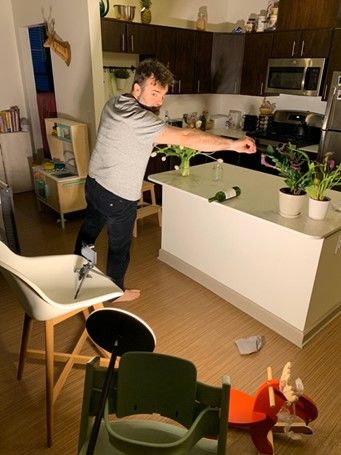
Princeton! I retired from the UC Berkeley De-          Russel and Jim Wei! Yet discussions and collab-
partment of Chemical and Biomolecular Engi-            orations with Sundar, with Jose Avalos and Jared
neering in June this year and immediately started      Toettcher, as well as with Stas and Clancy Row-
at the Princeton Plasma Physics Lab (PPPL) as          ley continue, and new possibilities may open up
Associate Lab Director for Low Temperature             now that Yannis’ old classmate, David Graves,
Plasma-Surface Interactions. I also took a posi-       is at Princeton/PPPL. We miss the E-Quad, not
tion on campus in CBE, officially starting July 1.     having been able to visit for almost a year now –
PPPL has announced ambitious plans to diversi-         may this change soon !
fy its research portfolio into low temperature               It has been such a strange year, teaching
plasma nanofabrication and other areas involv-         from home – at least for “us computational peo-
ing low temperature plasma. The lab is also            ple” it has been much easier than for the experi-
looking to expand its collaborative interactions       mental groups (like Stavroula’s, with first clos-
with Princeton University and there are numer-         ing, and then opening slowly with great care and
ous promising new research interactions under          shifts…). The AIChE was a letdown under these
way, including plasma science and technology in        circumstances, but we hope it will come back
the microelectronics industry and the plasma           next year. And the National Academy of Engi-
fabrication science associated with quantum in-        neering induction ceremony and much awaited
formation science materials and devices. Plasma        ball in October just did not happen this year! The
chemical processing and plasma catalysis look          group’s work on modeling always had a data
like excellent new collaborative topics, as well,      mining/machine learning component (Katharina
especially for CBE interactions.                       Krischer, Ramiro Rico-Martinez and Jason An-
     Due to COVID-19 restrictions, I waited to         derson had done lovely nonlinear identification
move to Princeton with my wife Sue until mid-          work with neural networks from space/time se-
September. We are now planning to buy a house          ries data in the 1990s!). But now this is much
in Pennington in early December. We have three         more mainstream, and there are many new direc-
adult children, all still living in the San Francis-   tions; it is really interesting to consider how the
co Bay Area. Sue and I have been struck by not         sense of what we call “understanding” in model-
only the remarkable beauty of New Jersey but           ing is changing/will change as data driven meth-
also by the friendliness and warmth of people          ods become indispensable. We live in interesting
living here. We very much look forward to get-         times for modelers.
ting to know the Princeton CBE family as (we                 Stavroula’s work on drug delivery for can-
all hope) life returns to normal over the next         cer therapies extends in new directions (beyond
year.                                                  triple negative breast cancers to pancreatic and
                                                       prostate cancers) at Hopkins; and it is interesting
YANNIS KEVREKIDIS                                      how much of a role transport phenomena (and
     Here is to wishing that this bad dream will       not “just” chemical/pharmacological activity)
be gone by the next Christmas letter –Yannis           play in this – we have a joint student now that
Kevrekidis’ family and group are truly grateful        does modeling complementing his experimental
for having gone through this so far in good            work in her lab. Domna who is 10 has been the
health, and doing good work, and being hopeful         one whose life is affected the most – electronic
about the future. This year (a bittersweet feel-       school, electronic playdates, no summer in
ing!) 100 cartons of “stuff” were mailed from          Greece, no other child at home to interact with,
Princeton to Hopkins, emptying up ACE 43               too much screen time. She is well, and grows,
where so much of the group’s life in the E-Quad        and adapts, but we very much hope -even more
took place – little triumphs and little disasters,     for her than for us- that a more normal world
Ph.D. celebrations, hours and hours of work and        comes back soon. George Androcles finished his
discussions and printouts and coffees and              Applied Mathematics Masters at UMass and
dreams. It is a good feeling to know that the          continues towards his Ph.D.; the obligatory
space will go to Professor Maravelias’ group,          COVID-19 sequestration gave us an opportunity
who also pursues mathematical/modeling/                to live and talk and even work together for some
computational research as we did all these years       months, an opportunity that we never would
in this lovely space. Our best wishes to him for       have had otherwise – a little silver lining. May
this new stage of his life and career in Princeton!    you all come through this healthy and unharmed
The two last Ph.D. students (Mr. David Sroczyn-        – our best wishes and hopes for the new year to
ski and Mr. Thomas Thiem) advised by Yannis            Princeton and to the department and to all of
at Princeton will be defending soon, and so will       you.
Ms. Wendy Jiang (mainly advised by Sundar) –
and then it will “just” be the Emeritus office on
the 3rd floor – with good company though, Bill
BRUCE KOEL research at PPPL. Jarrad Li (CBE), on a Prince-
Holiday greetings from the Koel group! ton Environmental Institute (PEI) internship,
This year has been a challenging one, but we are worked with us and Prof. Sankaran Sundaresan
thankful that our family and the research group on a joint simulation project for plasma catalysis.
are all safe and doing well. Bruce was on sabbat- In our labs at PPPL, Evan Ostrowski is ana-
ical in the spring as a Visiting Researcher at lyzing X-ray photoelectron spectroscopy (XPS)
UCLA in the Chemical & Biomolecular Engi- data from the fusion science facility RFX-mod in
neering Department when COVID-19 interrupt- Italy and the Lithium Tokamak Experiment
ed the many planned trips back and forth to (LTX-b) at PPPL to understand lithium plasma-
Princeton and to several national and internation- facing components. Dr. Shota Abe is analyzing
al meetings. The group did a great job of safely data from his measurements (with Dr. Charles
closing down operations of our labs on campus Skinner, PPPL) of the surface incident ion direc-
and at the Princeton Plasma Physics Laboratory tion using the DiMES probe at the DIII-D toka-
(PPPL), finding projects to work on remotely, mak at General Atomics in San Diego.
and then reopening our campus labs. We hope On campus, Zhe Chen is using N2-H2 plas-
that we will be allowed to reopen our PPPL labs ma kinetic modeling to improve ammonia syn-
soon. This fall, Bruce co-taught CHM 207 Ad- thesis and Dr. Surabhi Jaiswal (with Dr. Ahmed
vanced General Chemistry: Materials Chemistry, Diallo, PPPL) is developing optical diagnostics
along with preparing to teach CBE 260 /EGR for plasma. Paris Blaisdell-Pijuan is developing
260 Ethics and Technology: Engineering in the a new concept for light-enabled catalysis. Dr.
Real World this coming spring. Yiteng Zheng is investigating bimetallic Au ca-
Currently doing their research in the group talysis. Ari Gilman is continuing to use operando
are CBE graduate students Zhe Chen (with Prof. infrared and Raman spectroscopy for probing
Sundaresan), Ari Gilman, and Evan Ostrowski, photoelectrocatalysts for CO2 reduction. Dr.
and CHM graduate student Michael Smith (with Wenhan Niu (among many other things!) and
Prof. Sarazen). Junming Shi (Tongji U.) was a Michael Smith have been working jointly with
Visiting Student Research Collaborator in our Prof. Michele Sarazen to investigate CO2 reduc-
group for a year and left in September. There are tion over metal-organic framework derived elec-
five senior researchers also in the group at this trocatalysts. Dr. Jeung Park is advancing the use
time: Dr. Shota Abe (UCSD), Dr. Surabhi of in situ electrochemical transmission electron
Jaiswal (Inst. for Plasma Research, Bhat, microscopy to investigate nucleation and growth.
Gandhinagar, India), Dr. Wenhan Niu (South And last, but not least, it has been satisfying
China U. of Tech., China), Dr. Jeung Hun Park to see Princeton NuEnergy Inc. (PNE), a startup
(UCLA), and Dr. Yiteng Zheng (Stevens Inst. of cofounded by Dr. Xiaofang Yang, Dr. Chao
Tech.). Others working with us on various pro- Yan, Prof. Yiguang Ju, and Bruce, competing
jects include Paris Blaisdell-Pijuan, an EE grad- successfully for funding and demonstrating nov-
uate student (with Prof. Gmachl), Dr. Anurag el lithium ion battering recycling technology at
Maan (with Dr. Richard Majeski, PPPL), and Dr. the bench-scale.
Fang Zhao (with Prof. Tully, PHYS). Dr. Rachel Best wishes to everyone for a happy holiday
Selinsky (U. Wisconsin, Madison), left in April. season and a safe and healthy year in 2021.
Dr. Hao Zhao left in October to take a faculty
position in Mechanical Engineering at The Hong JAMIE LINK
Kong Polytechnic University, Hong Kong. Dr. First and foremost, it is my sincere hope that
Xiaofang Yang (Princeton NuEnergy Inc.) was a the whole Princeton family is safe and healthy
Visiting Research Collaborator with us during during this tumultuous year. The Link lab con-
the year until August. tinued to grow in 2020 with three new Ph.D. stu-
While COVID-19 stopped in-lab research dents joining the group in January. Alina Thok-
opportunities, we were able to find remote re- kadam came to us from up the road at Rutgers,
search projects for several undergraduate stu- Brian Choi joins us after his bachelor’s degree at
dents to work with us during the spring and sum- Berkeley, and Drew Carson from Penn State also
mer. Elijah Schiltz-Rouse (The College of New joined the group. All three of these students are
Jersey) spent the spring of 2020 working on a off to a great start and are working really hard,
joint project in our group with Prof. Predrag even with the challenges of the pandemic! An-
Krstic (Stony Brook U.) sponsored by the DOE other new addition to the Link lab in 2020 is
Science Undergraduate Laboratory Internship postdoc Truc Do. Truc comes to Princeton from
(SULI) program at PPPL. Jessica Eskew Suzanne Walker’s lab at Harvard where she car-
(Georgia Tech.) and Udochukwu Eze (MIT) ried out beautiful genetics and biochemistry
worked with us during the summer in the SULI studies on the cell wall of Staphylococcus bacte-
program on calculations and simulations for our ria. Members of the Link lab received some hon-ors this year: Li Cao won the prize for the top properties of organic semiconductors and char-
general exam in CBE and Hader Elashal was a acterization of molecular semiconductors with
finalist for the Life Sciences Research Founda- bowl conformation, respectively. The new year
tion postdoc fellowship. Our group hosted three also brought Julia Schmidt, an exchange student
members of the class of 2020 for their from Imperial College, Dongwook Kim and Yo-
(unfortunately abbreviated) senior thesis experi- han Ma, graduate students from Kumoh Univer-
ence: Megan Whitley, Devorah Saffern, and sity in Korea, along with their thesis advisor and
Maggie Orlova. This year, Nathan Alam and group alum Prof. Jongbok Kim, to Princeton, but
Jane Brown are carrying out thesis work with us. their stints were sadly cut short by COVID-19.
Having our labs shut down for 3 months in the We bid goodbye to Chao Yao who spent the year
spring was really tough, but the members of the with us from Peking University, postdoctoral
Link lab did a great job pivoting to bioinformat- fellows Guy Olivier Ngongang Ndjawa and Sara
ics and other computational work. In the spring Thomas, and graduate student Kaichen Gu, who
of 2020, Jamie taught his course for first-year defended his thesis over zoom in September.
undergrads, CBE 199, for the second time. Kaichen is now a postdoc with Mark Ediger in
Thanks to all of the alums (Bristee Das, Michelle the chemistry department at the University of
Petkov, and Kristin Ploeger) who came back ei- Wisconsin, Madison. As we wrap up the year,
ther in person or virtually to share their experi- graduate students Clay Hamill, who was selected
ences at Princeton and their career trajectories. as a 2020 Siebel Fellow in Energy, and Jeni Sorli
Jamie is on sabbatical for the entire 2020-21 are completing their last experiments; and Tian-
school year, his first sabbatical since 2014. He is ran Liu, Alan Kaplan and Yannick Eatmon are
very much looking forward to focusing on re- forging on and making progress in their disserta-
search and giving some virtual seminars this tion research. Completing the team are postdoc-
year. To everyone, please stay safe and healthy, toral fellows Quinn Burlingame, Melissa Ball,
and we’ll look forward to seeing each other on Xiaoming Zhao and Yu Xia. Despite laboratory
campus again, hopefully sometime soon! shutdown due to COVID-19 and a lab move at
the beginning of the year, the team has been
LYNN LOO making steady progress in research. I am in awe
We rung in the new year in Singapore antic- with my team for the way they have carried
ipating 2020 to be different as we unpacked our themselves, and for the resilience and compas-
bags in our shoebox apartment – with Baxter in sion they have shown each other in the past year.
tow – expecting to spend part of my sabbatical Andluca Technologies continues to make
year on this tropical island nation. Little did we progress on the technology development front
expect to spend more than ten weeks under lock- with Nick Davy at its helm. Noteworthy is
down in a foreign country (aka “circuit breaker”) recognition in the form of a Thomas Edison Pa-
due to the COVID-19 pandemic! And with 2021 tent Award from the New Jersey Research and
around the corner, we remain in Singapore, Development Council. As opposed to the usual
where the pandemic has been reasonably under black-tie fanfare, we celebrated with other
control since late summer, and Drew has been awardees over Zoom in November.
attending in-person classes at the Singapore Activities at the Andlinger Center shifted
American School since August. Philip led Grab online as the pandemic spread. The Andlinger
Financial Group to its successful Series A fund- team quickly adapted to this mode of operation
raise and Lynn is helping the maritime sector and continued hosting monthly highlight semi-
articulate low-carbon transition pathways in Sin- nars, our annual E-ffiliates retreat and our fall
gapore through her involvement in the Interna- annual meeting. A silver lining with going virtu-
tional Advisory Panel for Maritime Decarboni- al is the huge expansion we saw with our global
zation. Despite the numerous challenges, we reach. A record of more than six hundred at-
have much to be grateful for this holiday season: tendees around the world attended one of our
we are healthy and safe, and so are our families highlight seminars! Learn more about Andlinger
and close friends; we are closer as a family unit Center activities the past year here: https://
having spent this time together, with our routines acee.princeton.edu/about/annual-reports/.
returning to a modified level of normalcy.
The beginning of 2020 saw us moving our CHRISTOS MARAVELIAS
labs from the E-Quad to the Andlinger Center. Warm holiday greetings from Christos, the
This move allowed us to consolidate all our tools Maravelias family, and the group. As you might
in a contiguous space. 2020 also brought have already read, I moved from the University
onboard now-second-year graduate students Ad- of Wisconsin – Madison to Princeton, in a joint
am Berry and Marko Ivancevic, whose disserta- appointment between CBE and the Andlinger
tion research centers on the mechno-electrical Center for Energy and the Environment, just aWelcome New CBE Faculty Member!
David Graves
Associate Laboratory Director, Princeton Plasma Physics Laboratory
Professor of Chemical and Biological Engineering
David Graves will explore plasma applications in nanotechnology
for everything from semiconductor manufacturing to the next gener-
ation of super-fast quantum computers.
few months ago. like all of the above (except the deer), the warm
Three Ph.D. students (Caleb Geissler, Eric (er) weather, and what seems to be a great list of
O’Neil, and Garry Taifan) transferred to Prince- places to visit, at some hopefully not too distant
ton; four other students (Venkat Avadiappan, point, around Princeton.
Arthur Pastore, Joonjae Ryu, and Yaqing Wu)
moved physically to NJ but will continue to be CELESTE NELSON
UW students; and two students (Yifu Chen and Happy holidays from the Nelson group!
Brandon Paul) chose to complete their degrees 2020 was a year none of us will forget, and we
from Madison. Also, Dr. Boeun Kim moved to are relieved to usher in a new one! The year
Princeton, while Drs. Ishan Bajaj, Jianping Li, brought many unexpected challenges, from shut-
Shamik Misra, and Juan Restrepo-Florez will ting down the labs and saying farewell to our
continue to work as postdoctoral researchers in beloved animals, to working (and teaching and
the group from Madison. I am very grateful to all learning) remotely, to starting back up at reduced
group members for making this transition, dur- capacity, to working in shifts. The group rose to
ing the pandemic no less, seamless. Also, I the occasion and mastered many new skills in
would like to thank Lynn, as the director of the the process. While under quarantine, we also
Andlinger Center, and Thanos for all the sup- debuted our new group logo:
port, patience, and help during this long and
complex process.
At Princeton, the group will continue to
work towards the development of optimization
methods for the design and operation of chemi-
cal processes and energy systems, broadly de-
fined, with special emphasis on renewable fuels Despite the challenges, we celebrated sever-
and power. In that respect, we are excited to ex- al successes. Alisya Anlas and Brian Silver both
plore new research thrusts in collaboration with defended their theses to international crowds
and inspired by other Princeton researchers. For over Zoom, and started their postdoc positions at
example, we are looking forward to being in- the University of Pennsylvania and the NIH, re-
volved with the Rapid Switch project in the spectively. James Spurlin and Aswin Sundara-
Andlinger Center. Christos is also looking for- krishnan finished their postdoctoral tenures in
ward to teaching CBE 442 in Fall 2021. the lab and moved on to new scientific challeng-
On the family front, as you might imagine, es at Rice University and BioAesthetics. New
this has been an interesting year! The final deci- graduate student Daniel Alber joined us in Janu-
sion to move came in the spring, just a few days ary and managed to learn how to work with mice
before the country started to close-down. Some- while socially distancing! And Susan Leggett
how, on August 15th (no space for the details and Emann Rabie were both awarded fellow-
here), the family had moved to Princeton, and ships for their postdoctoral and graduate train-
Christos’ appointment started on September 1st. ing.
Vanesa continues to work remotely for DuPont. The lab also had successes in publishing
Emi (6 yo) started school and has already made a new studies revealing the role of mechanical
few new friends, and Isabella (4 yo) has already forces in tissue development and cancer progres-
made many new friends! Both Emi and Bella sion. Our lung development projects (across
like the new “city”, its nice ice-cream stores, its mammals, birds, and reptiles) and are breaking
deer (clearly, Emi and Bella do not drive…), and new ground in the field of developmental bioen-
the many parks and playgrounds. Mom and dad gineering, and are led by our creative team ofgraduate students: Katie Goodwin, Michael Center in the outskirts of Athens, Greece, with
Palmer, Jacob Jaslove, Sarah Paramore, and multiple trips to laboratories in Europe, the U.K.,
Daniel Alber. Our work on mammary gland and to conferences around the world. This was
morphogenesis is challenging old dogmas not meant to be, of course. By the end of Febru-
through the efforts of graduate students Bryan ary, when I visited DTU in Denmark for a re-
Nerger, Payam Farahani, and Lena Barrett, along search collaboration in my last professional trip
with postdoctoral fellow Sandra Lemke. Our col- of the year, it was clear that the pandemic situa-
laborative studies on tumor engineering are driv- tion was starting to get out of hand. A couple of
en by postdoctoral fellows Nihan Kilinc and Su- weeks into March, Greece went into lockdown,
san Leggett and graduate students Emann Rabie which was quite strict (needed to get permission
and Molly Brennan. Our lab manager, Sherry on your cellphone to get out of your house) and
Zhang, helped us start a new collaborative pro- lasted until the middle of May. Fortunately, Re-
ject with pulmonary physicians focused on acute gina and I had set up a nice home in a part of
respiratory distress syndrome. town that has lots of parks and nature walks; we
The group’s annual summer outing was also had an extensive network of friends and rel-
turned into an autumn apple picking excursion to atives living nearby and we took many appropri-
enable safe social distancing while wearing ately distanced walks and hikes together. Our
masks. The group then used their prowess in pre- two dogs, Charlie and Rascal, greatly enjoyed
cisely following protocols (recipes) to turn those chasing neighborhood cats and loved the
apples into mouthwatering pies, pancakes, and “winter” weather, typically in the 50’s with some
crisps, shared virtually over Slack. Terry demon- sun most of the days. At the end of May, we
strated the best approaches for picking the larg- were able to move to our summer home on the
est, tastiest apples to the novices in the group. island of Paros. The island is overrun by tourists
He finished elementary school and started sixth in late July and August, but not this year, it was
grade remotely this year, and has joined the mid- beautiful as always and mostly empty. Through-
dle school magazine (Scribbles) and the running out my time in Greece, I was able to get a fair
club. Joe finally gave in to the mass transport amount of reading and writing done and of
problems caused by our walnut tree (the tree pro- course I kept up with the group and the depart-
duces juglone, which diffuses through the soil ment via Zoom. Since everything is still on
and induces wilt in tomato plants) and both Zoom, there is not much difference in the way I
moved the tomato garden hundreds of feet away interact with people now that I am back in
and grew the plants in pots this year. But garden- Princeton!
ing, like science, is never easy – while the ju- Update on the group over the past year: Ma-
glone could no longer reach the tomatoes, the ria Muniz, Ushnish Rana and Jack Weis are now
resident deer population both discovered the in the third year of the Ph.D. program. All three
plants and found them quite tasty. The deer de- are working on collaborative projects – Maria
cided to frequent our yard every morning around with Roberto Car of the Chemistry department
1:00 am – we know this because, despite what on ab-initio based potentials for water, Ushnish
you might think, deer are very loud eaters, and with Cliff on liquid-liquid phase transitions in
their crunching on the tomatoes woke Celeste up cells, and Jack with Pablo on the properties of
every time they visited. Her running hobby came highly supercooled water. The senior doctoral
in handy, and she could often be found chasing student in the group is now Shuwen Yue G5,
the deer down the street in the middle of the who works on transport properties of electrolyte
night. Despite the challenges from the freeload- solutions and machine-learning ab-initio inspired
ing deer, Joe and Terry still managed to harvest a potentials. Her plans for a summer internship at
near record-breaking amount of home-grown LLNL were thwarted by the pandemic. Anirban
produce this year. We’re eagerly awaiting next Mondal is completing the molten carbonate fuel
year’s harvest, and hope that 2021 brings every- cell project and will be moving at the end of the
one health, safety, and joy! year. Jeffrey Young, who worked on electrolytes
and the molten carbonate fuel cell project, gradu-
THANOS PANAGIOTOPOULOS ated in May and received a prestigious NRC fel-
Warm holiday greetings to all from Thanos lowship. He is now at NIST in his hometown,
Panagiotopoulos and his group. 2020 has been Boulder, Colorado, working on refrigerant prop-
quite a year, as we all know, so I am sure every- erties. Wes Reinhart (*19) was appointed a ten-
one shares my wish for the New Year 2021 to be ure-track Assistant Professor in Materials Sci-
more “normal” than 2020. Back in late January, ence and Engineering at Penn State and Mike
which seems like a very long time ago, I em- Howard (*18) got a tenure-track Assistant Pro-
barked on what was supposed to be a sabbatical fessorship in Chemical Engineering at Auburn –
semester based at Democritus National Research congratulations and wishes for success are inorder for both. Dina Kussainova from Nazarba- winning senior thesis in the group this past
yev University in Kazakhstan, who you may re- spring. It was a pleasure to work with and learn
call as a visitor to the group in the summer of from all of them! Katie has developed an in situ
2019, is now back in Princeton as a first-year method to measure the glass transition tempera-
graduate student – she will be selecting a re- ture at polymer/inorganic interfaces in nanocom-
search advisor in January. posites. She also collaborated on several projects
In terms of teaching, Dr. Morris Smith ’76 with Dr. Zuo and others. Doug has uncovered
and I are again teaching CBE 442 (Design) this intriguing behavior ionomer-containing polymer
fall – the project is again a bioprocess on mono- colloids related to their stability and ability to
clonal antibody production – very much appro- stabilize emulsions. He is also working on sever-
priate for the COVID-19 times we are experienc- al encapsulation projects with Professor Pru-
ing. In the coming spring term, I will be for the d’homme. Nick and Jason, both fourth-year
first time involved with Core Lab (CBE 346). graduate students, continue to make progress on
Family updates: Ares is now a senior in Mo- their work. Nick is developing novel approaches
lecular Biology and still quite active in the to encapsulate APIs in amorphous solid disper-
town’s First Aid and Rescue Squad. He is also sions, while Jason spent most of the year investi-
an RCA for Mathey College. All of this (except gating structured colloid formation. This year,
of course PFARS) done remotely and online. Joanna and Yejoon successfully completed their
Elektra is in Cambridge, MA; her start-up, first proposition exam – congratulations to both
3Derm Systems, was acquired by Digital Diag- of them! They have both gotten off to a strong
nostics, a medical device company based in Io- start in research. The group continues to be an-
wa. chored by outstanding postdocs: Xiaohui Xu,
Navid Bizmark, and Sehmus Ozden. Each is in-
RODNEY PRIESTLEY vestigating hybrid materials for applications in
Happy Holidays from the Priestley Lab! sustainability, including water purification and
This past year the group officially welcomed CO2 reduction. Kofi Christie, a new Presidential
Sneha Srinivasan as a new graduate student into Fellow, is spearheading a collaboration between
the group. Sneha received her undergraduate de- the Priestley and Ren groups. The group also
gree in Chemical Engineering from The Pennsyl- welcomes Charlotte Tausche as a senior thesis
vania State University. Before starting at Prince- student work with Joanna. Of course, this year,
ton, Sneha worked for one year at Merck as a due to the pandemic, the group could not partici-
quality assurance specialist. At Princeton, Sneha pate in our usual conferences or outreach activi-
will investigate how polymer brush morphology ties – though some activity was done virtually.
impacts the glassy-state properties of polymer From all of us in the Priestley Lab, we wish
thin films. Dr. Yucheng Wang successfully com- you happy holidays and a wonderful new year!
pleted his Ph.D. in September 2020. Yucheng
pioneered the use of MAPLE deposition to con- ROBERT PRUD’HOMME
trol the morphology and properties of polymer Being cocooned at home during COVID-
thin films. In particular, he showed how MAPLE 19 has had pros and cons. The house is Dot-
deposition could be used to deposit films of im- tie’s kingdom. I am now an interloper as my
miscible polymer blend films with enhanced dis- books, notes, folders (aka “messes”) came
persion and improved kinetic stability. Yucheng into our shared office space. This caused
is currently working at Micron. Dr. Biao Zuo of some consternation to my well-ordered wife.
Zhejiang Sci-Tech University in Hangzhou, Chi- That’s a con.
na, completed his two-year sabbatical in the Dottie had been zealously involved in the
group. During his time in the group, Dr. Zuo de- Mercer County Master Gardener association.
veloped a new method to investigate polymer But COVID-19 ground that to a halt. So, we
thin films’ physical properties. His expertise and have had lots of time just relaxing together. In
insights were invaluable to the group, and we the past I usually got home at 7:30-8pm. Now
look forward to the continued collaboration. at 4-5 pm we go out to the garden with a glass
Quanyin Xu, a graduate student at Zhejiang Sci- of wine and watch the birds and plants. The
Tech University, also completed a one-year most damaging part of the COVID-19 pandem-
VSRC stay. Quanyin worked on the synthesis of ic for us may be liver damage. In this Dept.
polymer brushes while at Princeton. Dr. Jae Woo Christmas letter we are limited to 700 words (I
Chung of Soongsil University spent several just used 11 of them). So this will be bullet
months of his sabbatical at Princeton. It was point highlights, the full account with its usual
great to welcome Jae Woo back to Princeton – array of twists and turns is here:
he was the first member of the Priestley group in https://www.dropbox.com/sh/td0roukc74332lv/
2009. Alex Bechtold completed his award- AADJW1GfuAZgROEZGPvx2BmJa?dl=0You can also read


