Deinstitutionalization from Point of View of Central Government - Simon Stockton Policy advisor to the National Director for Social Care ...
←
→
Page content transcription
If your browser does not render page correctly, please read the page content below
1. 4. 2011

Deinstitutionalization from
 Point of View of Central
       Government
              Simon Stockton
Policy advisor to the National Director for Social Care
Transformation & Consultant on the National Provider
   Development Programme for the Dept of Health

                                                                  1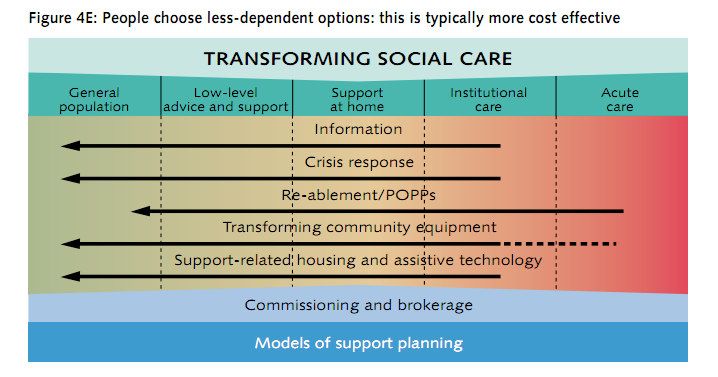
1. 4. 2011

• By putting users at the heart of services,
  by enabling them to become
  participants in the design and delivery,
  services will be more effective by
  mobilising millions of people as co-
  producers of the public goods they
  value’
• Charles Leadbetter 2004

                                                       2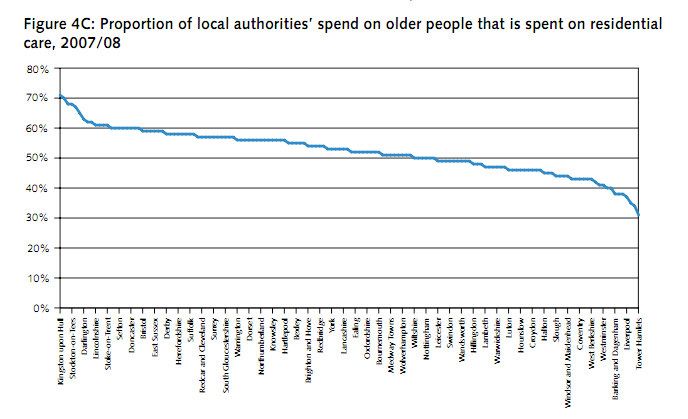
1. 4. 2011

"We have kept things working for 50 years by
  sticking bits together,”
Andrew Dilnot; Chair of Commission on the Funding of Care and
  Support.

The legislative framework for adult residential
  care, community care and support for carers
  is inadequate, often incomprehensible and
  outdated. It remains a confusing patchwork of
  conflicting statues enacted over a period of
  60 years
2008 long-term review by the Law Commission

                                                                        3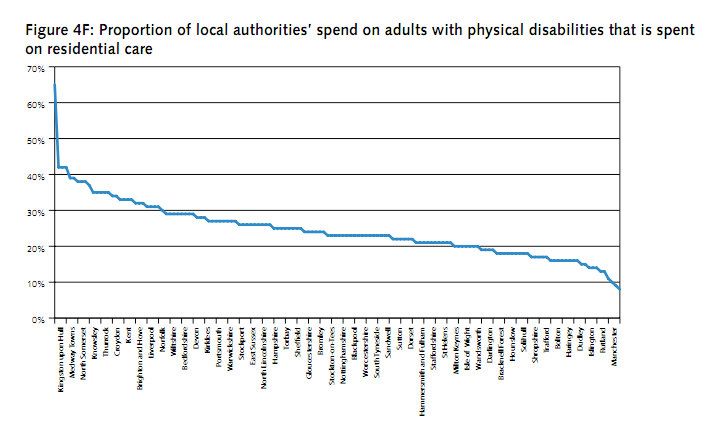
1. 4. 2011

      Griffiths Report 1988
• The Griffiths Report into community
  care, published in 1988, placed a strong
  emphasis on the importance of
  establishing services to help people live
  in their own homes and retain
  independence, dignity and choice.

                                                      4
1. 4. 2011
Wanless review 2006
of funding of older people’s services
• Despite considerable sums of public
money, there is little information about
whether this spending achieves the
government’s desired aims for older
people of promoting choice,
independence and prevention. There is
also widespread dissatisfaction with the
current funding system (p.xxi).
51. 4. 2011
Consensus for reform
• We understand the
urgency of reforming
the system of social
care to provide much
more control to
individuals and their
carers
• We will extend the
greater roll-out of
personal budgets to
give people and their
carers more control and
purchasing power.
• Coalition Programme for Govt
61. 4. 2011
Grass roots movements
• Independent Living movement
• Social model of disability
• Recovery movement
• Inclusion movement
71. 4. 2011
A system under pressure
• Rising public expectations and a greater
desire for more choice and control over how
support is provided
• Rising demographic pressures
• Changes in family and social structures
• The impact of new technology
• Local variations in cost and availability of care
• A system that fosters dependency
• In the context of a major economic crisis
81. 4. 2011
Current Policy context
• New Govt’s Vision for Social Care
continues the drive to personalise
social care and improve efficiencies
• White Paper due later in 2011
incorporating proposals from the Law
Commission and the Independent
Commission on the Funding of Care
and Support
• New sector wide partnership
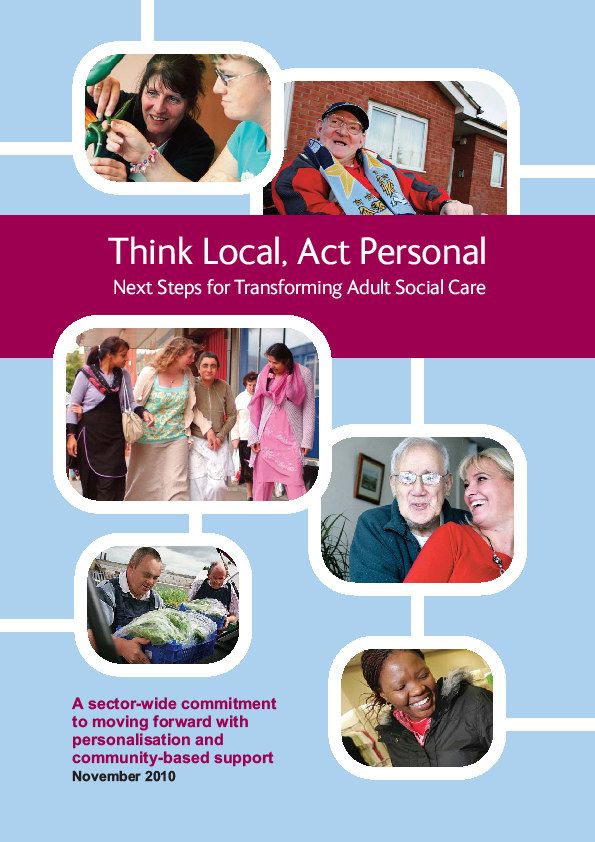
agreement Think Local Act Personal
published November 2010
• Both make reference to personal
budgets, preferably as direct
payments, for all eligible people.
91. 4. 2011
What’s it all about?
The process by which state
provided services can be
adapted to suit you
Personalisation
Personalisation in social care -
Self directed support support that is determined by
you on the basis of a support
plan that you control
Individual
budgets Like an IB but solely
made up of social
Personal care funding
budgets
Direct
payments
An indicative amount of money
that can combines several
funding sources that you can
use to purchase support A cash payment paid directly to you so you can
acquire your own services, rather than having them
delivered by the council
101. 4. 2011
Not just social care…
Personalisation is the guiding principle
behind the Government’s reform
programme across a range of public
services:
• Personal Health Budgets Programme
• Right to Control ‘trailblazer’ sites
• Personal Budget pilots for children with
disabilities
111. 4. 2011
Progress with personal budgets
• End September 2010 official figures show 213,786
Personal Budgets half going to older people – 1 in 4
eligible users;
• 55% growth from March 2010 - Projected rise to 376,684
by March 11;
• Of money allocated in PBs:
• 53% are ‘managed’ accounts
• 40% are Direct Payments
• 7% are mixed packages
• Estimated Total Spend on Personal Budgets:
– Mar 2009: £680M
– Mar 2010: £901M
121. 4. 2011
• ‘Importantly, the ability to make choices about
how people live their lives should not be
restricted to those who live in their own
homes. It is about better support, more
tailored to individual choices and preferences
in all care settings.'(DH, 2008a, p 5). This
has equal, if not more, resonance for those
living in residential care homes and other
institutions, where personalised approaches
may be less developed. Here, the
independent sector has a crucial role to play
in delivering personalised solutions for people
no longer living in their own homes.
SCIE Rough Guide to Personalisation 2010
131. 4. 2011
Reliance on residential care
• Large variations across the country
• Three regions all in the north of the country have the
lowest proportions of residential care usage
• Strongly linked to the history of service development.
Resttlement of long stay hospitals led to either
supported living or residential care
141. 4. 2011
• Aim to reverse this trend through a fundamental
remodelling of the social care system with prevention,
reablement and personalisation as the core themes.
151. 4. 2011
Driving change
• Sector led partnership (Think Local Act
Personal)
• 100% personal budgets by 2013 with Direct
Payments the default option
• Extended to residential care?
• Person centred support planning for all
• Provider Development
• Benchmarks for Councils to measure
progress
• Tools to support change and greater
efficiency (Working Together for Change)
• Emphasis on co-production
16You can also read


