DEMYSTIFYING OPEN BANKING - BANKING MATTERS | HOT TOPIC - PWC AUSTRALIA
←
→
Page content transcription
If your browser does not render page correctly, please read the page content below

Banking Matters | Hot Topic

Demystifying
Open Banking
What it means for bankers and banks
May 2018

                                                   www.pwc.com.au
May 2018

Demystifying ‘Open Banking’
What it means for bankers and banks

Walk-Run-Fly: there is a role                           Stated simply, Open Banking refers to          So long as it is done securely, unbundling
for you and things to start                             the opening of internal bank data and          bank services and data in this way
doing today                                             processes to external parties via digital      will provide greater competition,
                                                        channels. These might be customers,            improve efficiency (through accelerated
With Open Banking regulations coming
                                                        trusted partners or authorised third           digitisation and, by removing friction
into force in jurisdictions around the                  parties acting on behalf of customers.         in transactions between companies,
world, including last week in Australia1,               This is the general case. Specifically,        greater specialisation and scale),
it’s important that Australian bankers                  Open Banking in any particular                 and lead to enhanced or entirely new
understand what it means for them. Is                   jurisdiction is defined by its scope:          products and services. Open Banking
it really going to challenge incumbents                 including the data, the processes and, of      will have profound implications for the
the way some say, and make certain                      course, the range of potential external        way financial services are delivered
business models obsolete? What do                       parties. Accordingly, as we discuss in the     and the long-term viability of different
people mean when they refer to the                      following Appendix, it looks different in      business models. This logic applies not
‘API economy’, PSD2 and GDPR? Most                      the US, EU and Asia, and most likely will      just to banking, but to almost every other
importantly, why should such things                     look different again in Australia.             industry, including energy, consumer
matter for bankers who don’t work in                                                                   goods, telecommunications, health care
                                                        In Australia, the government announced
payments or technology and perhaps                                                                     and transportation. The so-called ‘API
                                                        with last week’s budget2 the formal
find the language of Open Banking                                                                      economy’ (Application Programming
                                                        establishment of a Consumer Data
inaccessible and intimidating?                                                                         Interface), is the extension of Open
                                                        Right (CDR) to underpin Open Banking
                                                                                                       Banking to other domains, and the
In this report, we seek to demystify all                in Australia. The CDR formally gives
                                                                                                       underlying motivation for many of the
this and illuminate new perspectives.                   customers ownership of their data and
                                                                                                       recommendations of the Productivity
Open Banking is more than just a new                    makes switching easier between financial
                                                                                                       Commission inquiry on Data Availability
                                                        institutions, first in credit cards, savings
set of compliance requirements, and                                                                    and Use published in March 2017. This
                                                        and transaction accounts, and then
it will require much more than just                                                                    was a precursor to Treasury’s Review
                                                        mortgages. Treasury designated Data613
new technology. It will affect almost                                                                  into Open Banking (the Farrell Report),
                                                        with authority to design technical
everyone working in banking today,                                                                     submitted to Treasury in December 2017,
                                                        standards, the Australian Competition
and every function has a role to play                                                                  which focused specifically on banking.
                                                        and Consumer Commission (ACCC) to
in its evolution in Australia. Most                                                                    The government has declared its intent
                                                        monitor implementation and adherence
importantly, while we don’t subscribe                                                                  to extend the open data regime and
                                                        to those standards and to the spirit of
to the view that banking will be turned                                                                Consumer Data Right to energy and
                                                        the regulation, and the Office of the
on its head overnight, we believe that                                                                 telecommunications next.
                                                        Australian Information Commissioner
it will have profound implications for                  (OAIC) to handle issues related to             For these reasons, described in greater
every part of the industry, and that                    privacy.                                       detail in Section 1, the topic generates
organisations have a list of things to                                                                 considerable interest among corporate
start doing today.                                                                                     directors, strategists, technologists,
                                                                                                       regulators, economists and other
                                                                                                       stakeholders in banks and the broader
                                                                                                       economy.

1
    See Treasury’s response to the Review into Open Banking.
2
    ibid.
3
    Data61 is an arm of the CSIRO focused on applications of data science and big data

PwC                                                                                                                         Banking Matters | 2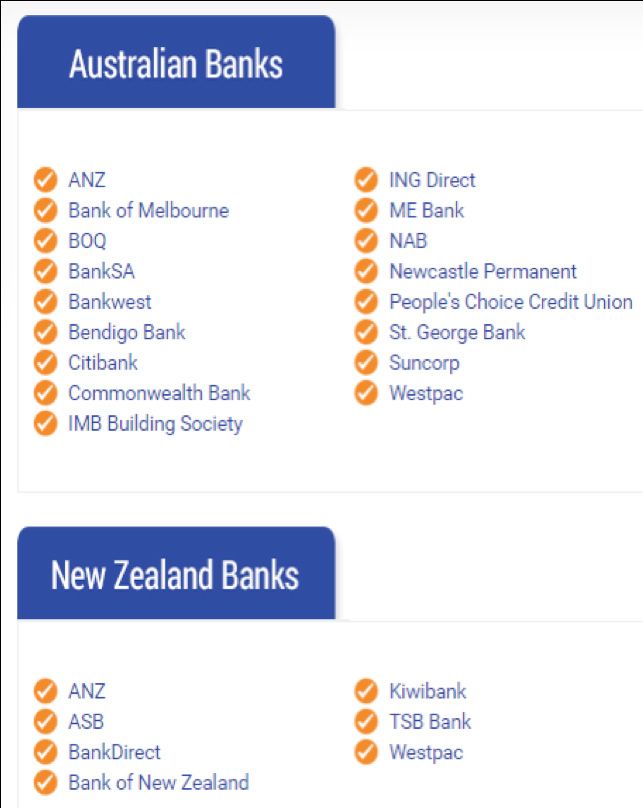
May 2018

That said, we won’t go from data
portability to the API economy
overnight. As described in Section 2,
the problem is that while the technical
infrastructure for truly transformative
changes to banking is already possible
(including widely understood and
well-established frameworks for
creating such things as secure APIs, data
representation and transcription, digital
identity, authentication and, of course,
analysis and insight generation), there
is considerable social infrastructure
still required for that to be created.
This includes regulation, customer
awareness and habits, norms of industry
behaviour as well as an economic or
other imperative for people to change
current habits. Of course, this is exactly
why it is important to get started, and
there is much work to be done across                   1. More than just a new                                Simple, but would you do that today?
every part of the industry, not just by the            compliance exercise: Open                              What would be the impact on YouTube’s
technologists and chief data officers.                 Banking will transform the                             advertising revenues, or on Alphabet’s
This brings us back to Second Payments                 industry                                               market capitalisation, if you didn’t? The
System Directive (PSD2), General Data                                                                         decision to not expose their content via
                                                       Most dotcoms, including Facebook,
Protection Regulation (GDPR) and the                                                                          APIs, had YouTube made it, could have
                                                       YouTube, Twitter and Google, no longer
Australian equivalents we are likely to                                                                       been a $100 billion mistake.
                                                       deliver their services primarily through
soon see. It also brings us to the real                browsers. They do so through APIs.                     It’s a decision that banks today make
imperative facing bankers, regulators,                 That’s why, for example, when you                      every day. Of course, banks aren’t media
directors and other stakeholders: how                  receive a video sent to your phone you                 companies. They don’t get their revenue
to comply with evolving requirements                   can see the thumbnail in your messaging                from advertising, and they have security
while preparing for a future (including                app, click the triangle and watch it                   obligations that are wholly unlike those
technology, operating model and                        right away. You are watching that video                of YouTube or its parent. But while a
business architecture) that may look                   through an API.4                                       direct comparison between the strategic
very different. That requires more than                                                                       imperatives of banks today and those
merely meeting regulatory requirements.                Imagine if you couldn’t do that. Imagine
                                                                                                              of YouTube 10 years ago might not be
Walk-Run-Fly is the analogy we use for                 that YouTube decided years ago that
                                                                                                              possible, banks are increasingly digital
how to compete in the economy that is                  videos were proprietary content which
                                                                                                              businesses, and the vast majority of
coming, explored further in Section 3.                 they chose not to share with third
                                                                                                              products they ‘manufacture’ (credit,
                                                       parties. Alternatively, imagine they were
This report is organised into the three                                                                       advice, protection, investment) are no
                                                       happy to share, indeed keen to do so,
sections mentioned above:                                                                                     more tangible than a video.
                                                       but found that producing, publishing
1. More than just a new compliance                     and maintaining secure and robust APIs
   requirement: Open Banking will                      and third-party Software Development
   transform the industry                              Kits (SDKs) for multiple programming
                                                       languages was just too difficult and
2. Not just for technologists: there’s a               expensive to prioritise relative to their
   role for everyone                                   many other initiatives.
3. Walk-Run-Fly: get started today                     It wouldn’t have been an outlandish
For a brief explainer on the key terms                 decision. Not that long ago, YouTube
and concepts of Open Banking, see                      had a perfectly good business delivering
the Appendix to this document: Open                    video content across a perfectly good
Banking 101 Tutorial.                                  channel which they dominated: your
                                                       browser. To watch a video you opened
                                                       one, navigated to www.youtube.com,
                                                       found the handle and watched it there.

4
    You are actually watching it through a series of nested APIs: one connecting your phone’s operating system to the server for your messaging app, then another
    connecting that server to YouTube, plus a host of other APIs connected to ancillary services, from authentication to bandwidth and display management,
    which combine to deliver the viewing experience.

PwC                                                                                                                                    Banking Matters | 3
May 2018

Exhibit 1: New products and services potentially enabled by Open Banking

    Model                              Description                                               Examples
    1. New services                    Creating new services that access customer                Account aggregation, personal financial advice,
                                       data from other banks and financial                       personal financial management advice, tax, super,
                                       institutions or to extend services provided               budgeting, services
    2. New channels                    Accessing third party audiences by placing                Incorporating into accounting packages, Alibaba
                                       your provider or service within another’s                 for cashflow or foreign exchange, travel, messaging
                                       context                                                   payments or super
    3. New utilities (aas)5            Providing a new utility or service to the market          eg BBVA opening platforms and APIs to enable others,
                                       to enable others                                          payroll/expense validation, Anti Money Laundering
                                                                                                 (AML) / Know Your Customer (KYC) validation,
                                                                                                 PayPal etc
    4. New platforms                   Enabling third parties to connect with banks              Digital factories such as Deutche Bank’s Digital Factory,
                                       and other services and innovate                           AT&T IoT, Verizon, Credit Agricole’s App store.

Rise of new applications and                             While online impersonation is a popular
services                                                 workaround for many (Farrell reports
Just as for YouTube, APIs enable banks to                that over one million Australians are
provide services to their customers that                 estimated to use it), it is inefficient (bots
wouldn’t otherwise be possible, or at least              need to be reprogrammed whenever a
not as securely or robustly as through                   bank changes its IB interface), unstable
APIs as illustrated in Exhibit 1.                        (the services are down while this
                                                         reprogramming takes place), and most
The common thread across all these                       importantly, extremely risky. Although
new applications is the unbundling of                    customers who divulge their login
existing bank products, services, data or                credentials to an online impersonator
processes, and recombining them with                     contractually void the terms, and
products, data, services or processes                    therefore the protections of their IB
from someone else.                                       account agreement, this is untested in
                                                         court. Few people know about it, and the
Greater convenience and security                         login experience for the consumer often
Importantly, as discussed in Section 2,                  strongly suggests that the service is being
much of this unbundling and                              offered in cooperation with the bank
recombining can already be done today,                   (see Exhibit 2).
at least for services available through
internet banking (IB). The mechanism
is ‘online impersonation’ (colloquially
called ‘screen scraping’). It involves
consumers providing their IB login
credentials to a third party like Yodlee
whose bots then impersonate them,
login to the relevant IB account, and
perform the tasks relevant to the service
in question.6

5
     asS refers to Everything as a Service - an aggregation of Software as a Service (Saas), Platform as a Service (Paas) and Infrastructure as a Service (IaaS).
6
     Note that Yodlee connects securely through APIs where banks offer them, and to our knowledge would not dispute that this is a superior approach, but for
     Australian banks online impersonation is a common pathway.

PwC                                                                                                                                        Banking Matters | 4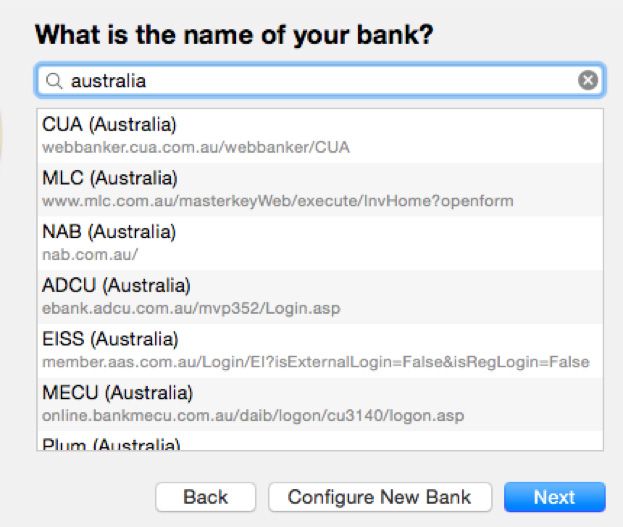
May 2018

Exhibit 2: Do customers know that online impersonation isn’t endorsed by banks?

         Examples of how impersonators describe their banks, and what customers see

             Impersonator 1                           Impersonator 2                           Impersonator 3
            (“Available banks”)                       (“Add accounts”)                       (“Supported banks”)

Liability for security breaches resulting   Given the greater security, reliability and   Other players may specialise in the
from online impersonation remains           utility of appropriately designed APIs,       customer interface, finding it easier
unclear. While well-known providers         there is no reason to continue to permit      to source best-of-breed products from
of impersonation services are proud of      online impersonation in Australia once        different manufacturers, as well as
their ‘bank-level’ security, nothing is     suitable alternatives are in place.           platform solutions from an increasing
ever risk-free. As banks have no reliable                                                 number of industry-wide utilities who
way of knowing which customers              Unbundling and recombining –                  likewise will find it easier to establish
use such services, if a major online        and potentially changing bank                 in this environment. In some cases,
impersonator were to be hacked this         business models                               banks lacking a clear affinity with any
could require every bank in Australia,      However it’s done, unbundling and             customer segment may find it attractive
and indeed every bank in the world, to      recombining bank services creates the         to specialise in back-end processes
disable all online banking services until   possibility of entirely new business          and infrastructure, including cloud,
millions of customers updated their         models. Banks that have capabilities in       cybersecurity, AML/Counter Terrorism
passwords and other details. The costs      the manufacture of a particular product       Financing (CTF), basic customer
of such an exercise would be above-and-     may, for example, find new customers          service and account administration,
beyond actual losses from fraudulent        thanks to API-enabled channels of             and protection from financial crime.
transactions.                               distribution. At the same time, they may      Such opportunities may be especially
                                            also find themselves ceding control of        relevant for smaller banks servicing the
                                            large parts of the customer interface         increasing number of start-ups emerging
                                            to competitors or even non-banks. Just        to tackle specific customer segments
                                            as with insurance, we may find certain        with targeted offers such as low-LVR
                                            technologies, scale and data-intensive        home loans, micro loans or cashflow-
                                            products such as personal loans and auto      based small business loans.
                                            finance centralise in the hands of local or
                                            even global specialists.

PwC                                                                                                           Banking Matters | 5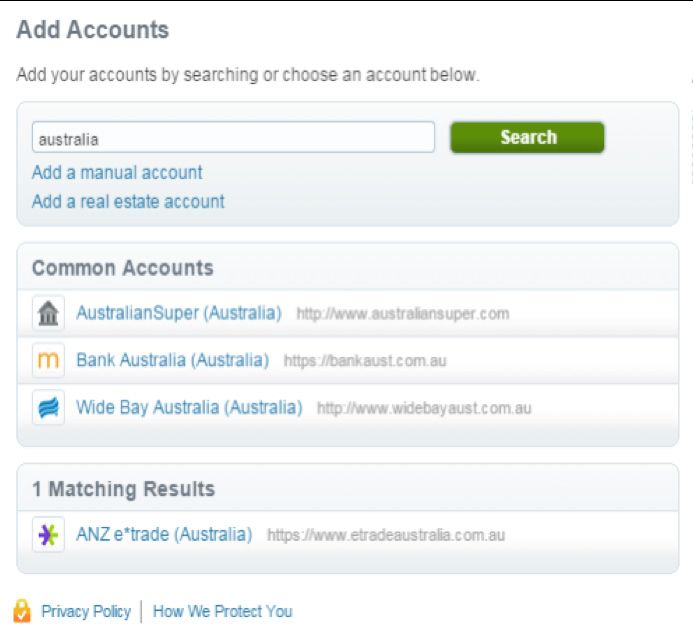
May 2018

Such start-ups often begin with a very
particular unmet need or business                                    Exhibit 3: Emerging business models
proposition in mind, and may have
little interest in building out all the
technology, operational, security                                                         Functional-layer model of financial services
and compliance processes needed to
provide financial services in Australia,
                                                                     1. Customer
particularly where credit or financial                               experience
                                                                                                                                                          Customer
                                                                                                                                                  relationship layer
advice is concerned (including the                                   master
associated licensing obligations and legal
liabilities which will only become more                                                                                                         Manufacturing and

                                                                                                                                                                       4. Traditional (integrated)
stringent in the years to come).                                                                                                                    delivery layer

Broadly speaking, we see four models
emerging in this landscape, as                                                                                                                    Operations layer
illustrated in Exhibit 3 using the five-
                                                                     2. Infrastructure
layer functional model of banking we                                 master (utilities)
introduced in our report: Escaping the
                                                                                                                                                  Technology layer
Commodity Trap: the future of banking
in Australia. These aren’t entirely new
models, but Open Banking provides
a pathway to digital enablement that                                                                                                                   Support layer
wasn’t as open before.
How can a bank, FinTech or new entrant                                                                                             3. Product master

identify the model that suits them?
Exhibit 4 provides a framework for
thinking about these options oriented
around the degree of customer verses
product orientation driving competitive
advantage.

Exhibit 4: Choice of model depends on capabilities, strategy and focus
 Customer relationship focus

                               1. Customer experience master                                       4. Traditional (integrated)

                               Players with distinct customer value proposition aligned            Traditional banks seeking to retain control of end-to-end
                               to specific segments                                                value chain
                               •   Often adjacent to banking and seeking to                        •    Noting significant differences in breadth
                                   grow value proposition                                               and depth of each specific
                               •   Orchestrate ‘bundle’ of                                              model
                                   services to deliver digitally                                   •    E.g. Universal banks, commercial
                               •   E.g. Budybank, Alipay,                                               banks, credit unions, etc.
                                   Quicken, Treefin, online credit
                                   brokers, etc.

                               2. Infrastructure master (utilities)                                3. Product master

                               Players with distinct technology or operations capabilities         Players with distinct capabilities that can be digitally
                               that can be digitally enabled                                       distributed via other banks
                               •   Often leveraging or seeking to leverage                         •    As with utilities, often leveraging or seeking
                                   global or super-regional scale                                       to leverage global or super-
                               •   E.g. bud, FIS, Fidor, PEXA                                           regional scale
                                                                                                   •    E.g. insurance companies, digital
                                                                                                        payment / wallet providers

                                                                                                                                                       Product focus

PwC                                                                                                                                         Banking Matters | 6
May 2018

Note that incumbent banks are currently                In any case, regardless of the model
all in the top-right quadrant – integrated             chosen, the unbundling and recombining
providers of banking and financial                     described here enables greater scale and
services. We predict that in a world of                specialisation. Just as in Adam Smith’s
Open Banking, many will migrate to                     pin factory, this makes everyone more
other areas of the strategic matrix. Many              successful, if they survive, but that
executive teams and boards especially of               requires deliberate choices. Banks will
smaller banks are already thinking about               have to make strategic decisions about
how to create a future differentiated and              capabilities, customer needs, required
strategically defensible position.                     investments and, always the hardest,
                                                       about the opportunities they will chose
However, as discussed in the Appendix,
                                                       to leave for someone else. This will be
we don’t subscribe to the view that
                                                       true for everyone in the new ecosystem,
the future for integrated players is
                                                       including those who chose to remain in
somehow strategically untenable or
                                                       the upper-right.
even disadvantaged. It won’t be an
appropriate strategy for everyone, but
we expect to see large successful players
surviving and thriving in the upper-right
quadrant for a very long time.

Exhibit 5: Getting ready for Open Banking: a role for every layer of the organisation

                                                   Functional-layer model of financial services

                                                                                                      Customer relationship layer
                                         Mass                                                         • Understand unmet customer needs
                                                                      Business
          HNW          Mass affluent   Branches /     Micro / SB                      Institutional   • Identify opportunities enabled by Open Banking to syndicate
                                                                      Business                          key services through new channels, or new services through
                                        Contact
                                                                       centres
                                         centre                                                         own channels
                                                                                                      • Translate implications for customer journeys

                                        Payments                                                      Manufacturing and delivery layer
       Consumer         Business                                                       Insurance
                                           and        Savings and                                     • Develop product / service syndication strategy
       credit and       credit and                                    Markets           and risk
                                       transaction    investments                                     • Cultivate required partnerships and channels for collaboration
        services         services                                                       transfer
                                         services
                                                                                                        to satisfy unmet customer needs identified above

                                                                                                      Operations layer
                                                                       Security,
                         Payments                                                                     • Identify opportunities enabled by Open Banking to
        Mailings,                                                      AML and          Property,
                            and         Lending        Markets                                          syndicate key services through new channels, or new
      cash, cards                                                     protection      procurement
                        transaction     services      operations                                        services through own channels
      and logistics                                                 from financial     and other
                          services
                                                                        crime                         • Meet security, privacy and other requirements and
                                                                                                        expectations

         Customer                                                                                     Technology layer
                                                                        Core            Common
       solutions and                                  Transaction                                     • Develop and maintain APIs and SDKs
                                                                     calculation        registries
        applications                                      and
                           ERP            Data                         engines         (GL, asset     • Develop and maintain rails into third-party service platforms
         (CRM and                                     origination
        enablement                                                  (capital, risk,     and core
                                                       engine(s)                                      • Meet security, privacy and other requirements and
         platforms)                                                   ftp, etc.)        banking)
                                                                                                        expectations

                                                                                                      Support layer
                                                                     Outreach            Legal        • Risk: Re-orient risk and compliance frameworks
                                                        Human           and            and other      • Strategy: guide choices about value proposition and way to play
           Risk          Finance        Strategy
                                                        capital      commun-          commercial      • Human capital: ensure required skill and capability mix
                                                                      ication           services
                                                                                                      • Legal: Align contractual arrangements to new risks and
                                                                                                        opportunities

PwC                                                                                                                                          Banking Matters | 7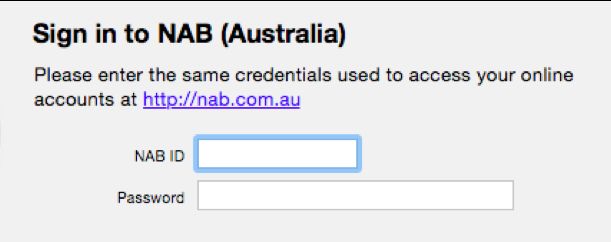
May 2018

2. Not just for technologists:                What’s more, our experience in the
there’s a role for everyone                   UK suggests that technology change
                                              (i.e. the technical infrastructure) is the
Social infrastructure needed                  easiest part: agreeing standards, liability
As noted earlier, while we are confident      models, approaches to cooperation
of the changes to come, we don’t              and other dimensions of the social
subscribe to the view that these changes      infrastructure described above is far
will happen overnight. Banking is not         more difficult.
like riding in a taxi or using a phone.
For one, much more needs to change            Fortunately, at least for the majors,
than just the value proposition and           readiness for PSD2, GDPR and earlier
consumer behaviour. There is still a          initiatives such as Comprehensive Credit
need, especially in Australia, for what we    Reporting (CCR) are useful precursors to
call the ‘social infrastructure’ to support   the yet-to-be-defined changes following
Open Banking.                                 the Farrell Report. For executive teams
                                              and boards, they were also useful fitness
It’s not just an internal gap. Stakeholders   tests of the readiness of the organisation
throughout the financial services             to accommodate new data governance
landscape will face demands for change,       and access requirements. The bad news
starting with the regulatory framework        is that the timelines announced by the
which was, quite appropriately, a major       government are much shorter than
focus of the Farrell Report. Customers        what was available in other comparable
will also need time to understand the         changes to the regulatory regime.
value proposition Open Banking enables
and to change their behaviour in ways         Compliance alone is not enough
that reward investment in it.                 While it is not cause for alarm, we don’t
This can be a challenge, especially in a      think a ‘wait and see’ approach to Open
world where there are unclear rewards         Banking anchored on merely complying
for being a first mover, and where a          with requirements is wise either. The
certain ‘chicken and egg’ dynamic exists      evolution of the banking ecosystem
in which infrastructure investment            will take time, but so will each banks’
requires clear use cases with compelling      ability to respond. A ‘wait and see’
payback, but use cases can’t emerge until     strategy is at risk of being hijacked by the
the infrastructure is there.                  perennial need to keep up with changing
                                              regulatory standards in jurisdictions all
Every part of the organisation                around the world, and another lesson
has a role to play                            from UK and European experiences
                                              in preparing for PSD2 and GDPR is
Every function has a role to play in a
                                              that waiting until the last minute only
world of Open Banking. Focusing on
                                              increases the cost, risk and disruption
banks, and using the same five-layer
                                              of the change. Such a strategy is also
model of Exhibit 3, we enumerate some
                                              prime for disruption by competitors
of the things bankers will be asked to do
                                              who have started preparing for and
in Exhibit 5.
                                              understanding the new environment
                                              sooner. At the other extreme, sometimes
3. Walk-Run-Fly: get started                  characterisation of the scope and pace
today?                                        of change can border on the euphoric
What should the busy bank executive           especially by those who have a stake in
or director, who isn’t a specialist and       the narrative of imminent disruption
has hopefully found this summary              – something that, in our view, is not
informative and useful, do tomorrow?          supported by history or common sense.

Substantial work ahead just                   Fortunately, there is a path between
to comply with minimum                        these two extremes. What we are calling
                                              a ‘Walk-Run-Fly’ approach is one where
requirements
                                              actions are more aggressive than what
To start, there is now a new and real         regulations require, but where these
short-term regulatory requirement             actions are also grounded in a sober
which cannot be ignored. PSD2, GDPR           assessment of the technical, social and
and possible Australian equivalents are       commercial objective to be addressed by
described in the Appendix, and mean           incumbent banks every day.
that banks still struggling with Single
Customer View (SCV) even internally
may find that in another 12–24 months
they are expected to efficiently provide
customer data to a range of third parties.

PwC                                                                                          Banking Matters | 8
May 2018
Exhibit 6: Practical compromise between denial and euphoria
alk, Run, Fly
W
e
se
Eu
nd
ph
ta
ori
Wai
a
Wait and see Walk, Run, Fly Euphoria
Minimal compliance Disciplined, intentional Actively preparing to compete
with requirements and practical steps in an ‘unbundled’ banking
Complying with requirements as they Ensuring compliance with all global Exposing as much product and data
emerge requirements with margin of safety as possible
• PSD2, GDPR and future • Staying sufficiently ahead of min • Customer accounts
Australian rules requirements that no change in • Transaction information
• Generally staying abreast of regulation will be a surprise
• Product
developments Taking active ‘no regrets’ steps today
Where possible, making choices
• E.g. strategy or digital teams even if not yet necessary
biased towards openness
present regular updates to ELT • Readying the digital and data
• E.g. APIs with write as well as
Otherwise making no unnecessary engine
read access
decisions or commitments • Strengthening security and
• Open rather than closed APIs
governance mechanisms
• Noting that in each case
• Clarifying strategic opportunities
significant security and privacy
and pathways for growth
considerations and requirements
come into play
PwC Banking Matters | 9May 2018
Banks can start preparing for the The good news is that many of these
commencement of Open Banking now things are already part of existing
even without knowing when compliance initiatives that are spread across the
will be formally required. Some things banks’ investment slate in digitisation,
banks won't regret doing include: productivity, customer journeys and risk,
not to mention meeting EU requirements
• Readying the digital and data engine
for GDPR and PSD2. Walk-Run-Fly,
–– Defining the architecture of core in other words, does not necessarily
API libraries and data objects require a wholesale change of direction.
(which could even be industry- However, it may very well require a
wide as is the case in the UK where concentration of focus and acceleration
many banks already had well- of pace. The evolution of the market
developed and widely available described above, enshrined as it is in
APIs before they were required) legislation and backed by the force
of regulation, is no longer optional.
–– Identifying and establishing access
Customer expectations will evolve
to critical third-party data and
accordingly.
other capabilities
In summary, open banking is one more
• Strengthening security and
milestone in the direction of openness,
governance mechanisms
digitisation and partnership with
–– Defining a security, access and fintechs. It puts customers at the centre
architecture strategy to stay of the change, helping create new
comfortably ahead of all global experiences, for them and value for the
requirements as they continue industry. Most importantly, it can be a
to evolve catalyst for innovation and competition
for many years to come.
–– Developing a strategy for dealing
with the potentially commercially
sensitive information that may be
exposed in the new regime7
–– Onboarding, audit and complaints
–– Enhancing core capabilities that
will be crucial in an Open Banking
world, including data governance,
security, identity and third-party
oversight
• Clarifying strategic opportunities and
pathways for growth
–– Thinking about how to compete
over the long term in the new
landscape, and the capabilities,
assets, experiences, business
models and partners needed to
do so.
7
For example, making transaction and other account data visible may reveal the actual interest rate charged on loans and therefore the degree of discounting
being offered by each bank.
PwC Banking Matters | 10May 2018
Appendix
Open Banking 101 Tutorial
Making ‘internal’ bank data How this is done is specific to each
accessible to others context but, in almost all cases,
Open Banking starts from the premise participants use a core set of concepts
that customers own their data, not and tools, including APIs, authentication
banks, and should be free to share it protocols, a hierarchy of permissions and
with external parties as they see fit. In its a data architecture. These are illustrated
most general form, it involves opening in Exhibit A1, along with a brief
internal bank data and processes to explanation of terms commonly used in
external parties via digital channels. this space.
Exhibit A1: The language of Open Banking
Discussions about Open Banking often include key terms which can be intimidating to non-technologists. They needn’t be.
For example, imagine that Jane’s accounting application needs access to account information from her Bank:
First, Jane authenticates herself and authorises the app to
access the needed information.
• Protocol likely a variant of OAuth2 standard, ‘state of art’
for most web apps today
• Bank likely to require additional measures like Strong Secondly, bank makes API code and executable available via
Customer Authentication (SCA) and Indirect Approval web URI through its SDK.
• A group of companies - the FAPI (Financial API) App developer includes it in the applications code which then
working group - is working on this has access to API functions like getdetails
BANK
Accounting application
Thirdly, the application will call ‘getdetails’, one of the bank’s APIs
Bank.getdetails(Number “account-id”
• Assuming appropriate authentication and authorisation, ‘getdetails’ {
Number ”balance”,
is called just as any other web resource Number “limit”
…
}
• For example, its JavaScript SDK could be through a URI such as
https://www.bank.com.au/API-library/SDK/sdk.js
• The API returns ‘balance’ and ’limit’
Fourthly, the bank’s Digital team will boast that its APIs
• Data could be returned in a format called JSON (Java Script are ‘RESTful’
Notation Language), which is like a .cvs file for web applications
That means they are written consistent with design principles
• The bank’s web application (e.g. written in JavaScript) will know how proposed by Roy Fielding in his 2000 PhD dissertation
to interpret data encoded in the JSON format
See Roy Fielding Dissertation UC Irvine, 2000
PwC Banking Matters | 11May 2018
Different models all around
the world
Whilst open Banking is easy to
understand in principle, and the value
proposition easy to imagine, it is not
so easy to identify ‘killer’ use cases,
especially for executives hoping to
recover the cost of building an API
infrastructure (including the cost of
cannibalised revenue). For this reason,
regulators in many markets are stepping
in and forcing it to happen. In Europe, Exhibit A2: The EU’s first steps – GDPR and PSD2
the PSD2 requires banks to expose both
payments data and the ability to transact
(so-called ‘read’ and ‘write’ privileges)
to third parties. The national legislation
came into effect in January 2018, with
full operational compliance to technical
standards required by August 2019. At
the same time, the GDPR which takes
effect on 25 May 2018 enumerates rights
and obligations of banks as custodians
and consumers as owners of their
data. The high-level effect of these two
regulations is summarised in Exhibit A2. General Data Protection Second Payments
Regulation (GDPR) System Directive (PSD2)
Though they are hardly Open Banking in
the sense we described above, for the EU
they are statutorily-mandated first steps. • Takes effect 25 May, 2018 • Pillar 1 (transparency of pricing and
In particular, they require that banks terms for payments) applies from 13
• Encapsulates three fundamental
expose the information and utility of January 2018
consumer rights with regard to data:
their payments activities to third parties, • Pillar 2 (Strong Customer
potentially unbundling them from the 1. Right to be forgotten
Authentication) and Pillar 3 (open
broader banking value chain. Note 2. Right to object to profiling access) applies from August 2019
that this is only one of many potential 3. Right to port data to third
approaches to Open Banking. –– Customer authentication must
parties
comply with EU Regulatory
In Australia, the Farrell Report proposes • Privacy ‘by design’ Technical Standard (RTS) published
similar, but slightly different first 1. Internal data access on ‘need February 2018
steps which were embraced by the to know’ basis –– Banks must provide read and write
government last week. It envisages a
2. Pseudonymisation by default access to accounts to authorised
much broader scope for the kind of third parties via APIs
customer data which should be open, • Sanctions for breach can be as high as
but a narrower range of applications, 4% of global revenues –– APIs to comply with requirements
leaving the initiation of payments published in RTS
(‘write’ privileges) to later stages. It also • Legislation does not prohibit online
includes no explicit recommendations impersonation (screen scraping)
on privacy and security standards,
preferring to defer those to a standards
body which the government determined
would be Data 61, an arm of the
CSIRO, although it did make approving
reference to certain principles such
as Strong Customer Authentication
(SCA). The differences between these
approaches are illustrated in Exhibit A3
which schematically describes the key
choices to be made when designing an
Open Banking regime: what data and
processes to expose, to whom, how
and under what rules and governing
arrangements.
PwC Banking Matters | 12May 2018
Exhibit A3: Open banking from concept to reality
What information What accounts What actions
in scope? in scope? in scope?
Transaction data Transaction/savings Read data EU framework (GDPR + PSD2)
Account support data Credit cards Initiate transactions Australia (Farrell recommendations)
Customer identity Personal loans Open accounts Common to EU and Australia
AML/CTF support Mortgages Initiate application
Other Business loans
Other
Privacy standards Security standards
Block solicitation/ Strong Cust
Right to erasure FAPI/OAth2
profiling Auth (SCA)
Data Protection ISO 27xxx cyber
Pseudonymisation APRA CPG 234/5
Office standards
Whether these differences make First era of Open Banking At the time, alarming claims were made
Australia’s implementation more or Finally, no discussion of Open Banking that by exposing their internal data and
less ‘aggressive’ than the EU’s, or more around the world would be complete processes to third parties, the banks
conduce to innovation, remains to be without reference to what is perhaps had injudiciously handed control of the
seen. There are arguments on both its first development, which occurred customer interface to the providers of
sides. However, while GDPR and PSD2 shortly after the invention of the Personal Financial Management (PFM)
are already coming into effect, the World Wide Web itself. In 1997 three software who could then ‘orchestrate’
recommendations in the Farrell Report technology companies created an XML optimised and personalised bundles of
were only adopted by the government standard known as OFX.8 Through services for clients. These new players
last week, and only for transaction OFX and its variants, customers could would relegate banks to being ‘dumb’
accounts, savings accounts and credit aggregate and manage their financial providers of ‘utility’ balance sheet,
cards. These must be made ‘open’ by accounts at major banks like Citibank, product manufacturing and other
1 July 2019, and then mortgages by Bank of America and Chase, as well undifferentiated services, and capture
February 2020. as other institutions such as Charles the lion’s share of value in banking - just
Schwab and Vanguard. They could as Microsoft had previously done in
Of course, as international banks
view their accounts, initiate payments personal computing.
with EU-domiciled customers (or
even payments that may originate or and transfers, and perform other
terminate with an EU regulated bank), basic account management functions.
Australia’s major banks must comply also Although the specific technical
with EU legislation which may influence architecture may have been different,
the way Australian legislation evolves. it was very similar to what PSD2
promises today.
8
OFX is known as QFX by QuickenTM users, which is the proprietary OFX variant optimised for Quicken. The companies were Microsoft, Intuit and CheckFree.
Microsoft and Intuit were both leading providers of Personal Financial Management (PFM) software at the time (MoneyTM and Quicken, respectively), and
CheckFree an electronic payments services provider.
PwC Banking Matters | 13May 2018
What’s more, since one of those PFM As we know, it didn’t work out that way.
providers was Microsoft (the most While the reasons for this are beyond the
valuable company in the world at the scope of this short survey, the lessons
time,9 it seemed self-evident that they of the First Era of Open Banking is that
had the wherewithal to develop the while it introduced both challenges
capabilities and assets needed to ‘disrupt’ and opportunities for incumbents and
the relationship between banks and their new entrants alike, being an integrated
customers. How could boring banks provider of banking services remains a
hope to compete?10 viable model even as the ecosystem has
evolved. As we have argued previously,
we don’t expect that to change.
9
...and whose CEO was famous for saying as early as 1994 that ‘banking is necessary; banks are not.’
10
For its part, Intuit obtained a banking license which it has since relinquished.
PwC Banking Matters | 14Contact us
Colin Heath Sam Garland
Banking and Capital Markets Leader Banking and Capital Markets Partner
Tel: +61 3 8603 0137 Tel: +61 2 8266 3029
colin.heath@pwc.com sam.garland@pwc.com
Jim Christodouleas Kate Eriksson
Banking and Capital Markets Director Digital and Experience Partner
Tel: +61 448 431 121 Tel: +61 3 8603 0128
jim.christodouleas@pwc.com kate.eriksson@pwc.com
Alex Acworth Alfredo Martinez
PwC Strategy& Director Banking and Capital Markets Partner
Tel: +61 2 8266 4672 Tel: +61 2 8266 5296
alex.acworth@pwc.com alfredo.martinez@pwc.com
© 2018 PricewaterhouseCoopers. All rights reserved.
This content is for general information purposes only, and should not be used as a substitute for consultation with professional advisors.
Liability limited by a scheme approved under Professional Standards Legislation.
127059630You can also read


