DEPARTMENT OF CHEMICAL ENGINEERING - STUDY GUIDE 2018
←
→
Page content transcription
If your browser does not render page correctly, please read the page content below
DEPARTMENT OF CHEMICAL
     ENGINEERING

     STUDY GUIDE
        2018
CAUTION (DISCLAIMER)

The Department of Chemical Engineering has used all reasonable endeavours to ensure that the
material contained in this handbook was correct at the time of being published. However;
   1. the department gives no warranty and accepts no responsibility for the accuracy or the
       completeness of the material;
   2. no reliance should be made by any user on the material, but instead the user should check
       for confirmation with the originating or authorising faculty, department or other body;
   3. and the Department reserves the right at any time to make changes as it deems
       appropriate

This handbook is to be used only as a guide and all current information can be obtained via The
University of Melbourne website: http://www.unimelb.edu.au/

This handbook has been produced by the Dept. of Chemical Engineering. If any incorrect
information is found within this guide, please email our Senior Tutor Liyuan Fan
(liyuan.fan@unimelb.edu.au).

                                                                                             2
2018 version 2, revised 23/03/18
Contents
CAUTION (DISCLAIMER) ............................................................................................................ 2

WELCOME TO THE DEPARTMENT OF CHEMICAL ENGINEERING ............................................... 5

DEPARTMENT OF CHEMICAL ENGINEERING STAFF .................................................................. 6

ACADEMIC STAFF FROM BIOMEDICAL ENGINEERING DEPARTMENT TEACHING CHEMICAL
ENGINEERING SUBJECTS:....................................................................................................... 14

SAFETY .................................................................................................................................... 15

LABORATORIES ....................................................................................................................... 16

YOUR STUDENT SERVICES...................................................................................................... 20

RESEARCH IN THE DEPARTMENT............................................................................................ 21

STUDY ABROAD, EXCHANGE AND OVERSEAS RESEARCH EXPERIENCE ................................ 22

VACATION WORK..................................................................................................................... 23

SKILLS TOWARDS EMPLOYMENT PROGRAM (STEP) ............................................................... 26

ENGR90033 INTERNSHIP......................................................................................................... 27

CHEN90028 INDUSTRY PROJECT ............................................................................................ 28

SPECIAL CONSIDERATION....................................................................................................... 29

CHEMICAL ENGINEERING PRE-REQUISITE WAIVER POLICY ................................................... 30

PLAGIARISM & COLLUSION ..................................................................................................... 32

EXAMINATIONS ....................................................................................................................... 33

DEPARTMENT OF CHEMICAL ENGINEERING LIST OF SUBJECTS............................................ 34

SEMESTER 1 ............................................................................................................................ 34

SEMESTER 2 ............................................................................................................................ 35

BUNYIP COURSE PLANNING TOOL .......................................................................................... 36

COURSE PLANS ....................................................................................................................... 37

  MASTER OF ENGINEERING (CHEMICAL) .............................................................................................................38
Suggested 3-Year Course Plan for Entry in Semester 1: ........................................................................................38
Suggested 3-Year Course Plan for Entry in Semester 2: ........................................................................................39
Suggested 2-Year Course Plan for Entry in Semester 1 for BSc (Chemical Systems) Majors: .................................40
Suggested 2-Year Course Plan for Entry in Semester 2 for BSc (Chemical Systems) Majors: .................................40
Chemical Engineering Electives ...........................................................................................................................41
  MASTER OF ENGINEERING (BIOCHEMICAL) ........................................................................................................42
Suggested 3-Year Course Plan for Entry in Semester 1: ........................................................................................42
Suggested 3-Year Course Plan for Entry in Semester 2: ........................................................................................43
Suggested 2-Year Course Plan for Entry in Semester 1 for BSc (Chemical Systems) Majors: .................................44
Biochemical Engineering Electives .......................................................................................................................45
  MASTER OF ENGINEERING (CHEMICAL WITH BUSINESS) .....................................................................................46
Suggested 3-Year Course Plan for Entry in Semester 1..........................................................................................46
Suggested 3-Year Course Plan for Entry in Semester 2..........................................................................................47
Suggested 2-Year Course Plan for Entry in Semester 1 for BSc (Chemical Systems) Majors: .................................48
Master of Engineering (Chemical with Business) Electives....................................................................................49
  EXAMPLE BSC OF CHEMICAL SYSTEMS COURSE PLAN LEADING TO MASTER OF ENGINEERING (CHEMICAL) ........50
BSc (Chemical Systems) degree leading to ME (Chemical) example course plan: ..................................................50
  MASTER OF ENGINEERING (MATERIALS) ...........................................................................................................51
Entry requirements ...............................................................................................................................................51
Suggested 3-Year Course Plan for Entry in Semester 1..........................................................................................51
Suggested 3-Year Course Plan for Entry in Semester 2..........................................................................................52
Master of Engineering (Materials) Level A Electives:............................................................................................53
Master of Engineering (Materials) Level B Electives:............................................................................................53

                                                                                                                                                                       3
2018 version 2, revised 23/03/18
EXAMPLE UNIVERSITY OF MELBOURNE BACHELOR COURSE PLANS LEADING TO MASTERS OF ENGINEERING
  (MATERIALS)....................................................................................................................................................54
BSc (Chemical Systems) degree example course plan leading to ME (Materials): ..................................................54
BSc (Mechanical Systems) degree example course plan leading to ME (Materials): ..............................................55
BSc (Civil Systems) degree example course plan leading to ME (Materials): .........................................................56
BDes (Mechanical Systems) degree example course plan leading to ME (Materials): ............................................57
MELBOURNE UNIVERSITY CHEMICAL ENGINEERING STUDENT SOCIETY .............................. 58

WE ARE ALWAYS READY AND WILLING TO HELP .................................................................... 59

                                                                                                                                                                      4
2018 version 2, revised 23/03/18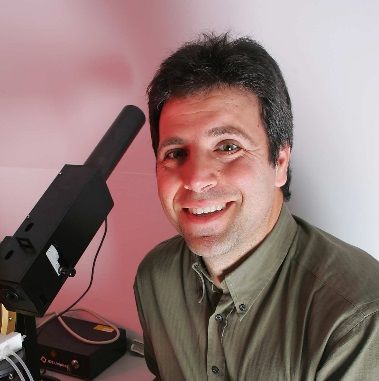
WELCOME TO THE DEPARTMENT OF CHEMICAL ENGINEERING

It is a pleasure to welcome all new students to the Department of Chemical Engineering at the
University of Melbourne and those of you who are returning for later years of your course. As one
of the top Chemical Engineering departments in the world, there continues to be a high demand
for student places within our department. In addition, students from other countries have grown
in number and we want very much for those students to feel part of the Department.

This handbook does not replace the official University of Melbourne Handbook, but compiles
information from there as well as additional information in the one place. Subject details are
included, together with teaching responsibilities, some sample programmes and assessment
details.

Please make yourself aware of the many student services available at the University of Melbourne
at no extra cost to you; full details are available on the university website www.unimelb.edu.au.
Many students have benefited from consulting the Student Counselling Service, and the Academic
Skills Unit can provide invaluable advice on study skills.

In terms of subjects offered within our department, all assignments must be submitted by the
specific deadlines that are announced by each subject’s coordinator. Almost all of the assignments
and practical reports that you complete as part of your course are submitted through our Learning
Management System (LMS), where they are automatically checked for Plagiarism (see Page 32).
In addition, you will be required to complete a Laboratory Risk Assessment Sheet prior to
commencing each practical exercise and this sheet needs to be handed to your laboratory
demonstrator at the start of your class (see page 18 and 19). Please note that it is not wise to
purchase textbooks until you receive advice from your subject coordinator.

We always appreciate feedback on how we can improve your experience with us. There are formal
mechanisms to do this through the Staff-Student Liaison Committee that meets twice each
semester. You can provide input to this committee through your MUCESS class representative
(see page 44). Towards the end of each semester you will be provided with a teaching evaluation
survey (known as the Student Experience Survey- SES) as well as a quality of tutor survey. You
will be asked to complete these online at the end of each semester. Our aim is to provide a high-
quality programme and this needs good teaching. We respond to the advice given in these surveys
and you will be advised of changes made to the course as a result. You are also always welcome to
meet with me personally, or with the Course Co-ordinator, Associate Professor Dalton Harvie,
should you have an issue that needs immediate attention.

All members of the Department of Chemical Engineering wish you well throughout your time with
us. Please feel free to come and talk to me about issues that may be of concern to you. It is my hope
that the Department remains a friendly and helpful place in which to study. Welcome once again
to the Chemical Engineering ‘family’. We are truly glad to have you.

Paul Webley
Professor and Head of Department
Department of Chemical Engineering

                                                                                                   5
2018 version 2, revised 23/03/18
DEPARTMENT OF CHEMICAL ENGINEERING STAFF
Name                     Position                               Email
                                            Teaching Staff
Paul Webley       Head of Department and Professor              paul.webley@unimelb.edu.au
Peter Scales      Deputy Dean and Professor                     peterjs@unimelb.edu.au
Sandra Kentish    Head of School and Professor                  sandra.kentish@unimelb.edu.au
Dalton Harvie     Deputy Head (Academic), Associate             daltonh@unimelb.edu.au
                  Professor and stream coordinator
                  (Chemical and Biochemical)
Greg Qiao         Professor and Assistant Dean                  gregghq@unimelb.edu.au
                  (Research) in the Melbourne School
                  of Engineering
George Franks     Professor and stream coordinator              gvfranks@unimelb.edu.au
                  (Materials)
Ray Dagastine     Deputy Head (Research and                     rrd@unimelb.edu.au
                  Engagement) and Professor
David Dunstan     Professor                                     davided@unimelb.edu.au
David Shallcross  Professor                                     dcshal@unimelb.edu.au
Frank Caruso      Australian Laureate Professor                 fcaruso@unimelb.edu.au
Amanda Ellis      Professor                                     amanda.ellis@unimelb.edu.au
Dan Li            Professor                                     dan.li1@unimelb.edu.au
Sally Gras        Reader                                        sgras@unimelb.edu.au
Anthony Stickland Senior Lecturer                               stad@unimelb.edu.au
Greg Martin       Senior Lecturer                               gjmartin@unimelb.edu.au
Colin Scholes     Senior Lecturer                               cascho@unimelb.edu.au
Kathryn Mumford Senior Lecturer                                 mumfordk@unimelb.edu.au
Gang Kevin Li     Senior Lecturer                               li.g@unimelb.edu.au
Chris Honig       Lecturer                                      christopher.honig@unimelb.edu.au
Gabriel da Silva  Future fellow                                 gdasilva@unimelb.edu.au
Sui So            Tutor                                         sui.so@unimelb.edu.au
Liyuan Fan        Senior tutor                                  liyuan.fan@unimelb.edu.au
                                         Administrative Staff
Louise Baker             Executive Assistant to Head of         E: eahod-chemeng@unimelb.edu.au
                         Department                             P: +61 3 8344 7441
Priya Pandya             Academic Support Co-ordinator          priya.pandya@unimelb.edu.au

                                                                                                6
   2018 version 2, revised 23/03/18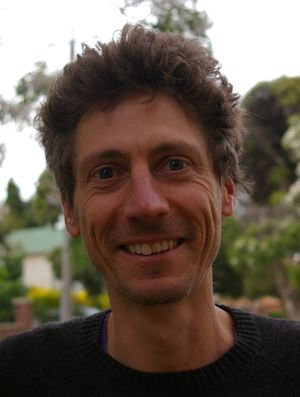
Professor Sandra Kentish

                                   Sandra is a true University of Melbourne tragic, with a Bachelors,
                                   Masters and PhD all from this university. Before she became an
                                   academic, she worked at Qenos, Kodak Australia and Kimberly
                                   Clark Australia for a total of nine years. Her research interests lie in
                                   membrane technology for gas and liquid separations; and the use of
                                   ultrasonics in industrial processes. She has been Head of
                                   Department since October 2012. However, in early 2017, she
                                   moved to a broader role as Interim Head of the School of Chemical
                                   and Biomedical Engineering.

  Professor Peter Scales           Peter Scales grew up in Bendigo, Australia and completed his
                                   undergraduate (BSc(Hons)) and graduate (PhD) degrees in Physical
                                   Chemistry at the University of Melbourne. He worked for 3 years
                                   between these degrees in the minerals industry and then for 3 years
                                   as a postdoc with ICI in the UK. He returned to Australia in 1991 to
                                   manage a research centre in particulate fluids processing and
                                   became a Senior Lecturer in the Department of Chemical
                                   Engineering in 1998. He was Head of Department between 2003
                                   and 2006 and became Deputy Dean of the School of Engineering in
                                   2007. He has research interests in separation processes involving
                                   particulates and molecules in water, with particular emphasis on
                                   filtration and sedimentation processes. He also has interests in the
                                   manufacture, stabilisation and flocculation of particulates in water.
                                   This includes algal and waste-water sludges and the recycle of
                                   water from waste-water. He teaches into Particle Mechanics and
                                   Processing, Bio-enviro Engineering.

                                   Sally Gras obtained her undergraduate degrees (with Honours) in
  Associate Professor Sally Gras   both science (biochemistry and molecular biology) and engineering
                                   (chemical) from The University of Melbourne. She then completed
                                   a PhD in protein misfolding at Cambridge University as a Gates
                                   Scholar funded by the Bill and Melinda Gates Foundation. Following
                                   this Sally returned to The University of Melbourne where she
                                   currently teaches Biochemical and Pharmaceutical Engineering in
                                   the Department of Chemical and Biomolecular Engineering. Sally is
                                   also director of the ARC Dairy Innovation Hub.

                                                                                                    7
2018 version 2, revised 23/03/18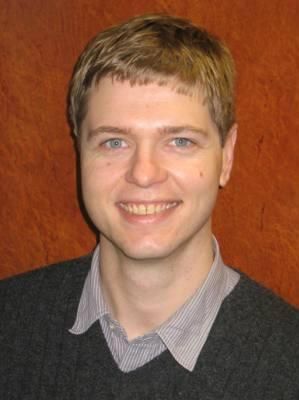
Professor David Shallcross       David Shallcross completed his BE and PhD in the Department
                                   before going to work at the University of California and Stanford
                                   University. After a brief spell at CSIRO he joined the academic staff
                                   of the Department in January 1990. He served as Head of
                                   Department from 2007 to 2012 and is currently Director of the
                                   Engineering Learning Unit. For three years he was Vice President
                                   of the Institution of Chemical Engineers and he remains on various
                                   committees of the IChemE. His research interests include ion
                                   exchange processes, biomass combustion and learning outcome
                                   assessments. David currently teaches into the second year
                                   undergraduate program.

  Professor George Franks
                                   George Franks is a Professor in the Department of Chemical
                                   Engineering and has over two decades of research and experience
                                   in the ceramics and minerals processing fields. After completing his
                                   undergraduate degree in materials science and engineering at MIT
                                   in 1985, he worked for seven years as a process development
                                   engineer, then returned to study, receiving his PhD in Materials in
                                   1997 from University of California. He came to Australia to
                                   undertake post doctoral research at the University of Melbourne,
                                   leading research in surface chemistry effects in suspension
                                   rheology. His research interests are in ceramic powder processing
                                   and flocculation and flotation of minerals. He teaches Process
                                   Equipment Design and Minerals Materials and Recycling.

  Professor Paul Webley
                                   Head of Department of Chemical Engineering. Paul Webley
                                   obtained his PhD degree in chemical engineering from the
                                   Massachusetts Institute of Technology (MIT) and spent 7 years in
                                   industry in the USA before joining Monash University as a lecturer.
                                   He moved to The University of Melbourne in 2012 and heads up the
                                   Clean Energy Laboratory. His research goals are to understand the
                                   fundamental science of energy and to exploit this knowledge to
                                   develop applied technology for more efficient processing and
                                   energy production. Currently, his group focuses on development
                                   and characterisation of nanomaterials for efficient gas and liquid
                                   processing, gas and liquid separation technology, carbon capture,
                                   carbon dioxide utilisation, natural gas processing, biofuels from
                                   algae and advanced energy storage analysis and development.
                                   http://www.chemeng.unimelb.edu.au/webley/

                                                                                                 8
2018 version 2, revised 23/03/18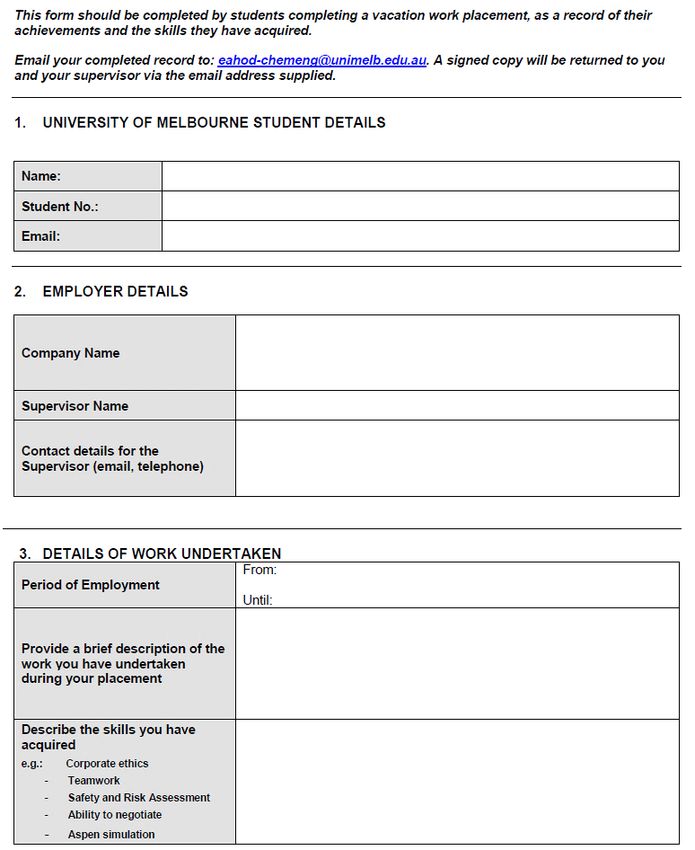
Professor Ray Dagastine           Ray obtained his Bachelor of Chemical Engineering with Distinction
                                    at the University of Delaware in the USA and his PhD in Chemical
                                    Engineering at Carnegie Mellon University in the USA before
                                    moving to Australia for a 2 year research fellowship in Australia in
                                    2002. He is now an Associate Professor and Reader in the
                                    department. Ray has previously worked in research in industrial
                                    adhesives and at a membrane separations start up company. Ray's
                                    research focuses on the interactions between particles, drops and
                                    bubbles in product engineering for the formulation and stability of
                                    dispersions (such as paint), emulsions (such as milk, shampoo or
                                    even ice cream) and foams (well...in foams....and also ice cream) as
                                    well as how drops and bubbles are important in chemical
                                    engineering processes. He teaches into Advanced Heat and Mass
                                    Transport Processes and Engineering Systems Design 1.

  Senior Lecturer Colin Scholes

                                    Colin Scholes was among eight young scientists from the
                                    University of Melbourne have been awarded 2012 Young Tall
                                    Poppy Science Awards for Victoria. All winners are leaders in
                                    their field, breaking new ground with their innovation and
                                    discoveries. The Young Tall Poppy Science Awards aim to
                                    recognise early career researchers who have achieved
                                    significant research outcomes and have demonstrated their
                                    passion to engage with the community in science. Award
                                    winners will spend the next year engaging with teachers, school
                                    students, parents and the broader community around Victoria
                                    and across Australia as part of the Tall Poppy Campaign run by
                                    the Australian Institute of Policy and Science.

  Senior Lecturer Kathryn Mumford

                                    Kathryn Mumford obtained her undergraduate [BEng (Chem),
                                    BCom] and postgraduate (PhD) from the University of Melbourne.
                                    Since graduation, Kathryn has undertaken various industrial roles
                                    including contaminated site management and carbon capture and
                                    storage technologies. She joined the Department in 2012, and is
                                    now a Senior Lecturer. She currently teaches Chemical
                                    Engineering Management and Heat and Mass Transport Processes

                                                                                                  9
2018 version 2, revised 23/03/18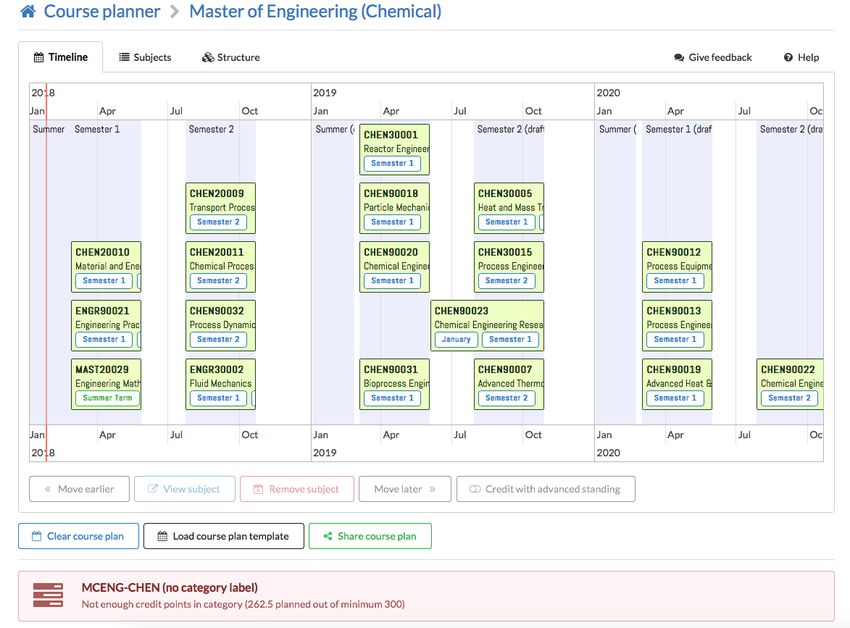
Deputy Head and Professor Greg
  Qiao                             Professor Greg Qiao received his Bachelor of Engineering in
                                   Polymer Engineering at Donghua University in 1982 and his Ph.D.
                                   at the University of Queensland in 1996 in synthetic organic
                                   chemistry. He then worked at the University of Melbourne, when
                                   he entered the field of synthetic polymer chemistry and
                                   engineering. He became a Lecturer in the Department of Chemical
                                   and Bimolecular Engineering in 2002, then promoted to a Senior
                                   Lecturer in 2004, Associate Professor and Reader in 2007, and full
                                   Professor in 2009. Since 2012, he has also been an Australian
                                   Research Council’s professorial Future Fellow. Professor Qiao
                                   currently is an Acting Associate Dean Research at the Melbourne
                                   School of Engineering.

  Professor Amanda Ellis
                                   Professor Amanda Ellis graduated with a Ph.D (Applied Chemistry)
                                   from the University of Technology, Sydney in 2003. She has
                                   undertaken two Postdocs in the USA and a Postdoctoral Research
                                   Fellowship in New Zealand at Industrial Research Ltd (now
                                   Callaghan Innovations). In 2006 Amanda commenced at Flinders
                                   University of South Australia as a teaching/research lecturer in the
                                   School of Chemical and Physical Sciences, and in 2014 became a Full
                                   Professor. She commenced at University Melbourne in 2017. Her
                                   research involves novel polymer coatings, functionalised carbon
                                   nanotubes and graphene, membrane technologies, microfluidics,
                                   genotyping and DNA nanotechnology. Currently, she is an
                                   Australian Research Council’s professorial Future Fellow (2014-
                                   2018), a Board Member of the Royal Australian Chemical Institute
                                   (RACI), Board Member of the Membrane Society of Australia, and a
                                   co-founder and executive member of the Australia & New Zealand
                                   Micro/Nanofluidics group.

  Australian Laureate Fellow
  Professor Frank Caruso           Frank Caruso is a professor and an ARC Australian Laureate Fellow
                                   at The University of Melbourne. He is also Deputy Director of the
                                   ARC Centre of Excellence on “Convergent Bio-Nano Science and
                                   Technology”. He received his PhD degree in 1994 from The
                                   University of Melbourne, and from 1994-1997 was at the CSIRO
                                   Division of Chemicals and Polymers in Melbourne. He was an
                                   Alexander von Humboldt Research Fellow and group leader at the
                                   Max Planck Institute of Colloids and Interfaces (Berlin, Germany)
                                   from 1997–2002. From 2003-2012 he was an ARC Federation
                                   Fellow at The University of Melbourne. He has published over 400
                                   peer-reviewed papers. He is one of Thomson Reuters’ Highly Cited
                                   Researchers (top 20 in materials science) and was on Thomson
                                   Reuters’ 2014 list of World's Most Influential Scientific Minds. He is
                                   an Editor of Chemistry of Materials and on the Editorial Advisory
                                   Board of ten other scientific journals. He was elected a Fellow of the
                                   Australian Academy of Science in 2009.

                                                                                                 10
2018 version 2, revised 23/03/18
Future Fellow Gabriel De Silva
Gabriel De Silva completed his undergraduate degree in 2001 and
completed his Ph.D in 2006 at University of New Castle. He worked
in a postdoctoral position at New Jersey Institute of Technology
and later as a lecturer at The University of Melbourne in the area of
energy and the environment, using computational chemistry
techniques and reaction rate theory to model complex reaction
networks relevant to combustion and atmospheric chemistry, as
well as environmentally important organic reaction mechanisms.
He became a future fellow in 2017.
Senior Lecturer Greg Martin
Greg Martin completed his undergraduate degree at Queen’s
University in Canada, and Masters and PhD degrees from The
University of Melbourne. In between this study he spent several
years working as an engineer in the oil fields of Kansas and
Sumatra and as a research scientist for a biotech company in
Canada commercialising lignocellulosic ethanol production. His
research interests lie in bioprocess engineering with a particular
focus on microalgal biotechnology and dairy processing.
Deputy Head and Associate I completed a Mechanical Engineering degree at the University of
Professor Dalton Harvie Sydney in the early 90s, sponsored by an industry funded
scholarship. During the degree I worked at BHP (steel smelting and
rolling), NSW Electricity Commission (coal fired power plants) and
Alcan (rolling aluminium foil). After graduation I resisted becoming
a practicing engineer, and instead worked as a gardener and
barman. However, if born an engineer you have to remain an
engineer, so one year after graduation I found myself enrolled in a
PhD program, studying the extinguishment of bush fires. Initially I
performed experiments on extinguishing wooden cribs and
determining the heat transfer rate to impacting water sprays,
however there were fundamental questions that we just couldn’t
answer via experimentation. I turned to CFD (computational fluid
dynamics) to simulate the processes and complement the
experiments. Simulation remains at the core of my present day
research which involves using novel numerical methods to solve
multiphysics flow problems, across a diverse spectrum of areas,
ranging from optimising the blowing of a glass bottle (heat transfer)
through to designing new analytical techniques for protein trapping
(fluid dynamics and mass transfer). I became a lecturer here in the
department in 2007, and presently teach Transport Processes and
Safety and Sustainability Case Studies.
11
2018 version 2, revised 23/03/18Professor Dave Dunstan
Dave Dunstan received his undergraduate and PhD degrees from
the University of Melbourne. Upon graduation, new horizons
presented and Post Doctoral positions at Uppsala, Santa Barbara
and Princeton ensued.
Senior Lecturer Anthony Stickland Anthony Stickland obtained undergraduate (BSci, BE) and PhD
degrees at the University of Melbourne. After completing his PhD
in 2005, he worked for 4 years with ICI (and later AkzoNobel after
merging) at their corporate research centre in Wilton, UK, and later
their coil coating research and development centre in Sunshine,
Victoria. In mid-2009, he returned to the department as a Research
Fellow. He has had a permanent position as Senior Lecturer since
2012 and currently lectures Advanced Thermodynamics and Reactor
Engineering and Particle Mechanics and Processing. Anthony’s
research interests are in suspension rheology and solid-liquid
separation, with current projects covering the fundamentals of
suspension shear rheology through to designing a new dewatering
device that combines shear with dewatering. The industrial
applications include wastewater treatment sludges, water
treatment sludges, minerals tailings, algal biomass and paper
recycling process streams, amongst others.
Professor Dan Li
Dan Li is a professor in materials science and engineering at the
University of Melbourne, Australia. He received his PhD degree in
Materials Physics and Chemistry from the University of Electronic
Science and Technology of China in 1999. After several years as a
Research Fellow at Nanjing University of Science and Technology,
University of Washington, University of California Los Angles, and
University of Wollongong, he joined Monash University as an
associate professor in 2008 and was promoted to full professor in
2012. He was a foundation co-director of Monash Centre for
Atomically Thin Materials (2015-2017). He joined the Department
of Chemical Engineering, University of Melbourne in 2017. Prof. Li
received the ARC Queen Elizabeth II Fellowship in 2006, the Scopus
Young Researcher of the Year Award (Engineering and Technology)
in 2010, ARC Future Fellowship in 2011, Dean’s Award for
Excellence in Research in 2012 and a Visiting Changjiang Chaired
Professorship from the Ministry of Education, China in 2016. He
was named in the list of Thomson Reuters Highly Cited Researchers
in the category of Materials Science in 2014-16.
12
2018 version 2, revised 23/03/18Lecturer Chris Honig
Chris Honig is a teaching focused academic. He obtained his
undergraduate degree and PhD from the University of Melbourne in
Chemical Engineering. He worked in a postdoctoral position at
Virginia Tech in the USA, developing a new type of microscope,
before returning to Melbourne in 2011. His research background is
primarily in nano-scale microfluidics and atomic force microscopy.
Chris teaches Chemical Process Analysis and Process Engineering.
Senior Lecturer Gang Kevin Li Gang Kevin Li obtained his undergraduate degree in Tianjin
University in 2003 and PhD from Monash University in Chemical
Engineering in 2010. He worked in a postdoctoral position at The
University of Melbourne and later as an ARC DECRA Fellow at the
University of Western Australia, developing gas separation
technologies. He returned to Melbourne in 2017 as a senior
lecturer. His research area is natural gas purification, carbon
capture, waste utilization, coal mine gas recovery, adsorption
(zeolites, C1 catalysis, process design, microporous materials).
Tutor Sui So Sui So obtained his undergraduate and postgraduate (PhD) from
the University of Melbourne. Since graduation, Sui has undertaken
various tutoring and lecturing roles in Chemical Engineering
Department after his graduation in 2016. He is now a sessional
lecturer teaching undergraduate subjects.
Senior tutor Liyuan Fan •
Liyuan Fan obtained her undergraduate degree from Harbin
Institute of Technology in 2006, Master degree from University of
Science and Technology of China in 2009 and PhD from Delft
University of Technology in 2014. She continued to work as a
postdoctoral fellow at Delft, developing Sustainable Energy
Systems, before moving to Melbourne in 2016. She started working
as a senior tutor in Chemical Engineering Department from 2017.
13
2018 version 2, revised 23/03/18ACADEMIC STAFF FROM BIOMEDICAL ENGINEERING DEPARTMENT
TEACHING CHEMICAL ENGINEERING SUBJECTS:
Associate Professor Andrea Andrea O’Connor completed her BE(Chemical) and PhD at the
O’Connor University of Melbourne before spending a year as a postdoctoral
research fellow at Massachusetts Institute of Technology (MIT). She
was appointed as Station Director of the MIT School of Chemical
Engineering Practice to supervise engineering student projects at
two industrial sites, one in the US and one in Japan. In 1997 she
came back to the University of Melbourne as a lecturer and she is
now Deputy Head of Department. She teaches Tissue Engineering
and Stem Cells and Biotransport Processes (part of the
Bioengineering Systems major). Her research interests are in tissue
engineering, biomaterials, separation processes, porous materials
and food production.
Lecturer Daniel Heath
Daniel moved to Australia in 2014 in order to join the University of
Melbourne as a Lecturer. Originally from the United States, Daniel
completed his PhD at The Ohio State University before continuing
his research as a postdoc with the Singapore-MIT Alliance for
Research and Technology (SMART) and MIT. Since arriving at
Melbourne, he has taught Fluid Mechanics and Process Dynamics
and Control. His research is related to developing new materials for
use in medical applications. He also has an unhealthy obsession
with his cat, Fudge, who you will all meet while Daniel is teaching
you.
14
2018 version 2, revised 23/03/18SAFETY
The Melbourne School of Engineering is committed to providing and maintaining a workplace that
is safe and without risk to the health of our staff, students and visitors to our facilities.
The management of the School will take all measures necessary to ensure adherence to safe work
practices and conditions and these will be given priority in the School's planning, procedures and
work instructions.
The creation and maintenance of a safe and healthy working environment is an integral part of
our operation and we actively pursue the goals of this policy. The University follows the National
Assessment Tool (NAT) program to ensure that these goals are achieved and the Melbourne
School of Engineering is committed to maintaining its accreditation under this program.
It is expected that, through consultation and co-operation, all staff, students, contractors and
visitors will observe OHS rules and safe working practices and make every effort to reduce the
risk of injury to themselves, their fellow workers and others.
The management of the Melbourne School of Engineering is committed to the provision of
appropriate resources and training in order to assist all staff and students to fulfil their
responsibilities and maintain a safe working environment.
Emergency Contact Information
UoM Security
Emergency phone number: 8344 6666 (internal extension 46666)
Enquiry phone number: 8344 4674
Note: UoM Security Guards are trained first aiders and can be called upon to supply first aid in
an after-hours emergency situation.
MSE Occupational Health and Safety Unit
Emergency phone number: 8344 2400 (internal extension 42400): business hours only.
Ambulance, Police or Fire Brigade
From a university phone: 0-000
From a mobile phone: 000 or 112
Tell the Emergency Services to enter the University via Gate 10 Grattan St.
15
2018 version 2, revised 23/03/18LABORATORIES
Laboratories allow you to test and apply the knowledge that you have learnt in your Chemical
Engineering subjects. In this department Laboratories are integrated within each subject, and
overseen by the subject coordinators. There are typically between one and three laboratories run
within each subject.
You must register for each of the laboratories conducted within each of your subjects using
the university’s timetabling system. Instructions for checking the dates for your laboratory
sessions are given below.
You also need to complete online OHS training before you are allowed to enter the lab. This
training is not specific to a subject, and hence only needs to be done once each year. Once you
have completed your online OHS training you will receive a completion certificate which you must
present to your lab demonstrator before starting each laboratory. Instructions on how to do this
training and obtain the certificate are included below.
Further, for each lab you complete you must fill out a take 5 risk assessment before the session,
and bring this (as a hard copy) to the session to give to your demonstrator (see example
Laboratory cover sheet on the following pages). In order to complete this document you will need
to have read the lab manual, and to have assessed the safety risks inherent in performing the lab.
You may need to also download MSDSs (Material Safety and Data Sheets) for any employed
chemicals as part of this preparation. This document will remain with your lab demonstrator as
proof that you have done the necessary preparation prior to the lab.
While in the lab you are required to wear personal protection equipment (PPE) at all times.
The PPE required for each lab will be specified in your laboratory notes, but for most labs is safety
glasses and lab-coat.
You will not be able to participate in a laboratory session if you:
1) Haven’t completed the OHS training
2) Aren’t able to show your OHS training certificate at the lab
3) Haven’t completed your lab-specific Take 5 risk assessment
4) Do not have the required PPE
5) Are more than 10mins late to the session.
Scheduling a laboratory requires equipment to be setup and a demonstrator ready to guide you
through the process. If you miss a laboratory session then this preparation is wasted. Hence, if
you miss a laboratory session or are not able to participate in your laboratory session including
for the reasons listed above (and without a substantive reason) you will not be awarded any
marks for relevant the laboratory component of your subject. However, subject to the availability
of places in the laboratory and the discretion of your subject coordinator, you may be able to
attend a make up session for your laboratory. If this occurs then you will be penalised 50% of the
marks for the relevant assessment.
16
2018 version 2, revised 23/03/18Instructions for checking when your laboratory session is:
1. Open your student portal (not LMS).
2. Go to your timetable as if you want to register for your classes.
3. Just above your list of subjects, there is a scroll-able box that says "study period" and "week
starting".
4. Pick the week that you want to check
5. Then click REFRESH.
6. There will be a left and right button on the screen to change to the previous or the next week.
Move around until you find your scheduled lab session. If you can’t find it, just change the date
and refresh until you find which week your lab classes are in.
Instructions for how to obtain your OHS Induction Certificate:
1) Login to the University of Melbourne LMS using your student ID and password
2) You should now be at your LMS 'Home' page. Under the "My Communities" column, click on
"Chemical Engineering Student Community 2018"
3) On the left hand side of the page, click on the link 'Chemical Engineering OHS Induction"
4) You should now see Modules 1-3 for the OHS Induction; please read through each module
carefully, taking note of the safety information associated to working within a lab environment
5) When you have finished reading the modules, click on the link "2018 Chemical Engineering
Wetlab Induction Test". You will be asked 12 questions based on the material you have read in
the 3 modules. In order to pass the test, you will need to answer 80% of the safety related
questions correct (this equates to a score of 188/210 or higher). You will only have 3 attempts to
pass the test, so take your time and read the modules thoroughly
6) Once you have passed the test, please print or take a screen shot of your certificate. This can be
accessed from the left hand side of the community LMS page by clicking on "OHS Induction
Certificate". You will need to show this certificate to your demonstrator at the start of your
practical class, or you will NOT be able to participate in lab activities
17
2018 version 2, revised 23/03/1818 2018 version 2, revised 23/03/18
19
2018 version 2, revised 23/03/18
YOUR STUDENT SERVICES

                                   For more Information:
                                   http://services.unimelb.edu.au/finder

                                                                           20
2018 version 2, revised 23/03/18
RESEARCH IN THE DEPARTMENT
The Department of Chemical Engineering has a large and diverse research program, which focuses
on three key scientific themes: materials science, separations technologies, and biomolecular
engineering. These scientific themes are targeted at key socioeconomic fields which include
medicine, mining, sustainable energy production, water conservation and re-use and food
processing. Examples of current research activities include investigation into soil remediation in
Antarctica, production of biofuel from algae, reduction of evaporation in water catchments, new
materials for carbon capture and storage, targeted drug and vaccine delivery and cheese
microstructure.
The Department is home to several major research centres:
• Particulate Fluids Processing Centre (PFPC)
• Peter Cook Centre for Carbon Capture and Storage Research
• Dairy Innovation Hub: Transformational Research to Underpin the Future of the
Australian Dairy Manufacturing Industry
• Centre of Excellence in Convergent Bio-nano Science and Technology
Interested in Further Study by Research?
Who should apply?
Successful applicants for admission to research and scholarships with Engineering & IT will
typically:
• have secured strong support from their nominated supervisor
• be placed in the top 5% of their graduating class
• have evidence of research potential by having completed a research project as part of
their final year of their Bachelors or Master degree
Before you apply, find a supervisor
As a research student, you will work under the guidance of an academic supervisor. Your
supervisor will provide advice and direction throughout your research project. Your PhD project
is often part of a larger project run by your supervisor. It is your responsibility to identify a
supervisor you would like to work with, prior to making an application. You must supply
documented evidence that you have secured a supervisor, who has agreed to work with you on
your research proposal.
Further details on the application process and Research Scholarships can be found at:
http://www.eng.unimelb.edu.au/study/research/
21
2018 version 2, revised 23/03/18STUDY ABROAD, EXCHANGE AND OVERSEAS RESEARCH EXPERIENCE
By taking part in an exchange or study abroad program you could immerse yourself in a different
social, cultural and intellectual milieu, with the chance to add an international perspective to your
studies.
There are a number of ways you can do this. You may study overseas either as an ‘exchange’
student or a ‘study abroad’ student. With an approved study plan, either program can provide you
with credit or fulfill academic requirements. There are also opportunities to complete your
research project or your industry project overseas, in a six week full time placement over the
summer break. We may also advertise an opportunity to complete a Research Project in China
over the winter break and the first few weeks of Semester 2.
There is also a wide variety of funding available to assist you with your plans for overseas study.
Why Study Overseas?
There are a number of reasons why you may wish to consider study abroad or exchange. Your
reasons can be based on academic, personal, career aspirations or all of the above.
1. Gain a global perspective on your studies (Study at an international university and
gain a different perspective on your studies)
2. Challenge yourself (Gain real independence and build your self-confidence)
3. Make some international connections (Build links by meeting new people)
4. Improve your language skills (Immerse yourself in another culture and either refine
your foreign language skills or learn a new language)
Student Exchange Information Sessions
A variety of information sessions for students are run regularly throughout the semester.
General information sessions are a first step to hear more about the varied opportunities
available around the world. They are intended to provide a general overview about how to
undertake part of your studies overseas, and get you thinking about where in the world you
would like to go.
Further Information
Global Mobility Coordinator, Engineering & IT
Elizabeth Hunter
E: eng-exchange@unimelb.edu.au
22
2018 version 2, revised 23/03/18VACATION WORK
The Department strongly recommends that you obtain vacation work with an engineering
employer. This work is of greatest value at the end of your penultimate year, but is highly valuable
at any stage of your degree program.
Vacation work is advertised by major companies within Australia during the period March to July.
These positions are highly competitive. Other companies may also offer vacation work informally
and you will need to approach these companies yourself. If you are an overseas student, you may
find it easier to gain an internship in your home country. Please contact the Academic Support
Coordinator for advice on companies in your country who you could approach.
Please ensure that your cover letter and Resume is checked by others before you use it. You will
not get past the first round if these documents contain spelling mistakes or incorrect grammar.
Further advice on vacation work and careers can be obtained from:
http://careers.unimelb.edu.au/student/what_can_i_do_with_my_degree/career_planning
https://www.youtube.com/watch?v=5tBO1NUL0EA
In some cases, you may be able to use your vacation work as credit towards ENGR90033 (see
page 24). However, to do so the university must first sign an agreement with your intended
employer. This means that you need to notify the Engineering Placements team at least one
month in advance of the intended work to determine whether this is possible.
Upon completion of vacation work, or relevant work experience, please complete the form on
the next page and get your company supervisor to also comment and sign. This document can
then be kept by both the Department and yourself as a permanent record of your experience.
23
2018 version 2, revised 23/03/1824 2018 version 2, revised 23/03/18
25
2018 version 2, revised 23/03/18
SKILLS TOWARDS EMPLOYMENT PROGRAM (STEP)

The Skills Towards Employment Program (STEP) aims to develop five key professional skills in
all Masters of Engineering graduates. The skills that are being targeted are written
communication, verbal communication, teamwork and personal and project management.

Engineering Practice Hurdle - Specification

The engineering practice hurdle is the submission of an ePortfolio demonstrating your
capabilities in these Professional Skills for internal assessment within the School of Engineering.
The primary goal of these applications is to demonstrate that you have achieved good levels of
competency in skills required by practicing engineers with a focus on those that are not technical
by nature such as communications and team work.
 You will need to complete the Engineering Practice Hurdle before you can graduate with a
Masters of Engineering.
Your primary resource for information about the Engineering Practice Hurdle is the dedicated
community on the LMS.
Specific to the engineering practice hurdle, this community contains:
    • the engineering practice hurdle requirements;
    • the assessment criteria for the engineering practice hurdle;
    • a discussion board for seeking assistance; and
    • the link for submitting your applications.

To enrol in the STEP community please follow these instructions:

        1. Go to the LMS page.
        2. Click on the "communities" tab.
        3. Search for "employment".
        4. Click on the arrow icon next to the community code "com_00631".(Hold the mouse
           over community code to reveal the icon).
        5. Click on "enrol"
        6. Click "submit".
        7. Click "ok".

For more Information contact eph-info@unimelb.edu.au.

                                                                                                26
2018 version 2, revised 23/03/18
ENGR90033 INTERNSHIP
ENGR90033 Internship is a 25-point subject that gives students the opportunity to undertake a 10–
15 week (minimum 350 hours) internship for academic credit to their degree.
ENGR90033 can be taken as a 25 point elective within your Masters program. However, due to
the workload required students should not take a 50 point load while taking this subject. In
Semesters 1 and 2, ENGR90033 Internship can be taken along with one additional 12.5-point
subject. Summer enrolment is restricted to 25 points so students cannot take another subject
alongside ENGR90033 Internship. Students taking ENGR90033 Internship in the summer
semester should be aware that they will need to start their internship in December.
AM I ELIGIBLE?
Students require an average grade of H2B (70%) or above and there are minimum coursework
completion requirements to be eligible for a University-sourced internship. Unless special
circumstances apply, students cannot take both ENGR90023 and CHEN90028.
Further information is available in the handbook: ENGR90033 Internship.
HOW DO I APPLY?
Eligible students will be automatically invited to register their interest in ENGR90033 Internship.
This registration will give students access to our dedicated ENGR90033 Internship portal where
internships will be advertised. Students will be able to apply for these internships and successful
students will be invited to interview. This is a competitive process and internships will be limited.
If you believe that you are eligible, but have not been invited to register your interest, email eng-
internships@unimelb.edu.au.
Students may also self-source internships (subject to approval by the subject coordinator).
Students taking self-sourced internships must still meet the eligibility criteria for the subject. The
deadline for advising eng-placements@unimelb.edu.au that you have potentially sourced your
own Internship is one month before the teaching period commencement date quoted in the
Handbook.
Note: Students will not be able to enrol into ENGR90033 Internship through the Student Portal
until their internship has been approved and signed off.
FURTHER ENQUIRIES
eng-placements@unimelb.edu.au
27
2018 version 2, revised 23/03/18CHEN90028 INDUSTRY PROJECT
CHEN90028 is a 25-point subject where students work as individuals or as a member of a team on a
designated investigative project within a suitable industry partner that could involve critical
analysis of a topic, experimental research and/or development, theoretical modelling, process
simulation and/or the solution of an industrial problem.
CHEN90028 can be taken as a 25 point elective within your Masters program or it can replace
CHEN90023 or BIEN90001 Research Project. Students should note that some projects commence
during the July semester break (for Semester 2) or in December (for summer enrolment) to allow
students to work fulltime at company premises.
Am I eligible?
All students enrolled in the Masters of Engineering (Chemical) or (Biochemical) are eligible to
apply. However, there are usually a limited number of projects available and selection is then
primarily based on your Grade Point Average.
Unless special circumstances apply, students cannot take both ENGR90033 and CHEN90028.
How do I apply?
The Projects available will be advertised on the Chemical Engineering Student Community on the
LMS approximately two weeks before the end of the previous semester. At this time, students will
be invited to complete a survey indicating their preferred projects and any particular reasons why
they should be considered for a project. The Subject Co-ordinator will then allocate students to
projects and notify all successful applicants.
Note: Students will not be able to enrol into CHEN90028 until they have been allocated a project
by the Subject Co-ordinator.
28
2018 version 2, revised 23/03/18SPECIAL CONSIDERATION
What do I need to know about Special Consideration?
Special Consideration is available to students who have had their studies significantly impacted
by short-term circumstances reasonably beyond their control such as acute illness.
To be eligible for Special Consideration students must meet one of the criteria below:
• a student has been prevented from preparing or presenting for all or part of a component
of assessment such as assignments and examinations; or
• a student has been, to a significant degree, adversely affected during the performance of a
component of assessment.
Special consideration is generally only awarded for assessment components that are worth more
than 20% of a subject’s assessment. For assignments that have a smaller weighting, you should
discuss the matter directly with the subject coordinator. In this circumstance you will still be
required to provide supporting documentation, and be expected to discuss the matter at the time
the assessment is due (or before).
Time Limits
Time limits for Special Consideration applications are enforced.
• Students must submit an application for Special Consideration via the student portal
my.unimelb.edu.au no later than 5.00pm on the third working day after the
submission/sitting date for the relevant assessment component.
• A completed Health Professional Report and/or other supporting documentation must be
submitted within five (5) working days of submission of the online application.
Applying for Special consideration
Applications for Special Consideration are made via the student portal (my.unimelb.edu.au) and
must be submitted no later than 5.00pm on the third working day after the submission/sitting
date for the relevant assessment component.
Administrative functions, such as applying for Special Consideration, can be found in the Student
admin tab of the student portal (my.unimelb.edu.au). Click the 'Go to exams & results' button
under the Exams & results portlet on the Student Admin tab and select the 'Apply for Special
Consideration' link.
If you are navigating to Special Consideration from an 'eStudent' screen, please select the 'Study
Plans' tab from the top menu and access 'Special Consideration' from the left sidebar menu.
You must then submit your Health Professional Report (HPR) form or Statutory Declaration and
any other supporting documentation within five (5) working days of your online application. The
scanned copy of the completed HPR form must be submitted online via my.unimelb.edu.au. If this
is not possible please submit the hardcopy HPR to the office listed on the front of your HPR form.
For more information please visit ask.unimelb.edu.au. Alternatively, speak to a staff member
at Stop1 (http://students.unimelb.edu.au/stop1)
P: 13 MELB (13 6352) E: Submit an enquiry (https://ask.unimelb.edu.au/app/ask)
29
2018 version 2, revised 23/03/18Chemical Engineering Pre-requisite Waiver Policy
I haven’t met the pre-requisites for a subject. Can I have these pre-requisites waived?
Background: Pre-requisite subjects are carefully chosen to ensure that students have the
required competencies to complete the subjects that we teach. The pre-requisite mechanism
also ensures that students complete the variety of learning that we believe is required to become
a competent engineer. Accreditation of our degrees (eg via iChemE, EA, EURACE etc) relies upon
this process being robust.
In some cases you may wish to enroll in a subject without having completed one of the pre-
requisite subjects listed in the handbook (see ‘ELIGIBILITY AND REQUIREMENTS’ sections). This
may be because you did not pass a previous subject, or (for example) there may complications
around your time on exchange. Under these circumstances you can apply for a pre-requisite
waiver (see policy below for details).
When considering applications for pre-requisite waivers, we are guided by the following:
1. Will admitting the student to the subject disadvantage other students (for example in
team-based work, in tutorials)?
2. Will admitting the student disadvantage the student themselves (for example they may
not have the capacity to pass the subject, or, the student could perform significantly better
with the required pre-requisites)?
3. Quality control of our degree. Will admitting this student reduce the overall experience in
a subject, diminishing the standing and reputation of our degree (which may damage
employment prospects for our other students or diminish future student enrolments).
As a department we have distilled these questions into the following pre-requisite waiver policy:
Policy: You can apply for a pre-requisite waiver to the subject coordinator for the subject you
are trying to enter, or to the overall course coordinator. Upon such a request the subject
coordinator/course coordinator will:
1. Check your academic transcript. If you are applying to waive a pre-requisite subject that
you previously attempted but failed, the assessor will only consider the application
further if your average performance across other subjects is good (approximately H2B or
better).
2. If you have achieved good overall performance within your degree so far, but failed a
pre-requisite subject due to some exceptional circumstances, the assessor will discuss
your performance in that subject with that subject’s coordinator to determine whether
you have sufficient knowledge to enroll in the requested subject.
Hence, if you have failed a previous subject you are unlikely to have this subject waived as a pre-
requisite to other subjects unless your performance across other subjects so far is good, and
there is some specific reason why your performance in the failed subject was poor.
Note that financial burden, or time taken to complete your degree, are not relevant factors in
determining whether a waiver can be granted. Your application is only dependent upon your
academic performance to date and your ability to perform well in your enrolled subjects.
Careful course planning can in some instances reduce the amount of time you need to complete
your degree.
30
2018 version 2, revised 23/03/18Also, be careful to read the handbook ‘ELIGIBILITY AND REQUIREMENTS’ rules carefully – some
subjects are actually ‘co-requisites’, meaning that they can be taken at the same time as the
subject you are trying to enroll in and do not need a pre-requisite waiver application.
31
2018 version 2, revised 23/03/18You can also read


